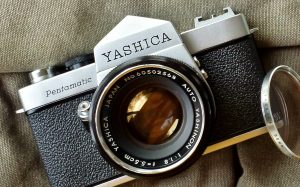
There is still plenty of conjecture about the exact meaning of the two letters that appear in a diamond design on Japanese-made photo gear made in the 1950s and 1960s and gradually disappearing in the mid to late 1970s. Some suggest that it meant “Exchange Purchase” since the mark often appeared on cameras sold in military exchanges throughout Japan during that period. The catch is that not all of the cameras sold in the exchange stores had that mark – probably only 30% or less, depending on the decade and store. Stereo equipment was also marked as was binoculars. Expensive jewelry and watches didn’t have the mark. So what gives, and exactly who ordered the symbols to be placed on, at times, random items within these few categories.

Look closely at the image of this Nikon box pictured below. In the upper right-hand corner is a price sticker. The sticker has quite a bit of good information, but it also leaves out some vital info. The “Japan Tax Exempt” and dollar amount printed on the sticker are such a tease. The camera was from the early 1970s, so it could have had the <E.P> mark, but not necessarily. From memory of my time living in Japan and shopping at the Navy Exchanges in Yokosuka and Yokohama, I don’t ever recall seeing a price sticker with “Tax Exempt” printed on it since everything sold in the exchange was tax-free and therefore tax exempt. If it wasn’t sold at the exchange and in fact sold at a duty-free or tax-free shop in Japan, why would it be priced in USD and not yen?

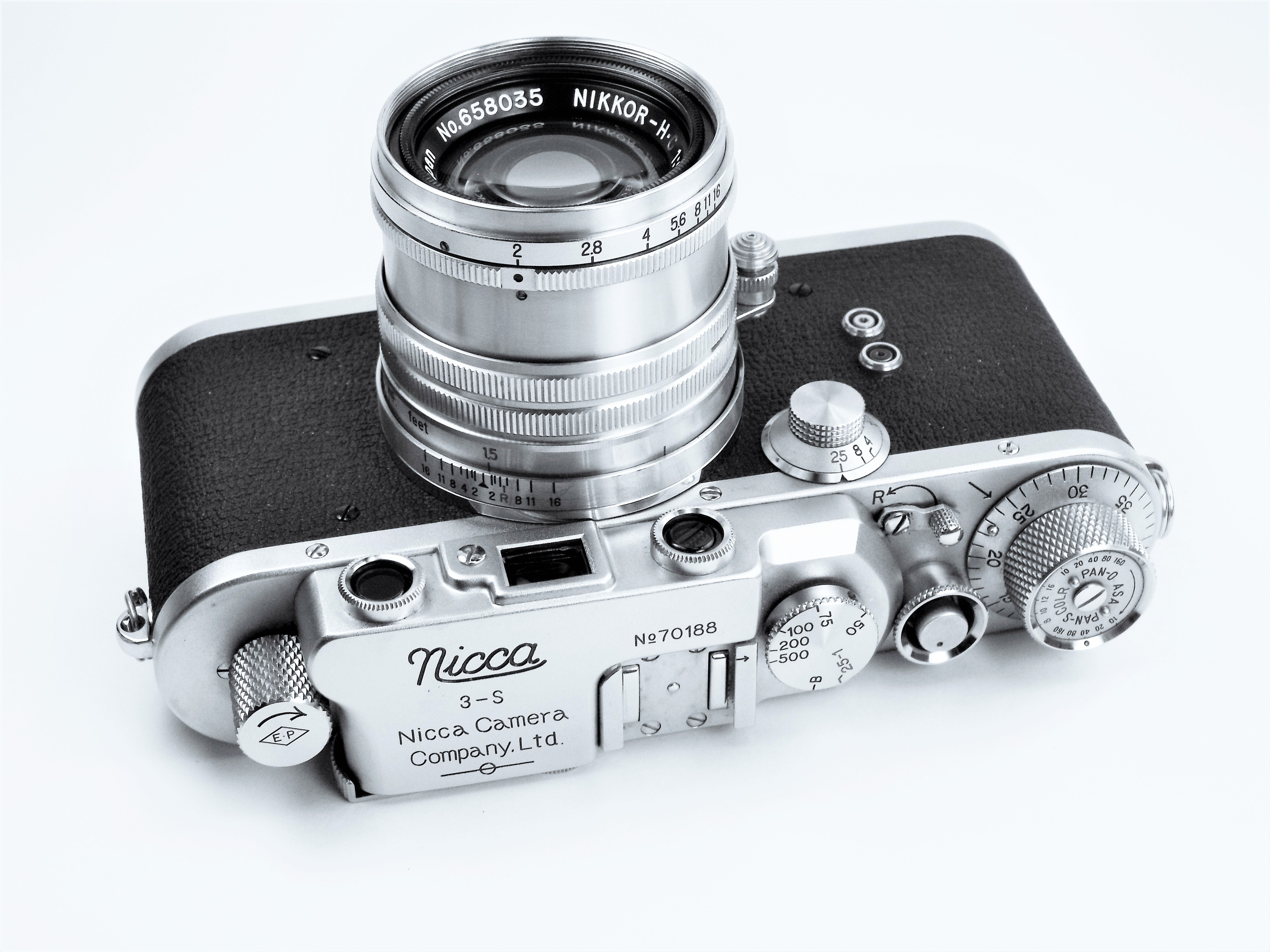
No record exists that explains precisely what the “E & P” stood for or why the program existed and, for that matter, who instituted and administrated the process. I believe the mark was primarily intended to deter the black market reselling of photo gear to Japanese civilians by military personnel since the cameras were tax-free in the military stores and were more than likely also priced lower than the same camera “out in town” in a Japanese camera shop. It’s likely “EP” stood for “Exempt Purchase” or “Exempt Product” and not “Exchange Purchase” for the reasons I stated in this post. Do you have additional information about the program? Do you fondly remember purchasing a great camera at the exchange, please share it.
Thanks for stopping by, Chris
Follow me on Instagram at @ccphotographyai
Comments are always welcomed as I’ve learned quite a bit from reader feedback. As always, thanks for stopping by, and while you’re at it, feel free to visit my camera shop at http://www.ccstudio2380.com (CC Design Studios hosted by Etsy). – Chris Whelan
Please respect that all content, including photos and text, is this blog’s property and its owner, Yashica Pentamatic Fanatic, Yashica Sailor Boy, Yashica Chris, Chasing Classic Cameras with Chris.
Copyright © 2015-2024 Chasing Classic Cameras with Chris (Yashica Pentamatic Fanatic), Chris Whelan
All rights reserved.

 Chasing Classic Cameras with Chris