Happy SUNday! – Yashica Cousins

Yashica’s advertising figurine (doll?) from the early 1960s. Officially nameless but I’ve tagged him with “Sailor Boy” for obvious reasons.

DSC07067

My camera shop display sized (20 cm) Yashica “Sailor Boy”. This one was still in its sealed plastic bag and original box from Modern Plastics of Japan.

yashica sailor boy big

Another dealer display model (not mine) of Yashica’s “Sailor Boy” – this one looks as though he’s been in a bar fight in Tokyo!

I’m not sure which one was first but my guess is that the “tough guy” version may have been a prototype as I’ve never seen another one for sale in all my years of collecting Yashica branded items.

Have a great day y’all! – Chris

I’ve listed some neat items in my camera shop at http://www.ccstudio2380.com – pop on over and check it out!

Please respect that all content, including photos and text, are the property of this blog and its owner, Yashica Pentamatic Fanatic, Yashica Sailor Boy, Yashica Chris.

Copyright © 2015-2019 Yashica Pentamatic Fanatic, Chris Whelan
All rights reserved.

some early morning zen in the garden

DSCF9903

DSCF9911

DSCF9913DSCF8649

DSCF8650

Cameras: Fujifilm X-A10 and Fujifilm FinePix S9900W

Thanks for stopping by and have a beautiful Saturday! – Chris

Stop by the camera shop at http://www.ccstudio2380.com for some classic photo gear.

Please respect that all content, including photos and text, are the property of this blog and its owner, Yashica Pentamatic Fanatic, Yashica Sailor Boy, Yashica Chris.

Copyright © 2015-2019 Yashica Pentamatic Fanatic, Chris Whelan
All rights reserved.

Are TLRs a good way to discover medium-format photography?

I guess another way to pose the question would be “are TLRs still relevant”?

Film photography appears to be holding its own in this digital world but have twin-lens reflex cameras lost their appeal? Obviously, not all vintage and classic camera sales go to just collectors – many of these 40 and 50-year-old cameras are being purchased and used by today’s crop of film photographers looking for a way to explore medium-format images without breaking the bank.

dscf3787

Typical twin-lens reflex (TLR) film camera.

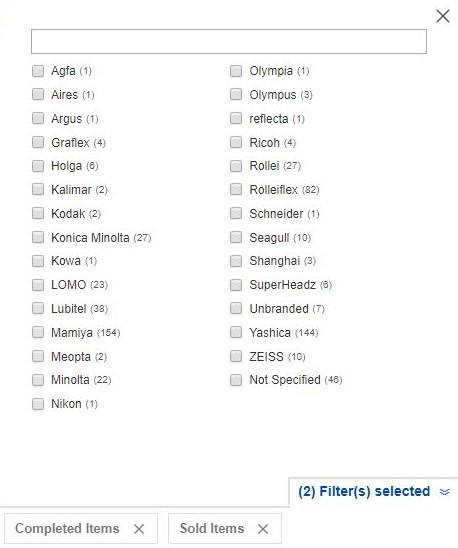
I decided to take a snapshot of just completed sales of cameras that were listed as “TLR – Film Cameras – Sold” on eBay.

tlr sold list

The top six are –

  • Mamiya
  • Yashica
  • Rolleiflex
  • Lubitel
  • Rollei
  • Konica Minolta

This list goes back to the last few days of January 2019 and does include some accessories (lenses, lens caps, cases) that are not cameras. So the total numbers will be a bit skewed.

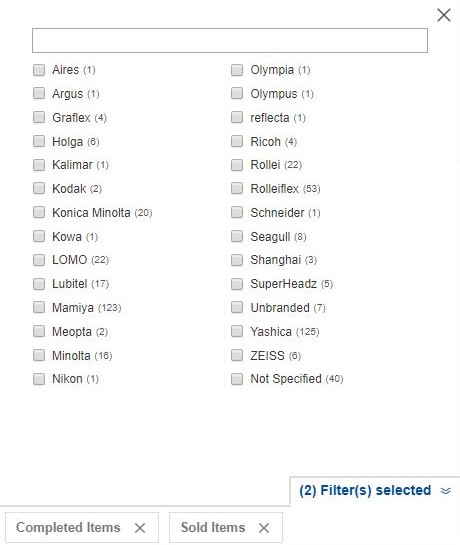
Here’s the list searching for “TLR Camera – Film Cameras – Sold” on eBay which removed accessories like lenses, cases and other minor parts.

tlr list

The top six are –

  • Yashica
  • Mamiya
  • Rolleiflex
  • Rollei
  • Konica Minolta
  • Minolta

This represents an unscientific look at the popularity of TLRs as a viable tool for enjoying medium-format (6×6 cm) photography. 120 roll film is still widely available and it’s easy to find online companies that develop the film.

53580006

6×6 cm image taken with my Yashica-Mat EM TLR. Learning to compose and shoot this square format takes a bit of practice but the quality of the finished picture is worth it.

dscf3060

Thanks for stopping by! – Chris

My camera shop is always open and it can be found at http://www.ccstudio2380.com – I’ve got a big sale in progress with some super savings… check it out!

Please respect that all content, including photos and text, are the property of this blog and its owner, Yashica Pentamatic Fanatic, Yashica Sailor Boy, Yashica Chris.

Copyright © 2015-2019 Yashica Pentamatic Fanatic, Chris Whelan
All rights reserved.

Nicca Pentamatic!?

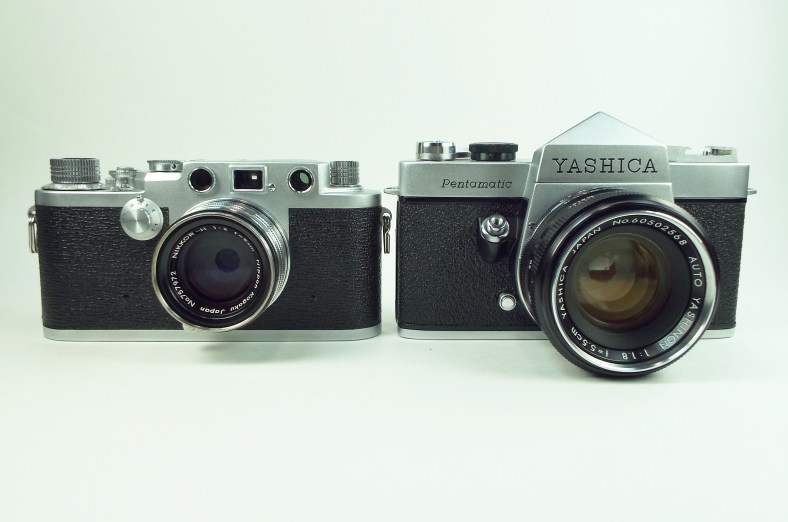
Stay with us and we’ll try to make our case. Recently discovered information has filled-in some of the missing links in the development of our favorite obsession camera. The mysterious and seldom seen Pentamatic ’35’… Yashica’s first SLR.

dscf2740

A few interesting bits of info have come to our attention recently. We were alerted to an auction by our friend Paul Sokk (http://www.yashicatlr.com) that listed a 13.5 cm f/ 2.8 lens made by Taiho Optical Company –  Nicca Lens. Having never heard of the company, Taiho Optical, and knowing about Nicca’s history, we couldn’t figure out where and how there could be a Nicca connection.

taiho_optical_co_nicca_135mm_f28_04

Let’s backtrack a bit with a quick history lesson. Yashima-Yashica was a very successful maker of high quality, low-cost twin-lens reflex cameras but hadn’t moved into the 35 mm market as of early 1957. It appears that the president and founder of Yashima-Yashica, Mr. Yoshimasa Ushiyama could see that although Yashica was successful building TLRs, the market for them would slowly diminish as new, smaller and easier to use 35 mm cameras would grab the marketplace. He wanted in but how?

Yashica had no experience with 35 mm cameras, especially rangefinder cameras with cloth focal-plane shutters. There were dozens of Leica copy cameras in Japan (and the world for that matter) but possible patents protected specific manufacturer’s shutter designs. If he could buy into an established company then he could use their shutter design and incorporate it with early Yashima-Yashica designs. In May of 1958, an opportunity presented itself. Nicca Camera Company was apparently experiencing financial difficulties and may have been on the brink of bankruptcy. Nicca cameras were well known and well respected – they made high quality 35 mm rangefinder cameras with focal-plane shutters. They used Nikkor lenses with the L39 screw mount. Mr. Ushiyama was in a rush to purchase Nicca before they went belly up. Advisers cautioned to wait until Nicca went bankrupt arguing that they would be able to acquire it for a better price. Mr. Ushiyama knew that that outcome of a bankruptcy could take longer than he was willing to wait and there would certainly be more suitors to compete with. So the deal went through… sort of. As best as we can glean from our research, a “religionist” “admonished” Mr. Ushiyama for rushing into the deal and cautioned that Yashica itself would suffer a “decline” if all of the transfer were made immediately.

record-image_939x-h3sn-v1

OK, OK! We give!!! We share your feelings dear reader –  what’s the connection between Nicca and the Pentamatic? Taking the advice of the religionist, Mr. Ushiyama created a new company. Nicca would become Taiho Optical Company. Say what? Nicca wasn’t absorbed into Yashica in May of 1958, instead, they became another company that could continue to operate with Yashica but without becoming Yashica. Simple. Confused? Mr. Ushiyama listened to his adviser so nothing bad happened. It appears that the former Nicca employees were now free to develop new processes and designs with the financial and technical support of the much larger Yashica. What did Yashica get for its money? Plenty it would seem. Access to years of 35 mm rangefinder manufacturing experience and access to a proven focal-plane shutter. Important steps in building a 35 mm single-lens reflex camera. We don’t know (yet) which one of the two companies came up with the design of what would become the Pentamatic. Was it mostly a Yashica design that had been kicking around for a while lacking a focal-plane shutter, or was it mostly a Nicca design that lacked the financial means to bring it to market? We feel that it was more than likely a 60 – 40 split with Nicca as the 60%. Just a hunch, no facts at the moment.

Yas Cover P1 bro (1)

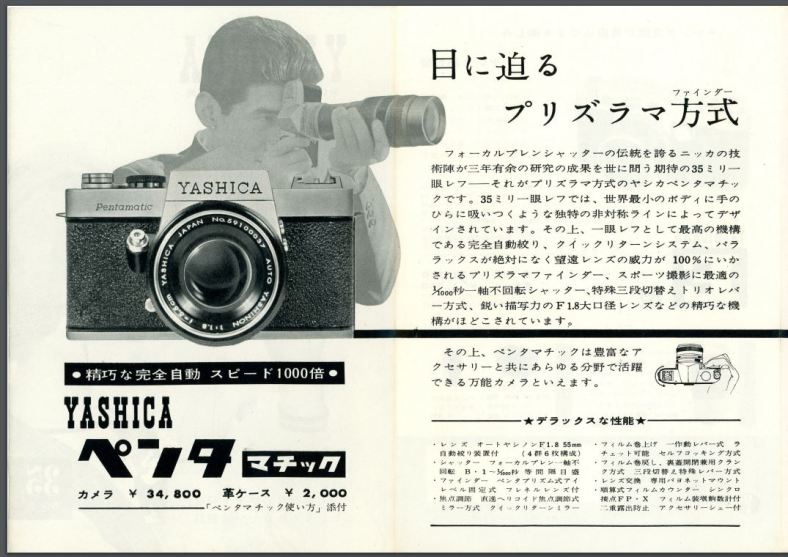
Earliest known sales brochure for the Pentamatic ’35’. The best guess is that it was printed in the Spring of 1960.

Yas inside P1 bro

A machine translation of this page from inside of the brochure states clearly that Nicca and Yashica developed the Pentamatic.

dscf2743

But what did the Taiho Optical Company make? Yashica didn’t make their own lenses, Tomioka Optical of Tokyo did. Was the former Nicca, now that it had become Taiho Optical, going to suddenly start making lenses? At the start of this blog, we mentioned that we were alerted to the existence of a 13.5 cm lens for sale with the Taiho Optical Company-Nicca Japan markings. Other than that, nothing.

So when did Mr. Ushiyama merge the two companies? He apparently listed to his adviser and waited eight long years before merging the two. From 1960 (when the Pentamatic was released) until 1968, when he not only made Yashica whole, but he also acquired long time lens supplier Tomioka Optical.

Now we know how the Pentamatic came to be and why it could be called the Nicca Pentamatic.

dscf2748

Thanks for sticking with us. – Chris

Please respect that all content, including photos and text, are the property of this blog and its owner, Yashica Pentamatic Fanatic, Yashica Sailor Boy, Yashica Chris.

Copyright © 2015-2019 Yashica Pentamatic Fanatic, Chris Whelan
All rights reserved.

Wordless Wednesday – Turtle Power!

20190423_184809

20190423_184526

20190423_184345

Camera: Samsung Galaxy S8+

BTW, she’s OK and soon left on her own accord to hang at the bog.

Thanks for stopping by! – Chris

Please respect that all content, including photos and text, are the property of this blog and its owner, Yashica Pentamatic Fanatic, Yashica Sailor Boy, Yashica Chris.

Copyright © 2015-2019 Yashica Pentamatic Fanatic, Chris Whelan
All rights reserved.

E.P Marked Photo Gear. Is it really worth more?

A revisit to this earlier post about the mark that is sometimes found on Japanese cameras from the 1950s, 1960s and infrequently the 1970s. Recently we discovered a Canon AV-1 from 1979 with the mark – that’s the latest ever found by us.

Chris and Carol's avatarChasing Classic Cameras with Chris

Photo gear made in Japan will sometimes carry a strange marking  <E.P>

20170603_191236

In the above example, the <E.P> mark is engraved on the rewind knob of this Nicca camera. This camera is from the 1955 to 1957 period.

s-l1600 (23)

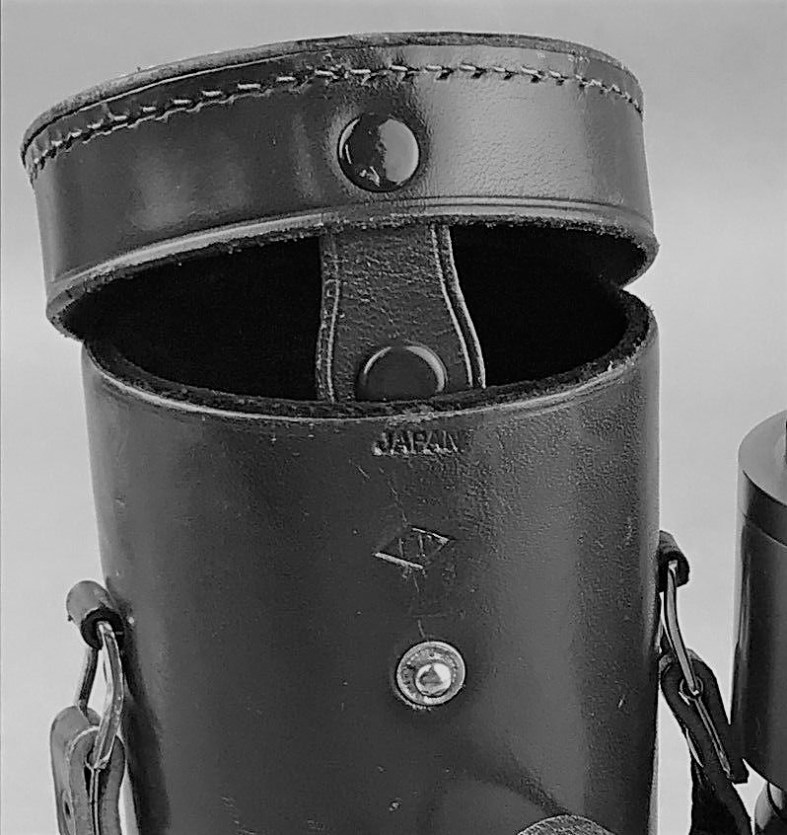
In the example above, this Nikkor 13.5cm lens has the <E.P> mark engraved on a small lever near the base of the lens. On the lens case below, the <E.P> mark is stamped into the leather just below the JAPAN stamp. The case belongs with the lens pictured above.

s-l1600 (22) First time we’ve seen the mark on a lens case. To us that implies that the case was mated with that lens from the factory (or wherever the mark was applied).

So what’s up with the <E.P> mark anyway?

As we understand it, the Japanese government needed a way to identify which pieces of photo gear were sold through military facilities and duty…

View original post 617 more words

Earth Day 2019 Walkabout – NWF Certified Wildlife Habitat

Carol and I have had our backyard certified by the NWF for many years now – it’s a fun way to get your kids interested in the environment (even if it’s only their own yard) and to foster a respect for our plant in the big picture. All great things start small.

Here’s some images from this morning’s walkabout (4.22.2019) – our little part of the Earth right here in northeast Florida.

DSCF9845

There are over 15 bald cypress trees mixed in with river maples, some oaks, bay trees, and of course, plenty of maidenhair ferns for protective groundcover. There’s a small natural bog and some wetlands too. I’m proud to say that I’ve planted all but 6 trees out of the nearly 60 trees in the yard. Since we moved here in the autumn of 1991 we’ve lived long enough to enjoy the fruits of our labor as most of the cypress trees have grown to be about 40 feet tall.

DSCF9853

One of the many bald cypress trees that inhabit the yard. This one is a “baby” from the first tree that we planted nearly 30 years ago. (see below)

DSCF9849

This bald cypress we brought home from the nursery in the back of our SUV when it was maybe 5 feet tall. It’s now the “daddy or mommy” to most of the other cypress trees in the yard.

We live in a somewhat typical suburban neighborhood with the exception of the backyard has not one blade of grass. No mowing, no lawn maintenance – no chemicals.

Other trees that we’ve planted – Leyland cypress, Japanese black pine, and river birch. All of these do extremely well in the semi-wet environment of our yard and all are native to Florida.

DSCF9839

A young bay tree starting its life amongst the ferns.

DSCF9840

We recently added a wren birdhouse (a gift from our daughter Lindsay) and a family of Carolina wrens have taken up residence. Yeah!

DSCF9843

The sun sculpture on the fence is a favorite of the local anole lizards – they like poking their heads out from the mouth and the sun holds on to some late afternoon sunlight and warmth. Here in the early morning hours, it catches enough sunlight to make it a cozy home.

As the summer wears on, these garden ornaments make a perfect landing spot for dragonflies while patrolling their territory.

DSCF9844

Our crepe myrtle which we purchased through the Arbor Day Foundation (it came as a stick 10 years ago) has grown quite nicely over the years and provides a nice display of dramatic color and texture throughout the year right outside our garden window. The local cardinals and squirrels love the seeds it produces too.

The crepe myrtle in this part of Florida does well without much fuss – it gets all of its water from rainfall and I’ve never fertilized it or use chemicals on insects. The birds and lizards do an excellent job at keeping the bugs in check.

DSCF8560

Marsh rabbit – aka, “Bun-Buns” as Lindsay used to call them.

Other dwellers of the yard – otters (rarely now do we see them), hawks, cardinals, bluebirds, wrens, crows, vultures, marsh rabbits, squirrels, snakes (all types except pythons), lizards, frogs, river cooters (turtles), gopher tortoise, bats, owls, racoon, opossum, armadillo, bobcat (rarely but they do show up), coyotes (only recently), and there was a report of a black bear a few years back. No deer as the yard is way too wet and the woods are a bit dense.

It’s super easy to convert your backyard into a wildlife habitat – just get rid of the grass, plant native trees (a bunch of them), provide some groundcover and water, plant native bushes and flowers and then sit back and enjoy the show. It sure beats mowing and the birds and the bees will thank you each and every day!

Certify your yard with the NWF (go online, it’s easy to do), buy your trees through the National Arbor Day Foundation, shop for native trees and shrubs through local nurseries, add plenty of environmentally friendly rocks (if you’re not blessed with them naturally), mulch to discourage weeds, and share your knowledge with others.

Happy Earth Day y’all! Peace!

Chris

Please respect that all content, including photos and text, are the property of this blog and its owner, Yashica Pentamatic Fanatic, Yashica Sailor Boy, Yashica Chris.

Copyright © 2015-2019 Yashica Pentamatic Fanatic, Chris Whelan
All rights reserved.
 

Zoom Cardia 900 – SLR Slayer from Fuji

It’s available through my Etsy camera shop at http://www.ccstudio2380.com or buy it direct here. Thanks – Chris

Chris and Carol's avatarChasing Classic Cameras with Chris

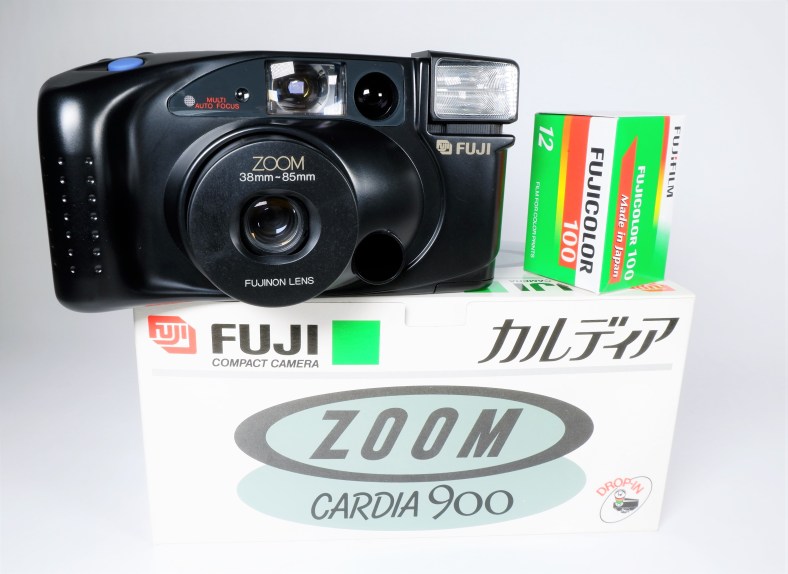
Released in Japan in February 1990, this powerful (and not so little) point and shoot 35mm film camera was designed to bring all of the best auto features into one small package. It listed for ¥ 43,800 ($300 at that time) and compared to other P&S compacts of that period that wasn’t a bad price.

It’s a good looking camera in my opinion and its got some heft to it with all of the micromotors built-in and that big Fujinon zoom lens (400 grams with the CR-P2 battery installed).

DSCF9592 Excellent coverage from this sophisticated Fujinon zoom lens – wide-angle to a perfect portrait and short telephoto focal length.

The Cardia Zoom models are considered to be one of the best of the best in the compact 35mm film camera segment – certainly worthy of being called a Modern Classic!

Some of its impressive specs:

  • Fujinon Z 38-85mm f/3.8 (2.2x zoom)…

View original post 380 more words