Heavyweights 1954-1955

DSCF8482 logo

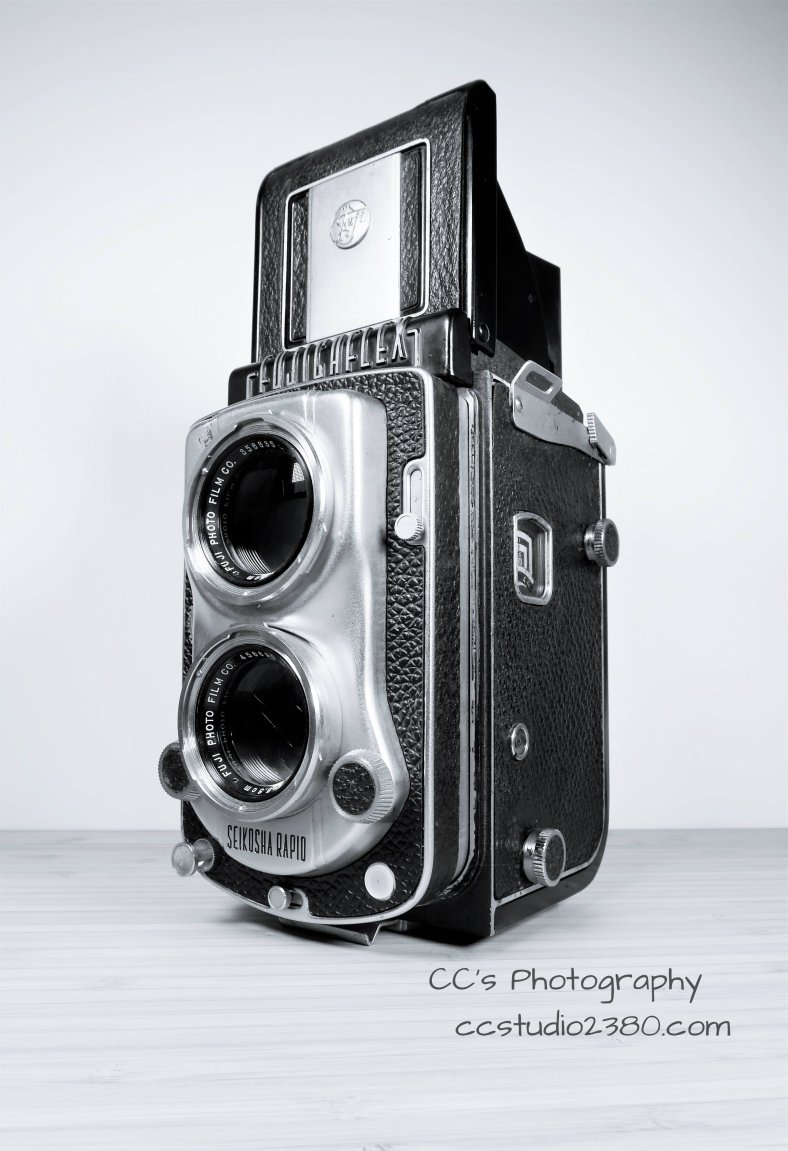
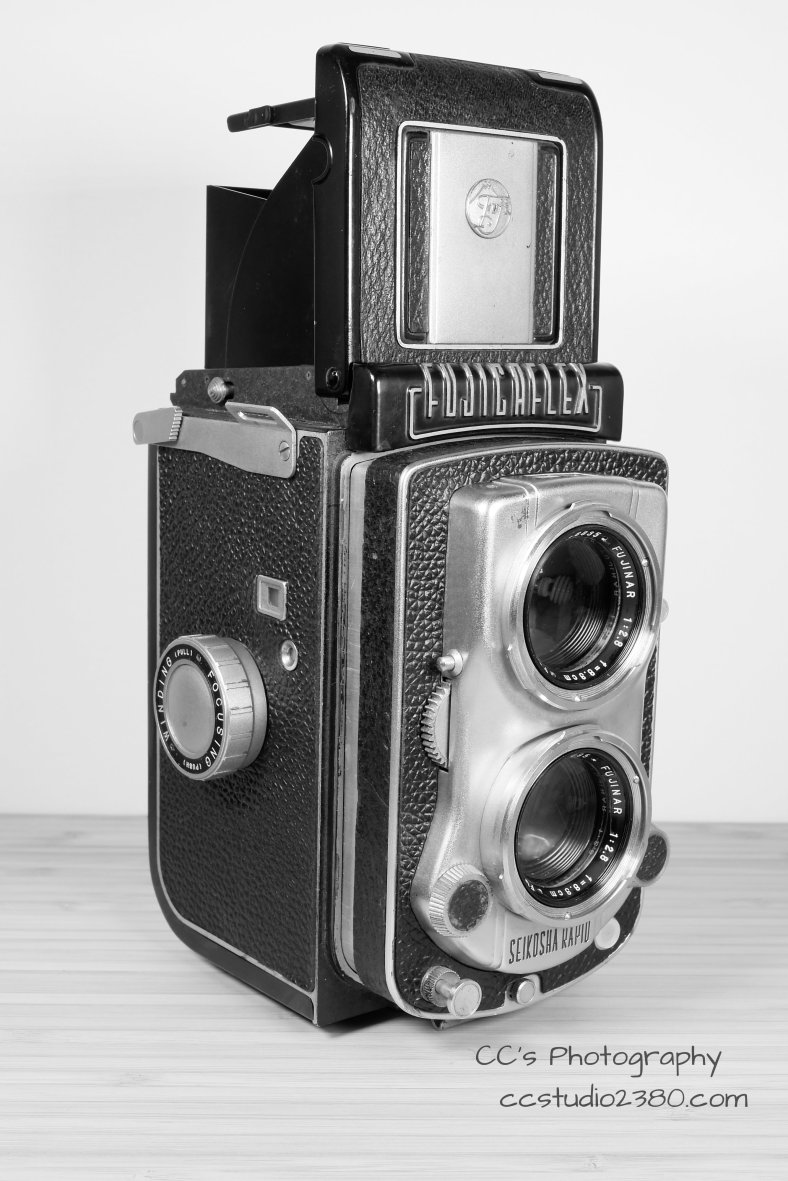
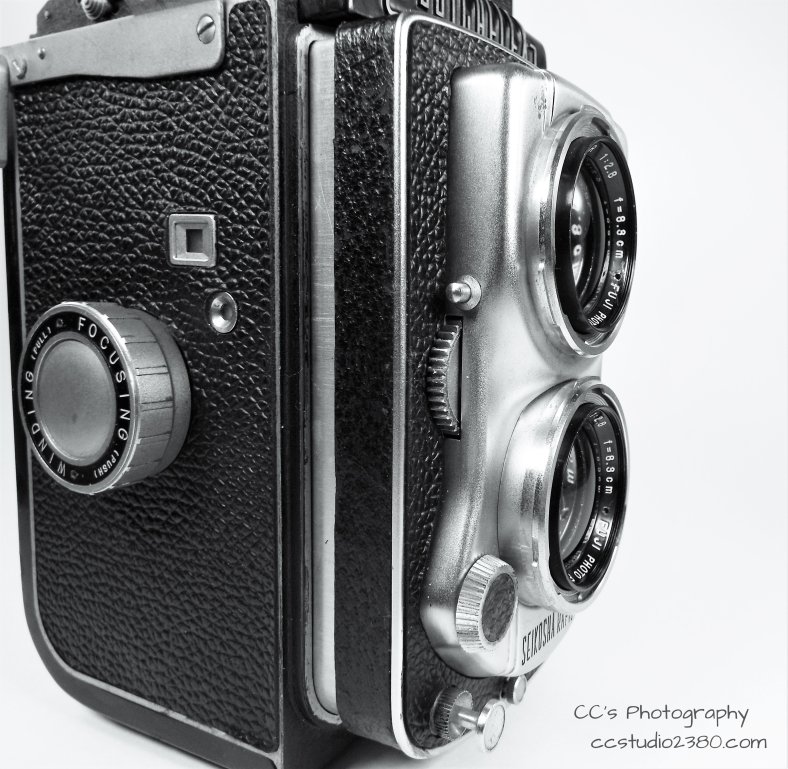
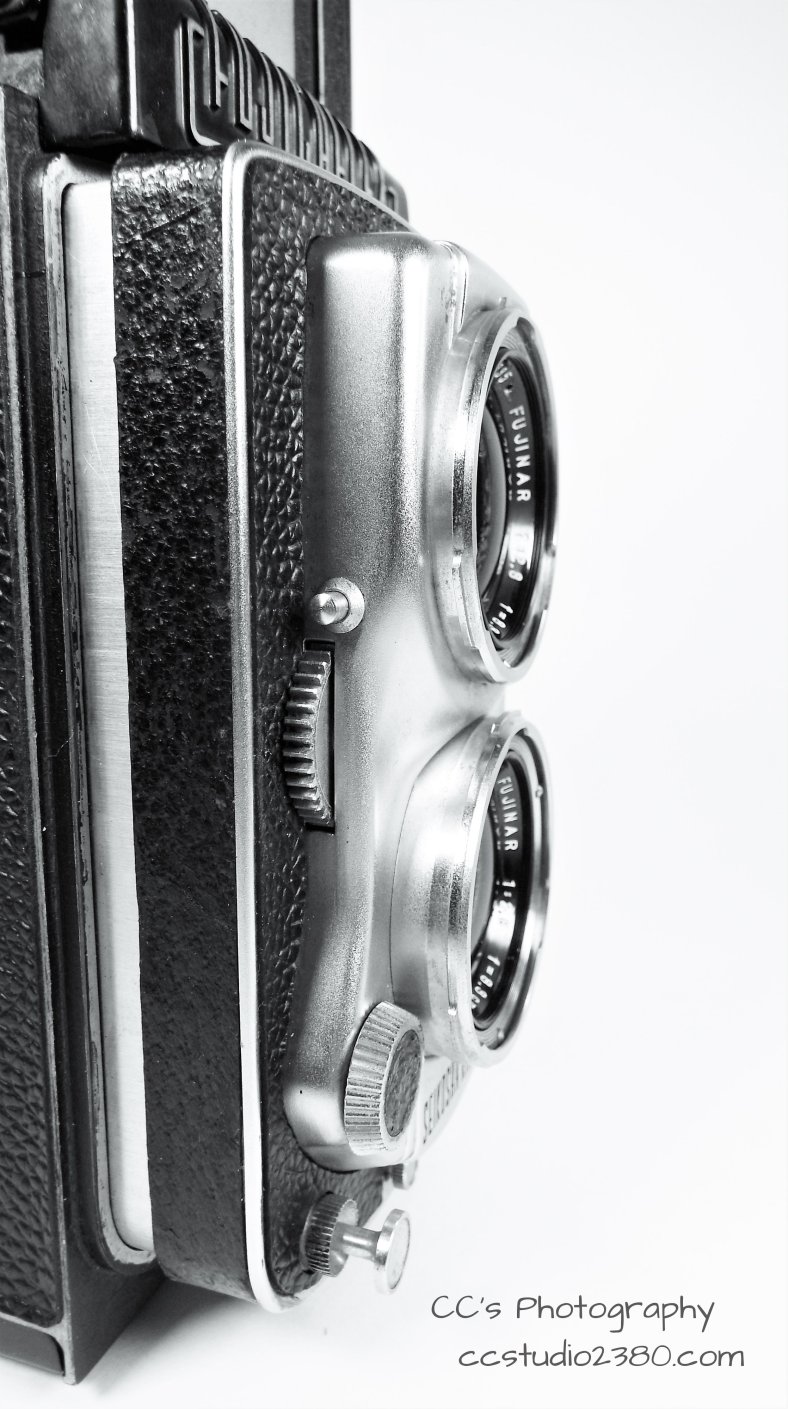
On the left is the Fujicaflex Automat by the Fuji Photo Film Company – Fuji’s first and only twin-lens reflex (TLR) camera. On the right is the Yashica Flex S (aka Yashicaflex S) by Yashima Kogaku Seiki Company.

Yashima (later to be known as Yashica) went on to build TLRs until 1986 producing thousands encompassing over thirty models.

The Fujicaflex was under development by Fuji since around 1948 and the direction they took was to build a high-quality camera geared to the serious amateur and semi-professional photographer. By all accounts, it was a bust in the marketplace (way too expensive) as Fuji never attempted to follow it up with a second model and ending production in just about a year.

The Fujicaflex is noticeably larger than the Yashica Flex S – the Fuji weighs 1,323 grams and the Yashica comes in at 1,117 grams. Both cameras were weighed with a roll of 120 film loaded.

DSCF8485 logo

The Yashica Flex S was the first ever TLR with an attached exposure meter. I imagine you could say built-in as the meter’s cells were located behind the nameplate flap and were connected to the meter on the camera’s left side via wires. The non-coupled selenium cell meter was built by Sekonic and was marked “Sekonic CB-1”.

We’ll continue to feature the Fujicaflex in upcoming posts and hopefully soon we’ll be able to post some images taken with it. I’ve got a roll of Fujichrome Velvia 100 in it now.

Thanks for stopping by and be sure to check out some of our unique photo gear in our shop at http://www.ccstudio2380.com

Chris

Yashica Pentamatic & Yashica 35

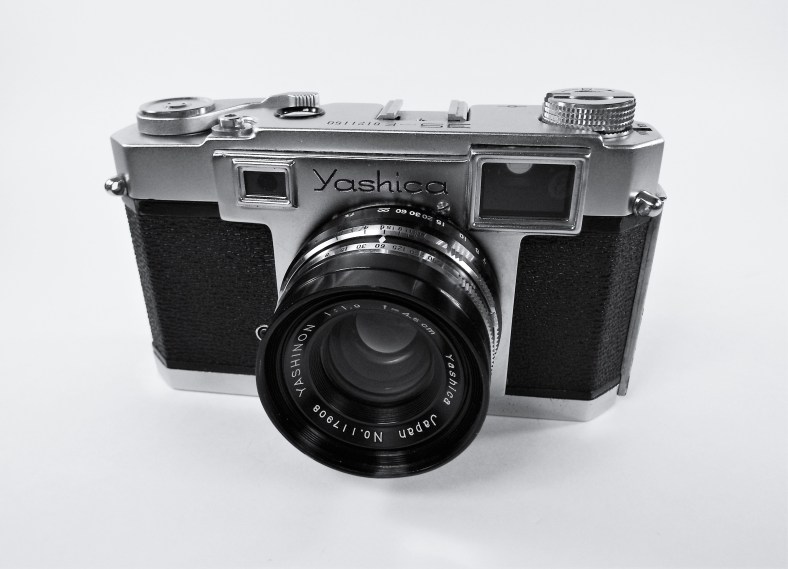
Two heavyweights from the Yashica Company, Limited.

DSCF8444 logo

Yashica 35 (left) & Pentamatic (right)

The Yashica 35 was a 35mm rangefinder camera first introduced in early 1958. The Pentamatic was Yashica’s first 35mm single-lens reflex camera first released in early 1960.

DSCF8445 logo

Thanks for stopping by! Be sure to stop by our online shop at http://www.ccstudio2380.com

Chris

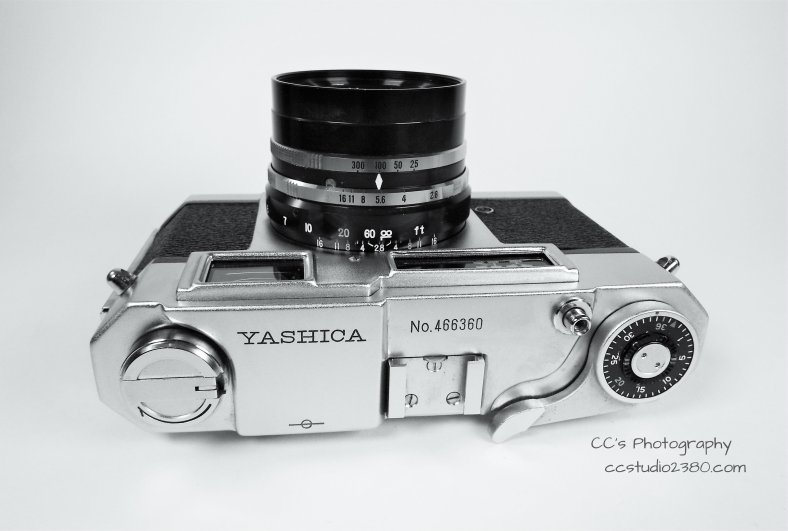
The Yashica 35 – Yashima’s first 35mm camera – a visual tour.

DSCF8430

The Yashica 35 was produced starting in April 1958. This camera (above) is one of the last of the series to roll off the assembly line at Yashica’s factory in Shimosuwa, Nagano Prefecture, Japan in December 1960. Little changed from its original design – minor tweaks here and there but never anything major.

DSCF8431

The lens was made by Tomioka Optical and was produced in two models – the f/1.9 and f/2.8, 4.5cm fixed lens.

DSCF8425

Close-up of the front group removed.

DSCF8423

Very similar to other Tomioka made lenses of the period.
DSCF8428

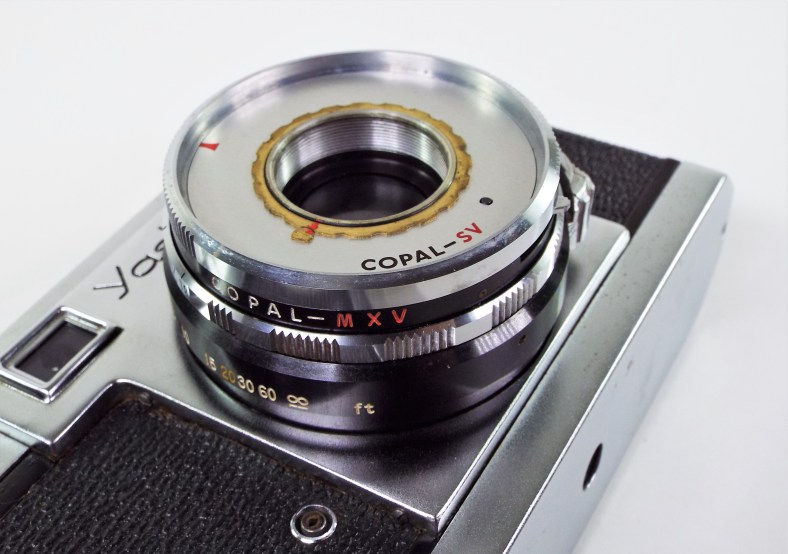
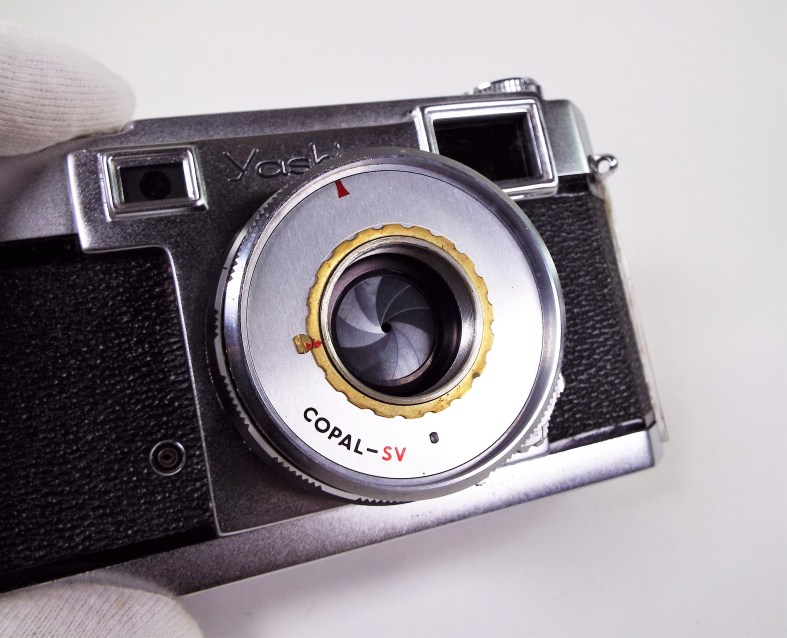
With the front lens group removed we can see the Copal shutter assembly – here a mix of parts produced a hybrid. Is it an MXV or SV shutter? It would appear that Yashica was cleaning out its parts bins when this late model was built. Notice that the focus scale is in feet.
DSCF8421

10 blade aperture.

yas 635 logo 2

Original early sales brochure – the sharp-eyed will notice that the name on the lenses is “Yasinon” vice “Yashinon”. Changes were made even as the brochure went to press.

IMG_20180615_0005 logo

IMG_20180625_0001 logo

About $47.00 USD for the f/1.9 and $32.00 for the f/2.8 – add another $2.77 for the leather case.

DSCF8432

The 35 “F” variant. Not a new model just a changeover to a different style of serial numbers. The serial number decodes as follows: 6 = 1960, 12 = Dec, and 1150 = sequence number for that month’s production.
DSCF8434

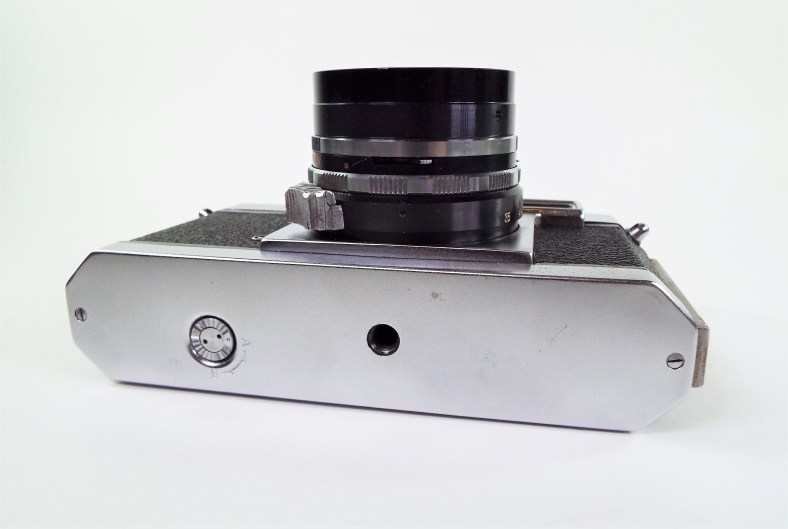
From this point of view, it looks just like it did in April 1958.
DSCF8435

DSCF8436

A beauty in black & white.

DSCF8440

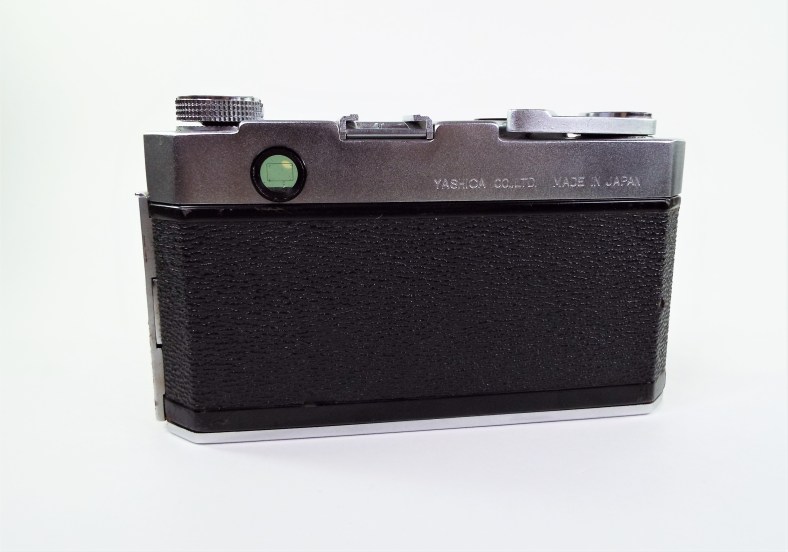
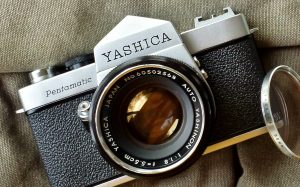
Yashica 35 & Yashica Pentamatic 35 – Yashica’s first rangefinder and first SLR.

The Yashica 35 is certainly a worthy addition to any early 35mm rangefinder collection. If you like to collect “firsts” then may I recommend that you check out the Yashima Pigeonflex, Yashimaflex, the Yashica 35 and the Yashica Pentamatic 35 – each of these wonderful cameras was a major milestone in the development of the Yashica Company.

So there you have it, a brief visual tour of the Yashica 35. If you would like to know more, much more, cruise on over to my good friend Paul’s website.

Thanks for stopping by!

Chris
 

Fujicaflex Automat – Fuji Photo Film’s 1st TLR – 1954

My wish may be closer to reality! I’m “in the hunt” for one of these exceptional cameras now.

Chris and Carol's avatarChasing Classic Cameras with Chris

Vintage camera wish list item 101.

The Fuji Photo Film Co., Ltd., Fujicaflex 

フジカフレックス

Designed to incorporate the best features that were available in the medium format twin-lens reflex camera market, the Fujicaflex debuted in 1954 – at a very premium price, we might add. While surfing today, we stumbled upon this wonderful site from Fujifilm Europe. You can check it out here

It’s nice to see a large corporation like Fujifilm blog about some of the really cool cameras that helped make their company great. In another blog, they go on to talk about the amazing Fujipet from 1957.

Twin-Reflex-Cam-433x375

For more about this wonderful camera, take a trip here too to see Mr. Yoshinobu Koyasu’s camera collection… it is not to be missed!

It’s certainly interesting to read (Fujifilm Europe’s blog) – the older posts that pay tribute to the cameras of their roots are so interesting.

Enjoy!

Chris

View original post

Amelia’s Little Airport

20180820_202048 logo

Dramatic nighttime lighting highlights the unique design of the Fernandina Beach (Florida) Municipal Airport Terminal building. The design pays homage to the U.S. Navy F4U Corsair fighter plane that flew training missions from this airfield during WWII.

20180820_202752 logo

The “Corsair” as seen from the plane’s starboard side (note the small green light at the end of the wing). The canopy (skylight) is highlighted with a series of LED lights.

20180820_201432 logo

The terminal as seen from the runway side of the airfield.

A well-executed design that looks stunning at night. I’m sure this will be somewhat of an attraction here in Northeast Florida as the building will feature all types of memorabilia from the airfield’s connection to the Corsair and the training of Naval aviators during World War II.

Thanks for stopping by!

Chris