Classic Canon AE-1 with sharp Canon NFD 50mm f/1.8 lens. A late 1970s staple of the Canon ‘A ‘ Series cameras.This one comes complete as part of the 1980 Lake Placid Winter Olympics set.Sharp little digicam from Fujifilm. The S3100 is a 4 megapixel bridge camera with an outstanding Fujinon 6x zoom lens.CCD sensor for film-like images.Almost new in its original boxed set.I love Fuji cameras!
Comments are always welcome; I’ve learned a great deal from reader feedback. As always, thanks for stopping by. While there, visit my camera shop at http://www.ccstudio2380.com (CC Design Studios, hosted on Etsy). – Chris Whelan
Looking for a nice classic camera bag or case for your special and collectible camera? I’ve got some.
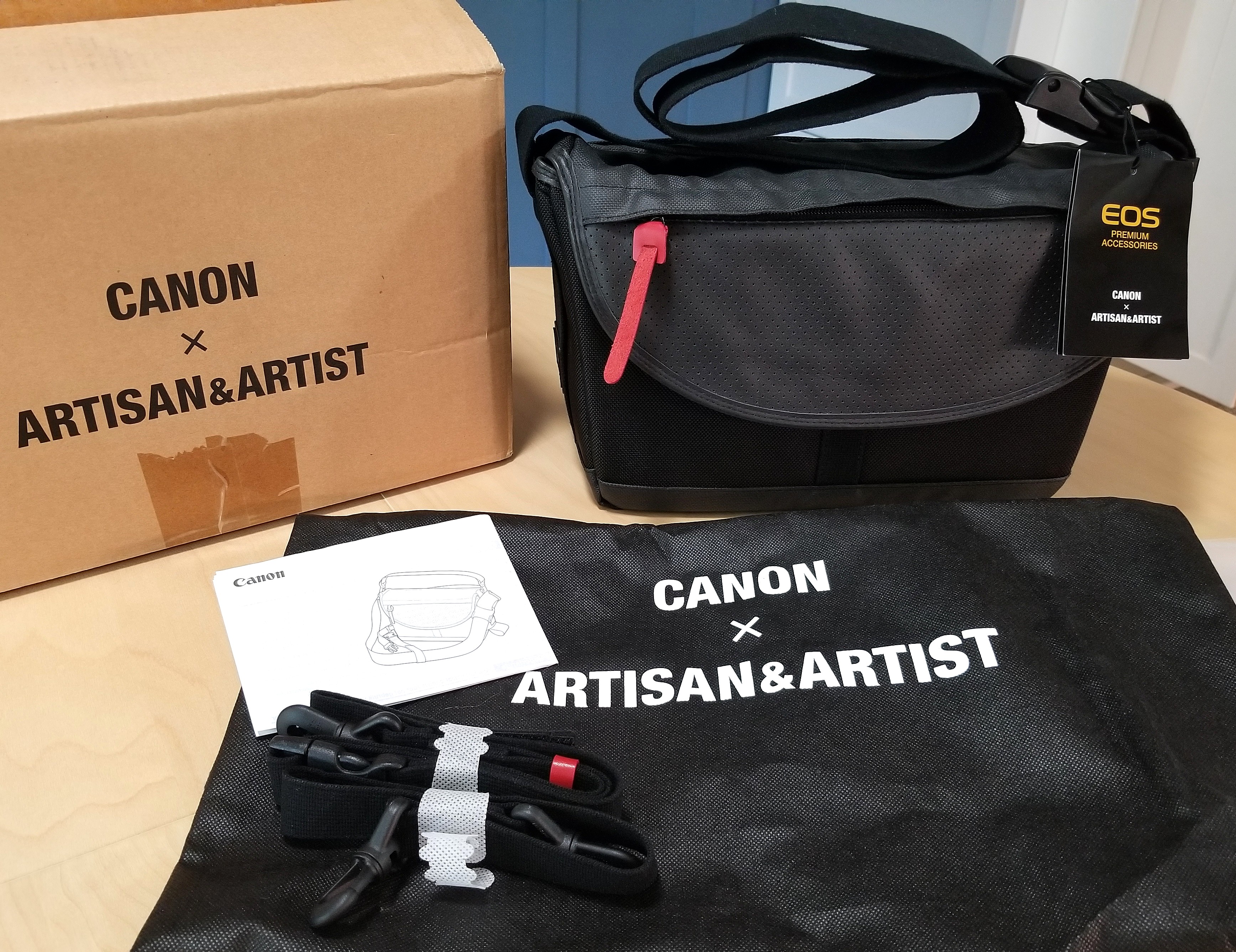
Classic Canon green and tan camera case.Unique collaboration between Artisan & Artist and Canon. The only one I’ve seen in years.ThinkTank and Canon CPS sling bag.
Comments are always welcome; I’ve learned a great deal from reader feedback. As always, thanks for stopping by. While there, visit my camera shop at http://www.ccstudio2380.com (CC Design Studios, hosted on Etsy). – Chris Whelan
My original Canon F-1 from 1978 is on the upper left (with the motor drive)—the Canon O.D. F-1 is my most recent acquisition.With their original instruction booklets.With an early Canon FD 50mm f/1.4 chrome nose lens.OD F-1. A limited edition olive drab version from early 1978.My earliest model. The serial number indicates that this camera was in the first 20,000 built in 1971. It also has the <E.P> mark.My only Canon New F-1 with AE Finder.
It’s one of my favorite 35mm SLRs in my collection.
Comments are always welcome; I’ve learned a great deal from reader feedback. As always, thanks for stopping by. While there, visit my camera shop at http://www.ccstudio2380.com (CC Design Studios, hosted on Etsy). – Chris Whelan
In many ways, it’s better than the much more famous F-1.
It’s also known as the Canon Black Beauty. It’s built on the F-1’s frame but does not have interchangeable viewfinders or the ability to use a power winder or motor drive.
The EF was first released in 1973, just two years after the F-1. It was Canon’s first aperture-priority camera, well before the AE-1.The standard lens is the Canon FD 50mm f/1.4 S.S.C. shown here with its lens hood.Here, a Canon EF and its cousin, the Canon F-1. The F-1 is shown in a limited-edition olive drab.Another EF in my collection.
The Canon EF is a worthy camera for your collection. The ability to electronically time exposures from 1/2 to 30 seconds accurately makes it more versatile than the F-1 in its base form.
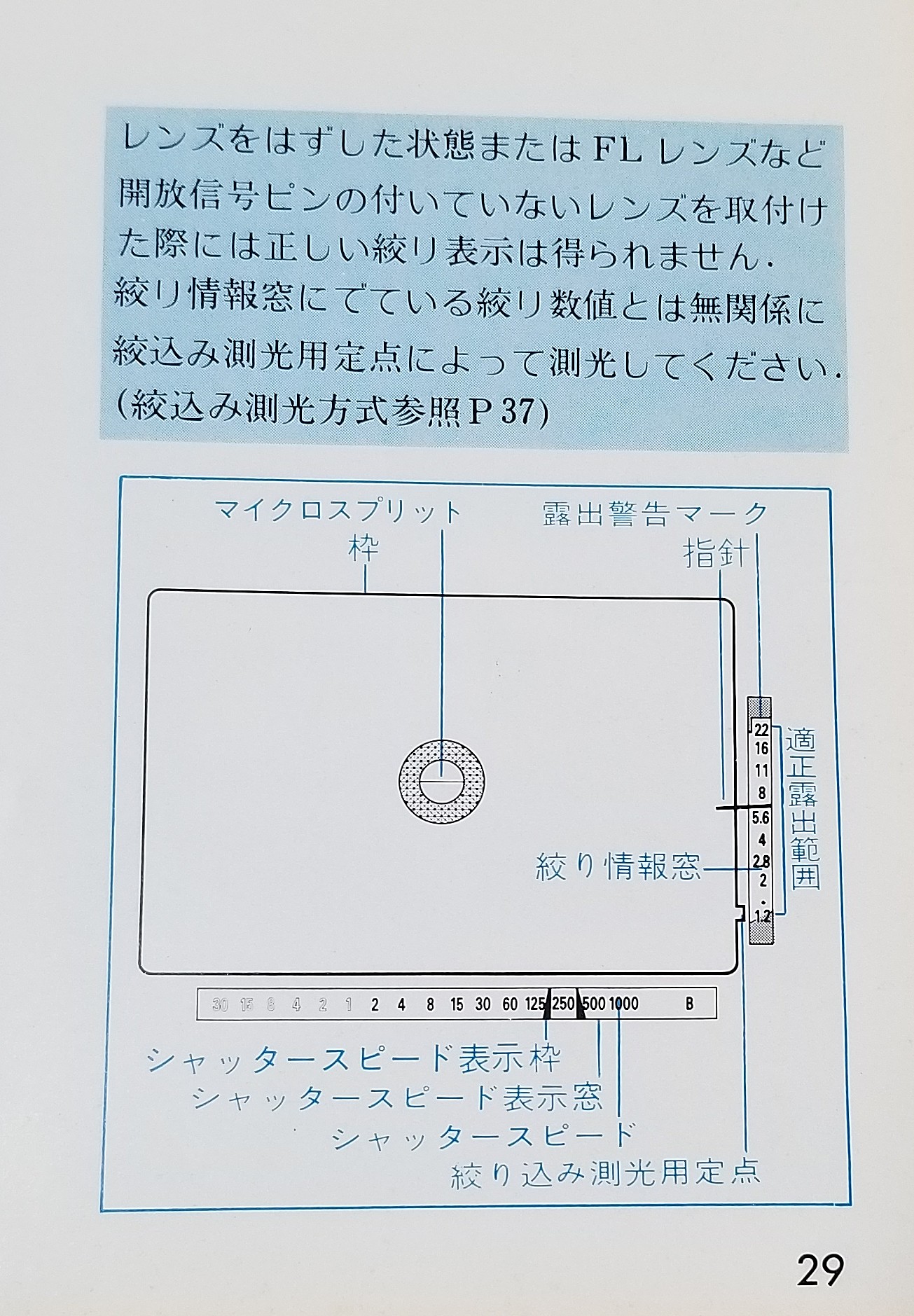
From the Japanese instruction book.The view in the viewfinder. The later EFs had a split-image and microprism focusing screen.From my EF released in Japan.An earlier EF with the FD 50mm F/1.8 S.C. lens.
Comments are always welcomed, as I’ve learned quite a bit from reader feedback. As always, thanks for stopping by, and while you’re at it, feel free to visit my camera shop at http://www.ccstudio2380.com (CC Design Studios hosted by Etsy). – Chris Whelan
I often purchase used cameras and lenses from individuals in person and from online sites. Some of these gems are usually over forty years old and older, and even though they look clean, I know they’re not. I don’t think I’m a germaphobe (a bit, maybe), but the thought of putting an obviously dirty camera up to my face isn’t too appealing. The flip side to making a camera clean again is that it will go a long way to preserving the camera’s surfaces, preventing corrosion, and removing oils and contaminates that will deteriorate the camera in the long term. I think of it as preserving a bit of history.
Here is a camera I acquired recently. It looked in mint condition and, at first glance, clean. The camera is from 1976, and although it wasn’t heavily used, it’s been sitting around collecting pollutants.
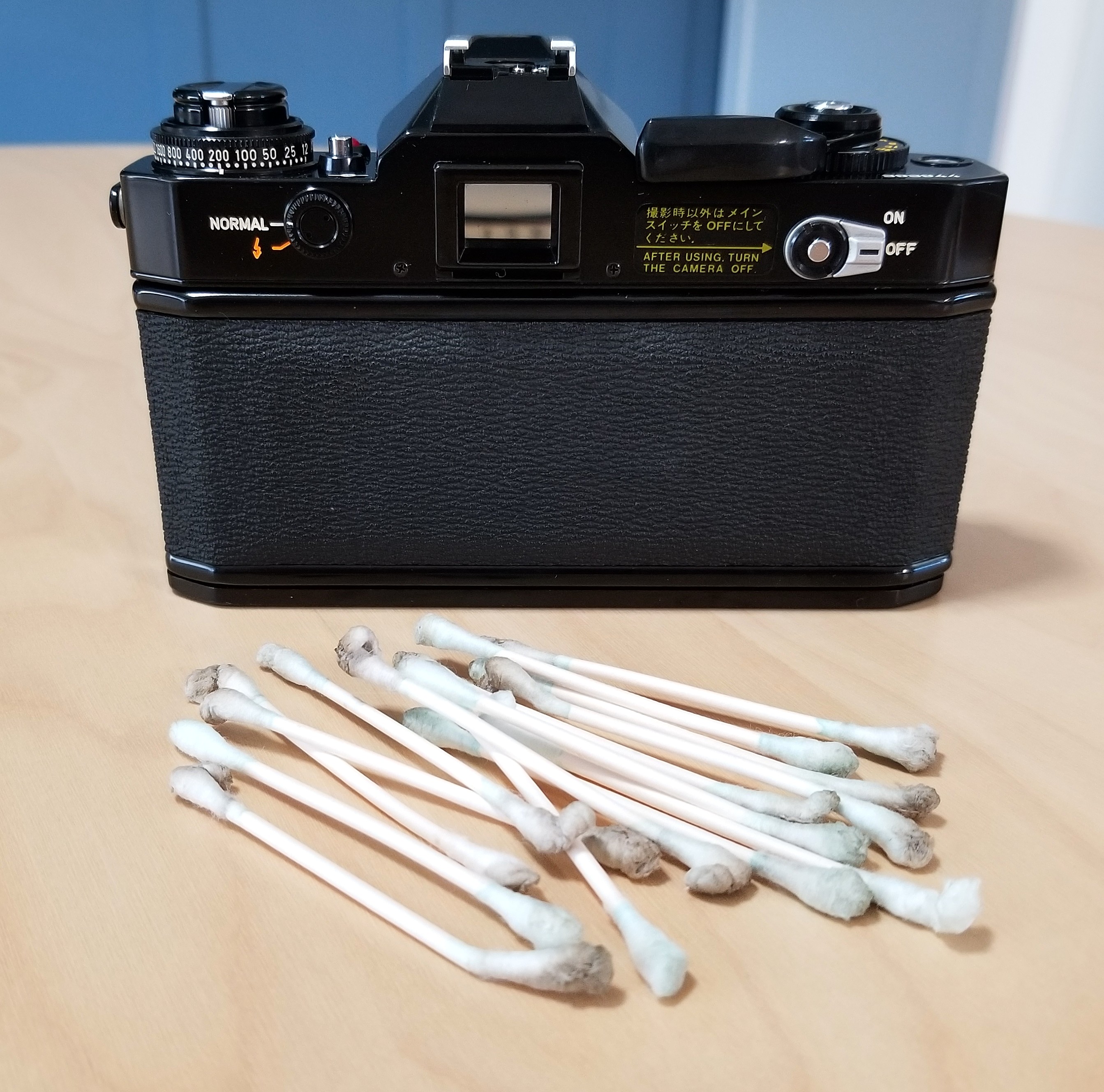
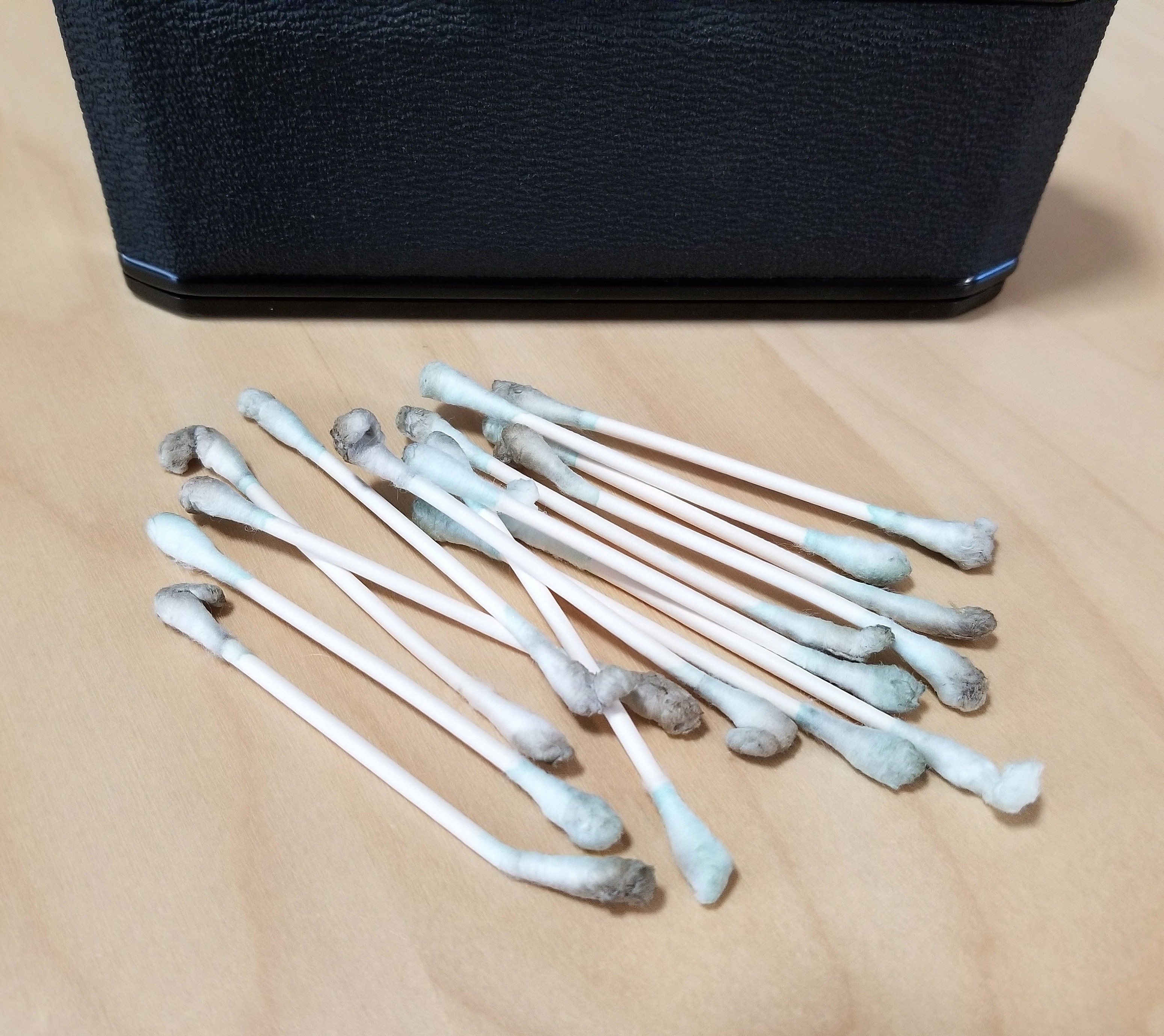
Standard cotton buds (Q-tips) and household Windex and lots of time remove the dirt and grime trapped in and on the surfaces of the camera. These were from the leatherette on the back cover. Think nose oils and dirty fingers. The front leatherette is another grimy area.Dirty buds.
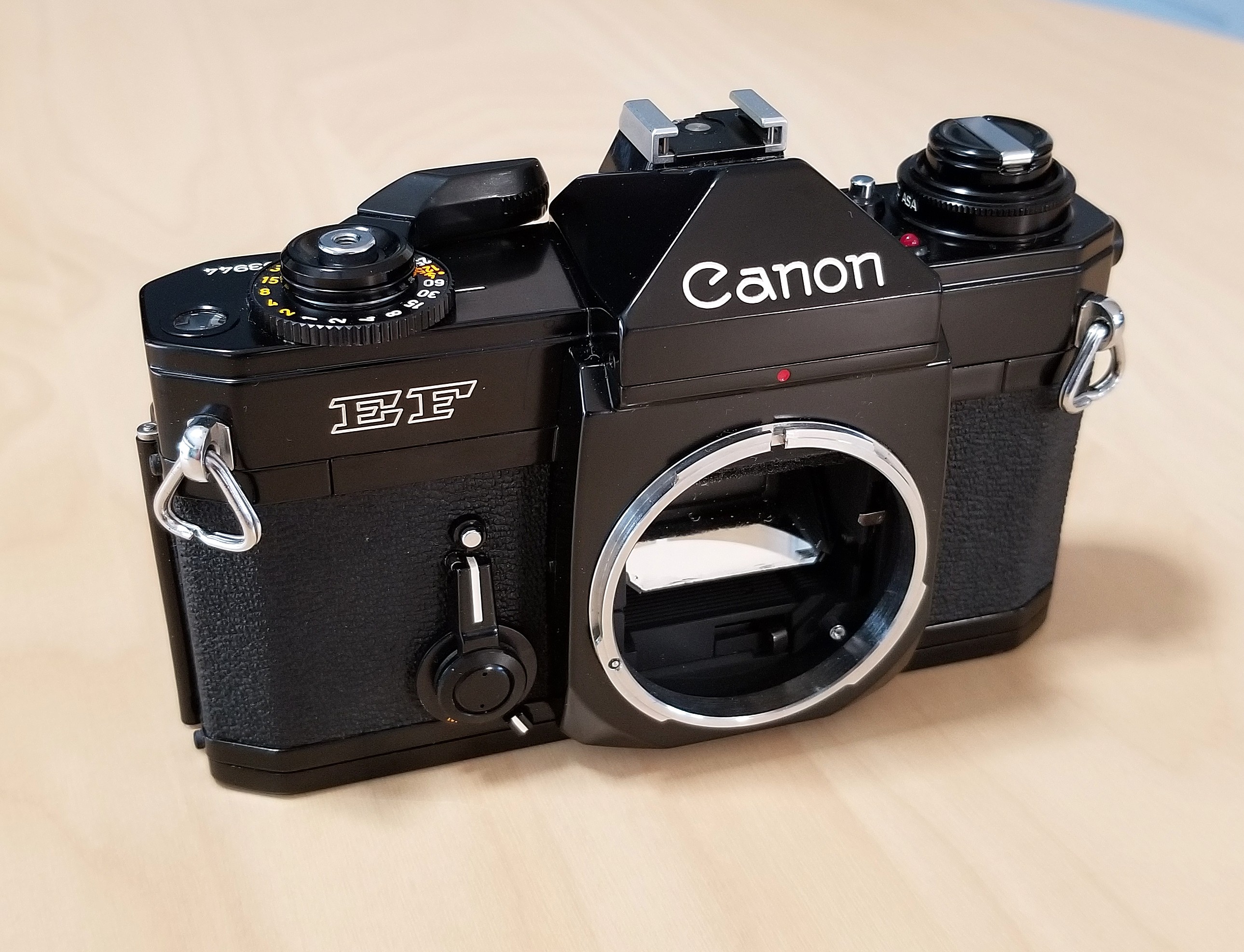
After an evening happily spent detailing this gorgeous Canon (below).
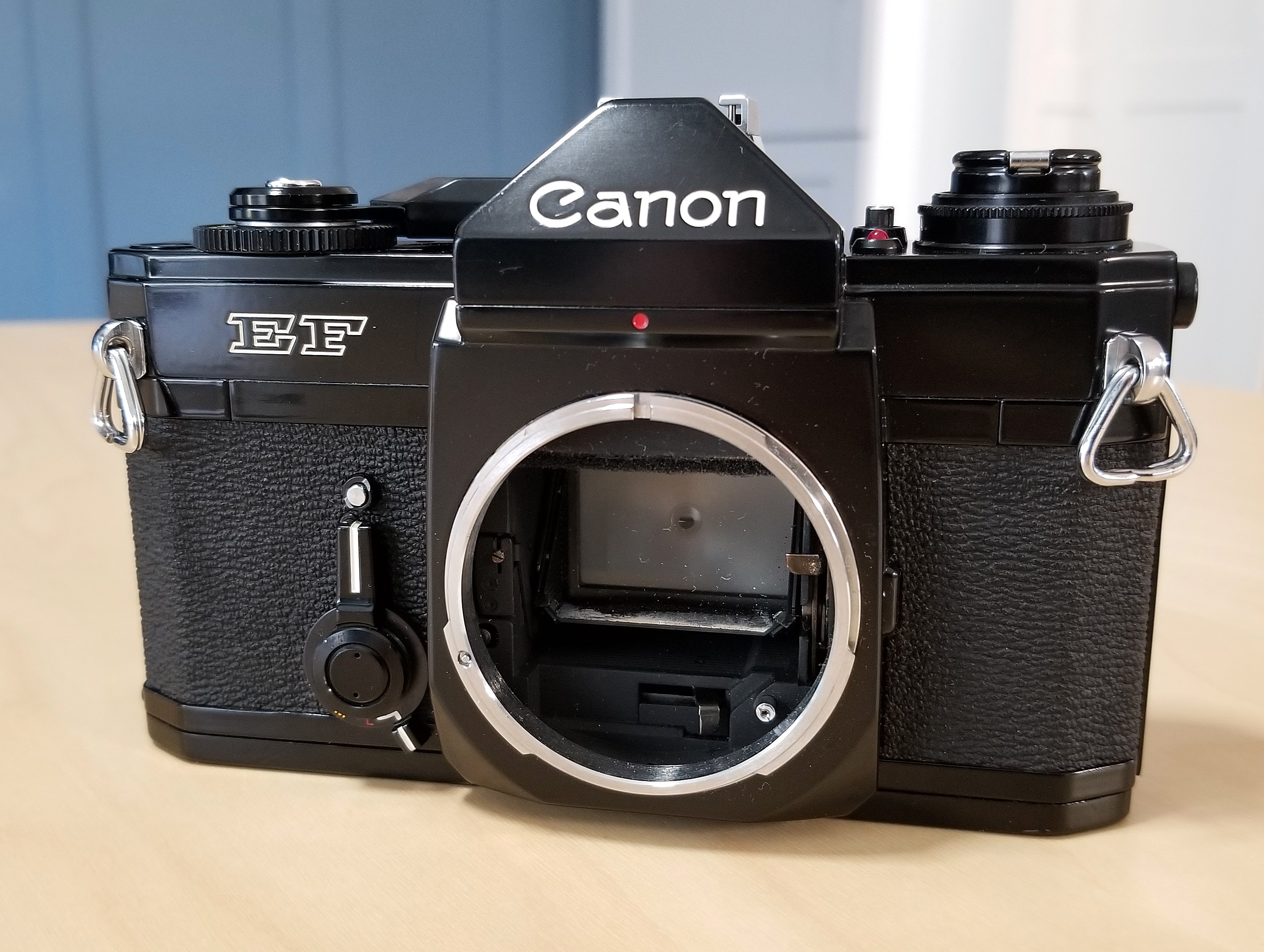
After.
I’ve cleaned cameras like this for over thirty years, and never has it damaged a camera or lens. Obviously, I dip the Q-tips in a small container of Windex. Don’t directly spray the camera.
Comments are always welcomed, as I’ve learned quite a bit from reader feedback. As always, thanks for stopping by, and while you’re at it, feel free to visit my camera shop at http://www.ccstudio2380.com (CC Design Studios hosted by Etsy). – Chris Whelan
The MF drive handles better for me. Its grip is so big that I feel confident toting it by my side.
Canon’s film eaters: The F-1 is on the left with the Motor Drive MF, and the Canon New F-1 is on the right with an AE Motor Drive FN. The grip on the New F-1 is slick, so it feels less secure in my hand. The most significant difference between these two is that the New F-1 is a shutter-priority AE camera, and with this motor drive, all one needs to do is focus. The original F-1 would need the rather large Servo EE Finder to achieve the same performance results.
Comments are always welcomed, as I’ve learned quite a bit from reader feedback. As always, thanks for stopping by, and while you’re at it, feel free to visit my camera shop at http://www.ccstudio2380.com (CC Design Studios hosted by Etsy). – Chris Whelan
Classic Canon AE-1 35mm SLR film camera.Shown with a sharp Canon New FD 50mm f/1.8 lens.My set will include everything pictured (minus the display stand).This is the last AE-1 in my extensive Canon camera collection.
This beautiful set is now available in my Etsy camera shop at http://www.ccstudio2380.com. It’s been professionally serviced and returned to factory specifications, including a new battery. Just add the film!
Comments are always welcomed, as I’ve learned quite a bit from reader feedback. As always, thanks for stopping by, and while you’re at it, feel free to visit my camera shop at http://www.ccstudio2380.com (CC Design Studios hosted by Etsy). – Chris Whelan
Comments are always welcomed, as I’ve learned quite a bit from reader feedback. As always, thanks for stopping by, and while you’re at it, feel free to visit my camera shop at http://www.ccstudio2380.com (CC Design Studios hosted by Etsy). – Chris Whelan
Here is a new flash in its original box, Canon Speedlite 244T, that I received from a recent purchase on eBay. The seller has since refunded me, but this serves as a reminder to never leave batteries, especially AA batteries, in your cameras and other accessories. This “new” flash had these Philips batteries installed at some point, but the owner forgot about them. What a shame that an otherwise neat collectible is now ruined.
I’ve seen worse corrosion before, but this is right up there with the worst.AA batteries in a flash unit can corrode in as little as a few months! These, however, have been left for decades.
Thanks for stopping by, and after reading this, please check your cameras. – Chris
Comments are always welcomed, as I’ve learned quite a bit from reader feedback. As always, thanks for stopping by, and while you’re at it, feel free to visit my camera shop at http://www.ccstudio2380.com (CC Design Studios hosted by Etsy). – Chris Whelan
Canon New F-1 Los Angeles 1984 Olympic Games Edition. From Canon: Instead of being a next-generation successor to the F-1, this camera was called the “New F-1” and not the “F-2.” With the first F-1 in 1971, Canon promised that the camera would remain unchanged for 10 years. This promise was fulfilled. During those ten years, remarkable electronics, precision manufacturing, and optics advances existed. The successor to the top-of-the-line F-1 had to incorporate the best electronic technology for better automation, versatility, and specifications.
The New F-1 uses interchangeable focusing screens to change the metering pattern, and it has a segmented metering element for metering flexibility. System AE is incorporated for automation to ensure optimum operation. The camera’s basic controls are the same as those of the old F-1, so F-1 users can easily adapt to the new F-1.
There are significant differences between the original F-1 and the New F-1. I like them both.The closest I got to owning the 1976 Montreal Olympic edition was the lens cap. It’s shown here on my F-1 that I purchased new in the summer of 1978 while stationed in Japan.
Comments are always welcomed, as I’ve learned quite a bit from reader feedback. As always, thanks for stopping by, and while you’re at it, feel free to visit my camera shop at http://www.ccstudio2380.com (CC Design Studios hosted by Etsy). – Chris Whelan











 Chasing Classic Cameras with Chris