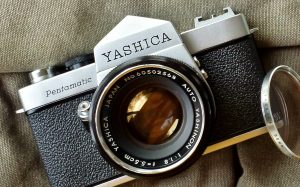
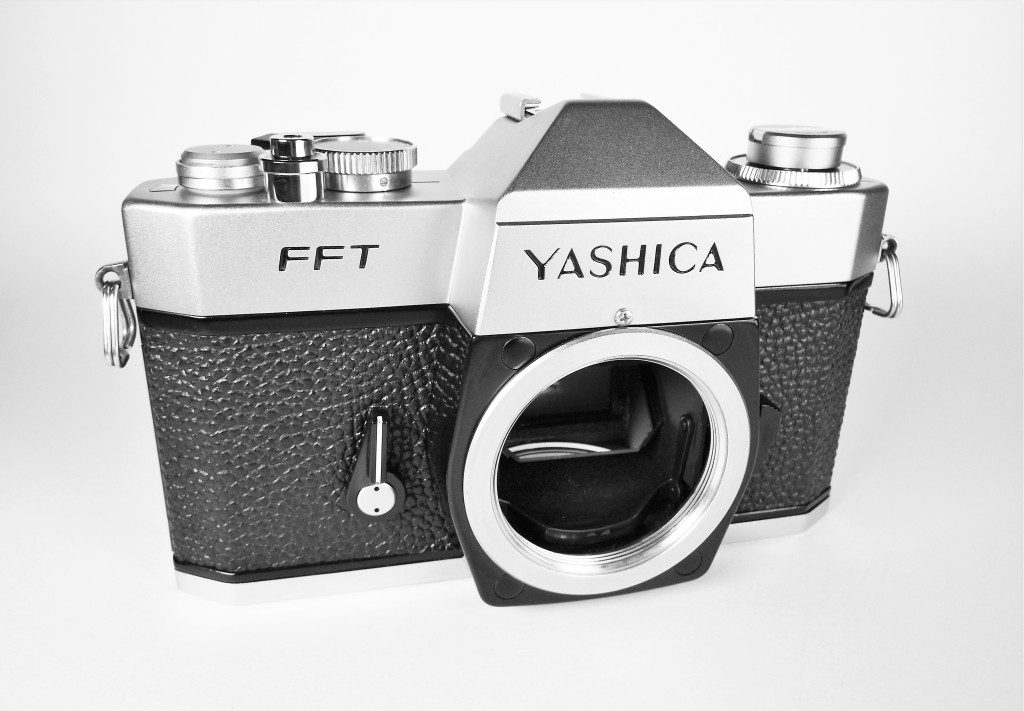
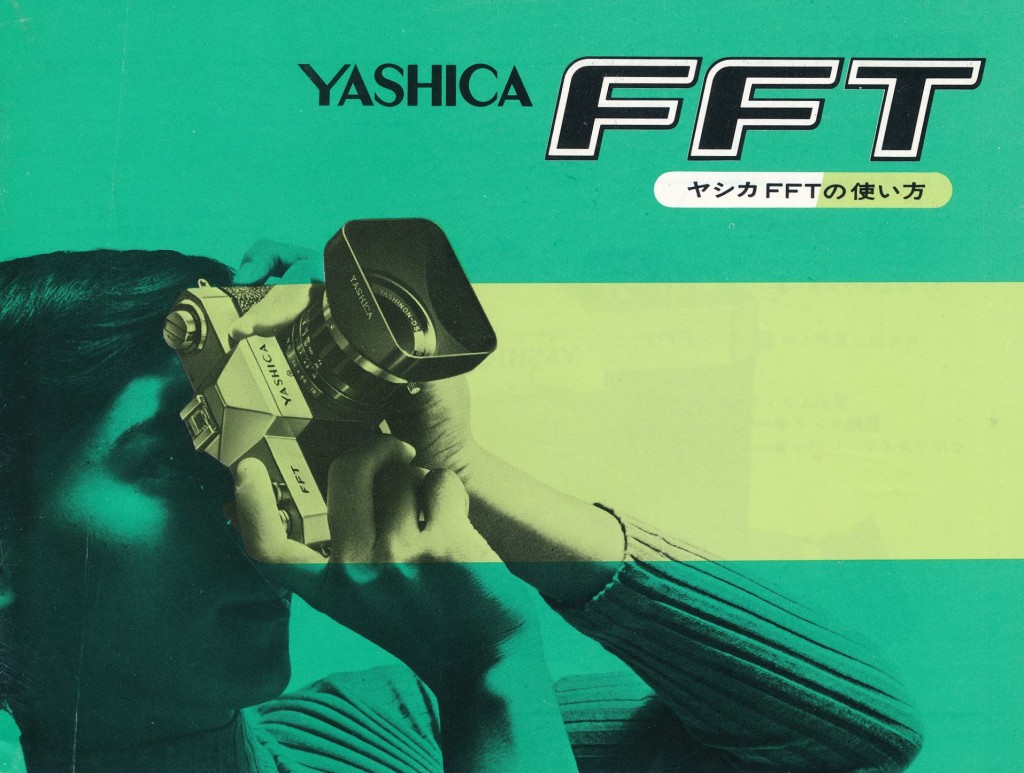
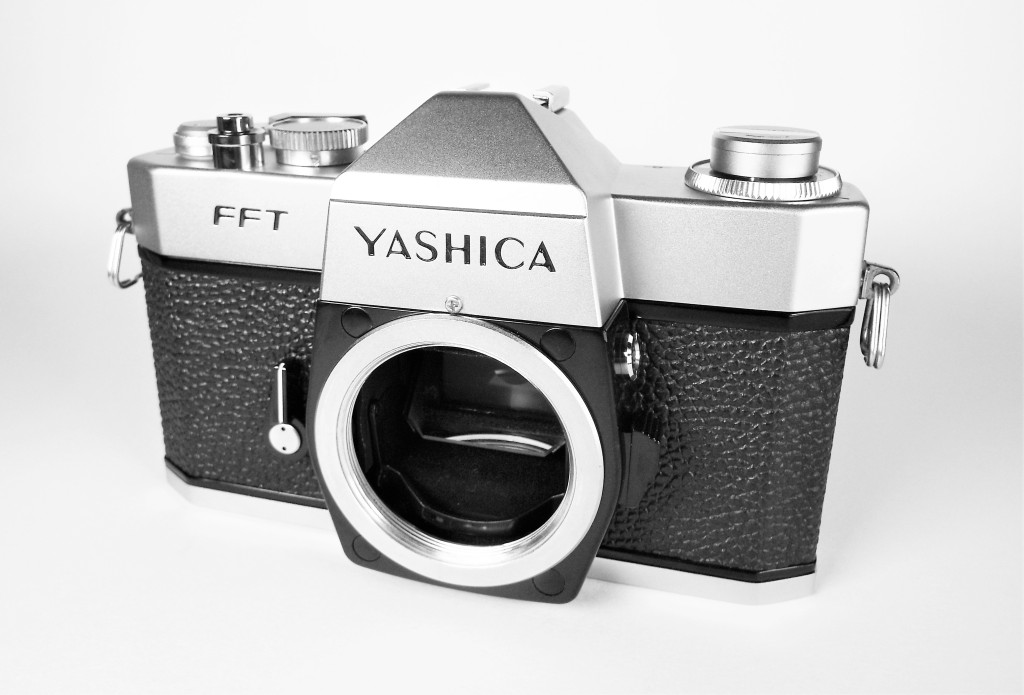
The rather hard to chase down Yashica FFT – the last of its kind. I give this bugger a high chase factor of CF 9 not because it’s a sophisticated 35mm SLR with tons of features, it earns a CF 9 because Yashica just didn’t make a bunch of these things and when they were for sale I believe most of them stayed in Japan.
The serial number on this one is 41001738 (1974, October, and number 1,738 for that month up to that point).HTF instruction booklet for a HTF camera.
No auto exposure or auto focus, no built-in power winder, and little to no style.
So what’s this gem’s claim to fame? It was the last m42 screw mount lens body in the Yashica family. Big deal. Something’s got to be last and this guy was it.
Yashica m42 lens mount bodies began in the Spring of 1961…
I know, sounds like clickbait. By stealth, I’m referring to a camera that few have heard of so it flew under the radar and avoided potential buyers back in 1972, 1973, and 1974. I don’t know how many Yashica sold but I do know it’s a difficult camera to find in working condition that isn’t beat to heck. So, if you’re looking for a challenging chase may I add this camera to your list.
It looks as though the first cameras rolled out in March 1972 and ended around February 1974.
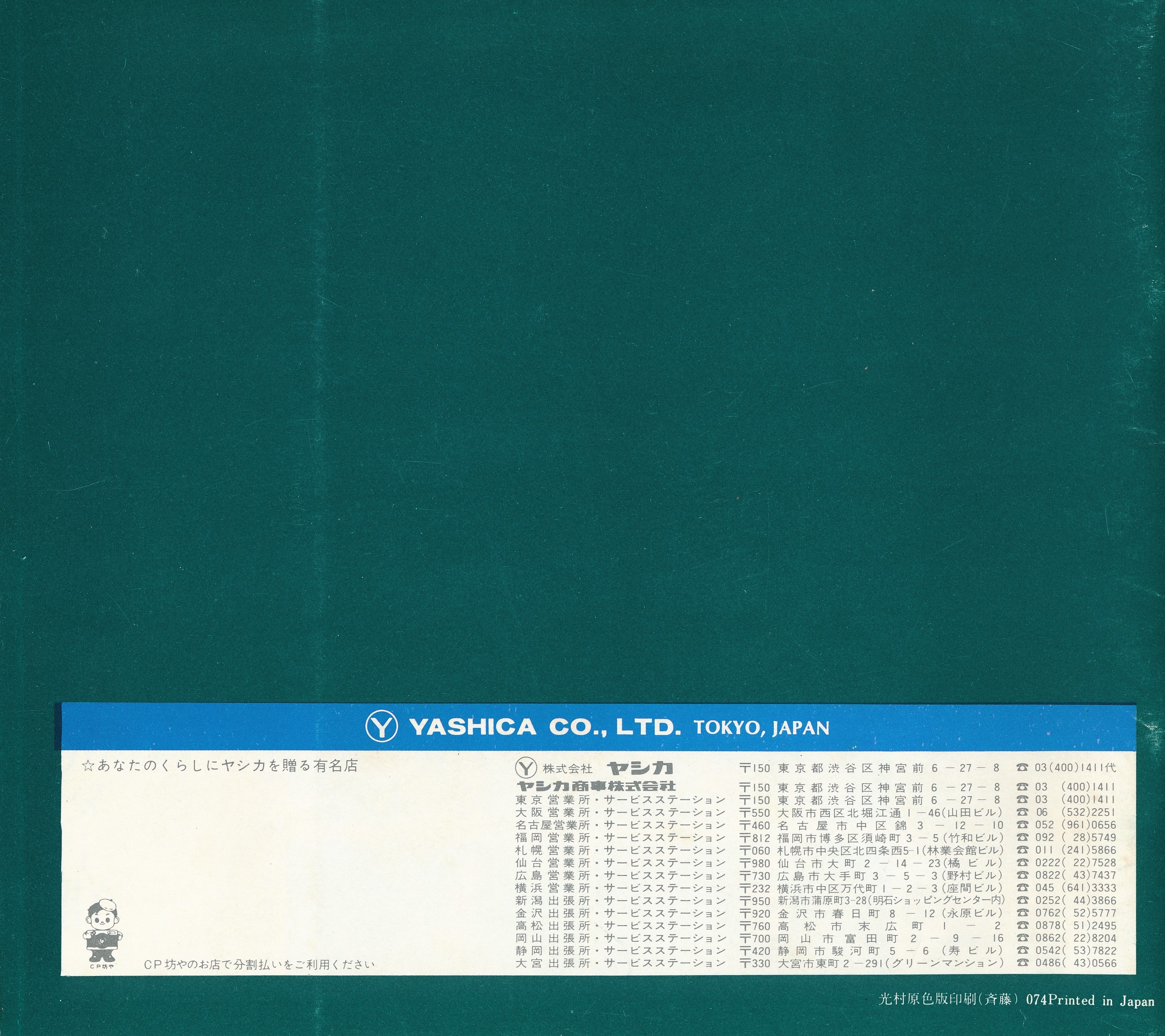
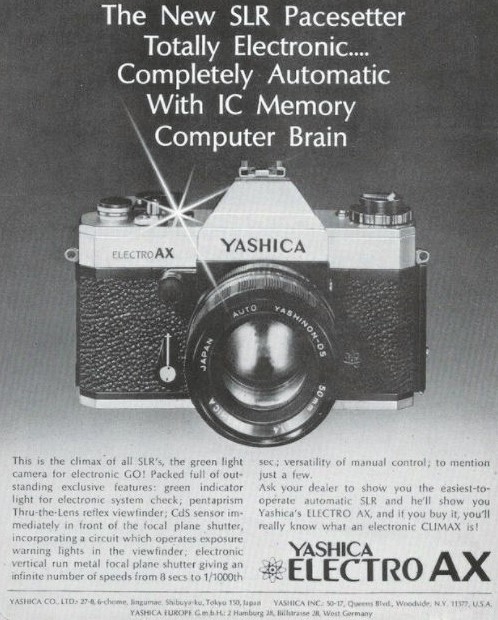
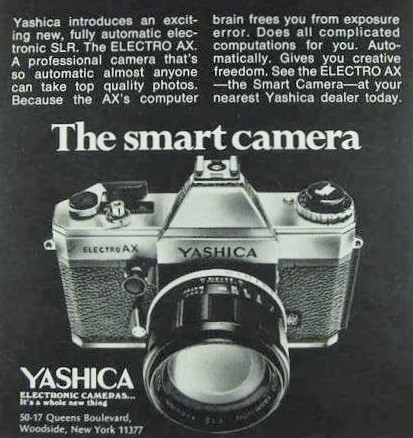
The Yashica Electro AX. It’s a hard one to chase down and still get a working model that isn’t beat to heck.It’s the same model but pictured with three different lenses. It’s also the only M42 lens mount body with the two leatherette patches on either side of the pentaprism.A scan from the inside of the brochure.The date code on this brochure is either 1974 or July (07) 1974 (lower right numbers).My Electro AX was made in November 1973. Takes M42 screw-in lenses.
Comments are always welcomed as I’ve learned quite a bit from reader feedback. As always, thanks for stopping by and, while you’re at it, feel free to visit my camera shop at http://www.ccstudio2380.com (CC Design Studios hosted by Etsy). – Chris Whelan
Please respect that all content, including photos and text, is this blog’s property and its owner, Yashica Pentamatic Fanatic, Yashica Sailor Boy, Yashica Chris, Chasing Classic Cameras with Chris.
Catalog pages from a Sears Roebuck camera catalog from 1952.
My Nicca-Tower Type-3.
The Nicca-Tower Type-3 is an excellent camera to add to any camera collection featuring early Japanese 35mm rangefinder cameras. They can be a bit on the higher price range but well worth your time chasing one down. If you’d like to discover more about Nicca cameras please visit my good friend Paul Sokk’s wonderful site at http://www.yashicatlr.com/Nicca.html#type3
Thanks for stopping by! – Chris
Comments are always welcomed as I’ve learned quite a bit from reader feedback. As always, thanks for stopping by and, while you’re at it, feel free to visit my camera shop at http://www.ccstudio2380.com (CC Design Studios hosted by Etsy). – Chris Whelan
Please respect that all content, including photos and text, is this blog’s property and its owner, Yashica Pentamatic Fanatic, Yashica Sailor Boy, Yashica Chris, Chasing Classic Cameras with Chris.
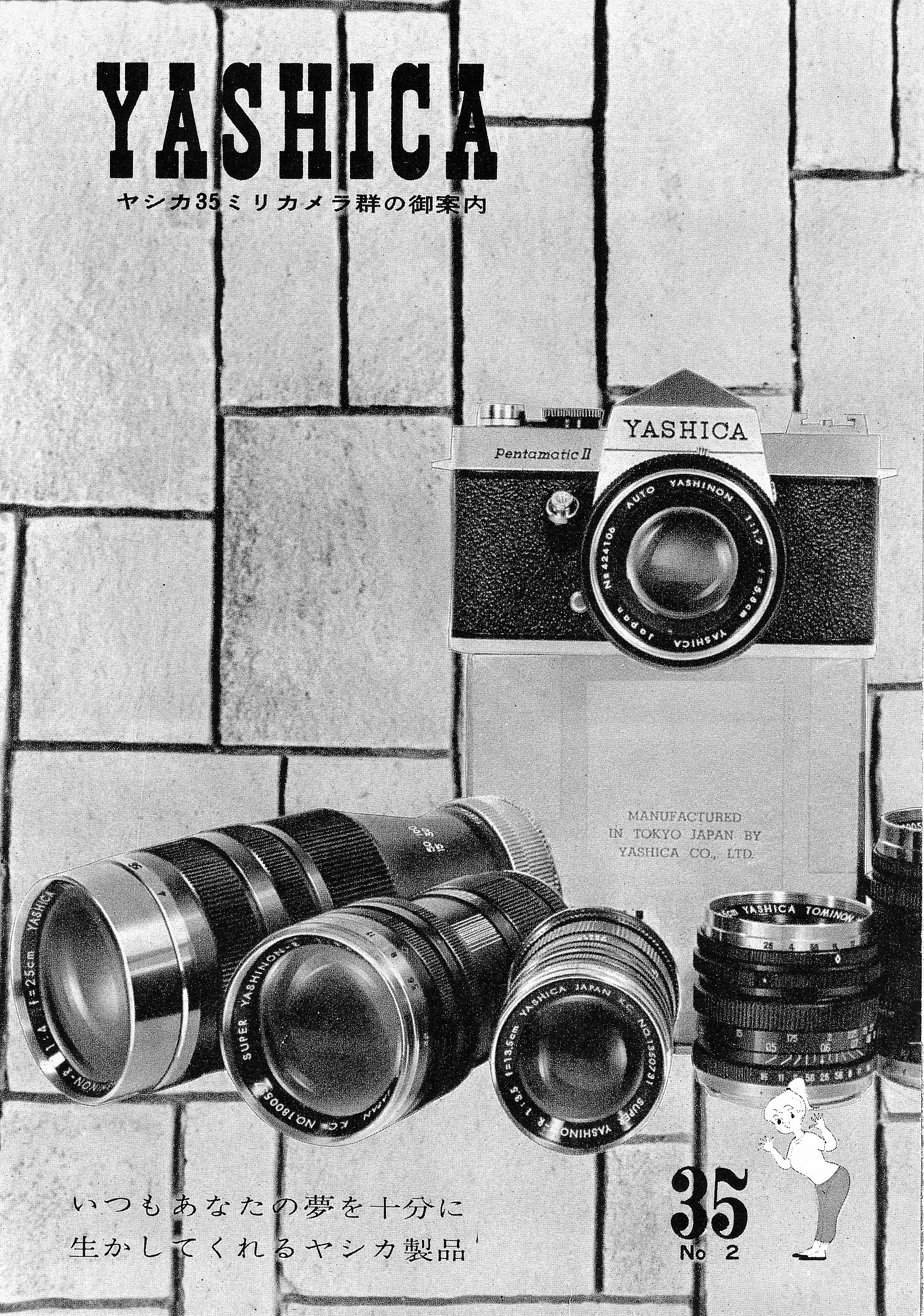
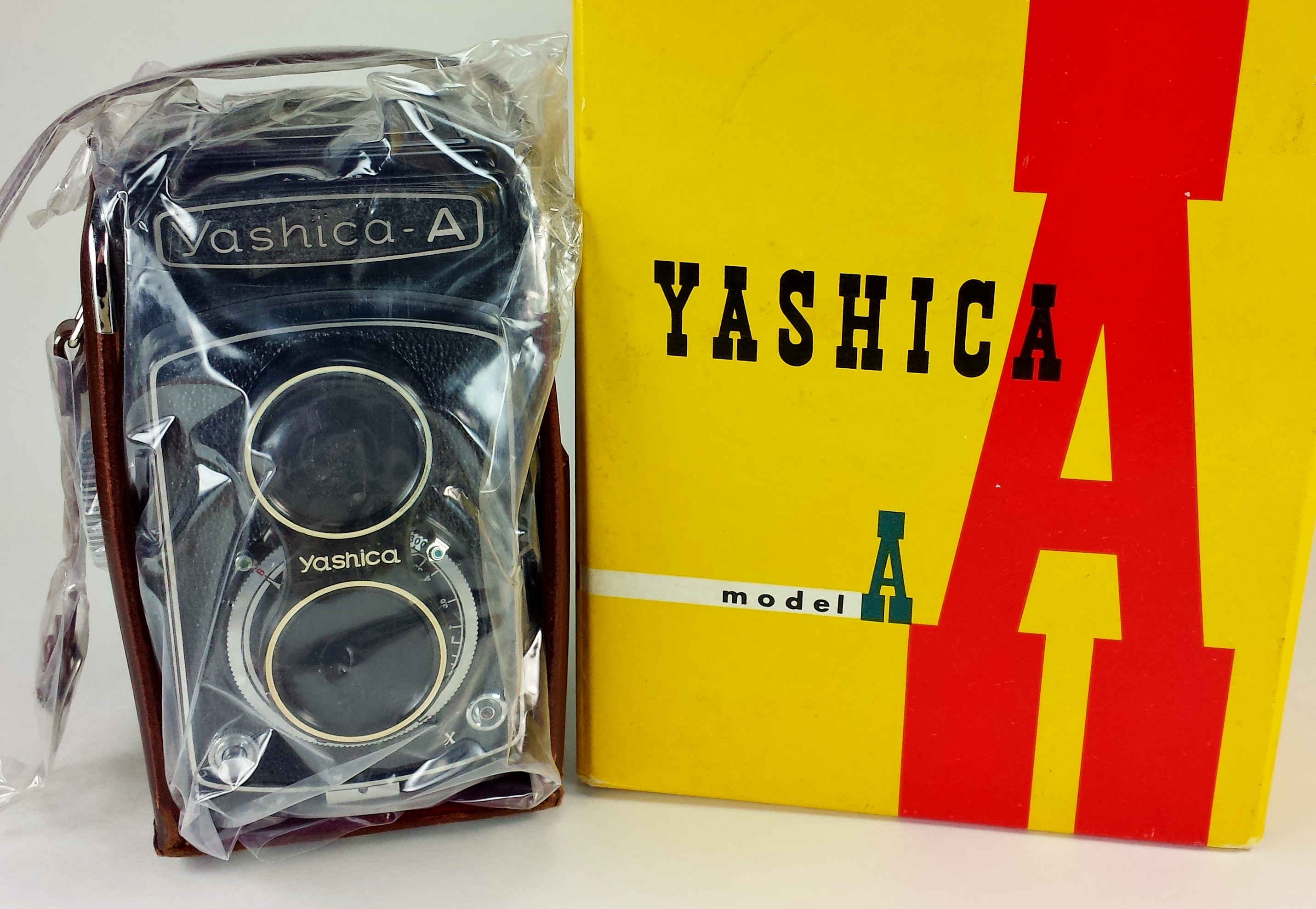
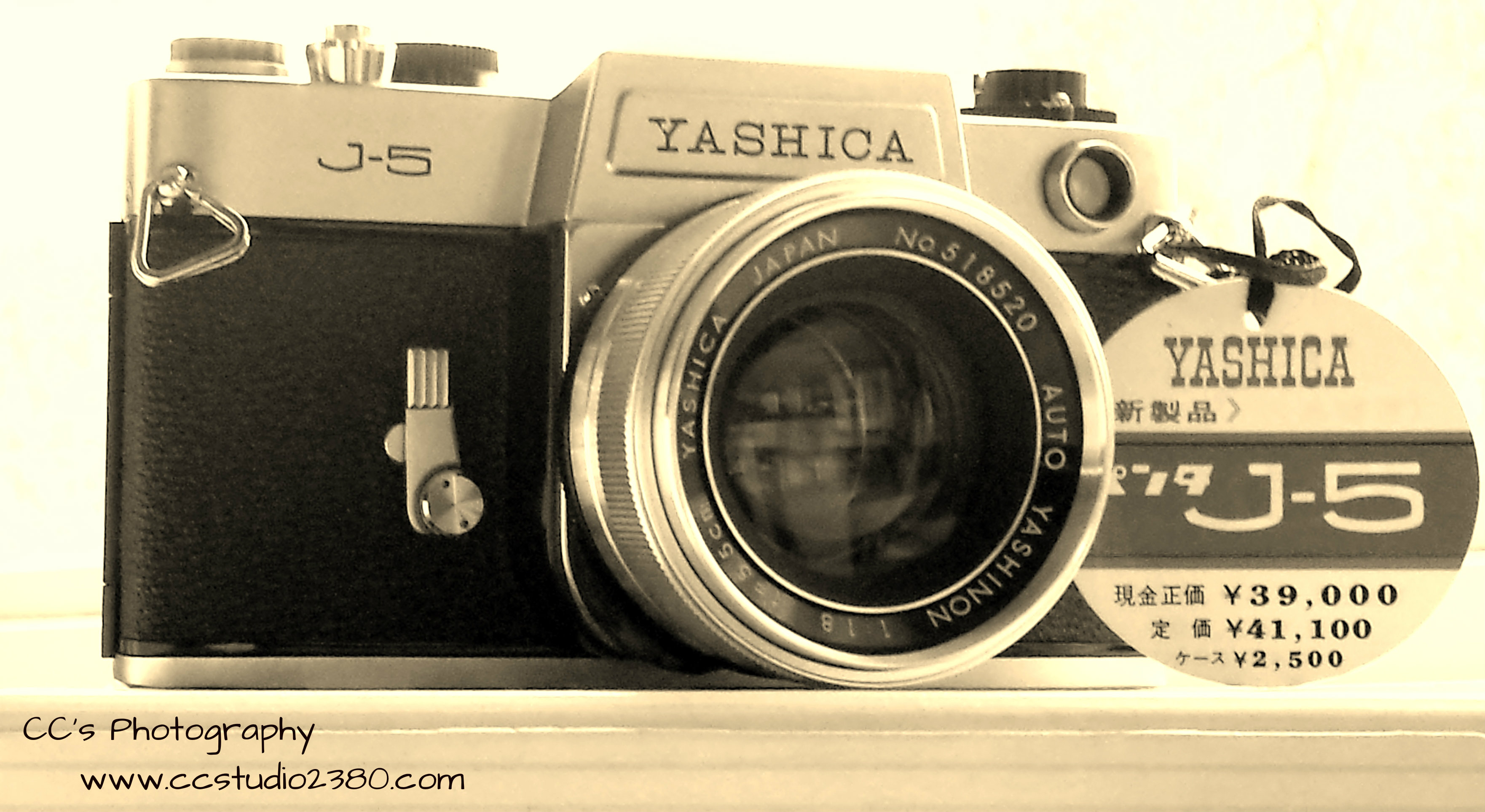
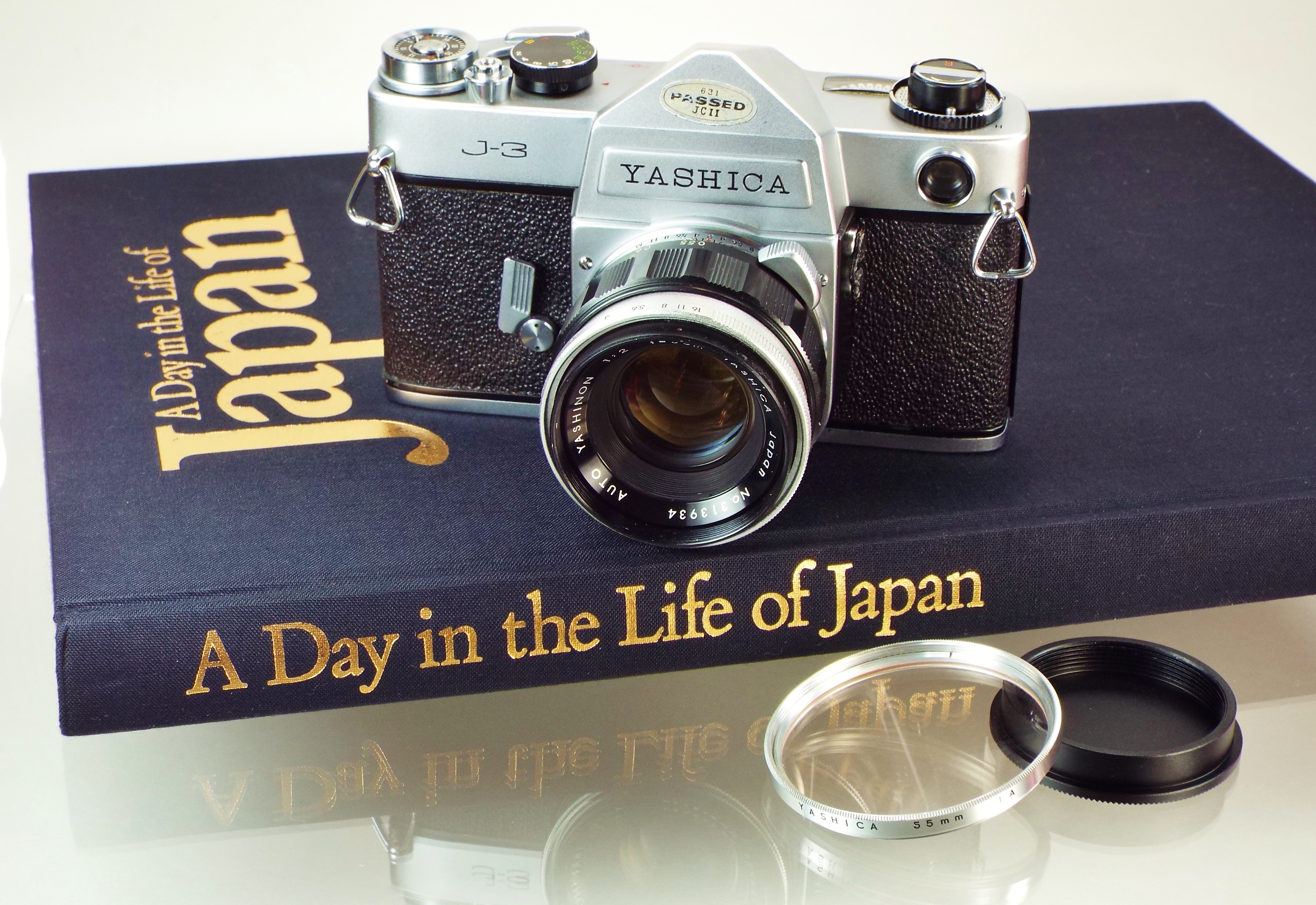
My first Yashica Pentamatic ’35’.Hyper-rare Yashica Pentamatic II – was only released in Japan for a very short time.Yashica Model A still in its factory plastic.Yashica J-5 35mm SLR (1964).Yashica J-3 35mm SLR (1962).Rare Yashica TL Electro X without the gothic ‘Y’ on the pentaprism (early first version).
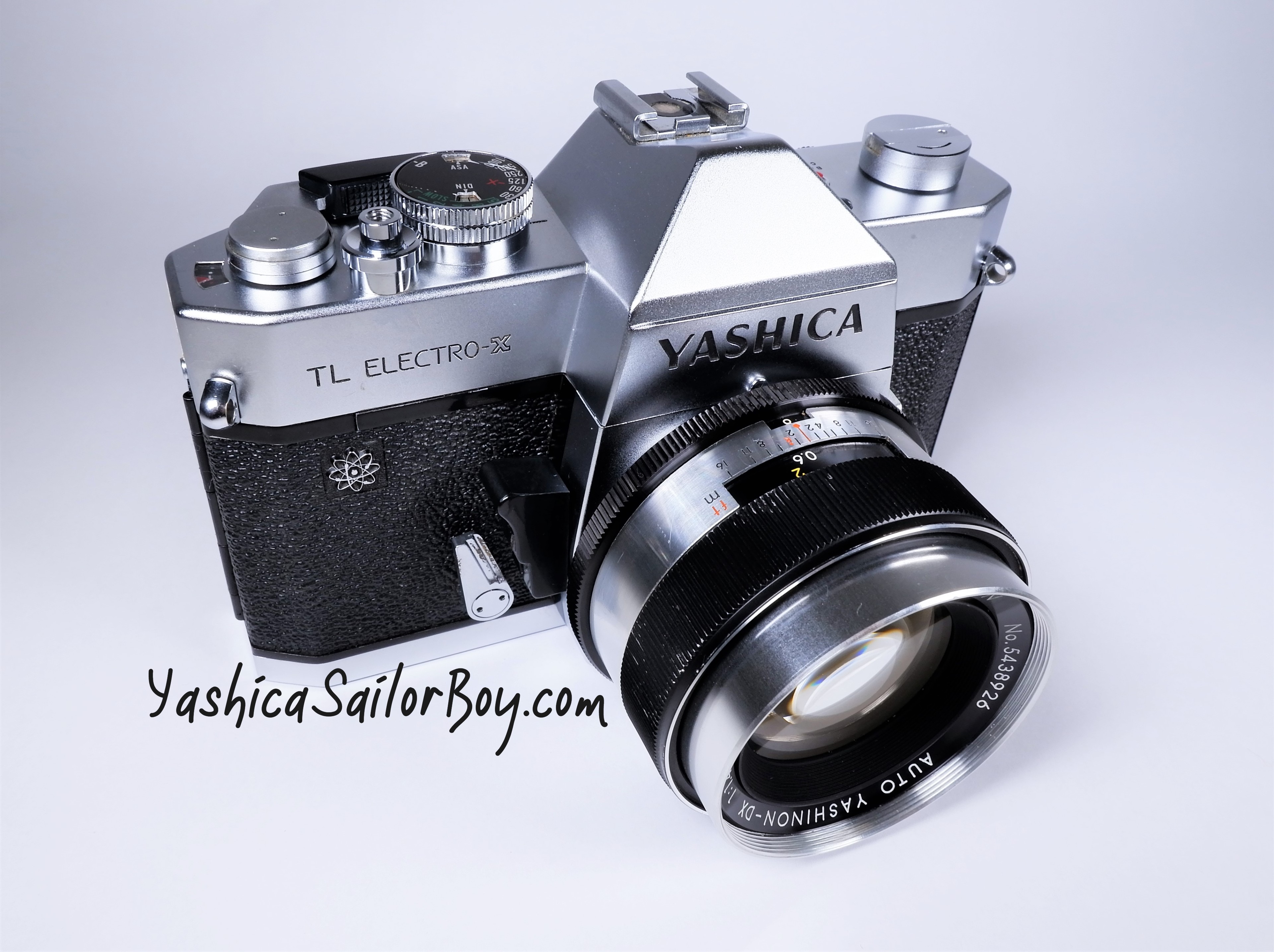
As you may be able to tell, Yashica produced a wide range of cameras and there’s plenty of rare varieties worth chasing. I only discovered the TL Electro X without the gothic ‘Y’ about two years ago after convincing myself there was nothing new to collect from the Yashica line.
Thanks for stopping by and have a great day and evening! – Chris
Comments are always welcomed as I’ve learned quite a bit from reader feedback. As always, thanks for stopping by and, while you’re at it, feel free to visit my camera shop at http://www.ccstudio2380.com (CC Design Studios hosted by Etsy). – Chris Whelan
Please respect that all content, including photos and text, is this blog’s property and its owner, Yashica Pentamatic Fanatic, Yashica Sailor Boy, Yashica Chris, Chasing Classic Cameras with Chris.
Also known as the Yashica Flex S. I’ve put together a nice complete set of this hard-to-find early TLR from Yashima-Yashica. As you can see on the box, at this point in time the company that would change its name in 1958 to Yashica was still Yashima Kogaku Seiki Company. The instruction book is in English as the camera was marketed by the Miura Trading Company and not directly marketed by Yashima. The Model S was the first TLR with a “built-in exposure meter”. The meter was simply a light meter made for Yashima by Sekonic and attached to the camera’s left side. The selenium cells for the meter are located under the nameplate which is a flap that swings upwards.
If you would like to know more about this landmark camera then I invite you to visit my good friend Paul Sokk’s Yashica TLR site at http://www.yashicatlr.com/66ModelsPage2.html
Paul’s work on the Yashica TLR family of cameras is second to none. He’s also included a wonderful addition to his pages with additional pages dedicated to Leica, Nicca, Leotax, Minolta, and others. Give his site a read and tell him Chris sent you!
Comments are always welcomed as I’ve learned quite a bit from reader feedback. As always, thanks for stopping by and, while you’re at it, feel free to visit my camera shop at http://www.ccstudio2380.com (CC Design Studios hosted by Etsy). – Chris Whelan
Please respect that all content, including photos and text, is this blog’s property and its owner, Yashica Pentamatic Fanatic, Yashica Sailor Boy, Yashica Chris, Chasing Classic Cameras with Chris.
Regular readers know that the main focus of my collection has been centered around cameras made by Yashica. I have collected quite a few examples going back to their 1953 origins. This particular series caught my fancy a few years back when I was lucky enough to find a pristine Yashica J-3 in a pro-black finish with a matching lens. When it comes to chasing classic cameras, the J-3 in black and in pristine condition is no easy task. Here are a few images of what I’ve put together so far.
Chasing these guys has been fun, to say the least. It’s not that any one of these is rare in the true sense of the word but finding pristine examples has been the tough part.As best as I can tell, the J-7 wasn’t the last one produced in the series as the J-4 came out just a bit later.The black J-3 was never mentioned in any brochure which was odd considering it was Yashica’s first all-black SLR and was produced in limited numbers.Since the cameras from Yashica were never meant to be of interest to collectors very few survive to this day in mint and better condition. The little circle on the camera’s left side front is the CdS exposure meter. These cameras did not feature TTL (thru-the-lens metering).
If you decide to collect this series you’ll find a very nice assortment of lenses to choose from as Yashica produced thousands over the years. The body accepts m42 screw-in lenses which for a time was one of the most widespread lenses made.
Here is what a complete in-the-box set looks like for the silver J-3 from around 1962.
As always thanks for stopping by – I hope I’ve shed sufficient light on this often overlooked series from Yashica. Maybe a few of you would enjoy the chase in pursuit of these mid-1960s gems. – Chris
Comments are always welcomed as I’ve learned quite a bit from reader feedback. As always, thanks for stopping by and, while you’re at it, feel free to visit my camera shop at http://www.ccstudio2380.com (CC Design Studios hosted by Etsy). – Chris Whelan
Please respect that all content, including photos and text, is this blog’s property and its owner, Yashica Pentamatic Fanatic, Yashica Sailor Boy, Yashica Chris, Chasing Classic Cameras with Chris.
As the title states, this is a rather rare (very hard to find at least) European model of this popular camera. In the United States, this model was simply marked “V.” on the body and it was sometimes referred to as the Varex V.
35mm single-lens reflex film camera with interchangeable lenses.
The camera’s place in history is it was the first or at the very least, one of the first 35mm single-lens reflex cameras made beginning in the late 1930s in pre-war Germany and picking up again after the war in what would become East Germany (Dresden).
Here it is viewed from behind with the waist-level pop-up viewfinder opened. The small rectangular opening is an eye-level “sports finder”.Pictured here with the prism removed. Ihagee also made an eye-level pentaprism that could be swapped out.With the lens removed the Exakta bayonet mount is visible. The lever locked the lens flange securely to the body.With the back film door removed. This particular camera uses yarn as a light seal. The serial is located inside just above the shutter curtain.
A few words about the serial number. As best as I’ve been able to tell, the serial numbers range from around 667000 to 692000 for this Varex. I’ve seen other estimates of somewhere between 670000 to 684000. If a reader has more definitive information I’d love to see it.
Heat stamped on the bottom plate is “Made in Germany”.My nearly complete set with some hard-to-find accessories.
The lens. It’s a well-respected lens by Meyer Gorlitz – Primoplan Red V f/1.9 58mm. It has an impressive 14 aperture blades and is claimed to be constructed with 5 elements in 4 groups. Collectors today still chase after nice examples of the lens, especially in the M42 mount. As seen pictured above, I have an aluminum lens hood (shade) made by Cenei in its original leather case, an Ihagee Dresden 42mm slip-on blue filter in its original box, a Heliopan yellow slip-on filter in its original plastic case, and finally a 42mm push-on plastic lens cap (unmarked but made in Germany).
I’ve come to the decision that my collections of cameras have grown a bit beyond my original intent so this gorgeous set is available for purchase in my online camera shop at http://www.ccstudio2380.com where additional images can be found and a more complete description of its features. It can be purchased directly through Etsy and it ships nearly worldwide!
Thanks for sticking around to the end of this post and as always, have a fantastic day and evening! – Chris
Comments are always welcomed as I’ve learned quite a bit from reader feedback. As always, thanks for stopping by and while you’re at it, feel free to visit my camera shop at http://www.ccstudio2380.com (CC Design Studios hosted by Etsy). – Chris Whelan
Please respect that all content, including photos and text, is this blog’s property and its owner, Yashica Pentamatic Fanatic, Yashica Sailor Boy, Yashica Chris, Chasing Classic Cameras with Chris.
Hi and thanks for stopping by! Here’s a preview of a rather rare camera that will be available in my online camera shop at http://www.ccstudio2380.com (hosted by Etsy). Hopefully, it will be fully listed by mid-day on Tuesday. I’ll post additional pictures here too. – Chris
Comments are always welcomed as I’ve learned quite a bit from reader feedback. As always, thanks for stopping by and while you’re at it, feel free to visit my camera shop at http://www.ccstudio2380.com (CC Design Studios hosted by Etsy). – Chris Whelan
Please respect that all content, including photos and text, is this blog’s property and its owner, Yashica Pentamatic Fanatic, Yashica Sailor Boy, Yashica Chris, Chasing Classic Cameras with Chris.
In my opinion, the M4 is an interesting model to chase after but be prepared to pony up for super-sharp black versions with smaller production runs like this stunning M4 from 1969.
In this example, it’s mated with a sharp f2 35mm Summicron lens (I much prefer a wide-angle lens for the type of street photography I enjoy).
An exceedingly handsome camera from the 1960s.
I sold this camera and lens set for around $6,800. My advice is to chase after the best M4 your budget will allow and expect to have it serviced by Leica. It’s a joy to use and to just hold in your hands. I wish I had kept the one I had access to but it was a consignment piece and it was sent to auction on eBay. Offers came in from China and Japan and from many parts of Europe but in the end, they went to a collector in the US (I believe).
Thanks for stopping by! – Chris
Comments are always welcomed as I’ve learned quite a bit from reader feedback. As always, thanks for stopping by and while you’re at it, feel free to visit my camera shop at http://www.ccstudio2380.com (CC Design Studios hosted by Etsy). – Chris Whelan
Please respect that all content, including photos and text, is this blog’s property and its owner, Yashica Pentamatic Fanatic, Yashica Sailor Boy, Yashica Chris, Chasing Classic Cameras with Chris.
Camera – Yashica L AF 35mm compact point and shoot (1986). Fujicolor Superia X-TRA 400 color negative film.
1986 – Yashica L AF Date.
The Yashica L AF is a sleeper of a camera to chase for your collection and certainly a camera that will exceed your expectations on a photo walkabout. The super sharp 32mm Yashinon lens is fast enough for most autoexposure situations and clear enough for making enlargements.
Yashica L AF on the left and Kyocera T Scope (T3) on the right.
If you’re looking to spend your money wisely chase after the less expensive L AF over the T3. They were made in the same factory about two years apart (T3 is from 1988). For hundreds of dollars less, you can have a fun camera that you’ll actually use.
Thanks for stopping by and have a great day! – Chris
Comments are always welcomed as I’ve learned quite a bit from reader feedback. As always, thanks for stopping by and while you’re at it, feel free to visit my camera shop at http://www.ccstudio2380.com (CC Design Studios hosted by Etsy). – Chris Whelan
Please respect that all content, including photos and text, is this blog’s property and its owner, Yashica Pentamatic Fanatic, Yashica Sailor Boy, Yashica Chris, Chasing Classic Cameras with Chris.