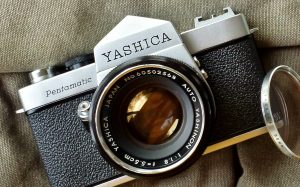
A fun part of chasing collectible cameras is finding unexpected gems amongst the more common stuff. Here’s a few examples.
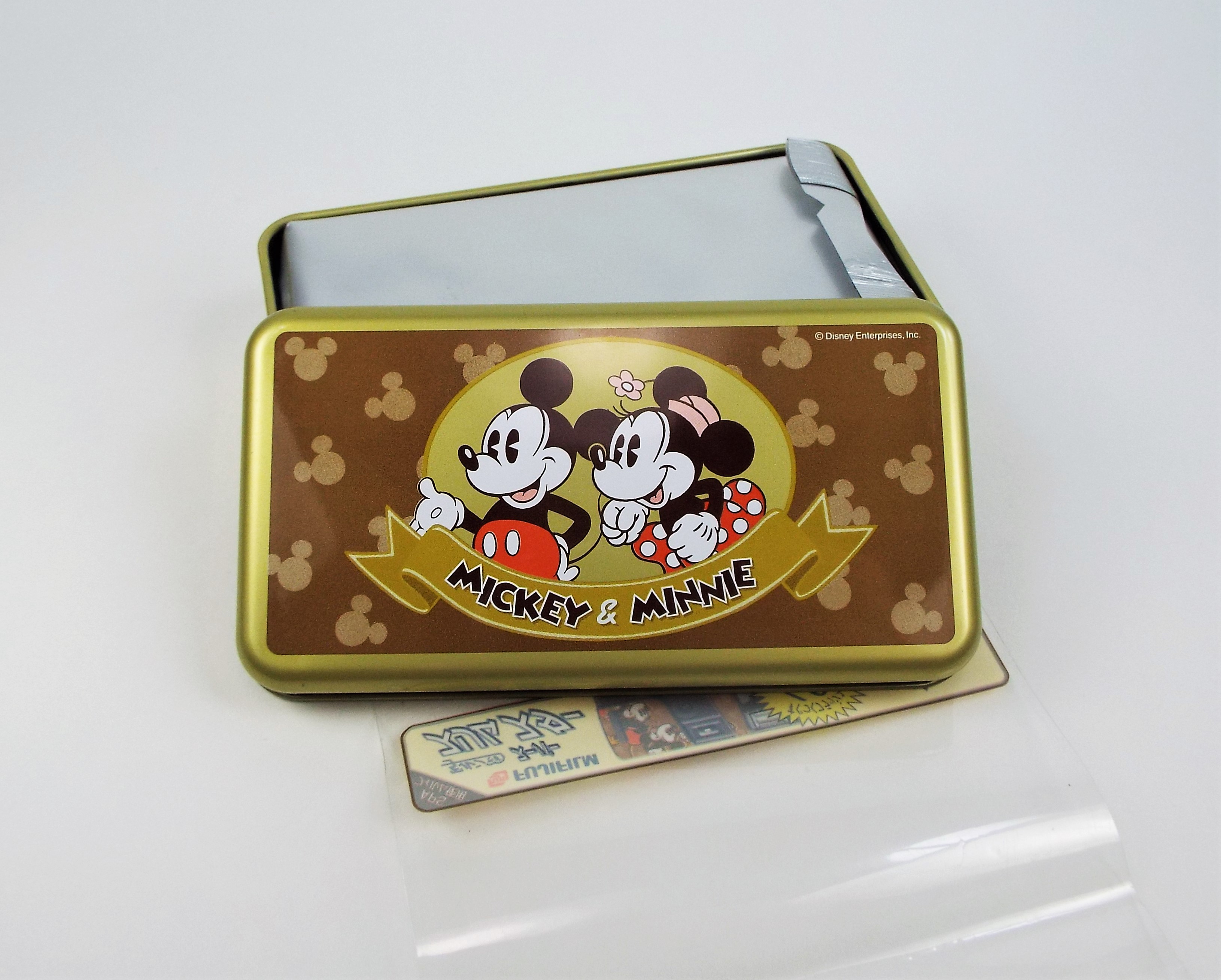
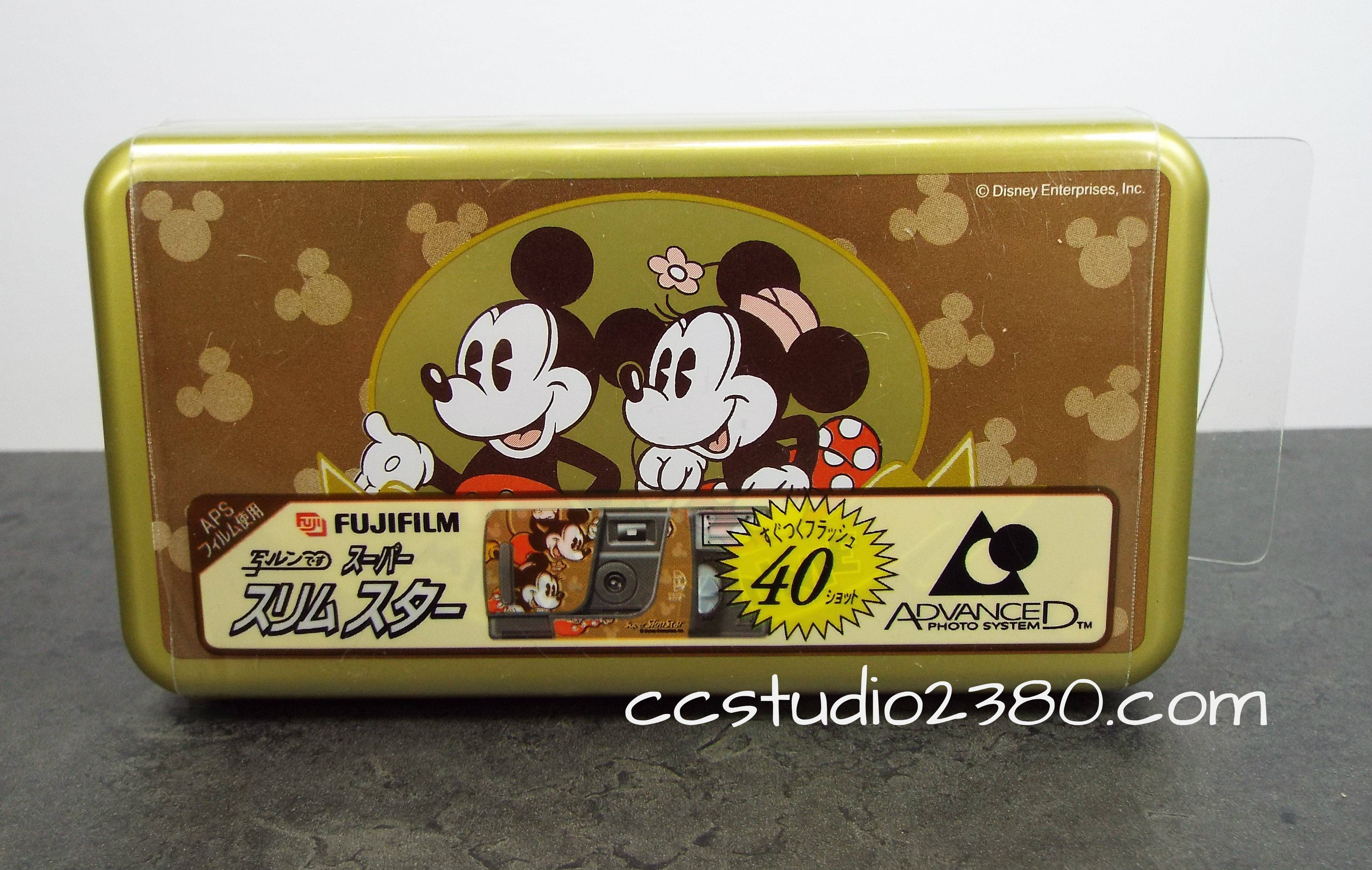
I love finding new and unused film cameras no matter how sophisticated. Here’s a new Fuji DL-7 complete with the original batteries and film. It’s like Christmas any time of year.I found this beautiful Nikkormat FT3 while appraising a collection here locally in my town. It hadn’t been used in decades and was put away having been hardly used.Disney cameras. No matter what, if I see an unused Mickey & Minnie camera or any Disney branded camera I’m interested. This one was sold originally at Tokyo Disneyland for a limited time.Cute packaging gets me every time!I’m not normally interested in later model Minoltas but this one was pretty nice and the seller had a bunch of other cool cameras too.
Thanks for stopping by and have a great day!
Please respect that all content, including photos and text, are the property of this blog and its owner, Yashica Pentamatic Fanatic, Yashica Sailor Boy, Yashica Chris, Chasing Classic Cameras with Chris.
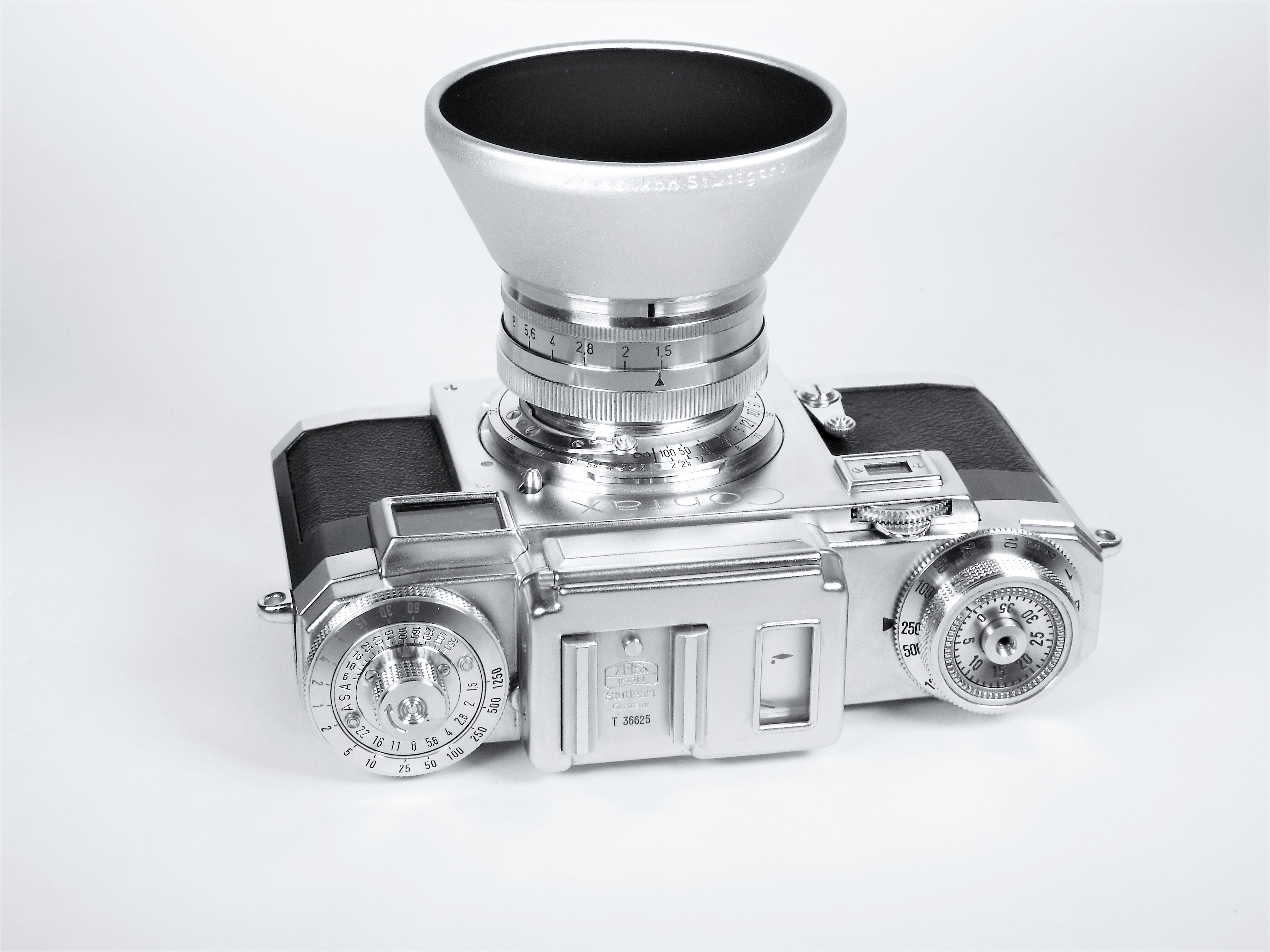
Carl Zeiss Sonnar f/ 1.5 50mm lens shown here with a Zeiss Ikon slip-on lens hood (shade).
This lovely camera is from 1951 and features a built-in exposure meter.
Shown with the meter flap open for business. This image was taken with my Nikon D800 in my studio as a test shot – no post processing.
I haven’t had a chance to run a roll of film through this beauty yet. All levers, knobs, buttons, and dials are working as is the meter. My list of film test cameras is quite extensive so the likelihood that this one will see film anytime soon is slim, very slim.
A quick search on eBay shows a nice selection of these available in all sorts of condition and states of operation. A recent set with body, lens, and box went for $450 (similar to mine) in working condition. I would think around $350 to $400 is reasonable for a clean example and having the box is always nice and in this case worth the $50. I’d give the Contax IIIa a chase factor of 6 – they’re out there so finding one isn’t a problem but finding a 70-year-old camera in full functioning condition is the hard part. Expect some issues that may need to be addressed and of course without service (CLA) little guarantee of continued function. It does make an awesome display camera amongst my other 35mm rangefinders so it’s got that going for it.
Comments are always welcomed as I’ve learned quite a bit from reader feedback. As always, thanks for stopping by and while you’re at it, feel free to visit my camera shop at http://www.ccstudio2380.com (CC Design Studios hosted by Etsy). – Chris Whelan
Please respect that all content, including photos and text, are the property of this blog and its owner, Yashica Pentamatic Fanatic, Yashica Sailor Boy, Yashica Chris, Chasing Classic Cameras with Chris.
The rather hard to chase down Yashica FFT – the last of its kind. I give this bugger a high chase factor of CF 9 not because it’s a sophisticated 35mm SLR with tons of features, it earns a CF 9 because Yashica just didn’t make a bunch of these things and when they were for sale I believe most of them stayed in Japan.
The serial number on this one is 41001738 (1974, October, and number 1,738 for that month up to that point).HTF instruction booklet for a HTF camera.
No auto exposure or auto focus, no built-in power winder, and little to no style.
So what’s this gem’s claim to fame? It was the last m42 screw mount lens body in the Yashica family. Big deal. Something’s got to be last and this guy was it.
Yashica m42 lens mount bodies began in the Spring of 1961 and ended (maybe with this one) in the Autumn of 1974. Along the way such classics as the TL Electro X was made which was one of the first SLR’s with an IC “brain”.
I’ll test and review this camera soon (I know, you’ve heard that before!). BTW, I have no earthly idea what ‘FFT’ stands for if anything. Any ideas?
Uncluttered and unremarkable top plate. Simple.
Comments are always welcomed as I’ve learned quite a bit from reader feedback. As always, thanks for stopping by and while you’re at it, feel free to visit my camera shop at http://www.ccstudio2380.com (CC Design Studios hosted by Etsy). – Chris Whelan
Please respect that all content, including photos and text, are the property of this blog and its owner, Yashica Pentamatic Fanatic, Yashica Sailor Boy, Yashica Chris, Chasing Classic Cameras with Chris.
I’ve always had a soft spot for sharp looking Polaroids and this one fit the bill perfectly.
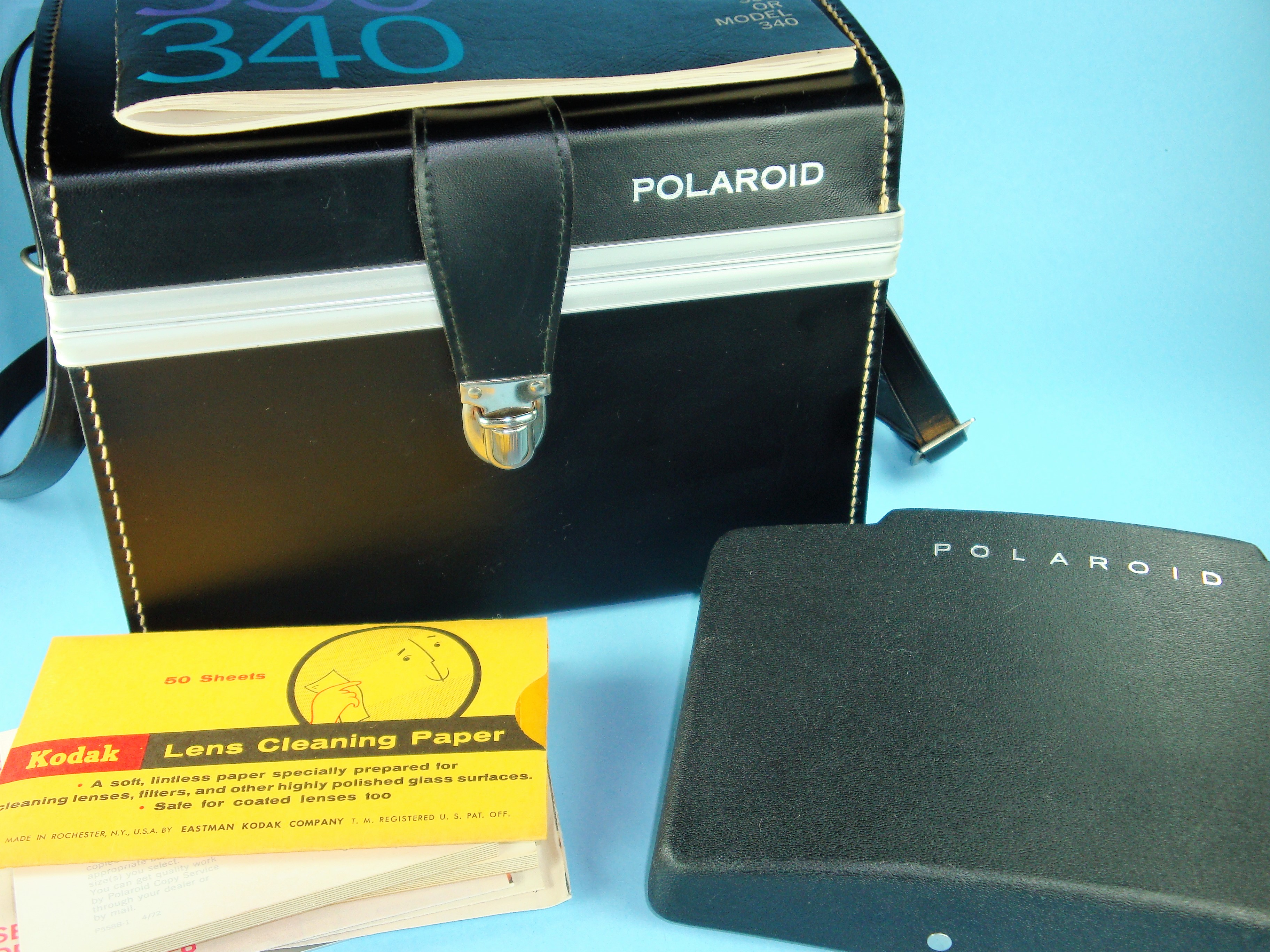
Polaroid Land Model 350. The Zeiss Ikon designed rangefinder was a nice feature.The release price was around $150 which in 1971 (the year I graduated from high school) was a ton of money.
A 3 element glass lens (114mm f8.8) produced crisp images (as crisp as Polaroid film could go).
Beautiful case in better than expected condition given its age.
This one was in our collection back in 2011 and has since moved on to another collector. If you can find a clean one for your collection I strongly suggest this model or the next one up, the 450. Chase factor 5 (easy to find but tough in mint condition).
Comments are always welcomed as I’ve learned quite a bit from reader feedback. As always, thanks for stopping by and while you’re at it, feel free to visit my camera shop at http://www.ccstudio2380.com (CC Design Studios hosted by Etsy). – Chris Whelan
Please respect that all content, including photos and text, are the property of this blog and its owner, Yashica Pentamatic Fanatic, Yashica Sailor Boy, Yashica Chris, Chasing Classic Cameras with Chris.
The Leica IIIg is the last Leica Screw Mount body – 1956.
Stripped of its skin.
I have the new leatherette for my IIIg but as of yet I haven’t found the quiet time needed to install it. The camera and the Leicavit received a complete CLA from Mr. Ye so it’s good to go. In this case I’m chasing time.
Comments are always welcomed as I’ve learned quite a bit from reader feedback. As always, thanks for stopping by and while you’re at it, feel free to visit my camera shop at http://www.ccstudio2380.com (CC Design Studios hosted by Etsy). – Chris Whelan
Please respect that all content, including photos and text, are the property of this blog and its owner, Yashica Pentamatic Fanatic, Yashica Sailor Boy, Yashica Chris, Chasing Classic Cameras with Chris.
Certainly a classic worthy of a chase. Beautiful lines, excellent features, awesome accessories – oh, and a wide selection of quality Mamiya-Sekor lenses.
This is an early model of the M645 – probably 1975 or so.
Interchangeable lenses, backs, finders, focusing screens, winders and probably a few bits I overlooked.
If you’re looking to explore medium-format photography and you want a camera that can be as creative as you and be used like a 35mm SLR, then the M645 is the way to go. Look for clean and damage free examples that haven’t been beaten to near death by a professional wedding or studio photog (no offense to those pros but I wouldn’t want their cameras).
Comments are always welcomed as I’ve learned quite a bit from reader feedback. As always, thanks for stopping by and while you’re at it, feel free to visit my camera shop at http://www.ccstudio2380.com (CC Design Studios hosted by Etsy). – Chris Whelan
Please respect that all content, including photos and text, are the property of this blog and its owner, Yashica Pentamatic Fanatic, Yashica Sailor Boy, Yashica Chris, Chasing Classic Cameras with Chris.
A handsome no frills 35mm Single-Lens Reflex camera.
A camera worthy of a good chase – we were lucky enough to find this one complete with its original box back in 2016. Nice examples are out there but don’t rush into just any one you find. Remember, cameras this age will need some attention especially the light seals (an easy fix) and possibly a good cleaning. Avoid cameras with lots of external corrosion or pitting on the chrome finish and peeling leatherette. Signs of a moist environment which is death to older electronics.
This one we’re thinking is from about late 1967. It was first introduced in 1966.
It’s a beautiful camera… the silver paint from the factory is a bit smoother than later finishes which tend to be grainy.
Yashica’s first TTL metered SLR so it is an important camera in Yashica’s evolution to even more sophisticated 35mm SLRs in 1968. The next major camera in the line was the famous TL Electro X.
Made by Tomioka Optical, the super sharp 50mm f1.4 lens has a great reputation for producing quality images at all apertures.
The Yashica TL Super with a Auto Yashinon lens can be an affordable camera set to start your adventures in film photography. Look for clean and damage free bodies and always buy the best your budget will allow.
Comments are always welcomed as I’ve learned quite a bit from reader feedback. As always, thanks for stopping by and while you’re at it, feel free to visit my camera shop at http://www.ccstudio2380.com (CC Design Studios hosted by Etsy). – Chris Whelan
Please respect that all content, including photos and text, are the property of this blog and its owner, Yashica Pentamatic Fanatic, Yashica Sailor Boy, Yashica Chris, Chasing Classic Cameras with Chris.
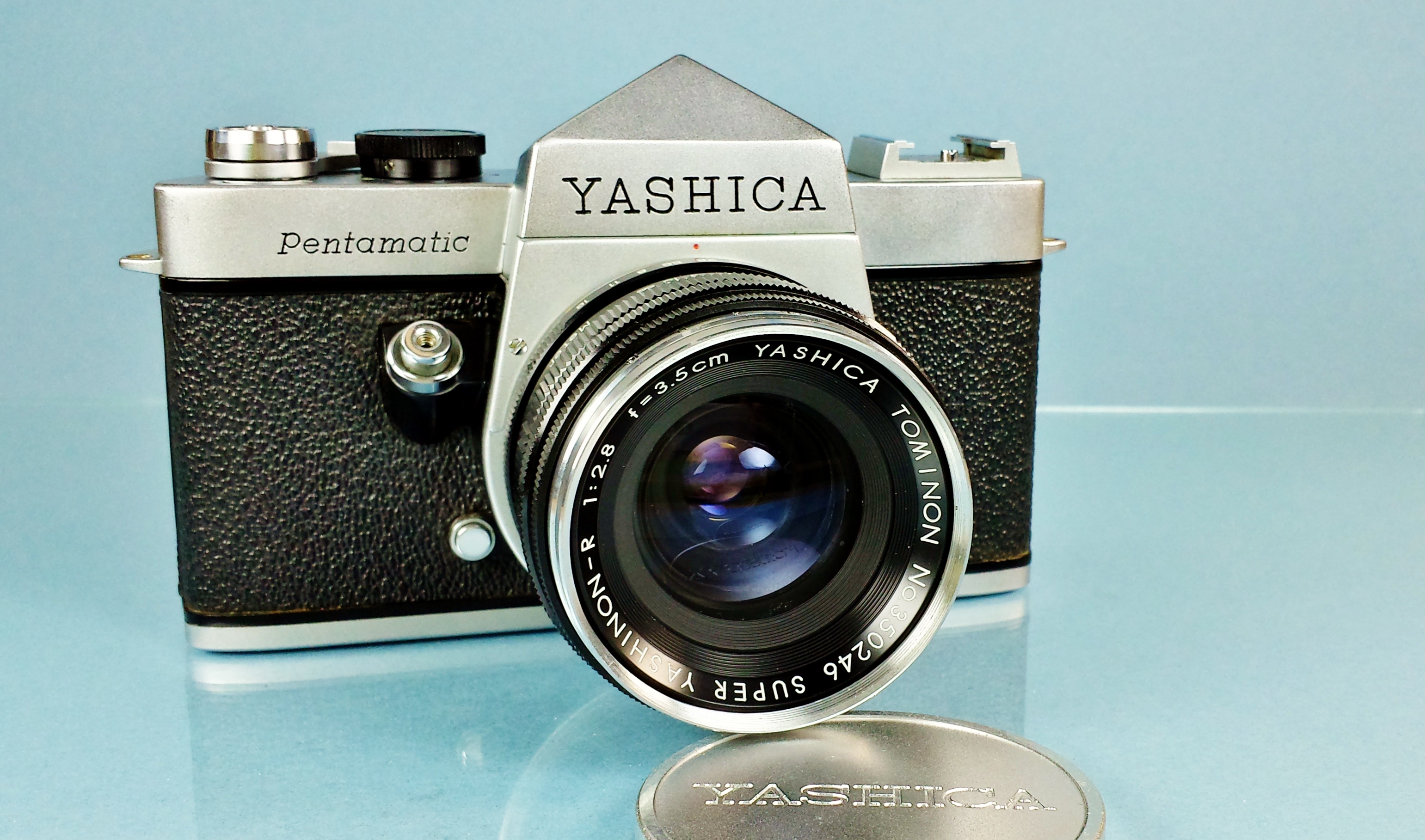
The original Pentamatic 35 with a rare Tominon branded lens.
In the field.In the studio.
The Yashica Pentamatic is a very worthy camera to chase after. About 20K were made but since it wasn’t considered a collectors camera not many were saved in mint condition. The next camera was the Pentamatic II and it was only available for purchase in Japan. The final model was the Pentamatic S and only about 5K were made.
I’ve always loved the lines of the Pentamatic – so modern and uncluttered but so retro at the same time. BTW, there’s no self-timer on this model and the shutter button was mounted on the front – right where your pointer finger naturally wants to be.
Comments are always welcomed as I’ve learned quite a bit from reader feedback. As always, thanks for stopping by and while you’re at it, feel free to visit my camera shop at http://www.ccstudio2380.com (CC Design Studios hosted by Etsy). – Chris Whelan
Please respect that all content, including photos and text, are the property of this blog and its owner, Yashica Pentamatic Fanatic, Yashica Sailor Boy, Yashica Chris, Chasing Classic Cameras with Chris.
We love Yashicas here on the blog and I can’t tell you how many enjoyable hours have been spent chasing these classic beauties from the 1950s.
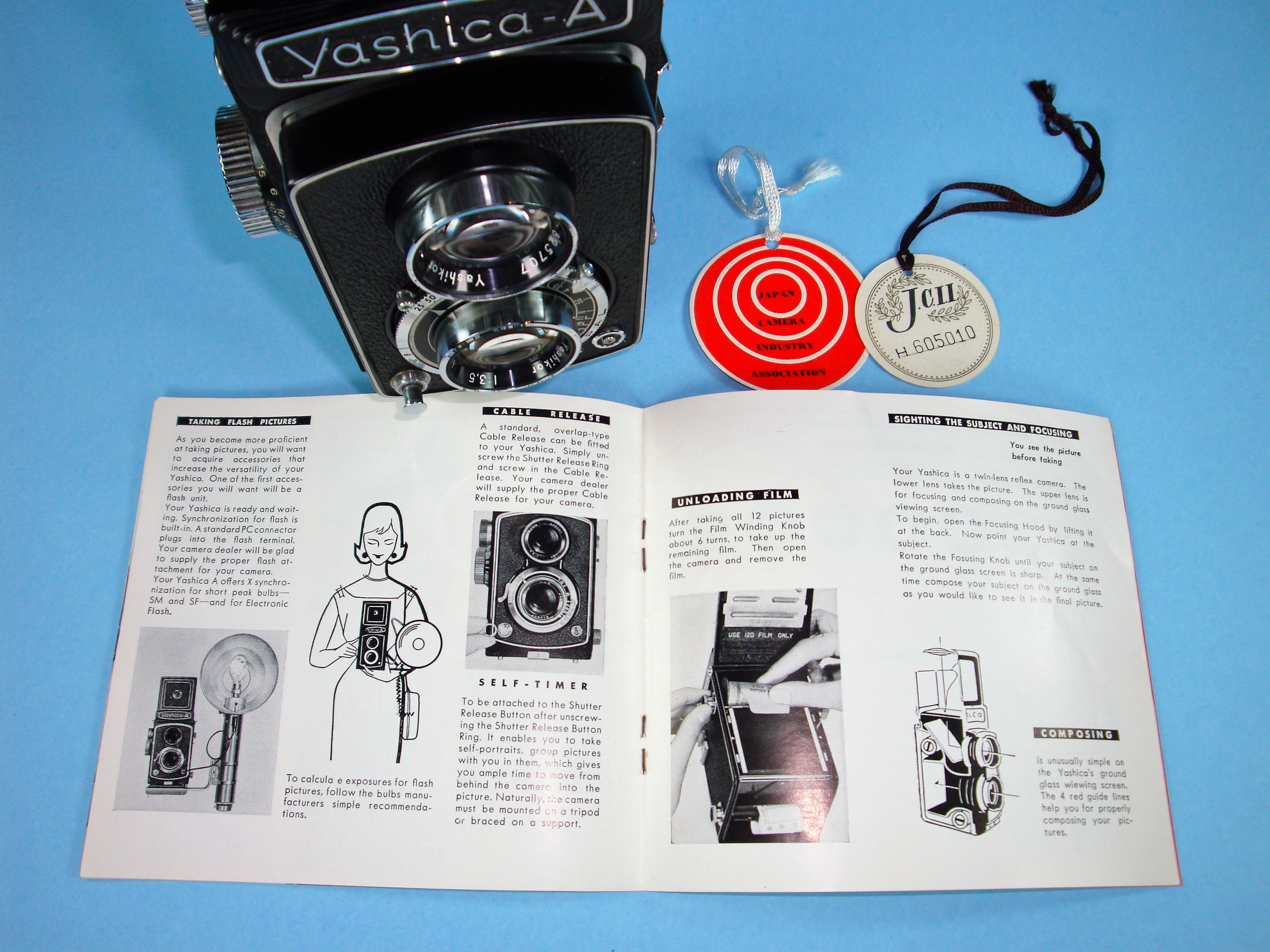
This one was made in 1962 and features Yashikor lenses (the bottom lens is the “taking lens” and the top lens is the “viewing lens”.
As simple as simple gets so you’re likely to find one of these in a fully functioning condition. Not much can go wrong with these unless they’ve been abused or stored improperly.The focus knob is on the right and the film advance knob is on the left. Simple.The little door on the back has a red plastic window under it so that you can see which exposure you’re on as you’re advancing the film. Simple.An accessory shoe and the two film spool knobs.Opening and closing the camera is done by this rather large knob on the bottom.You’ll get 12 exposures from a roll of 120 roll film, either color negative, color transparencies, or black and white negatives in a large 6 x 6 cm (2 1/4 x 2 1/4″). BTW, that is the backside of the taking lens. If you look closely you can see the leaf shutter inside the lens.What a deal! $29.95 and the leather case for 1/5th the cost.One of the easiest instruction booklets to follow. The Yashica A was made for beginner photogs on a budget.
So there you have it, our pick of the day. If you’re looking to get into medium format film photography then give this Yashica model a try. Use my example as a guide as to what to look for when you’re looking at purchasing one for yourself. No corrosion, complete leatherette coverings, clean and clear lenses, and no missing parts. Good luck!
May I suggest a visit to my good friend Paul Sokk’s site at http://www.yashicatlr.com/66ModelsPage1.html for some of the best information you’ll find anywhere about all things Yashica, Nicca, Leotax, and more.
Comments are always welcomed as I’ve learned quite a bit from reader feedback. As always, thanks for stopping by and while you’re at it, feel free to visit my camera shop at http://www.ccstudio2380.com (CC Design Studios hosted by Etsy). – Chris Whelan
Please respect that all content, including photos and text, are the property of this blog and its owner, Yashica Pentamatic Fanatic, Yashica Sailor Boy, Yashica Chris, Chasing Classic Cameras with Chris.
I like their simple lines and I think they look uncluttered without the clunky self-timer lever stuck on its face.M42 screw-in lens mount so most of my Yashinon (Tomioka) lenses will fit but not always correctly. The same goes for my Fujinon lenses.
Happy Monday! As I was surfing through my archives of cameras that have long since departed and I came across this little gem – the Asahi Pentax H2. I’ve always been fond of these, I guess I just like their look and the solid feel in your hands. I haven’t had much luck with them over the years as I almost always end up with a stuck in the up position mirror or some other shutter or film advance issue. They’re quite old now so a good CLA would bring them back. Too late for that with this one as it was purged in a big sell off years ago.
If you’re looking for an interesting classic camera to chase the H2 is worth your time and energy. As with all older SLRs look for the best you can afford. It may not work but it will look good sitting around.
Comments are always welcomed as I’ve learned quite a bit from reader feedback. As always, thanks for stopping by and while you’re at it, feel free to visit my camera shop at http://www.ccstudio2380.com (CC Design Studios hosted by Etsy). – Chris Whelan
Please respect that all content, including photos and text, are the property of this blog and its owner, Yashica Pentamatic Fanatic, Yashica Sailor Boy, Yashica Chris, Chasing Classic Cameras with Chris.