Comments are always welcomed, as I’ve learned quite a bit from reader feedback. As always, thanks for stopping by, and while you’re at it, feel free to visit my camera shop at http://www.ccstudio2380.com (CC Design Studios hosted by Etsy). – Chris Whelan
My Contax RTS with a Contax RTW W-3 and Carl Zeiss Vario-Sonnar T* 28-70mm f/3.5-4.5 Macro Zoom lens. www.ccstudio2380.com
The Contax RTS was released in 1975.I added a Contax Real Time Winder W-3.The Carl Zeiss lens is super sharp, and the zoom range is perfect for my type of photography.It’s not complete without the appropriate Contax overdesigned and oversized lens hood.Instruction booklet from 1977.Ad from 1976.
The original Contax RTS (Real Time System) is a joy to use. If you are looking for a classic 35mm SLR to add to your collection, look no further than the RTS.
Comments are always welcomed, as I’ve learned quite a bit from reader feedback. As always, thanks for stopping by, and while you’re at it, feel free to visit my camera shop at http://www.ccstudio2380.com (CC Design Studios hosted by Etsy). – Chris Whelan
In many ways, it’s better than the much more famous F-1.
It’s also known as the Canon Black Beauty. It’s built on the F-1’s frame but does not have interchangeable viewfinders or the ability to use a power winder or motor drive.
The EF was first released in 1973, just two years after the F-1. It was Canon’s first aperture-priority camera, well before the AE-1.The standard lens is the Canon FD 50mm f/1.4 S.S.C. shown here with its lens hood.Here, a Canon EF and its cousin, the Canon F-1. The F-1 is shown in a limited-edition olive drab.Another EF in my collection.
The Canon EF is a worthy camera for your collection. The ability to electronically time exposures from 1/2 to 30 seconds accurately makes it more versatile than the F-1 in its base form.
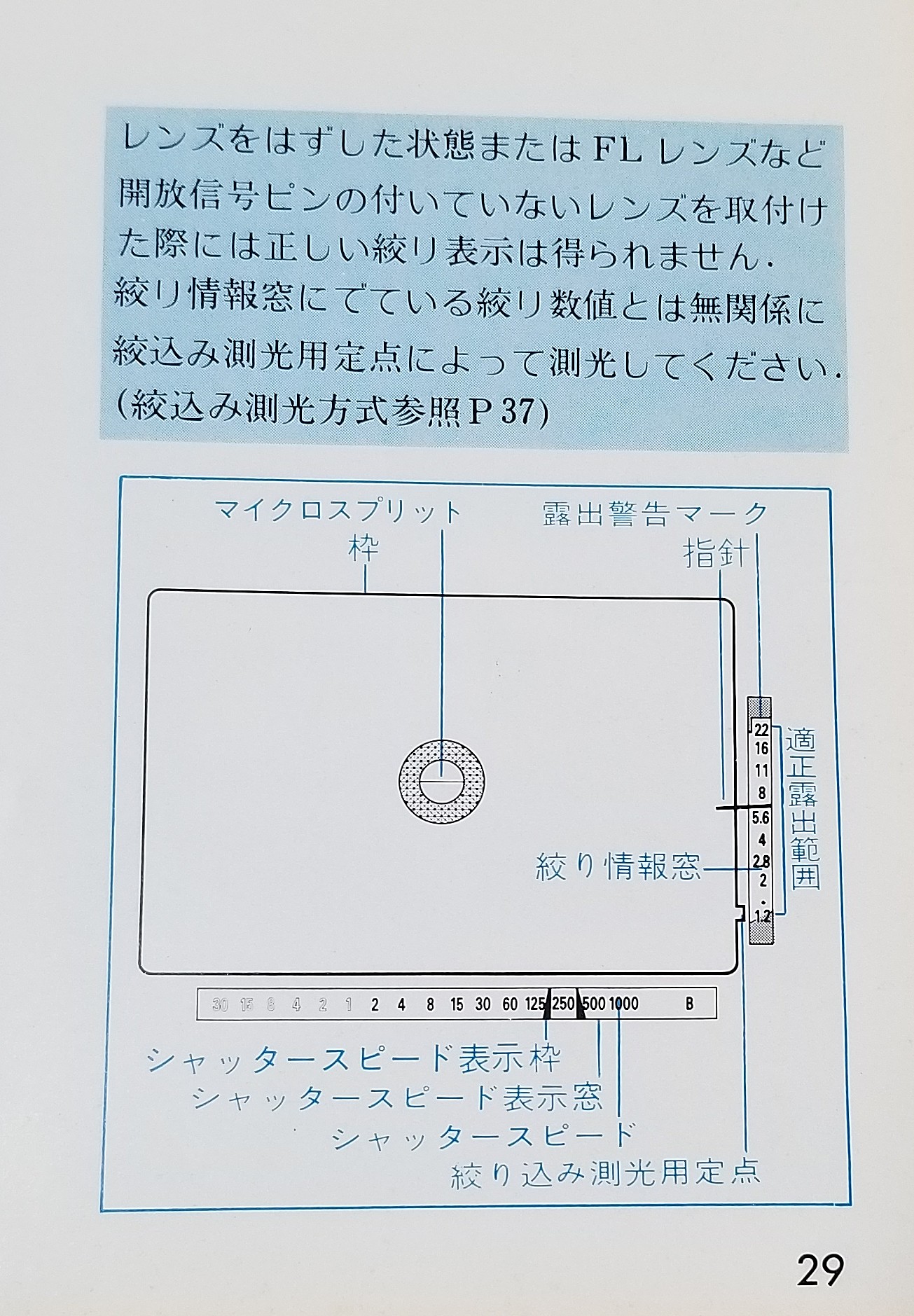
From the Japanese instruction book.The view in the viewfinder. The later EFs had a split-image and microprism focusing screen.From my EF released in Japan.An earlier EF with the FD 50mm F/1.8 S.C. lens.
Comments are always welcomed, as I’ve learned quite a bit from reader feedback. As always, thanks for stopping by, and while you’re at it, feel free to visit my camera shop at http://www.ccstudio2380.com (CC Design Studios hosted by Etsy). – Chris Whelan
Comments are always welcomed, as I’ve learned quite a bit from reader feedback. As always, thanks for stopping by, and while you’re at it, feel free to visit my camera shop at http://www.ccstudio2380.com (CC Design Studios hosted by Etsy). – Chris Whelan
I often purchase used cameras and lenses from individuals in person and from online sites. Some of these gems are usually over forty years old and older, and even though they look clean, I know they’re not. I don’t think I’m a germaphobe (a bit, maybe), but the thought of putting an obviously dirty camera up to my face isn’t too appealing. The flip side to making a camera clean again is that it will go a long way to preserving the camera’s surfaces, preventing corrosion, and removing oils and contaminates that will deteriorate the camera in the long term. I think of it as preserving a bit of history.
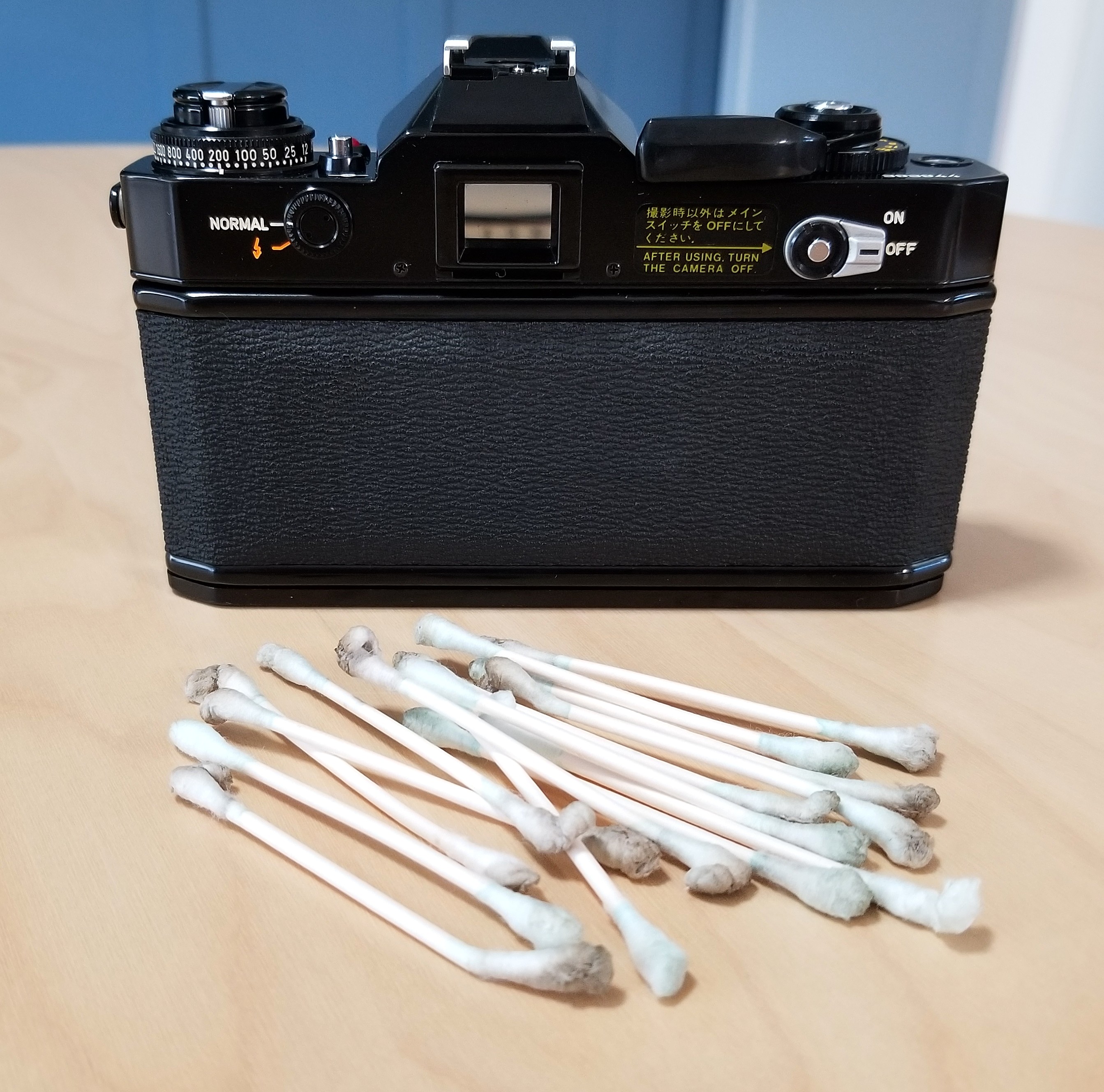
Here is a camera I acquired recently. It looked in mint condition and, at first glance, clean. The camera is from 1976, and although it wasn’t heavily used, it’s been sitting around collecting pollutants.
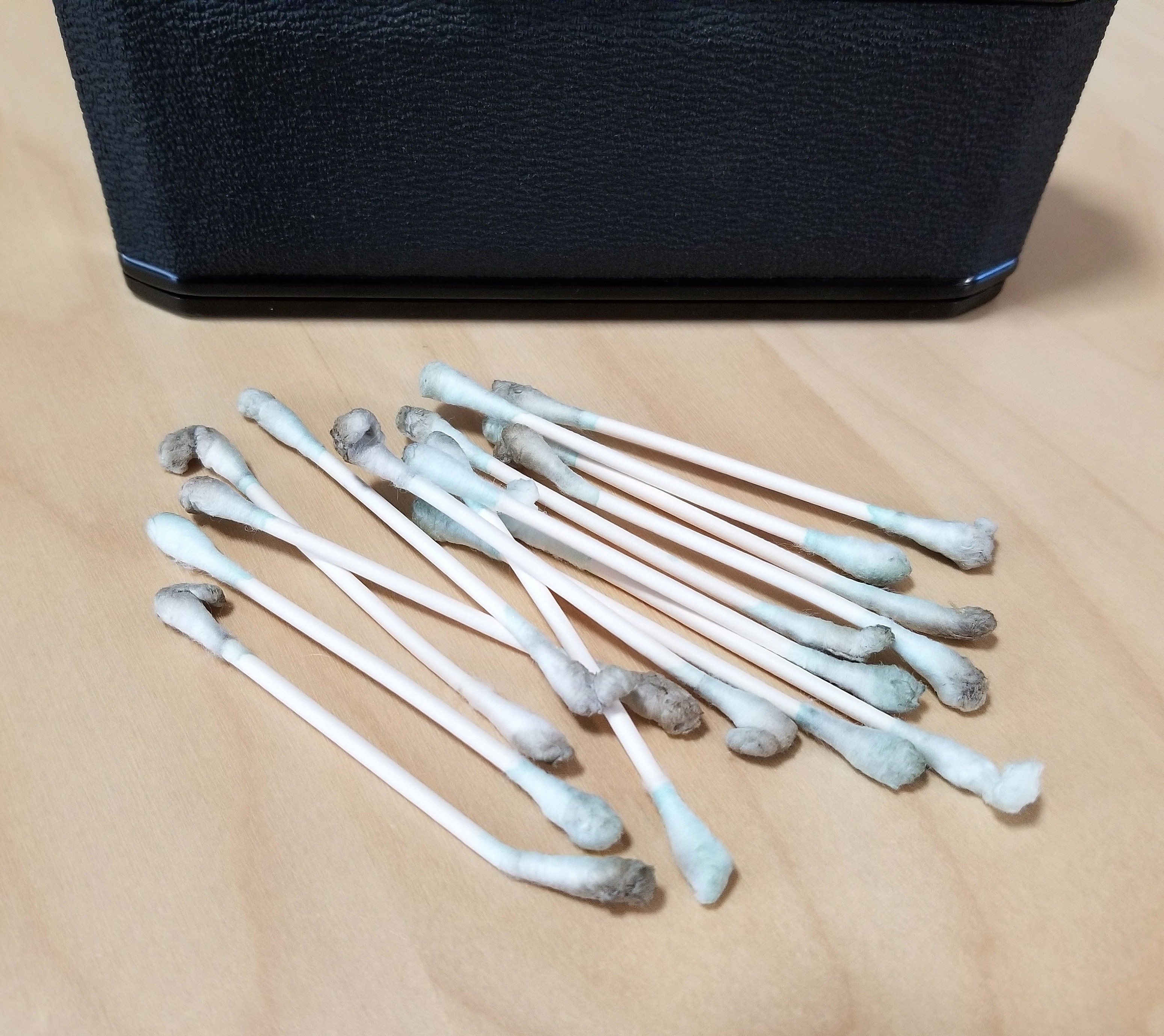
Standard cotton buds (Q-tips) and household Windex and lots of time remove the dirt and grime trapped in and on the surfaces of the camera. These were from the leatherette on the back cover. Think nose oils and dirty fingers. The front leatherette is another grimy area.Dirty buds.
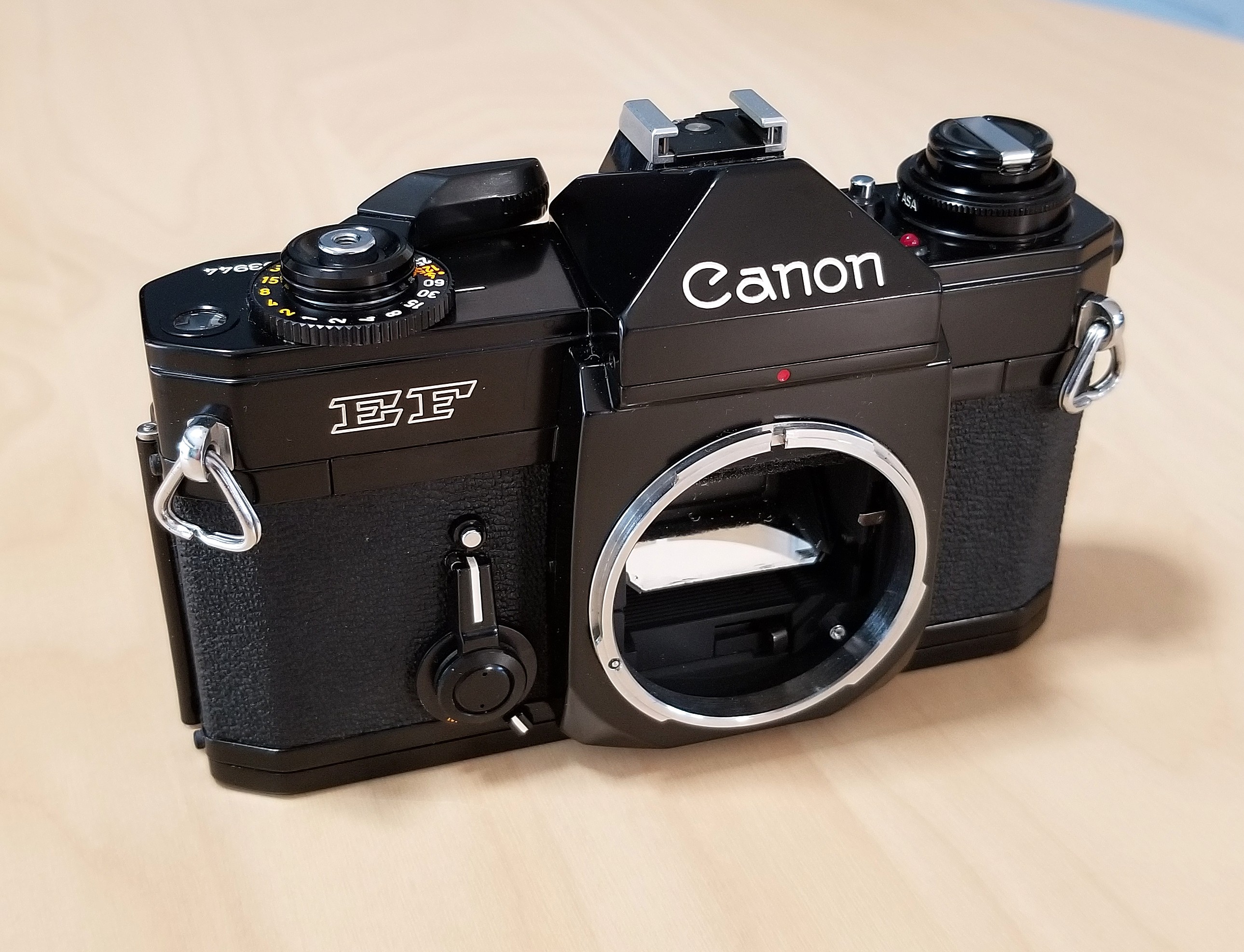
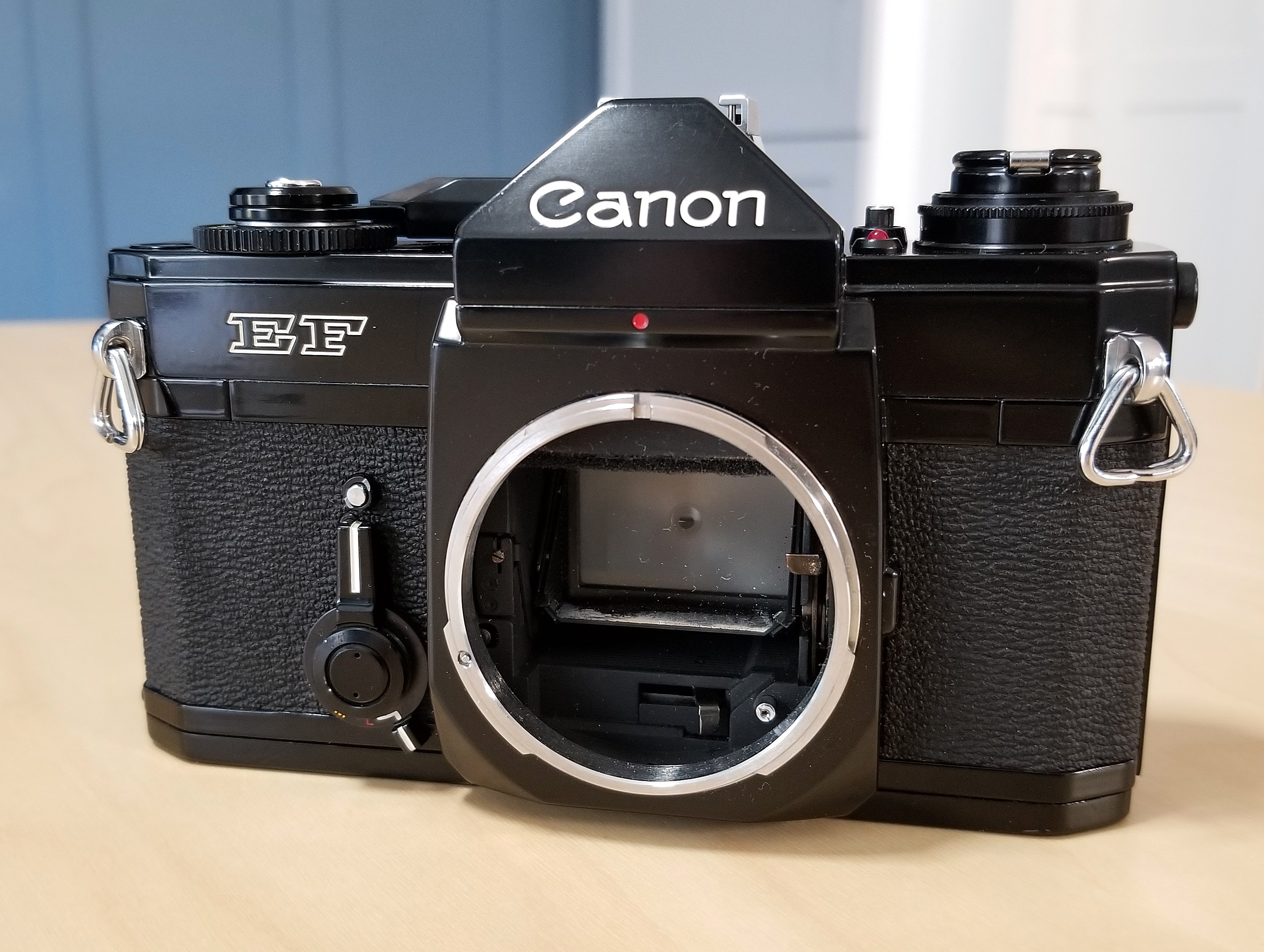
After an evening happily spent detailing this gorgeous Canon (below).
After.
I’ve cleaned cameras like this for over thirty years, and never has it damaged a camera or lens. Obviously, I dip the Q-tips in a small container of Windex. Don’t directly spray the camera.
Comments are always welcomed, as I’ve learned quite a bit from reader feedback. As always, thanks for stopping by, and while you’re at it, feel free to visit my camera shop at http://www.ccstudio2380.com (CC Design Studios hosted by Etsy). – Chris Whelan
The original Asahi Pentax 35mm SLR (1957-1958), equipped with a Takumar 58mm f/2 lens and an Asahi 46mm UV filter.
It’s a fully functional gem.
The camera was in Australia, and the lens was in Japan; now, they are together in the U.S.
I’m happy to add them to my collection.
It’s credited as being the first modern 35mm SLR camera. It doesn’t look much different from later SLRs from other manufacturers. It was preceded by the Asahiflex pictured below.The Asahiflex IIa was the first ‘modern’ 35mm SLR from 1955. It featured a pop-up viewing hood instead of an eye-level pentaprism like the later Asahi Pentax original from 1957.Asahi Pentax H2 – 1959.Asahi Pentax SL – 1968.Asahi Pentax Spotmatic SP – 1966.
Comments are always welcomed, as I’ve learned quite a bit from reader feedback. As always, thanks for stopping by, and while you’re at it, feel free to visit my camera shop at http://www.ccstudio2380.com (CC Design Studios hosted by Etsy). – Chris Whelan
Asahi Optical Company, Asahiflex IIa with a Takumar f3.5 50mm lens. Japan’s first 35mm SLR film camera. Notice the film-like look of this image using a vintage lens.The Asahiflex IIa (first image above) was photographed with a 1959 Auto-Takumar f/3.5 35mm lens mounted via an adapter on my Fujifilm X-T2.On the left, Nicca 3-S 35mm rangefinder camera (1954) and on the right, the Asahiflex IIa (1955). Note the similarity between the two. Both used interchangeable lenses, but the Asahiflex allowed for direct through-the-lens viewing via the pop-up viewing hood.The Asahiflex uses 37mm screw-in lenses, and the Nicca uses 39mm screw-in lenses, just like a Leica camera from the same period.Asahiflex IIa advertisement.Expensive for the mid-1950s but not overly so.
Comments are always welcomed, as I’ve learned quite a bit from reader feedback. As always, thanks for stopping by, and while you’re at it, feel free to visit my camera shop at http://www.ccstudio2380.com (CC Design Studios hosted by Etsy). – Chris Whelan
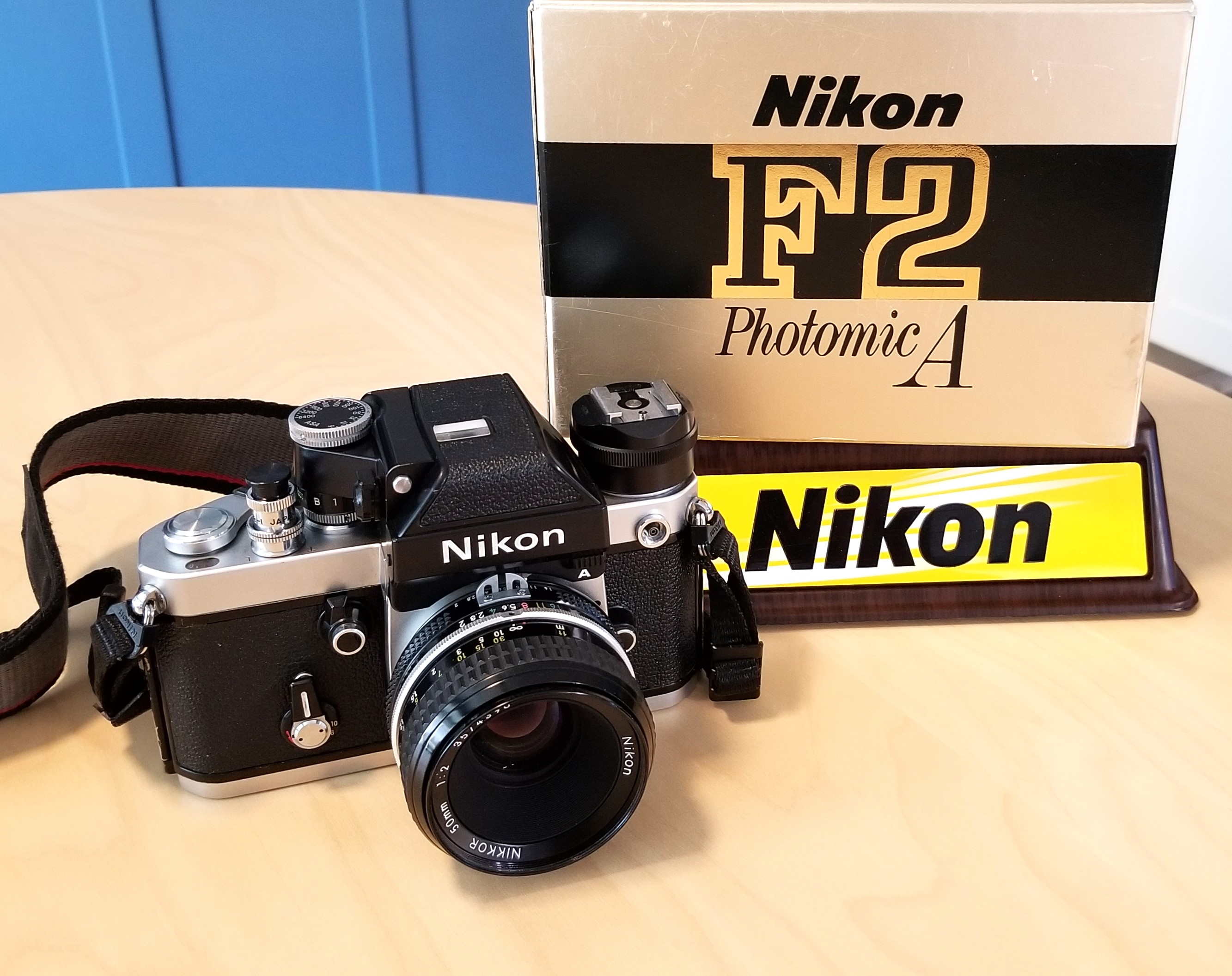
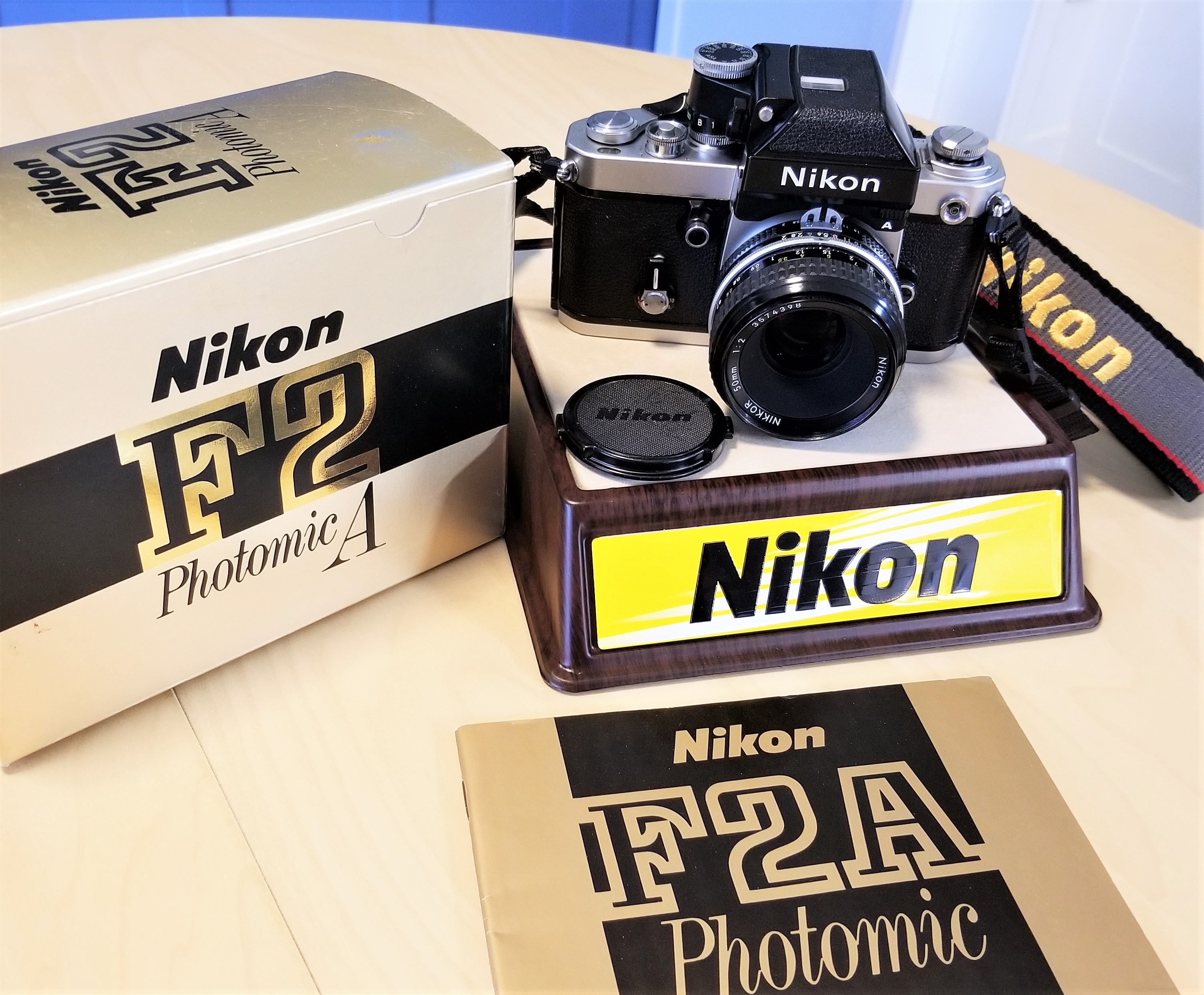
I’m a big-time Canon and Yashica collector, so getting into the Nikon brand has been a fun experience—lots to learn, which has made it a challenge. Nikon F2A (F2 Photomic A) with a Nikkor 50mm f2 lens. Pictured with the AS-1 Flash Unit Coupler and AR-1 Soft Shutter Release. The F2 body is from early 1973, and the DP-11 metered viewfinder is from 1978. Do you have a favorite Nikon? This gorgeous camera will be in my camera shop soon (I think).
Comments are always welcomed, as I’ve learned quite a bit from reader feedback. As always, thanks for stopping by, and while you’re at it, feel free to visit my camera shop at http://www.ccstudio2380.com (CC Design Studios hosted by Etsy). – Chris Whelan
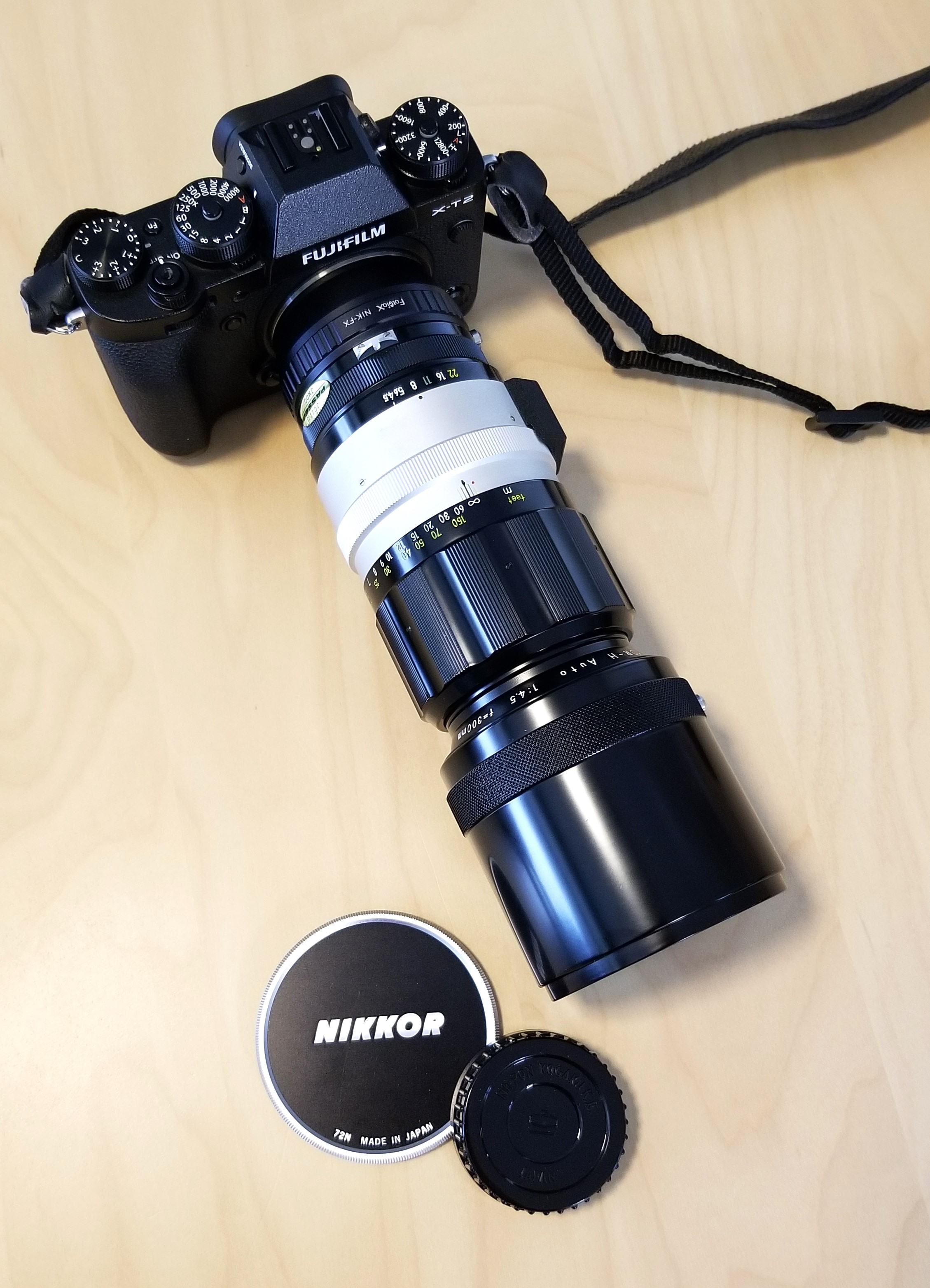
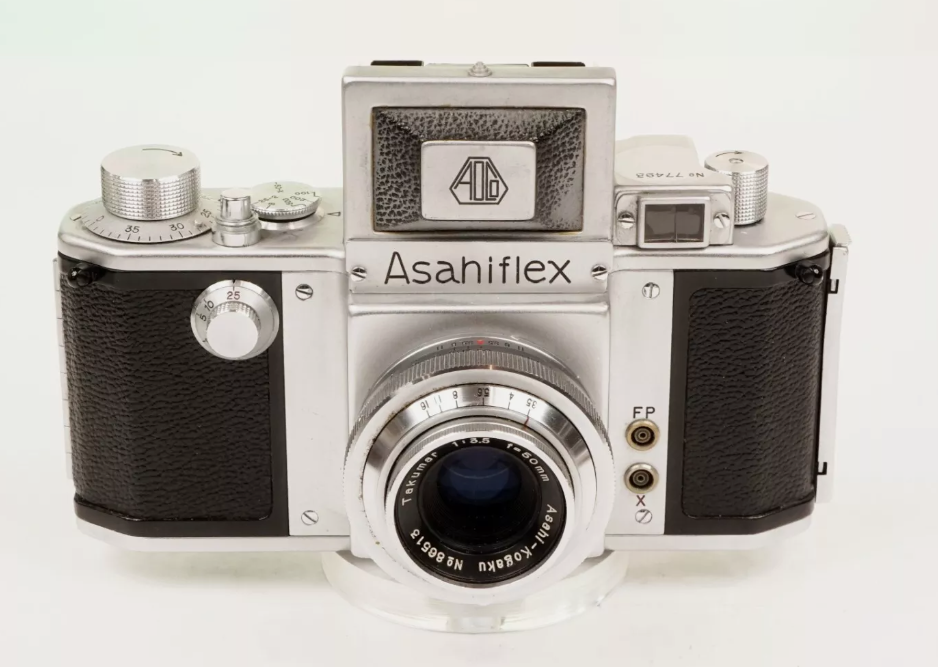
Fernandina Beach Historic District. Nassau County Courthouse. Winter sky.At the beach. A reminder to never leave your trash behind and to remove trash whenever you visit.At the beach.A rose. Samsung Galaxy S8+ camera.Fujifilm X-T2 with a classic Nikon Nokkor 300mm lens.Soon. I’ll be selling this wonderful Nikon set in my camera shop.One of the first 35mm Japanese-made SLR cameras.My Asahiflex IIa.
Comments are always welcomed, as I’ve learned quite a bit from reader feedback. As always, thanks for stopping by, and while you’re at it, feel free to visit my camera shop at http://www.ccstudio2380.com (CC Design Studios hosted by Etsy). – Chris Whelan















 Chasing Classic Cameras with Chris