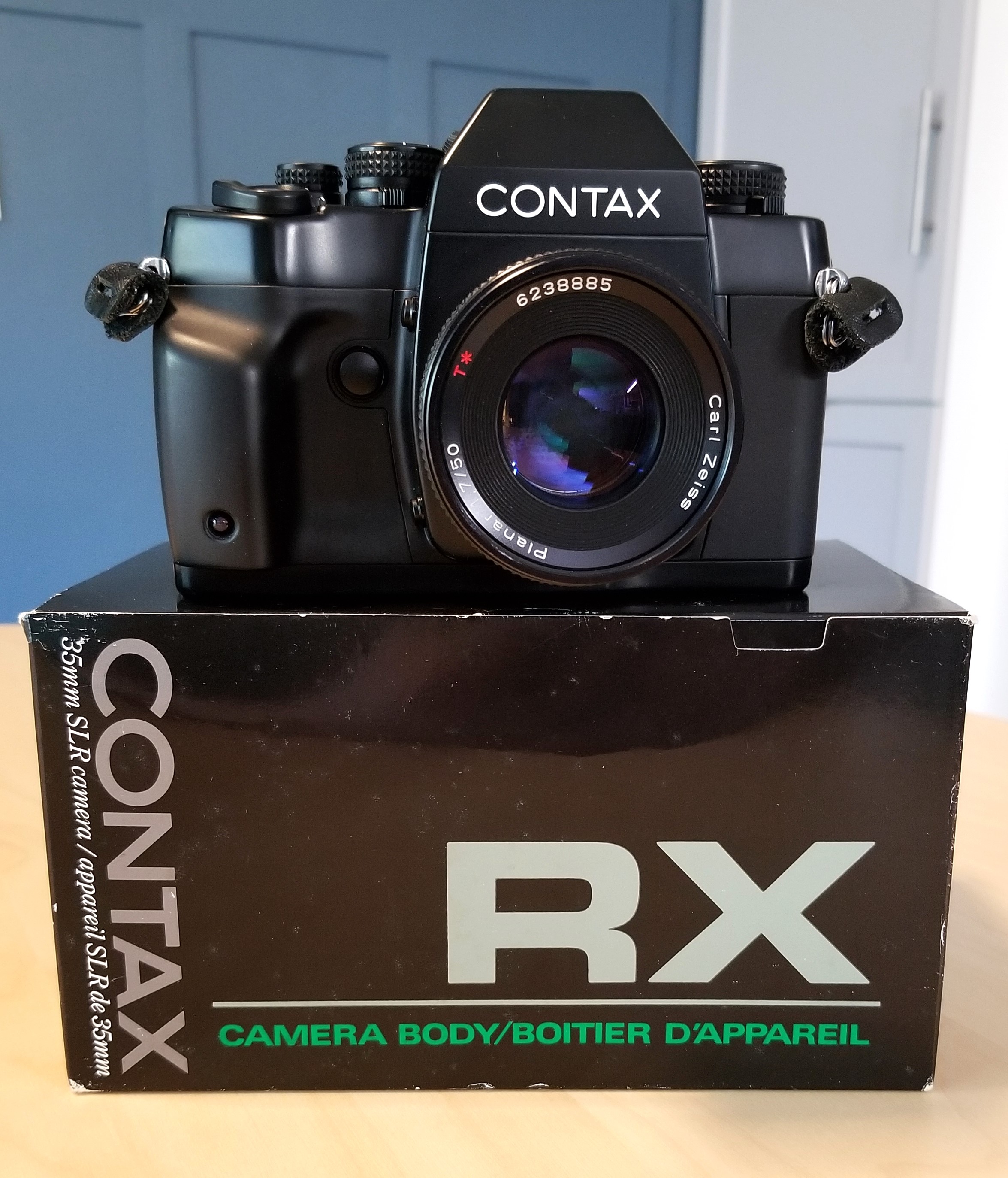
Before the dawn of the digital age, camera manufacturers produced some of their most technologically advanced 35mm SLR film cameras to date. Sophisticated autofocus systems, auto exposure, eye-control, and zone-assist focusing to name just a few features. The Canon EOS-1N (1994), the Nikon F4 (1988) which was Nikons first professional camera with autofocus, the F5 (1996), and the Contax RX (1994), AX (1996) which had a basic autofocus system and later, the N1 (2000) a true autofocus camera with a new line of Zeiss lenses.
My Contax RX set. The lens was initially sold separately.The RX’s ‘highlight’ was the Digital Focus Indicator (DFI) function—not quite autofocus, but close.It’s a handsome SLR with a timeless, classic look that, in my opinion, modern Fujifilm mirrorless cameras emulate.The list price of JPY 160,000 was about USD 1,600 in 1994.Contax RX brochure. Shoots at up to 3 frames per second.Canon EOS-1N RS (a film eater with autofocus). It’s capable of shooting 10 frames per second! Uses Canon EF lenses.Canon EOS-1N brochure – 1994.Nikon F5 1996. It’s capable of shooting 8 frames per second.Nikon F5 brochure.The Contax RX. The data back only indicates the year up to 2019. Thirty years on, it’s stuck in the 1990s. The data is printed between the frames on the film, not in the image.Contax craziness!
More soon. Thanks for stopping by, Chris
Follow me on Instagram at @ccphotographyai
Comments are always welcomed, as I’ve learned quite a bit from reader feedback. As always, thanks for stopping by, and while you’re at it, feel free to visit my camera shop at http://www.ccstudio2380.com (CC Design Studios hosted by Etsy). – Chris Whelan
The Contax 50th Anniversary Edition 137 MD Quartz 35mm SLR film camera.
The ’50 Years’ model had a unique leatherette and a gold Contax ‘button’ on the flash sync terminal.I don’t usually chase anniversary models, but this one struck me as pure in the early 1980s.
Contax celebrated fifty years, 1932-1982.
One of two standard lenses is shown here.Contax numbered their cameras, consequently. As far as I am aware, no date code is hidden in the serial numbers.It’s a simple manual focus aperture priority camera first released in 1980. Notice the location of the tripod socket. The entire baseplate is removable to be able to install the four AA batteries needed to power the meter and motor drive.Advertisement from early 1980.I believe the red sticker indicates that the color of the body is ‘fin’ or ‘wine.’ The Google Translate app isn’t apparent.There aren’t many of these models still available, but they are well worth being chased.
This particular camera was sold in Japan, and unfortunately, I don’t have the original paperwork or Japanese instruction booklet. I’d love to find the correct strap, too. The proper case is a bit of a mystery, but I believe it should have been C-004, according to my friend Graham in the UK. By the way, the period correct flash units made for the 137 MD is the Contax TLA20 and TLA30 Auto Flash units for true TTL flash metering. There is also a 137 Data Back and a 137 Grip Adapter. Thanks for stopping by and be sure to visit my camera shop (hosted by Etsy) at http://www.ccstudio2380.com – Chris
Follow me on Instagram at @ccphotographyai
Comments are always welcomed, as I’ve learned quite a bit from reader feedback. As always, thanks for stopping by, and while you’re at it, feel free to visit my camera shop at http://www.ccstudio2380.com (CC Design Studios hosted by Etsy). – Chris Whelan
Paired with a sharp Carl Zeiss Planar T* 50mm f/1.7 or f/1.4 lens made for a super sharp 35mm SLR. Thanks for stopping by, Chris
Follow me on Instagram at @ccphotographyai
Comments are always welcomed, as I’ve learned quite a bit from reader feedback. As always, thanks for stopping by, and while you’re at it, feel free to visit my camera shop at http://www.ccstudio2380.com (CC Design Studios hosted by Etsy). – Chris Whelan
I’ve enjoyed acquiring camera and photography brochures over the years and now have quite an extensive collection of them (go figure). I’ll be listing some of them in my camera shop over the next few months so if you’re on the hunt for something specific, just let me know and or visit my shop at http://www.ccstudio2380.com.
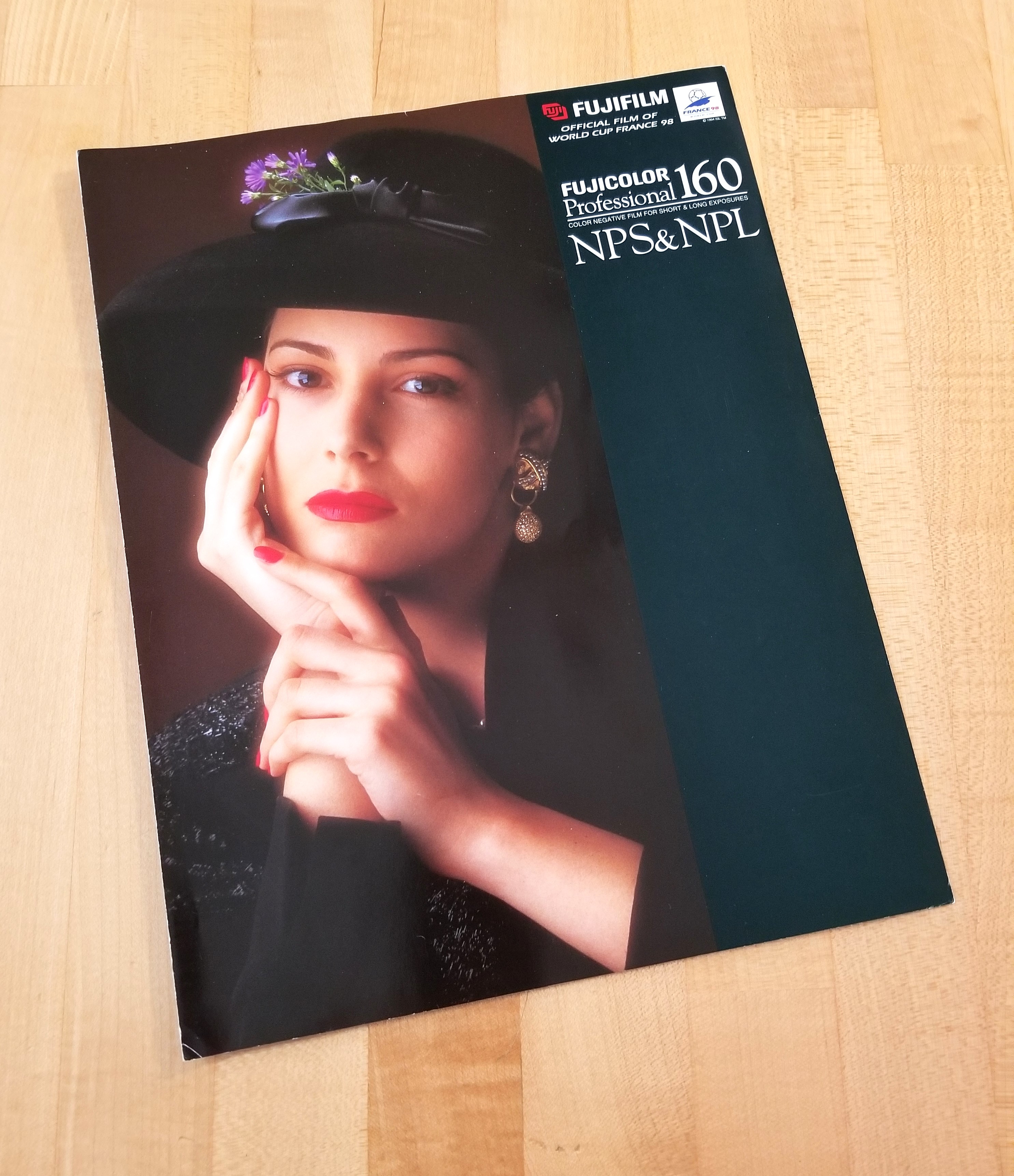
This is a large-format Fujifilm film brochure from 1998. Fujicolor Professional 160 film was a popular color negative film in the 1990s.Here is a relatively hard-to-find brochure on the not-often-seen Yashica Electro 35 Professional camera from 1970. It’s a Japanese camera shop brochure.A large (9 x 21 inch) Plexiglas camera dealer’s display sign is also available in my shop.I no longer own the camera but have the original boxes for it. It would add a nice touch to your collection.The Canon black and olive green camera bag is still new and unused and is available.A like-new Minolta 35mm SLR set with its original box and papers.
These are just a few of the neat items I have in my shop, all at a 10% savings! Thanks for stopping by, Chris.
Follow me on Instagram at @ccphotographyai
Comments are always welcomed, as I’ve learned quite a bit from reader feedback. As always, thanks for stopping by, and while you’re at it, feel free to visit my camera shop at http://www.ccstudio2380.com (CC Design Studios hosted by Etsy). – Chris Whelan
Fuji Photo Film Company – Fujipet medium format film camera (1958).
Is that a light meter he’s checking? David Yulee statue in downtown Fernandina Beach, Florida. David was kind enough to pose with my Fujipet.
Thanks for stopping by, Chris
Follow me on Instagram at @ccphotographyai
Comments are always welcomed, as I’ve learned quite a bit from reader feedback. As always, thanks for stopping by, and while you’re at it, feel free to visit my camera shop at http://www.ccstudio2380.com (CC Design Studios hosted by Etsy). – Chris Whelan
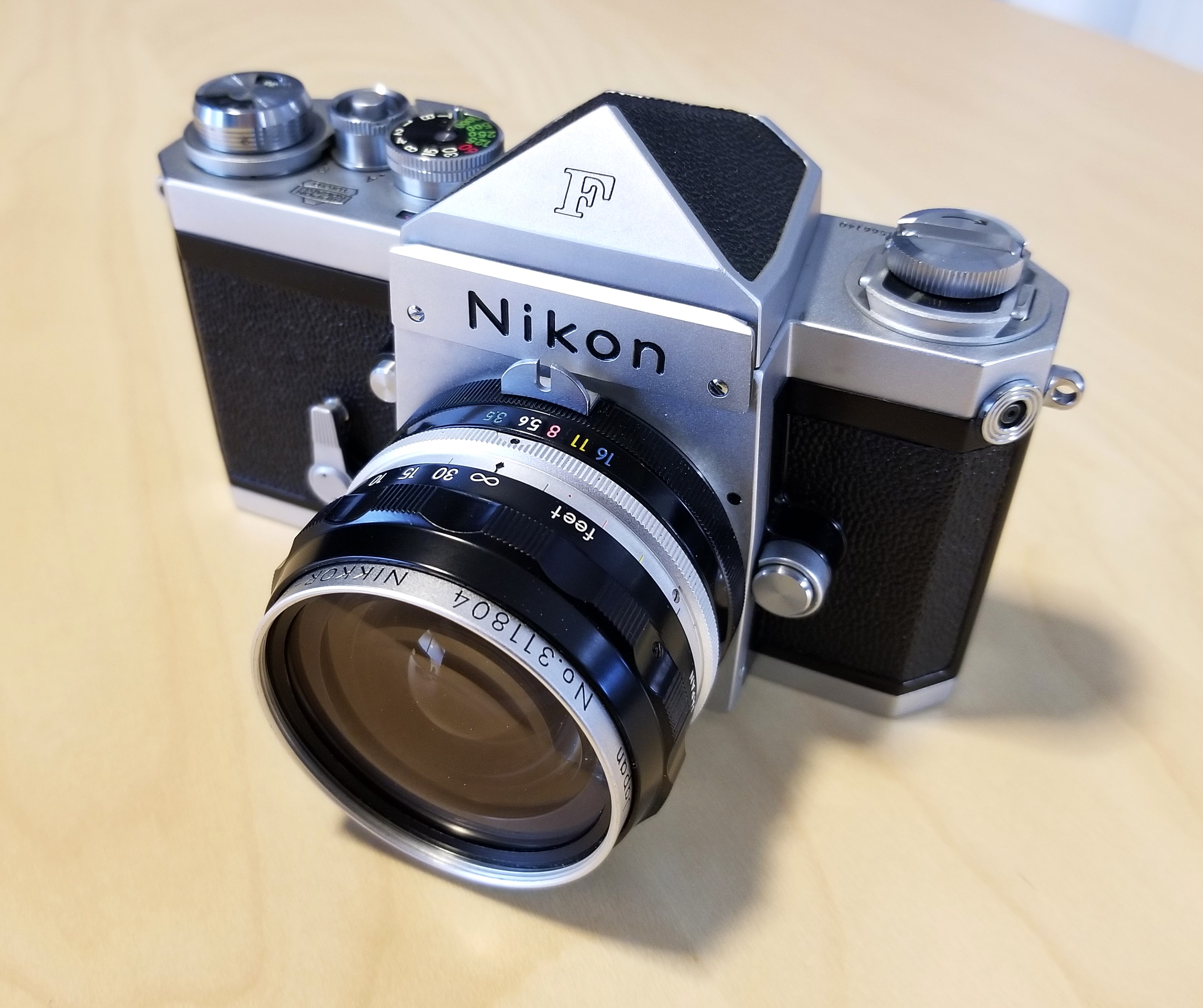
Nikon F Nikkor-H Auto 2.8cm f3.5 pre-Ai Nippon Kogaku Tokyo 1964 (late) body and Nippon Kogaku K.K. lens from around 1961 or 1962. The body was modified to accept the Photomic-T finder. Classic Nikon at its best. I enjoy using this focal length over 24mm or 35mm, and with modern fast films, the f3.5 aperture is not an issue. On my Fujifilm X-T2 (APS-C Sensor), the lens has an effective focal length of 42mm.
A nearly perfect combination.The lens is from around late 1961 or 1962. The first lens in this style and focal length was serial number 301xxx, released in early 1960.A classic, straightforward design.Nikkor-H Auto.2.8 cm lens, f3.5 wide-angle lens.Mostly Nippon Kogaku caps. The Nikkor front cap is 52mm and is a bit newer style for this lens.
Thanks for stopping by, Chris
Follow me on Instagram at @ccphotographyai
Comments are always welcomed, as I’ve learned quite a bit from reader feedback. As always, thanks for stopping by, and while you’re at it, feel free to visit my camera shop at http://www.ccstudio2380.com (CC Design Studios hosted by Etsy). – Chris Whelan
Please respect that all content, including photos and text, is this blog’s property and its owner, Yashica Pentamatic Fanatic, Yashica Sailor Boy, Yashica Chris, Chasing Classic Cameras with Chris.
Scientific/Medical ‘Sci-Med’ camera with a Real Time Winder both are from around 1977 or early 1978. No official documentation exists on this variant of the Contax-Yashica RTS (first model) released in 1975. It’s been referred to as the RTS ‘Fundus,’ but again, there needs to be a mention of why it was produced and for what purpose beyond the Sci-Med community to be able to accept that designation, in my opinion. Slight enhancements include a small raised collar around the sensitive magnetic shutter release button and a shutter speed lock button on the right side of the camera’s top plate (as viewed from the front). The shutter speed dial locks in the 1/60 position (electronic flash sync speed), and the button needs to be depressed to select another speed. The Real Time Winder was mated with this camera as they shared the curious ‘Registered Number U.S.A.’ sticker. Many unknowns exist about this limited production camera, and much misinformation is floating around. I hope to uncover some truths or, at the very least, present only factual info. If you have documentation concerning this Scientific/Medical version, please share it with me – advertisements, brochures, or mentions in the photographic press back in the day.
Most RTS cameras have degraded or peeled leatherette coverings as the adhesives and the slightly softer leather haven’t held up over the decades. This one has, for the most part. The RTS line (RTS, RTS II Quartz, and RTS III) all use lenses with the Contax/Yashica (C/Y) mount.The Real Time Winder can shoot up to 2 frames per second (2 fps). Higher-speed motor drives and winders with speeds up to 5 fps were also available.The JCII ‘Passed’ sticker is in a different position from where these stickers were usually placed on the RTS, which would be on the left side of the prism. I guess it was put here on the Sci-Med version because the ‘Registered’ sticker was placed on the prism (by the factory or the distributor?).The baseplate is marked ‘Scientific / Medical’; otherwise, it’s not different from a standard RTS.The registration numbers are different, but the winder and the camera body were together as a set when I purchased them.Early magazine advertisement. Here, it incorrectly indicates that the Real Time Winder is capable of 2 1/2 fps. The manual has it at 2 fps.1976 magazine ad.Beautifully designed and highly functional.
The Contax-Yashica RTS, Real Time System, was jointly developed by Yashica and Carl Zeiss, with the design originating from Porsche. The camera features fully automatic through-the-lens electronic exposure control; select the proper film speed (ASA, ISO) and the desired aperture (f-stop), and the camera selects the appropriate shutter speed. It’s also a fully manual camera, with the user setting the shutter and aperture values. It was a camera I was initially interested in when I was looking to replace my first SLR, the Yashica TL Electro-X, in 1978 when I was stationed in the Navy in Japan. If I remember correctly, the Navy Exchange stores didn’t have a large selection of Contax cameras, so my choice quickly became the Canon F-1 over the Nikon F-2.
Here is my first Contax RTS, which isn’t the Sci-Med version.
I chose the Yashica ML 50mm f1.7 lens over the more expensive Zeiss T-Star (T*) lens.
Thanks for stopping by, Chris
Follow me on Instagram at @ccphotographyai
Comments are always welcomed, as I’ve learned quite a bit from reader feedback. As always, thanks for stopping by, and while you’re at it, feel free to visit my camera shop at http://www.ccstudio2380.com (CC Design Studios hosted by Etsy). – Chris Whelan
Please respect that all content, including photos and text, is this blog’s property and its owner, Yashica Pentamatic Fanatic, Yashica Sailor Boy, Yashica Chris, Chasing Classic Cameras with Chris.
Comments are always welcomed, as I’ve learned quite a bit from reader feedback. As always, thanks for stopping by, and while you’re at it, feel free to visit my camera shop at http://www.ccstudio2380.com (CC Design Studios hosted by Etsy). – Chris Whelan
Please respect that all content, including photos and text, is this blog’s property and its owner, Yashica Pentamatic Fanatic, Yashica Sailor Boy, Yashica Chris, Chasing Classic Cameras with Chris.
In the Contax RTS instruction booklet, the baseplate pictured either has a “real” serial number or one “made up” by the marketing department. RTS models out in the wild don’t have a serial number that is easy to decode (date manufactured), but this one does, at least if you know how to read Yashica serial numbers. I interpret this SN as February 1975 (502), and its number is 166.
The original instruction booklet (dated 06/76) has an 8-digit SN.My RTS baseplate has serial number 087024, which looks nothing like the serial number in the instructions.Here is a baseplate from an RTS-Fundus Scientific / Medical camera. I see 091238. I don’t see a date code in there – do you?
Anyway, this is just a quick post to gather my thoughts. Do you own a Contax RTS first model? I’d like to see more serial numbers as a pattern may appear. Thanks for stopping by, Chris
Follow me on Instagram at @ccphotographyai
Comments are always welcomed, as I’ve learned quite a bit from reader feedback. As always, thanks for stopping by, and while you’re at it, feel free to visit my camera shop at http://www.ccstudio2380.com (CC Design Studios hosted by Etsy). – Chris Whelan
Please respect that all content, including photos and text, is this blog’s property and its owner, Yashica Pentamatic Fanatic, Yashica Sailor Boy, Yashica Chris, Chasing Classic Cameras with Chris.
Brothers from different mothers – the classic Contax-Yashica RTS (original model) and the Fujifilm X-T2. I find the weight and feel to be the same, and many of the manual controls I use are right on top of the T2. That could be why I was attracted to the Fuji in the first place. In the world of modern mirrorless digital cameras, the T2 just feels and acts like an old-school SLR.
The Fuji features a sharp Fujinon zoom lens, and the RTS has a fast and sharp f1.7 Yashica lens. I enjoy the aesthetics of both cameras, and I often shoot with the half-cases attached.Fujifilm got it right when they designed their T2 (and similar models), drawing on the successful designs and functionality from the past.A better view of the lenses. I chose the Yashica lens over the much more costly Planer lens because, let’s face it, Yashica made both (maybe from a Tomioka design in collaboration with Zeiss). The famous T* coatings may be missing on the Yashica, but I doubt it. The T* mainly was a marketing exercise. Full disclosure – I’d take the Zeiss Planer in a heartbeat if money were no object.
I enjoy using my Fuji; it is my go-to camera whenever I shoot with my classic lens collection or when I need to test a lens before listing it in my Etsy shop or on eBay. It’s fast and easy, and the APS-C sensor has a 1.5 crop factor that “boosts” the focal length of every lens I use. See yesterday’s gorgeous 450mm shot below from my 300mm Nikkor-H lens.
Boeing 777 (likely) at over 30,000 feet over northeast Florida (not cropped).
Thanks for stopping by, Chris. Which is your favorite mirrorless camera? Are you a Canon or Nikon photographer? Has anyone tried the new Nikon Z cameras?
Follow me on Instagram at @ccphotographyai
Comments are always welcomed, as I’ve learned quite a bit from reader feedback. As always, thanks for stopping by, and while you’re at it, feel free to visit my camera shop at http://www.ccstudio2380.com (CC Design Studios hosted by Etsy). – Chris Whelan
Please respect that all content, including photos and text, is this blog’s property and its owner, Yashica Pentamatic Fanatic, Yashica Sailor Boy, Yashica Chris, Chasing Classic Cameras with Chris.






 Chasing Classic Cameras with Chris