Weekly Photo Challenge – Pedestrian

We decided to take a trip back in time in response to this week’s challenge – Pedestrian

Yokohama, Japan 1979

20285035960_468cfc052f_o

Friendly police and happy shoppers – At Motomachi, Yokohama. Photo by Chris – Canon F-1

New York City, USA c1940

29254927470_209cb0e708_o

Fashionable pedestrians stepping out in NYC in the late 1930s or early 1940s. The beautiful lady on the far right is my mom. Unknown photographer.

Cannes, France 1986

IMG_20170413_0010

Summer strolling along Rue Louis Blanc – The French Riviera – Photo by Chris – Canon F-1

Three different decades – Three different countries – All pedestrians through time.

https://dailypost.wordpress.com/photo-challenges/pedestrian/

Thanks for stopping by!

Chris


Yashica Lynx – the ‘Wildcat’ in Yashica’s den!

We haven’t paid much attention to rangefinder cameras here on the “Fanatic” – it’s not that we don’t find them interesting – quite the opposite, many rangefinder cameras associated with Yashica are groundbreaking and historically significant and are worthy of further research.

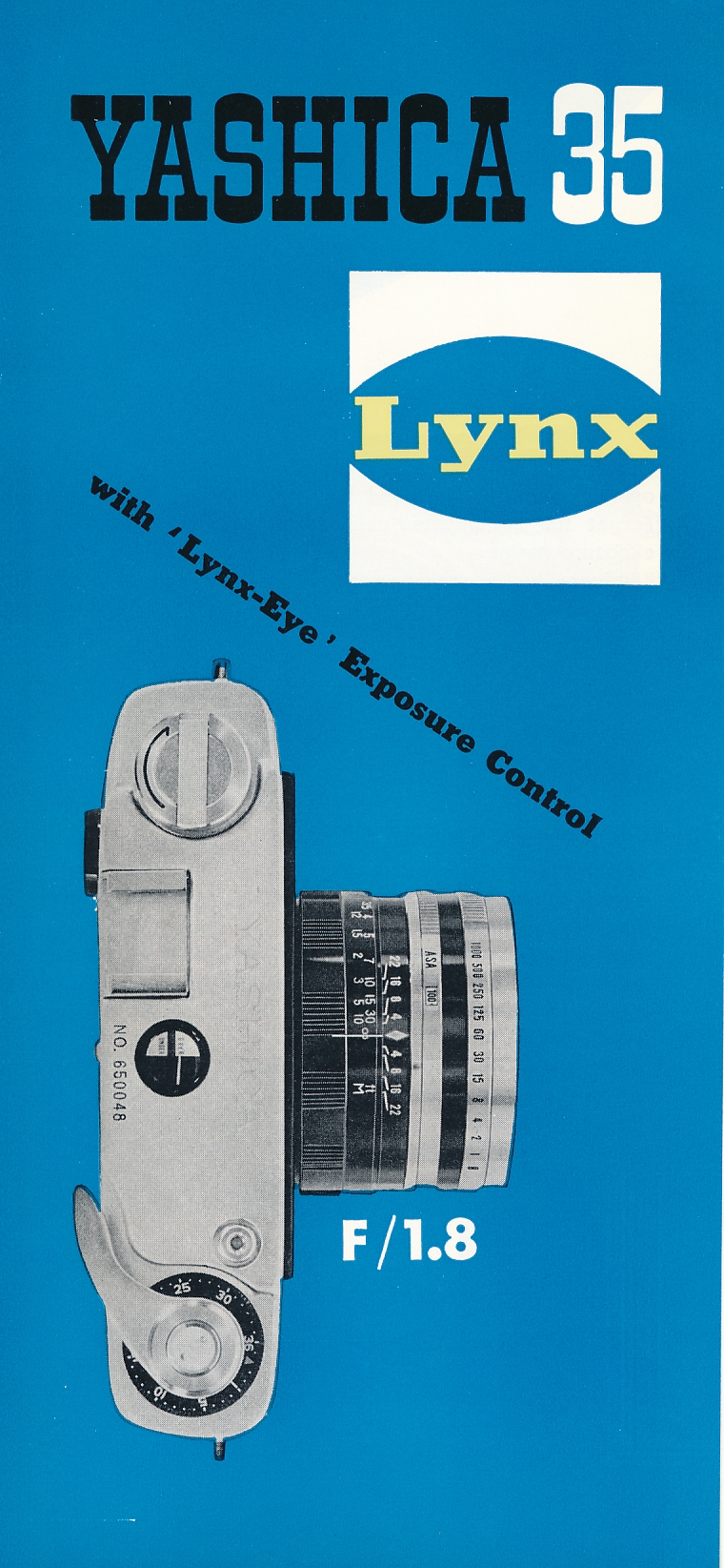
The Yashica Lynx – aka the Lynx-1000. It was the first in a long line of successful fixed-lens rangefinder cameras from Yashica in the early 1960s. The first Lynx was made in May 1960 based on the serial number of the camera in an early sales brochure (in English below).
IMG_20170930_0001

We find early sales brochures extremely helpful when attempting to place a date of production of a camera. In this case, the serial number NO. 650048 would indicate that the Lynx was first produced in May 1960 (6 = 1960, 5 = May, 0048 = number 48th made).

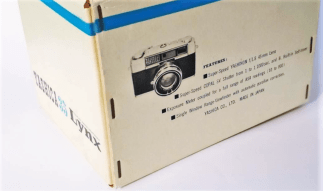
This early box (below) confirms that Yashica referred to the camera as just the Lynx vice Lynx-1000 when it was first released. The success of the Lynx paved the way for the subsequent versions of the camera.

Yashica Lynx Box

Yashica Lynx Box 1


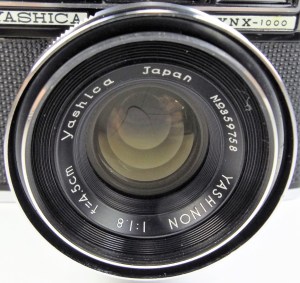
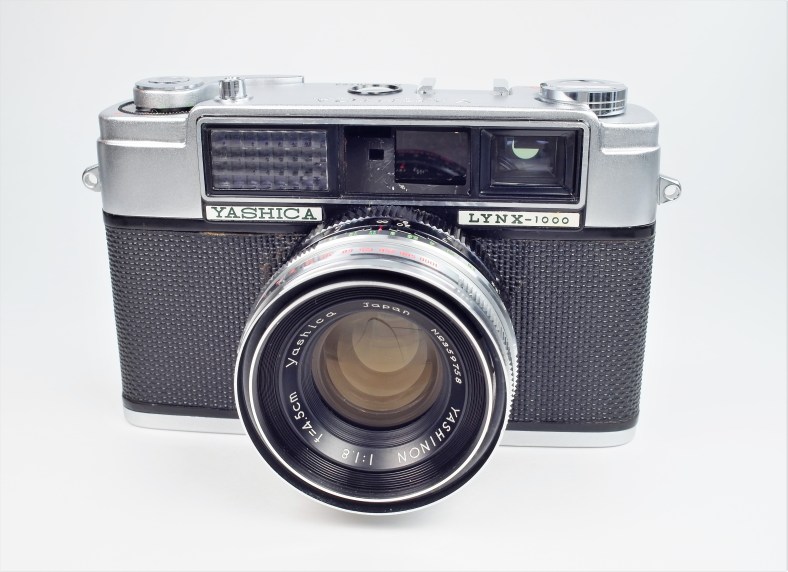
We decided to get a Lynx mainly because of the reputation of its fast Yashinon f/1.8 4.5cm lens. The Lynx we received (below) has a working shutter and super clean glass. The camera’s exposure meter does not work which is typical for these nearly 60-year-old cameras.
DSCF0267

An overall clean example but missing an important piece – the rangefinder window is obviously missing with some damage visible to the internal pieces of the finder (top center above the lens).
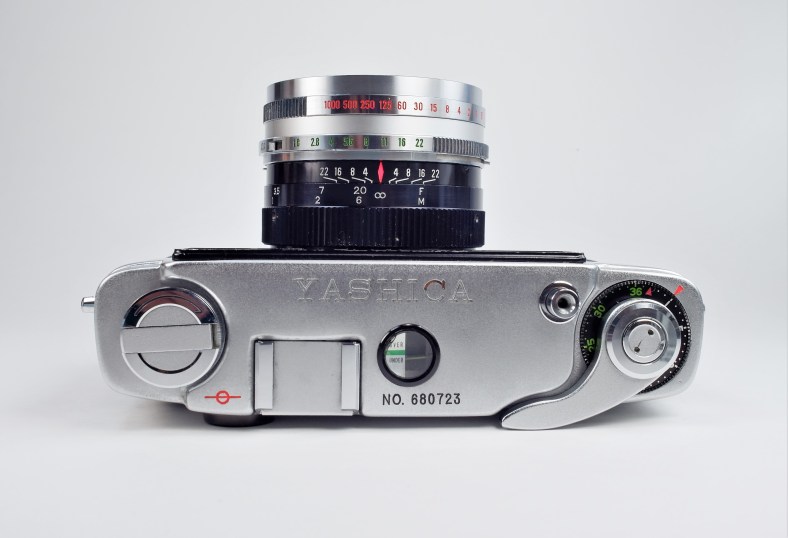
DSCF0268

Our camera was produced in August 1960 and was the 723rd made.
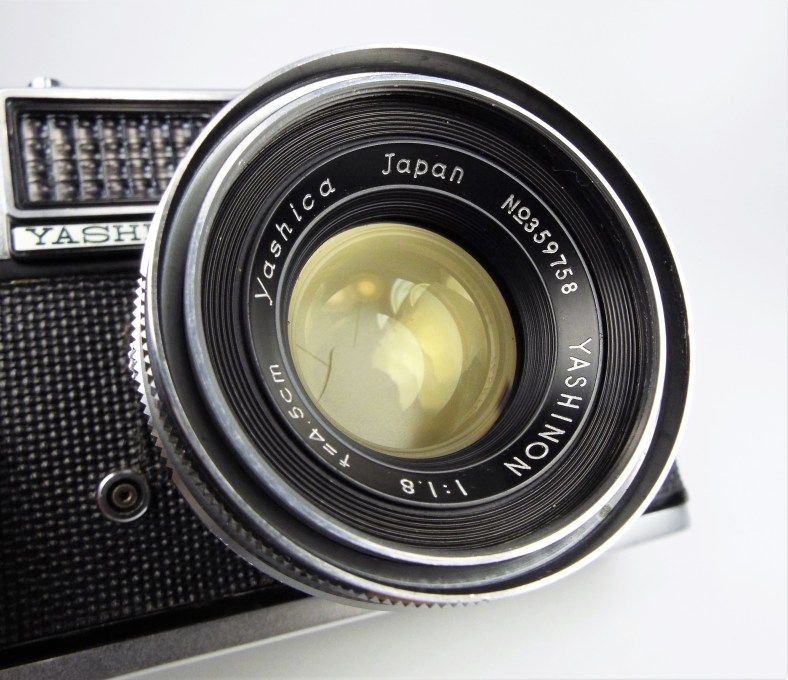
DSCF6268

This lens (our camera) features a unique serial number (only 6 digits long) and is in a font that’s not consistent with earlier versions or versions that came later. We feel that this type of lens was made by Zunow Optical vice Tomioka Optical.

The lens on the Yashica Lynx has earned high praise and its reputation amongst photographers is top-notch. For the time period having a fast f/1.8 aperture combined with a leaf shutter (Copal-SV) with a top speed of 1/1000 second was a nice feature in a low-cost rangefinder.

***There is some chatter on more than a few Japanese blogs that some of the earliest lenses for the Lynx were made by the Zunow Optical Company. The majority of the lenses were made by Yashica’s normal lens maker, Tomioka Optical of Tokyo. No verifiable references or links are given in these Japanese blogs as to the source(s) of this claim – it would appear that at this time it may be a case of one blogger makes the claim and others simply followed suite. We’re not disputing these claims, in fact, we’re intrigued by them and have set out to either prove or disprove them. Zunow has an interesting place in the Japanese camera industry of the 1950s. In early 1958, Zunow made one of Japan’s first modern 35mm SLR cameras with a semi-automatic lens and instant return mirror. Interestingly the Zunow 35 and the Yashica Pentamatic 35 (Yashica’s first 35mm SLR –  1959) share a related look and design style that goes beyond coincidence. More on this in another post.

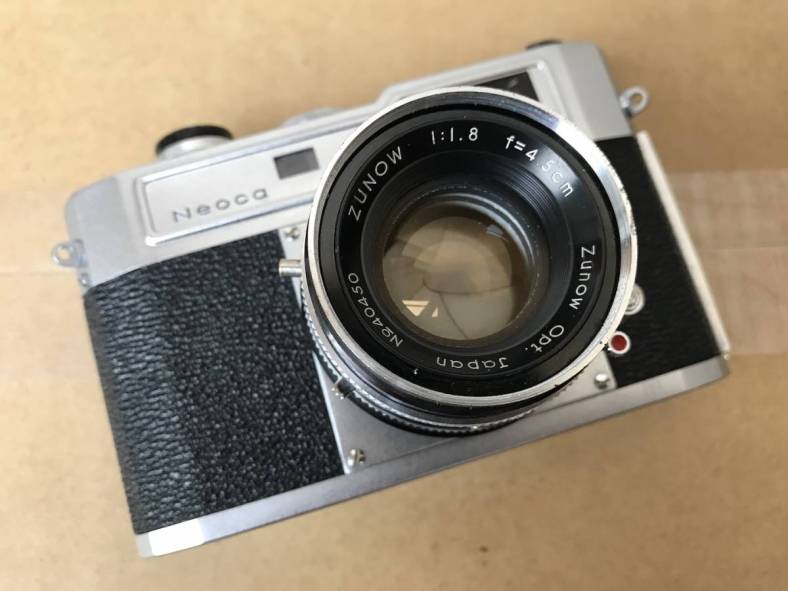
Back to Zunow Optical and the possible connection to the Lynx. Below is an example of a very similar looking f/1.8 4.5cm lens from Zunow made in about 1959 and was fixed to the Neoca-SV.
entrelanuit-img1200x900-15057119536ljzb37862

Zunow f/1.8 4.5cm lens on the Neoca-SV. Compare the lens ring font with the font on the Yashinon lens pictured earlier in this post. To us, these were made by the same manufacturer.

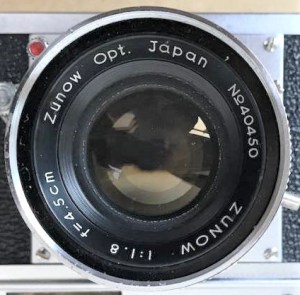
One of the biggest clues for us that some of the Japanese bloggers claim that Zunow and Tomioka made the lenses for the Lynx are the similarities of the serial number fonts. The lens with the serial number No 40450 (Zunow pictured above) is in the same style as the serial number on our Yashinon lens (No359708). We have another Lynx headed our way with what we feel is a Tomioka version of the lens. We’ll take both lenses apart to see if there are differences in the design.

Thanks for stopping by! If you have additional information about anything we’ve blogged about please feel free to contact us. We’re never too old to learn something new!

Chris and Carol ^.^
entrelanuit-img1200x900-15057119537pansp7862

Zunow lens on the Neoca-SV

DSCF6263

Zunow? lens of the Yashica Lynx.
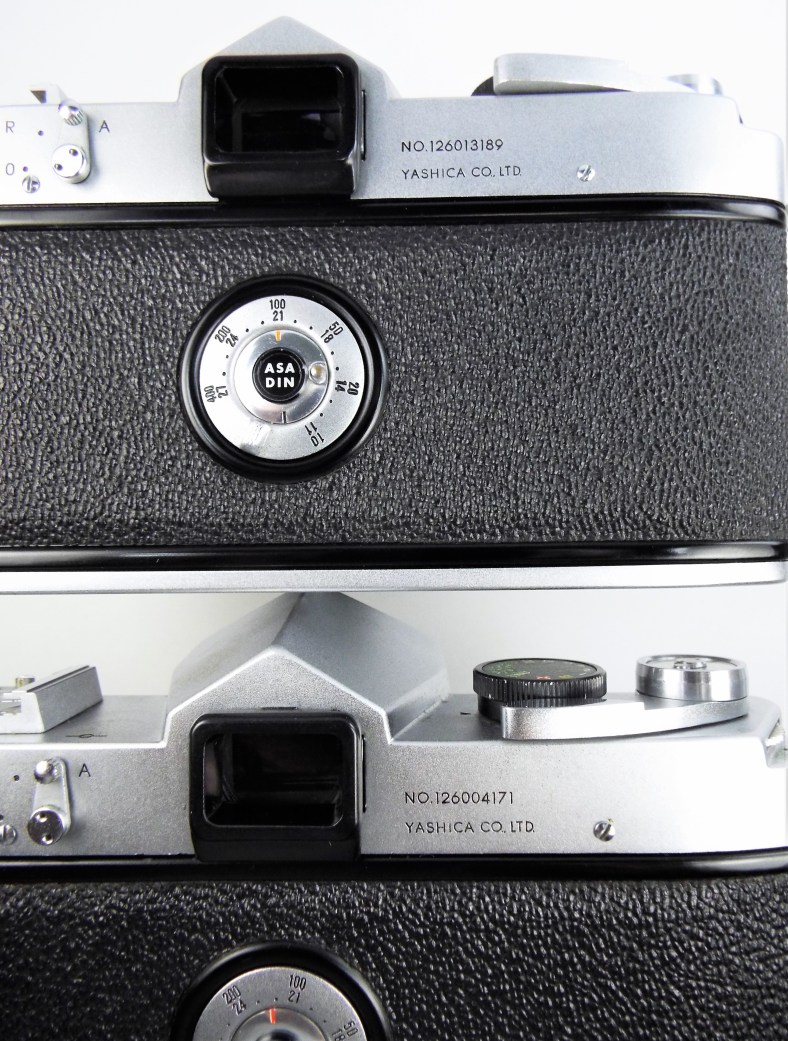
 

Yashica Pentamatic I & II – 1960

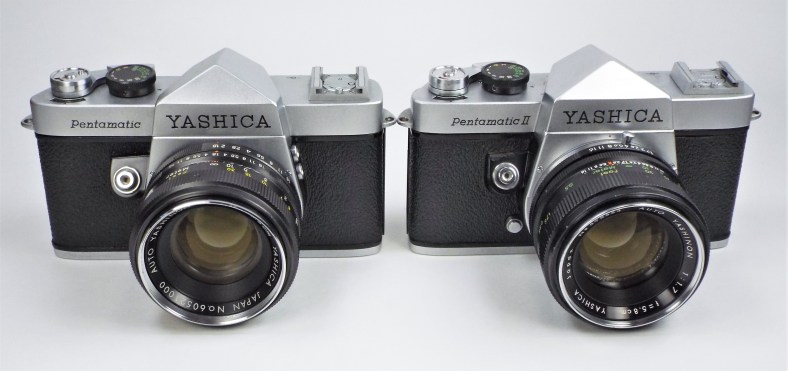
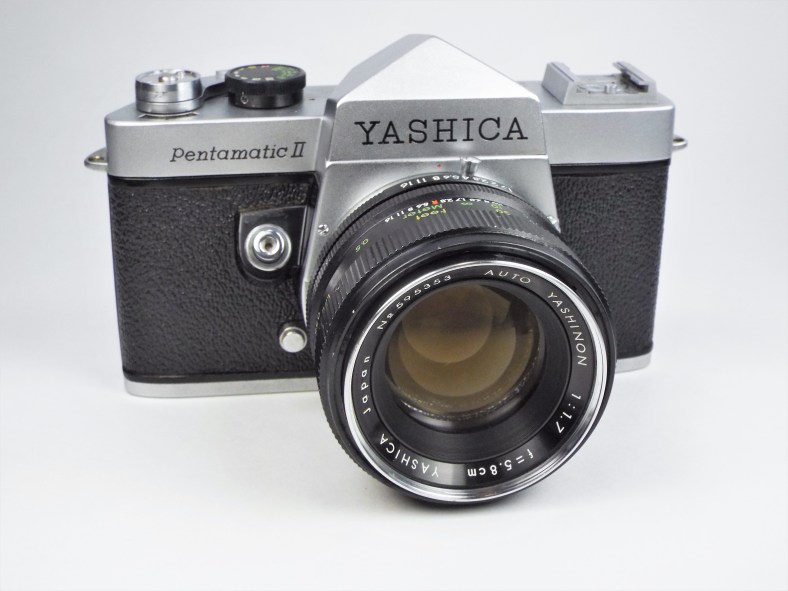
The original Pentamatic ’35’ and the Pentamatic II. The original Pentamatic made its debut in March 1960 and was first available for sale in  April 1960 (production started in December 1959). The Pentamatic II was rushed into production in August 1960 and was only for sale in Japan. The only change between the two cameras… was the lens!

DSCF6259

The P1 (left) came with the Auto Yashinon f/1.8 5.5cm lens. The P2 (right) came with the Auto Yashinon f/1.7 5.8cm lens. The goal of Yashica was to improve on the semi-automatic operation of the lens over the standard lens on the P1.

DSCF6256

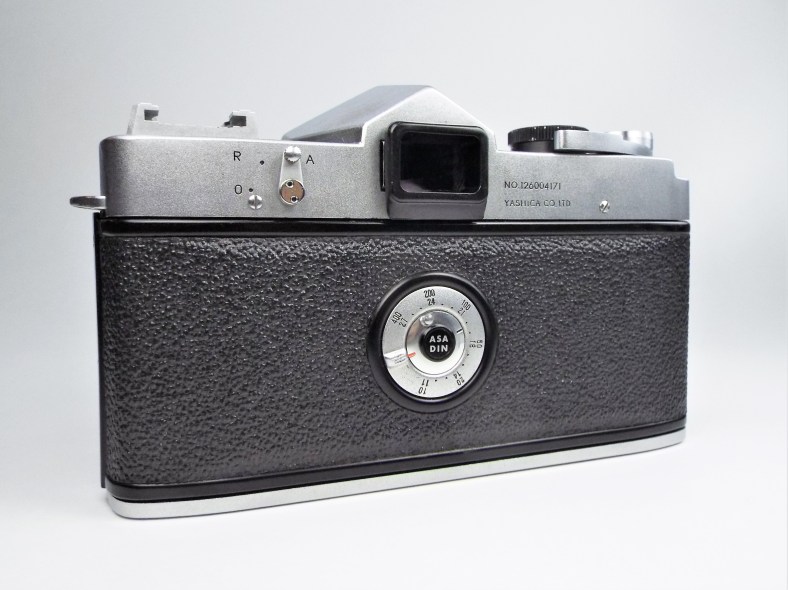
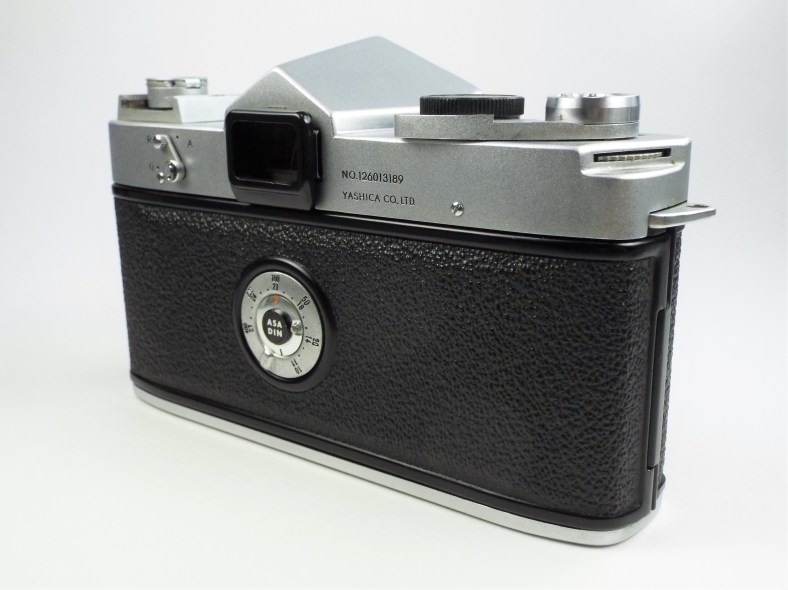
Serial numbers. The SN on the top camera is on the original Pentamatic camera body. The number, NO. 126013189 contains a date code and production sequence number. This camera was made in December 1960 and was the 13,189th camera made. The bottom camera’s serial number (Pentamatic II), NO. 126004171 decodes to: December 1960 and it was the 4,171st made since August 1960 (the start of production on the P2). 

So both of the cameras were in production at the same time in the same factory. We’re highly confident in our analysis of the serial numbers. We have enough examples in our database and enough experience in decoding Yashica serial numbers to say that we are 100% correct.

DSCF6248

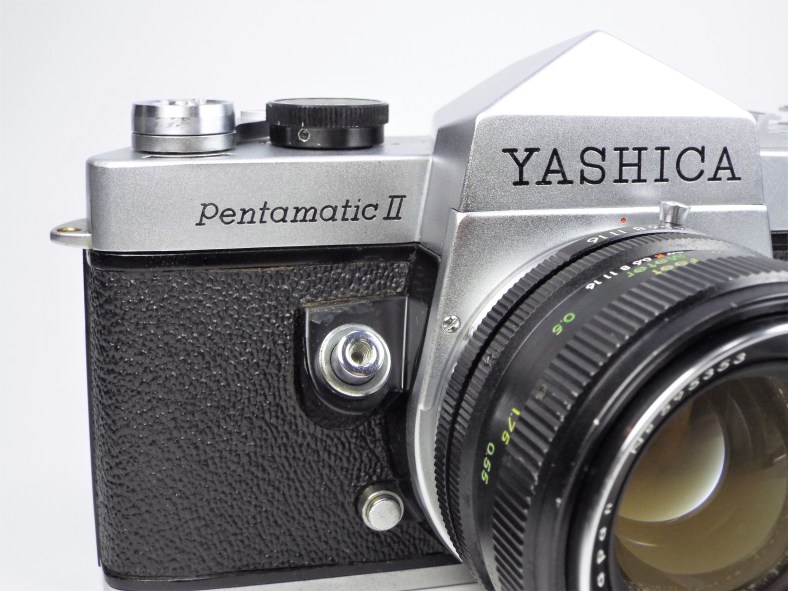
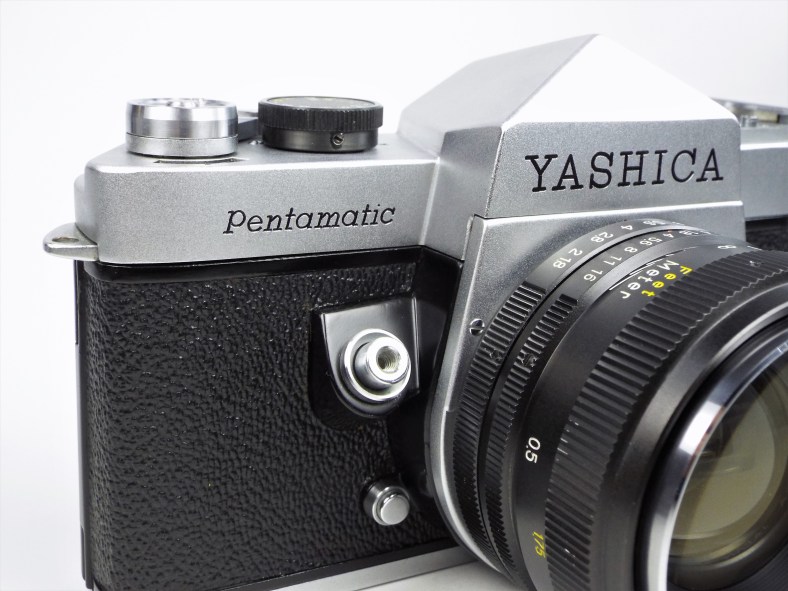
The whole process of releasing the Pentamatic II was rushed – the top plates were only slightly modified to accommodate squeezing in the “II”. The engraving was moved about 1 mm to the left so as to have room to engrave the “II”. On the back of the camera it only took a change in the serial number engraving to reflect the P2.

The Pentamatic II didn’t get any upgrades to the body… no self-timer and no hot shoe. The lens is a totally different lens and we’ll cover those differences in our next post.

Thanks for your visit!

Studio Camera: Fujifilm FinePix S9900W

Chris

First Look… Yashica Pentamatic II – Finally!!!

After years of searching, we’ve finally acquired our first Pentamatic II. A rather rare camera that was only released in Japan and only for a short time. It’s estimated (by us) that less than 6,000 bodies were made. How many of those survived to the present day is of course unknown.

DSCF6247

DSCF6248

DSCF6251

Much more detail about this Pentamatic coming soon.

Studio Camera: Fujifilm FinePix S9000W

Chris

Diving in Puerto Rico – 1989

I’ve hardly scanned any of my hundreds of pictures from our time living in Puerto Rico – 1988 to 1991. We lived in a big poured concrete house on top of the highest hill overlooking the Caribbean on the U.S. Naval Base at Roosevelt Roads (Ceiba). Hurricane Hugo (1989) blew out almost all of our windows – we weren’t there as we had evacuated a day before the storm hit. Our belongings were water damaged and our cars were scratched and sandblasted by the fierce winds but we were safe and our cats made it through the storm just fine (interior safe room with plenty of food and water).

We feel for the good people of Puerto Rico. It’s a tough little island and I’m sure they’ll pull through but the recovery will be slow and painful.

Here’s a photo I did find on my PC. It’s me getting ready for a dive at one of our favorite swimming spots on base.

IMG_20170420_0002

Photo by Carol

roosey house

Our house is circled in blue with the line underneath. This area was known as Nimitz Drive and was senior enlisted base housing. It looks like the forest (jungle) has taken over.

rr big

Large scale view of eastern Puerto Rico. Our house was in the small red circle. We could easily see the island of Vieques from our upstairs windows. The large red circle is where Hurricane Maria made landfall.

Hoping that Puerto Rico can recover quickly.

Chris and Carol

Newest Pentamatic – another fine Yashica joins the family.

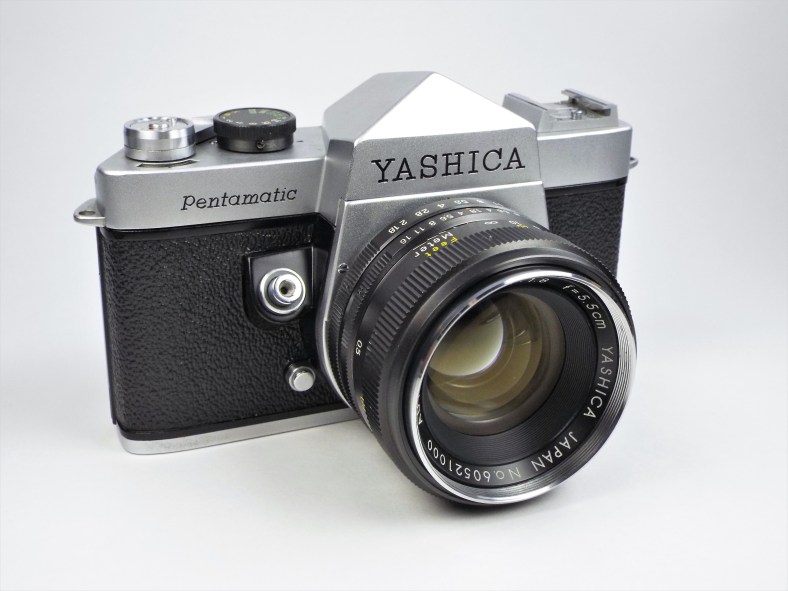
A recently acquired Yashica Pentamatic for our collection. This one came to us from a fellow collector here in the southeast US.

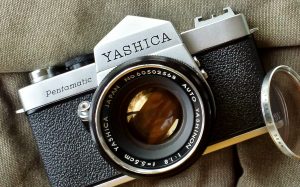
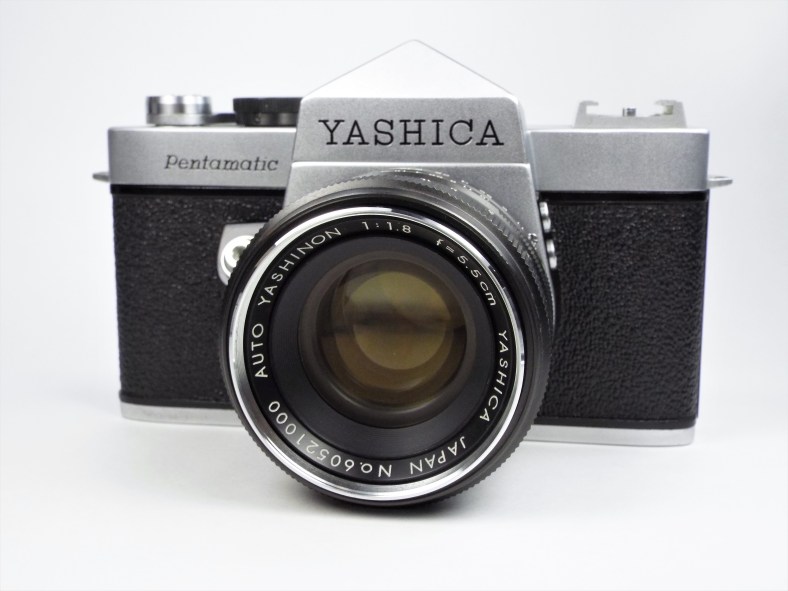
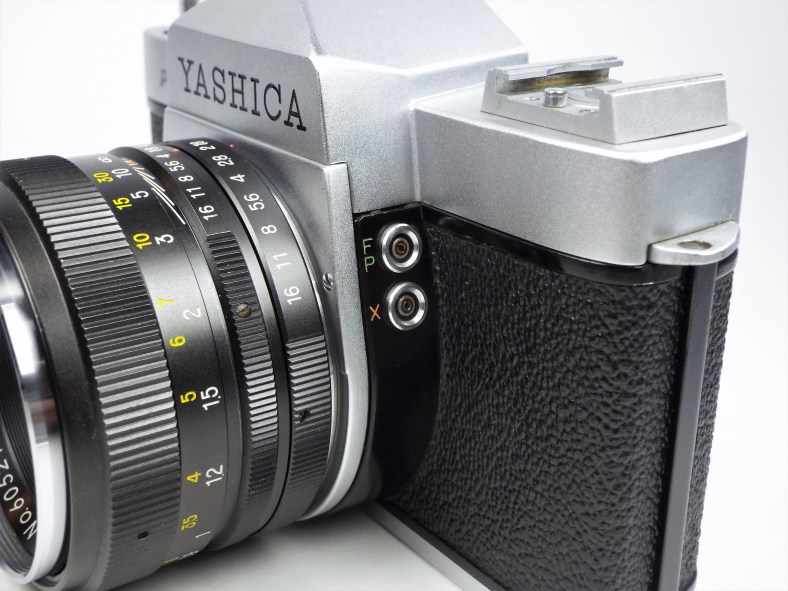
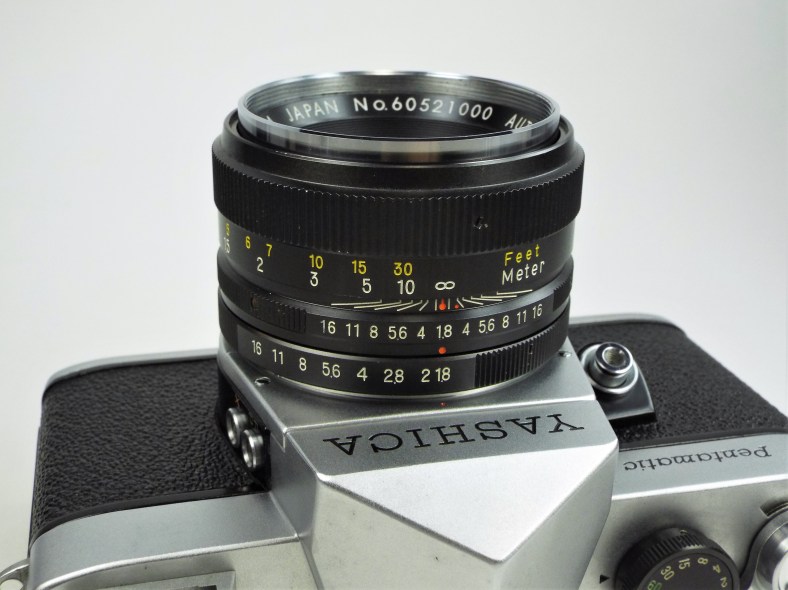
This one includes the Auto Yashinon 5.5c f/1.8 lens that puts the lens as a very late production model (maybe mid 1961). Here’s a chance to check out our Pentamatic from many angles.

DSCF6233

DSCF6235

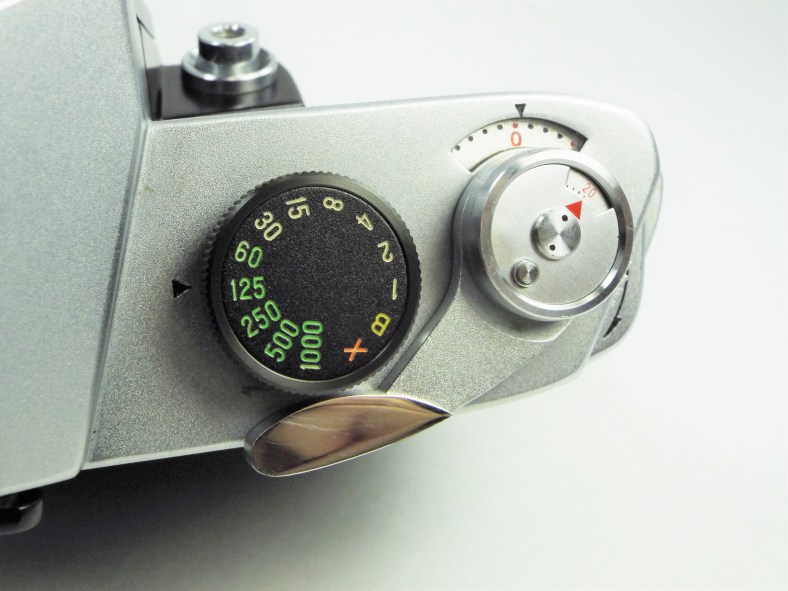
The angled shutter release button is in a perfect position for maintaining a solid grip on this heavy body while releasing the shutter.

DSCF6236

The lens serial number, No. 60521000 is unique in the fact that it’s a whole number (21000).

DSCF6237

The cold shoe is mounted on the camera’s left side top plate. Actually a very good spot for it.

DSCF6238

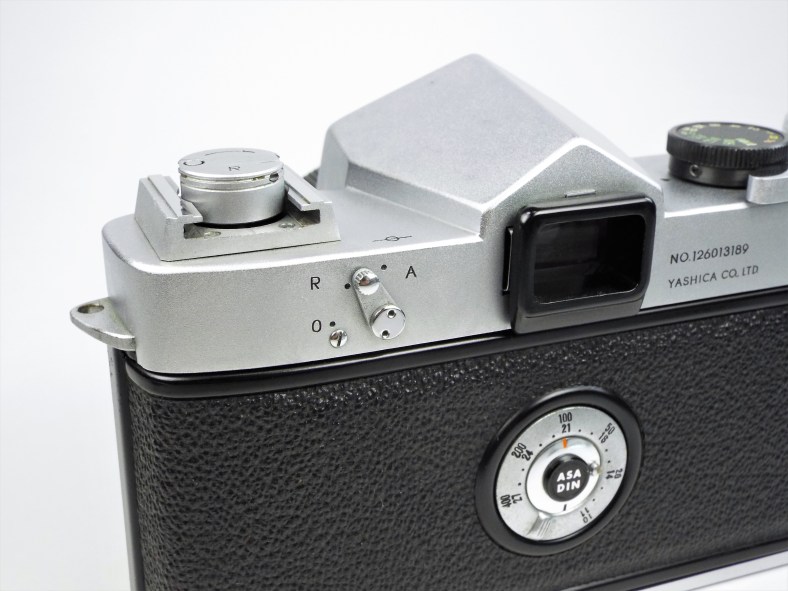
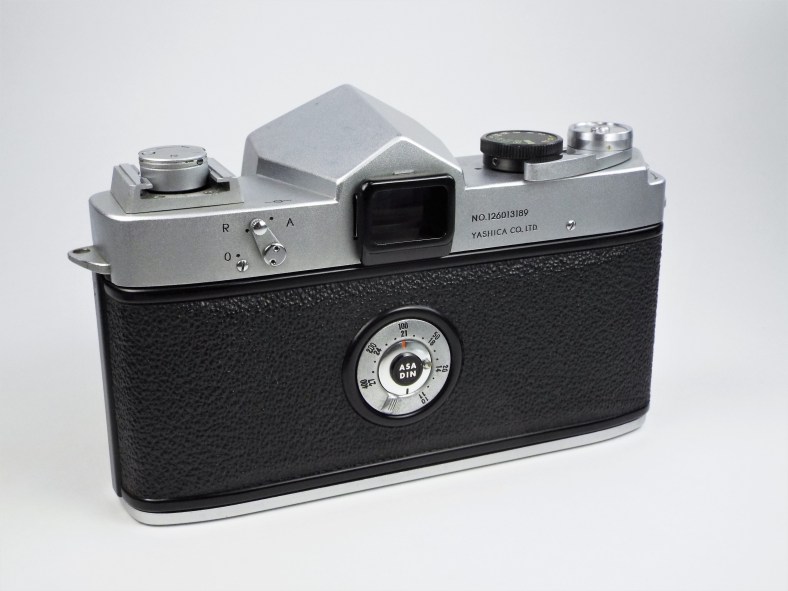
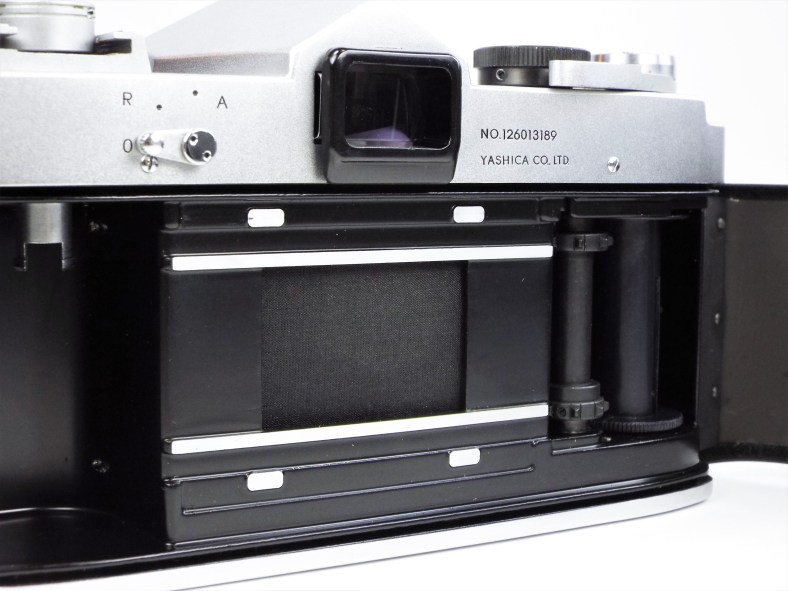
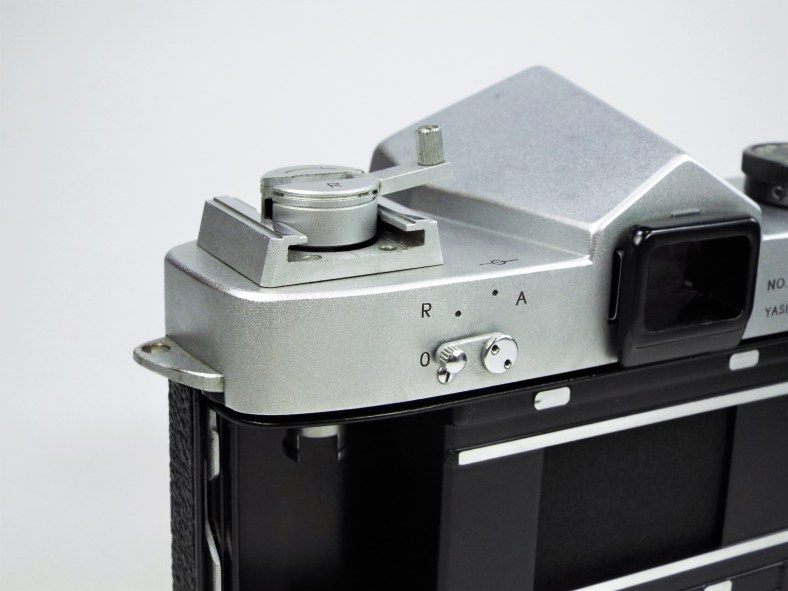
This unique lever controls the rewind knob which pops up from under the cold shoe (it moves from the “A” position).

DSCF6239

The body serial number, NO. 126013189 decodes to: 12 = December, 60 = 1960, 13189 = 13,189th made since December of 1959.

DSCF6240

DSCF6241

DSCF6243

DSCF6244

The lever is now in the “O” position which allows the back to be unlocked.

DSCF6245

Pulling up the rewind knob completes the opening.

Our love affair with this fine camera continues. We just can’t get over the clean lines and excellent design.

If you want to acquire a nice Pentamatic for your own collection, they come up occasionally on US online auction sites and infrequently on auction sites in Japan. Nice examples can be had for under $50. Super nice examples will go closer to $100 with some guarantee of functionality from the seller.

Our Town – Labor Day Weekend

DSCF0254

Always a few flags flying along Centre Street, Fernandina Beach – Amelia Island

DSCF0238

The fudge shop always a big draw – just getting the crowd on a Saturday night.

DSCF0234

Ice cream everywhere!

DSCF0262

There’s that Saturday night crowd at Fantastic Fudge.

DSCF0253

The famous Palace Saloon… you know they’ll be busy this weekend!

My camera… Fujifilm X-A10 with Canon FD 24mm f2.8 lens. Film simulation mode was Velvia Vivid. I love the gentle colors and the not “eye etching” sharpness that the Canon lens provides. ISO was generally 800-1200 and most apertures were f5.6 to f8 with super slow shutter speeds that were hand held.

Thanks for visiting!

Be sure to check out some of our fine art images available at https://society6.com/ccstudio2380

Chris