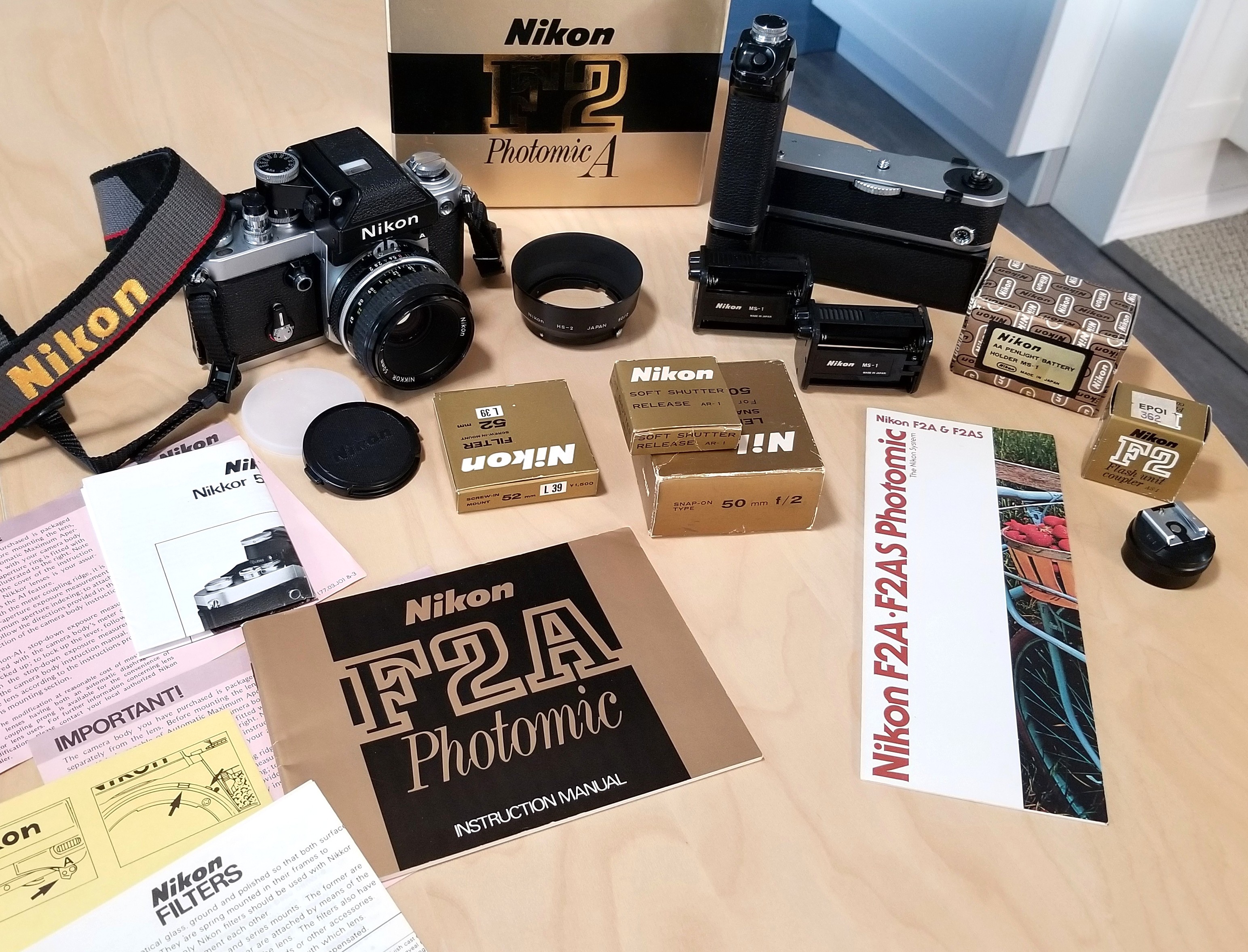
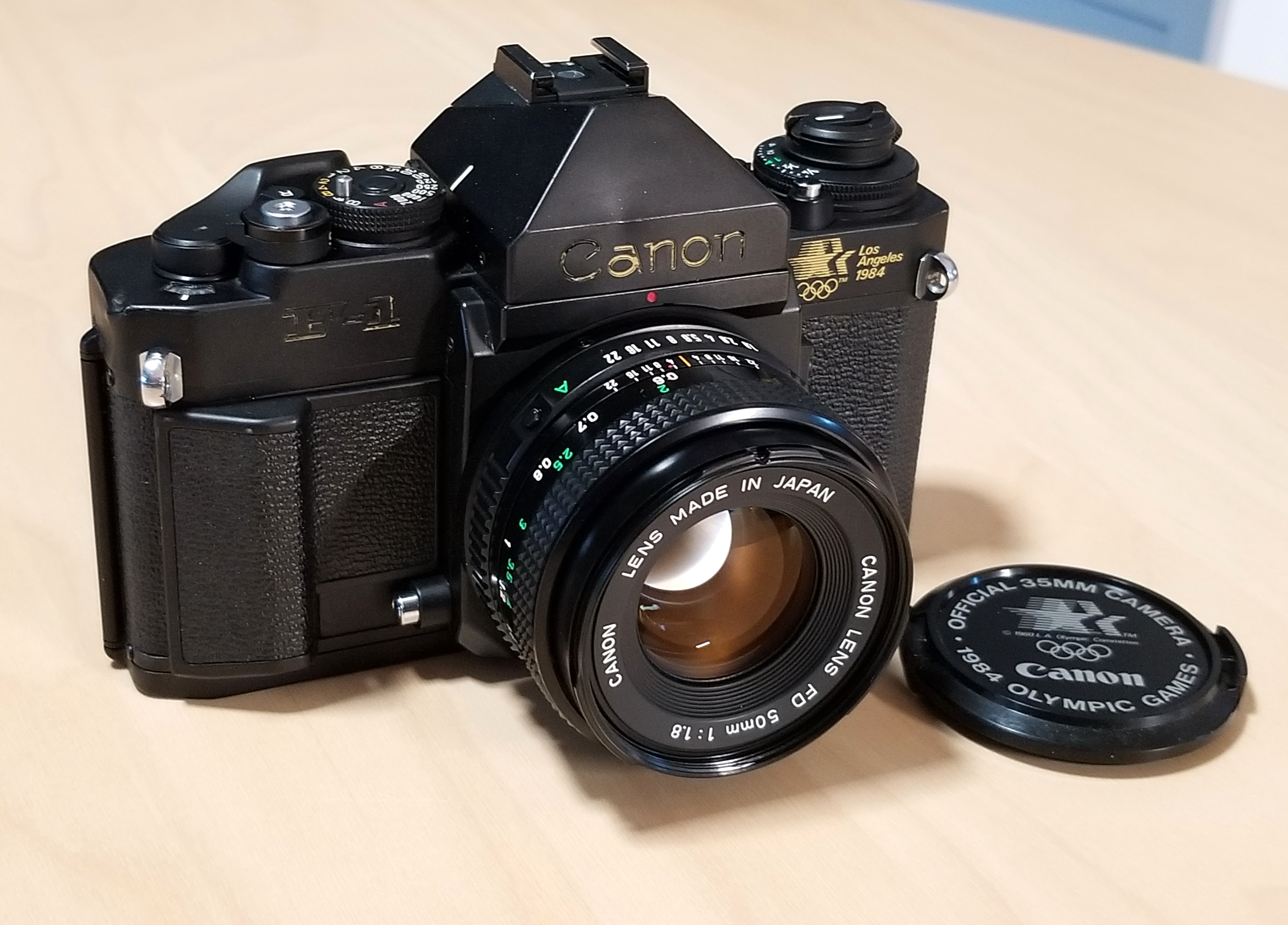
The Nikon F2A set is exceptionally nice and complete. It even features a Nikon motor drive!The Canon New F-1 is a limited edition 1984 LA Olympics set.Sales brochures. I have hundreds of brochures and instruction books.
I ship nearly worldwide. Please reach out if there’s something specific you are looking for – I likely have it! Here are two of the best 35mm SLRs from the late 1970s and early 1980s (see below).
My super-sharp, complete Nikon F2A set.(Sold) The 1984 Los Angeles Olympic Special Edition Canon F-1.
The Canon F-1 LA Olympic set was just sold from my Etsy Camera Shop – thank you!
Comments are always welcome; I’ve learned a great deal from reader feedback. As always, thanks for stopping by. While there, visit my camera shop at http://www.ccstudio2380.com (CC Design Studios, hosted on Etsy). – Chris Whelan
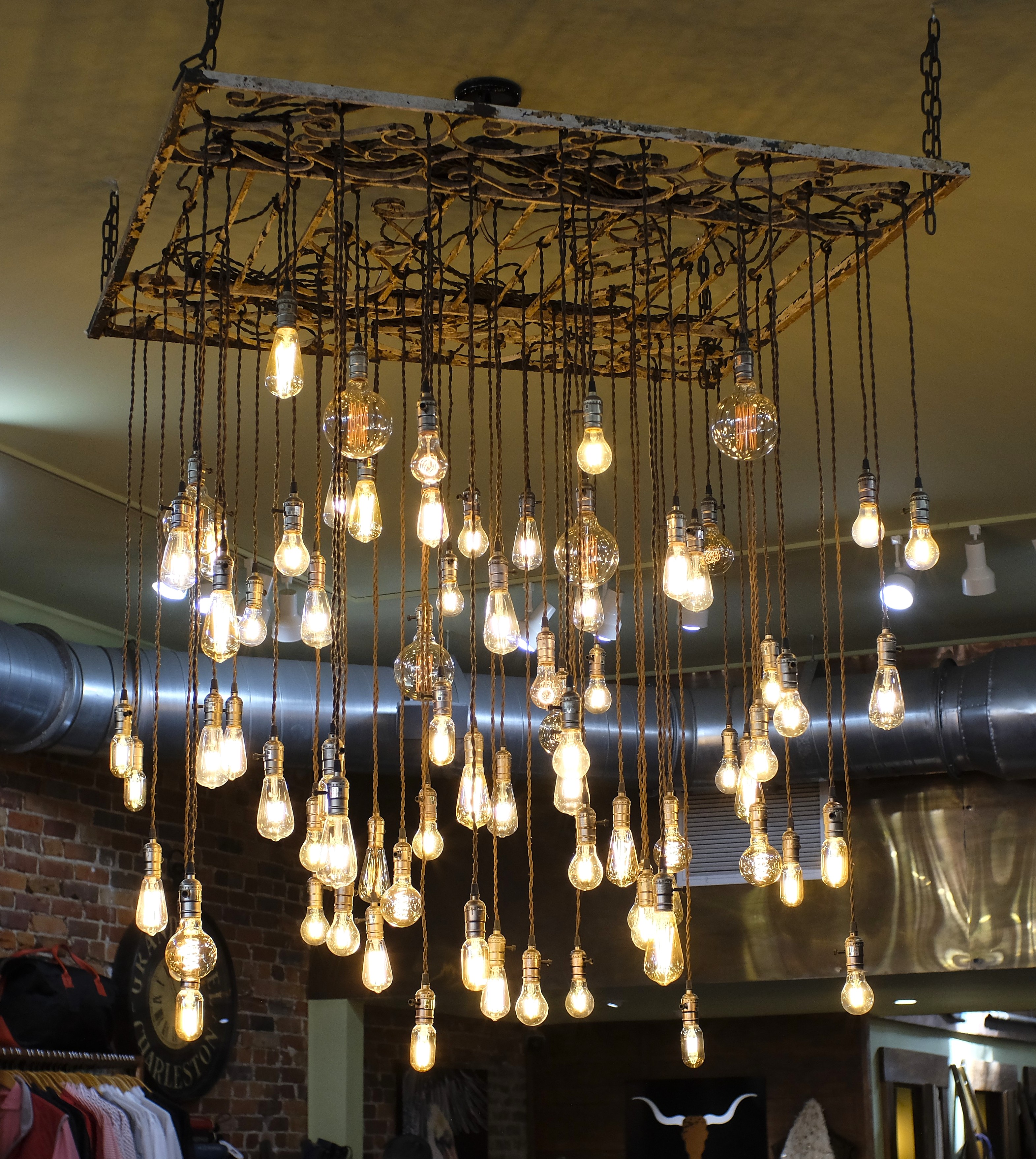
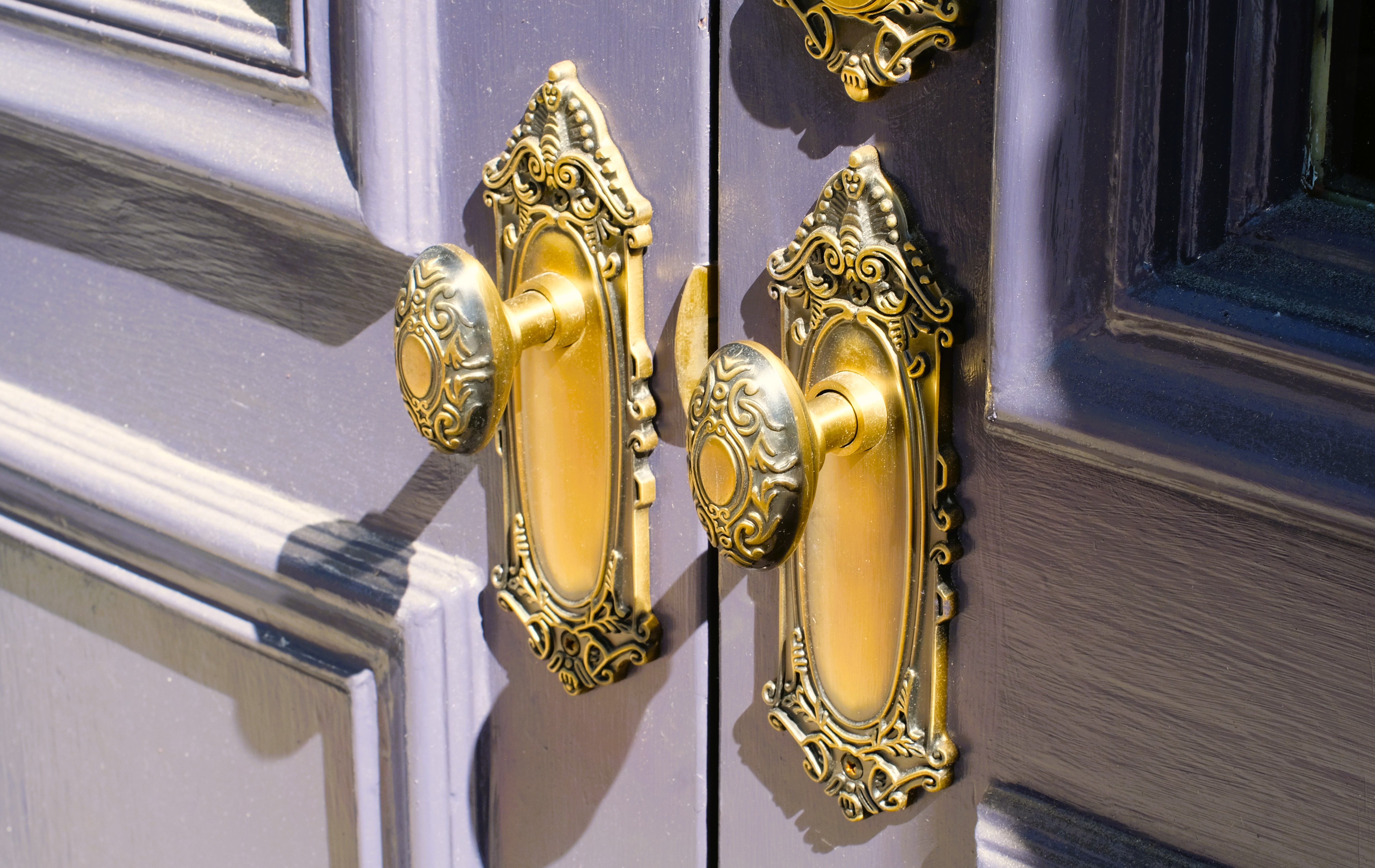
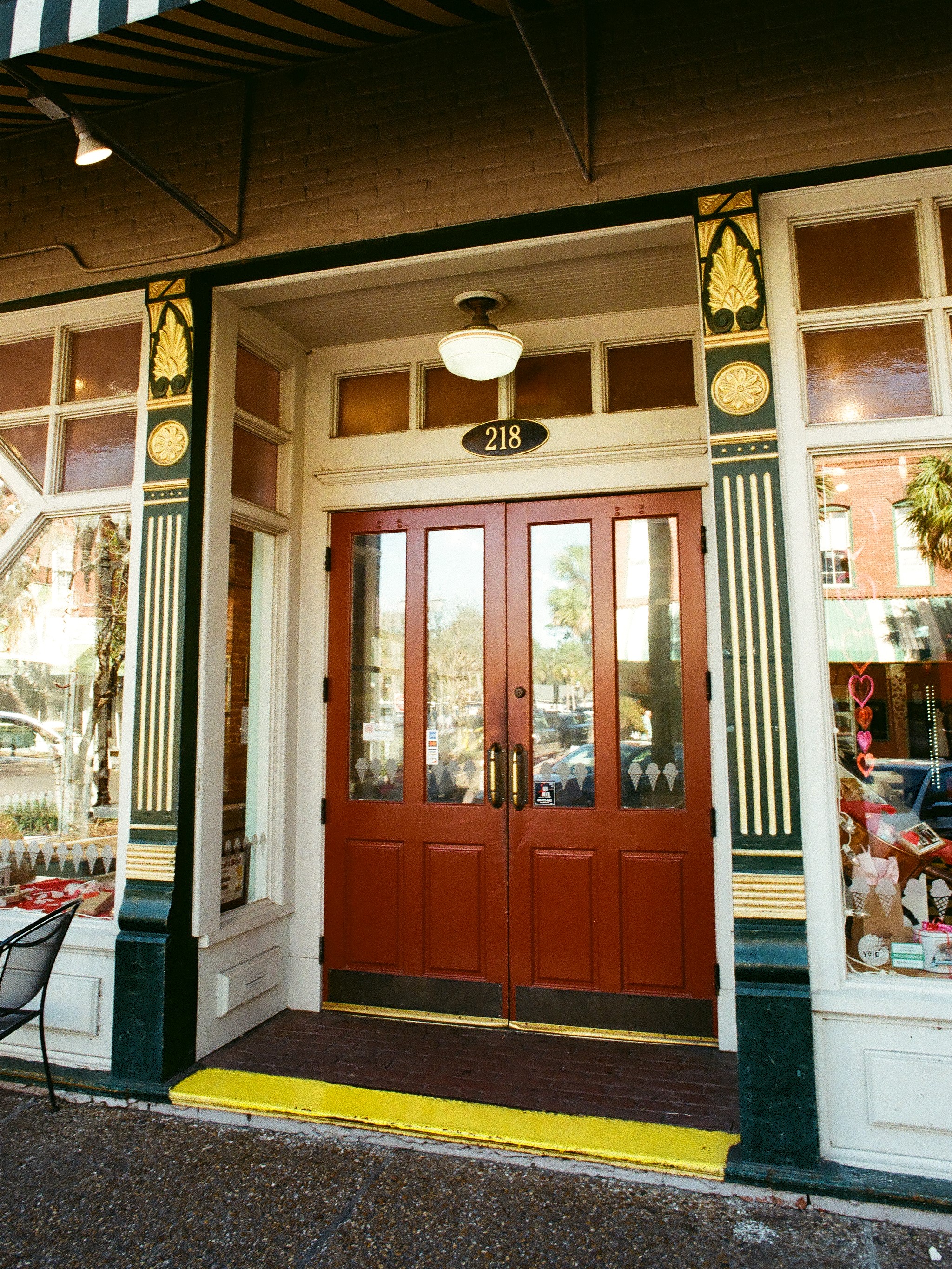
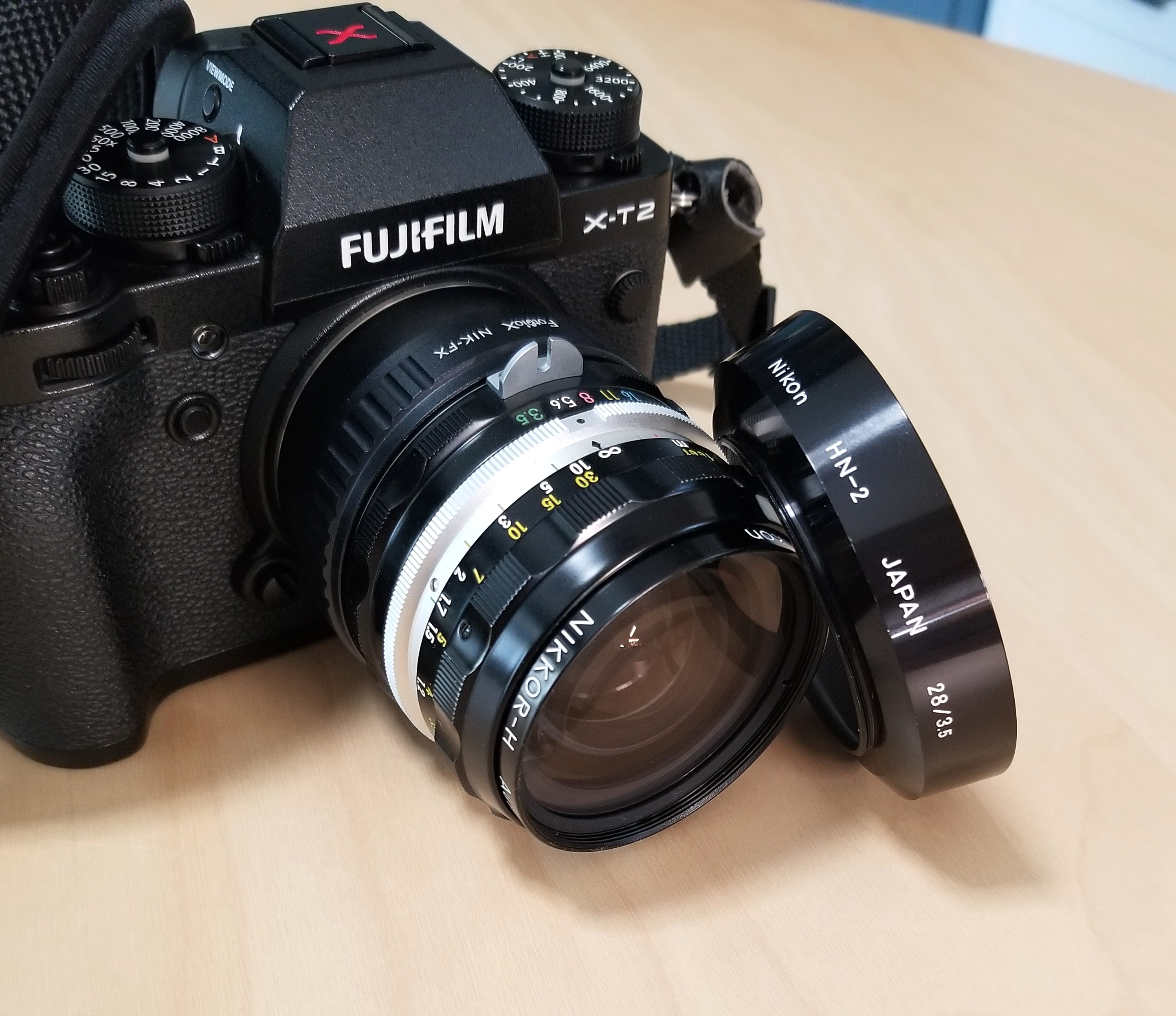
Of the many things I love about the historic district here in Fernandina Beach, I enjoy photographing the little (and sometimes big) details that make our city so enjoyable to stroll through. Here is a mixture of recent images I took with my Fujifilm X-T2 and two classic Nikon Nikkor film camera lenses.
The smallest details of the streetlights add a bit of charm and a feeling of nostalgia.A beautiful chandelier in one of the shops.New old knobs on a recently renovated door.The cast-iron entryway to a popular fudge and ice cream shop.Pirate Pete stands guard at Florida’s oldest saloon, the Palace.The Palace Saloon. The building is c1878 and the saloon opened in 1903.Nikon Nikkor-H Auto f/3.5 28mm lens from 1972.Nikon Nikkor-S Auto f/1.4 50mm lens from 1965.
Comments are always welcome; I’ve learned a great deal from reader feedback. As always, thanks for stopping by. While there, visit my camera shop at http://www.ccstudio2380.com (CC Design Studios, hosted on Etsy). – Chris Whelan
Comments are always welcome; I’ve learned a great deal from reader feedback. As always, thanks for stopping by. While there, visit my camera shop at http://www.ccstudio2380.com (CC Design Studios, hosted on Etsy). – Chris Whelan
Comments are always welcome; I’ve learned a great deal from reader feedback. As always, thanks for stopping by. While there, visit my camera shop at http://www.ccstudio2380.com (CC Design Studios, hosted on Etsy). – Chris Whelan
Comments are always welcome; I’ve learned a great deal from reader feedback. As always, thanks for stopping by. While there, visit my camera shop at http://www.ccstudio2380.com (CC Design Studios, hosted on Etsy). – Chris Whelan
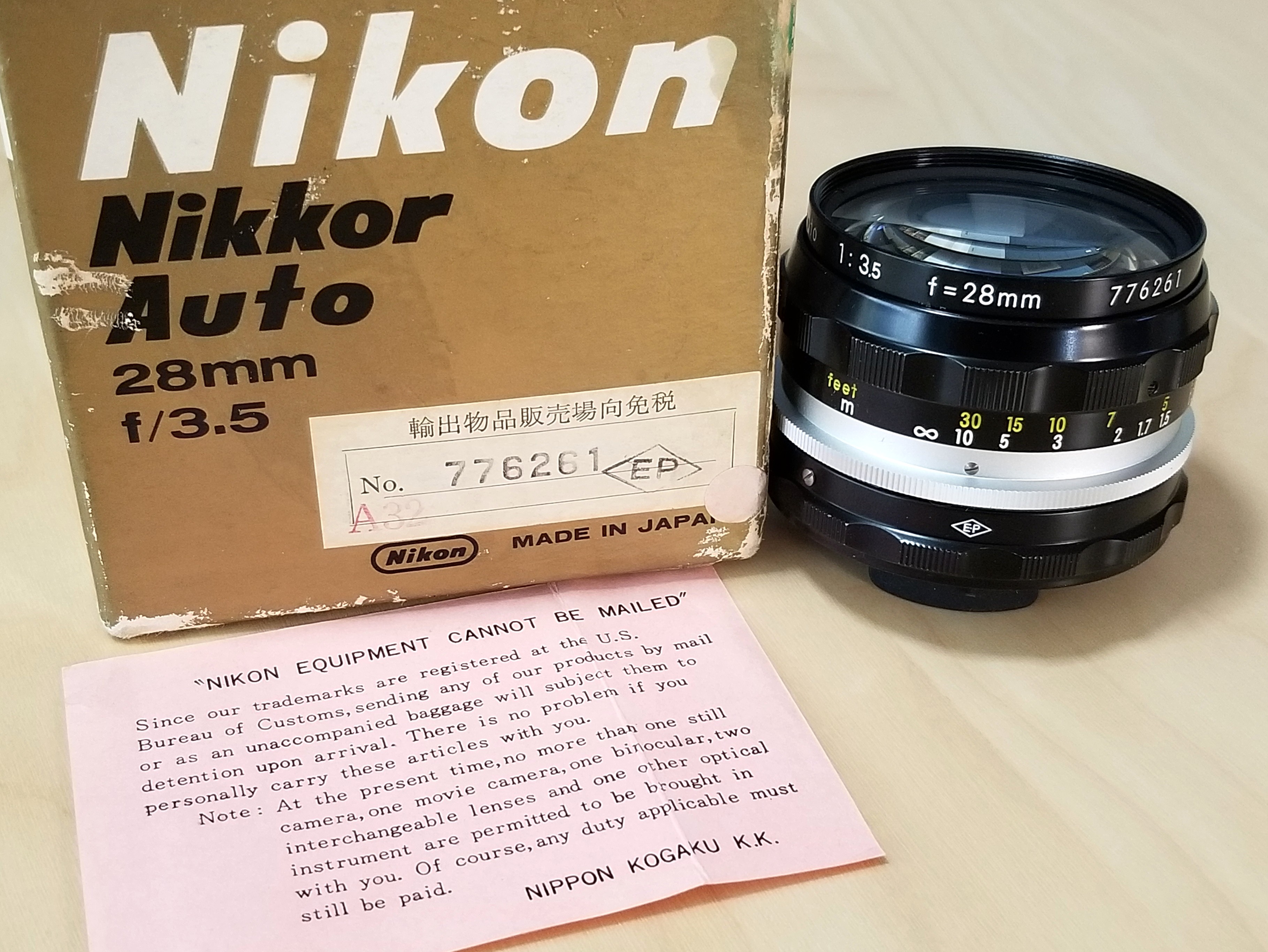
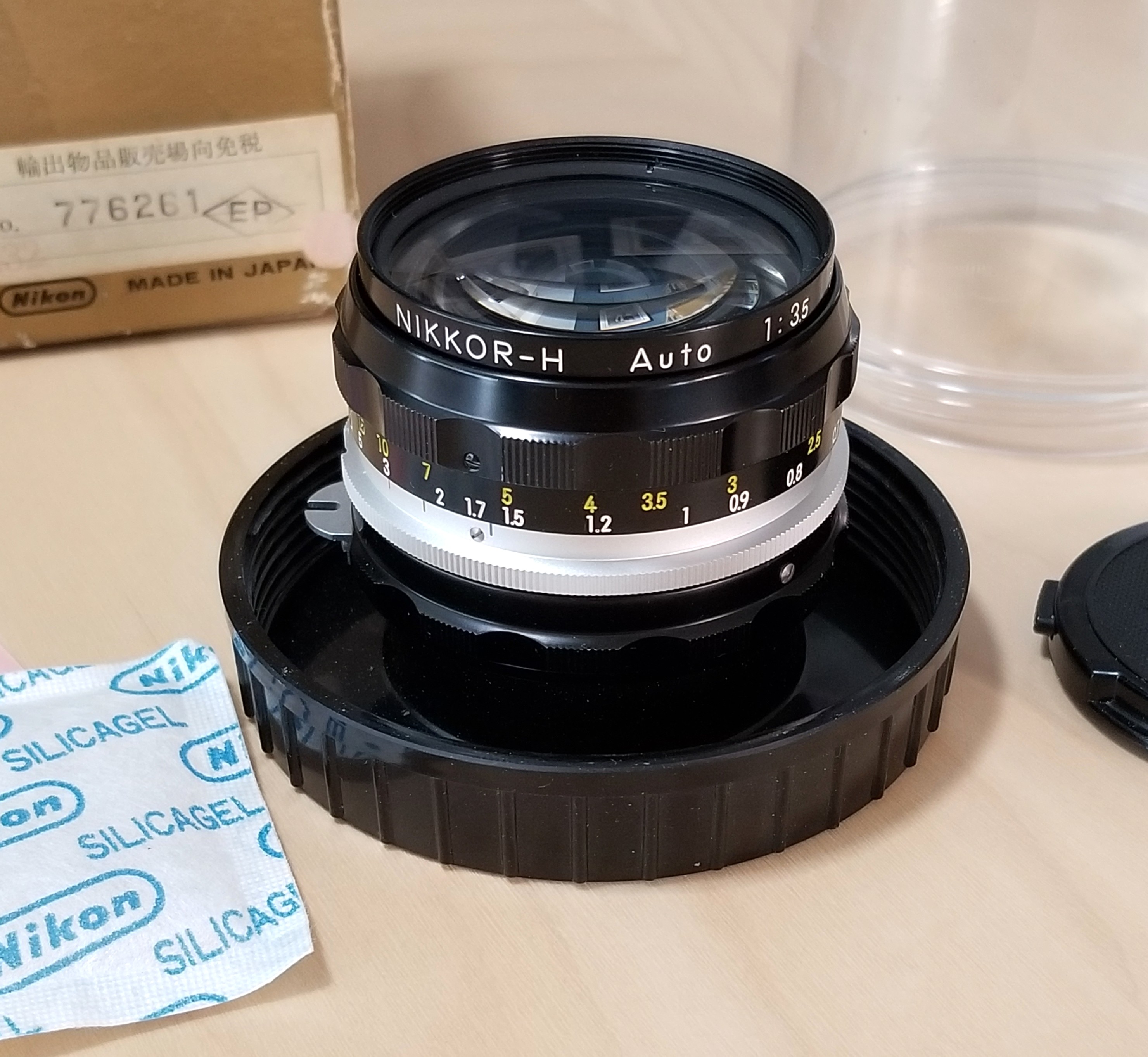
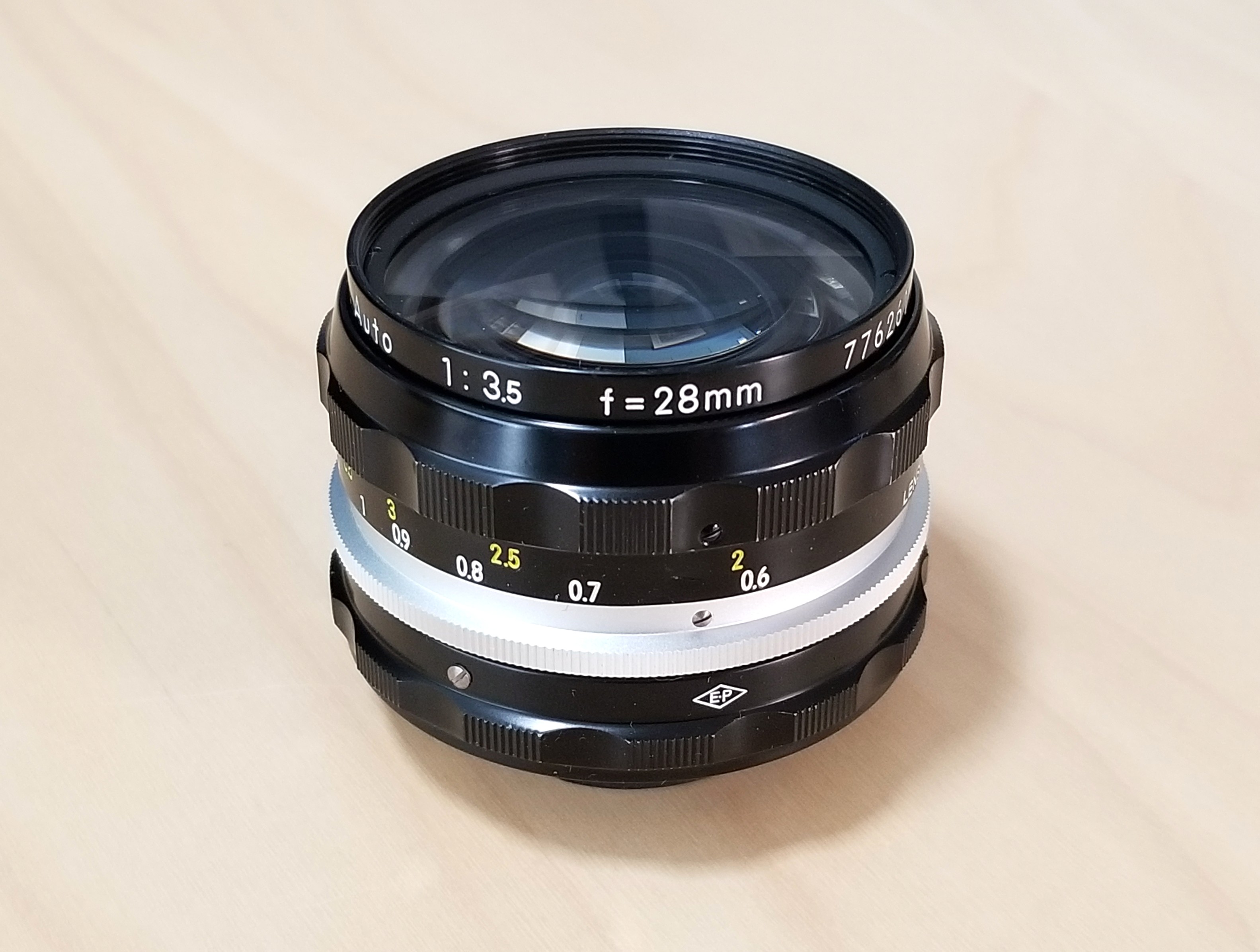
I have a Nikon Nikkor-H Auto f/3.5 28mm lens set with unique <E.P> markings. The lens was manufactured between 1971 and June 1973. The <E.P> markings indicate that it was sold in a US military exchange store or could it have been sold in a duty-free shop. What I don’t know is where it was sold. Most likely in Japan, but it could be at any exchange store in Asia since there were many military installations in the Philippines, Guam, South Vietnam, or Thailand. The other possibility is that it was sold at a duty-free shop in Japan or Hong Kong, since by the early 1970s, such shops were common and available to foreign tourists.
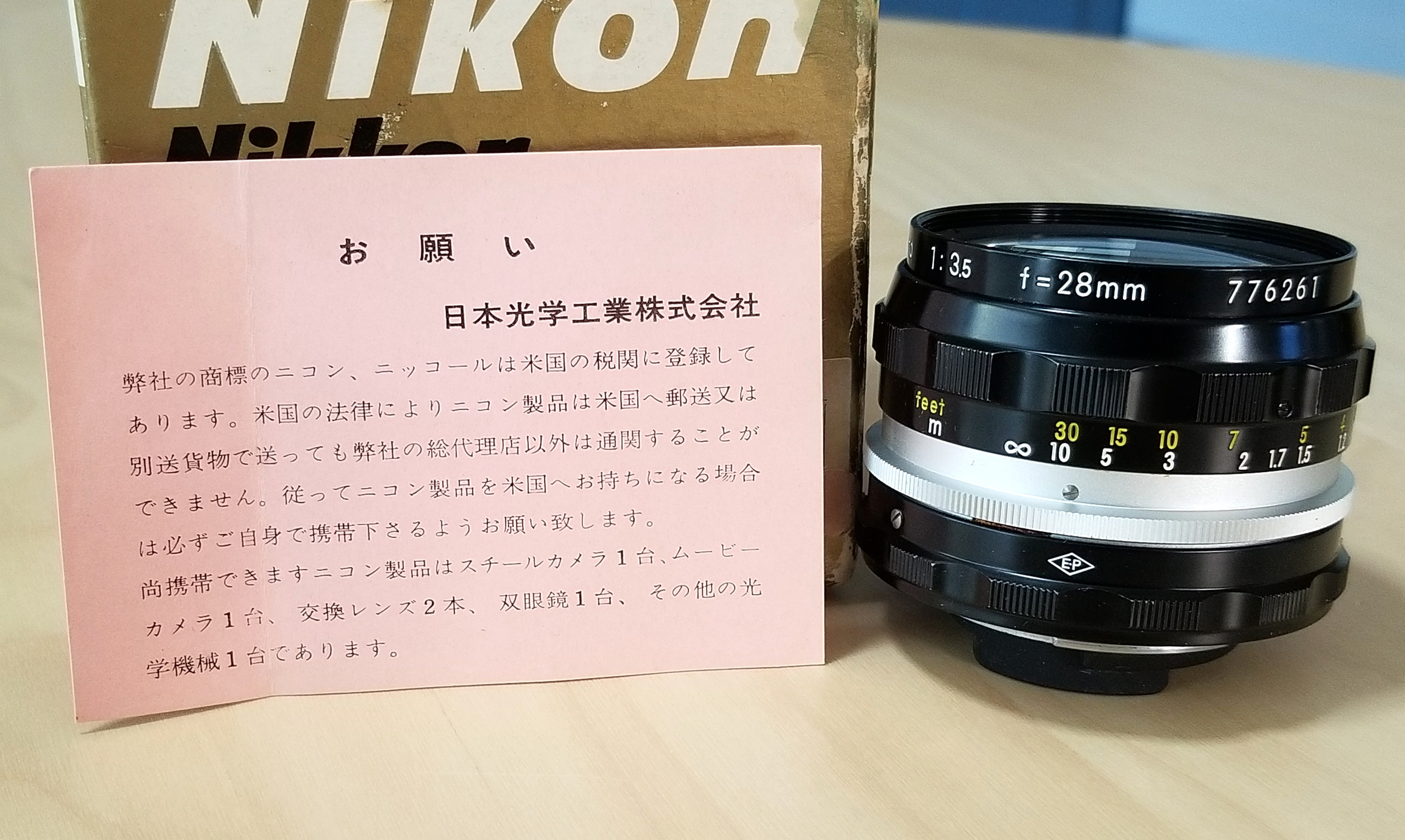
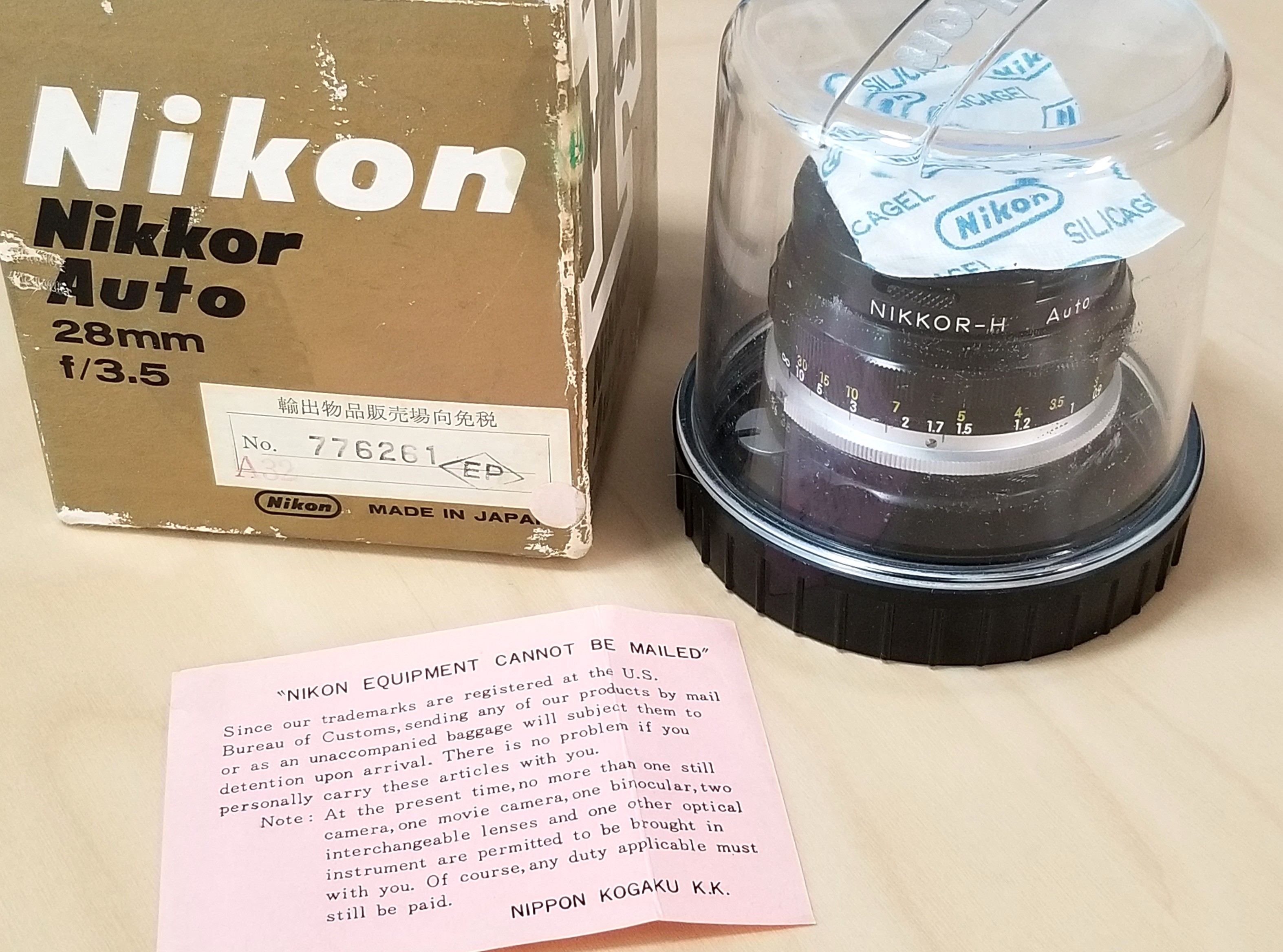
The lens is clearly marked with the <E.P> symbol, as is the box. The serial numbers match. The kanji on the box translates to ‘Duty-Free for Export Goods Sales Outlets’, which I have never seen before. During my time in Japan (1977-1980), I never remember seeing a sticker like this on anything I purchased while shopping at the Navy Exchange shops in Yokohama or Yokosuka. Everything sold in an exchange was always ‘duty and tax-free’, so why put a sticker on the product?The translation. Please Nippon Kogaku Kogyo Co., Ltd. Our trademarks, Nikon and Nikkor, are registered with U.S. Customs. Under U.S. law, Nikon products cannot be cleared through customs by anyone other than our sole distributor, even if they are sent by mail or as separate cargo to the U.S. Therefore, if you are bringing a Nikon product to the U.S., please be sure to carry it with you. The Nikon products that can be carried are one still camera, two interchangeable lenses, one binoculars, and one other optical device.
My first thought was that this was a lens sold at a civilian duty-free shop frequented by tourists, not necessarily by military personnel or their family members. But the <E.P> mark was mainly used on items sold exclusively at military shops, not duty-free shops. The pink card was included in the lens set and may hold the answer, since it mentions only the US.
I enjoy using and collecting early wide-angle lenses. This one is in like-new condition.Complete as it may have looked when sold in the early 1970s.
So, have I confused you or myself? The sticker on the box still troubles me a bit, but the pink card clearly indicates it was meant for export to the United States, suggesting it was sold at an exchange.
I can’t wait to use it on my Fujifilm X-T2. The results soon.
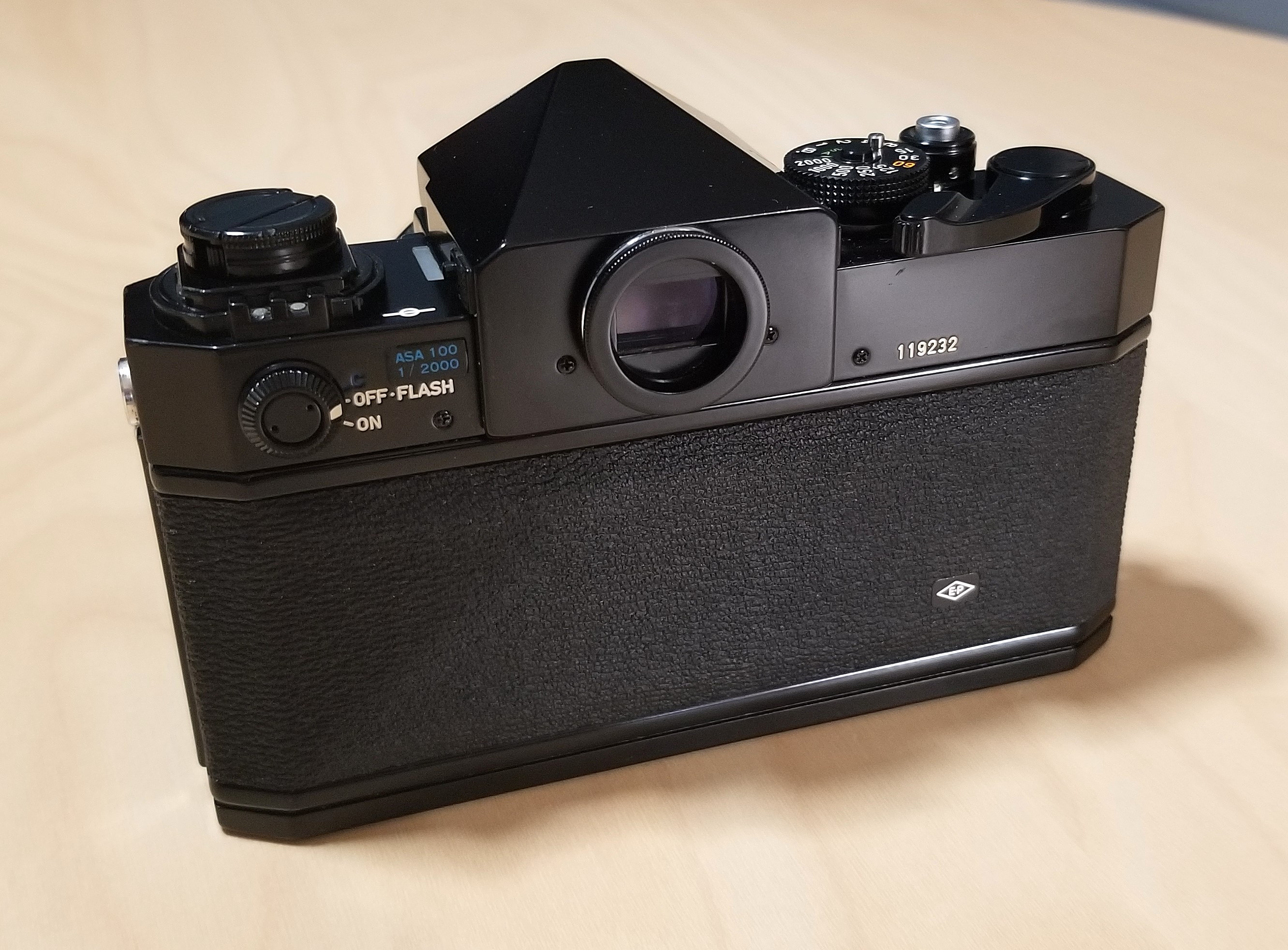
<E.P> marked camera gear isn’t necessarily worth more in the marketplace. As a collector, I enjoy collecting gear with the marks whenever I can. In some cases, they are extremely rare, so that’s an added bonus.
My Canon F-1 from August 1971. <E.P> marks on these early F-1s are hyper rare. This is the only one I’ve seen in decades of collecting.
Comments are always welcome; I’ve learned a great deal from reader feedback. As always, thanks for stopping by. While there, visit my camera shop at http://www.ccstudio2380.com (CC Design Studios, hosted on Etsy). – Chris Whelan
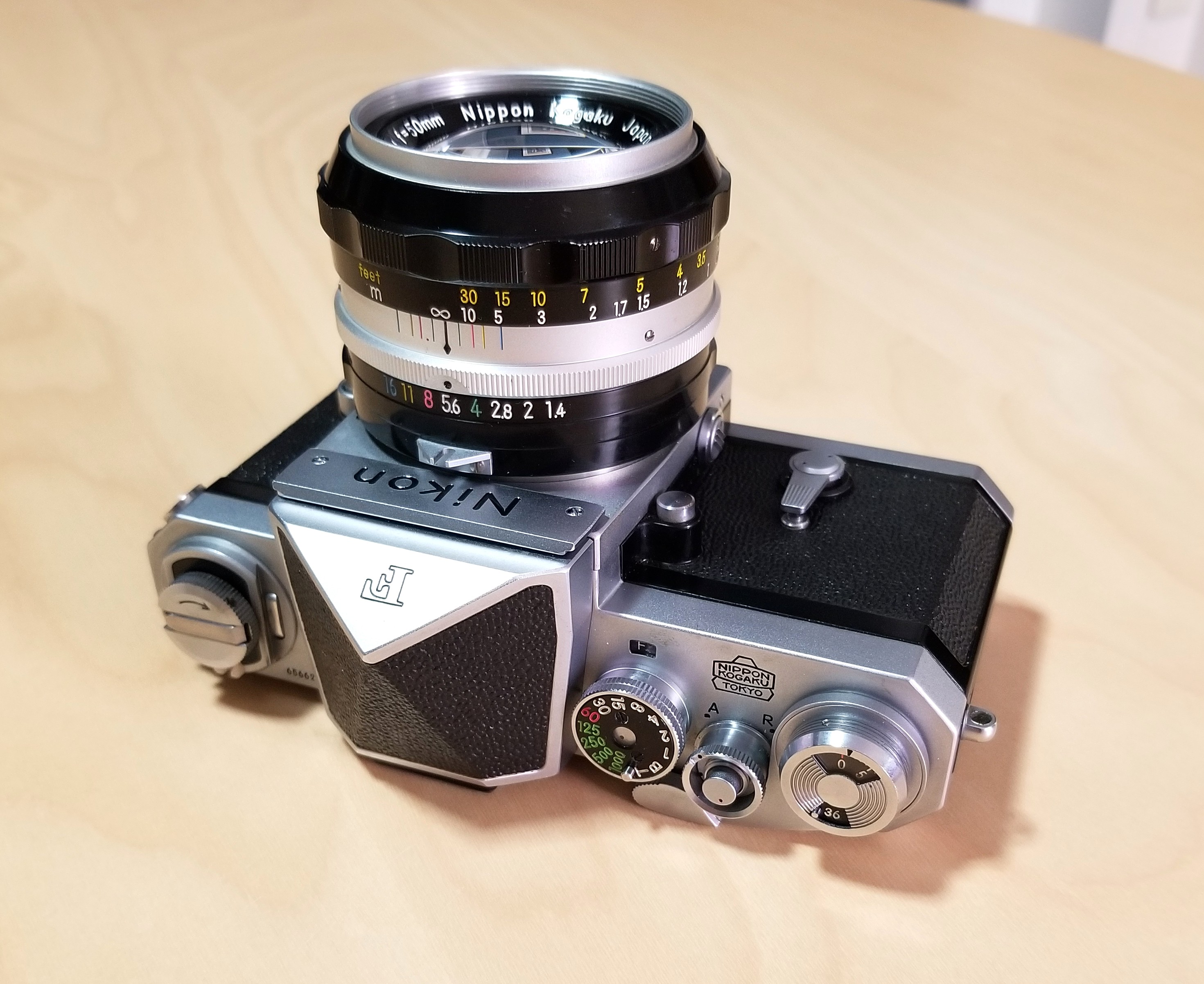
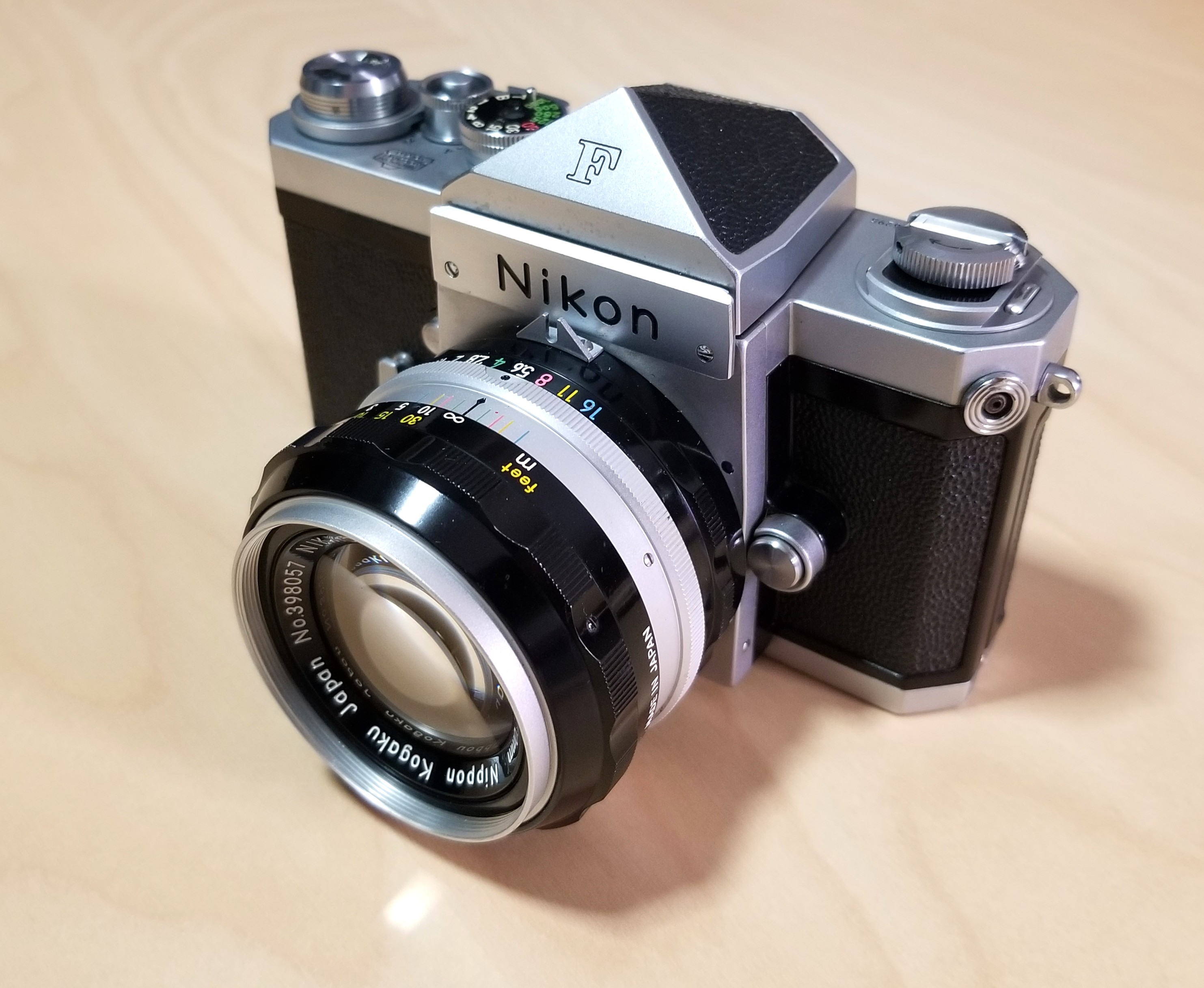
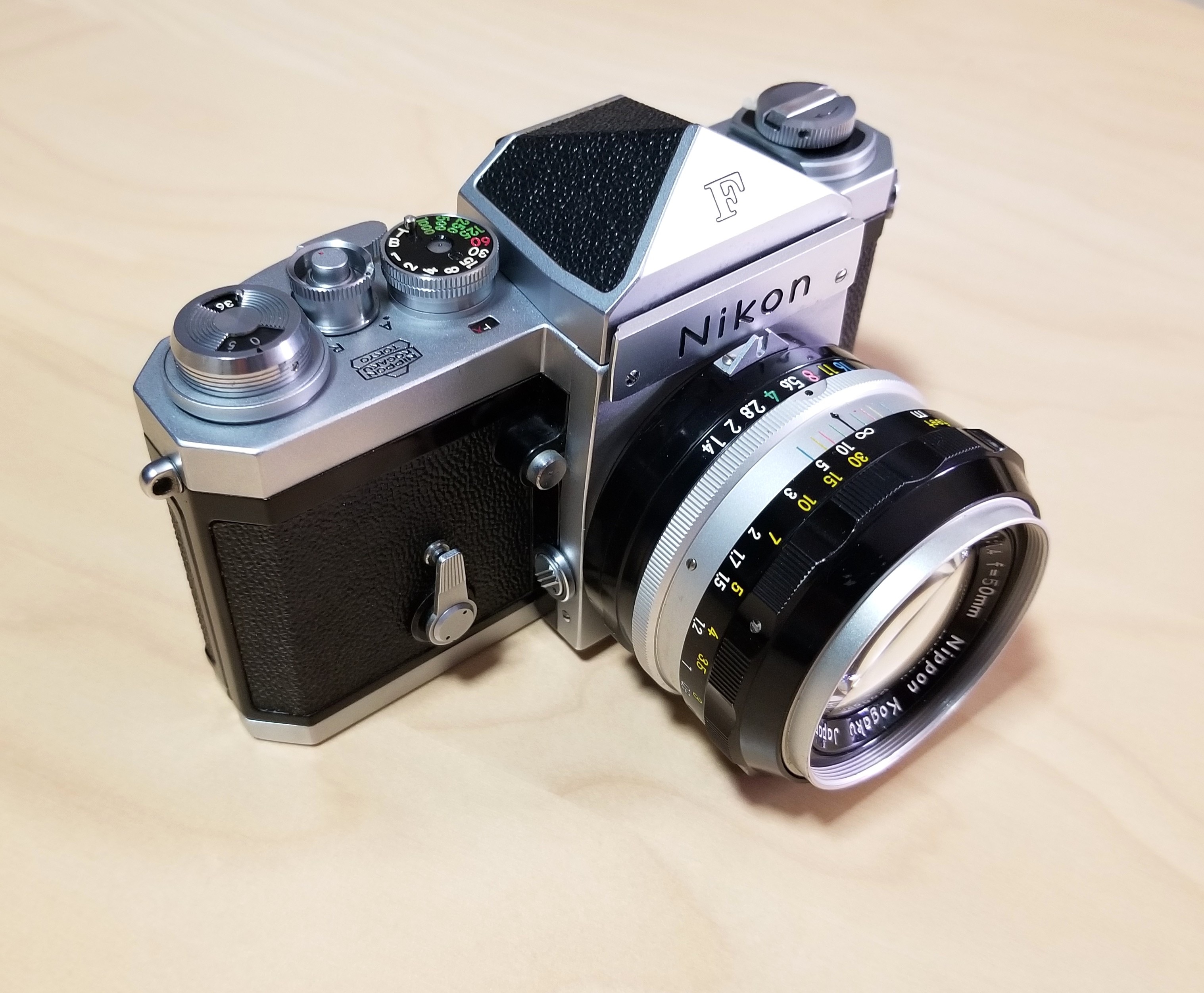
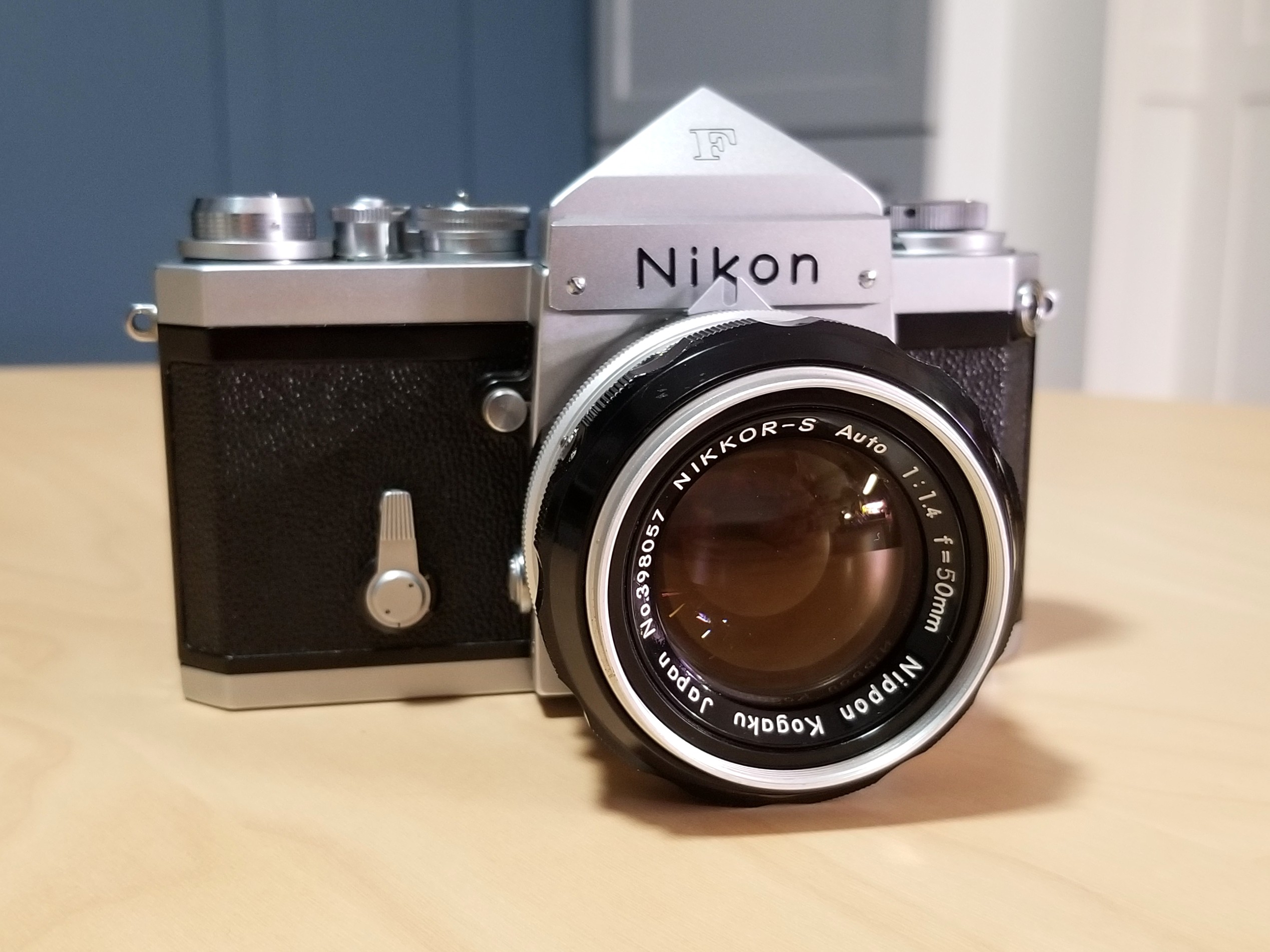
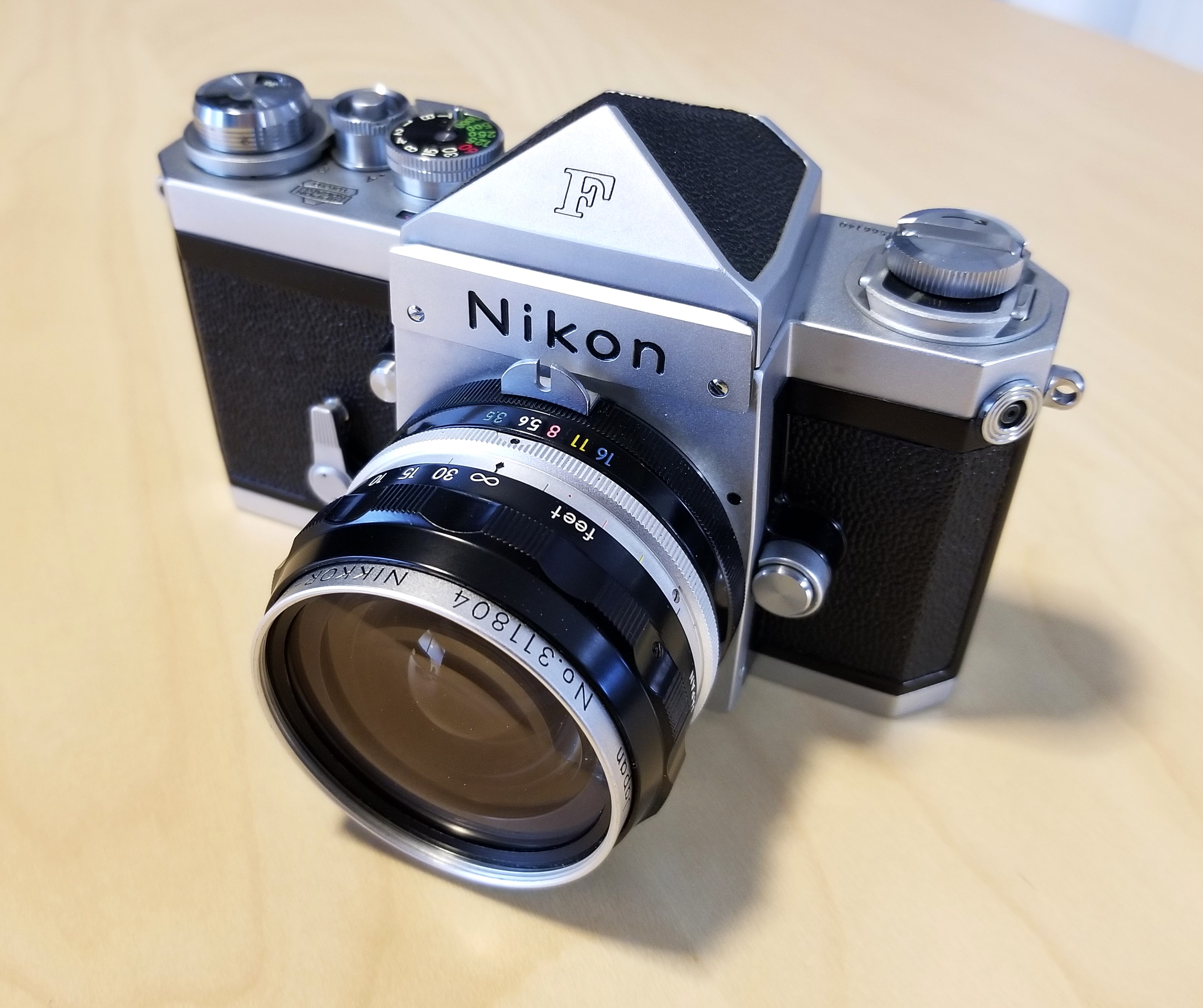
Classic Nikon. This is the last Nikon F in my collection. I enjoy using and collecting the early Nippon Kogaku logo bodies and, of course, a Nikkor-S Auto 50mm f1.4 lens. The camera was built in mid to late 1964. The lens is from 1965. I like it when it all comes together.
Instantly recognizable.A classic 35mm SLR.It was first released in 1959. This one is from 1964.The reputation of the Nikkor-S Auto 50mm f1.4 lens is world-renowned.
Comments are always welcome; I’ve learned a great deal from reader feedback. As always, thanks for stopping by. While there, visit my camera shop at http://www.ccstudio2380.com (CC Design Studios, hosted on Etsy). – Chris Whelan
Nikon F Nikkor-H Auto 2.8cm f3.5 pre-Ai Nippon Kogaku Tokyo 1964 (late) body and Nippon Kogaku K.K. lens from around 1961 or 1962. The body was modified to accept the Photomic-T finder. Classic Nikon at its best. I enjoy using this focal length over 24mm or 35mm, and with modern fast films, the f3.5 aperture is not an issue. On my Fujifilm X-T2 (APS-C Sensor), the lens has an effective focal length of 42mm.
A nearly perfect combination.The lens is from around late 1961 or 1962. The first lens in this style and focal length was serial number 301xxx, released in early 1960.A classic, straightforward design.Nikkor-H Auto.2.8 cm lens, f3.5 wide-angle lens.Mostly Nippon Kogaku caps. The Nikkor front cap is 52mm and is a bit newer style for this lens.
Thanks for stopping by, Chris
Follow me on Instagram at @ccphotographyai
Comments are always welcomed, as I’ve learned quite a bit from reader feedback. As always, thanks for stopping by, and while you’re at it, feel free to visit my camera shop at http://www.ccstudio2380.com (CC Design Studios hosted by Etsy). – Chris Whelan
Please respect that all content, including photos and text, is this blog’s property and its owner, Yashica Pentamatic Fanatic, Yashica Sailor Boy, Yashica Chris, Chasing Classic Cameras with Chris.
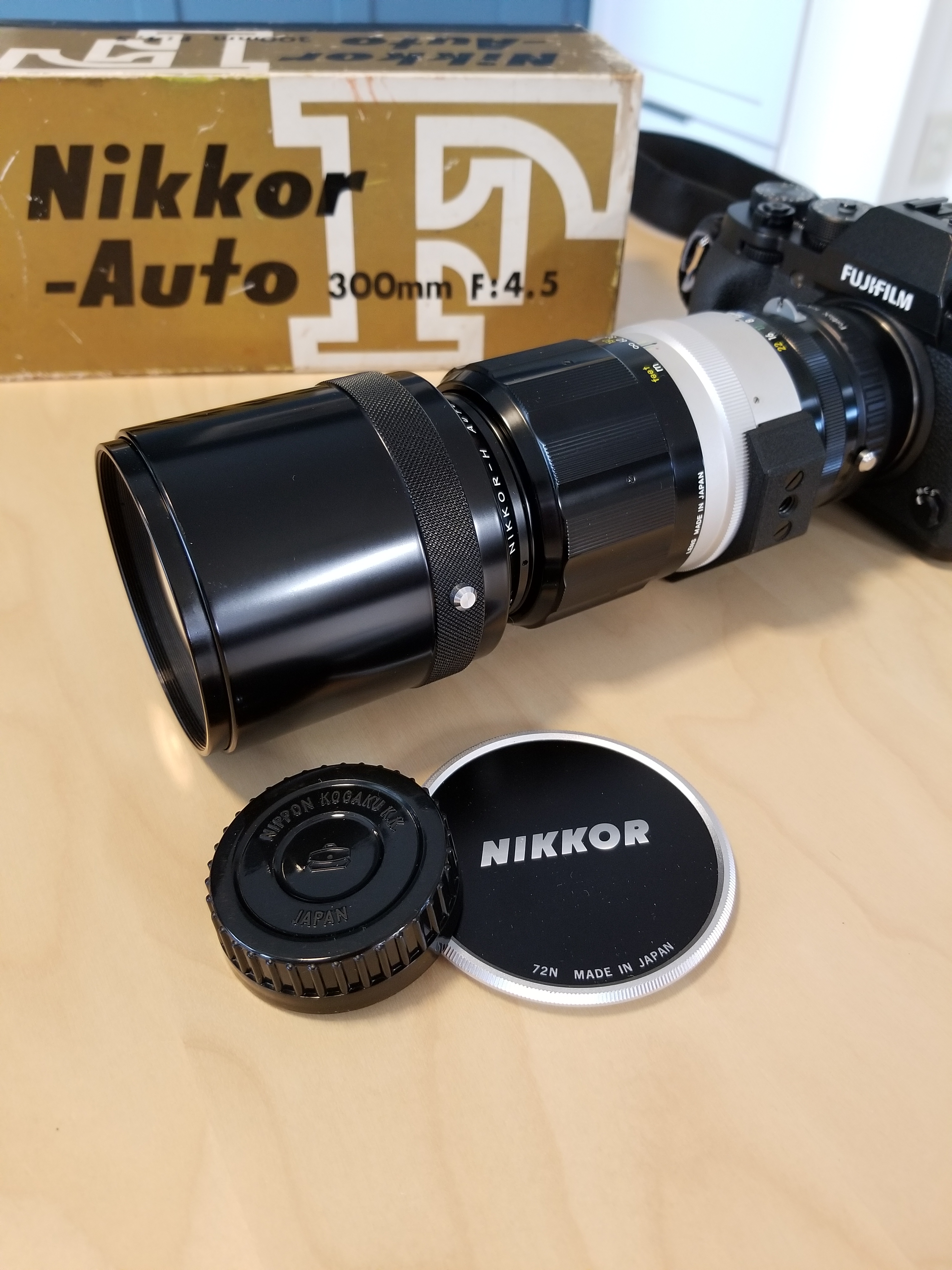
The “easy” way to get a nearly 500mm lens. With a modern mirrorless digital camera, an inexpensive adapter, and a classic lens initially made in the film era, you have a super telephoto lens you may already own.
A Nikkor-H Auto 300mm f4.5 telephoto lens from around 1970 mated to my 2016 Fujifilm X-T2 mirrorless digital camera via a Fotodiox NIK-FX lens adapter.
The Fotodiox adapter I’m using here was purchased directly from them for under $30 (no affiliation). I use Fotodiox because they have an easy-to-navigate site that makes buying easy. Any third-party lens adapter maker will do so shop around. Some adapters can be expensive, so know what you want and need before overbuying.
Autofocus. In my situation here, my camera lens combination can no longer use autofocus, and any type of image stabilization is also lost (unless your mirrorless camera has built-in IBIS). So it’s back to old-school photography – manually focusing the camera and adjusting the aperture, ISO, and shutter speed to get the correct exposure – the fun stuff!
It wasn’t the best day for shooting with a long telephoto lens as the sun was obscured by a thick layer of cirrus clouds – not much color going on. The long focal length of this lens compresses distant objects creating an exciting look. This row of townhomes at the beach was quite distant from my vantage point, and close objects were not in focus (shallow depth of field).Check your camera collection – maybe there’s new life for your old lenses and a new perspective for your next photo outing.
Thanks for stopping by, Chris
Follow me on Instagram at @ccphotographyai
Comments are always welcomed, as I’ve learned quite a bit from reader feedback. As always, thanks for stopping by, and while you’re at it, feel free to visit my camera shop at http://www.ccstudio2380.com (CC Design Studios hosted by Etsy). – Chris Whelan
Please respect that all content, including photos and text, is this blog’s property and its owner, Yashica Pentamatic Fanatic, Yashica Sailor Boy, Yashica Chris, Chasing Classic Cameras with Chris.
Fujifilm X-T2 FotodioX Nik-FX Adapter Nikkor-H Auto 300mm f4.5 Lens Nippon Kogaku Japan – 1970 35mm Equivalent 450mm
Classic glass meets new.FotodioX NIK-FX Adapter on Fujifilm X-T2.Looks new.35mm equivalent is a 450mm telephoto. Seen here as an out of the camera JPEG image. ISO 1600, 1/1900, f5.6.
I enjoyed my first outing with this massive lens on my T2 but without any type of image stabilization I had to bump the ISO and shoot at a high shutter speed to get the images in focus (no tripod).
The neighbor’s chimney top as seen from my studio at 450mm. It was a rather dull day with high cirrus cloudiness blocking any chance of brighter colors. Hopefully, the sun will shine brighter tomorrow so I can get out and about again.
Thanks for stopping by, Chris
Follow me on Instagram at @ccphotographyai
Comments are always welcomed, as I’ve learned quite a bit from reader feedback. As always, thanks for stopping by, and while you’re at it, feel free to visit my camera shop at http://www.ccstudio2380.com (CC Design Studios hosted by Etsy). – Chris Whelan
Please respect that all content, including photos and text, is this blog’s property and its owner, Yashica Pentamatic Fanatic, Yashica Sailor Boy, Yashica Chris, Chasing Classic Cameras with Chris.










 Chasing Classic Cameras with Chris