My country divided… again and again over everything! Maybe this is how Congress should decide the issues… accords and compromises are non existent under this political climate with the “Divider in Chief” at the helm.
Chris
© COPYRIGHT
My country divided… again and again over everything! Maybe this is how Congress should decide the issues… accords and compromises are non existent under this political climate with the “Divider in Chief” at the helm.
Chris

Fujifilm GF670 Sales Brochure
Super hard to find sales brochure from Fujifilm for the popular and desirable GF670 Professional 6x6 / 6x7 medium format film camera. Full color large format about 21x30 cm. All specs, features and accessories. In mint new condition with only the slightest bend on the lower right cover. Add this beautiful brochure to your photographic collection. Mails to the USA for free! International buyers please request a quote for shipping.
$25.00
One of Fujifilm’s most popular (and expensive) modern film cameras. This rare brochure will enhance any photographic library and make a nice addition to your Fujifilm GF670 collection.


We have a rather large collection of photographic sales brochures. Let us know if there’s one we can find for you.
Thanks,
Chris
The web is a wonderful place as we all know – But like anything in life, it can also be crawling with nonsense and ripe with inaccuracies. Digging through mounds of data requires tons of luck to weed out what’s important and what’s not.
Every now and then something really neat happens!
While surfing through some photography blogs from Japan, I stumbled upon a seemingly casual and offhand comment about the Yashica Lynx. I read that there are some bloggers (from Japan) who have speculated that Yashica’s super popular Lynx 35 (released around May 1960) may have had two lens suppliers during its first half-year or so of production and that there may be a way to tell if your Lynx has a lens supplied by Zunow Optical or a lens made by Tomioka Optical. These Japanese bloggers (roughly 4 or 5) plus one eBay seller from Japan, claim to have read something somewhere online that a Lynx with a body serial number that begins with “NO. xxxxxx” has one type of lens and that cameras whose body serial number begins with a Lxxxxxxx” have a different lens. They’re not talking about the lens serial numbers, just the body numbers. Naturally I was intrigued by this so I wrote my Japanese eBay colleague and asked if he could provide some hard evidence to support his claim and to give me some insight as to why they would think that. What I got were links to what appears to be multiple bloggers copying one another – No references and no additional links. Still I pressed on. I scanned hundreds of images of Zunow and Tomioka lenses and poured over the details of dozens of Yashica Lynx cameras for sale on various auction sites. I even looked at every picture of the Lynx that are posted on Flickr. My conclusion? There’s something to this!
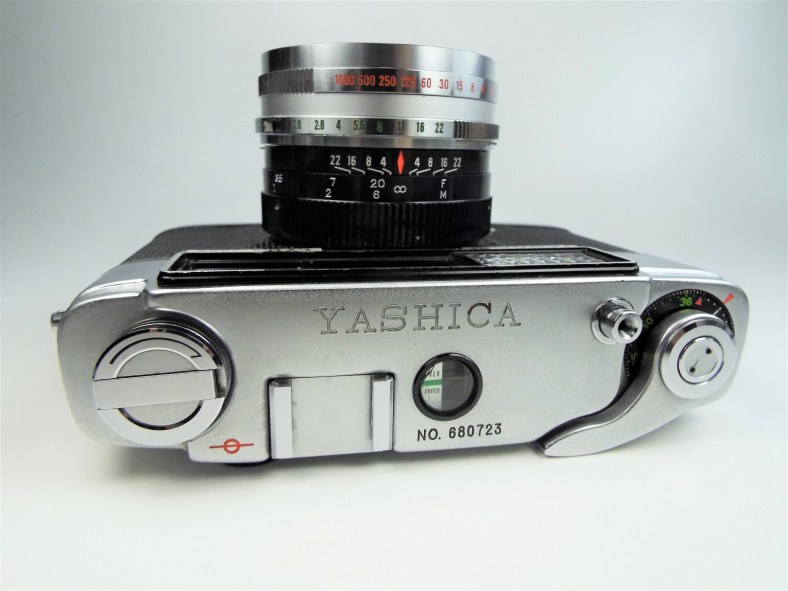
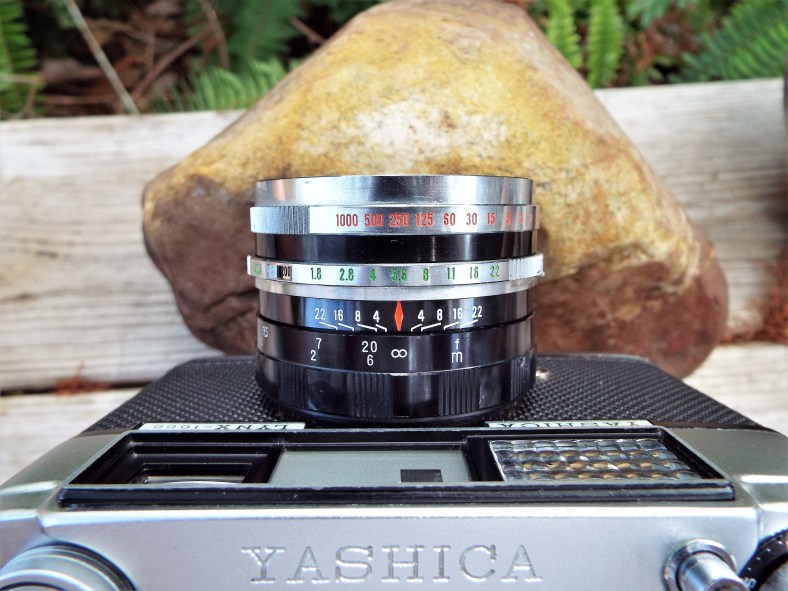
This Yashica Lynx was made in August of 1960 and it was the 723rd off the assembly line. This is our Lynx-1000 with the Zunow lens.
Why is any of this important? If it’s true that some of the Yashica Lynx cameras were delivered with a Zunow made f/1.8 4.5cm lens vice the more common Tomioka made f/1.8 4.5cm lens then that would make the Zunow-Yashica Lynx more valuable to collectors. Why? Rarity could be one factor. The biggest reason is because Zunow lenses (across the board) enjoy a cult-like following from collectors and those in the know. It doesn’t make sense because although Zunow made some groundbreaking lenses (f/1.1 fast!) and some very expensive lenses (LTM) they also made simple and inexpensive lenses for 8mm movie cameras and 35mm fixed lens rangefinder and viewfinder cameras too.

Zunow lens on our Lynx-1000. Many unique features – Fully grooved focus ring without a focus lever. Simple “F / M” for feet and meters. Scale begins with 20 feet vice a typical 30 feet.
Could a Yashica Lynx with a Zunow lens outperform its Tomioka equipped cousin? Should it be worth more?
I can’t answer the first question as I’m not a techie when it comes to lens performance and the final image that a lens produces is subject to an individual’s taste and preferences. The second part I can offer something of an answer. It should be worth more as it appears that Zunow equipped Lynx cameras are few and far between compared to the much more common Tomioka versions.
Making the Case For Zunow
So how can you tell if you have a Zunow lens on your Lynx? Number one and the single most important thing is your Lynx must have a body serial number that begins with “NO. 6xxxx or x” AND have a lens serial number that begins with “No3xxxxx”. You must have both. The biggest clue to it being a Zunow made lens is the lens serial number. Zunow throughout its short history almost always used the “No” to begin its numbers. It didn’t matter who the lens was made for or if it was a Zunow branded lens – The “No” is the clue. If your lens has this type of serial number then you have a Zunow.

A Zunow lens on the left and a Tomioka lens on the right. Note the simple differences in the two serial numbers.

Close-up of the Zunow lens. The serial number will always begin with “No” and then 6 or 7 digits beginning with “3”. Also note the style of the “a”.
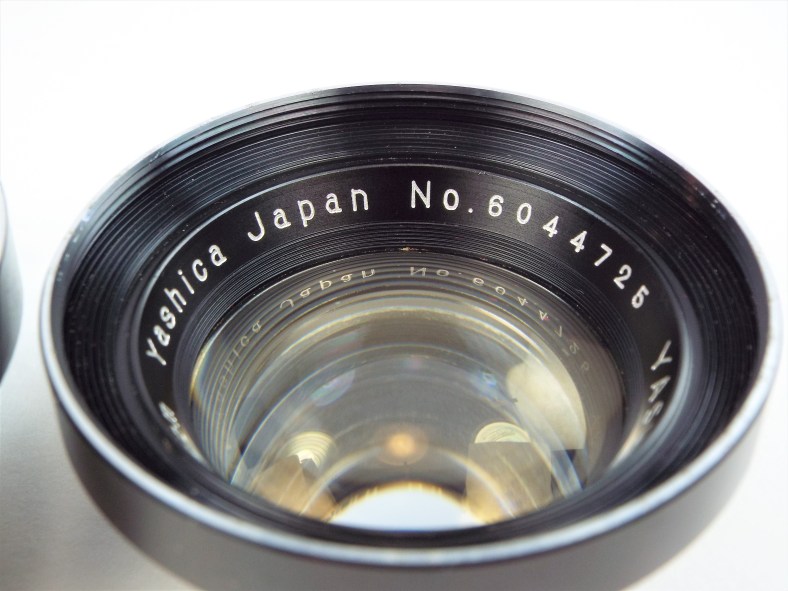
Close-up of the Tomioka lens showing a typical Tomioka (and Yashica) style serial number. Note the style of the “a’.
Examples of other Zunow Lenses
Here’s an example of a Zunow lens (below) for the Miranda T. – Same Zunow style serial number.

This is a 1956 Miranda T. Notice the fancy “f” in “f=5cm”. That was typical for Zunow in the first half of the 1950s. Sharp eyed readers will notice a small wrinkle in my theory. Look at the way “Japan” is written on this Zunow Miranda T lens and then compare it to the way “Japan” is written on the Tomioka Lynx lens above. Pretty darn close… But, both “a’s” in “Japan” are slightly different. Whew!
Here’s another example (below) of a Zunow lens on a Neoca-SV from around 1959 or so.
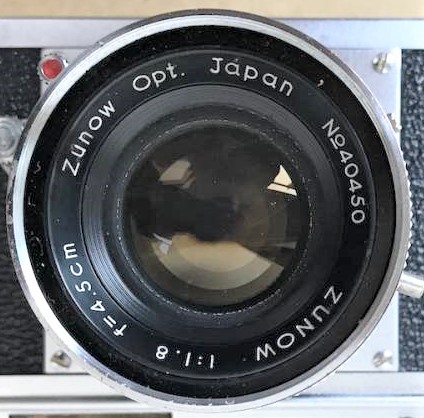
This is essentially the same lens as the Lynx lens. Note the style of the “a”.
How to Tell Internally Between Zunow and Tomioka
The lens of the left in the image below is the Zunow – on the right is the Tomioka. It’s fairly obvious that there’s significant differences between the two lens designs and some very similar design cues too. We admit that up to this point, these are the only two Lynx lenses that we’ve taken the front lens group out of the lens barrel. ***We don’t intend to keep purchasing additional Lynx cameras with the two different style lens rings to see if they’re all like this. We would encourage our readers to do so with their Lynx and to be so kind as to share their results with us.

The Zunow lens (left below) is about 3mm taller than the Tomioka lens on the right.
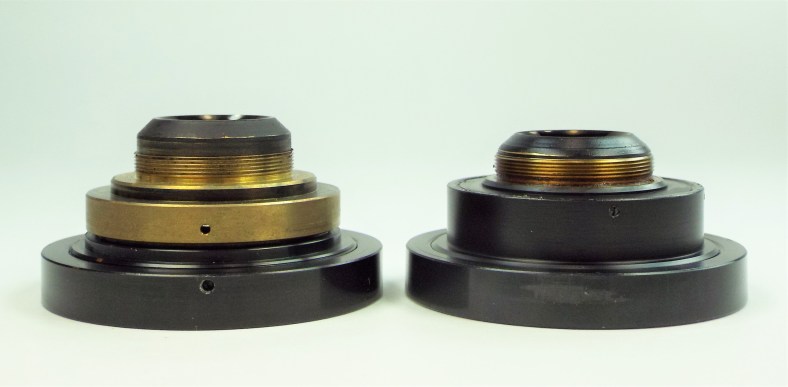
A close-up of the Zunow pictured below reveals a very distinct lens design. For lack of better terms, it is taller and more angular.

Tomioka lens close-up (below). For lack of better terms it’s obvious that the lens is shorter and more rounded.

A close-up of the Zunow front lens ring (below) shows a consistent height to the numbers. A typical Zunow feature and common to others as well.
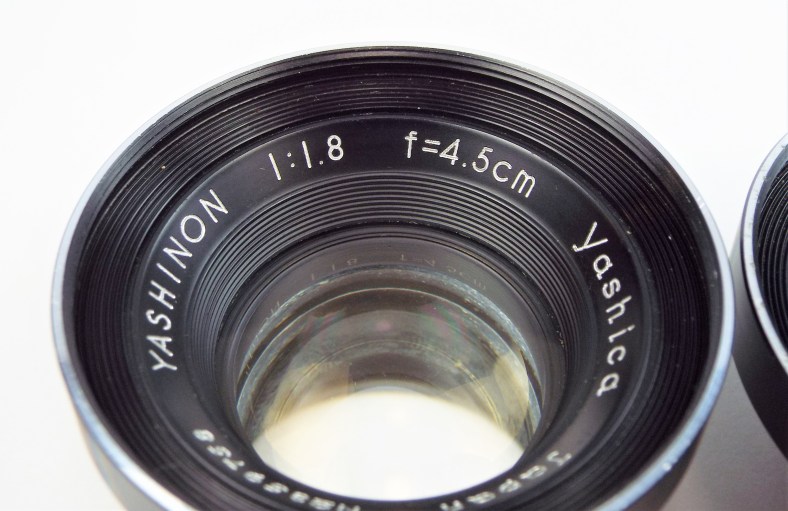
A close-up of the Tomioka lens (below) shows a definite “high-low” style in the numbers. Small “8” and “5”. That same style is seen on some of Tomioka’s other lenses and it maintains this same style on this lens long after Zunow closed in early 1961.
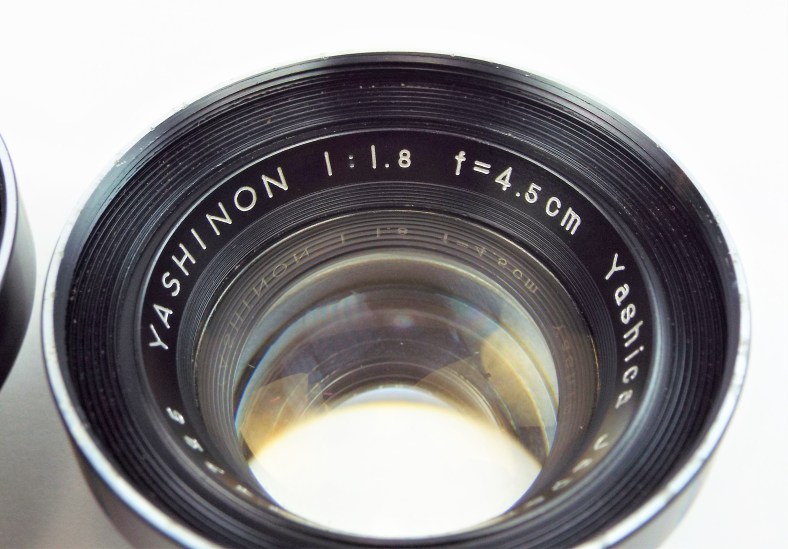
Here’s our other Yashica Lynx (below). This one was made in July 1962 and it was the 1,184th made that month. Yashica reset the serial number sequence at the start of each month during this period. Many thanks to my friend Paul Sokk for that decode!


L = Lynx and “2071184” decodes to: 2 = 1962, 07 = July, 1184 = 1,184th made that month.
So in Summary
The easiest way to know if your Yashica Lynx-1000 has a lens made by Zunow is to check the lens serial number found on the front lens ring. If the serial number looks like this one below then you have a lens made by Zunow Optical for Yashica.
If the serial number looks like the lens ring below, then your lens was made by Tomioka Optical for Yashica. Tomioka was at this time Yashica’s number one supplier of lenses going back to Yashica’s earliest days.
This is a bold statement on our part and a pretty exciting discovery too. We never want to mislead anyone and certainly we wouldn’t post this if we weren’t sure of our conclusions.
If you find that our post doesn’t hold water, let us know and share your input and support for your theory. We’re always looking to discover something new and exciting.
Many thanks!
Chris and Carol
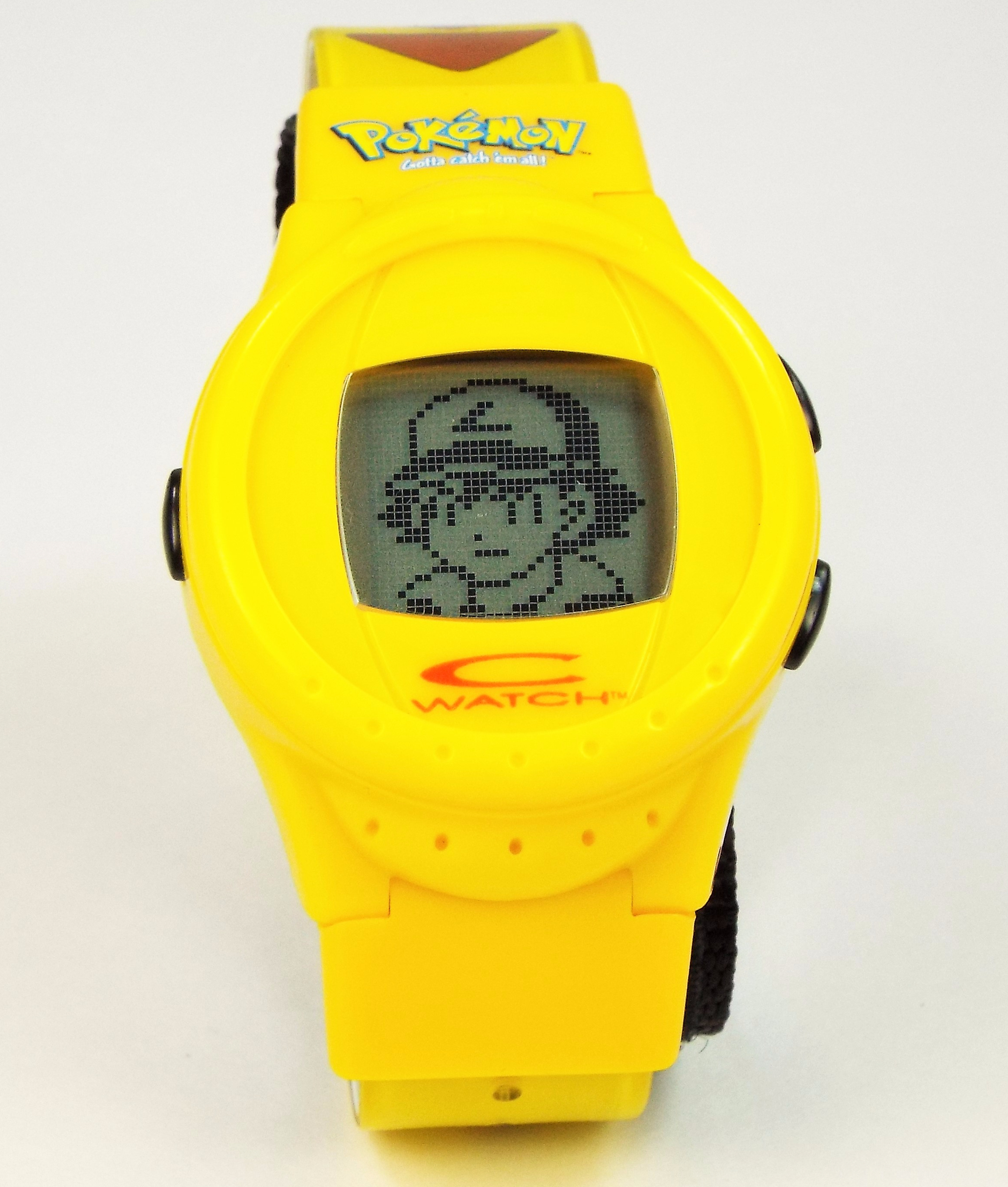
Nintendo Pokemon Pikachu Talking Watch – Fully Working!
Gotta catch 'em all! Genuine Pikachu Pokemon talking watch - stopwatch - month/date/day - Help Ash catch 'em with Pikachu's help! It talks and works just like new. Brand new battery just inserted. Highly adjustable with Velcro inner strap and vinyl outer strap. From 1999... Put a smile on someone special's face with this awesome watch. FREE USA SHIPPING! Mails internationally... Ask for a quote.
$22.50


Thanks for looking!
Chris

Fujifilm Klasse Sales Brochure
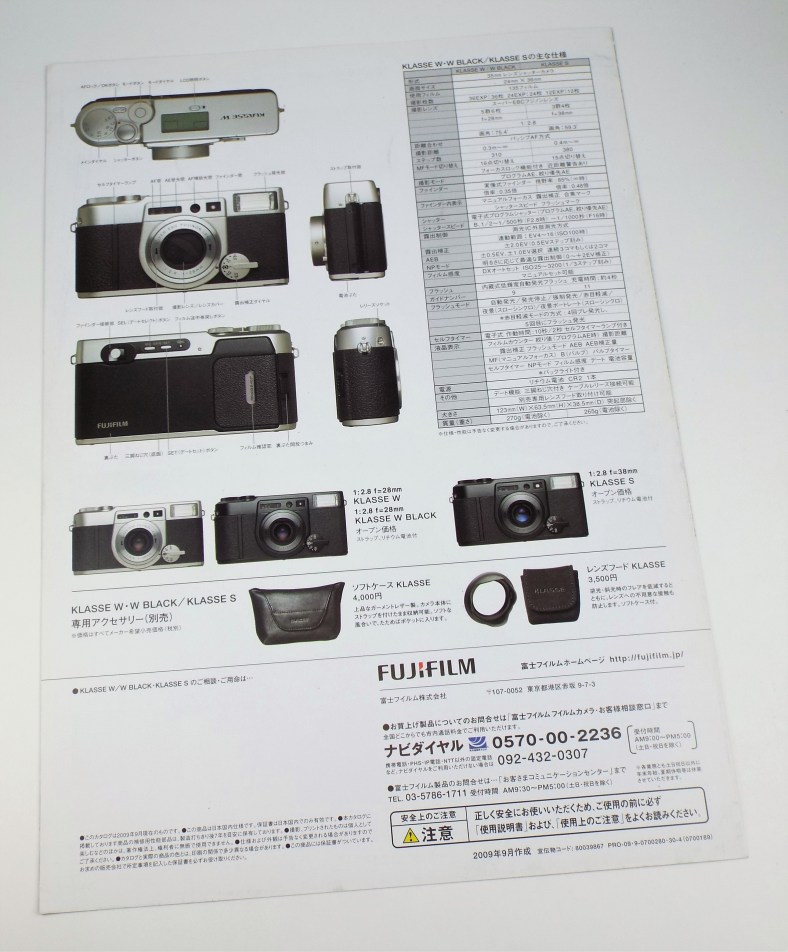
Beautiful all original sales brochure from Fujifilm (dated April 2012). This large brochure (about 21 x 30cm) is in full color and opens to a large centerfold. Packed with tons of information and features the specs direct from Fujifilm. It’s in mint new condition. Perfect for your reference collection. Mails worldwide. Ask for a shipping quote. Mails to the USA for $6.75 via USPS Priority Mail.
$20.00
A beautiful “wish we had” camera from Fujifilm.
Thanks for looking!
Chris
We haven’t paid much attention to rangefinder cameras here on the “Fanatic” – it’s not that we don’t find them interesting – quite the opposite, many rangefinder cameras associated with Yashica are groundbreaking and historically significant and are worthy of further research.
The Yashica Lynx – aka the Lynx-1000. It was the first in a long line of successful fixed-lens rangefinder cameras from Yashica in the early 1960s. The first Lynx was made in May 1960 based on the serial number of the camera in an early sales brochure (in English below).
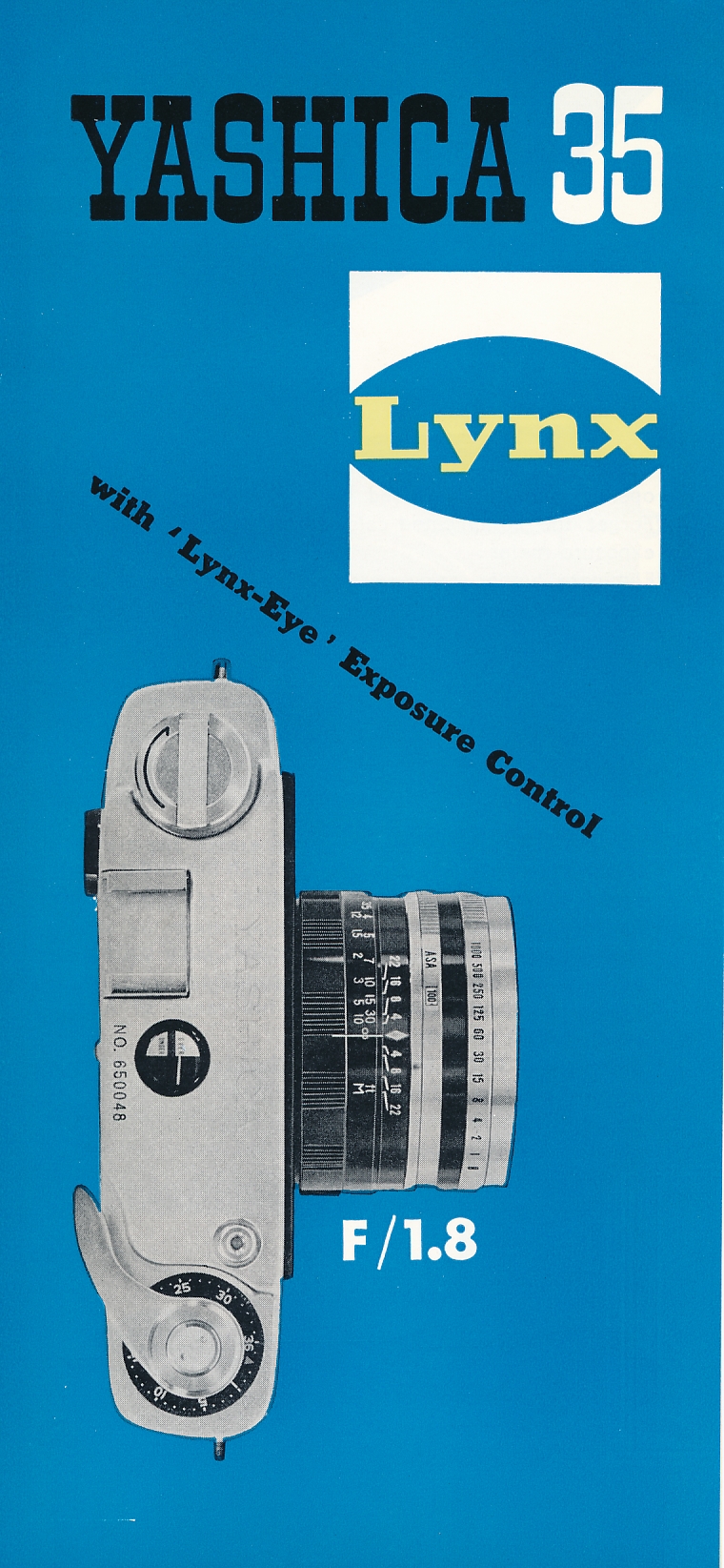
We find early sales brochures extremely helpful when attempting to place a date of production of a camera. In this case, the serial number NO. 650048 would indicate that the Lynx was first produced in May 1960 (6 = 1960, 5 = May, 0048 = number 48th made).
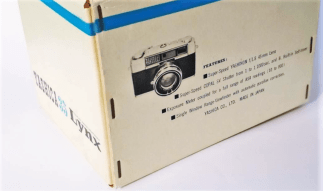
This early box (below) confirms that Yashica referred to the camera as just the Lynx vice Lynx-1000 when it was first released. The success of the Lynx paved the way for the subsequent versions of the camera.

We decided to get a Lynx mainly because of the reputation of its fast Yashinon f/1.8 4.5cm lens. The Lynx we received (below) has a working shutter and super clean glass. The camera’s exposure meter does not work which is typical for these nearly 60-year-old cameras.
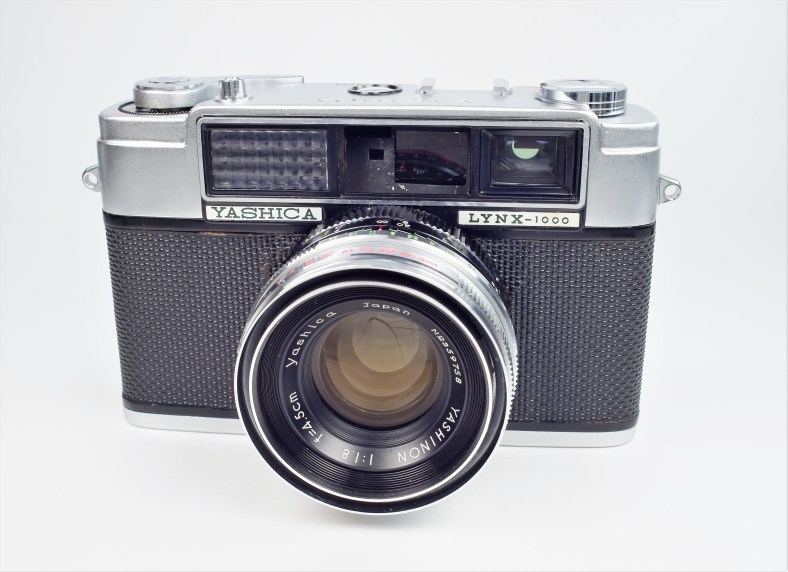
An overall clean example but missing an important piece – the rangefinder window is obviously missing with some damage visible to the internal pieces of the finder (top center above the lens).
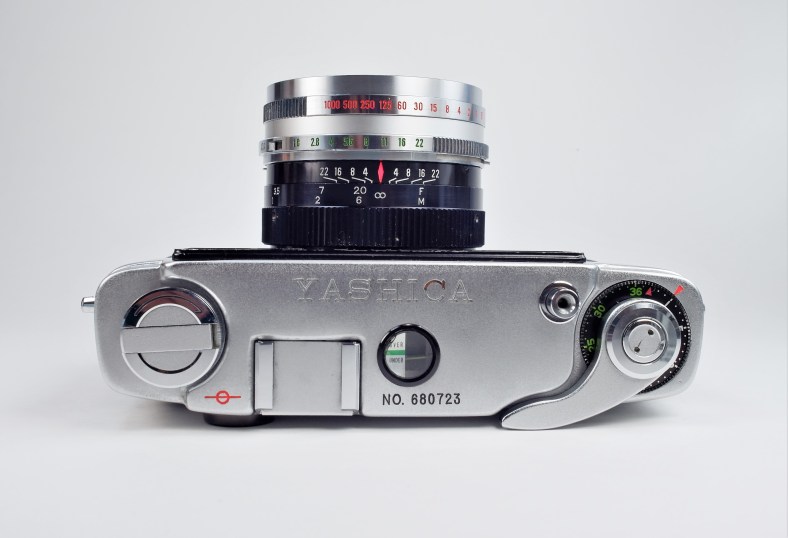
Our camera was produced in August 1960 and was the 723rd made.
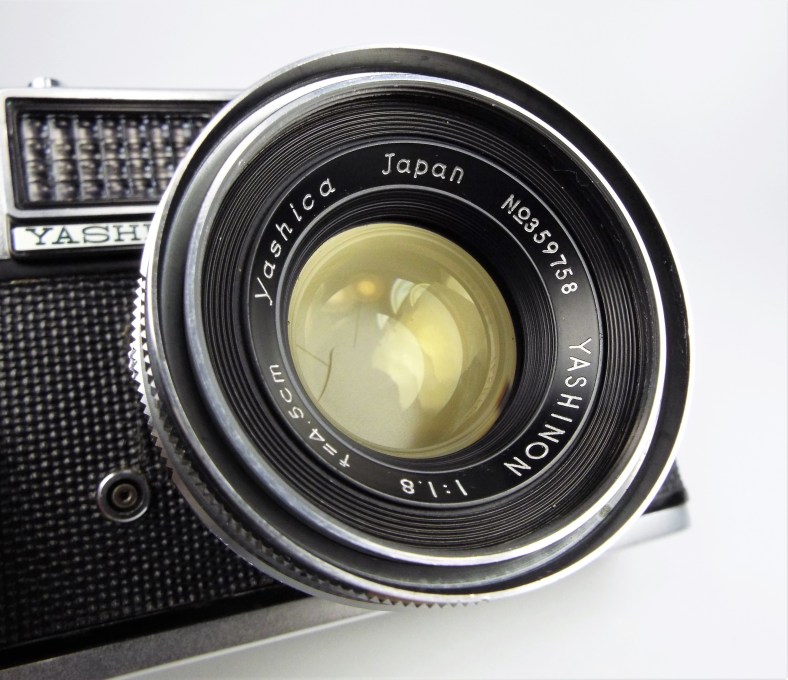
This lens (our camera) features a unique serial number (only 6 digits long) and is in a font that’s not consistent with earlier versions or versions that came later. We feel that this type of lens was made by Zunow Optical vice Tomioka Optical.
The lens on the Yashica Lynx has earned high praise and its reputation amongst photographers is top-notch. For the time period having a fast f/1.8 aperture combined with a leaf shutter (Copal-SV) with a top speed of 1/1000 second was a nice feature in a low-cost rangefinder.
***There is some chatter on more than a few Japanese blogs that some of the earliest lenses for the Lynx were made by the Zunow Optical Company. The majority of the lenses were made by Yashica’s normal lens maker, Tomioka Optical of Tokyo. No verifiable references or links are given in these Japanese blogs as to the source(s) of this claim – it would appear that at this time it may be a case of one blogger makes the claim and others simply followed suite. We’re not disputing these claims, in fact, we’re intrigued by them and have set out to either prove or disprove them. Zunow has an interesting place in the Japanese camera industry of the 1950s. In early 1958, Zunow made one of Japan’s first modern 35mm SLR cameras with a semi-automatic lens and instant return mirror. Interestingly the Zunow 35 and the Yashica Pentamatic 35 (Yashica’s first 35mm SLR – 1959) share a related look and design style that goes beyond coincidence. More on this in another post.
Back to Zunow Optical and the possible connection to the Lynx. Below is an example of a very similar looking f/1.8 4.5cm lens from Zunow made in about 1959 and was fixed to the Neoca-SV.
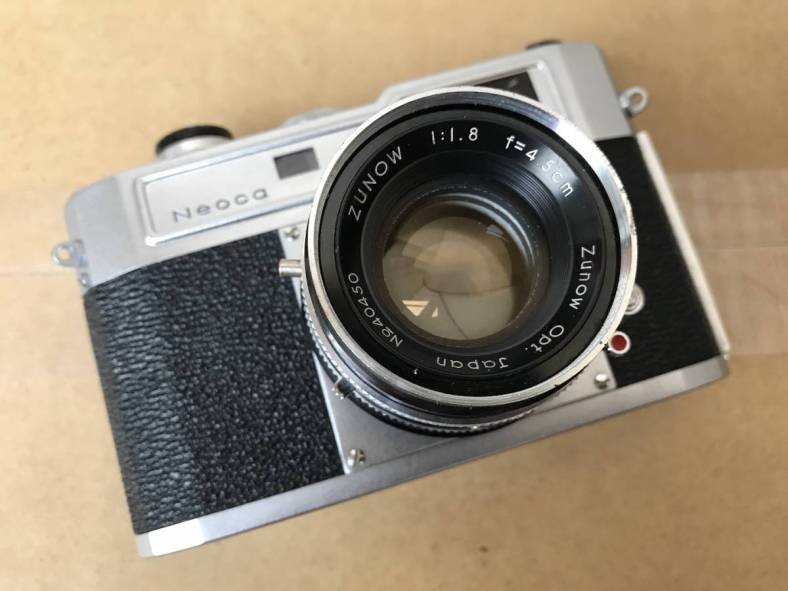
Zunow f/1.8 4.5cm lens on the Neoca-SV. Compare the lens ring font with the font on the Yashinon lens pictured earlier in this post. To us, these were made by the same manufacturer.
One of the biggest clues for us that some of the Japanese bloggers claim that Zunow and Tomioka made the lenses for the Lynx are the similarities of the serial number fonts. The lens with the serial number No 40450 (Zunow pictured above) is in the same style as the serial number on our Yashinon lens (No359708). We have another Lynx headed our way with what we feel is a Tomioka version of the lens. We’ll take both lenses apart to see if there are differences in the design.
Thanks for stopping by! If you have additional information about anything we’ve blogged about please feel free to contact us. We’re never too old to learn something new!
Chris and Carol ^.^
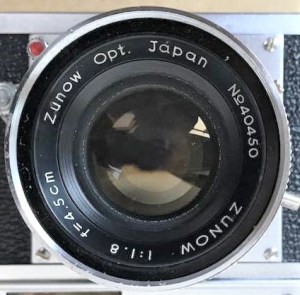
Zunow lens on the Neoca-SV
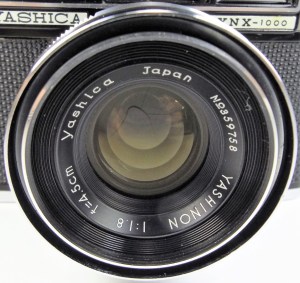
Zunow? lens of the Yashica Lynx.
The original Pentamatic ’35’ and the Pentamatic II. The original Pentamatic made its debut in March 1960 and was first available for sale in April 1960 (production started in December 1959). The Pentamatic II was rushed into production in August 1960 and was only for sale in Japan. The only change between the two cameras… was the lens!
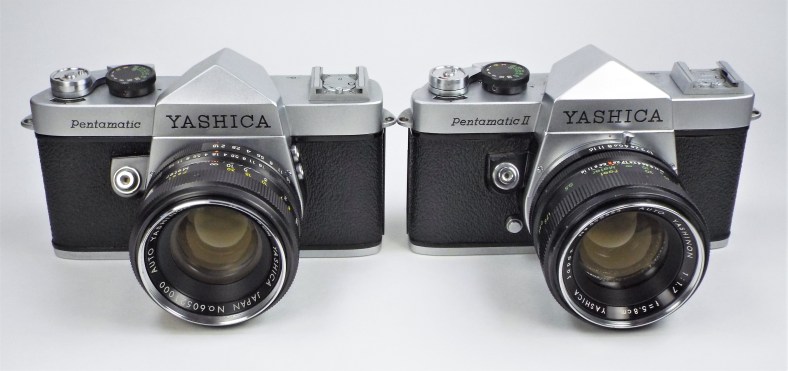
The P1 (left) came with the Auto Yashinon f/1.8 5.5cm lens. The P2 (right) came with the Auto Yashinon f/1.7 5.8cm lens. The goal of Yashica was to improve on the semi-automatic operation of the lens over the standard lens on the P1.
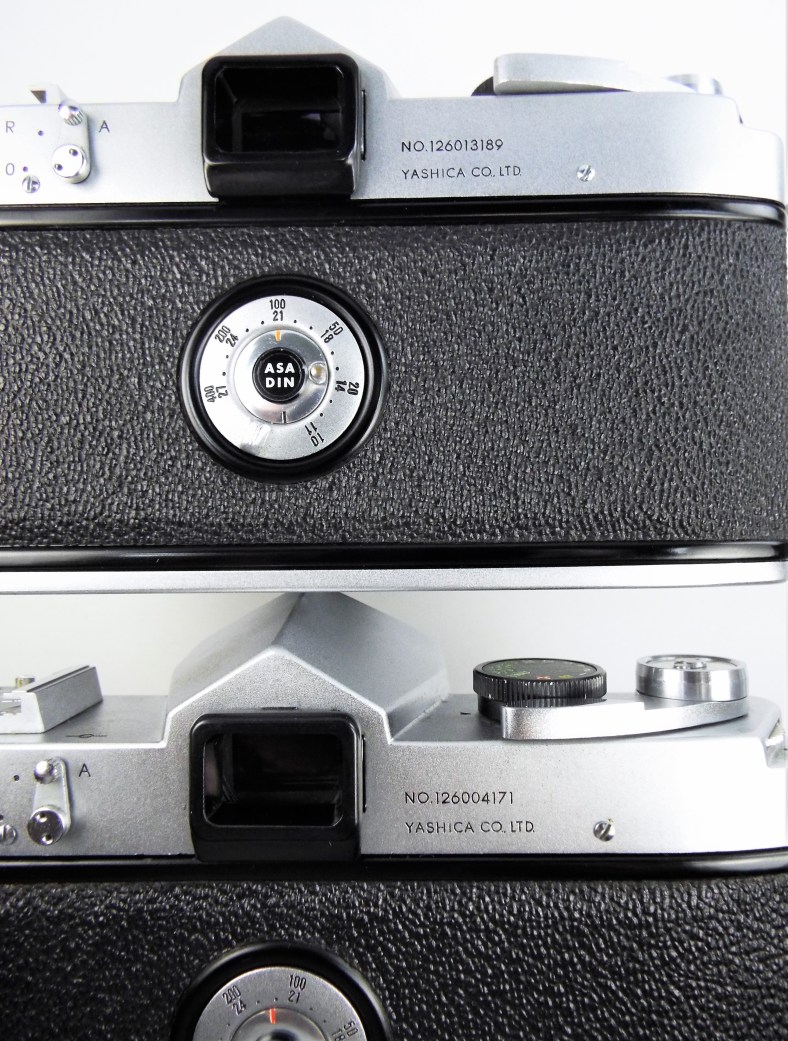
Serial numbers. The SN on the top camera is on the original Pentamatic camera body. The number, NO. 126013189 contains a date code and production sequence number. This camera was made in December 1960 and was the 13,189th camera made. The bottom camera’s serial number (Pentamatic II), NO. 126004171 decodes to: December 1960 and it was the 4,171st made since August 1960 (the start of production on the P2).
So both of the cameras were in production at the same time in the same factory. We’re highly confident in our analysis of the serial numbers. We have enough examples in our database and enough experience in decoding Yashica serial numbers to say that we are 100% correct.
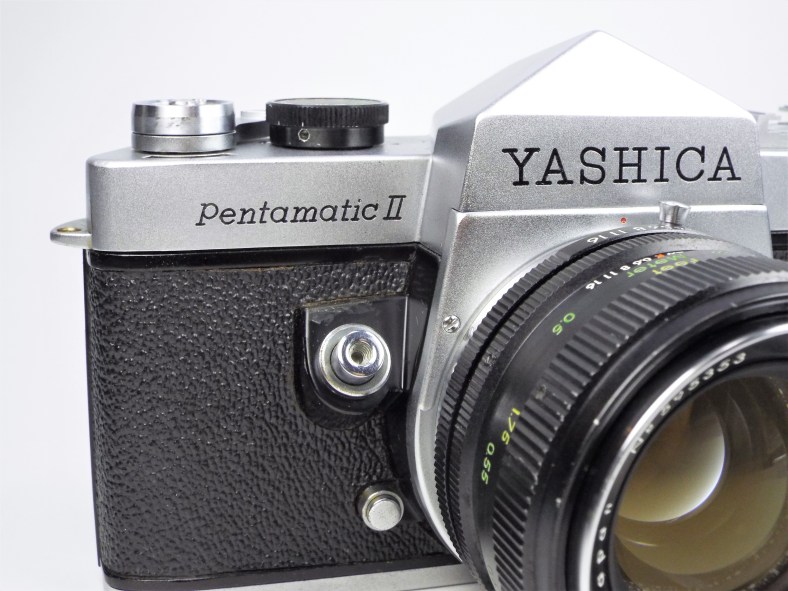
The whole process of releasing the Pentamatic II was rushed – the top plates were only slightly modified to accommodate squeezing in the “II”. The engraving was moved about 1 mm to the left so as to have room to engrave the “II”. On the back of the camera it only took a change in the serial number engraving to reflect the P2.
The Pentamatic II didn’t get any upgrades to the body… no self-timer and no hot shoe. The lens is a totally different lens and we’ll cover those differences in our next post.
Thanks for your visit!
Studio Camera: Fujifilm FinePix S9900W
Chris
After years of searching, we’ve finally acquired our first Pentamatic II. A rather rare camera that was only released in Japan and only for a short time. It’s estimated (by us) that less than 6,000 bodies were made. How many of those survived to the present day is of course unknown.
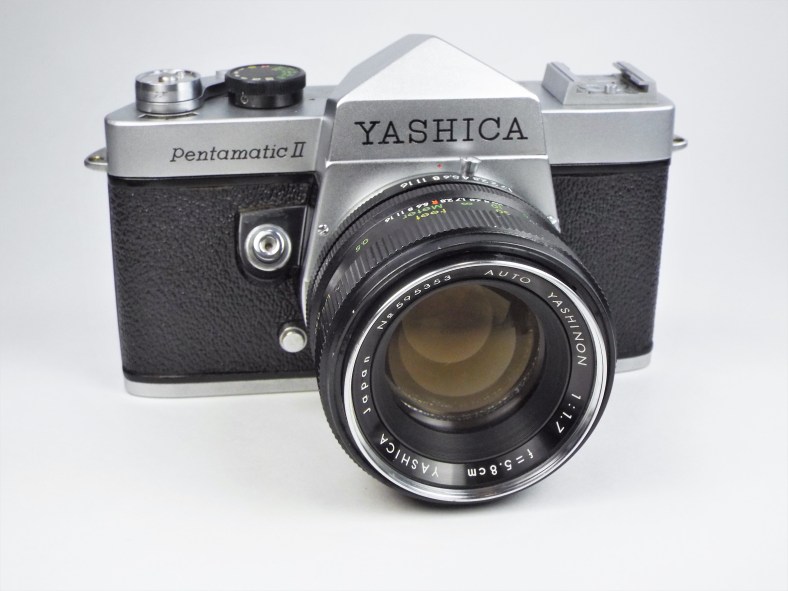
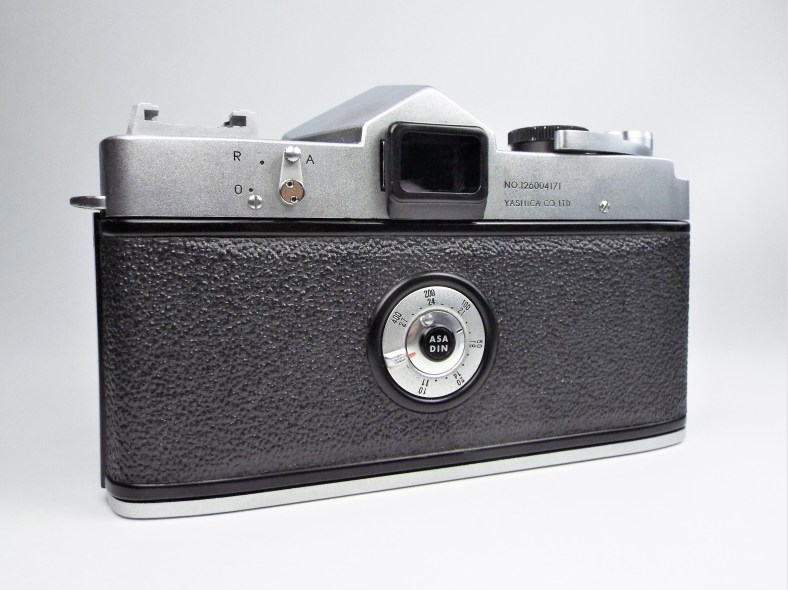
Much more detail about this Pentamatic coming soon.
Studio Camera: Fujifilm FinePix S9000W
Chris
More exactly, how to decode the serial numbers on the Yashica YE 35mm rangefinder camera.
*Not an official Yashica dating site.
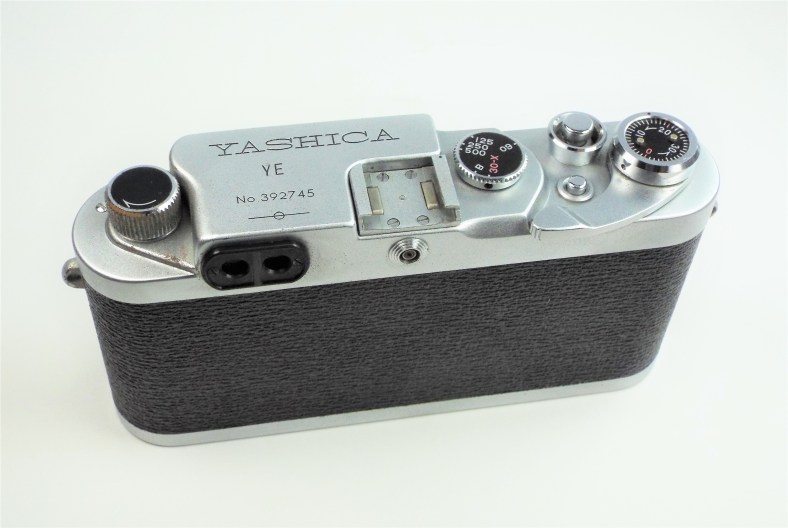
We touched on this briefly the other day, but the Yashica YE serial number might have a date code embedded in it. We say might have because we are working off only a 25 camera database – possibly not enough to make a definitive call.
In the example above, the serial number (No. 392745) appears to decode to: 3 = March, 9 = 1959 and 2745 = 2,745th made.
The earliest camera in our database is: (No. 128049) which would be 12 = December, 8 = 1958 and 049 = the 49th made.
The latest in the database is: (No. 699821) which is 6 = June, 9 = 1959 and 9821 = 9,821st made.
Reports on some sites on the Internet claim that only 4,000 cameras were made. The serial numbers, if consecutive and continuous would seem to contradict that. For the moment, let’s keep an open mind about the serial number decoding. More info is needed to fill in the December 1958 and post June 1959 production numbers from Yashica.
If you have some additional info or serial numbers to share, please feel free to share that with us.
Thanks!
Be sure to check out some of our fine art prints available at https://society6.com/ccstudio2380
Chris and Carol
Some background – Yashica acquired Nicca in May 1958. Nicca was well known for making high quality 35mm rangefinder cameras since the late 1940s.
Nicca cameras normally came with lenses branded as Nikkor. When the Nicca Type 33 was released in 1958, it came with a Nicca branded lens. We don’t know if Nicca was the actual lens maker or another company made the lens and Nicca had their name affixed. Either way, when Yashica took over the company the Nicca 33 was sold with the Nicca branded lens.
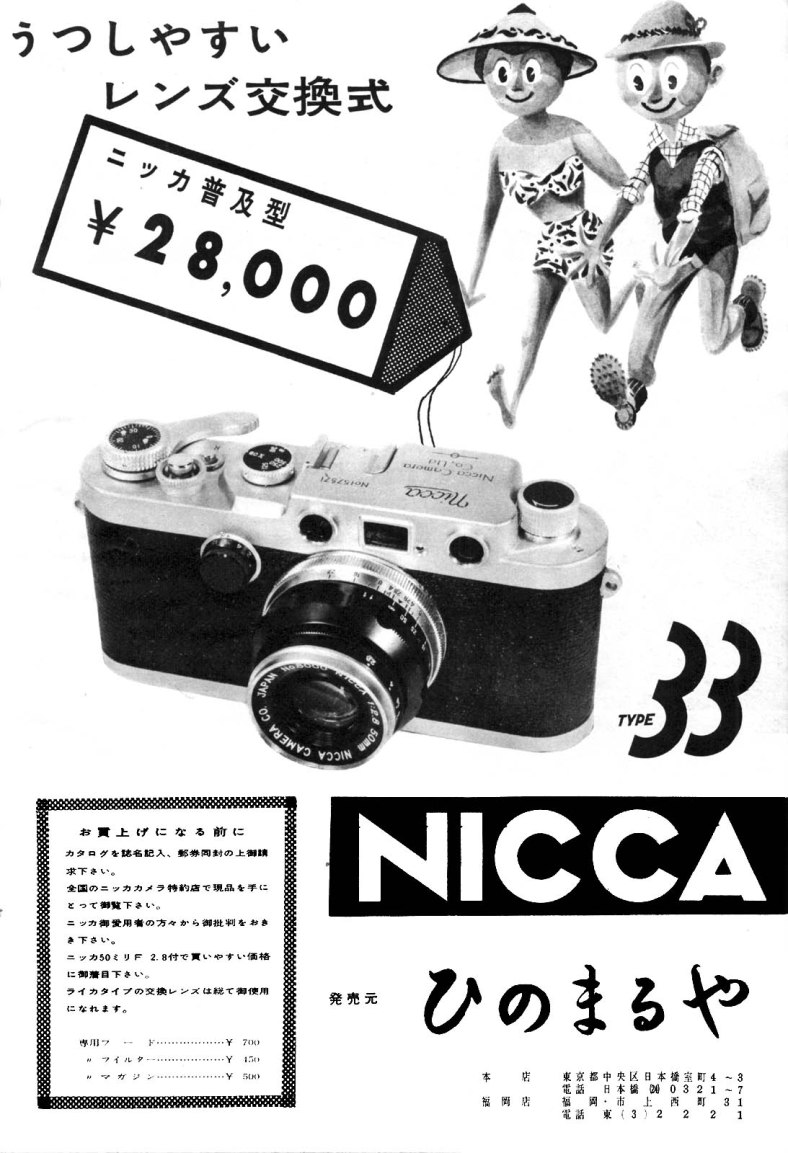
Cute original advertisement from July-August 1958 for the Nicca Type 33 35mm camera and lens.
If you look closely at the ad above, you can see that the lens is marked “Nicca Camera CO.” and is a 50mm f2.8 lens. The serial number isn’t completely clear but looks like a prototype number or some sort (maybe not)… maybe 8000 or something. The list price is interesting too at ¥28,000.
The serial number of the camera body is No. 157571 – which if it was recently made would put it about mid production. It’s claimed that only 1,000 units were made over a short period during 1958.

Beautiful condition Nicca branded lens that recently sold at auction in Japan. Note the 4 digit serial number.

Original Type 33 instruction booklet.
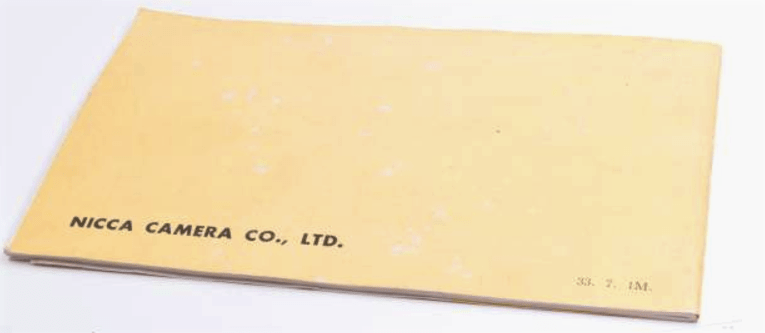
The booklet is dated (33. 7. 1M.) which should be 1958 July.
The Yashica YE – with some minor physical changes to the top plate, the Nicca 33 is now the Yashica YE!
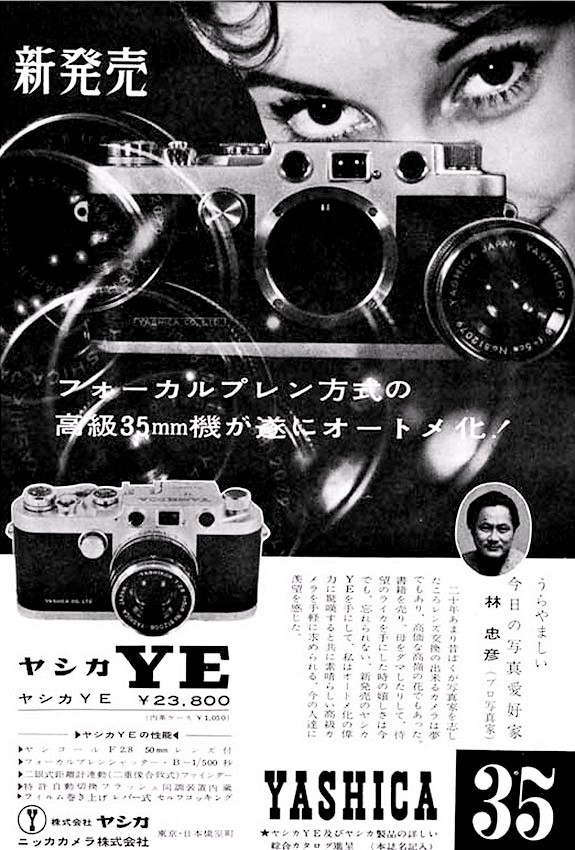
Note the significant price difference from the Type 33. This ad is from about March 1959.
There is some conflict over exactly when Yashica released (or started building) the YE. Our thought is Yashica would wait until all of the Nicca Type 33 bodies and Nicca lenses were used before building their version. Since the YE was Yashica’s first 35mm rangefinder camera, you would think Yashica would want to bring the YE to market as soon as possible. The YE has the “new” Yashikor 5cm f2.8 lens – we’re unsure if this is a redesign of the Nicca lens that’s on the 33 or another lens made for them by Tomioka Optical or, a new lens made by Nicca for Yashica. Confusing we know. It gets even more confusing since Yashica didn’t “officially” complete the transaction with Nicca until the late 1960s! In the meantime, Nicca became Taiho Optical… a name that Yashica bestowed upon its newly acquired company. Go figure.
So when did the first Yashica YE models roll off the assembly line? Well we think we’ve decoded the serial numbers that Yashica etched into the YE. If our interpretation is correct, Yashica assigned a simple date code to them. Some sites claim that the YE came out in 1959 and still others claim 1958. Exact months were not given.
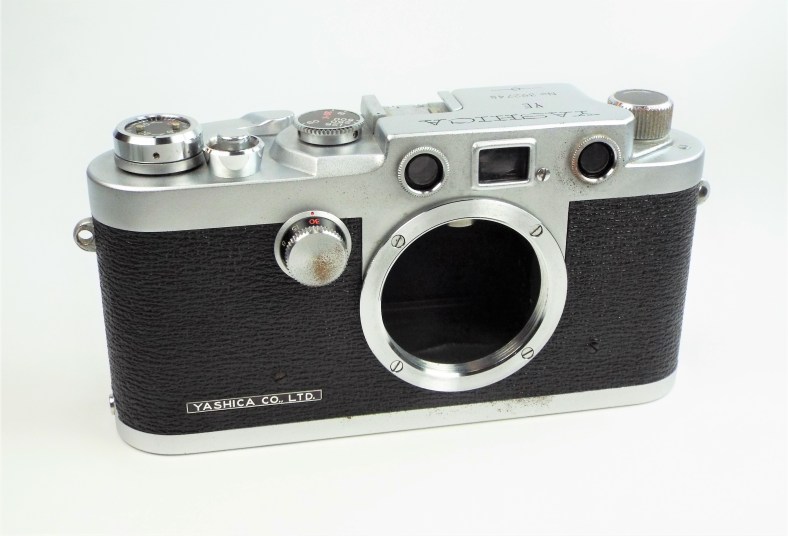
Our recently acquired Yashica YE. We’re not sure which lens we want to get for it yet. Of course it takes any lens with the L39 screw mount.
In our example below, the serial number (No. 392745) decodes to: 3 = March, 9 = 1959, and 2745 = 2,745th made since December 1958.
Why use December 1958 as the start date? We’ve seen a very nice Yashica YE with the following serial number (No. 128049) which decodes to: 12 = December, 8 = 1958, and 049 = the 49th made. We’re not in a position yet to conclusively claim that this is how to decode the serial numbers, but we feel very confident based on previous experience.
Our YE has a bit of surface corrosion here and there but it’s clean inside and out and has (not yet fully tested) a working shutter that sounds great at all speeds. The rangefinder windows are a bit cloudy but still viewable.
A note about the selling prices between the two cameras. The Nicca Type 33 listed for ¥28,000 and the newer YE for ¥23,800. Was this a perfect example of Yashica being able to deliver the same camera at a better price due to their sheer size or was it Nicca listing the camera at its fair price?
It’s claimed that the YE was produced at around 4,000 units during a short production run from December to June). We’ve seen the serial numbers go from a low of 128049 to 699821. If the production number is correct, then the serial numbers did not run continuous… or did they? If they did, then nearly 10,000 were made.
 Chasing Classic Cameras with Chris