Nicca 3-S vs. Nicca 3-F

We’ve always assumed that the Nicca cameras were pretty much the same size from one model to another. The early 1950s models look for the most part, the same as the 1958 models. Now that we have two Niccas in our collection it’s time to do some comparisons.

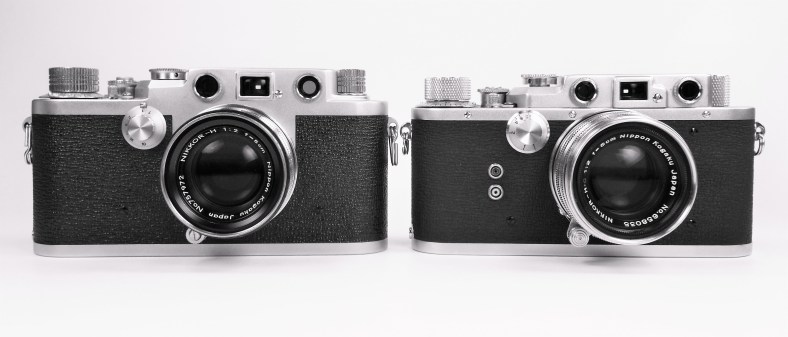
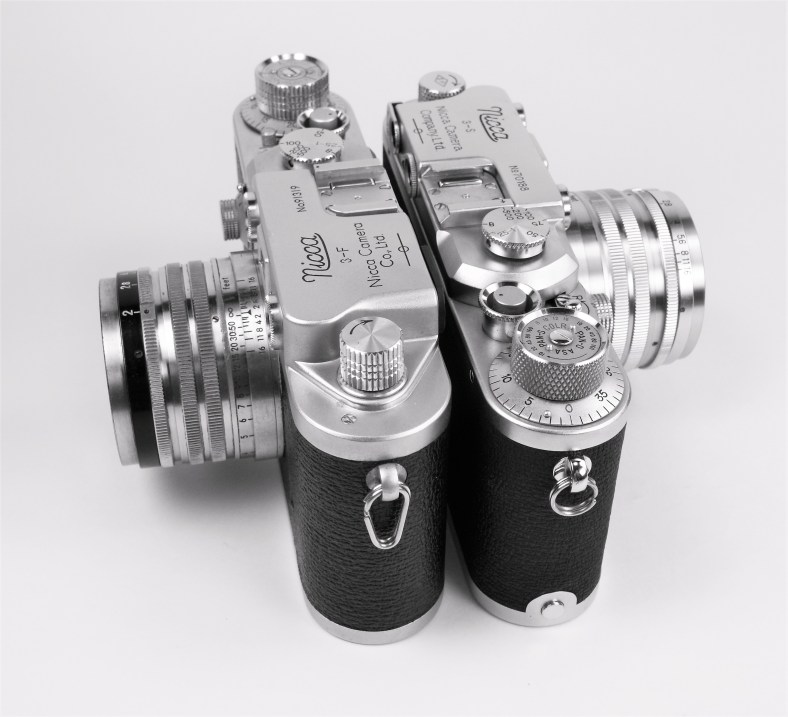
Nicca 3-F on the left and the Nicca 3-S on the right.
DSCF5424

First off, without the lenses attached, there is a slight difference in weight between the two with the 3-F weighing in at 445 grams and the 3-S weighing 432 grams.

There is however a difference in size which surprised us. The later model 3-F (left) is taller than the 3-S (right) by about 4mm.
DSCF5425

DSCF5427

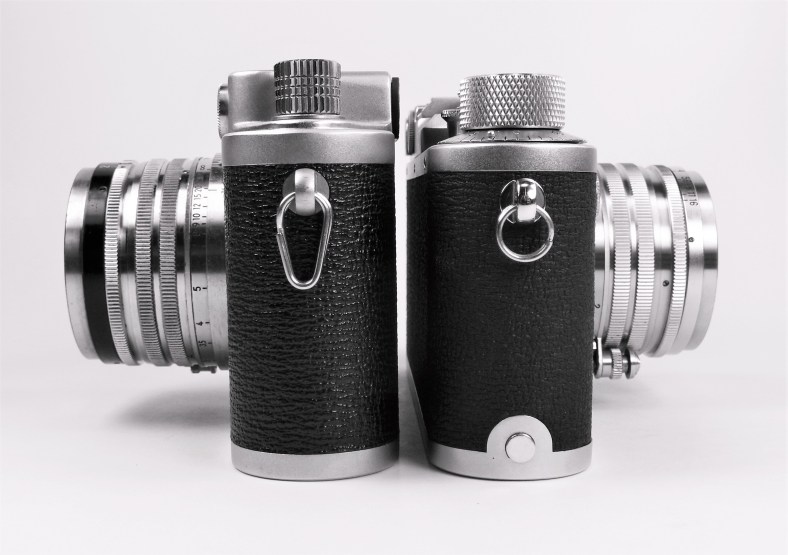
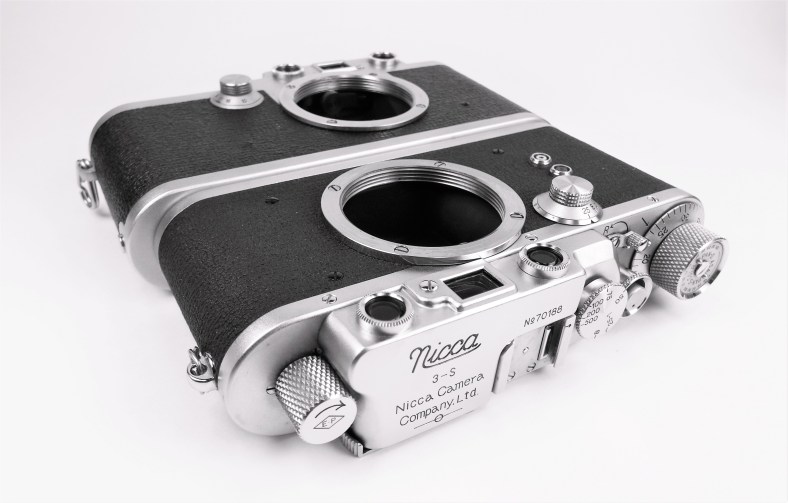
The 3-F is also longer than the 3-S by about 7mm.
DSCF5428

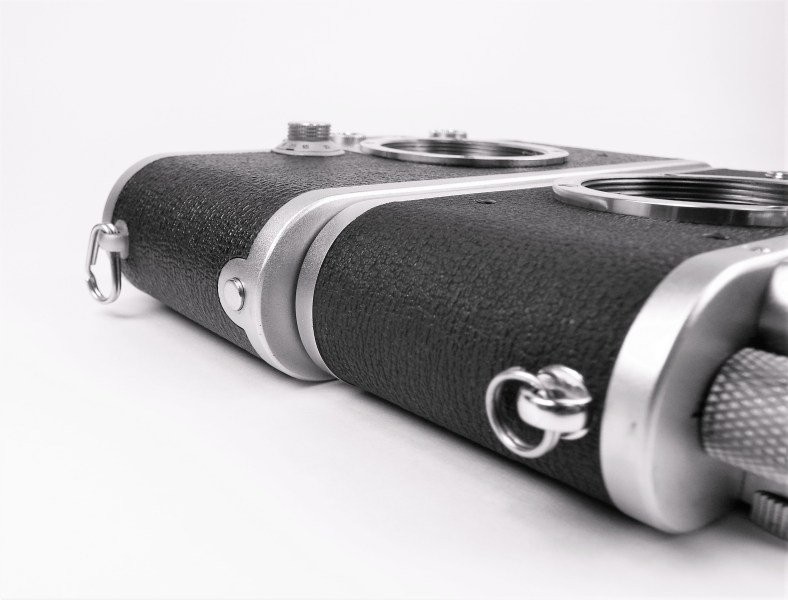
The 3-F is about 7mm longer and 1mm wider than the 3-S.
DSCF5429

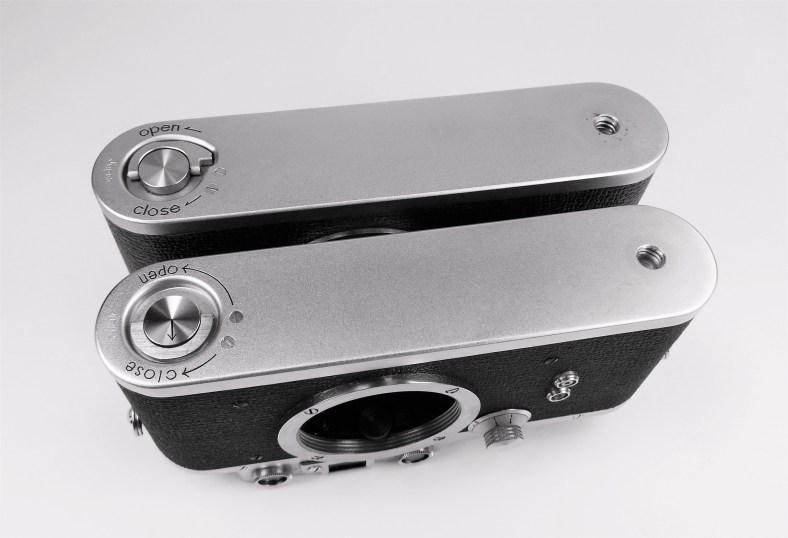
The 3-F is the top body with the 3-S on the bottom.
DSCF5430

Since these Niccas share the same specs it’s surprising that Nicca expanded the body of the 3-F.

Our best guess is that the later model (3-F) uses its extra length to improve the film path. Measuring the distance between the spindles with the baseplates off, the 3-F is 5mm longer than the 3-S (108mm vice 103mm).

So nothing earth shaking – just some subtle differences. As we have stated before, these are high quality cameras with exceptional fit and finish. Adding a Nicca will enhance any collection of 1950s Japanese made rangefinder cameras.

Studio Camera: Fujifilm FinePix S9900W

Chris
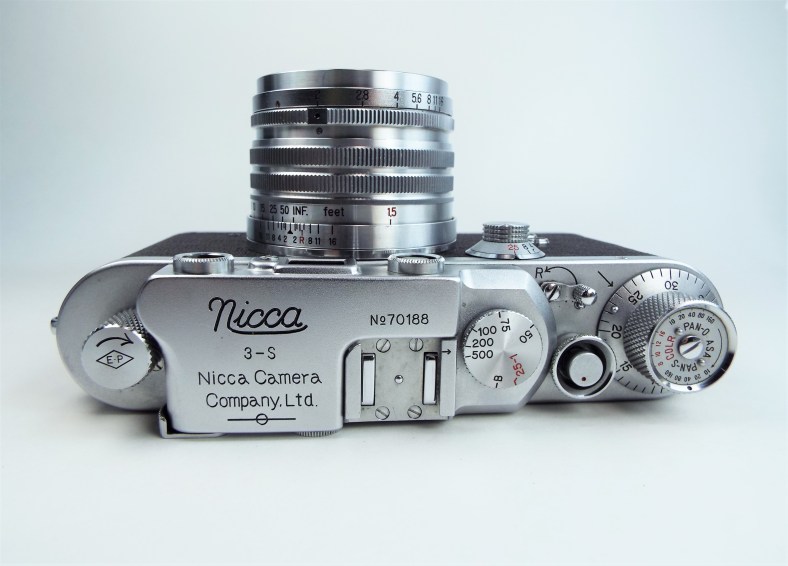
Nicca 3-S… Quality Rangefinder from 1955

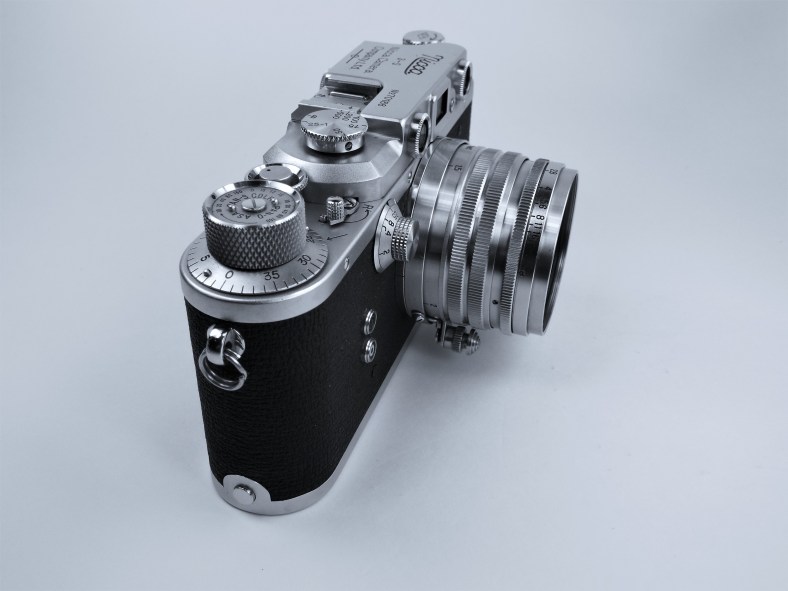
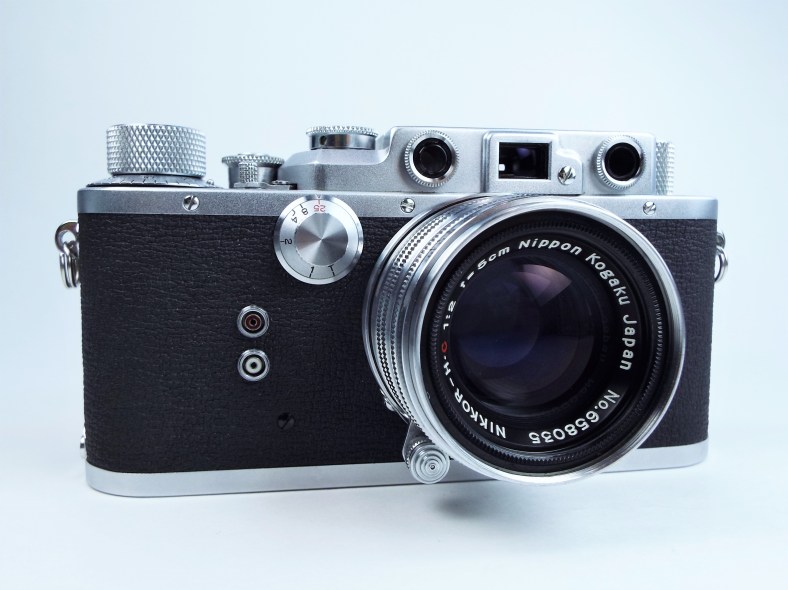
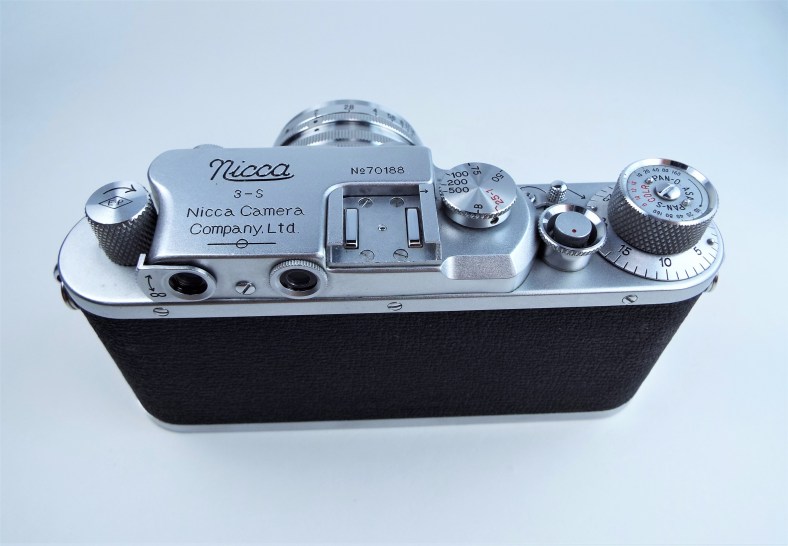
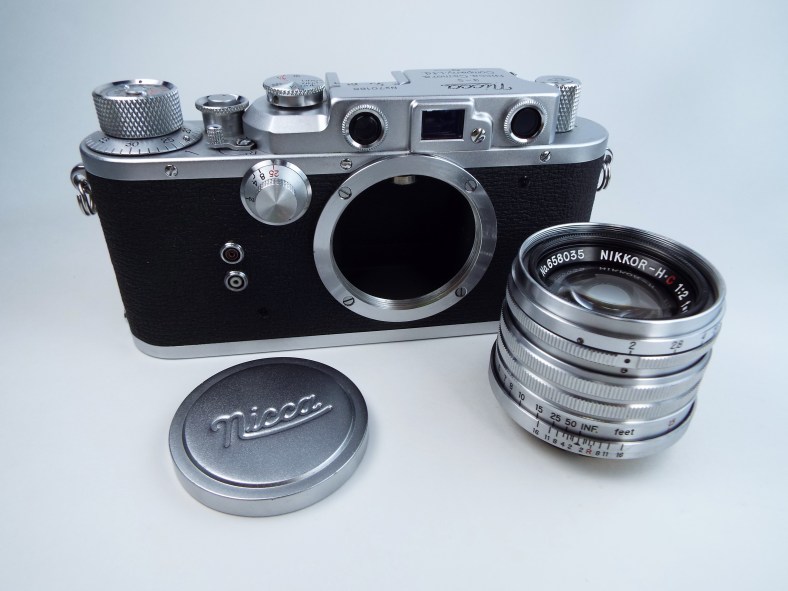
A beautiful example of a mid 1950s 35mm rangefinder camera – made by Nicca Camera Company, Ltd.DSCF5405

Mated with a sharp Nippon Kogaku Nikkor f/ 2, 5cm lens.

DSCF5406

Main shutter speeds of 1/25 to 1/500th of a second.

DSCF5414

Added bonus on this Nicca – marked <E.P> for exempt purchase. Normally marked for purchases made at military facilities and duty free shops.

DSCF5407


DSCF5419

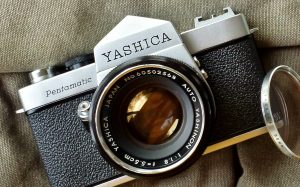
Nicca cameras were considered to be well made cameras during the 1950s. This example is at least 62 years old and the fit and finish is almost flawless. Nicca was acquired by Yashica in 1958 and the merger of the two companies helped Yashica to design and release their first 35mm single lens reflex camera in 1960 – the Yashica Pentamatic.

Studio Camera: Fujifilm FinePix S9900W

Chris
Original Pentamatic Accessories

Some of the original accessories that were available for the new Pentamatic…

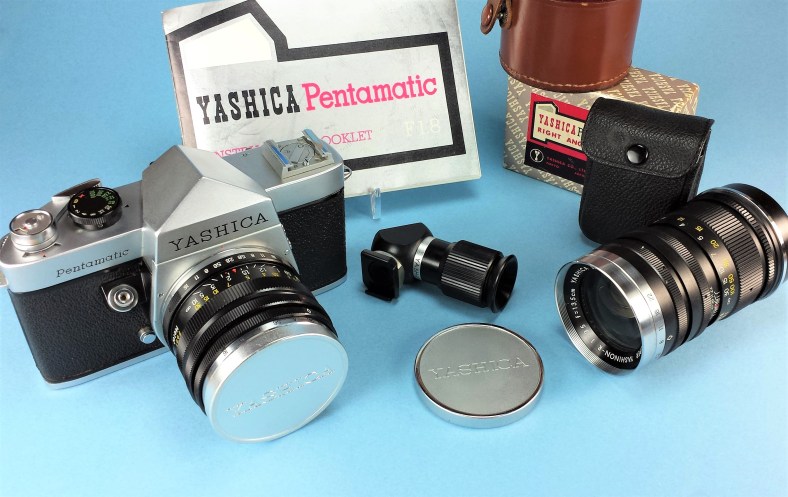
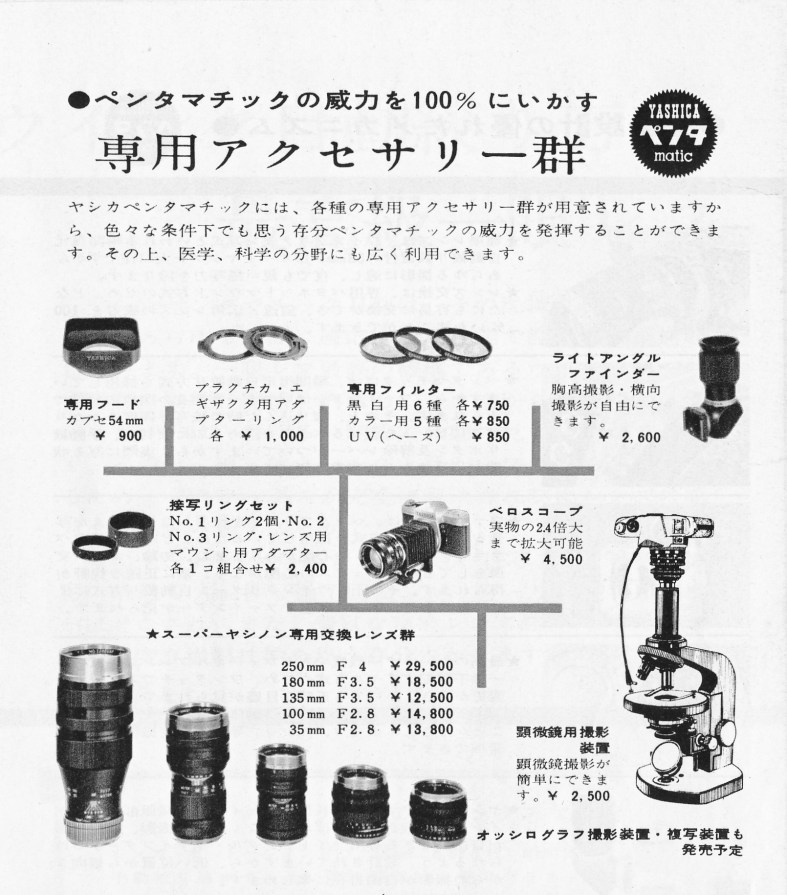
When Yashica’s first single lens reflex (SLR) 35mm camera hit the world markets in the May-June 1960 time period, they were ready with a host of well designed accessories. From simple screw-in filters to extension tubes and the new bayonet mount lenses, Yashica had a nice selection to choose from. Here are just a few examples…

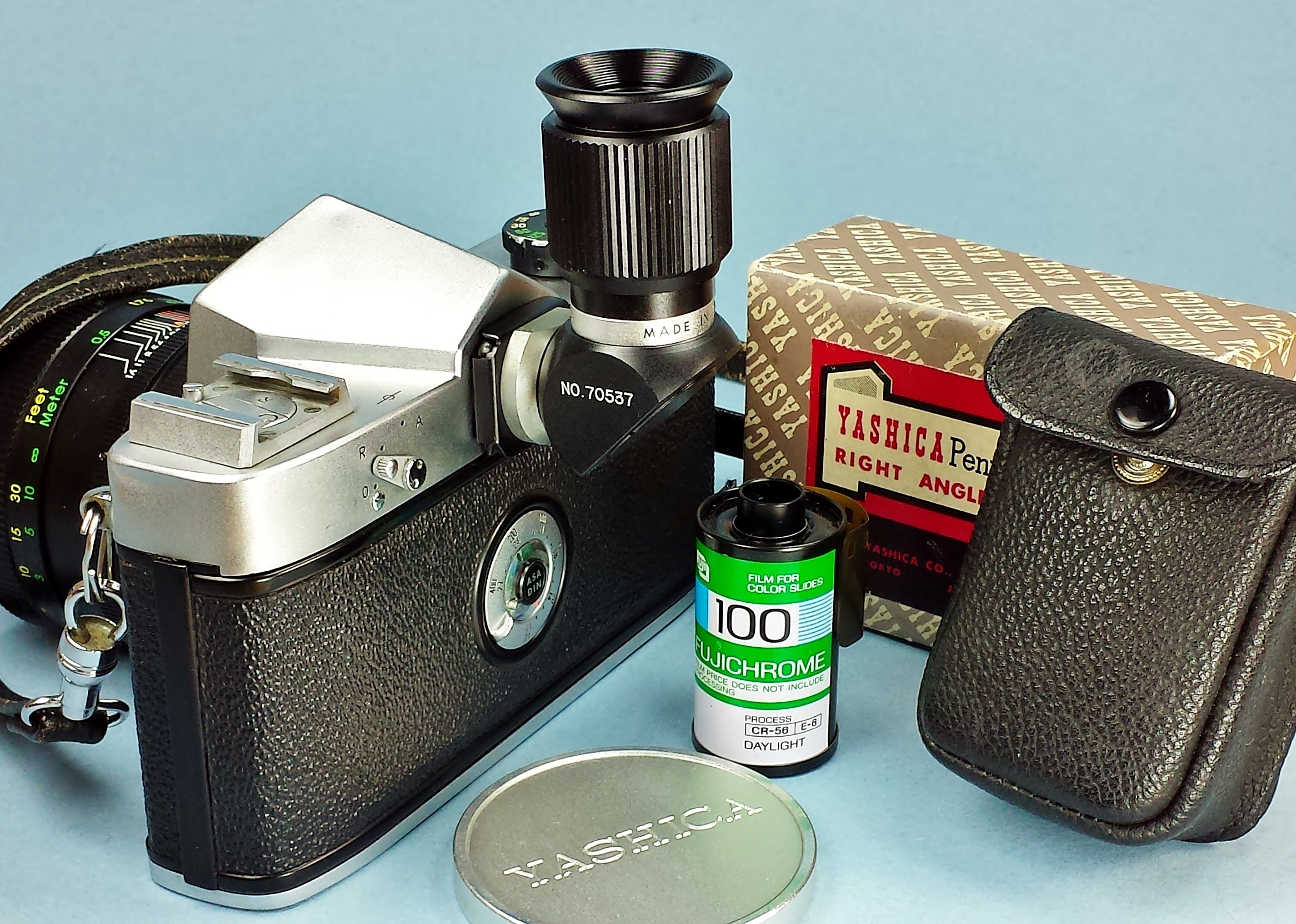
Pentamatic Right Angle Finder for low angle and close-up photography. This simple finder mounted securely to the camera's eyepiece and had adjustments for focus and could be rotated 90 degrees to the left for vertical copy work. The image is reversed so it does require some getting used to. Here it's mounted to my Pentamatic-S.

Pentamatic ‘Right Angle Finder’ for low angle and close-up photography. This simple finder mounted securely to the camera’s eyepiece and had adjustments for focus and could be rotated 90 degrees to the left for vertical copy work. The image is reversed so it does require some getting used to. Here it’s mounted to our Pentamatic-S.

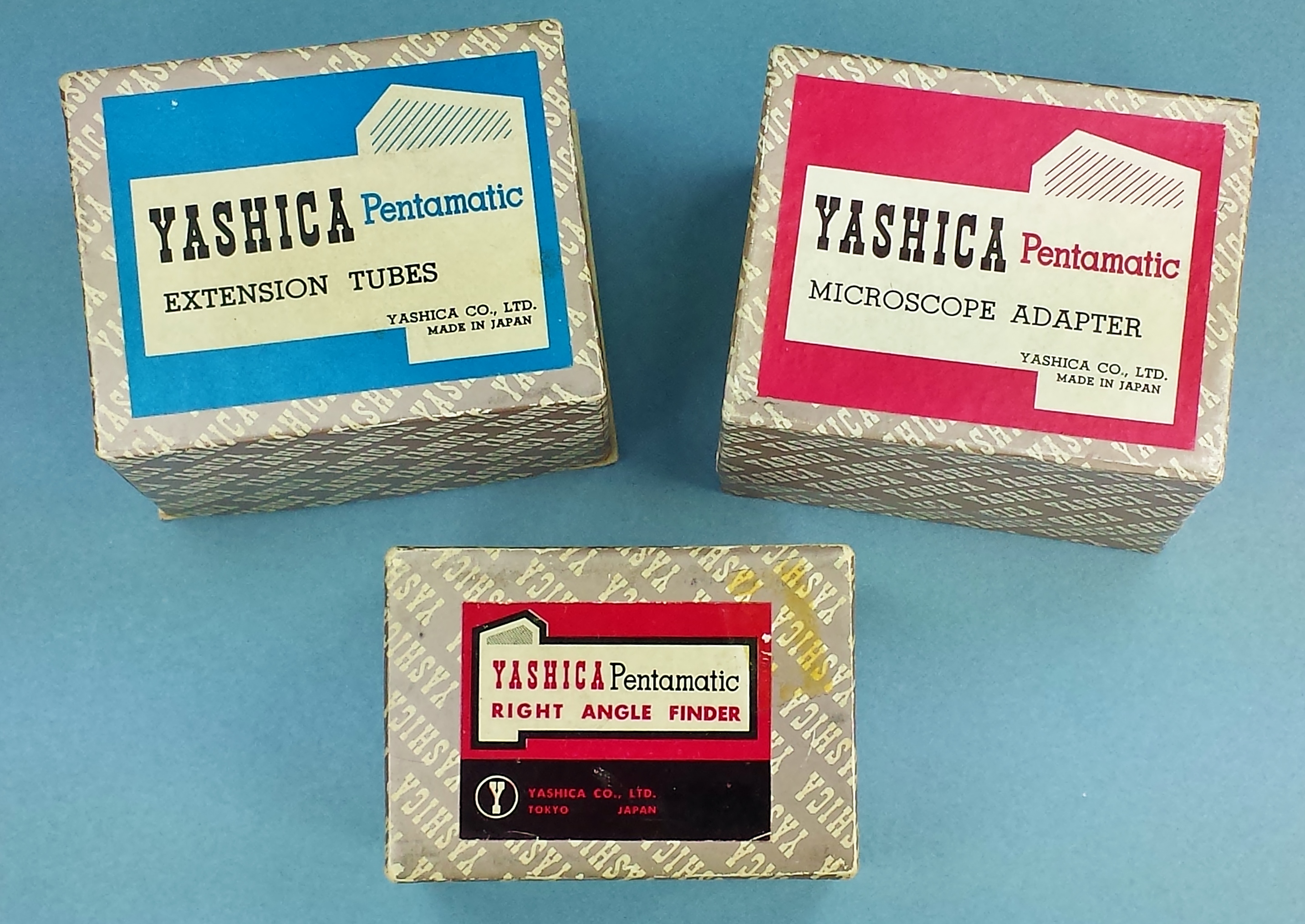
A small collection of boxes gives some idea as to the diversity of the early accessories. Note the general theme of the design... each shows-off the "pentaprism" design of the camera. The right angle finder box appears to be from a slightly later design as it has a different look from the other two.

A small collection of boxes gives some idea as to the diversity of the early accessories. Note the general theme of the design… each shows off the pentaprism design of the camera. The right angle finder box appears to be from a slightly later design as it has a different look from the other two.

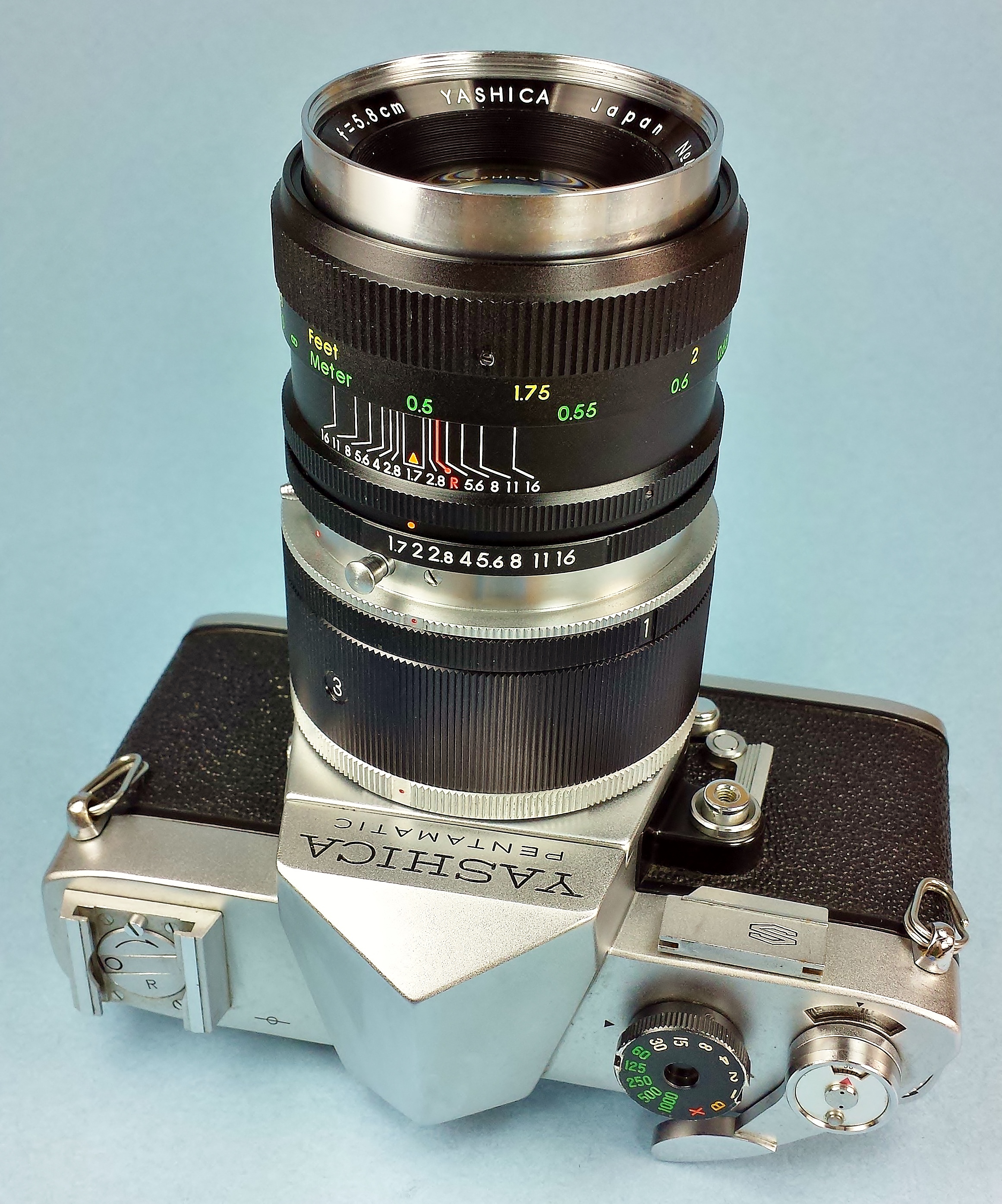
Pentamatic Extension Tubes mounted on my Model-S Pentamatic camera body and Auto-Yashinon 5.8 cm (58 mm) f/1.7 standard lens. The lens is super bright and is super heavy! Camera and lens weigh-in at 2 lbs 5 oz (1056 g)!

Pentamatic ‘Extension Tubes’ mounted on our Model-S Pentamatic camera body and Auto-Yashinon 5.8 cm (58 mm) f/1.7 standard lens. The lens is super bright and is super heavy! Camera and lens weigh-in at 2 lbs 5 oz (1056 g)!

20150108_150847

IMG_20151218_0003

Thanks for stopping by!

Chris

Yashica Pentamatic ’35’ vs. Pentamatic II

Why did Yashica bring out the Pentamatic II less than a year after releasing the original model?

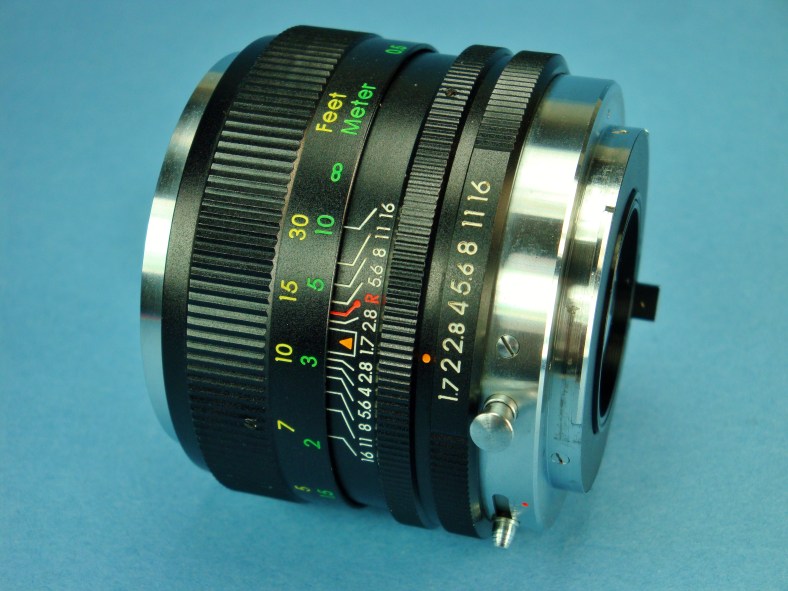
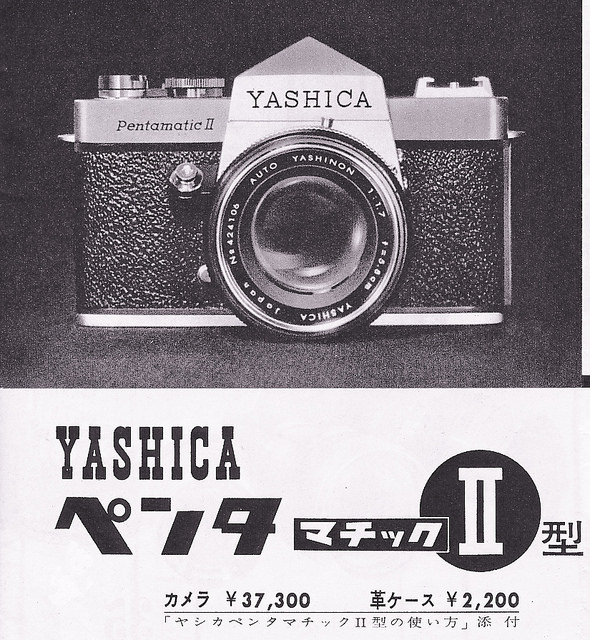
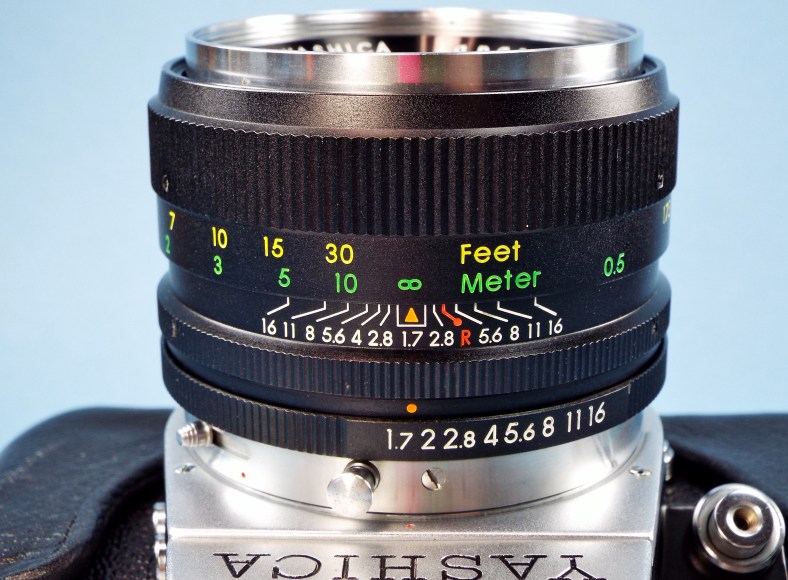
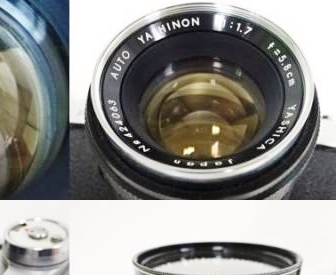
The only difference we can tell between the original Yashica Pentamatic ’35’ and the Pentamatic II (which came out around September 1960), is the standard lens that was mated with the camera body. The original Pentamatic came with the Auto-Yashinon, f/ 1.8, 5.5cm fully automatic 6 element lens. Of course it has the unique Pentamatic bayonet mount and not the M42 screw mount. The Pentamatic II came with the Auto-Yashinon, f/ 1.7, 5.8cm lens (pictured below). Both lenses were made for Yashica by Tomioka Optical of Tokyo. We imagine the 58mm, f/ 1.7 lens was a bit faster than the f/ 1.8… but we don’t see why Yashica changed from the model I to the model II and why they changed the lens… we may never discover the reason either.

DSC07467

The standard lens for the Pentamatic II – 5.8cm, f/ 1.7

27356135700_b0c5ef23fe_z

017

Gorgeous lens for the Pentamatic II.

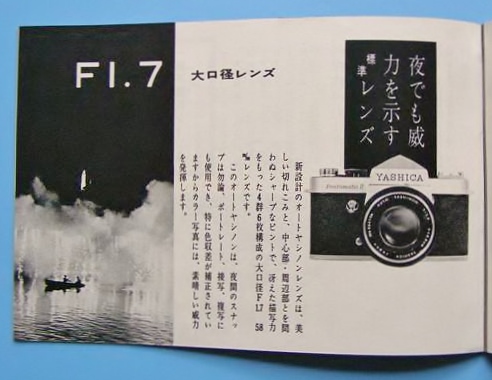
Brochure c1961

The first sighting of the Pentamatic II in a sales brochure for the Japanese home market.

We’ve yet to find an advertisement for the Pentamatic II in English and along those same lines, have yet to find the Pentamatic II in a sales brochure in English. The Pentamatic S replaced the model II less than a year after its release. The model S went back to using the original 5.5cm, f/ 1.8 lens that was on the original Pentamatic.

That makes the Auto-Yashinon 5.8cm, f/ 1.7 lenses one of the rarest of the early Pentamatic bayonet mount lenses.

06-12-2016 pentamatic II 2 (2)

Happy hunting!

Chris

Pentamatic vs. Pentamatic S – Yashica’s Heavyweights

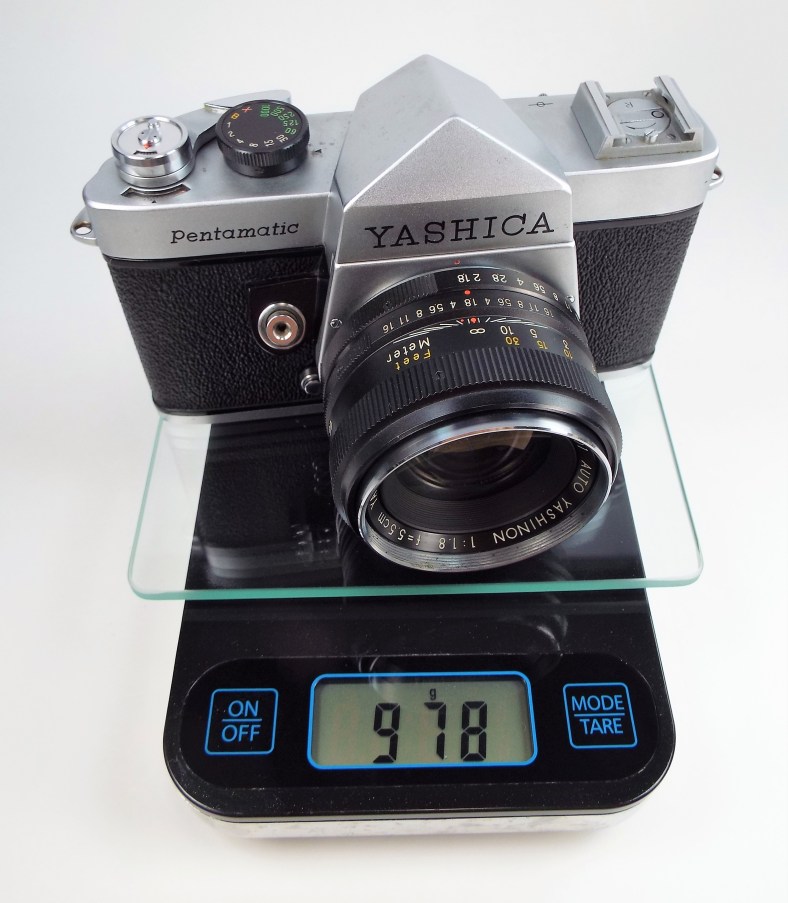
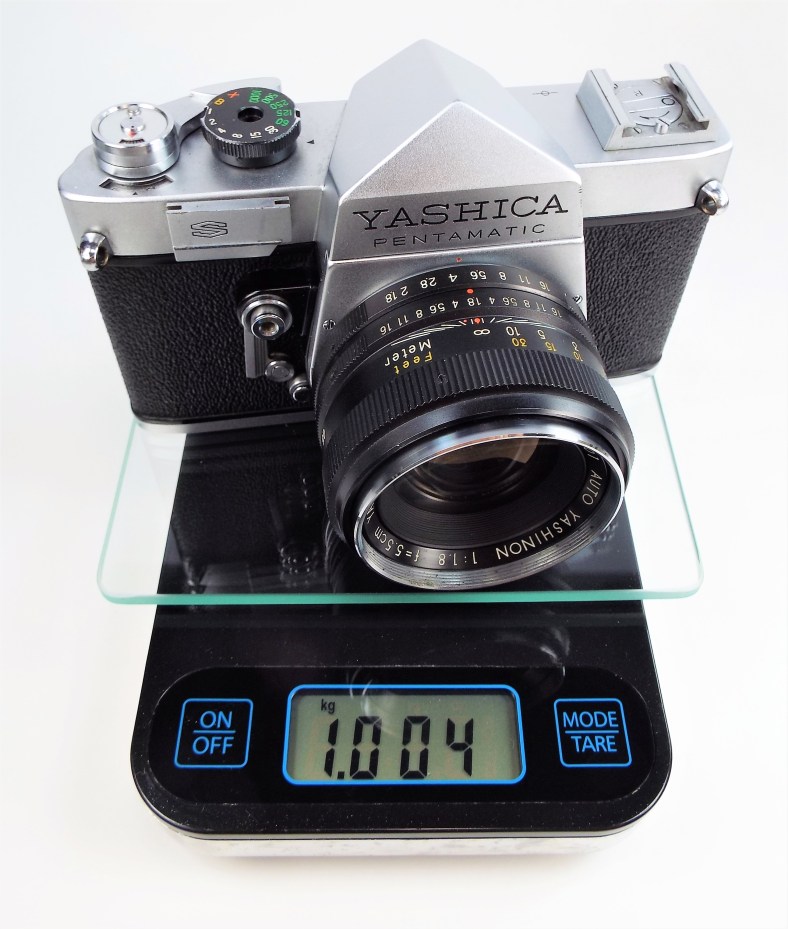
The Pentamatic was Yashica’s first single-lens reflex (SLR) and was released in 1960 (May-June) timeframe. The Pentamatic S was released about mid to late 1961. Not much changed between the two – the S model added a built-in self-timer and most notably, a provision for mounting an exposure meter to the top right of the camera that coupled with the shutter speed dial. Other small changes were to add lugs for holding the neck strap (moving them from the extreme right and left sides of the body on the Pentamatic to a more typical front mounting on the S). Unseen from the exterior is a change to the focusing screen inside the pentaprism. The original fresnel screen in the Pentamatic was replaced with a split image screen in the model S. For me, that change makes the Pentamatic S much easier to focus and improves the brightness inside the viewfinder.

A look at both models shows these changes and the tiny bit of extra weight that the S carries over the original Pentamatic.

DSCF5402

At 978 grams, the original Pentamatic is anything but a lightweight. (2.16 lbs)

DSCF5403

At 1,004 grams, the S shows the slight weight increase from the changes made between the two models. (2.21 lbs)

Both cameras are photographed with the same lens attached – Auto Yashinon 5.5cm f1.8 lens which was the standard lens that came with both models. Only the Pentamatic II (released in September 1960) came with a different lens. (5.8cm f1.7)

Compared to other SLRs from the same time period, the Pentamatic was a bit of a beast to tote around. The buying public never embraced these wonderful cameras and they ended their production run in less than 2 years.

Finding good looking (and still working) Pentamatics is a challenge for any collector with the Pentamatic II being especially difficult to find in any condition.

Of note, if you have an Asahi Pentax, Nikon F or Canoflex camera with the standard lenses from the late 1950s or early 1960s, we would love for you to let us know what their combined weight is. We could be way off in our assumption that the Pentamatic was significantly heavier than the other cameras of that era. Thanks!

Studio Camera: Fujifilm FinePix S9900W

Chris
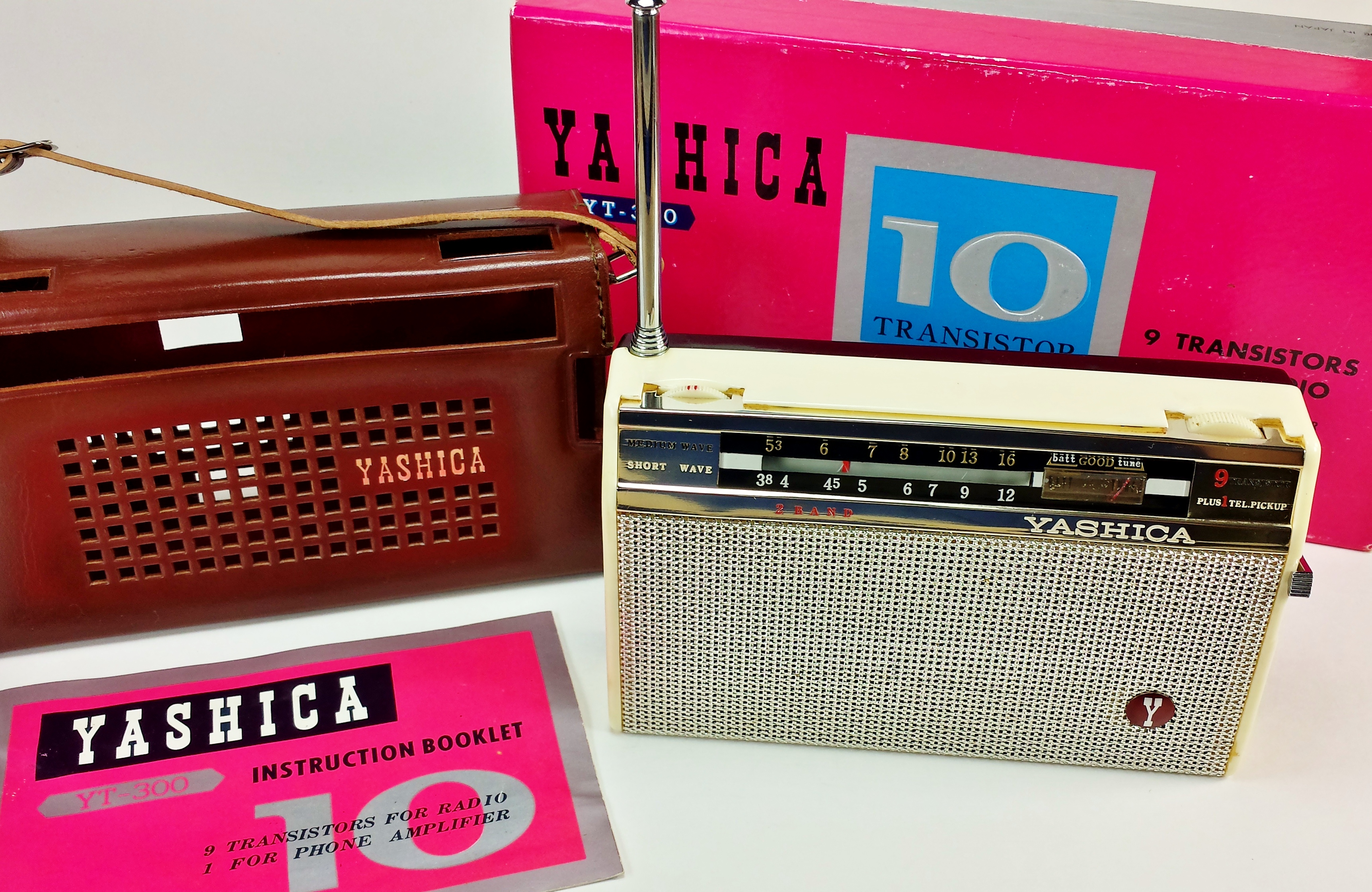
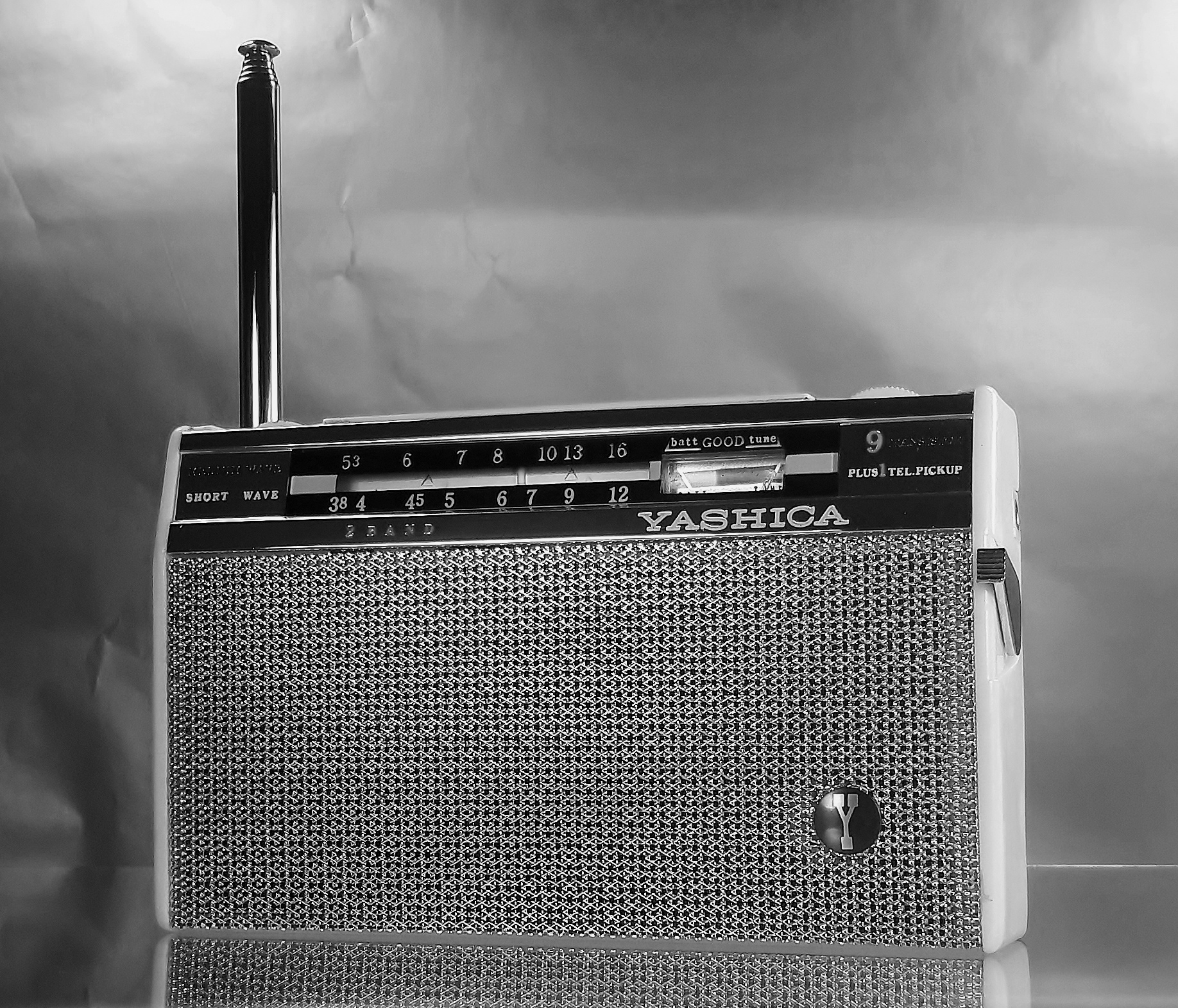
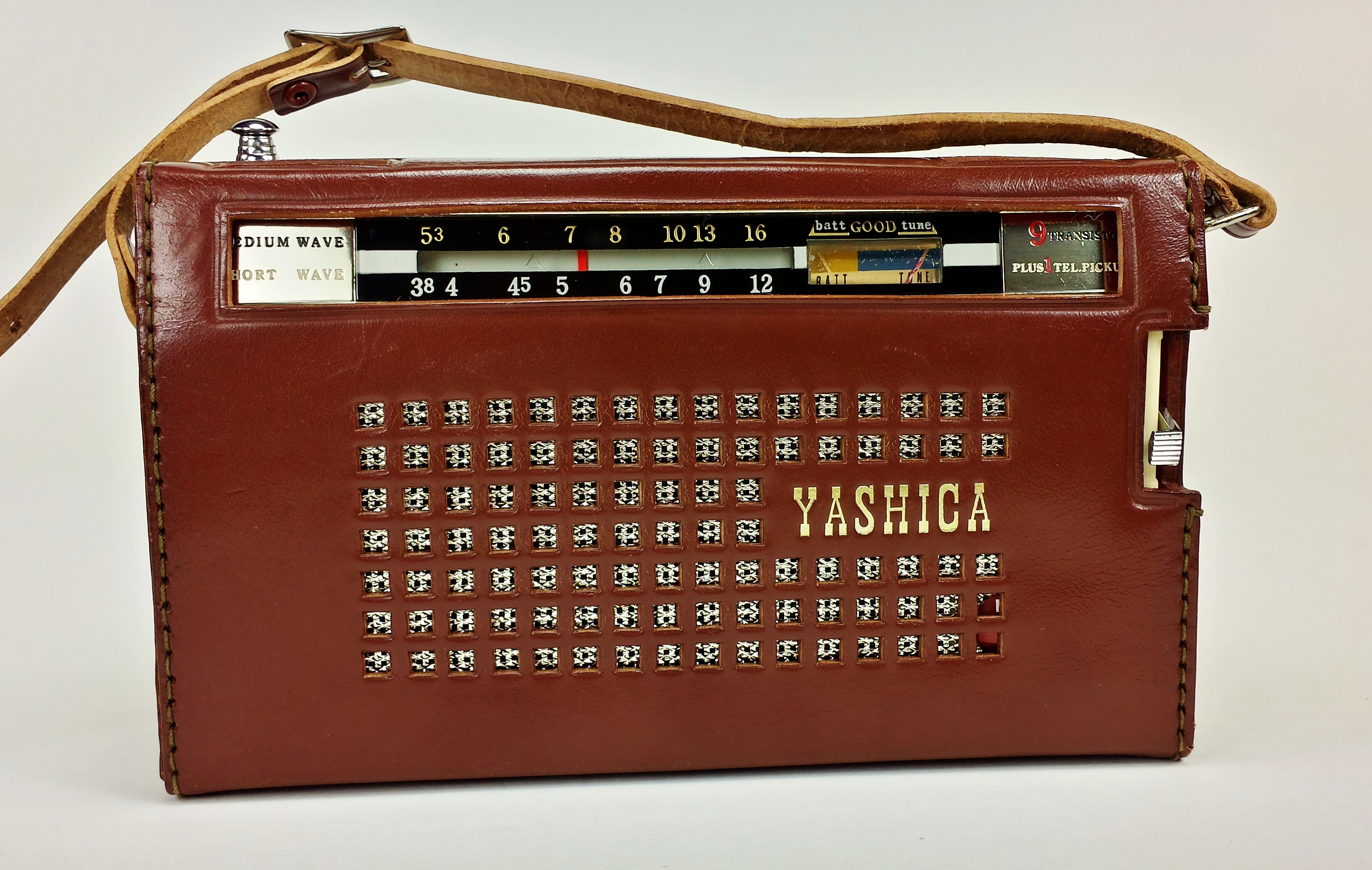
Yashica’s YT-300 Transistor Radio – 1960

Yashica produced more than just cameras during its boom years. As a leader in the field of electronic photography in the middle to late 1960s, Yashica’s early electronic devices ranged from such diverse items as transistor radios, record players, movie projectors, calculators, editing equipment and tape recorders to name but a few.

Most of the earliest electronic devices are rather rare now (as one would expect after 50 years) and only occasionally does something come up in auctions both on the web and in estate sales. I suspect that the more common electrical items such as projectors and editing equipment are still flooding eBay and other on-line auction sites.

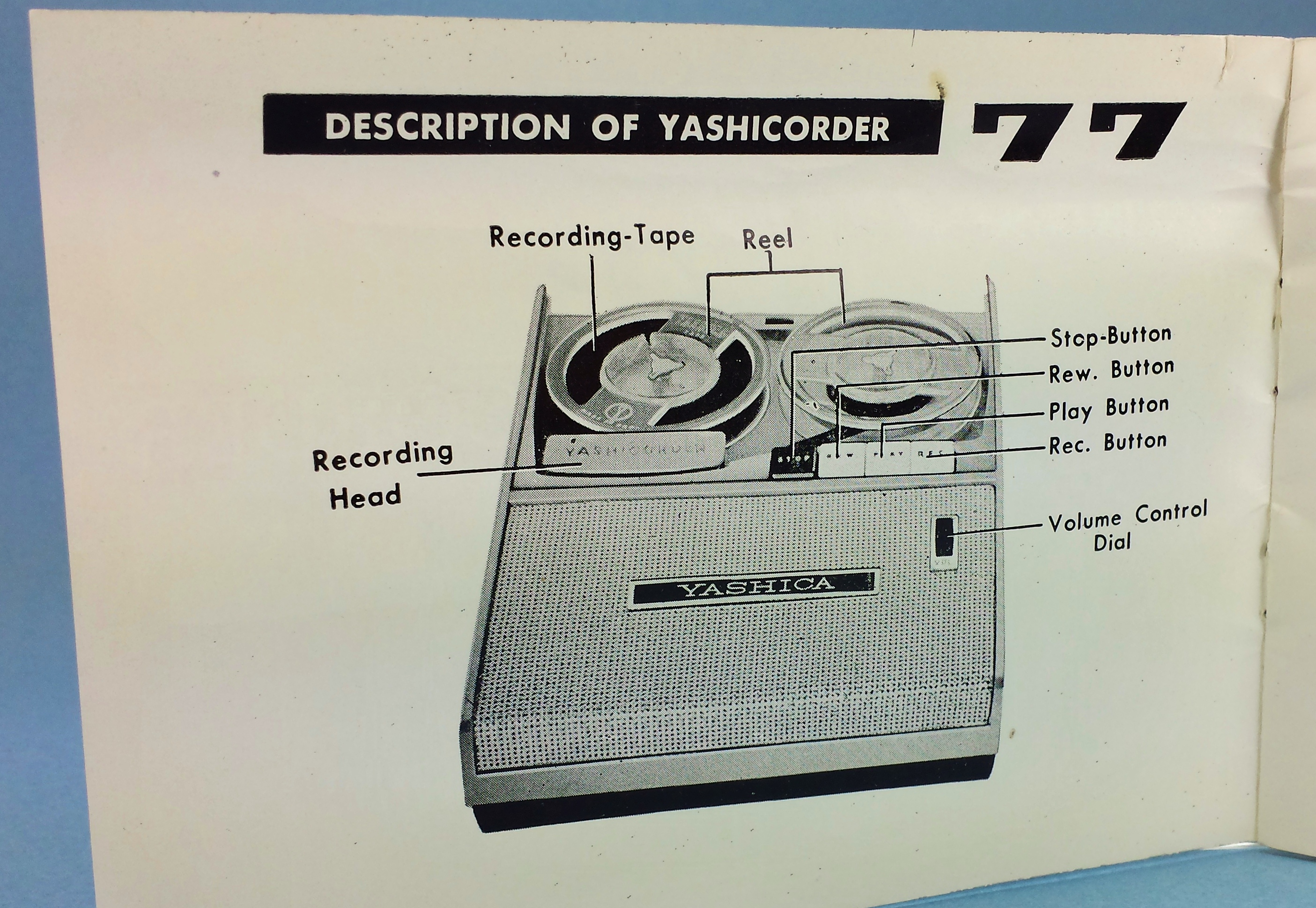
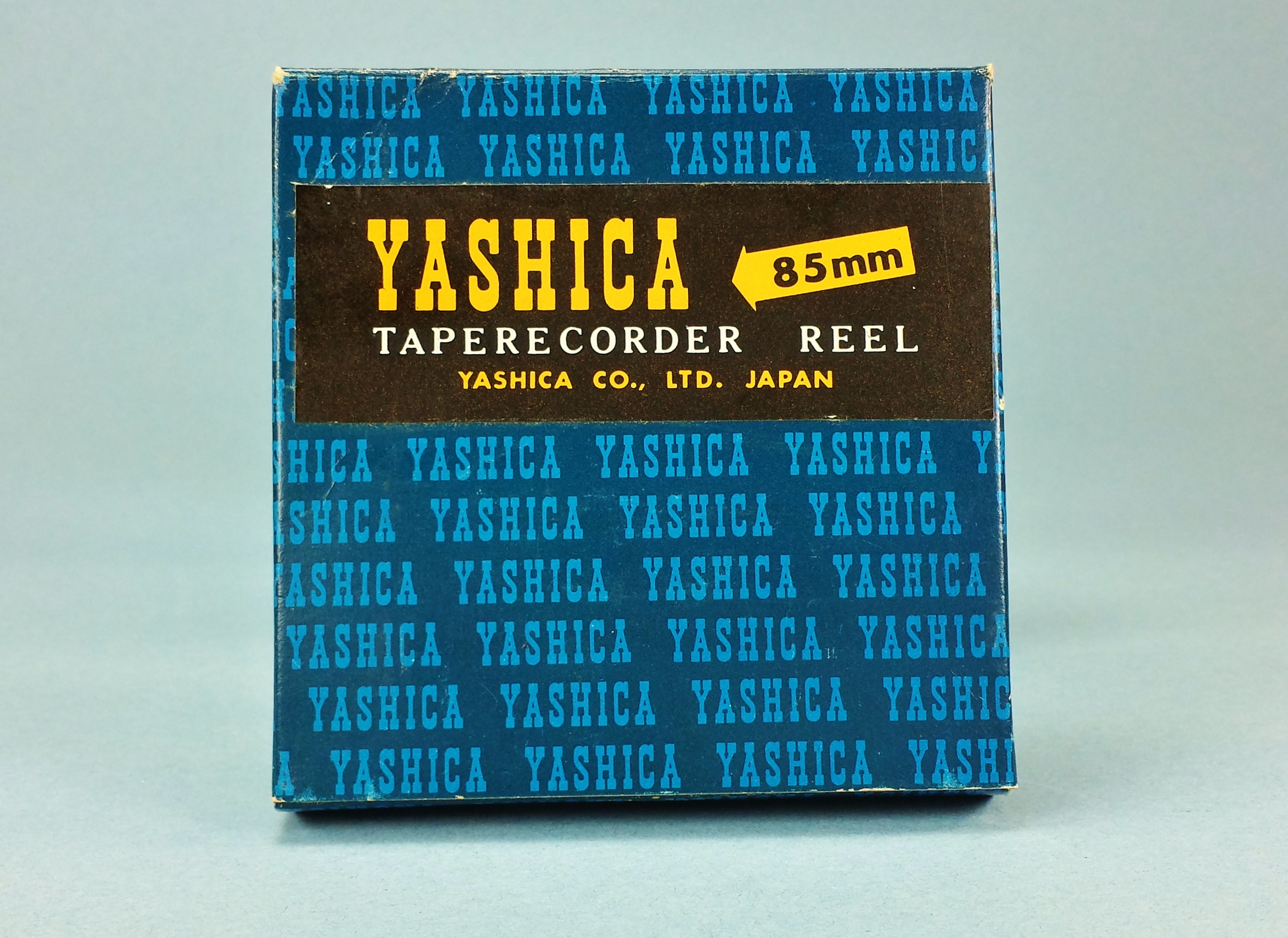
Finding early radios such as the YT-300 and YT-100 is quite difficult. Here we share some of what we’ve been able to collect over the years.

20150716_203028_Richtone(HDR)

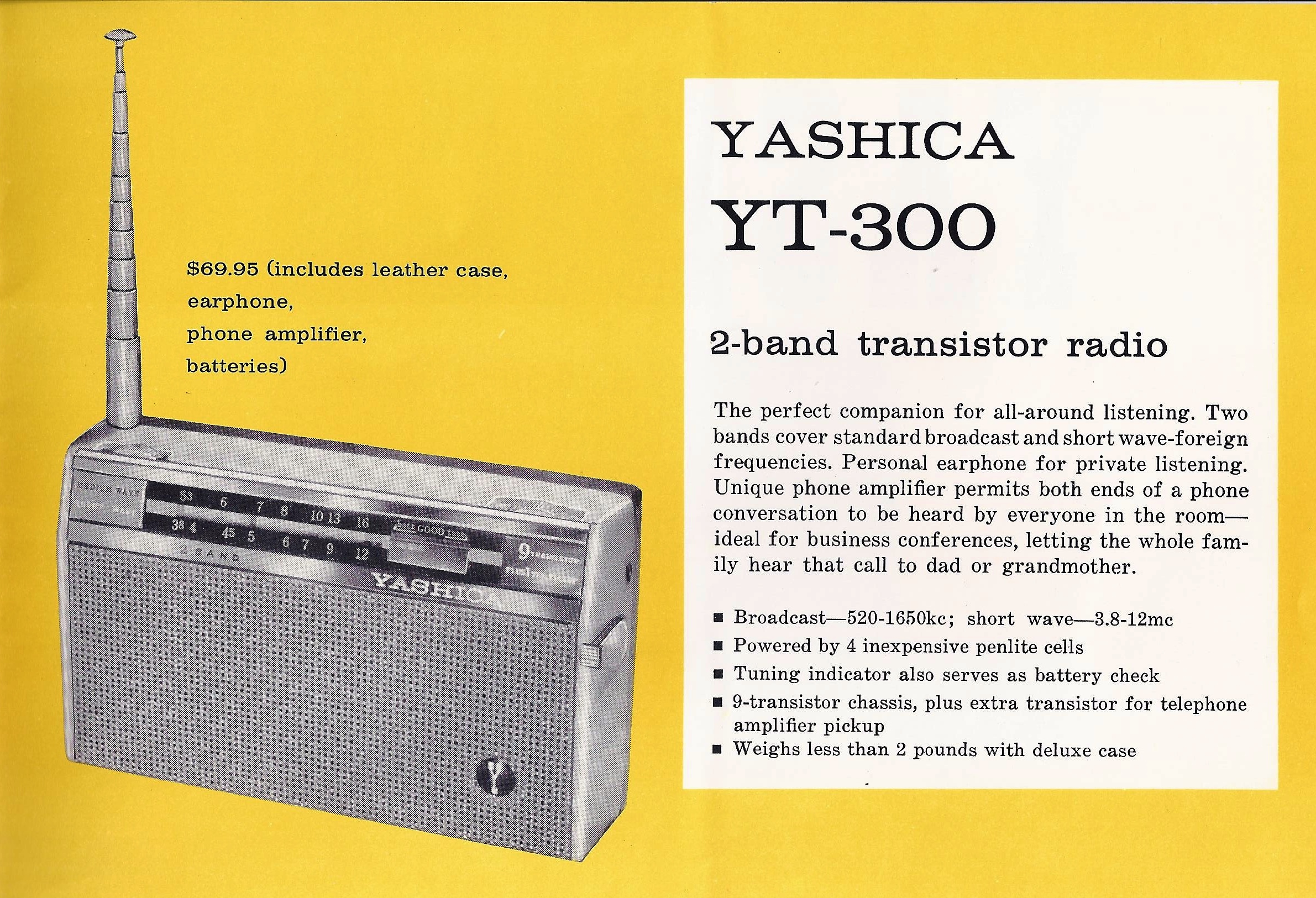
Yashica YT-300 Radio Brochure

20150726_120249_Richtone(HDR)

20150726_115718_Richtone(HDR)

20160113_213553

20150717_152009_Richtone(HDR)

Thanks for your visit! If you come across a working Yashica radio or tape recorder snag it! They’re really rare and a fun little reminder of the first transistor radios and how cool they were.

Studio Camera: Samsung Galaxy S4

Chris
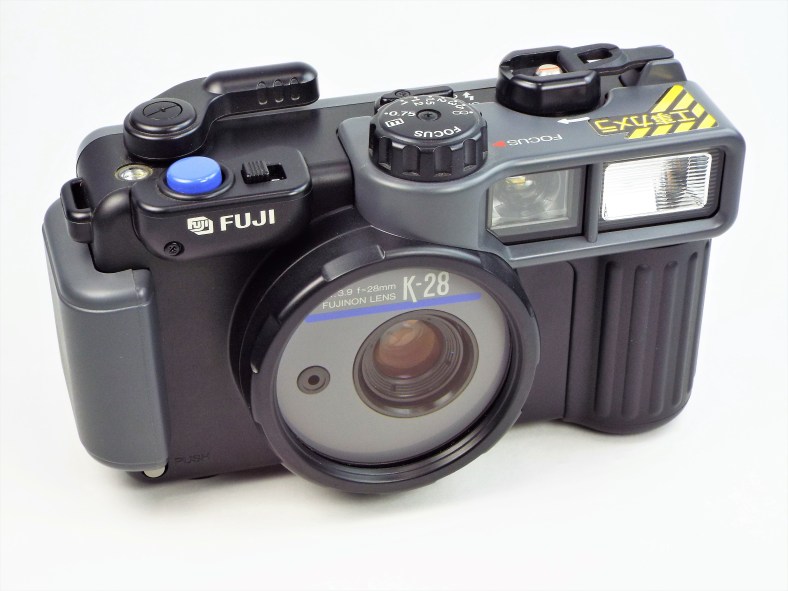
Fun with Fuji’s K-28 “Construction Camera”

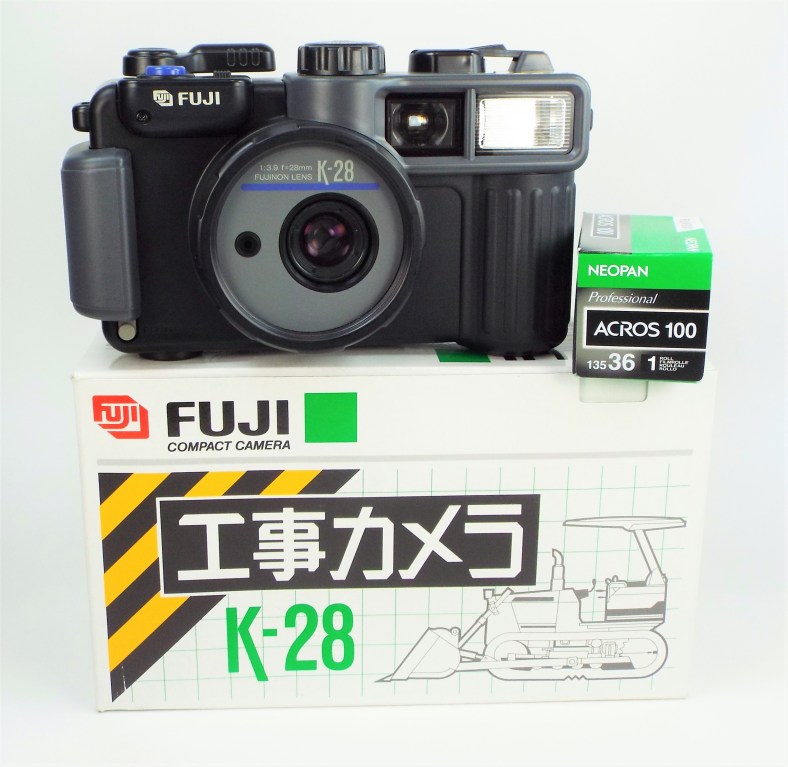
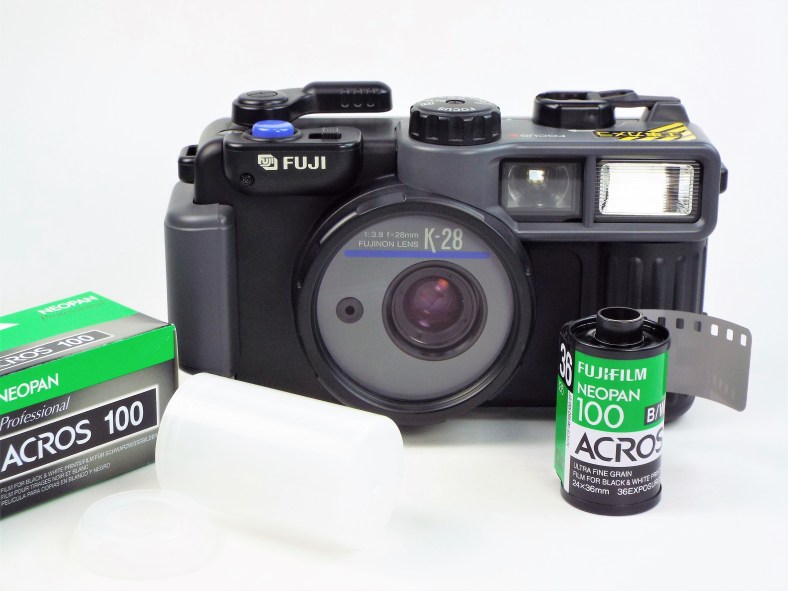
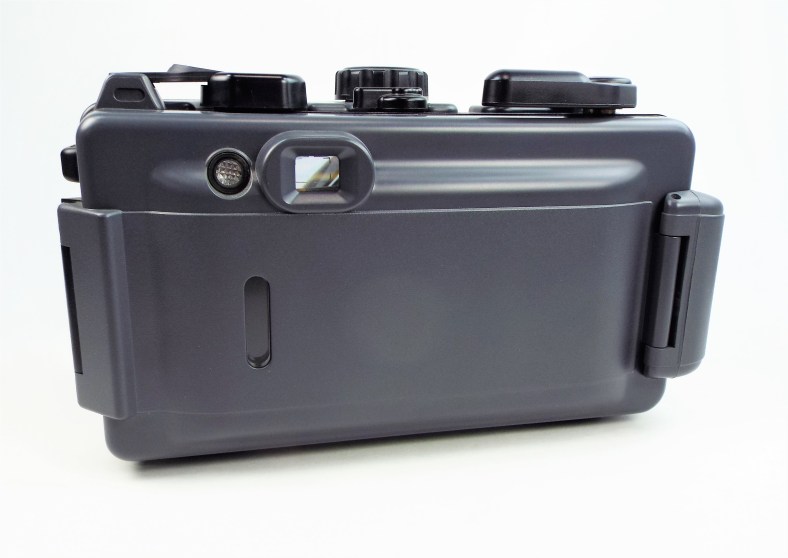
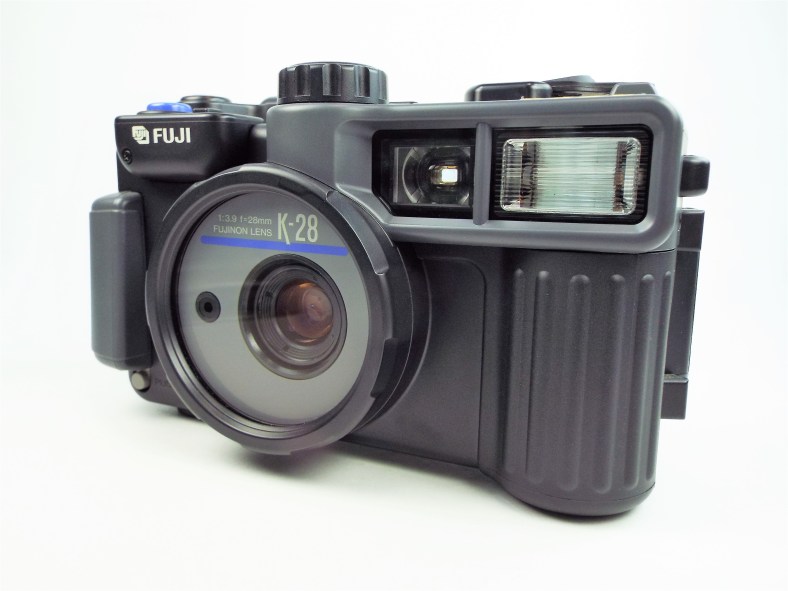
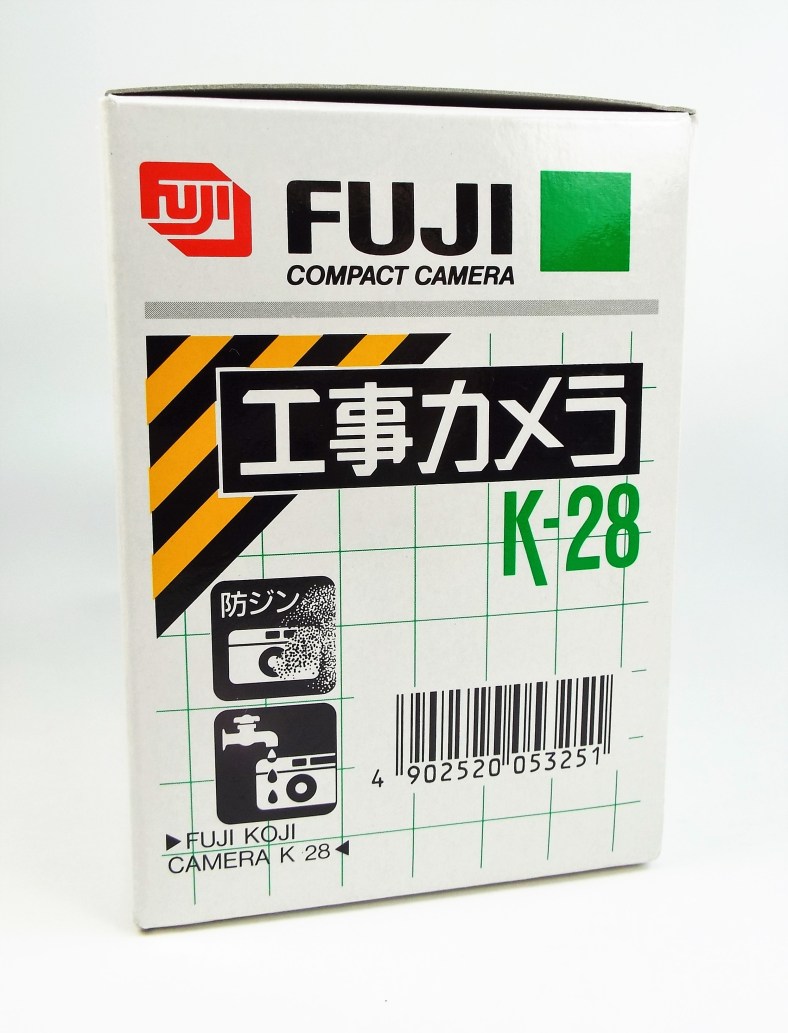
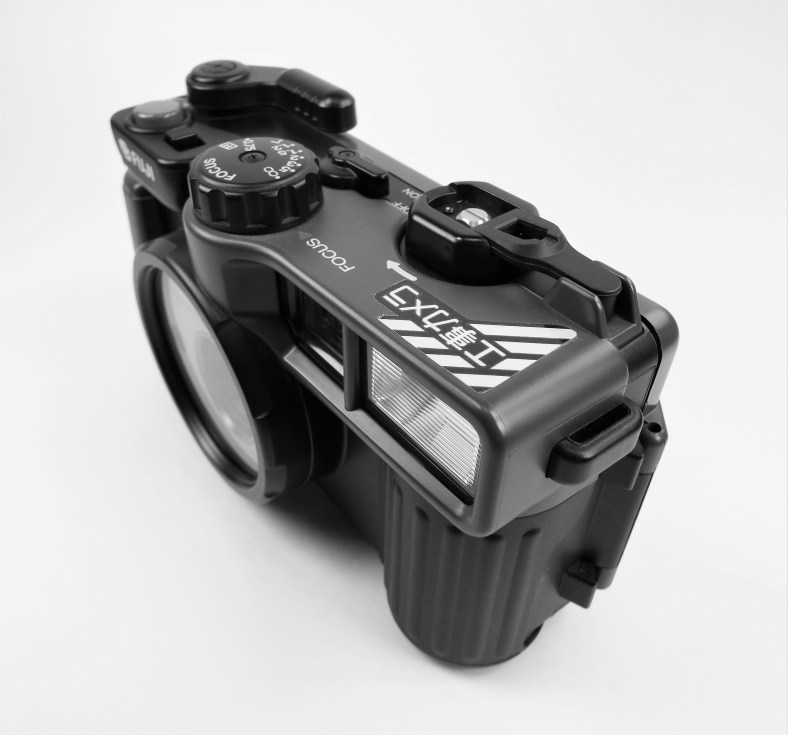
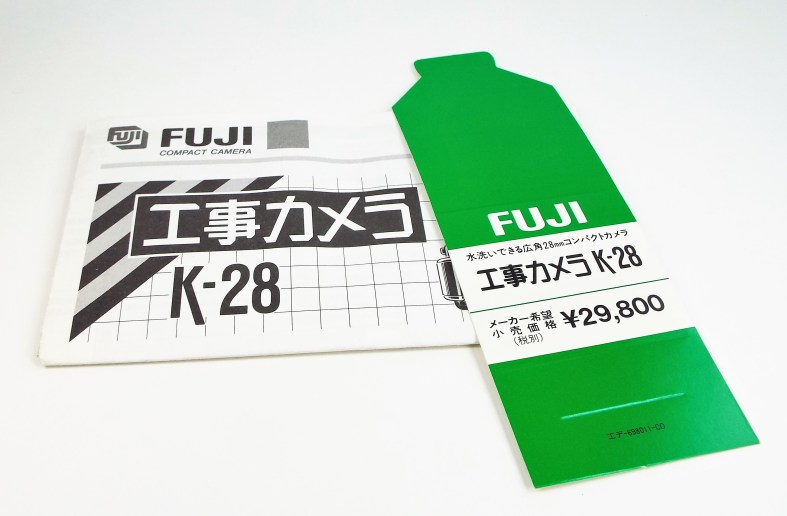
Here’s a camera you don’t see often – maybe never – Fuji Photo Film Japan’s Fuji K-28. A waterproof and dust/dirtproof 35mm compact camera. Designed for rugged use like on a jobsite or in the rain. All of the controls are sealed against the elements via tight fitting rubber gaskets and secure latching systems.

The camera gets its power from 2 AA LR6 alkaline manganese batteries. Here’s an interesting note from Fujifilm Japan: 

Apologies and Requests
Fujifilm “Construction Camera” For Customers

By the way, when the capacity of the batteries is not complete (for example, when new alkaline batteries are used with used alkaline batteries) in part of “construction camera” we sell at this time. It is extremely rare that hydrogen gas is sometimes released from the battery, the gas mixes with the air inside the camera, and it turned out that there was a possibility that the back cover of the camera could come off with a sound when using the strobe . December 8, 2000 – We would like to thank our customers for their continued patronage and appreciate their continued patronage.
Fuji Photo Film Co., Ltd

DSCF5375

Besides being a way cool looking camera, this Fuji is more than capable where it counts. A sealed Fujinon f3.9 28mm lens with adjustable focusing and auto exposure with a set 1/100th of a second shutter. ISO auto set for film rated from ISO 100-400.

DSCF5371

DSCF5373

The Fujinon lens has 5 elements in 5 groups – closest focusing is 0.75m and the front glass is 4mm thick. The camera weighs in at 423g  and 467g with batteries.

DSCF5376

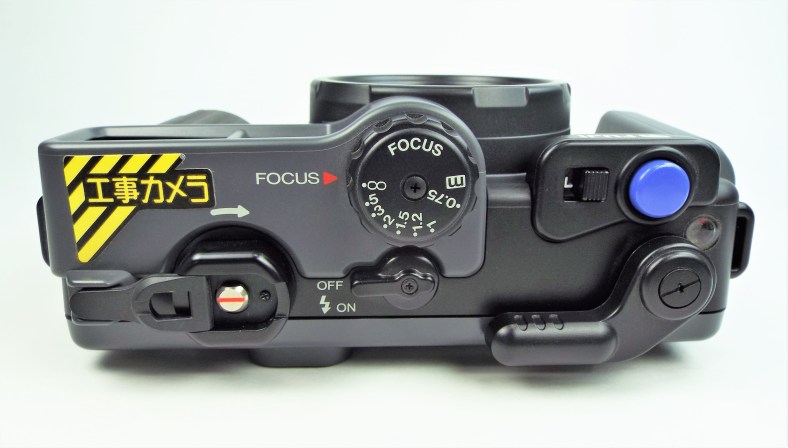
The focus scale is only in meters. The flash must be turned on via the well marked lever (center), film advance is manual by the lever on the camera’s right side and the shutter can be locked to prevent accidental exposures. The film rewind lever (left) gets tucked away to prevent damage and to help seal the top of the camera.

DSCF5377

DSCF5379

DSCF5391

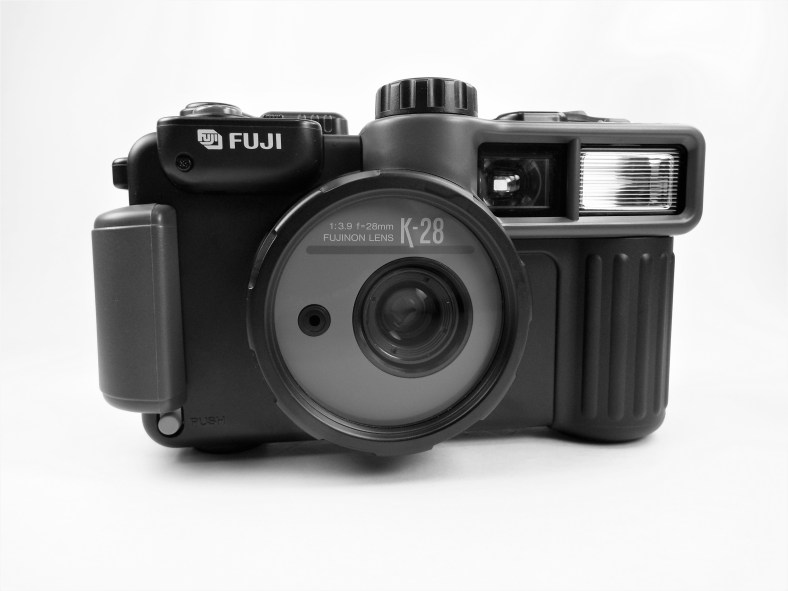
Looks great in B&W!

DSCF5389

Nice lines.

DSCF5385

DSCF5386

DSCF5388

When the K-28 was released in June of 1991, the yen to dollar exchange rate was 138 JPY to the USD. So it listed for around $215 but was not for sale outside of Japan.

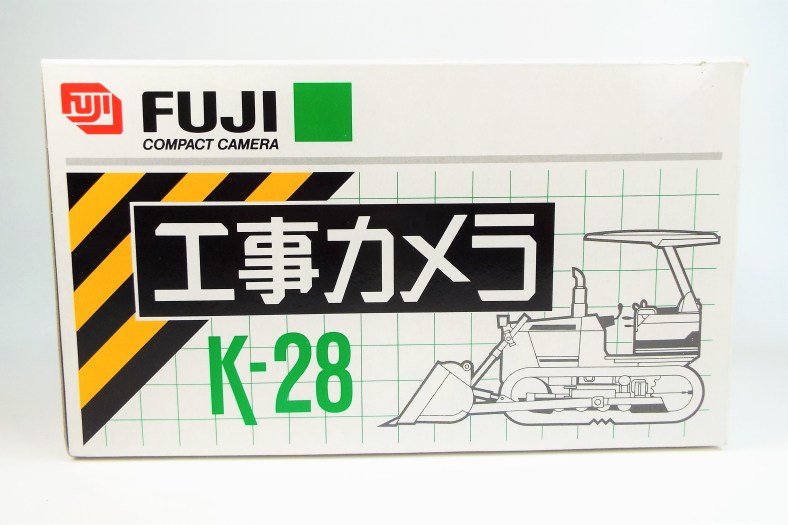
The K-28 certainly will hold a spot in our Fuji collection as it is basically brand new and in mint condition. The box, although a silly thing, is important to our collection as we like to collect camera sets as complete as possible. Besides, who wouldn’t want a bulldozer on their camera box!

If you find something incorrect in our post, please feel free to let us know what it is and we’ll gladly correct it.

Thanks for stopping by!

Studio Camera: Fujifilm FinePix S9900W

Chris