Yashima-Yashica Rookie

014

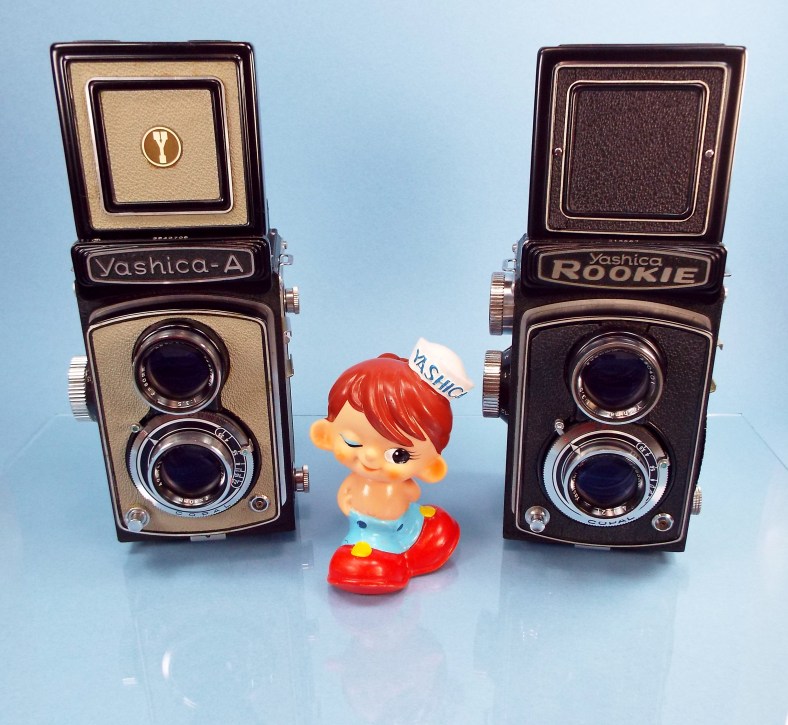
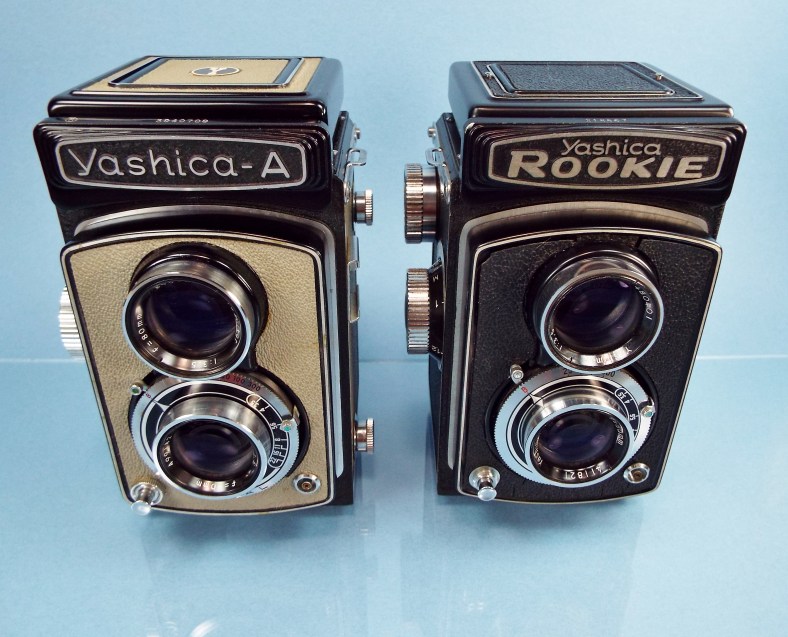
Yashica-A in gray leatherette on left from 1959. The Yashica Rookie (on right) was a Japanese domestic market only model introduced in early 1956. In Japanese brochures and on the outer shipping box, the Rookie is also known as the Yashicaflex Rookie or simply the Yashicaflex Model R.

022

The Yashica A and the Rookie share many of the same features and specs. The Copal shutters were the same and the Tomioka Optical made lenses were also the same in the beginning. Later models of the A (including this one) upgraded to a slightly different lens configuration.

005

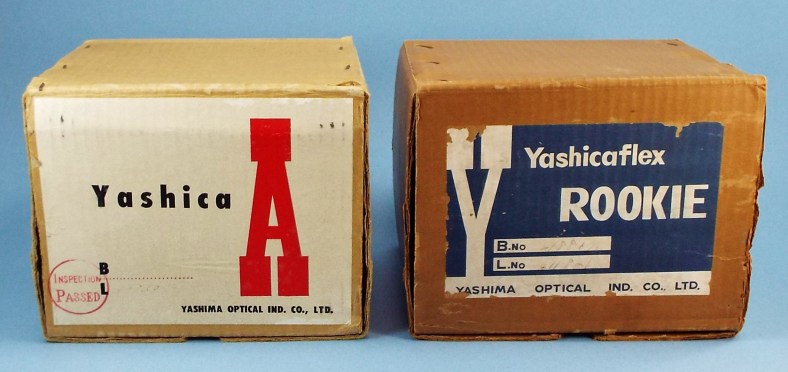
These outer shipping boxes are roughly from the same period. The Rookie is from mid 1956 while the A box is from early 1957 (or so). There are slight differences in the two boxes… the Rookie box is bigger but weighs less than the A box.

Yashica Pentamatic Lenses – Update 8.27.2017

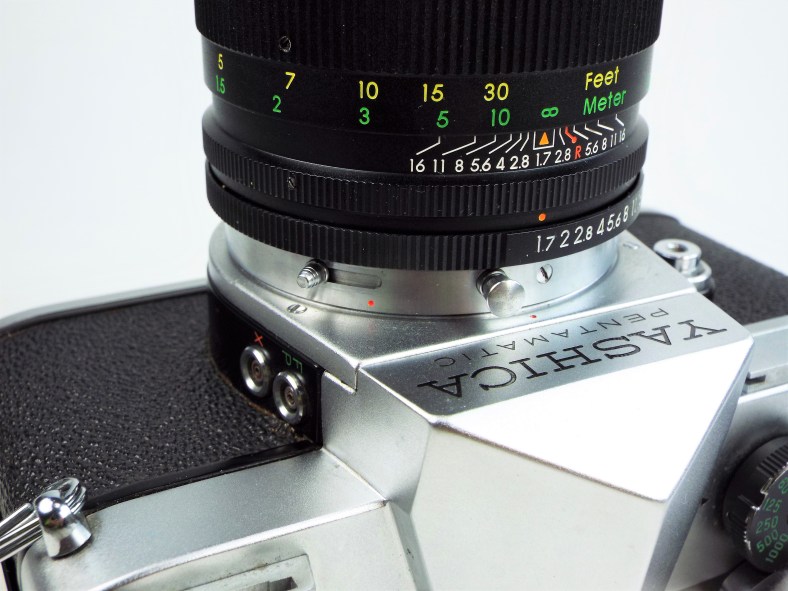
As Yashica was designing their first 35mm single-lens reflex camera during the Summer of 1959 (with help more than likely from the newly acquired Nicca Company) they faced another challenge… since it was decided to use an exclusive lens mounting system (Pentamatic bayonet mount) and not go with the more common M42 screw-in mount, they put Tomioka Optical Company in a bit of a spot.

Tomioka was their exclusive lens supplier through the 1950s but Tomioka also supplied a wide variety of lenses to other manufacturers as well. That meant that Tomioka would have to start building a new lens series with an exclusive mount very quickly in order to have enough lenses available to meet the demands of a new camera hitting the marketplace by the Spring of 1960.

Here is but a small collection of Pentamatic lenses that were available in the early 1960 time period.
020

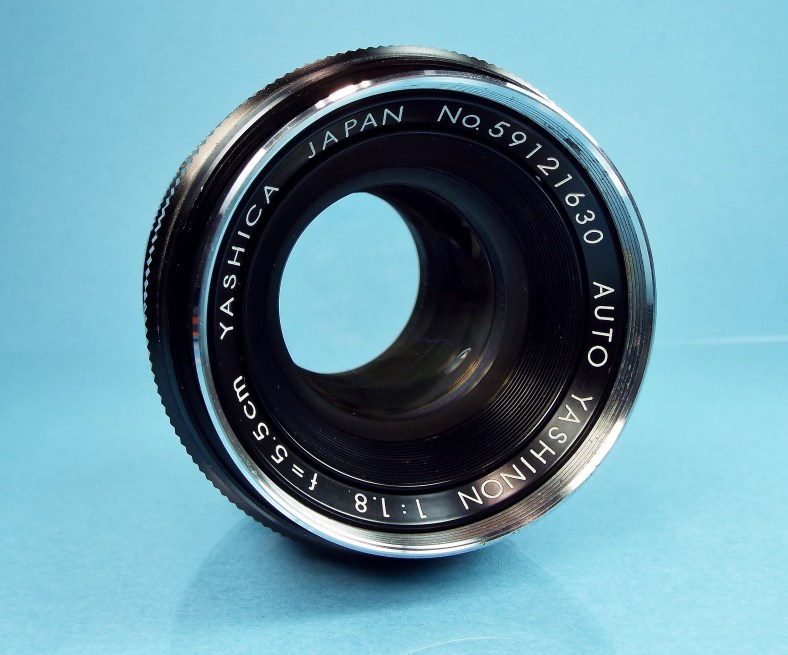
One of the earliest examples in our collection of the standard lens supplied with the Pentamatic ’35’ starting in 1959. We interpret the serial number to read: 1959, December and the 1,630th lens made by Tomioka.
017

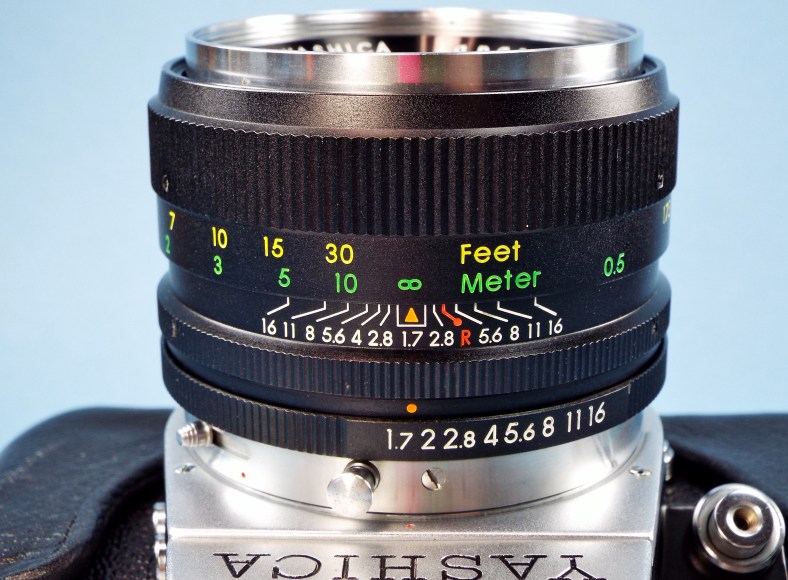
This lens is the standard lens for the Pentamatic II which came out in August 1960 (Yashica was still building and selling the Pentamatic I at that time. It was a rather odd lens to use as the normal focal length… 5.8cm (58mm) but with a slightly faster f/ 1.7 aperture.
018

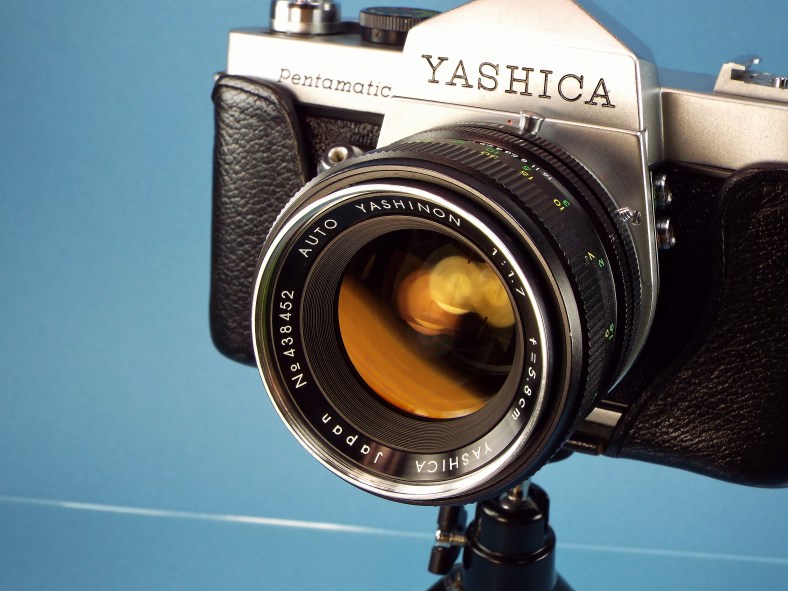
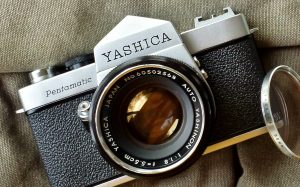
Front view of the standard lens for the Pentamatic II. It is a very beautiful lens and it does provide a bright clear view wide open. Here it’s mounted on the Pentamatic I.
011

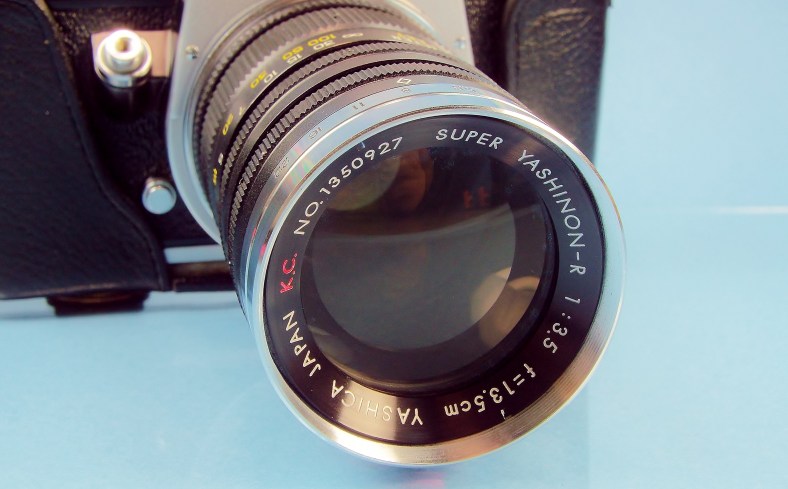
One of the earliest medium telephoto lenses for the Pentamatic. We don’t know what the ‘K.C.’ stands for… our guess would be that it applies to the coating on the surface of the lens. The serial number decodes to 135mm and the 927th made in the production run. We feel that this lens was made in 1959.
005

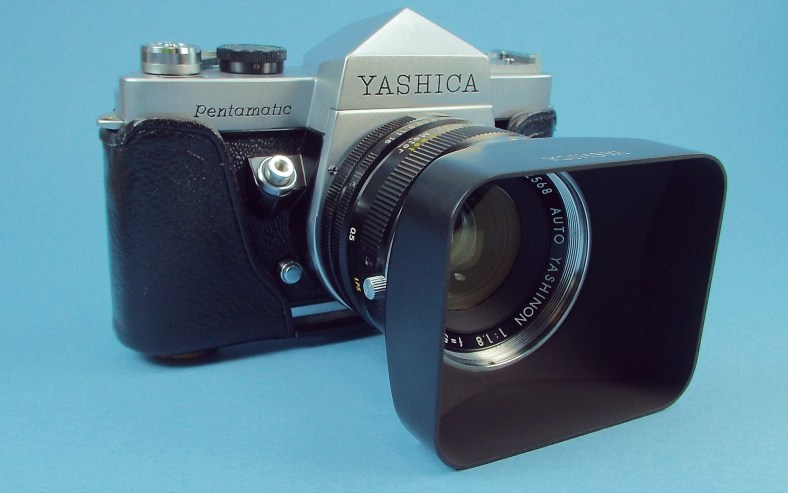
Original lens shade (as Yashica calls them) from the early days of production. The lens is the standard f/ 1.8 5.5cm lens for the Pentamatic I and S. From about mid year 1960.
003

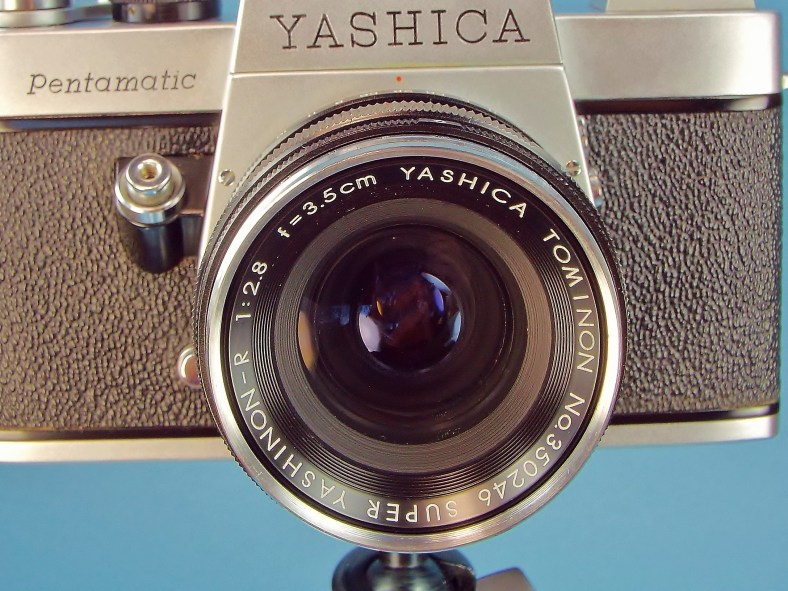
A highly desirable early Tomioka branded lens for the Pentamatic. Another issue from 1959… the serial number 35 = 35mm and 246 indicates the production sequence. This lens is super bright and sharp. An excellent wide-angle lens for general photography.
008

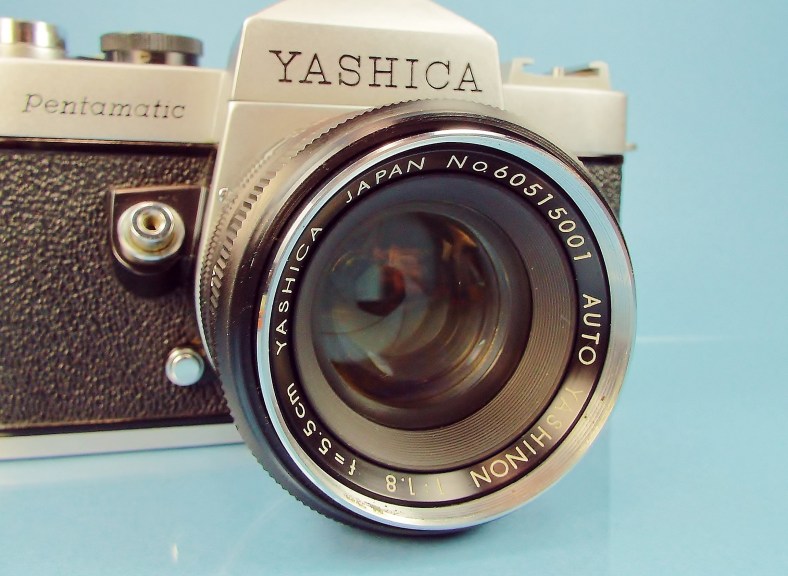
The latest lens of the original production run that we now have is No. 60521000. The lens (above) shows that it is number 15,001 in the run which would put the lens into early 1961 production. 

We hope to expand on more details of the early Pentamatic lenses in the near future. Stay tuned and thanks for reading our little blog!

Chris & Carol


Yashica’s YT-300… a neat little radio from 1959

Yashica produced more than just cameras during its boom years. As a leader in the field of electronic photography in the middle to late 1960s, Yashica’s early electronic devices ranged from such diverse items as transistor radios, record players, movie projectors, editing equipment and tape recorders to name but a few.

Most of the earliest electronic devices are rather rare now (as one would expect after 50 years) and only occasionally does something come up in auctions both on the web and in estate sales. I suspect that the more common electrical items such as projectors and editing equipment are still flooding eBay and other on-line auction sites.

Finding an early radio such as the YT-300 and YT-100 is a bit harder. Here we share some of what we’ve been able to collect over the years.

20150716_203028_Richtone(HDR)

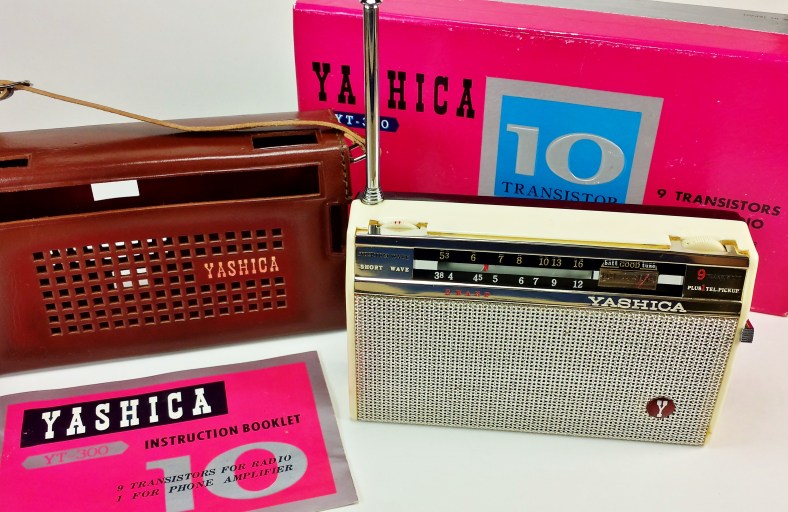
Nice complete set from around 1960.

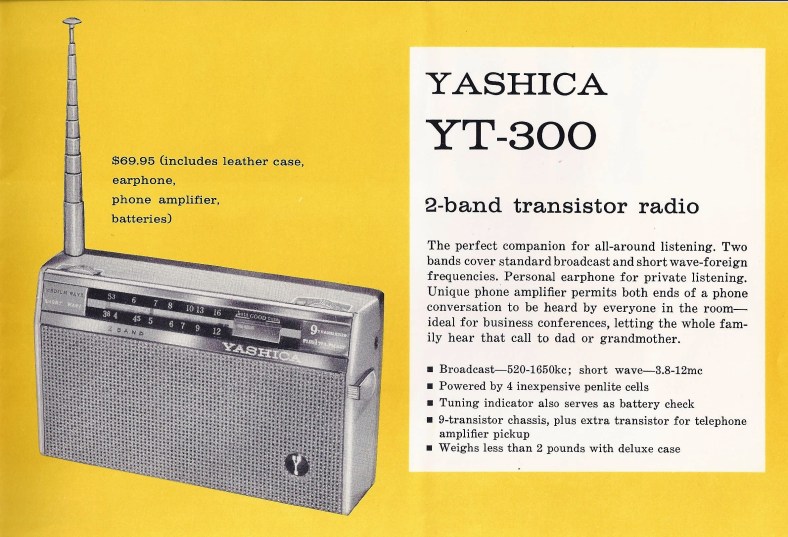
Yashica YT-300 Radio Brochure

Not a bad price for such a sophisticated radio.

20150726_120249_Richtone(HDR)

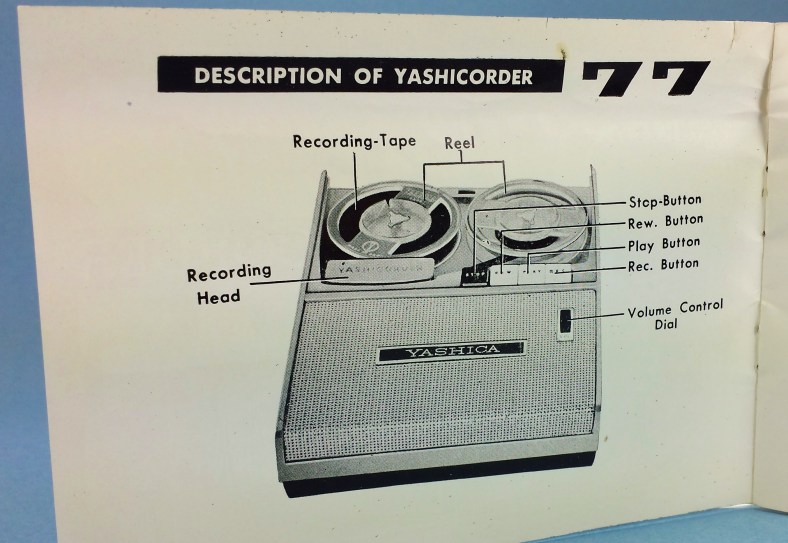
Really really rare to find a working Yashica tape recorder!

20150726_115718_Richtone(HDR)

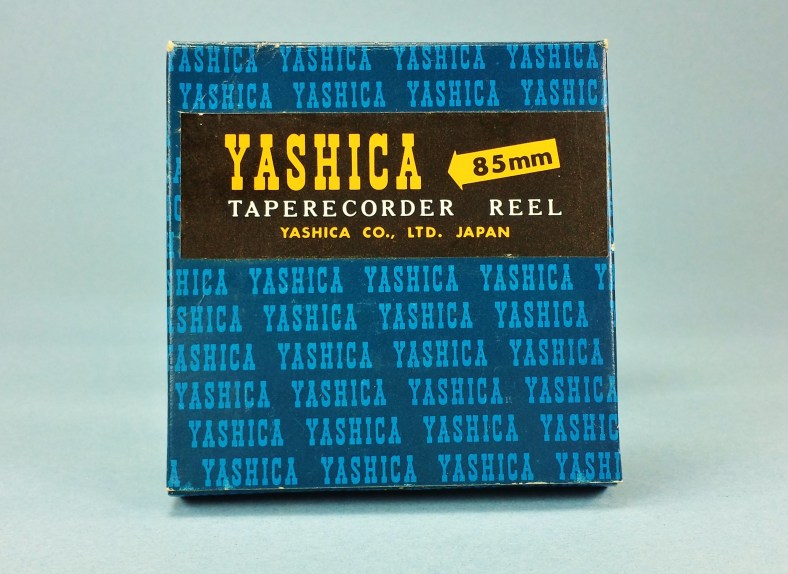
Yes Yashica even branded their own magnetic tape for their recorders.

20160113_213553

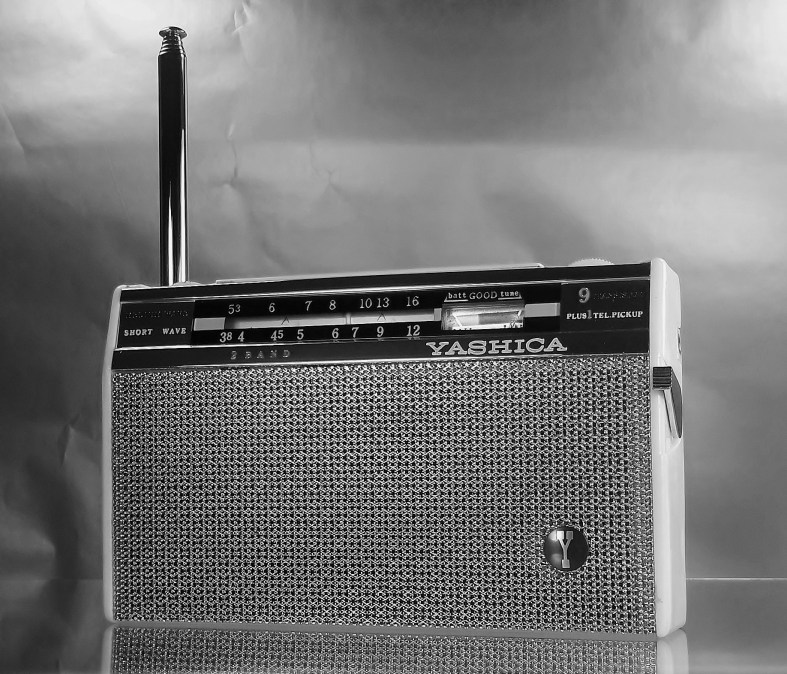
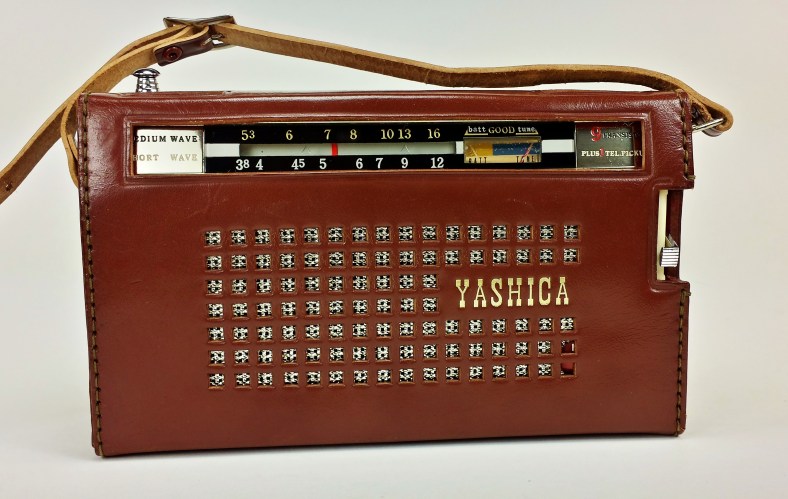
Yashica YT-300 portable transistor radio. Designed in late 1959 it was very popular in the early 1960s and was one of the many electronic devices that helped Yashica develop their hyper successful electronic cameras that followed.

20150717_152009_Richtone(HDR)

Yashica YT-300 in its very elegant leather case. The case itself is a work of art and craftsmanship.

Thanks for your visit! If you come across a working Yashica radio or tape recorder snag it! They’re really rare and a fun little reminder of the first transistor radios and how cool they were.

Chris

Yashica Quick-Lite Electronic Flash

We’ve recently added this wonderful electronic flash unit to our collection. Many of the lesser known accessories from Yashica often go unnoticed and become a bit mysterious.

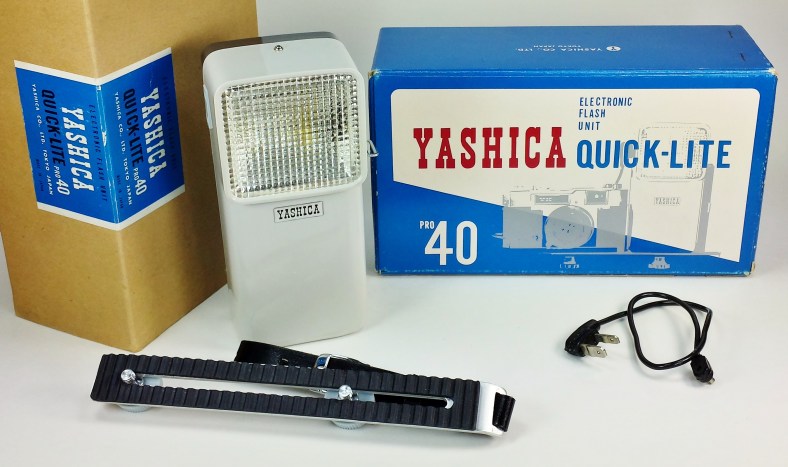
We were lucky to find an almost complete set from around 1962 or so (could be earlier). I believe we’re only missing the instruction booklet and a few minor (but desirable) plastic bags. The box and styrofoam inserts are in excellent condition. The flash works perfectly and more than likely is unused (as is often the case). Image number 3 is from a Japanese Yashica-Mat EM instruction booklet. There are some differences between ours and the one pictured. One has a coiled cord vice a straight cord and the attachment bar and knobs are black vice silver with gray knobs on ours.

20151218_112804_Richtone(HDR)

Complete set from around 1962 (or a bit earlier). Takes 8 AA batteries to fire this thing up!

20151218_114542

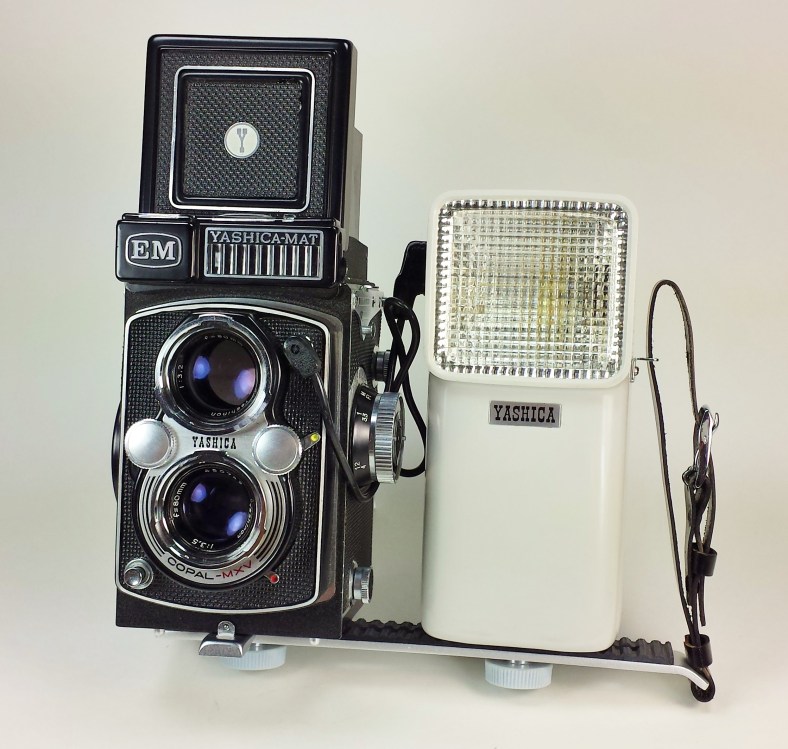
PRO 40 Quick-Lite attached to our 1964 EM.

IMG_20151218_0016

From a Japanese instruction booklet for the Yashica-Mat EM.

20151218_113137_Richtone(HDR)

Front view of the flash. The flash diffuser is still bright and clear.

20151218_113641

Rear cover for the PRO 40 flash. It is made from metal while most of the remainder of the unit is plastic.

Standard Lens for the Pentamatic II

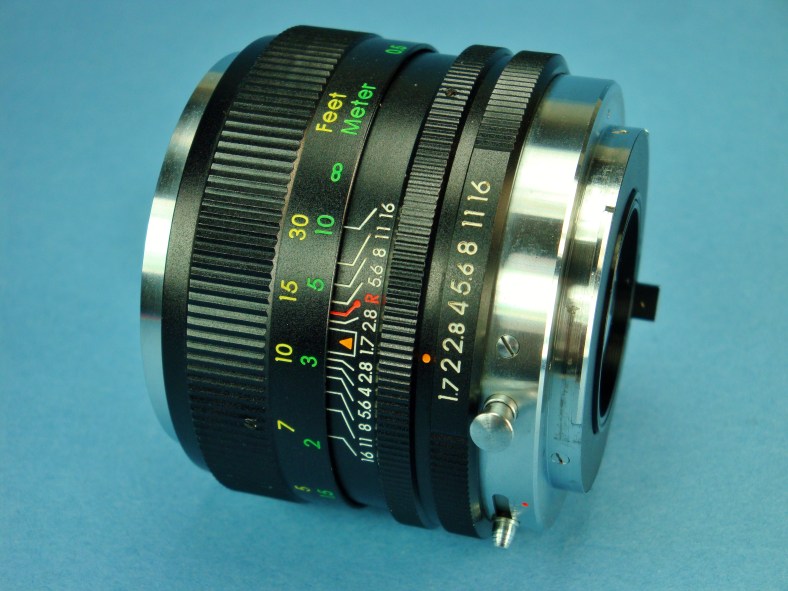
The only difference we can tell between the original Yashica Pentamatic ’35’ and the Pentamatic II (which came out in August 1960), is the standard lens that came with the camera body.

The original Pentamatic came with the Auto-Yashinon, f/1.8, 5.5cm semi (fully?) automatic 6 element lens. Of course it has the unique Pentamatic bayonet mount and not the M42 screw mount. The Pentamatic II came with the Auto-Yashinon, f/1.7, 5.8cm lens (pictured below). The f/1.8 lens was made for Yashica by Tomioka Optical of Tokyo. New evidence uncovered by us (Oct 2017) indicates that the f/1.7 lens was made by Zunow Optical. It’s a beautiful lens and weighs a ton and is rather rare today at under 6,000 lenses made. It has 10 aperture blades.

DSC07467

Update July 2017 – The Pentamatic II was only for sale in the Japanese home market and for only a short time (Aug 1960 to Jan 1961). Less than 6,000 cameras were made and of course about the same amount of these lenses. No English language sales brochures have been found that mention or feature the Pentamatic II. No advertisements either in English language newspapers or magazines.

DSCF5862

The Auto Yashinon f/ 1.7, 5.8cm lens mounted on a later model Pentamatic S.

If you find a sales brochure or advertisement in English that features the Yashica Pentamatic II, please bring it to our attention. Thanks!

Chris & Carol