More Tomioka Optical…

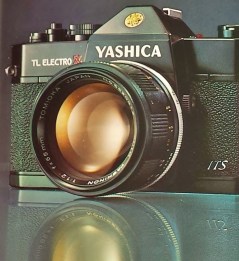
Tomioka Kogaku K. K. (Tomioka Optical Co., Ltd.) of Tokyo and Yashica Co., Ltd. of (officially Tokyo) but the factory complex was in Shimosuwa, Nagano Prefecture, Japan. Yashima (later Yashica) had a strong relationship with Tomioka from the start. Through the 1950s, Tomioka Optical occasionally put their name on Yashica lenses but not often. In the 1960s, even fewer lenses bore the Tomioka name even after being acquired by Yashica in 1968. In the early 1970s (maybe late 1969) Tomioka and Tominon would once again appear on Yashica lenses. One of the more famous was the Auto Yashinon f/ 1.2 55mm lens (pictured below from a Yashica TL ELECTRO-X ITS brochure). The Tomioka Japan stood out proudly on the lens ring. In other publications by Yashica, the Tomioka (or Tominon) name would be removed at the printers.

IMG_20151220_0002

Auto Yashinon Tomioka f/ 1.2 55mm lens. The serial number also indicates the model number of the lens (552) and then the production sequence number (in this case the 0124) indicates the 124th unit made.

IMG_20151220_0001

20151204_082525

Another example of the dual names (Auto Yashinon and Tomioka).

IMG_20151220_0005

Another sales brochure from the early 1970s… shows a “prototype” lens with a fake (?) serial number of No. 440111.

Before there was ‘Yashica’…

Before there was Yashica there was Yashima. From its humble beginnings in the small town of Suwa in the shadows of the Japanese Alps and along the shores of Lake Suwa, Yashica grew to be Japan’s largest producer of high quality but low priced twin-lens reflex (TLR) medium format (6x6cm) cameras in less than a decade. The ‘Sailor Boy’ figurine is from 1962 and the box is from 1953. This box holds the very first camera that bore the Yashima name. The presentation box as they are called, has survived over six decades of use and represents the oldest box in our collection. Relatively rare (maybe really really rare) box is seldom seen outside of Japan. Most camera boxes from the 1950s were thrown away or just simply fell apart. 20151210_08273820151210_08302420151210_082922

Tomioka & Yashica

As best as I can tell, Tomioka Optical in Tokyo has always made the lenses used by Yashica and Yashima. In fact at some point in the late 1960s (I believe 1968) Yashica acquired Tomioka as part of their company. The Tominon name sometimes appeared on lenses that also had the Yashinon name. On occasion, Yashica would also “allow” Tomioka to put their name on the lens. The image attached to this article is an example of that. The Tomioka “branded” 55mm f/ 1.2 lens is to some the epitome of the classic fast lenses of the 1970s. I don’t have that lens in my collection as it almost always appears for sale on auction sites near the $1,000 mark… well out of my range for a lens that I would use infrequently. In addition, the mystique of the lens may outweigh the actual performance of the optics.

No doubt though the lens is fast and did perform well enough for its reputation to grow with an almost cult-like following. It is certainly a good looking lens that any Yashica collector would like to have.

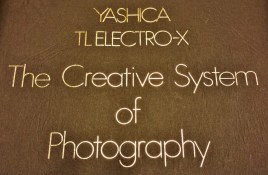
This image is from a recently acquired Yashica publication titled Yashica TL ELECTRO-X, The Creative System of Photography. Some excellent images, illustrations, charts and descriptions of the TL Electro-X ITS and its accessories are spread out over its 45 pages.

Of note, the “model number” of these lenses are included in the serial numbers… they begin with 552 which tells the focal length of the lens (55mm) and the 2 indicates (f/ 1.2) aperture or “speed”. The next four numbers are the production sequence numbers. So when you see a serial number of “No. 5520312” you know that you’re looking at a 55mm lens with a maximum aperture of f/ 1.2 and it was the 312th unit made.

20151204_082525

Tomioka Auto-Yashinon f/ 1.2 55mm lens.

20151202_203809

45 page publication from around 1972.

Yashica-Mat EM

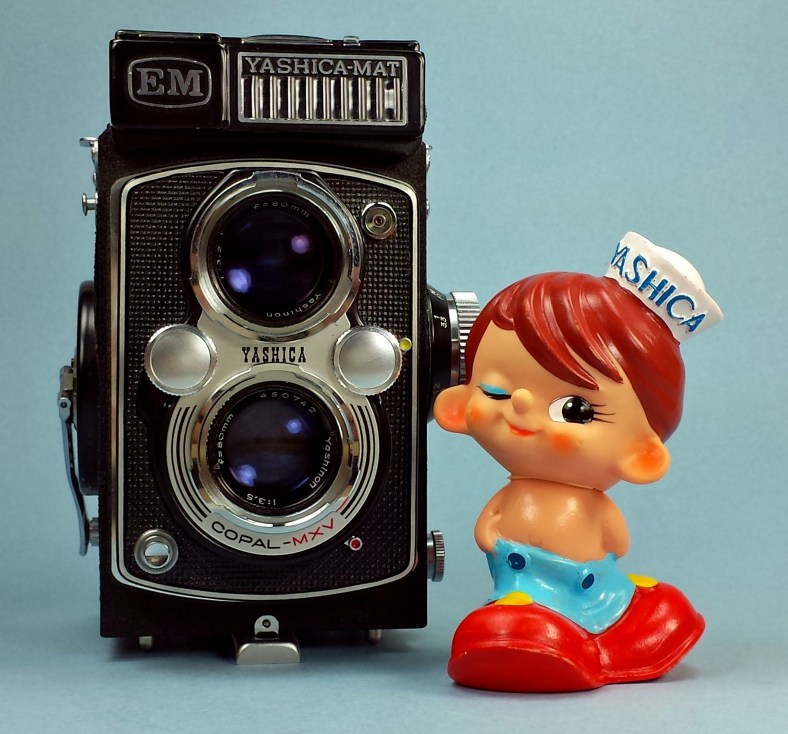
Another slight departure from the Pentamatics. Here is a beautiful Yashica-Mat EM from around mid 1964. Everything works on this camera… the built-in exposure meter works like a charm (no batteries required) and the shutter is spot on. Of course what would a picture of a classic Yashica be without one of the ‘Sailor Boys’ posing alongside. The marketing doll is from around early 1962 and he was made in many different versions. The EM is a twin-lens reflex (TLR) film camera and was made by the talented craftspeople at Yashica’s factory in Shimosuwa, Nagano Prefecture, Japan. A true work of art that has stood the test of time.

20151128_153550

Sailor Boys Galore!!!

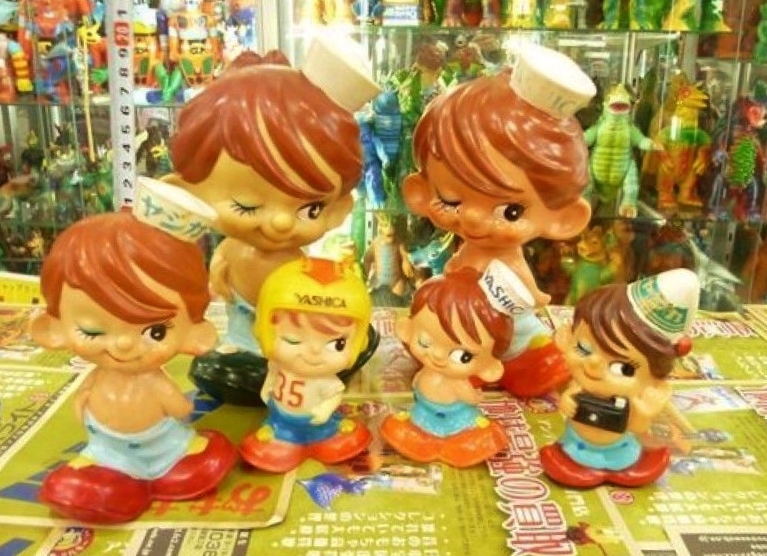
A nice collection of different versions of Yashica’s ‘Sailor Boys’. In my travels I’ve discovered other Yashica marketing “dolls” but this just about covers them all. I know there’s a Christmas candle ‘Sailor Boy’ with matching Christmas box. If you’ve seen others please feel free to share them with me. Thanks!yashicasailorboys japan store

What Happened?

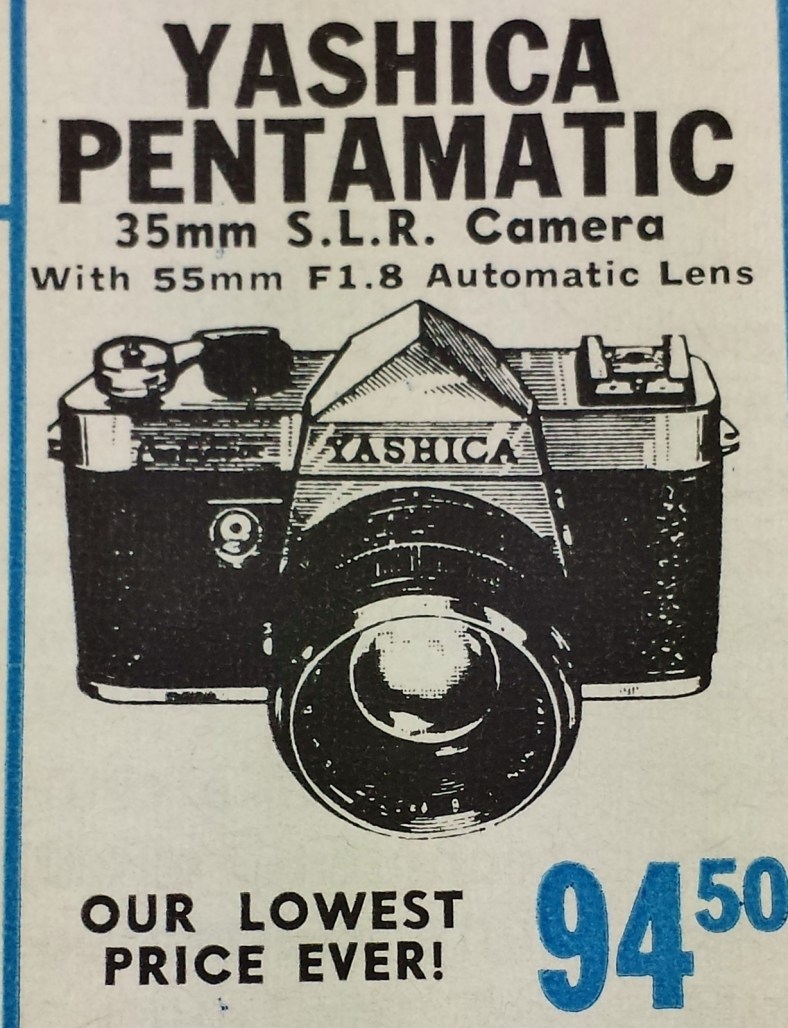
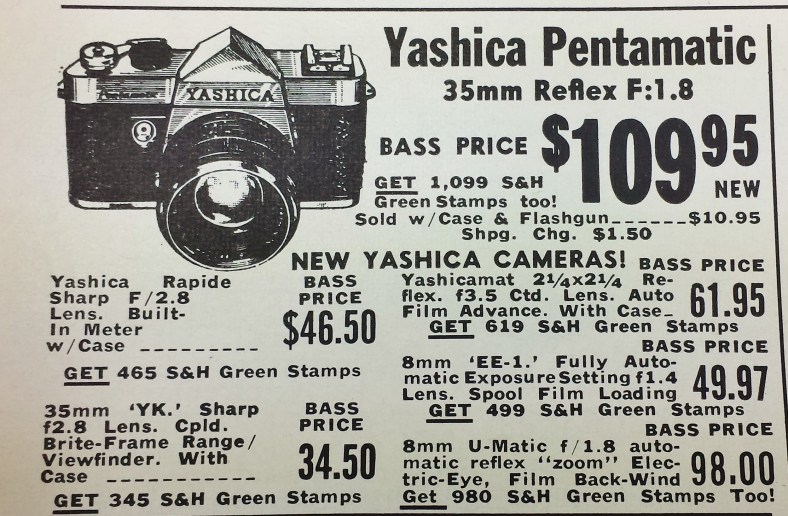
What happened to Yashica’s first ever 35mm single lens reflex (SLR) camera… the Pentamatic? After nearly two years of producing the original Pentamatic, it’s virtually gone from the major photography magazines in the U.S. and after nearly a year of production, no mention of the second model in the Pentamatic series the Pentamatic II. In the February 1962 issue of Modern Photography magazine, I counted only three small ads for the Pentamatic and no ads (large or small) for the Pentamatic II. Why did Yashica let the Pentamatic go away so quickly? I’m still searching for the first advertisement that mentions the model II. I have seen the model II in Japanese domestic market sales brochures so I know that Yashica at least advertised the camera at home. No English language ads as of yet. I will say that I don’t have all the photography magazines from 1961, 1962 or 1963 so I’m basing my info or a rather small sample size. I do have Japanese language sales brochures that advertise the model I and II together and as best as I can tell, the ads are from very late 1960 to very early 1961. So my search continues and my questions remain unanswered for the moment. These two ads appeared in the February 1962 issue of Modern Photography magazine. Both ads were from major camera retailers in New York City.

20151121_14445520151121_144606

Yashica Pentamatic Lenses

Nice find for me from a collector in Japan. The first detailed sales brochure from Japan that included the Pentamatic I and II. This page is from the accessories part of the brochure.

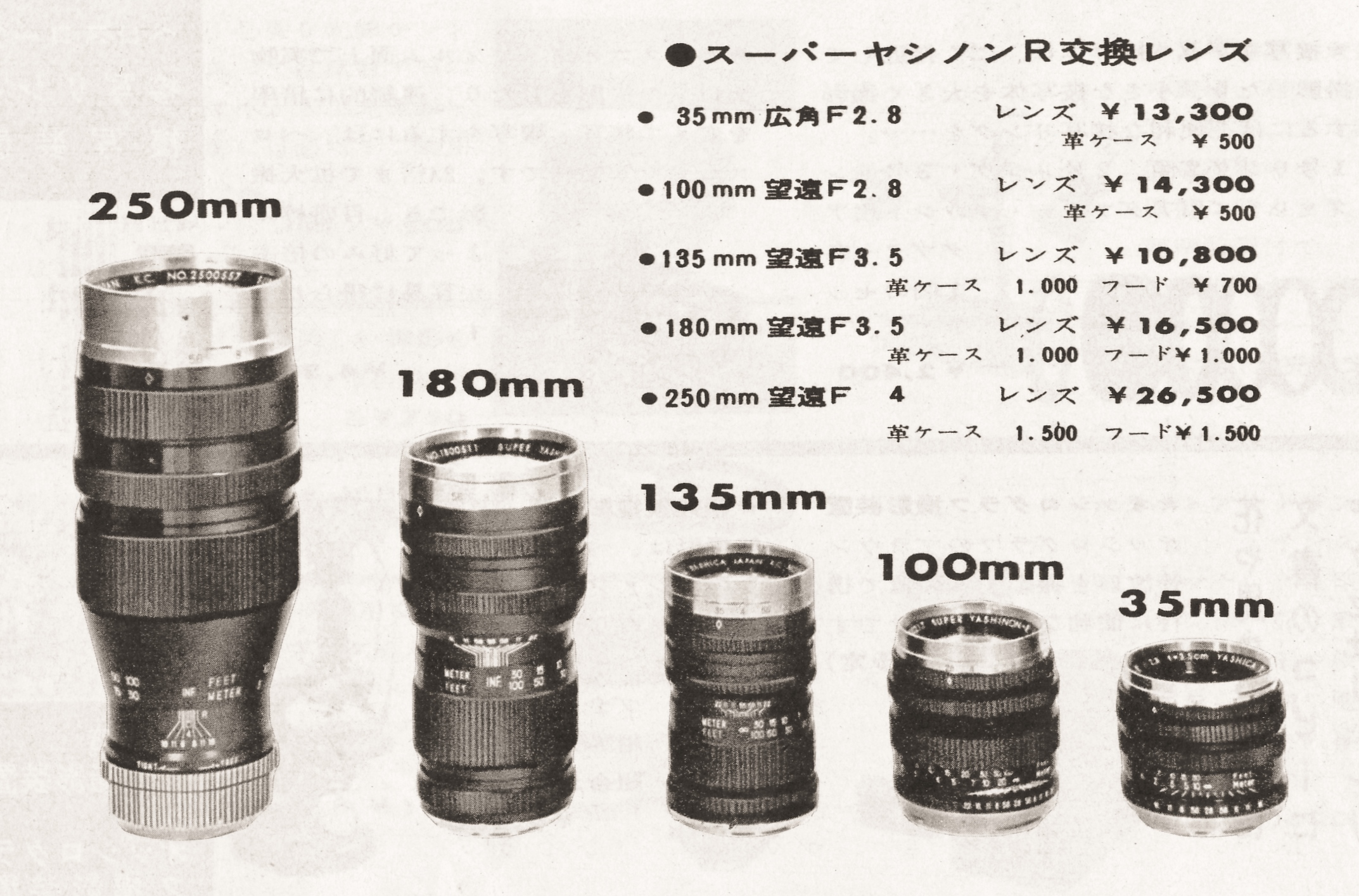
A very complete listing of the lenses available (and prices) for the Pentamatic series from late 1960 or very early 1961. These lenses were built for Yashica by Tomioka Optical at their Tokyo factory.

A very complete listing of the lenses available (and prices) for the Pentamatic series from late 1960 or very early 1961. These lenses were built for Yashica by Tomioka Optical at their Tokyo factory. The only lenses missing are the original f/1.8 5.5cm lens (for the original Pentamatic) and the f/1.7 5.8cm lens for the model II. I have in my collection the 35mm, the 135mm, the 55mm and the 58mm.

Conclusive Proof of a Japanese Domestic Market Pentamatic!

Finally (again) found proof that the Yashica Pentamatic series…

…of cameras were available in the Japanese domestic market. It had been speculated by some (including myself) that the Pentamatic was not available in Japan when it was released into the U.S. markets in the May-June 1960 time period. My reason was solely based on the fact that up until this point no Japanese language sales brochures or advertisements had been discovered during my research. I always found it rather odd to think that Yashica’s first 35mm single-lens reflex (SLR) camera would not be available in Japan. It is generally known that Yashica made the photographic press in the U.S. aware of the new model as early as late March 1960 when the Pentamatic made its appearance at a large photography trade show in St. Louis.

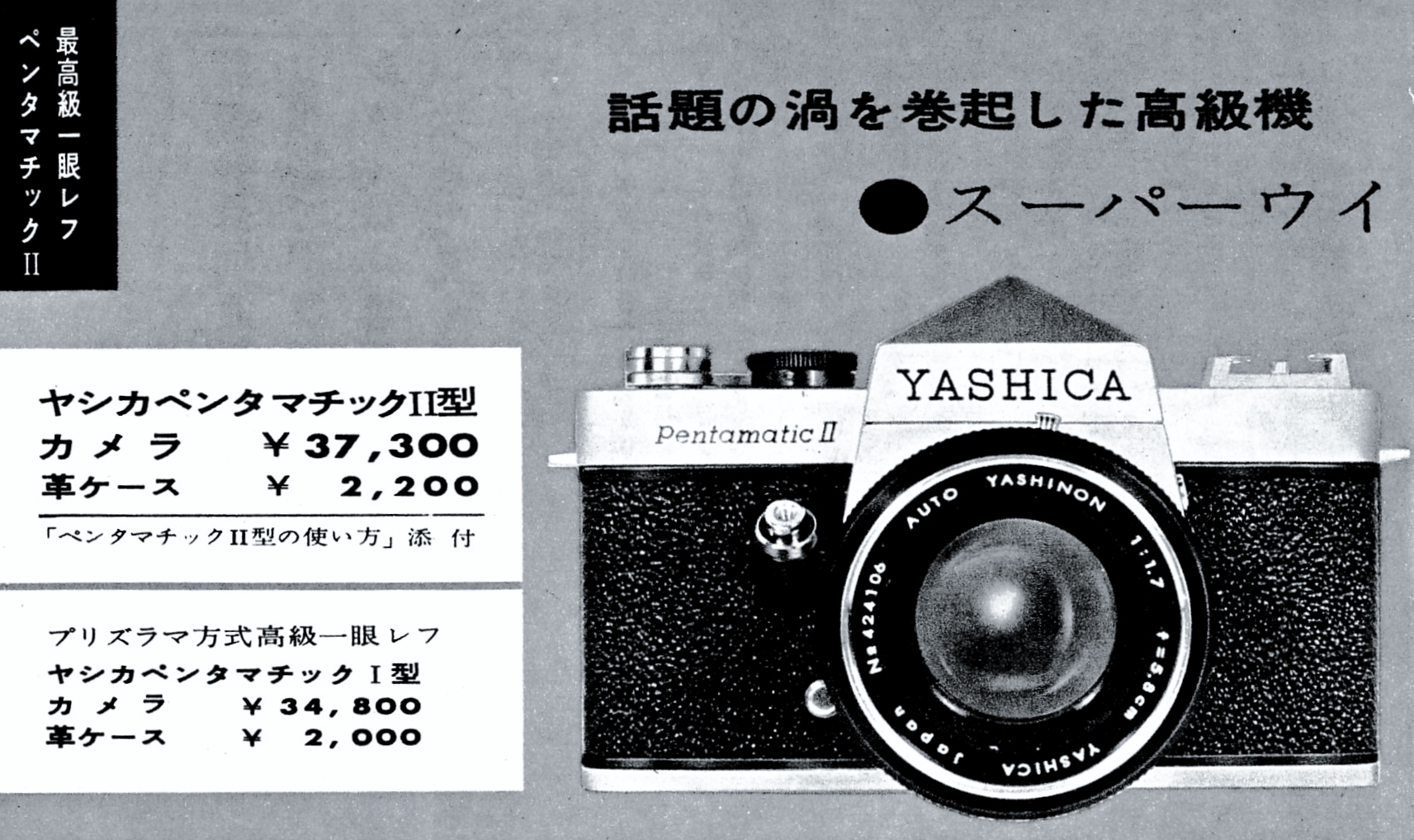
The elusive Pentamatic II in a Japanese sales brochure most likely from late 1960 to very early 1961. The brochure covers the new model and accessories in over 12 pages! The selling price was 37,300 yen for the model II and 34,800 yen for the original model I. It also appears that the

The elusive Pentamatic II in a Japanese sales brochure most likely from late 1960 to very early 1961. The brochure covers the new model II and its accessories over a full 12 pages. The selling price was 37,300 yen for the model II and 34,800 yen for the original model I. It also appears that the “new” lens of choice for this model II would be the f/1.7 5.8cm lens made by Tomioka Optical and displaying the name ‘Auto Yashinon’. I had suspected that the 1.7 lens was dedicated for the model II but had no proof. The model I Pentamatic came with the f/1.8 5.5cm lens which was also made by Tomioka in Tokyo.

Exciting Finds!!!

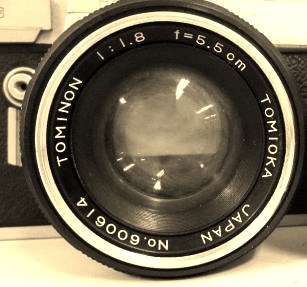
Amazing Tomioka lens for the Yashica Pentamatic series of SLR cameras. Yashica's lenses were always (as best as I can tell) made for them by world famous Tomioka Optical in their Tokyo factory. Sometimes you'll find a lens that carries both a "Yashica" name and a "Tomioka" name on the lens ring. This rather rare lens sports only the Tomioka names... Tominon and Tomioka! This lens of course has the unique Pentamatic bayonet mount and would not fit any other cameras without an adapter. What I like most is the extremely low serial number... #614 in the production run. The entire serial number dates this lens as made in 1960 and the sequence production number of 00614.

Amazing Tomioka lens for the Yashica Pentamatic series of SLR cameras. Yashica’s lenses were always (as best as I can tell) made for them by world-famous Tomioka Optical in their Tokyo factory. Sometimes you’ll find a lens that carries both a “Yashica” name and a “Tomioka” name on the lens ring. This rather rare lens sports only the Tomioka names… Tominon and Tomioka! This lens of course has the unique Pentamatic bayonet mount and would not fit any other cameras without an adapter. What I like most is the extremely low serial number… #614 in the production run. The entire serial number dates this lens as made in 1960 and the sequence production number of 00614.

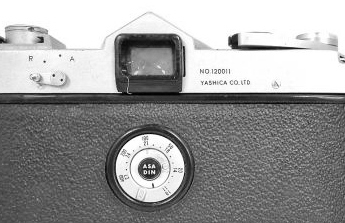
Super rare very early production Pentamatic-S. NO. 120011 would have been made in the Suwa factory of Yashica in February 1961 and it was the 11th one off the production line! Amazing.

Super rare very early production Pentamatic-S. NO. 120011 would have been made in the Suwa factory of Yashica in February 1961 and it was the 11th one off the production line! Amazing. These two items were recently available from a collector in Japan which helps me believe that the Pentamatic series was in fact released for the Japanese domestic market.

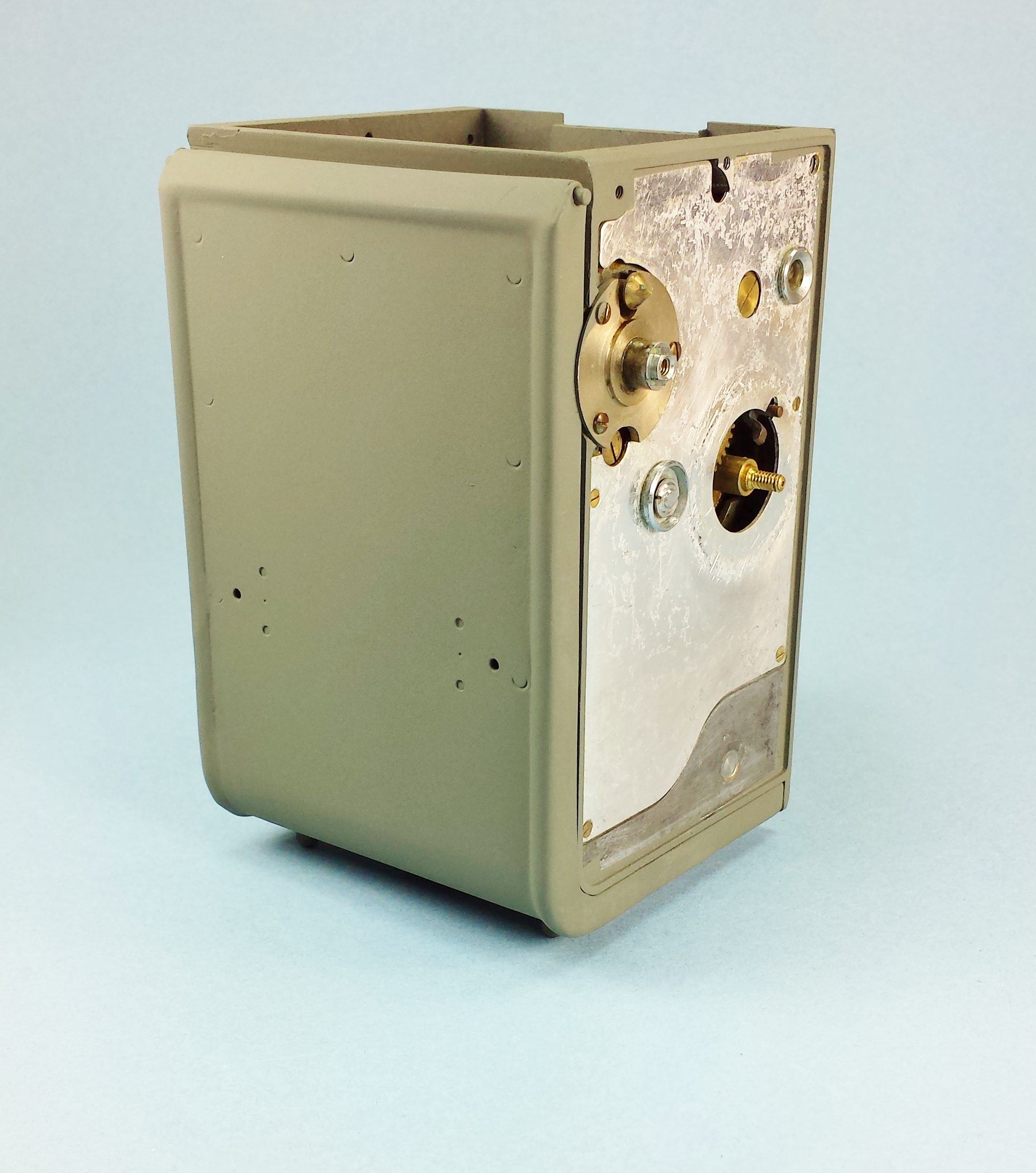
Yashima Yashicaflex A-II Restoration Update 11-12-2015

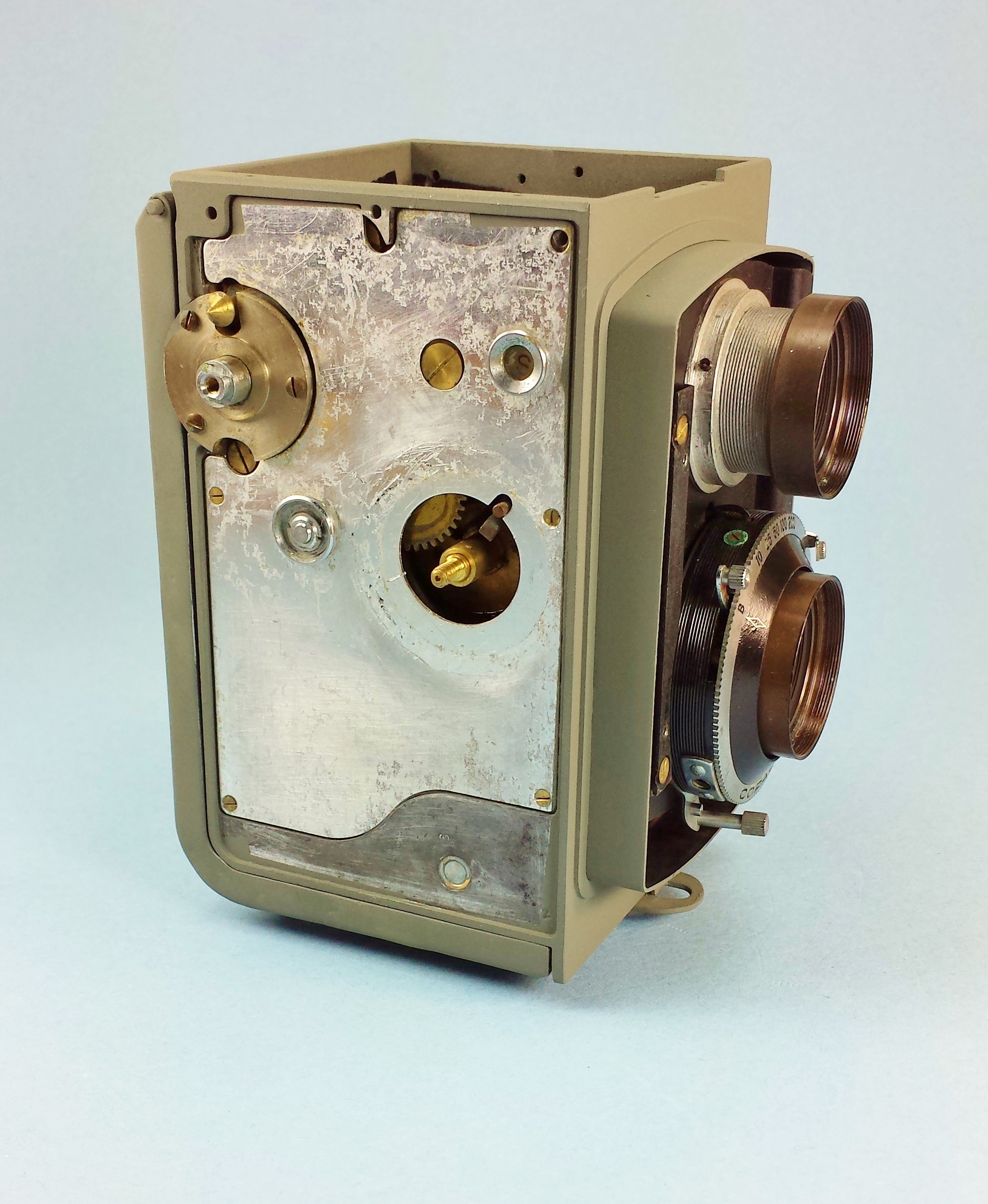
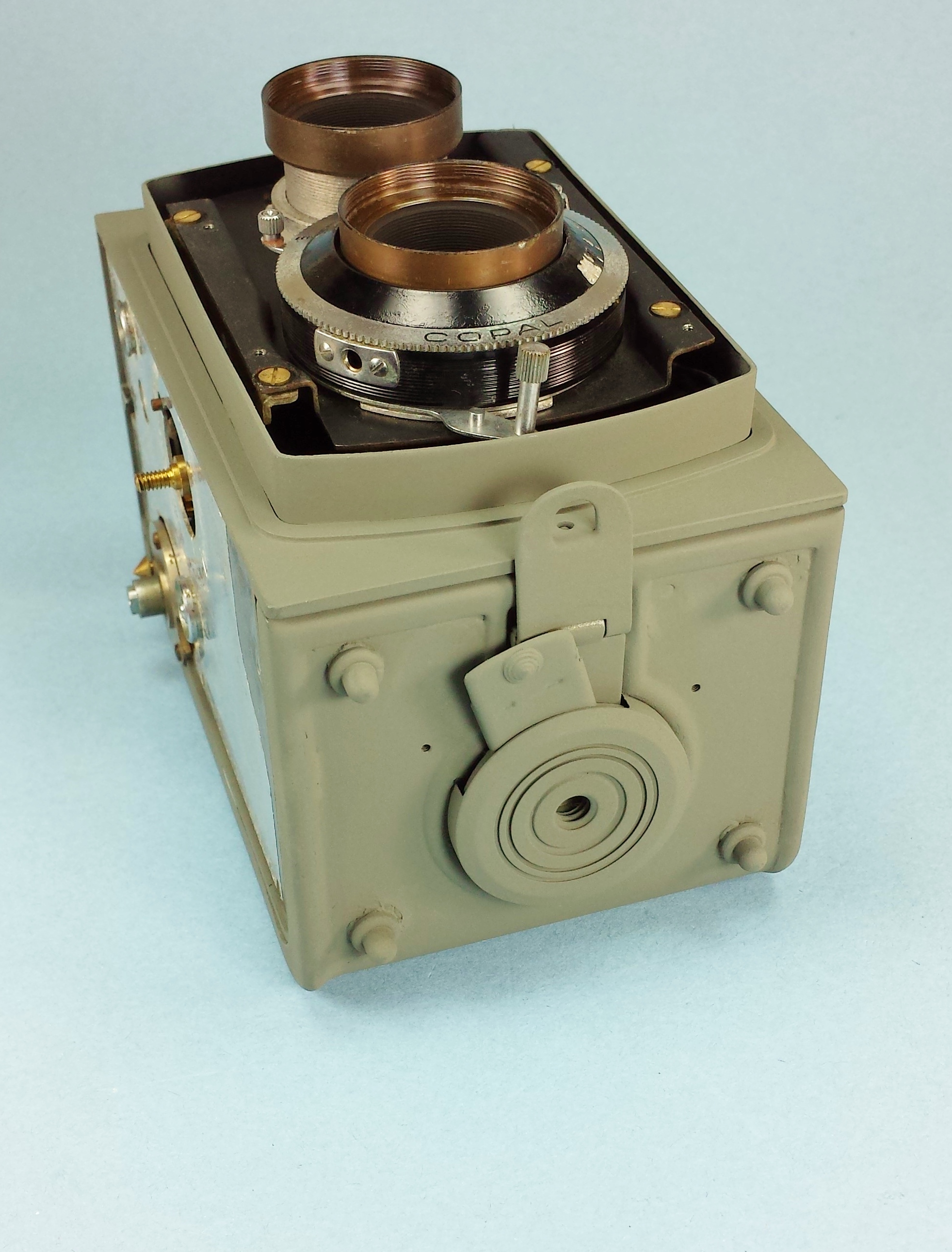
Some good prep work continued again today…

Some pieces received their final etching primer coat and others are getting the final or first (finish) coat of primer.

Final coat on base etching primer. Some light sanding and a smooth finish primer coat and then... the first "color" coat of lacquer.

Final coat on base etching primer. Some light sanding and a smooth finish primer coat and then… the first “color” coat of lacquer.

More primer and then more primer. The bare aluminum needed to be painted with a primer coat that etched into the metal. Getting closer!

More primer and then more primer. The bare aluminum needed to be painted with a primer coat that etched into the metal. Getting closer!

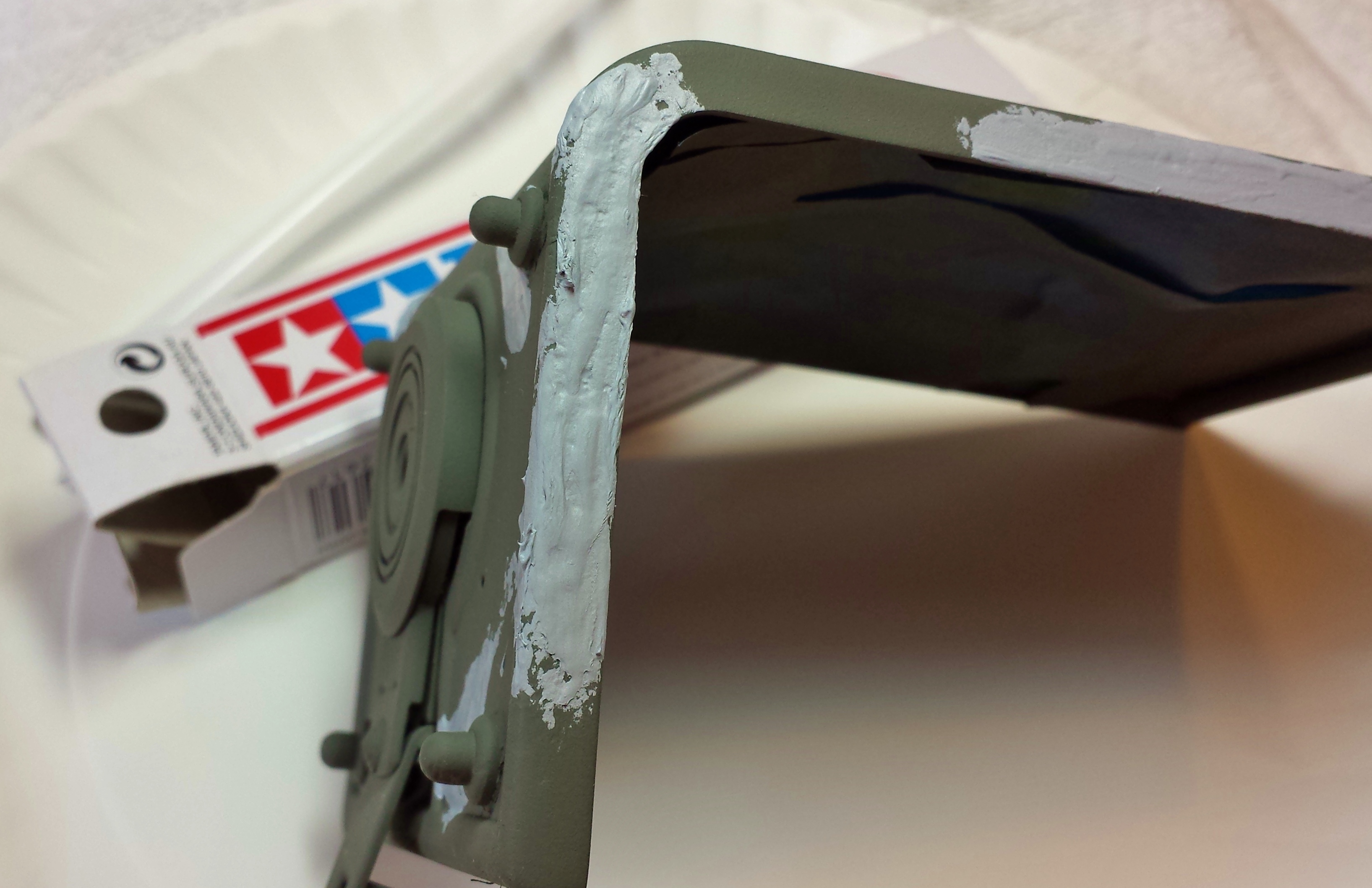
Back view of the film door. This was the most corroded part of the camera body and took the most time filling the pitted areas.

Back view of the film door. This was the most corroded part of the camera body and took the most time filling the pitted areas.

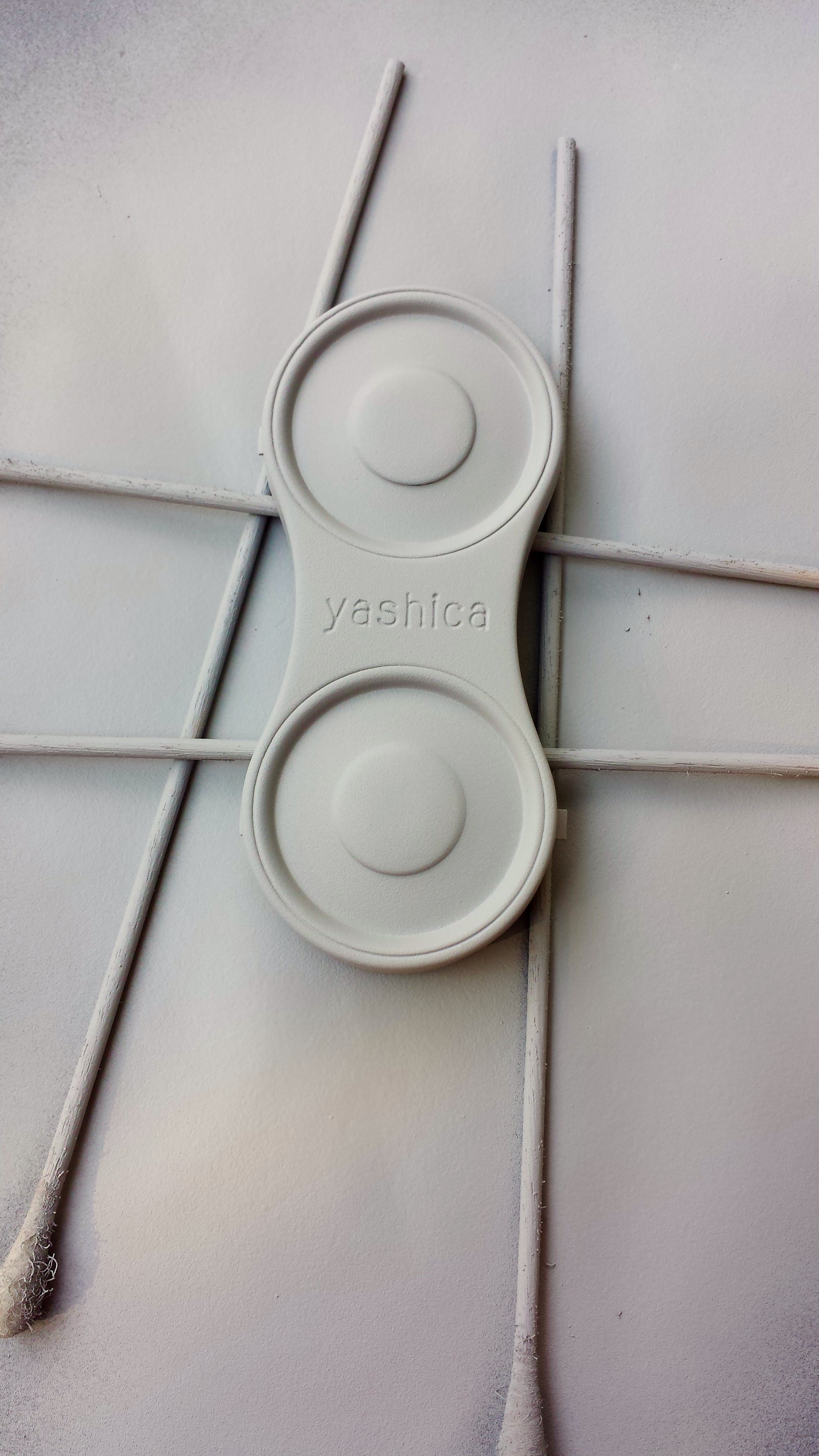
Final coat of finish primer on this 1955 metal cap.

Final coat of finish primer on this 1955 metal cap.

The back door had suffered severe metal corrosion and needed to have the corroded areas repaired. Some filler putty and some wet sanding and another coat of primer should do it.

The back door had suffered severe metal corrosion and needed to have the corroded areas repaired. Some filler putty and some wet sanding and another coat of primer should do it.