Pentamatic Instruction Booklets

Yashica Pentamatic instruction booklets… 1960 and 1961

Not often seen as they were not kept by most owners over the years. I still haven’t found the Pentamatic II booklet and maybe never will.

A few images…

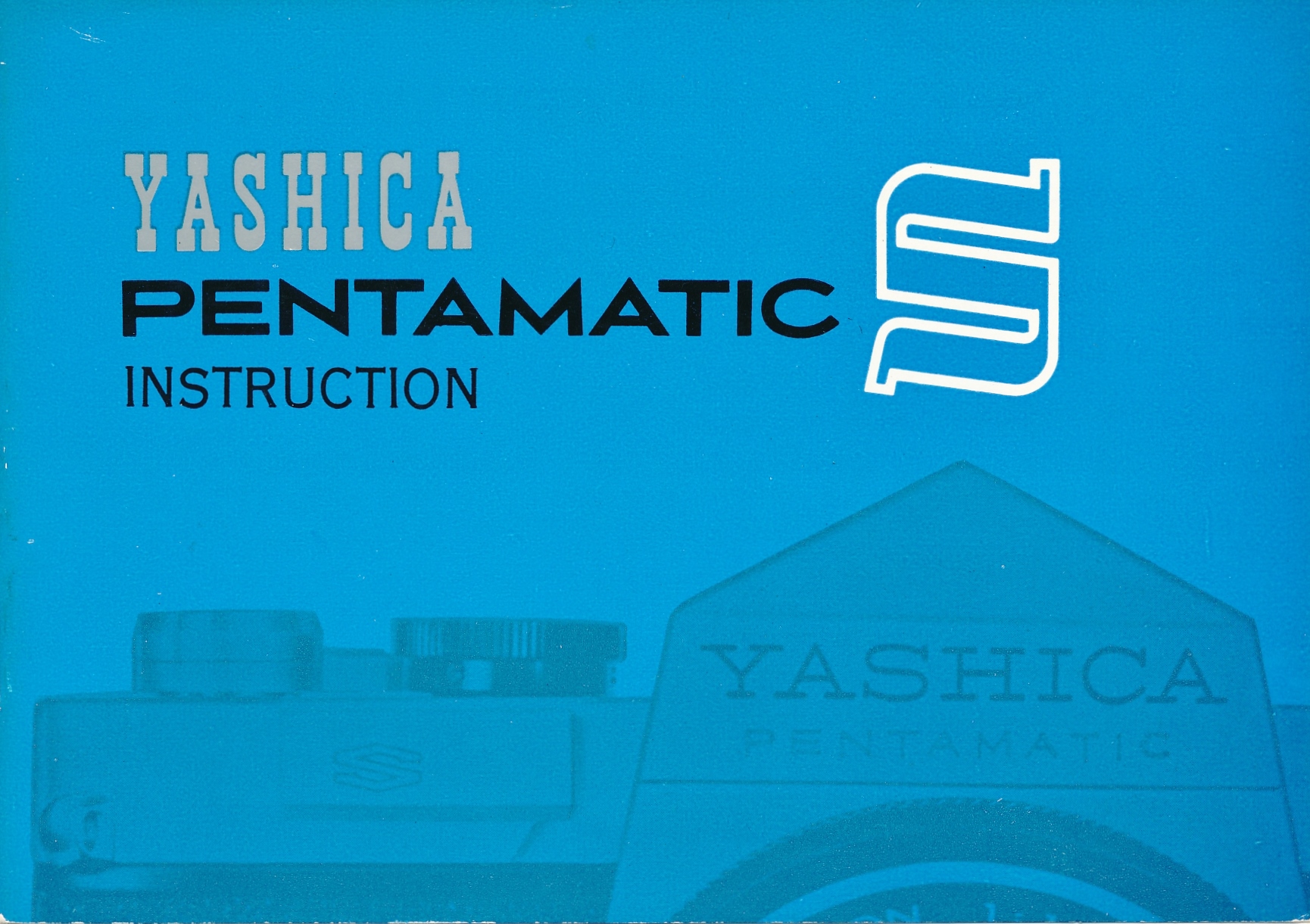
Pentamatic-S Instruction Booklet 1961.

Pentamatic-S Instruction Booklet 1961.

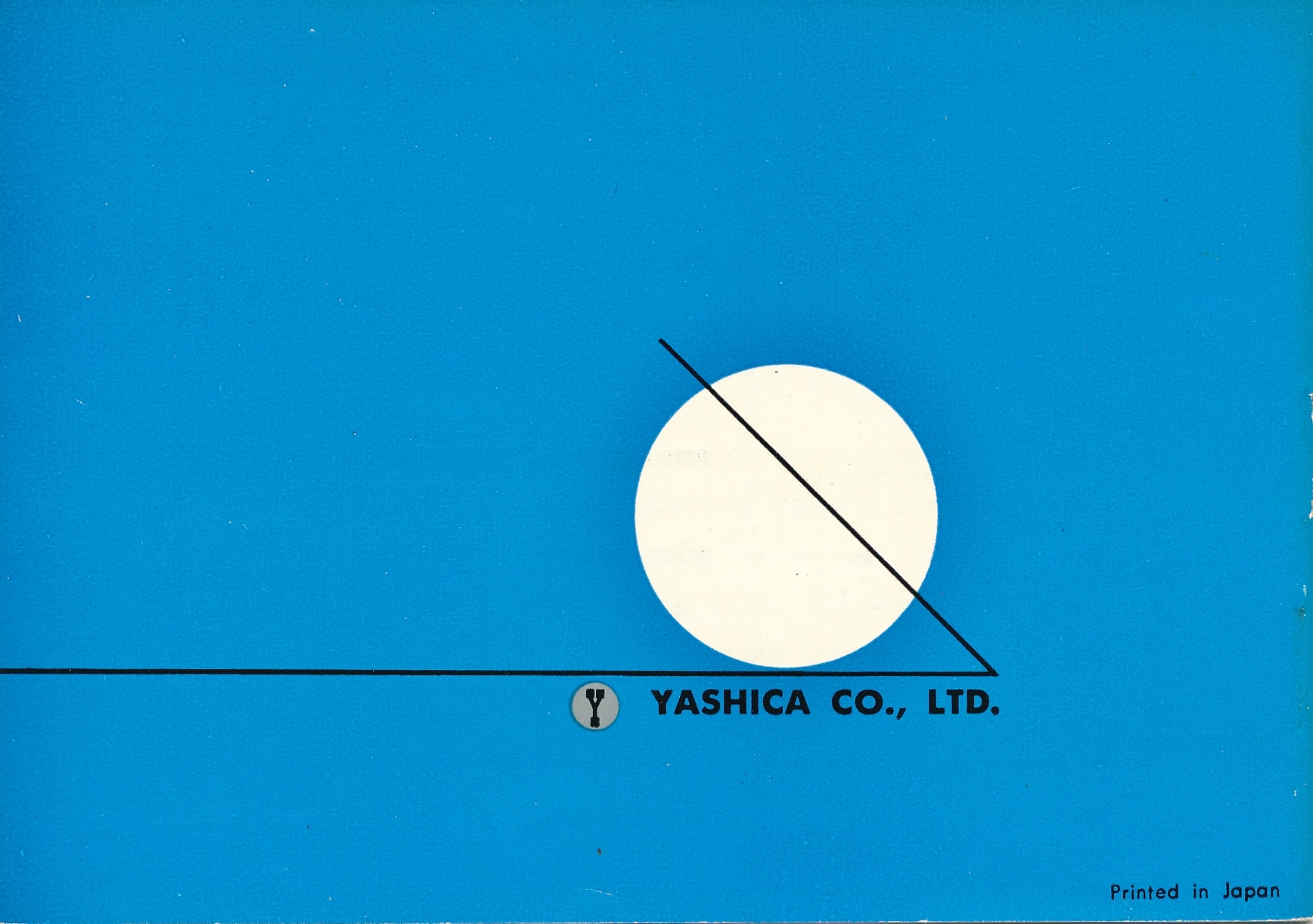
Back Cover for the Pentamatic-S.

Back Cover for the Pentamatic-S.

Original Pentamatic Instruction Booklet 1960. Yashica's first instruction booklet covering their first 35mm SLR. So far I've only located English language booklets.

Original Pentamatic Instruction Booklet 1960. Yashica’s first instruction booklet covering their first 35mm SLR. So far I’ve only located English language booklets.

Back cover for the Pentamatic Instruction Booklet.

Back cover for the Pentamatic Instruction Booklet.

Some Fun Items from Yashica c1962

A fun little find recently. Yashica's Sailor Boy found on a vinyl shopping bag from around 1962. Looks like it was a promotional item from Yashica and features the name of the dealer on the reverse side of the bag. The bag stands about 14 inches tall and about 6 inches wide. Made from heavyweight vinyl that has stood the test of time!

A fun little find recently. Yashica’s Sailor Boy found on a vinyl shopping bag from around 1962. Looks like it was a promotional item from Yashica and features the name of the dealer on the reverse side of the bag. The bag stands about 14 inches tall and about 6 inches wide. Made from heavyweight vinyl that has stood the test of time!

Looks like Yashica had first drawn these cute girls around late 1958 or early 1959. They appear individually here and there in sales brochures for the Japanese domestic market. The girls are not named as best as I can tell so I've decided that

Looks like Yashica had first drawn these cute girls around late 1958 or early 1959. They appear individually here and there in sales brochures for the Japanese domestic market. The girls are not named as best as I can tell so I’ve decided that “Ya”, “Shi” and “Ka” fits nicely. The best I can do with a translations is: Camera Store in Matsue and Izumo “Ota Metrology Shop”.

Yashima / Yashica Odds and Ends…

Recently discovered silica gel packs from around 1956 or so. First time I've seen the dual designation of Yashima / Yashica on something as small as these. The company was changing its name from Yashima Optical Industries Company, Limited to Yashica Company, Limited. These were part of a complete original Yashica LM set I recently added to my collection.

Recently discovered silica gel packs from around 1956 or so. First time I’ve seen the dual designation of Yashima / Yashica on something as small as these. The company was changing its name from Yashima Optical Industries Company, Limited to Yashica Company, Limited. These were part of a complete original Yashica LM set I recently added to my collection.

The Yashica Sailor Boy…

Sailor Boy going tropical for the introduction of the new Yashica Electro 35 in 1966…

Yashica's Sailor Boy gone tropical over the new Electro 35. Found this guy on a neat beach bag that I aqquired from Japan recently.

Yashica’s Sailor Boy gone tropical over the new Electro 35 electronic exposure 35 mm rangefinder camera. Found this guy on a neat beach bag that I acquired from Japan recently.

Neat beach bag with Yashica's Sailor Boy on it. From around 1966 or so.

Cool (and rather large) beach bag with Yashica’s Sailor Boy on it. From around 1966 or so. The bag stands about 49 cm tall and the Sailor Boy is about 15 cm tall. Made of heavy duty vinyl, it’s held up rather well over the years.

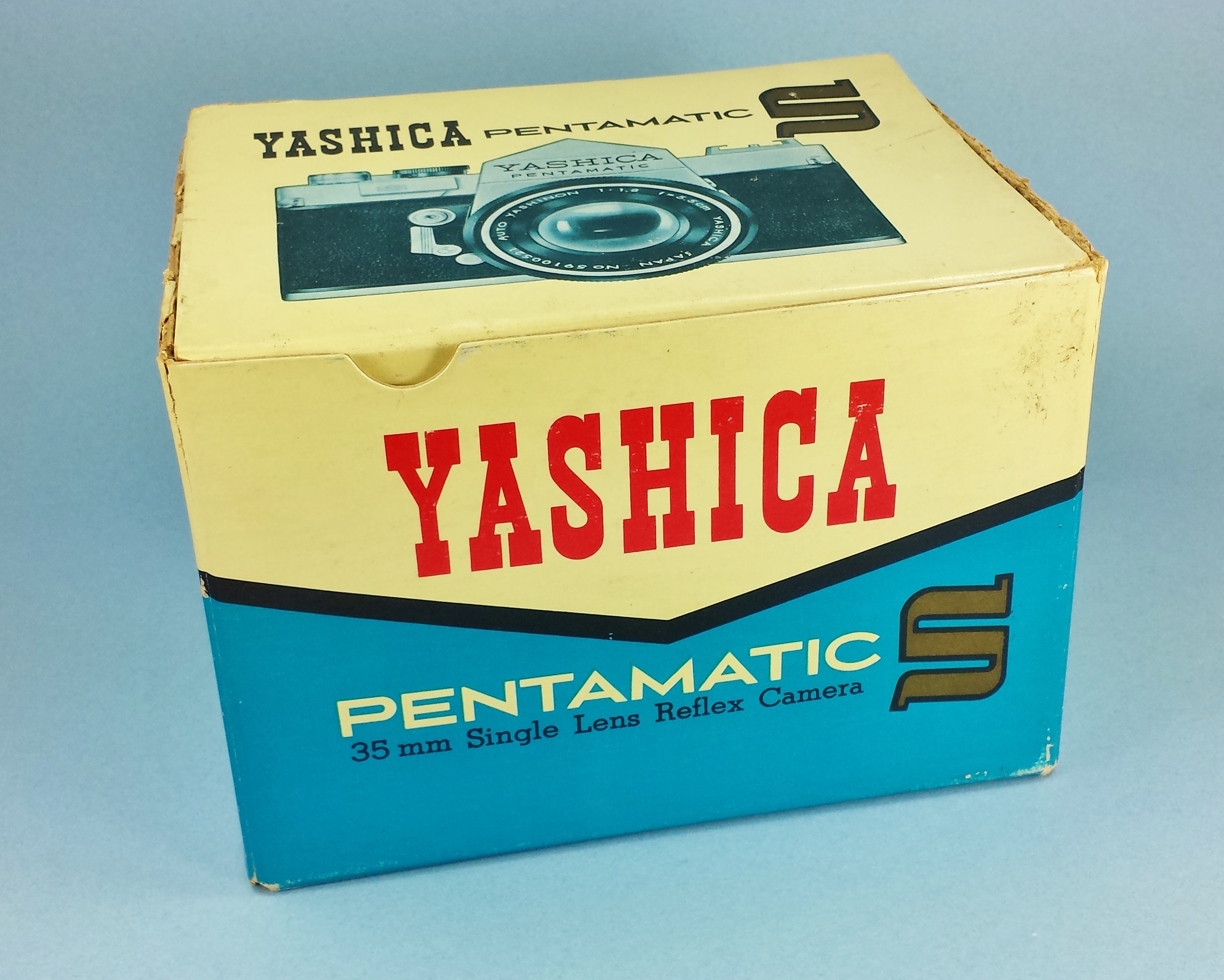
Original Yashica Pentamatic S Box

A rather rare look at a Pentamatic S box…

Not often seen Yashica Pentamatic S original box fromound 1961. This box features an actual image (photograph) of a "S" body and lens on the box lid. The lens is from an early release (serial number is from 1959) series more likely found on the original Pentamatic released in mid 1960. The box came to me from Tokyo and is now part of my collection. It does need some restoration work done on the flaps and the hinge area of the lid... otherwise it's in pretty good condition overall.

Not often seen Yashica Pentamatic S original box from around 1961. This box features an actual image (photograph) of a Pentamatic S and lens on the box lid. The lens is from an early release (at least by serial number which is from 1959) series more likely found on the original Pentamatic released in mid 1960. The box came to me from Tokyo and is now part of my collection. It does need some restoration work done on the flaps and the hinge area of the lid… otherwise it’s in pretty good condition overall. It is a strong departure from the original Pentamatic box which was its own unique design and style. This box follows in line with what became the “standard” Yashica box for most of their cameras released in the 1960s, 1970s and early 1980s.

Yashima Optical Ind. Co., Ltd. (Yashica) Factory

Yashica’s new factory in Shimosuwa, Nagano Prefecture… 1956

Wonderful illustration of Yashica’s new factory in Nagano Prefecture along the shores of Lake Suwa. From here, Yashica grew to become a large international camera manufacturer that dominated (in terms of sales) nearly every other camera company in Japan by the end of the 1950s. By the start of the 1960s, Yashica boldly introduced many new and innovative products that in some cases, had never been seen before. Never going after the high end professional market, Yashica continued to build high quality cameras at very affordable prices. A true camera for the masses.

Opened in 1956 along the shores of Lake Suwa in Nagano.

Yashica’s new factory opened in 1956 along the shores of Lake Suwa in Nagano Prefecture.

Rather rare early (1956) sales brochure from Yashica.

Rather rare early (1956) sales brochure from Yashica.

Introduces the Yashica J-4 35mm SLR camera to the world.

Introduces the Yashica J-4 35mm SLR camera to the world.

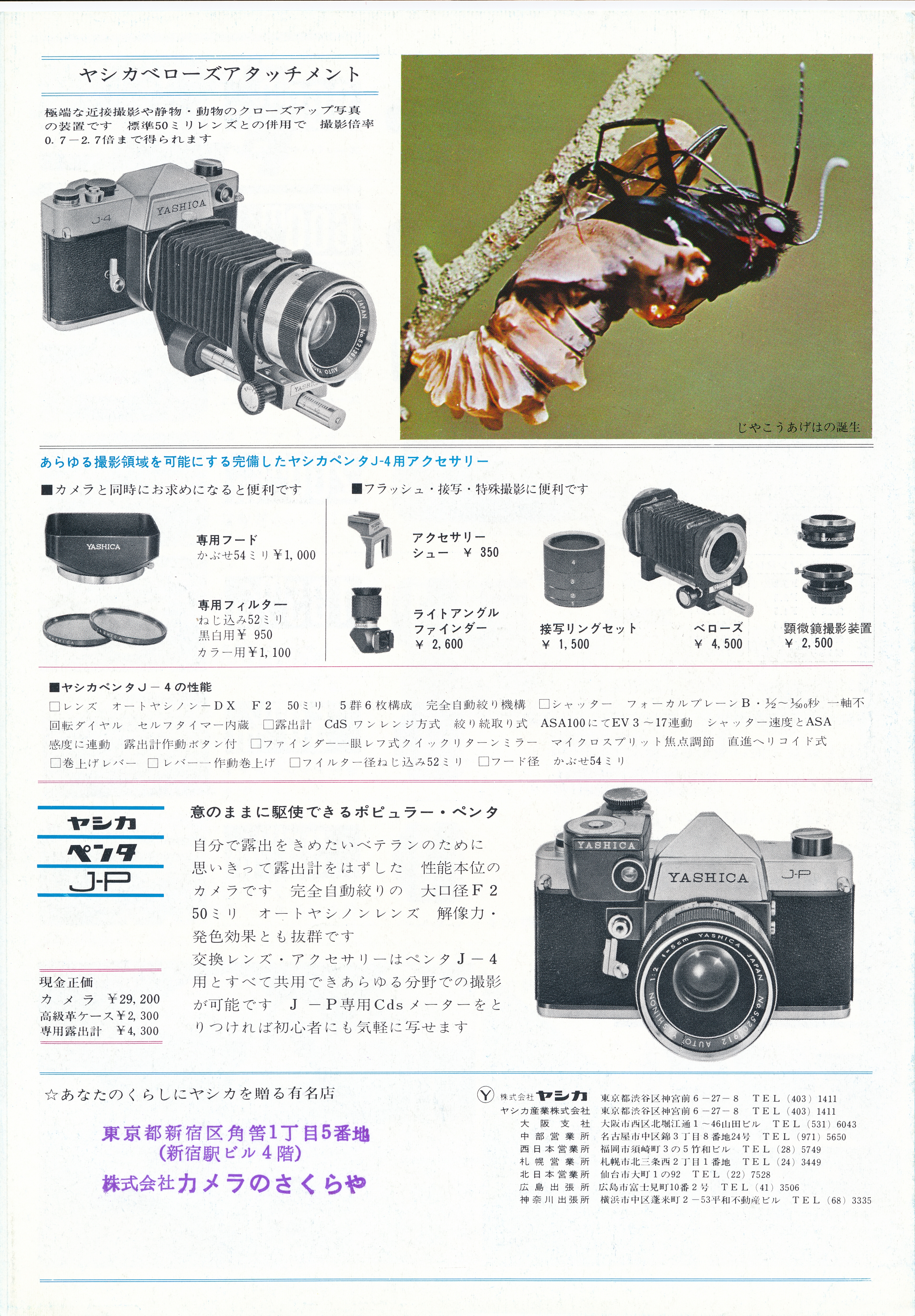
Unique back cover view of the sales brochure. The J-4 and the J-P are featured at the same time. No mention of the J-3.

Unique back cover view of the sales brochure. The J-4 and the J-P are featured at the same time. No mention of the J-3.

A Slight Diversion from Pentamatics

Some classic Yashica (Yashima Optical Co., Ltd.) instruction booklets from the 1950s.

Before there could be a Pentamatic, Yashica had to start somewhere and that somewhere was with easy to build twin lens reflex (TLR) cameras. TLRs were also know as medium format cameras that took (6 x 6 cm) or 2 1/4 x 2 1/4 inch sized images on 120 roll film. In the early 1950s the competition between Japanese camera makers was to say kindly, fierce! Out of hundreds of start ups in those early days of the 1950s, only a few manufacturers would emerge by the end of the decade to compete not only in the domestic market, but in the growing global marketplace as well. Going head-to-head with well established camera companies from Germany and in some cases, the United States.

In a departure with the then norm of simply producing basic user’s manuals or instruction leaflets, Yashima’s marketing department decided to publish (at great cost I’m sure) a series of more sophisticated instruction books that would serve as a calling card of the company’s knowledge in the field of photography. The series, “Yashica flex Photography” (my translation) often featured images from well known professional photographers and images of rising models and actors (and actresses). The books would start with a brief “mission statement” from Yashima’s founder and president followed by details on how to operate the particular camera model, use a light meter, how to adjust exposure and focus, load film, hold the camera, take flash and studio
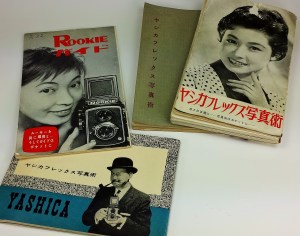
From the series of "Yashica flex Photography" books from the 1950s.

From the series of “Yashica flex Photography” books from the 1950s.

photography and even how to develop the film and make prints in your own home darkroom. Yashima also included sections on using accessories such as filters, flashes, tripods, cable releases and lens hoods. Not all of the accessories were made by Yashima… often other manufacturers products were included and identified by name. Generally not seen in instruction books of the time (and certainly not today).

So bravo to Yashica! These books serve as a great reference to any collector and I’m sure introduced and encouraged many a young photographer of the day to achieve greater confidence in their picture taking abilities.
Pentamatic… great camera or epic fail?

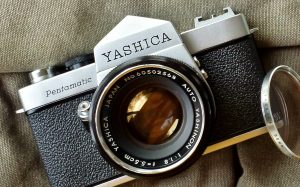
Did Yashica produce a great new SLR or did they miss the mark…

Yashica started making the Pentamatic in small numbers in December 1959 and appeared to have enough made to release into the marketplace by the May-June 1960 time period. I have proof (finally) that the Pentamatic model I and model II were available in the Japanese domestic market for around ¥34,800 for the model I and ¥37,300 for the model II. Not quite sure why the big change in price other than they made a price adjustment to cover the costs of manufacturing and marketing. Even the simple leather case went up in price by ¥200. The original list price was $159.95 in the US with another $12.95 for the leather case. By the January 1961 issue of Modern Photography, the Pentamatic was reduced quite drastically by some camera dealers in New York. Why the drastic sell off? 

By January 1961, some pretty strong discounts.

By January 1961, some pretty strong discounts.

Some Early Yashima (Yashica) History

The excitement of those early days at Yashima…

A slight departure from the Yashica Pentamatic and a brief look at Yashima, later Yashica, in the mid 1950s. In less than 2 years as a camera manufacturer, Yashima was demonstrating its commitment to producing quality products across the spectrum of its product line. Most camera manufacturers in Japan were busy developing credible and affordable cameras and lenses for sale at home and around the world… that was what was expected to be successful in the marketplace. There were hundreds of small start up photographic companies emerging from Japan in the post war years, but by the end of the 1950s, hundreds would be gone. Yashica’s brilliance came from understanding what the domestic market would embrace and what the world markets would accept. Inexpensive high quality cameras that the masses could afford and marketing that gave the company a presence that would set it apart. As I have stated before, by the end of the decade of the 1950s approached, Yashica was out producing and out selling other such well know competitors as Olympus, Canon, Nikon and Pentax combined!

Yashima’s first ‘instruction booklets’ (more like leaflets) were quickly replaced by a wonderful series of books that served as both an instruction manual for a particular camera and as a lesson book in the art of photography. The series titled Yashica Flex Photography was first published in August 1955 with many editions and re-printings to follow over the next 2 to 3 years. The books served a purpose in establishing Yashica as a credible camera company and contributing to the general education of the many young photographers developing their skills. Some of the books feature images taken by well known professional photographers as well as popular models and actresses in Japan at the time. In my opinion, certainly not an inexpensive way to go for such a humble item as an instruction booklet. It has been pointed out to me by my good friend Paul Sokk (www.yashicatlr.com) that these books were only published for the Japanese domestic market and there are no examples of English language versions. Yashica did issue more traditional instruction booklets in English for their TLRs produced during this period for markets outside of Japan.

Small sample of Yashima / Yashica instruction books from the 1950s.

Small sample of Yashima / Yashica instruction books from the 1950s.

Here are just a few examples…

Image taken by Mr. Akiyama Shotaro c1955.

Image taken by Mr. Akiyama Shotaro c1955.

Unknown

Unknown “actor” poses for the cover of the Yashica A III Yashica Flex Photography book.

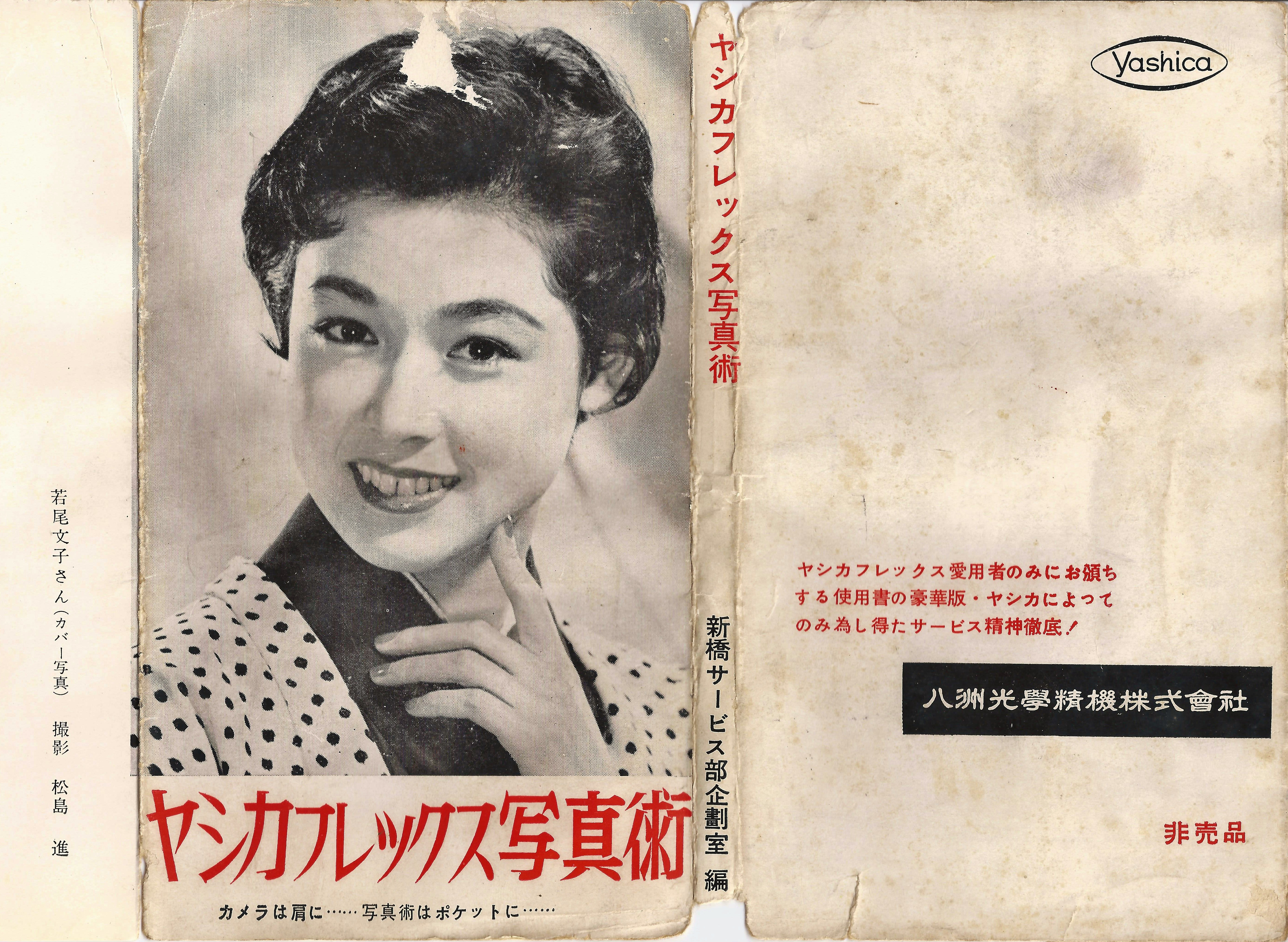
Cover photo from the model C. Actress was Ayako Wakao and the photographer was Matsushima Susumu.

Cover photo from the model C. Actress was Ayako Wakao and the photographer was Matsushima Susumu.

“Missing Self-Timer” and 1960s Selfies!

If you wanted to take a selfie in 1960 your options were limited… 

Self-timers as they were called back then, were available on some cameras in the 1950s and early 1960s as a built-in feature. But most were not including Yashica. The answer… a stand alone device that could be attached to the shutter button via a screw thread, and when set gave the photographer about 5 to 8 seconds to join in on the fun of being photographed. Great for group shots or for showing everyone back home your smiling face in your favorite local. I’ve used them (the built-in kind) for firing the shutter during long exposures whenever my camera was securely attached to a sturdy tripod. The Pentamatic was designed in middle 1959 and basically went into the marketplace by the spring of 1960. It was a cost savings plan by the Yashica bean counters (I’m sure that was the case or it was that they rushed it into production and just plain forgot it) to save a few bucks whenever and wherever they could. So no built-in timer. They also left off a built-in or at least somewhat coupled exposure meter… I’ll leave that for another post. So here are two views of the how it was done back then. Surprisingly Yashica used another manufacturers timer (Waltz) in the Pentamatic instruction booklet! The second image corrects that injustice! It appears that Yashica did not make stand alone self-timers but relied on others to supply them. Maybe one or two other companies produced them all with different logos on each, but it is highly unlikely that this is a Yashica made item.

Yashica's 1959 instruction booklet showing another manufacturers self-timer in use.

Yashica’s 1959 instruction booklet showing another manufacturers self-timer in use.

How the original instruction booklet should have looked. Yashica branded self-timer with the Pentamatic.

How the original instruction booklet should have looked. Yashica branded self-timer with the Pentamatic.