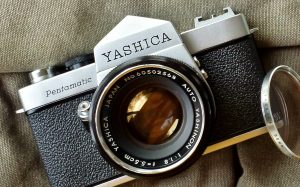
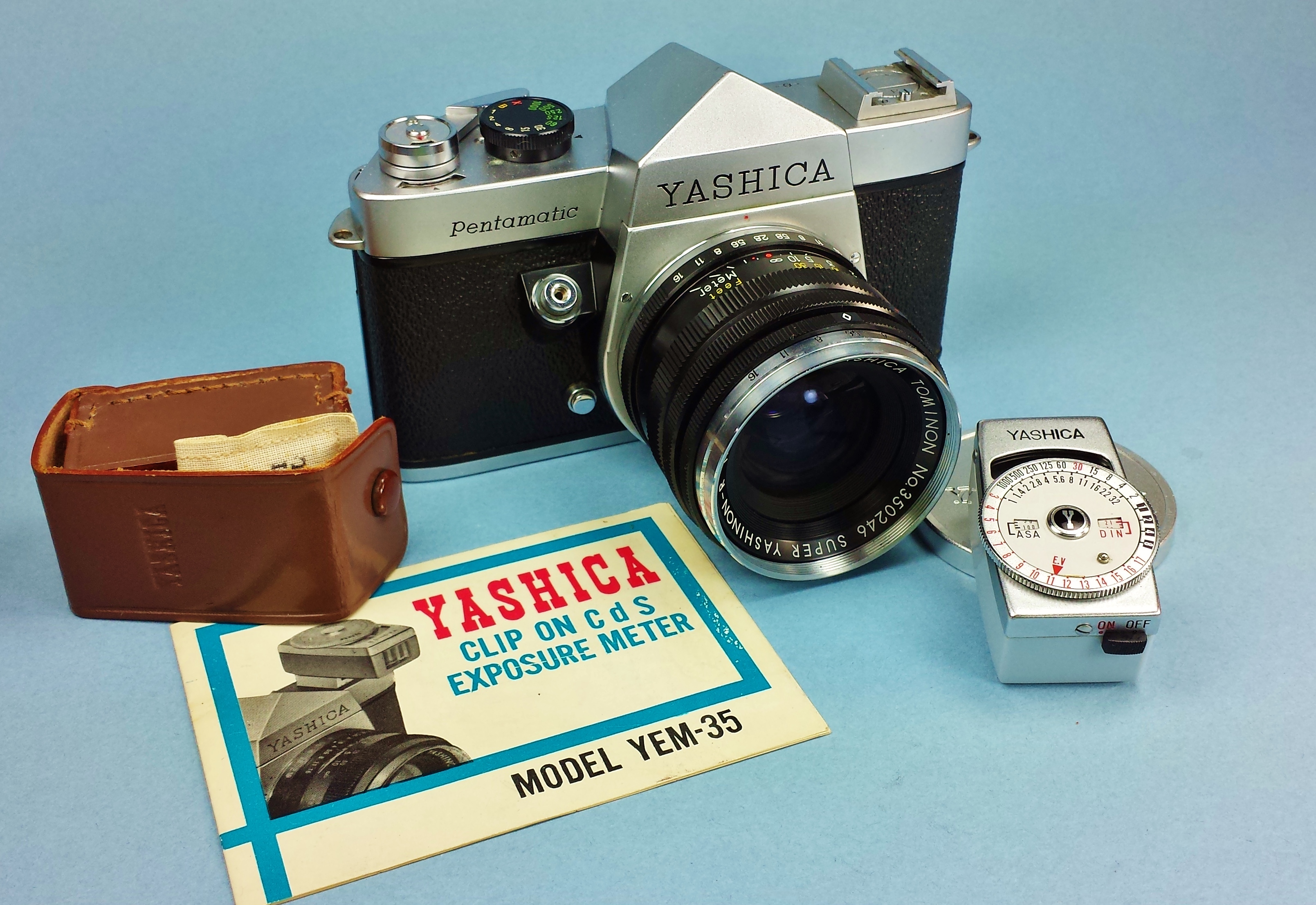
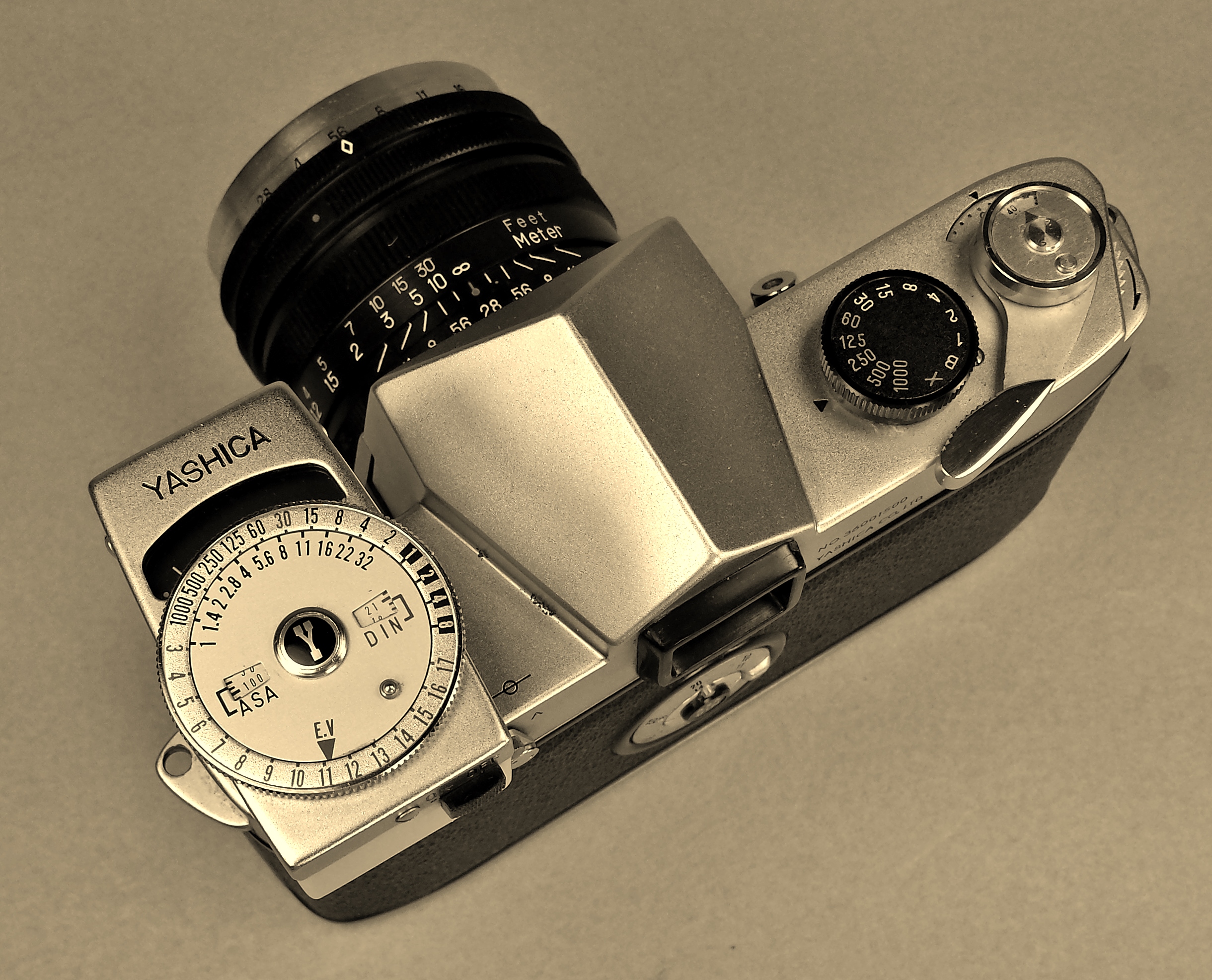
The Pentamatic was unique in the fact that the accessory shoe was located on the camera’s left side just above the rewind lever. Since the Pentamatic didn’t have TTL metering adding a separate meter was as easy as simply sliding whichever model you wanted on. Of course, the meter wasn’t coupled with the camera so you would set the camera’s aperture and shutter speed according to the meters readings.
Vintage view with the meter attached to the accessory shoe.Sears catalog ad from 1961.
Comments are always welcomed as I’ve learned quite a bit from reader feedback. As always, thanks for stopping by and while you’re at it, feel free to visit my camera shop at http://www.ccstudio2380.com (CC Design Studios hosted by Etsy). – Chris Whelan
Please respect that all content, including photos and text, are the property of this blog and its owner, Yashica Pentamatic Fanatic, Yashica Sailor Boy, Yashica Chris, Chasing Classic Cameras with Chris.
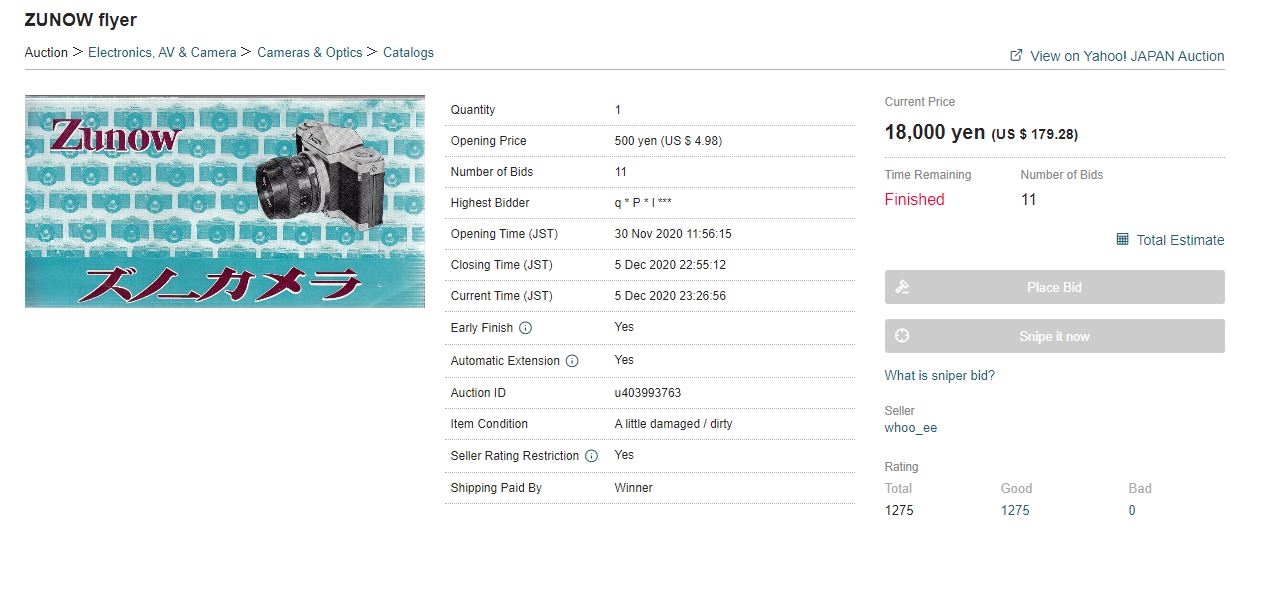
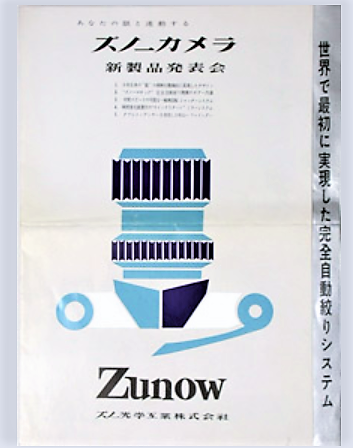
A very rare, no let me say, ultra rare Zunow camera and lens set is for sale via an online auction in Japan. The Zunow was made in extremely limited numbers in 1959 and few remain this complete in the present collector world. Yashica’s first 35mm SLR was designed in early to mid-1959 shortly after Yashica acquired Nicca camera in 1958. The Yashica Pentamatic ’35’ started production in December 1959 with the first units reaching the US market in the Spring of 1960. The Pentamatic and the Zunow share some similar DNA as Yashica purchased lenses from Zunow (mostly cine lenses) and they were for a time dual branded.
Not often seen together original box, lens cap, case with strap, camera body and lens.Beautiful together.Here’s a snip of a completed auction for just the brochure.Here’s my first Pentamatic ’35’ with a super-rare Tominon and Yashica branded wide-angle lens.
Looking at the Zunow and the Pentamatic it’s not hard to let your imagination run wild that maybe Zunow, Nicca, and Yashica all shared some design features with one another over a drink or two at a local bar on the outskirts of Tokyo.
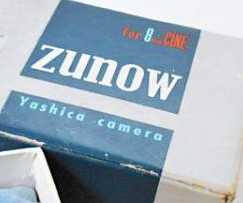
This could be another sales brochure or brochure and instruction booklet combination.Zunow and Yashica branded box for an 8mm cine camera lens.An advertisement for a rare dual offering from a well-known Japanese camera dealer a few years back.
The Yashica Pentamatic II is without a doubt the hardest camera to find in any condition in Yashica’s lineup. If you do find one, buy it at least for its standard lens. You won’t be disappointed.
A new Pentamatic joins the family – this one was made in September of 1960.
Seldom seen in the wild, Yashica’s “Phantom” camera – the P2
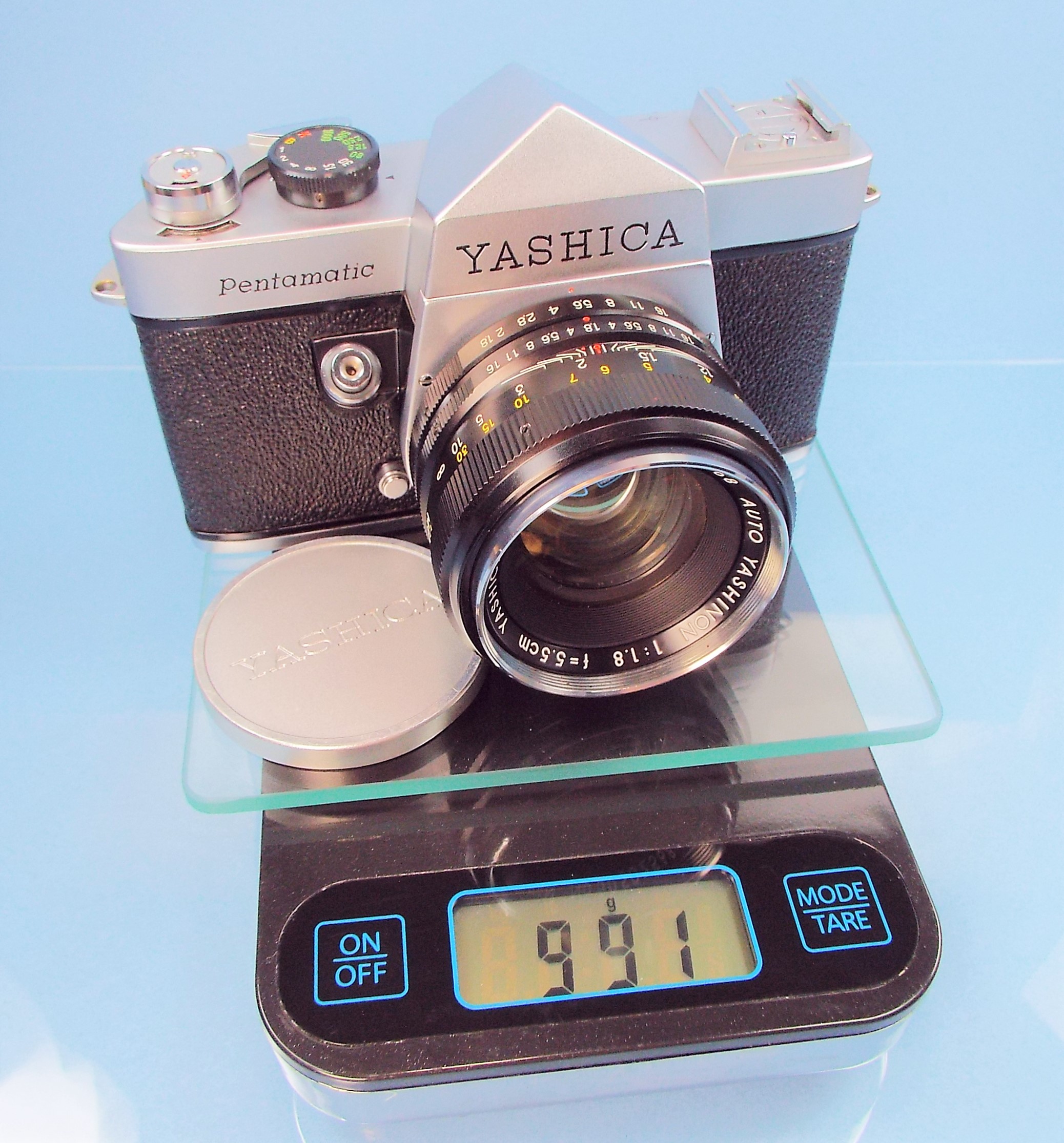
The Pentamatic II was fitted with a limited production lens made by Zunow Optical – a 5.8cm f1.7 Auto Yashinon with 10 aperture blades. It’s a massive camera with a ton (1,028 grams) of brass and glass.
It’s a distinctive design – very modern but classic at the same time. A clean pentaprism without the cold shoe mounted on it – in fact, the cold shoe (accessory shoe) is mounted on the camera’s left shoulder just above the hidden rewind knob.
The serial number (NO. 96000944) indicates the “when” of this camera. The “9” is for September and the next digits, “60” is for 1960. The last 5 digits are the sequence number or production number. This one is the 944th made since production…
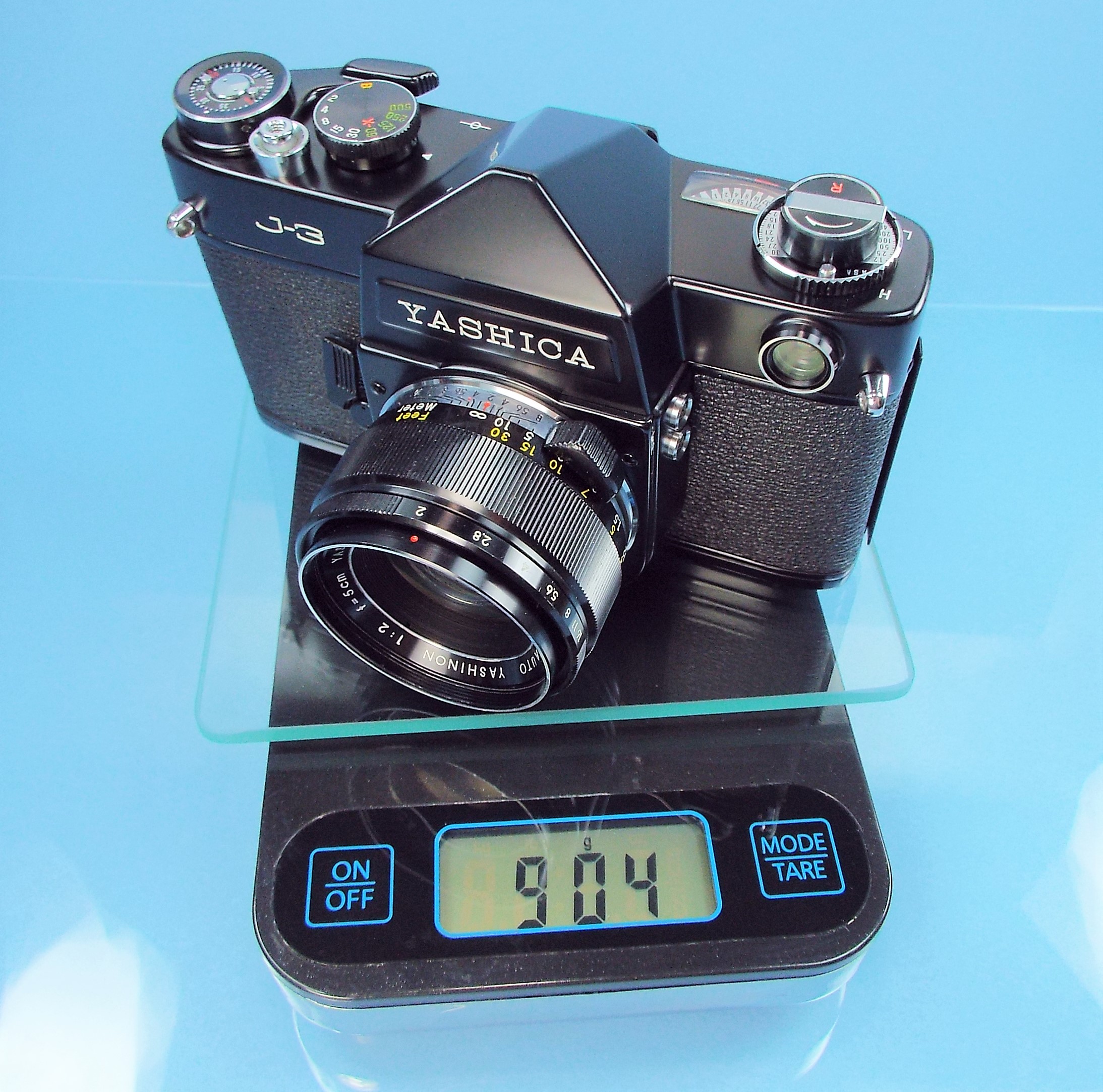
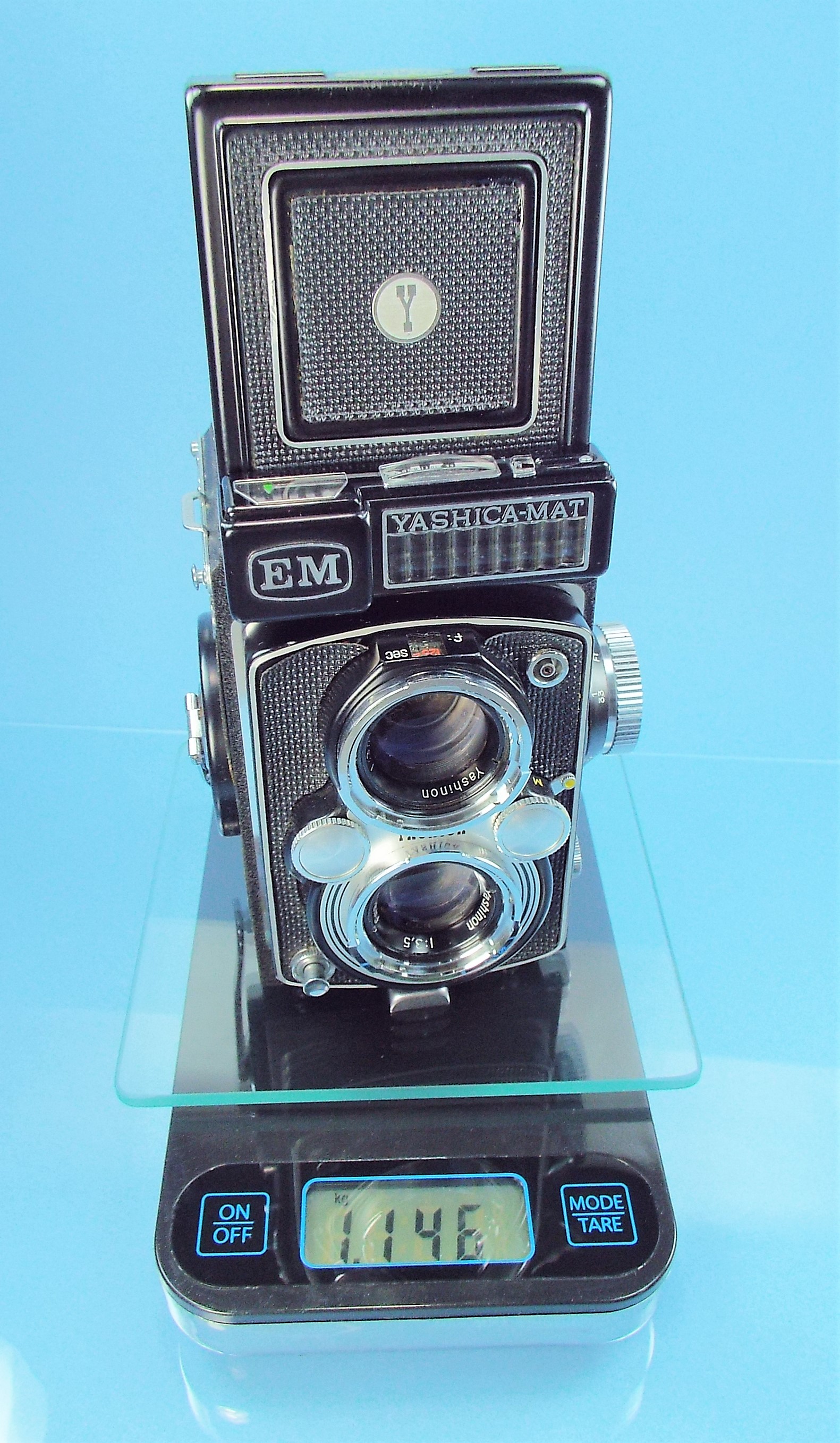
Here is a fun visual comparison between three early Yashica cameras.
Yashica’s first 35mm SLR released in early 1960. The Pentamatic 35 with its fast f/1.8 lens was a neck breaker to be sure.Yashica’s first modern 35mm SLR released shortly after the end of the Pentamatic series in 1962.First released in 1964, the Yashica Mat EM (Exposure Meter) was and still is a very popular TLR (twin-lens reflex) 120 roll film camera. It features a built-in exposure meter powered by selenium cells. The meter on mine is still working and is accurate when shooting negative films.
What’s the heaviest camera in your collection? Not pictured here I’d say my fully decked out Canon F-1 with a motor drive and big f/1.2 lens is crazy heavy. I’ll have to dig it out and post the results here soon.
Comments are always welcomed as I’ve learned quite a bit from reader feedback. As always, thanks for stopping by and while you’re at it, feel free to visit my camera shop at http://www.ccstudio2380.com (CC Design Studios hosted by Etsy). – Chris Whelan
Please respect that all content, including photos and text, are the property of this blog and its owner, Yashica Pentamatic Fanatic, Yashica Sailor Boy, Yashica Chris, Chasing Classic Cameras with Chris.
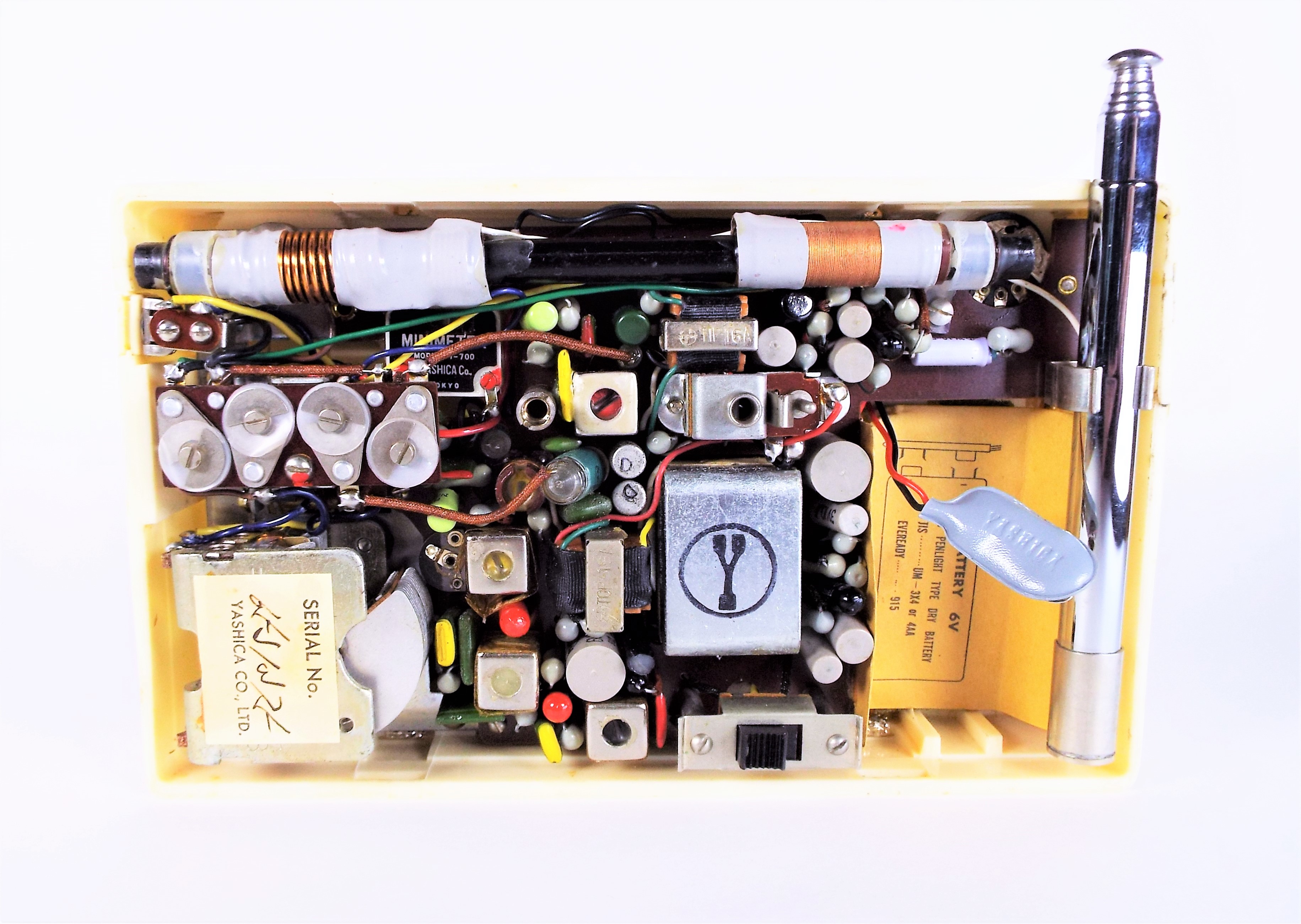
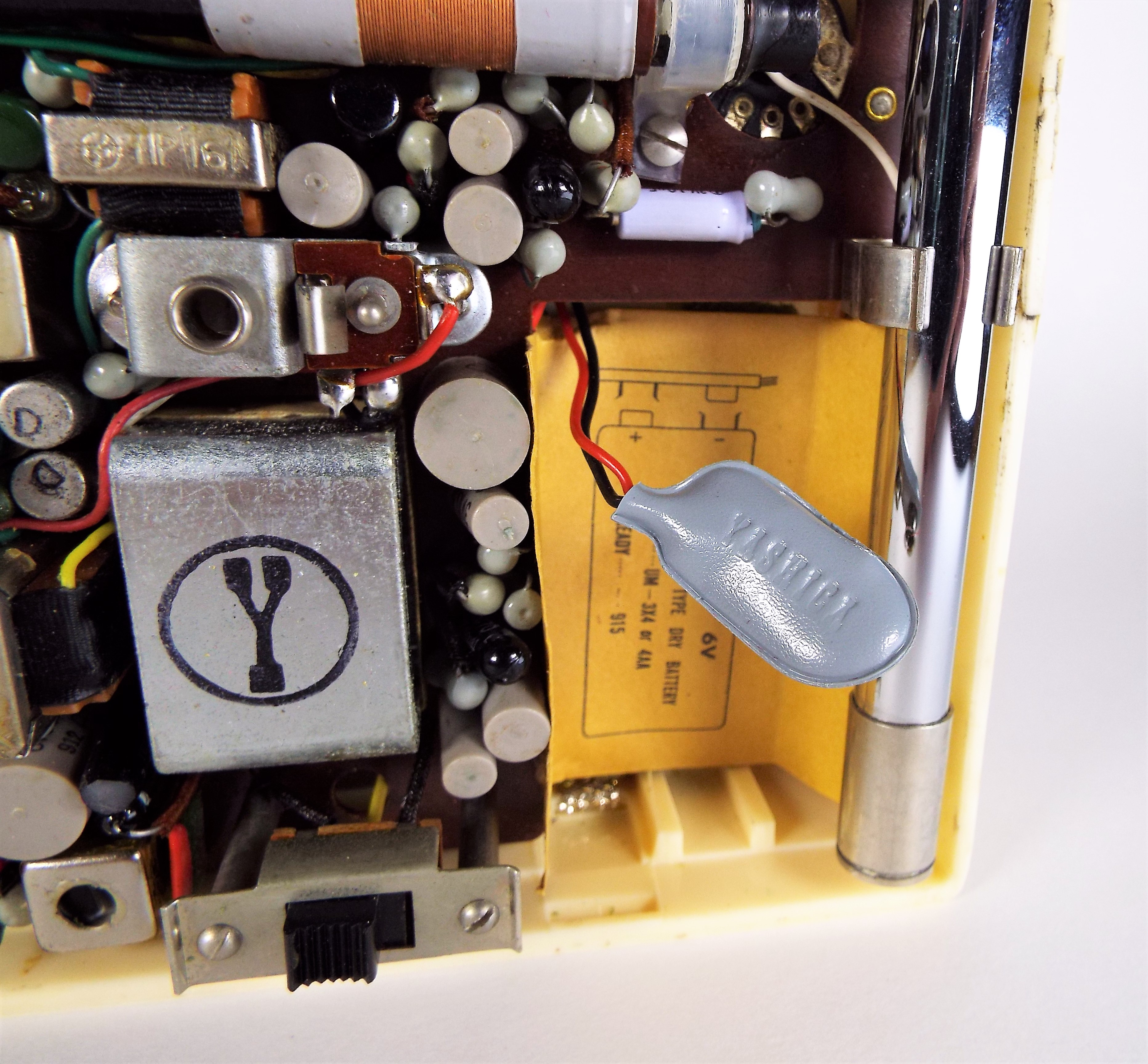
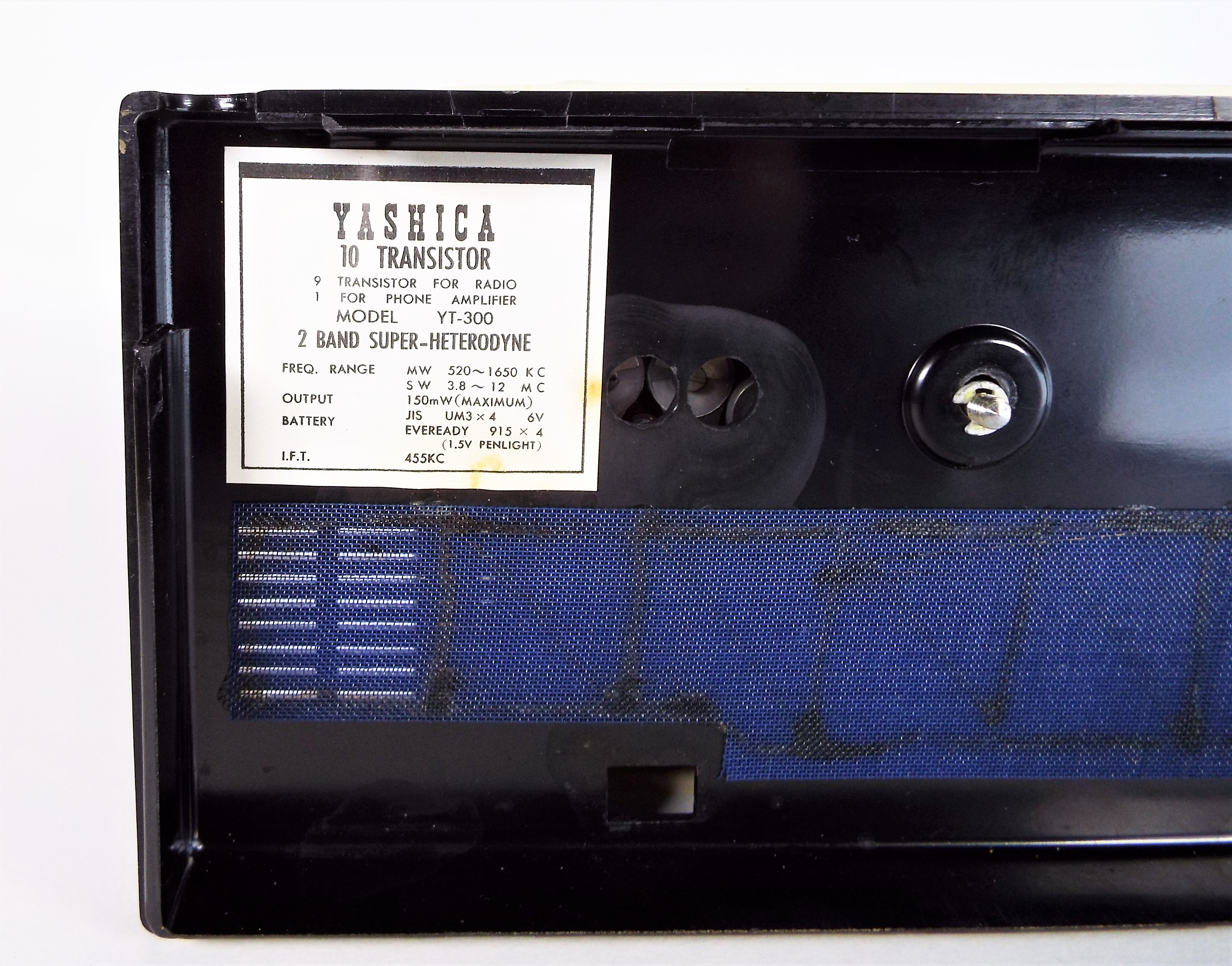
With the back cover removed full 1960s hi-tech is on display. The western looking “Y” was Yashica’s logo during this period. I believe it’s stamped on the back of the speaker.
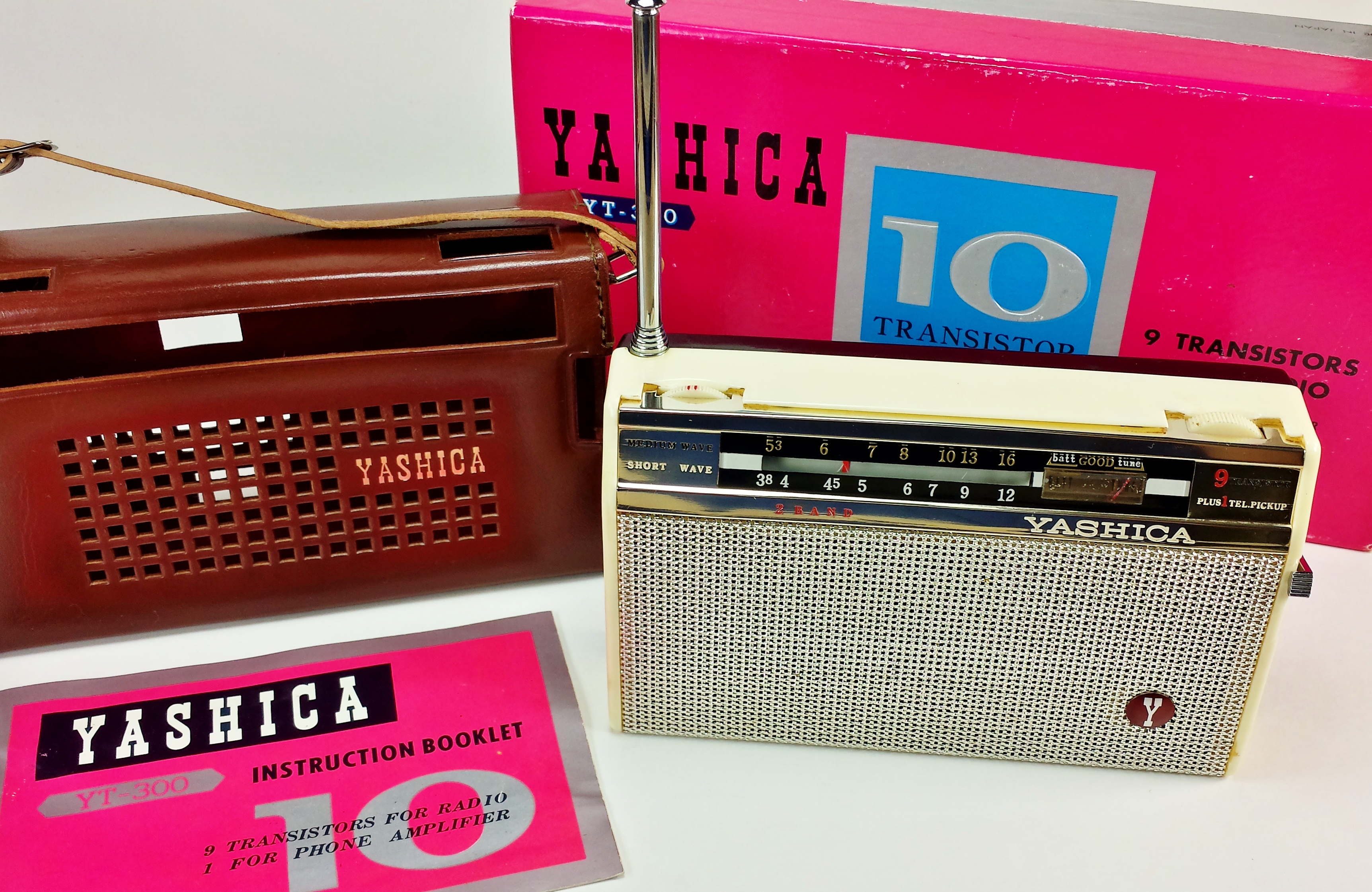
Yashica Model YT-300 Transistor Radio
Yashica even put their name on the battery connector cap.Inside the back cover. In addition to making great cameras, Yashica also made some electronic devices such as movie projectors and editors, radios, tape recorders, and even a record player!The radio with it’s original goodies still intact. It’s a gorgeous piece of electronics that does not power up. I would love to get it fixed if it is even fixable.
Comments are always welcomed as I’ve learned quite a bit from reader feedback. As always, thanks for stopping by and while you’re at it, feel free to visit my camera shop at http://www.ccstudio2380.com (CC Design Studios hosted by Etsy). – Chris Whelan
Please respect that all content, including photos and text, are the property of this blog and its owner, Yashica Pentamatic Fanatic, Yashica Sailor Boy, Yashica Chris, Chasing Classic Cameras with Chris.
Yashica produced more than just cameras during its boom years. As a leader in the field of electronic photography in the middle to late 1960s, Yashica’s early electronic devices ranged from such diverse items as transistor radios, record players, movie projectors, editing equipment and tape recorders to name but a few.
Most of the earliest electronic devices are rather rare now (as one would expect after 50 years) and only occasionally does something come up in auctions both on the web and in estate sales. I suspect that the more common electrical items such as projectors and editing equipment are still flooding eBay and other on-line auction sites.
Finding an early radio such as the YT-300 and YT-100 is a bit harder. Here we share some of what we’ve been able to collect over the years.
From the Yashica book The Creative System of Photography. Some of the lenses pictured here are nearly impossible to find today in mint or near mint condition. I do know some intrepid Yashica collectors that have come very close to owning all of this.
To chase down all of this is a pretty monumental task so I’d give it a Chase Factor of a solid 10 (CF-10). Good luck chasers!
Comments are always welcomed as I’ve learned quite a bit from reader feedback. As always, thanks for stopping by and while you’re at it, feel free to visit my camera shop at http://www.ccstudio2380.com (CC Design Studios hosted by Etsy). – Chris Whelan
Please respect that all content, including photos and text, are the property of this blog and its owner, Yashica Pentamatic Fanatic, Yashica Sailor Boy, Yashica Chris, Chasing Classic Cameras with Chris.
This image was scanned from a Yashica TL ELECTRO-X book from 1972 titled The Creative System of Photography.
Taken with a Yashica TL Electro-X and Yashinon-DX 21mm f/3.3 lens at f/5.6 at 1/60 second. Image by acclaimed professional photographer Takeji Iwamiya. Titled “Solarization”.
A scan from the Yashica Yashinon Lenses & Accessories booklet dated December 1973.
As you can see in the above scan, as late as late 1973 Yashica was still marketing their 21mm lens alongside the newer and certainly more modern 20mm ultra-wide lens. The 21mm is a retrofocus lens meaning that the mirror on a 35mm SLR would have to be in the up position as the rear element of the lens was just millimeters away from the film plane. A separate matching viewfinder would need to be mounted on the accessory shoe in order to frame your image. Fortunately an ultra-wide lens usually has such a wide view that parallax error would only be a factor at extreme close-up imaging.
Do to the relative scarcity of the 21mm lens, prices are much higher than one would expect to pay for a ultra-wide lens of a more modern design. If you find the lens in excellent physical and optical condition with its matching viewfinder and original lens case, expect to see asking prices generally north of $500 USD. If you’re lucky, you may get a good one with no issues at around half that price. I give this lens set a Chase Factor of 8 (CF-8) for the reasons stated above. I certainly don’t need it in my collection but it would be a nice to have.
Rear view of the Yashica 21mm DX lens with its matching 21mm viewfinder.
Comments are always welcomed as I’ve learned quite a bit from reader feedback. As always, thanks for stopping by and while you’re at it, feel free to visit my camera shop at http://www.ccstudio2380.com (CC Design Studios hosted by Etsy). – Chris Whelan
Please respect that all content, including photos and text, are the property of this blog and its owner, Yashica Pentamatic Fanatic, Yashica Sailor Boy, Yashica Chris, Chasing Classic Cameras with Chris.
Yashica’s (Kyocera by this point) last TLR model. This one was part of the last run of the model before production shut down in 1986. Yashica (originally named Yashima) started off in 1953 with the obscure Pigeonflex TLR followed by the Yashima Flex and then continued to build TLRs way longer than the market could bear (or need). The good news is that the 124G can be found today in great quantities and cameras as “young” as 35 years-old. It’s a very affordable way to get into medium format photography and in the case of this model, be able to use both 120 and 220 roll film giving you either 12 or 24 exposures.
After about 33 years of making TLRs, this was Yashica’s best.A beauty – here’s what a modern TLR looked like back in 1985.The design of the last box that held the 124G (1985-1986).This gorgeous camera was the first to carry the company name – Yashica Flex made in 1954.
For contrast, compare the Yashima Flex to the Yashica Mat 124G. Their excellent build quality remained throughout the decades. If you’re chasing one of these for your collection you’re in luck because Yashica made a bunch of 124Gs and there’s a bunch still out there. Expect to pay a premium for mint examples but be careful, they’re still older cameras and a host of bad things can happen to them from lack of use and improper storage. Ask lots of questions of the seller if you’re buying online and look for sellers with excellent reputations for selling quality classic and vintage cameras. BTW, not too many of the original Yashima Flex cameras will look like my example pictured above. I was so very lucky to buy mine from the original owner in Japan who obviously kept it in pristine condition both physically and mechanically.
Comments are always welcomed as I’ve learned quite a bit from reader feedback. As always, thanks for stopping by and while you’re at it, feel free to visit my camera shop at http://www.ccstudio2380.com (CC Design Studios hosted by Etsy). – Chris Whelan
Please respect that all content, including photos and text, are the property of this blog and its owner, Yashica Pentamatic Fanatic, Yashica Sailor Boy, Yashica Chris, Chasing Classic Cameras with Chris.
From 1973, a box for the TL Electro-X ITS (Integrated Technology System). The box reflects the efforts of Yashica’s marketing division to create a more sophisticated looking box consistent with the new look to the TL Electro-X.The original Yashica TL Electro-X box. This one is from mid-1970.
If you’re looking to add the correct box for your Yashica TL Electro-X be sure to match the proper box to the two different cameras. BTW, except for some external appearance differences, the ITS and the original Electro-X cameras are the same. The ITS was only available in an all black body whereas the original was available in both a satin chrome and black body.
If you look closely you’ll see that this box uses green for the “TL” and “35” logo where the true original uses a red “35” logo and a white “TL”. Oddly this variation of the box is from May 1970 which is right in the middle of the other boxes with the red logo. I haven’t decoded if it means anything changed in relationship to the camera or was it just a marketing exercise to see which looked better.
Comments are always welcomed as I’ve learned quite a bit from reader feedback. As always, thanks for stopping by and while you’re at it, feel free to visit my camera shop at http://www.ccstudio2380.com (CC Design Studios hosted by Etsy). – Chris Whelan
Please respect that all content, including photos and text, are the property of this blog and its owner, Yashica Pentamatic Fanatic, Yashica Sailor Boy, Yashica Chris, Chasing Classic Cameras with Chris.






 Seldom seen in the wild, Yashica’s “Phantom” camera – the P2

 Not a bad price for such a sophisticated…


