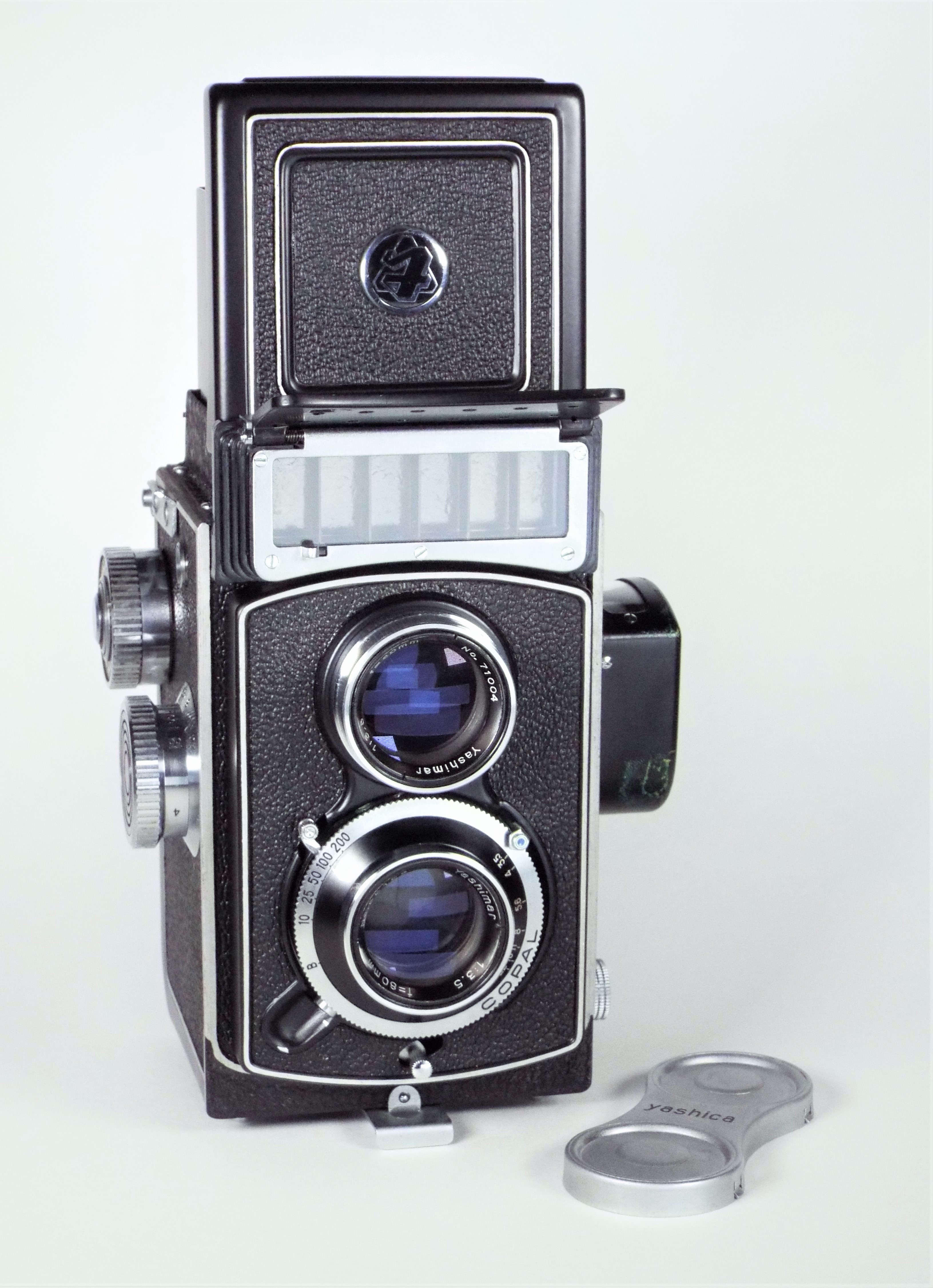
Before they were known as Yashica they were Yashima and this is one of the first cameras to feature their original name. This is one of the nicest TLRs in my collection and I was thrilled to find it many years ago on an auction site in Japan. The original lenses were marked Tomioka Tri-Lausar and later just Yashinon. Tomioka Optical eventually became part of the Yashica Company.
This is an incredibly difficult camera to find for sale anywhere but a few do show up from time to time. Your best bet is to keep an eye out for one on Buyee (Yahoo Japan Auction) in Japan. Thanks for stopping by! – Chris
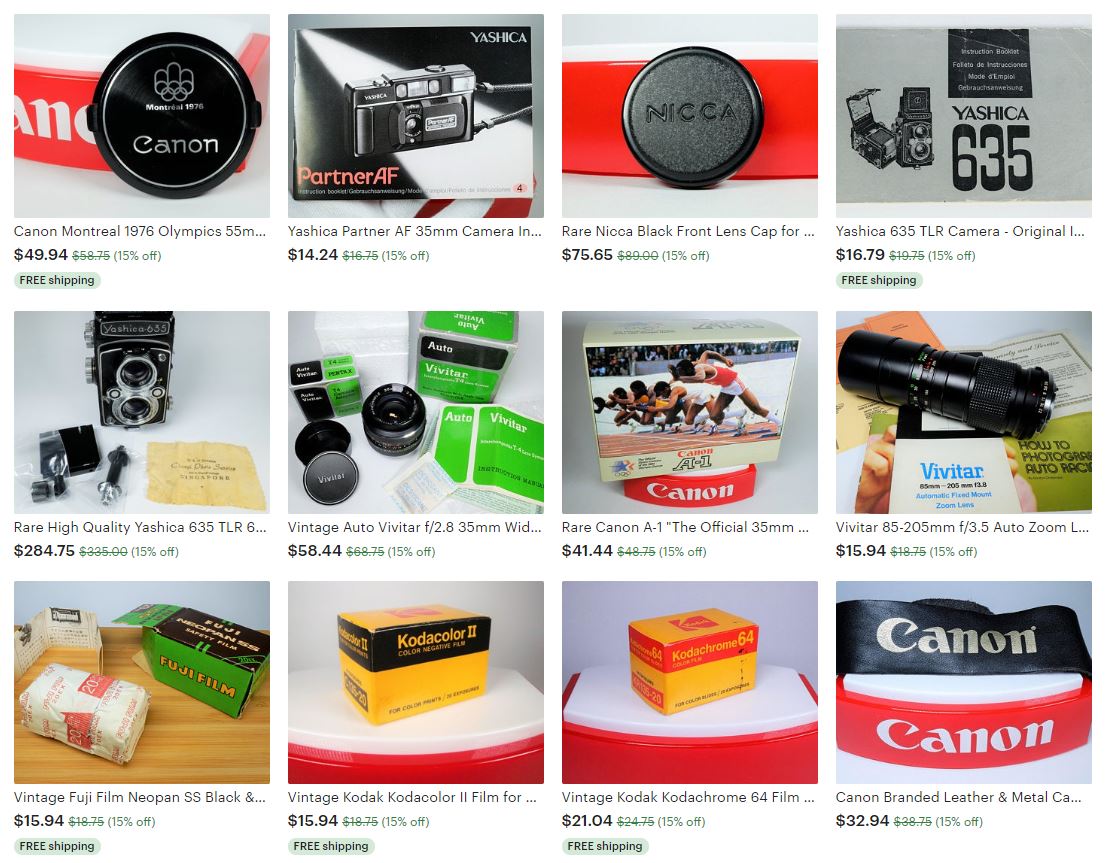
Comments are always welcomed as I’ve learned quite a bit from reader feedback. As always, thanks for stopping by and, while you’re at it, feel free to visit my camera shop at http://www.ccstudio2380.com (CC Design Studios hosted by Etsy). – Chris Whelan
Please respect that all content, including photos and text, is this blog’s property and its owner, Yashica Pentamatic Fanatic, Yashica Sailor Boy, Yashica Chris, Chasing Classic Cameras with Chris.
Public School No. 1 building, Fernandina Beach, Amelia Island, Florida. This grand building is home to the county office for the Nassau County School Board.
Canon EOS R mirrorless digital camera.
The image above was taken with my Canon EOS R full-frame mirrorless camera and Canon EF 16-35mm zoom lens late in the afternoon. In the image below taken about mid-day, I used my ca.1964 Yashica Mat EM twin-lens reflex film camera which shoots a 6x6cm square image on 120 roll film.
Yashica Mat EM 6×6 cm TLR film camera.
I enjoy photographing the many historic buildings in and around the Fernandina Beach Historic District using different cameras and formats. Thanks for stopping by! – Chris
Comments are always welcomed as I’ve learned quite a bit from reader feedback. As always, thanks for stopping by and, while you’re at it, feel free to visit my camera shop at http://www.ccstudio2380.com (CC Design Studios hosted by Etsy). – Chris Whelan
Please respect that all content, including photos and text, is this blog’s property and its owner, Yashica Pentamatic Fanatic, Yashica Sailor Boy, Yashica Chris, Chasing Classic Cameras with Chris.
Also known as the Yashica Flex S. I’ve put together a nice complete set of this hard-to-find early TLR from Yashima-Yashica. As you can see on the box, at this point in time the company that would change its name in 1958 to Yashica was still Yashima Kogaku Seiki Company. The instruction book is in English as the camera was marketed by the Miura Trading Company and not directly marketed by Yashima. The Model S was the first TLR with a “built-in exposure meter”. The meter was simply a light meter made for Yashima by Sekonic and attached to the camera’s left side. The selenium cells for the meter are located under the nameplate which is a flap that swings upwards.
If you would like to know more about this landmark camera then I invite you to visit my good friend Paul Sokk’s Yashica TLR site at http://www.yashicatlr.com/66ModelsPage2.html
Paul’s work on the Yashica TLR family of cameras is second to none. He’s also included a wonderful addition to his pages with additional pages dedicated to Leica, Nicca, Leotax, Minolta, and others. Give his site a read and tell him Chris sent you!
Comments are always welcomed as I’ve learned quite a bit from reader feedback. As always, thanks for stopping by and, while you’re at it, feel free to visit my camera shop at http://www.ccstudio2380.com (CC Design Studios hosted by Etsy). – Chris Whelan
Please respect that all content, including photos and text, is this blog’s property and its owner, Yashica Pentamatic Fanatic, Yashica Sailor Boy, Yashica Chris, Chasing Classic Cameras with Chris.
Comments are always welcomed as I’ve learned quite a bit from reader feedback. As always, thanks for stopping by and while you’re at it, feel free to visit my camera shop at http://www.ccstudio2380.com (CC Design Studios hosted by Etsy). – Chris Whelan
Please respect that all content, including photos and text, are the property of this blog and its owner, Yashica Pentamatic Fanatic, Yashica Sailor Boy, Yashica Chris, Chasing Classic Cameras with Chris.
In my opinion, Yashica was the hands down leader in producing twin-lens reflex cameras starting in the early 1950s right up until the mid 1980s when the last TLR rolled off the assembly lines. In between there were some very important milestones achieved by Yashica. One of which is the Yashica 635. My good friend Paul Sokk has an excellent site dedicated to everything you’d ever want to know about Yashica so I’d invite you to visit his 635 pages at http://www.yashicatlr.com/66ModelsPage6.html#yashica635
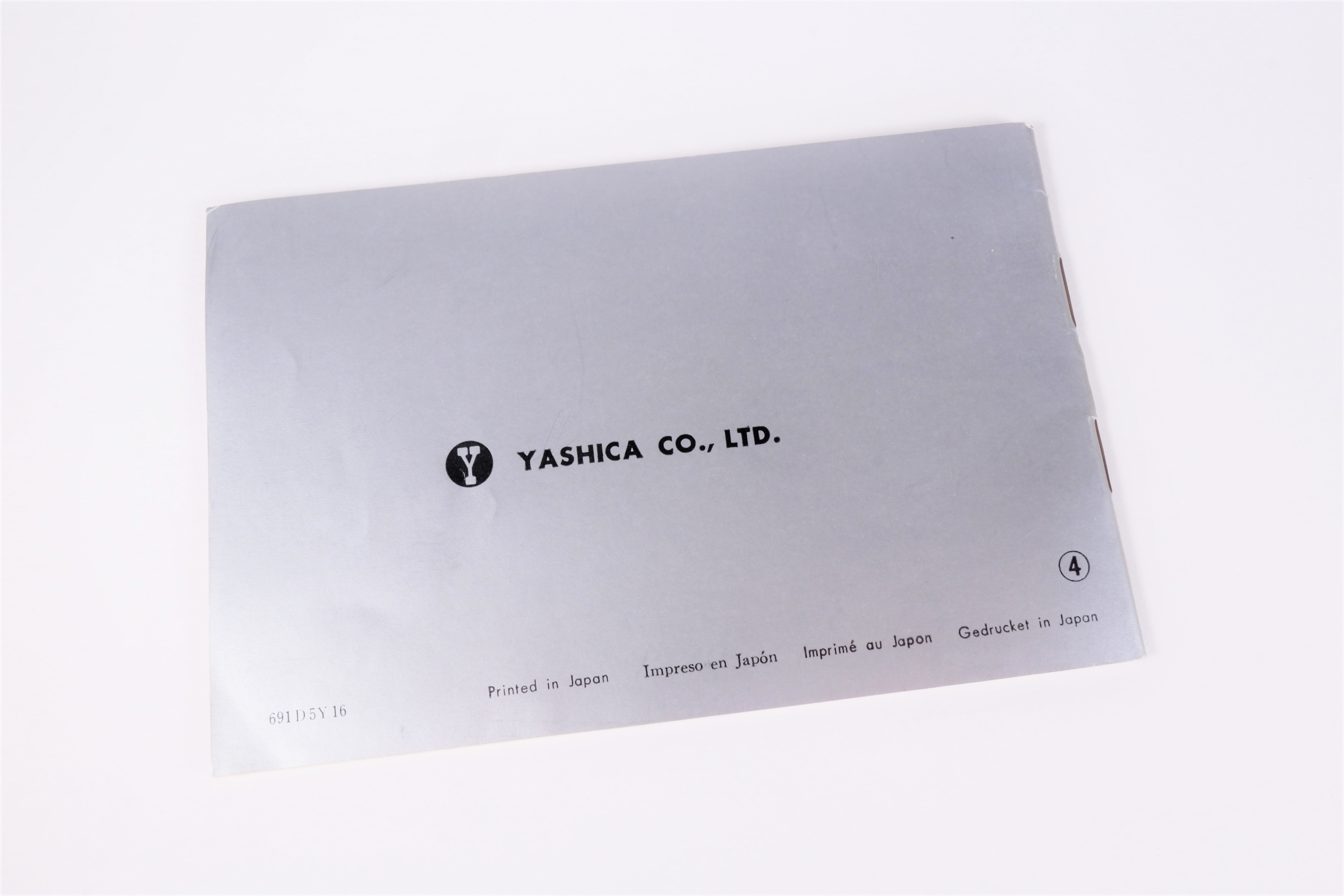
Yashica 635 Instruction Booklet cover.Yashica 635 Instruction Booklet back cover.Yashica’s date code.
One way to figure out when Yashica may have printed an instruction booklet is by the date code in this case printed on the lower left on the back cover. Not all instruction booklets released by Yashica had an obvious date code but in my experience quite a few did especially from the mid-1960s onward. In this example the 691 D 5Y 16 contains the date. I have high confidence that the 691 indicates the year and month 1969 January.
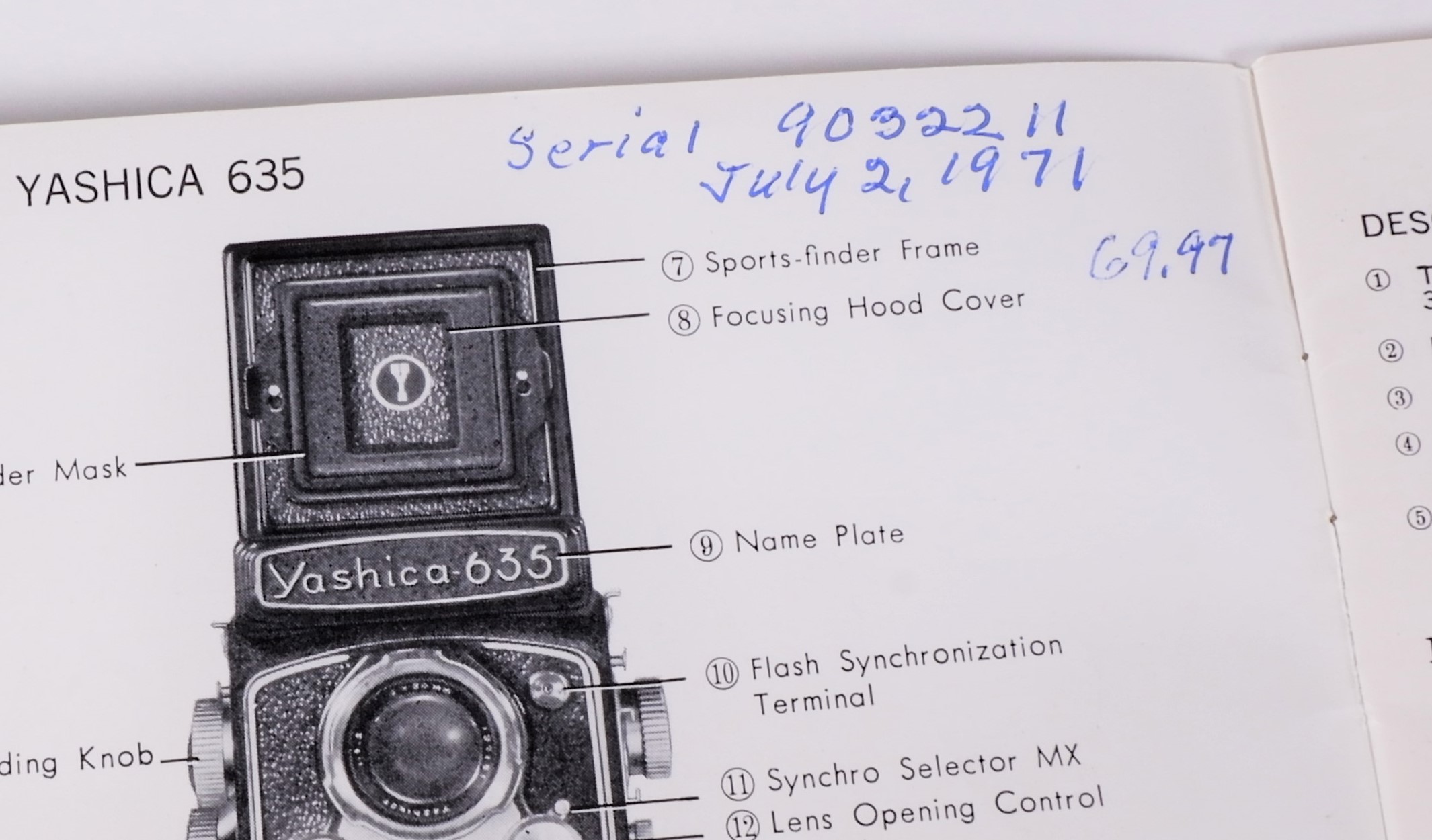
In this example, the serial number begins with 9 and the date code is 691 from the cover pictured above.
Here are a couple of additional examples (below).
In the example above, 673 is simply decodes to 1967 March which the hand written serial number 7041480 bears out. The first digit 7 is the year that camera was made. Typically cameras sat around in camera shops or distributer’s warehouses for a while before they were sold. This camera wasn’t sold until January 1969. TLRs were not as popular by the late 1960s as the rise in popularity of the 35mm SLR cut into sales in a big way. I’m sure this camera was heavily discounted by the time it sold.
Here is an example from September 1966.
So pull out your Yashica Instruction Booklets and have a go at “dating” your camera. You’ll be surprised at what you’ll learn. Feel free to contact me here for a go at your camera and instruction booklet. BTW, Canon was fantastic at printing easy to decode dates on their booklets and in their cameras, lenses, and accessories.
Comments are always welcomed as I’ve learned quite a bit from reader feedback. As always, thanks for stopping by and while you’re at it, feel free to visit my camera shop at http://www.ccstudio2380.com (CC Design Studios hosted by Etsy). – Chris Whelan
Please respect that all content, including photos and text, are the property of this blog and its owner, Yashica Pentamatic Fanatic, Yashica Sailor Boy, Yashica Chris, Chasing Classic Cameras with Chris.
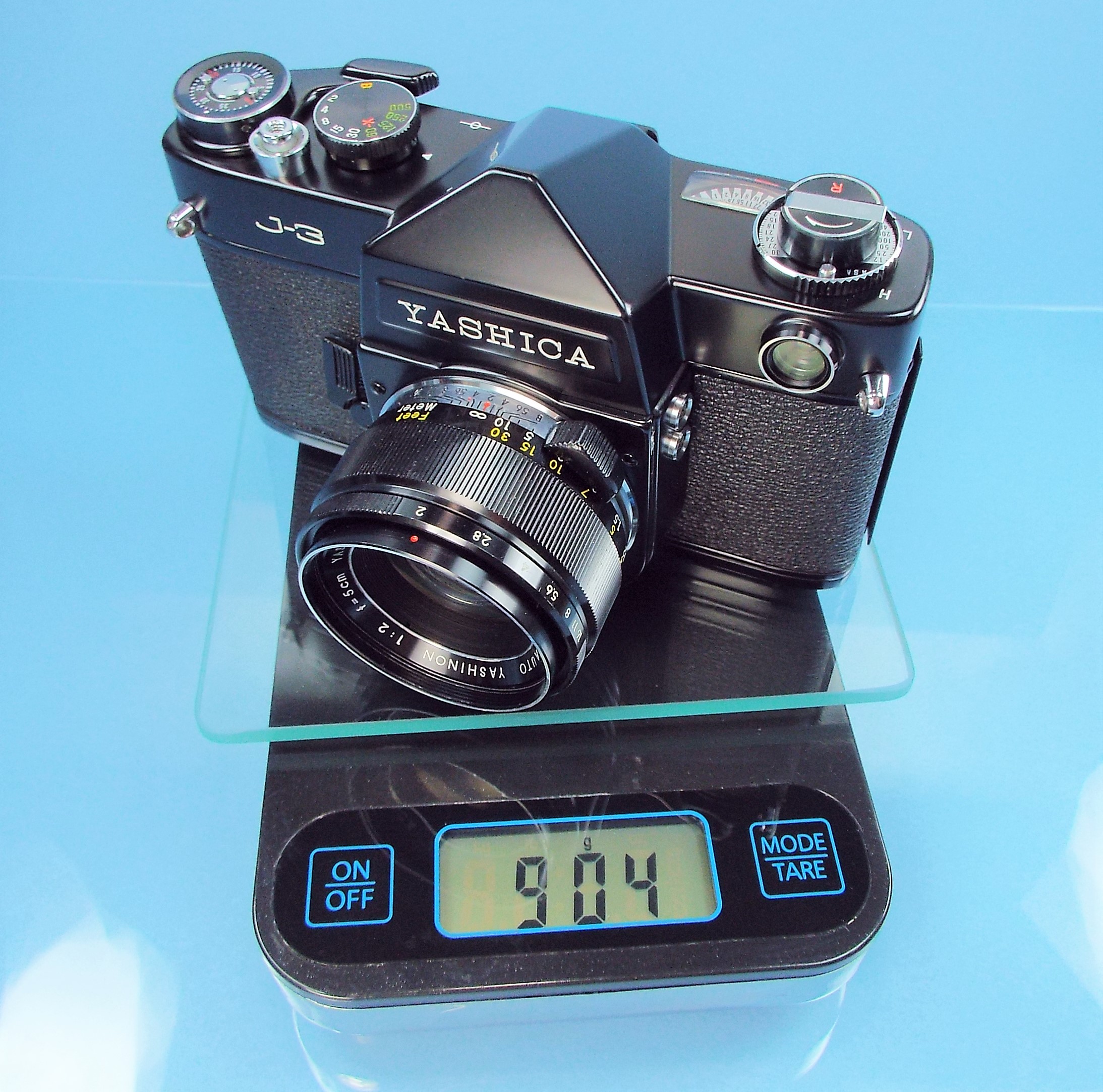
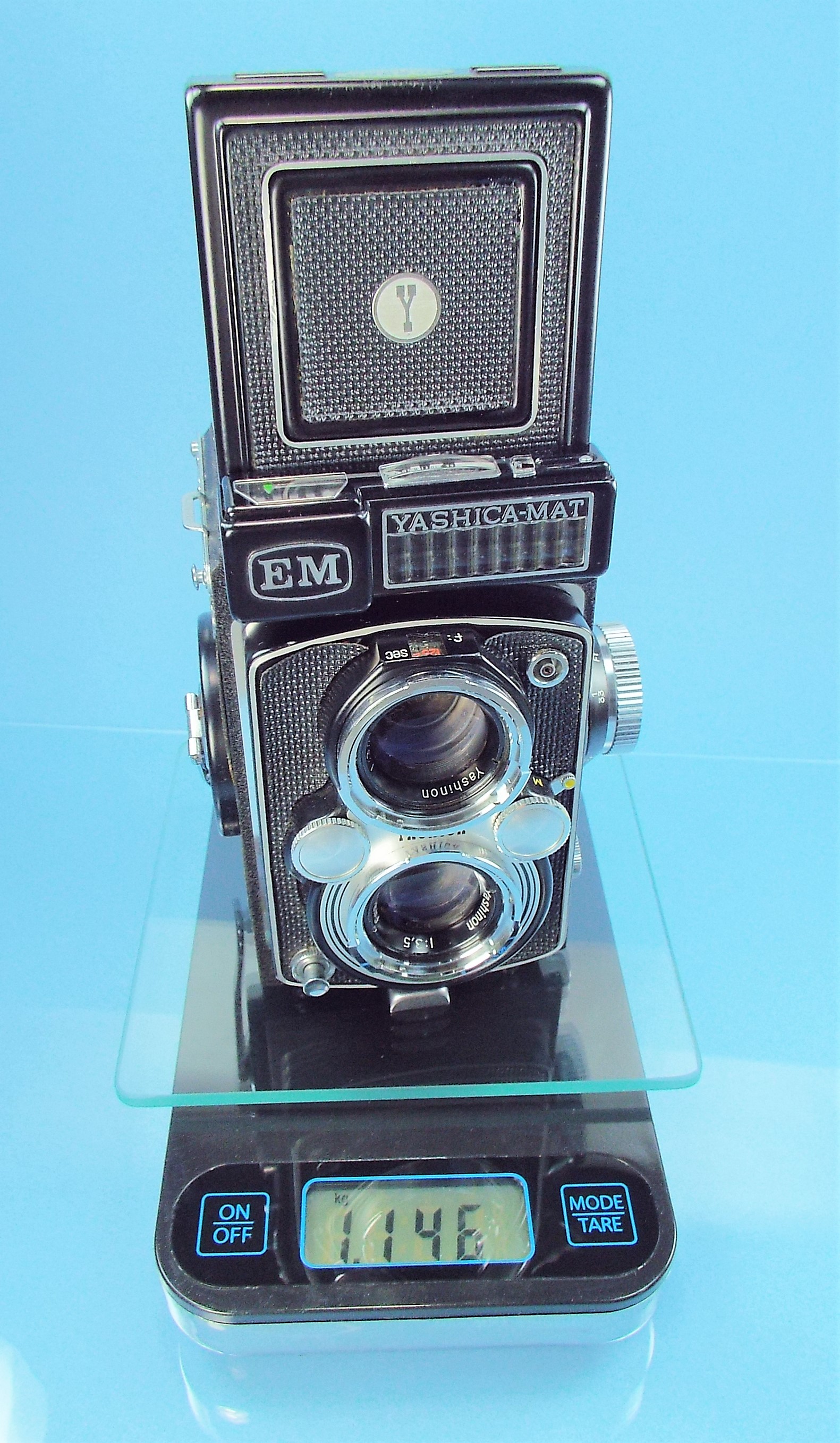
Here is a fun visual comparison between three early Yashica cameras.
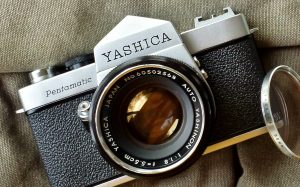
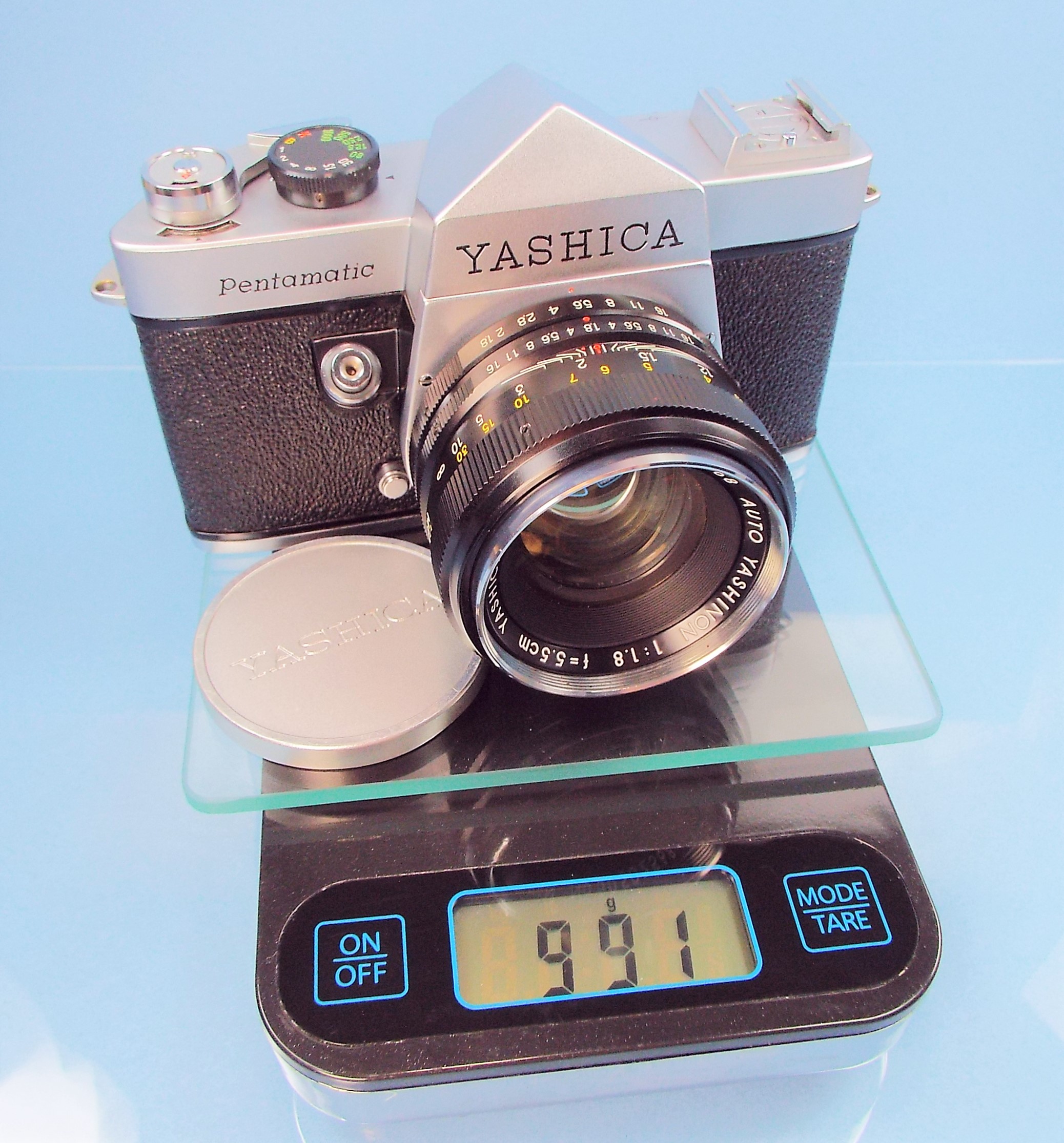
Yashica’s first 35mm SLR released in early 1960. The Pentamatic 35 with its fast f/1.8 lens was a neck breaker to be sure.Yashica’s first modern 35mm SLR released shortly after the end of the Pentamatic series in 1962.First released in 1964, the Yashica Mat EM (Exposure Meter) was and still is a very popular TLR (twin-lens reflex) 120 roll film camera. It features a built-in exposure meter powered by selenium cells. The meter on mine is still working and is accurate when shooting negative films.
What’s the heaviest camera in your collection? Not pictured here I’d say my fully decked out Canon F-1 with a motor drive and big f/1.2 lens is crazy heavy. I’ll have to dig it out and post the results here soon.
Comments are always welcomed as I’ve learned quite a bit from reader feedback. As always, thanks for stopping by and while you’re at it, feel free to visit my camera shop at http://www.ccstudio2380.com (CC Design Studios hosted by Etsy). – Chris Whelan
Please respect that all content, including photos and text, are the property of this blog and its owner, Yashica Pentamatic Fanatic, Yashica Sailor Boy, Yashica Chris, Chasing Classic Cameras with Chris.
Yashica’s (Kyocera by this point) last TLR model. This one was part of the last run of the model before production shut down in 1986. Yashica (originally named Yashima) started off in 1953 with the obscure Pigeonflex TLR followed by the Yashima Flex and then continued to build TLRs way longer than the market could bear (or need). The good news is that the 124G can be found today in great quantities and cameras as “young” as 35 years-old. It’s a very affordable way to get into medium format photography and in the case of this model, be able to use both 120 and 220 roll film giving you either 12 or 24 exposures.
After about 33 years of making TLRs, this was Yashica’s best.A beauty – here’s what a modern TLR looked like back in 1985.The design of the last box that held the 124G (1985-1986).This gorgeous camera was the first to carry the company name – Yashica Flex made in 1954.
For contrast, compare the Yashima Flex to the Yashica Mat 124G. Their excellent build quality remained throughout the decades. If you’re chasing one of these for your collection you’re in luck because Yashica made a bunch of 124Gs and there’s a bunch still out there. Expect to pay a premium for mint examples but be careful, they’re still older cameras and a host of bad things can happen to them from lack of use and improper storage. Ask lots of questions of the seller if you’re buying online and look for sellers with excellent reputations for selling quality classic and vintage cameras. BTW, not too many of the original Yashima Flex cameras will look like my example pictured above. I was so very lucky to buy mine from the original owner in Japan who obviously kept it in pristine condition both physically and mechanically.
Comments are always welcomed as I’ve learned quite a bit from reader feedback. As always, thanks for stopping by and while you’re at it, feel free to visit my camera shop at http://www.ccstudio2380.com (CC Design Studios hosted by Etsy). – Chris Whelan
Please respect that all content, including photos and text, are the property of this blog and its owner, Yashica Pentamatic Fanatic, Yashica Sailor Boy, Yashica Chris, Chasing Classic Cameras with Chris.
I first spotted this lovely camera on Etsy way back in November 2020. At that time the seller was in a bit of a funk and we couldn’t put a deal together. Now after four short months of watching it sit I made an offer and they accepted. Yeah! Chasing classic cameras is as much of a hunt as it is a waiting game.
This TLR was made by Yashima Kogaku Seiki Company, Ltd. (later Yashica) around November 1954 based on its early serial number.
The selenium cells are located behind the nameplate flap.Flap in the open position. The cells inside sent a small electric current to the built-in exposure which is mounted on the left side of the camera.A close-up view of the exposure meter which was made by Sekonic (Seiko Electric Instruments Industry, Company).The lens on the bottom is called the taking lens and the one on top is the viewing lens. Both lenses were made by Tomioka Optical for Yashima. The shutter was made by Copal and as I mentioned earlier, the exposure meter was made by Sekonic.A view inside the film chamber shows the serial number – No.31147. The serial number in the first edition of the user’s guide is 30126 and another AS-II that I own is 30302. BTW, there was a roll of unexposed Kodak film inside as a nice bonus.My first and earliest AS-II showing the lowest serial number found in the wild. Take notice of the “Made in Japan”.
If you would like to know more about Yashica’s earliest days then my good friend Paul Sokk’s site is the place you want to go – you can find Paul’s site at http://www.yashicatlr.com
Back to the chase. I wanted this AS-II but the seller didn’t offer much information about its overall condition or whether it even worked. It was listed with the complete contents of an old leather camera case so there were lots of goodies inside along with the camera. Sometimes you’ve got to follow your instincts and go for it. A lack of info can add some excitement to the chase! The camera also had it’s original case which was sort of welded to the camera. The case even left some of its green crud behind as you may be able to see on the exposure meter housing.
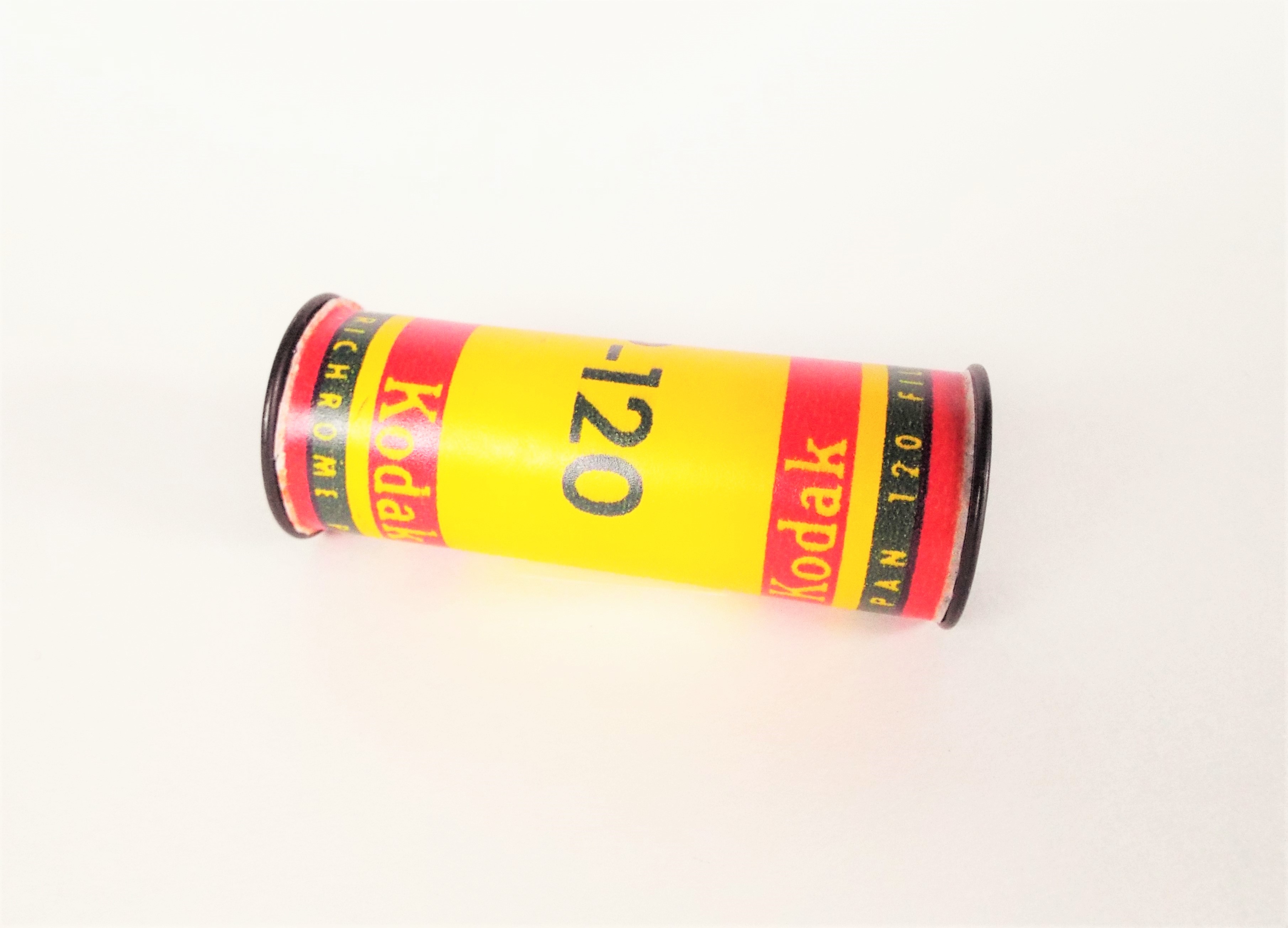
Bonus! A roll of unexposed Kodak Verichrome Pan (VP-120) film inside.
Comments are always welcomed as I’ve learned quite a bit from reader feedback. As always, thanks for stopping by and while you’re at it, feel free to visit my camera shop at http://www.ccstudio2380.com (CC Design Studios hosted by Etsy). – Chris Whelan
Please respect that all content, including photos and text, are the property of this blog and its owner, Yashica Pentamatic Fanatic, Yashica Sailor Boy, Yashica Chris, Chasing Classic Cameras with Chris.
Hello all! Happy Sunday and thanks for stopping by.
Before Yashica was Yashica they were Yashima and Yashima’s first camera was the oddly named Pigeonflex.
Proudly displaying 67 years of dirt, dust, soot, and grime. I’ve since cleaned it up (which was super fun) and as you see it here it was fully working! Credit goes to those talented craftspeople in Suwa, Nagano Prefecture, Japan those many decades ago.
I purchased this from a Japanese seller from Hokkaido, Higashi-ku, Sapporo, Japan a few years back.
Yashima’s Pigeonflex Twin-lens Reflex (TLR)
A short two years later, this was the first camera from Yashima to carry the Yashica name – confused yet?
Yashica Flex S from 1955
Have a beautiful day and be sure to stop by my camera shop hosted by Etsy at http://www.ccstudio2380.com – Chris
Please respect that all content, including photos and text, are the property of this blog and its owner, Yashica Pentamatic Fanatic, Yashica Sailor Boy, Yashica Chris.














 Chasing Classic Cameras with Chris