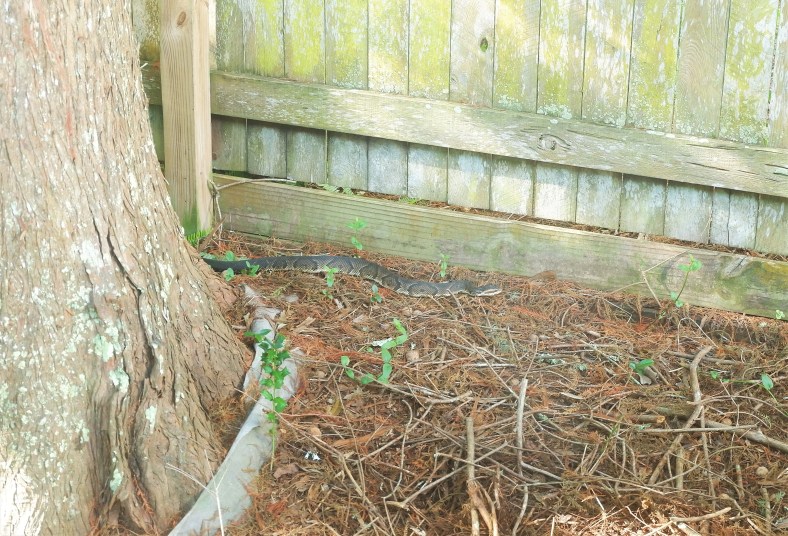

A sign posted on the extreme north end of Amelia Island. Apparently, the owner of this property overpaid a bit.
Submitted by my son Tim on his travels around the island.
Have a great day and thanks for stopping by! – Chris


A sign posted on the extreme north end of Amelia Island. Apparently, the owner of this property overpaid a bit.
Submitted by my son Tim on his travels around the island.
Have a great day and thanks for stopping by! – Chris

Have a beautiful day – Peace

Peace – Chris and Carol

There’s plenty more items in the shop at http://www.ccstudio2380.com

My camera shop is hosted by Etsy so it accepts most forms of payment and I can ship practically worldwide. Feel free to message me here on WordPress or at ccphotographyai@gmail.com
Thanks for stopping by and happy shopping! – Chris
As you may have guessed by now if you casually follow this blog that I also have a passion for collecting bits of camera gear made by and for the Nicca Camera Company. Nicca was acquired by Yashica in 1958 and that acquisition led directly to Yashica developing (with lots of help from Nicca designers) its first 35mm single-lens reflex camera the Pentamatic 35 by early 1960. Yashica was a bit slow to the marketplace with an SLR as Canon, Asahi Pentax and Canon (among others) had already introduced SLRs by then.
Because of this relationship, Nicca has always held a prominent spot in my collection and the Nicca 3-S remains one of my favorite 35mm rangefinders to shoot with. Recently I’ve added this wonderful flash set to my collection.
From the instruction booklet, it describes this as “an automatic rechargeable flash gun specifically designed for Nicca cameras”.

Considering its age (1953) it’s in outstanding condition. Hey, it’s as old as me!

All set to go. The Nicca B.C.B. flash unit attached to my Nicca 3-S.

Viewed from above the pilot lamp is visible on the top center of the flash head. It lights up when the flash is ready to fire.

The red-tipped bulb ejector button. You don’t want to handle a hot bulb.

As part of the set, I received the original instruction booklet and a pamphlet for the flashbulbs which were made by West Electric Company of Tokyo and Osaka – later to become or at least partner with National-Matsushita.

A closer look at the “Exposure Guide Numbers” card pictured in the previous image above.

The reflector is about 5.5 inches across. The bulb looks tiny compared to the reflector but believe me, it puts out some light!

Advertisement from late 1951 0r 1952. The flash looks like it used a slightly different connector cord than the one in my set. Hinomaruya ( ひのまるや ) was the Domestic General Agent for Nicca in Japan.

Details from the instruction booklet. Shown in this image is a capacitor and 22.5-volt battery to power the flash but it could also be powered by two “D” cell batteries or three “AA” penlight batteries with an adapter.

Size comparison between the flash handle and two D-cell batteries. As can be seen, the optional add on handle extension would need to be used.

Front view without the reflector. My guess is that the “BC” means battery-capacitor and the “B” is for battery (I don’t know for sure about the last “B” at this point).

Camera side view with the shutter cord connector and “L” bracket connector visible. The red-tipped bulb ejector button is also visible.

Parts detail minus the reflector and the capacitor/battery.
Nicca only made 35mm rangefinder cameras (maybe a lens or two but unproven) during its existence so the flash unit was made by another company. It’s likely that the West Electric Company, Limited, of Osaka and Tokyo was the manufacturer although no part of the flash is marked with the name “West”. Only the included pamphlet mentioned West. As stated earlier in this post, it’s likely that West merged or partnered with National-Matsushita Electric to build additional models of flash units during the second half of the 1950s.
Thanks for stopping by! If you know what “B.C.B.” means please share it with me. – Chris
Please respect that all content, including photos and text, are the property of this blog and its owner, Yashica Pentamatic Fanatic, Yashica Sailor Boy, Yashica Chris.
Copyright © 2015-2019 Yashica Pentamatic Fanatic, Chris Whelan
All rights reserved.

Have a beautiful day! – Chris


If you can’t be home (U.S. Navy) I can’t think of a better place to be in the Summer of 1986… or any year for that matter!
Have a beautiful day and thanks for stopping by! – Chris
Please respect that all content, including photos and text, are the property of this blog and its owner, Yashica Pentamatic Fanatic, Yashica Sailor Boy, Yashica Chris.
Copyright © 2015-2019 Yashica Pentamatic Fanatic, Chris Whelan
All rights reserved.
I purchased a large collection of vintage photogear this week and of course, they’ll always be some victims of battery leakage mixed in. We’ve all been victimized by this process – we leave a battery (mostly alkaline) in a seldom-used camera, remote or toy only to discover that it doesn’t work when we go to use it. Even fresh batteries installed in a device can leak and corrode the battery compartment in as little as weeks! That’s right, I said weeks.
Caution!

This battery compartment was so bad that I had to dig out the AA batteries with a screwdriver!

The corrosive acid from the battery destroyed the battery compartment cover and latch.

The same camera with the corrosion removed and the compartment door repaired. The camera is fully operational again. It’s still a bit ugly but at least it works.

Electronic flash units are notorious for finding battery corrosion. I believe that the slight continuous drain on the battery (called parasitic drain) expedites battery failure – sometimes in as little as three weeks!

Same flash unit – clean and fresh and fully operational!
The best and safest way to clean these corroded contacts is with a cotton swab (Q-tip) dipped in straight white distilled vinegar. Go slowly, don’t touch the corroded batteries and gently dab the vinegar on the corrosion (you’ll see it bubble). Use plenty of swabs and reapply the vinegar being extremely careful not to oversoak the part. Too much fluid may migrate deeper inside your camera or flash causing additional and often fatal damage. I finish with a swab dipped in Windex and gently clean the metal and plastic surfaces until shiny. I’d say I’m successful about half of the time – it’s harder to save flash units as the corrosive gases often migrate internally to critical circuits destroying them beyond repair.
On cameras where the battery compartment is away from critical circuits will have a better chance of being rescued. Give it a try if you discover that this corrosive mess is trying to destroy your fun (and device). It just may work. Please note, the chemicals that you are using and exposing yourself to are DANGEROUS and you should exercise extreme caution whenever attempting to salvage a corroded part. Wash your hands afterward and keep your fingers away from your mouth and eyes! There, the legal part is done!
While repairing a Pentax ME Super’s baulky mirror (staying in the up position) I noticed these numbers beneath the camera’s base plate. They look like a date to me, possibly a manufacture date. The 55 looks to be the year using the Japanese Showa date. To convert this into a Western date simply add 25 (1980). Of course, the next two numbers should be the month and day (August 30). This fits within the manufacturing dates of the camera which are reported to be 1979-1984. Do you have a Pentax? If you’re interested to see your date code simply remove the 3 tiny screws (be careful, they are small and often grow legs after removing them) taking note as to which screw was removed from which hole.

With the bottom plate removed on this Pentax ME Super, you’ll see a date code (maybe) similar to this one. The first two numbers are the Showa date. Add 25 to that date to arrive at the Western year (55 + 25 = 80) 1980.
Thanks for stopping by and have a great weekend! – Chris
Please respect that all content, including photos and text, are the property of this blog and its owner, Yashica Pentamatic Fanatic, Yashica Sailor Boy, Yashica Chris.
Copyright © 2015-2019 Yashica Pentamatic Fanatic, Chris Whelan
All rights reserved.
Another look at this hyper-rare SLR.
Chasing Classic Cameras with Chris
One of the rarest early Japanese 35mm SLR cameras ever made. The Zunow SLR (below).
Zunow SLR 1958.
This gorgeous Zunow sold for a cool ¥ 1,880,000 (about $16,700 USD)!
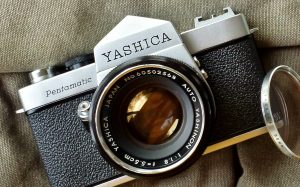
Yashica Pentamatic 35mm SLR. Yashica’s first ever. A cousin to the Zunow? We think so.
We believe designers and engineers from Zunow and Nicca played a big part in bringing the Pentamatic to market by early 1960.
Thanks for your visit! To find out more about Yashica and the Zunow connection stay a bit and check out our blog here on the ‘Yashica Pentamatic Fanatic’!
Chris and Carol ^.^
Please respect that all content, including photos and text are property of this blog and its owner, Yashica Pentamatic Fanatic, Yashica Sailor Boy, Yashica Chris.
Copyright © 2015-2017 Yashica Pentamatic Fanatic, Chris Whelan
All rights reserved.


Testing my new Sony Cyber-shot DSC-W830 20.1 megapixel compact digital camera.

Thanks for stopping by! – Chris
Please respect that all content, including photos and text, are the property of this blog and its owner, Yashica Pentamatic Fanatic, Yashica Sailor Boy, Yashica Chris.
Copyright © 2015-2019 Yashica Pentamatic Fanatic, Chris Whelan
All rights reserved.