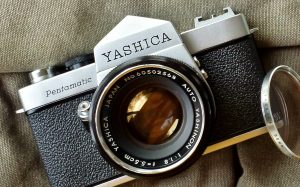
Yashica’s first 35mm single-lens reflex camera with the Praktica-thread (M42) mount lenses was the Yashica Penta J… at least here in the United States and in Japan. Elsewhere (most of the world) the camera was known as either the Yashica Reflex 35 or Reflex J (Australia and possibly the U.K.). As best we can tell, they were all the same cameras with different top plates to accommodate the different names (logos).
Part of the demise (lack of sales success) of the well-built Pentamatic series of cameras that preceded the Penta J, was that Yashica decided to go with a Pentamatic exclusive bayonet mount lens system. Sturdy and well designed to be sure, but being unique limited the available lenses that could be swapped between cameras. The Praktica design M42 screw thread mounting system was in widespread use at the time and Yashica’s bayonet design just went against the flow.
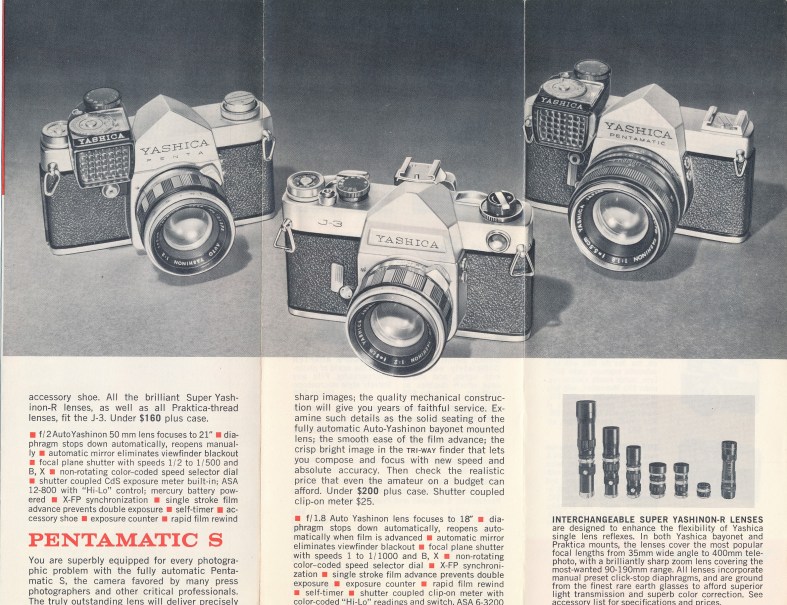
No date on this sales brochure but our guess would be early 1962. The J-3 is the newest camera featured as it had all the goodies one would want in a modern SLR. The Penta J (upper left) had just come out in 1961 and it was Yashica’s first 35mm SLR with screw thread mounted lenses. The Pentamatic S arrived in early 1961 but used bayonet mounting for its exclusive design. Notice that the pentaprisms on the Penta J and Pentamatic S share the same design while the J-3 breaks with the previous cameras and ushers in the style that would carry through the remainder of Yashica’s SLR run of M42 cameras.
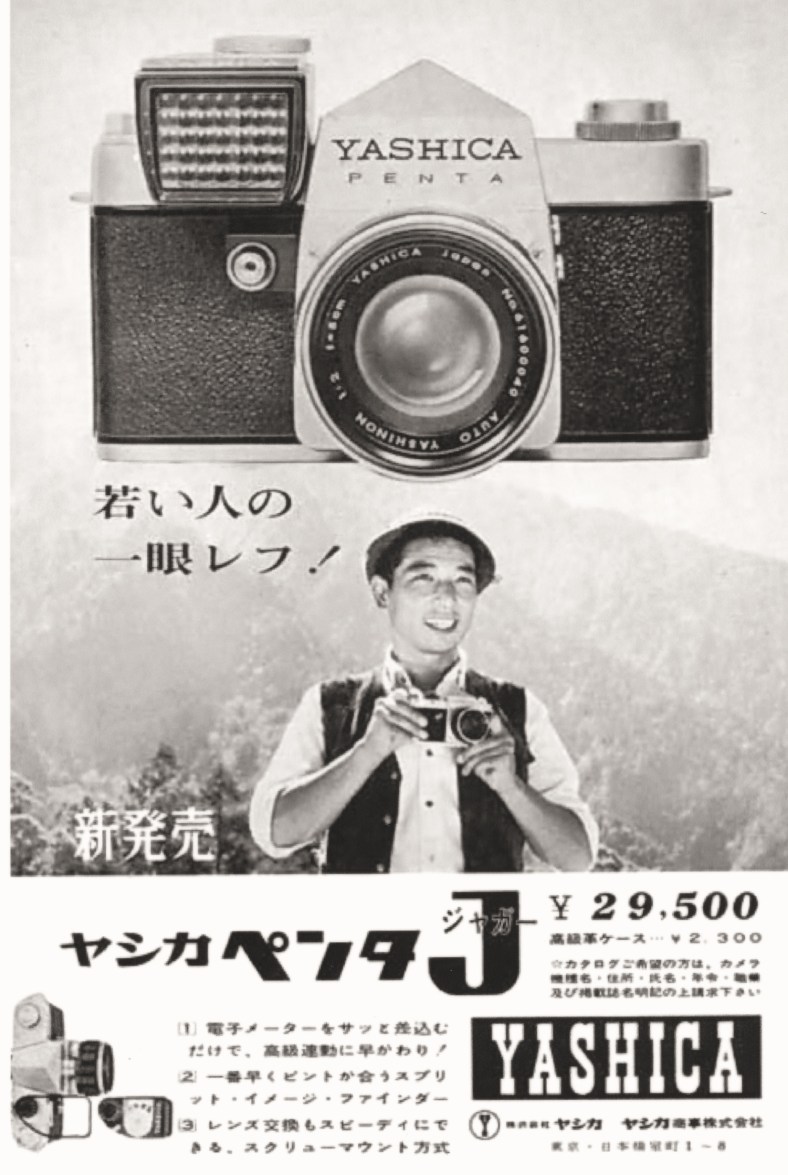
Yashica Penta J.
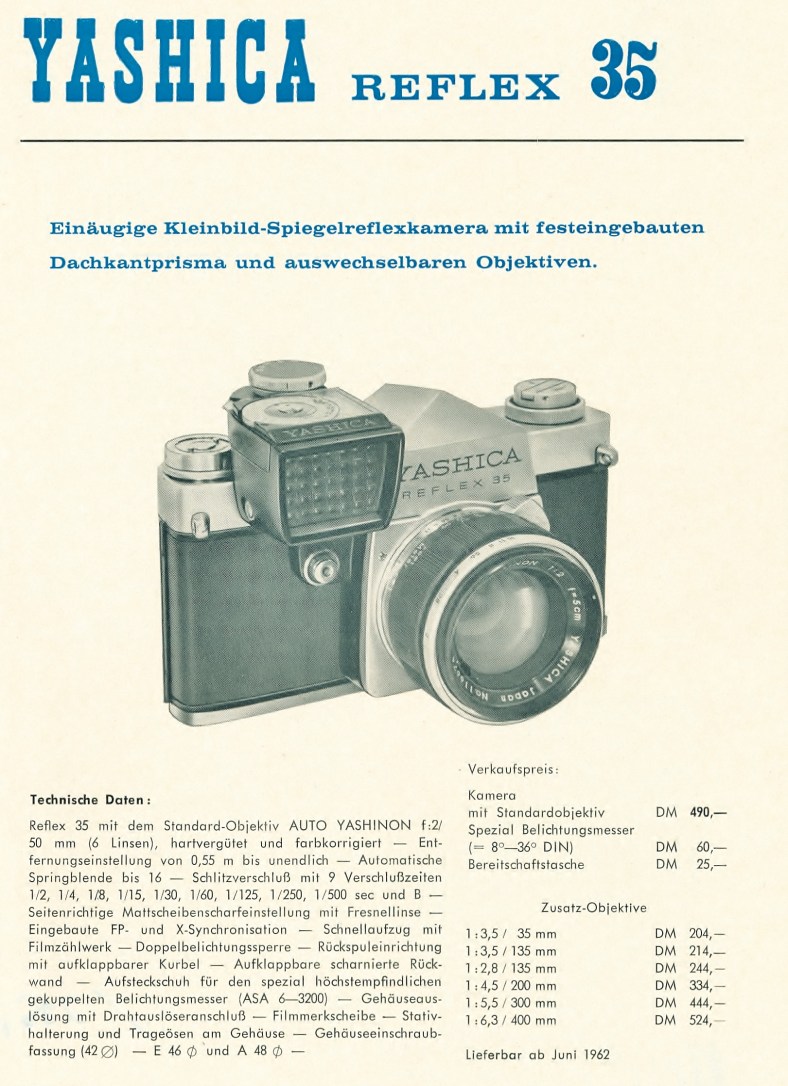
Yashica Reflex 35 in Germany.
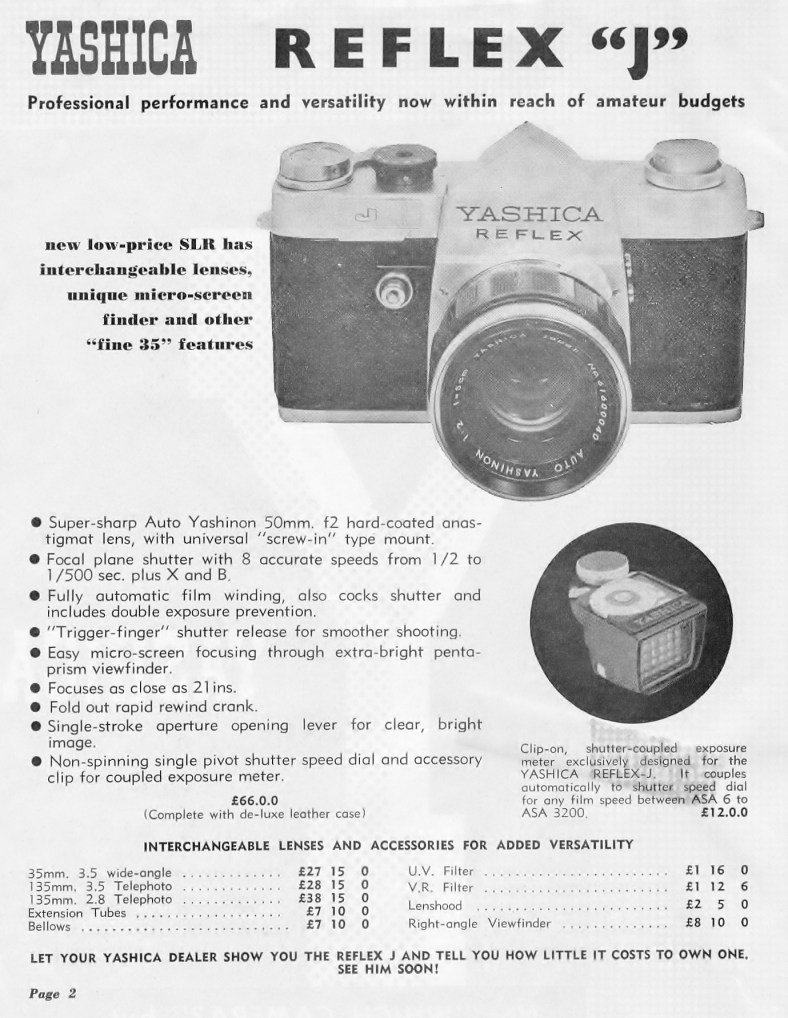
Australian Reflex J sales brochure.
Now fast forward to 1965 ish… Yashica introduces the new J-5 AND the J-P! In between those years Yashica had introduced the J-3 and J-4. Why would Yashica go back in time and bring out another 35mm SLR in 1965 that was the cousin to the 1961 Penta J? Notice we say cousins… not brothers. They shared the same platform with one another but as you can see in the image below the top plates were of a different design.
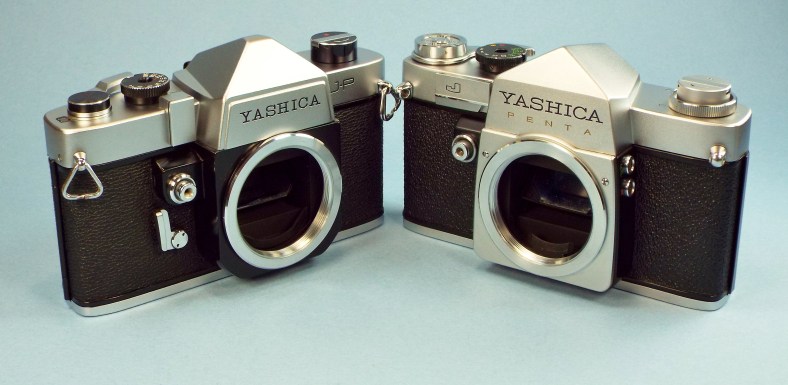
1965 J-P on the left and the 1961 Penta J on the right. Cousins but not brothers. The shutter release button is on the right front on both cameras… Yashica added a self timer on the J-P and of course the top plates are different (most noticeably the design of the pentaprism). Some small changes to the design of the mirror box. Unseen from this view is that the J-P does not have a ASA/DIN dial like the Penta J had on the camera’s bottom left. Small note about weight… Penta J weighs in at 656 grams and the J-P weighs only 619 grams. No built-in exposure meters but accessory exposure meters were available at additional cost.
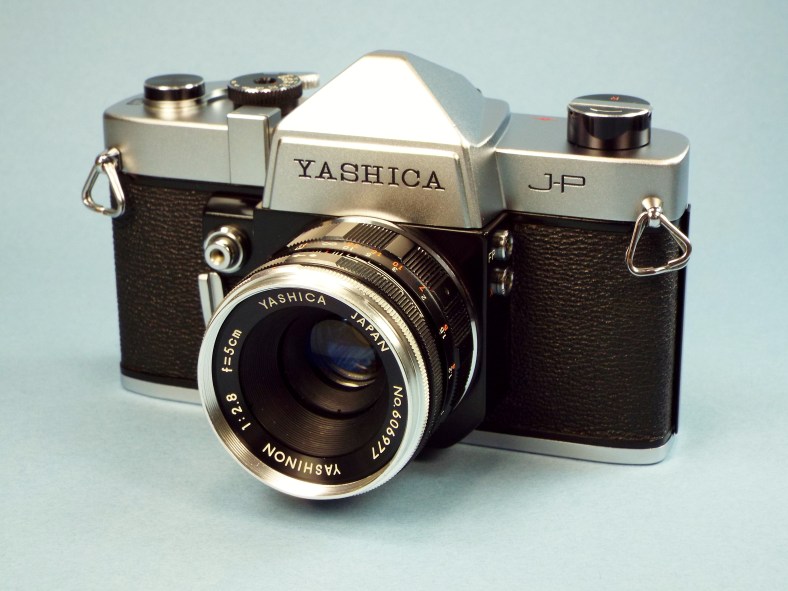
The J-P with a rather unique 5cm f/ 2.8 lens. The lens has to be the smallest of the M42 mount lenses and certainly it’s one of the lightest at only 136 grams!
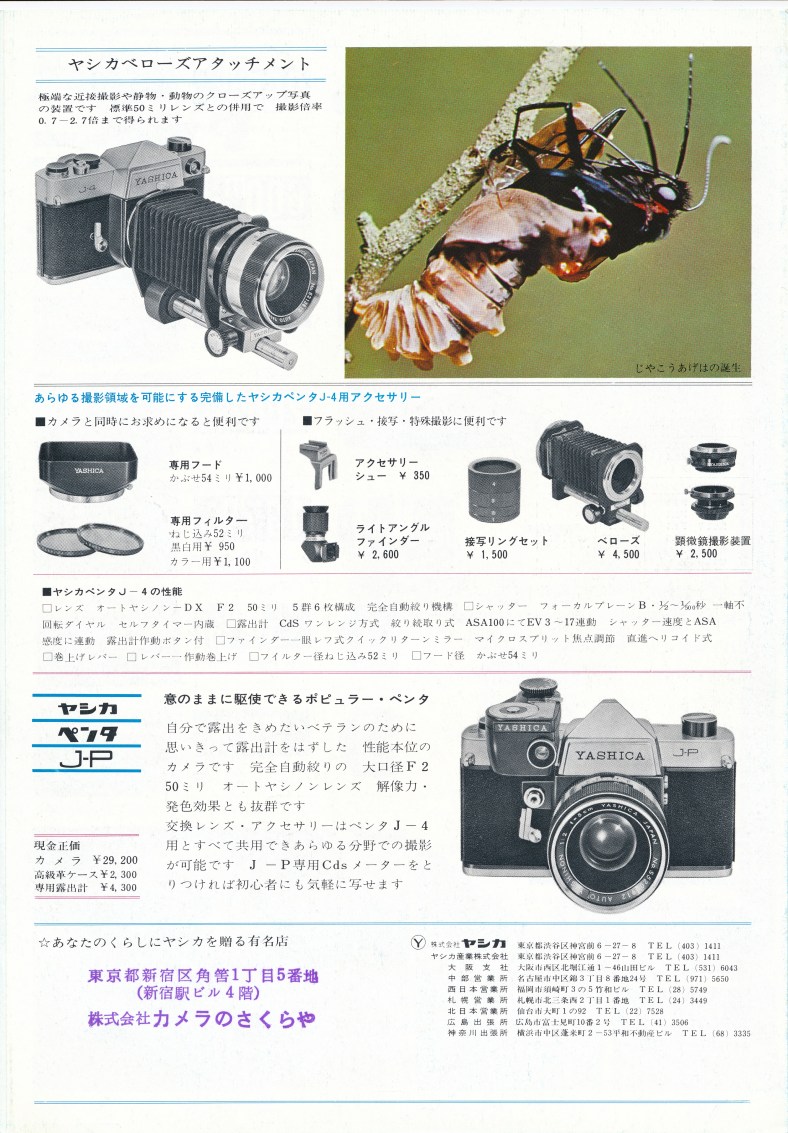
The J-P advertised together with the J-4.
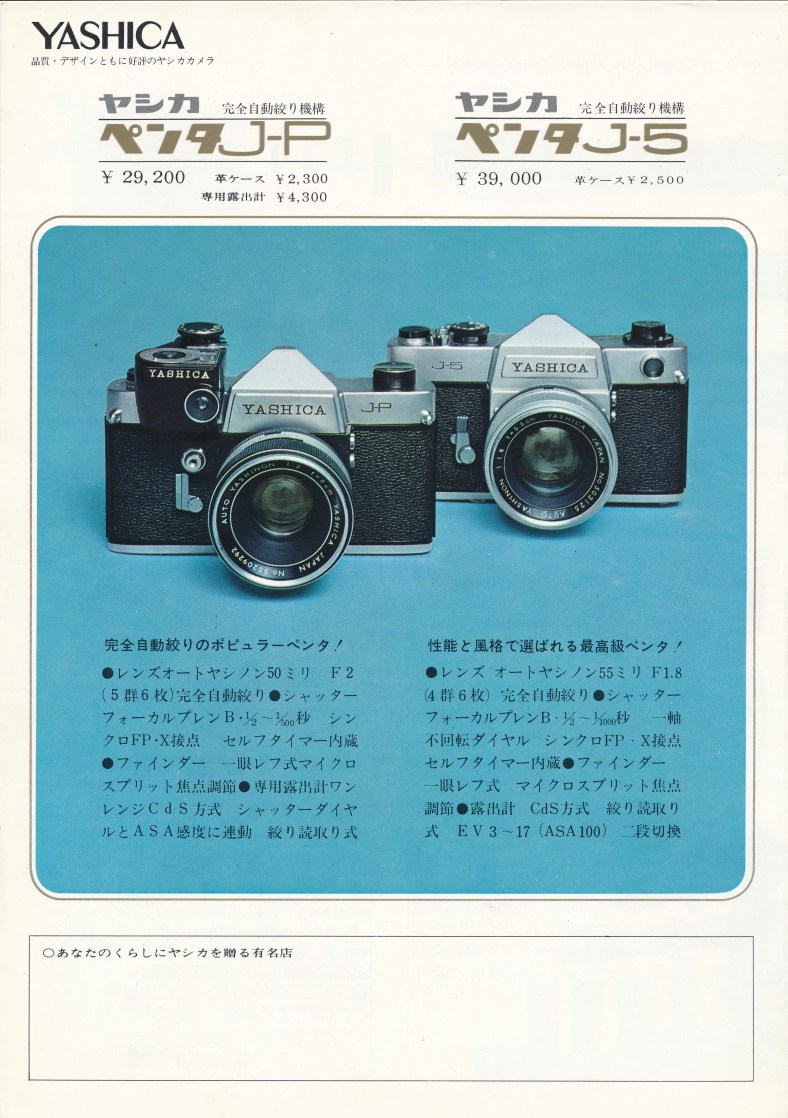
The J-P advertised with the new J-5.
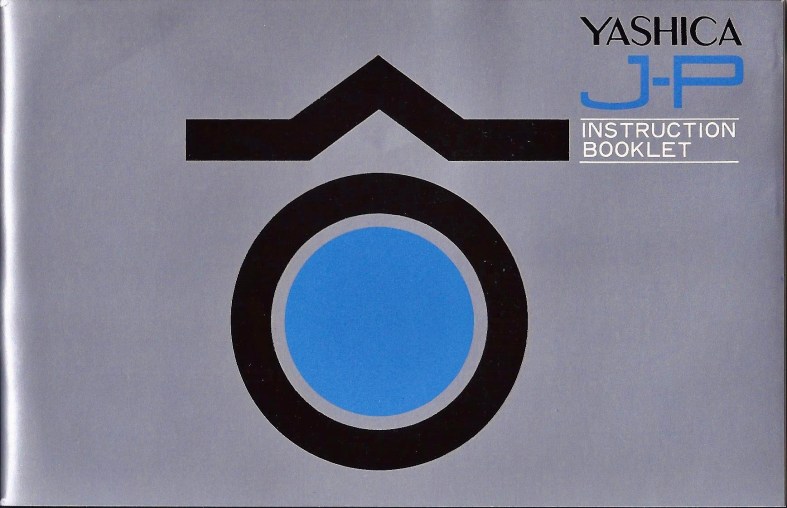
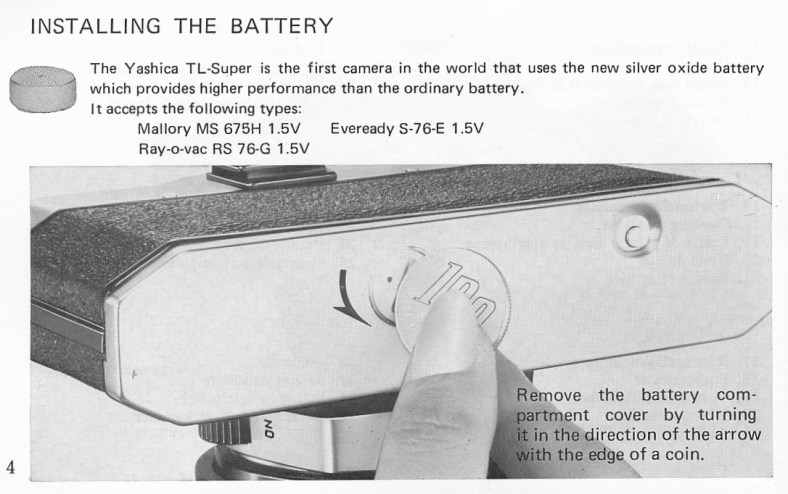
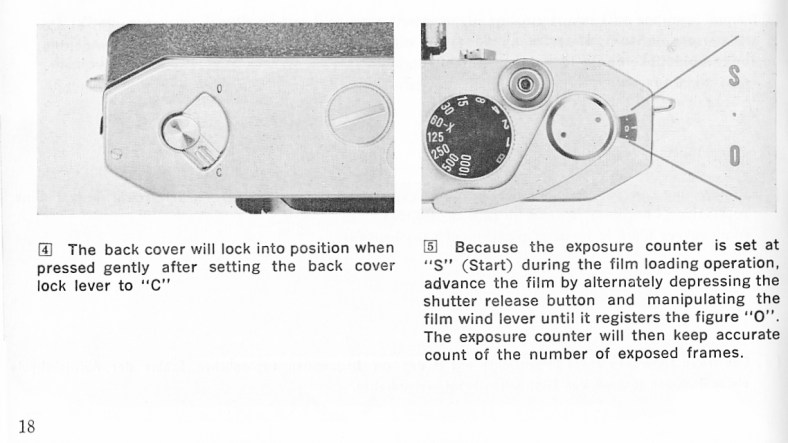
J-P instruction booklet from 1965 (in mint condition too).
Stay tuned… more to come on these Yashica classics.
Many thanks, Chris and Carol