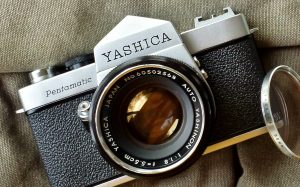
Why the Pentamatic?

The Yashica Pentamatic has always fascinated me from the moment I first caught a glimpse of it while doing research on the Yashima / Yashica Company. It was (and still is) a strange-looking camera… so 1960s and it was Yashica’s very first 35mm single-lens reflex (SLR) camera. I love its sleek lines and simple design… and it was just a little bit “quirky”. My first 35mm SLR was the very popular and stylish Yashica TL Electro-X (in satin chrome finish) which I purchased in early 1972. That camera was big and heavy just like the Pentamatic… lots of brass and glass as they say. The exposure system was a through the lens (TTL) affair that used two red arrows to guide you in adjusting the shutter speed and aperture to obtain a properly exposed image. It was fairly accurate and easy to use but under some low light conditions the meter would be off as much as 1/2 to 1 full “f stops” especially when shooting with color slide film for transparencies. I used that Yashica through my first year of living in Yokohama before purchasing a Canon F-1 in 1978. Why the departure from Yashica? Simple, when comparing the new Contax RTS to the F-1, in my opinion, there was no contest. I also liked the system that Canon offered and the wide array of professional accessories and lenses.

So back to the Pentamatic. When I started to concentrate my research on the Pentamatic, I found nothing but confusing and contradicting information on the internet (as is typical of anything). No clear images of the camera, no images of its boxes or the accessories available. The release date was especially bothersome as it was all over the map and even now many sites still give the wrong introduction date in the U.S. The specifications of the cameras are often wrong or incomplete and when I did find solid proof of something, it made the existing entries even more out of line with reality. The Pentamatic series of SLRs (the original model I, model II and the model S) never sold in vast quantities (the original Pentamatic model I was produced at around 1,500 units per month at its peak of production) as best as I can tell, so finding a complete set was rare and finding sales brochures was even more daunting.

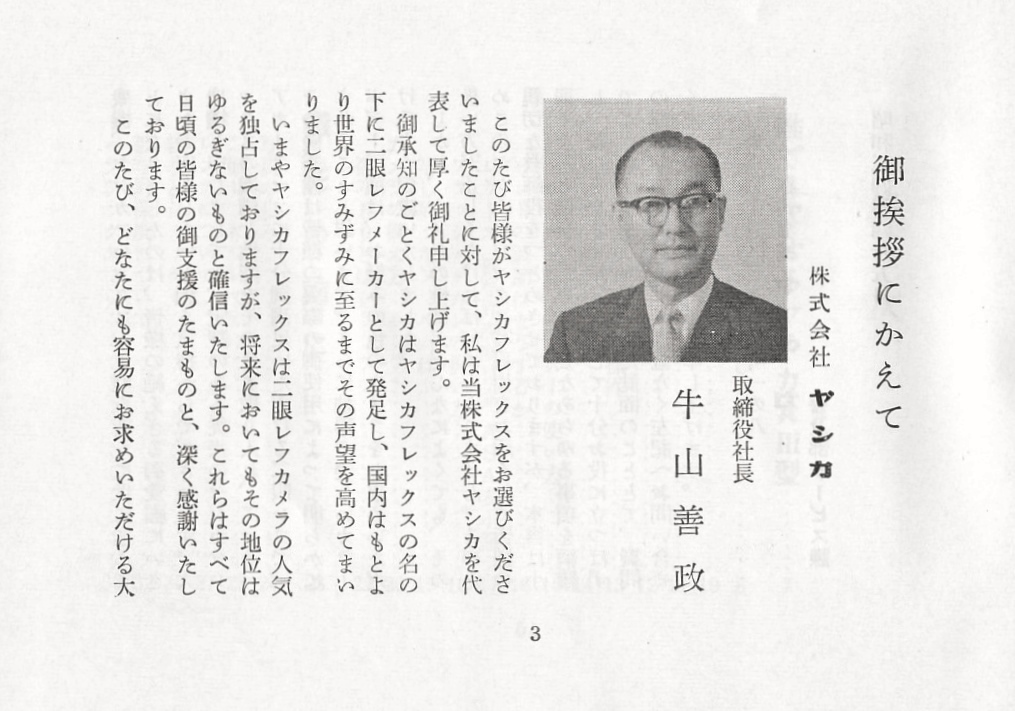
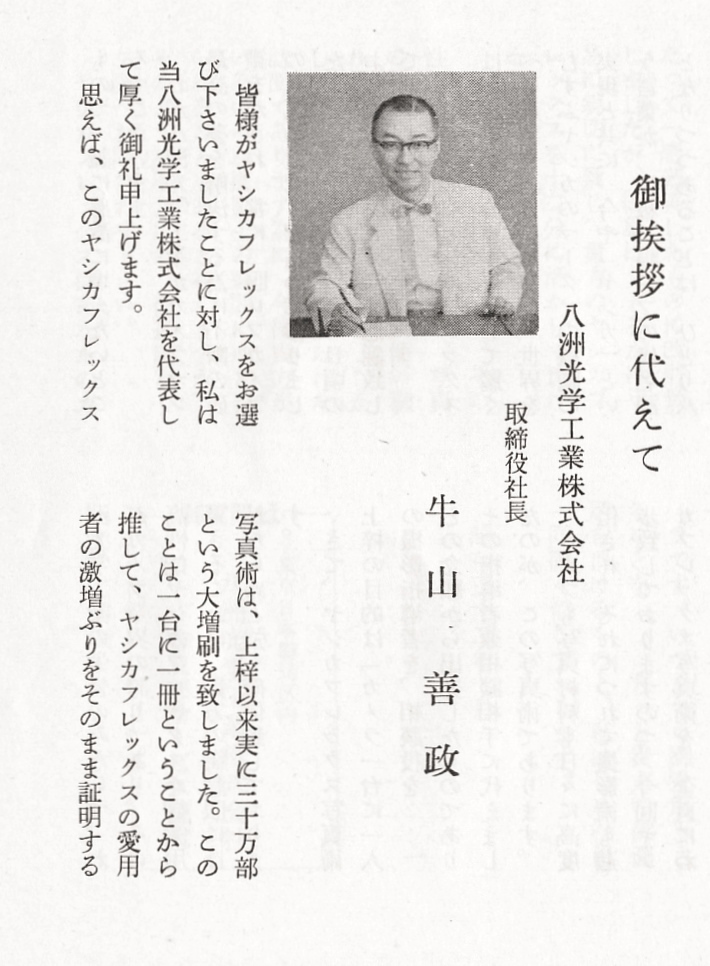
My quest was simple (I thought)… purchase a few Pentamatics and find a few instruction booklets and I would be all set. Wrong! Yashica normally does not date their cameras, lenses and publications (instruction booklets, warranty cards, accessory pamphlets and sales brochures) so I knew that I had my work cut out for me. On the other side of the coin, my Canon collection has dates everywhere! I can honestly say that I’ve never found something from Canon that was not dated in some way. Why didn’t Yashica do the same? I did discover eventually that from about 1956 or so onward Yashica (then Yashima) did date many of their photography booklets and featured pictures of their factories in Nagano Prefecture and of their headquarters in Shibuya-ku, Tokyo. Many of these early booklets even had pictures of the president and founder (Mr. Yoshimasa Ushiyama) of Yashima… not often seen in other camera manufacturer’s publications. The practice of dating publications slowly vanished around late 1958 and by 1960 was basically gone. It wasn’t until the late 1960s and early 1970s that Yashica would occasionally slip in a date on a publication (but never on the camera or lens).

In summary… I don’t have all the answers to my Pentamatic questions and I am constantly updating information as I receive it both here on my blog and on my Flickr page (Yashica Sailor Boy). My goal is to be as accurate as I can, fill in the blanks and share whatever I have with others. I encourage comments and would gladly receive any and all bits of info that you may want to share with me. Thank you for visiting my page!

Chris
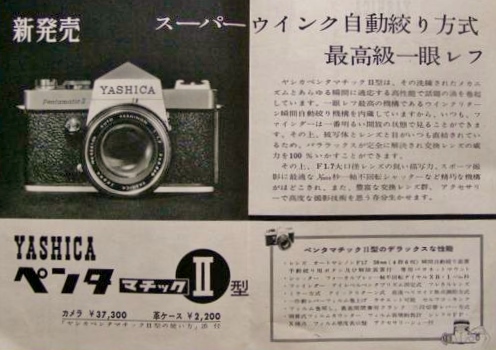
600x450-2015111900010

Nice Pentamatic model II page from a Yashica sales brochure from February 1961. Not a bad price in Japan at that time… about $110 (USD) with case. When introduced in mid 1960, the original model I was listed at about $159 (USD) here in the U.S.
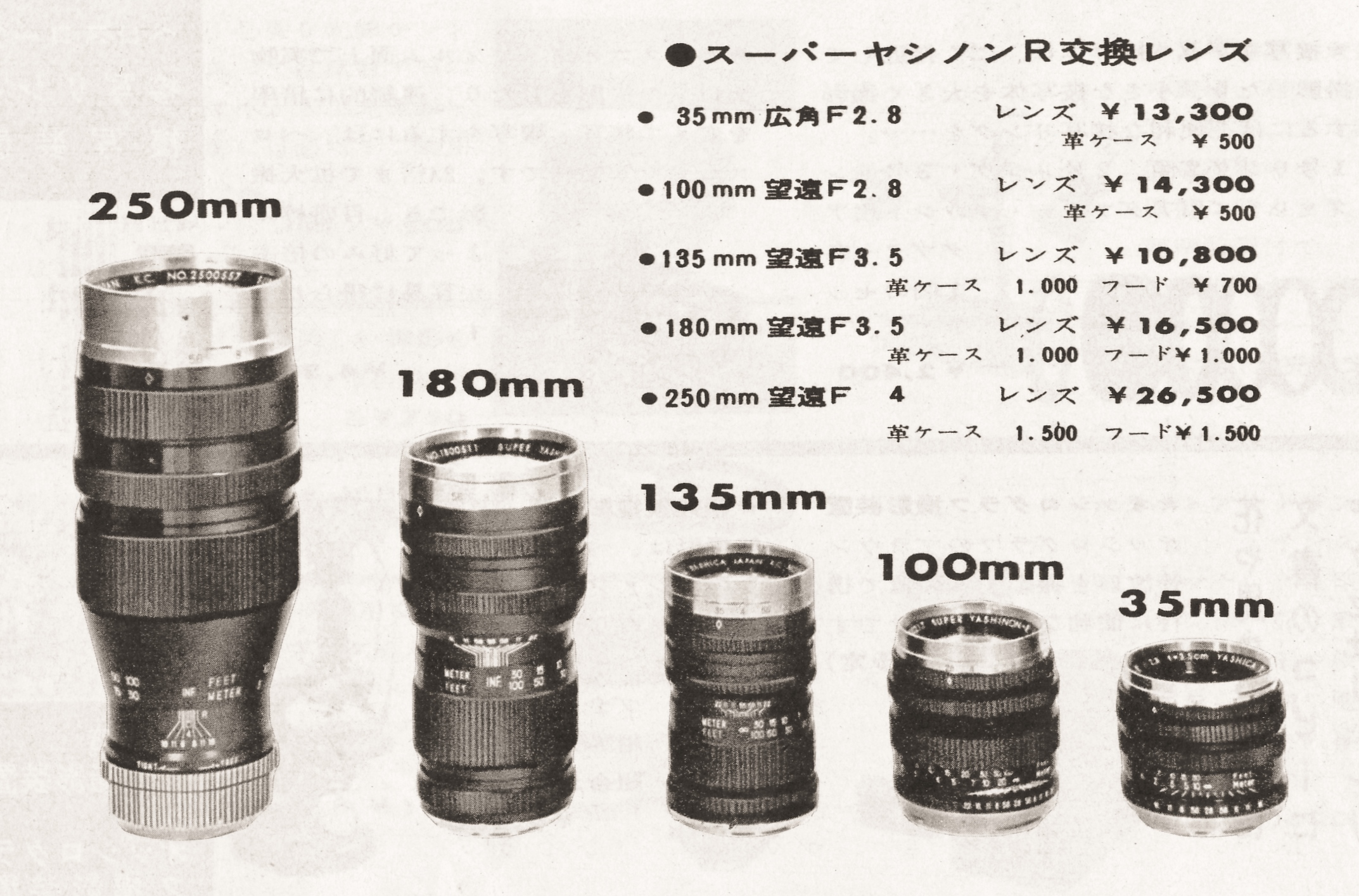
Yashica Pentamatic Lenses

Nice find for me from a collector in Japan. The first detailed sales brochure from Japan that included the Pentamatic I and II. This page is from the accessories part of the brochure.

A very complete listing of the lenses available (and prices) for the Pentamatic series from late 1960 or very early 1961. These lenses were built for Yashica by Tomioka Optical at their Tokyo factory.

A very complete listing of the lenses available (and prices) for the Pentamatic series from late 1960 or very early 1961. These lenses were built for Yashica by Tomioka Optical at their Tokyo factory. The only lenses missing are the original f/1.8 5.5cm lens (for the original Pentamatic) and the f/1.7 5.8cm lens for the model II. I have in my collection the 35mm, the 135mm, the 55mm and the 58mm.

Conclusive Proof of a Japanese Domestic Market Pentamatic!

Finally (again) found proof that the Yashica Pentamatic series…

…of cameras were available in the Japanese domestic market. It had been speculated by some (including myself) that the Pentamatic was not available in Japan when it was released into the U.S. markets in the May-June 1960 time period. My reason was solely based on the fact that up until this point no Japanese language sales brochures or advertisements had been discovered during my research. I always found it rather odd to think that Yashica’s first 35mm single-lens reflex (SLR) camera would not be available in Japan. It is generally known that Yashica made the photographic press in the U.S. aware of the new model as early as late March 1960 when the Pentamatic made its appearance at a large photography trade show in St. Louis.

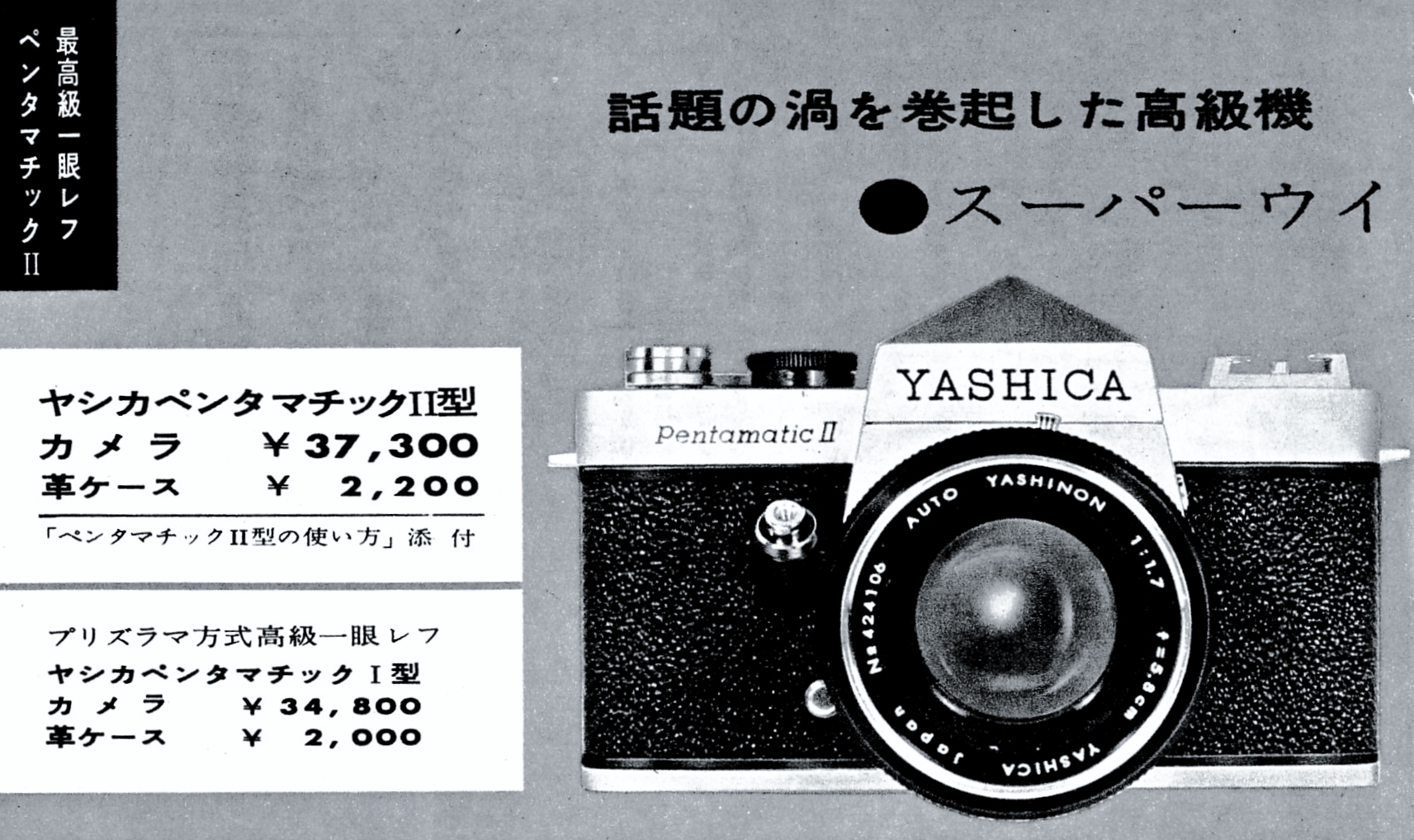
The elusive Pentamatic II in a Japanese sales brochure most likely from late 1960 to very early 1961. The brochure covers the new model and accessories in over 12 pages! The selling price was 37,300 yen for the model II and 34,800 yen for the original model I. It also appears that the

The elusive Pentamatic II in a Japanese sales brochure most likely from late 1960 to very early 1961. The brochure covers the new model II and its accessories over a full 12 pages. The selling price was 37,300 yen for the model II and 34,800 yen for the original model I. It also appears that the “new” lens of choice for this model II would be the f/1.7 5.8cm lens made by Tomioka Optical and displaying the name ‘Auto Yashinon’. I had suspected that the 1.7 lens was dedicated for the model II but had no proof. The model I Pentamatic came with the f/1.8 5.5cm lens which was also made by Tomioka in Tokyo.

Exciting Finds!!!

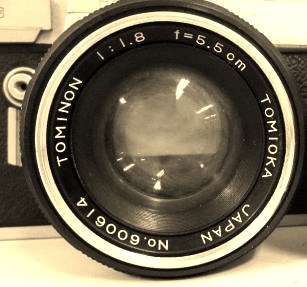
Amazing Tomioka lens for the Yashica Pentamatic series of SLR cameras. Yashica's lenses were always (as best as I can tell) made for them by world famous Tomioka Optical in their Tokyo factory. Sometimes you'll find a lens that carries both a "Yashica" name and a "Tomioka" name on the lens ring. This rather rare lens sports only the Tomioka names... Tominon and Tomioka! This lens of course has the unique Pentamatic bayonet mount and would not fit any other cameras without an adapter. What I like most is the extremely low serial number... #614 in the production run. The entire serial number dates this lens as made in 1960 and the sequence production number of 00614.

Amazing Tomioka lens for the Yashica Pentamatic series of SLR cameras. Yashica’s lenses were always (as best as I can tell) made for them by world-famous Tomioka Optical in their Tokyo factory. Sometimes you’ll find a lens that carries both a “Yashica” name and a “Tomioka” name on the lens ring. This rather rare lens sports only the Tomioka names… Tominon and Tomioka! This lens of course has the unique Pentamatic bayonet mount and would not fit any other cameras without an adapter. What I like most is the extremely low serial number… #614 in the production run. The entire serial number dates this lens as made in 1960 and the sequence production number of 00614.

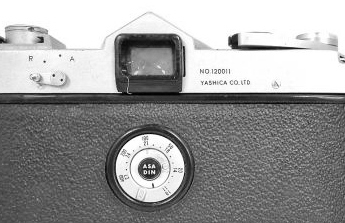
Super rare very early production Pentamatic-S. NO. 120011 would have been made in the Suwa factory of Yashica in February 1961 and it was the 11th one off the production line! Amazing.

Super rare very early production Pentamatic-S. NO. 120011 would have been made in the Suwa factory of Yashica in February 1961 and it was the 11th one off the production line! Amazing. These two items were recently available from a collector in Japan which helps me believe that the Pentamatic series was in fact released for the Japanese domestic market.

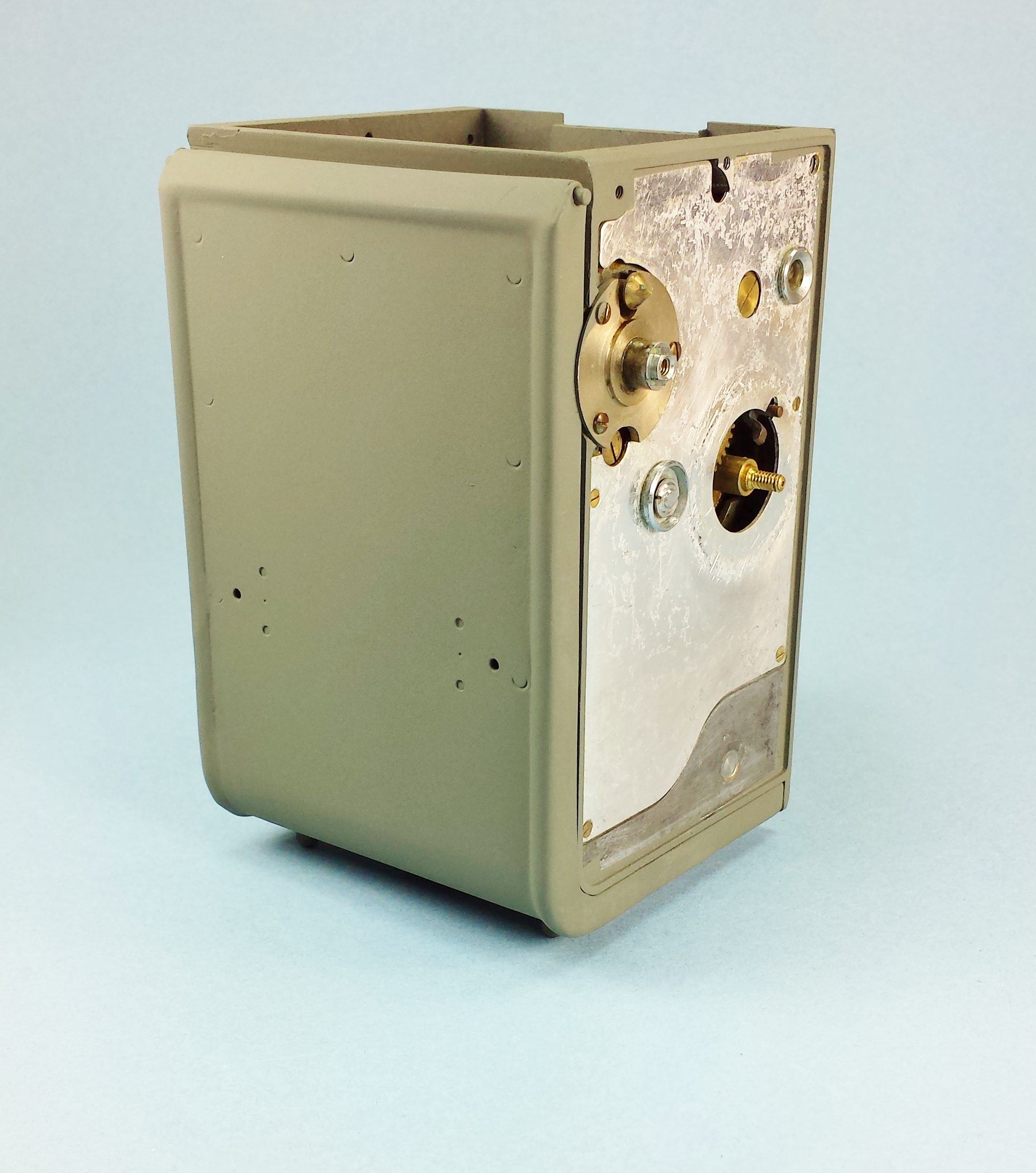
Yashima Yashicaflex A-II Restoration Update 11-12-2015

Some good prep work continued again today…

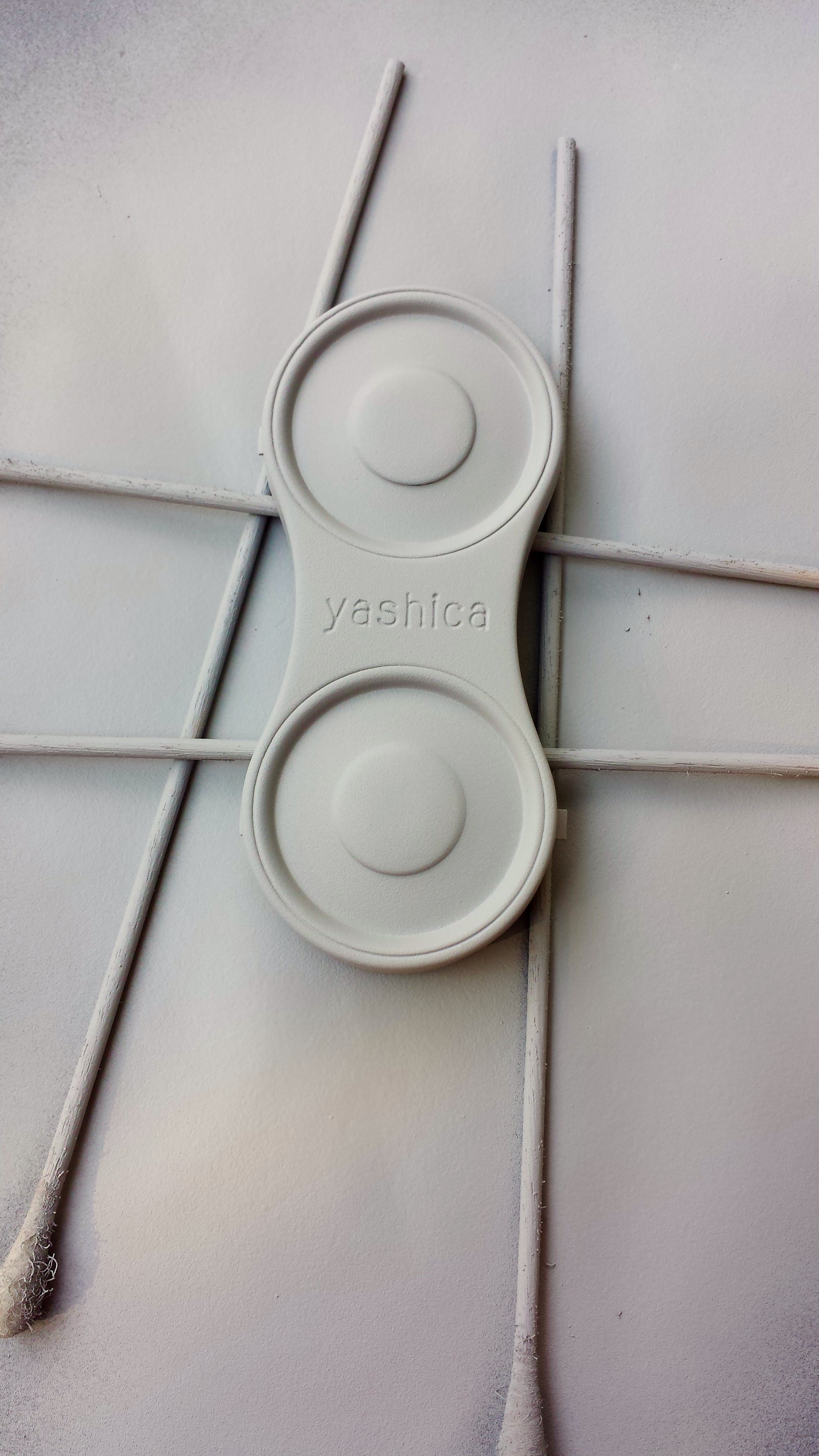
Some pieces received their final etching primer coat and others are getting the final or first (finish) coat of primer.

Final coat on base etching primer. Some light sanding and a smooth finish primer coat and then... the first "color" coat of lacquer.

Final coat on base etching primer. Some light sanding and a smooth finish primer coat and then… the first “color” coat of lacquer.

More primer and then more primer. The bare aluminum needed to be painted with a primer coat that etched into the metal. Getting closer!

More primer and then more primer. The bare aluminum needed to be painted with a primer coat that etched into the metal. Getting closer!

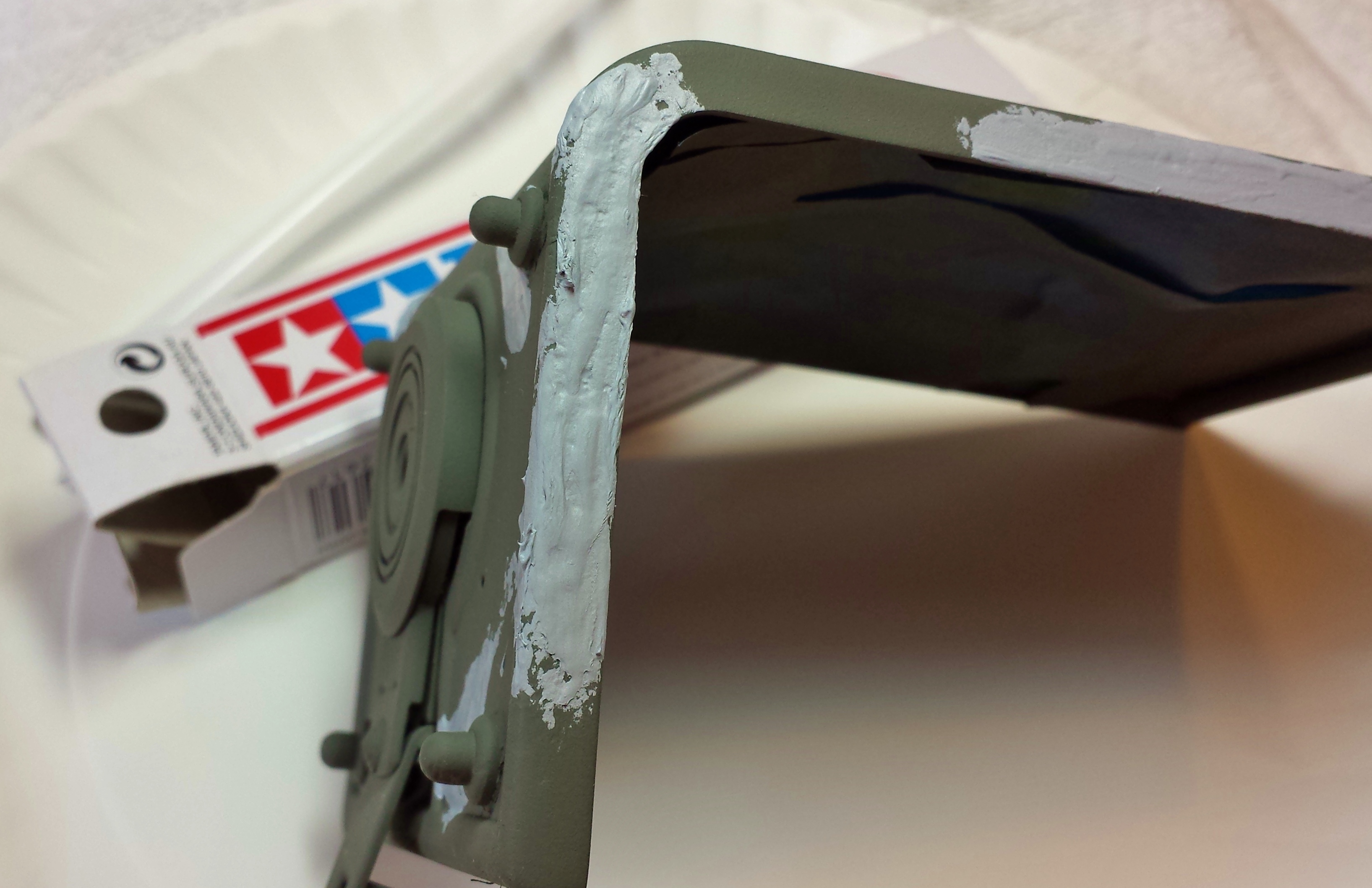
Back view of the film door. This was the most corroded part of the camera body and took the most time filling the pitted areas.

Back view of the film door. This was the most corroded part of the camera body and took the most time filling the pitted areas.

Final coat of finish primer on this 1955 metal cap.

Final coat of finish primer on this 1955 metal cap.

The back door had suffered severe metal corrosion and needed to have the corroded areas repaired. Some filler putty and some wet sanding and another coat of primer should do it.

The back door had suffered severe metal corrosion and needed to have the corroded areas repaired. Some filler putty and some wet sanding and another coat of primer should do it.

Pentamatic Accessories

Some of the original accessories that were available for the new Pentamatic…

When Yashica’s first single lens reflex (SLR) 35mm camera hit the world markets in the May-June 1960 time period, they were ready with a host of well designed accessories. From simple screw-in filters to extension tubes and the new bayonet mount lenses, Yashica had a nice selection to choose from. Here are just a few examples…

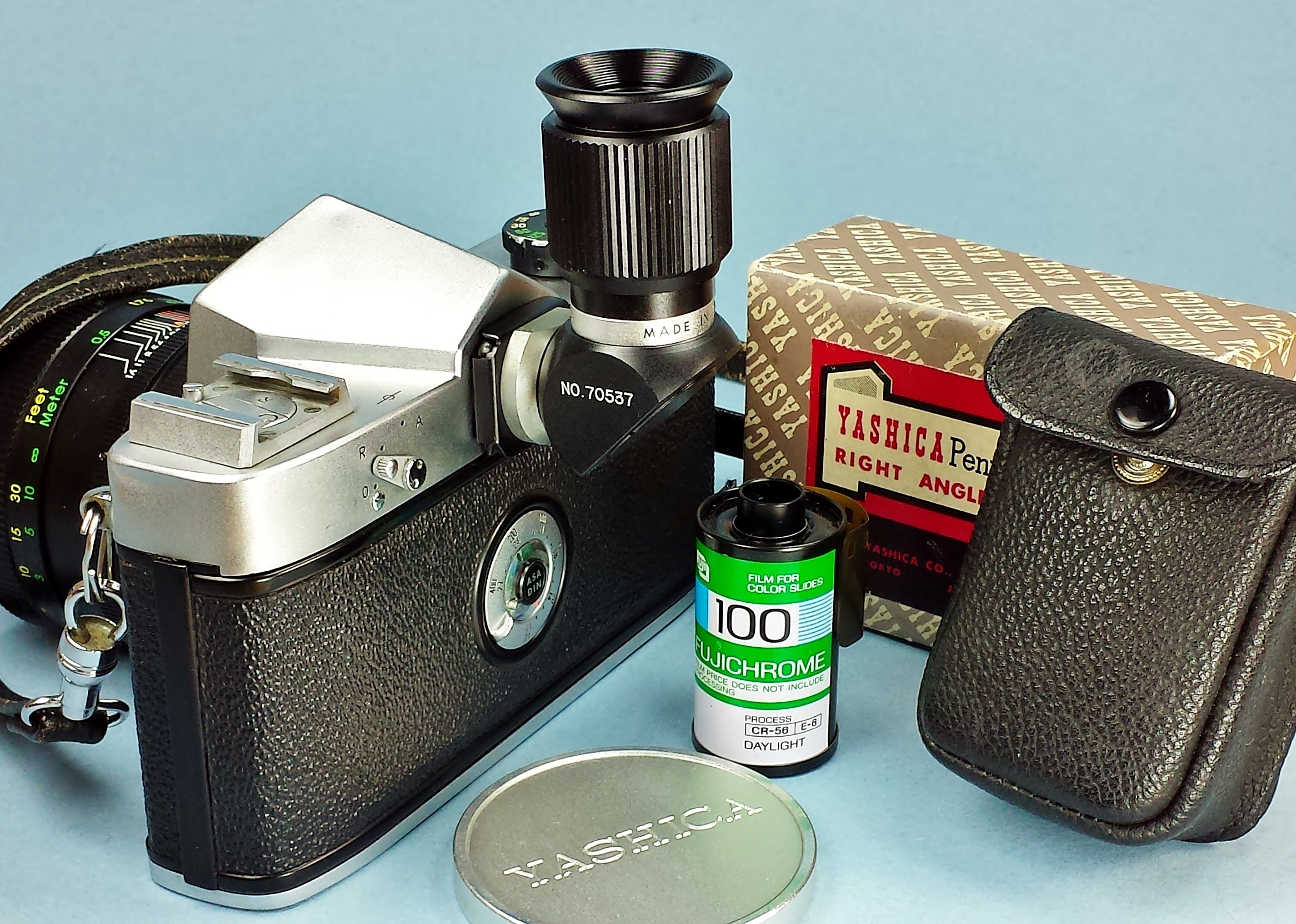
Pentamatic Right Angle Finder for low angle and close-up photography. This simple finder mounted securely to the camera's eyepiece and had adjustments for focus and could be rotated 90 degrees to the left for vertical copy work. The image is reversed so it does require some getting used to. Here it's mounted to my Pentamatic-S.

Pentamatic ‘Right Angle Finder’ for low angle and close-up photography. This simple finder mounted securely to the camera’s eyepiece and had adjustments for focus and could be rotated 90 degrees to the left for vertical copy work. The image is reversed so it does require some getting used to. Here it’s mounted to our Pentamatic-S.

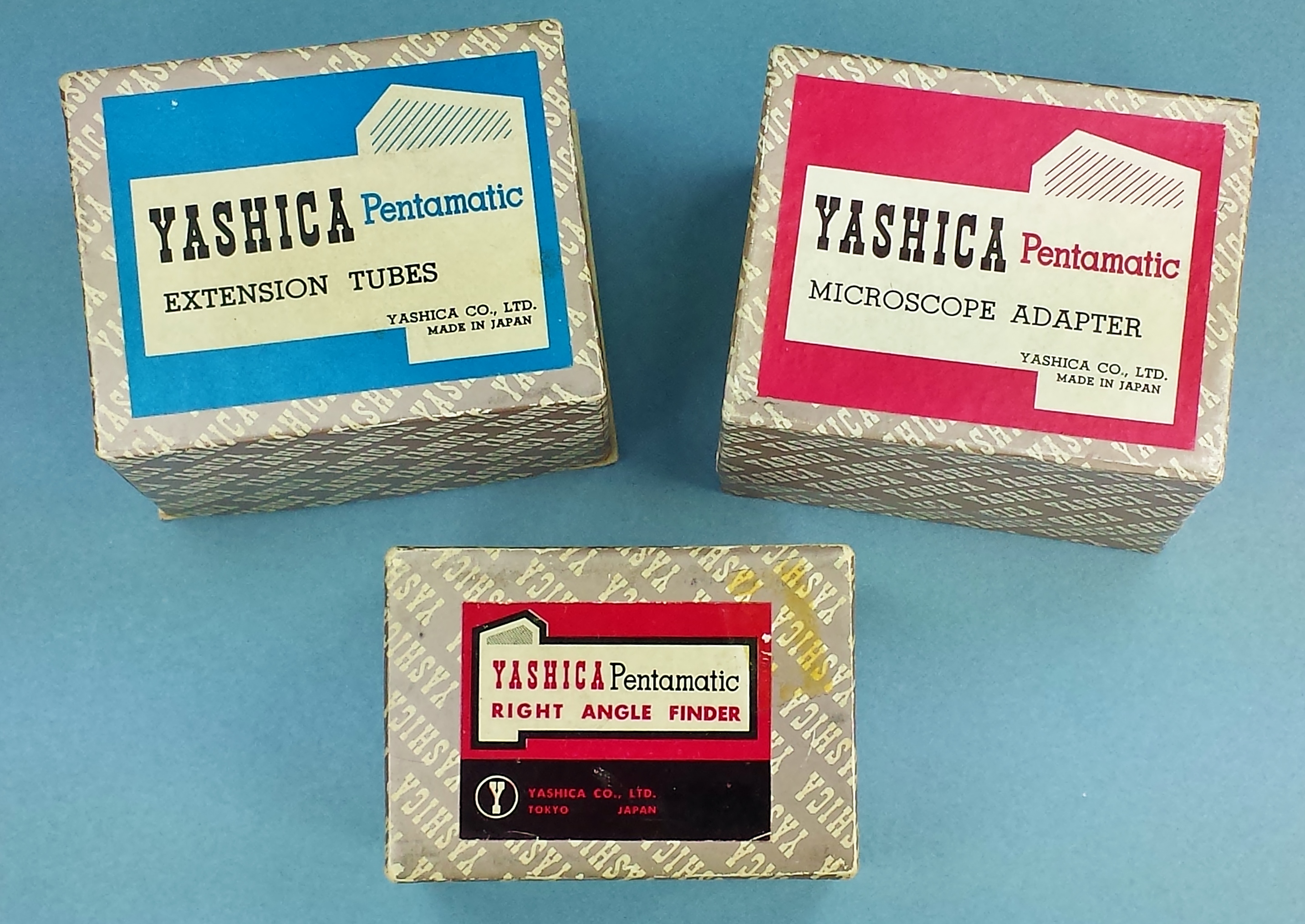
A small collection of boxes gives some idea as to the diversity of the early accessories. Note the general theme of the design... each shows-off the "pentaprism" design of the camera. The right angle finder box appears to be from a slightly later design as it has a different look from the other two.

A small collection of boxes gives some idea as to the diversity of the early accessories. Note the general theme of the design… each shows off the pentaprism design of the camera. The right angle finder box appears to be from a slightly later design as it has a different look from the other two.

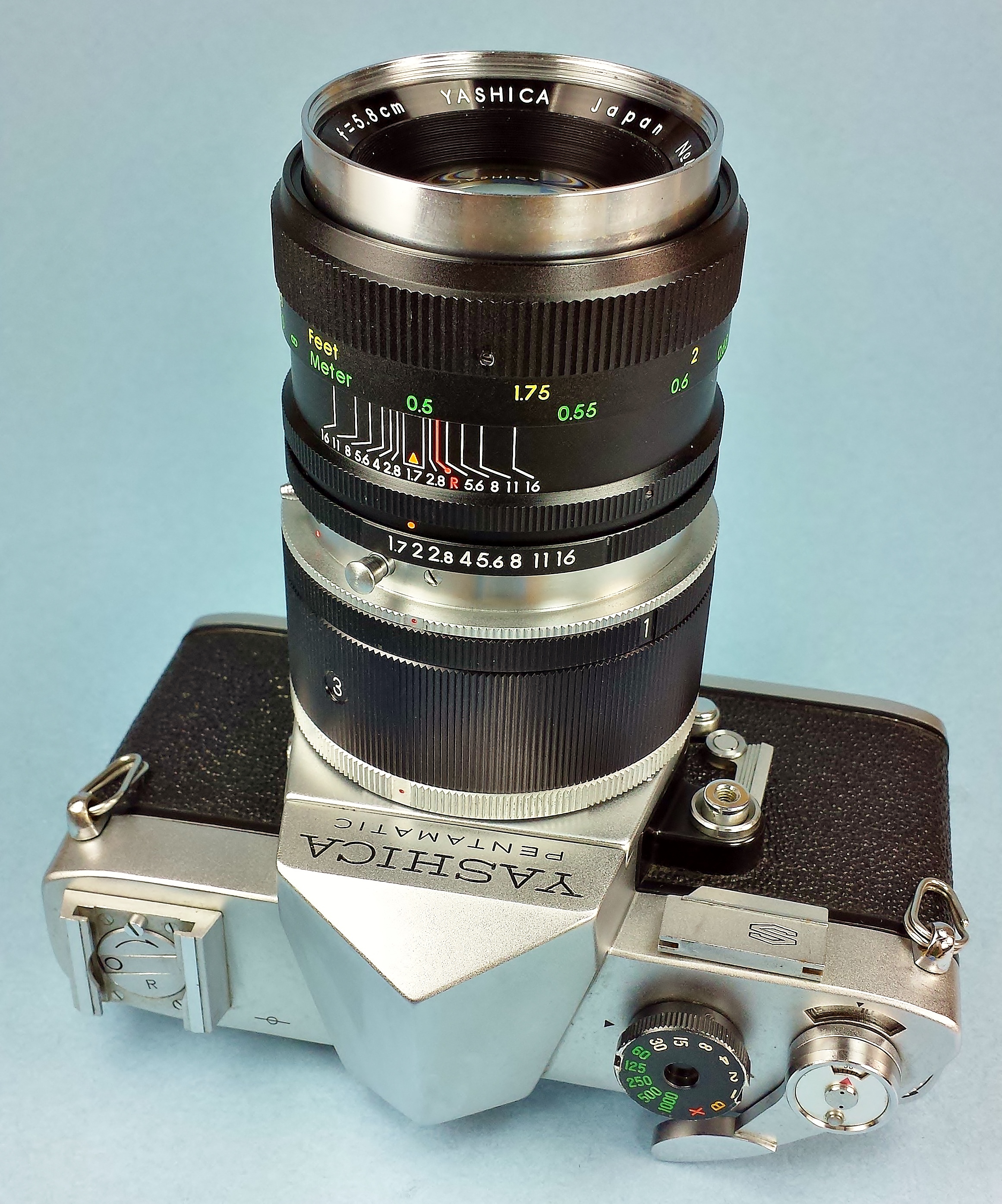
Pentamatic Extension Tubes mounted on my Model-S Pentamatic camera body and Auto-Yashinon 5.8 cm (58 mm) f/1.7 standard lens. The lens is super bright and is super heavy! Camera and lens weigh-in at 2 lbs 5 oz (1056 g)!

Pentamatic ‘Extension Tubes’ mounted on our Model-S Pentamatic camera body and Auto-Yashinon 5.8 cm (58 mm) f/1.7 standard lens. The lens is super bright and is super heavy! Camera and lens weigh-in at 2 lbs 5 oz (1056 g)!

Mr. Ushiyama and Yashima / Yashica

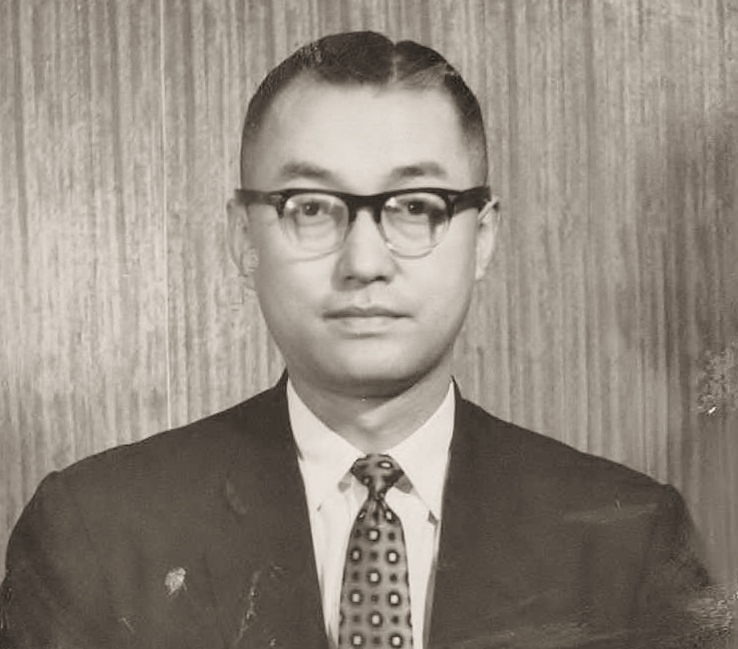
Image is from what I gather is a visa to visit (or do work) in Brazil. I believe this image is from 1957. Yashica did set up a factory in Brazil and had established an address there.

Image is from what I gather is a visa to visit (or do work) in Brazil. I believe this image is from 1957. Yashica did set up a factory in Brazil and had established an address there.

Mr. Yoshimasa Ushiyama…

Founder and president of Yashima Kogaku Seiki Company, Limited. He and his brother, Mr. Jisaburo Ushiyama started a small manufacturing business in their hometown of Suwa, Nagano Prefecture, Japan in the late 1940s and transitioned to making cameras by 1953. In the 1950s, Yashima grew to one of Japan’s largest camera manufacturers and by the close of the decade of the fifties, they outsold many of today’s best know camera makers. Yashima became Yashica and the rest is history. I believe these images are of Mr. Ushiyama as they were scanned from the original camera instruction booklets from Yashica.

Mr. Yoshimasa Ushiyama and his brother Jisaburo c1959.

Mr. Yoshimasa Ushiyama and his brother Jisaburo c1959.

Scan of the president and director of Yashica camera... Mr. Yoshimasa Ushiyama c1959.

Scan of the president and director of Yashica camera… Mr. Yoshimasa Ushiyama c1959.

Mr. Yoshimasa Ushiyama from Yashica camera instruction booklet 1958.

Mr. Yoshimasa Ushiyama from Yashica camera instruction booklet 1958.

WHO is this man???

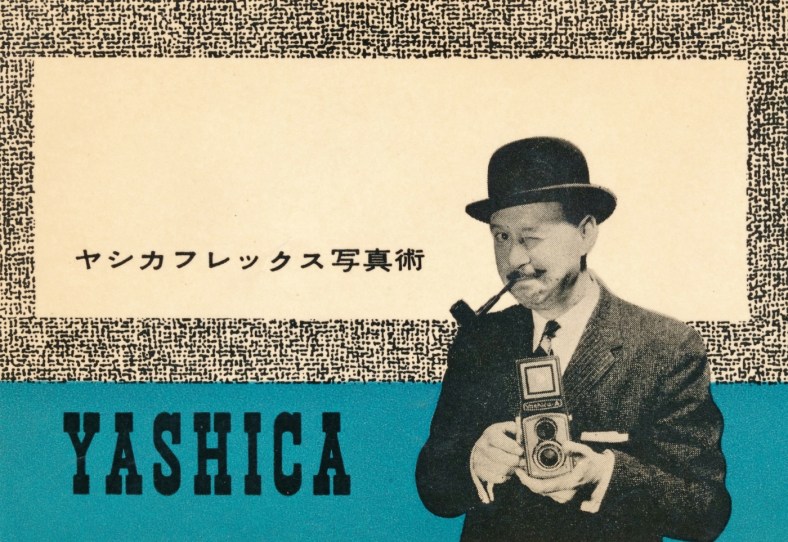
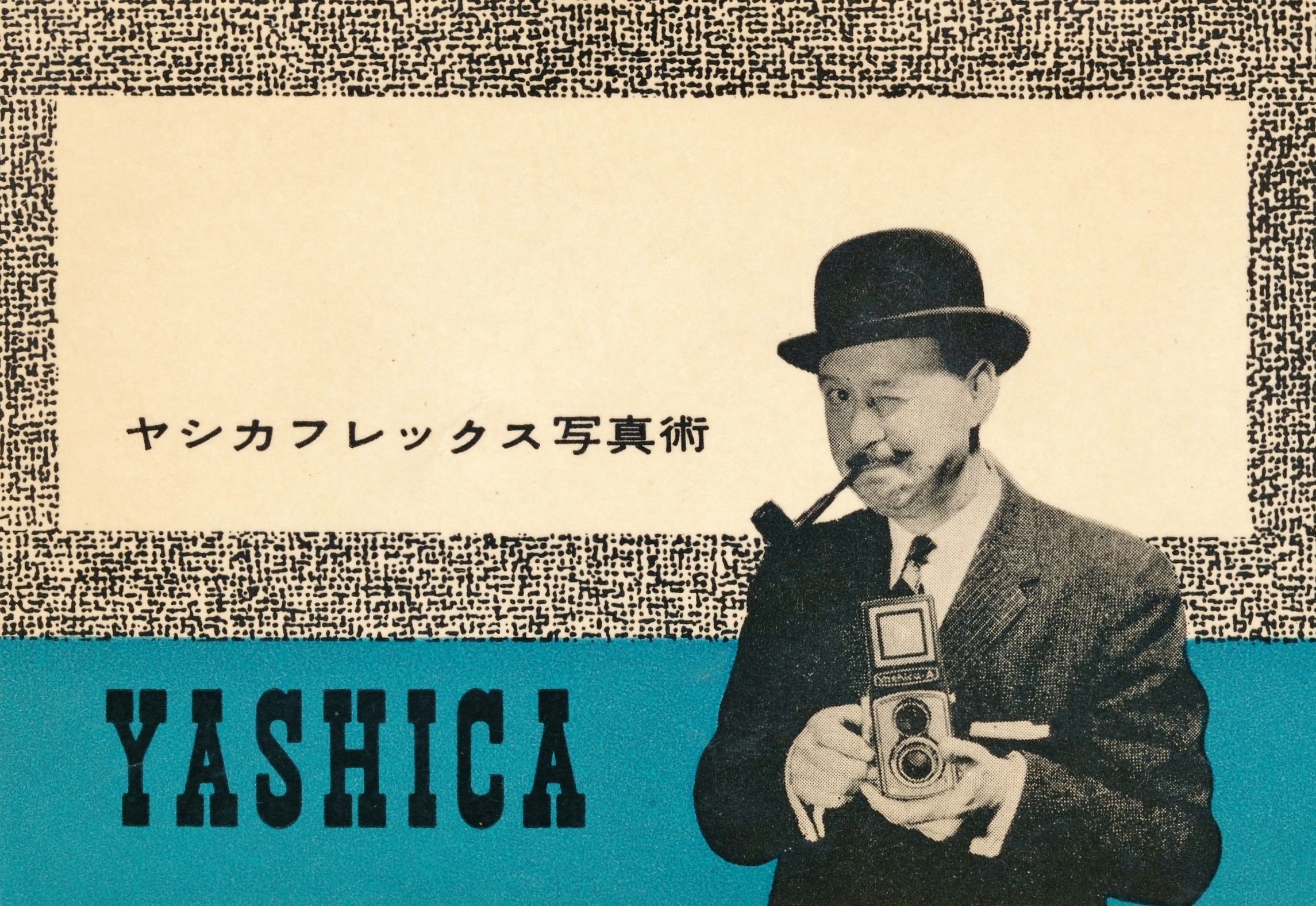
This man appears on the cover…

Of a 1959 dated Yashica instruction booklet for the Yashica A-III twin-lens reflex camera. He also appears in a Yashica sales brochure in German dressed as a cowboy (1950’s style cowboy) with the same pipe and expression. I would love to know this actors name. Any help would be appreciated… greatly!

Yashica's

Yashica’s “Mystery Man”… from the cover of the 1959 Yashica A-III TLR camera instruction booklet.

Even the smallest details count on a restoration…

My ongoing ‘interpretive restoration’ of the Yashima Yashicaflex A-II…

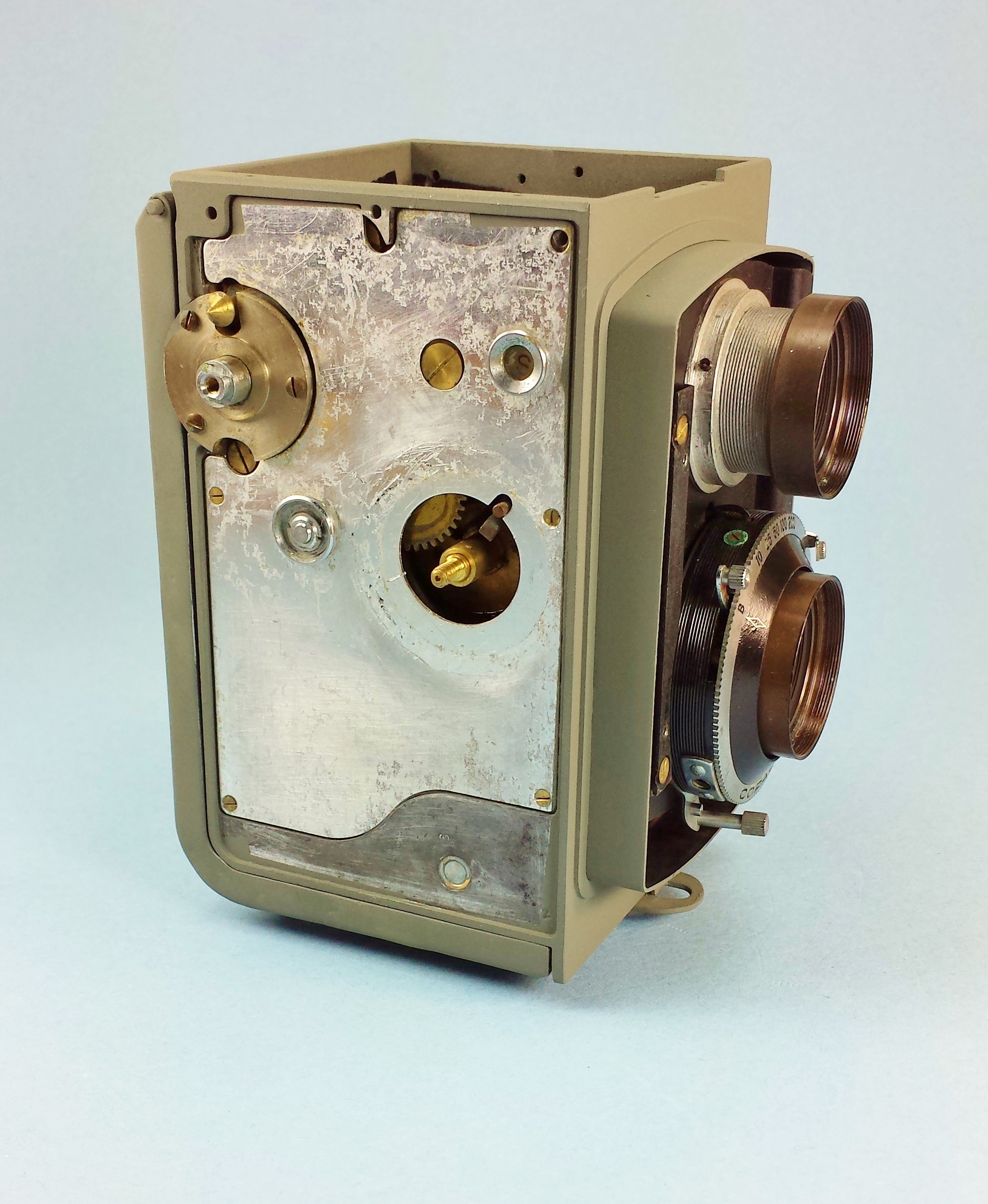
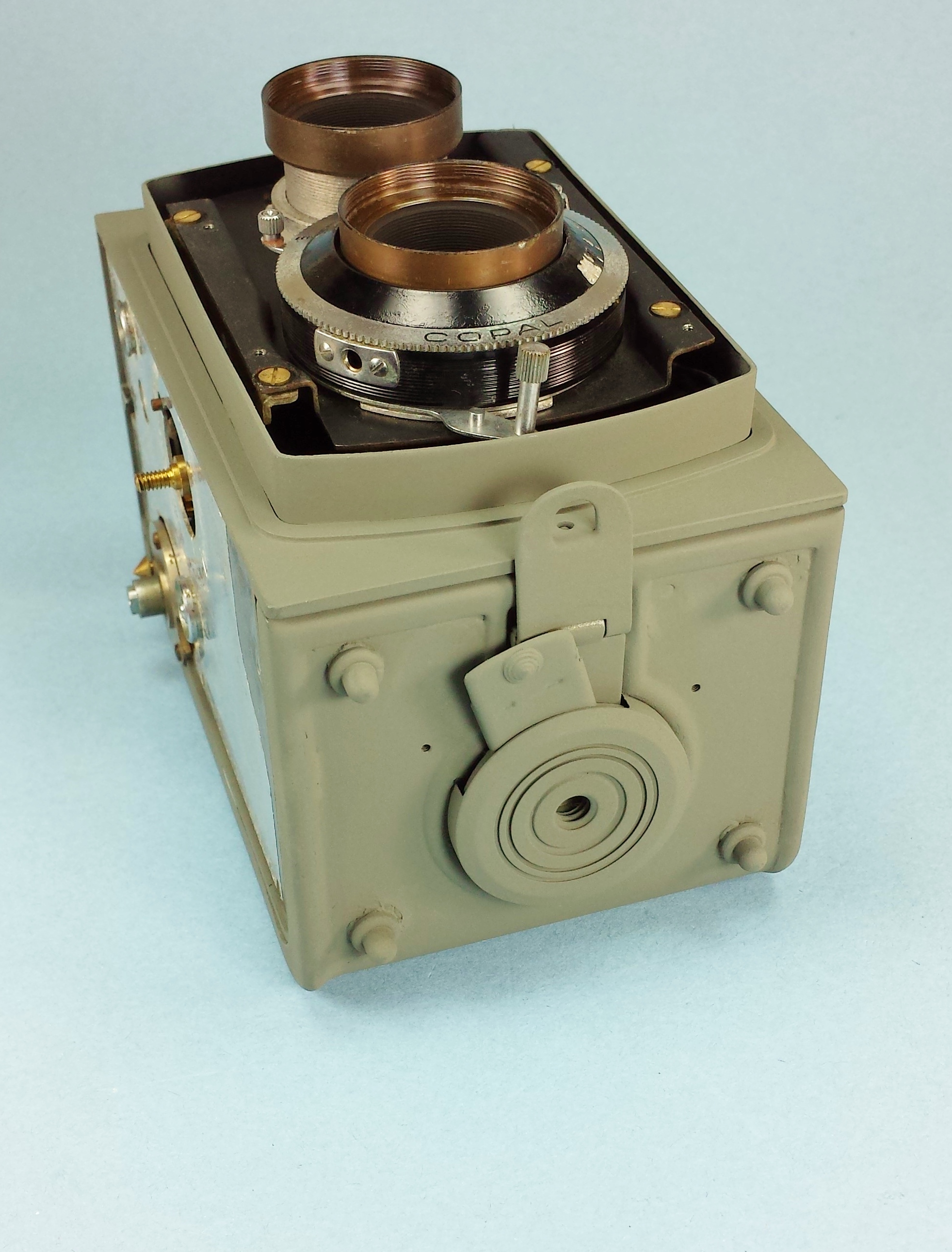
As the title suggests, when restoring a vintage camera there are no unimportant details. Stripping of old paint (in this case baked-on 60-year-old enamel paint) and removing corrosion from small metal parts is tedious and super time-consuming… but absolutely essential. As my ‘interpretive restoration’ progresses into the middle stages I thought I would share some new images.

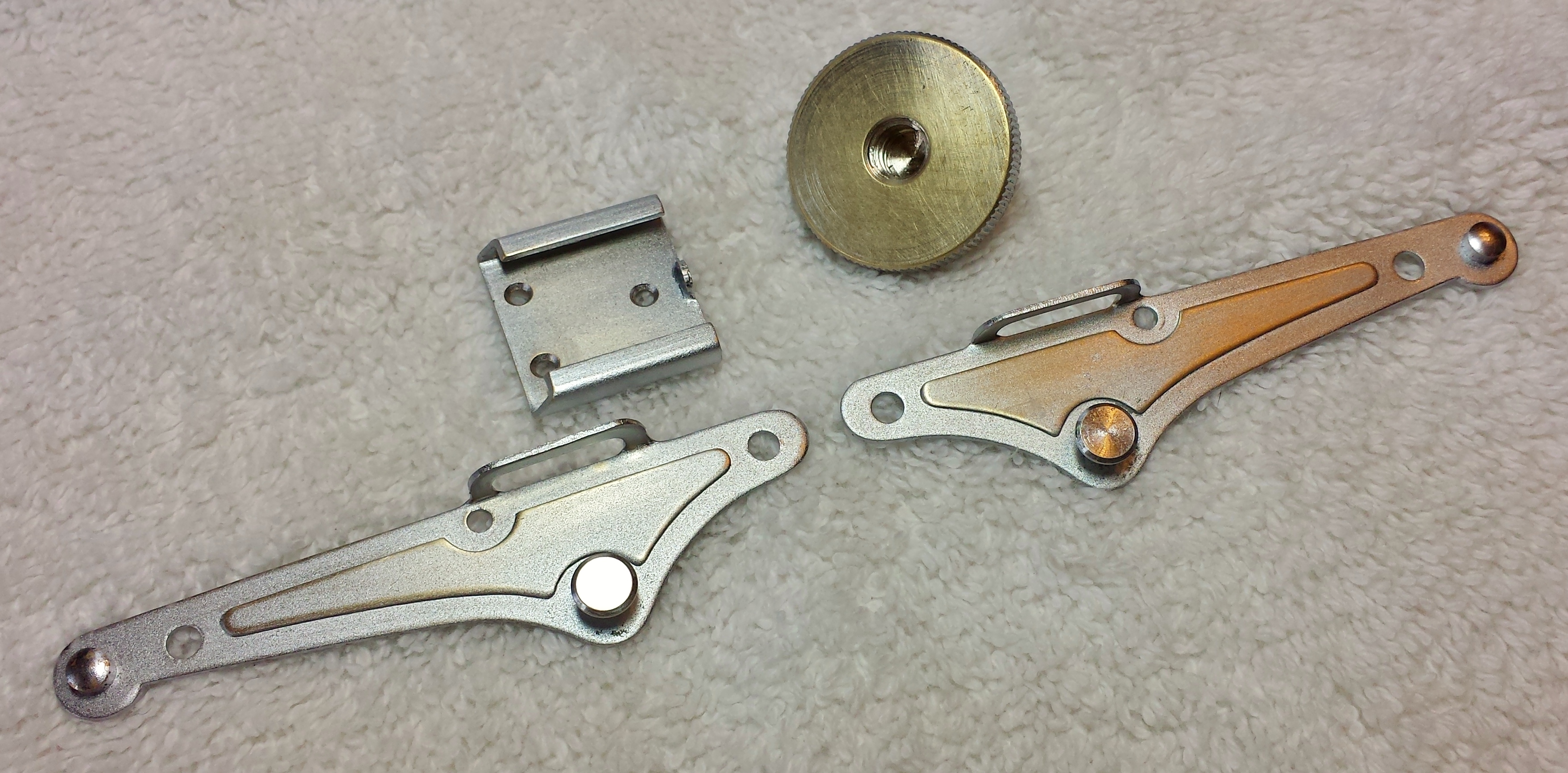
Important small parts after removing corrosion and light chemical cleaning. Ready for a coat of primer.

Important small parts after removing corrosion and a light chemical cleaning. Ready for a coat of etching primer. Clockwise top center… tripod/case retaining screw, left strap holder, right strap holder and accessory (cold) shoe.

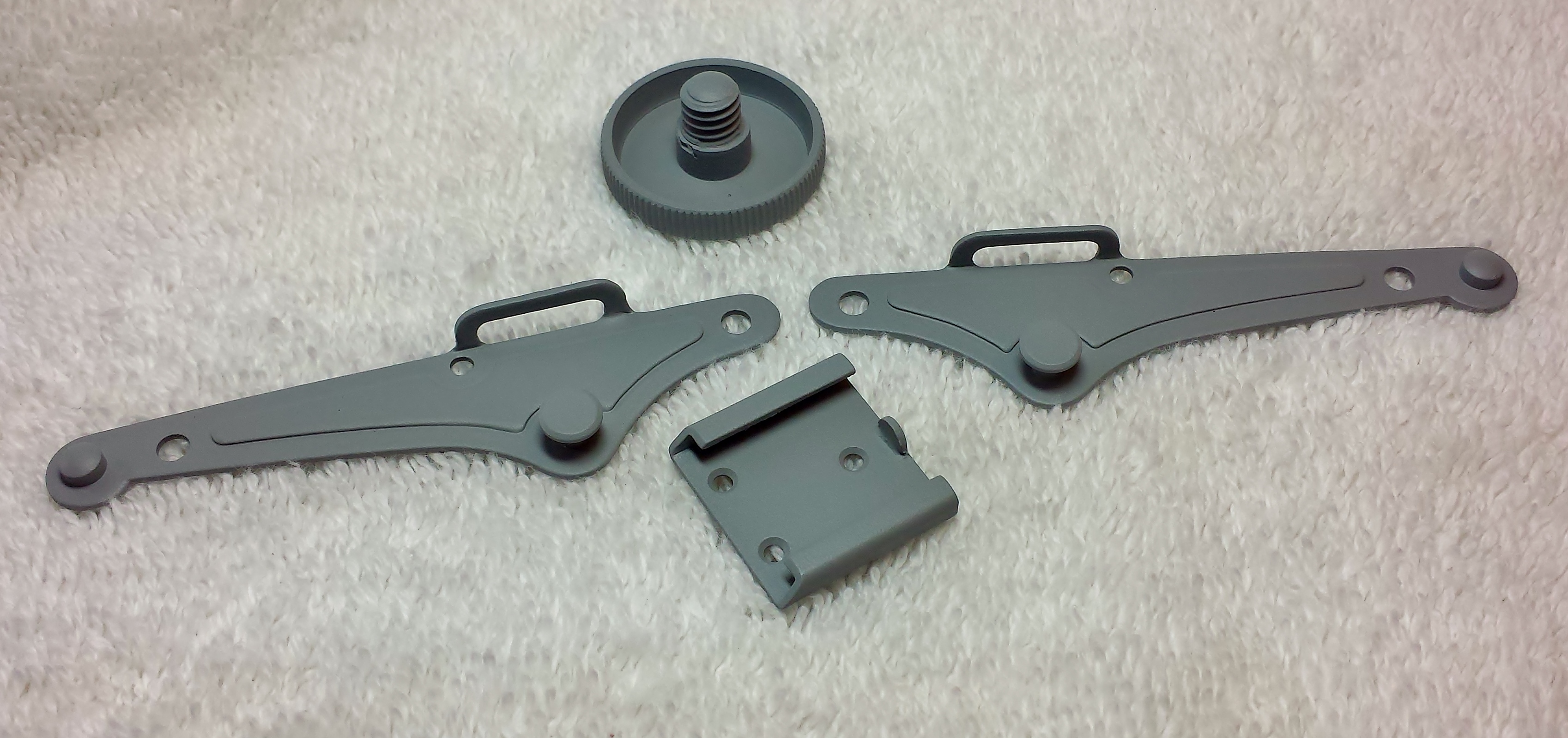
After a light (3 coats) of etching primer.

After a light (3 coats) of etching primer.

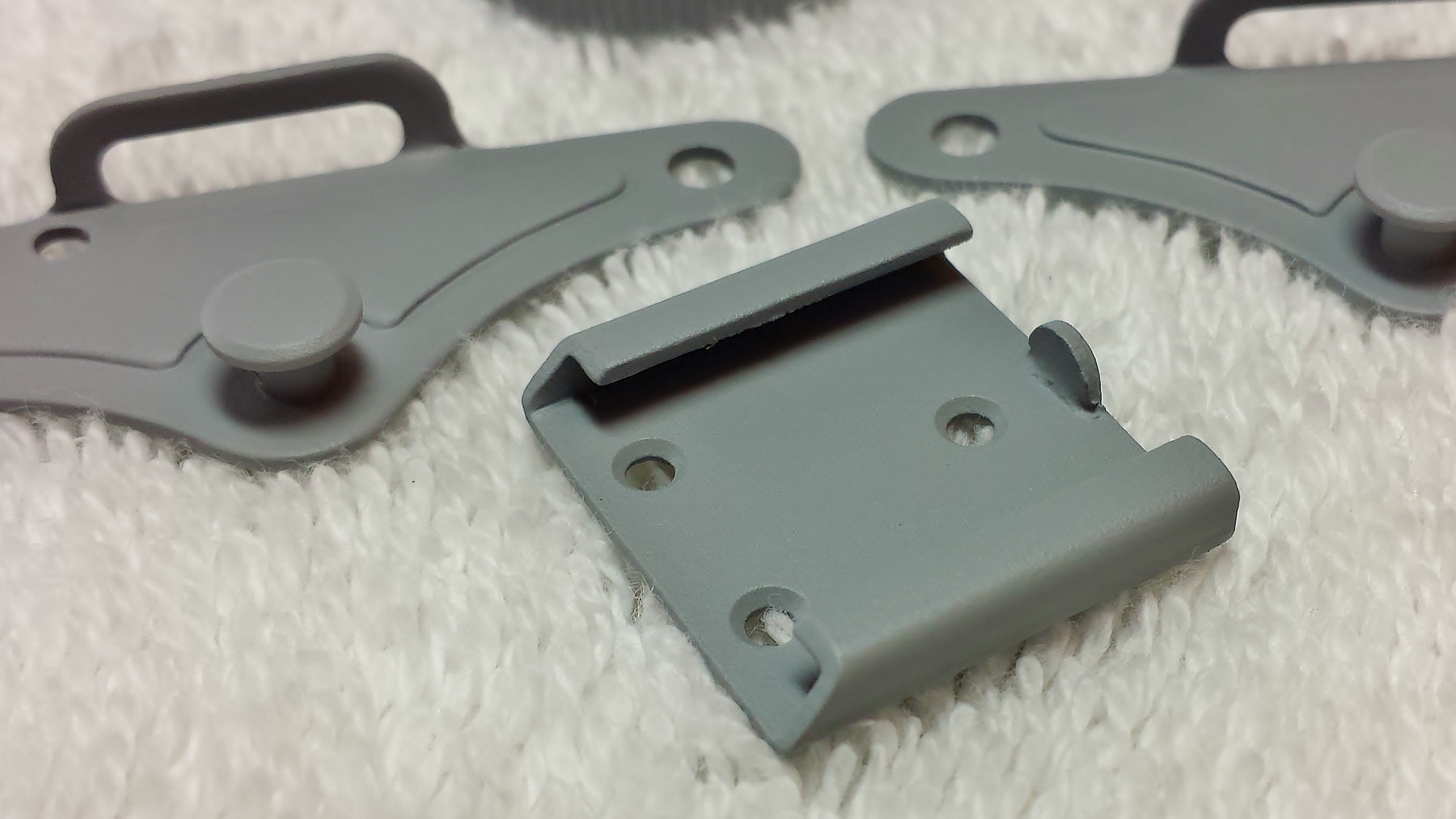
Close-up detail showing the recently painted parts.

Close-up detail showing the recently painted parts.

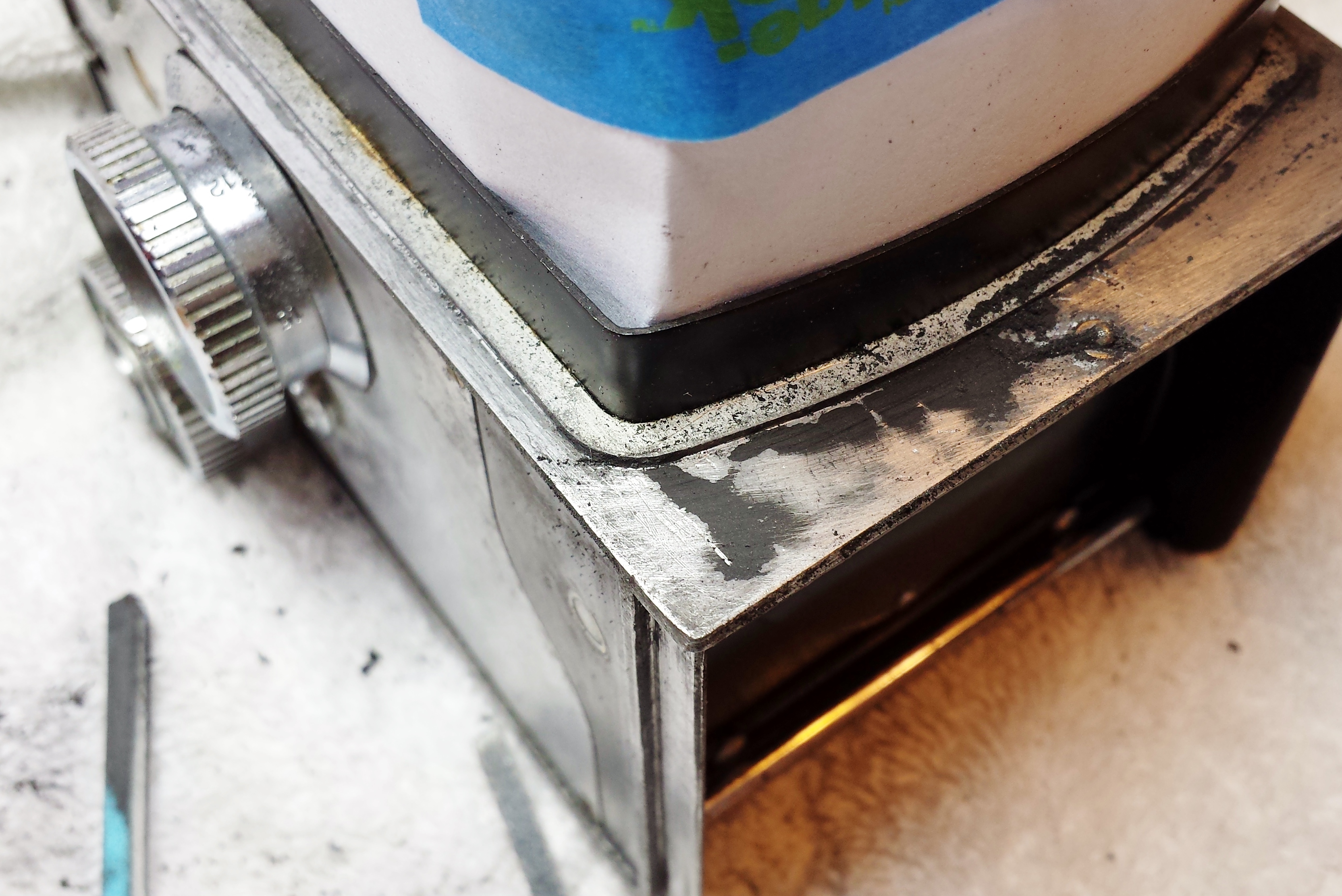
Paint removal from the Yashicaflex A-II body. There was plenty of corrosion on the cast aluminum body and the only way to attack it was with a good sanding with about 120 grit sandpaper followed by 220 grit.

Paint removal from the Yashicaflex A-II body. There was plenty of corrosion on the cast aluminum body and the only way to attack it was with a good sanding with 120 grit sandpaper followed by 220 grit. Still some of the original factory enamel paint hangs tough.