My Asahi-Takumar 135mm f/3.5 lens set is shown with my Asahi Pentax 35mm SLR from 1957. The lens is from 1958. The lens is listed at 300 grams or 10.5 oz. My lens weighs 326 grams. There must be an error in the original weight, or my lens was modified by the factory after the first lenses were made.
It’s one of the first auxiliary lenses made for their new 35mm SLR camera.Asahi Optical Company’s first 35mm SLR with a pentaprism. This model was released in May 1957, and the lens followed shortly after in 1958.A snip from the instruction guide. This lens is the closest to mine in design.The earliest lens design had two chrome aperture rings.It’s shown here mounted to my Fuji X-T2 via an adapter.A test image. The equivalent focal length is about 200mm when used on a 1.5x crop sensor camera, such as the Fuji.There may be some light haze or cloudiness inside one of the lens elements, as this shot lacks contrast.Same shot with added “punch”.
Comments are always welcome; I’ve learned a great deal from reader feedback. As always, thanks for stopping by. While there, visit my camera shop at http://www.ccstudio2380.com (CC Design Studios, hosted on Etsy). – Chris Whelan
In light of another series of recent shootings in the United States, with one receiving the level of attention that I remember RFK received in 1968, I thought it would be a good time to remember these children, their parents, their families, and their teachers. Sandy Hook in 2012 and Uvalde in 2022…
Babies… just babies.Remember them…More children. And their teachers.Just ONE of hundreds killed by hateful people with guns.
I don’t usually post political things, and this isn’t and should never be political. People die in an unregulated society in LOVE with weapons, not humans. Peace, Chris
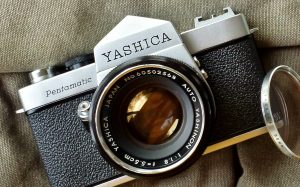
The Canonflex was released in May 1959. It was Canon’s first 35mm SLR. The Yashica Pentamatic was Yashica’s first 35mm SLR, and it was released in March 1960. It was designed with the help of the recently acquired Nicca Camera Company in 1958. It’s safe to say that without Nicca’s help after the acquisition, the Pentamatic wouldn’t have come to market when it did.
Likely two cameras many have never seen.
As a collector of classic cameras, I appreciate these designs from the late 1950s.What makes them different keeps them the same. Both cameras feature sharp standard f/1.8 lenses. The Canomatic lens is reportedly radioactive. No evidence that the Yashica lens is also radioactive. The lens on the Yashica was made by Tomioka Optical for Yashica. The Canon lens was made by Canon.The Canon is a slightly larger camera than the Yashica. The Pentamatic is slightly more compact compared to the Canonflex. Its all-metal construction puts its weight right there with the larger Canon.Rear view. The serial number on the Canon indicates it was the 5,998th camera made. The Yashica was manufactured in August 1960 and was the 8,101st model produced up to that point in 1960.
Comments are always welcome; I’ve learned a great deal from reader feedback. As always, thanks for stopping by. While there, visit my camera shop at http://www.ccstudio2380.com (CC Design Studios, hosted on Etsy). – Chris Whelan
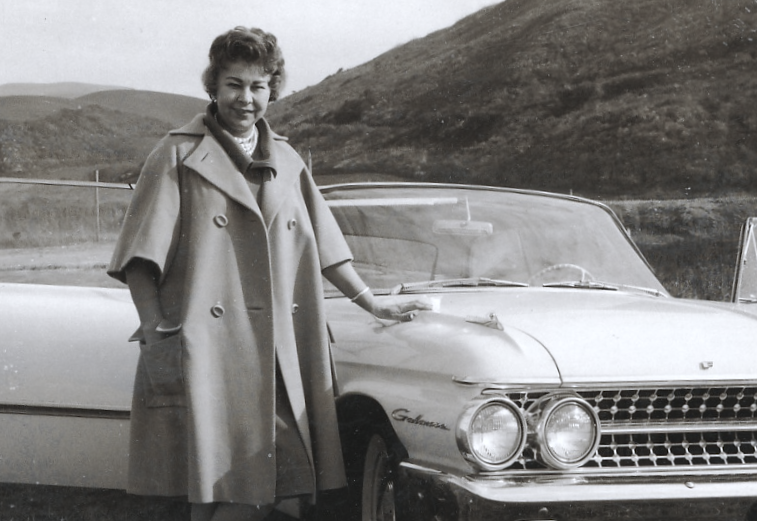
In celebration of my mom, Mary, on the centennial of her birth in the city that she loved and knew so well… born September 10, 1916, at home on East 74th Street in Manhattan.
She told me that the rooftops and streets of the Upper East Side were her playgrounds and the East River (THAT river!) was where they splashed in the heat of summer.
She would go on to become a secretary for some of the biggest corporations in America, which were headquartered in New York.
She would meet my dad (Paul) at the wedding of her best friend and fall in love with him at first sight. She married my dad on November 3, 1943, just a few blocks from where she grew up.
During the war, she worked at Columbia University and would go on to receive recognition for her work on the Manhattan Project (Silver A-Bomb Pin).
By the mid-1950s, she was a suburban housewife (not a bad thing to say then, but if you said it today, you’d catch heck) and was the best mom in the world to me… she was at every baseball game and at school functions, and she taught me the ropes of New York and life.
My mom was the strongest person I knew… in less than twenty years, she would lose the man she loved with all her heart and fight on to see me through those difficult years that came after.
Sadly, she left way too soon herself, but her love of the City, of life, of adventure, and her courage are with me today.
My mom’s Kodak from 1938 and the host of images she took with it are special to me. My mom’s and dad’s love of photography was passed down to me (foto DNA), and that remains an essential connection to them.
If you’ve read this through, I thank you… It is only a small gesture that I can make in her memory today.
Image 1: Her camera.
Image 2: 1960 street photography. Me with my first camera.
Image 3: Mom with her bestie, Anne, in 1939.
Image 4: Mom and Dad in 1961 on a second honeymoon in Rio.
Image 5: 1976, Jensen Beach, Florida, just before I left for Japan.
Her Kodak camera.‘Street Photography’, 1960. With my first camera.Mom (on the right) with her bestie, Anne, 1939.Mom and Dad, 1961.On the beach, 1976.
Comments are always welcome; I’ve learned a great deal from reader feedback. As always, thanks for stopping by. While there, visit my camera shop at http://www.ccstudio2380.com (CC Design Studios, hosted on Etsy). – Chris Whelan
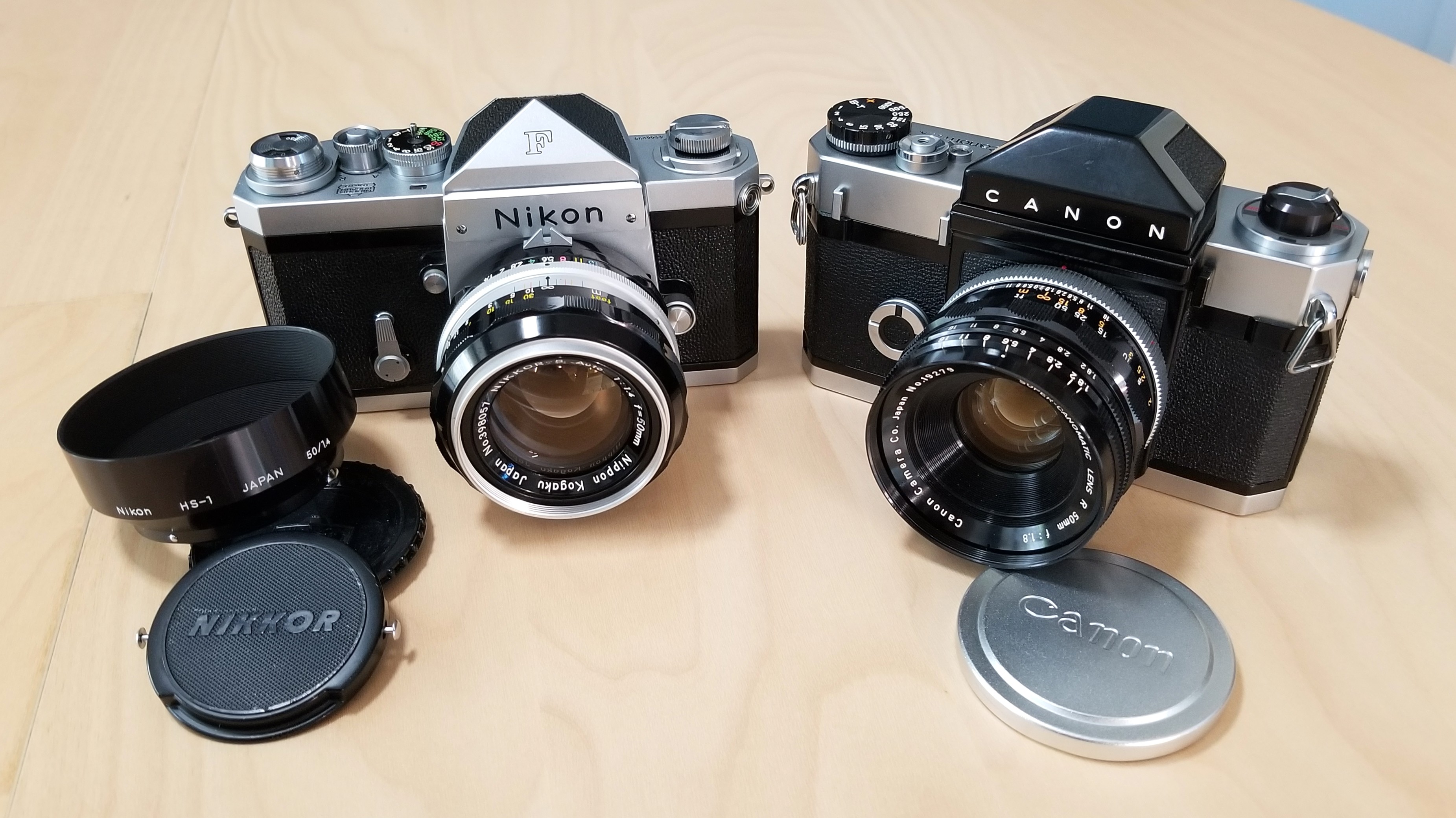
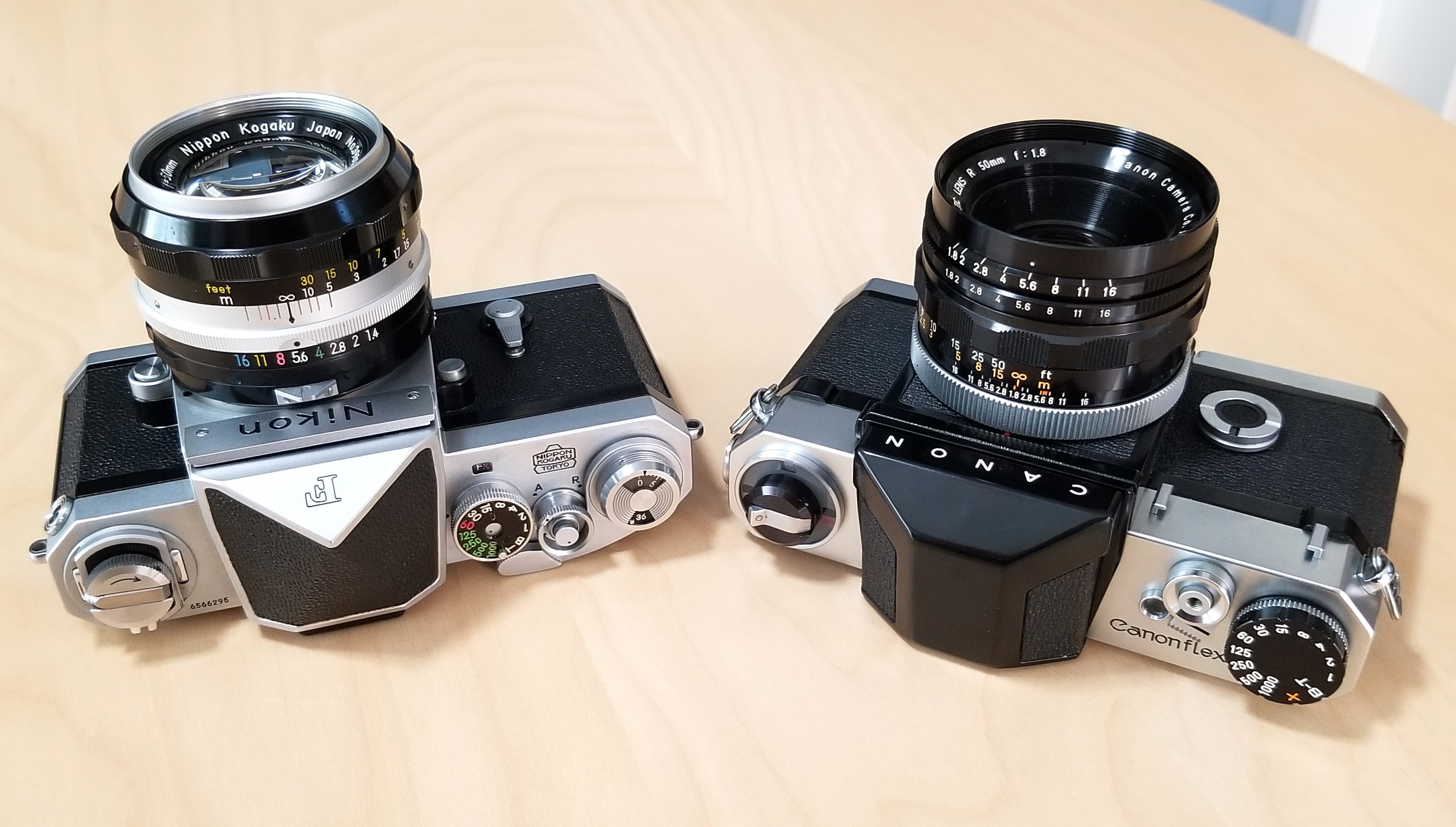
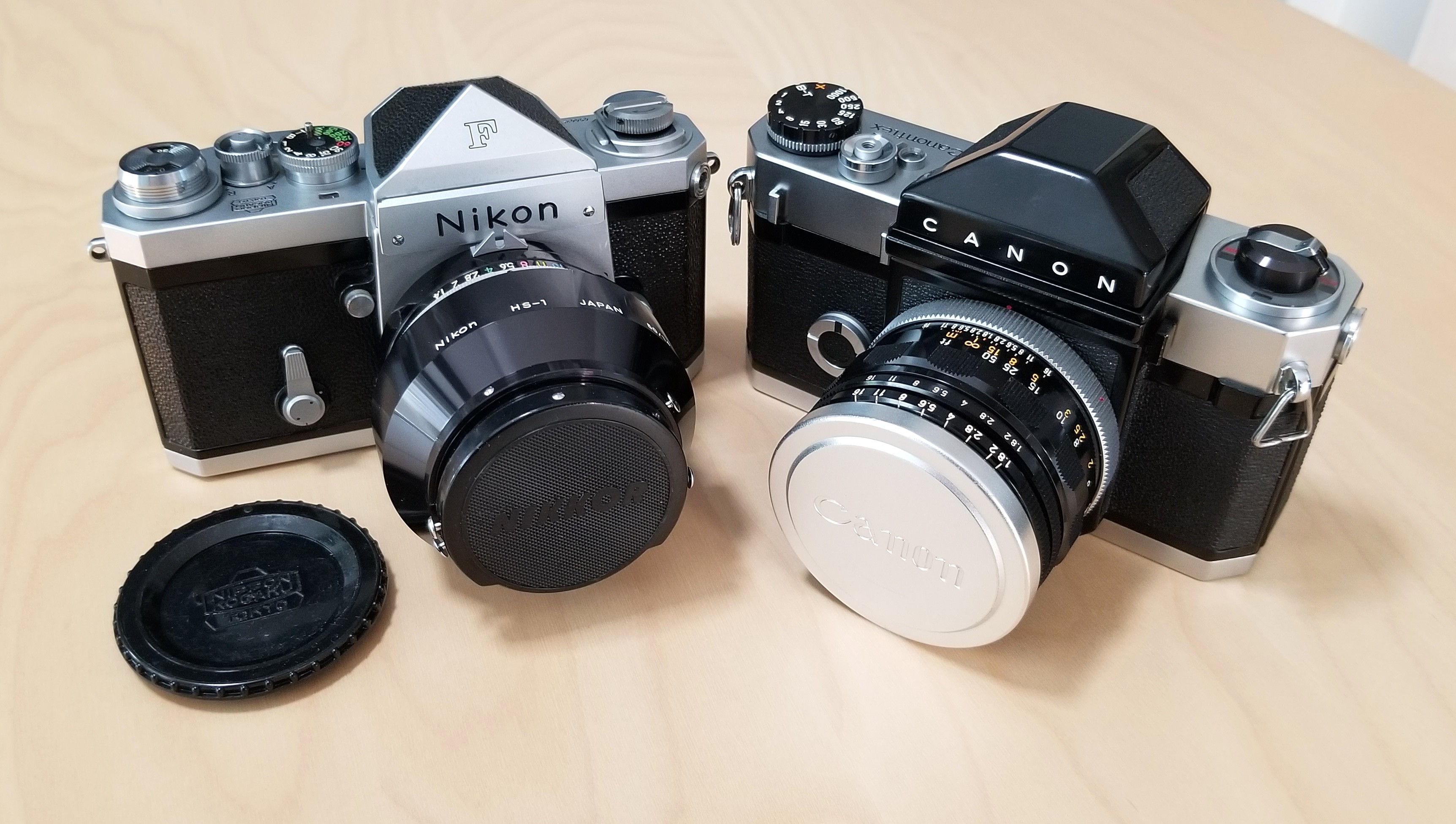
Three “new” cameras from 1959. The Asahi Pentax H2 shown here in its Honeywell Heiland badges, the Canon Canonflex, and the Yashica Pentamatic ’35’. All three made their debuts that year, although the Yashica more formally in March 1960. The Asahi is the 4th pentaprism 35mm SLR after their original in 1957. The Canon and Yashica were their first-ever SLRs. The Asahi Pentax more or less set the standard for what a compact 35mm SLR would look like for the next decade. Not pictured with this trio is the Nikon F, which was also released that year.
Three gems from the late 1950s. These were the standard lenses that would have been attached as part of a ‘kit’.The most compact of the three.This one is a beast! It’s about the same size and weight as the Canon F-1, which was released much later in March 1971.Of the three, I think the Yashica has the cleanest design and looks the most modern for the time period.It takes two hands to handle the Canon. The Canon’s lens is radioactive. Not quite enough to heat your dinner (I hope).
Comments are always welcome; I’ve learned a great deal from reader feedback. As always, thanks for stopping by. While there, visit my camera shop at http://www.ccstudio2380.com (CC Design Studios, hosted on Etsy). – Chris Whelan
Canon’s first 35mm SLR. This one is likely from late 1959 as the serial number is just below 6,000. If you have a chance to get your hands on one, you’ll see straight away that the build quality is top-notch. This one is in mint condition and, except for the slowest speeds, operates like new. The Canon Super-Canomatic R 50mm f/1.8 lens is crystal clear. It’s also an <E.P> marked body. It shares lots of DNA with my early F-1 from August 1971, which is also <E.P> marked.
Canon’s first 35mm SLR. Released in May 1959.Although modern and advanced for 1959, it didn’t catch on. Sales were reported as being disappointing. It’s reported that just shy of 18,000 were sold.My camera’s serial number indicates it was number 5,998 in the first production run. The prism is removable, just like the 1971 Canon F-1.The film advance lever was mounted on the bottom. Unusual but not unheard of for the period. The <E.P> mark was somewhat common in the 1950s, especially on Canon’s rangefinder cameras.It looks just like any modern Canon film camera through the 1980s.A snip from the instruction book from January 1960.It’s claimed that you could shoot and advance up to 3 frames per second!Shared DNA. The Canonflex on the left and my Canon F-1 (1971) on the right.
Comments are always welcome; I’ve learned a great deal from reader feedback. As always, thanks for stopping by. While there, visit my camera shop at http://www.ccstudio2380.com (CC Design Studios, hosted on Etsy). – Chris Whelan
From 1959. An Asahi Optical Company H2. Shown here with its North American market distributors’ engravings. No self-timer, accessory shoe, or light meter. A clean machine.It still looks modern today.A classic.The Asahi Pentax ‘Original’ or just ‘AP’ as it came to be referred to. From 1957. Asahi’s first 35mm SLR with an eye-level pentaprism.
Comments are always welcome; I’ve learned a great deal from reader feedback. As always, thanks for stopping by. While there, visit my camera shop at http://www.ccstudio2380.com (CC Design Studios, hosted on Etsy). – Chris Whelan
Thirty-two years after this picture was taken, I reported to the USS Midway (CV-41) in Yokosuka, Japan. My first carrier and one of the most challenging and rewarding assignments of my then young Navy career. I’m amazed that we’re both still “afloat” after all these years! GO Navy, the Best always have! She’s basically a battleship with a flight deck.
She’s one of the best US Navy museum ships around.
Comments are always welcome; I’ve learned a great deal from reader feedback. As always, thanks for stopping by. While there, visit my camera shop at http://www.ccstudio2380.com (CC Design Studios, hosted on Etsy). – Chris Whelan