Macro Monday – simple but elegant machines

Yashica self-timer ca. 1955

yashica self-timer

Walz self-timer ca. 1957

walz self-timer

Canon self-timer 1953

DSCF2207

I say simple but still amazingly complex and elegant.

Thanks for stopping by and be sure to stop by my online camera shop hosted by Etsy at http://www.ccstudio2380.com – Chris

Please respect that all content, including photos and text, are the property of this blog and its owner, Yashica Pentamatic Fanatic, Yashica Sailor Boy, Yashica Chris.

Copyright © 2015-2020 Yashica Pentamatic Fanatic, Chris Whelan
All rights reserved.

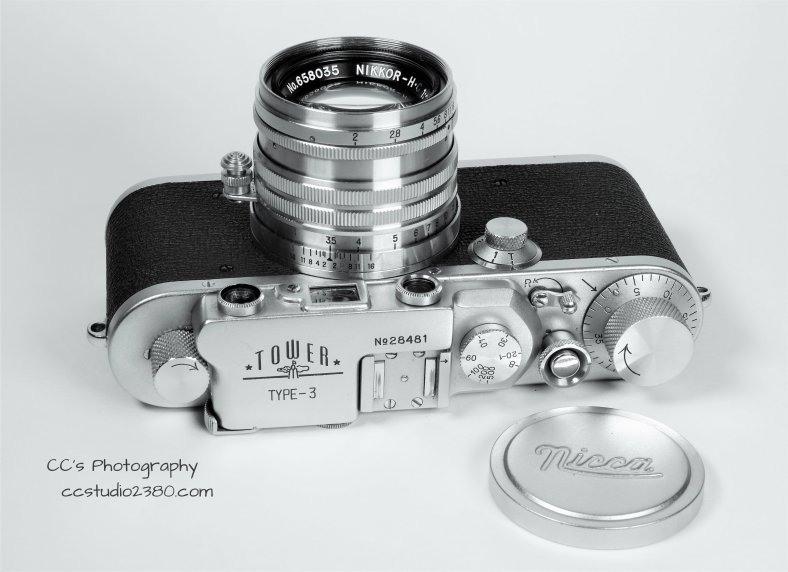
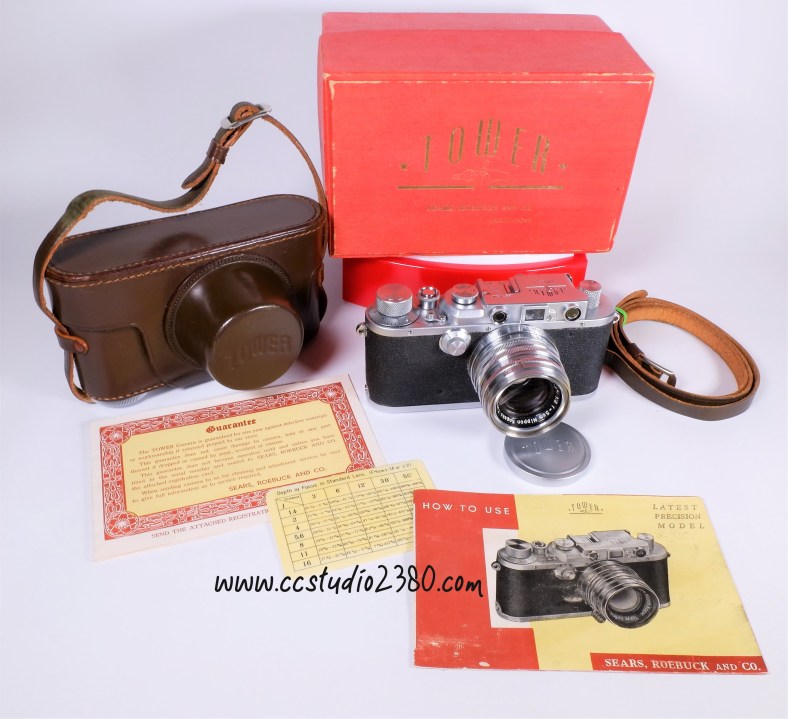
Rare Tower Type-3 35mm Rangefinder Camera made by Nicca

Made by Nicca for the Sears, Roebuck and Company for sale in the United States and Canada under the Tower brand. This beautiful camera set is from 1951.

Collectors “Dream Set”.
NiccaTower T3 Logo

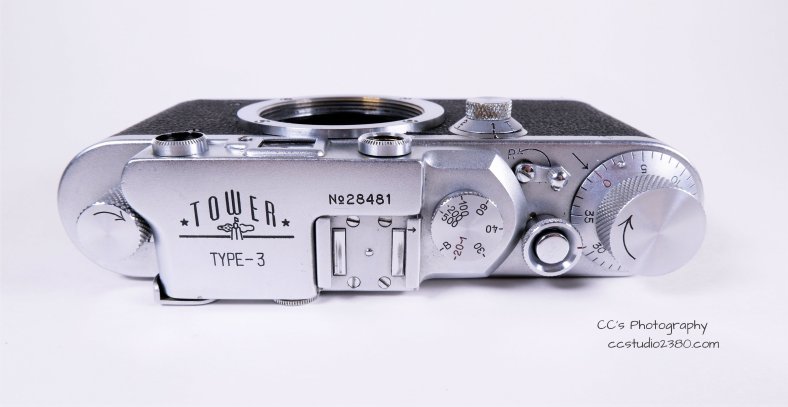
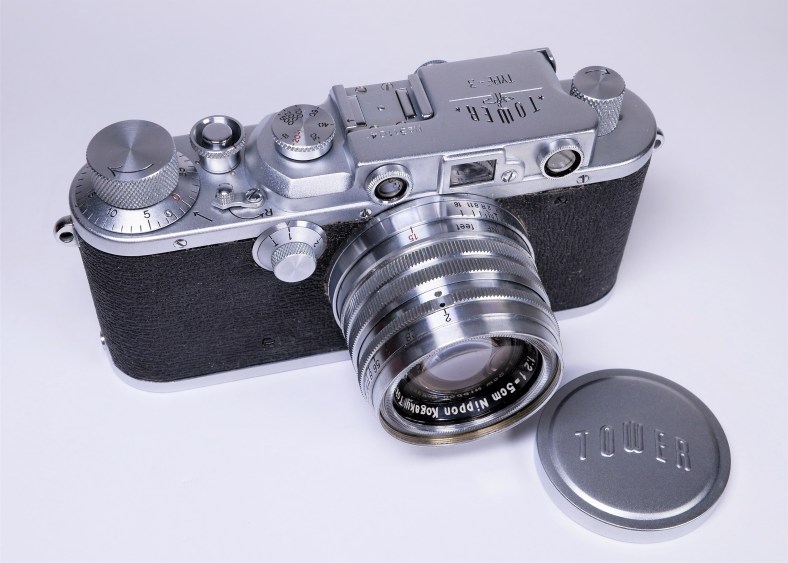
The Tower Type-3 is a 35mm rangefinder camera made by Nicca in 1951. The design is based on the original camera from Leica Many people call these types of cameras “Leica Clones or Leica Copies” but I like to refer to them as Leica inspired as many of the cameras made by Nicca were equal to if not superior to the Leica.

The camera is fully working at all speeds and the rangefinder is bright and accurate. There’s no dents, no marks, and no corrosion. It’s nearly perfect even after all these years.
DSCF7382

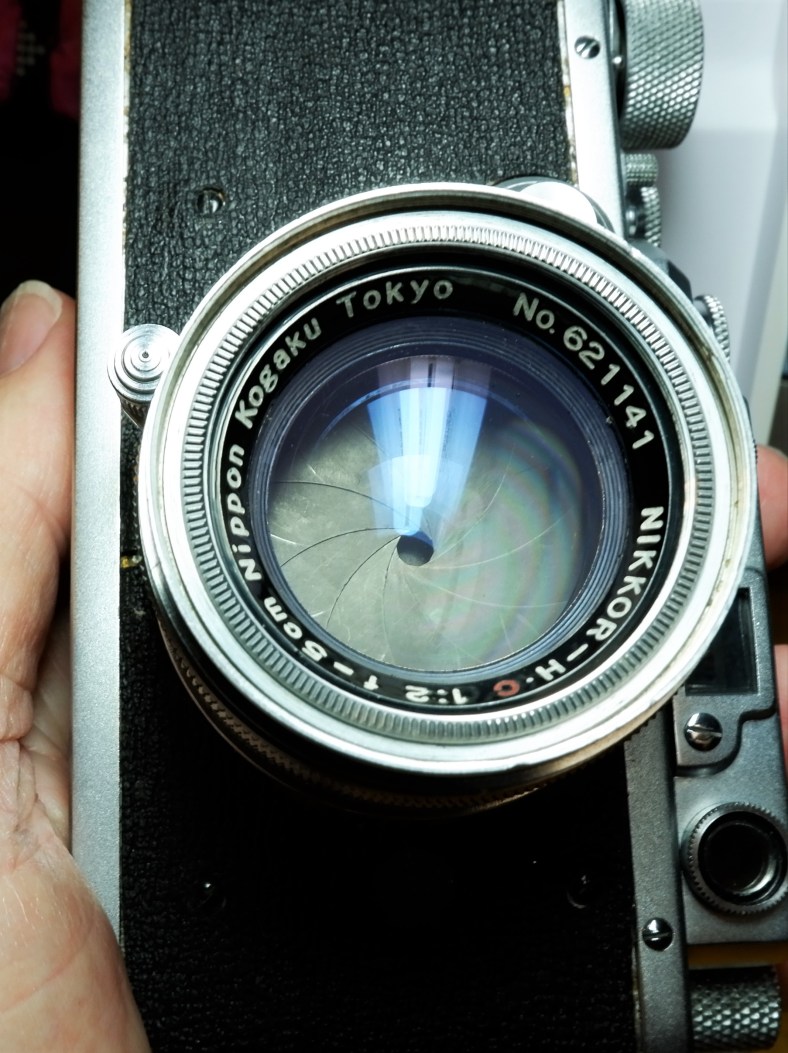
The camera body accepts all M39 / L39 screw-in mount lenses. This camera is fitted with its original Nikkor-H.C f/ 2 5cm lens made by Nippon Kogaku.
DSCF7384

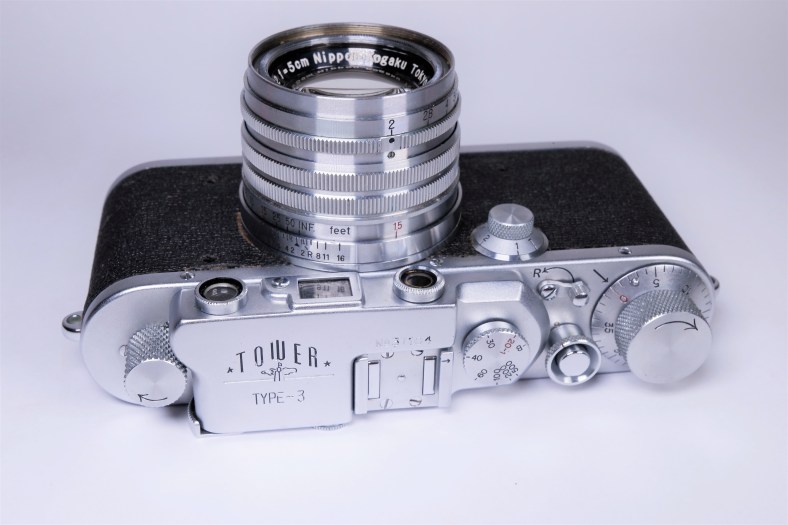
The camera features a clean simple design on the top plate. The shutter’s top speed is 1/500th of a second.
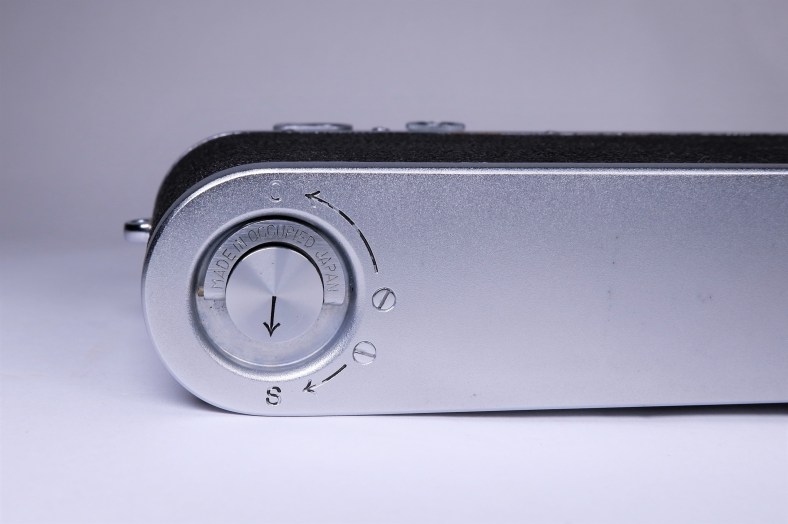
DSCF7391

Cameras made in Japan prior to April 1952 were required to be marked “Made In Occupied Japan” somewhere on the baseplate. This camera is properly marked.
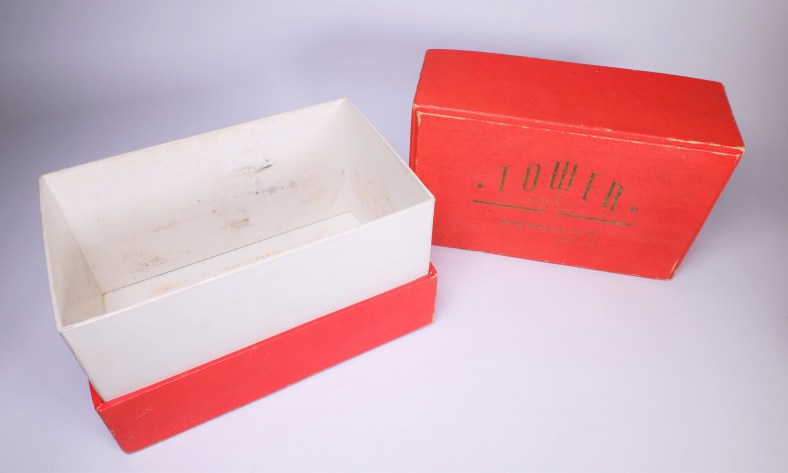
DSCF7393

Not many presentation boxes from the early 1950s still exist and few exist in such good condition as this one. A nice find and its the proper box for the camera.

Below is another amazing survivor from the early 1950s – the original leather camera case and strap. I can’t begin to explain just how rare it is to find an intact leather case from Japan made over 65 years ago. Usually, they come apart at the stitching and the leather separates at the joints. This case looks as though it was just made. A beauty.
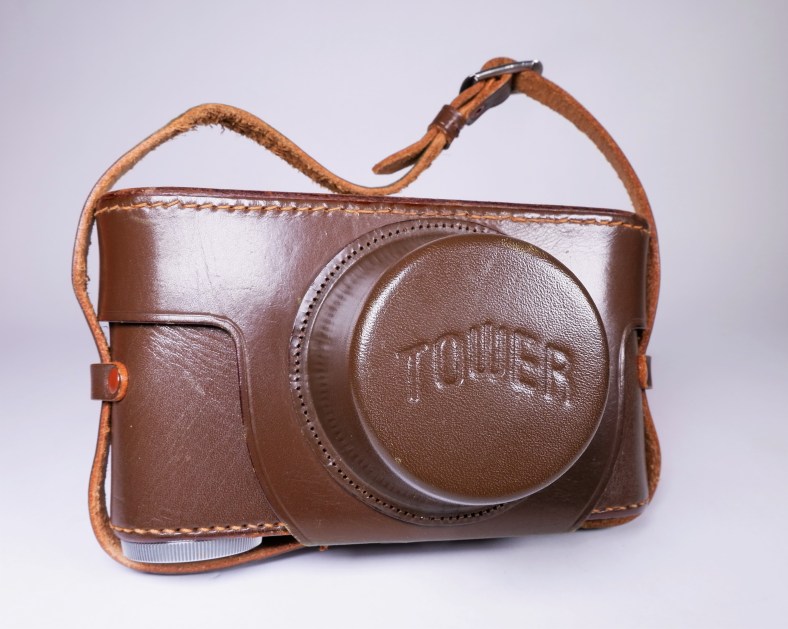
DSCF7395

The original instruction booklet and guarantee-registration card are included with this amazing set. 
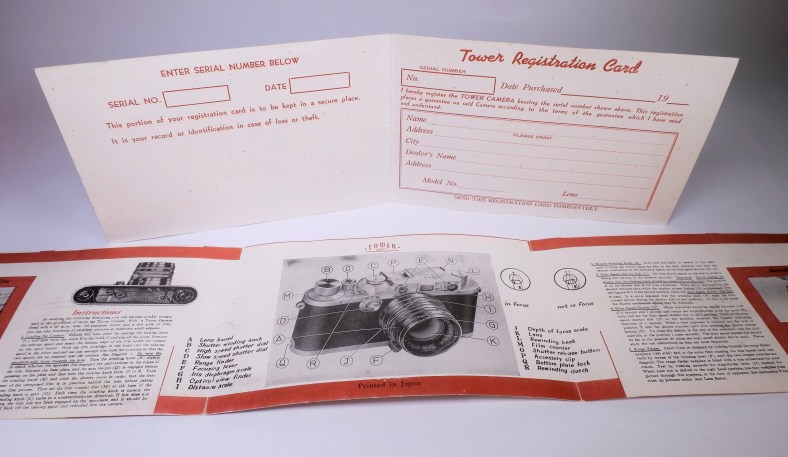
DSCF7396

DSCF7400

The aperture blades look great – they function smoothly and show little wear. The optics are also free of distracting marks such as scratches or cleaning marks. The rear element does have some whitish fungus which means the lens would need to be cleaned in order to use it fully.

Below is a test picture that I took using the lens on my Fujifilm mirrorless digital camera. You can clearly see the “haze” from the fungus but you can see that it’s not a total loss either. I believe the fungus can be cleaned if you know how to service these types of lenses or if a professional camera repair facility does the work.
DSCF7102

Test image taken with the Nikkor lens mounted on my Fujifilm X-A10 mirrorless digital camera.

Thanks for stopping by! If you’re interested in my set it’s available in my online camera shop at http://www.ccstudio2380.com which is hosted by Etsy. – Chris

Please respect that all content, including photos and text, are the property of this blog and its owner, Yashica Pentamatic Fanatic, Yashica Sailor Boy, Yashica Chris.

Copyright © 2015-2019 Yashica Pentamatic Fanatic, Chris Whelan
All rights reserved.
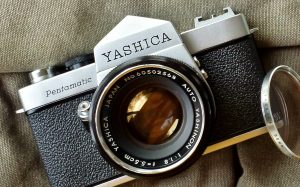
Exploring the early days of Yashima (Yashica) – 1954

From 1950 through 1955 literally hundreds of photographic startups were hoping to capitalize on the booming post-war camera craze sweeping Japan and the United States. Many would fail and fail quickly but many went on to prosper and achieve phenomenal success by the end of the decade. This was Yashima’s first camera to carry the company name – the Yashima Flex.

I’m going to focus on what would appear to be just a simple thing – something that would be thrown away as soon as the camera was unboxed. This inspection tag and the guaranty document can tell us a lot about the company that went on to become an international innovator of quality cameras at an exceptional value. Her’s the story.

YashimaFlex Tag Paul Version (1)

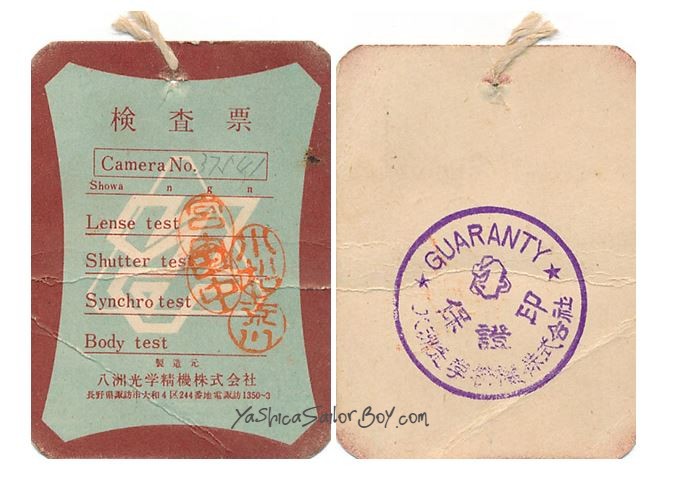
Original “Inspection Form” that came with my Yashima Flex TLR. This is the earliest one found so far and it’s amazing that it made it the 65 years since it was first filled in.

For such a young company, Yashima looked as though it cared about producing a quality camera that would function as designed right out of the box. This tag was with my recently acquired Yashima Flex TLR which was sold in May 1954 at a camera shop in Yokohama. I’m going to speculate that the tag was completed and the various tests performed while the camera was still on the factory floor. My translation app hasn’t done a very good job with translating all of the tag but I do get “Inspection Form” across the top and of course, the company name, address, and phone number across the bottom. The camera’s serial number has been entered but not the Showa date info (what a shame). It’s interesting to note that the different tests are written in English for a camera that probably wasn’t meant for export. The red stamps are from each stage of the process and identify each inspector.

The reverse side of the tag has the word “Guaranty” clearly stamped with the company logo just beneath it. I don’t know the meaning of the “EP” and I don’t have a clear translation of the kanji across the bottom half.

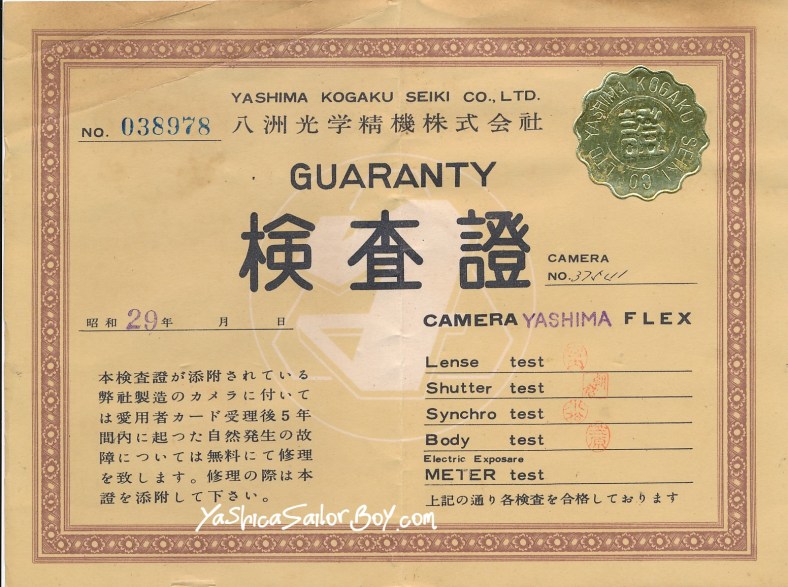
Later in the process of readying the camera for distribution to the trading company, the formal Guaranty Certificate was included (see below).

Yashima Flex Guaranty Card

Original Guaranty Certificate that accompanied the camera set.

What I find most intriguing is that the camera received another round of tests with a different group of inspectors. Back in 1954 in such a new company that’s impressive and previously undocumented. This certificate does carry a date indicated by Showa 29 which is 1954. I’m further impressed by the fact that they had a stamp for the name of the camera and that the certificate has a line for an Electric Exposure Meter Test when no camera existed yet with a meter. The Yashica Flex model S (first TLR with a meter) was not yet released but must have been close to being finished.

Admittedly none of this is world-shaking info but to a lifelong Yashica collector and researcher, this is BIG. Every little clue sheds more light on the earliest days of this famous company.

Thanks for stopping by! – Chris

Please respect that all content, including photos and text, are the property of this blog and its owner, Yashica Pentamatic Fanatic, Yashica Sailor Boy, Yashica Chris.

Copyright © 2015-2019 Yashica Pentamatic Fanatic, Chris Whelan
All rights reserved.

Yashica’s First Radios – 1959

Most people don’t realize that Yashica made a wide range of electronic and electrical items in the 1950s.

Although I’m not sure that these were completely assembled at Yashica’s factory in Nagano Prefecture. They were known as a maker of fine twin-lens reflex (TLR) film cameras during much of the 1950s, but Yashica made and sold 8mm movie projectors and editors as well so it would seem logical that they would make some early consumer products – in this case, the Yashica YT-100 and the bigger and more powerful YT-300.

DSCF9394

The YT-100 on the left and the YT-300 on the right

DSCF9395

Not often seen together as these have become extremely hard to find 60 years later

DSCF9387

The last time these two were photographed together as the YT-100 sold yesterday to another collector. Thank you for your purchase and enjoy your radio!

Thanks for stopping by and feel free to stop by my shop at http://www.ccstudio2380.com for a fantastic collection of neat camera stuff! Everything’s on sale at 10% off too!

Chris

Please respect that all content, including photos and text, are the property of this blog and its owner, Yashica Pentamatic Fanatic, Yashica Sailor Boy, Yashica Chris.

Copyright © 2015-2019 Yashica Pentamatic Fanatic, Chris Whelan
All rights reserved.

Tower Type-3 35mm Rangefinder – Made by Nicca for Sears

One of the better made Leica type of 35mm rangefinder cameras from the early 1950s. This one dates back to the period during the occupation of Japan following WWII. The occupation formally ended in April 1952.

I believe the Nicca-Towers are extremely attractive in their design and some (like this gem) have aged very well (1951 on this one).

DSCF8226 logo

The Tower brand was made by Nicca Camera Company for Sears, Roebuck and Company for sale in the United States through their stores and in their catalogs.

DSCF8230 logo

DSCF8231 logo

DSCF8244 logo

Nippon Kogaku Nikkor – H.C f2 5cm lens from my Nicca s-3

These cameras accept all L39 screw-in (Leica type) lenses made by a ton of manufacturers – Canon, Nikkor, Leitz and more than I care to think about. Oh yeah, Nicca even made one with their own name and Yashica made a few too. Happy hunting!

Chris

Please respect that all content, including photos and text, are the property of this blog and its owner, Yashica Pentamatic Fanatic, Yashica Sailor Boy, Yashica Chris.

Copyright © 2015-2018 Yashica Pentamatic Fanatic, Chris Whelan
All rights reserved.


Yashica’s Factory in the late 1950s – Shimosuwa, Nagano Prefecture

I’ve been on a rather long quest to discover Yashica’s roots during their earliest days as a start-up in the tech-savvy region along the shores of Lake Suwa – also known as the “Switzerland of the Orient”.

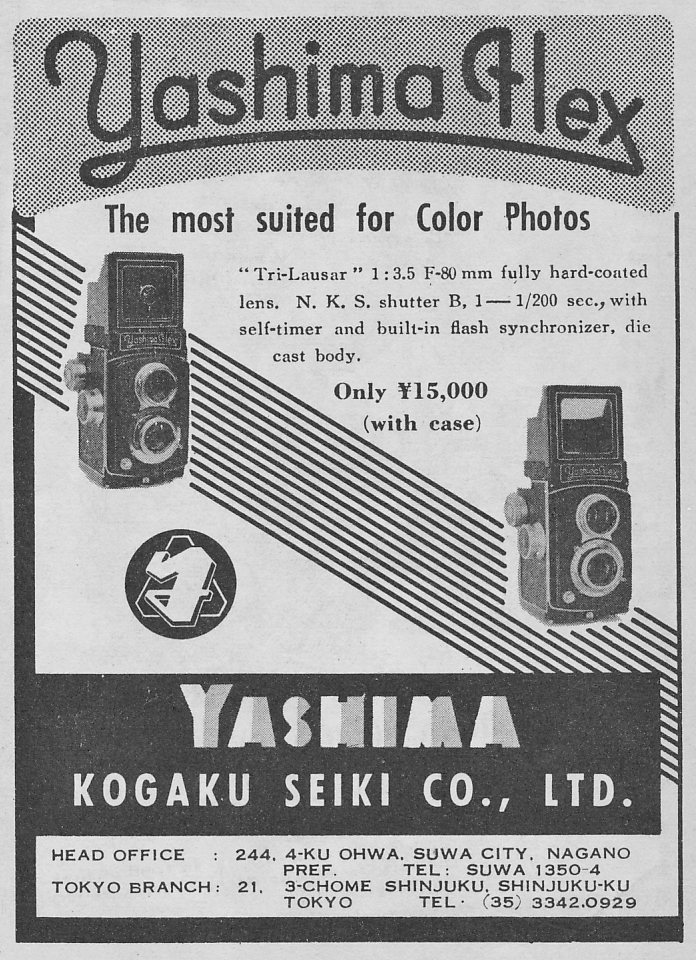
With the help of my good friend Paul Sokk from Australia (www.yashicatlr.com), we’ve nailed down the location of Yashica’s second factory which was opened in 1956. I say second because Yashica’s (then Yashima) first factory was located across Lake Suwa in the town of Suwa – possibly established as early as the late 1940s. Yashica likely operated its first camera factory in Suwa – an early 1954 advertisement in English claims that the head office was located at 244, 4-Ku Ohwa, Suwa City, Nagano Prefecture, Telephone: Suwa 1350-4 (see scan below). My thinking is that is a less than an accurate translation of the Japanese to English. I’ve had more luck in finding the general area on today’s maps by using 2-4-4 Owa, Suwa which brings me very close to the present day Seiko-Epson headquarters.

yashima flex

Likely 1954 advertisement in an English language newspaper circulated in Japan. As best as I can tell it may be the first ad for the Yashima Flex in English.

My fear all along during this search was that since Yashica was bought out by Kyocera in 1983 that the fate of the factory in Shimosuwa would be lost in time since Kyocera’s current factory in Okaya is not related to the Shimosuwa factory.

With Paul’s sharp eyes, attention to detail, and sheer determination he was able to find Yashica’s old factory in present-day Shimosuwa.

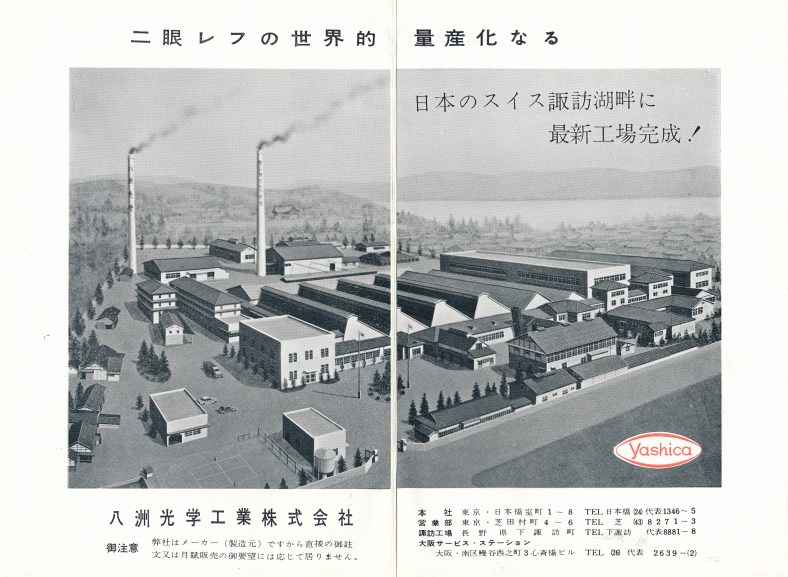
yashica suwa 1956

Yashica’s “new” factory in Shimosuwa as it looked in late 1956 (at least to the artist). Lake Suwa and the distant shoreline can be seen in the distance.  Of note, this artists rendering is in no way even close to scale – many of the buildings are in the wrong location and the smokestacks seem to be placed for artistic “balance” vice accurate representation. Of course, this drawing may be more conceptional and not reflective of reality.

The image above is an artist’s rendering of the Shimosuwa factory complex before the addition of the massive gym structure (see below) and before the central administration building was built.

yashica suwa factory

Looking south across Yashica’s factory campus as it appeared in the mid-1960s. The large building on the bottom center in this picture is Yashica’s gym and auditorium. The administration building is shown about centered in this scan.

yashica suwa

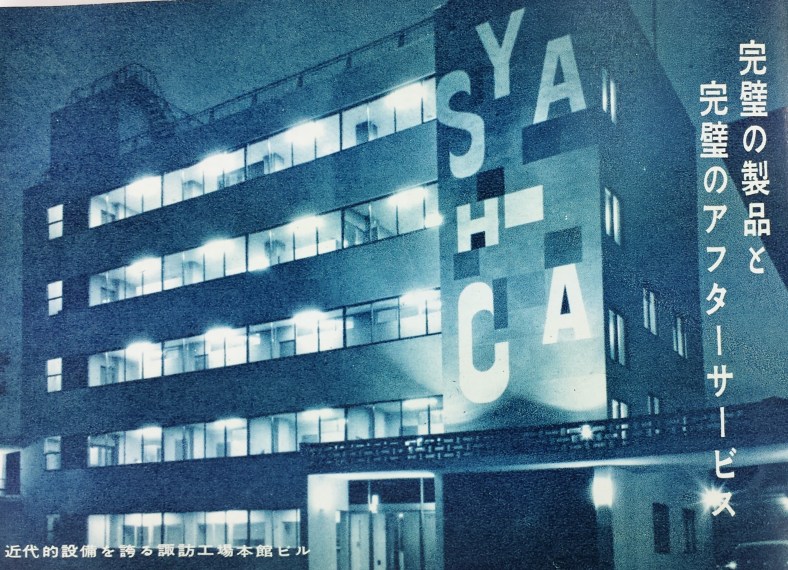
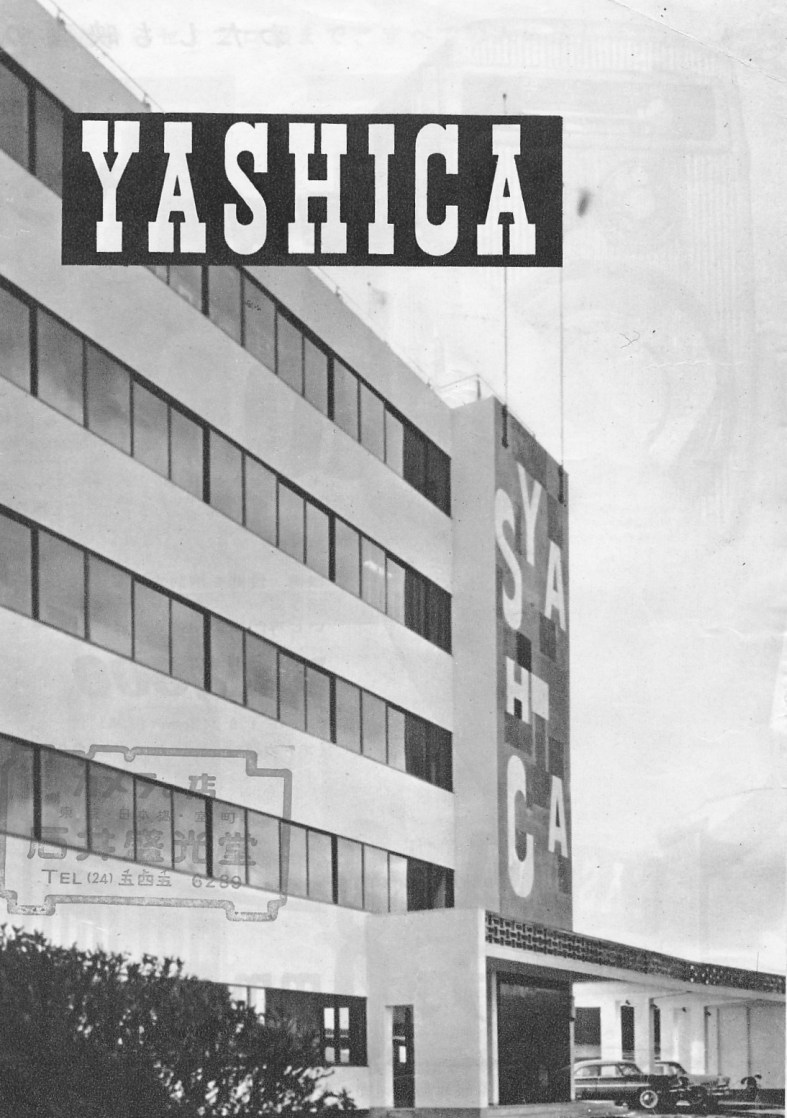
The famous and easily identifiable Yashica factory administration building at night.

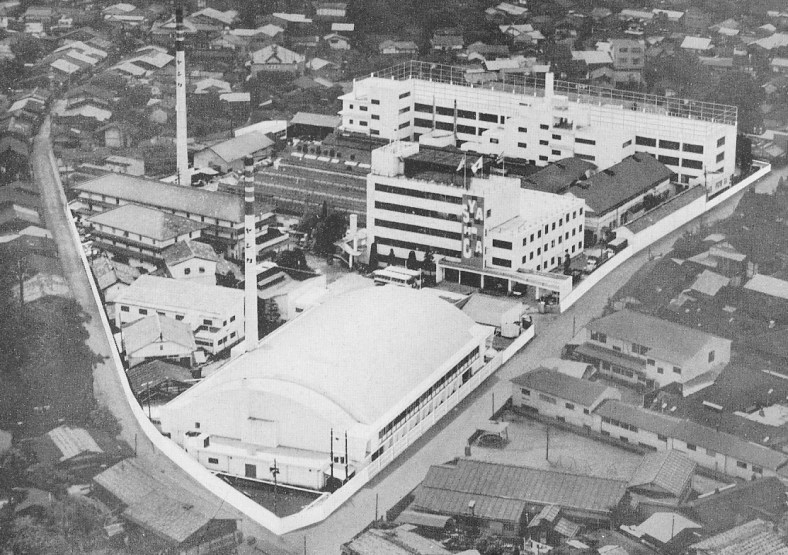
IMG_20180816_0001

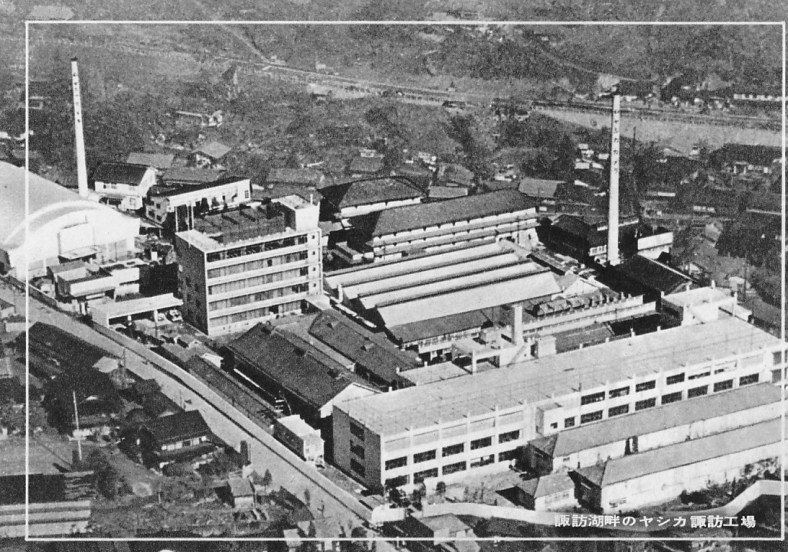
Aerial view of the Yashica factory campus from around 1959 or so. The gym building is on the extreme upper left in this picture. The factory administration building with the large verticle “Yashica” on it can be seen from behind (from the south looking north).

IMG_20180816_0002

This image is from a 1958 Yashica sales brochure. The distinctive Yashica factory administration building as it looked when new. At this point in time, it still had the covered parking area just to the building’s right – two modern full-sized “service” vehicles are parked underneath.

9

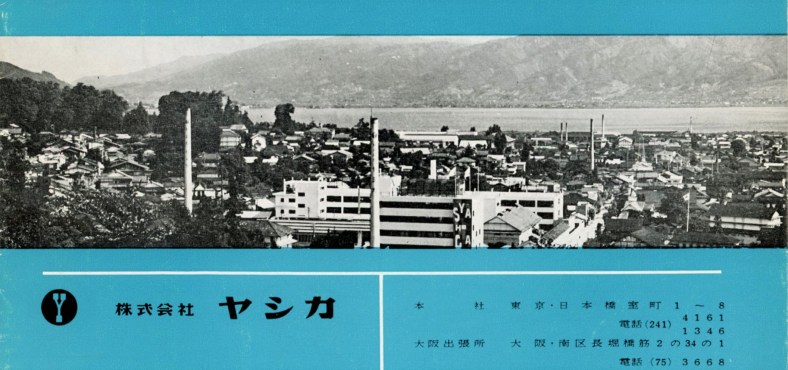
A view of the Yashica factory campus from around 1960. I would guess that the view is taken from the hillside that overlooks the grounds. Very similar view of the artist’s rendering from 1956. (Document scan courtesy of Paul Sokk)

yashica factory site Capture

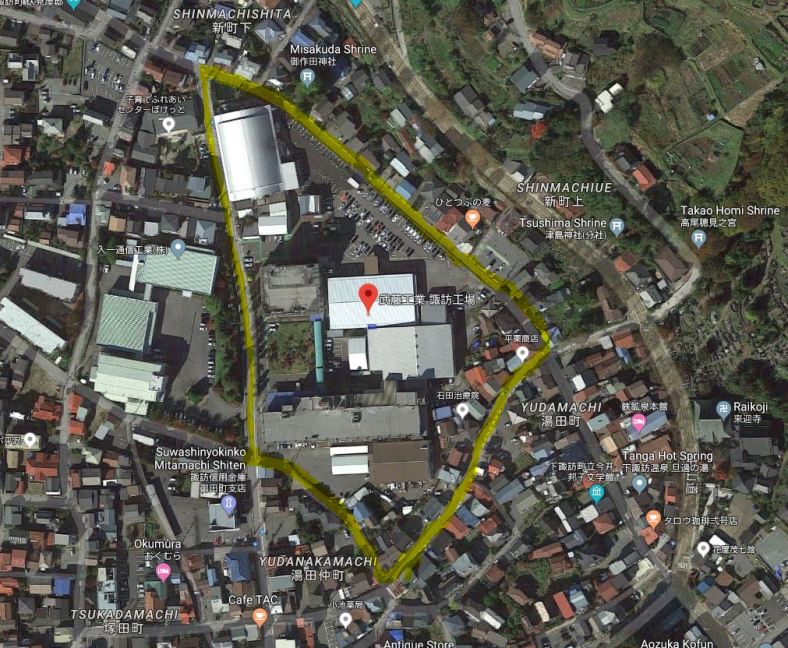
Current view of the original site of Yashica’s first factory in Shimosuwa, Nagano Prefecture. The present use of this site is by Mutoh Industries, Ltd. – a maker of large-scale inkjet printers for commercial use and sold around the world.

In the above capture, Yashica’s gym building (large silver roof structure in the upper left portion of the highlighted area) can still be seen. Most of the original buildings appear to have saved.

It’s been a long but enjoyable process searching for this site. For a Yashicaphile such as myself, I would love to be able to visit the site and tour the facilities. I would like to meet with previous employees of Yashica and speak with them about their experiences while working for Yashica. Maybe someone knows the exact location of Yashica’s first factory in Suwa. That would be neat. I’ve reached out to the Mutoh company and have inquired if they would be interested in acquiring any of my collected scans of the factory from its earliest days.

Thanks for stopping by!

Chris