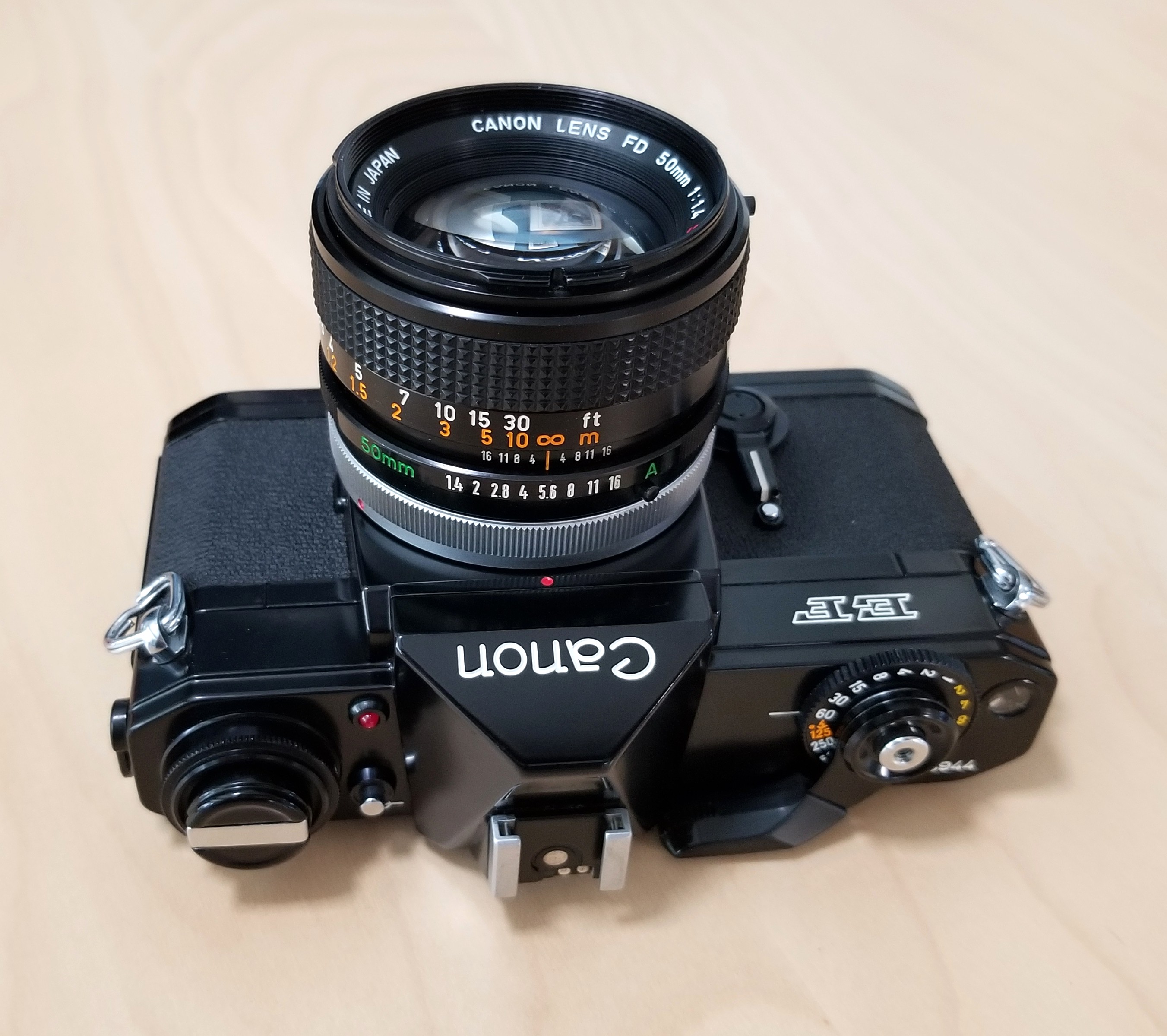
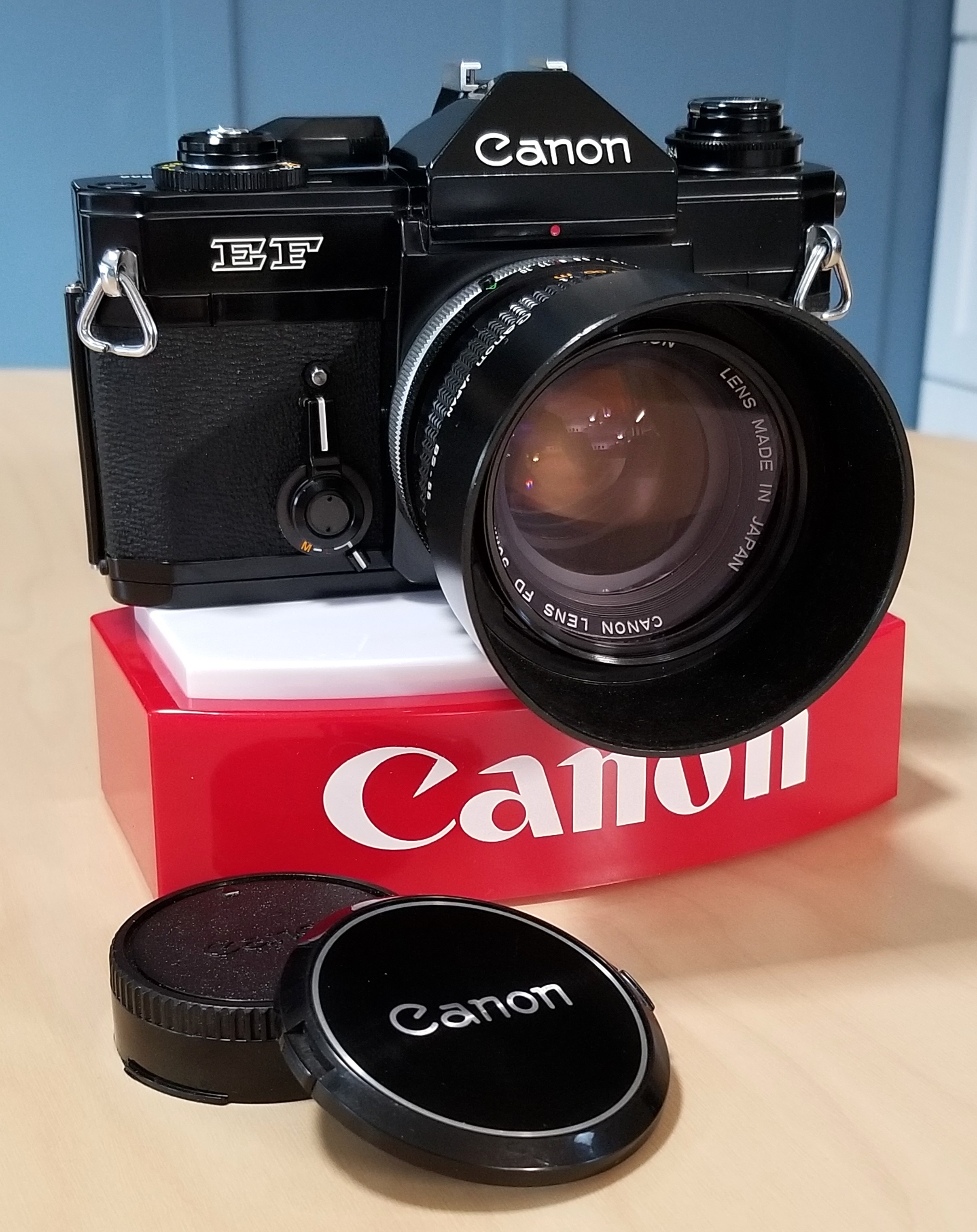
This is the last Canon EF 35mm film camera in my collection. I’ve owned quite a few over the years, but I kept this one because it’s in mint condition and works perfectly. This EF was made in early 1976. It’s affectionally know as the Black Beauty.
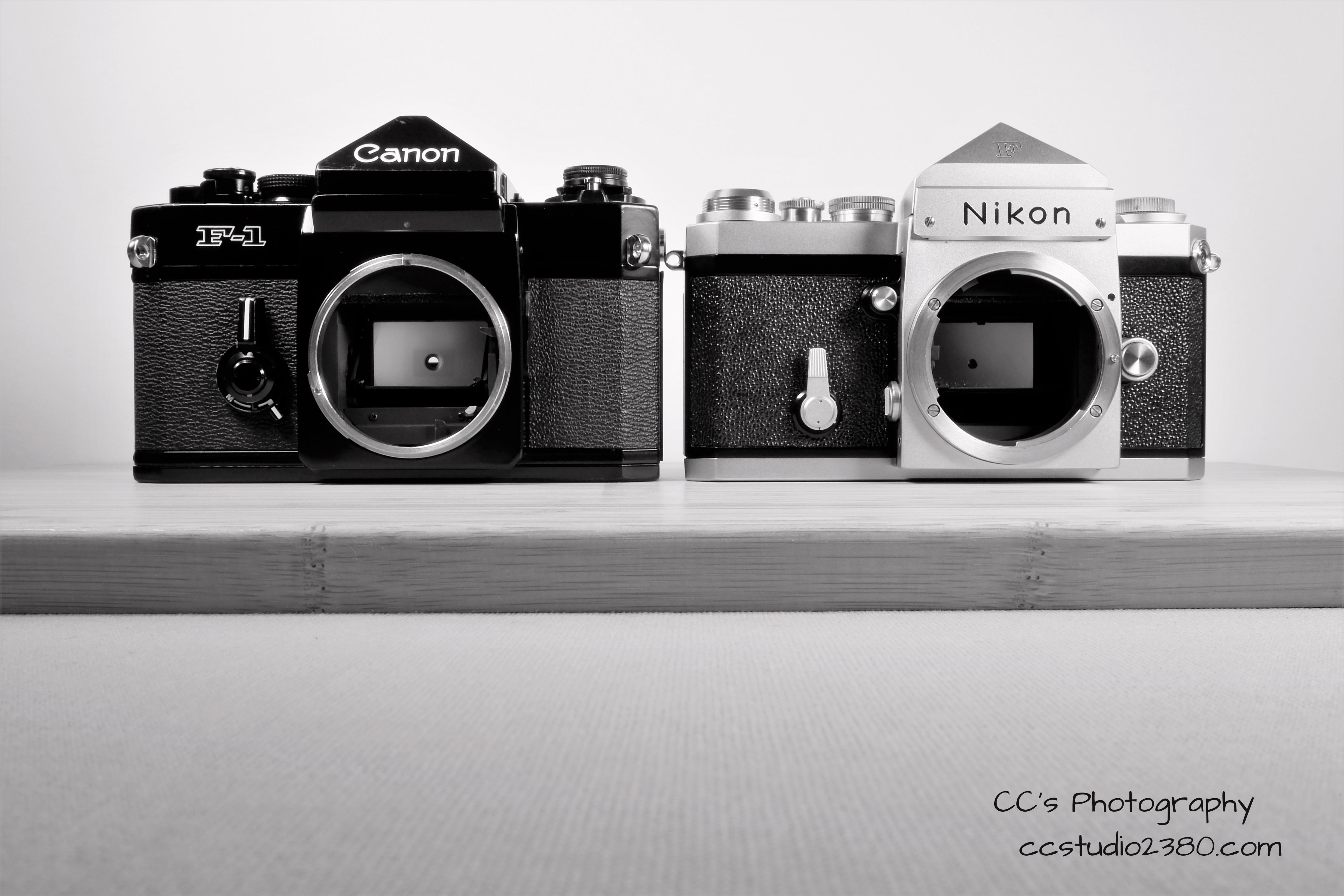
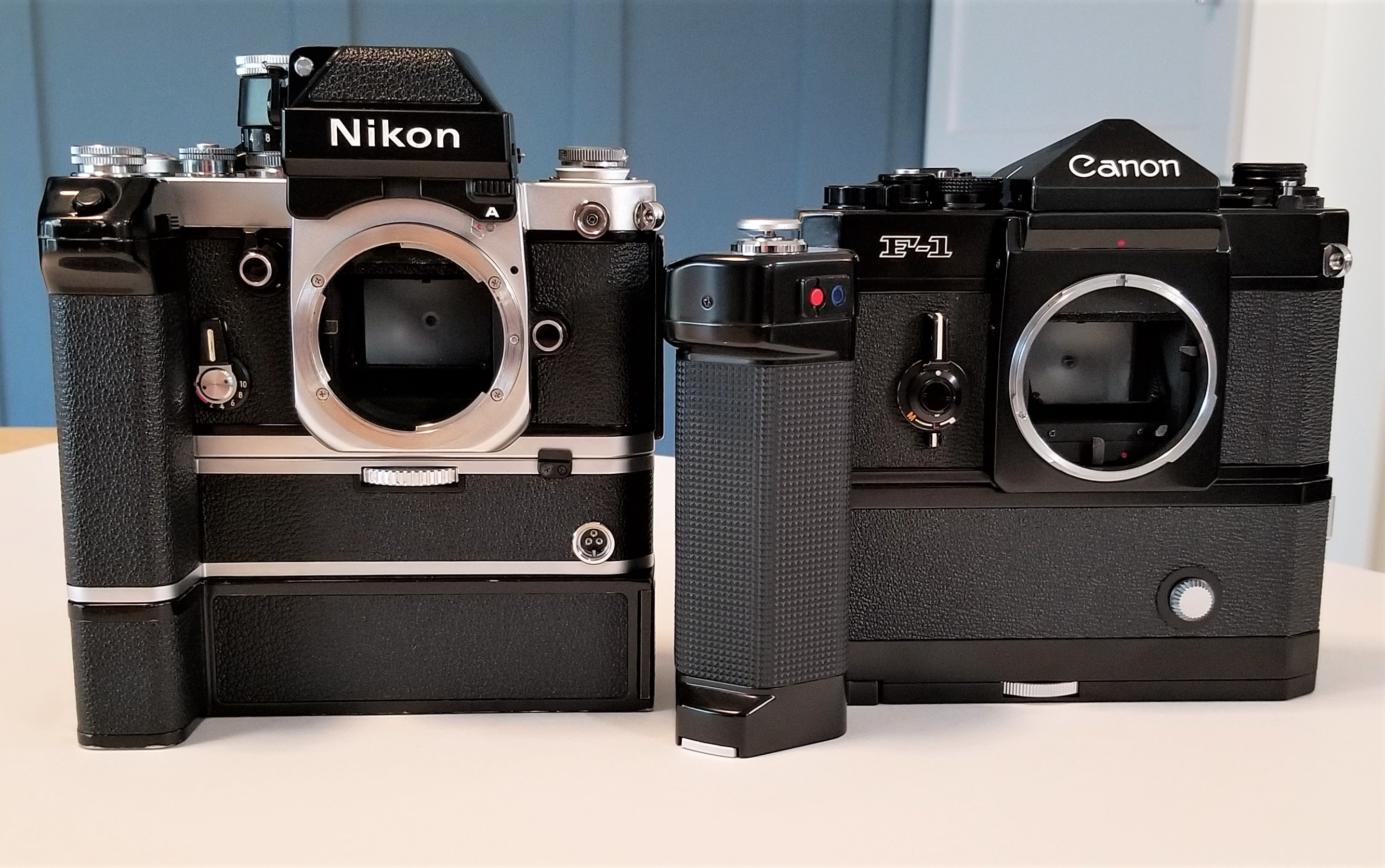
It’s a very close cousin to the Canon F-1. The original F-1 was released in March 1971. The EF made its appearance in November 1973.It’s one of the most underrated cameras of the 1970s, and in some ways was better than the F-1 straight out of the box.
If you’re looking to add a classic film camera from the seventies, the Canon EF is worth the chase!
Comments are always welcome; I’ve learned a great deal from reader feedback. As always, thanks for stopping by. While there, visit my camera shop at http://www.ccstudio2380.com (CC Design Studios, hosted on Etsy). – Chris Whelan
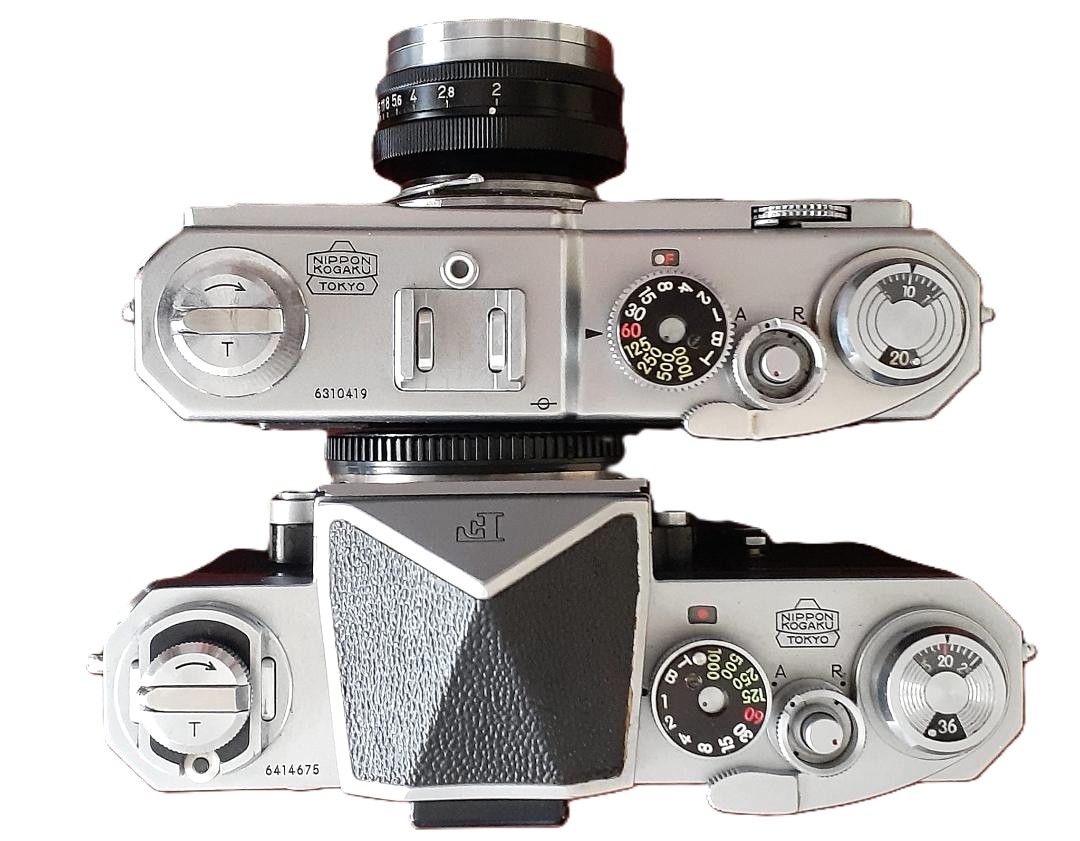
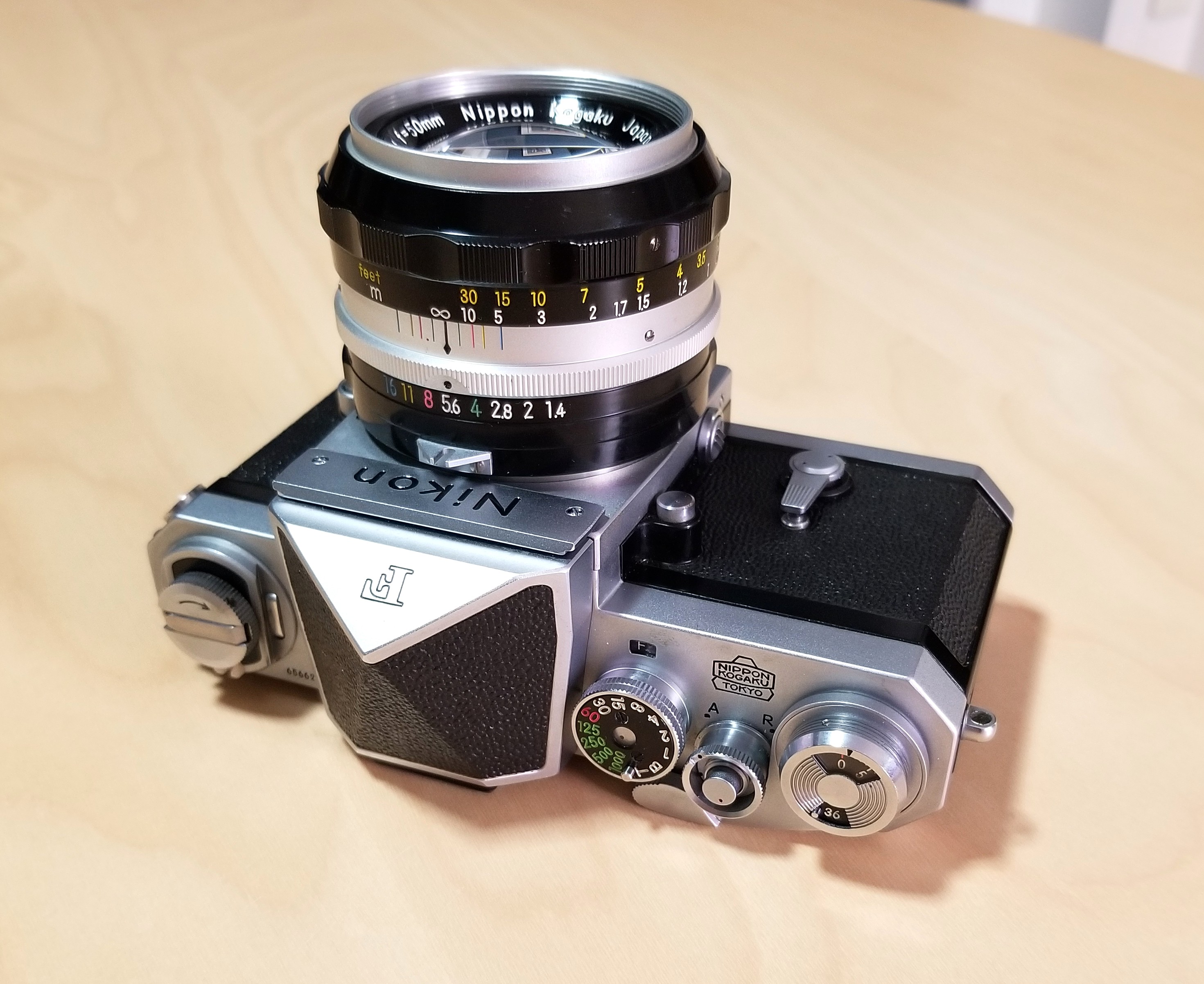
From well-known Australian photographer and camera collector Bruce Thomas, used by permission. Both cameras are marked with a ‘T’ on their rewind knobs, indicating Nikon’s approach to identifying tax-exempt or duty-free cameras sold in Japan in the early 1960s. Not to be confused with the more common ‘EP’ mark, which appeared across all camera brands in the 1950s, 1960s, 1970s, and even a few from Canon in the early 1980s.
Nikon S4 top and Nikon F below. The ‘T’ mark appeared in 1960 on some Nikon cameras sold in Japan and possibly in Hong Kong, though there hasn’t been hard evidence yet.
The Nikon F was developed from the Nikon SP rangefinder camera from 1957. It’s easy to spot the similarities between the S4 and F. Finding a mint condition SP today is quite expensive, but there are “plenty” on online auction sites.
Comments are always welcome; I’ve learned a great deal from reader feedback. As always, thanks for stopping by. While there, visit my camera shop at http://www.ccstudio2380.com (CC Design Studios, hosted on Etsy). – Chris Whelan
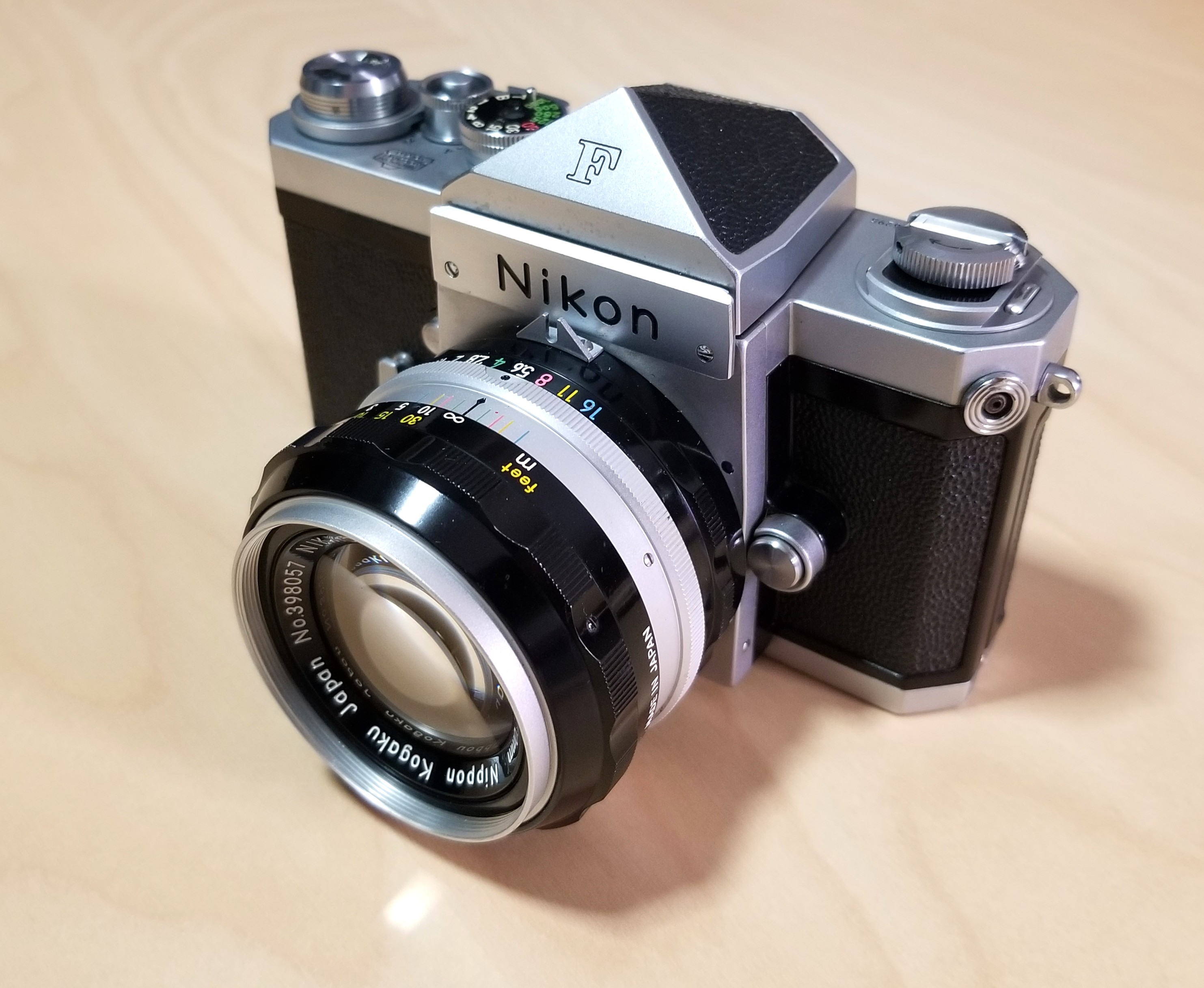
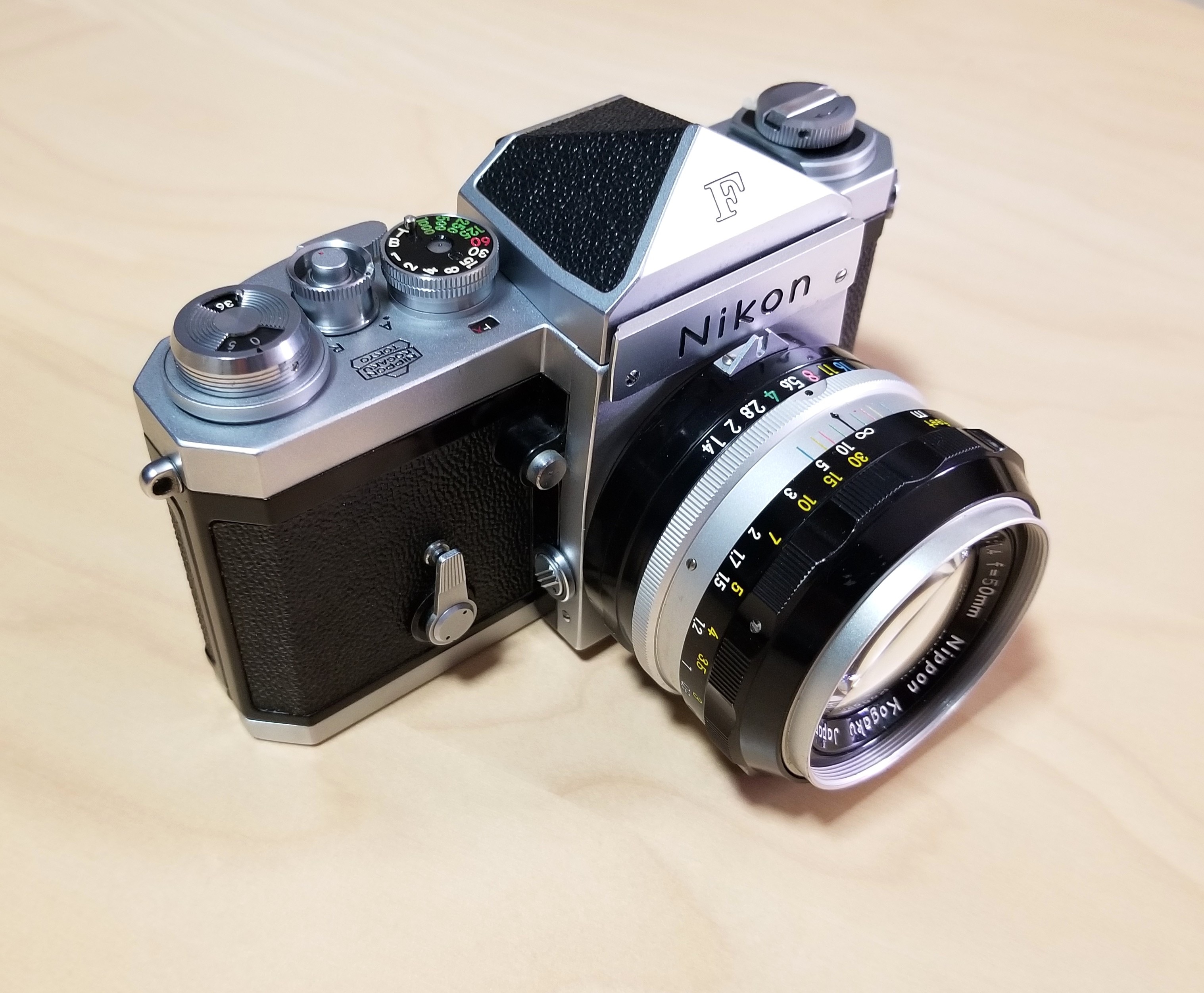
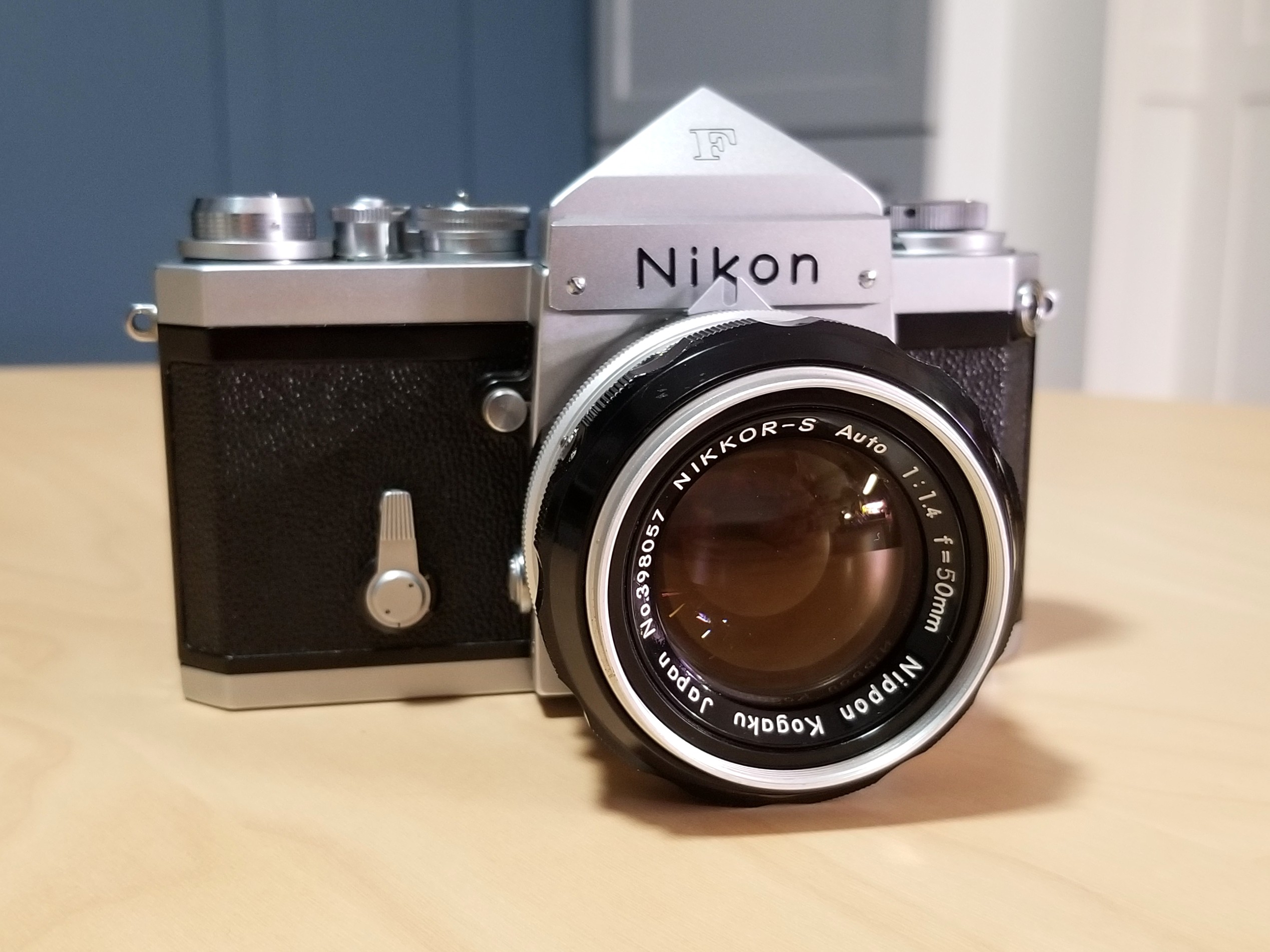
Classic Nikon. This is the last Nikon F in my collection. I enjoy using and collecting the early Nippon Kogaku logo bodies and, of course, a Nikkor-S Auto 50mm f1.4 lens. The camera was built in mid to late 1964. The lens is from 1965. I like it when it all comes together.
Instantly recognizable.A classic 35mm SLR.It was first released in 1959. This one is from 1964.The reputation of the Nikkor-S Auto 50mm f1.4 lens is world-renowned.
Comments are always welcome; I’ve learned a great deal from reader feedback. As always, thanks for stopping by. While there, visit my camera shop at http://www.ccstudio2380.com (CC Design Studios, hosted on Etsy). – Chris Whelan
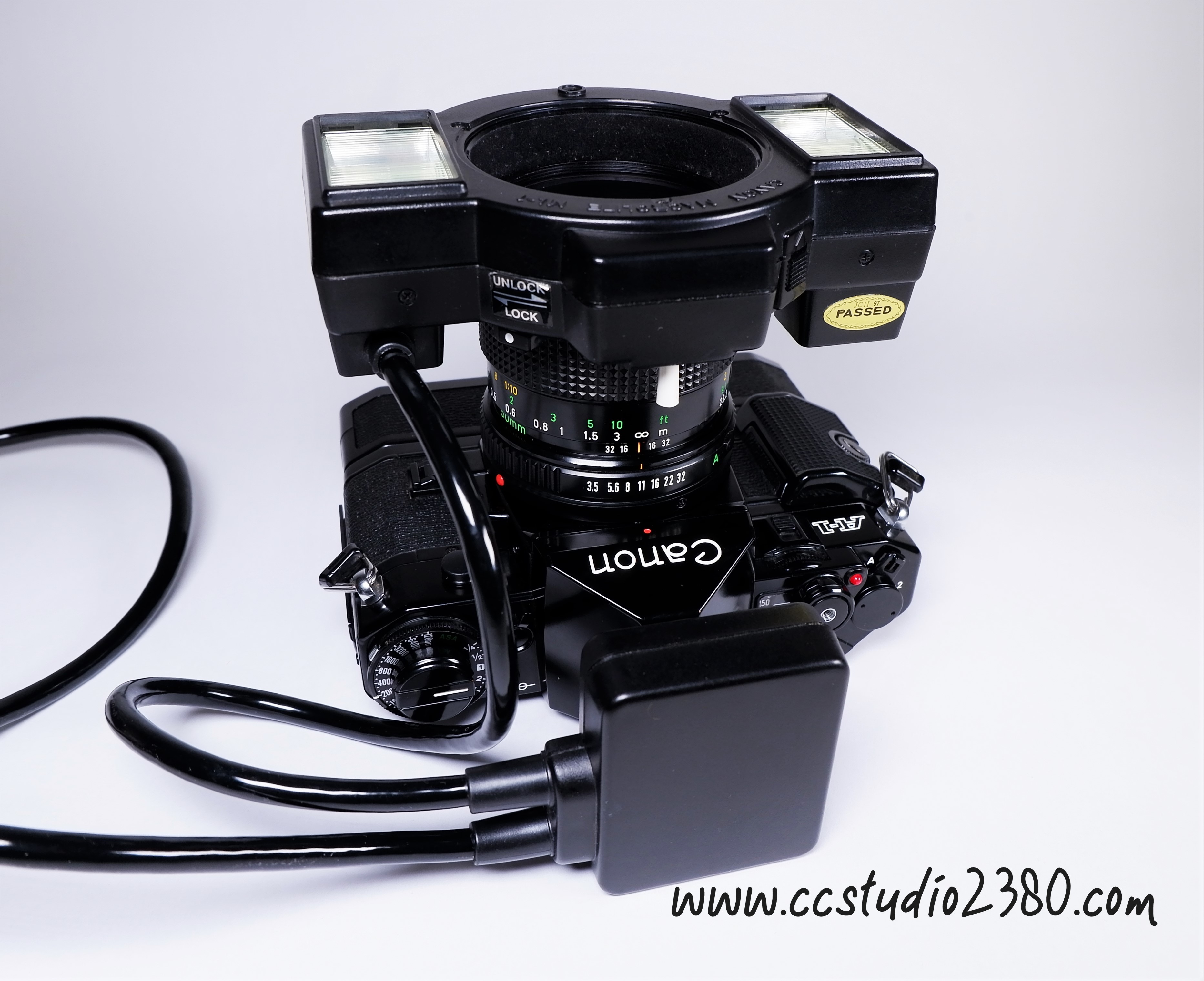
Hi all! I have my last Canon Macrolite ML-1 electronic flash from my collection for sale. This one is the latest version from 1985. It will work perfectly with the Canon New F-1 as well as any of the earlier A-Series cameras. It’s in my Etsy camera shop at http://www.ccstudio2380.com
Comments are always welcome; I’ve learned a great deal from reader feedback. As always, thanks for stopping by. While there, visit my camera shop at http://www.ccstudio2380.com (CC Design Studios, hosted on Etsy). – Chris Whelan
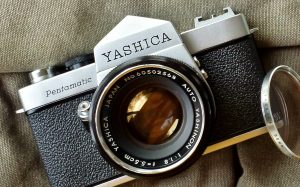
The Canonflex was released in May 1959. It was Canon’s first 35mm SLR. The Yashica Pentamatic was Yashica’s first 35mm SLR, and it was released in March 1960. It was designed with the help of the recently acquired Nicca Camera Company in 1958. It’s safe to say that without Nicca’s help after the acquisition, the Pentamatic wouldn’t have come to market when it did.
Likely two cameras many have never seen.
As a collector of classic cameras, I appreciate these designs from the late 1950s.What makes them different keeps them the same. Both cameras feature sharp standard f/1.8 lenses. The Canomatic lens is reportedly radioactive. No evidence that the Yashica lens is also radioactive. The lens on the Yashica was made by Tomioka Optical for Yashica. The Canon lens was made by Canon.The Canon is a slightly larger camera than the Yashica. The Pentamatic is slightly more compact compared to the Canonflex. Its all-metal construction puts its weight right there with the larger Canon.Rear view. The serial number on the Canon indicates it was the 5,998th camera made. The Yashica was manufactured in August 1960 and was the 8,101st model produced up to that point in 1960.
Comments are always welcome; I’ve learned a great deal from reader feedback. As always, thanks for stopping by. While there, visit my camera shop at http://www.ccstudio2380.com (CC Design Studios, hosted on Etsy). – Chris Whelan
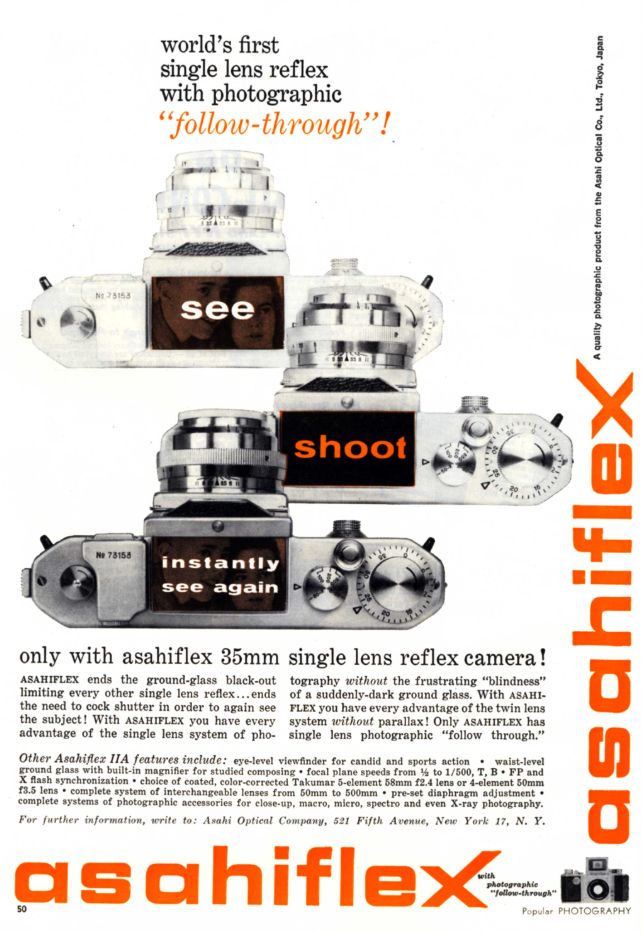
From Japan, released in 1955. The Asahiflex IIa was one of Japan’s first 35mm SLR cameras.
The Asahiflex IIa with a gorgeous Asahi-Kogaku Takumar f/3.5 50mm lens.
The Asahiflex had interchangeable screw-in lenses.
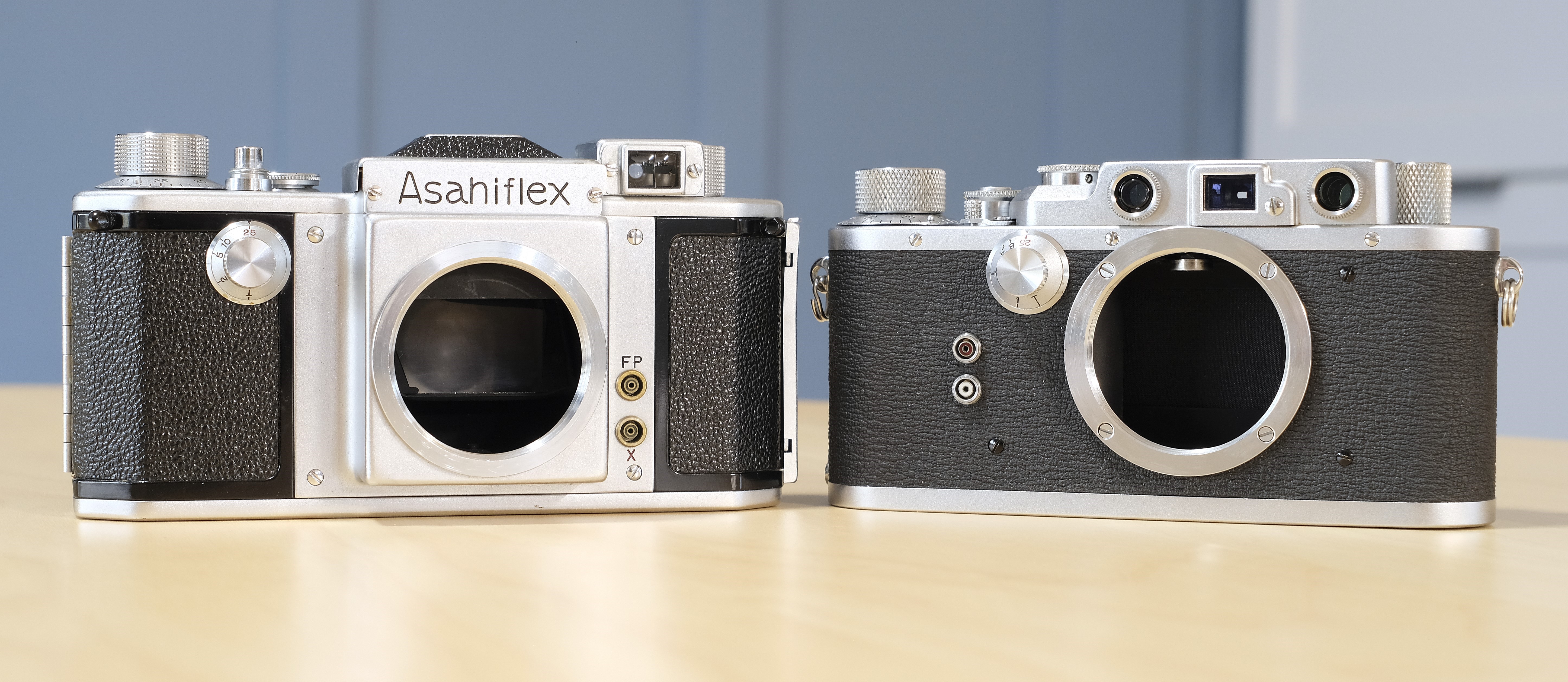
1956 advertisement.The waist-level finder open.With the waist-level viewfinder closed.The Asahiflex IIa and a Nicca 3-S. The Nicca is from 1956.This is a Leica IIIg from 1956. It was made in Germany and features a sharp Leica Summaron f/3.5 3.5cm lens.
It’s a great camera to add to any early 35mm camera collection, and there are plenty still available to collect.
Comments are always welcome; I’ve learned quite a bit from reader feedback. As always, thanks for stopping by. While there, visit my camera shop at http://www.ccstudio2380.com (CC Design Studios, hosted on Etsy). – Chris Whelan
I know Petri has made several different camera models over the years, some of which I absolutely love and others, like this one, that I dislike. Is it a classic, or has it not aged well? It was released in 1969, so at that time, early SLRs weren’t especially stunners compared to the more refined models of the later 1960s. That said, I think the Asahi Pentax H2 from 1959 is one of the best-designed cameras from that era. The Nikon F is a stunning camera, but I dislike removing the base plate to load and unload film.
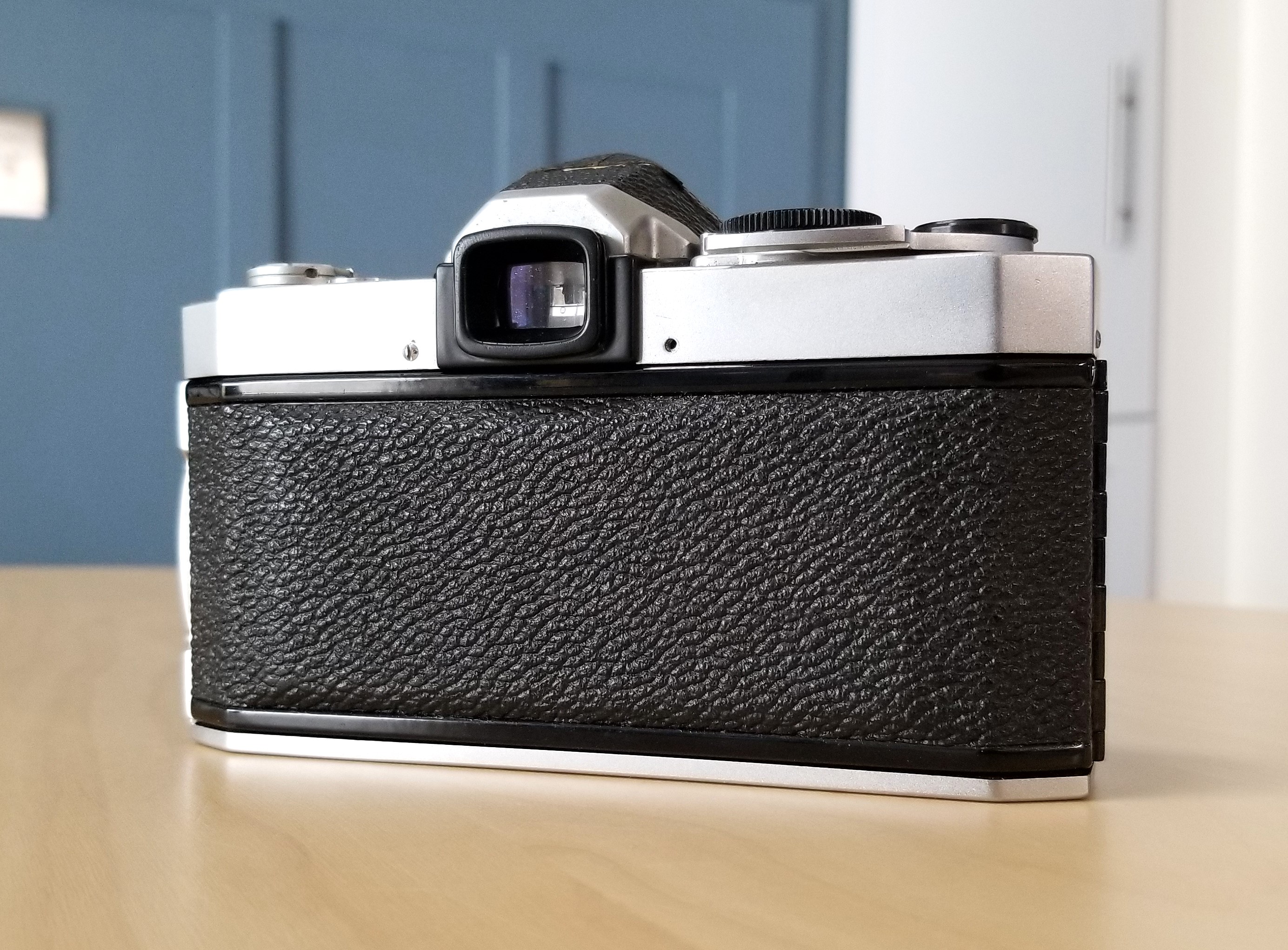
I admit, it would look better with a lens. Without a lens, it looks like a plumbing fixture.A previous owner added the leatherette on the pentaprism, hiding the serial number. Does this add to or subtract from the camera’s appearance?Pretty clean design from behind.The tripod mount screw is moved forward under the lens mount; otherwise, it’s a simple base plate.
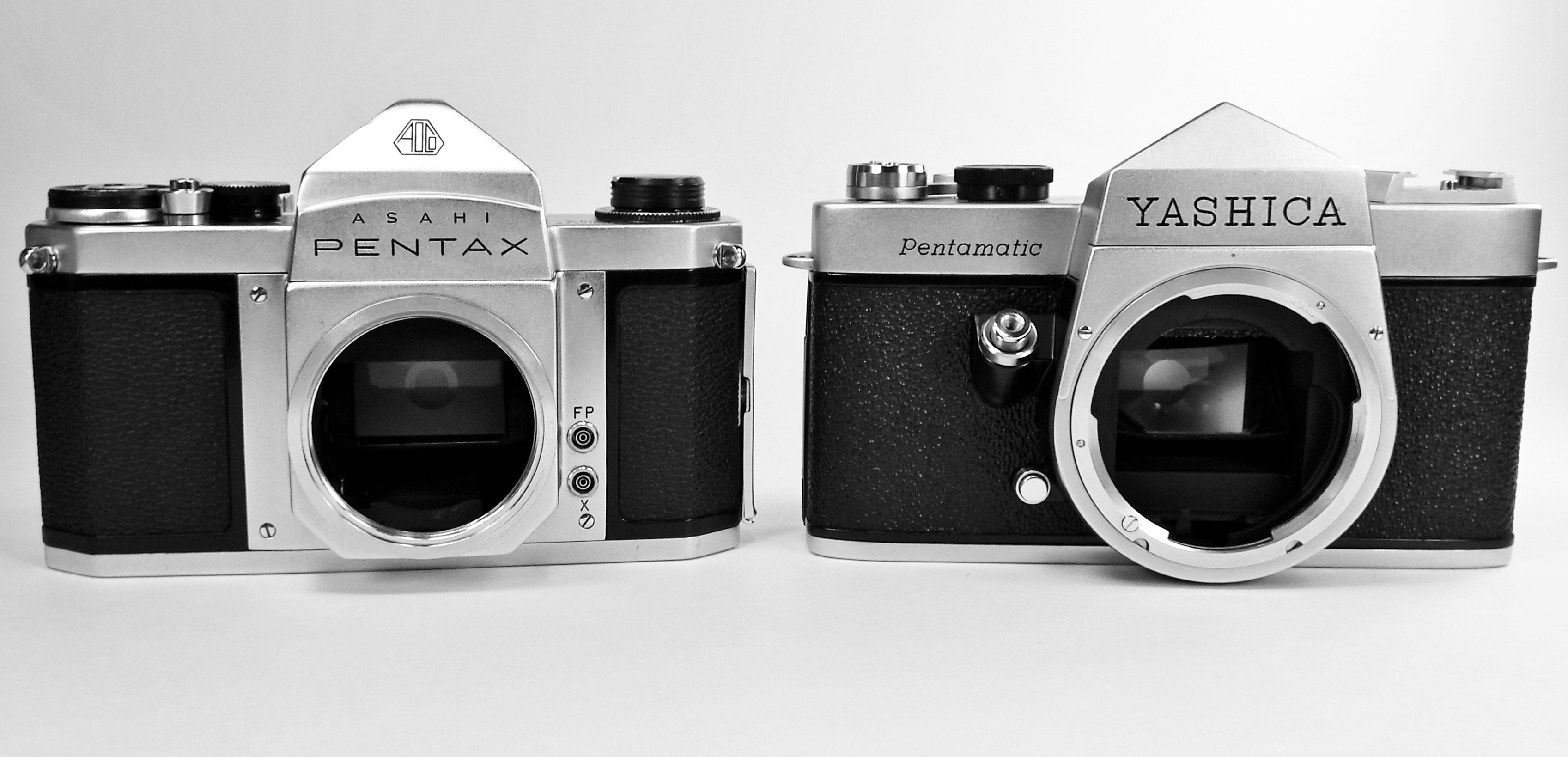
Here are my Asahi Pentax H2 from 1959 and my Yashica Pentamatic ’35’ from 1960 as a comparison.
Comments are always welcomed, as I’ve learned quite a bit from reader feedback. As always, thanks for stopping by, and while you’re at it, feel free to visit my camera shop at http://www.ccstudio2380.com (CC Design Studios hosted by Etsy). – Chris Whelan
Comments are always welcomed, as I’ve learned quite a bit from reader feedback. As always, thanks for stopping by, and while you’re at it, feel free to visit my camera shop at http://www.ccstudio2380.com (CC Design Studios hosted by Etsy). – Chris Whelan
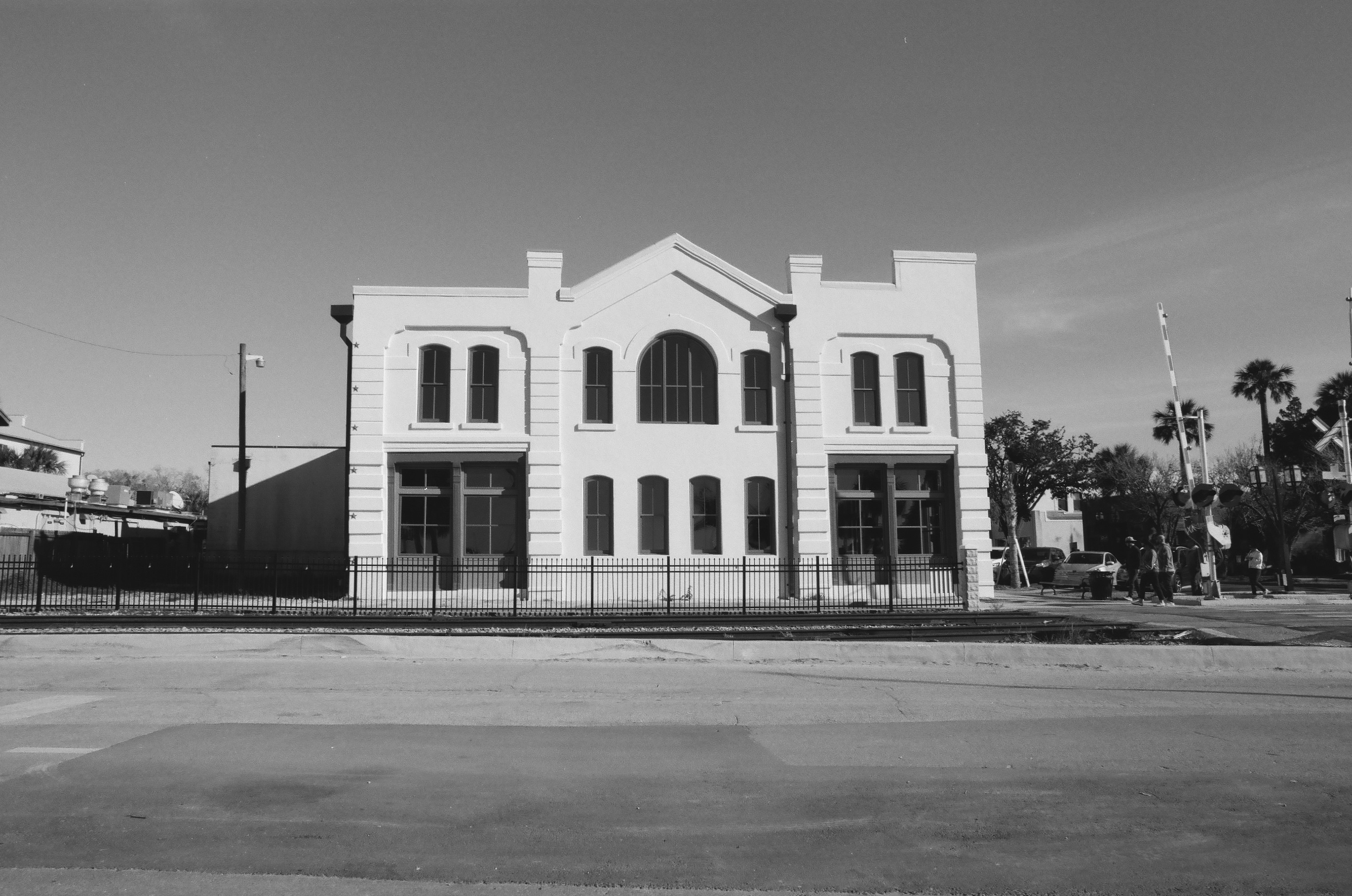
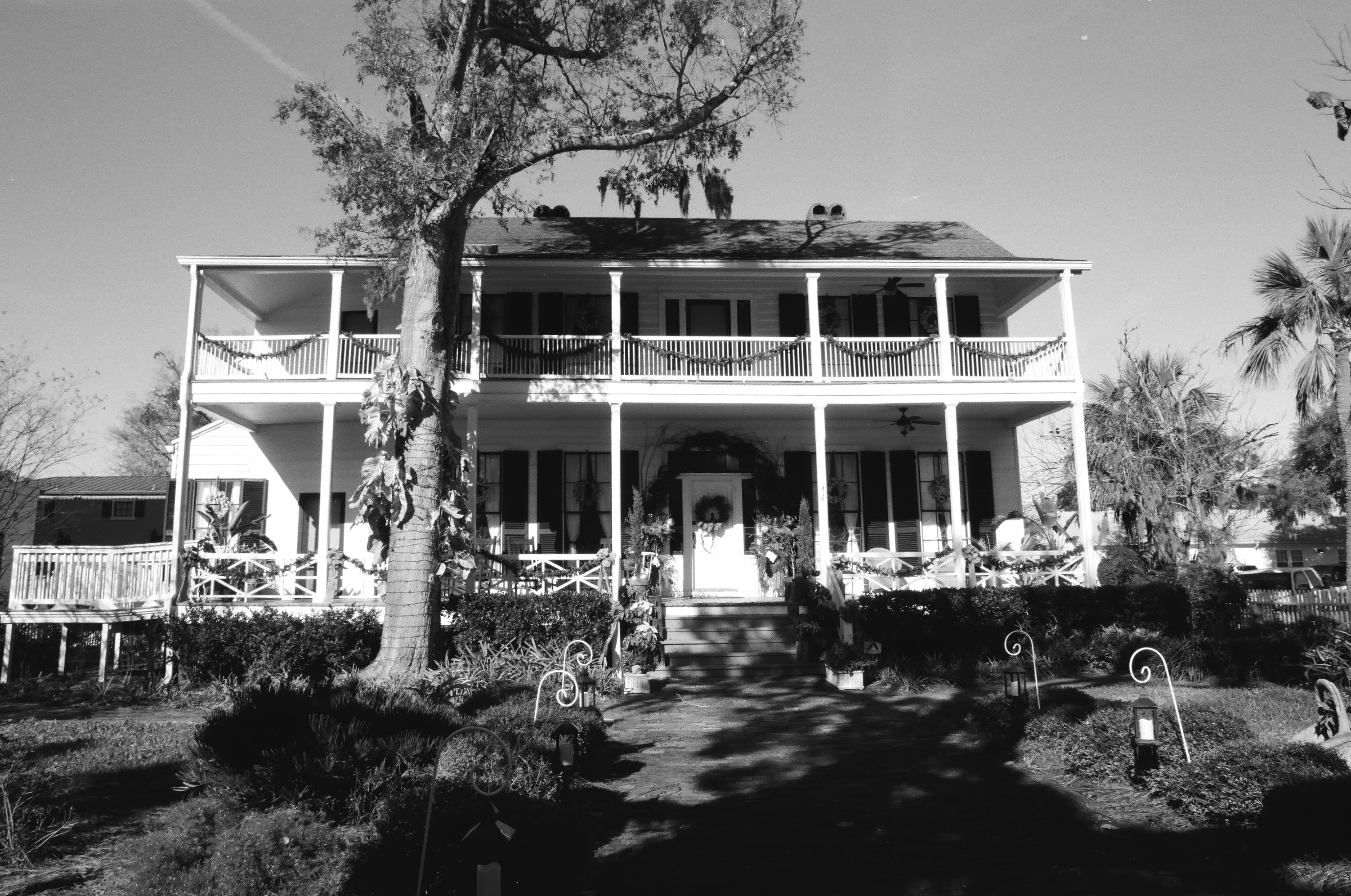
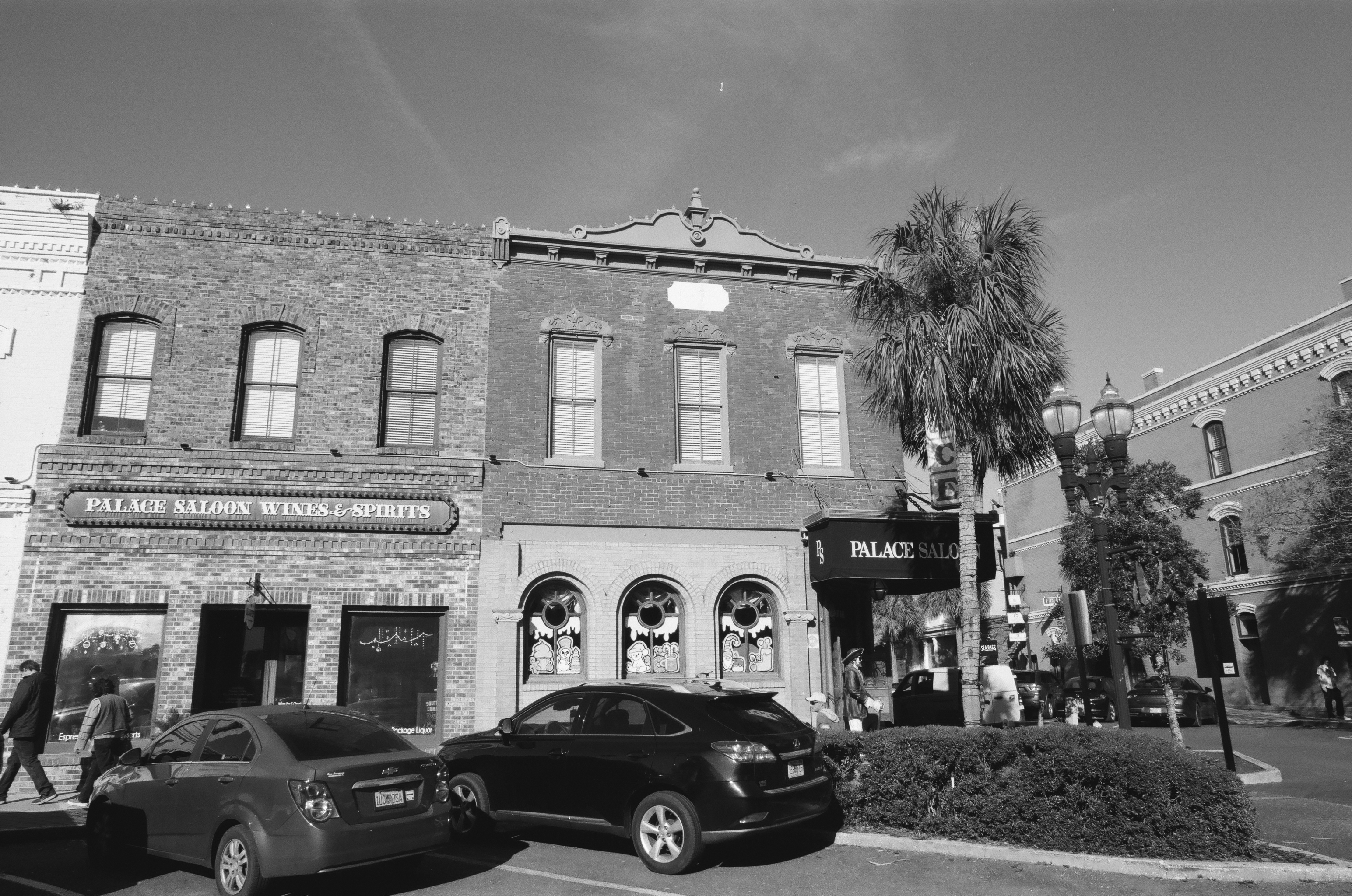
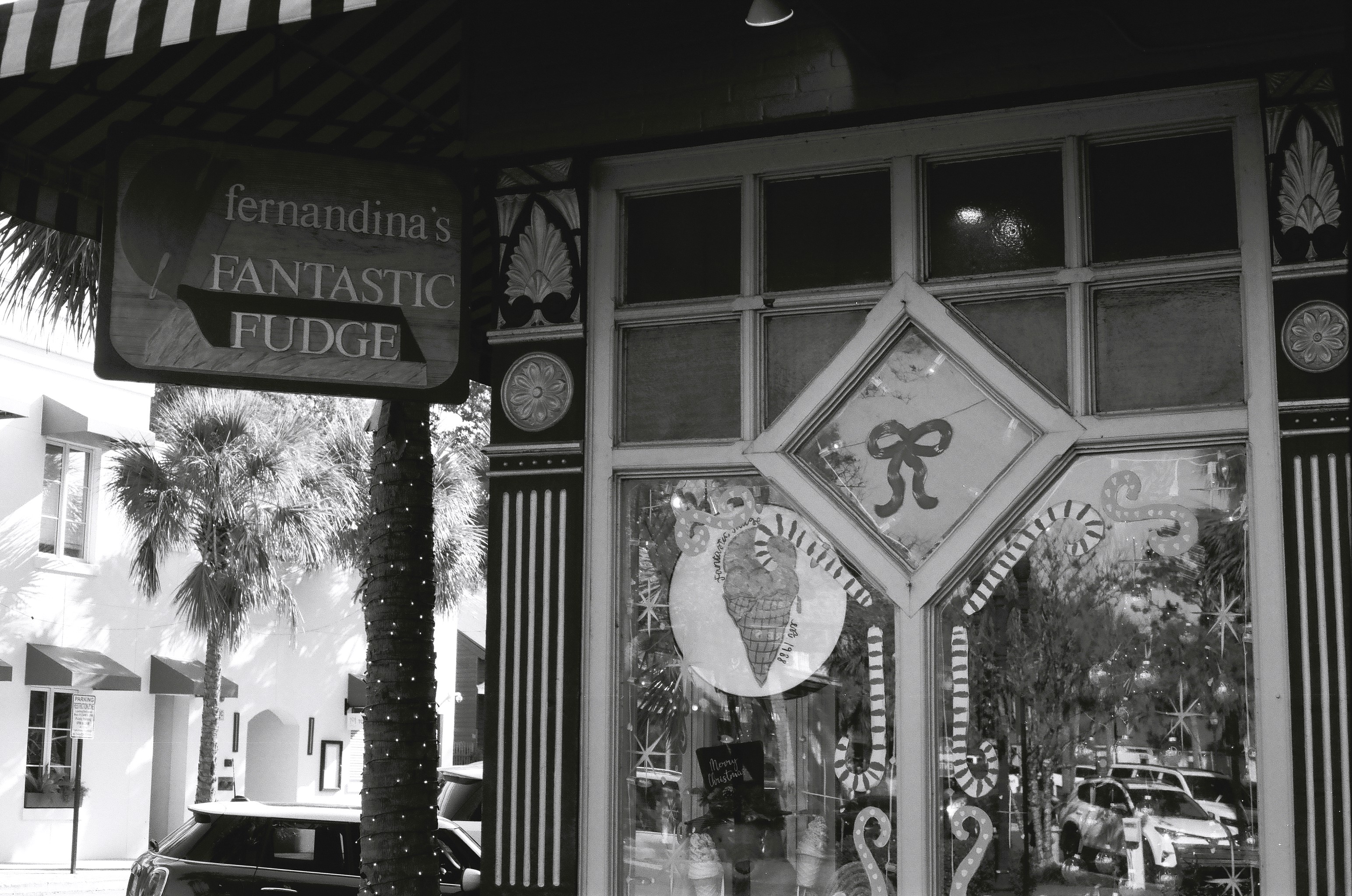
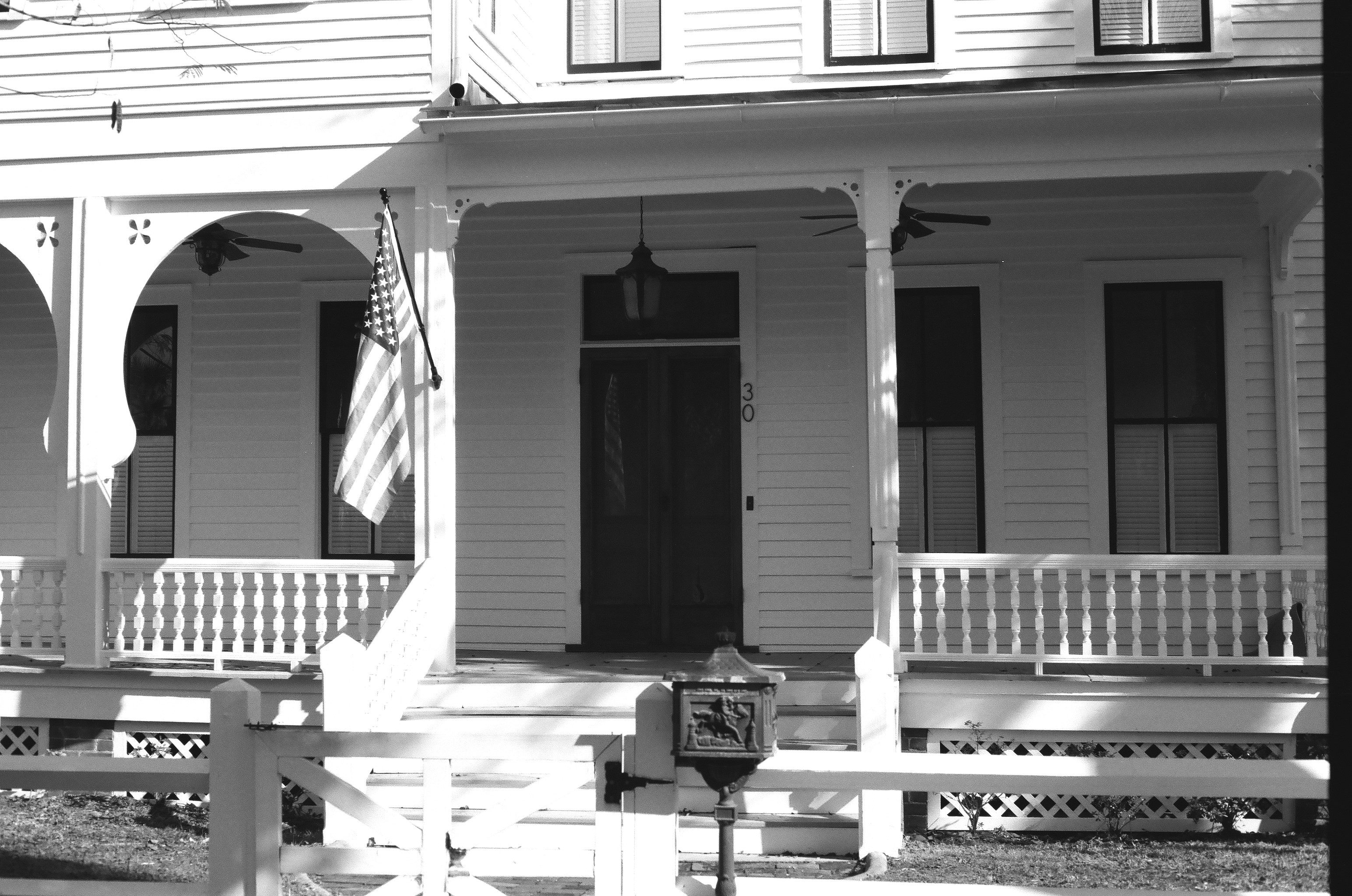
Canon NFD 24mm f/2.8 lens. I should have used a yellow or orange filter.My 1978 Canon F-1 loaded and ready to go on a photo walk.Canon NFD 24mm f/2.8 lens.I got better results using the meter in the F-1 when using a 1.35v Wein Cell.Canon NFD 24mm f/2.8 lens. A slightly better exposure.The World-famous Palace Saloon, Fernandina Beach Historic District.
Processing and scans were done by The Darkroom at medium resolution. The images below I used a 625A 1.5v battery which, on average made the camera’s meter two stops off.
Canon FD 50mm f/1.4 SSC lens. In the tight confines of the historic district, a 50mm lens isn’t my favorite lens to shoot with. I’m a wide-angle lens guy.OK exposure but, I’m not happy with it.Missed it by a country mile!Canon OD F-1 with a Canon FD 50mm f/1.4 SSC lens (my original lens from 1978).
Comments are always welcomed, as I’ve learned quite a bit from reader feedback. As always, thanks for stopping by, and while you’re at it, feel free to visit my camera shop at http://www.ccstudio2380.com (CC Design Studios hosted by Etsy). – Chris Whelan
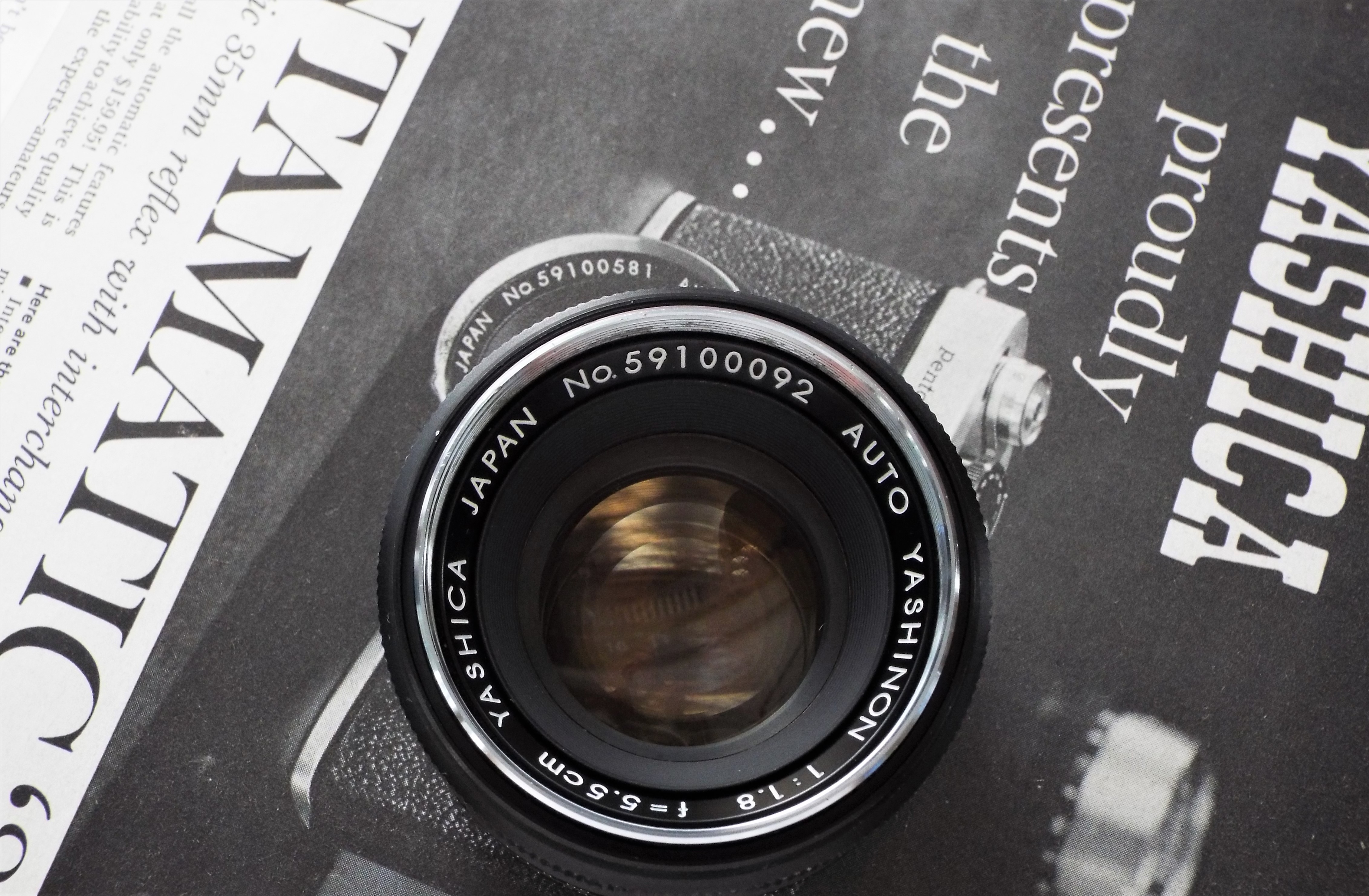
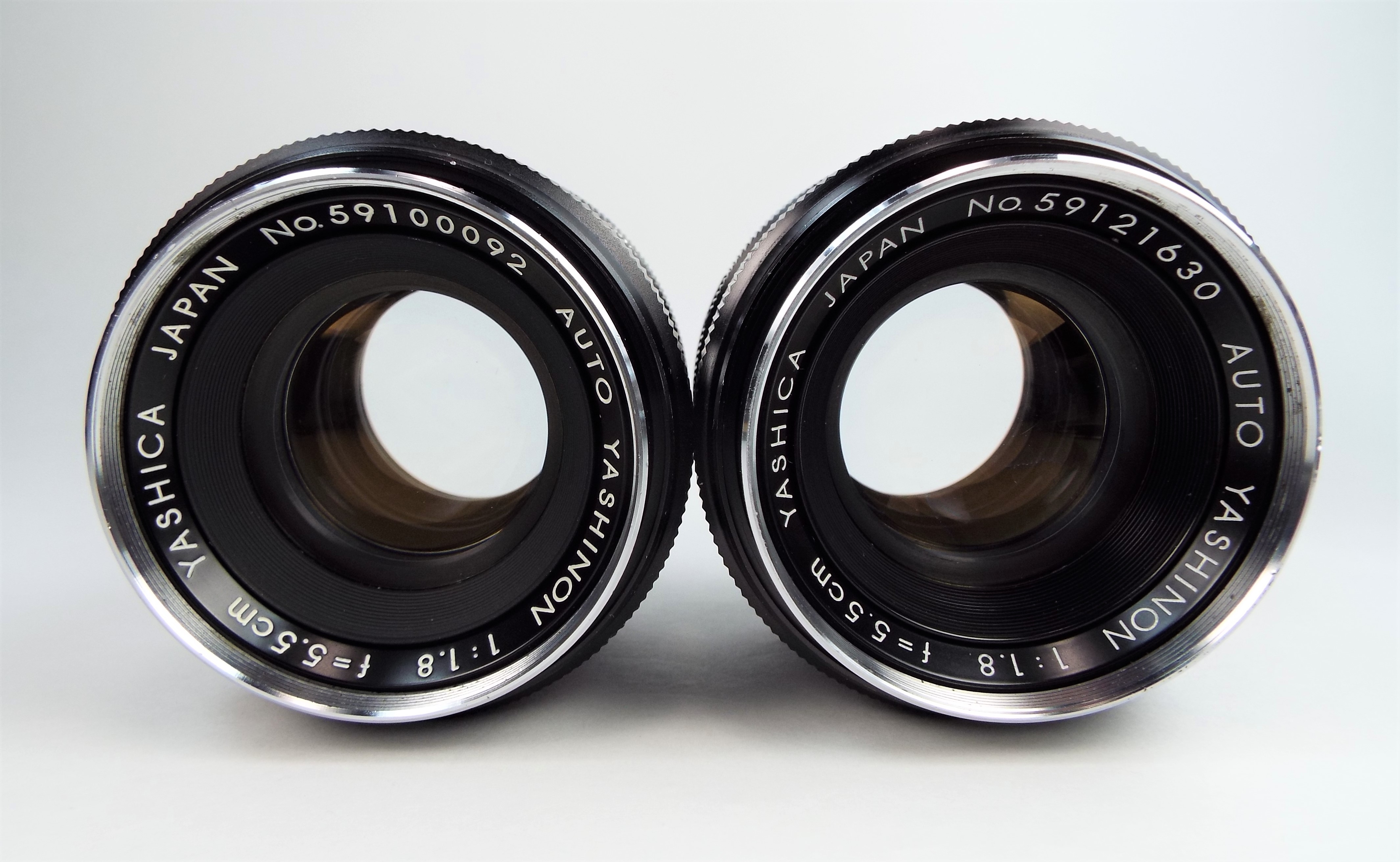
We recently acquired this lens for our Yashica Pentamatic collection. Why is it important? It’s a great find because it’s the first time we’ve encountered a lens with a lower serial number than one pictured in an advertisement (in this case, the first-ever ad for the Pentamatic, June 1960). We know it is total nerd stuff, but that’s what makes collecting fun.
The lens was made for Yashica by Tomioka Optical, which at the time made about 90% of all their lenses (TLR, SLR, RF, and Cine).
The lens serial number decodes 59 = 1959, 10 = OCT, and 0092, the 92nd lens made since production started.
In the second image, the other lens was made in December and was the 1,630th made. Tomioka was busy producing these lenses long before Yashica released the Pentamatic in March 1960. The first Pentamatic bodies were made in January.
The third image shows an early Yashica Tominon Super Yashinon-R f/2.8 3.5cm wide-angle lens SN 350246. The date code was dropped in favor of a simpler code: 35 = 35 mm, and 0246 is the sequence number since the start of production.
The ad shows a lens with a higher production number than the lens we own. 92 indicates it was made in the first batch of 100 lenses.The October lens is on the left and the December lens is on the right. No November lenses were made.From an early batch of wide-angle lenses from Tomioka Optical. This one is number 246.A fast lens from Tomioka. The f/1.2 55mm lens which was made much later in the M42 screw mount.
Comments are always welcomed, as I’ve learned quite a bit from reader feedback. As always, thanks for stopping by, and while you’re at it, feel free to visit my camera shop at http://www.ccstudio2380.com (CC Design Studios hosted by Etsy). – Chris Whelan














 Chasing Classic Cameras with Chris