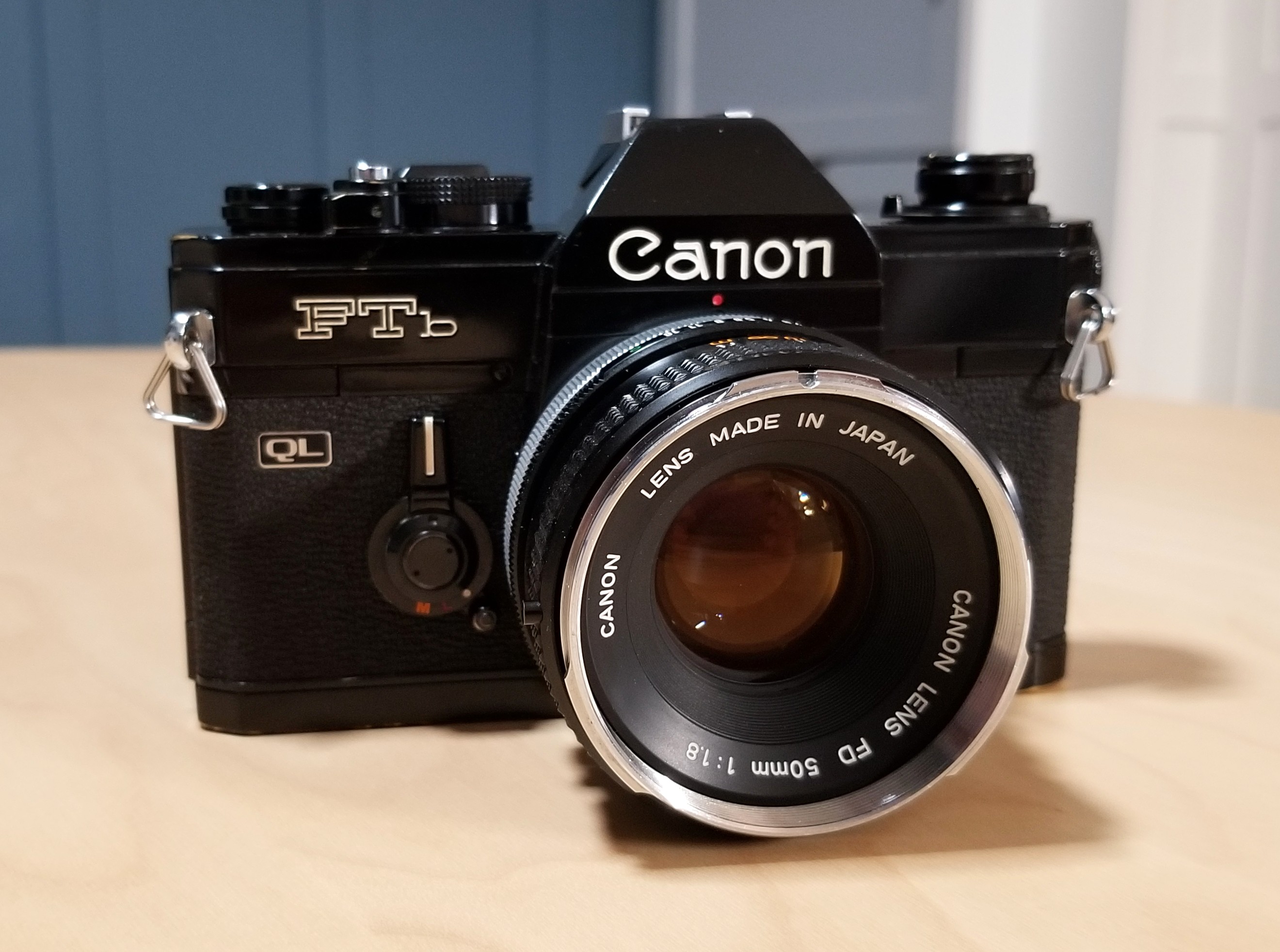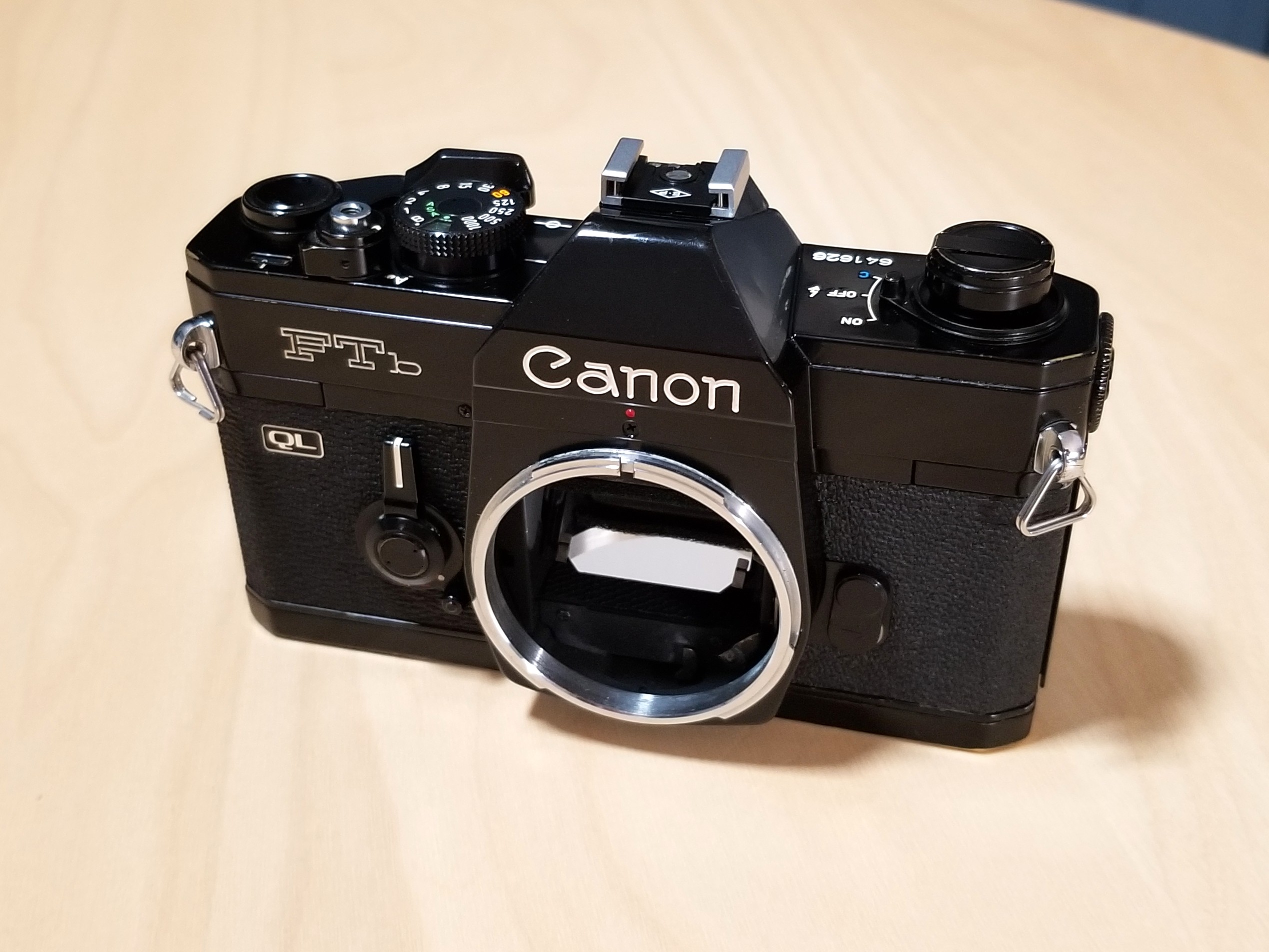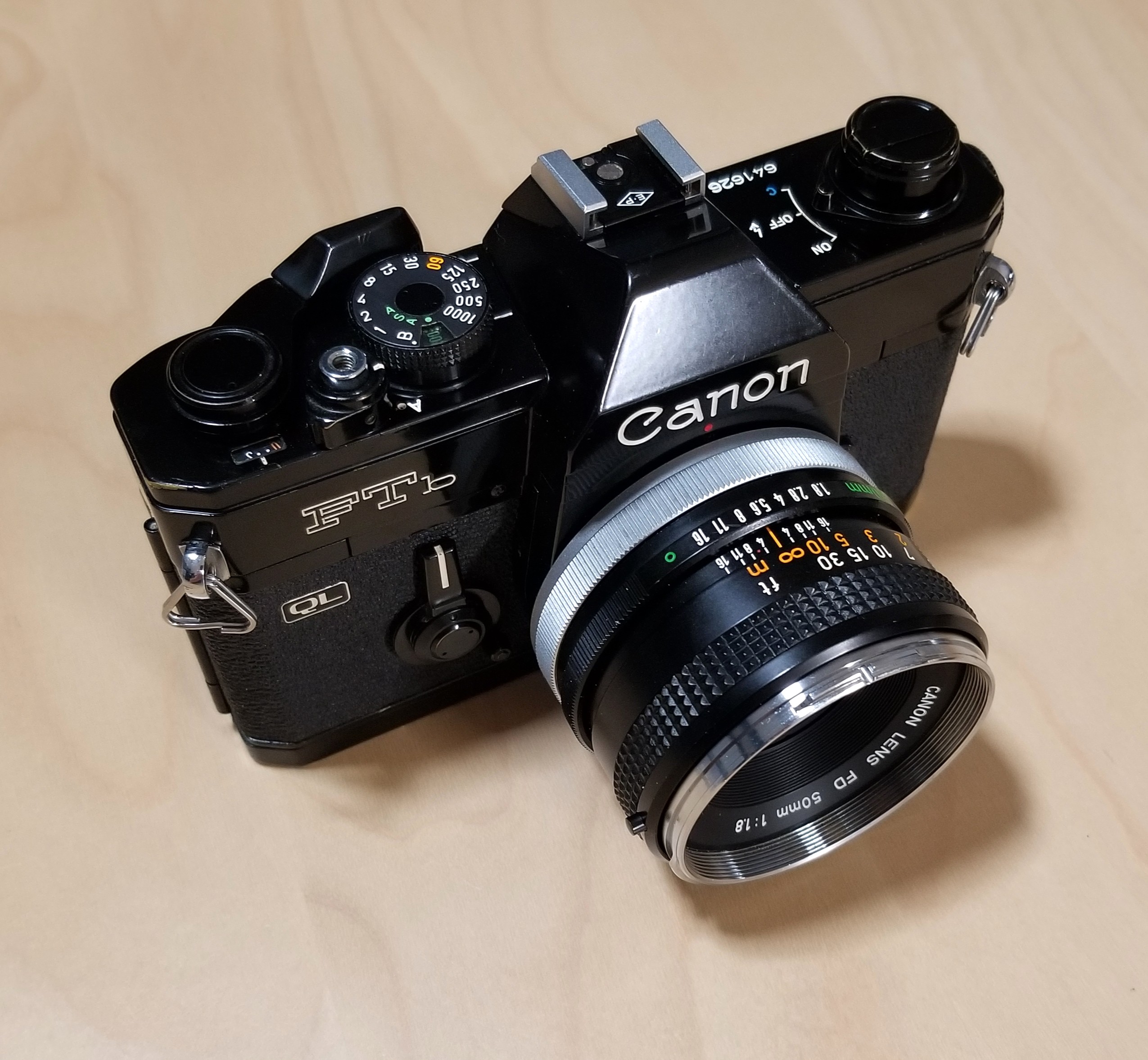
Canon F-1 Family

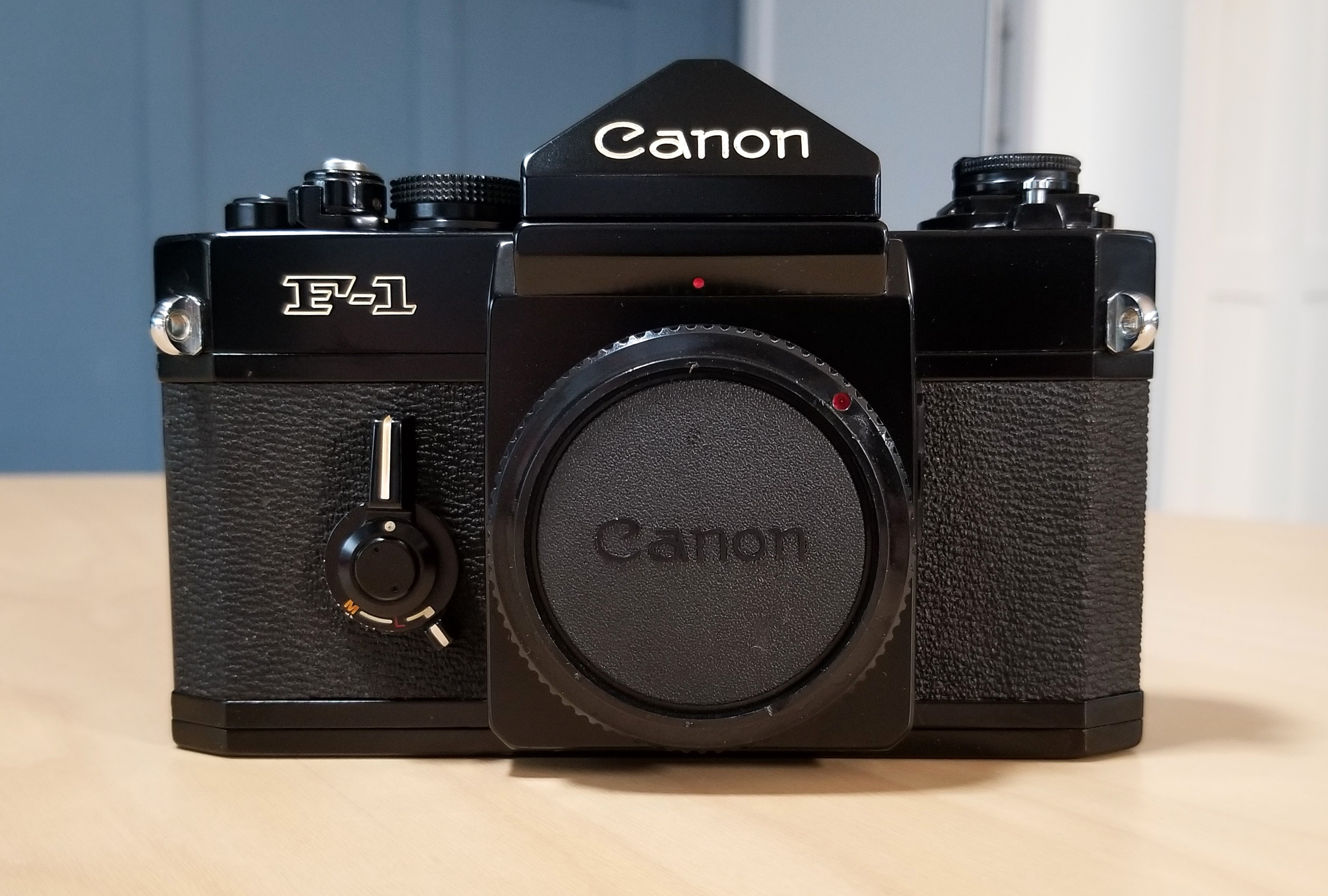
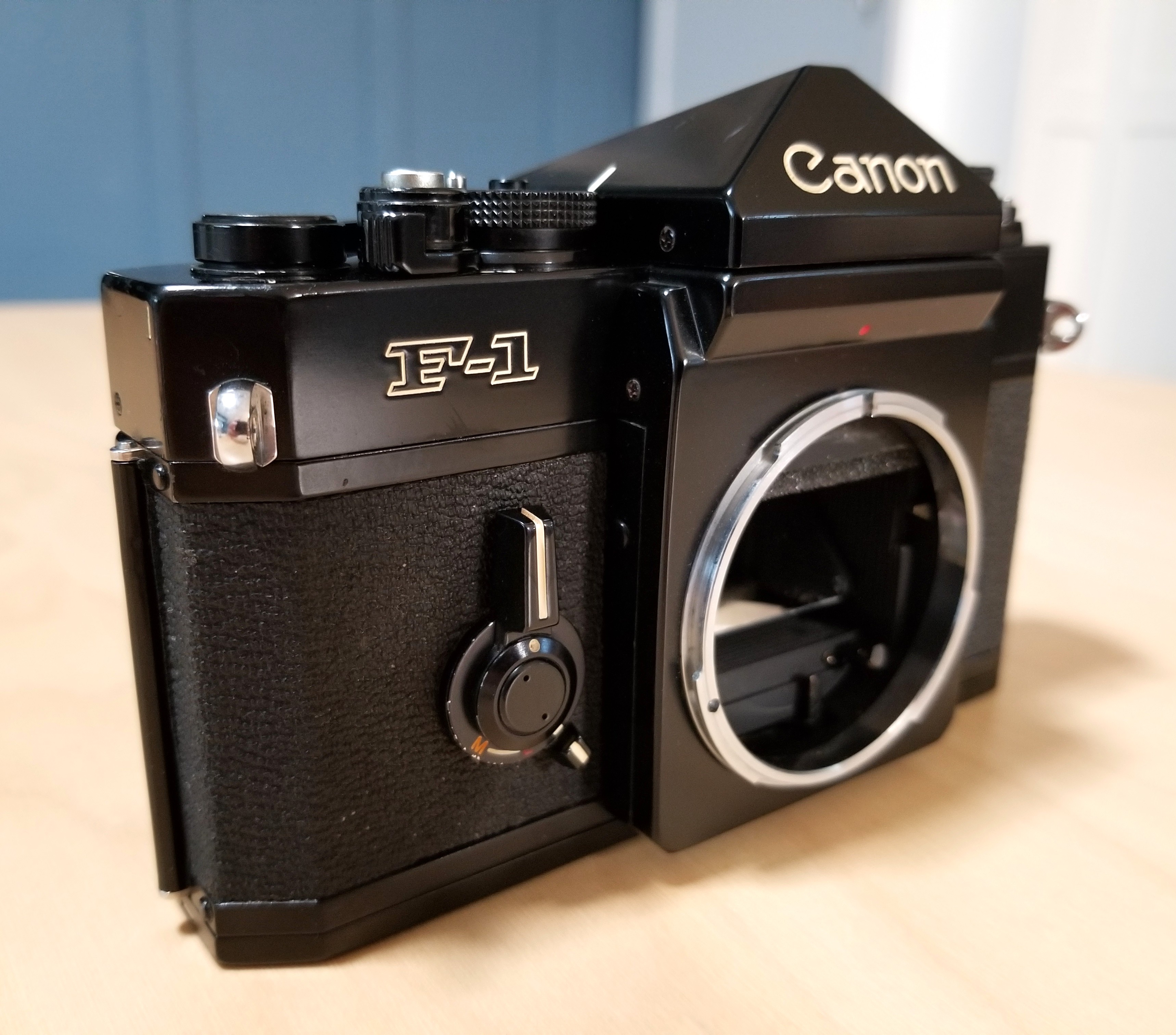
My original Canon F-1 from 1978 is on the upper left (with the motor drive)—the Canon O.D. F-1 is my most recent acquisition.
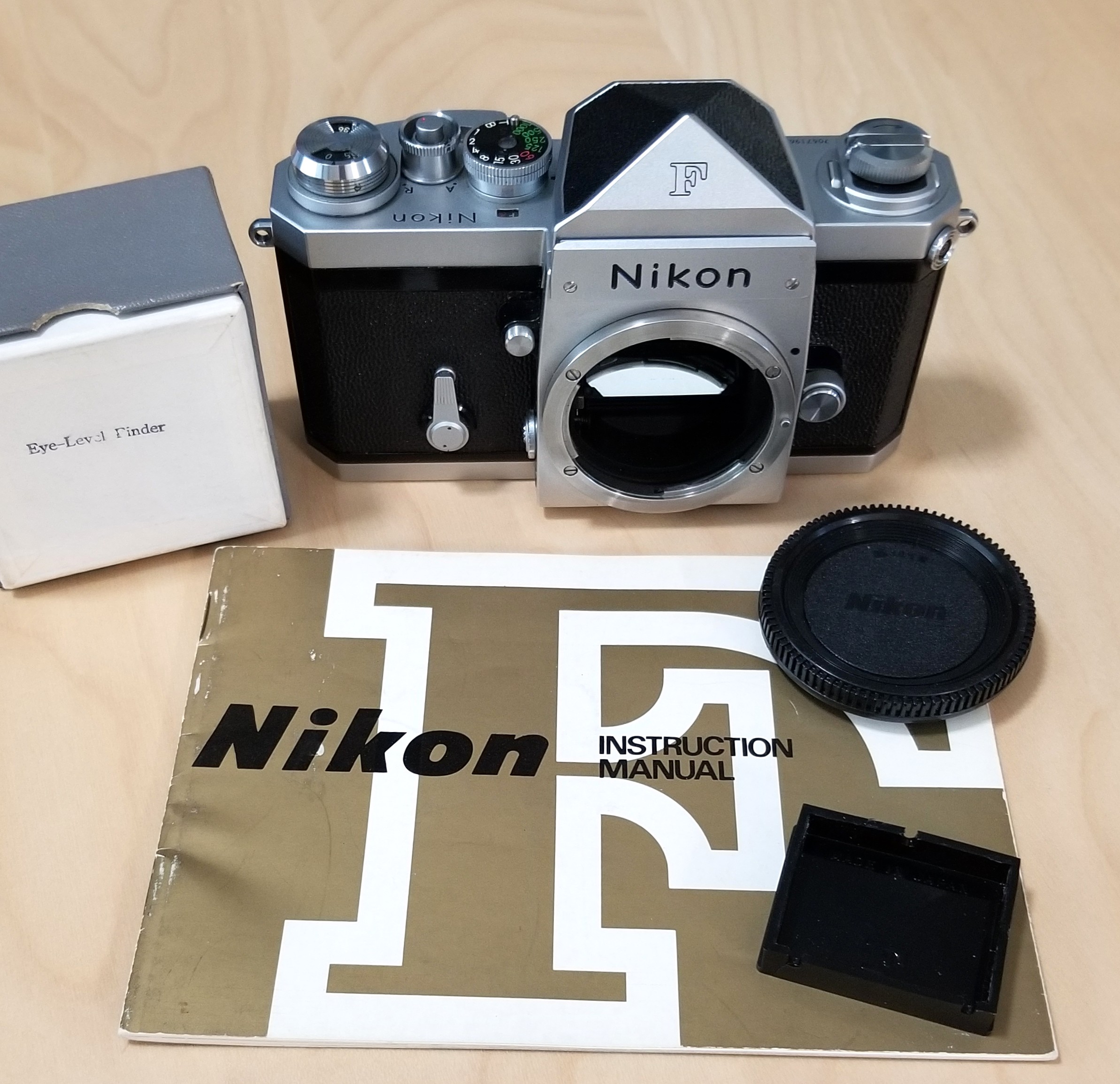
With their original instruction booklets.
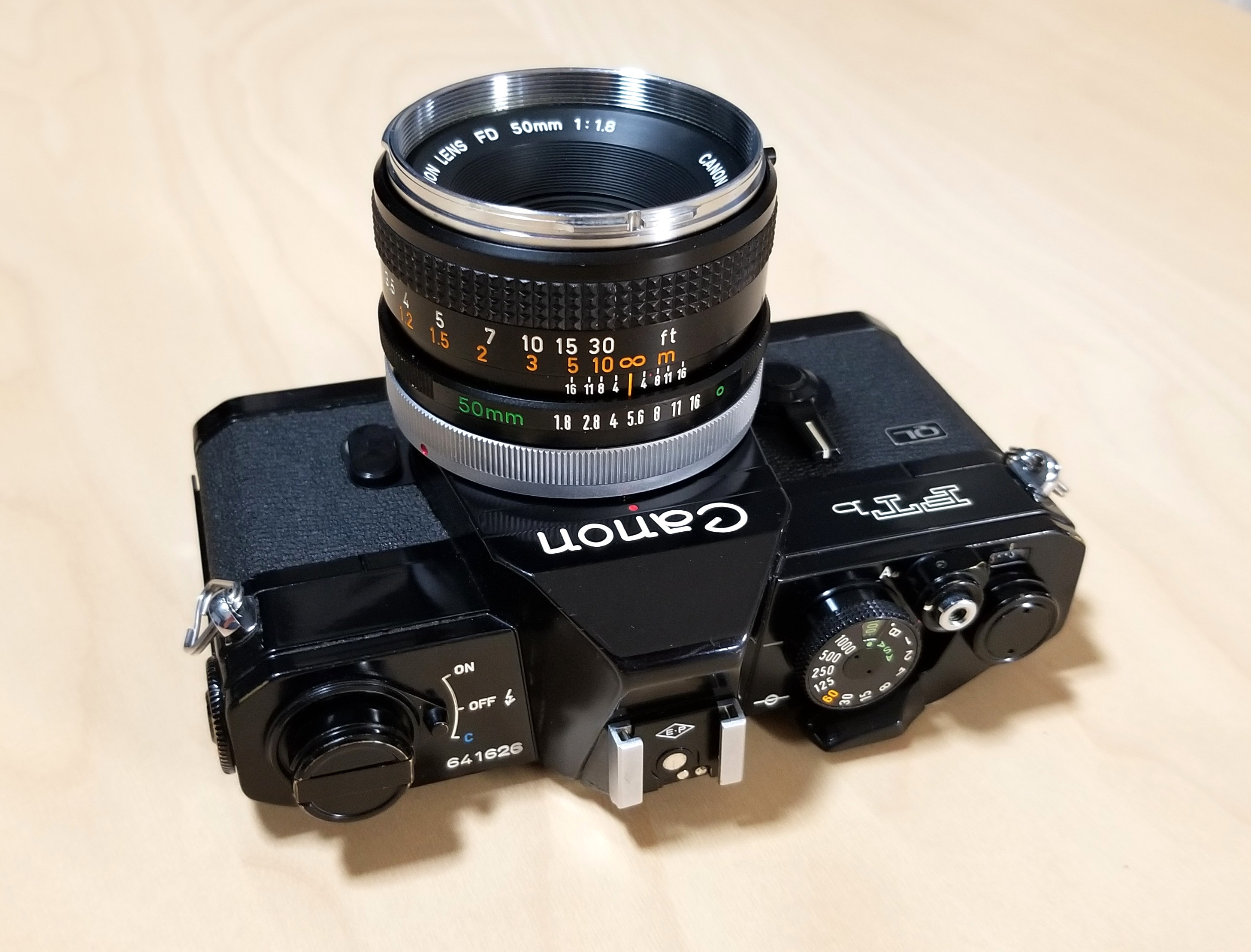
With an early Canon FD 50mm f/1.4 chrome nose lens.
OD F-1. A limited edition olive drab version from early 1978.
My earliest model. The serial number indicates that this camera was in the first 20,000 built in 1971. It also has the <E.P> mark.
My only Canon New F-1 with AE Finder.

It’s one of my favorite 35mm SLRs in my collection.

Thanks for stopping by, Chris

Follow me on Instagram https://instagram.com/ccphotographyai

Facebook CC Photography of Amelia

Flickr Chasing Classic Cameras with Chris

Comments are always welcome; I’ve learned a great deal from reader feedback. As always, thanks for stopping by. While there, visit my camera shop at http://www.ccstudio2380.com (CC Design Studios, hosted on Etsy). – Chris Whelan

Please respect that all content, including photos and text, is this blog’s property and its owner, Yashica Pentamatic Fanatic, Yashica Sailor Boy, Yashica Chris, Chasing Classic Cameras with Chris. Copyright © 2015-2025 Chasing Classic Cameras with Chris (Yashica Pentamatic Fanatic), Chris WhelanAll rights reserved.

A little gem from 1959.

Asahi Pentax H2 – 1959
One of my favorite early 35mm SLRs in my collection. It’s as good, if not better, than the Nikon F from the same year.

Camera and Lens: Fujifilm X-T2, Fujinon XF 10-24mm f4 R OIS, Fujifilm Acros Simulation.

Thanks for stopping by, Chris

Follow me on Instagram https://instagram.com/ccphotographyai

Facebook CC Photography of Amelia

Flickr Chasing Classic Cameras with Chris

Comments are always welcomed, as I’ve learned quite a bit from reader feedback. As always, thanks for stopping by, and while you’re at it, feel free to visit my camera shop at http://www.ccstudio2380.com (CC Design Studios hosted by Etsy). – Chris Whelan

Please respect that all content, including photos and text, is this blog’s property and its owner, Yashica Pentamatic Fanatic, Yashica Sailor Boy, Yashica Chris, Chasing Classic Cameras with Chris. Copyright © 2015-2025 Chasing Classic Cameras with Chris (Yashica Pentamatic Fanatic), Chris WhelanAll rights reserved.

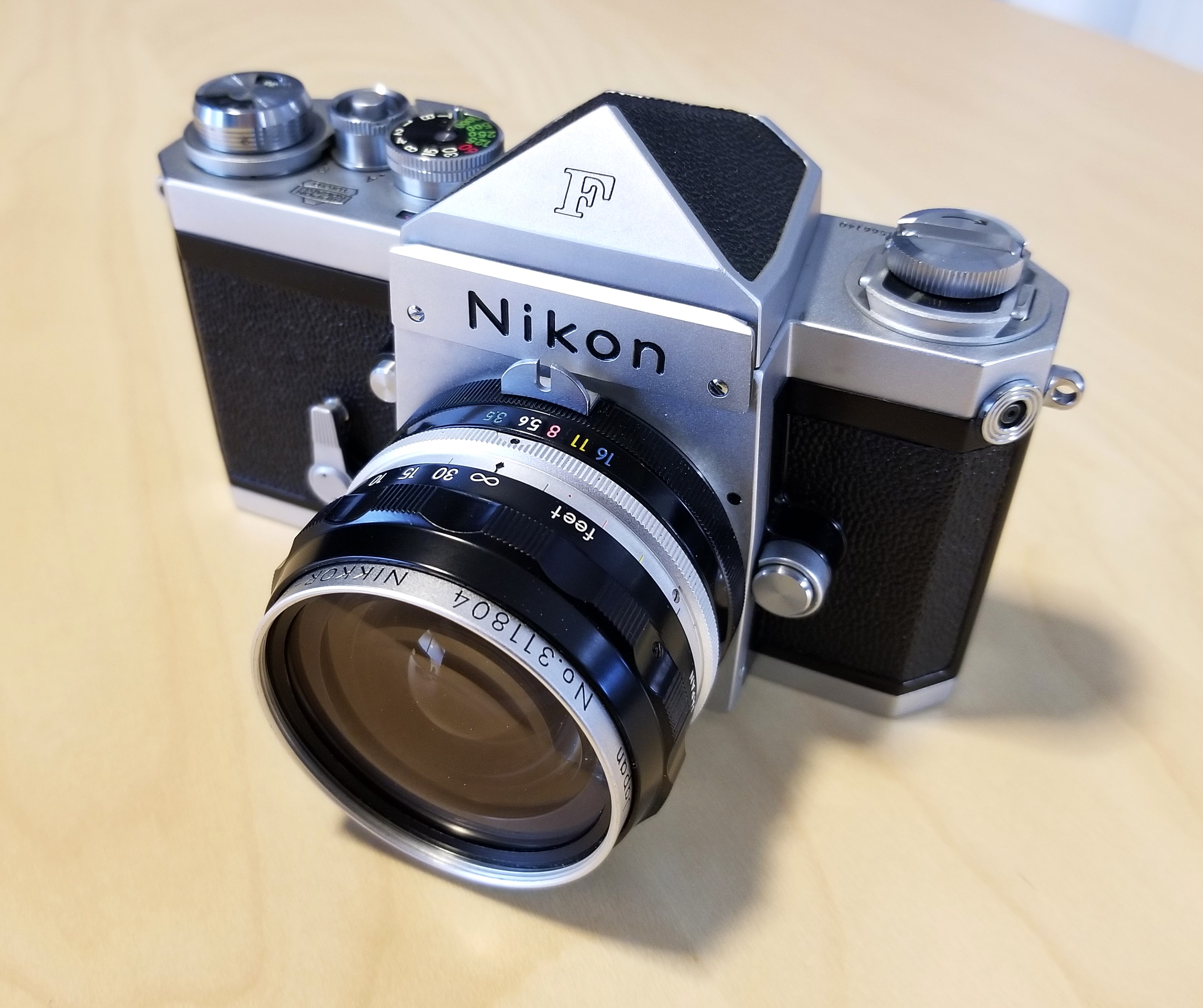
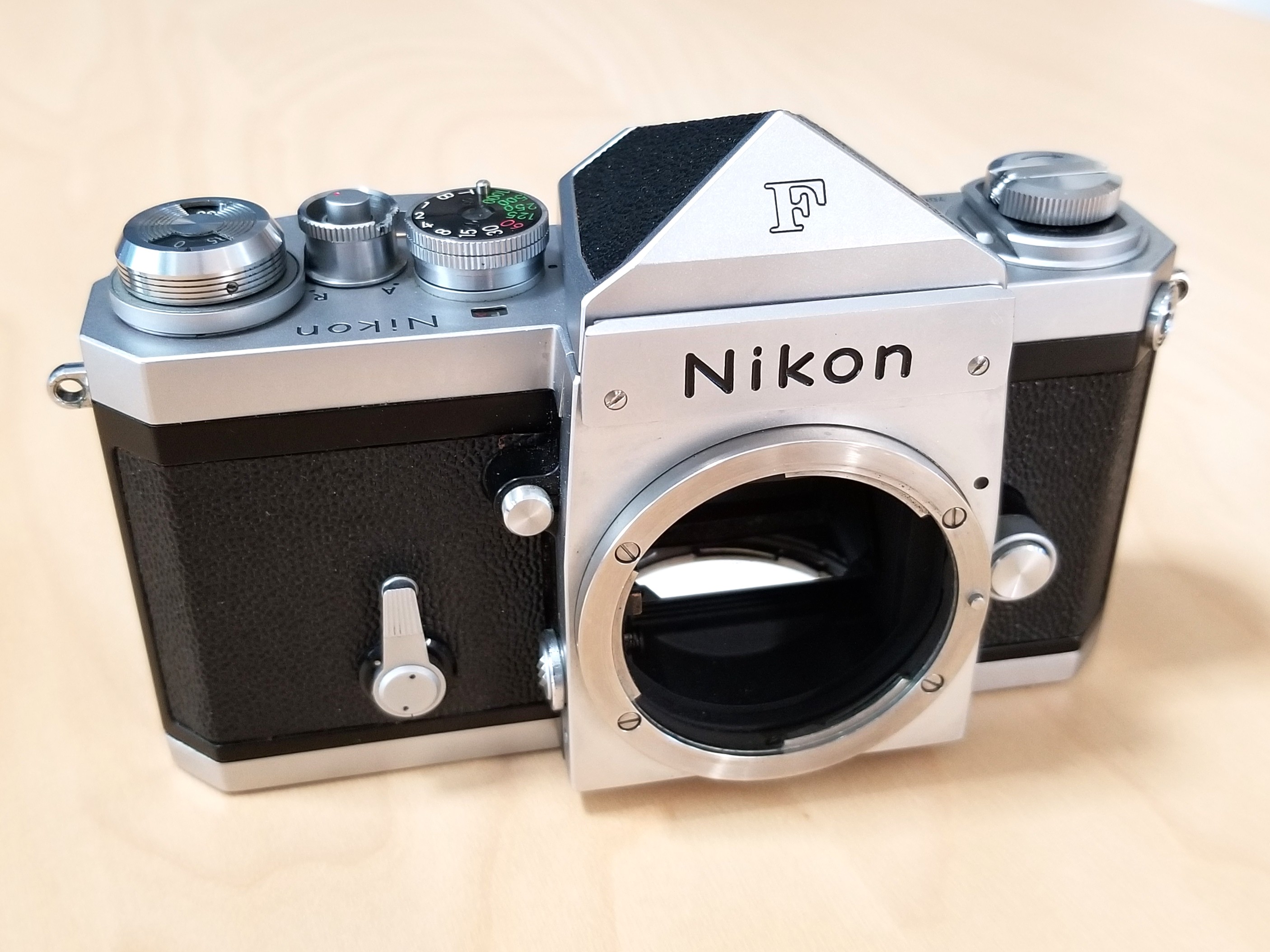
Nikon F – this one is from late 1964

Nikon F
Nikkor-H Auto 2.8cm f3.5 pre-Ai
Nippon Kogaku Tokyo 1964 (late) body and Nippon Kogaku K.K. lens from around 1961 or 1962. The body was modified to accept the Photomic-T finder.
Classic Nikon at its best. I enjoy using this focal length over 24mm or 35mm, and with modern fast films, the f3.5 aperture is not an issue. On my Fujifilm X-T2 (APS-C Sensor), the lens has an effective focal length of 42mm.

A nearly perfect combination.
The lens is from around late 1961 or 1962. The first lens in this style and focal length was serial number 301xxx, released in early 1960.
A classic, straightforward design.
Nikkor-H Auto.
2.8 cm lens, f3.5 wide-angle lens.
Mostly Nippon Kogaku caps. The Nikkor front cap is 52mm and is a bit newer style for this lens.

Thanks for stopping by, Chris

Follow me on Instagram at @ccphotographyai

Comments are always welcomed, as I’ve learned quite a bit from reader feedback. As always, thanks for stopping by, and while you’re at it, feel free to visit my camera shop at http://www.ccstudio2380.com (CC Design Studios hosted by Etsy). – Chris Whelan

Please respect that all content, including photos and text, is this blog’s property and its owner, Yashica Pentamatic Fanatic, Yashica Sailor Boy, Yashica Chris, Chasing Classic Cameras with Chris.

Copyright © 2015-2024 Chasing Classic Cameras with Chris (Yashica Pentamatic Fanatic), Chris Whelan
All rights reserved.

Nice find, Minolta X-700 boxes

I’m always on the lookout (chase) for items to add value to my camera collection. Recently I purchased a super nice Minolta X-700 35mm SLR and Minolta 50mm f/2 lens from a local collector who swore he still had the original boxes that the camera came in. After much searching around his home, he discovered them packed away in a seldom-used Christmas ornaments box. The boxes are factory fresh since he put them away when still new.

Factory fresh!
Includes the foam inserts.
The outer shipping box is a bit rough but it did its job and kept the presentation boxes fresh.
A body cap and a rear lens dust cap. An added bonus is the little plastic insert that covers the film pressure plate.

I don’t have the camera and lens anymore so it’s a good time to pass this set along to the next collector. If you are interested they are available in my camera shop at http://www.ccstudio2380.com. Thanks for stopping by, Chris
Follow me on Instagram at @ccphotographyai

Comments are always welcomed as I’ve learned quite a bit from reader feedback. As always, thanks for stopping by, and while you’re at it, feel free to visit my camera shop at http://www.ccstudio2380.com (CC Design Studios hosted by Etsy). – Chris Whelan

Please respect that all content, including photos and text, is this blog’s property and its owner, Yashica Pentamatic Fanatic, Yashica Sailor Boy, Yashica Chris, Chasing Classic Cameras with Chris.

Copyright © 2015-2022 Chasing Classic Cameras with Chris (Yashica Pentamatic Fanatic), Chris Whelan
All rights reserved.

new kid on the block – Nikon L35AF

Can’t wait to shoot a roll! More to come. – Chris

Follow me on Instagram at @ccphotographyai

Comments are always welcomed as I’ve learned quite a bit from reader feedback. As always, thanks for stopping by, and while you’re at it, feel free to visit my camera shop at http://www.ccstudio2380.com (CC Design Studios hosted by Etsy). – Chris Whelan

Please respect that all content, including photos and text, is this blog’s property and its owner, Yashica Pentamatic Fanatic, Yashica Sailor Boy, Yashica Chris, Chasing Classic Cameras with Chris.

Copyright © 2015-2022 Chasing Classic Cameras with Chris (Yashica Pentamatic Fanatic), Chris Whelan
All rights reserved.

Buy Me A Coffee

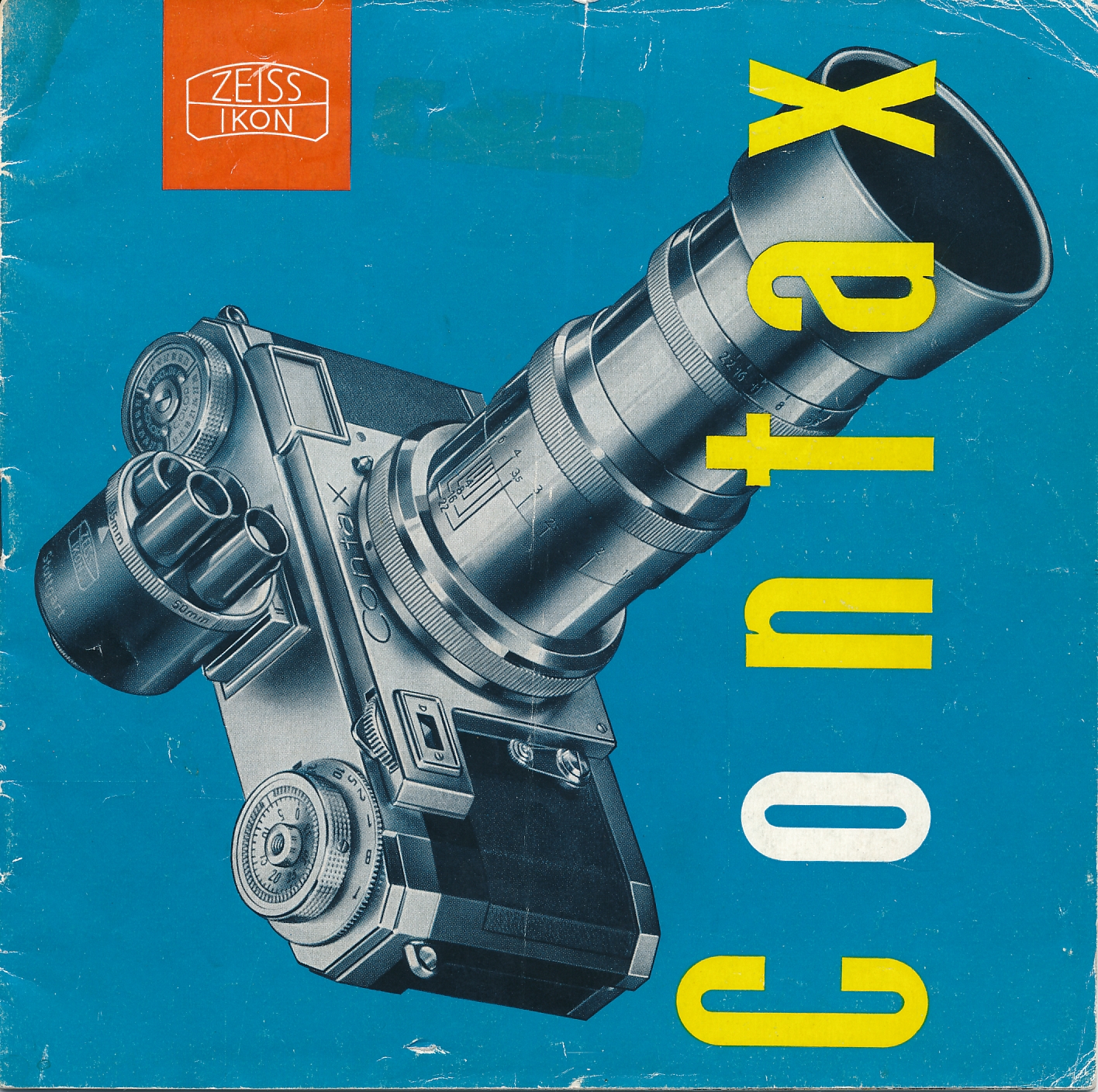
Zeiss Ikon IIIa with Box – 1951

We were lucky enough to collect this wonderful Contax with an original box (we love old cameras and their boxes)!

The Contax IIIa (and IIa) are interchangable lens 35mm rangefinder cameras.

DSC_0028

The Contax IIIa was made by Zeiss Ikon AG. Stuttgart, West Germany.

DSC_0032

We haven’t run a roll of film through it yet but we hope to soon. The lens is a Carl Zeiss 50mm f/ 1.5 and the exposure meter (top) appears to be working after all these years.

DSC_0023

Exposure meter flap in the open position. The meter has selenium cells that are powered by light – no batteries necessary. The only downside is that over time they do give out and they can be a bit fragile after nearly 70-years-old.

The Carl Zeiss f/ 1.5 lens is considered to be fast even by today’s standards.

IMG_20200524_0016

Here’s the Contax IIa – same features but without the built-in exposure meter.

Here’s another camera in our collection that’s available to purchase. From 1955, the Minolta A2 (or A-2) 35mm non-interchangeable lens rangefinder camera.

DSCF8447

DSCF8451

The Minolta is available in our Etsy camera shop at http://www.ccstudio2380.com

Thanks for stopping by and have a wonderful day! – Chris

Please respect that all content, including photos and text, are the property of this blog and its owner, Yashica Pentamatic Fanatic, Yashica Sailor Boy, Yashica Chris.

Copyright © 2015-2020 Yashica Pentamatic Fanatic, Chris Whelan
All rights reserved.

Nicca 3-F Brochure – 1957

Here is a very nice brochure for the popular Nicca 3-F (lever) 35mm rangefinder camera – a sophisticated Leica inspired camera from Japan.

Nicca 3-F Bro

An inside view of the brochure. The serial number on the camera is No. 151144

Analysis of the serial numbers indicates that about 6,000 cameras were made. This assumes that there were no breaks in production and that the numbers were assigned consecutively.

Nicca 3-F Bro Cover

The front and back cover of the brochure. Hinomaruya ひのまるや (upper left corner) was the sole distributor for Nicca in Japan – I’m not sure if they handled distribution outside of Japan.

Nicca 3-F Bro Logo

Nice assortment of available accessories for the Nicca 3-F

This brochure has survived in near mint condition – it’s obvious collectors have handled it carefully over the years.

Thanks for stopping by! – Chris

Please respect that all content, including photos and text, are the property of this blog and its owner, Yashica Pentamatic Fanatic, Yashica Sailor Boy, Yashica Chris.

Copyright © 2015-2019 Yashica Pentamatic Fanatic, Chris Whelan
All rights reserved.

Yashica Mystery – what is it and what does it mean?

Contributor and Yashica aficionado, Graham Buxton-Smither posted this picture in my Flickr Group, https://www.flickr.com/groups/2734130@N24/pool/ the other day asking if I’d ever seen this type of serial number on a Yashica TL Electro X (pro-black body) before. I haven’t so I thought it would be good to broadcast it in this blog in hopes of discovering something about it.

OLYMPUS DIGITAL CAMERA

Serial number with its odd two letter prefix ‘FI’. Photo courtesy of Graham Buxton-Smither https://www.flickr.com/photos/164456136@N06/

The serial number itself is unremarkable in the sense that it follows along with the standard for a Yashica SLR. It decodes to December 1969 as the manufacture date. The ‘FI’ has no previous use that I’m aware of so it was a surprise to see it. Graham states that it is on a one owner Yashica TL Electro X purchased in the UK when new. It appears to be a factory mark as the black paint looks undisturbed.

I’m stumped as there isn’t an example anywhere in my databases. I can’t even fathom a guess at this point.

Any help including guesses will be appreciated.

Thanks – Chris


Yashica L AF vs. Kyocera T Scope

In case you missed this post the first time around here’s another look at these two exceptional cameras by Yashica-Kyocera.

Chris and Carol's avatarChasing Classic Cameras with Chris

Round 1 – The Introduction

The Yashica-Kyocera L AF from 1986 and the Kyocera T Scope (Japanese name, T3 elsewhere). The L AF was assembled in Hong Kong with parts made in Japan and the T Scope was made in Japan.

Key feature – waterproof (more like weatherproof) – not a dive camera.

kyocera t scope

DSCF7805 logo N.A. Scope = “New Angle Scope”

The scope is just like a waist-level finder – pretty cool actually.

DSCF7813 logo

ky and laf logo Cousins

I’ll be doing a side by side field test of these two cameras shortly. Is the T3 really worth the extra money over the Yashica? The T Scope features a Carl Zeiss T* Series Tessar f/2.8 35mm lens against the Yashica (Tomioka?) f/3.5 32mm lens. I have a hunch that the Yashica’s lens was also made by Zeiss at the Tomioka factory in Tokyo. We’ll see if the vaunted T* coating makes a noticeable difference.

DSCF7808 logo Not often seen…

View original post 19 more words

A Surprising Find Under All That Dirt – A Hidden Gem Emerges

Recently a client of mine asked me to help him sell some of his vintage cameras from his collection. It’s not a collection in the true sense of the word, more of a gathering of cameras he had acquired over the years. Bob had become interested in photography as a kid in New York in the 1940s and ’50s but lacked the resources to buy cameras until he graduated from law school in the late 1960s.

His first purchase was a good one – a brand new Leica M4 in black lacquer (only 800 or so made in black that year) with a gorgeous Leitz-Leica Summicron 35mm f2 wide angle lens. Both were purchased together in 1969. I was able to arrange a sale of that set within two days of posting it.

The next camera that Bob showed me I wasn’t impressed with at all – a Canon II 35mm rangefinder with a terrible looking lens that looked like Fred Flintstone may have owned it at one time.

The Canon before its “refreshing” ⇓

DSCF7506

The Canon II from around 1954 with its odd little lens. Dirty little thing.

I was familiar with the Canon – one of the dozens of Leica “copies” or “clones” of the venerable Leica III that were made in Japan in the late 1940s and ’50s – the lens, well not so much. I knew that Leica made collapsible Leitz lenses that were extremely popular due to their outstanding quality and compact size, but I was unaware that other companies did so too. One such company was Schneider-Kreuznach of Germany.

DSCF7509

The diamond in the rough.

The Schneider-Kreuzbach Xenon f2 5cm lens (pictured above) was produced for Leitz during World War II. By serial number (1830715) the lens was produced around 1942 to 1943. Schneider Optics has this incredible list of all of its serial numbers – check it out here.

Here’s my write-up from my Etsy shop (www.ccstudio2380.com) listing.

Rare Schneider-Kreuznach Xenon f2 5cm
Collapsible Leica LTM Screw Mount Lens
– Vintage Germany 1942 – Wartime Lens! Limited Production!
– Excellent Functionality!

This is an extremely hard to find Leica screw mount lens made
by the world-renowned German optical company
Schneider-Kreuznach (Schneider Optics).

The lens is in beautiful vintage condition with a lovely
patina on the chrome metal lens barrel. I have inspected
and tested this lens on my Nicca rangefinder and it works
perfectly.

History has it that the Leitz factory could not meet the demands 
made on it by the German government during the height
of World War II and so the Schneider Optical Company
took on the task of building these lenses for Leica-Leitz. They
were made in very limited numbers.

If you can imagine how hard it is to find this lens in the present day
after all these years having survived the war and its aftermath.

This lens made it to a large camera dealer in New York City from the
original owner and was purchased by my client in 1969.

The lens is in perfect function – the aperture blades are clean (a bit worn)
and complete, the focus is smooth and was tested on my Nicca.
The rangefinder focused accurately. The mount (L39) is excellent and
the lens mounts securely to the camera body. The collapsible portion
is smooth and the lens locks in place. The aperture ring is also smooth and
without binding.

The glass elements (I think only the front elements) have a slight fog/haze
but not so much as to diminish the view. There are spots inside the
lens – they look more like dirt and dust spots but they could be
mold. With a bright light, I do not see any fungus filaments however.

The lens is rather rare and apparently very collectible and valuable ($900 to $1500). Who knew? The fact that it was made during WWII in Germany only adds extra interest to its rariety. The Leica lens cap is from the mid 1930s and as the story goes it has been on the lens since new. It would make sense that the Leitz factory supplied these to Schneider Optics to affix to their lenses.

DSCF7590

The Canon all cleaned up and ready to go – the lens is shown in its collapsed position.

DSCF7586

Looking much better after its bath – the cap is extra special too as it is from a very early design. By the way, the cap is padded inside with red felt.

DSCF7587

As a set it makes for a very interesting camera. Canon, Schneider, and Leitz coming together.

schneider lenses 1

For more about Schneider Optics stop by their website.

Thanks for stopping by! If you find vintage Schneider lenses from the 1940s certainly give them a closer look. The popular Kodak Retina line of 35mm SLR cameras used Schneider lenses and some of those are quite valuable too.

Chris