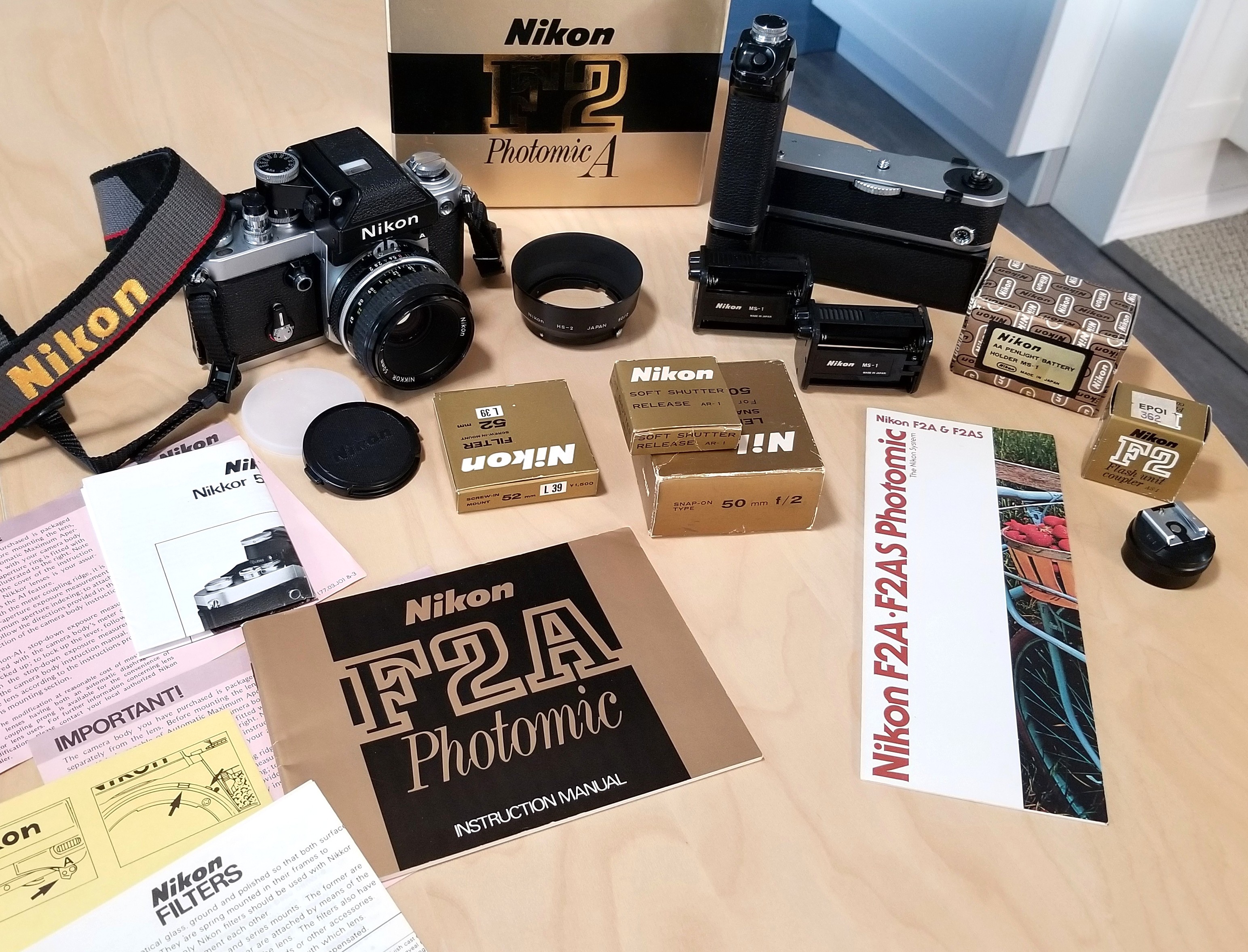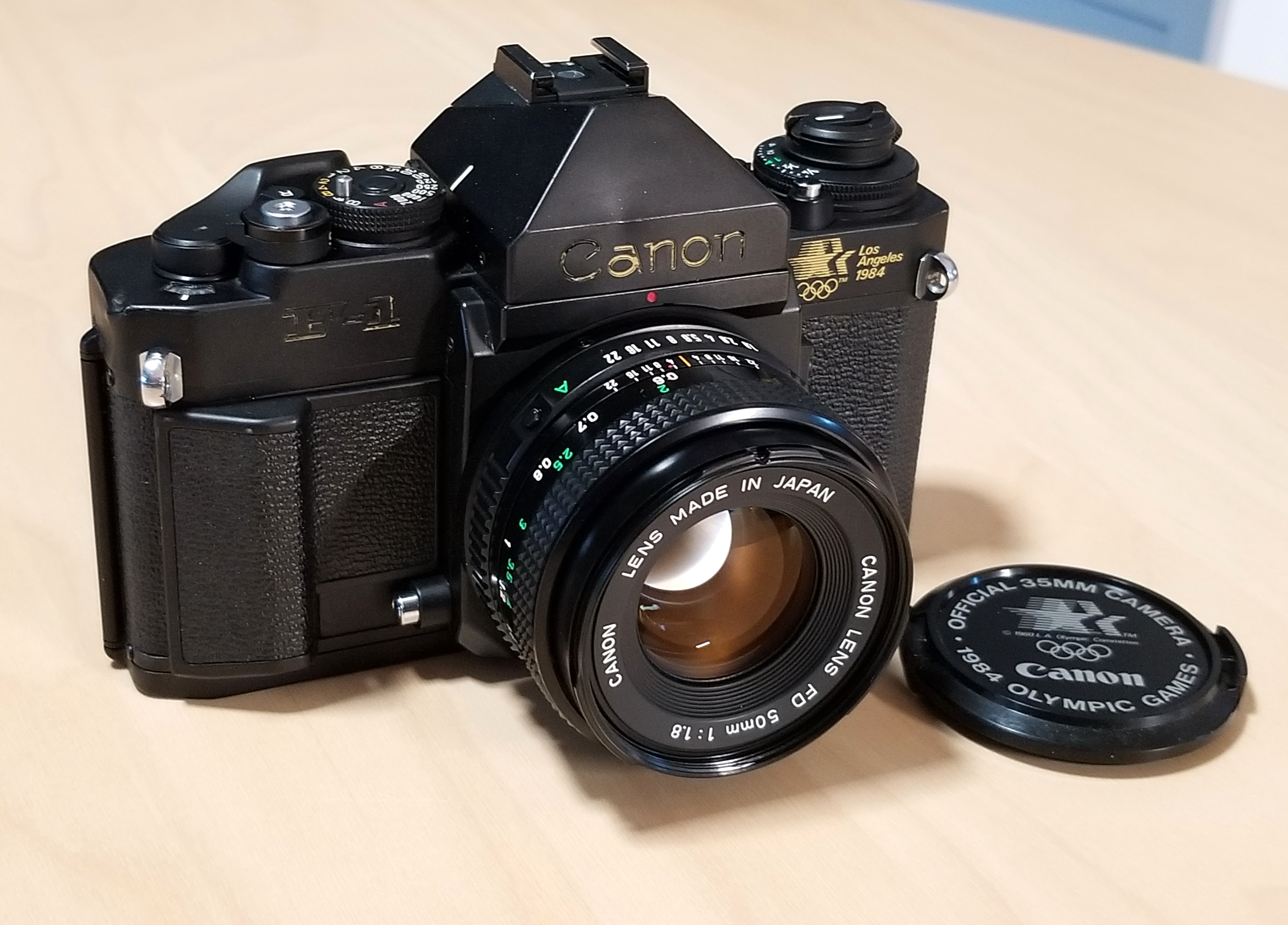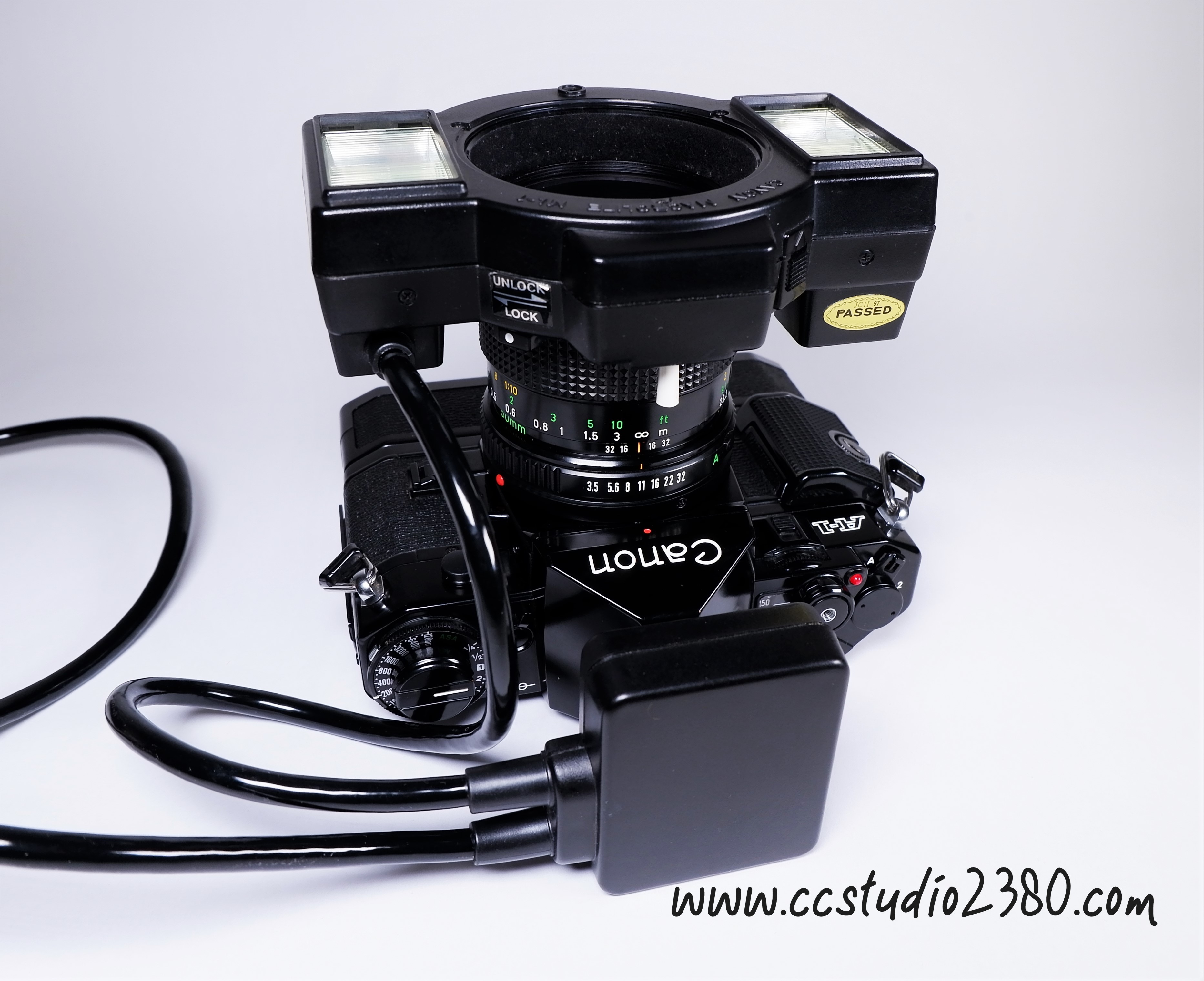
I have another Canon Macrolite available from my collection.

Hi all! I have my last Canon Macrolite ML-1 electronic flash from my collection for sale. This one is the latest version from 1985. It will work perfectly with the Canon New F-1 as well as any of the earlier A-Series cameras. It’s in my Etsy camera shop at http://www.ccstudio2380.com

Thanks for stopping by, Chris

Follow me on Instagram https://instagram.com/ccphotographyai

Facebook CC Photography of Amelia

Flickr Chasing Classic Cameras with Chris

Comments are always welcome; I’ve learned a great deal from reader feedback. As always, thanks for stopping by. While there, visit my camera shop at http://www.ccstudio2380.com (CC Design Studios, hosted on Etsy). – Chris Whelan

Please respect that all content, including photos and text, is this blog’s property and its owner, Yashica Pentamatic Fanatic, Yashica Sailor Boy, Yashica Chris, Chasing Classic Cameras with Chris. Copyright © 2015-2025 Chasing Classic Cameras with Chris (Yashica Pentamatic Fanatic), Chris WhelanAll rights reserved.

A classic Asahi-Takumar lens from 1958.

My Asahi-Takumar 135mm f/3.5 lens set is shown with my Asahi Pentax 35mm SLR from 1957. The lens is from 1958. The lens is listed at 300 grams or 10.5 oz. My lens weighs 326 grams. There must be an error in the original weight, or my lens was modified by the factory after the first lenses were made.

It’s one of the first auxiliary lenses made for their new 35mm SLR camera.
Asahi Optical Company’s first 35mm SLR with a pentaprism. This model was released in May 1957, and the lens followed shortly after in 1958.
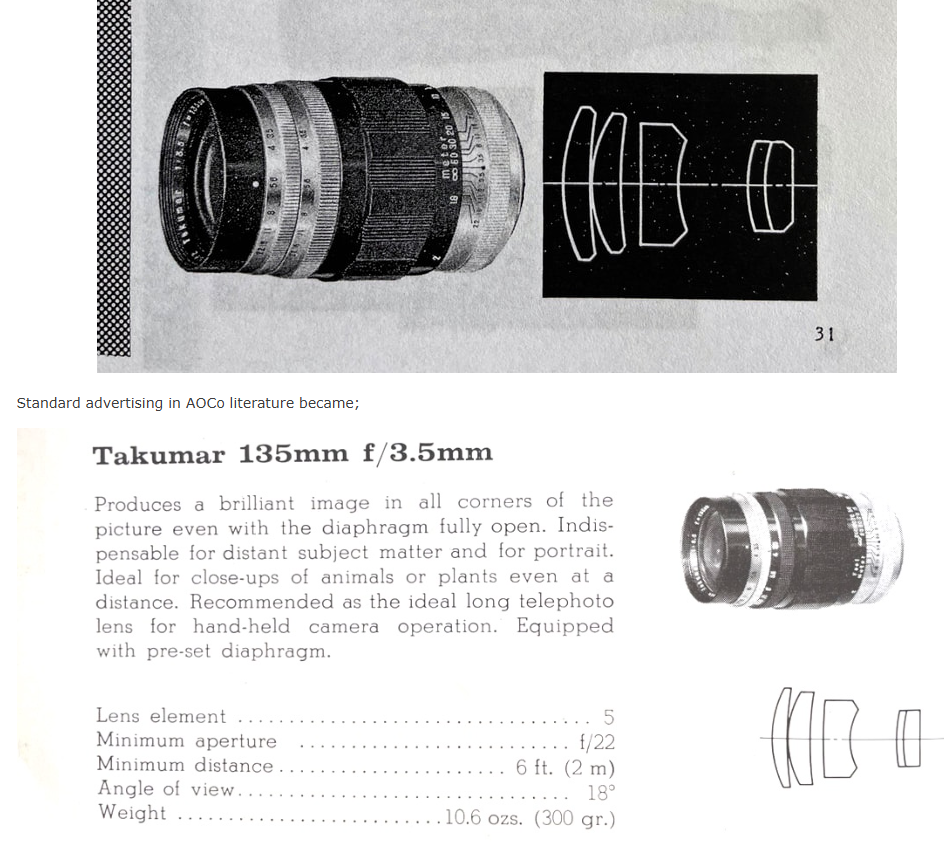
A snip from the instruction guide. This lens is the closest to mine in design.
The earliest lens design had two chrome aperture rings.
It’s shown here mounted to my Fuji X-T2 via an adapter.
A test image. The equivalent focal length is about 200mm when used on a 1.5x crop sensor camera, such as the Fuji.
There may be some light haze or cloudiness inside one of the lens elements, as this shot lacks contrast.
Same shot with added “punch”.

Thanks for stopping by, Chris

Follow me on Instagram https://instagram.com/ccphotographyai

Facebook CC Photography of Amelia

Flickr Chasing Classic Cameras with Chris

Comments are always welcome; I’ve learned a great deal from reader feedback. As always, thanks for stopping by. While there, visit my camera shop at http://www.ccstudio2380.com (CC Design Studios, hosted on Etsy). – Chris Whelan

Please respect that all content, including photos and text, is this blog’s property and its owner, Yashica Pentamatic Fanatic, Yashica Sailor Boy, Yashica Chris, Chasing Classic Cameras with Chris. Copyright © 2015-2025 Chasing Classic Cameras with Chris (Yashica Pentamatic Fanatic), Chris WhelanAll rights reserved.

Asahiflex IIa – one of the original 35mm SLRs

From Japan, released in 1955. The Asahiflex IIa was one of Japan’s first 35mm SLR cameras.

The Asahiflex IIa with a gorgeous Asahi-Kogaku Takumar f/3.5 50mm lens.

The Asahiflex had interchangeable screw-in lenses.

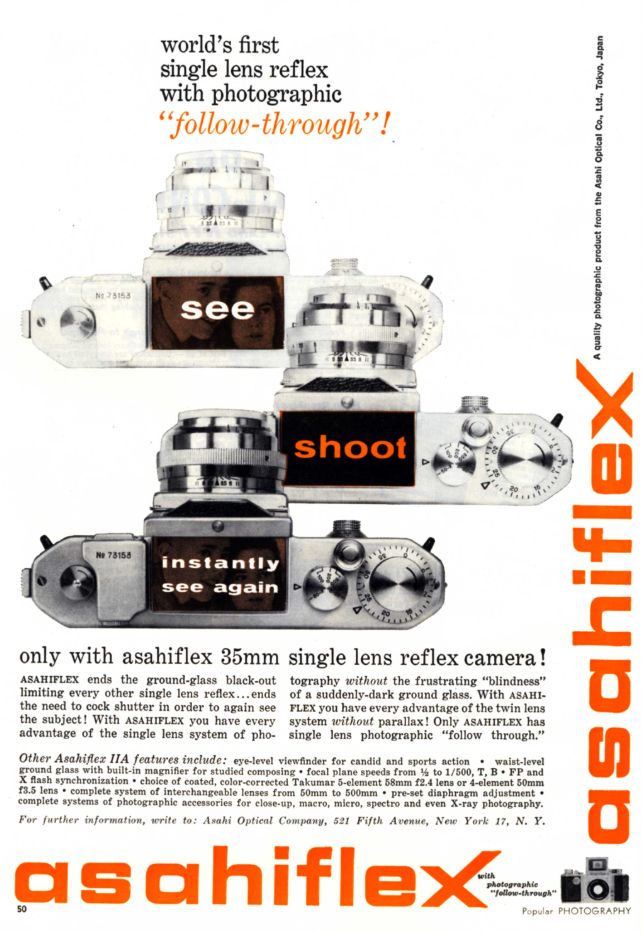
1956 advertisement.
The waist-level finder open.
With the waist-level viewfinder closed.
The Asahiflex IIa and a Nicca 3-S. The Nicca is from 1956.
This is a Leica IIIg from 1956. It was made in Germany and features a sharp Leica Summaron f/3.5 3.5cm lens.

It’s a great camera to add to any early 35mm camera collection, and there are plenty still available to collect.

Thanks for stopping by, Chris

Follow me on Instagram https://instagram.com/ccphotographyai

Facebook CC Photography of Amelia

Flickr Chasing Classic Cameras with Chris

Comments are always welcome; I’ve learned quite a bit from reader feedback. As always, thanks for stopping by. While there, visit my camera shop at http://www.ccstudio2380.com (CC Design Studios, hosted on Etsy). – Chris Whelan

Please respect that all content, including photos and text, is this blog’s property and its owner, Yashica Pentamatic Fanatic, Yashica Sailor Boy, Yashica Chris, Chasing Classic Cameras with Chris. Copyright © 2015-2025 Chasing Classic Cameras with Chris (Yashica Pentamatic Fanatic), Chris WhelanAll rights reserved.

Friday Fotos! – Contax Crazy

My Contax RTS with a Contax RTW W-3 and Carl Zeiss Vario-Sonnar T* 28-70mm f/3.5-4.5 Macro Zoom lens.
www.ccstudio2380.com

The Contax RTS was released in 1975.
I added a Contax Real Time Winder W-3.
The Carl Zeiss lens is super sharp, and the zoom range is perfect for my type of photography.
It’s not complete without the appropriate Contax overdesigned and oversized lens hood.
Instruction booklet from 1977.
Ad from 1976.

The original Contax RTS (Real Time System) is a joy to use. If you are looking for a classic 35mm SLR to add to your collection, look no further than the RTS.

Thanks for stopping by, Chris

Follow me on Instagram https://instagram.com/ccphotographyai

Facebook CC Photography of Amelia

Flickr Chasing Classic Cameras with Chris

Comments are always welcomed, as I’ve learned quite a bit from reader feedback. As always, thanks for stopping by, and while you’re at it, feel free to visit my camera shop at http://www.ccstudio2380.com (CC Design Studios hosted by Etsy). – Chris Whelan

Please respect that all content, including photos and text, is this blog’s property and its owner, Yashica Pentamatic Fanatic, Yashica Sailor Boy, Yashica Chris, Chasing Classic Cameras with Chris. Copyright © 2015-2025 Chasing Classic Cameras with Chris (Yashica Pentamatic Fanatic), Chris WhelanAll rights reserved.

Asahiflex IIa – 1955

Asahi Optical Company, Asahiflex IIa with a Takumar f3.5 50mm lens. Japan’s first 35mm SLR film camera. Notice the film-like look of this image using a vintage lens.
The Asahiflex IIa (first image above) was photographed with a 1959 Auto-Takumar f/3.5 35mm lens mounted via an adapter on my Fujifilm X-T2.
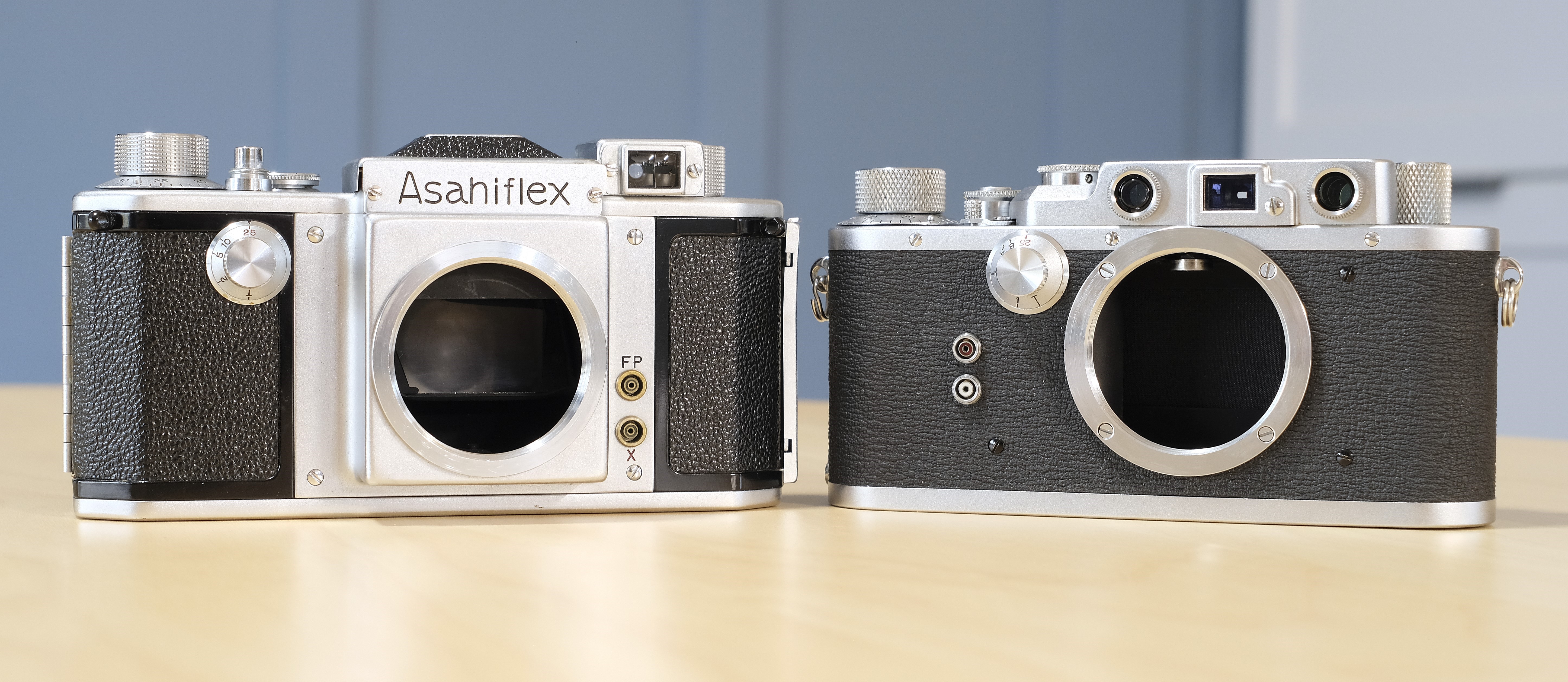
On the left, Nicca 3-S 35mm rangefinder camera (1954) and on the right, the Asahiflex IIa (1955). Note the similarity between the two. Both used interchangeable lenses, but the Asahiflex allowed for direct through-the-lens viewing via the pop-up viewing hood.
The Asahiflex uses 37mm screw-in lenses, and the Nicca uses 39mm screw-in lenses, just like a Leica camera from the same period.
Asahiflex IIa advertisement.
Expensive for the mid-1950s but not overly so.

Thanks for stopping by, Chris

Follow me on Instagram https://instagram.com/ccphotographyai

Facebook CC Photography of Amelia

Flickr Chasing Classic Cameras with Chris

Comments are always welcomed, as I’ve learned quite a bit from reader feedback. As always, thanks for stopping by, and while you’re at it, feel free to visit my camera shop at http://www.ccstudio2380.com (CC Design Studios hosted by Etsy). – Chris Whelan

Please respect that all content, including photos and text, is this blog’s property and its owner, Yashica Pentamatic Fanatic, Yashica Sailor Boy, Yashica Chris, Chasing Classic Cameras with Chris. Copyright © 2015-2025 Chasing Classic Cameras with Chris (Yashica Pentamatic Fanatic), Chris WhelanAll rights reserved.

Yashica Pentamatic Lenses

Yashica Pentamatic ’35’

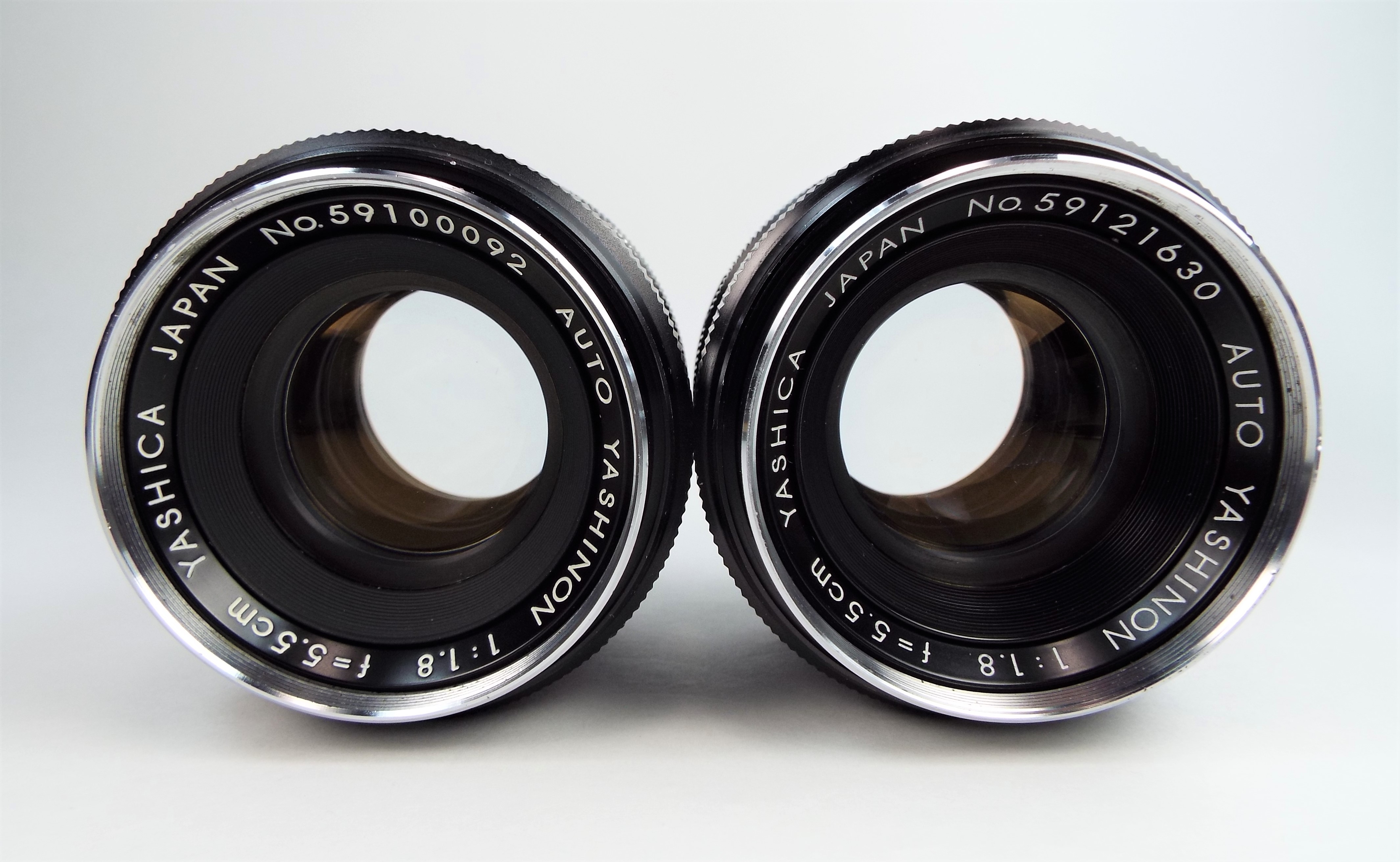
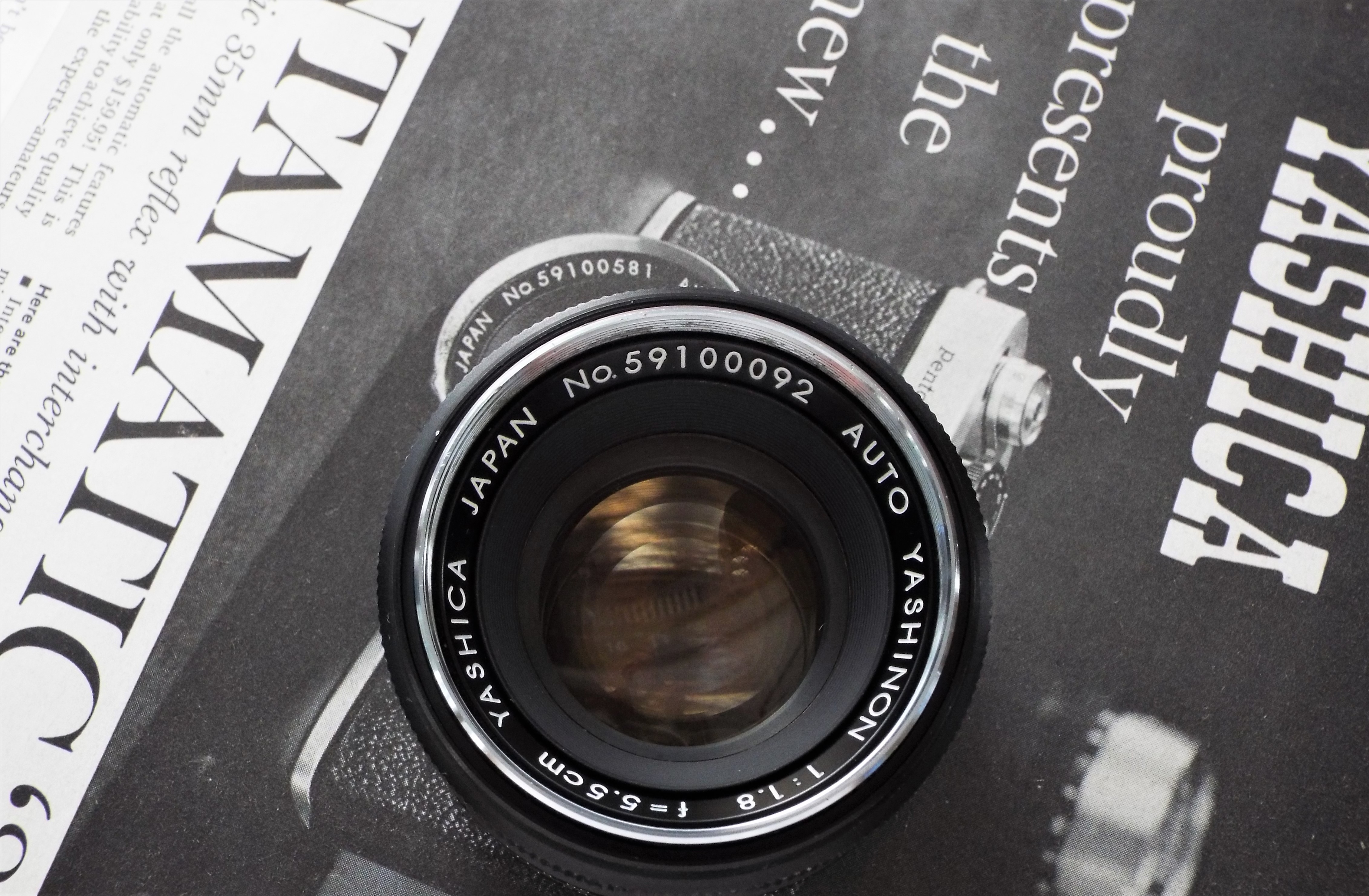
We recently acquired this lens for our Yashica Pentamatic collection. Why is it important? It’s a great find because it’s the first time we’ve encountered a lens with a lower serial number than one pictured in an advertisement (in this case, the first-ever ad for the Pentamatic, June 1960). We know it is total nerd stuff, but that’s what makes collecting fun.

The lens was made for Yashica by Tomioka Optical, which at the time made about 90% of all their lenses (TLR, SLR, RF, and Cine).

The lens serial number decodes 59 = 1959, 10 = OCT, and 0092, the 92nd lens made since production started.

In the second image, the other lens was made in December and was the 1,630th made. Tomioka was busy producing these lenses long before Yashica released the Pentamatic in March 1960. The first Pentamatic bodies were made in January.

The third image shows an early Yashica Tominon Super Yashinon-R f/2.8 3.5cm wide-angle lens SN 350246. The date code was dropped in favor of a simpler code: 35 = 35 mm, and 0246 is the sequence number since the start of production.

The ad shows a lens with a higher production number than the lens we own. 92 indicates it was made in the first batch of 100 lenses.
The October lens is on the left and the December lens is on the right. No November lenses were made.
From an early batch of wide-angle lenses from Tomioka Optical. This one is number 246.
A fast lens from Tomioka. The f/1.2 55mm lens which was made much later in the M42 screw mount.

Thanks for stopping by, Chris

Follow me on Instagram https://instagram.com/ccphotographyai

Facebook CC Photography of Amelia

Flickr Chasing Classic Cameras with Chris

Comments are always welcomed, as I’ve learned quite a bit from reader feedback. As always, thanks for stopping by, and while you’re at it, feel free to visit my camera shop at http://www.ccstudio2380.com (CC Design Studios hosted by Etsy). – Chris Whelan

Please respect that all content, including photos and text, is this blog’s property and its owner, Yashica Pentamatic Fanatic, Yashica Sailor Boy, Yashica Chris, Chasing Classic Cameras with Chris. Copyright © 2015-2025 Chasing Classic Cameras with Chris (Yashica Pentamatic Fanatic), Chris WhelanAll rights reserved.

Contax RX – 1994

Before the dawn of the digital age, camera manufacturers produced some of their most technologically advanced 35mm SLR film cameras to date. Sophisticated autofocus systems, auto exposure, eye-control, and zone-assist focusing to name just a few features. The Canon EOS-1N (1994), the Nikon F4 (1988) which was Nikons first professional camera with autofocus, the F5 (1996), and the Contax RX (1994), AX (1996) which had a basic autofocus system and later, the N1 (2000) a true autofocus camera with a new line of Zeiss lenses.

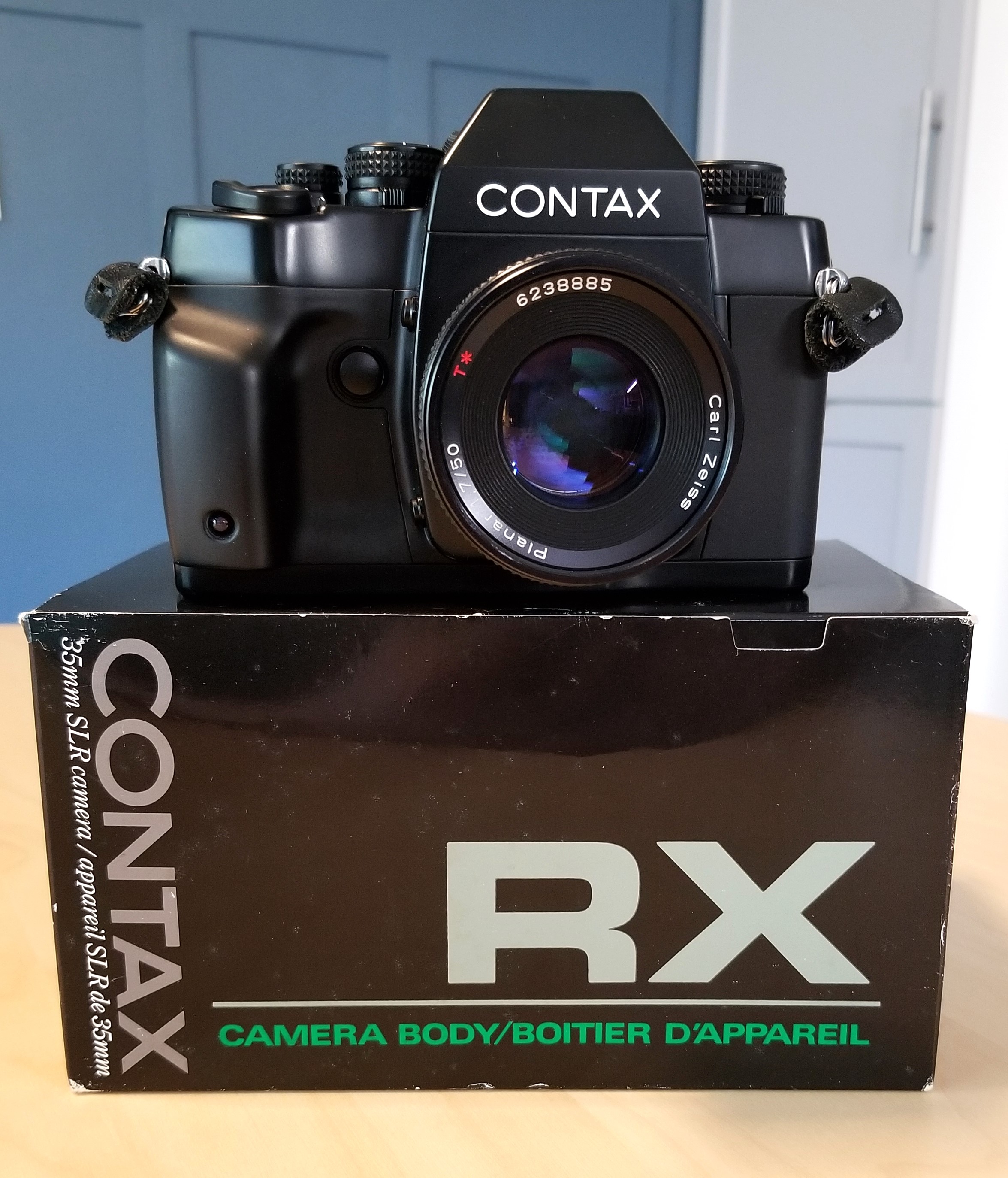
My Contax RX set. The lens was initially sold separately.
The RX’s ‘highlight’ was the Digital Focus Indicator (DFI) function—not quite autofocus, but close.
It’s a handsome SLR with a timeless, classic look that, in my opinion, modern Fujifilm mirrorless cameras emulate.
The list price of JPY 160,000 was about USD 1,600 in 1994.
Contax RX brochure. Shoots at up to 3 frames per second.
Canon EOS-1N RS (a film eater with autofocus). It’s capable of shooting 10 frames per second! Uses Canon EF lenses.
Canon EOS-1N brochure – 1994.
Nikon F5 1996. It’s capable of shooting 8 frames per second.
Nikon F5 brochure.
The Contax RX. The data back only indicates the year up to 2019. Thirty years on, it’s stuck in the 1990s. The data is printed between the frames on the film, not in the image.
Contax craziness!

More soon. Thanks for stopping by, Chris

Follow me on Instagram at @ccphotographyai

Comments are always welcomed, as I’ve learned quite a bit from reader feedback. As always, thanks for stopping by, and while you’re at it, feel free to visit my camera shop at http://www.ccstudio2380.com (CC Design Studios hosted by Etsy). – Chris Whelan

Please respect that all content, including photos and text, is this blog’s property and its owner, Yashica Pentamatic Fanatic, Yashica Sailor Boy, Yashica Chris, Chasing Classic Cameras with Chris. Copyright © 2015-2024 Chasing Classic Cameras with Chris (Yashica Pentamatic Fanatic), Chris WhelanAll rights reserved.

Happy SUNday! – Contax Bliss

The Contax 50th Anniversary Edition 137 MD Quartz 35mm SLR film camera.

The ’50 Years’ model had a unique leatherette and a gold Contax ‘button’ on the flash sync terminal.
I don’t usually chase anniversary models, but this one struck me as pure in the early 1980s.

Contax celebrated fifty years, 1932-1982.

One of two standard lenses is shown here.
Contax numbered their cameras, consequently. As far as I am aware, no date code is hidden in the serial numbers.
It’s a simple manual focus aperture priority camera first released in 1980. Notice the location of the tripod socket. The entire baseplate is removable to be able to install the four AA batteries needed to power the meter and motor drive.
Advertisement from early 1980.
I believe the red sticker indicates that the color of the body is ‘fin’ or ‘wine.’ The Google Translate app isn’t apparent.
There aren’t many of these models still available, but they are well worth being chased.

This particular camera was sold in Japan, and unfortunately, I don’t have the original paperwork or Japanese instruction booklet. I’d love to find the correct strap, too. The proper case is a bit of a mystery, but I believe it should have been C-004, according to my friend Graham in the UK. By the way, the period correct flash units made for the 137 MD is the Contax TLA20 and TLA30 Auto Flash units for true TTL flash metering. There is also a 137 Data Back and a 137 Grip Adapter. Thanks for stopping by and be sure to visit my camera shop (hosted by Etsy) at http://www.ccstudio2380.com – Chris

Follow me on Instagram at @ccphotographyai

Comments are always welcomed, as I’ve learned quite a bit from reader feedback. As always, thanks for stopping by, and while you’re at it, feel free to visit my camera shop at http://www.ccstudio2380.com (CC Design Studios hosted by Etsy). – Chris Whelan

Please respect that all content, including photos and text, is this blog’s property and its owner, Yashica Pentamatic Fanatic, Yashica Sailor Boy, Yashica Chris, Chasing Classic Cameras with Chris. Copyright © 2015-2024 Chasing Classic Cameras with Chris (Yashica Pentamatic Fanatic), Chris WhelanAll rights reserved.

Nikon Accessories Brochure – 1986

Dated October 1986.
The brochure features some of the more hard-to-find (now) cases.
Lens Hoods – they’re always a difficult item to match with their proper lens.
Wouldn’t it be nice to own these now?

I have many Nikon brochures in my camera shop at http://www.ccstudio2380.com (hosted by Etsy). I ship nearly Worldwide. Thanks for stopping by, Chris

Follow me on Instagram at @ccphotographyai

Comments are always welcomed, as I’ve learned quite a bit from reader feedback. As always, thanks for stopping by, and while you’re at it, feel free to visit my camera shop at http://www.ccstudio2380.com (CC Design Studios hosted by Etsy). – Chris Whelan

Please respect that all content, including photos and text, is this blog’s property and its owner, Yashica Pentamatic Fanatic, Yashica Sailor Boy, Yashica Chris, Chasing Classic Cameras with Chris. Copyright © 2015-2024 Chasing Classic Cameras with Chris (Yashica Pentamatic Fanatic), Chris WhelanAll rights reserved.
Camera Brochures and Photography Related Collectables

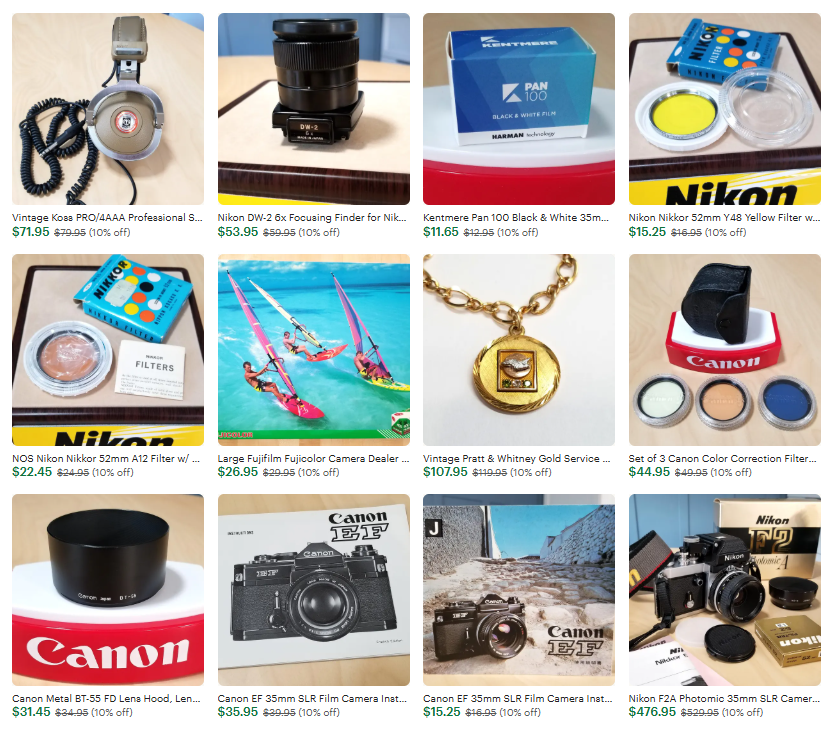
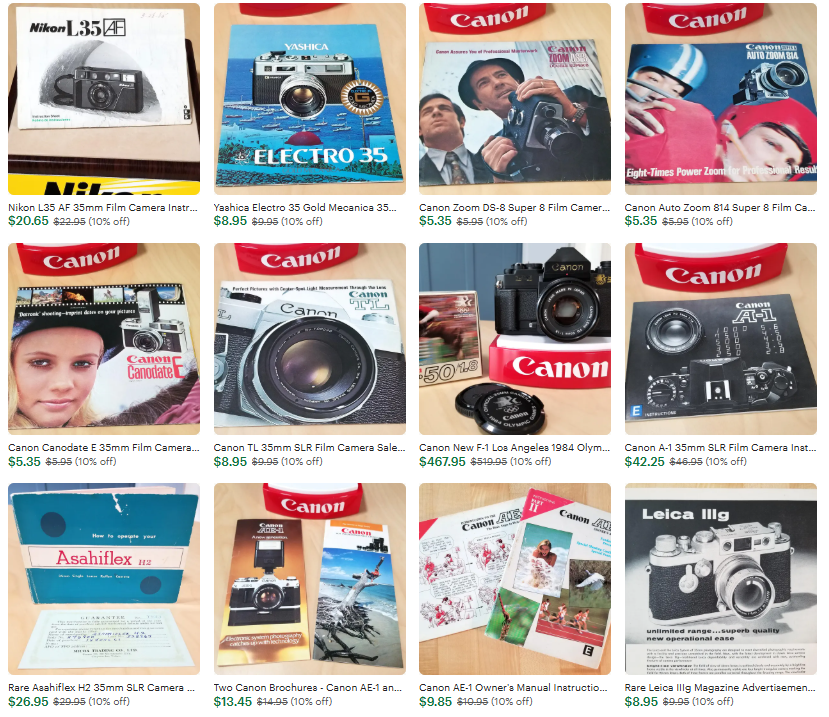
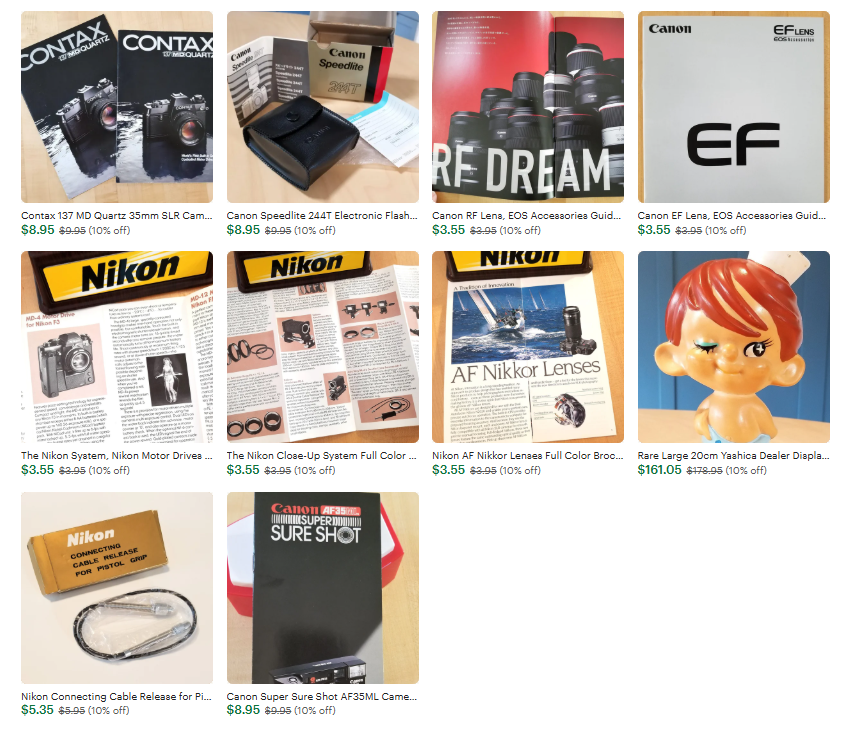
I’ve enjoyed acquiring camera and photography brochures over the years and now have quite an extensive collection of them (go figure). I’ll be listing some of them in my camera shop over the next few months so if you’re on the hunt for something specific, just let me know and or visit my shop at http://www.ccstudio2380.com.

This is a large-format Fujifilm film brochure from 1998. Fujicolor Professional 160 film was a popular color negative film in the 1990s.
Here is a relatively hard-to-find brochure on the not-often-seen Yashica Electro 35 Professional camera from 1970. It’s a Japanese camera shop brochure.
A large (9 x 21 inch) Plexiglas camera dealer’s display sign is also available in my shop.
I no longer own the camera but have the original boxes for it. It would add a nice touch to your collection.
The Canon black and olive green camera bag is still new and unused and is available.
A like-new Minolta 35mm SLR set with its original box and papers.

These are just a few of the neat items I have in my shop, all at a 10% savings! Thanks for stopping by, Chris.

Follow me on Instagram at @ccphotographyai

Comments are always welcomed, as I’ve learned quite a bit from reader feedback. As always, thanks for stopping by, and while you’re at it, feel free to visit my camera shop at http://www.ccstudio2380.com (CC Design Studios hosted by Etsy). – Chris Whelan

Please respect that all content, including photos and text, is this blog’s property and its owner, Yashica Pentamatic Fanatic, Yashica Sailor Boy, Yashica Chris, Chasing Classic Cameras with Chris. Copyright © 2015-2024 Chasing Classic Cameras with Chris (Yashica Pentamatic Fanatic), Chris WhelanAll rights reserved.