Yashima Yashicaflex A-II

Our Yashicaflex A-II is headed for the finish line – soon! These images were from day one and day 100 (just kidding about the 100). There have been so many issues to deal with restoring this 63 year old camera that it’s been a slow go. While this restoration has been an ongoing process for us, we’ve used some of our time to address some of the other cameras in our collection that needed only small repairs and a good cleaning.

Day one is pictured below. After prying the camera from its leather case (literally), the rust and corrosion were widespread and had eaten deep into the metal. Dirt everywhere! But the camera functioned! Glass was mold and fungus free but dirty and the shutter was accurate.

22024859392_8ffe58f0a3_o

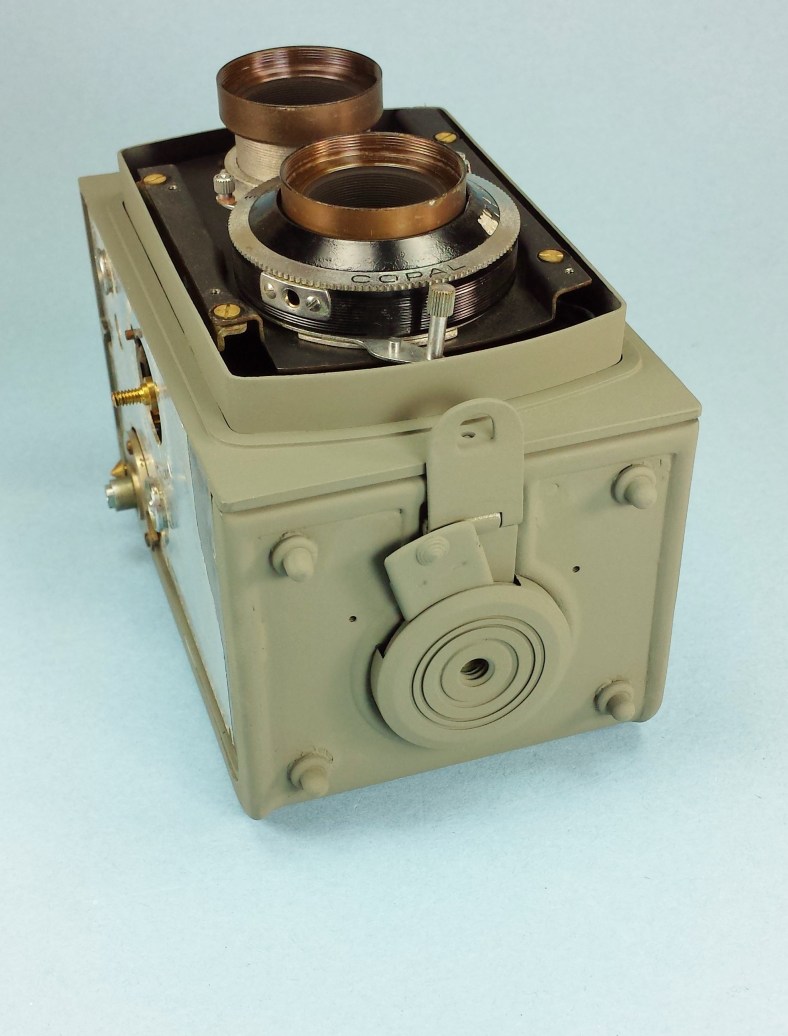
The die cast aluminum body and back door were corroded big time. The thin metal parts were rusty and pitted. The leatherette was dry and brittle with many missing pieces.

Below the same area after 3 coats of etching primer and filler putty to “replace” the missing aluminum due to the depth of the corrosion.
22555908617_27904de611_o

By this point some of the final finish coats of primer and filler could be applied. Lots of sanding between coats. At least the corrosion was gone and something of a finish could be imagined.

The camera will be re-imagined and restored. Since it’s not a rare Yashica model, Carol and I feel free to express some creativity in the re-build. Stay with us as I believe we’ll be able to have the finished product ready to show by early spring. The Yashima Yashicaflex A-II ‘Sakura’.

Thanks for your visit!

Chris and Carol

More Kamakura… 1979

21413491589_46f9e20476_o

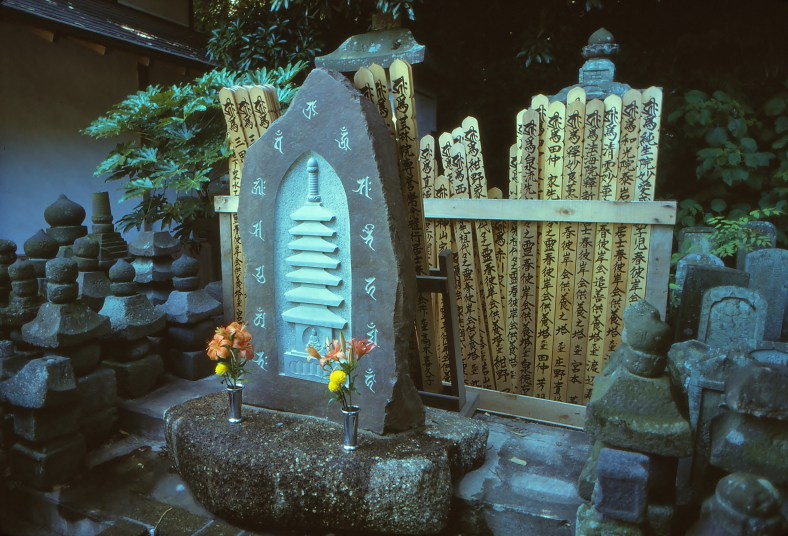
Senja-fuda… “I was here”…

20424332558_f431aff969_o

Calm…

Canon F-1 (1978 version) on Kodachrome 64. Kanagawa Prefecture, Yokohama, Japan.

Hit the Road 2016! Hello 2017!

Thank goodness 2016 is almost history! I’ve heard from friends in Australia that 2017 is going well (so far). Let’s not muck it up!

On a positive note – here on our blog, we’ve seen a significant increase in activity over last year (2015). Visitors to the site and views are through the roof! We (Carol and I) are thrilled that what started out as a repository of bits and tidbits of Yashima-Yashica information would gain the traction that it’s had. We thank you!

We enjoy the feedback we get and I can say that I’ve learned more than a few things from it. We’ve met some super talented people – photographers and bloggers that are out of this world amazing! We hope our readers got a little something special in return too. That was the goal of the ‘Yashica Pentamatic Fanatic’ -a sharing of knowledge about a silly camera that Yashica invented in 1959 that most people have never heard of.

29926651073_d141fae764_o

This year’s favorite.

In looking through the hundreds of film and digital images that we shot in 2016, this one turns out to be our favorite. We believe that every vintage camera is worth preserving (in some way or another) – we think of cameras as holding the heartbeats of all who may have gazed through its lenses, pressed its buttons and then anxiously awaited the results. We can imagine the thousands of faces and smiles that were captured and the thousands of important events in people’s lives that were saved for the future. Classic cameras do that for us.

Don’t get us wrong… we love the  world of digital photography but we also embrace the beautiful, often awkward analog machines of our past. We hope that photographers in the future will remember (every now and then) to pick up a classic camera, load some film into it and then set out to capture images with a camera older than yourself. Enjoy!

Happy New Year… we wish only the best for all!

Chris and Carol ^.^
 

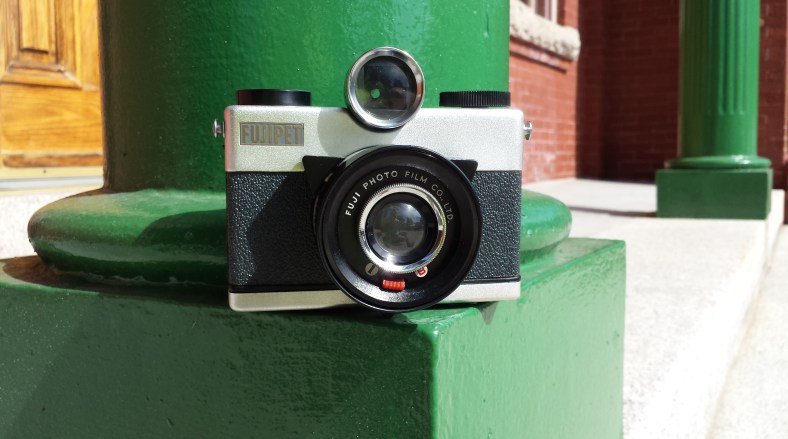
Fuji Petting with our Fujipet! New Pet Pics Posted…

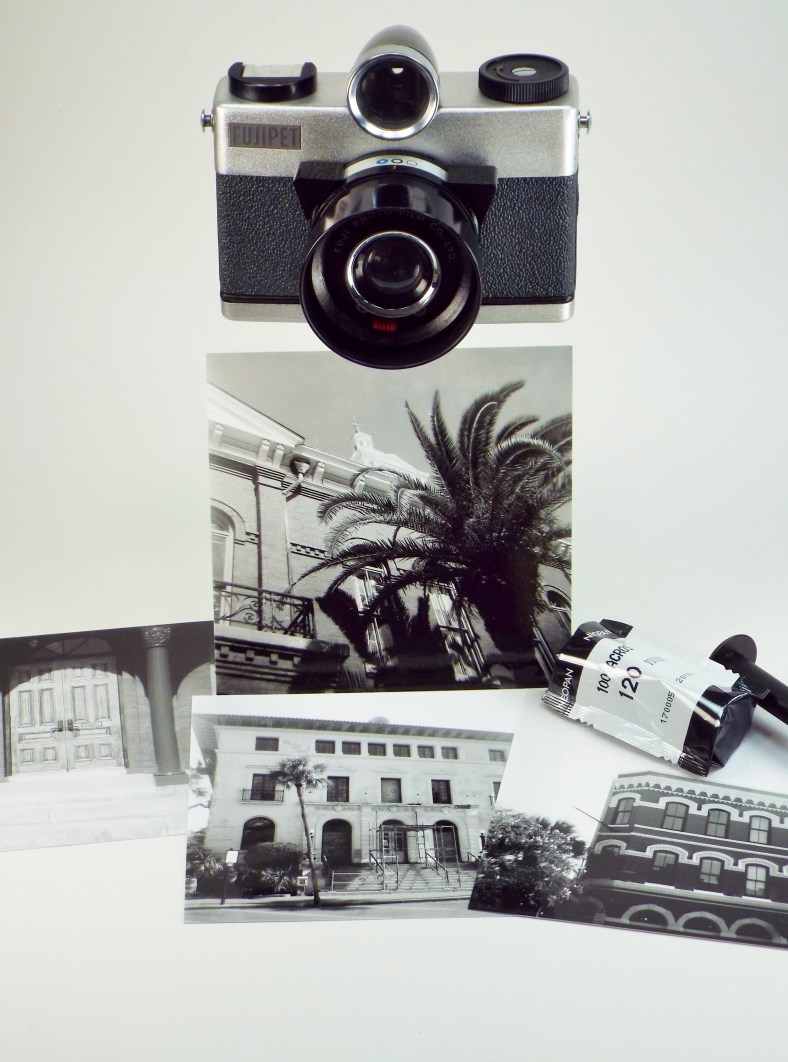
The goal is to take our 1958 medium format camera from Fuji Photo for a little picture taking. We’ve loaded some fresh Fujifilm Neopan 100 Acros (in days past it was Neopan SS) into the Fujipet and see how it does after 58 years of non use. We’re very curious about the “look” of the images. If you don’t know much about the Fujipet, please take a stroll through our archives for a little catch-up.

DSCF1741

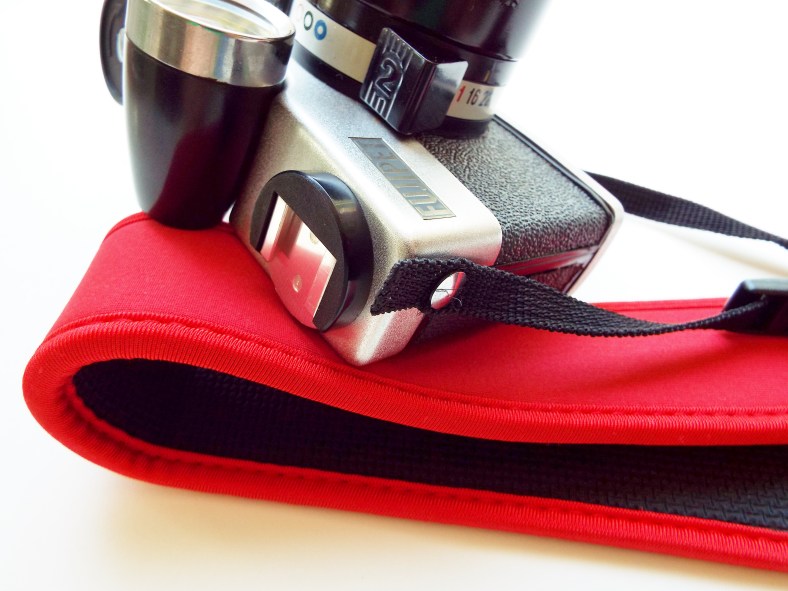
1958 Fuji Photo Fujipet with its new strap. A simple modification to the Canon strap made it perfect for this lightweight Fuji. We have the original vinyl (leather?) strap for the Fuji but it’s still sealed in its original package. No reason to ruin it by using it LOL.

20160815_100355

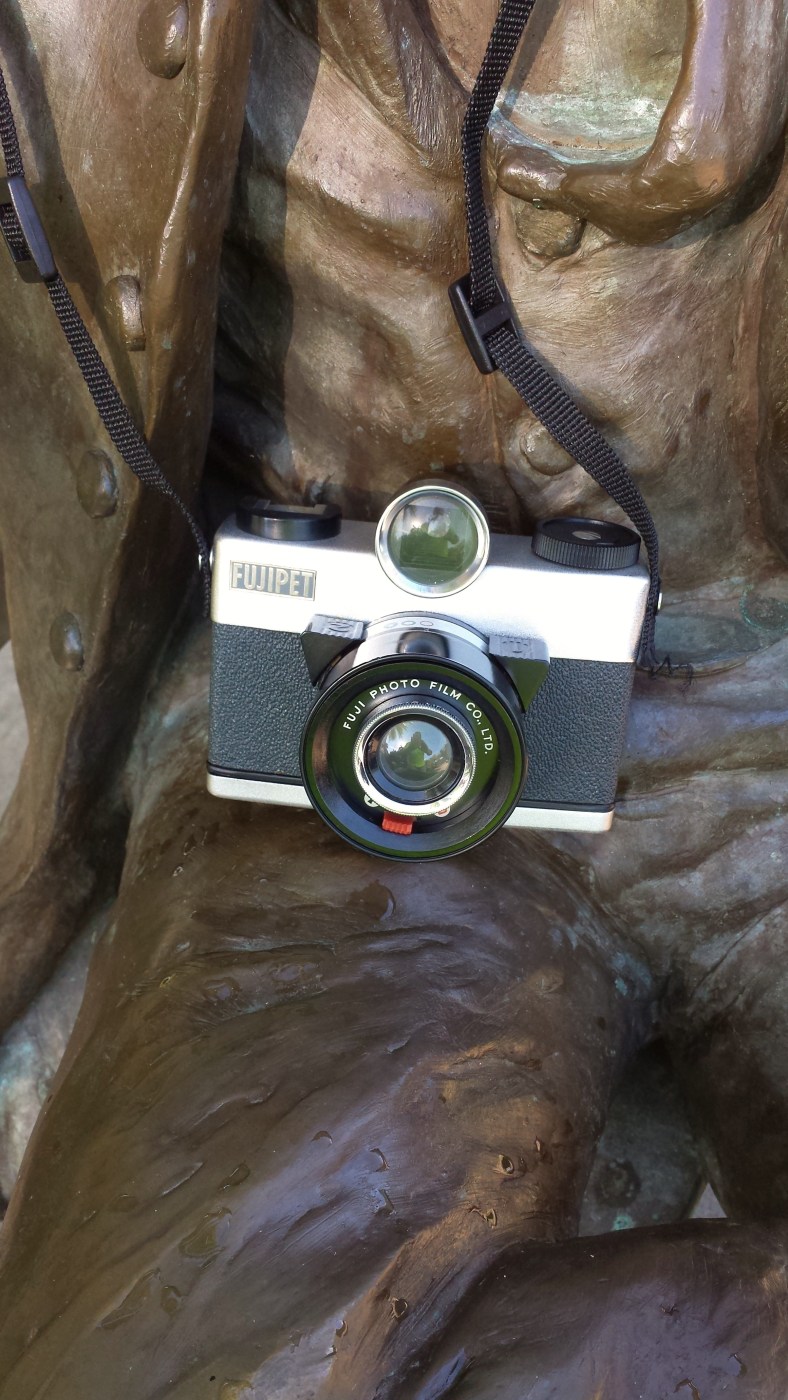
The Pet as seen on a local legend (Mr. David Yulee).

20160815_102312

Hoping the bright Florida sunshine was just right for our first test of the Pet.

And just how did the Pet perform?

DSCF1962

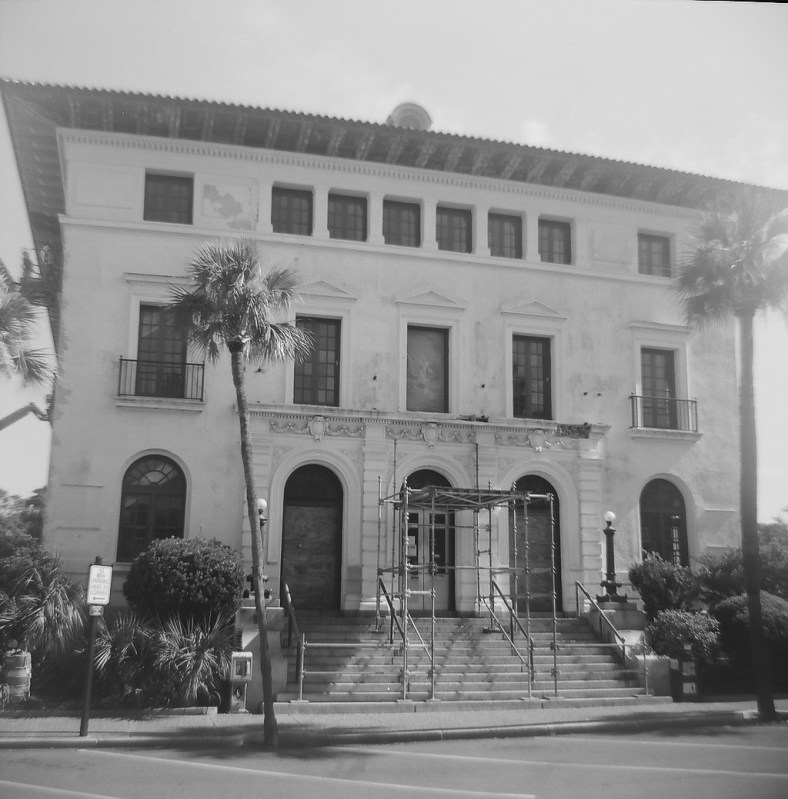
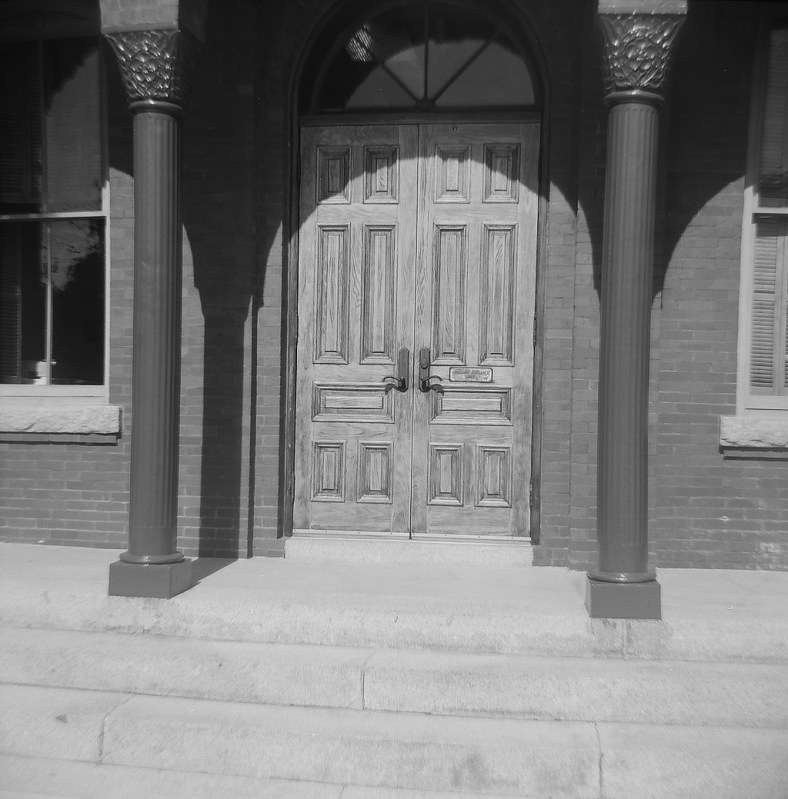
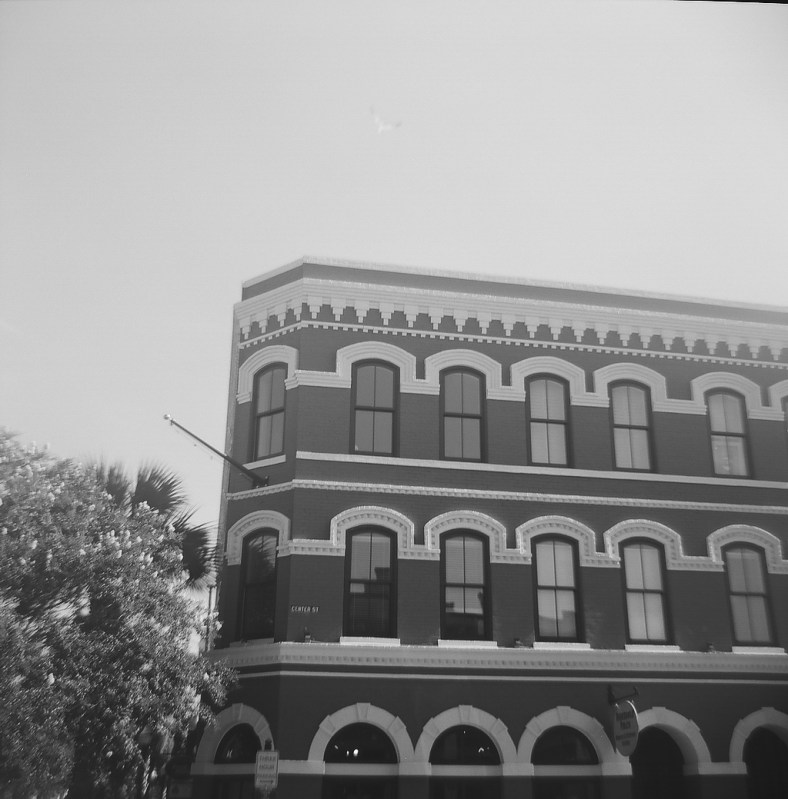
The entire roll of 12 exposures came out just great! Here’s a sample of some of them. The Pet gave a special look to the images. We had ‘The Darkroom’ print up these four images in their true square format (here they are 5 x 5 inches).

Well as you can see the pictures came back from the outing with the Fujipet. We couldn’t be more thrilled with how they came out! The lens was actually super sharp (all things considered) and the almost 60 year old plastic lens had some nice contrast to it too. We can’t say enough about Neopan 100 Acros – exceptional film!

28477728874_65f641d3ae_o

28495471114_8a530a1d53_o

28531727084_f98756bf81_o

29344870275_cb1d30bbfe_o

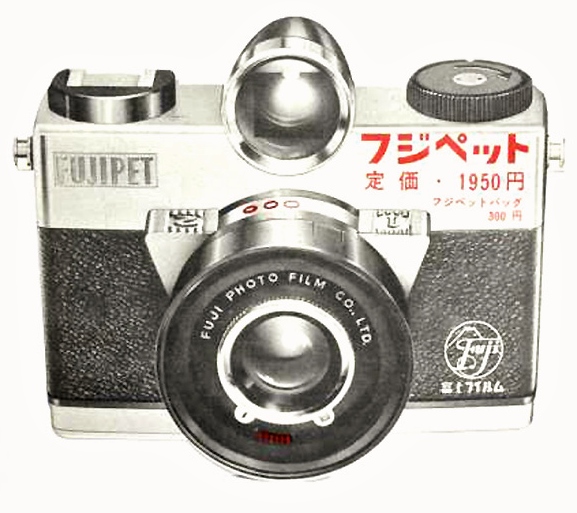
If you can get your hands on a Fujipet then do so. There’s almost always one or two listed on the Japanese online auction sites. Be careful though! Japan (like my Florida) is a very humid climate and that can wreck havoc on old metal cameras and plastic lenses. Ask questions of the sellers and look very closely at the images of it. By the way, in 1958 when the Pet’s were selling wildly in Japan, they went for 1950 yen or about just under $6. You’ll pay a little more than that today but a good one can still be found for under $100 and questionable ones for $10 to $20.

Thanks for your visit! Comments are always welcome.

C&C ^.^

Hello and Welcome! Update 2.2.2017

Welcome to our blog about a very simple camera made by a company in Japan. We (Carol and Chris) are “Yashica Fanatics”, so it was a natural for us to start this blog dedicated to one of Yashica’s least known cameras. Most film camera aficionados might have some basic knowledge of the Pentamatic. They may have seen it in passing… usually fuzzy images on the web with often misleading info to boot. It’s a rather odd looking SLR with just enough quirks to make it interesting (to us at least). It was never a big time seller for Yashica but its true value was as a platform for innovation and invention for the designers at Yashica.

20150107_084533

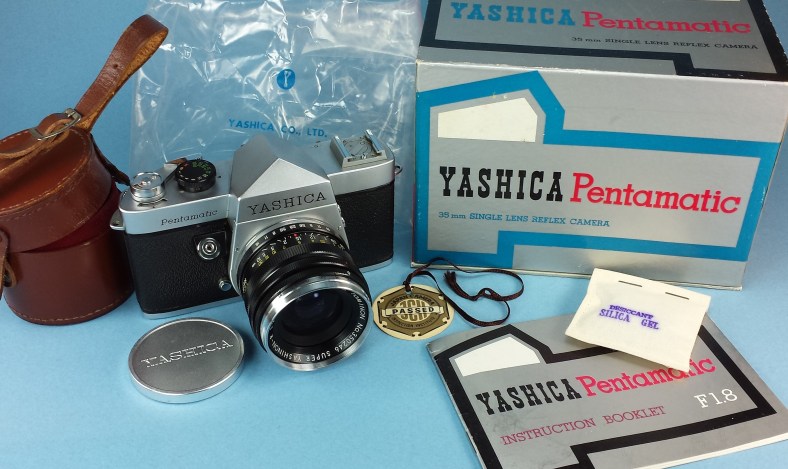
We fell in love with the Pentamatic’s clean lines and “modern” design. The presentation box was as unique as the camera itself.

Our “goal” here at the ‘Yashica Pentamatic Fanatic’ is to expose as many people as we can to the Pentamatic and to the company that conceived it. Please feel free to add to our knowledge base… if something is incorrect please let us know. If you know something about it or any of the topics we blog about… once again, please share it! We would love to here from you!

Another goal is to share our passion for photography. It’s been a part of our daily lives since we were born. I can’t remember the first picture that I ever shot – it probably was a mess – but I can remember one of the most special pictures I ever took – a picture of my parents.

29294510190_444dcd1602_o

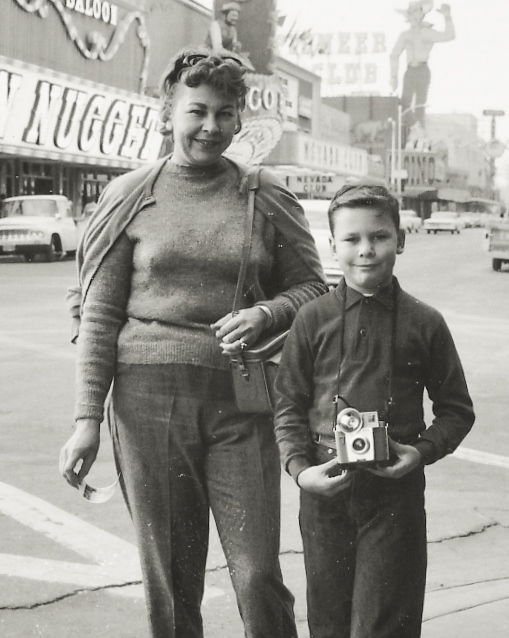
My mom Mary and me in of all places, Vegas. We were on a big family vacation from New York to California – Christmas 1960. My dad Paul took this picture. Yep, my first camera – a Kodak for Christmas (notice that I was holding it up to show it off). My mom was holding a freshly taken Polaroid from my dad’s Pathfinder 110 Polaroid. Pictures – cameras – family.

Many many thanks for your visit… Chris and Carol ^.^
A Couple of ‘New’ Yashicas

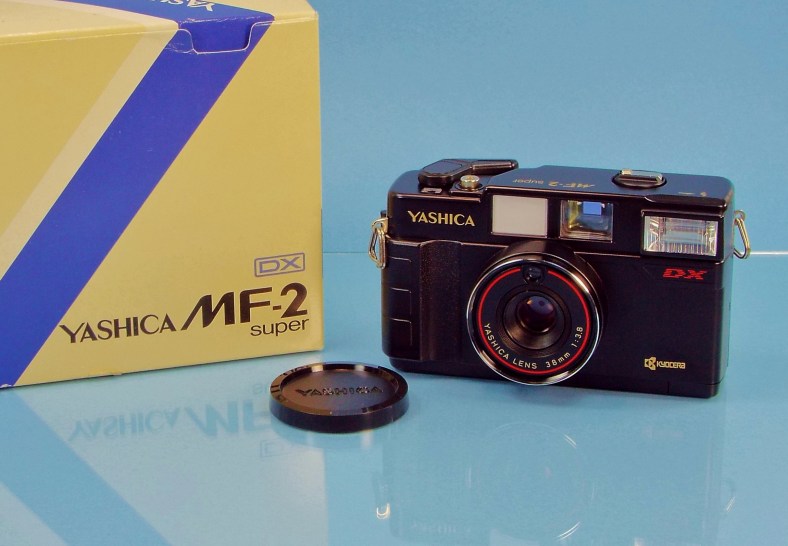
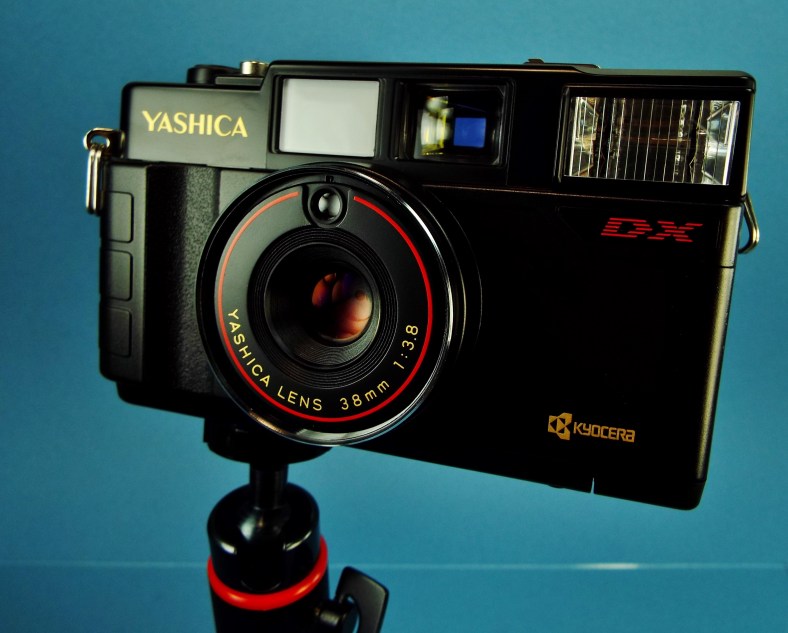
ヤシカ… A couple of new Yashicas have caught our fancy. From 1986 and during Yashica’s ‘dark period’ when they were taken over by Kyocera, this super nice (and truly new) Yashica MF-2 Super DX. To be sure it’s a very plastic camera but it’s filled with some nice high tech features… DX coding of the film speed, automatic exposure and built in flash. No focus needed as the lens can focus from about 3 feet to infinity (and beyond!!!).

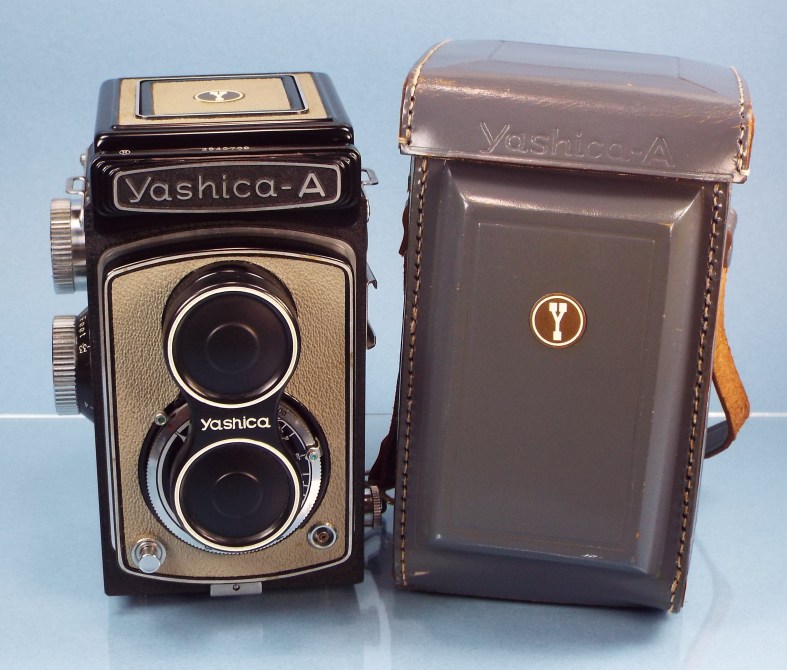
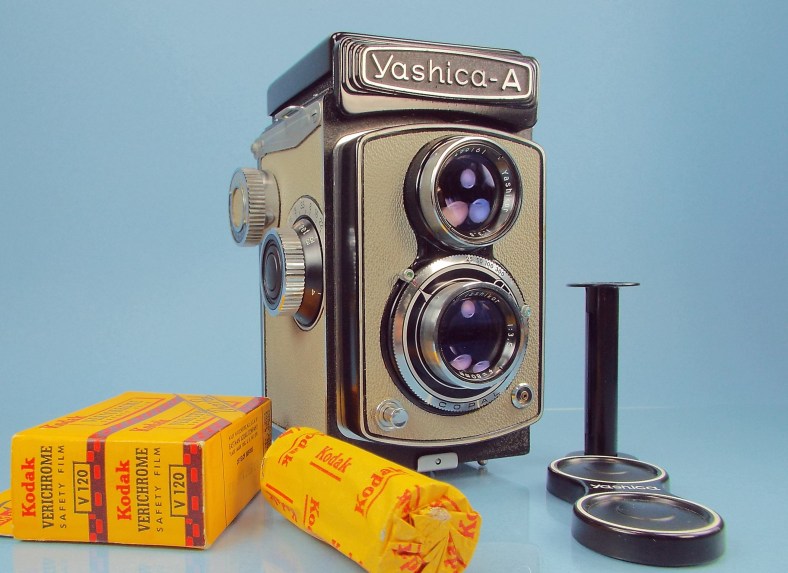
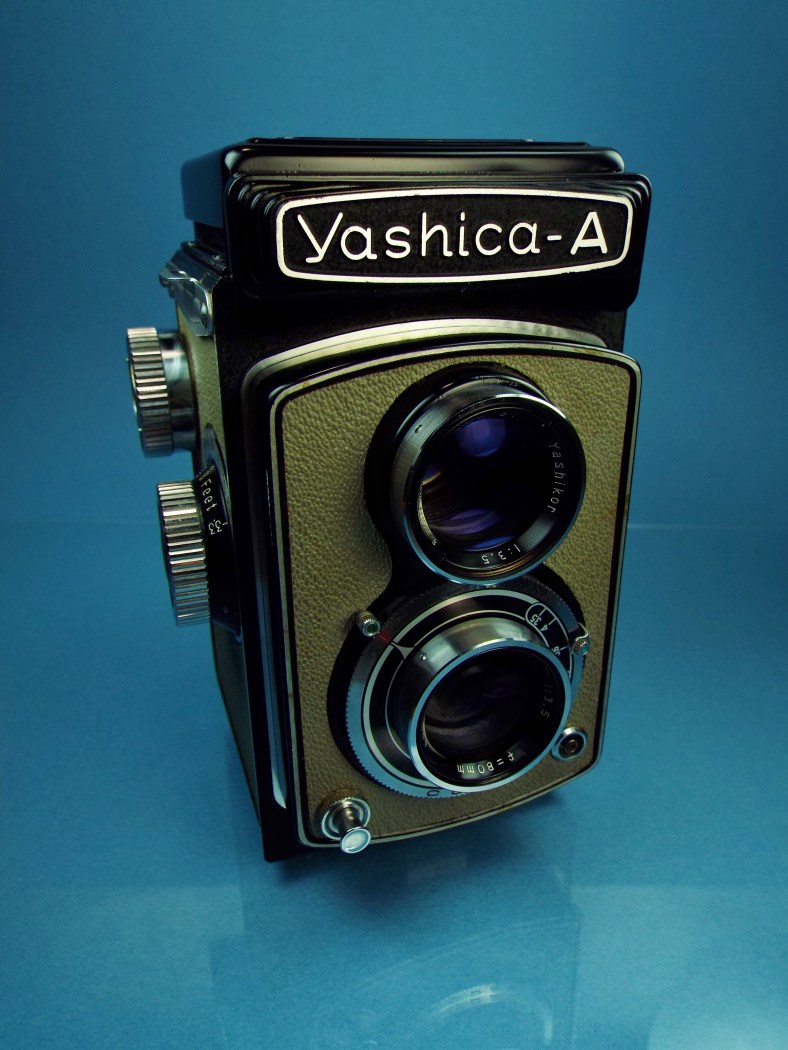
The other member of the Yashica family is this nice almost 100% mint Yashica-A with gray leather and silky black metalwork. It’s from 1959 and works perfectly… shutter speeds are spot on and the aperture blades are snappy. No self timer on these basic models from Yashica, but they hit a great price point with buyers and had a long production run.

020

Yashica-A in gray with the original gray leather case. From 1959.

009

Yashica-A in gray leather and black metal. The Kodak film is close to the correct era (late 1950s).

011

Low key effect photograph. It gives the camera a bit of an edgy look.

017

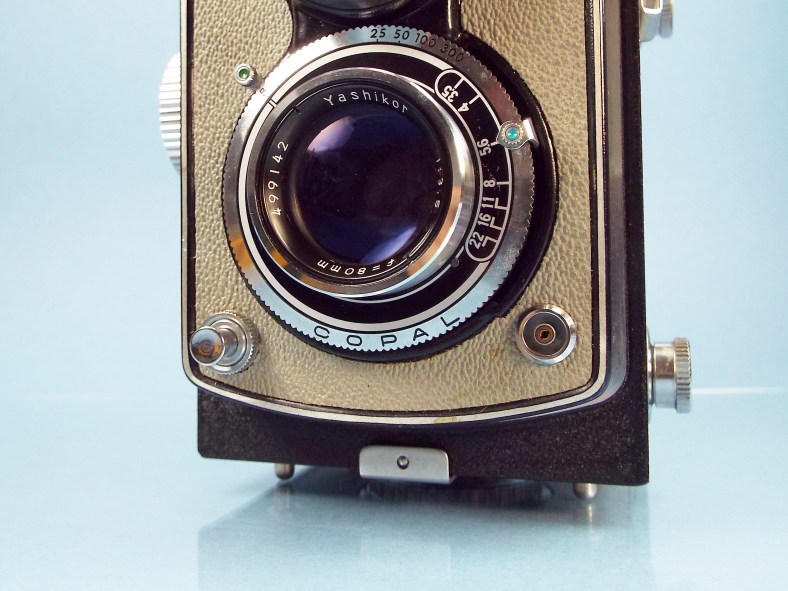
Interesting lens serial numbers on this camera. The taking lens SN (pictured) is only 19 numbers less than the viewing lens. Almost spot on (haven’t seen that yet). Of course these lenses were made by Tomioka Optical of Tokyo for Yashica.

020

Brand new and never used (isn’t that the same?) Yashica MF-2 Super DX 35mm rangefinder camera from 1986. Parts made in Japan and assembled in Hong Kong.

023

Low key photograph gives this pretty but humble camera a nice look.

As always we appreciate your visit to our blog… feel free to comment. Many thanks and big smiles… C&C

Our ヤシカ Pentamatic Family…

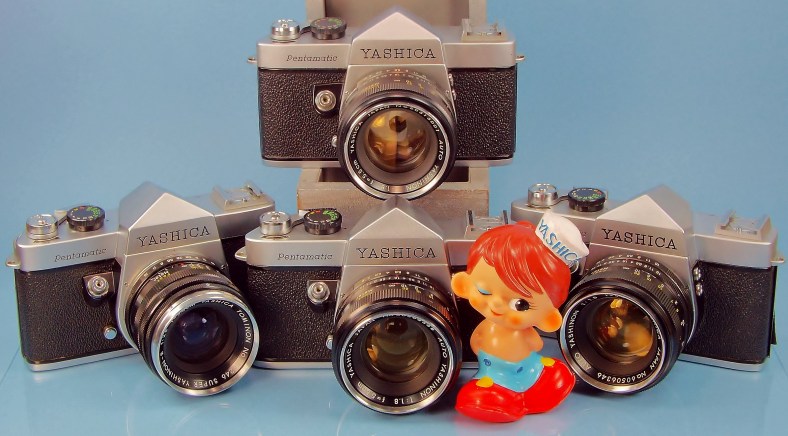
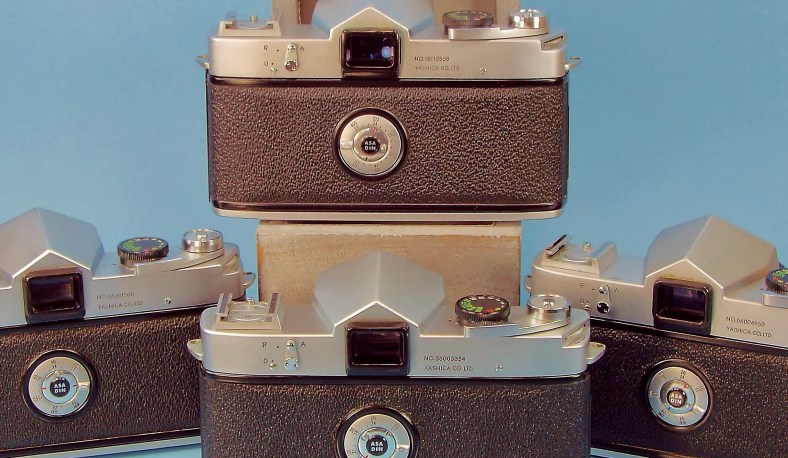
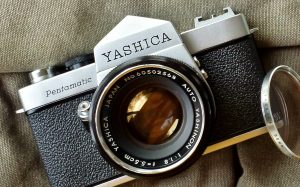
We were finally able to get the Pentamatics together for a photoshoot. These cameras range from a March 1960 build date to January of 1961. The lenses are made by Tomioka Optical of Tokyo for Yashica. The lower left camera has both the Super Yashinon-R name and Yashica Tominon (kinda rare). The other three are Auto Yashinons, f/ 1.8, 5.5cm normal lenses that were supplied with the first Pentamatics.

001

Yashica’s first single-lens reflex (SLR) cameras.

004

No changes were made to the original Pentamatic ’35’ through its production run. Small (slight) changes were made with the introduction of the Pentamatic II which made its way to dealer’s shelves in the Fall of 1960. The Pentamatic II was never strongly advertised – as late as 1962, large camera dealers were still advertising the original Pentamatic.

010

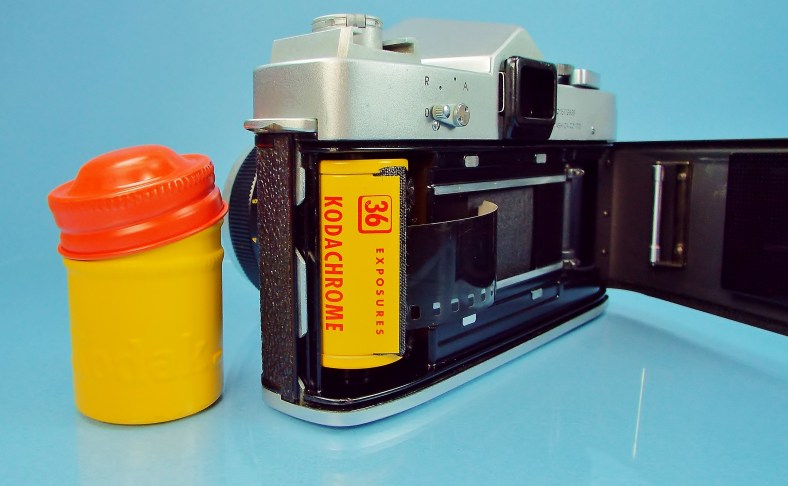
1958 Kodak Kodachrome film in our 1961 Pentamatic.

004

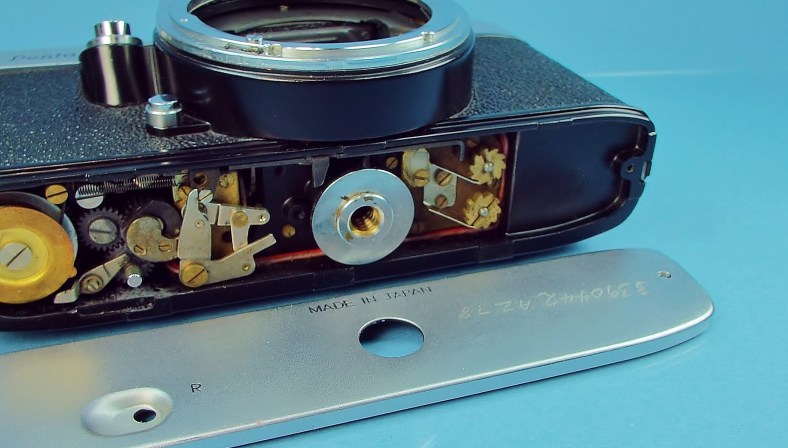
The January 1961 Pentamatic from Arizona is getting (already completed) a ‘new’ baseplate to replace the engraved one (with Arizona driver’s license number). The first owner purchased it in June of 1962 and promptly engraved his DL number. Oh well… that was the norm back then. We’ve seen  cameras with Social Security numbers  engraved!

Please check out our more detailed posts about this uncommon camera from Yashica.

Thanks so much for the visit! C & C

Yashica ヤシカ J-3 in Pro-Black

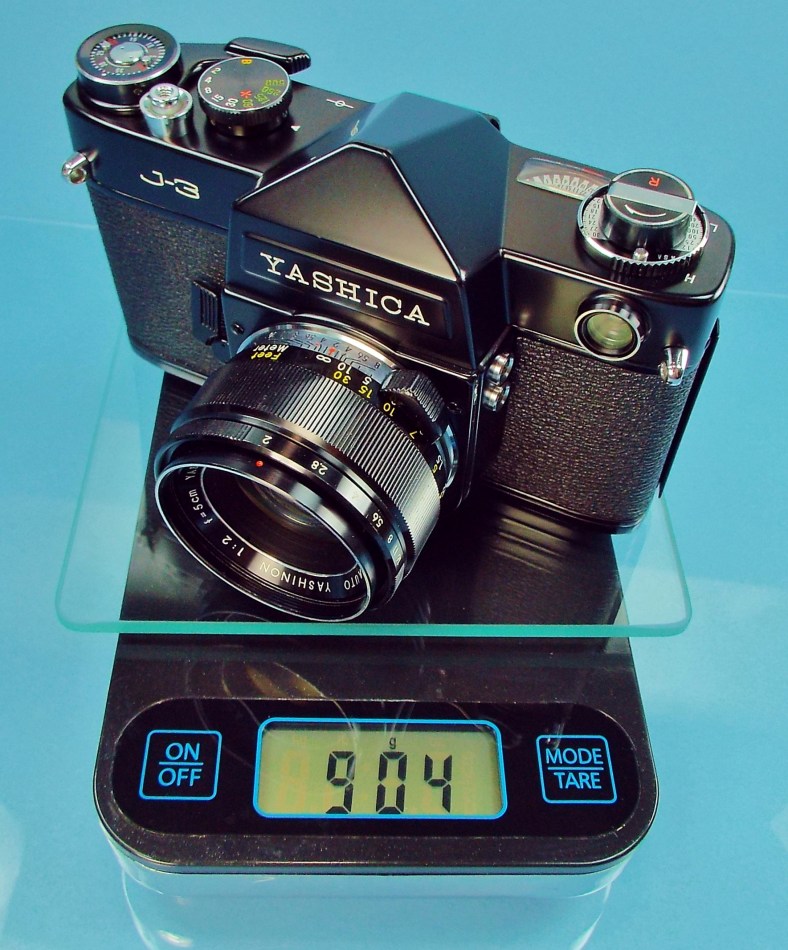
Another of our favorites in the Yashica family. This limited edition J-3 is rather rare to find in nearly new condition these days. We haven’t found evidence from Yashica of the when and why they chose this model to be their first SLR in black (with matching lens). In all the brochures and pamphlets we’ve been able to read, nothing has ever been written about it and no pictures from Yashica either. We’ve checked Japanese home market sales brochures and of course those available in English. Not one word! The serial numbers (both the bodies and lenses) run within a small time period of mid 1962 (we believe).

***Please if a reader has more information about this elusive J let us know!

007

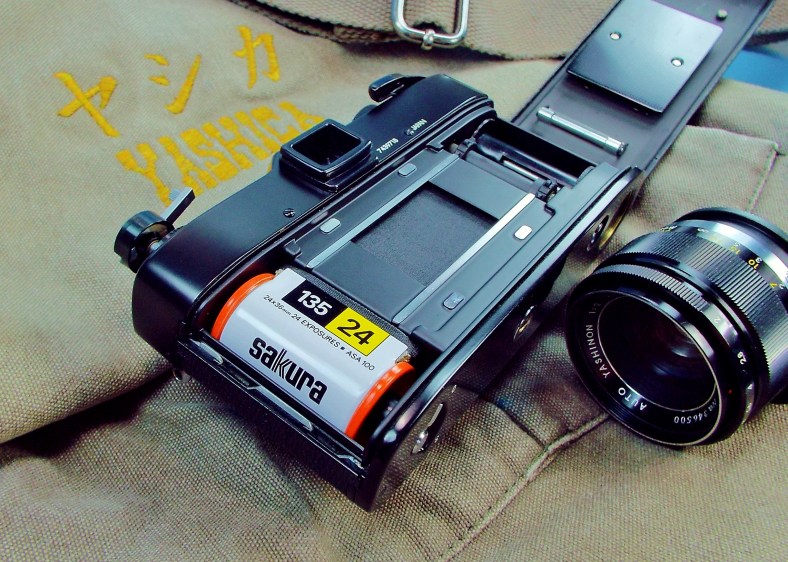
J-3 finished a roll of Sakura film.

003

Not quite the heavyweight the Pentamatic is but still a beast at just over 900 grams!

022

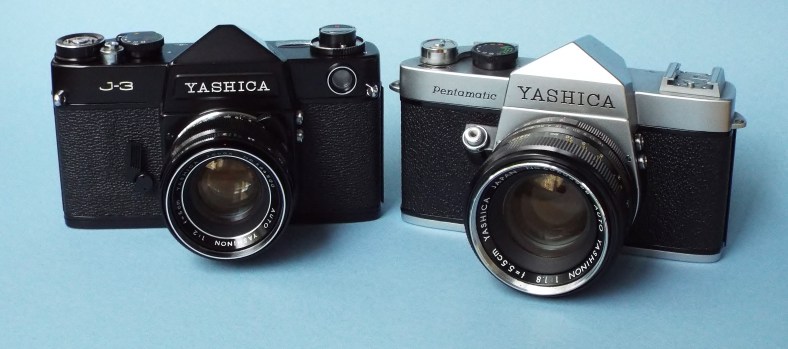
Same family but very distant cousins! Yashica made countless changes in its SLR line-up in just under three years.

As always… thanks for the visit!

Chris & Carol
Yashica Flex Model S… 1954 to 1957

The Yashica Flex model S (aka Yashicaflex) is one of Yashima’s most important early cameras… well maybe the second most important behind the first. Obviously Yashima’s first camera, the oddly named Pigeonflex one could argue, was the most important. The model S though was the first twin-lens reflex (TLR) camera (in the world!!!) that had a “built-in” exposure meter.

004

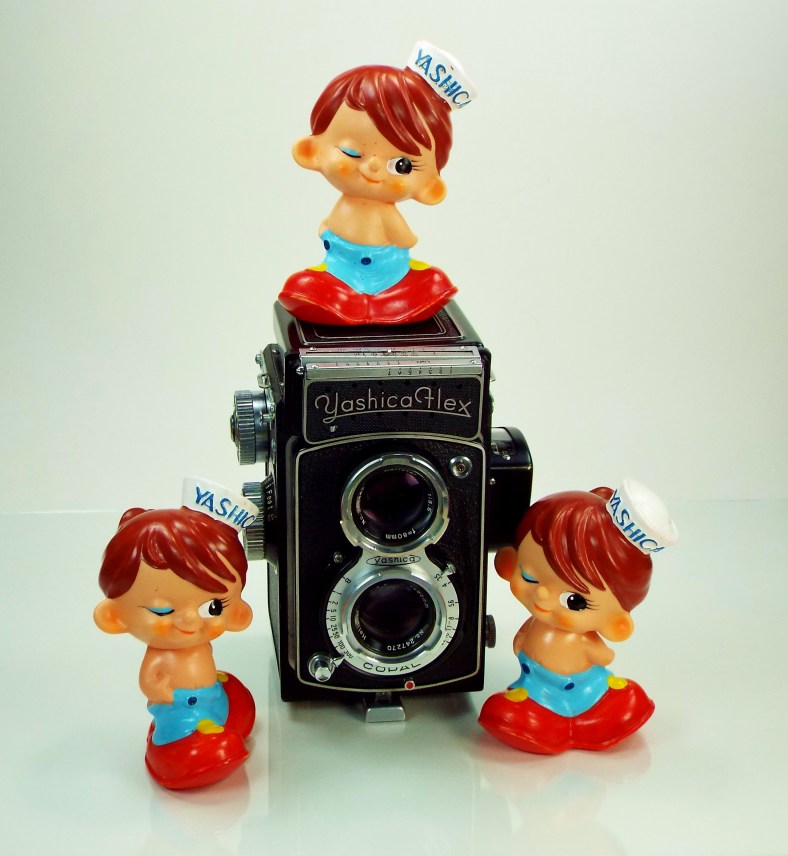
The Yashica ‘Sailor Boys’ gather around the Yashica Flex model S. The boys are from 1962 and this TLR is from late 1956.

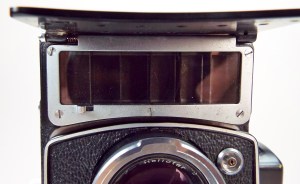
The Sekonic CB-1 exposure meter was attached to the camera’s left side and the light gathering cells were located under the nameplate flap. They were connected to one another but the meter was non-coupled to the camera settings. The user would lift the flap to expose the cells to light and then read the exposure index in the window on top of the meter. Then simply set the camera to the proper f-stop and shutter speed and snap away. No batteries required. But with the passage of time most of these meters failed in some way or another. If you find one with a working meter so much the better.

DSCF0044

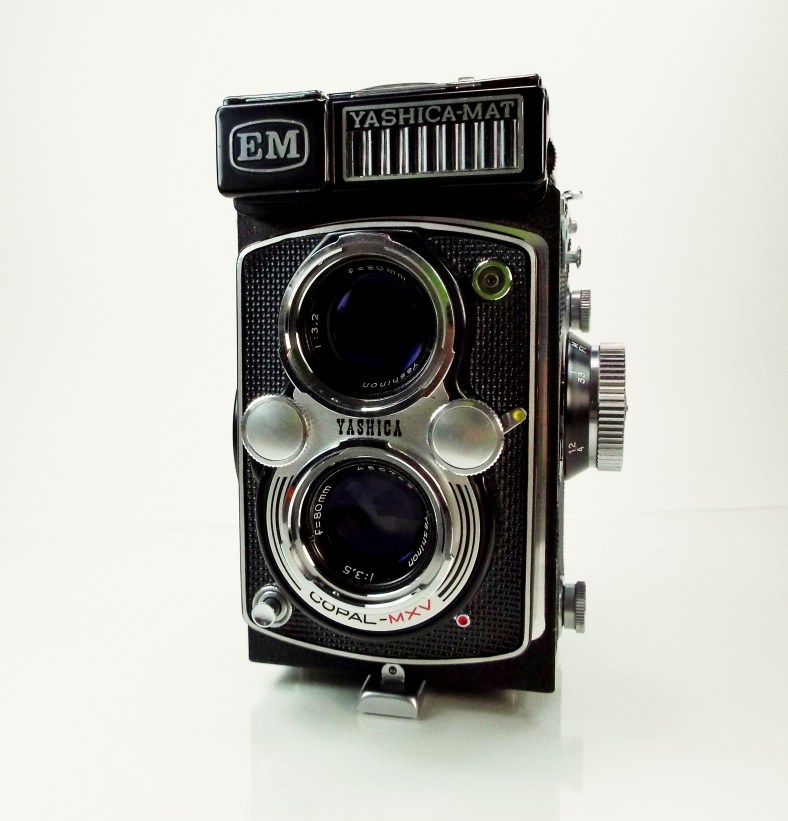
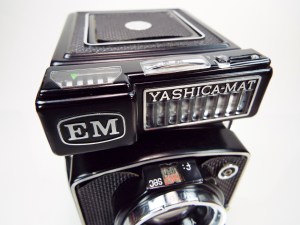
Yashica-Mat EM from 1964. The exposure meter and light gathering cells were moved to the front and top… no more flaps to raise and we were a bit closer to being coupled. This EM has a working exposure meter which is pretty amazing after 50 plus years!

010

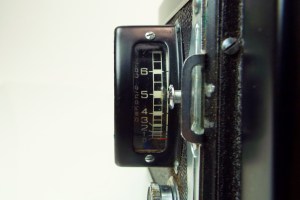
Close-up of the Sekonic CB-1 exposure meter on the Yashica Flex S.

011

Exposure meter scale for setting the f-stop and shutter speed.


012

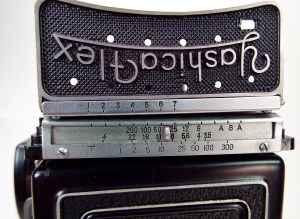
Exposure meter light gathering cells located under the Yashica Flex nameplate.

009

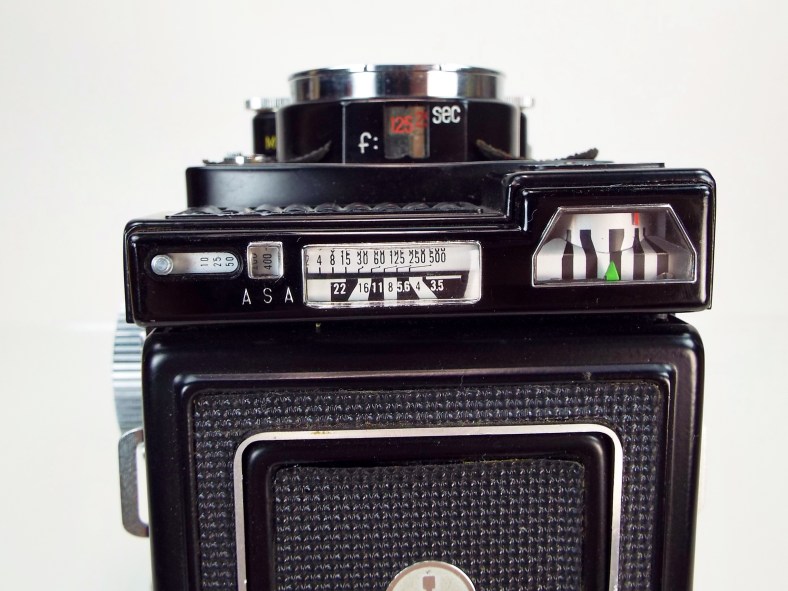
Exposure meter on the Yashica-Mat EM.


007

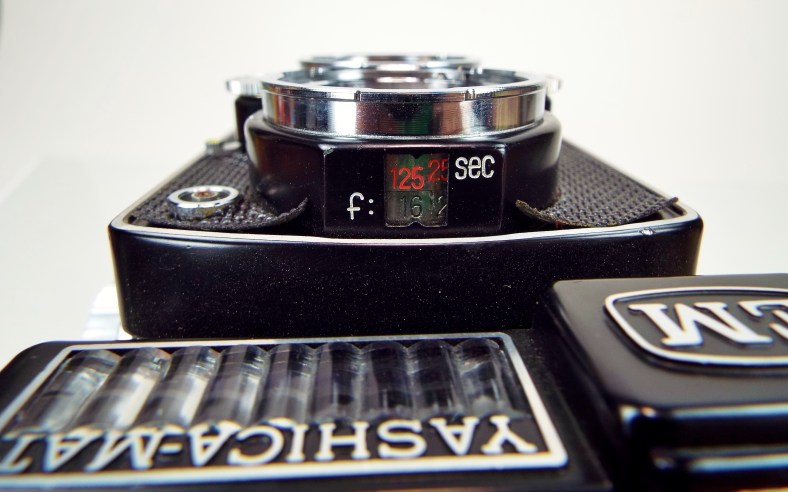
Close-up view of the aperture and shutter speed settings on the EM.

005

Yashica-Mat EM exposure meter and exposure scale. Film speed is set at ASA 400.

So there you have it… a short (very short) history of some groundbreaking cameras from Yashima/Yashica. For more on Yashica’s awesome array of TLRs visit my friend Paul’s site at http://www.yashicatlr.com

Paul’s site is a labor of love and if you want to know anything about Yashima/Yashica that’s the place. We hope to bring some more Pentamatic blogs your way soon. We are of course, The Yashica Pentamatic Fanatic!

Thanks, Chris & Carol