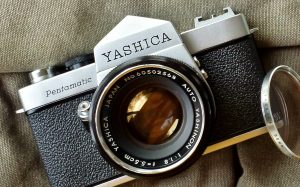

Tag Camera
Random Yokohama – 1978
A small collection of recently “found” images from our time spent living in Yokohama.
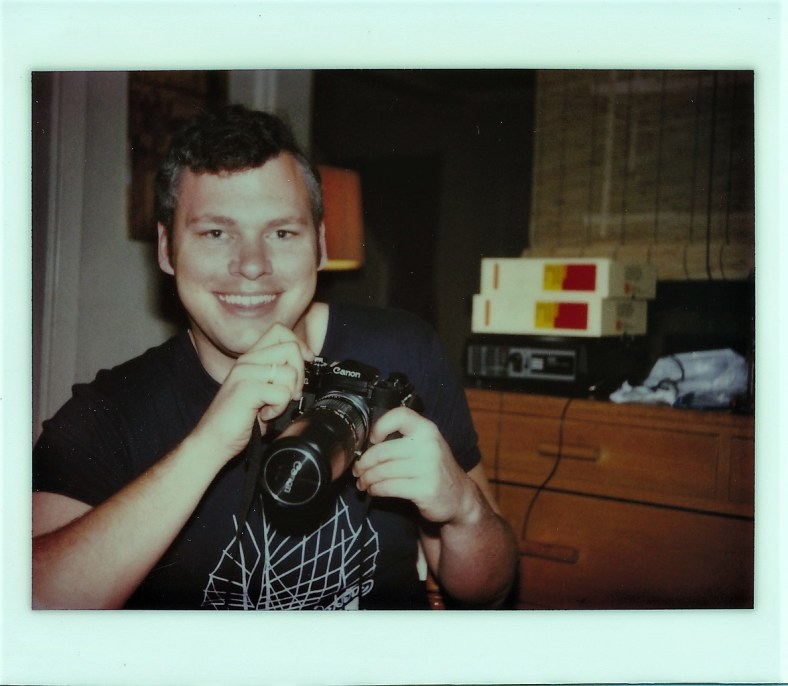
Happy me with my new Canon F-1 and Canon FD 80-200mm zoom lens.
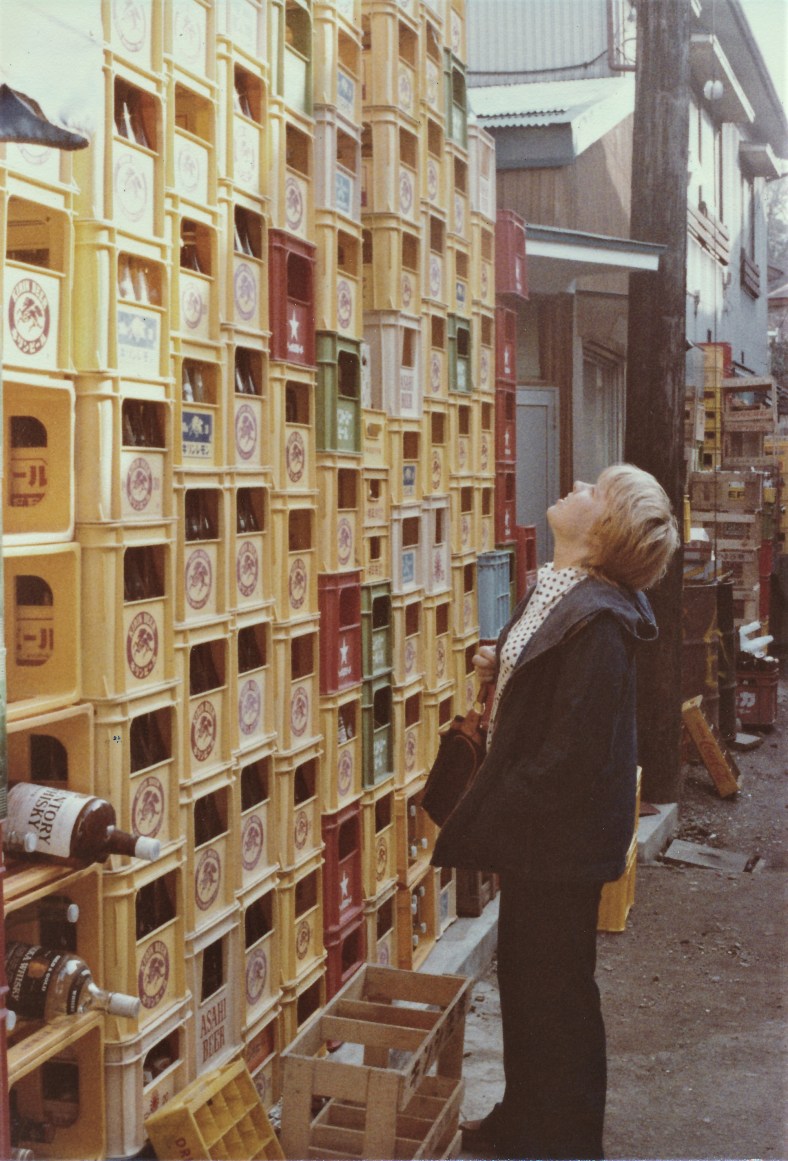
Carol checking out the wall of crates outside a local liquor store.

Gift Box shopping.
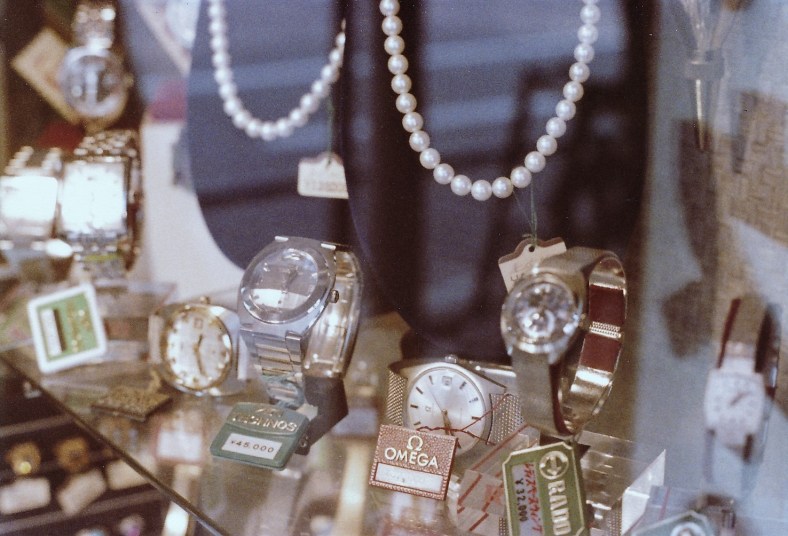
Nice watches for a great price.
¥ 360 to the $
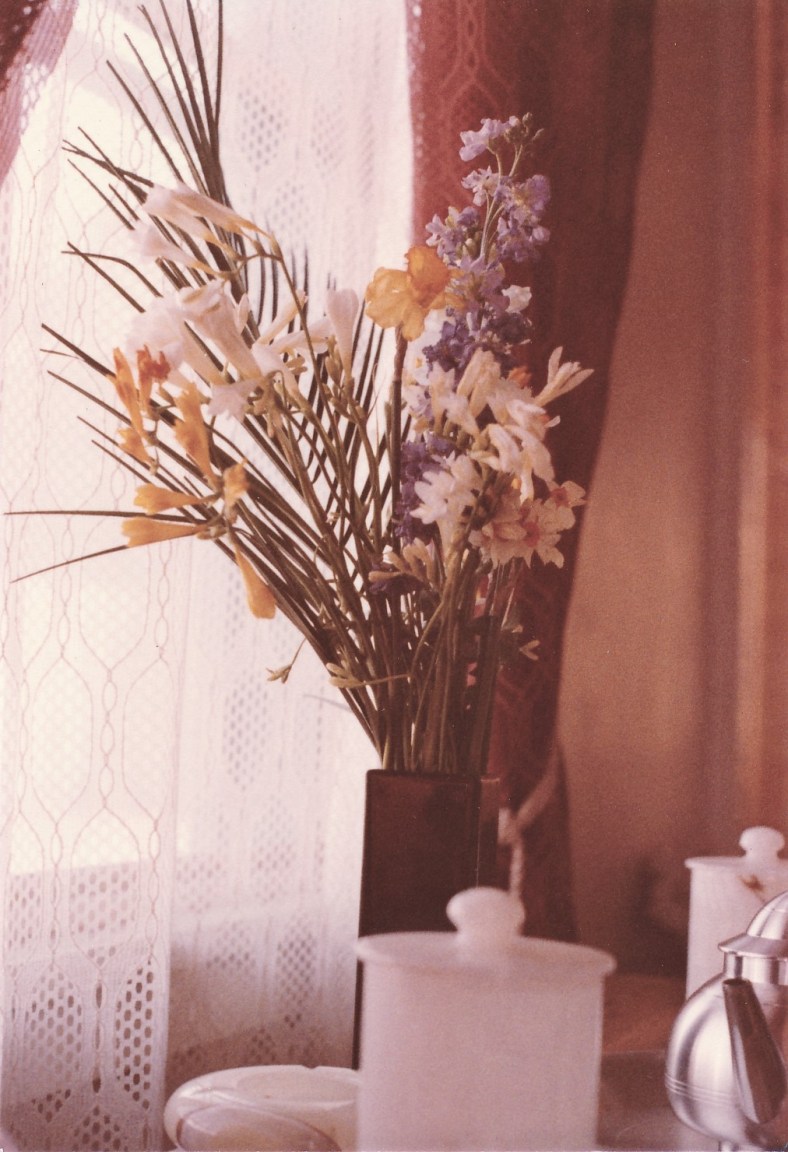
Carol always had pretty flowers at our house.
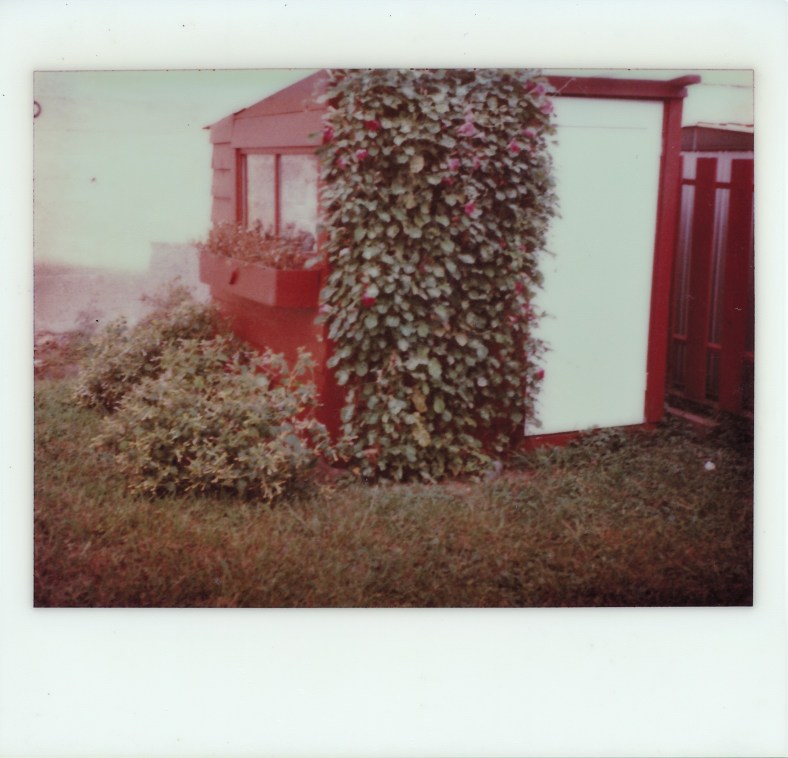
Carol’s potting shed that I built for her.

Carol busy at her desk.
We completely enjoyed our time in Japan. A once in a lifetime experience that we still treasure to this day. We lived at 283-D, Area 2, Honmoku, Naka-ku Yokohama from May 1977 to February 1980.
All smiles… Chris and Carol ^.^
Yashica Pentamatic S & a “new” old school copy stand –
Every now and then as a collector of all things Yashica, you get a little lucky. In this case my luck was finding an accessory that I wanted so badly back in the day (early 1970s). It’s not actually an accessory – more of what I’ll call ‘studio support equipment’.

Pentamatic S on the copy stand.
I know. It’s just a simple copy stand. They’re for sale everywhere. But not a built in 1971 Yashica branded copy stand – and in its original box too! Collector heaven.


The grids are about 20 x 20 so it’s actually quite large.

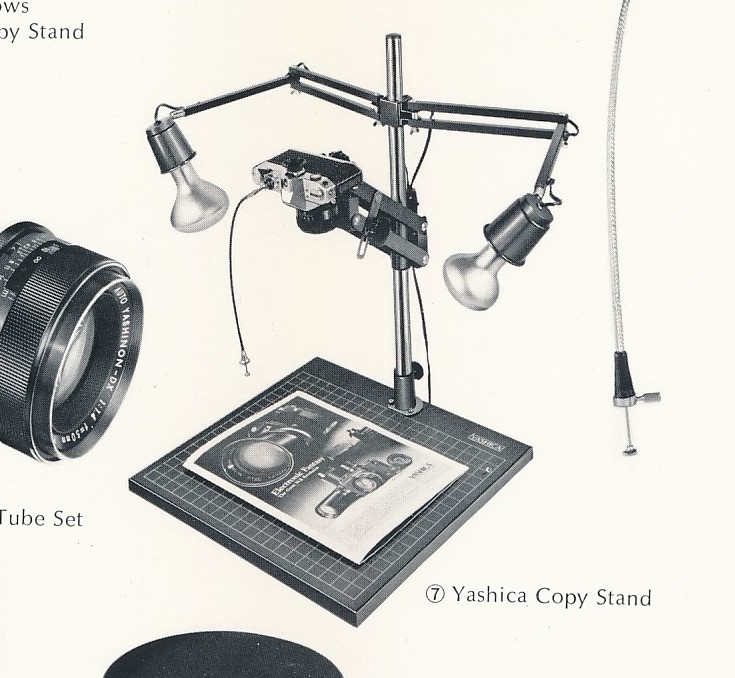
It’s definitely from another time and place. No official name for it – just a copy stand. It’s built pretty well – lots of real steel parts and no plastic. I believe the plastic looking parts are Bakelite. I’ll need to modify the tripod screw bracket a bit for use by my digital Fuji.
Polaroid Pathfinder 110 – 1953
A beautiful Polaroid – my dad’s favorite camera! I will never let it go.


It’s a massive camera! In 1953 these sold for around $250! That was big time money in the early 1950s to be sure.
Camera: Samsung Galaxy S4
Thanks for stopping by! Chris ^.^
Petri 35 Super 28 – 1956 – A little gem with a serious flaw.
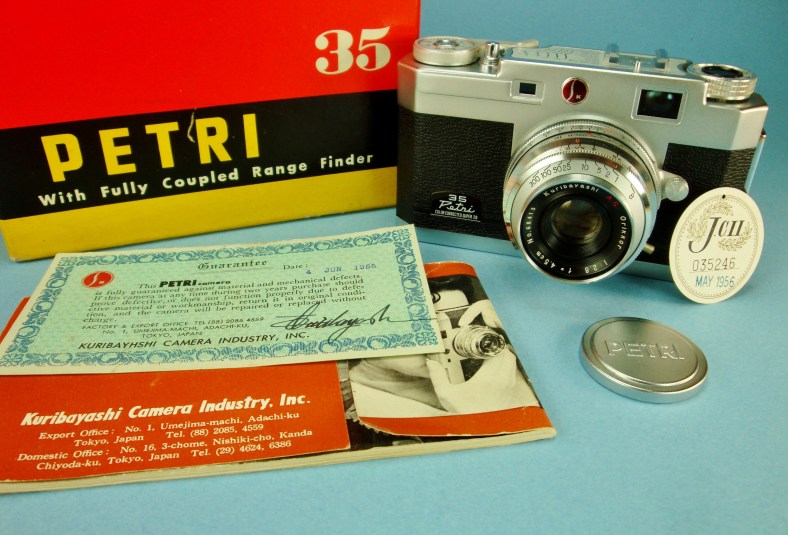
This Petri 35mm rangefinder was purchased in June 1956 at a U.S. military facility in Japan. It came with excellent documentation – sales receipt (not shown), instruction booklet, guarantee card (dated 4 June 1956), a JCII hang tag (May 1956), original metal lens cap, the leather case (not pictured) and the original box. It was nice to see that all of these items stayed with the camera after all these years.
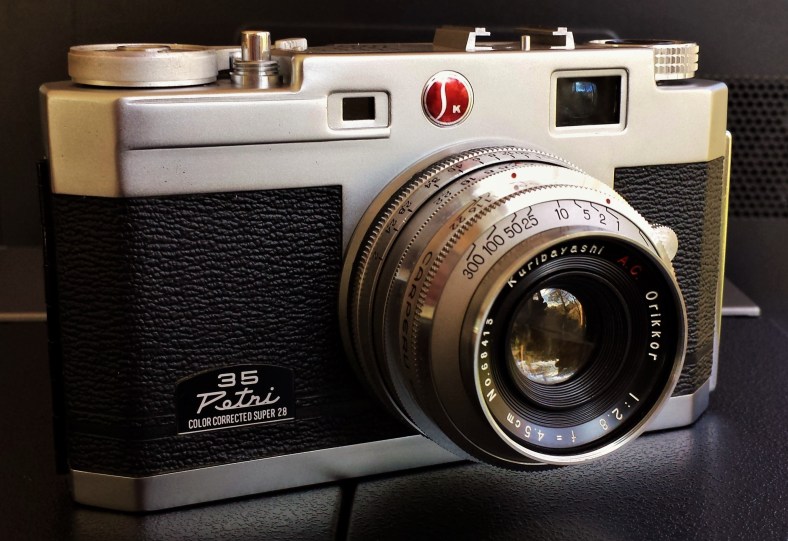
We don’t normally collect rangefinder cameras – this one was included with a Yashica TLR from the same year (and purchased by the original owner at the same time). After some initial cleaning and inspection it was discovered that the lens (last element inside) was ripe with fungus. I had a feeling it would (most of this era do) as it still had a roll of film inside with a light white haze on it. Not a good sign. Everything worked on the camera but there was no point in testing it with a fresh roll of film – way too much fungus. I don’t try to clean the lenses on these types of cameras. My one and only attempt resulted in a completely clouded lens.
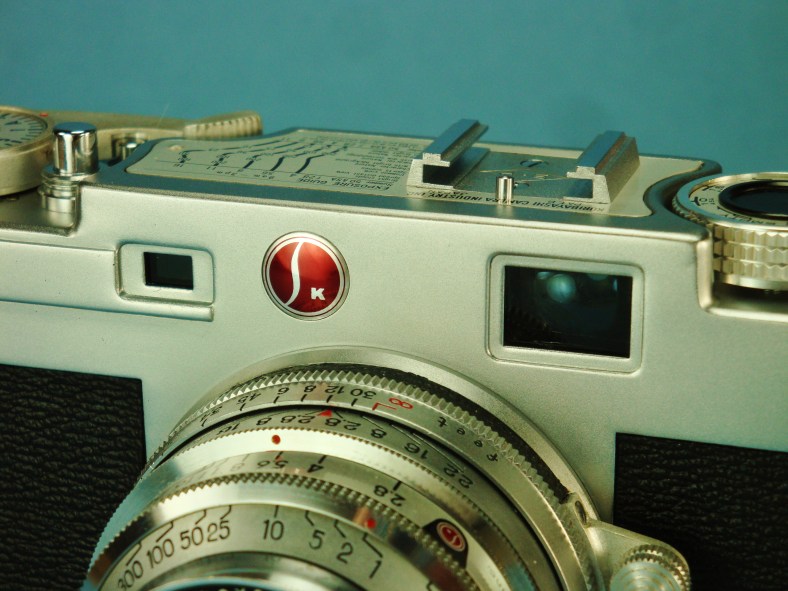
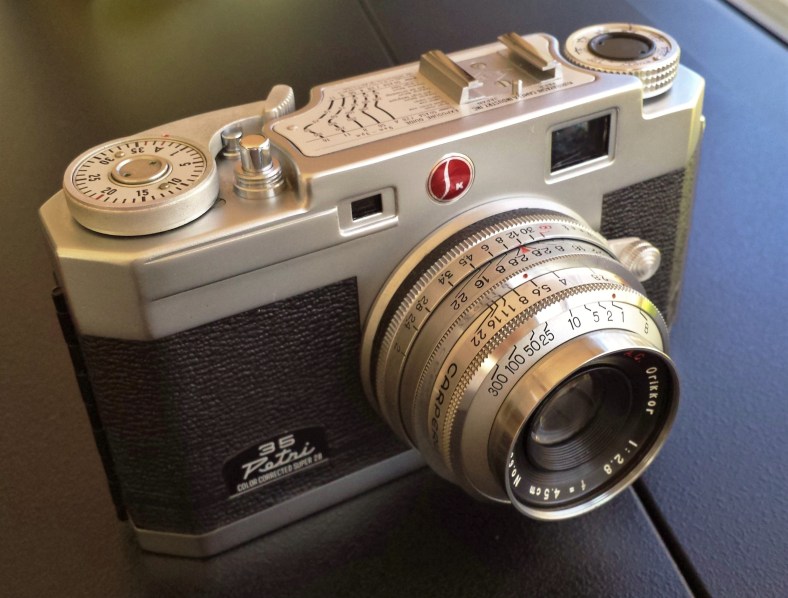
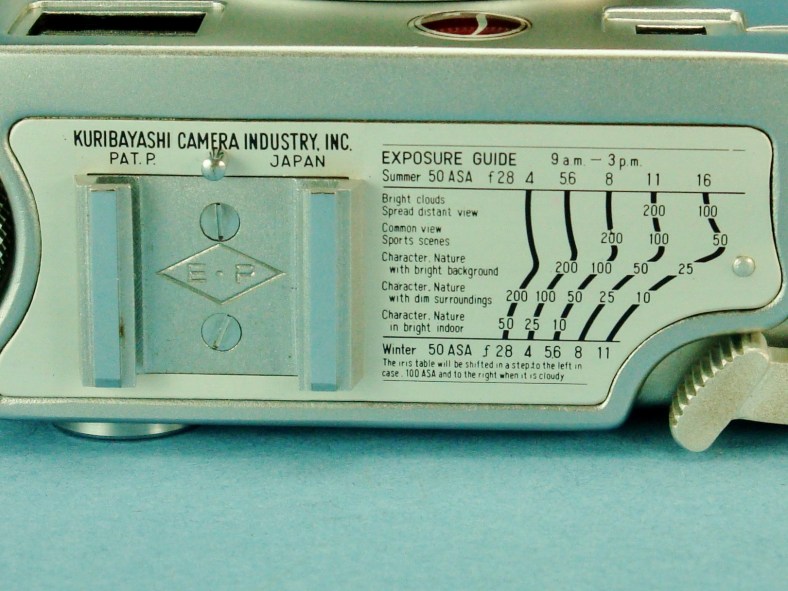
In our opinion, this mark identifies mostly cameras and camera equipment and sometimes electronics like stereos, that were sold in Japan for export. The <E.P> stands for ‘Exempt Product or Exempt Purchase’ to let customs officials know that fees (taxes and the like) were not paid. This allowed foreigners living in Japan to buy high quality products and not pay taxes as long as it was purchased for personal use. Mostly available at U.S. military facilities (Navy Exchange and the like). May have also been available for diplomats and their families and tourists that shopped in the duty free shops. Notice that the symbol is on the camera’s cold shoe (accessory shoe). The camera maker could easily change the shoe for a camera made for sale in the domestic market.
This lovely set is now proudly owned by a collector in Italy. He purchased it with full disclosure on our part that the lens had fungus. Some of our more collectible Yashima-Yashica twin-lens reflex (TLR) cameras have some fungus and mold spots. They have all been exposed to strong sunlight and are stored properly to prevent further fungus and mold growth.
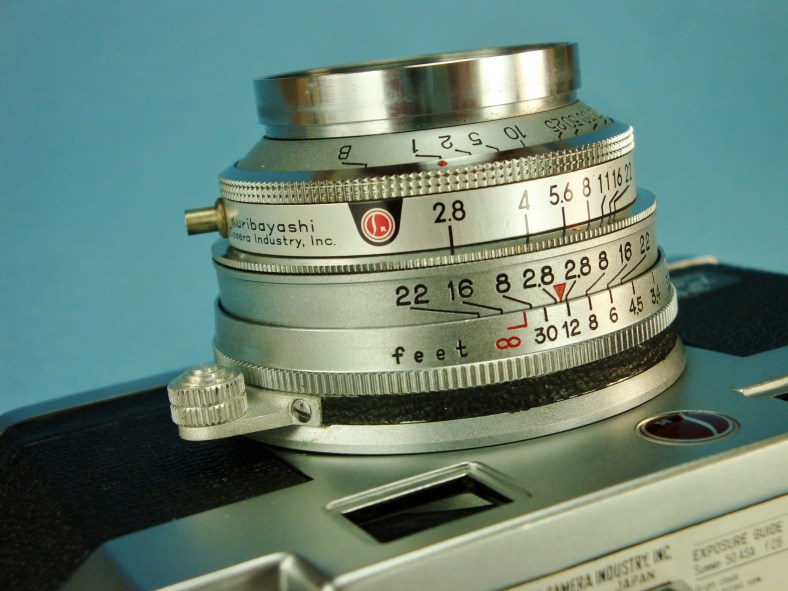
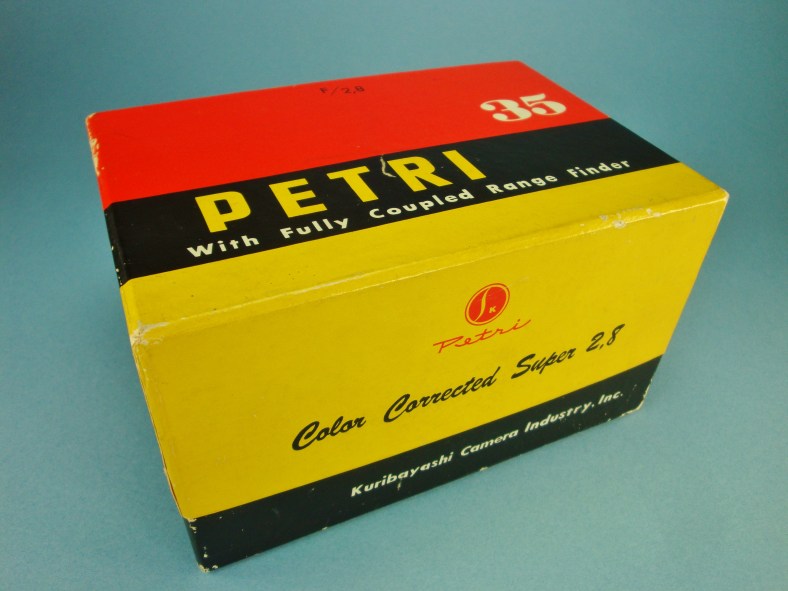
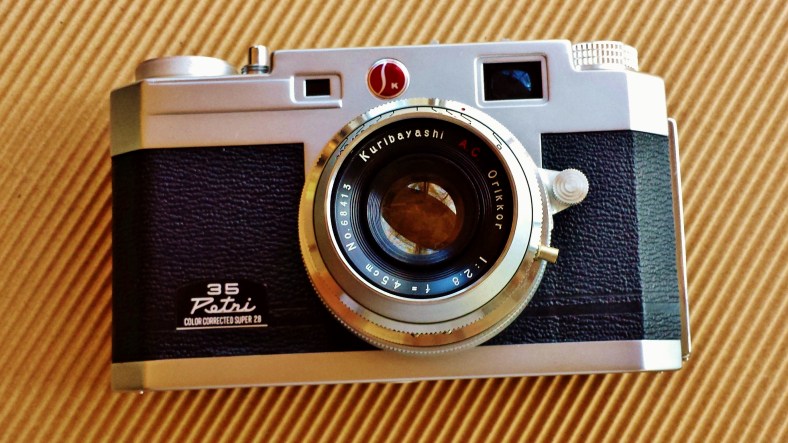
So there you have it – a short photo essay on a very attractive camera and set from Petri. We wish that it could have stayed in our collection since it was so complete – but our true focus is Yashica 35mm SLRs and Yashica TLRs with an occasional rangefinder thrown in for fun!
Camera(s): Sony DSC-W170 and Samsung Galaxy S4
Many thanks for your visit – comments are always welcome. Chris & Carol ^.^
Neat Little Find
This camera cleaning cloth with an advertisement on it was with a Minolta camera we just acquired from a seller in Mie Prefecture, Japan.
A machine translation tells us that it is for a camera shop in Tokyo – Sakaecho – Tama 多摩ニュータウン.
Neat find from about 1963 or so… especially with the Contax camera depicted. It’s 15 x 15cm square. We love the 4 digit telephone number! Just before the 1964 Tokyo Olympics.

Thanks for your visit!
C&C
Mystery Models – v2.0

1959 Yashica Model A twin-lens reflex camera instruction booklet cover.
This dapper dude appears on at least two different Yashica brochures in the late 1950s and early 1960s. This cover shot is from a Yashica A III instruction book from 1959. He always appears with a “modern” pipe, fancy derby and is winking at the camera. My thought is that he is an actor who may have lived in or was super popular in Japan during that period. Any thoughts? Please see the back cover image below.

Here he is in a German language Yashica brochure from early 1960 (below).

Any help would be appreciated. As researchers of silly Yashica stuff, knowing who he is helps with some other silly stuff we’re interested in (Yashica-wise).
Thanks!
C&C
Pentamatic – Finally Found ‘in the wild’. Nerds heaven!
After many years of searching for proof that Yashica had in fact released its first production run (from December 1959) of the 5.5cm f1.8 Auto-Yashinon lenses for the Pentamatic ’35’ – we finally found one in the wild! Now it’s ours.
We stumbled upon this lens the other day on an online auction site. After some negotiations with the seller, we reached an accord. The camera this lens was mounted on was a pure dog… “Junk Treatment” as ‘Google Translates’ the kanji for crap (one would think) items. We took a chance that the lens was going to be OK. We’ve seen enough of these over the years to get a good feel – this one we just had to have even if it matched the condition of the camera body it was on. Man was it dirty – sooty and a tad yellow (the markings yellow over time). But it was a hidden gem. No mold – no fungus – no cleaning marks or haze – and, the best part, it focuses crisply and although the aperture blades are a bit worn, they move nicely (snappy as ‘they’ say).
The Pentamatic went into production at Yashica’s modern factory campus in Suwa, Nagano Prefecture in December 1959. At the same time, or just slightly before (maybe in October), Tomioka Optical started making the lenses for the first Pentamatics. We don’t know for certain if Tomioka delivered completed lenses to Yashica or only manufactured the optics for them and Yashica did the rest – we just don’t have that information yet.
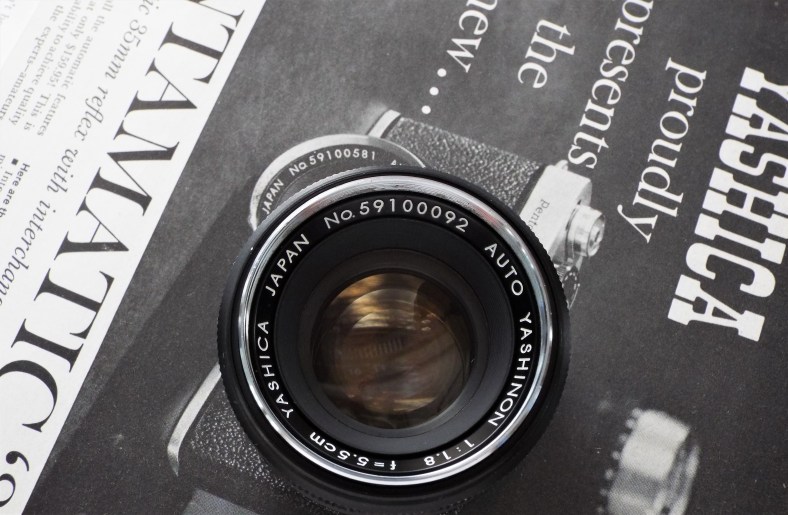
Here’s the lens we just acquired – Auto Yashinon 55mm (5.5cm) f1.8 which was the normal lens supplied with Yashica’s first Pentamatics. The background ad is from a ‘Popular Photography’ magazine – June 1960 issue. The ad lens serial number is – No. 59100581 – our lens serial number is – No. 59100092. Not often do you find a lens in the wild with a lower serial number than an ad. By the way, the advertisement was the first ever for the Pentamatic.
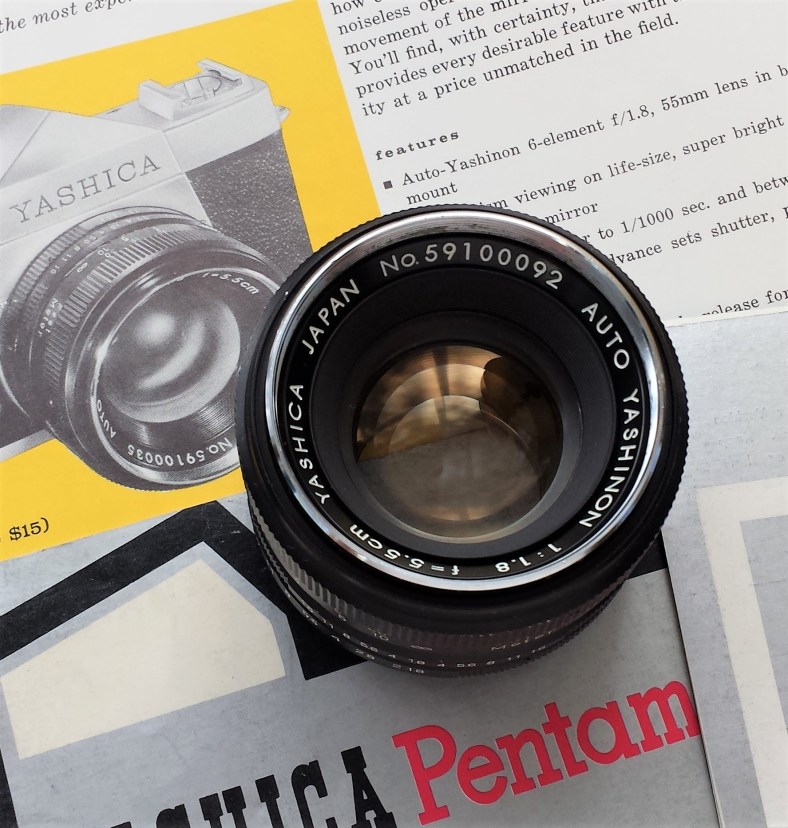
The lens that is featured in one of the first sales brochures for the Pentamatic, is serial numbered – No. 59100036. Our lens was made just slightly after the lens in the brochure (same day?). We don’t know when the sales brochure came out. Our guess is March 1960. The photographs were probably taken by the marketing people in Yashica’s Shibuya headquarters sometime in late 1959 or early 1960.
We know – this is all super boring nerd stuff that only Yashica fanatics would find interesting – wait, that’s a great name for a blog… ‘Yashica Pentamatic Fanatic’. ^.^
So what does the serial numbers tell us? The SN No. 59100092 (our lens) translates to – made in 1959, the ’10’ is for October, and the 0092 is the sequential production number of the lens assembly. This means that Tomioka Optical started production of the new lenses for the Pentamatic as early as October 1959! Lenses made in 1960 are labeled No. 605xxxxx. The ‘5’ being a placekeeper or model number. The highest serial number we have in our collection is No. 60515157. That lens came with a Pentamatic body that was made in January 1961 and the lens was the 15,157th made up until that point.
The highest serial number seen in the wild is No. 60521460 which was mounted on a Pentamatic-S body.
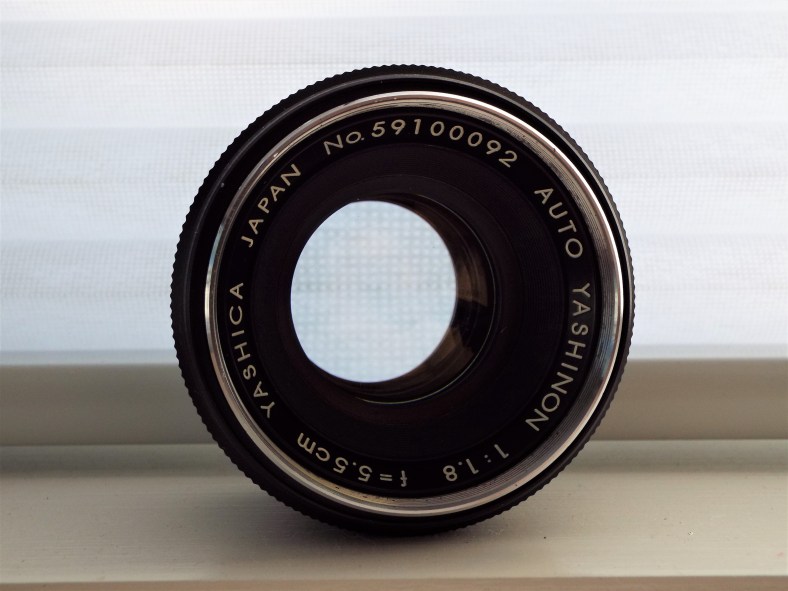
Thanks for your visit and if you made it to this point in the post, pat yourself on the back! You may be a bit of a camera nerd – just like us!
Chris & Carol ^.^
1955 Camera Case Mystery
During a recent restoration of our 1955 Yashicaflex A-II twin-lens reflex camera, we discovered that the leather case held an interesting surprise!
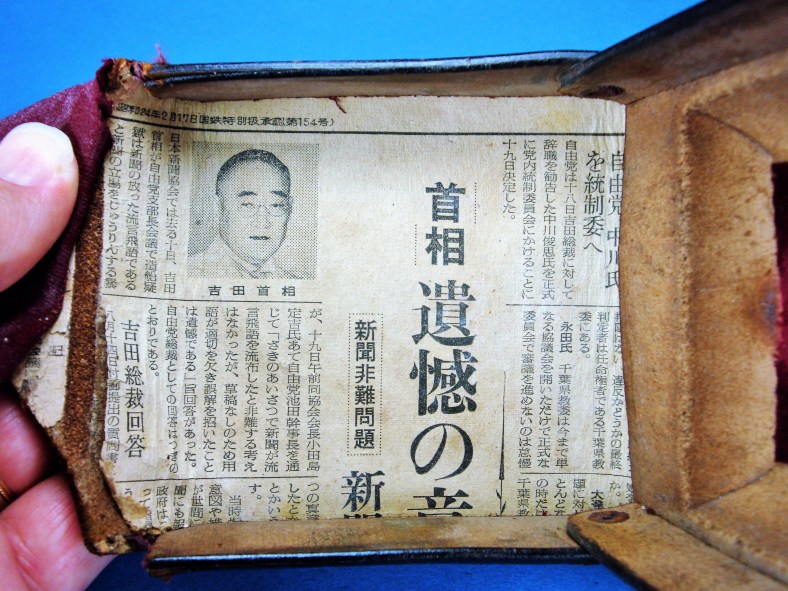
The thread below is taken from our Flickr page (Yashica Sailor Boy).
Chris “As part of a restoration of my c1955 Yashima (Yashica) twin lens camera’s leather case, I discovered that the red felt material inside the case used backing made from Japanese newspapers! Leave it to the Japanese during the mid 1950’s to make good use of something that would normally have had one use and then thrown away here in the West. What really surprised me was how easy the felt pulled away from the newsprint without destroying the paper. I hope to get the writing translated… maybe some interesting clues as to where the case was made and when.”
Chris “The leather case was made for a Yashica Flex model A-II from 1955. The camera was purchased from a seller from Hiroshima, Japan. The camera was made in Tokyo and I am not sure if Yashima (Yashica) made their own leather cases or if they were made by a supplier. Maybe the newspaper will yield some clues as to where.”
Chris “I now know that it is a picture of Prime Minister Yoshida. This was a special edition newspaper made for (?) the Japanese National Railways (JNR). It appears that the paper is dated 17 February 1949. ‘Special Treated Approval Number 154 Issue’.”
Ken “The caption at the top actually records the newspaper’s national railways special handling permit #154, and does not identify the actual date of the issue in question. The article has to do with a controversy the prime minister created when he criticized a newspaper for allegedly spreading rumors about a political scandal concerning the shipbuilding industry. The scandal erupted in January 1954 and became one of the main causes of the fall of Yoshida’s government. It is not clear which newspaper this article comes from, but from the anti-government tone of the writing it is possibly the Asahi.”
Chris “Thank you so very much KenjiB_48. It helps to know this as it makes more sense for the Japanese company that made the leather case would have used a current (1955) newspaper for a camera made in 1955.”

The inside front of the leather case held a similar surprise. It would appear that in the mid 1950s, some Japanese manufacturers found ways of recycling almost everything produced. Used newspapers, I would think, could be had for free. Why not use them for backing the felt to the leather. Pretty smart!
Thanks for your visit!
Chris ^.^
Fujica GW690 part 2
Just back from the Fujica’s first photo assignment in the US. What a simple and fun camera to use! The viewfinder (rangefinder) is super bright and big! It made it easy to compose my images and focus.
Yeah the leaf shutter going off isn’t going to get a bunch of oohs and ahhs from the crowd – it works and that’s what matters. The shutter sounds just like our Fujipet from 1958. Stay with what you know Fuji Photo!
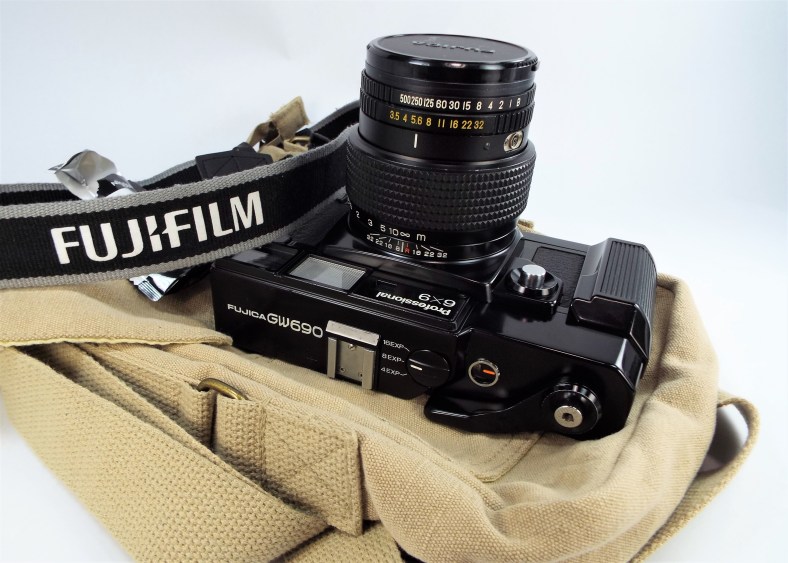
It took up the entire camera bag! I only had room for some lens wipes and the lens cap. Just back from its test shots.
The camera did draw some attention from the tourists that were downtown. It’s fun to answer their questions about film vs. digital (we love both) and the most common question – why would you take pictures with such an old camera? The weather was gorgeous too today – bright blue sky and and plenty of strong Florida sunshine. It took no time for me to burn through the 8 exposures!
When I advanced the film after exposure number 8, it took only 5 strokes (maybe only 4) of the film advance lever to free the film fully from the supply roll. Thinking that I’d better be cautious, I decided to remove the film in my dark bag at home.
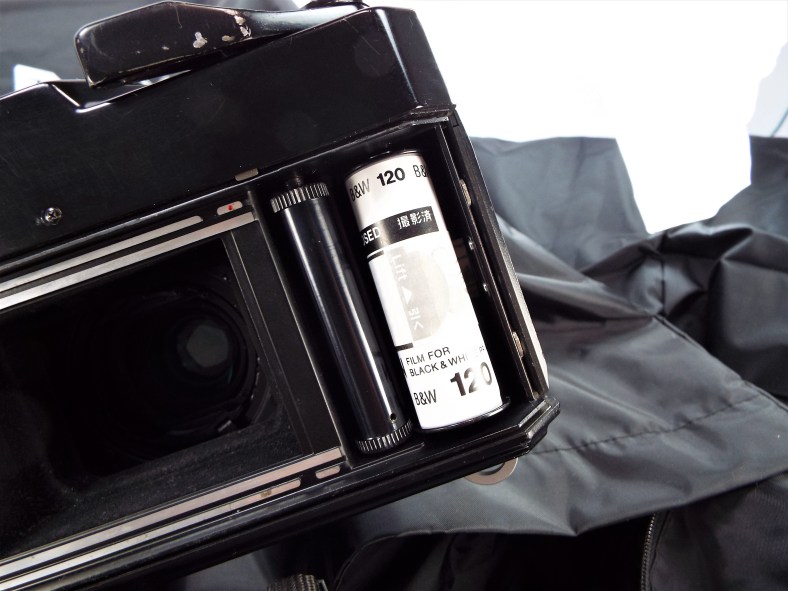
All went well in the dark bag. The roll had properly wound itself.


We wish Fujifilm still made Neopan 400.
Now that the first part of the test is done, time to send off the roll to ‘The Darkroom’ for processing and digital scans. We should see something online from them by late Friday afternoon (it’s Tuesday now). Time to head to the post office!

Check back soon to see the finished results. Thanks for your visit!
C&C ^.^
 Chasing Classic Cameras with Chris