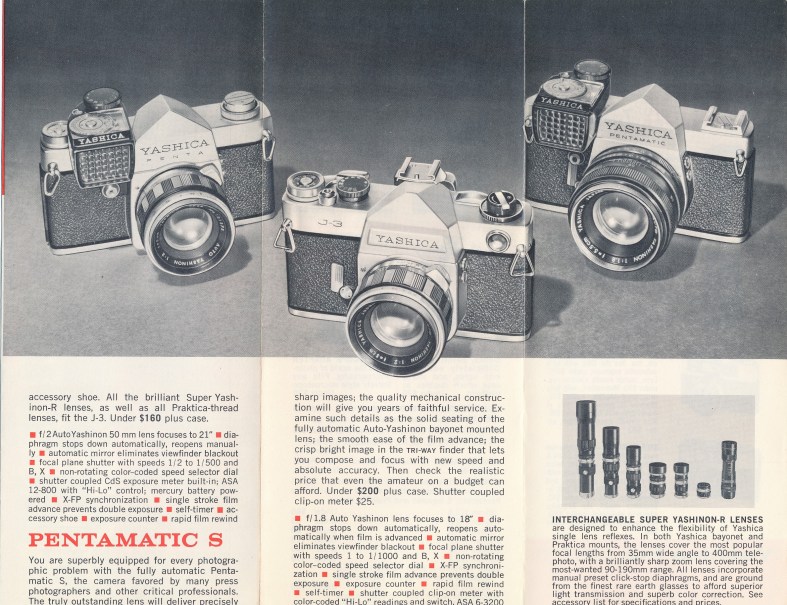
Yashica J-3 Sales Brochure – 1962

We don’t have an exact date on this brochure – we’re mainly basing it on the recognized release date in the United States. Since this is a Japanese brochure it could have been earlier or later.

Of interest, the first M42 screw mount camera made by Yashica was the Penta J which was also known in Japan as the “Jaguar”. The name Jaguar never appeared on the camera body, just in advertising. It is possible that the “J” in the J-3 could have been for Jaguar but the marketers from Yashica decided to shorten it to just “J” at the last minute.

yashica j-3 collage

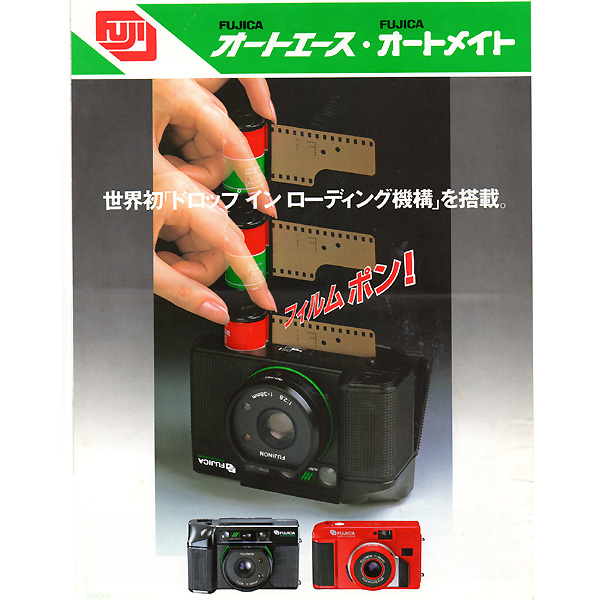
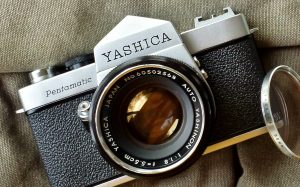
Front and back covers for the first J-3 brochure.

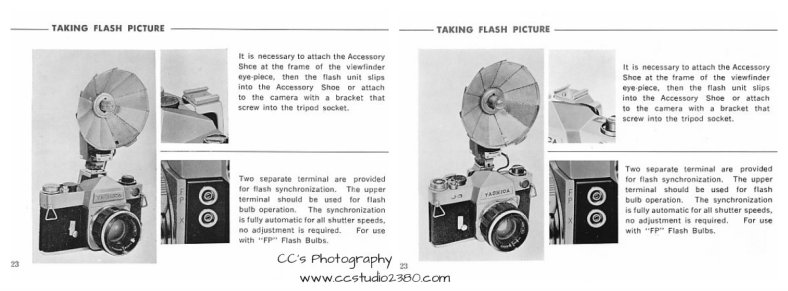
These images (below) are from two different J-3 instruction booklets that we have in our collection. The one on the left appears to be from a rare early version of the book with the image on the right from the later and more common book. Of note, the camera in the left image does not have a name on the body while the camera in the book on the right shows J-3. It’s an entirely different picture of the J-3. Our guess is that the book on the left has either a prototype or pre-production camera before Yashica finalized the name for the camera. They may have still been up in the air about naming it J-3 or possibly Jaguar something.

1 j-3 collage

The left camera appears without a name and very different (and rather odd looking) accessory shoe. The camera on the right carries the J-3 name and the “correct” accessory shoe that ended up in production.
2 j-3 collage

IMG_20180122_0005

Same instruction booklet but with the “J-3” written in on the image. Look closely, notice how crude it is. Another clue that the camera was a pre-production or prototype camera.

Well, there you have a bit of Yashica controversy discovered 56 years after the fact! lol

Thanks for your visit!

Remember to stop by our store at http://www.ccstudio2380.com

C&C ^.^

Please respect that all content, including photos and text, are the property of this blog and its owner, Yashica Pentamatic Fanatic, Yashica Sailor Boy, Yashica Chris.

Copyright © 2015-2018 Yashica Pentamatic Fanatic, Chris Whelan
All rights reserved.

‘Cheeky’ – Weekly Photo Challenge

Not a term I would normally use, but maybe this Yashica ‘Sailor Boy’ fits the bill as cheeky.

DSC07069

Yashica’s advertising figurine from 1962.

Chris

Please respect that all content, including photos and text, are the property of this blog and its owner, Yashica Pentamatic Fanatic, Yashica Sailor Boy, Yashica Chris.

Copyright © 2015-2017 Yashica Pentamatic Fanatic, Chris Whelan
All rights reserved.
Scale – Weekly Photo Challenge

Scale

This is a tough one (as evidenced by the number of images submitted for your consideration). Here’s what we came up with in response to this weeks challenge.

https://dailypost.wordpress.com/photo-challenges/scale-2/

DSC05470

DSC05497

DSC05903DSC05673

DSC05652

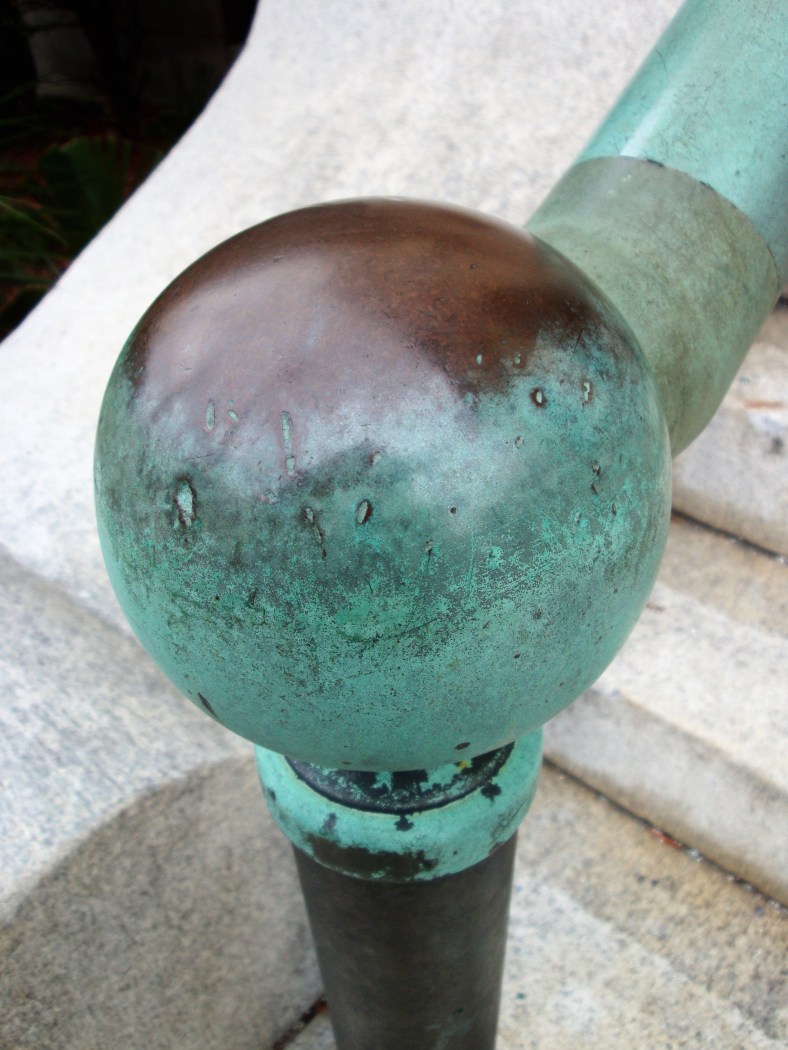
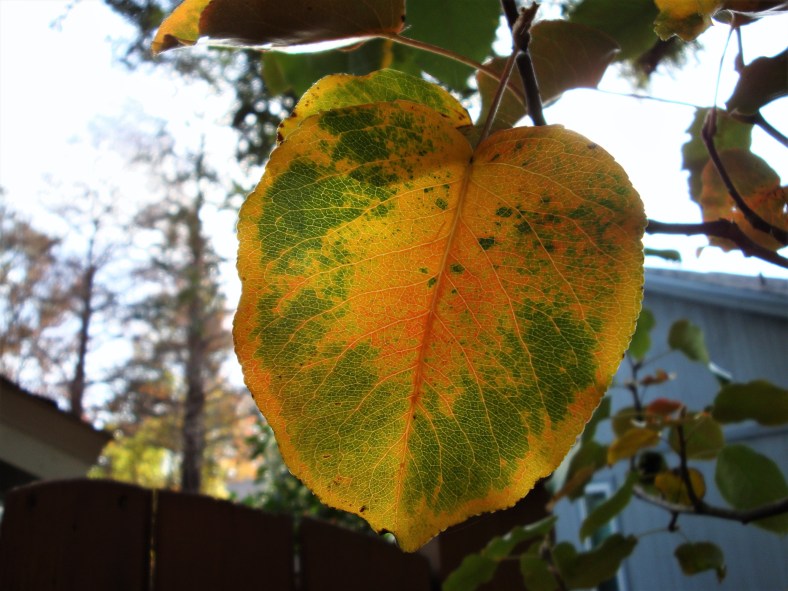
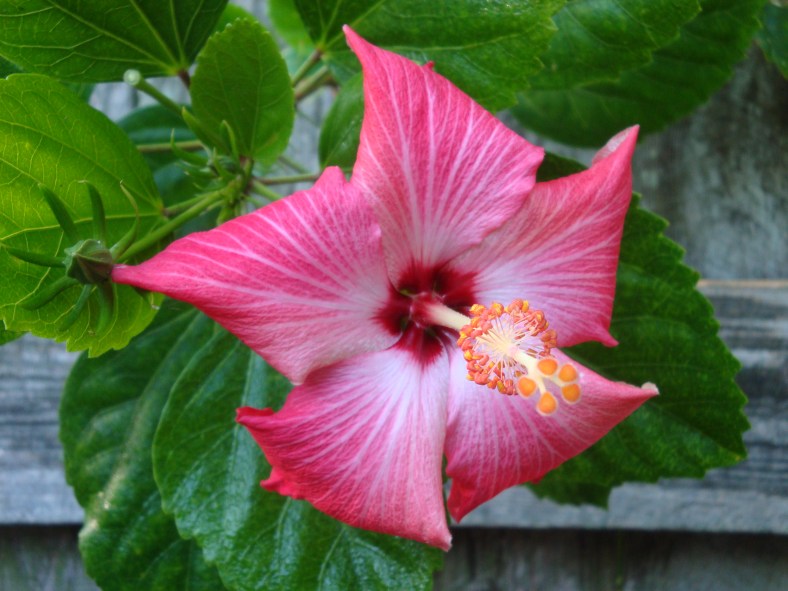
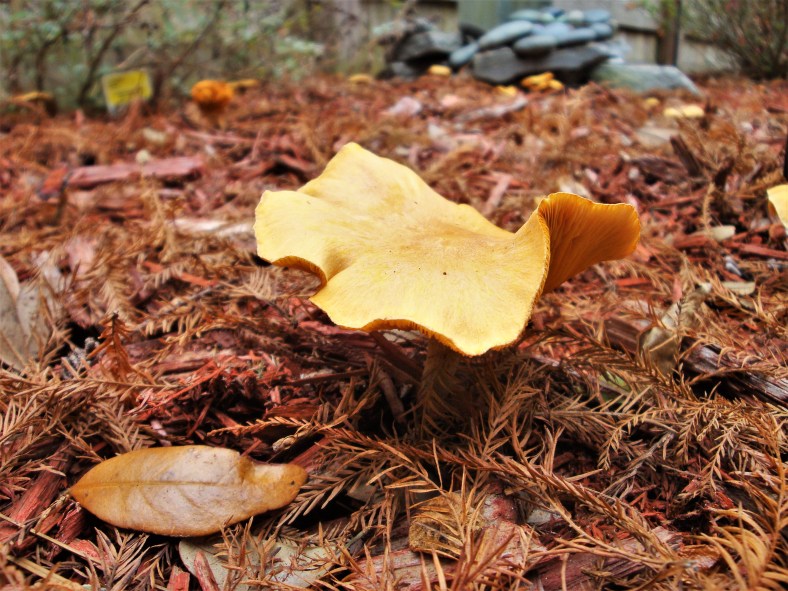
Perspective and scale. They go hand in hand. Is the flower big or is it small. The mushroom – close to the camera lens or was it shot with a telephoto? The brass ball – big or small? Big leaf or little leaf or is it the scales (cells)? The forest fits in the viewfinder.

Thanks for your visit!

Chris

© COPYRIGHT

Please respect that all content, including photos and text are property of this blog and its owner, Yashica Pentamatic Fanatic, Yashica Sailor Boy, Yashica Chris.

Copyright © 2015-2017 Yashica Pentamatic Fanatic, Chris Whelan
All rights reserved.
Yashica Penta J and the J-P

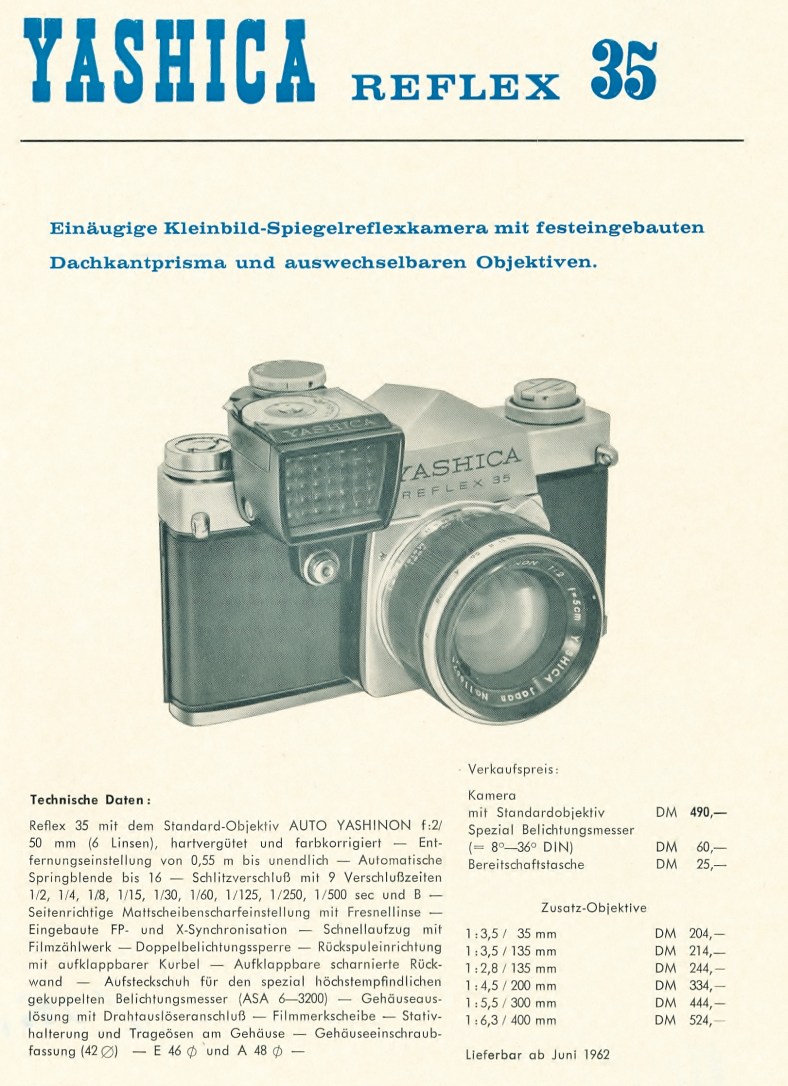
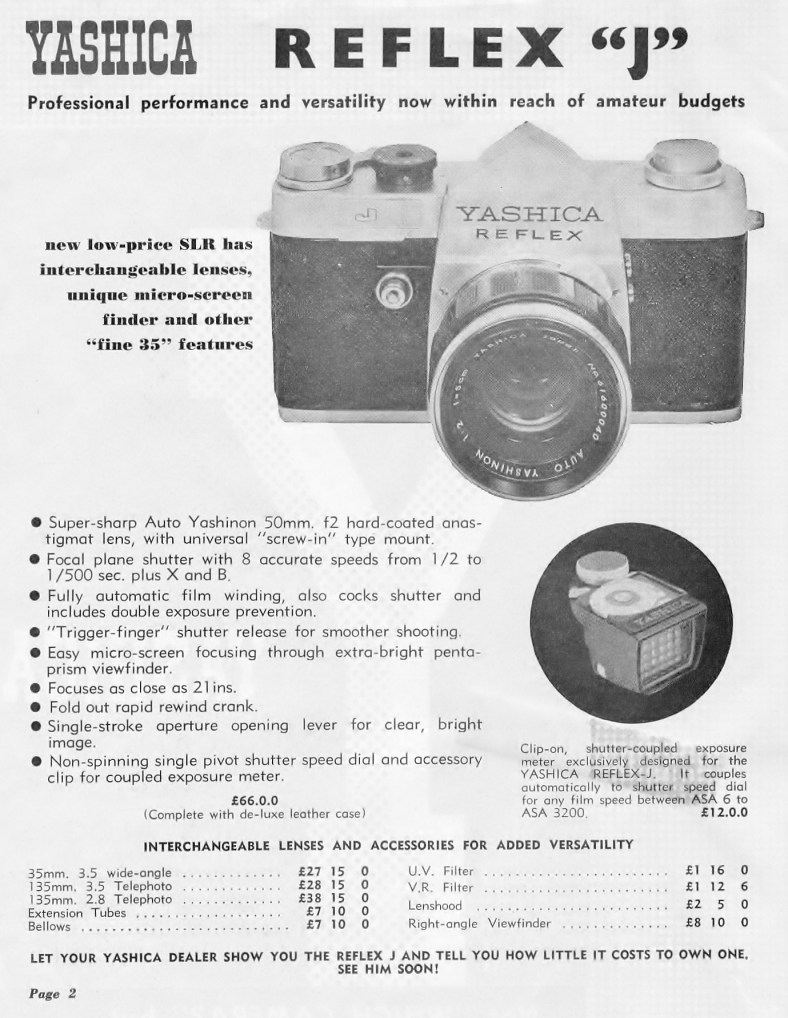
Yashica’s first 35mm single-lens reflex camera with the Praktica-thread (M42) mount lenses was the Yashica Penta J… at least here in the United States and in Japan. Elsewhere (most of the world) the camera was known as either the Yashica Reflex 35 or Reflex J (Australia and possibly the U.K.). As best we can tell, they were all the same cameras with different top plates to accommodate the different names (logos).

Part of the demise (lack of sales success) of the well-built Pentamatic series of cameras that preceded the Penta J, was that Yashica decided to go with a Pentamatic exclusive bayonet mount lens system. Sturdy and well designed to be sure, but being unique limited the available lenses that could be swapped between cameras. The Praktica design M42 screw thread mounting system was in widespread use at the time and Yashica’s bayonet design just went against the flow.

IMG_20160102_0007

IMG_20150926_0026

IMG_20160102_0005

IMG_20160102_0004

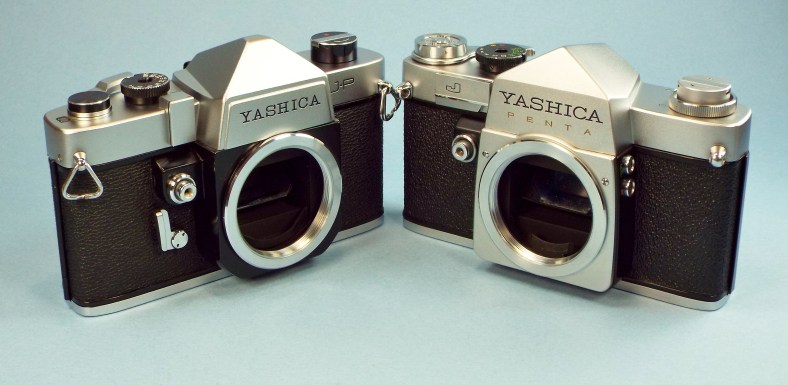
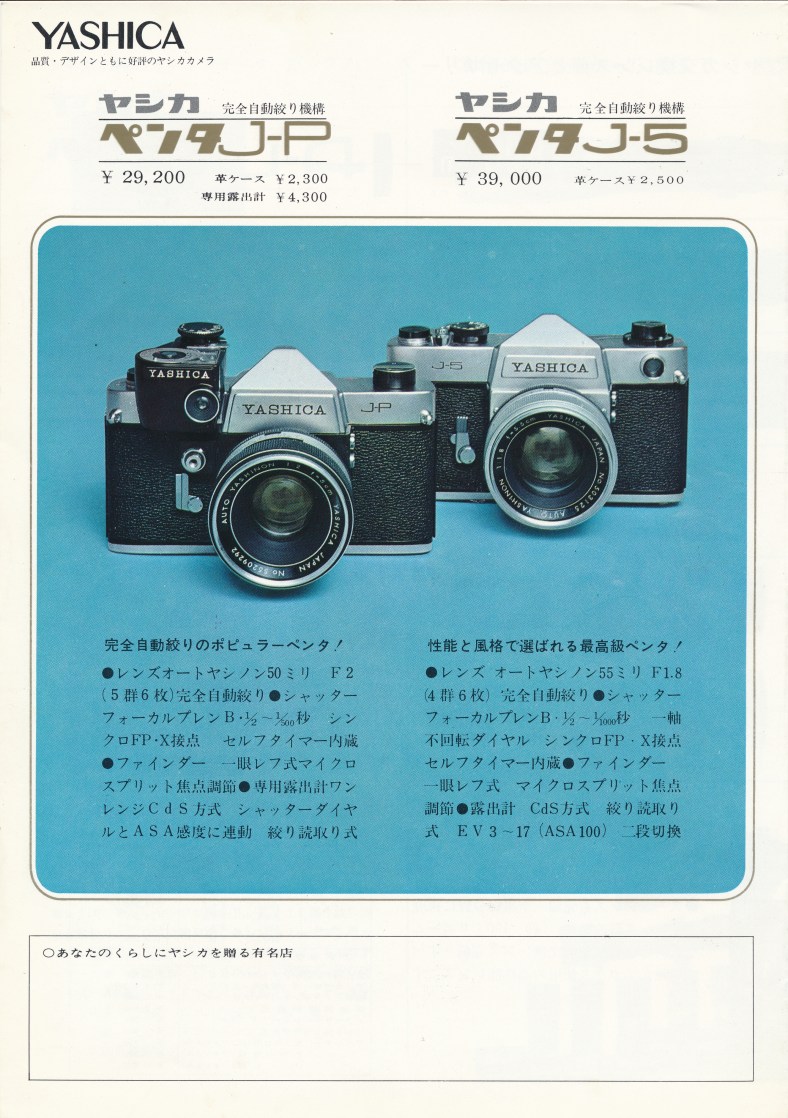
Now fast forward to 1965 ish… Yashica introduces the new J-5 AND the J-P! In between those years Yashica had introduced the J-3 and J-4. Why would Yashica go back in time and bring out another 35mm SLR in 1965 that was the cousin to the 1961 Penta J? Notice we say cousins… not brothers. They shared the same platform with one another but as you can see in the image below the top plates were of a different design.

DSCF1268

DSCF1277

IMG_20150903_0027

IMG_20150903_0025

Yashica J-P 6-27-15 Papers

Stay tuned… more to come on these Yashica classics.

Many thanks, Chris and Carol

Yashica Moves to a New Factory 1972

We’ll be the first to admit – not an exciting title or topic for a blog. It may even be a stretch for a blog named the ‘Yashica Pentamatic Fanatic’. But we feel compelled to share information about the Yashica Company, however slight and trivial, with our dear readers.

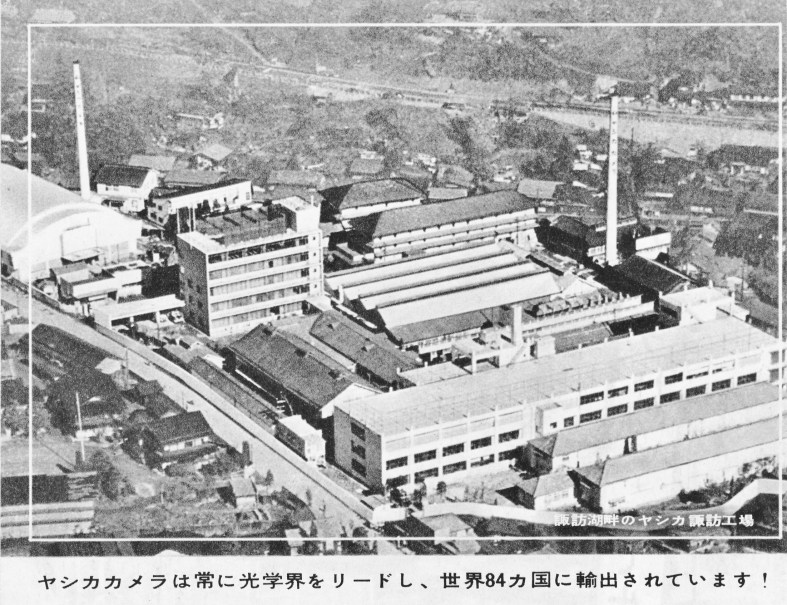
Yashica’s first factory was along the shores of beautiful Lake Suwa in the small town of Suwa. The next location (from Yashica brochures) was in Shimosuwa-machi, Suwa-gun, Nagano Prefecture. This was the industrial campus of Yashica and it grew over the years to occupy almost every square meter of the property.

Yashica's Shimosuwa Factory

Opened in 1956 along the shores of Lake Suwa in Nagano.

IMG_20151218_0008 (2)

A different view of the same campus. Yashica was running out of room by the mid-1960s.

IMG_20170404_0004

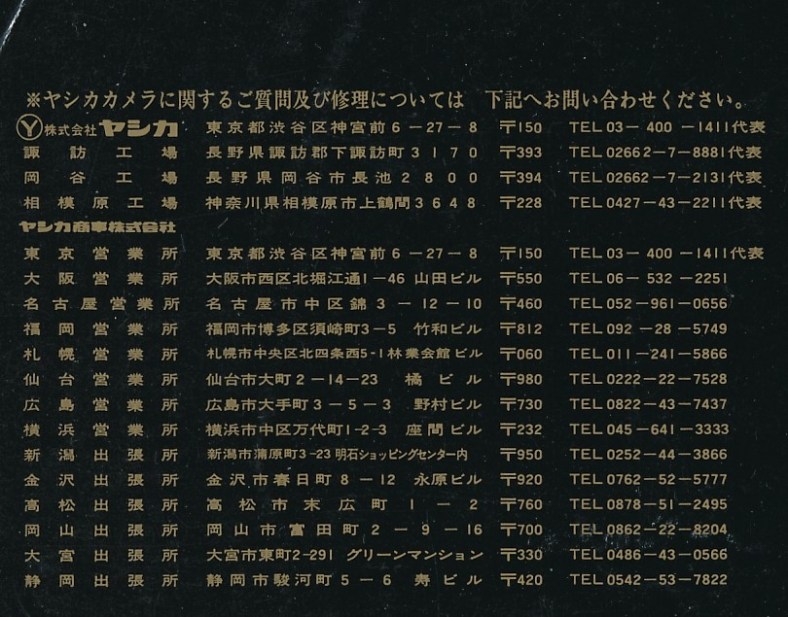
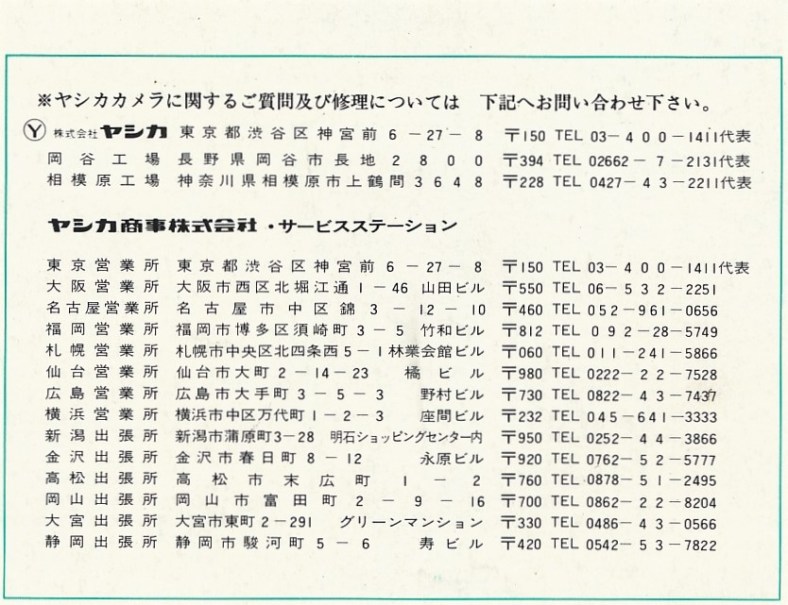
Back cover of the Yashica TL Electro-X ITS instruction booklet. The booklet was printed in Japan in June 1972.

At the time of the printing of the above book, Yashica was operating 3 factories. The top line that begins with the Yashica ‘Y’ on the far left is the address of the main headquarters of Yashica which was in Shibuya-ku, Tokyo. The next line is the location of the Suwa plant – Shimosuwa. The third line is the new plant in Okaya which was still in Nagano Prefecture. The 4th line was an unknown (to us until recently) factory in Sagamihara-shi, Kanagawa Prefecture (southwest of Tokyo and just west of Yokohama). As you can see, Yashica operated at least 14 other sales offices and service centers across Japan in mid-1972.

IMG_20170404_0005

Back cover of the Yashinon Lenses & Accessories booklet printed in Japan in January 1973.

Between June 1972 (the first book above) and January 1973 (the second book above), Yashica closed its campus and factory in Shimosuwa. The only factories listed are the new Okaya factory and the Sagamihara factory. That was a big move for Yashica and as we understand it, they had purchased the old silk mill in Okaya as far back as 1959. As of this book, Yashica did not close any of its other sales offices listed from the previous book.

DSCF9431

The factory was officially dedicated in December 1972. According to Yashica documents, the factory didn’t achieve full production until late 1974 or early 1975.

IMG_20190517_0001 (1)

The Yashica Okaya factory complex in the summer of 1974.

Why is any of this important? It isn’t unless you’re a Yashica Fanatic like us. Oh, it did have a strong ripple effect on the company though. Japan was in a bit of an economic slowdown in the early 1970s and it came to a head in late 1974 for Yashica. Mismanagement and embezzlement (and the costly move) caused Yashica to lay off workers – unheard of in Japan at the time. They closed the Sagamihara factory which put 900 Yashica employees out of work. That had an effect on the factory at Okaya and Yashica was soon in deep financial trouble. Their cameras were still top notch but the first warning shots about their future were fired.

IMG_20190517_0003 (1)

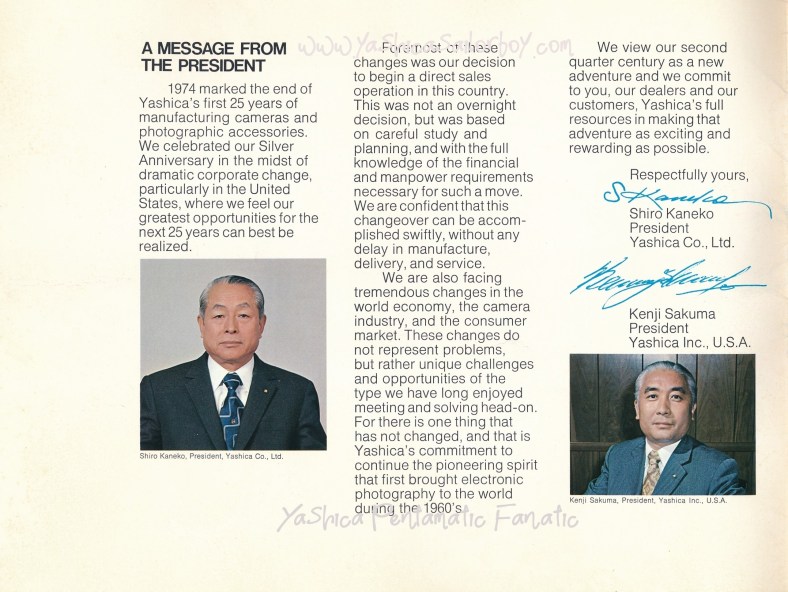
It is my understanding that Mr. Shiro Kaneko was installed as the new president of Yashica by the Nissho-Iwai Company (Yashica’s distributor) and by the Taiyo Kobe Bank which by 1974 had put its full financial resources behind Yashica’s new marketing efforts.

Thanks for your visit! Hope you got a little something out of it. – Chris


Yashica MF-2 Super… 1986

We don’t often collect modern Yashica cameras – especially during Yashica’s last days after Kyocera (Kill-a-Yashica) took over.

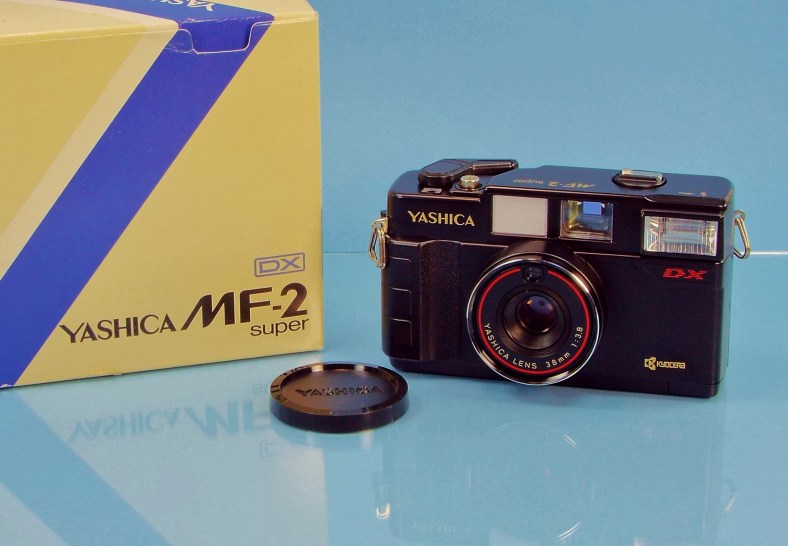
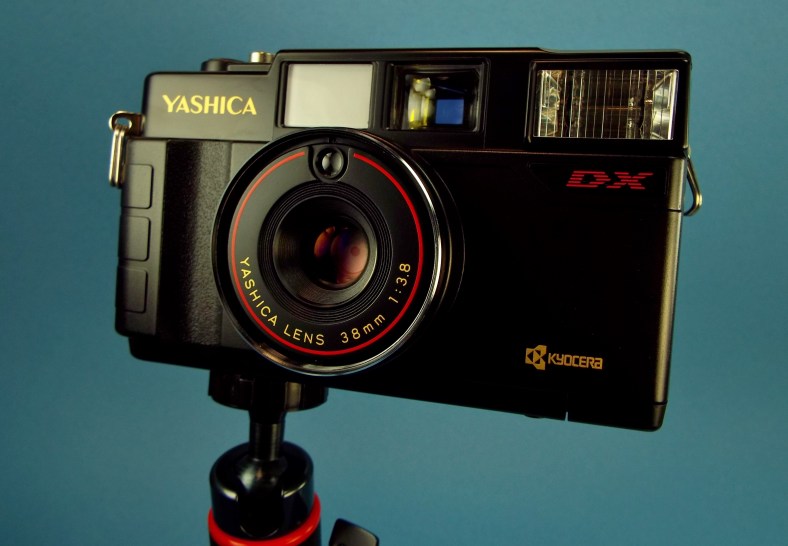
This one was sent to us by a Flickr friend and as you can see, it’s new in the original box. The MF-2 Super is a DX camera which sensed the DX code on the 35mm film canister and set the appropriate ASA / ISO / DIN.

25965272473_a80d24519c_o

Yashica MF-2 Super 35mm film camera set from 1986.

26295606350_65700d54b4_o

We haven’t found the time to load a roll of film and check out this little beauty… soon we hope. We like the black, red and gold details on the body and lens and the auto everything (almost) features. As a comparison, we also have the Fujica DL-20 as pictured below in the sales brochure.

%e2%97%8f%e3%83%81%e3%83%a9%e3%82%b7

DL-20 in black and red.

The DL-20 is a mid-1990s camera from Fujica. We have the red body model and it would be fun to take the two (Yashica MF-2 Super and the Fujica) out for a side by side photo shoot. Sounds like we’re going to be busy in 2018 shooting a bit more film.

Thanks for your visit!

Chris & Carol