Comments are always welcome; I’ve learned a great deal from reader feedback. As always, thanks for stopping by. While there, visit my camera shop at http://www.ccstudio2380.com (CC Design Studios, hosted on Etsy). – Chris Whelan
Hi all! I have my last Canon Macrolite ML-1 electronic flash from my collection for sale. This one is the latest version from 1985. It will work perfectly with the Canon New F-1 as well as any of the earlier A-Series cameras. It’s in my Etsy camera shop at http://www.ccstudio2380.com
Comments are always welcome; I’ve learned a great deal from reader feedback. As always, thanks for stopping by. While there, visit my camera shop at http://www.ccstudio2380.com (CC Design Studios, hosted on Etsy). – Chris Whelan
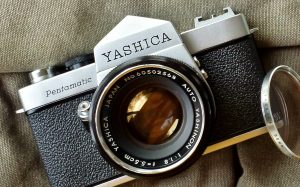
The Canonflex was released in May 1959. It was Canon’s first 35mm SLR. The Yashica Pentamatic was Yashica’s first 35mm SLR, and it was released in March 1960. It was designed with the help of the recently acquired Nicca Camera Company in 1958. It’s safe to say that without Nicca’s help after the acquisition, the Pentamatic wouldn’t have come to market when it did.
Likely two cameras many have never seen.
As a collector of classic cameras, I appreciate these designs from the late 1950s.What makes them different keeps them the same. Both cameras feature sharp standard f/1.8 lenses. The Canomatic lens is reportedly radioactive. No evidence that the Yashica lens is also radioactive. The lens on the Yashica was made by Tomioka Optical for Yashica. The Canon lens was made by Canon.The Canon is a slightly larger camera than the Yashica. The Pentamatic is slightly more compact compared to the Canonflex. Its all-metal construction puts its weight right there with the larger Canon.Rear view. The serial number on the Canon indicates it was the 5,998th camera made. The Yashica was manufactured in August 1960 and was the 8,101st model produced up to that point in 1960.
Comments are always welcome; I’ve learned a great deal from reader feedback. As always, thanks for stopping by. While there, visit my camera shop at http://www.ccstudio2380.com (CC Design Studios, hosted on Etsy). – Chris Whelan
Looking for a nice classic camera bag or case for your special and collectible camera? I’ve got some.
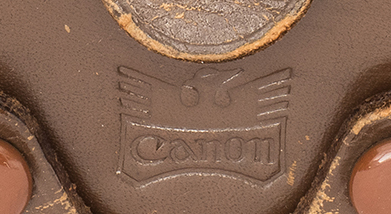
Classic Canon green and tan camera case.Unique collaboration between Artisan & Artist and Canon. The only one I’ve seen in years.ThinkTank and Canon CPS sling bag.
Comments are always welcome; I’ve learned a great deal from reader feedback. As always, thanks for stopping by. While there, visit my camera shop at http://www.ccstudio2380.com (CC Design Studios, hosted on Etsy). – Chris Whelan
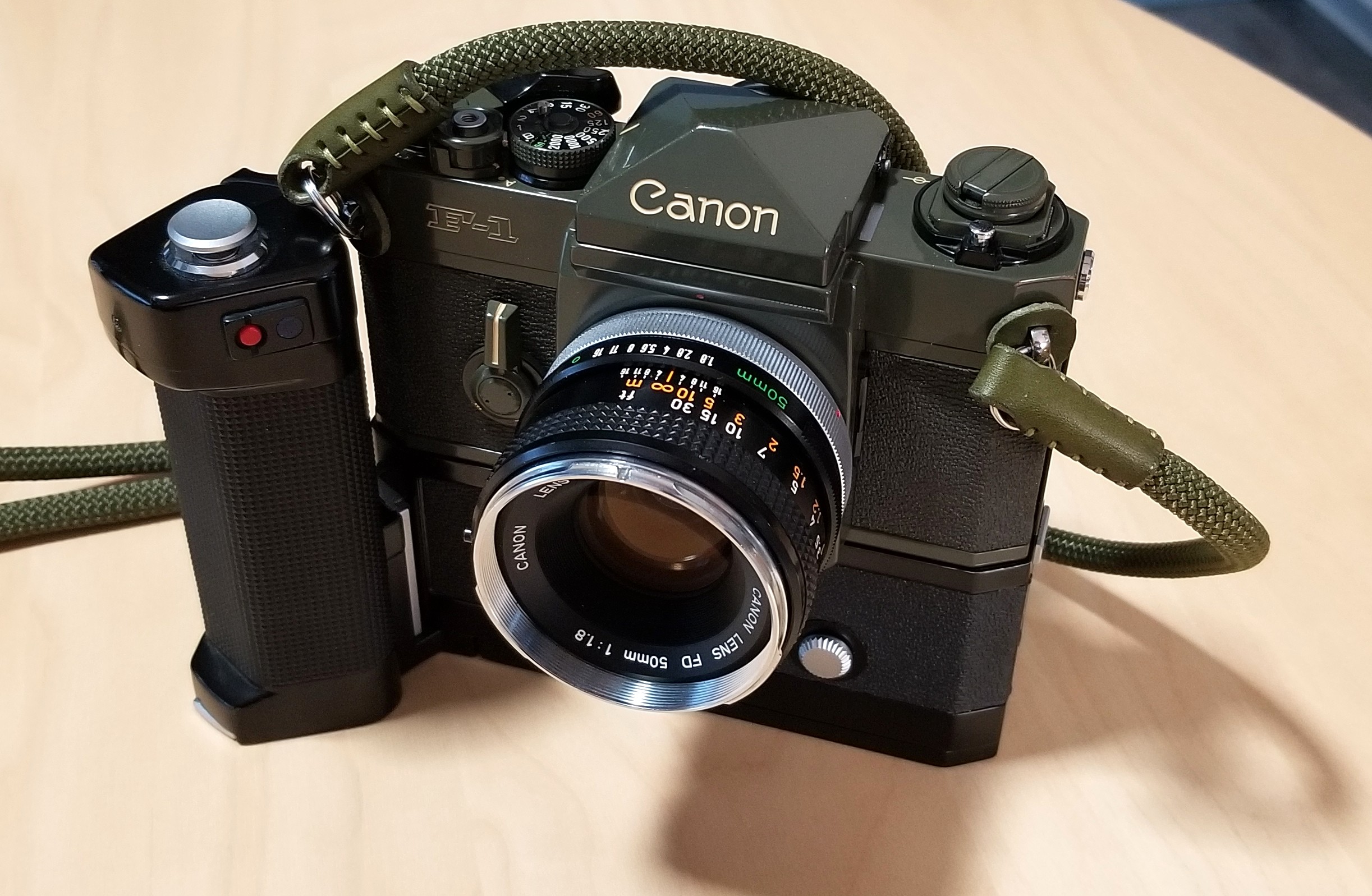
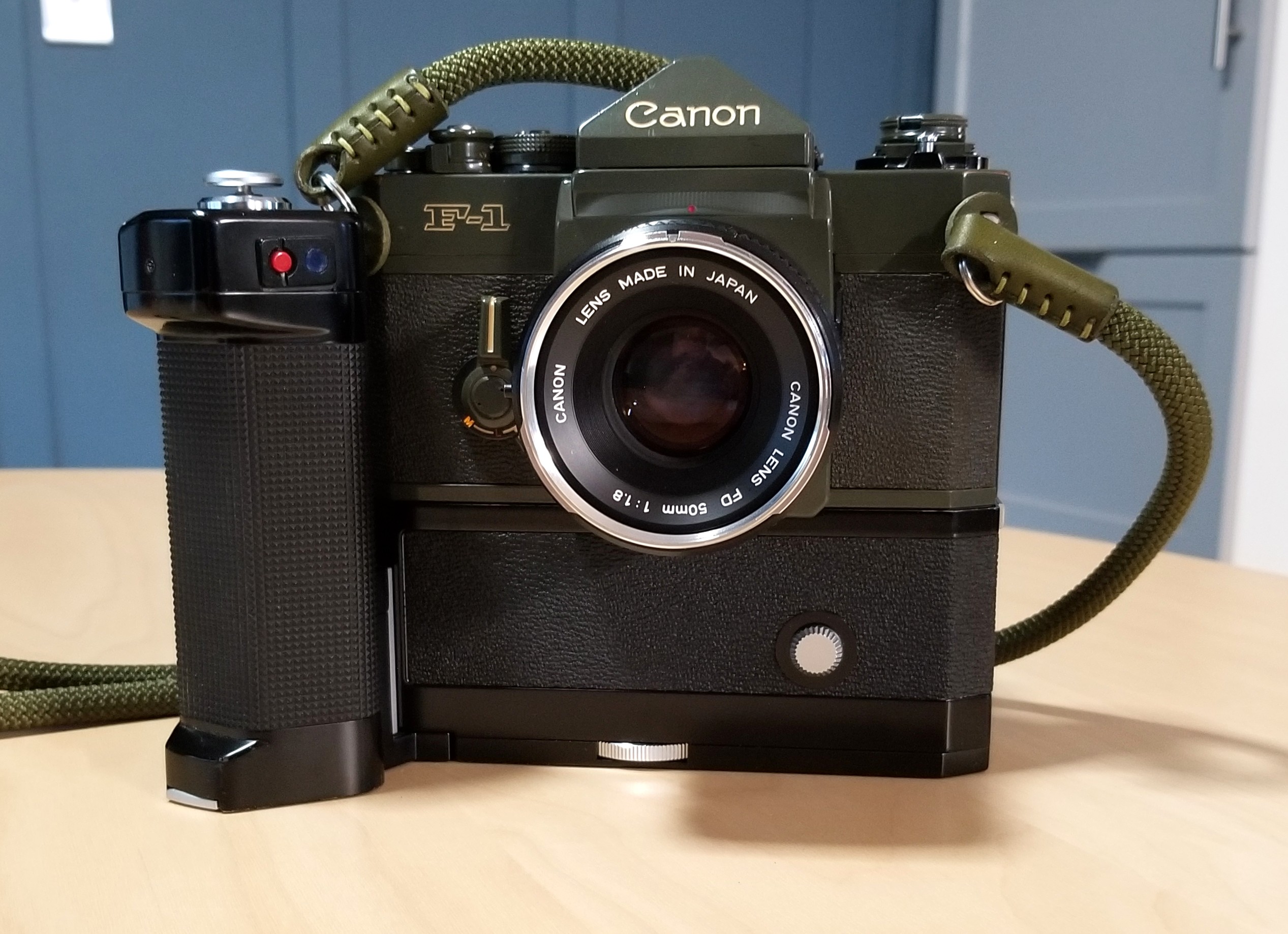
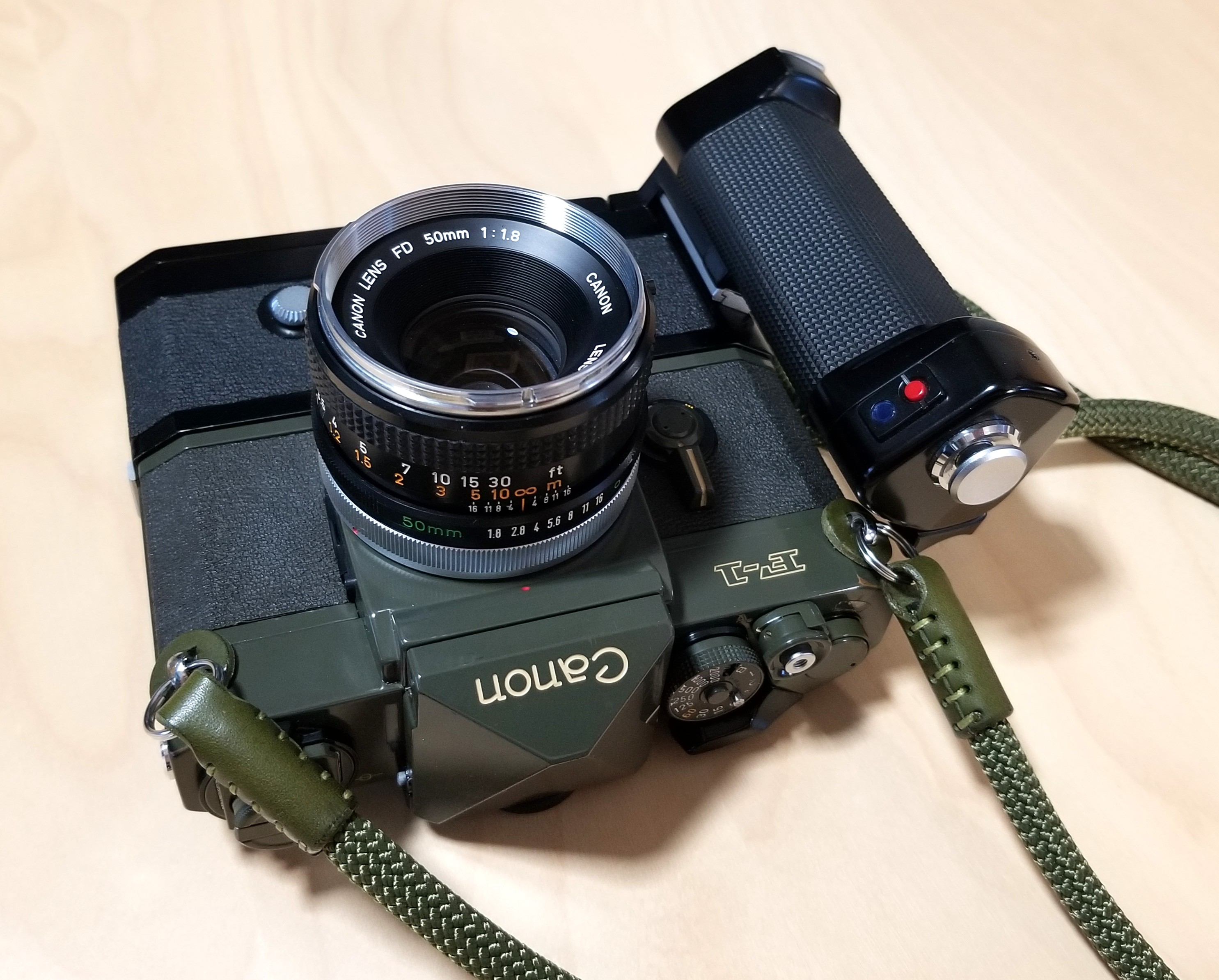
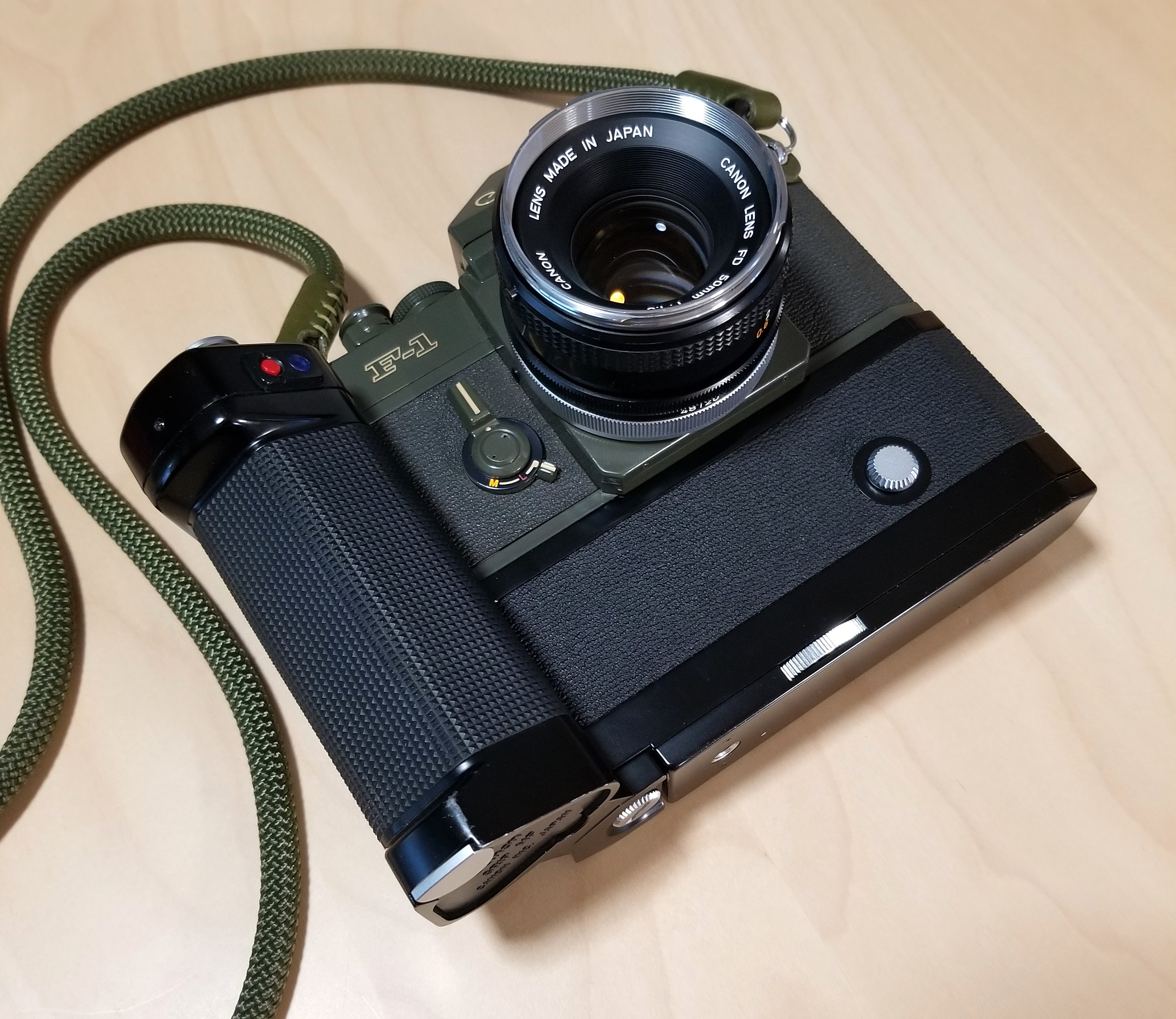
My original Canon F-1 from 1978 is on the upper left (with the motor drive)—the Canon O.D. F-1 is my most recent acquisition.With their original instruction booklets.With an early Canon FD 50mm f/1.4 chrome nose lens.OD F-1. A limited edition olive drab version from early 1978.My earliest model. The serial number indicates that this camera was in the first 20,000 built in 1971. It also has the <E.P> mark.My only Canon New F-1 with AE Finder.
It’s one of my favorite 35mm SLRs in my collection.
Comments are always welcome; I’ve learned a great deal from reader feedback. As always, thanks for stopping by. While there, visit my camera shop at http://www.ccstudio2380.com (CC Design Studios, hosted on Etsy). – Chris Whelan
In many ways, it’s better than the much more famous F-1.
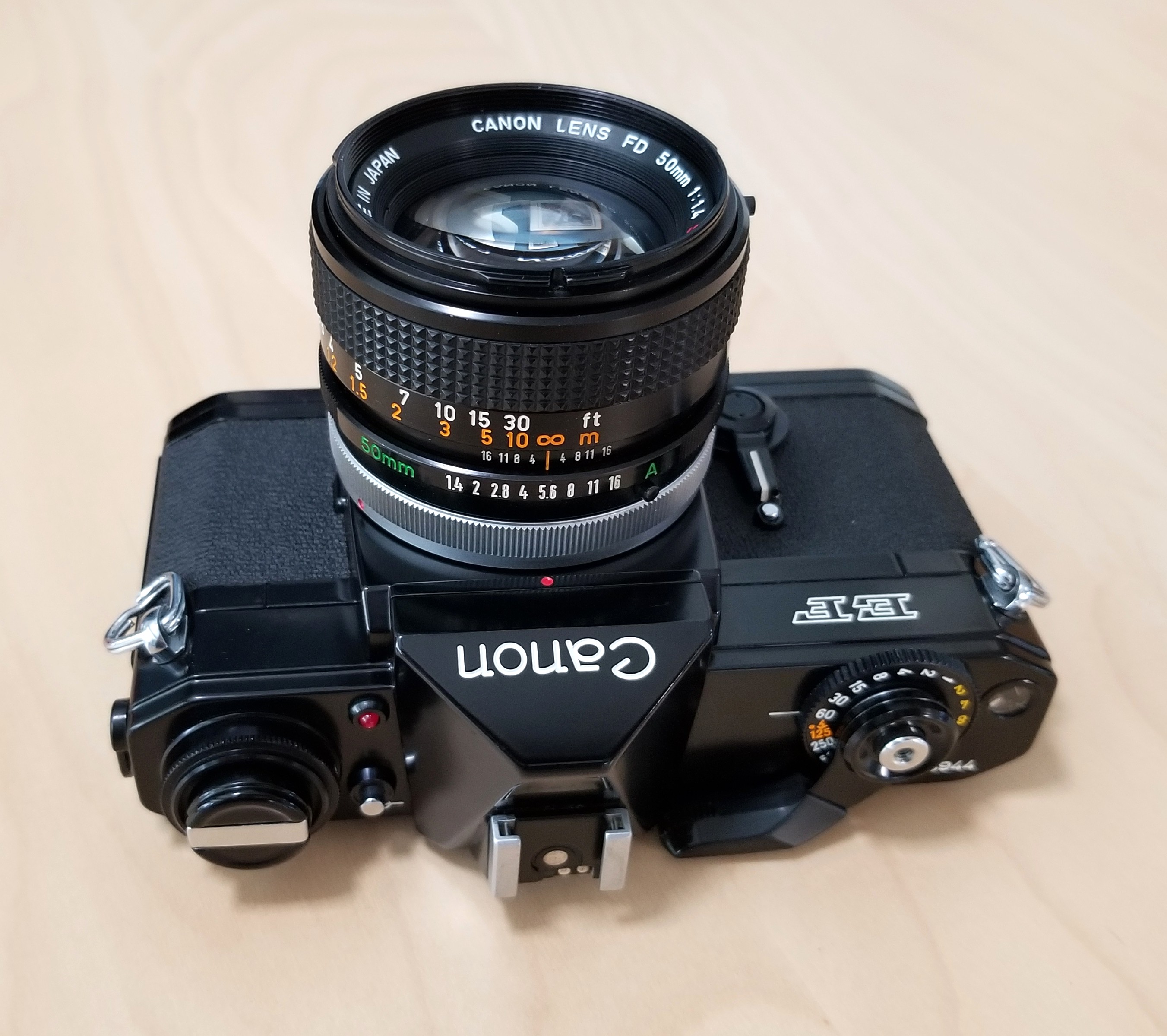
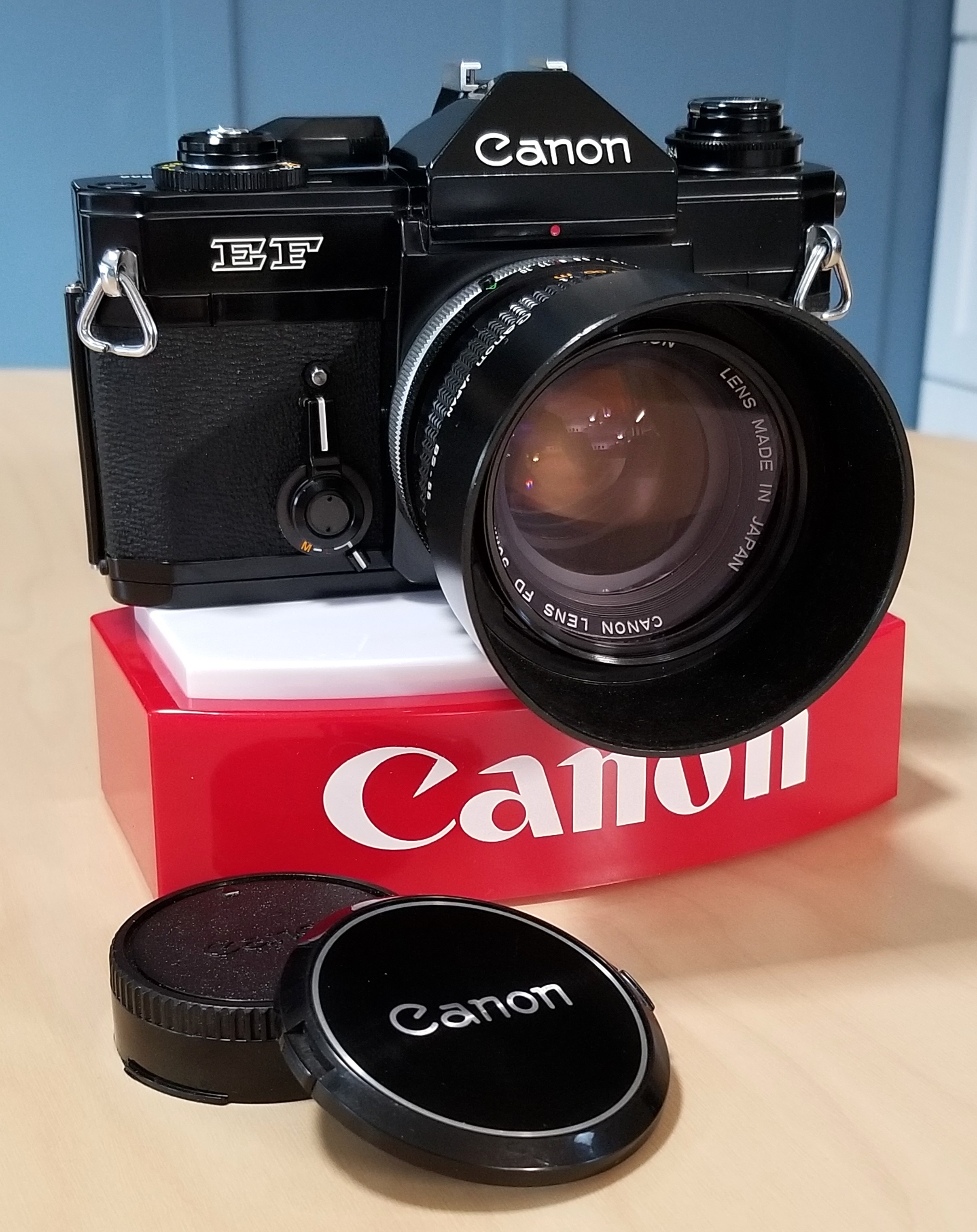
It’s also known as the Canon Black Beauty. It’s built on the F-1’s frame but does not have interchangeable viewfinders or the ability to use a power winder or motor drive.
The EF was first released in 1973, just two years after the F-1. It was Canon’s first aperture-priority camera, well before the AE-1.The standard lens is the Canon FD 50mm f/1.4 S.S.C. shown here with its lens hood.Here, a Canon EF and its cousin, the Canon F-1. The F-1 is shown in a limited-edition olive drab.Another EF in my collection.
The Canon EF is a worthy camera for your collection. The ability to electronically time exposures from 1/2 to 30 seconds accurately makes it more versatile than the F-1 in its base form.
From the Japanese instruction book.The view in the viewfinder. The later EFs had a split-image and microprism focusing screen.From my EF released in Japan.An earlier EF with the FD 50mm F/1.8 S.C. lens.
Comments are always welcomed, as I’ve learned quite a bit from reader feedback. As always, thanks for stopping by, and while you’re at it, feel free to visit my camera shop at http://www.ccstudio2380.com (CC Design Studios hosted by Etsy). – Chris Whelan
It’s a relatively rare lens (now) from the late 1970s to early 1980s. Kino Precision likely made the lens under the Kiron brand for Vivitar (started as Ponder & Best in the US). The serial number, SN 22810099, indicates the manufacturer (first two numbers), the year made (8=1978), the week (10=March 6-12), and the consecutive number for that week (099).
The lens is mounted via a K&F Concept FD-FX adapter. It is an older lens with the classic chrome breech lock ring used on Canon cameras starting in the early 1970s.When I test classic film camera lenses, I almost always use my Fujifilm X-T2 as my platform. The effective focal length with a 1.5x crop sensor mirrorless camera is about 42mm (1.5 x 28).
It’s a heavy lens—288 grams (10.2 oz.) for its size—with lots of glass and brass. I couldn’t find the lens details, so I don’t know how many elements and groups it has. My guess is it has coated optics, as the later lenses have ‘MC’ on the front filter ring. It accepts 55mm filters.
My copy is infested with fungus and shows some haze deep inside. Here are some samples. It’s a shame, really, as the lens has the potential to be a good one. The fast f/2 aperture was not standard or common in a 28mm lens.
Under a bright LED, the internal haze and cloudiness are apparent. The image lacks sharpness.Again, the fungus, haze, and general cloudiness take their toll.Outside in dim sunlight, the color balance, as is the clarity, is off a bit.The lack of detail is especially noticeable along the edges where the fungus filaments are the most evident.
Is it horrible? No, not really. Under the right conditions, it could make for some interesting mood shots. Can it be corrected? Yes, the internal elements and groups would need a deep cleaning.
Comments are always welcomed, as I’ve learned quite a bit from reader feedback. As always, thanks for stopping by, and while you’re at it, feel free to visit my camera shop at http://www.ccstudio2380.com (CC Design Studios hosted by Etsy). – Chris Whelan