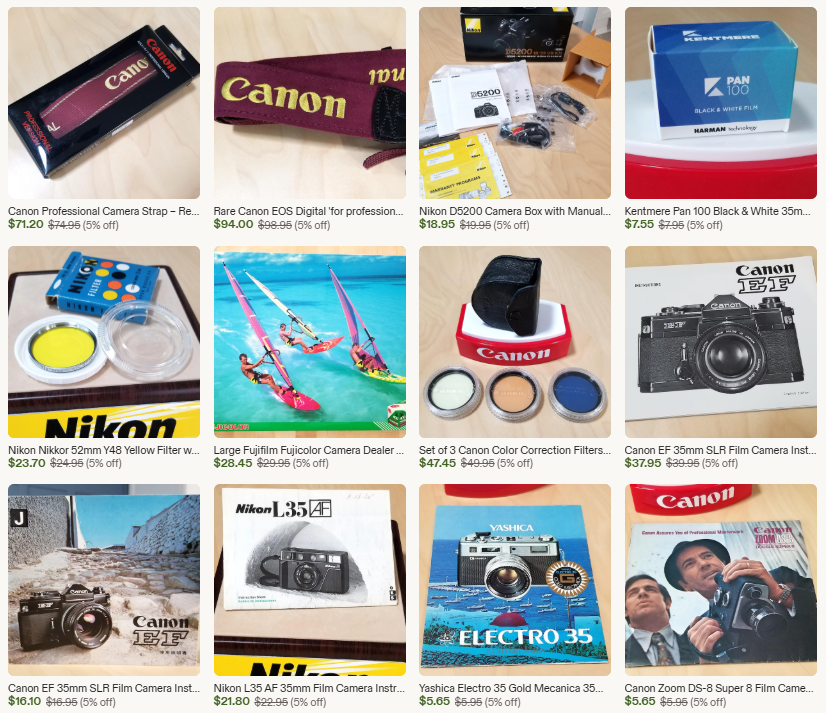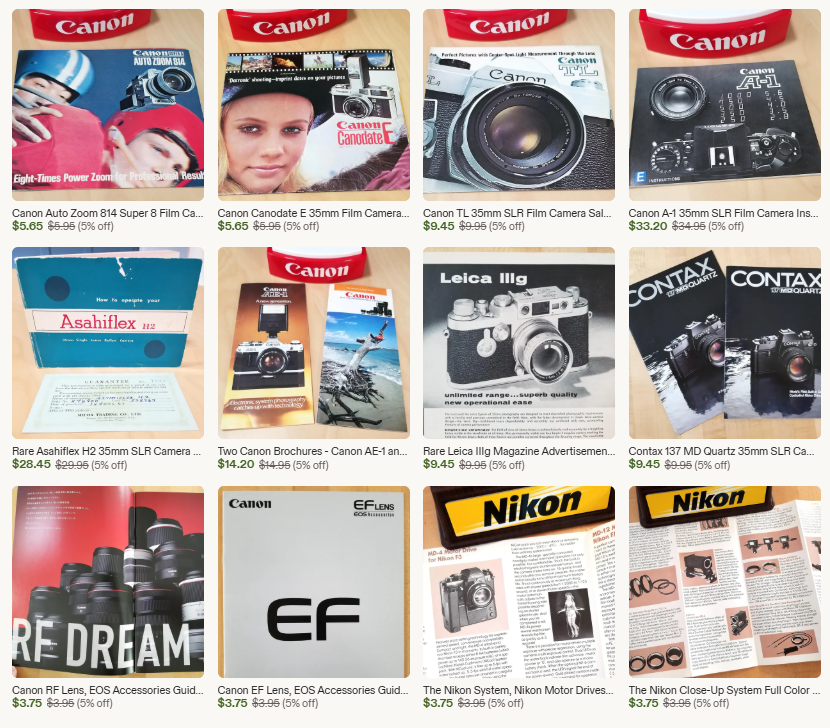
Comments are always welcome; I’ve learned a great deal from reader feedback. As always, thanks for stopping by. While there, visit my camera shop at http://www.ccstudio2380.com (CC Design Studios, hosted on Etsy). – Chris Whelan
This is the first time I’ve seen a Canon camera box (any model) with a tax-free sticker. Apparently, it was placed by Canon. These tax-free cameras were not sold in U.S. military exchange stores in Japan. They were for sale at duty-free shops scattered around the country. So, no <E.P> markings on the camera.
Here is one of my Canon F-1s with an <E.P> mark. It’s an early model from August 1971.
Early original Canon F-1 with the <E.P> mark.The mark is affixed to the leatherette on the lower right of the film back.
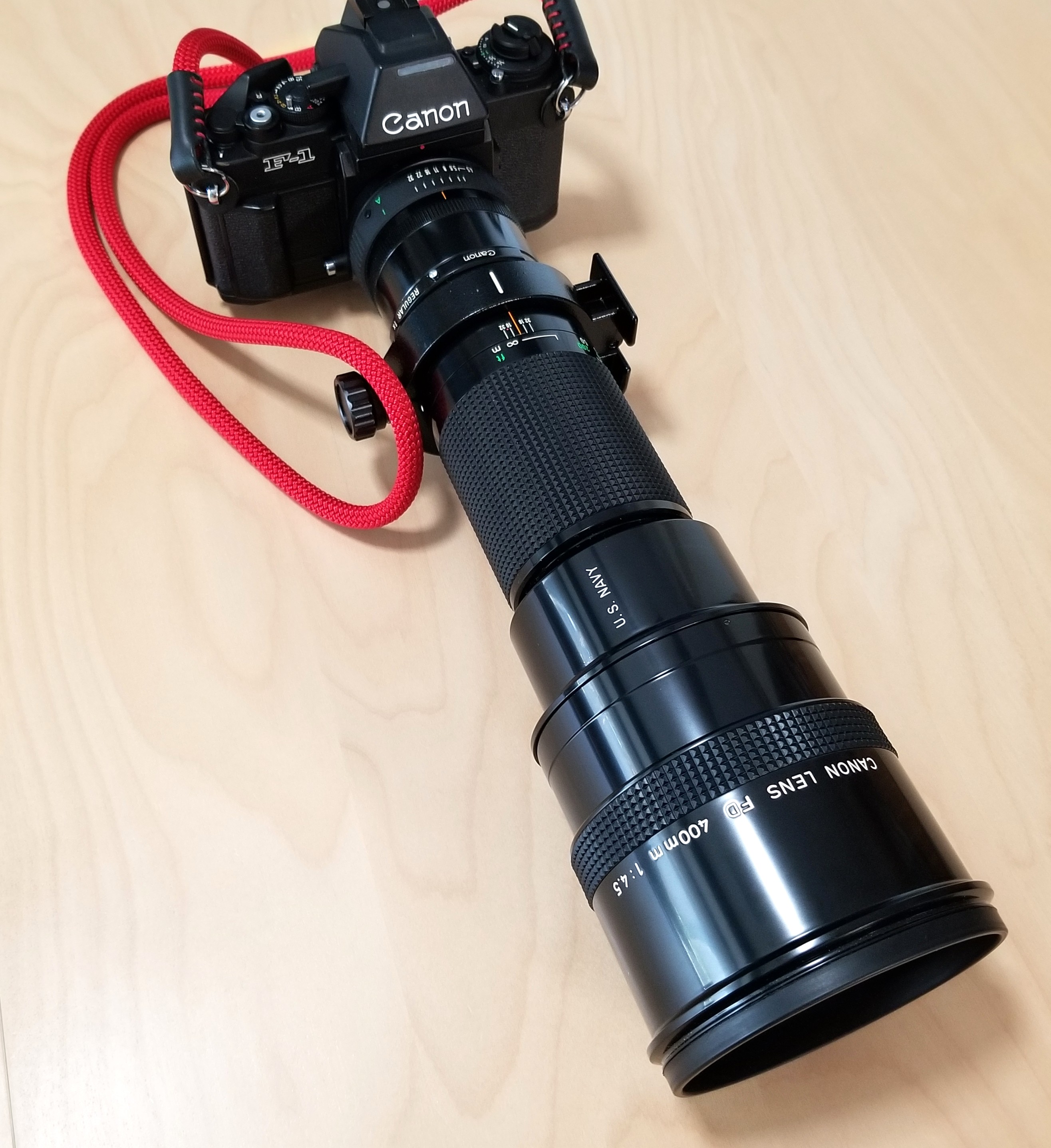
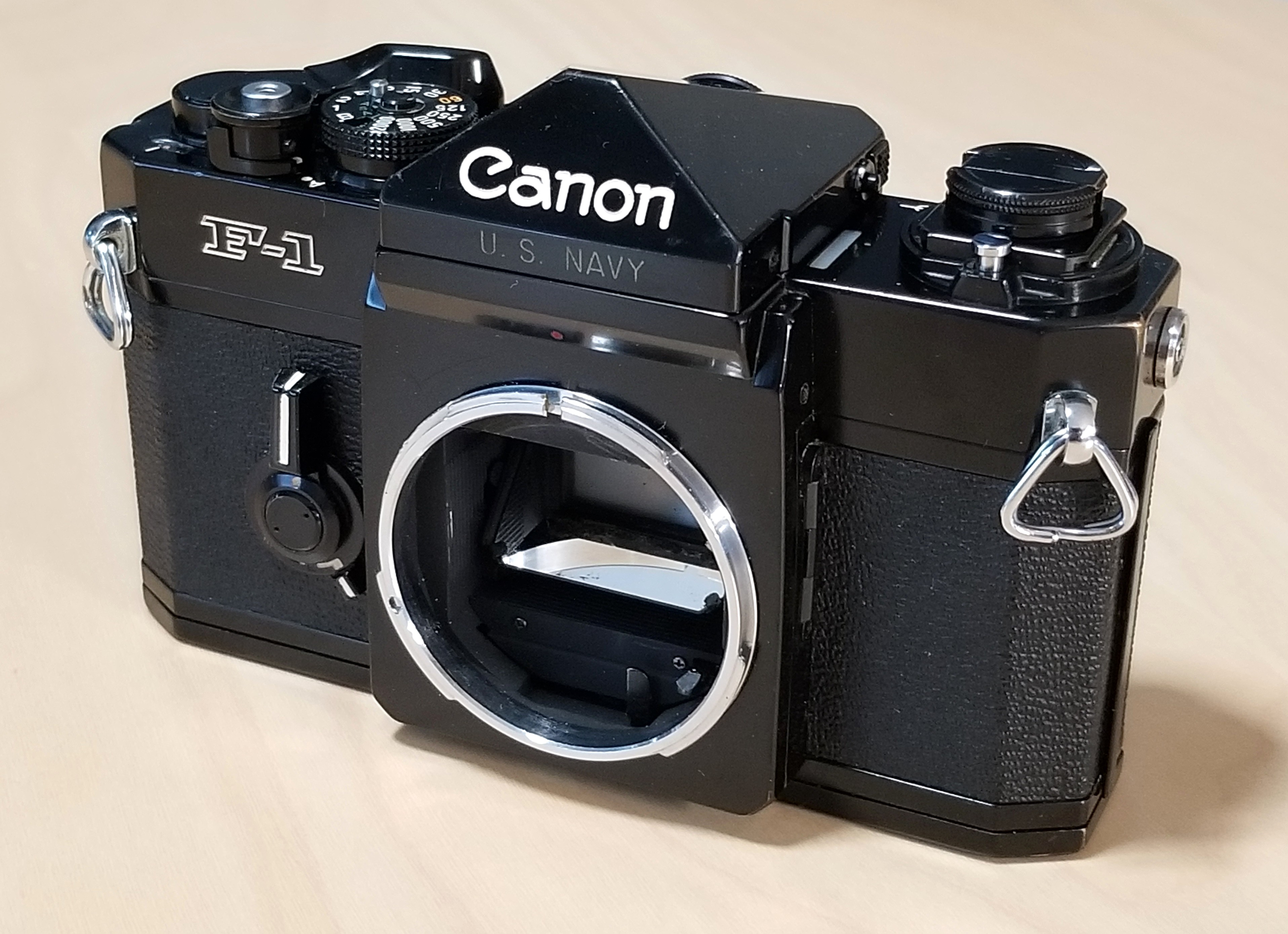
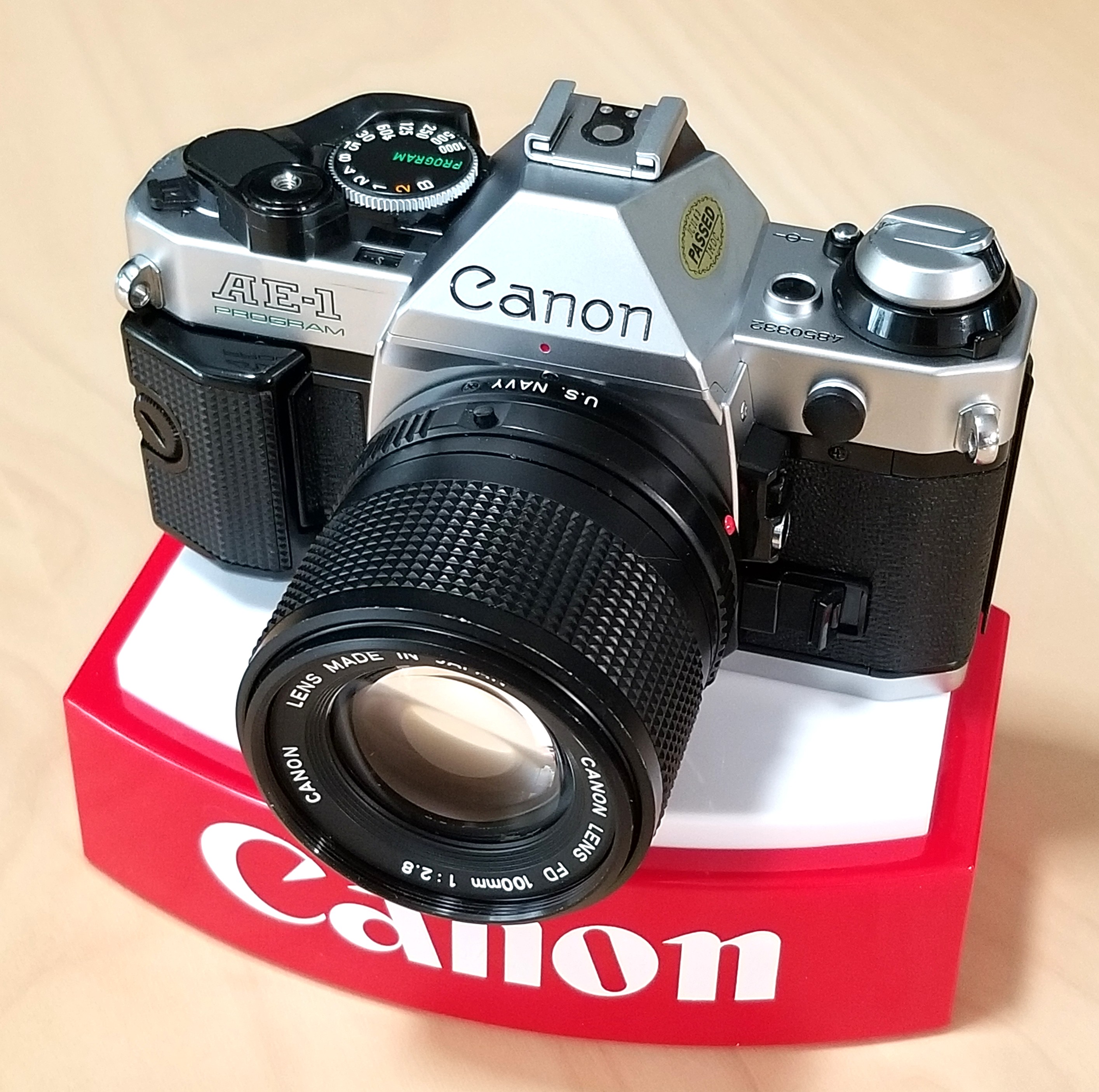
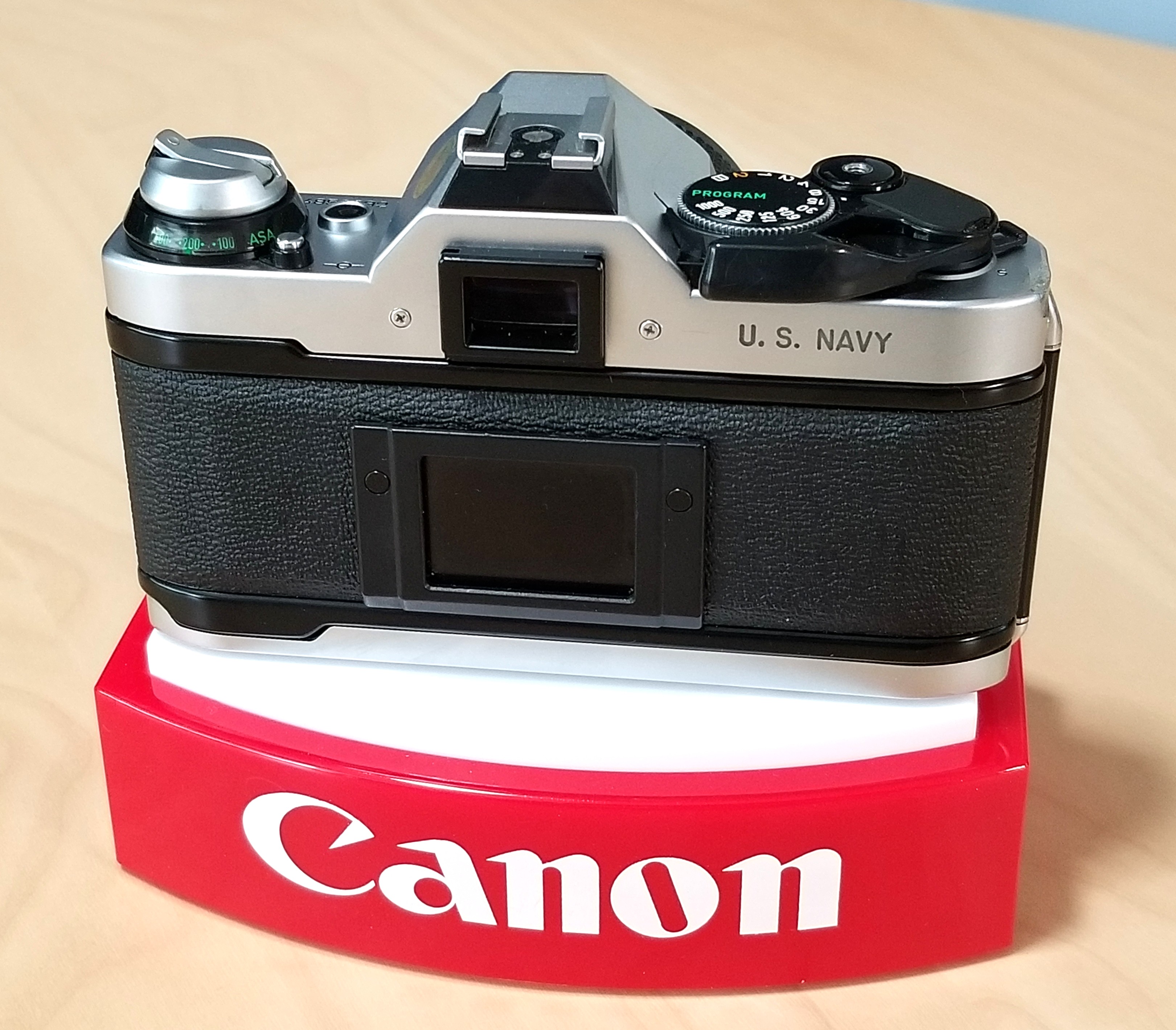
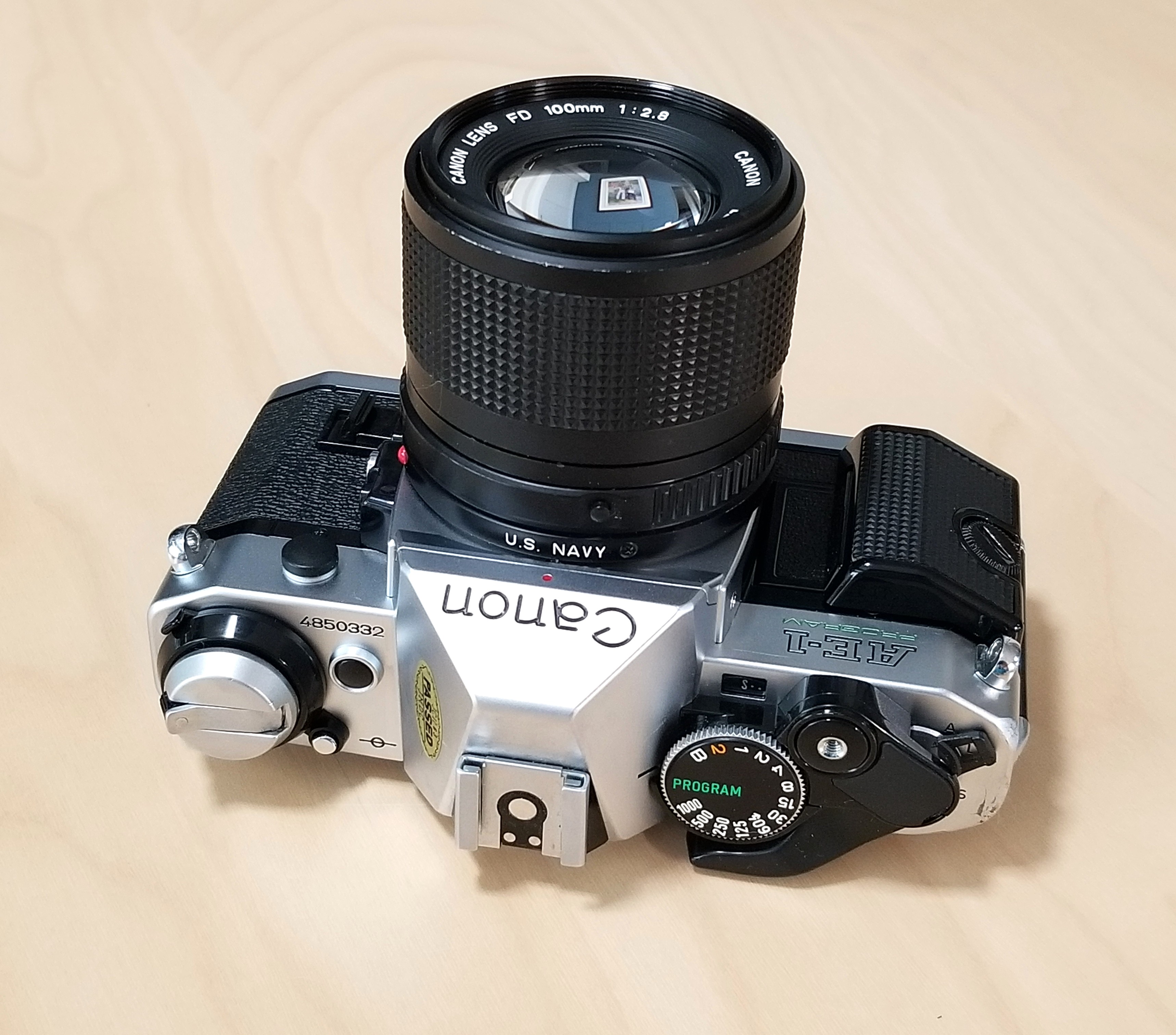
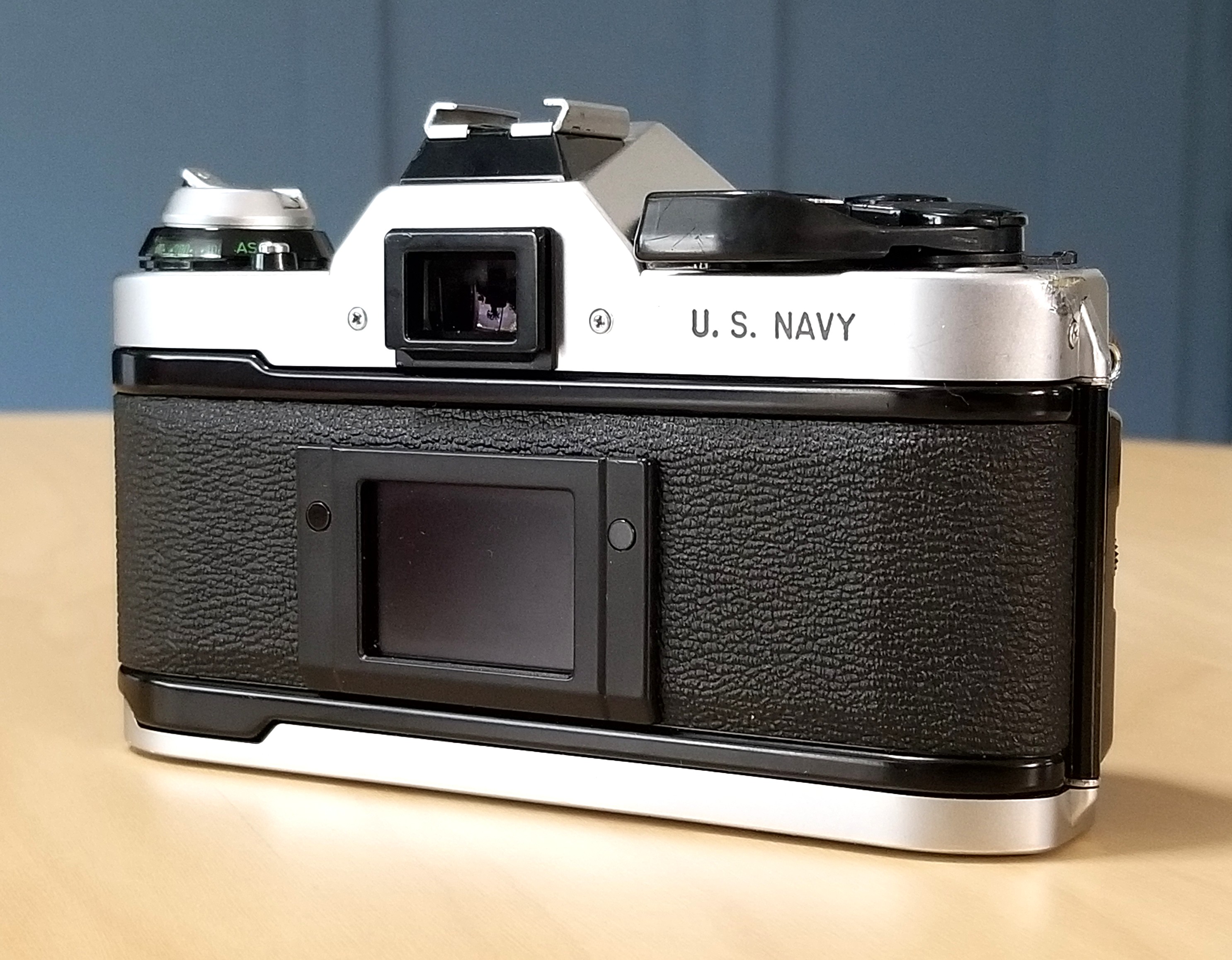
The <E.P> mark indicates that the item was an exempt purchase at a U.S. military exchange store overseas, mainly in Japan. It’s not to be confused with Canon cameras and lenses that are marked ‘U.S. Navy’.
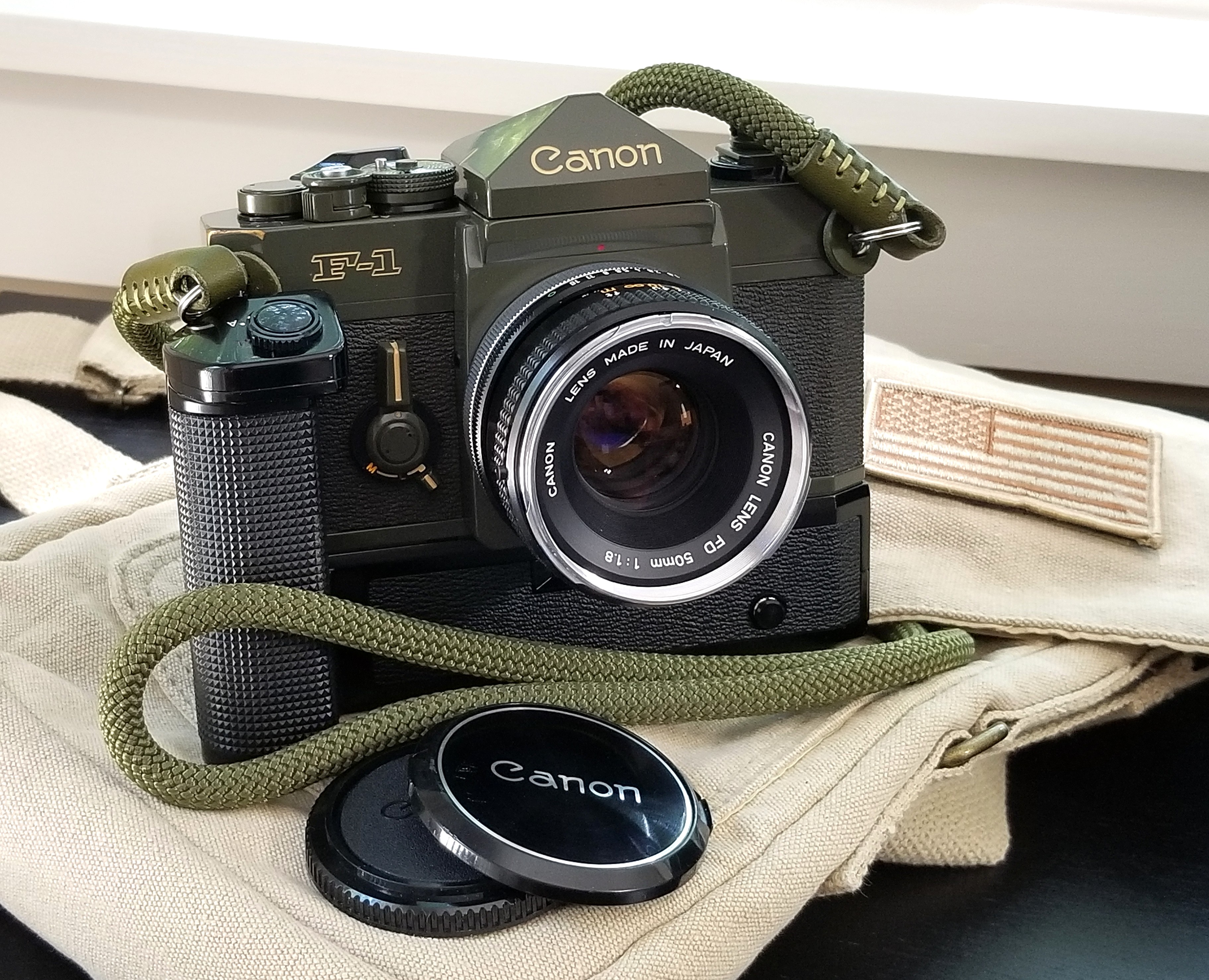
Canon 400mm lens with U.S Navy markings. The lens is from 1985.U.S. Navy marked Canon F-1n (late model). The camera is from 1981, the last year of the original F-1.Canon OD F-1. This limited-edition olive-drab-painted camera was made by Canon in early 1978 and was sold only in Japan. It was not made for any military organization.
Comments are always welcome; I’ve learned a great deal from reader feedback. As always, thanks for stopping by. While there, visit my camera shop at http://www.ccstudio2380.com (CC Design Studios, hosted on Etsy). – Chris Whelan
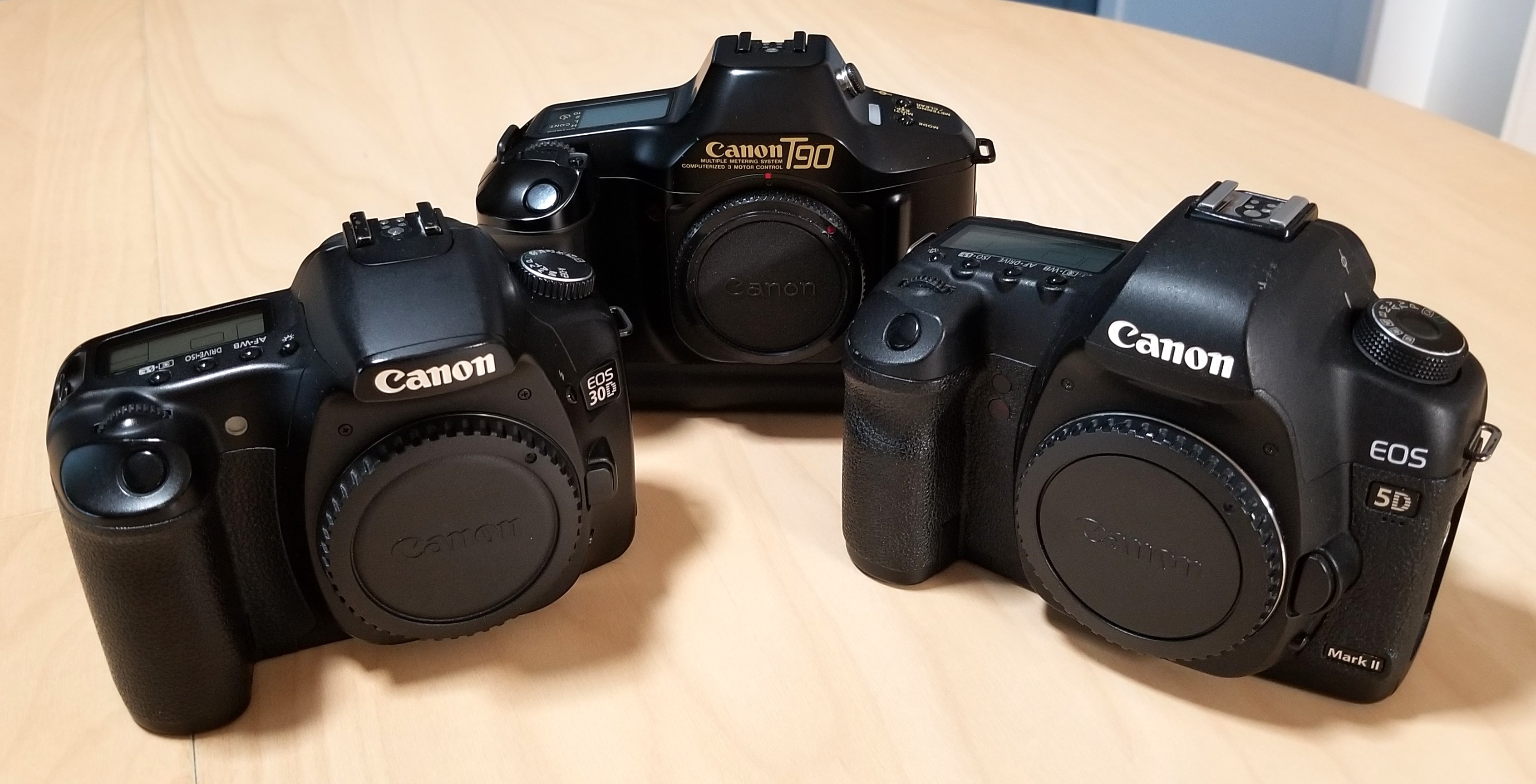
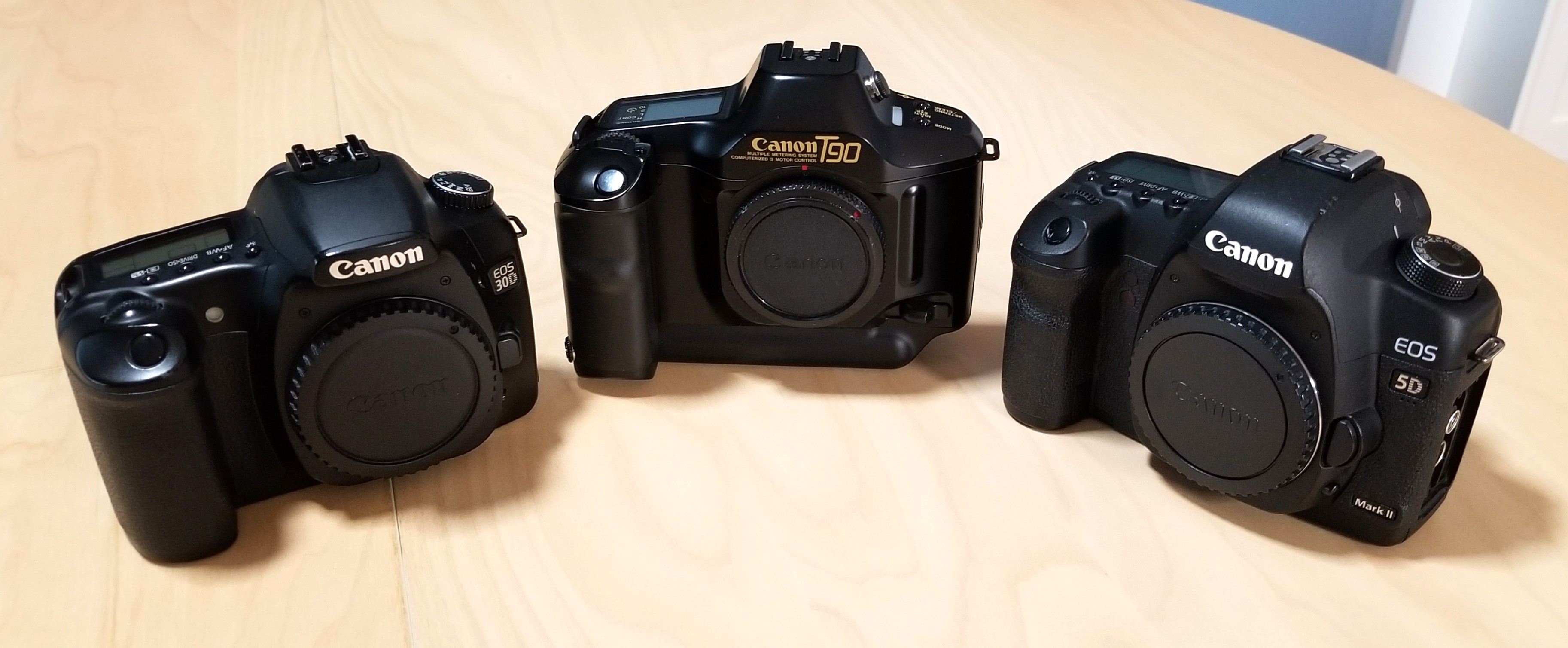
The Canon 30D is an 8.2MP APS-C crop sensor camera released in 2006. The T90 is a sophisticated 35mm SLR from 1986. The EOS 5D Mark II was released in 2008. It features a full-frame 21.1MP sensor.
As always, my camera shop, CC Design Studios, is at http://www.ccstudio2380.com. I feature an interesting mix of mostly Canon gear.
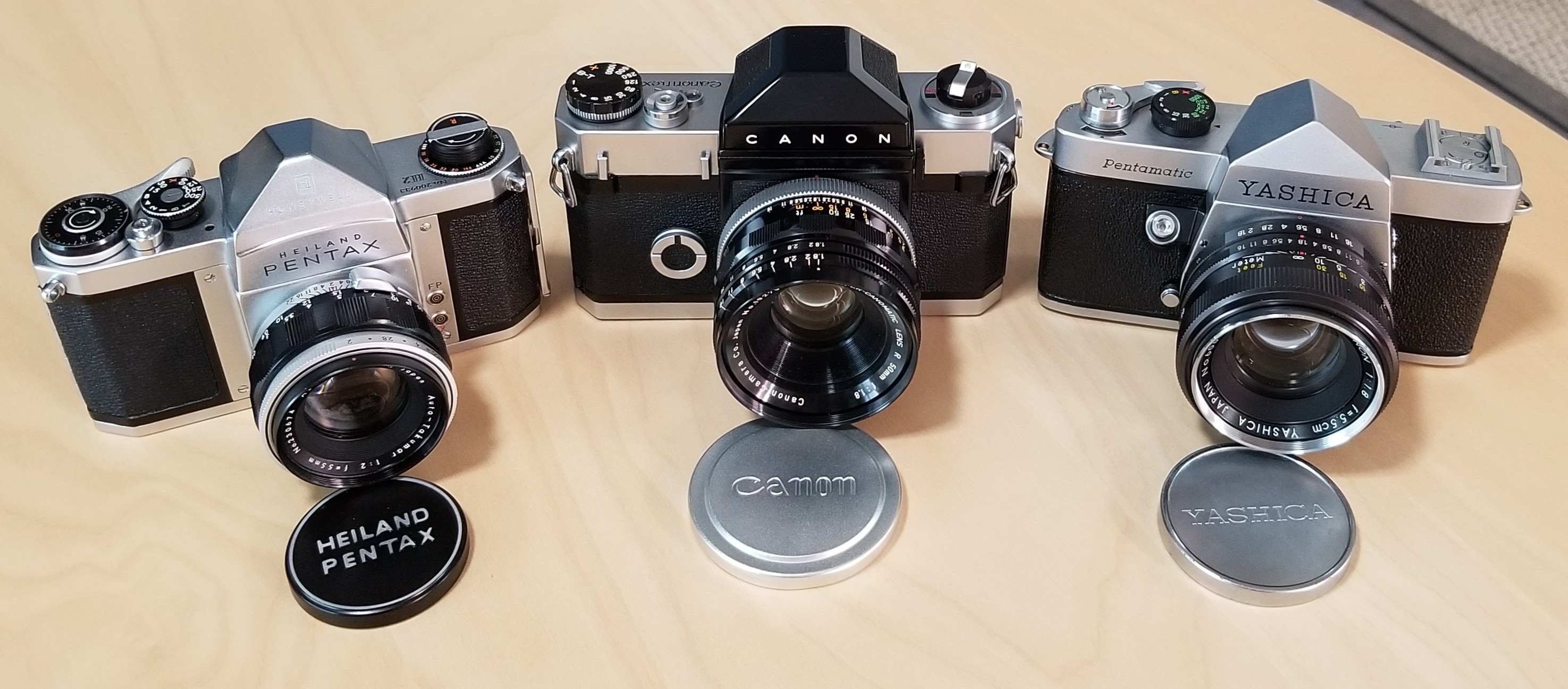
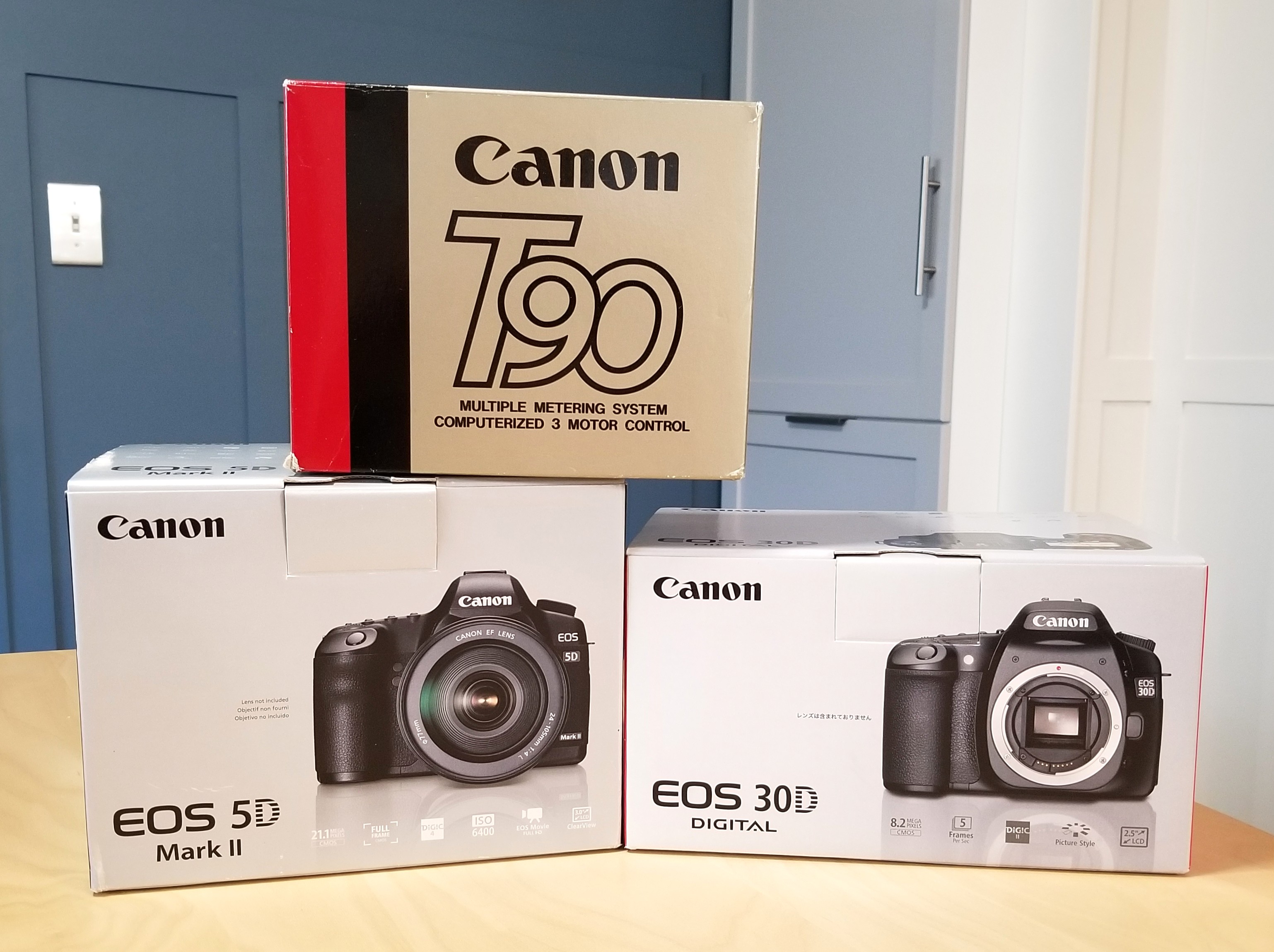
I enjoy collecting cameras with their original boxes. For me, it’s a bit like Christmas whenever I get to open a previously unused camera from decades ago.Three interesting cameras from Canon.A gem. Only opened to take pictures of it. It’s for sale in my shop now.
Comments are always welcome; I’ve learned a great deal from reader feedback. As always, thanks for stopping by. While there, visit my camera shop at http://www.ccstudio2380.com (CC Design Studios, hosted on Etsy). – Chris Whelan
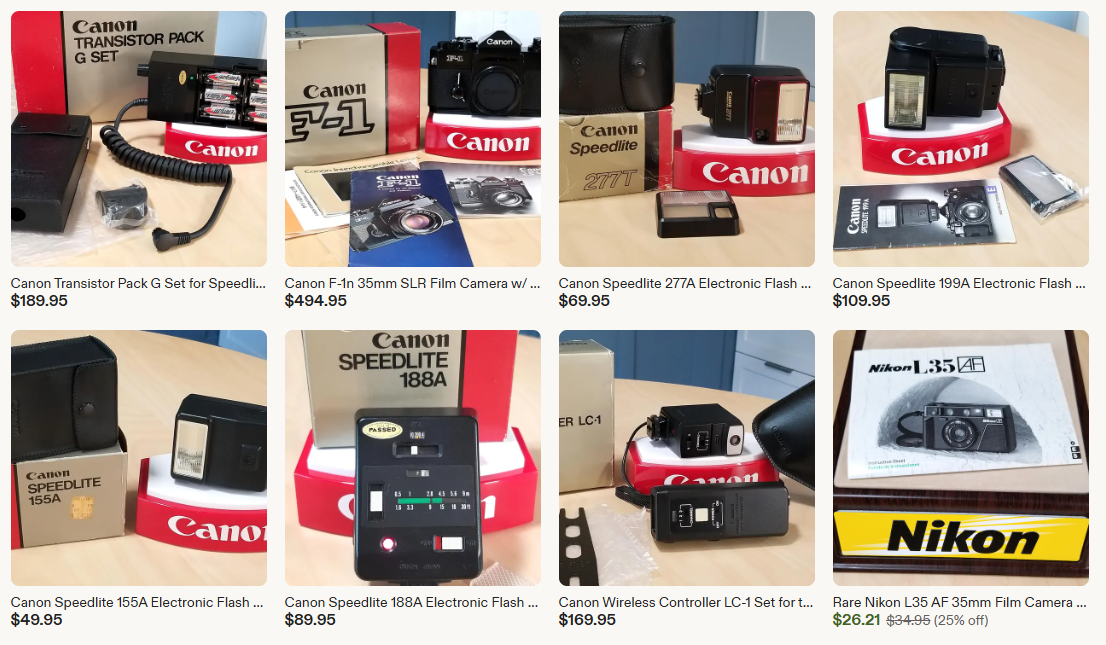
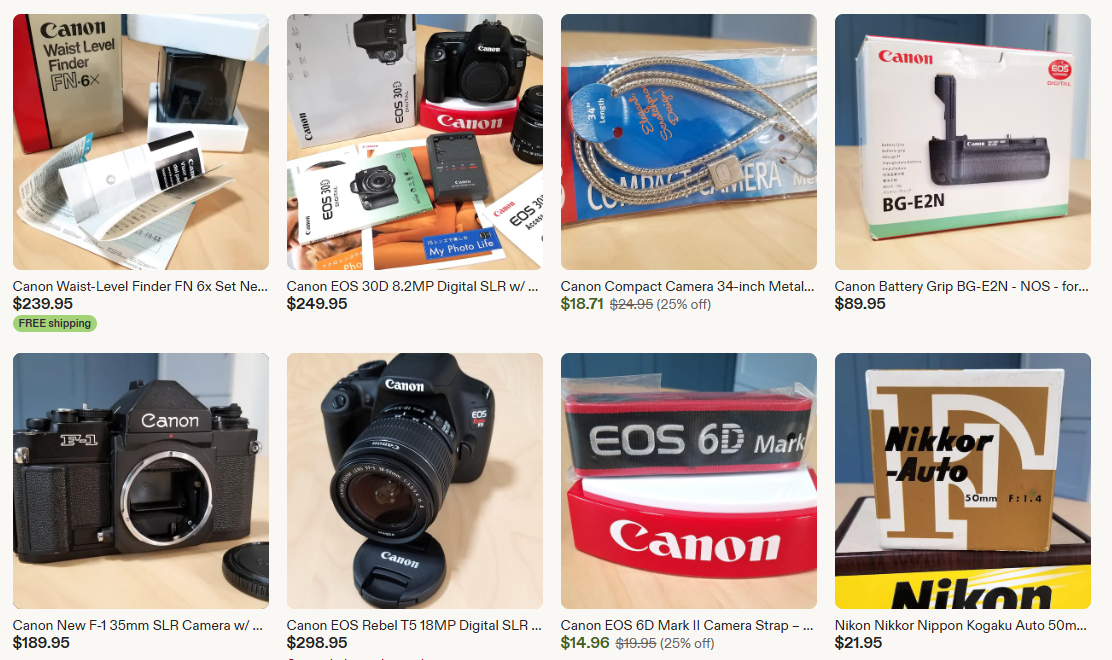
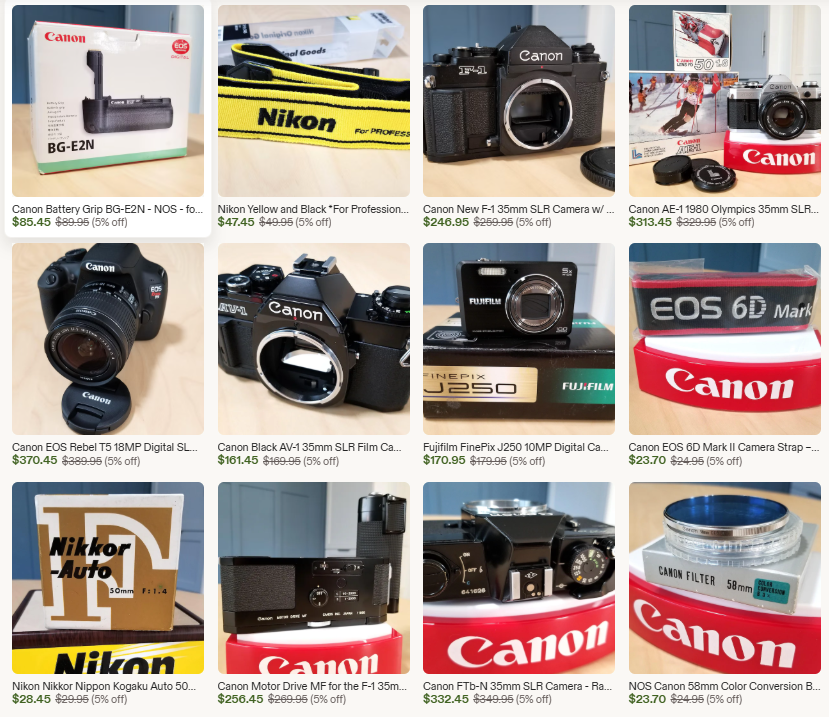
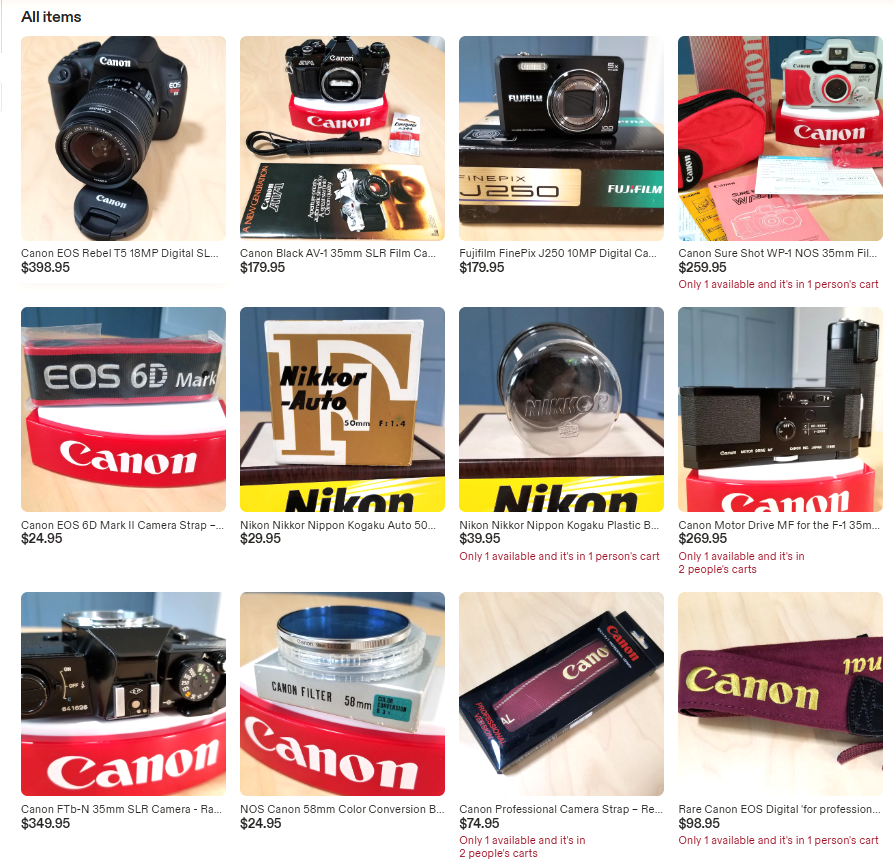
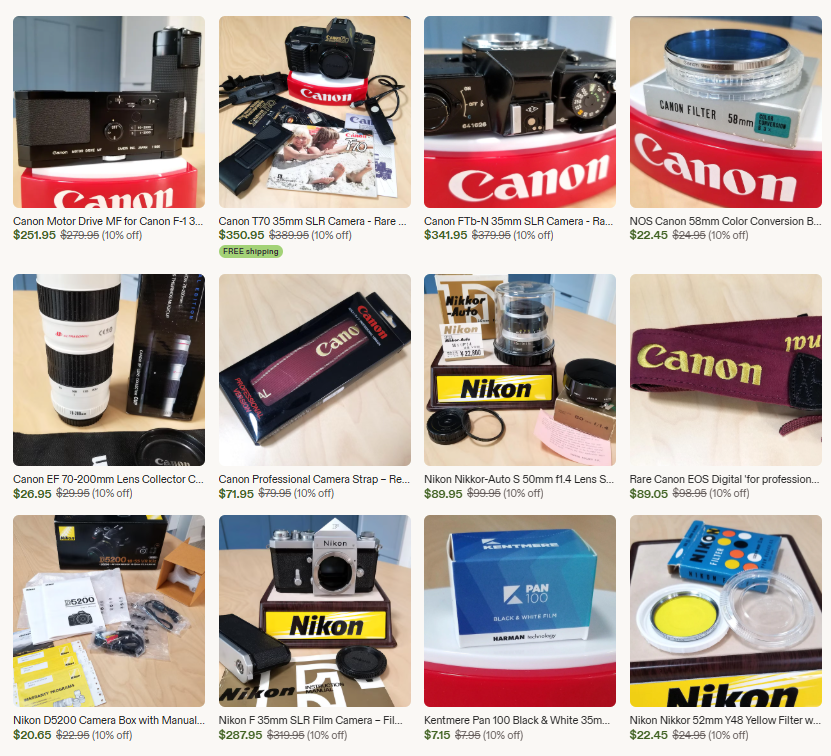
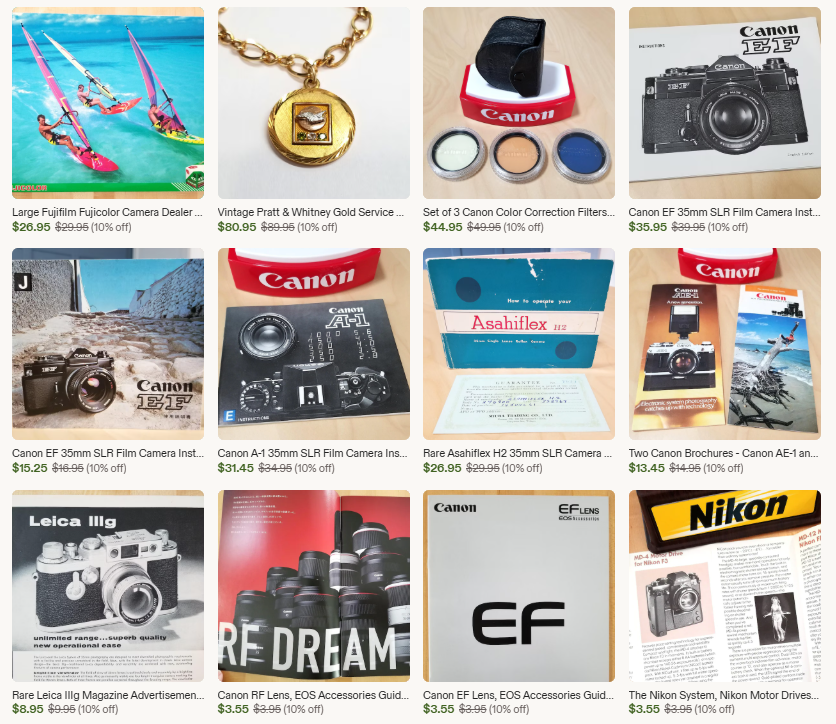
Here are just some of the items I have in my camera shop at http://www.ccstudio2380.com. Many of the items are still new and come with their original boxes. I test everything in my collection so you can be assured that it will arrive in a fully working condition.
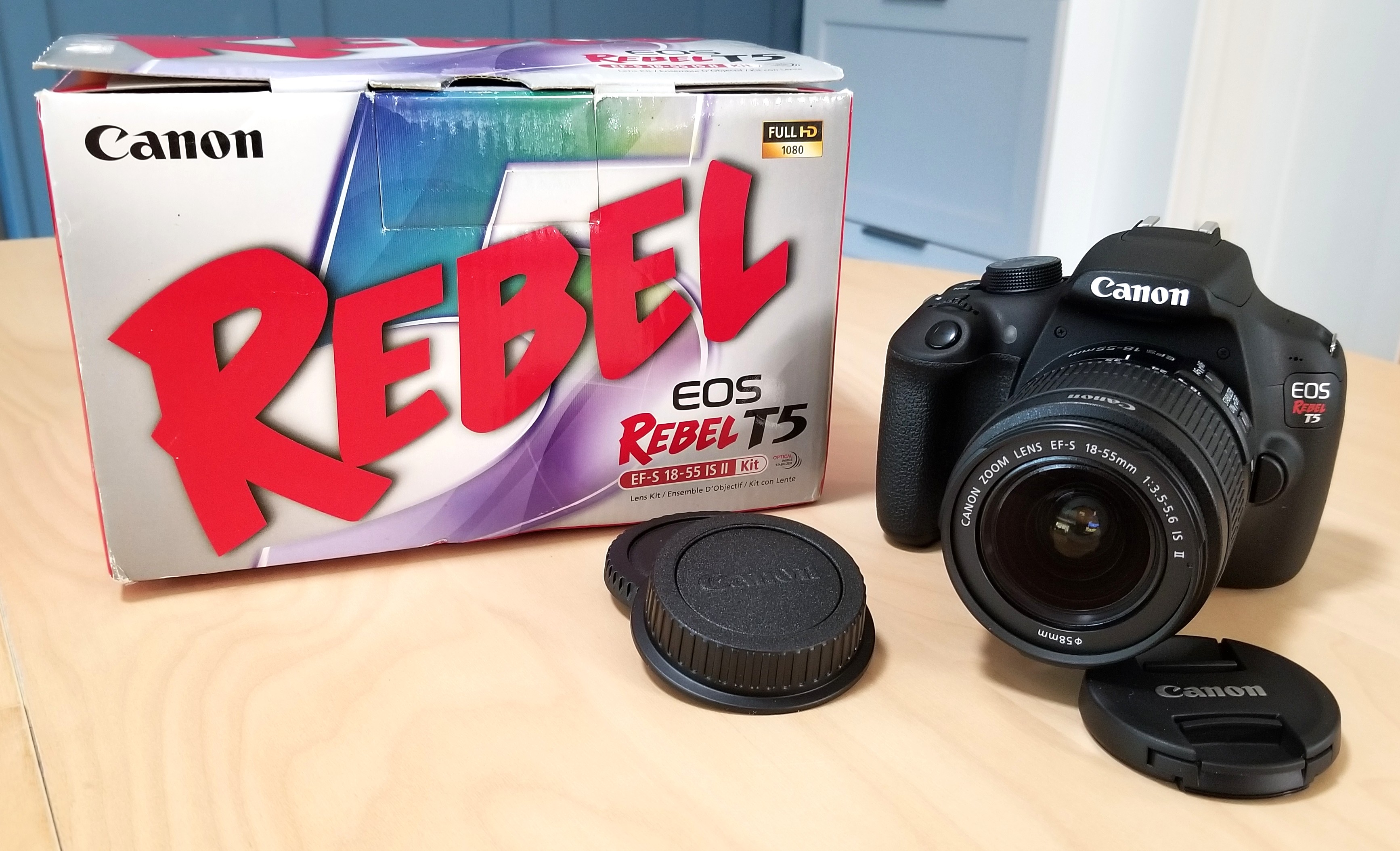
A brand new Canon EOS Rebel T5 18 MP DSLR set.A Canon AV-1 35mm film camera. It’s an aperture priority camera that uses all of Canon’s FD lenses made from 1971 to 1995.A brand new Fujifilm FinePix compact digital camera set with many extras.A Canon Sure Shot WP-1 35mm film camera set, still new and unused.
Comments are always welcome; I’ve learned a great deal from reader feedback. As always, thanks for stopping by. While there, visit my camera shop at http://www.ccstudio2380.com (CC Design Studios, hosted on Etsy). – Chris Whelan
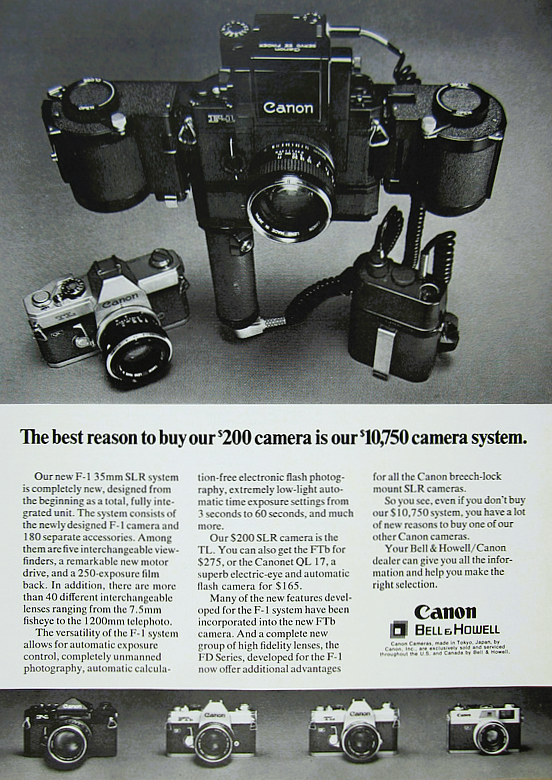
Here is an early Canon advertisement for its F-1 (and others).
In the United States, Bell & Howell was the distributor for Canon products.
The Canon F-1 was first released in the US in March 1971. Some cameras were produced as early as September 1970 to meet the release date. If you find an F-1 with a very low serial number (less than 1000), it could have been made in 1970. The internal date code would carry a ‘K’ as its first letter (K=1970).
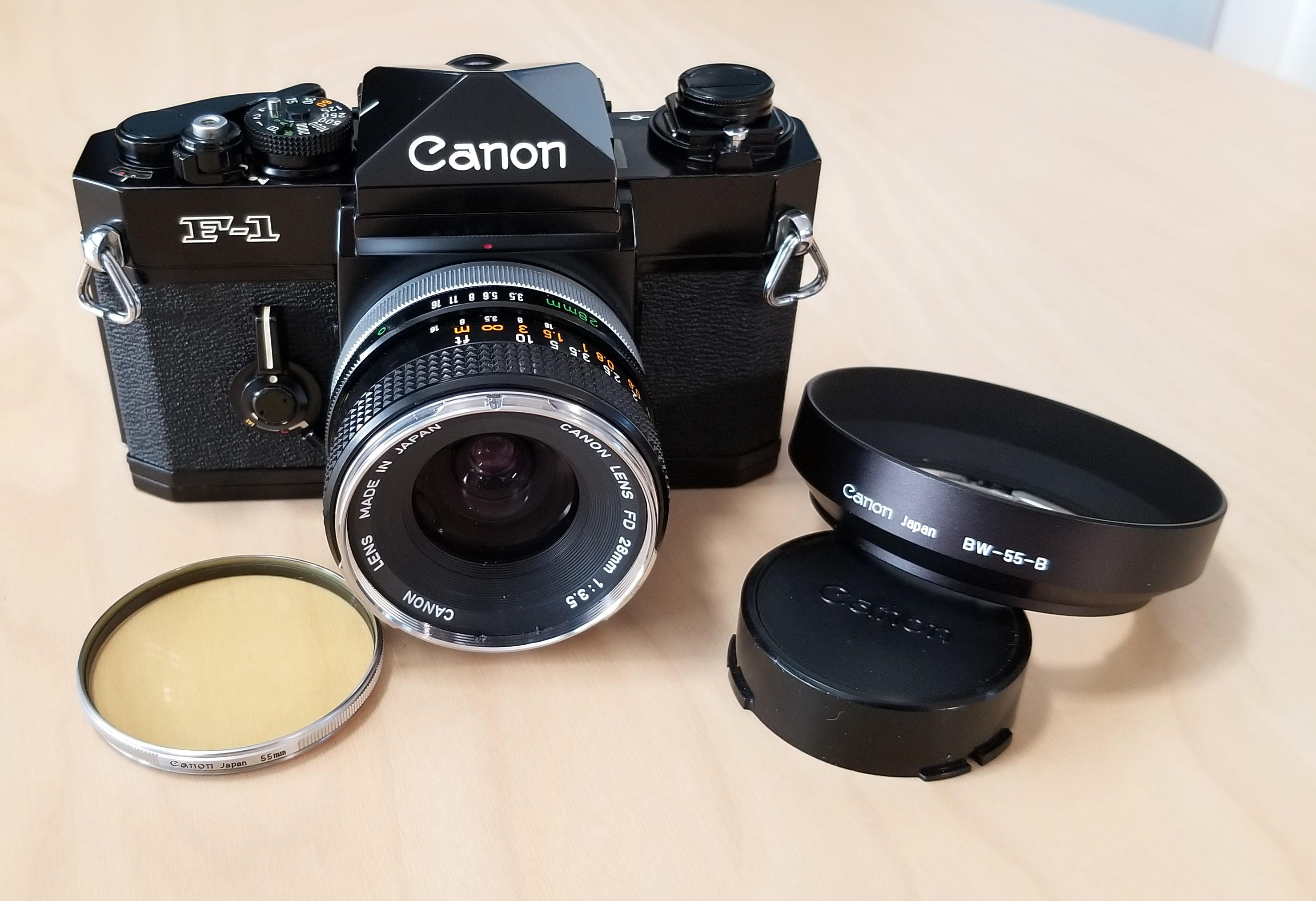
My earliest F-1 is from mid-1971.
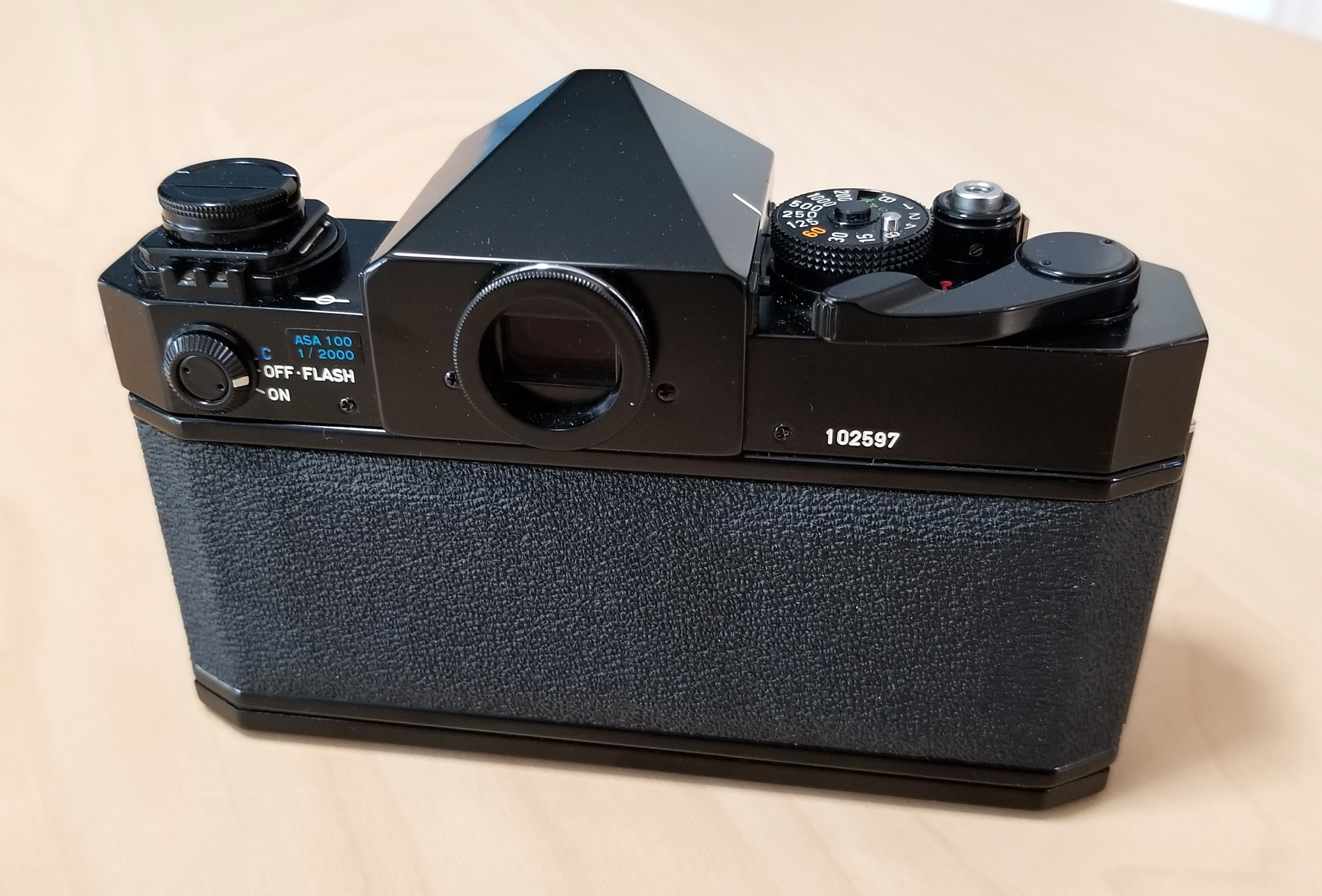
A complete, early, original Canon F-1 set.The F-1’s serial numbers started at 100001. Mine was number 2,597.
Comments are always welcome; I’ve learned a great deal from reader feedback. As always, thanks for stopping by. While there, visit my camera shop at http://www.ccstudio2380.com (CC Design Studios, hosted on Etsy). – Chris Whelan
Happy to say that my most recent F-1 purchase from Japan did not disappoint. It’s hard to imagine a camera from January 1976 can still be this nice.
I see these early F-1s as little bits of Canon art – few cameras can match the design, elegance, and toughness of these gems.
The Canon patch was included with a bunch of early 1970s Canon brochures. I believe it was made at the same time the F-1 was released.My 1978 limited edition Canon F-1 in OD paint. Only 3,000 (or fewer) were made and only for the Japanese domestic market.
I believe the seller undervalued his camera by quite a bit. He did describe it as *Top Mint*, which is accurate. It’s unfortunate that more sellers don’t realize that when you call a camera mint, this is it.
It’s one of the best 35mm SLR cameras ever made.
Classic Canon SLR design.Brochure from the late 1970, just before the F-1’s March 1971 release.
Comments are always welcome; I’ve learned a great deal from reader feedback. As always, thanks for stopping by. While there, visit my camera shop at http://www.ccstudio2380.com (CC Design Studios, hosted on Etsy). – Chris Whelan
I’ve always viewed the Canon Seiki logo of the mid to late 1930s as a phoenix rather than any other bird. To me, the feathers on the rear of the head do not suggest an eagle or a vulture. The phoenix is almost always depicted with its wings outstretched.
I showed my wife the SEIKI logo and told her it was for a Japanese camera from the mid-to-late 1930s. She identified it immediately as a phoenix. When I mentioned that some see it as an eagle or vulture, she reminded me of how important a phoenix is in ancient Japanese culture.
The feathers on the rear of its head, which are a prominent feature of the logo and of a phoenix, whereas vultures are generally identified by a ‘bald’ head.
*A common trait of vultures found in Asia (Old World vultures) is their reliance on exceptional eyesight to spot carrion from high altitudes. They also have bare or lightly feathered heads to keep clean while feeding on carcasses.
If I were picking a logo for a new camera company in Japan in the 1930s, I would seriously consider the phoenix.
*In ancient Japanese culture, the phoenix—known as the Ho-o or Hoo—is considered the most sacred bird, symbolizing the imperial family, fire, the sun, and the virtues of faith, duty, and mercy. Often paired with the dragon (representing the emperor) to symbolize marital bliss and harmony, the Ho-o is a powerful emblem of longevity, rebirth, and political authority.
The original Canon logo from the 1930s.Embossed on a leather camera case.
What do you see? An eagle, a vulture, a phoenix, or something else? Canon never acknowledged what it was.
Comments are always welcome; I’ve learned a great deal from reader feedback. As always, thanks for stopping by. While there, visit my camera shop at http://www.ccstudio2380.com (CC Design Studios, hosted on Etsy). – Chris Whelan
The Nikon F2A set is exceptionally nice and complete. It even features a Nikon motor drive!The Canon New F-1 is a limited edition 1984 LA Olympics set.Sales brochures. I have hundreds of brochures and instruction books.
I ship nearly worldwide. Please reach out if there’s something specific you are looking for – I likely have it! Here are two of the best 35mm SLRs from the late 1970s and early 1980s (see below).
My super-sharp, complete Nikon F2A set.(Sold) The 1984 Los Angeles Olympic Special Edition Canon F-1.
The Canon F-1 LA Olympic set was just sold from my Etsy Camera Shop – thank you!
Comments are always welcome; I’ve learned a great deal from reader feedback. As always, thanks for stopping by. While there, visit my camera shop at http://www.ccstudio2380.com (CC Design Studios, hosted on Etsy). – Chris Whelan