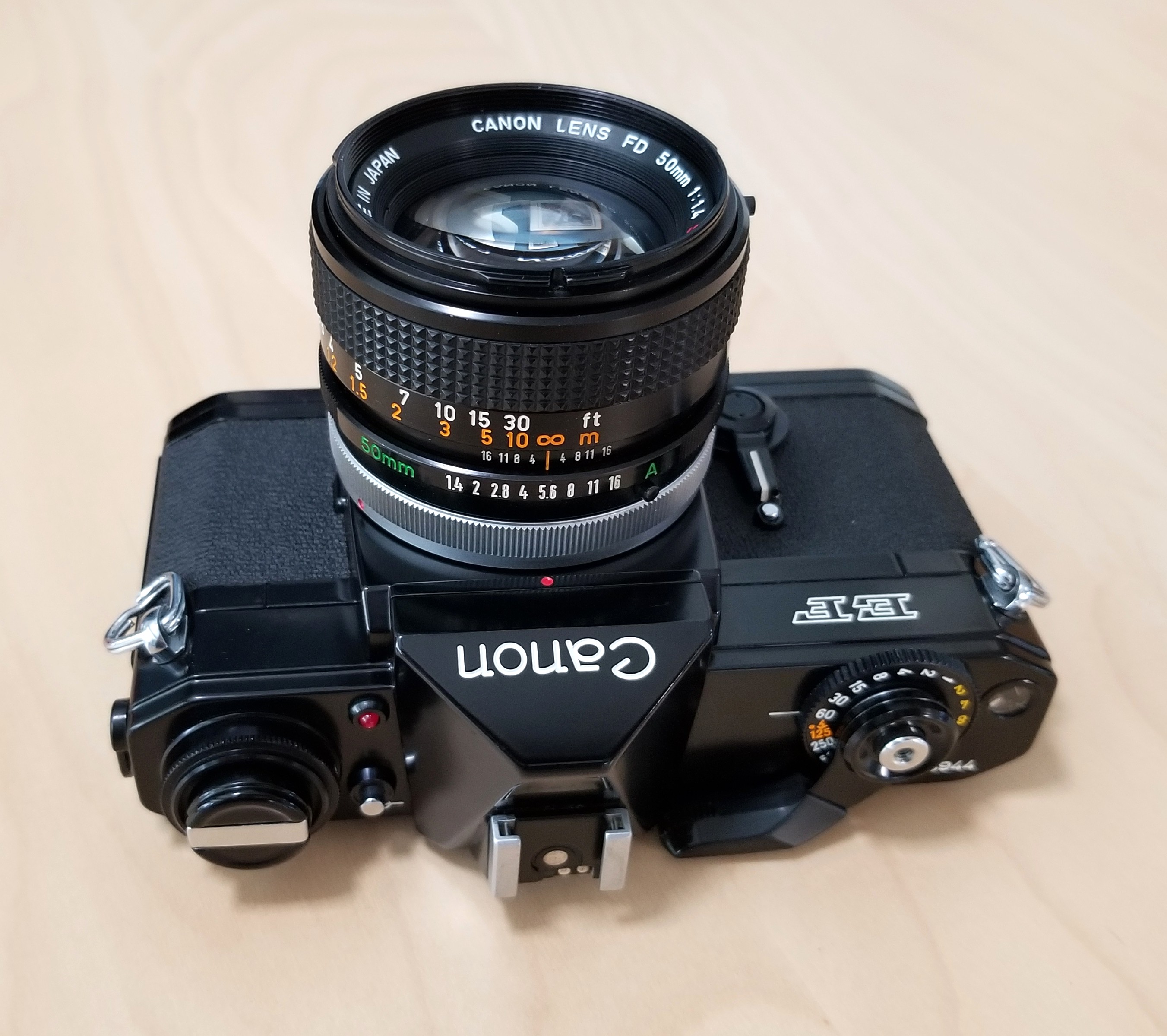
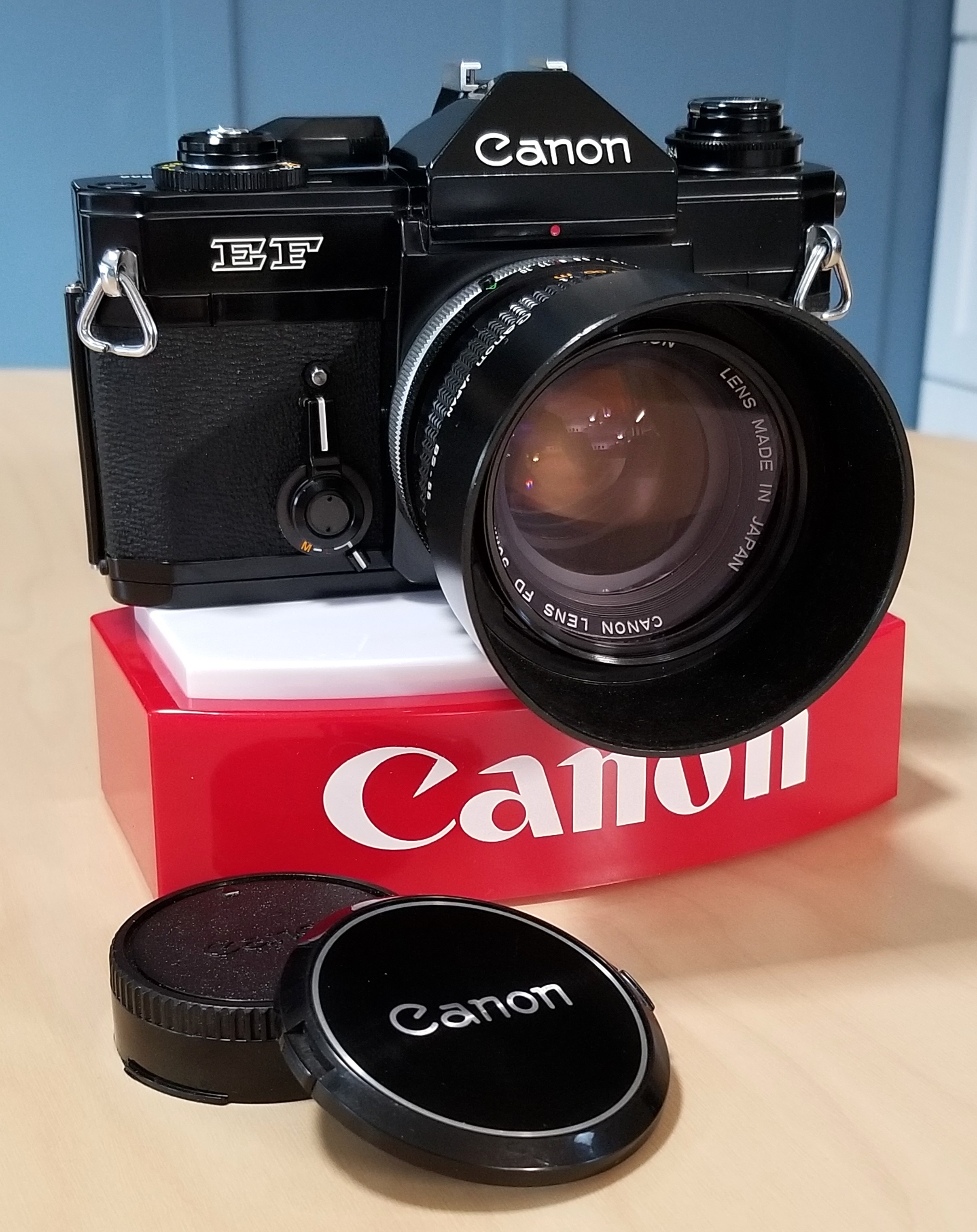
This is the last Canon EF 35mm film camera in my collection. I’ve owned quite a few over the years, but I kept this one because it’s in mint condition and works perfectly. This EF was made in early 1976. It’s affectionally know as the Black Beauty.
It’s a very close cousin to the Canon F-1. The original F-1 was released in March 1971. The EF made its appearance in November 1973.It’s one of the most underrated cameras of the 1970s, and in some ways was better than the F-1 straight out of the box.
If you’re looking to add a classic film camera from the seventies, the Canon EF is worth the chase!
Comments are always welcome; I’ve learned a great deal from reader feedback. As always, thanks for stopping by. While there, visit my camera shop at http://www.ccstudio2380.com (CC Design Studios, hosted on Etsy). – Chris Whelan
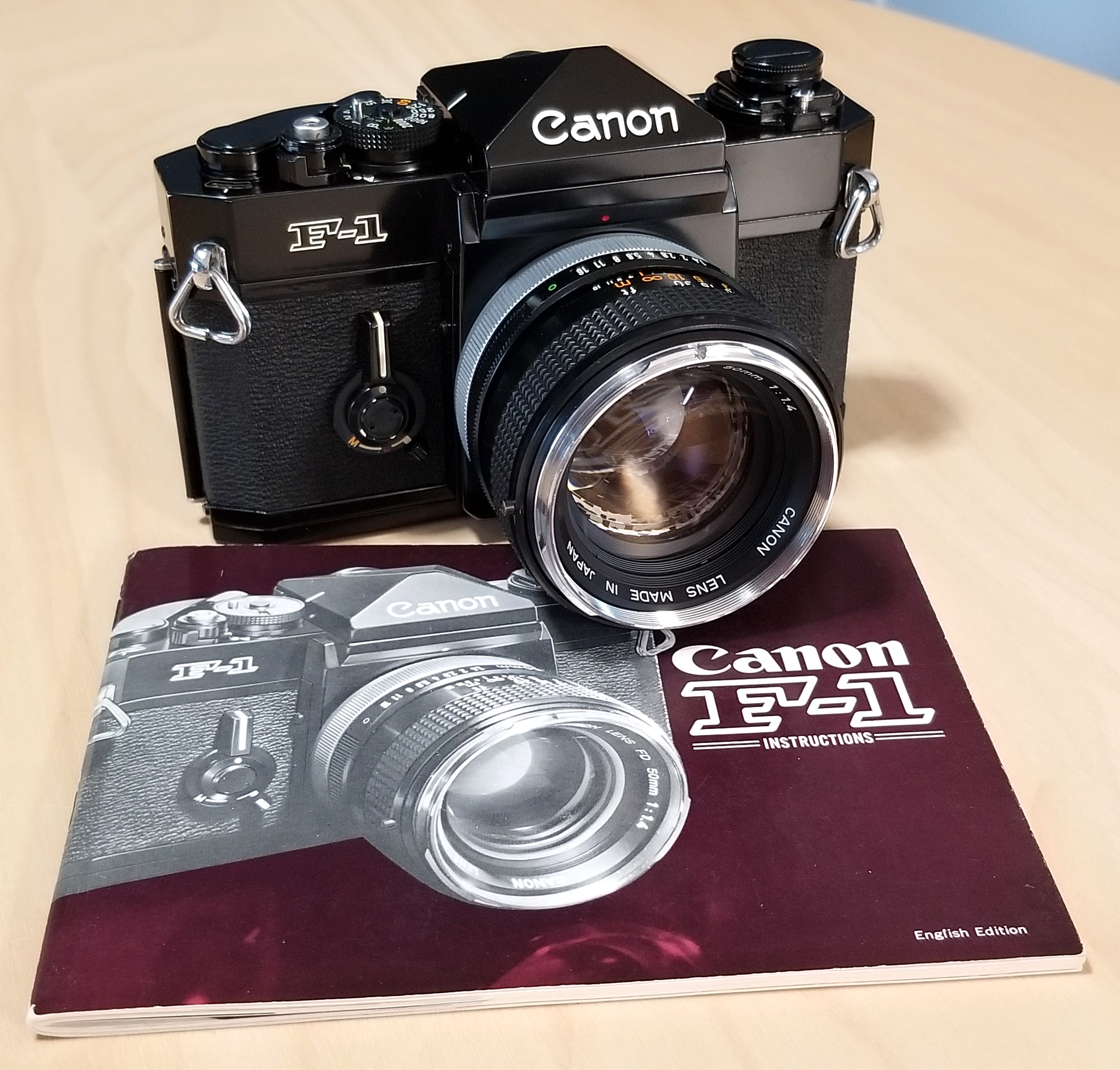
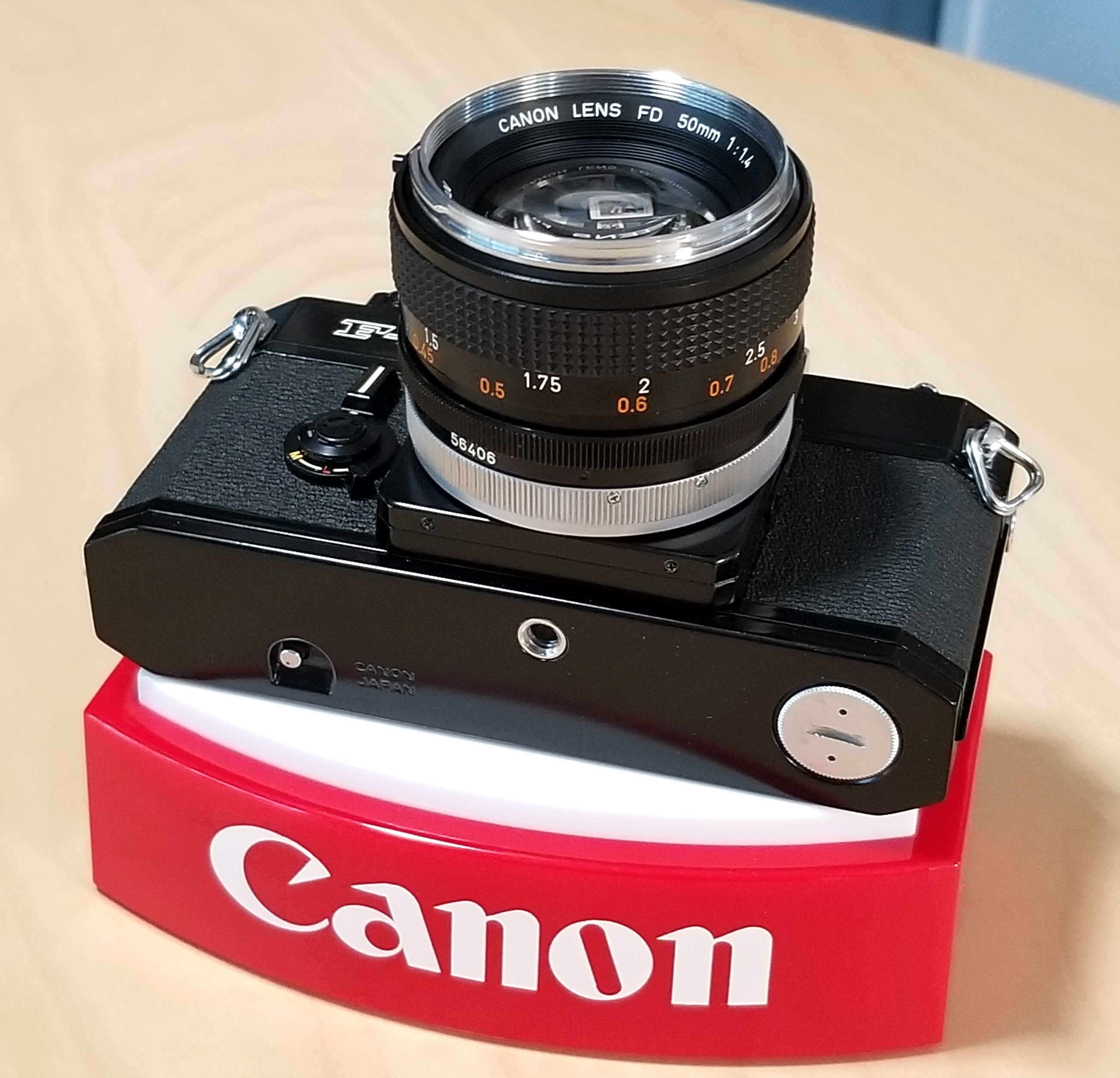
My early F-1, July 1971, with a matching July 1971 50mm f1.4 lens and a November 1971 instruction book (PUB. NO. 5366G). These very early books are almost harder to find than the cameras.
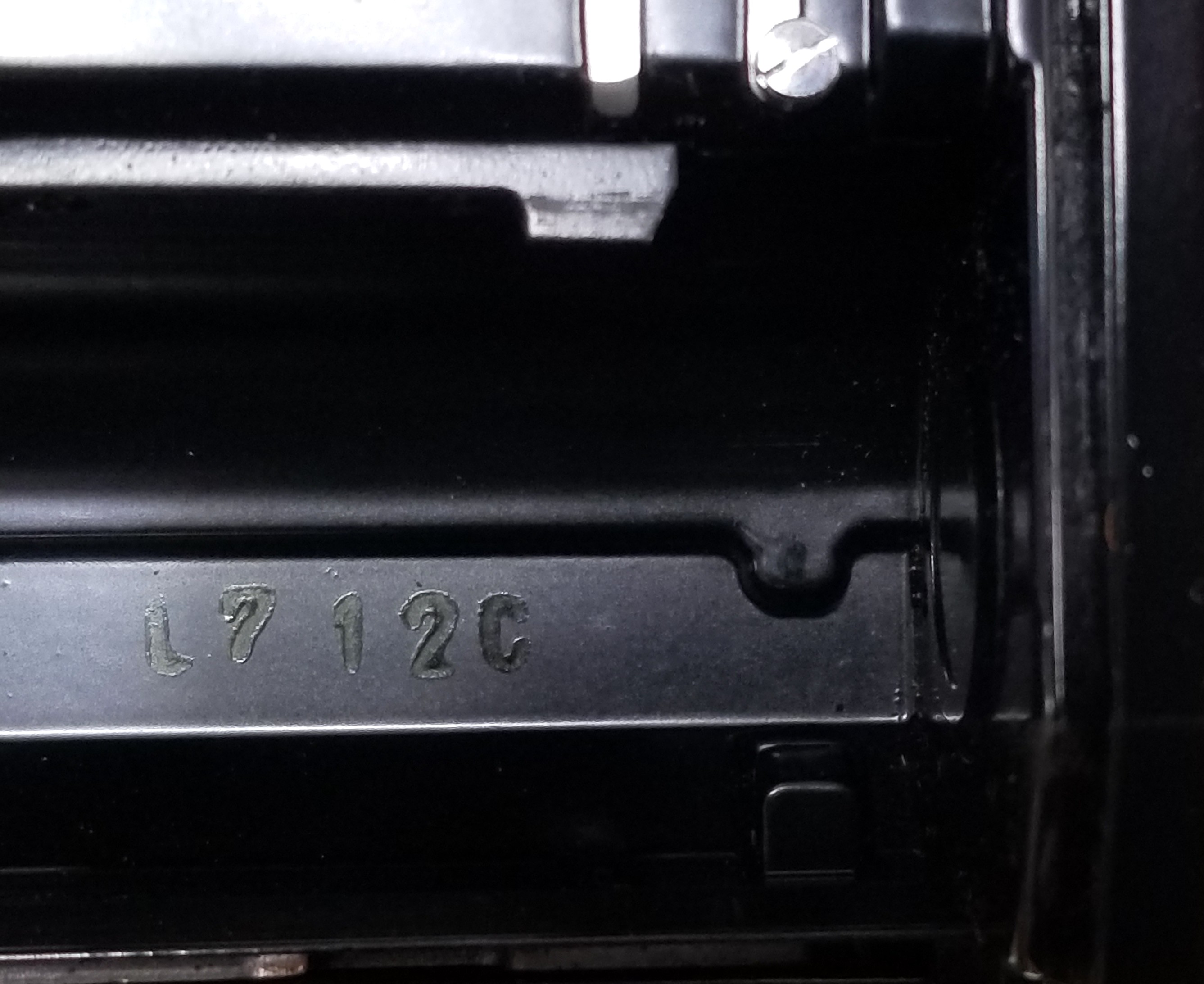
What’s interesting about this camera is that the serial number is less than 3,000, but the date stamp inside reads L712C, indicating July 1971. I have an August 1971 camera, and its SN is just shy of 20,000. My guess is that, for whatever reason, this body sat around long after its serial number was issued. The ‘C’ after the date stamp may tell the story that we’ll never know.
An early gem of a camera.Almost as new as the day it rolled off the line.The first F-1s began at 100001. This one should have been assembled in December 1970 or January 1971, based on the low serial number. The F-1 was released in March 1971.The baseplate is in excellent condition for such an old F-1.Canon stamps what is believed to be a factory date code inside the film chamber of every camera made. This code indicates that it was assembled in 1971 (L), July (7). The following two numbers are an internal code, as is the ‘C’ – lost in time as to their meaning.
Comments are always welcome; I’ve learned a great deal from reader feedback. As always, thanks for stopping by. While there, visit my camera shop at http://www.ccstudio2380.com (CC Design Studios, hosted on Etsy). – Chris Whelan
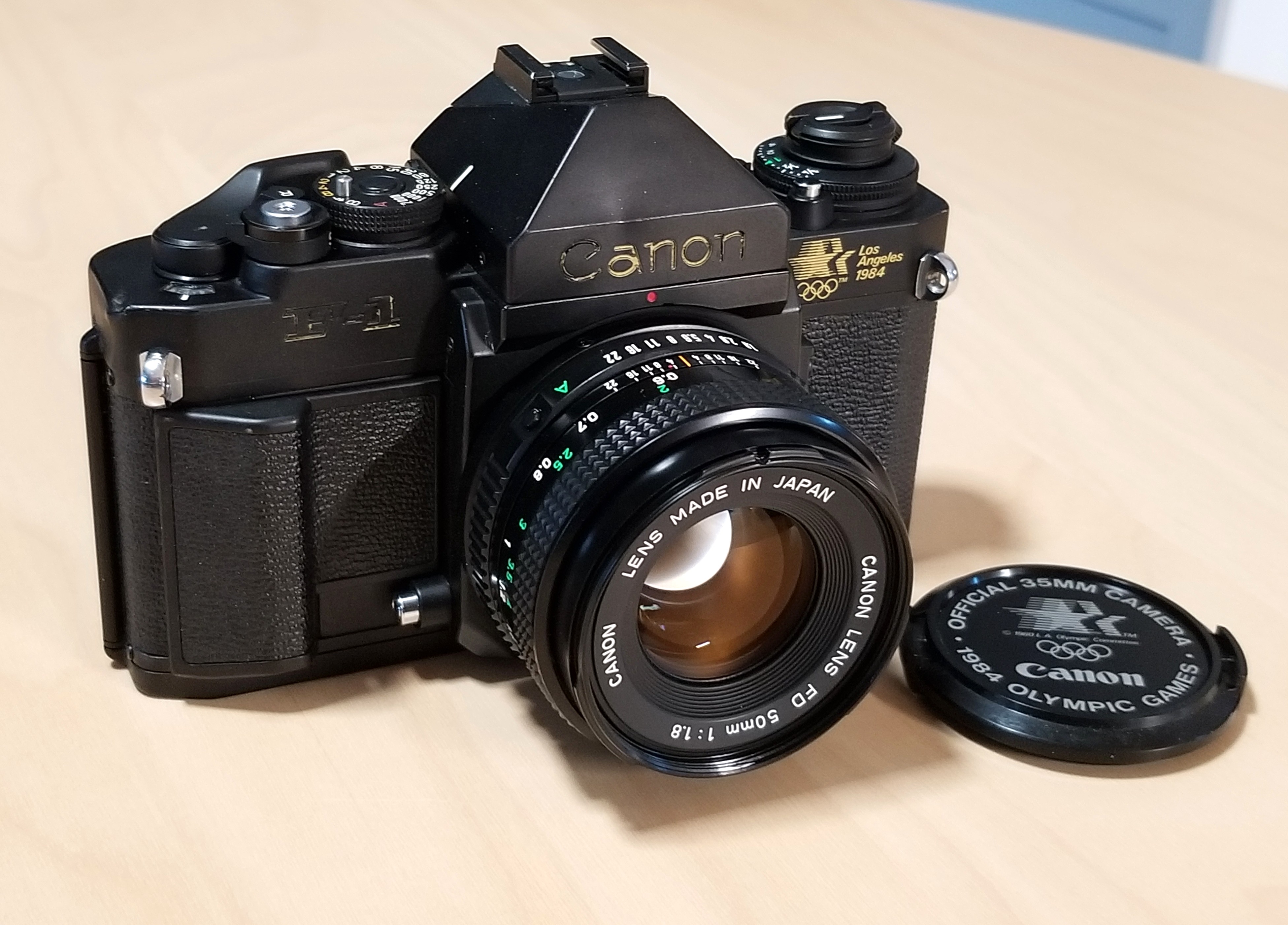
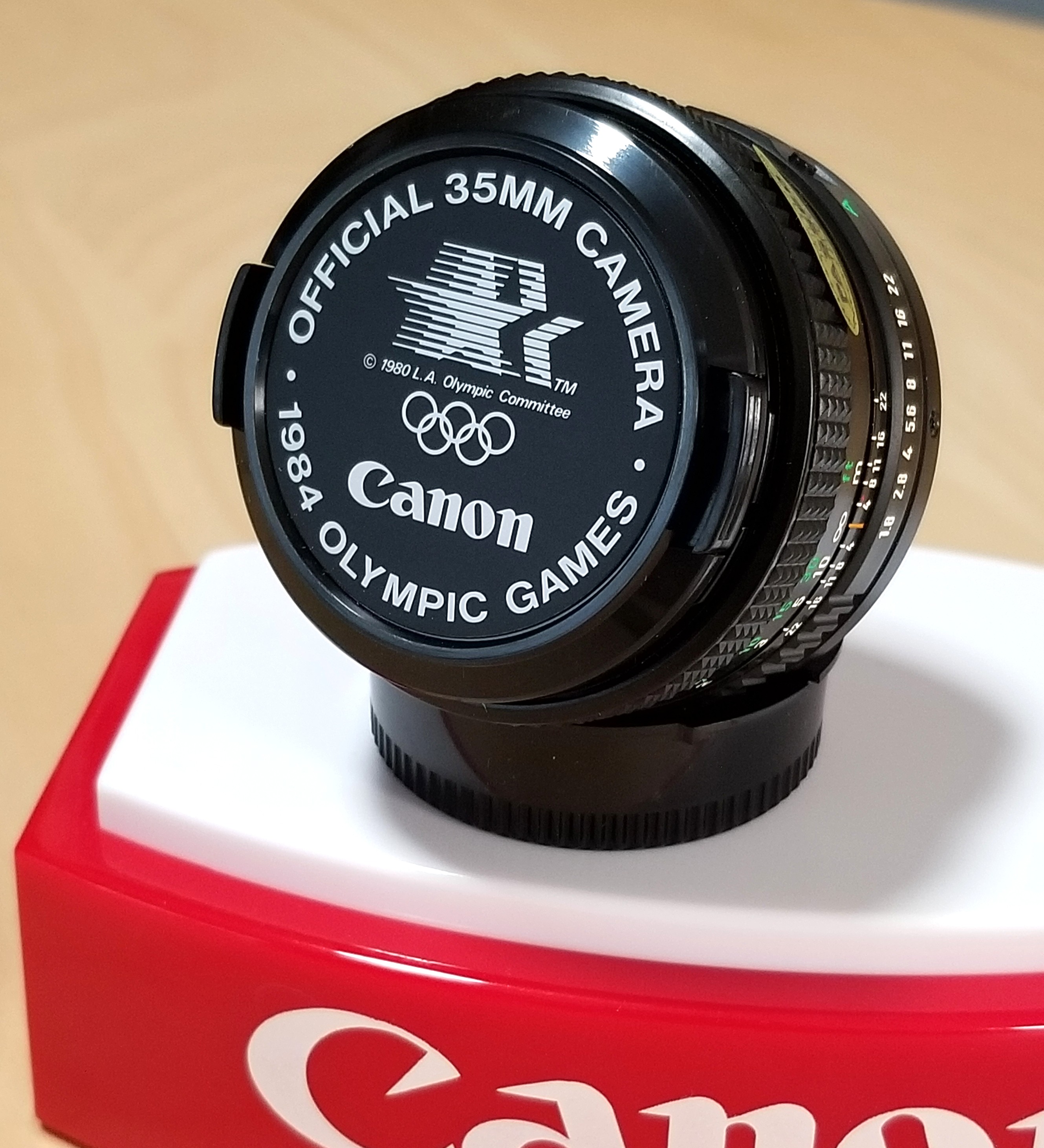
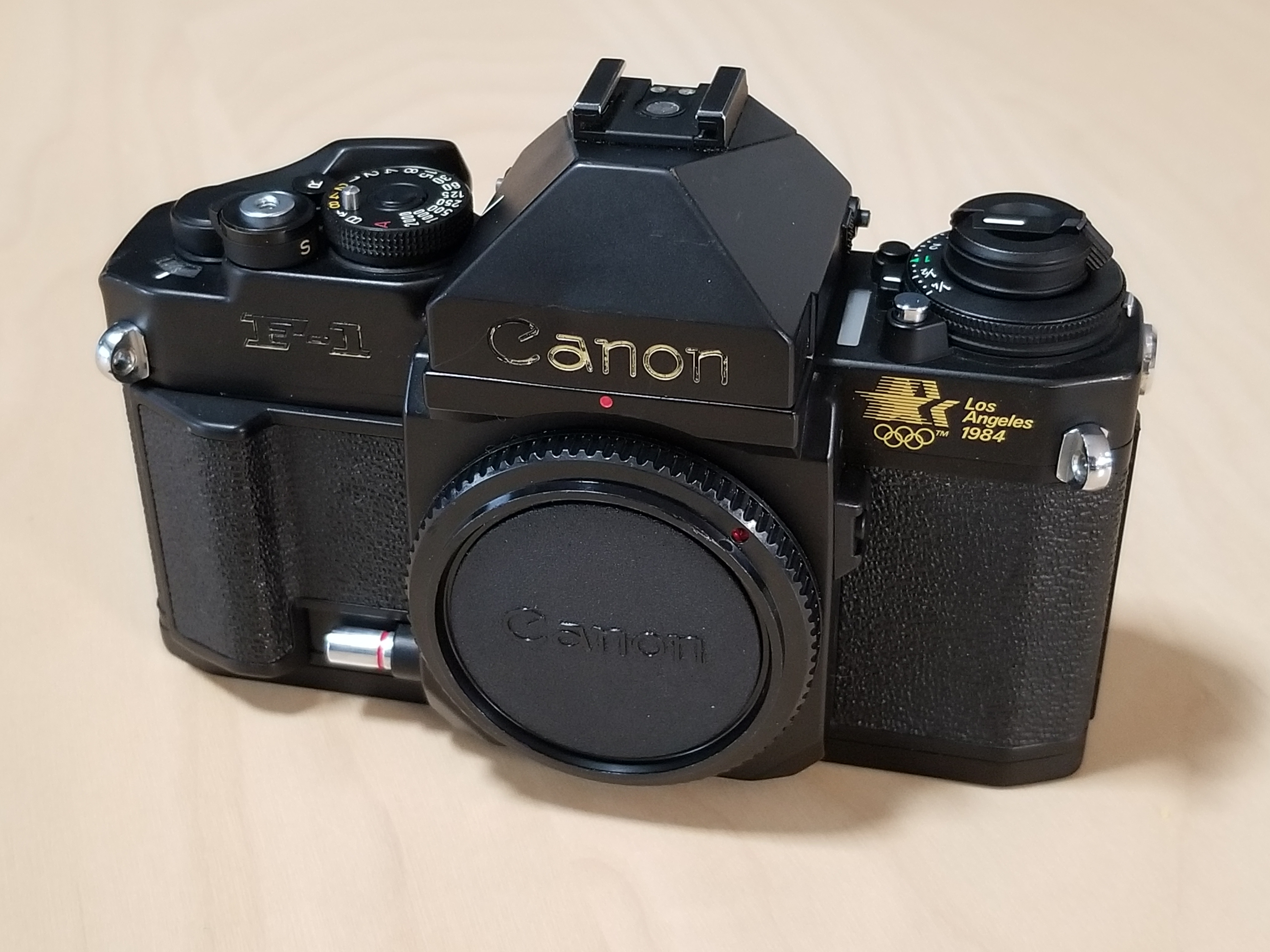
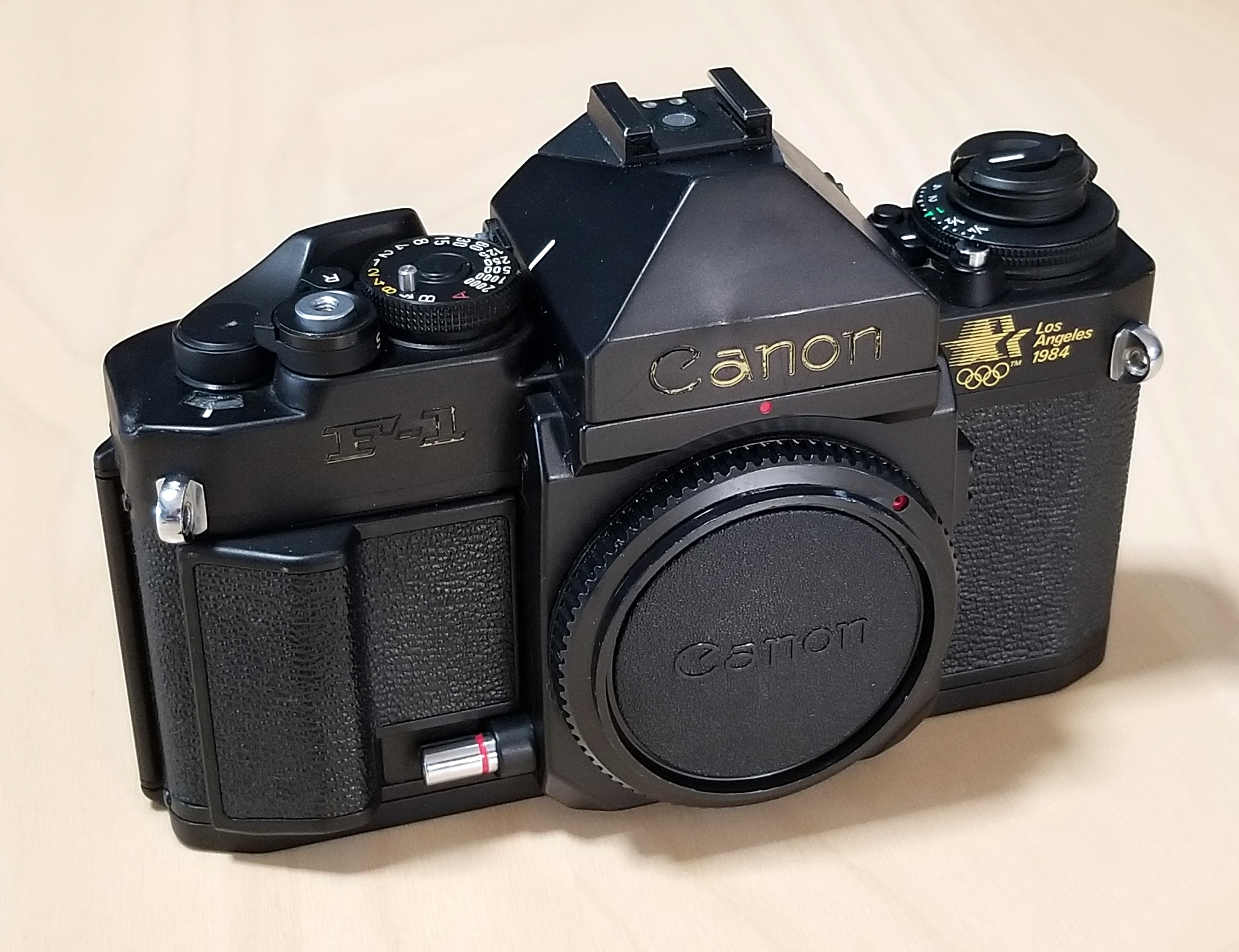
My well-used but super-clean Canon New F-1 (F-1N) limited-edition Los Angeles 1984 camera set.
The LA Olympics F-1 is a favorite with collectors. Most ended up either being gently used or put on display. Fewer than 9,500 were made. My F-1 was obviously a busy camera throughout its life. It was assembled in November 1983, and the lens in October. Most of these were made with the AE finder, which makes mine a bit more unusual because it has an eye-level finder. Everything works as designed.
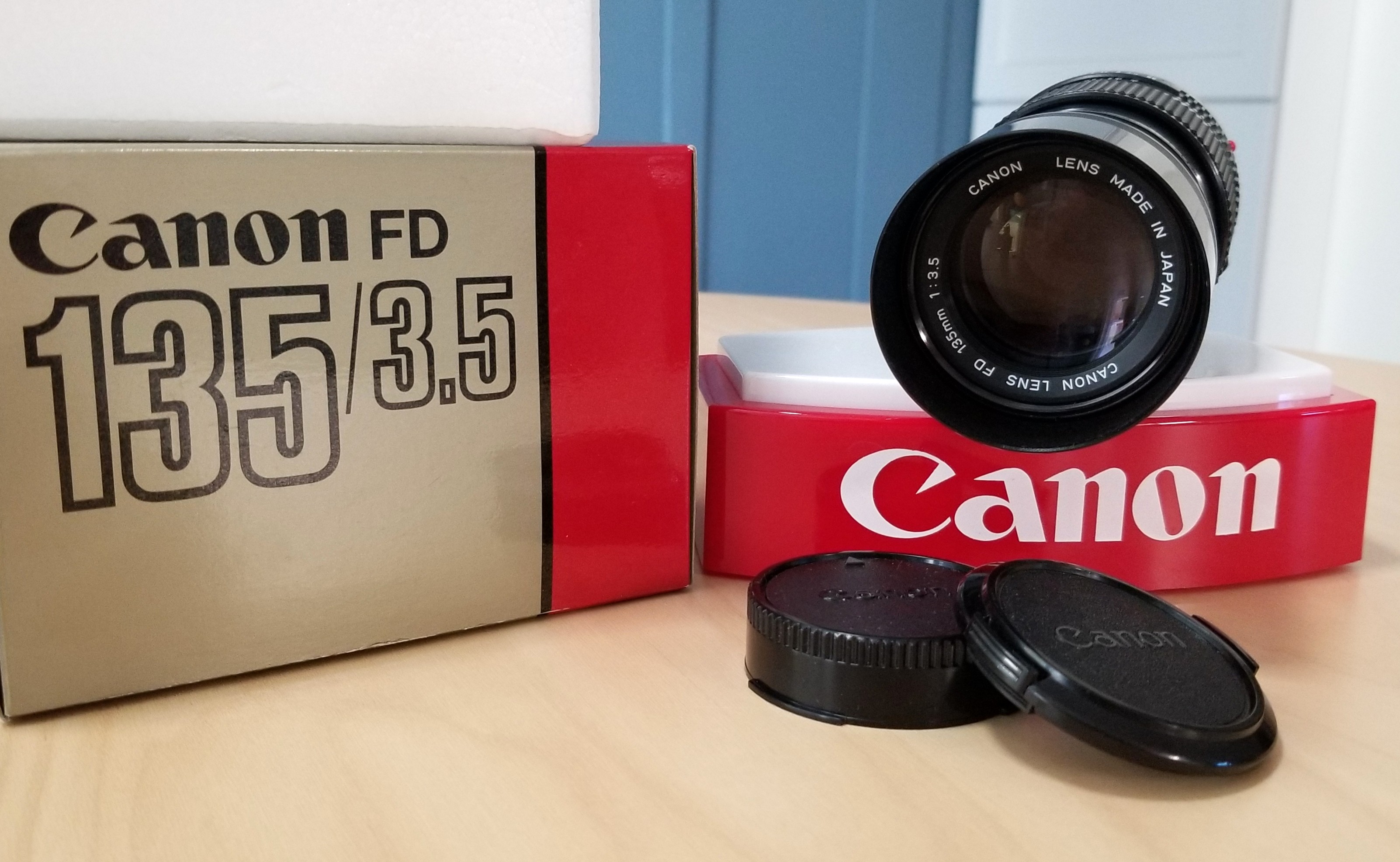
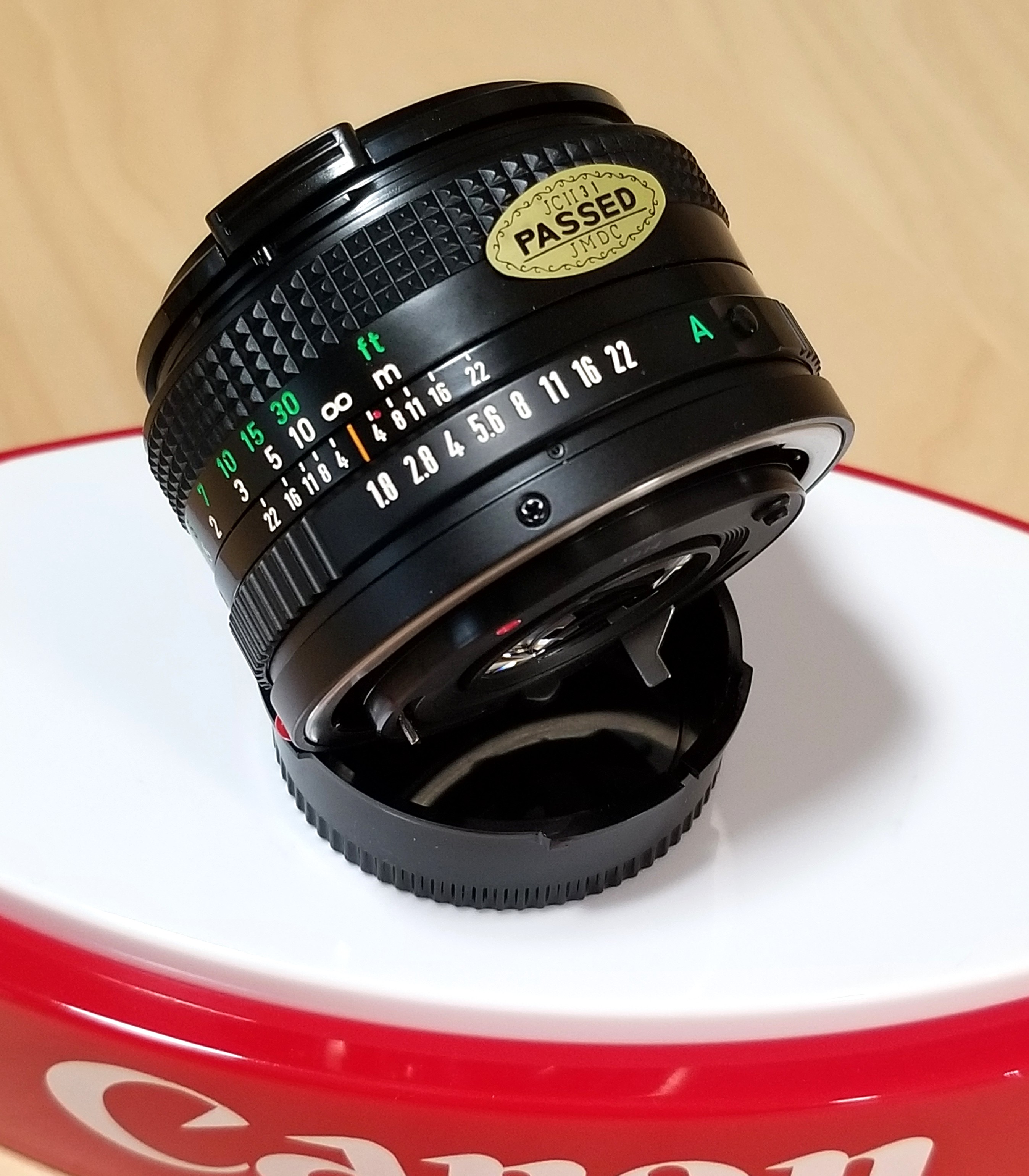
Canon New FD 135mm f3.5 short telephoto lens set. The 135 is a popular lens for portraits, sporting events, and wildlife photography.It’s no secret that I love super-wide-angle lenses, the wider the better. I’ve used the 17mm and the 24mm; the 20mm is a nice compromise between those two.Who doesn’t love a still-mint-condition instruction booklet?My last unused Canon 50mm.Pristine.Remembering a sharp camera from the late 1970s. My last cine camera before I got my first video camera.
As I continue to downsize my collection, these special Canons are now available in my Etsy camera shop at http://www.ccstudio2380.com.
Comments are always welcome; I’ve learned a great deal from reader feedback. As always, thanks for stopping by. While there, visit my camera shop at http://www.ccstudio2380.com (CC Design Studios, hosted on Etsy). – Chris Whelan
Canon made these limited-edition cameras for the 1984 Summer Olympics held in Los Angeles.
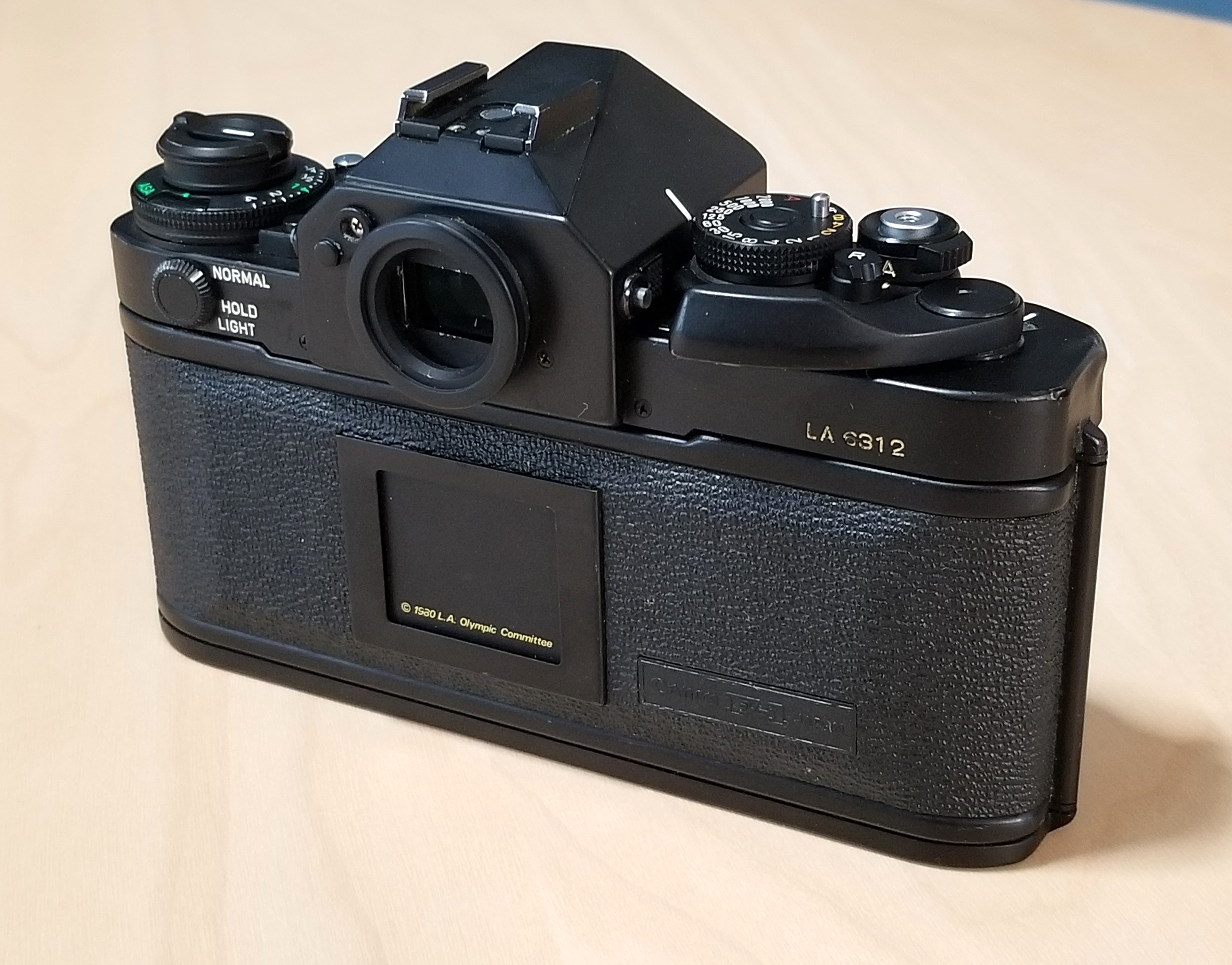
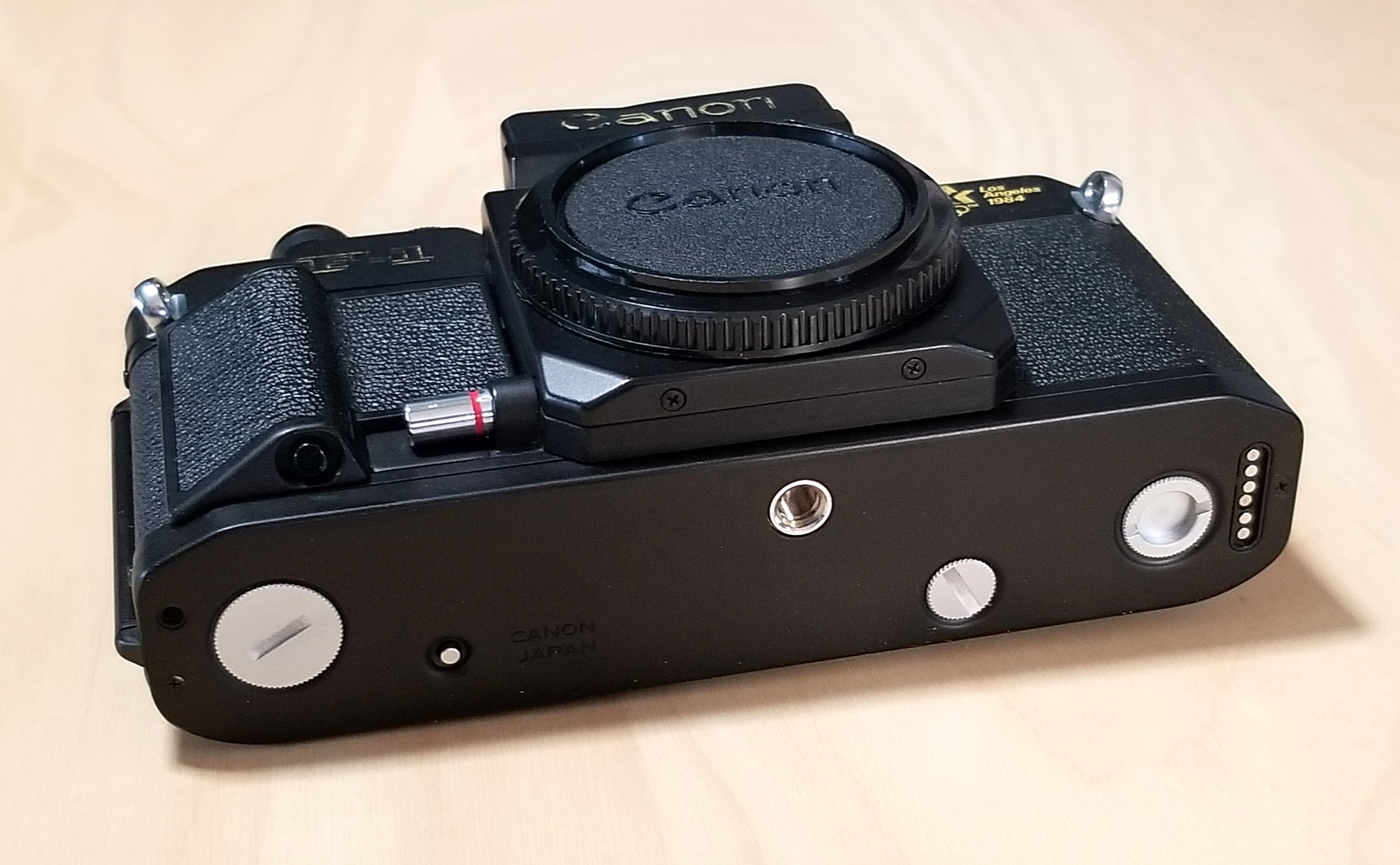
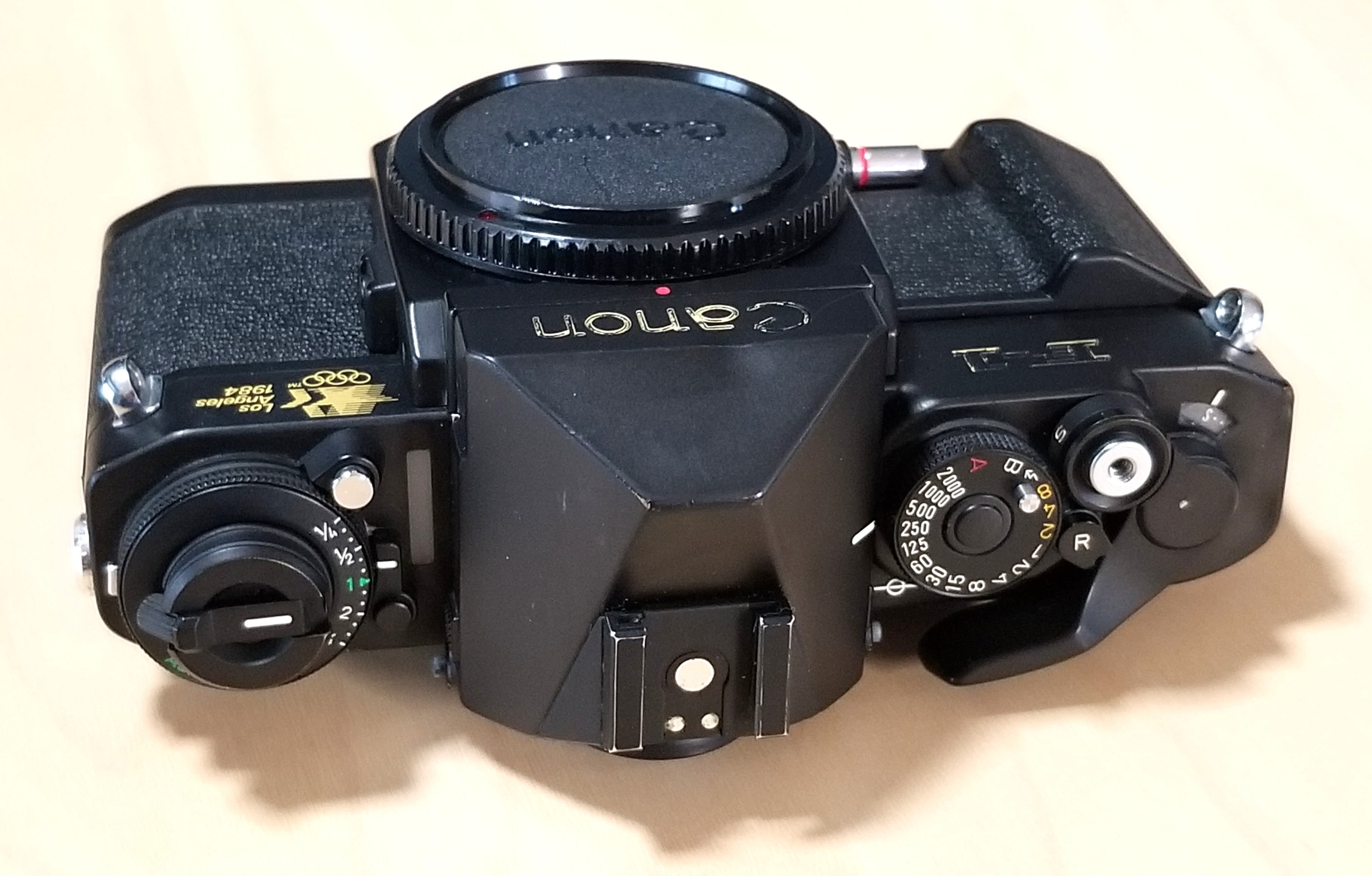
My strange Canon New F-1 Los Angeles 1984 camera. I say “strange” because the gold paint on the logos is weak and missing. The camera is definitely well-used, with plenty of dents, but shows no brassing. It’s a genuine Olympics body with a date code X1123 (Nov 83) and a proper LA6312 serial number. It works perfectly (not film-tested yet). It could make a fun user camera, as most people wouldn’t use a limited-edition camera and risk beating the heck out of it. Please let me know your thoughts. Should I attempt to fill in the gold or leave it be? It would be difficult to match the gold without mucking it up, so I have that going for me.
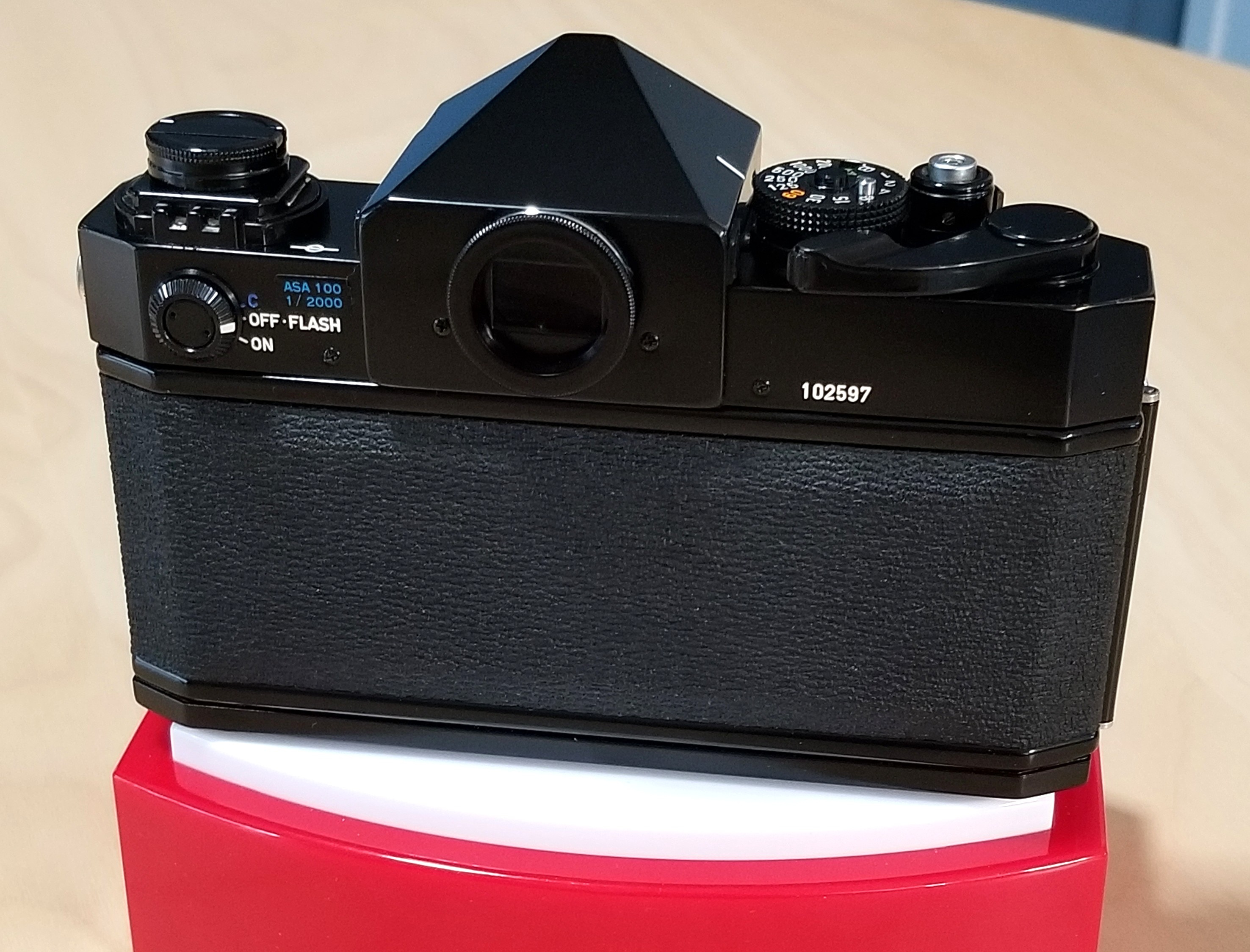
A few dents and missing gold paint, but otherwise a good-looking camera.Back view. The LA cameras got a special serial number.
It’s estimated that about 9,000 to 9,900 were made. My camera is an LA6312, made in November 1983. My guess is that Canon must have made at least another 3,000 units, but I don’t know that for sure. I have seen an LA9584, and it was made in April 1984.
The bottom plate looks amazingly good given its age and use.Top view.
The Canon limited edition Olympic cameras are a fun twist for collectors. There are the 1976 Montreal, 1980 Lake Placid, and 1984 Los Angeles models.
Comments are always welcome; I’ve learned a great deal from reader feedback. As always, thanks for stopping by. While there, visit my camera shop at http://www.ccstudio2380.com (CC Design Studios, hosted on Etsy). – Chris Whelan
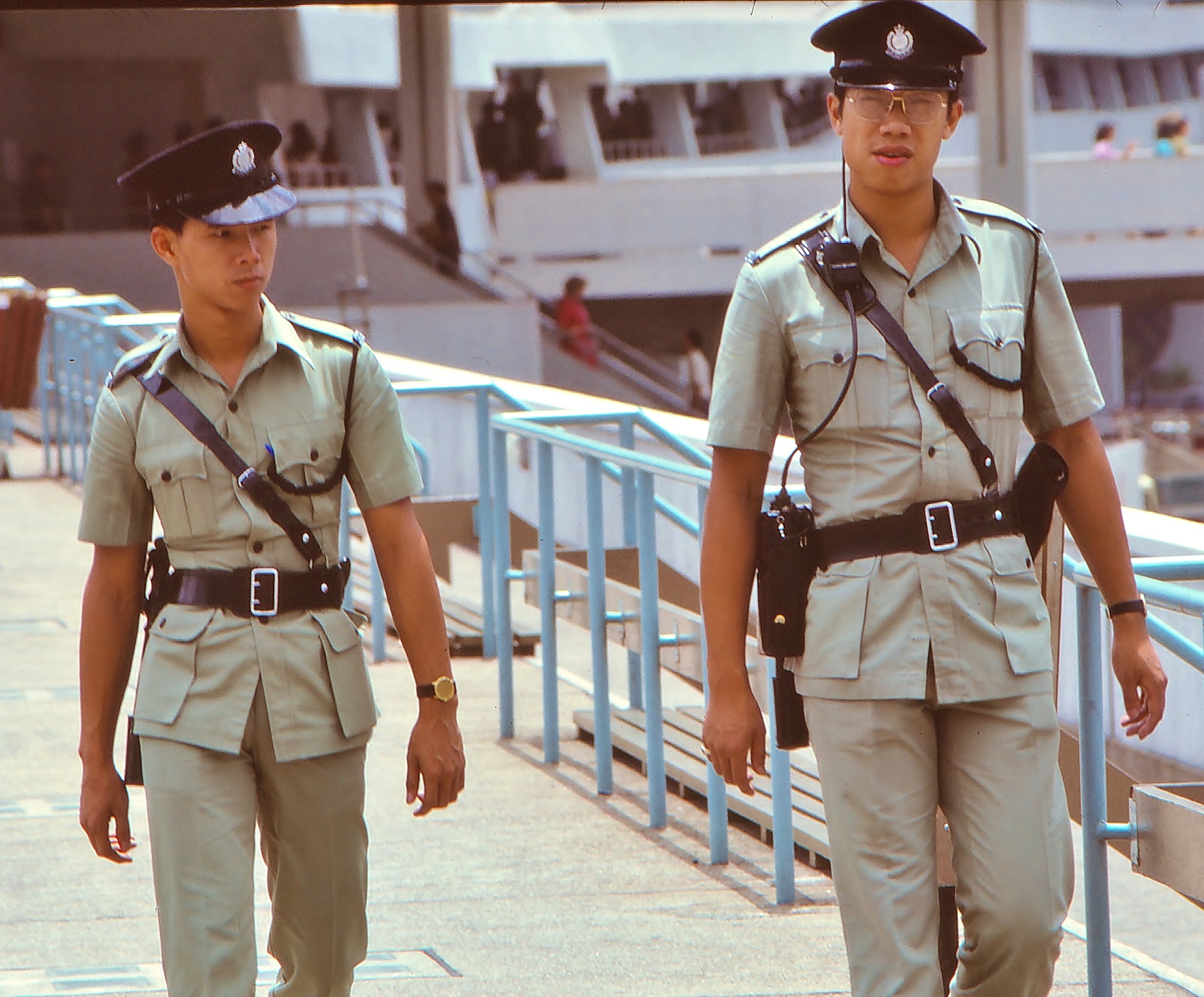
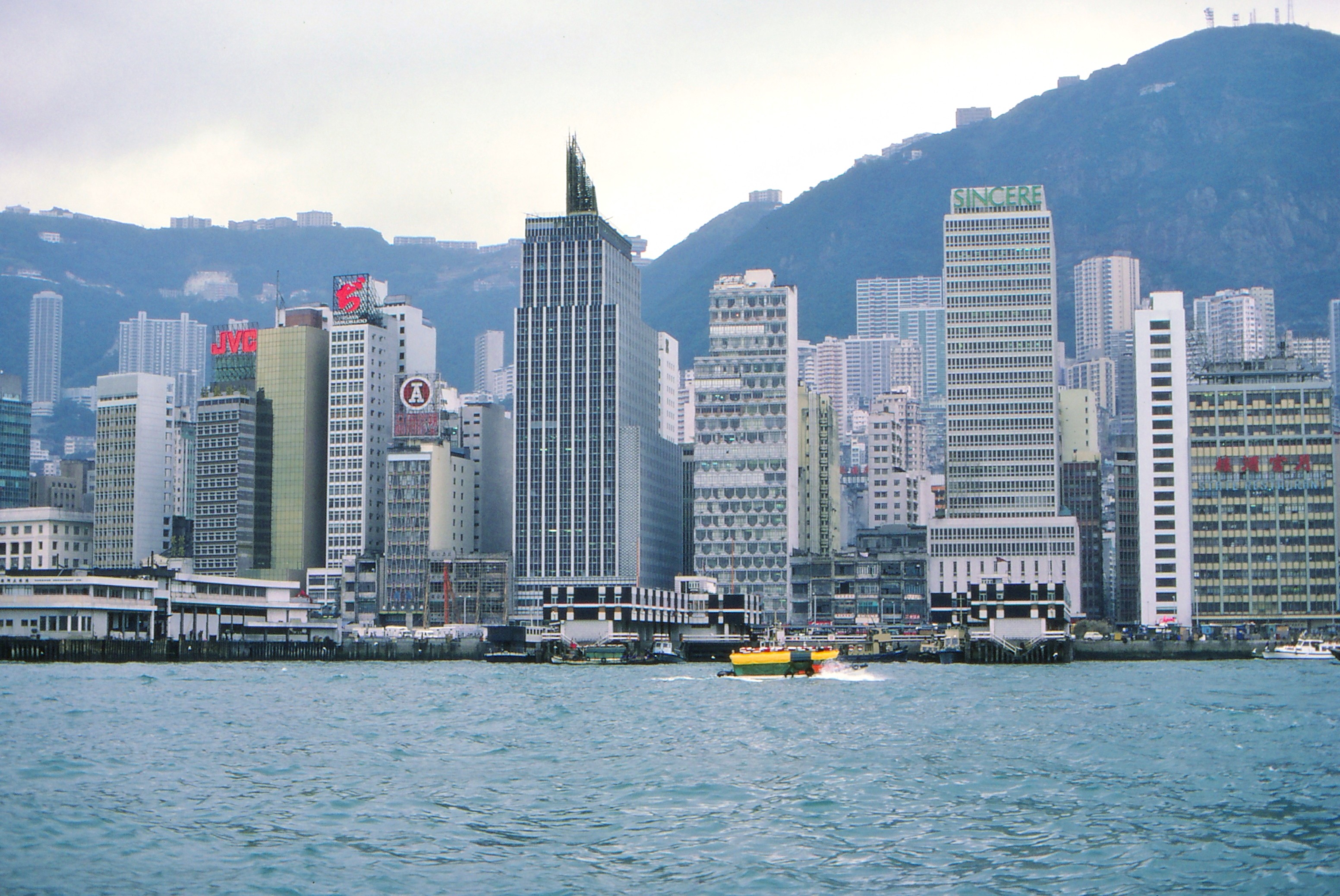
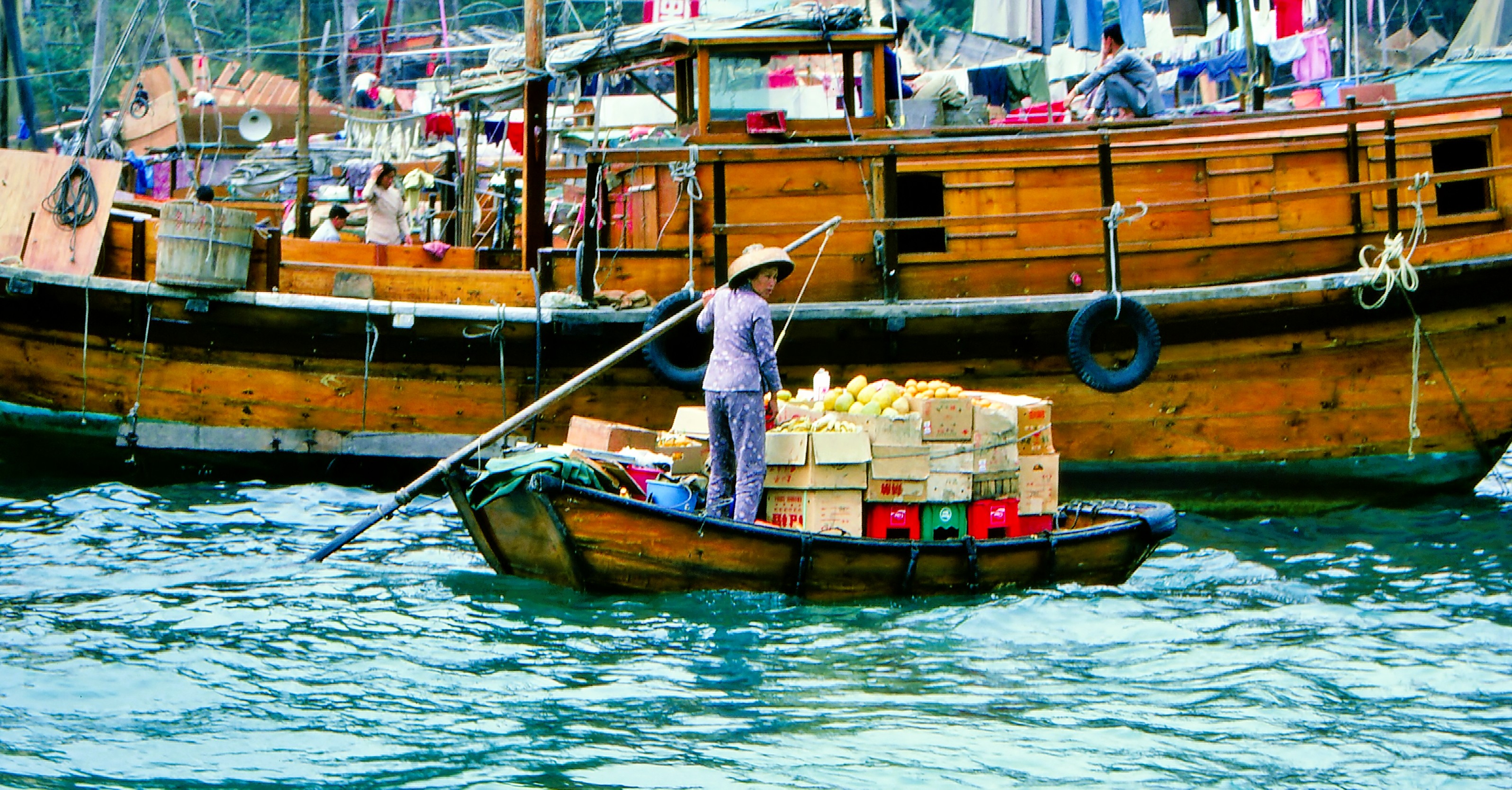
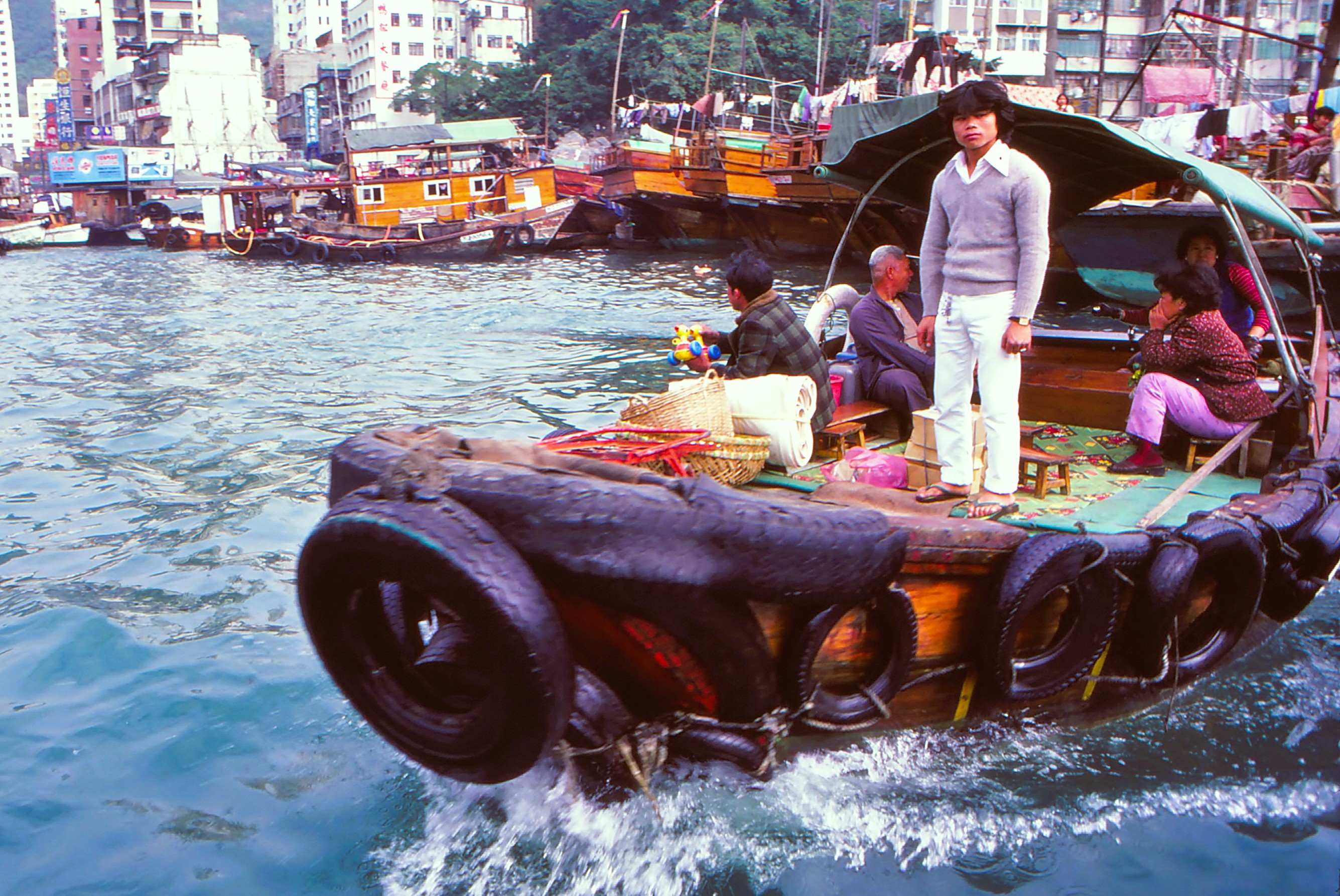
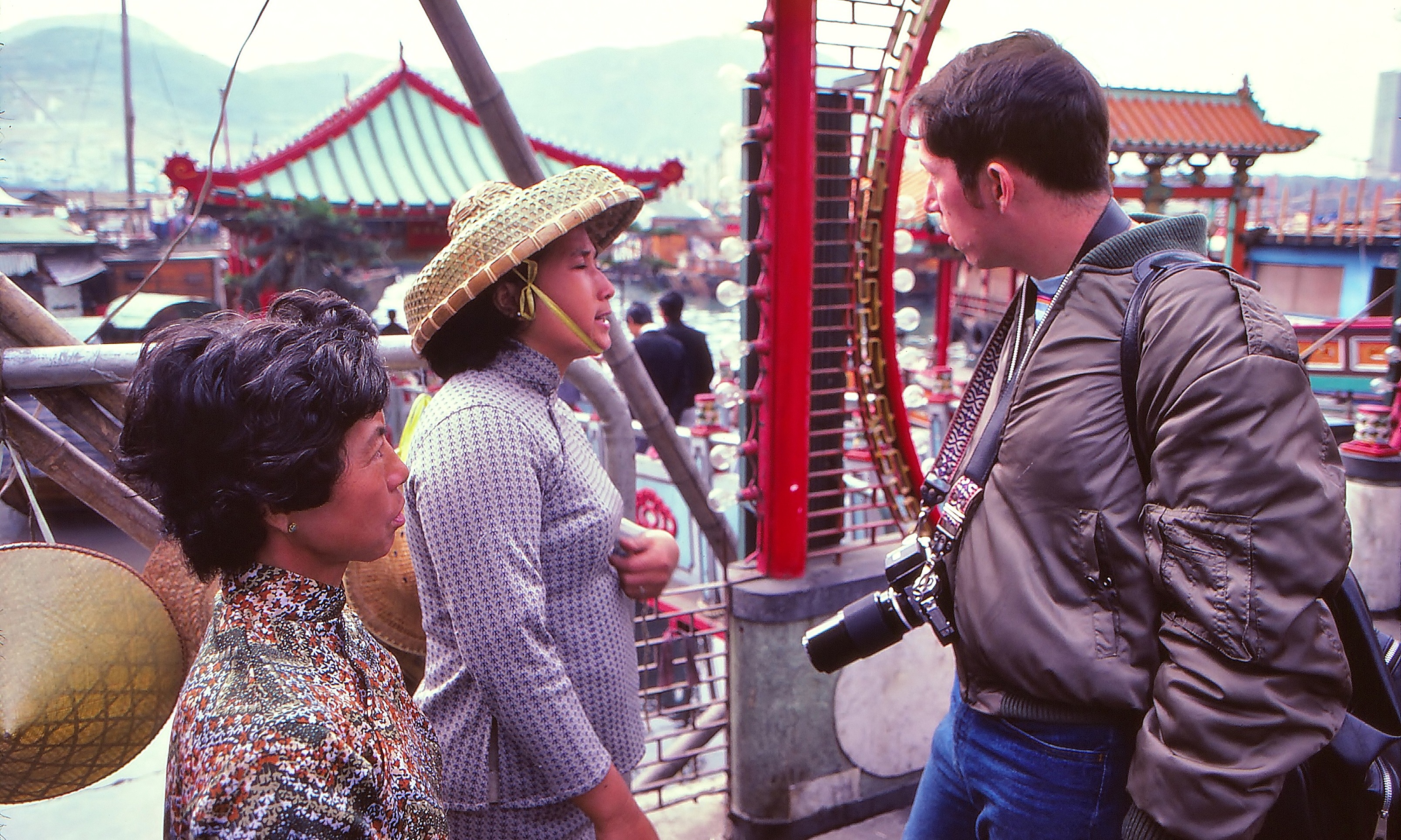
On patrol.I’m sure the skyline looks nothing like this now.Star Ferry sailor taking a break.Busy waterways.Right at you.My best friend Jim was negotiating for a good deal on a boat ride.
Comments are always welcome; I’ve learned a great deal from reader feedback. As always, thanks for stopping by. While there, visit my camera shop at http://www.ccstudio2380.com (CC Design Studios, hosted on Etsy). – Chris Whelan
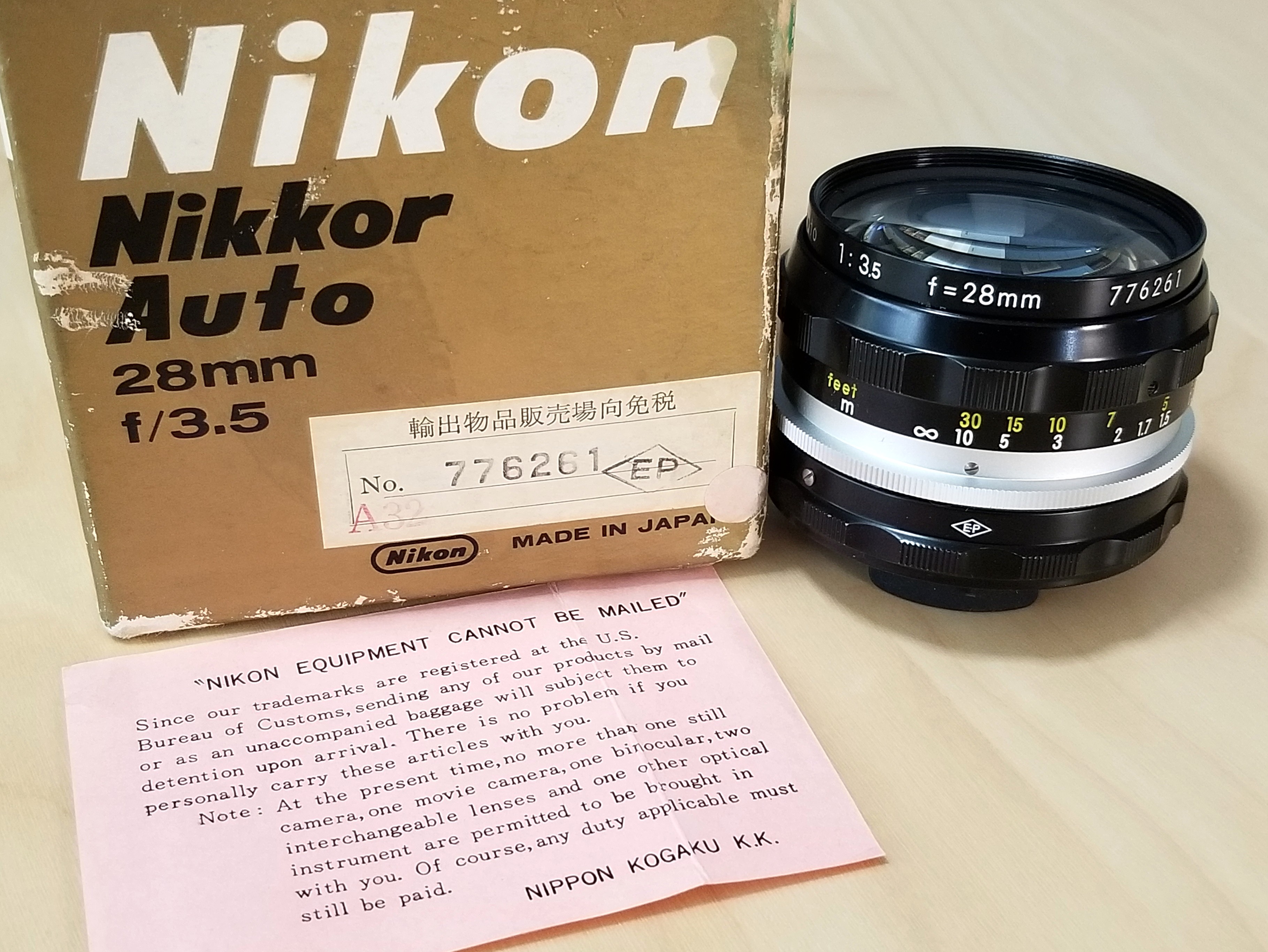
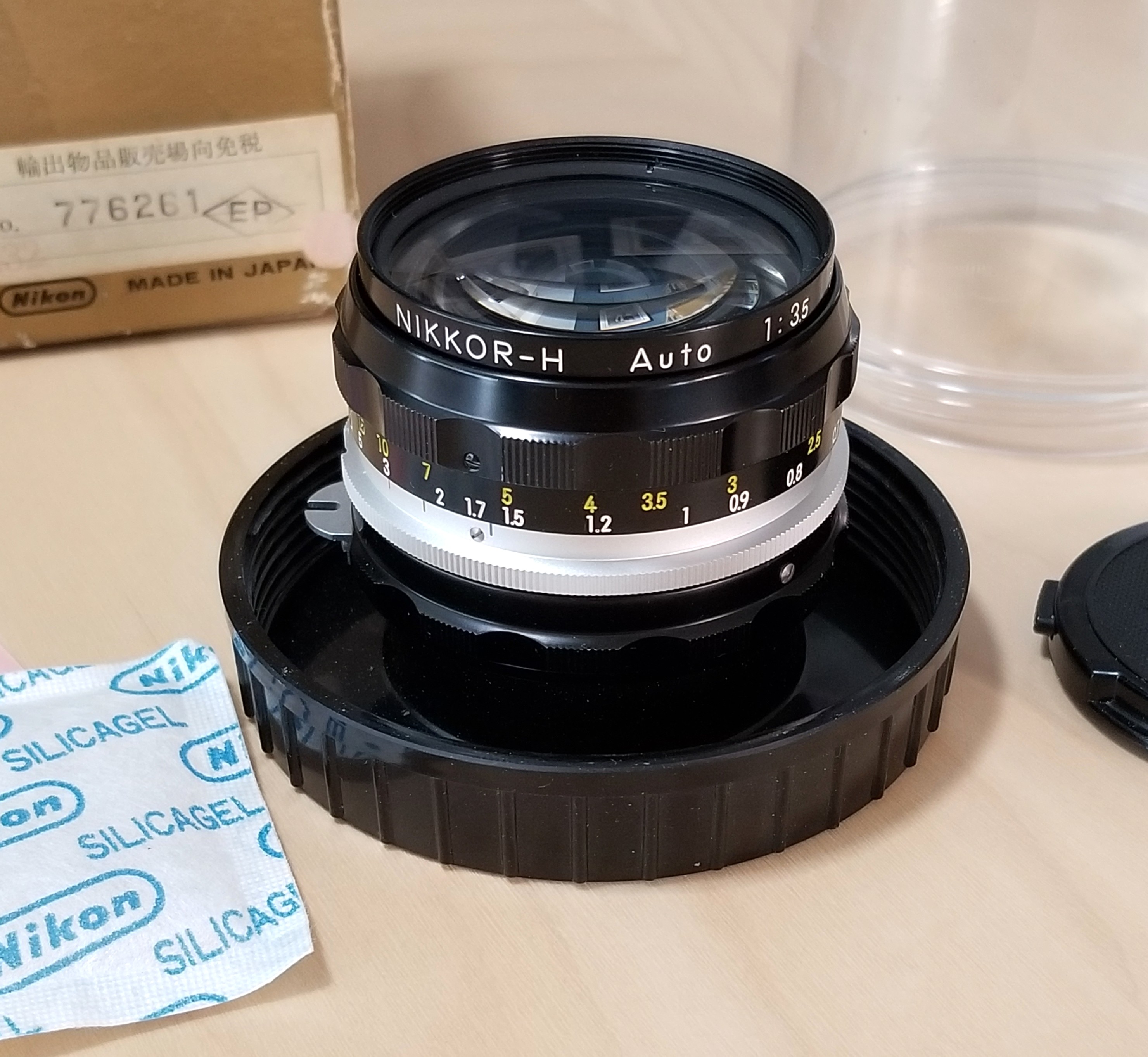
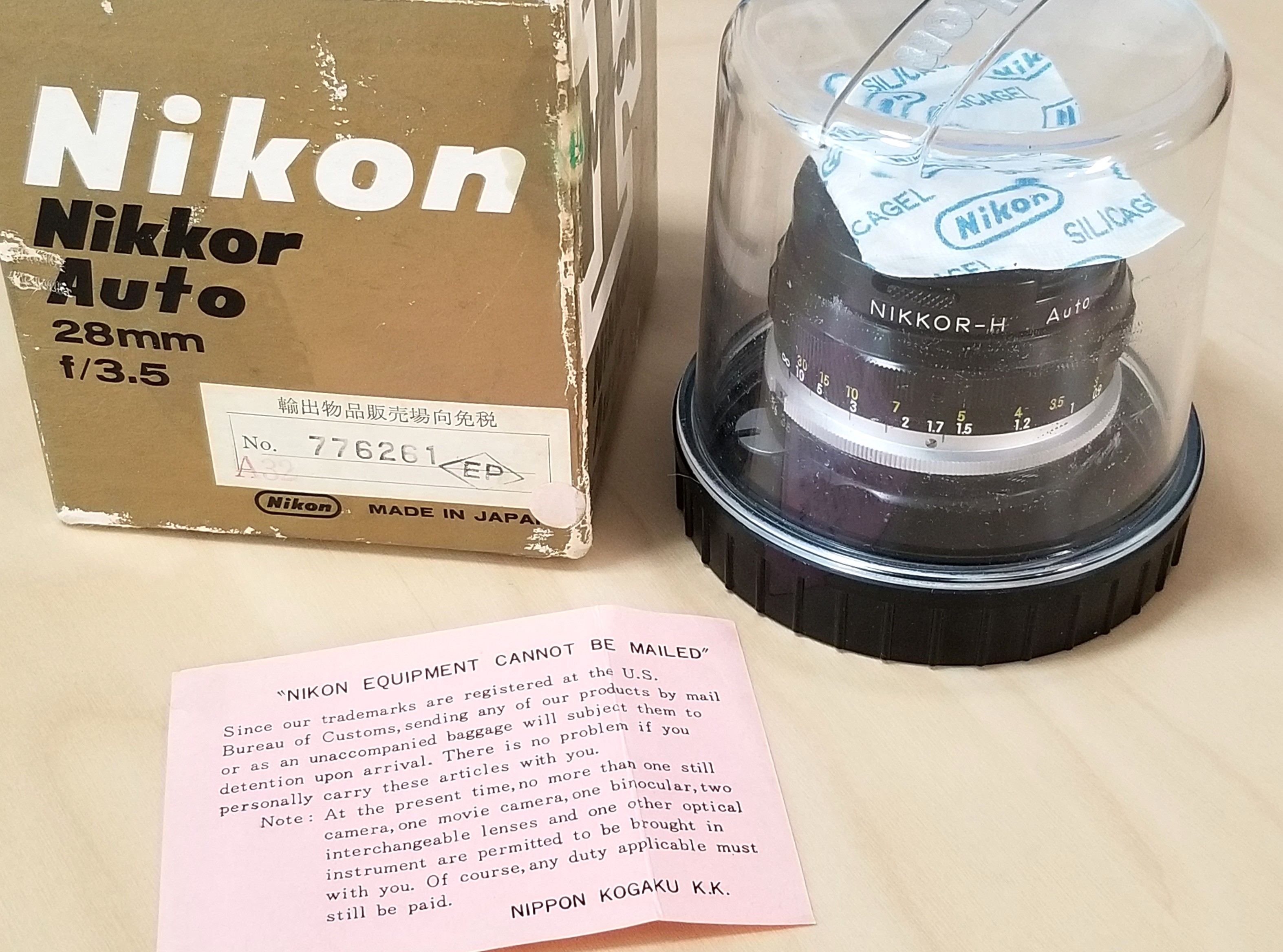
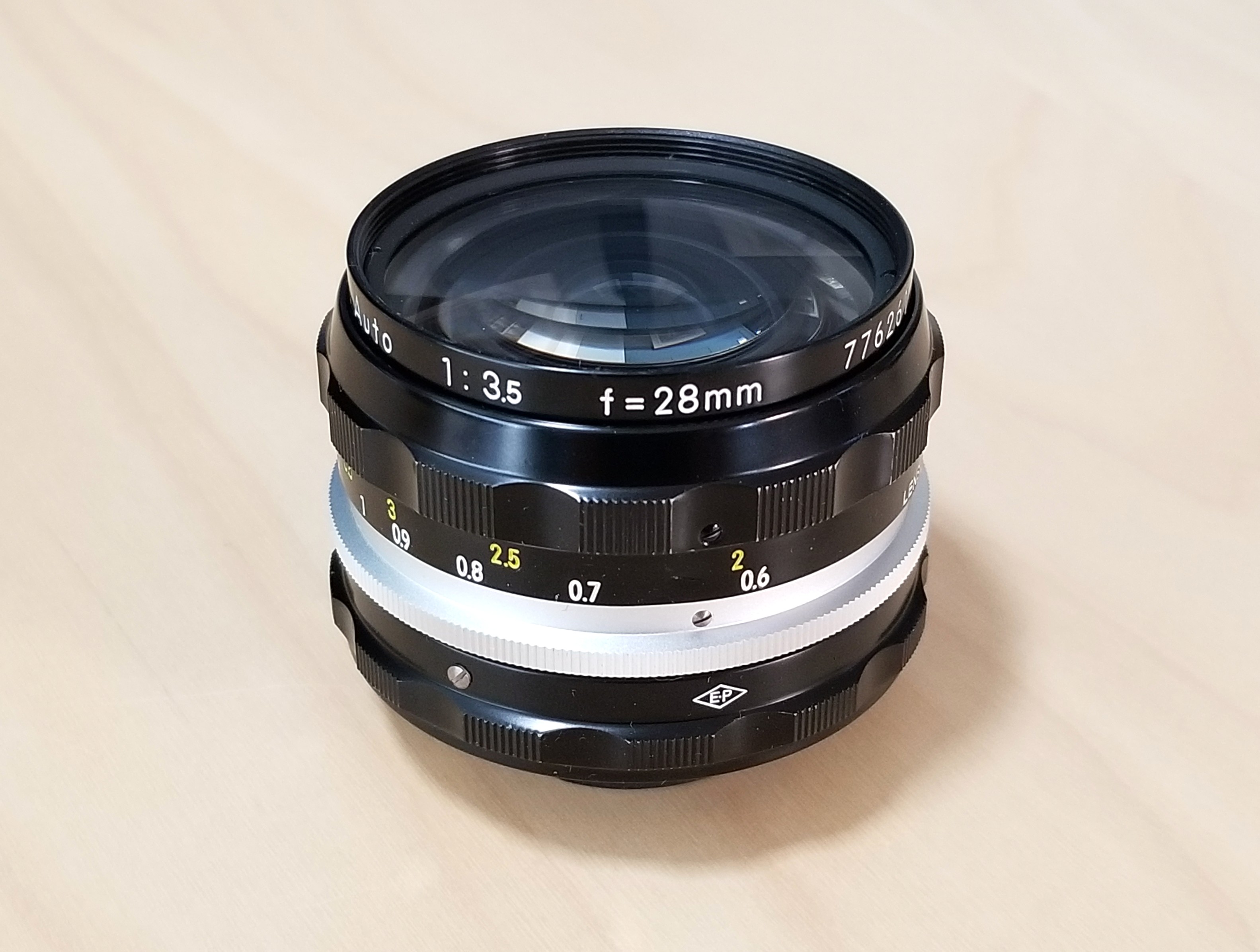
I have a Nikon Nikkor-H Auto f/3.5 28mm lens set with unique <E.P> markings. The lens was manufactured between 1971 and June 1973. The <E.P> markings indicate that it was sold in a US military exchange store or could it have been sold in a duty-free shop. What I don’t know is where it was sold. Most likely in Japan, but it could be at any exchange store in Asia since there were many military installations in the Philippines, Guam, South Vietnam, or Thailand. The other possibility is that it was sold at a duty-free shop in Japan or Hong Kong, since by the early 1970s, such shops were common and available to foreign tourists.
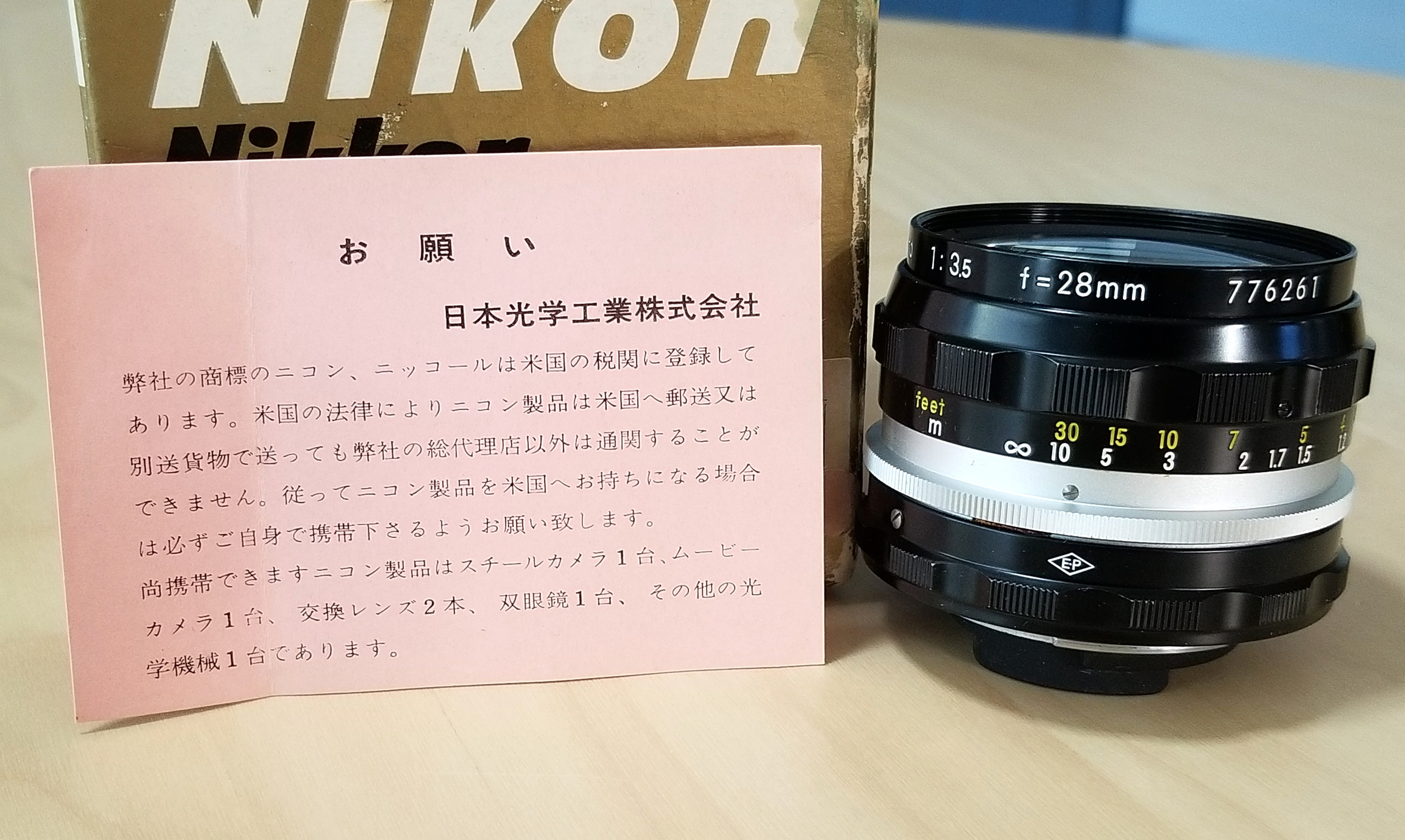
The lens is clearly marked with the <E.P> symbol, as is the box. The serial numbers match. The kanji on the box translates to ‘Duty-Free for Export Goods Sales Outlets’, which I have never seen before. During my time in Japan (1977-1980), I never remember seeing a sticker like this on anything I purchased while shopping at the Navy Exchange shops in Yokohama or Yokosuka. Everything sold in an exchange was always ‘duty and tax-free’, so why put a sticker on the product?The translation. Please Nippon Kogaku Kogyo Co., Ltd. Our trademarks, Nikon and Nikkor, are registered with U.S. Customs. Under U.S. law, Nikon products cannot be cleared through customs by anyone other than our sole distributor, even if they are sent by mail or as separate cargo to the U.S. Therefore, if you are bringing a Nikon product to the U.S., please be sure to carry it with you. The Nikon products that can be carried are one still camera, two interchangeable lenses, one binoculars, and one other optical device.
My first thought was that this was a lens sold at a civilian duty-free shop frequented by tourists, not necessarily by military personnel or their family members. But the <E.P> mark was mainly used on items sold exclusively at military shops, not duty-free shops. The pink card was included in the lens set and may hold the answer, since it mentions only the US.
I enjoy using and collecting early wide-angle lenses. This one is in like-new condition.Complete as it may have looked when sold in the early 1970s.
So, have I confused you or myself? The sticker on the box still troubles me a bit, but the pink card clearly indicates it was meant for export to the United States, suggesting it was sold at an exchange.
I can’t wait to use it on my Fujifilm X-T2. The results soon.
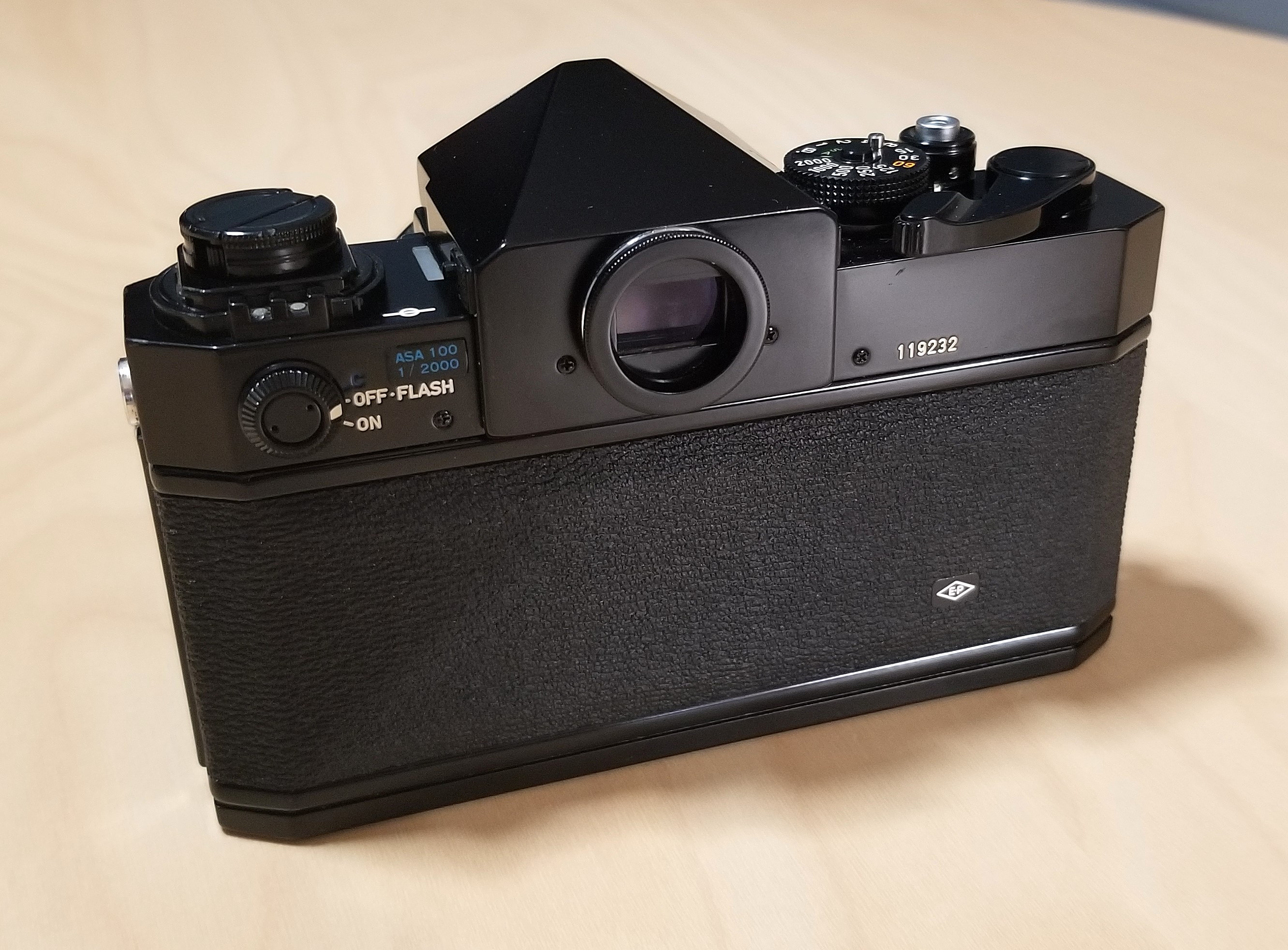
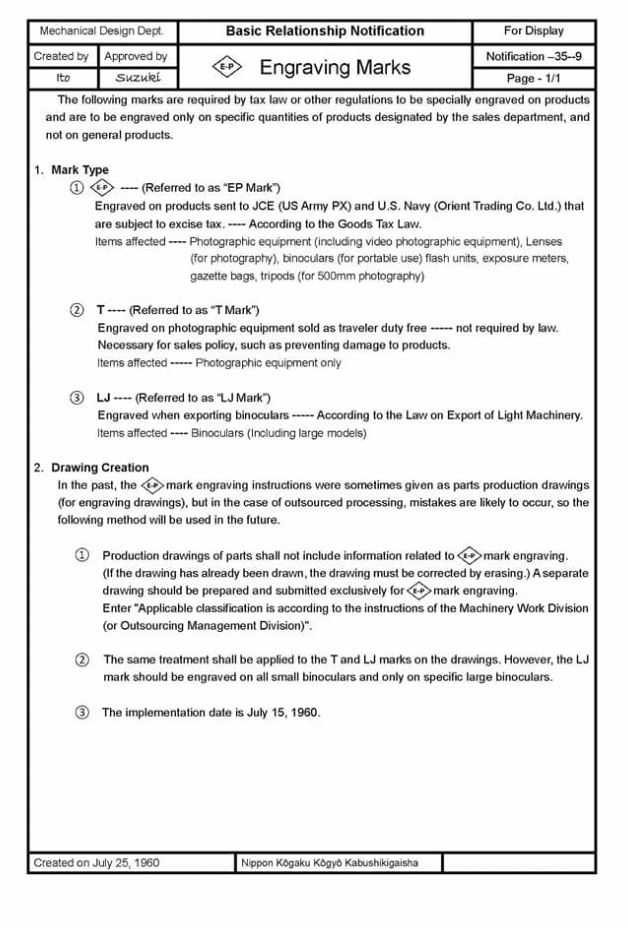
<E.P> marked camera gear isn’t necessarily worth more in the marketplace. As a collector, I enjoy collecting gear with the marks whenever I can. In some cases, they are extremely rare, so that’s an added bonus.
My Canon F-1 from August 1971. <E.P> marks on these early F-1s are hyper rare. This is the only one I’ve seen in decades of collecting.
Comments are always welcome; I’ve learned a great deal from reader feedback. As always, thanks for stopping by. While there, visit my camera shop at http://www.ccstudio2380.com (CC Design Studios, hosted on Etsy). – Chris Whelan
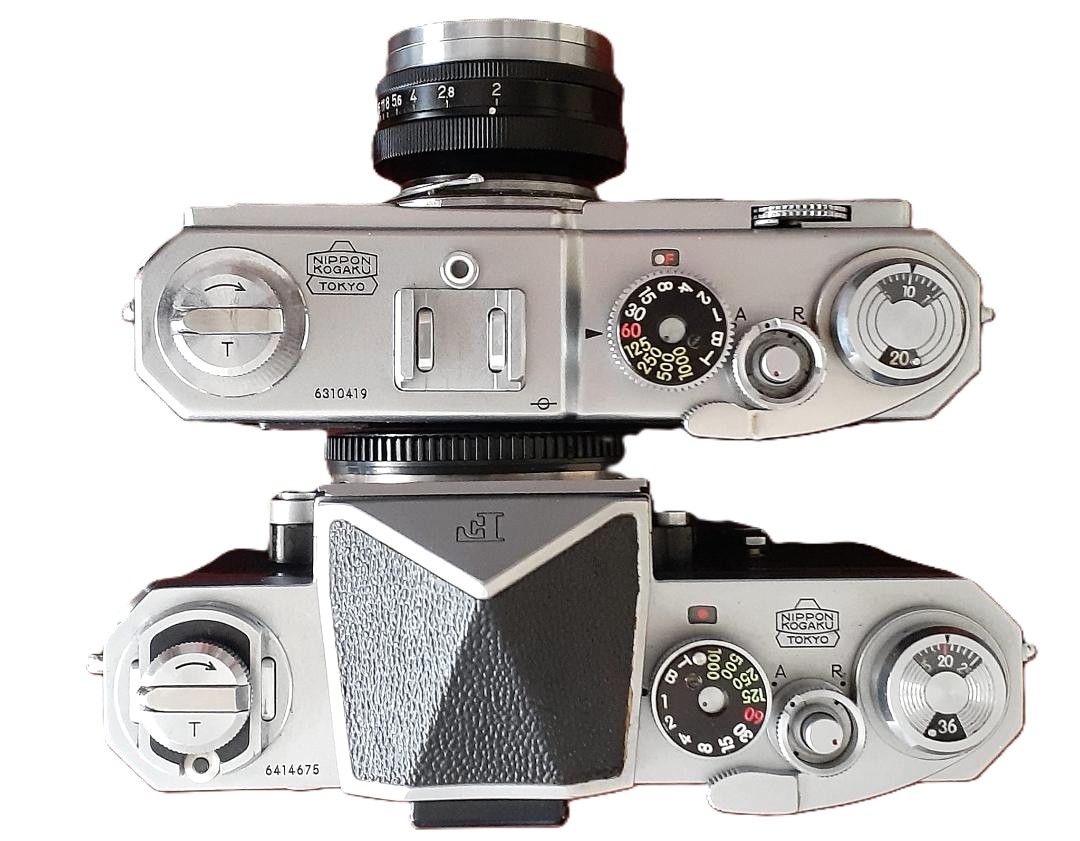
From well-known Australian photographer and camera collector Bruce Thomas, used by permission. Both cameras are marked with a ‘T’ on their rewind knobs, indicating Nikon’s approach to identifying tax-exempt or duty-free cameras sold in Japan in the early 1960s. Not to be confused with the more common ‘EP’ mark, which appeared across all camera brands in the 1950s, 1960s, 1970s, and even a few from Canon in the early 1980s.
Nikon S4 top and Nikon F below. The ‘T’ mark appeared in 1960 on some Nikon cameras sold in Japan and possibly in Hong Kong, though there hasn’t been hard evidence yet.
The Nikon F was developed from the Nikon SP rangefinder camera from 1957. It’s easy to spot the similarities between the S4 and F. Finding a mint condition SP today is quite expensive, but there are “plenty” on online auction sites.
Comments are always welcome; I’ve learned a great deal from reader feedback. As always, thanks for stopping by. While there, visit my camera shop at http://www.ccstudio2380.com (CC Design Studios, hosted on Etsy). – Chris Whelan
Comments are always welcome; I’ve learned a great deal from reader feedback. As always, thanks for stopping by. While there, visit my camera shop at http://www.ccstudio2380.com (CC Design Studios, hosted on Etsy). – Chris Whelan
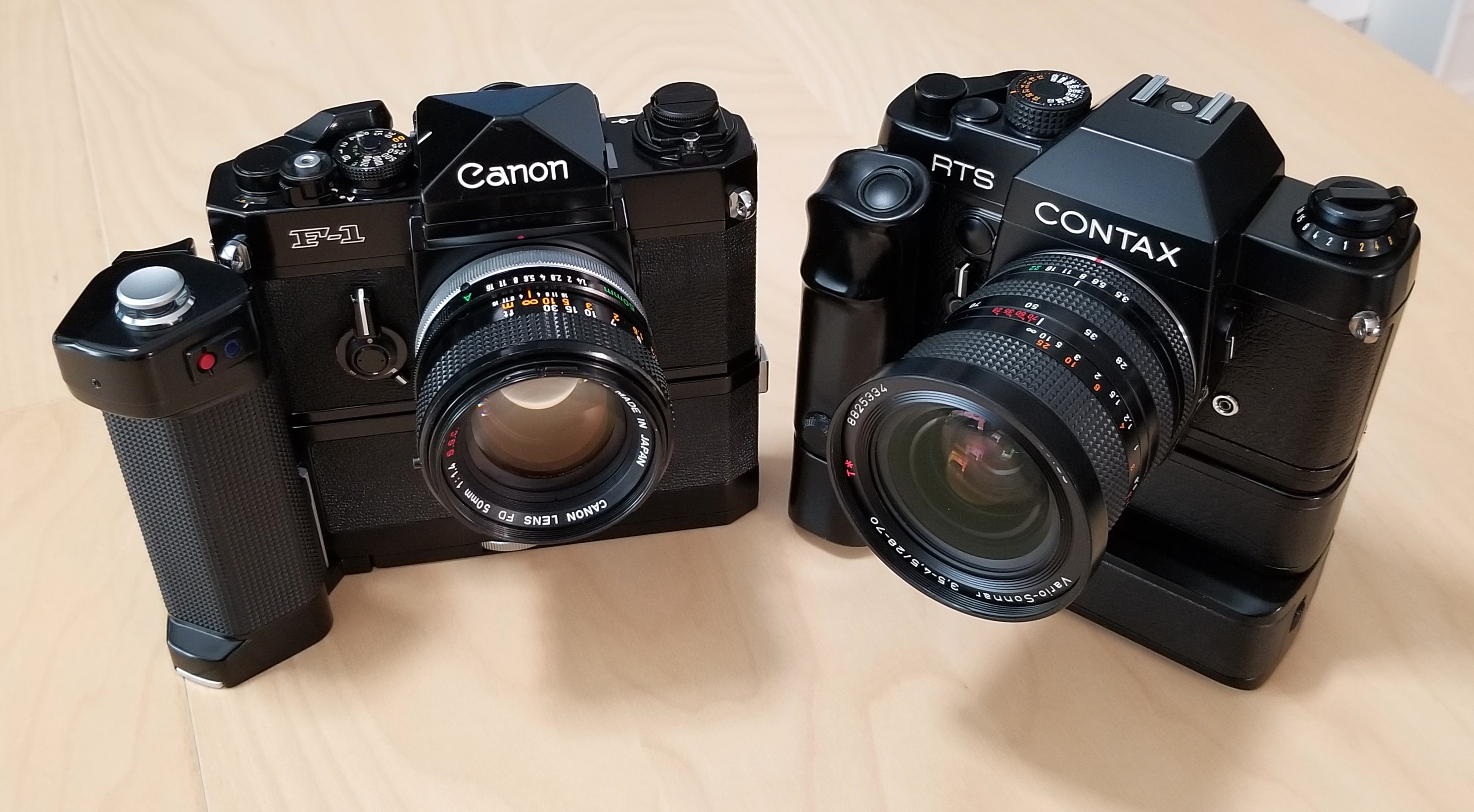
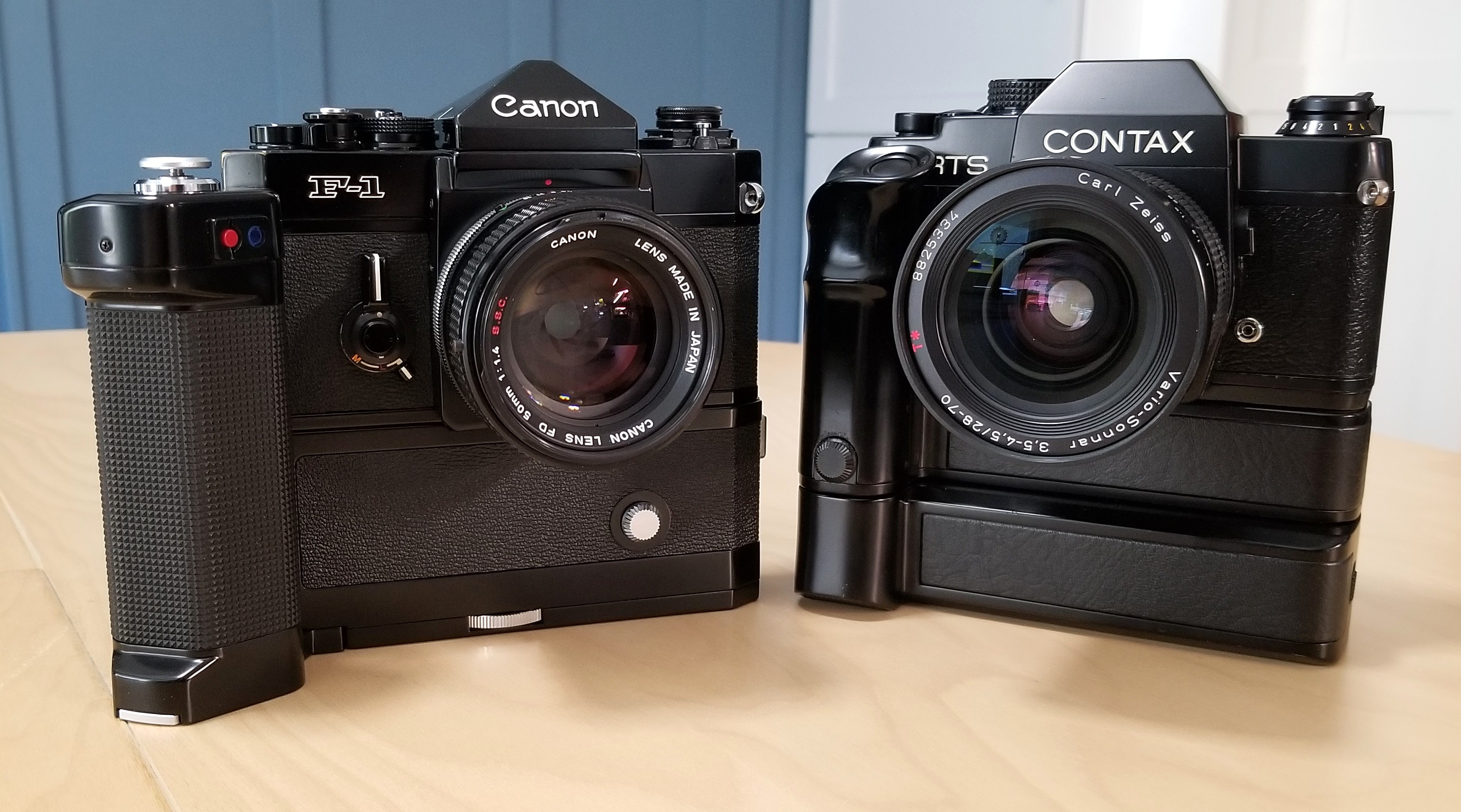
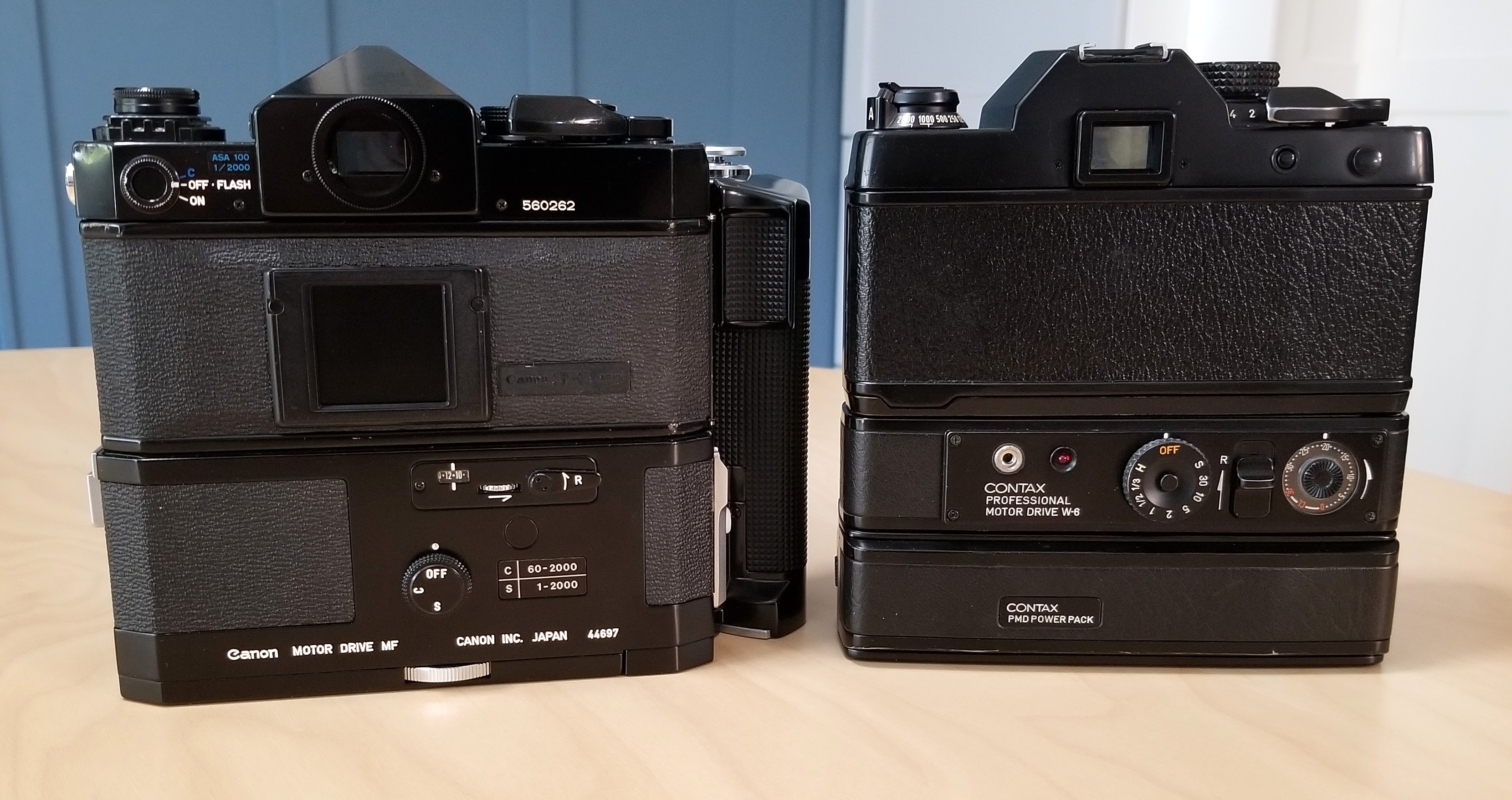
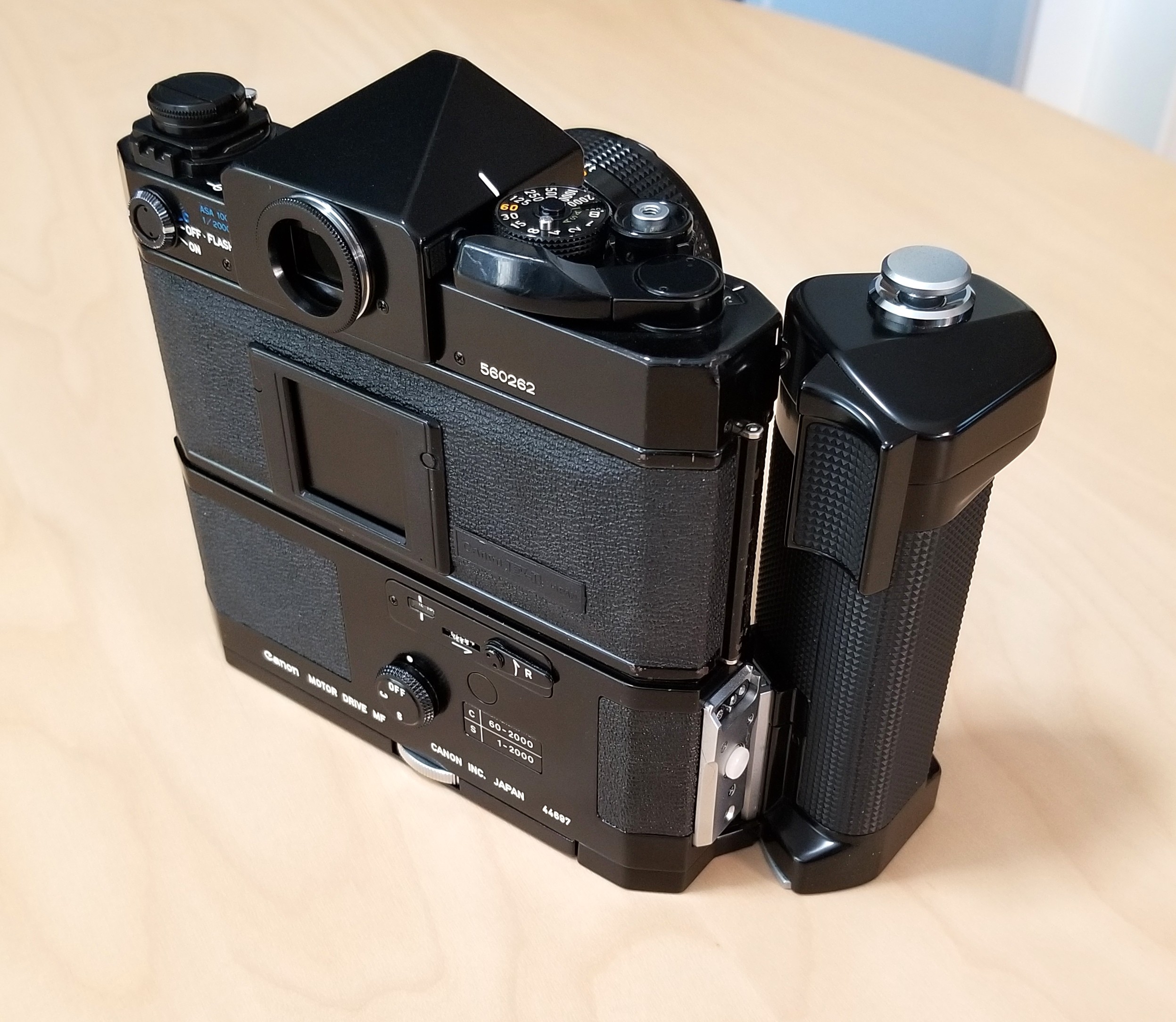
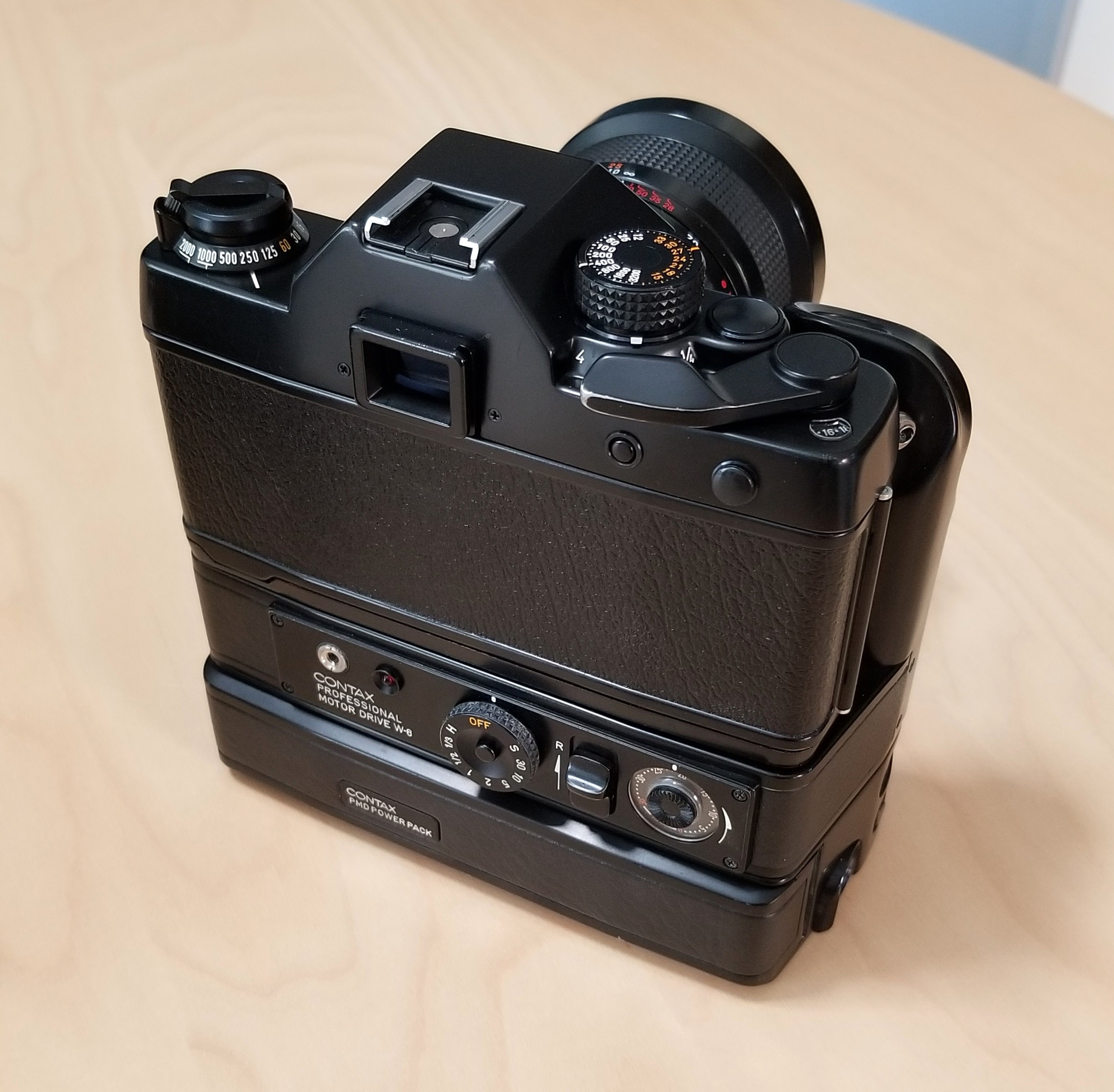
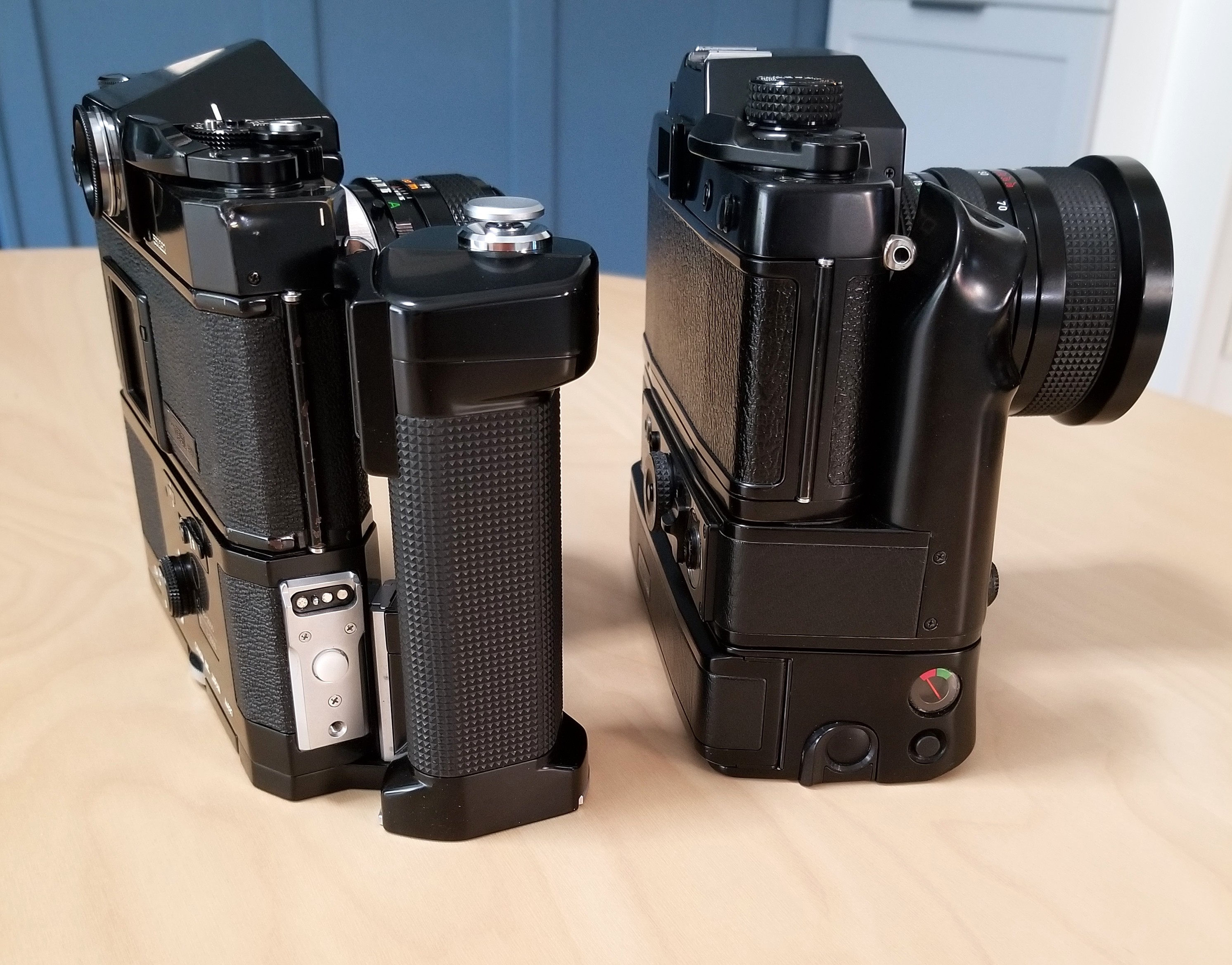
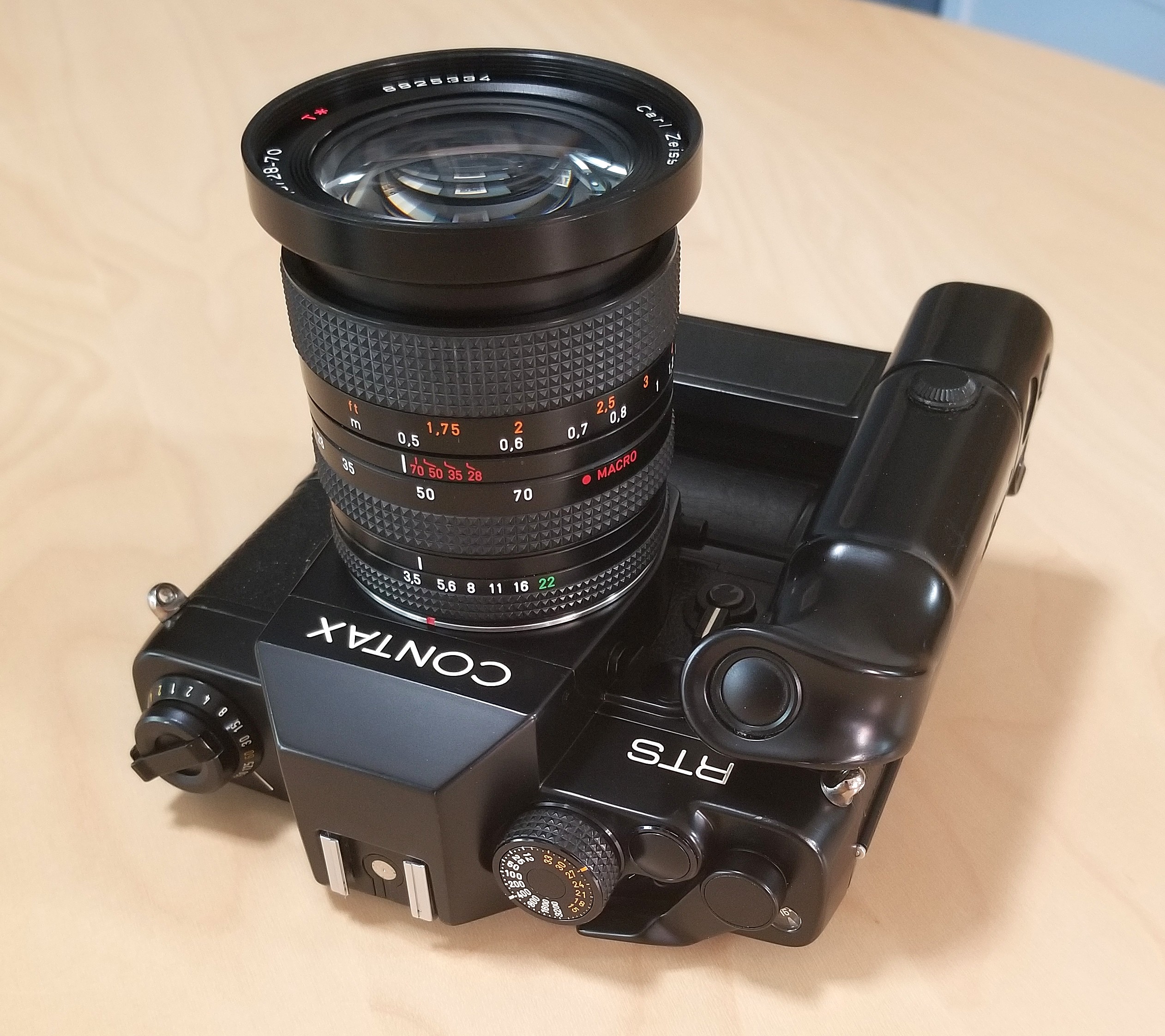
These two from the mid-1970s are not often seen together. The RTS was released in 1975, and I purchased this F-1 in 1978. I considered buying the RTS instead of the F-1, but the representative from Canon at the Navy Exchange store in Yokohama convinced me the F-1 was better, and at the time, a bit less expensive than the Contax. Many years later, I was able to get the RTS, and I added the PMD W-6 as a bonus. The Canon handles better due to its larger rubberized grip, but the RTS is a bit more sporty (designed by Porsche). I use them both. The Contax can eat through film at 5 fps vs. the Canon’s 3.5 fps.
Heavyweight superstars.The Canon’s drive is much larger, but the Contax is faster.Designed to excel in sports and unmanned photography.I find the large rubberized grip on the Canon to be easy to hold, and the extra-wide base kept the camera stable on a table.The Contax is super slick; the drive almost disappears into the camera’s body. Conversely, the smaller footprint means the camera is not as stable on a table.The grip on the Canon is removable, which opens up additional possibilities and accessories..One of my favorite Carl Zeiss lenses.
Comments are always welcome; I’ve learned a great deal from reader feedback. As always, thanks for stopping by. While there, visit my camera shop at http://www.ccstudio2380.com (CC Design Studios, hosted on Etsy). – Chris Whelan
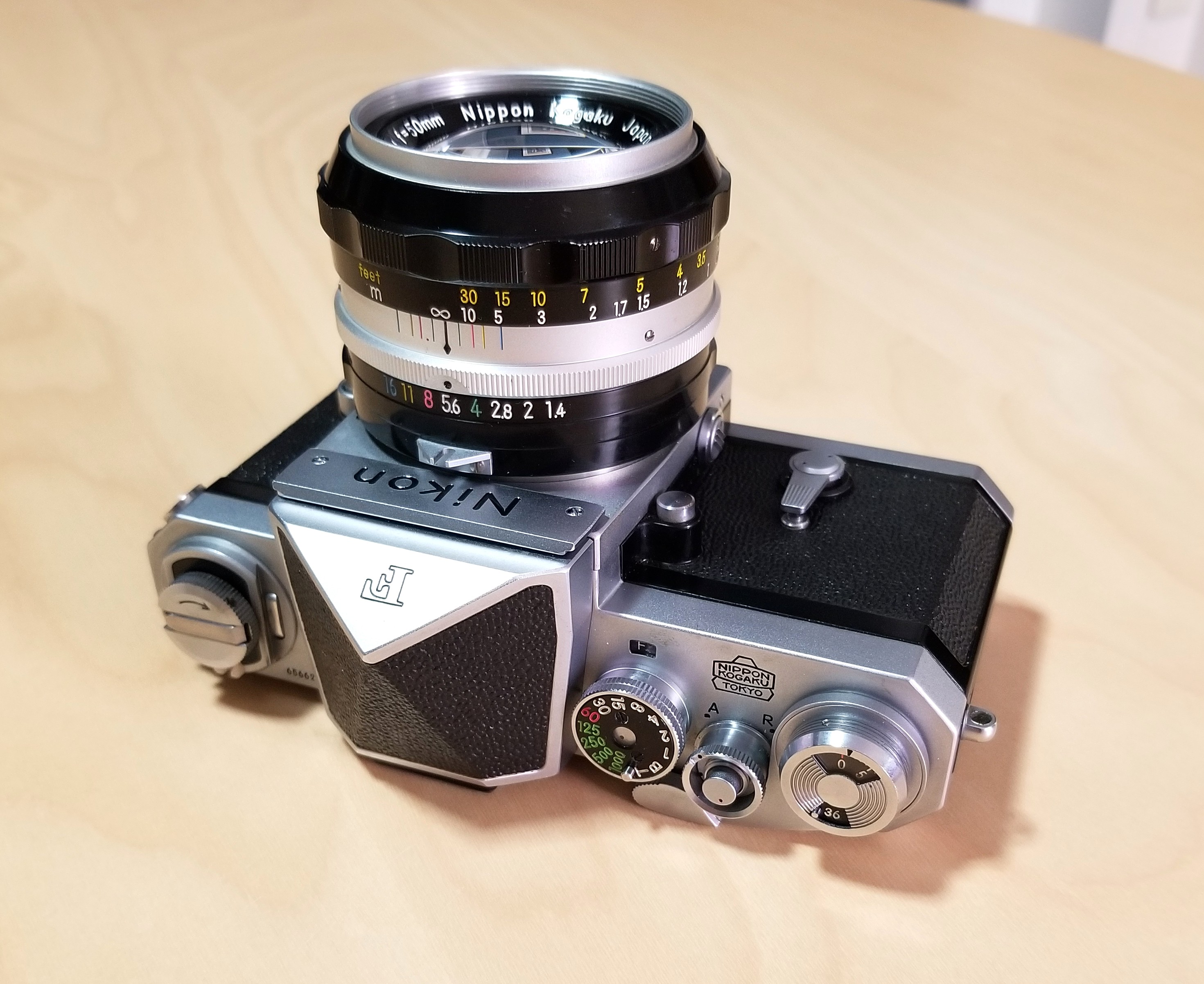
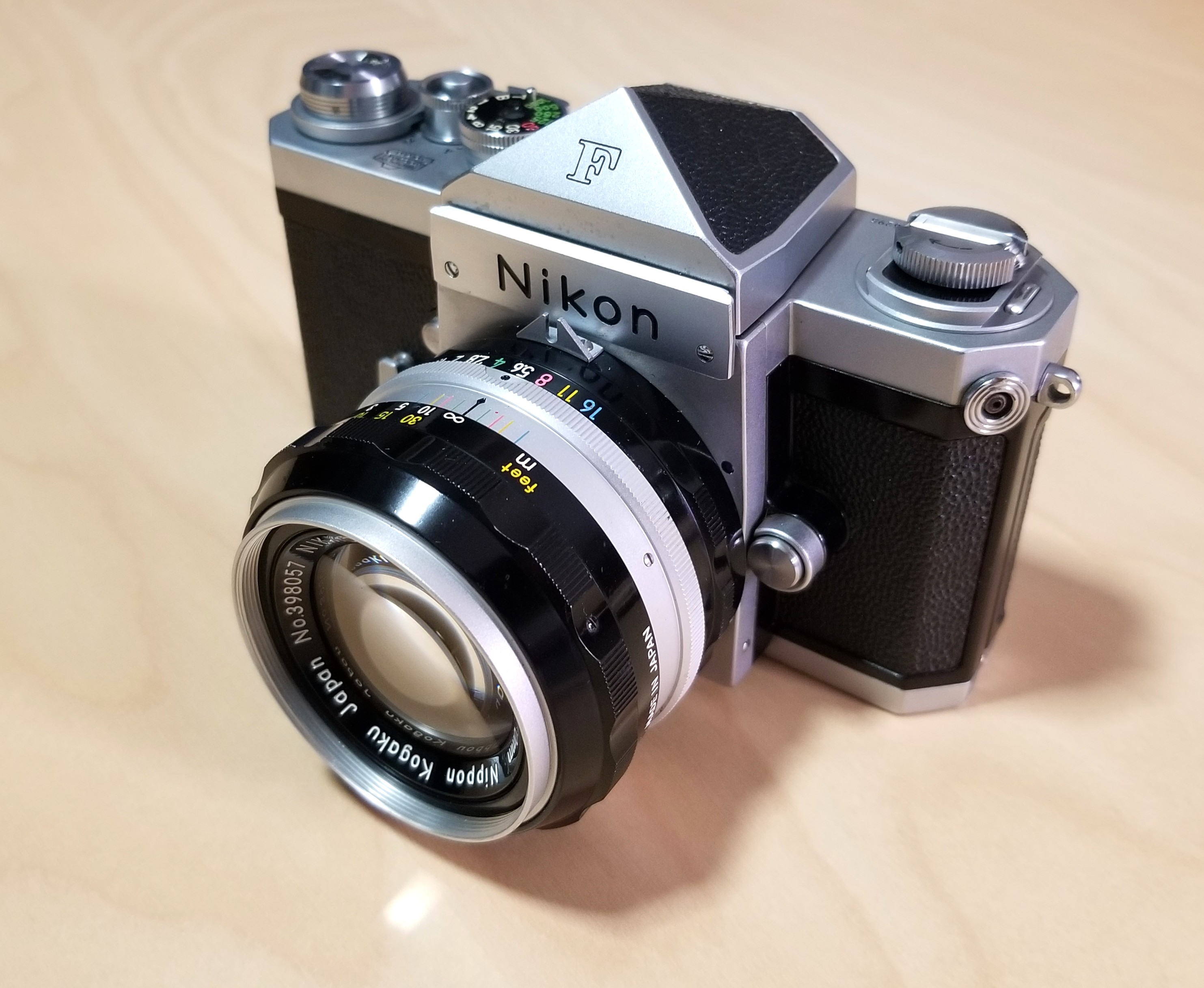
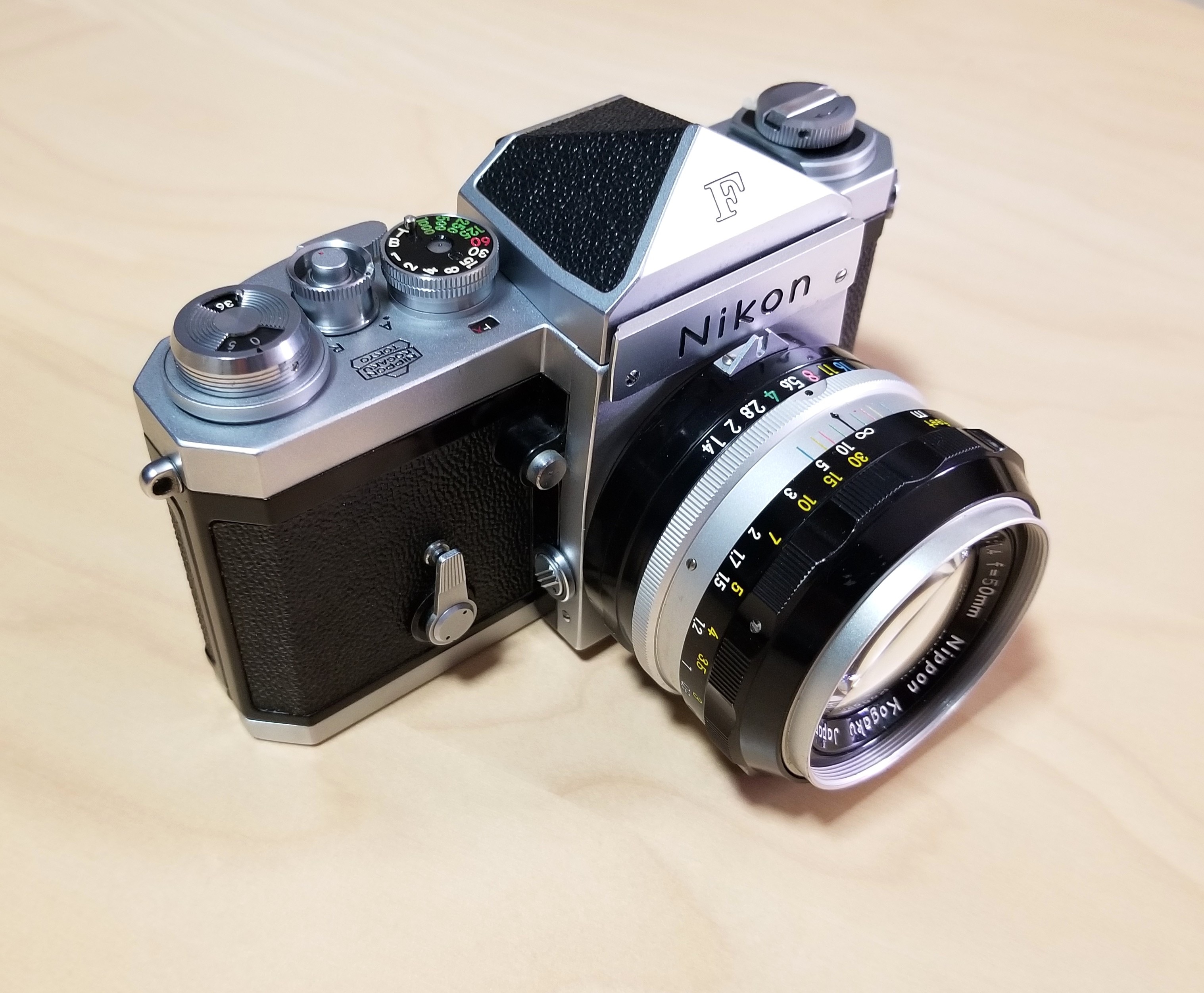
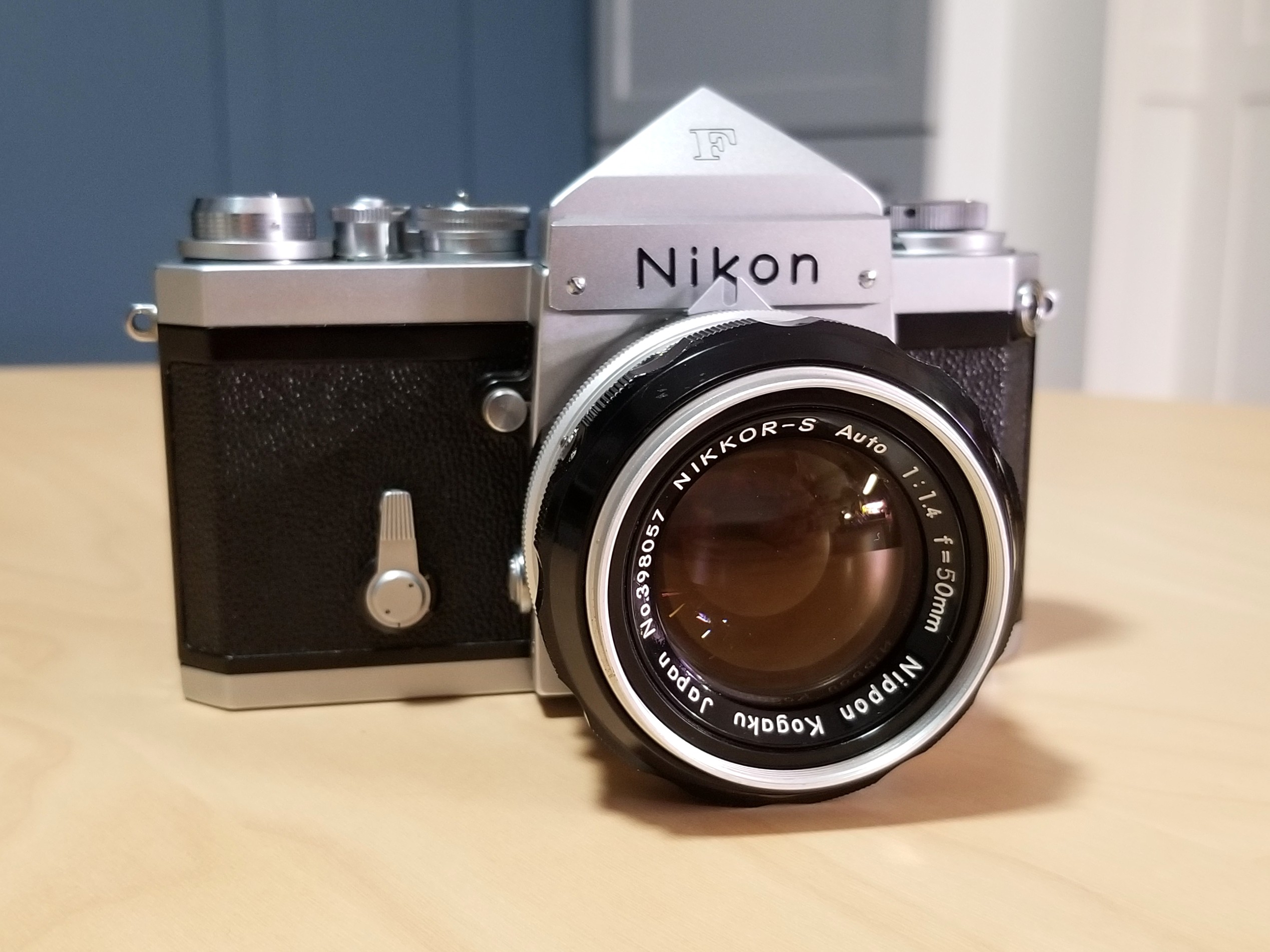
Classic Nikon. This is the last Nikon F in my collection. I enjoy using and collecting the early Nippon Kogaku logo bodies and, of course, a Nikkor-S Auto 50mm f1.4 lens. The camera was built in mid to late 1964. The lens is from 1965. I like it when it all comes together.
Instantly recognizable.A classic 35mm SLR.It was first released in 1959. This one is from 1964.The reputation of the Nikkor-S Auto 50mm f1.4 lens is world-renowned.
Comments are always welcome; I’ve learned a great deal from reader feedback. As always, thanks for stopping by. While there, visit my camera shop at http://www.ccstudio2380.com (CC Design Studios, hosted on Etsy). – Chris Whelan





 Chasing Classic Cameras with Chris