Zunow SLR – 1958

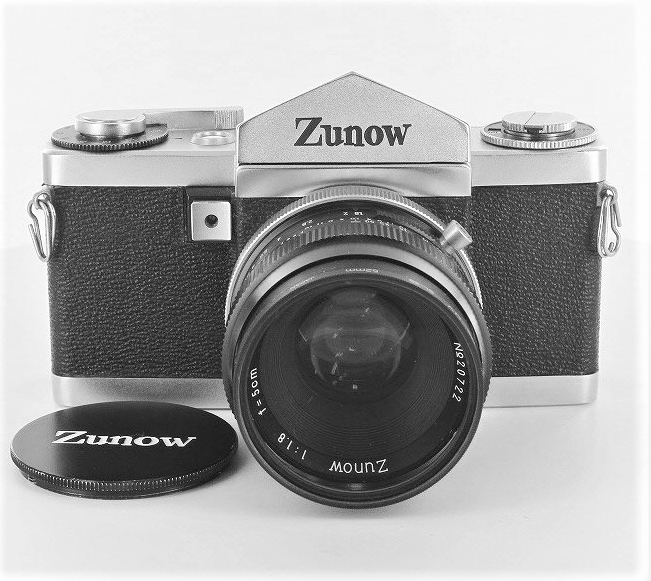
One of the rarest early Japanese 35mm SLR cameras ever made. The Zunow SLR (below).

zunow beauty

Zunow SLR 1958.

This gorgeous Zunow sold for a cool ¥ 1,880,000 (about $16,700 USD)!

The Yashica Pentamatic (below) just sold for $16,598 less!

DSCF6236

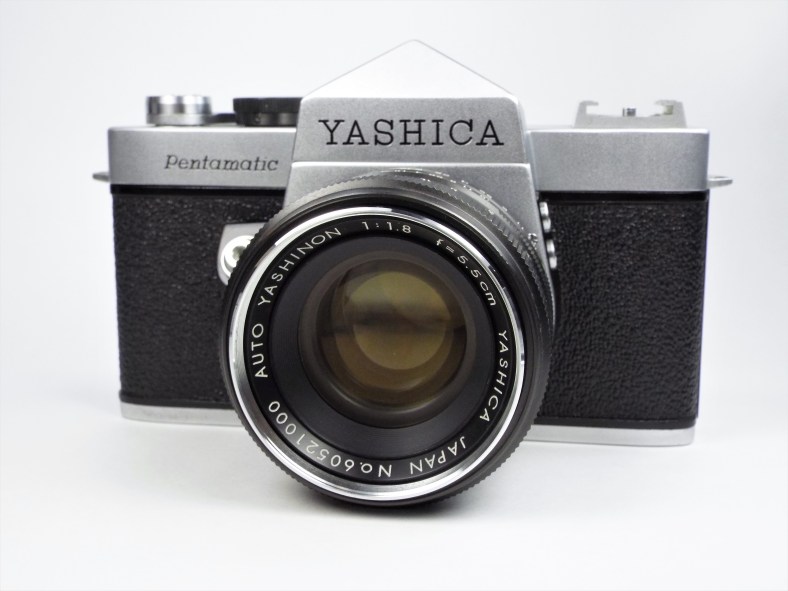
Yashica Pentamatic 35mm SLR. Yashica’s first ever. A cousin to the Zunow? We think so.

We believe designers and engineers from Zunow and Nicca played a big part in bringing the Pentamatic to market by early 1960.

Thanks for your visit! To find out more about Yashica and the Zunow connection stay a bit and check out our blog here on the ‘Yashica Pentamatic Fanatic’!

Chris and Carol ^.^

Please respect that all content, including photos and text are property of this blog and its owner, Yashica Pentamatic Fanatic, Yashica Sailor Boy, Yashica Chris.

Copyright © 2015-2017 Yashica Pentamatic Fanatic, Chris Whelan
All rights reserved.

First Look… Yashica Pentamatic II – Finally!!!

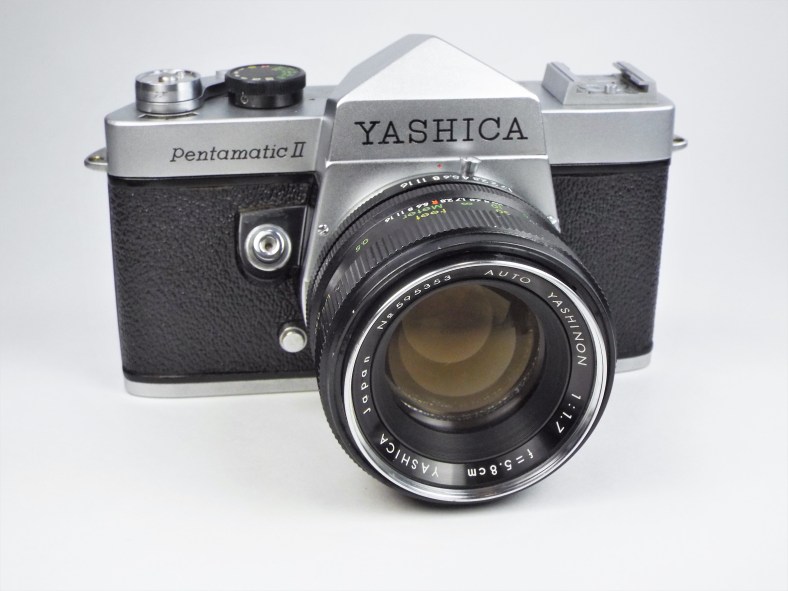
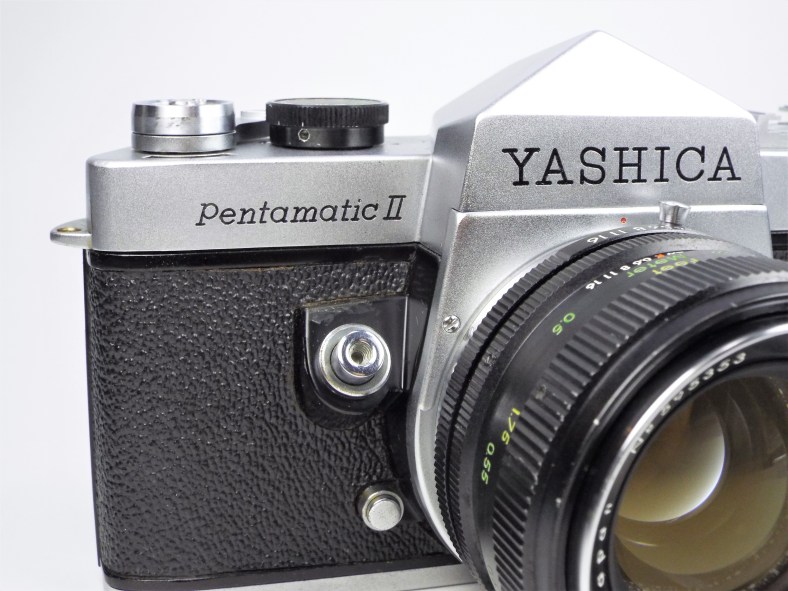
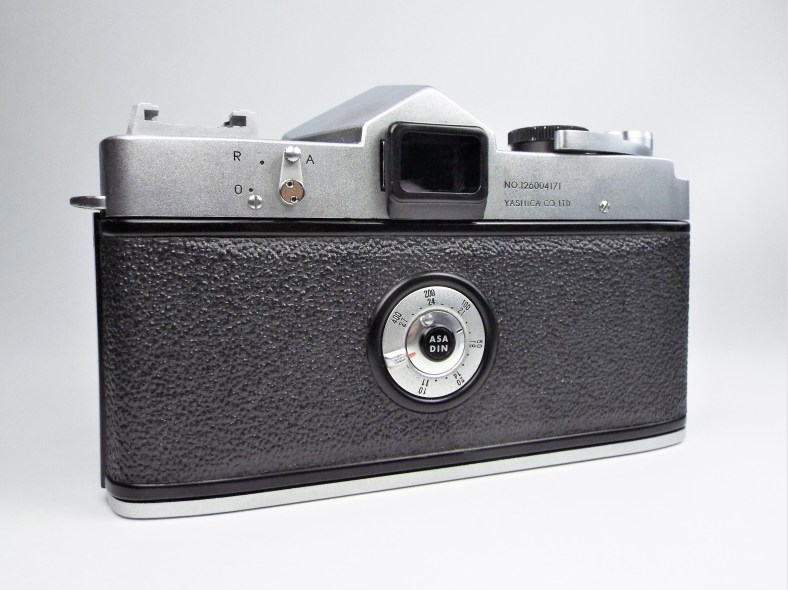
After years of searching, we’ve finally acquired our first Pentamatic II. A rather rare camera that was only released in Japan and only for a short time. It’s estimated (by us) that less than 6,000 bodies were made. How many of those survived to the present day is of course unknown.

DSCF6247

DSCF6248

DSCF6251

Much more detail about this Pentamatic coming soon.

Studio Camera: Fujifilm FinePix S9000W

Chris

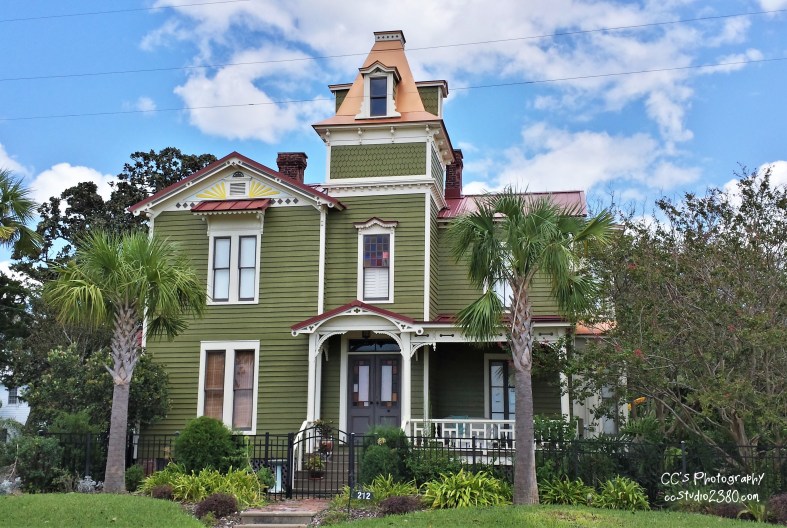
The Pippi Longstocking House – Amelia Island, Florida

Located in what is known as Old Town (Fernandina Beach) overlooking the Amelia River on the northwest side of Amelia Island. Originally built around 1870 for a harbor pilot Captain Bell and the second owner was also a river captain in 1901. Located on a high bluff at 212 Estrada Street, it overlooks the former Spanish fort San Carlos (c1811).

It’s a lovely house that’s been restored and maintained throughout the decades. It stood in as Pippi Longstocking’s house in the late 1980s movie “The New Adventures of Pippi Longstocking”… “The house was altered and remodeled through the years. When movie producers came calling in 1987, it was its original weathered white with hunter green shutters. The house stood in for Villa Villekulla, the fictional home of Pippi, a character in a series of books written by Swedish author Astrid Lindgren. The young girl lives alone in a small Swedish village sharing the house with her monkey and horse. She befriends the two children living next door, Tommy and Annika Settergren, and they have many adventures together.”

Today it is a private residence and is not open for tours. It’s a very easy to photograph house because of the large open area in front of the house (actually Fernandina Plaza Historic State Park).

20170912_143552_Richtone(HDR)

The “Pippi Longstocking House” on Amelia Island. Built c1870

If you find yourself near Amelia Island it is well worth the visit (don’t miss the 40 block Historic District of Fernandina Beach while you’re at it).

pippi

Pippi says “hi”! Actress Tami Erin

Thanks for stopping by and be sure to check out my camera and photography shop at http://www.ccstudio2380.com

Chris

Yashica Half 17 – by Camera Go Camera

Always interesting camera and equipment reviews with excellent photography to boot!

Peggy's avatarCamera Go Camera

When I saw this camera, I thought…REALLY??? A Yashica half frame? I hate half-frames, but I love Yashicas. Should I buy it? It isn’t cheap for a junk bin chance, but it is clean and a Yashica…OK, I will do it.

According to this reviewer it was produced in 1964. As you can see it has a selenium cell light meter and a f1.7 lens. It has zone focusing with an image scale inside the viewfinder that has the regular mountain, people, person symbols. On the right side of the view finder is a needle scale that tells you the speed. So you can choose the aperture and check what speed will be selected by the camera. Or everything can be automatic. When you press the shutter button half way, the needle moves…and this one did, which let me know the selenium cell was working 🙂 A good sign. Here…

View original post 118 more words

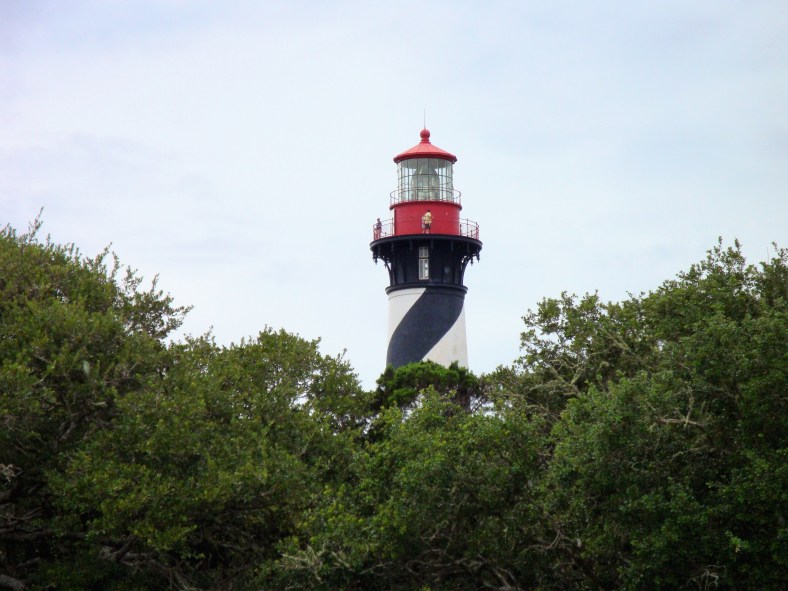
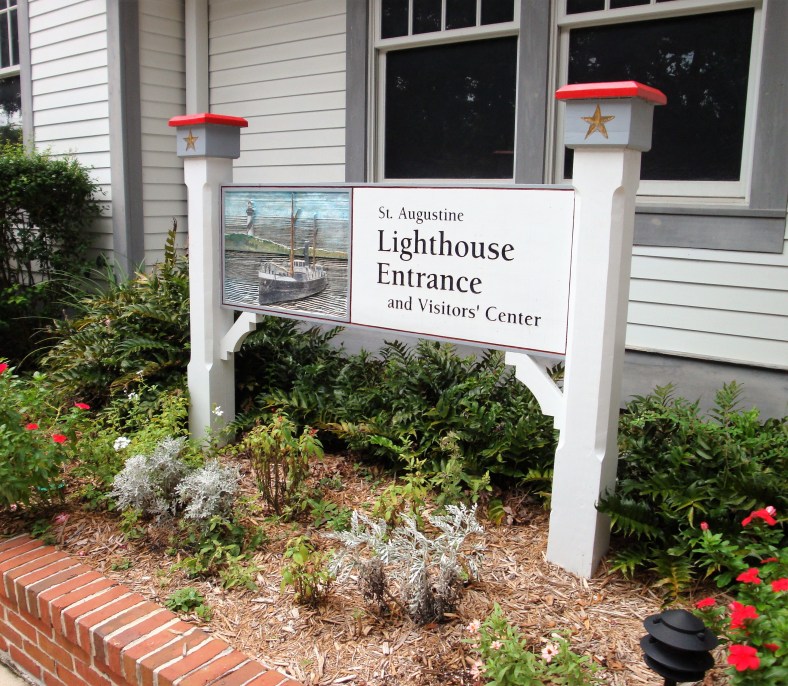
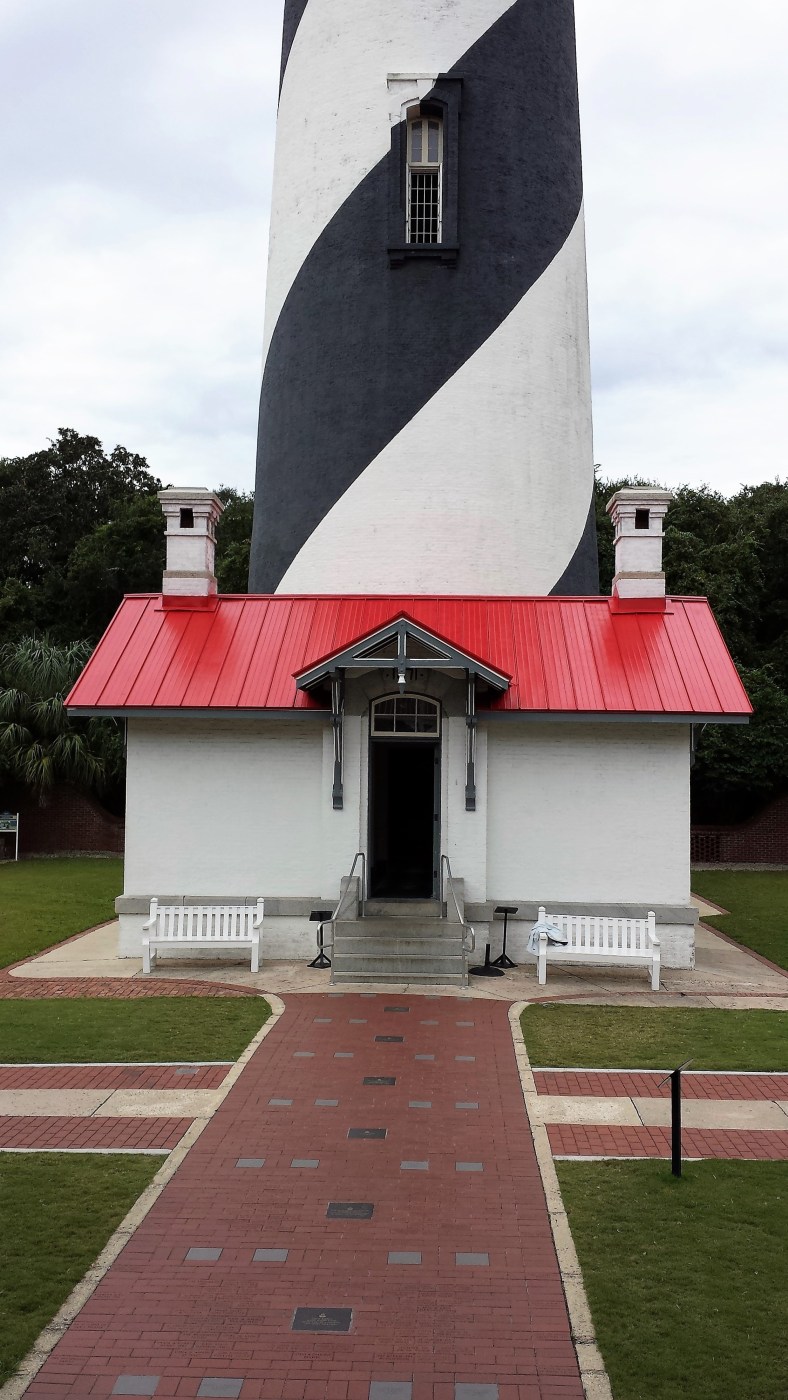
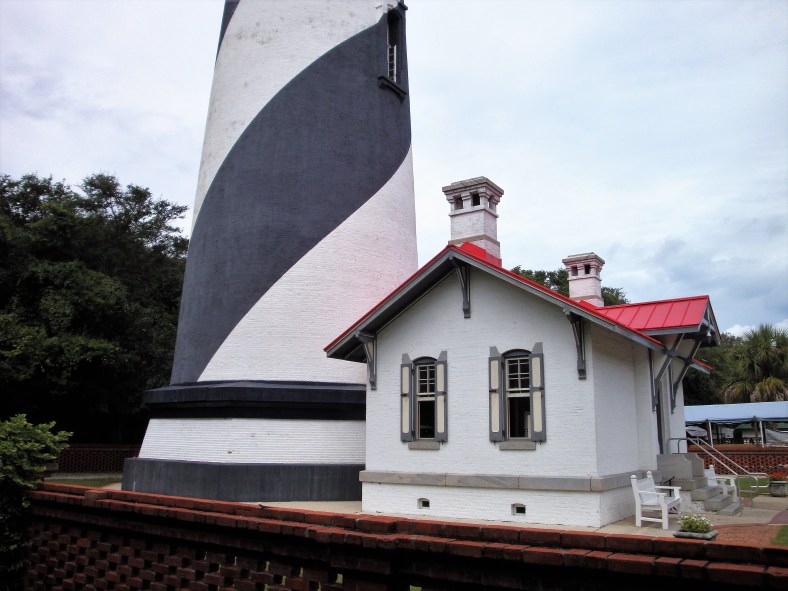
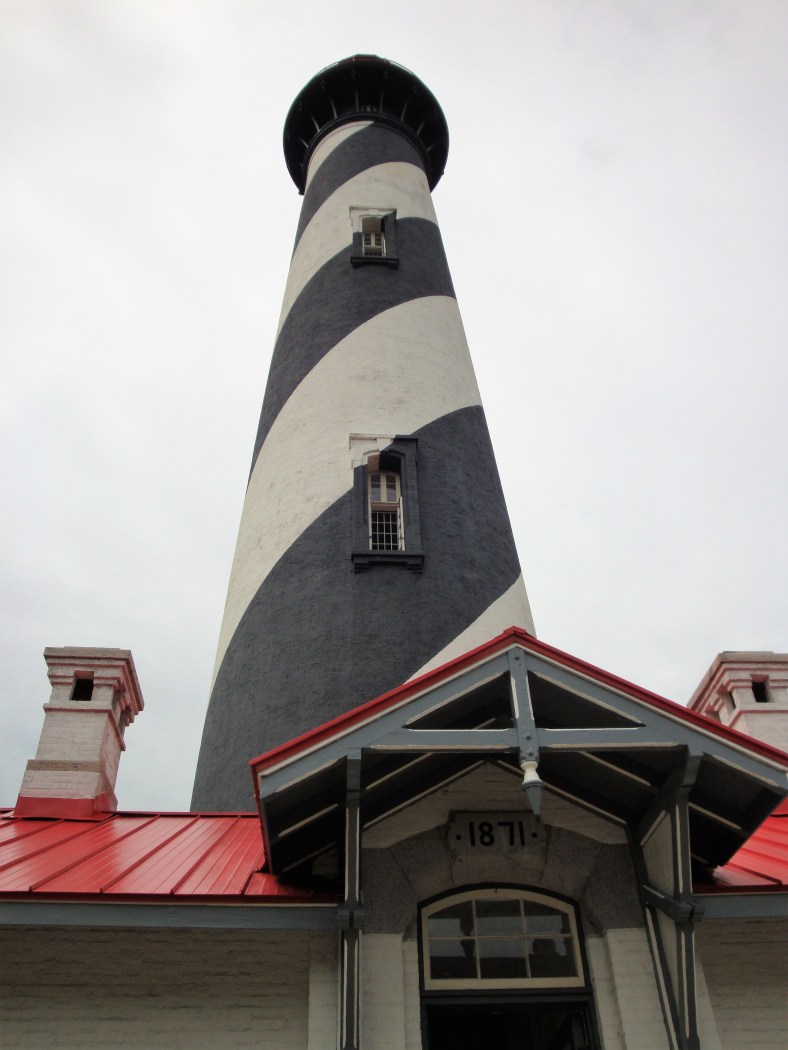
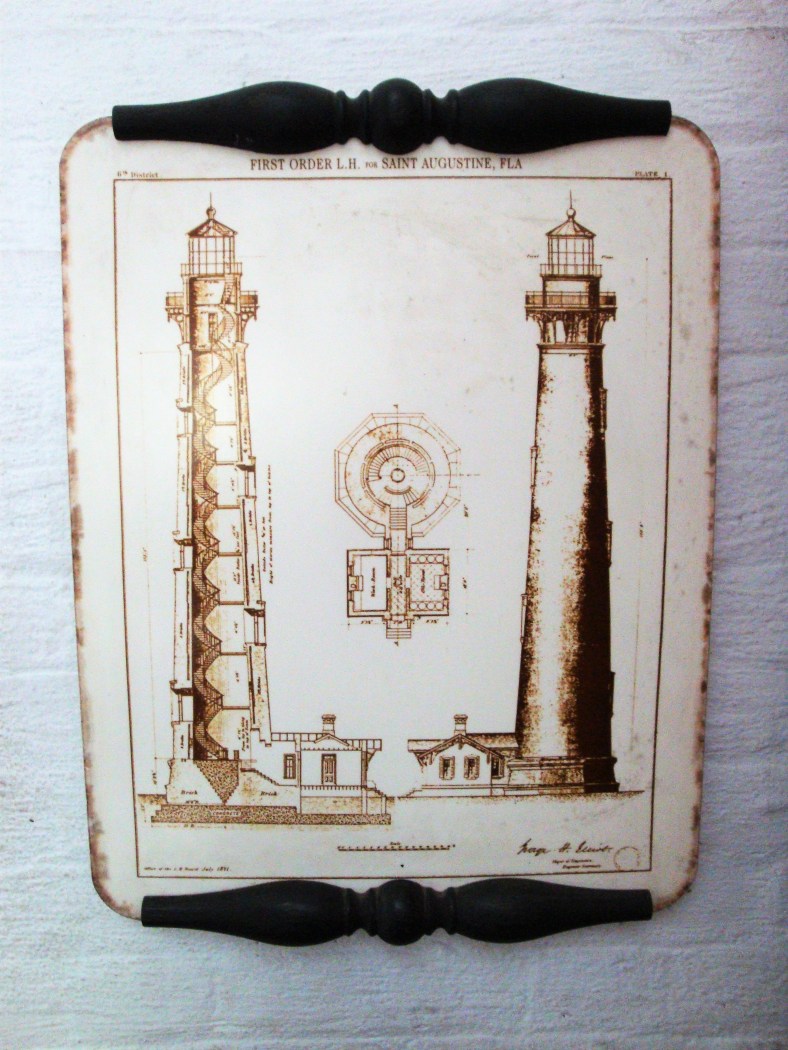
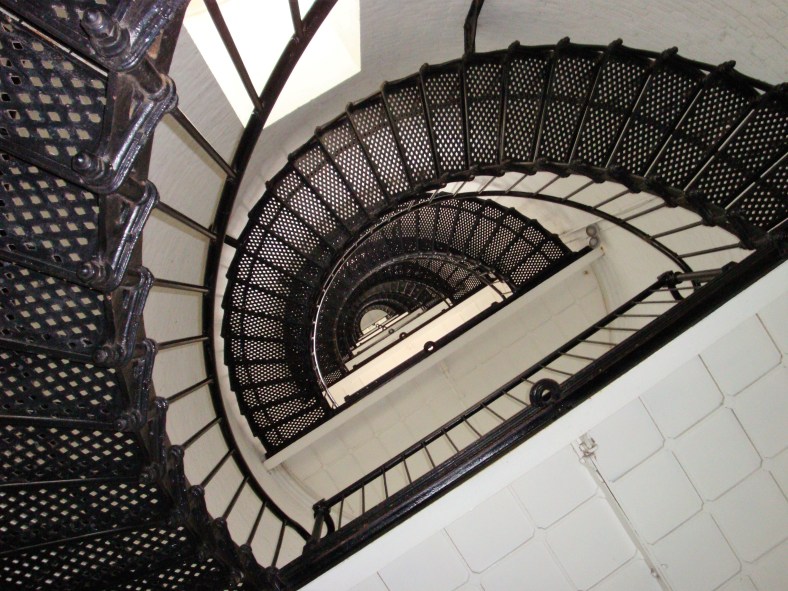
St. Augustine Florida Lighthouse

The day I choose to visit the lighthouse was terrible – Florida wise. Mid September, crazy hot, oppressively humid and not a hint of a seabreeze. Oh and the sun was obscured by clouds all day. So with that said, it wasn’t a great photo opportunity for shooting with film. The few usable images came via my cameraphone and Sony Cyber-shot.

DSC05205

DSC05191

20130922_140555


DSC05193

DSC05195

DSC05198

DSC05199

Looking east towards the Atlantic Ocean.

DSC05201

DSC05204

20130922_140311

20130922_133916

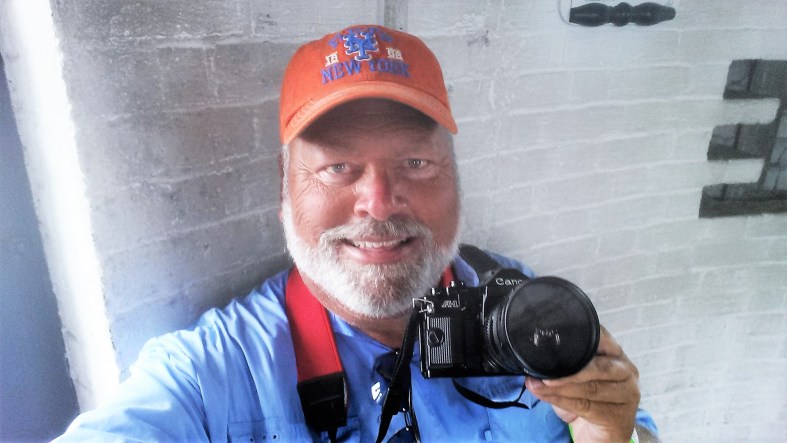
Optimistic that I would be able to get some good shots with my Canon A-1.

Overall the lighthouse is worth your time to visit, just pick a perfect weather day to go. The lighthouse has been fully restored and is kept very well maintained and the view from the top is exceptional – a bit toe curling if you and heights have an uneasy relationship – that red railing looks pretty thin at the top!

Thanks for your visit!

Cameras: Sony Cyber-shot W-170, Canon A-1 with FD 17mm lens, Samsung Galaxy S4

Chris


Early Yashica Pentamatic Brochure – US

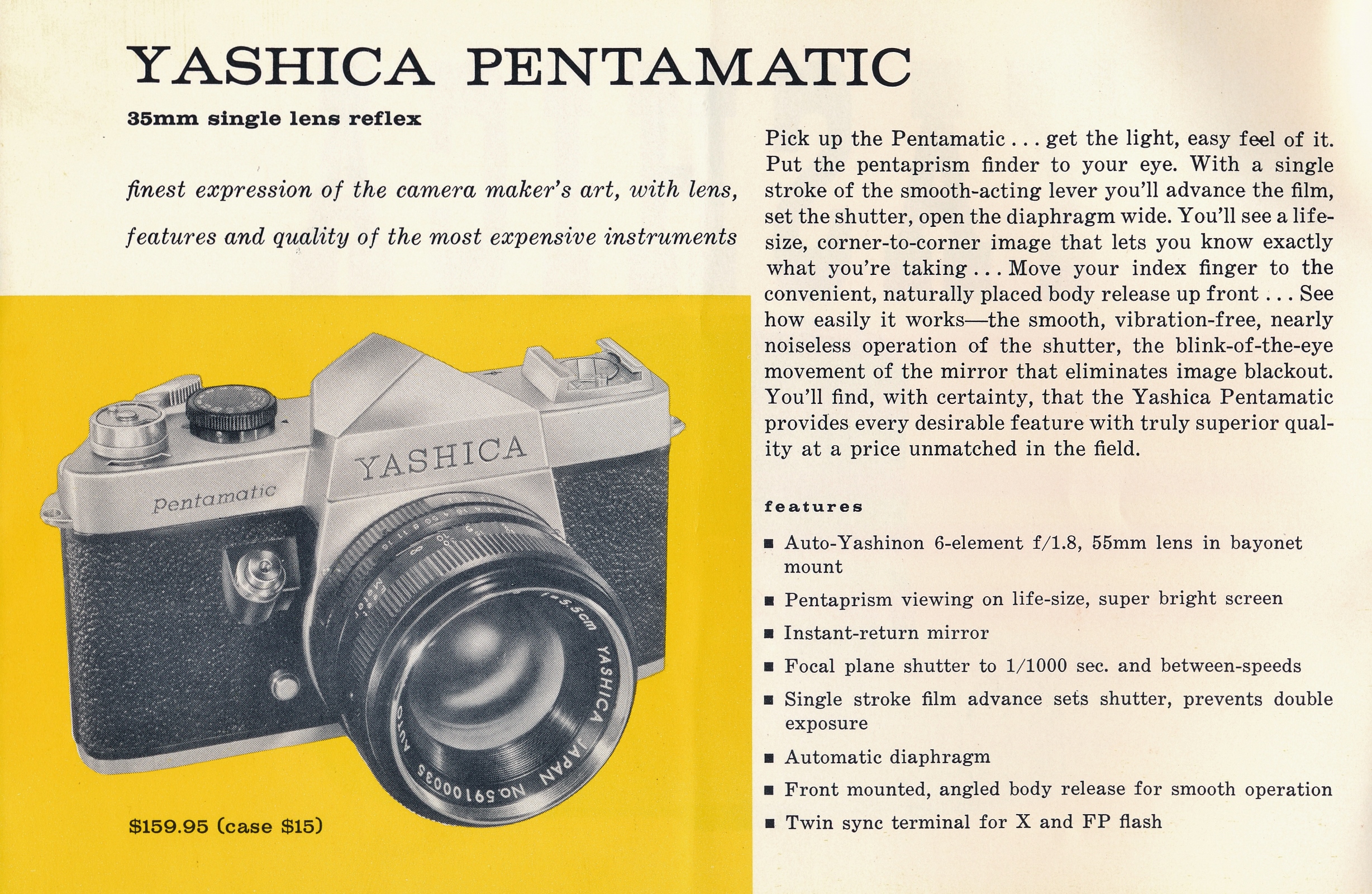
Very early if not the earliest printed in the US sales brochure for the new Pentamatic.

We’re thinking the summer of 1960…

We haven’t found an earlier brochure that features the Pentamatic then this one – “Printed in the U.S.A.” on the back cover using the 234 Fifth Avenue, New York 1, N.Y. address. The cover is amazing in that other than Yashica’s name and an image of the camera, there’s no other writing. No “Pentamatic” – just an image of the camera. That was a first for Yashica as best as we can tell.

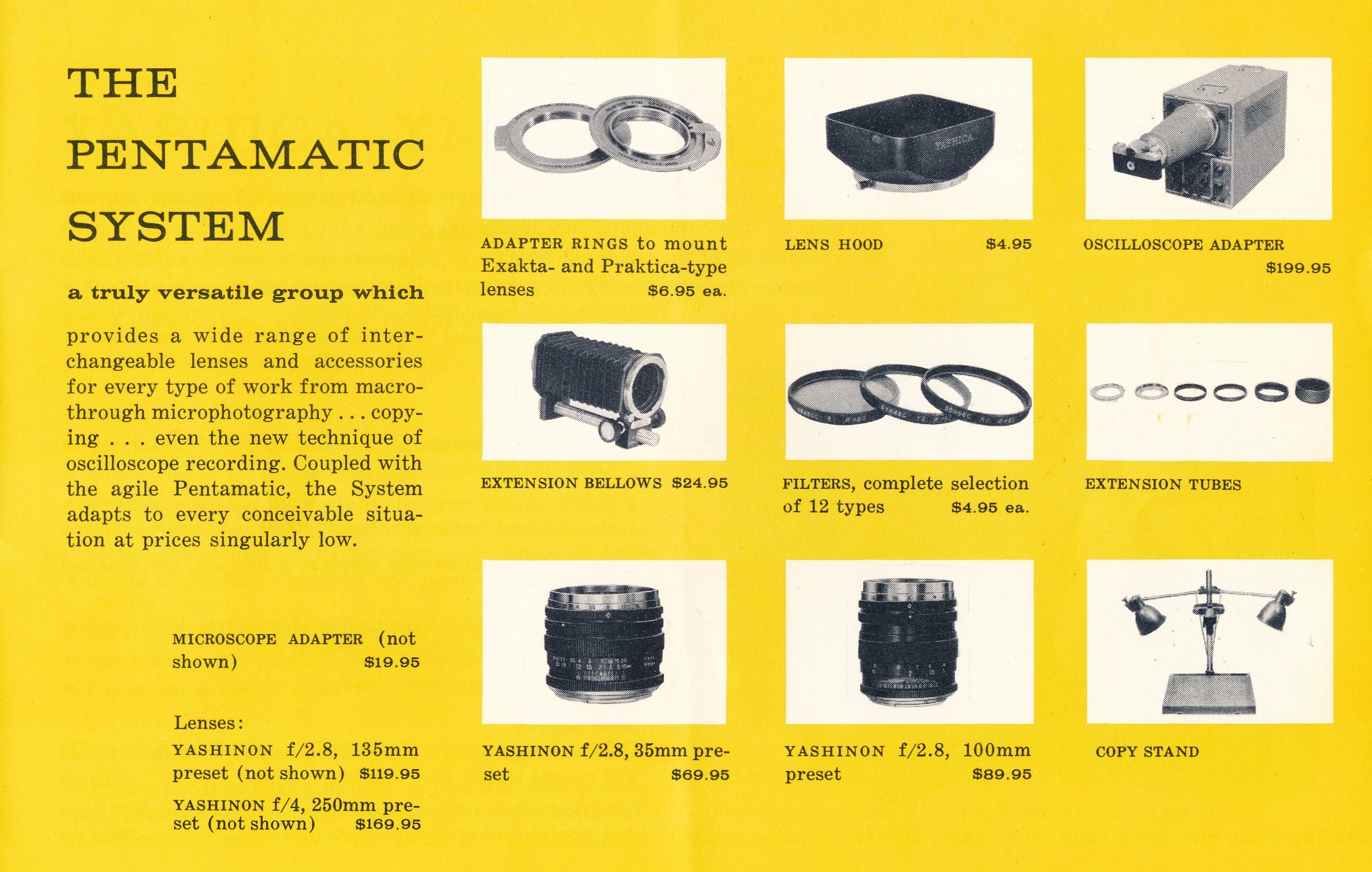
The first magazine advertisement was June 1960 in the US so we don’t believe this brochure was out before that. The only problem with our thinking is that most of the other cameras featured inside this brochure are 1959 model cameras and in some cases late 1958. There could even be a few that came out in early 1960. The two pages we’ve scanned (see below) contain an interesting wealth of info on the features and accessories for the Pentamatic. Of note, the lens serial number (No. 59100036) puts that lens to be one of the first lenses Tomioka made for Yashica with the new Pentamatic exclusive bayonet mount – 59 = 1959, 10 = October, 0036 = the 36th made in the production run.

We know from our research that the October 1959 date for the lens is 2 full months early from the first Pentamatic bodies (December 1960). Our best guess is that Tomioka Optical (the maker of the lens) needed to start production of the standard lens early in order to meet the demand for the camera body itself. No proof exists yet but it’s the best decoding of the lens serial number we can come up.

Page 1 provides a wealth of info for Yashica's first 35mm SLR.

Page 1 provides a wealth of info for Yashica’s first 35mm SLR.

IMG_20150926_0025

Page 2 shows (with prices) a nice selection of accessories for the Pentamatic. It appears that at the time of this brochure that there were 5 lenses available in the Pentamatic bayonet mount.


Yashica Pentamatic ’35’ vs. Pentamatic II

Why did Yashica bring out the Pentamatic II less than a year after releasing the original model?

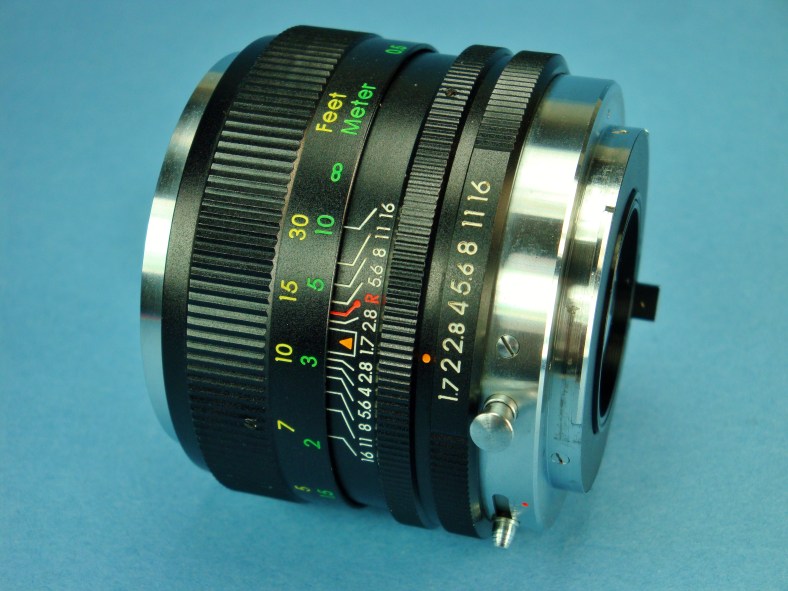
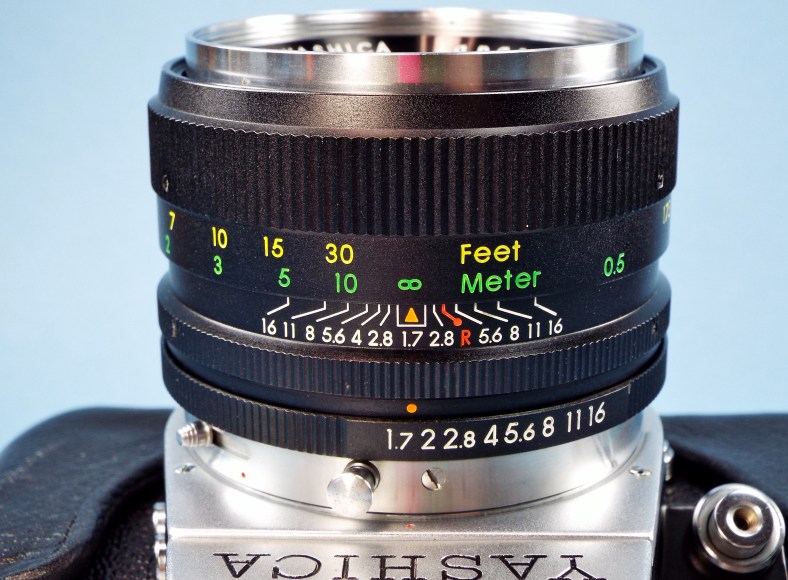
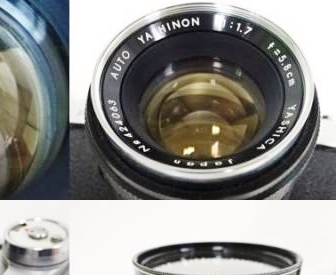
The only difference we can tell between the original Yashica Pentamatic ’35’ and the Pentamatic II (which came out around September 1960), is the standard lens that was mated with the camera body. The original Pentamatic came with the Auto-Yashinon, f/ 1.8, 5.5cm fully automatic 6 element lens. Of course it has the unique Pentamatic bayonet mount and not the M42 screw mount. The Pentamatic II came with the Auto-Yashinon, f/ 1.7, 5.8cm lens (pictured below). Both lenses were made for Yashica by Tomioka Optical of Tokyo. We imagine the 58mm, f/ 1.7 lens was a bit faster than the f/ 1.8… but we don’t see why Yashica changed from the model I to the model II and why they changed the lens… we may never discover the reason either.

DSC07467

The standard lens for the Pentamatic II – 5.8cm, f/ 1.7

27356135700_b0c5ef23fe_z

017

Gorgeous lens for the Pentamatic II.

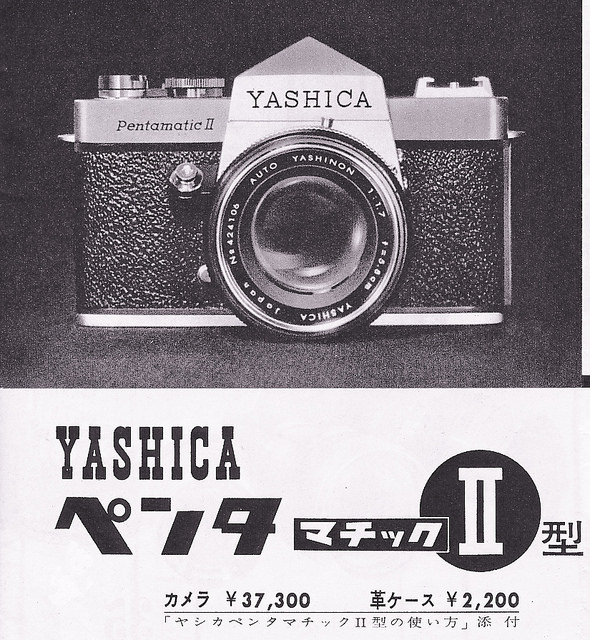
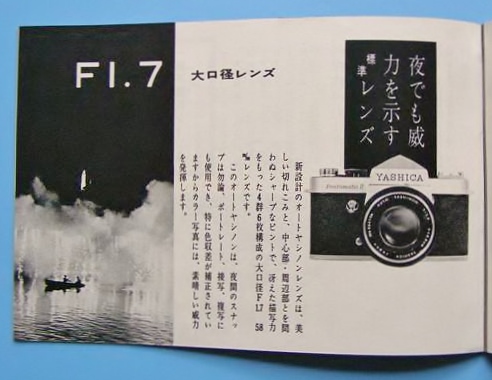
Brochure c1961

The first sighting of the Pentamatic II in a sales brochure for the Japanese home market.

We’ve yet to find an advertisement for the Pentamatic II in English and along those same lines, have yet to find the Pentamatic II in a sales brochure in English. The Pentamatic S replaced the model II less than a year after its release. The model S went back to using the original 5.5cm, f/ 1.8 lens that was on the original Pentamatic.

That makes the Auto-Yashinon 5.8cm, f/ 1.7 lenses one of the rarest of the early Pentamatic bayonet mount lenses.

06-12-2016 pentamatic II 2 (2)

Happy hunting!

Chris

Fuji Photo Film – Fuji Pet 35

From 1959, Fuji Photo Film Co., Ltd. follow-up to their widely popular Fujipet 120 film camera. The Pet 35 took advantage of the growing popularity of 35mm photography – plus it’s a great way to sell more film!

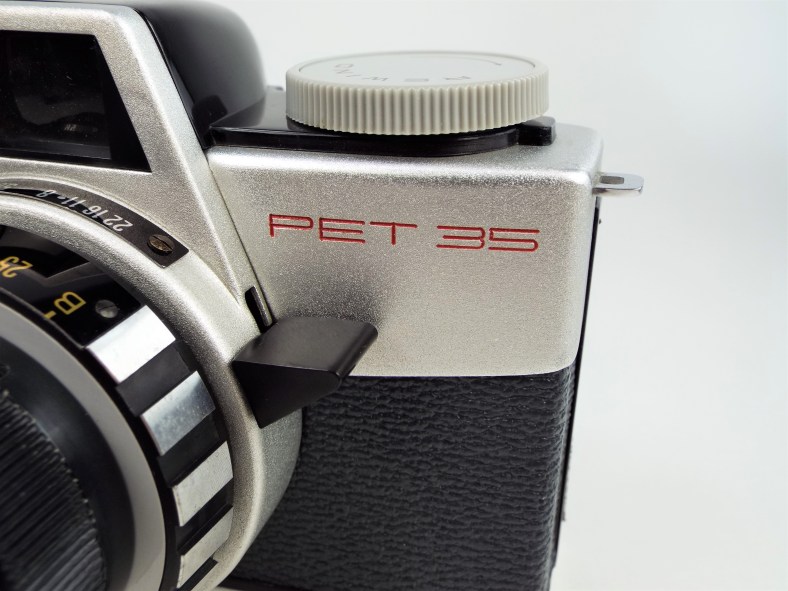
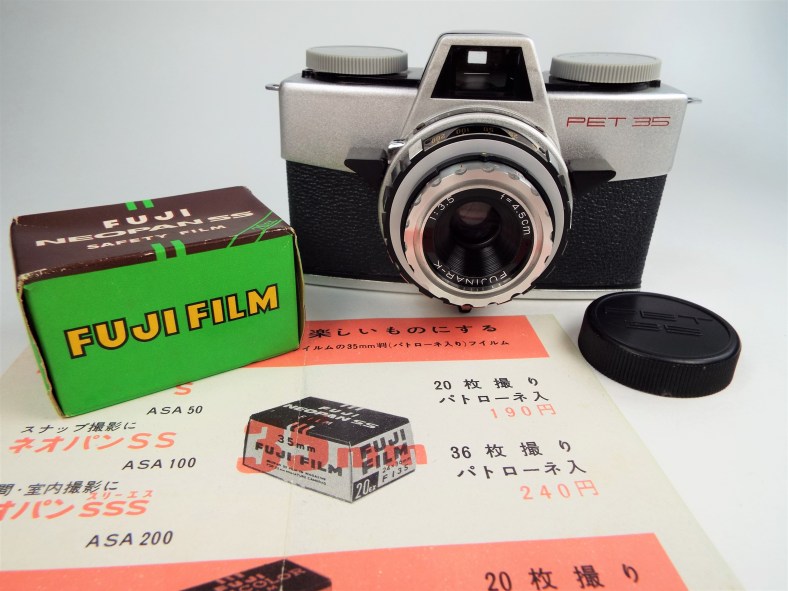
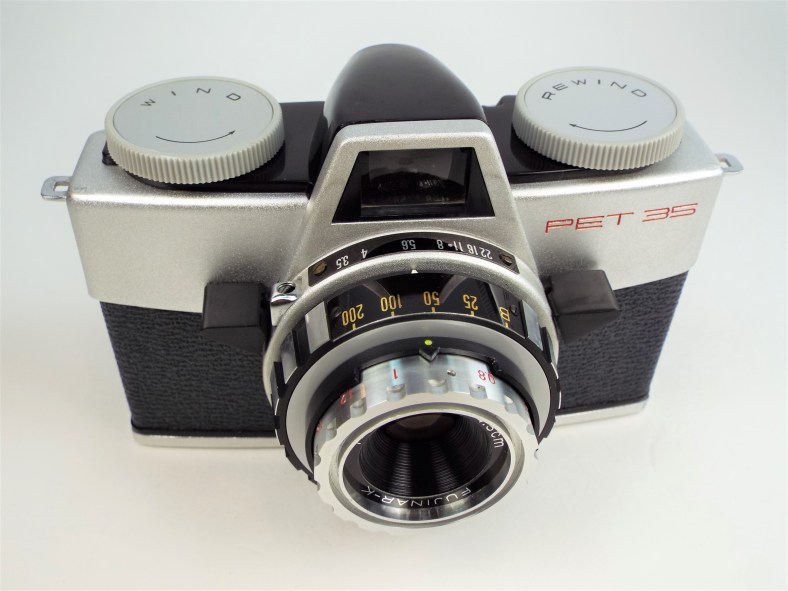
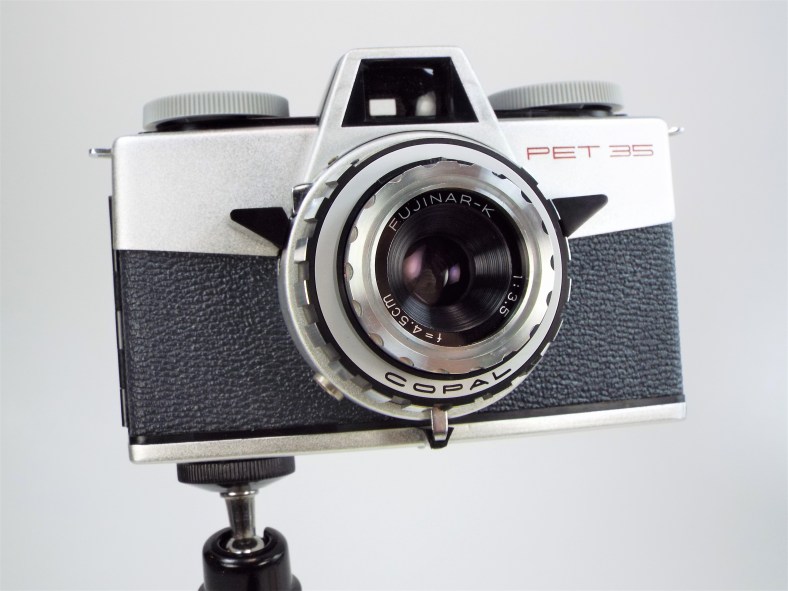
The Pet 35 was way more sophisticated than the Fujipet – but retained the funky charm and quirkiness of the original. Since the Pet 35 is not a common camera, we’ve presented a visual tour of our almost mint condition Pet 35.
DSCF5186

Original set as found. We have the leather case too.
DSCF5188

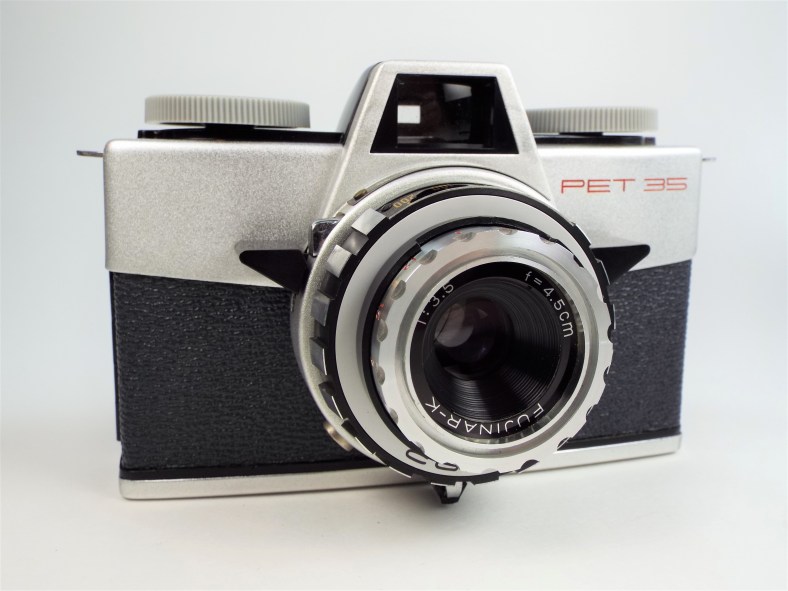
The lens is a Fujinar-K 3 element glass lens – 45mm with a maximum aperture of f/3.5 with closest focussing to 0.5 meters.
DSCF5189

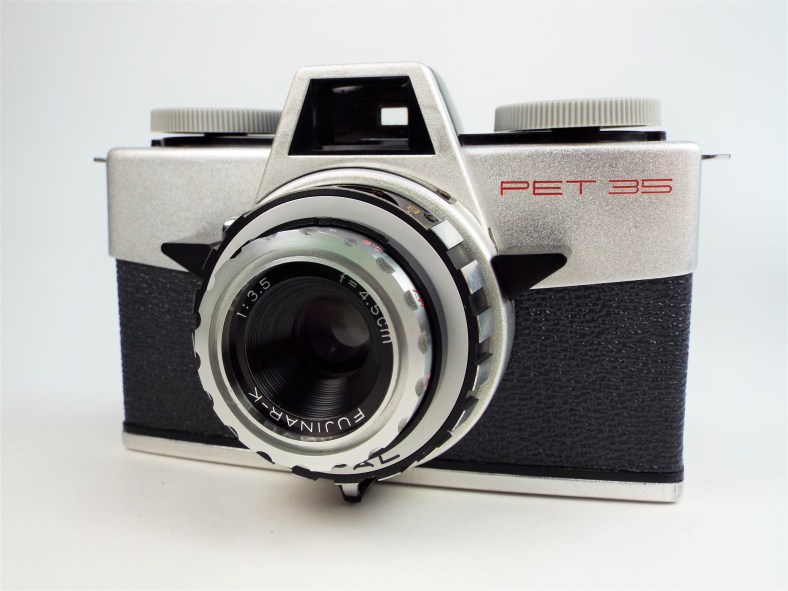
The lever to the right of the lens cocks the shutter and the left lever trips the Copal B leaf shutter.
DSCF5190

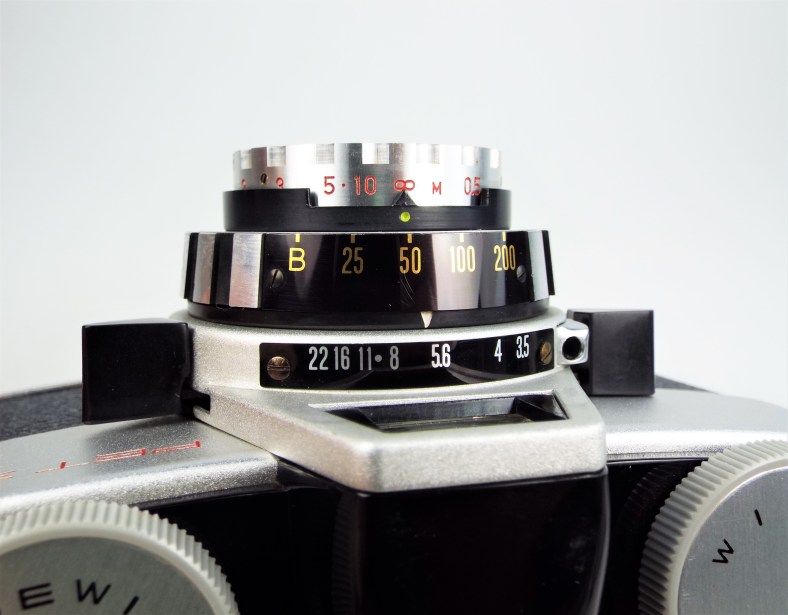
The Copal shutter features speeds of B, 1/25, 1/50, 1/100 and 1/200 of a second.
DSCF5191

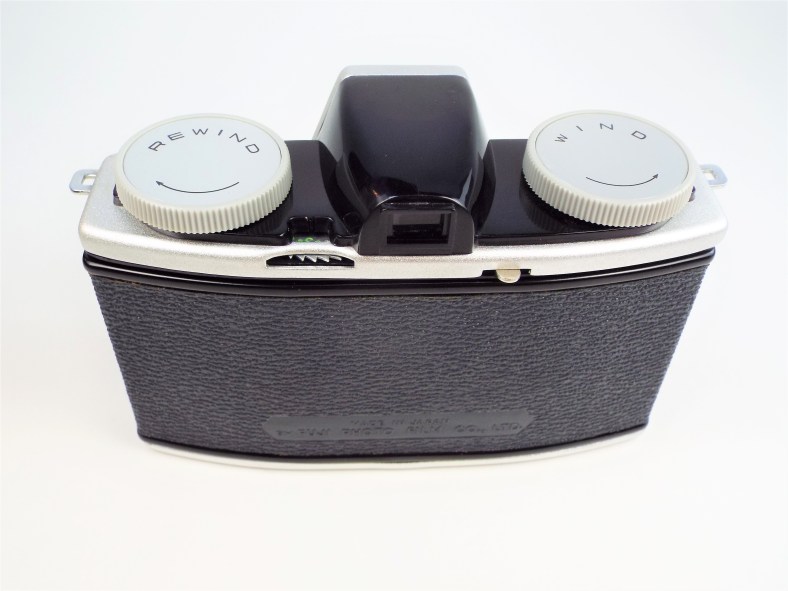
In keeping with the funky design – two oversized knobs that left no doubt on how to operate them.
DSCF5192

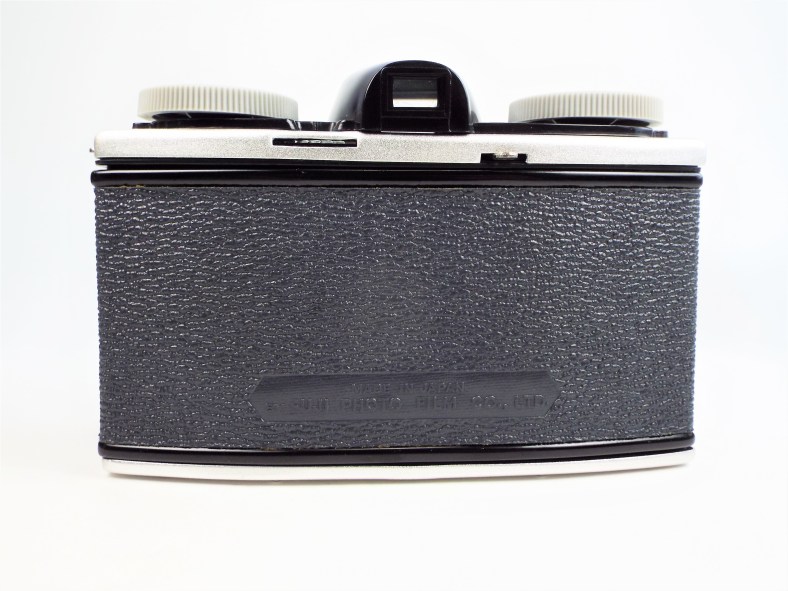
The body is dark gray on this Pet 35.
DSCF5193

Outer ring is the focus adjustment, next is the shutter speed selector and finally the aperture settings.
DSCF5195

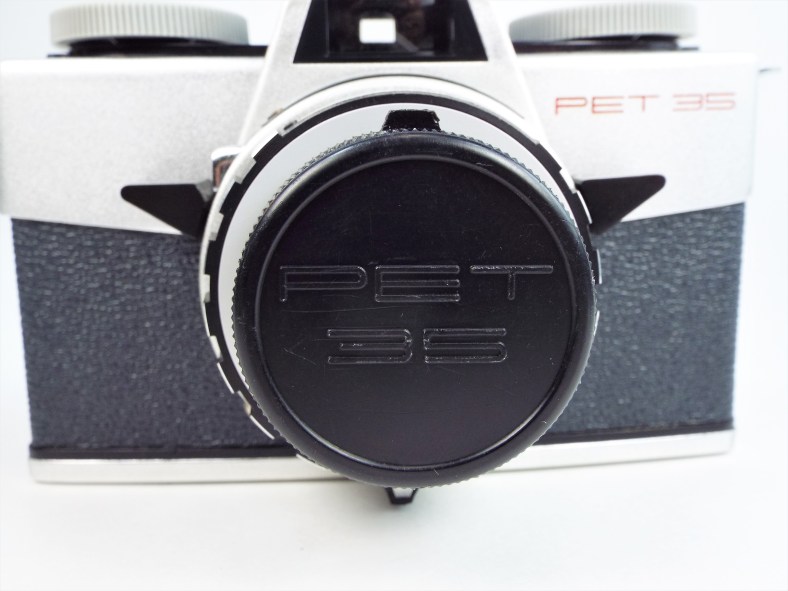
The original Pet 35 lens cap.

DSCF5196

Nicely detailed and finished.

DSCF5197

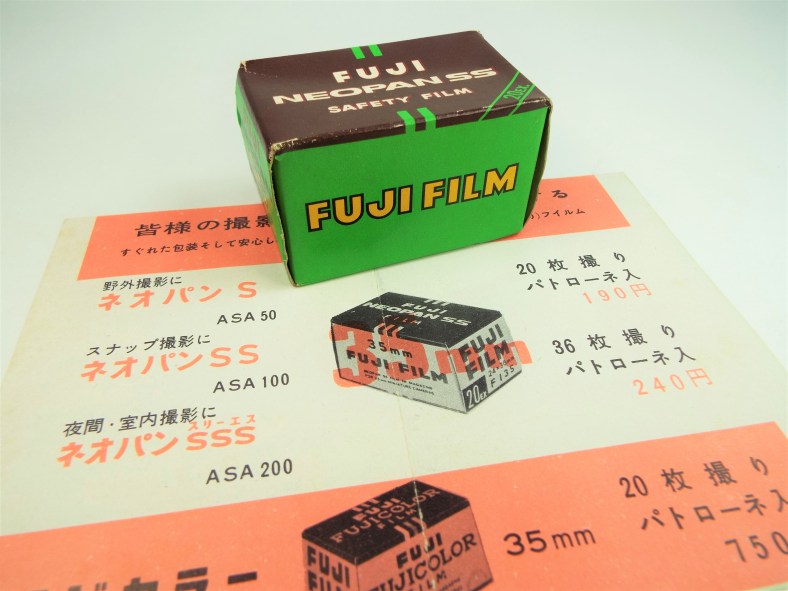
Early 1960s Fuji Film Neopan SS – ASA 100. How about film for only ¥190!
DSCF5202

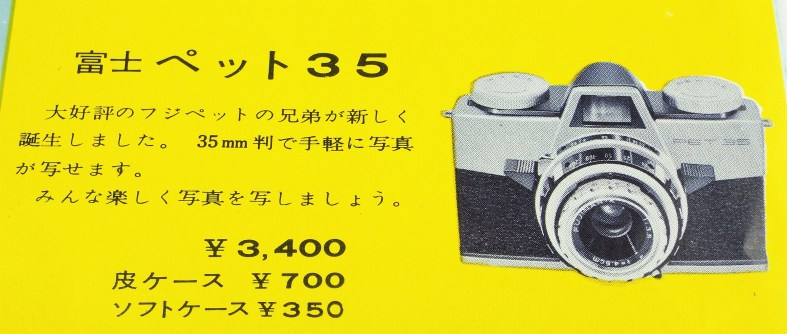
Original selling price was ¥3,400 – the leather case sold for ¥700 and a soft case was available for ¥350
DSCF5200

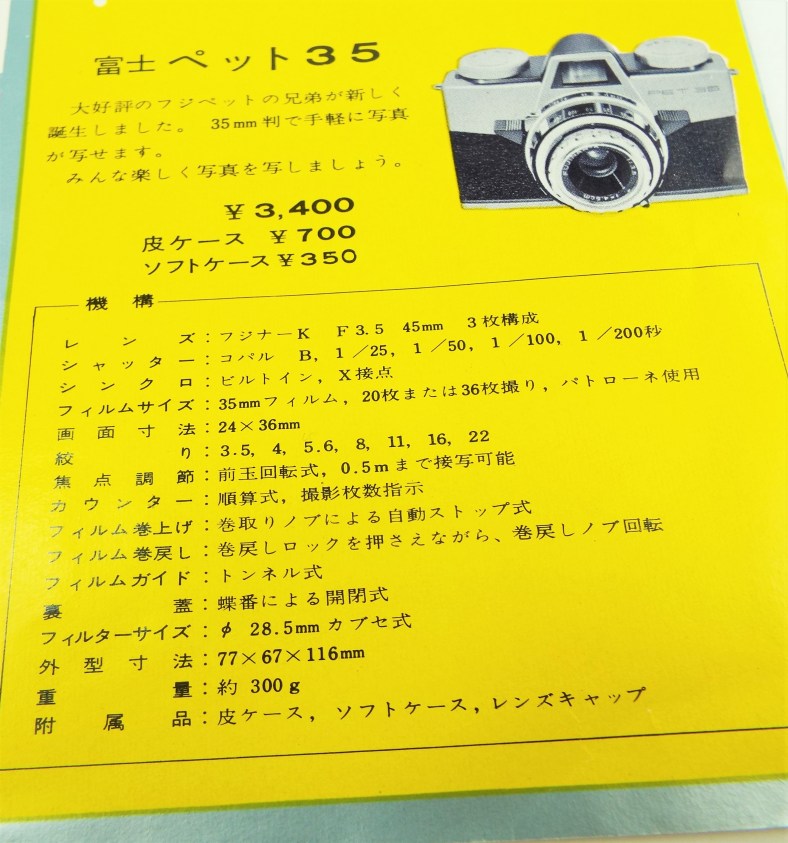
Original sales brochure specs.

DSCF5208

The viewfinder is bright and clear – and big for such a small camera.
DSCF5207

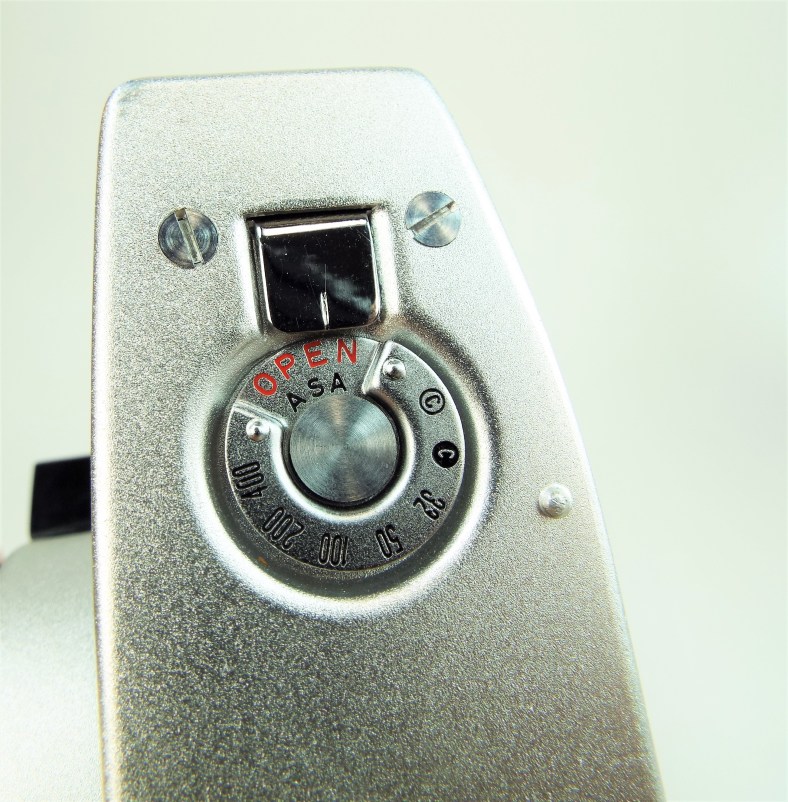
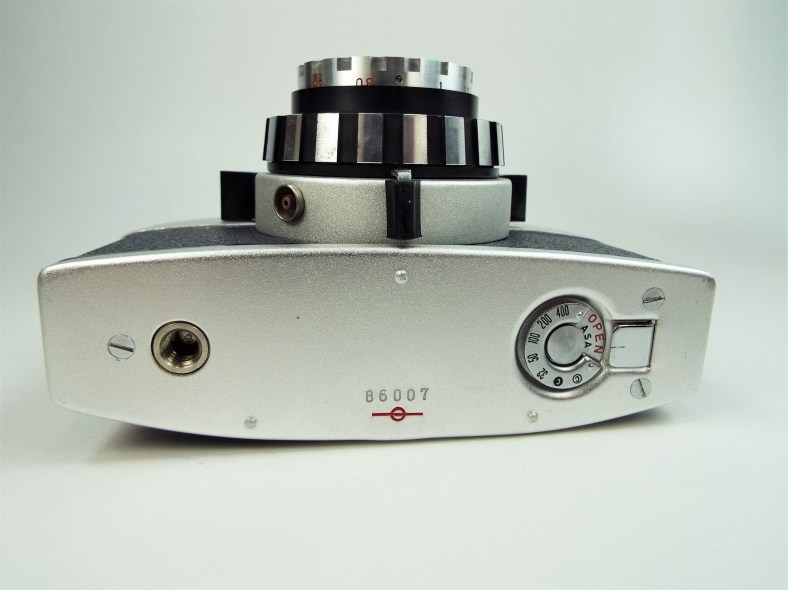
ASA reminder scale and film back release.
DSCF5206

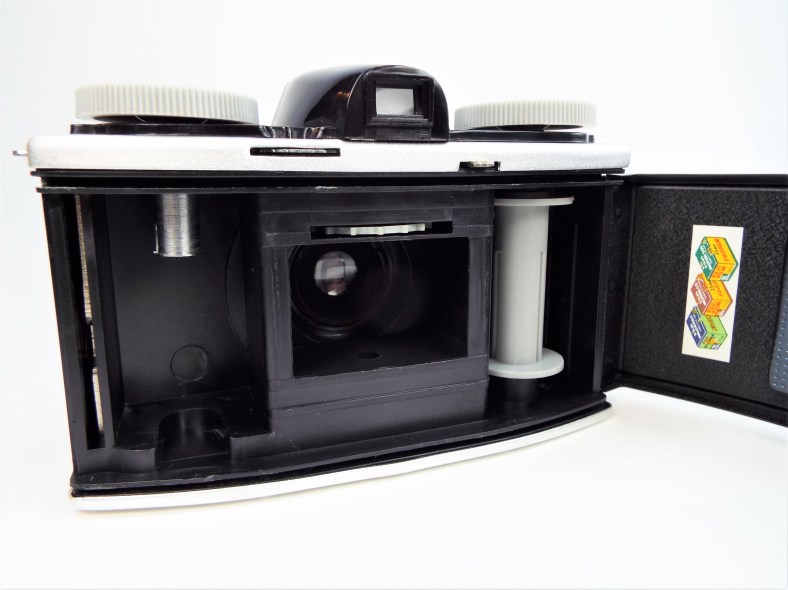
The Pet 35 is far from being a ‘toy camera’ as its build quality is quite high. No foam or yarn light seals to fail – the metal film door fit tightly into the body to seal out light.
DSCF5209

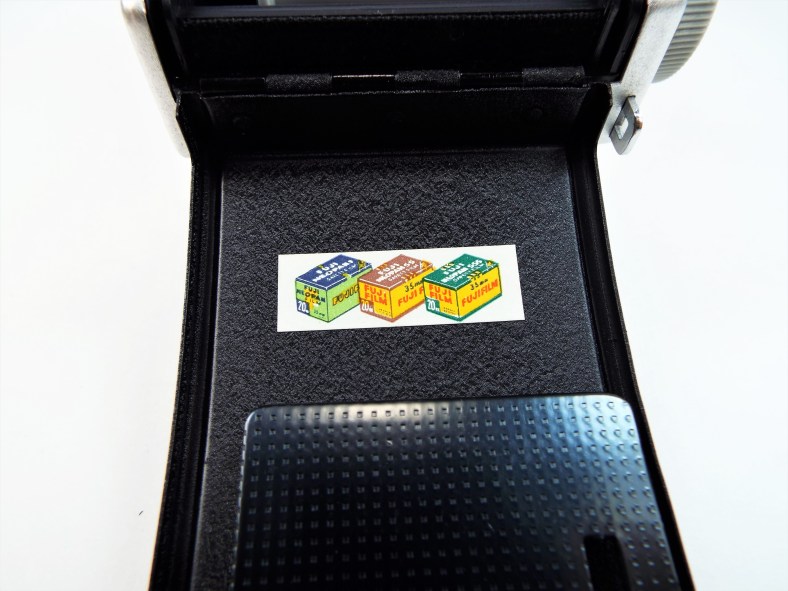
Gotta love the Fuji Film stickers inside!
DSCF5203

Thanks so much for your visit – we hope that you enjoyed our tour of this fantastic Fuji!

Studio Camera: Fujifilm FinePix S9900W

Chris & Carol ^.^
Cool Signs

20170413_134535

As seen on an abandoned souvenir shop along a Florida highway. At first glance I thought that they sold film and what not as they were the first stop in extreme Northeast Florida for southbound tourists. Cold drinks, smokes, candy, stuffed gators and Florida junk like that. But I got to thinking that it might have meant films as in movie films. This building was left to rot many decades ago and right next door is a closed motel on the same property. Some locals say that the souvenier shop showed movies from time to time for the guests at the motel and some of the bored to death locals. Makes sense as it was in the middle of nowhere and back in the 1960s or earlier that would be a draw.

DSCF5048

Anyway, cool old faded signage regardless of what went on. ^.^

Camera: Fujifilm FinePix S9900W, Samsung Galaxy S4

Chris