Friday Fotos! – Classic Rangefinders

OLYMPUS DIGITAL CAMERA

Image courtesy of Paul Sokk www.yashicatlr.com

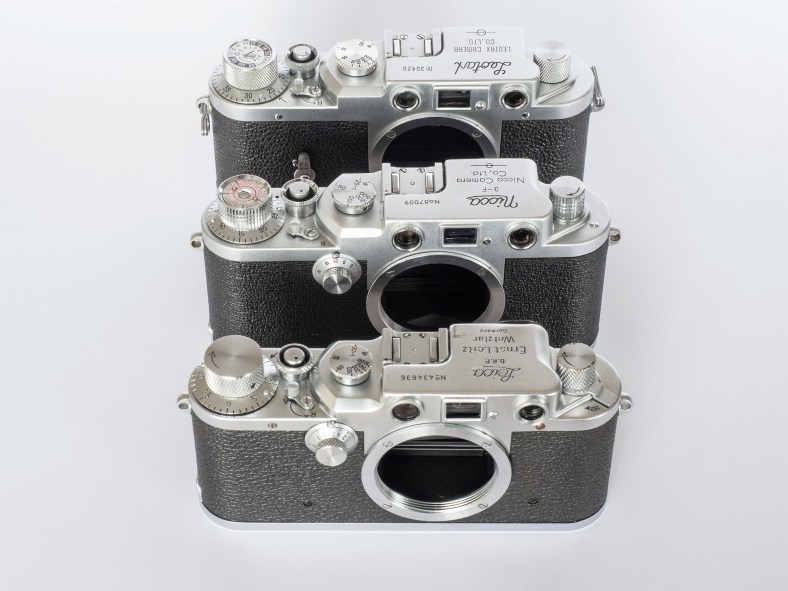
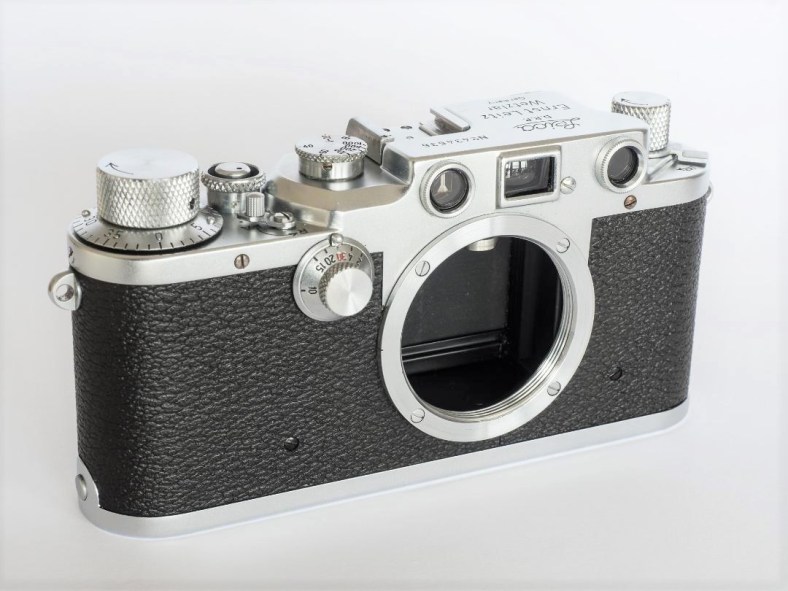
Recently my good friend Paul Sokk added this wonderful Leica IIIc to his collection of 35mm rangefinder cameras from the late 1940s and 1950s. The Leica is an original design made in Germany and the Nicca and Leotax are considered copies or clones made in Japan.

The Leica IIIc (front) is from 1946-47, the Nicca 3-F (middle) is from 1956, and the Leotax K is from 1955-58. These cameras use what is known as L39 (LTM) screw mount lenses of which literally thousands were made and thousands are still available today in a wide range of focal lengths.

If you’re looking to get into film photography with a totally manual camera then these should be on your list to take a closer look at.

DSCF8164

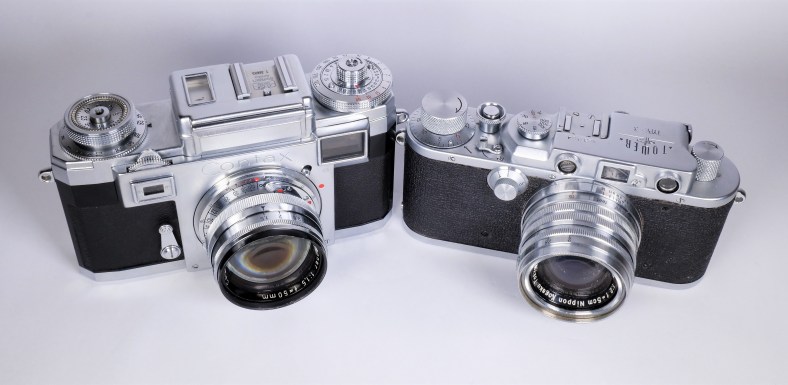
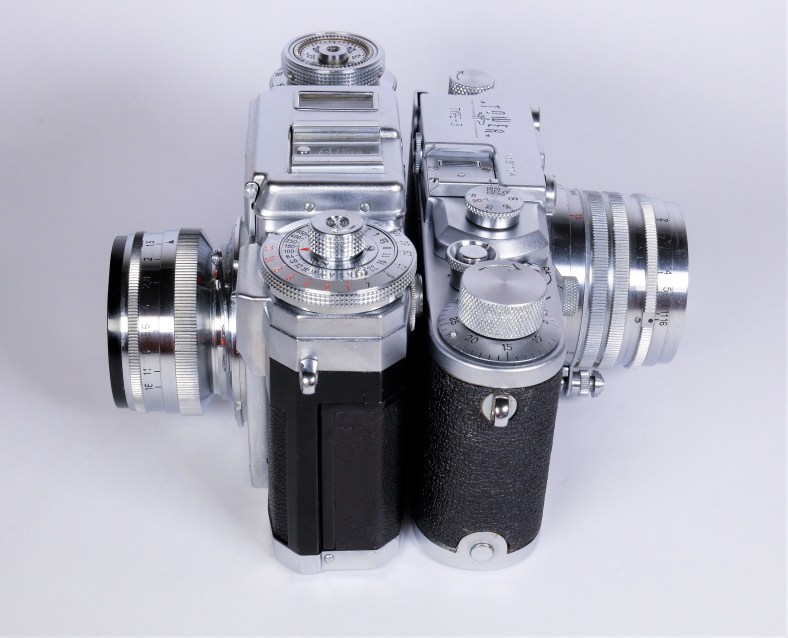
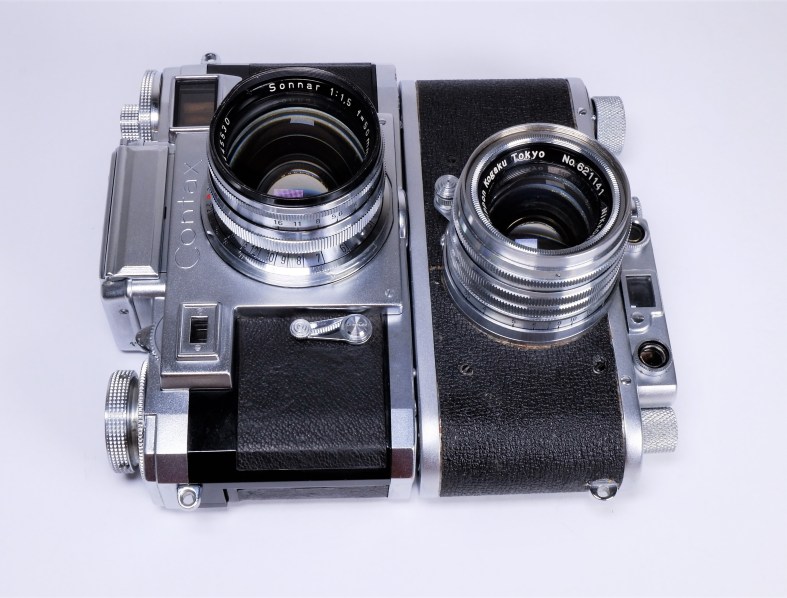
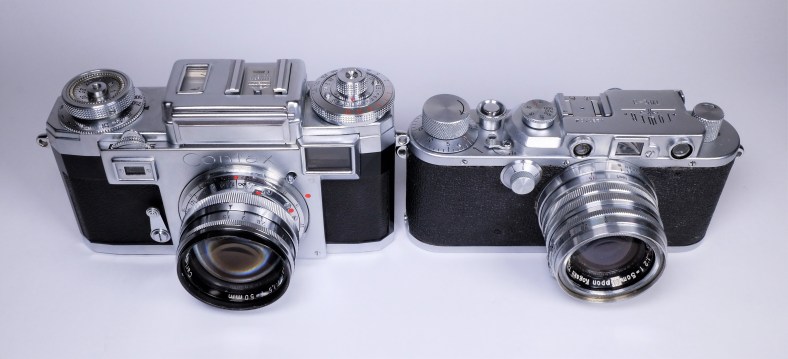
On the left, the Zeiss Ikon Contax IIIa and on the right the Nicca built Tower Type-3.

Pictured above are a couple of contenders from 1951. The Contax is an original design from the 1930s and was manufactured in Germany. The Tower branded camera was made by Nicca in Japan and features a Nippon Kogaku Nikkor f/ 2 5cm lens. The Contax sports a Carl Zeiss Sonnar f/ 1.5 50mm lens. The Contax also has an attached selenium cell exposure meter that can be useful for setting the correct aperture and shutter speed. A word of caution about these 70-year-old meters, if they are working (responding to light) then assume that it’s not accurate until you can check it against a modern meter. Most of these types of meters have long since failed.

DSCF8157

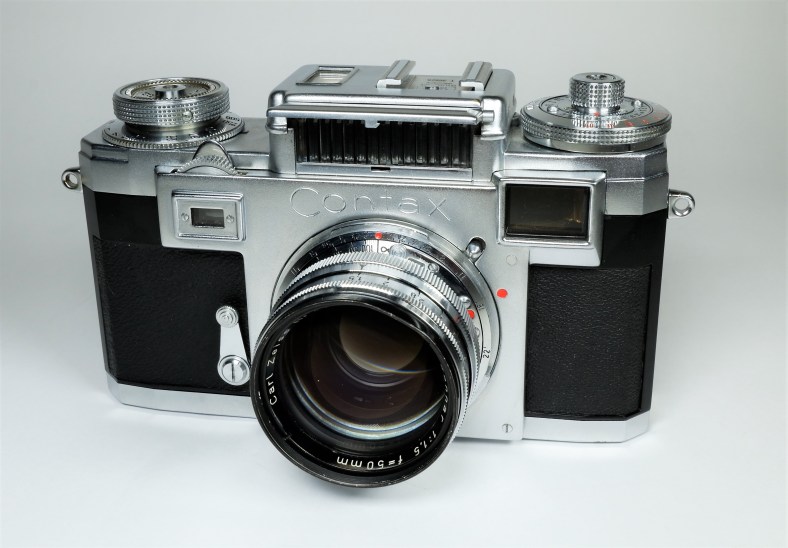
Zeiss Ikon Contax IIIa with selenium meter (top center) flap opened.

pauls new leica

Paul’s beautiful Leica IIIc

pauls leotax f

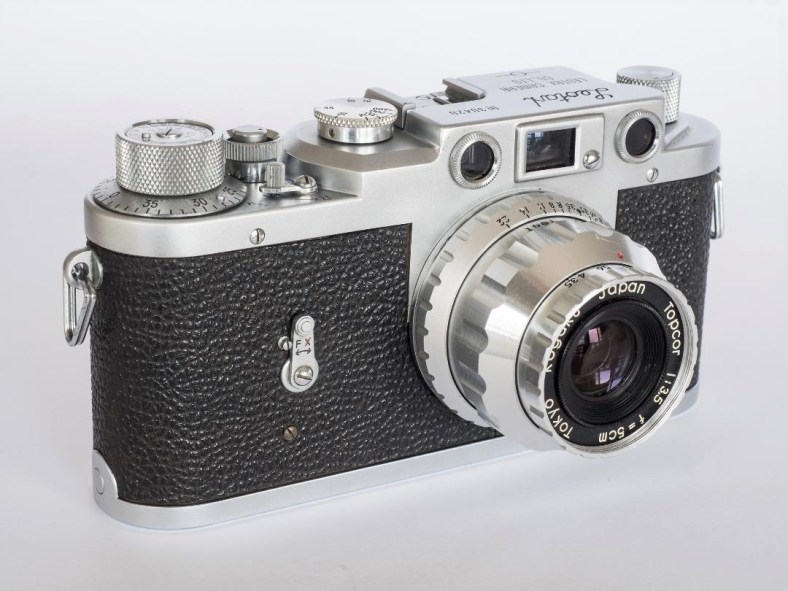
Paul’s gorgeous Leotax F with Topcor f/ 3.5 5cm lens.

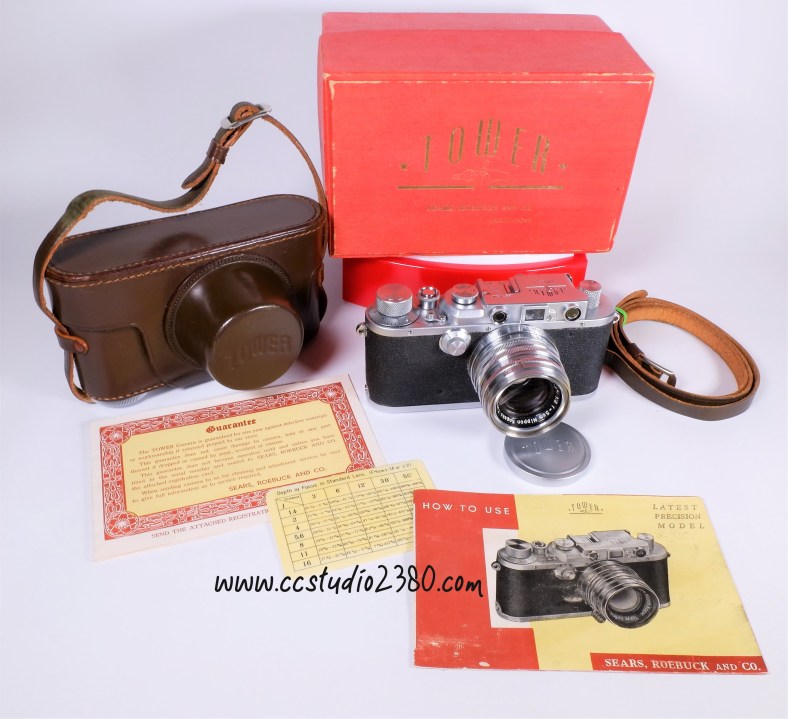
Thanks for stopping by and I hope my post stirs some interest in these wonderful cameras. I do have a Tower (Nicca) set available in my camera shop at http://www.ccstudio2380.com if you care to take a look at it, pop on over.

NiccaTower T3 Logo

Take care and stay safe! – Chris

Please respect that all content, including photos and text, are the property of this blog and its owner, Yashica Pentamatic Fanatic, Yashica Sailor Boy, Yashica Chris.

Copyright © 2015-2020 Yashica Pentamatic Fanatic, Chris Whelan
All rights reserved.

1951 Classics – Contax & Tower (Nicca)

DSCF8164

Zeiss Ikon Contax IIIa and Tower (Nicca) Type-3

Two extremely different cameras that accomplish the same thing – recording an image on 135 film. The Contax is a much bigger camera and for the most part, it is an original design by Zeiss Ikon of Stuttgart. The Tower was made by Nicca Camera for the Sears, Roebuck Company for sale in the US and Canada. The Nicca was inspired by an original design by Leica and it’s often considered to be one of the better Leica “copies”.

Both cameras feature interchangeable lenses and both are rangefinders. The Contax has an attached exposure meter (non-coupled) and with the Tower, you would use a separate meter for determining proper exposures.

DSCF8165

The Contax is a slightly larger camera and it’s a tad bit heavier due to the additional weight of the exposure meter. The Contax weighs 773 grams and the Tower weighs 591 grams.

DSCF8172

The standard lens on the Contax is a Carl Zeiss Sonnar f/ 1.5 50mm and the Tower has a Nikkor H.C f/ 2 5cm.

DSCF8174

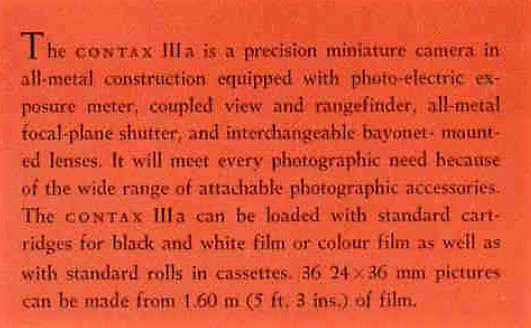
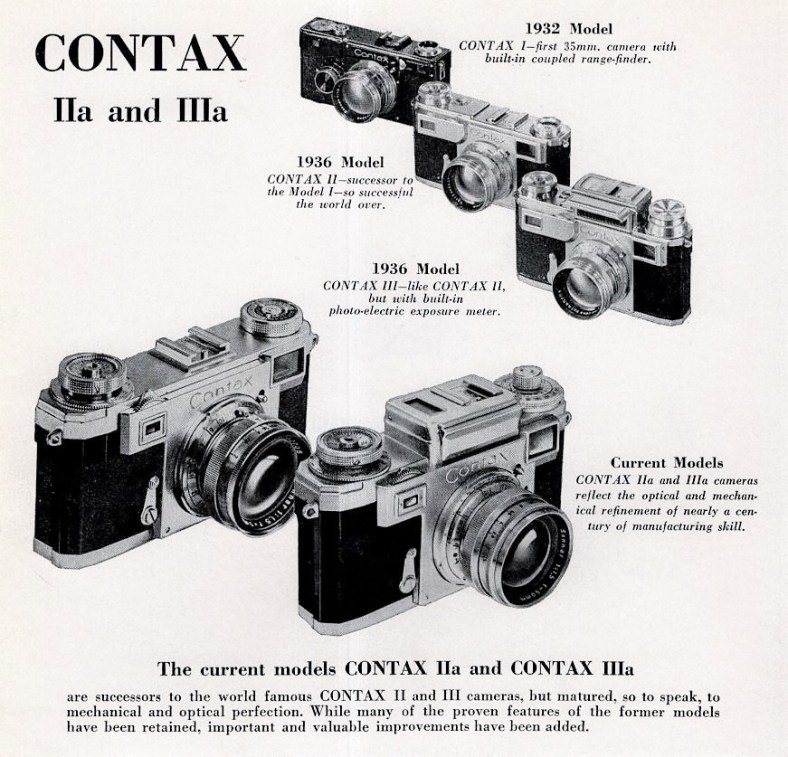
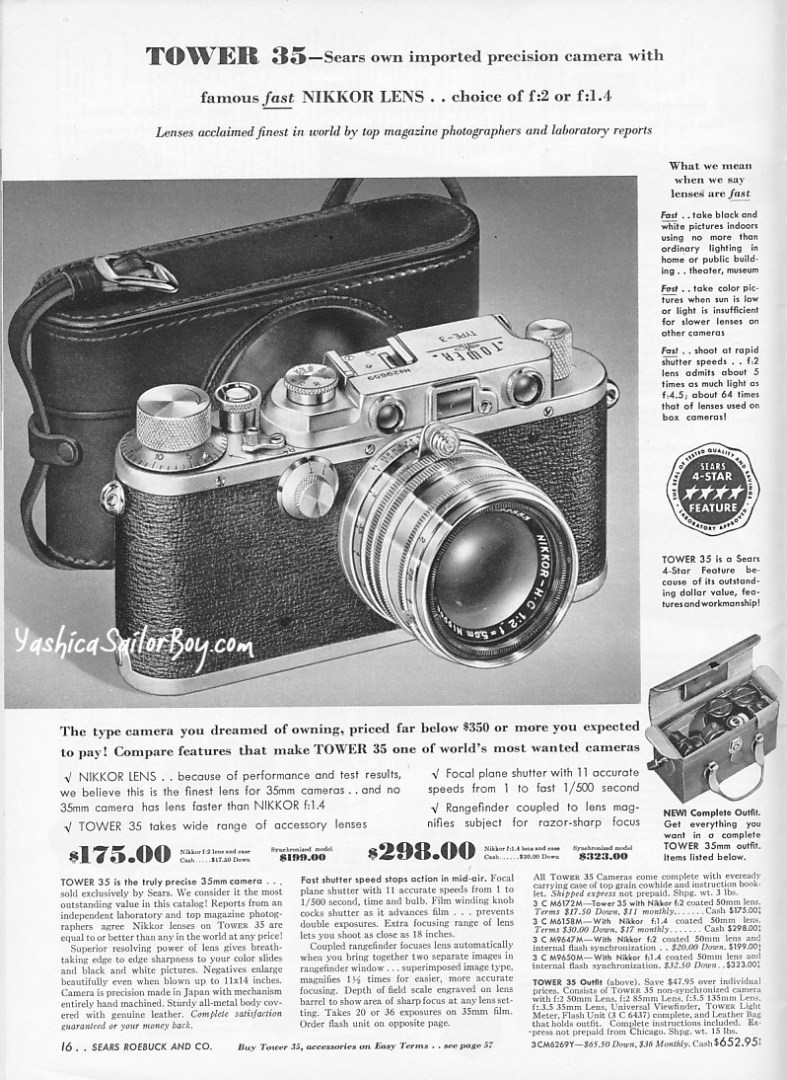
What’s interesting is that back in 1951 these cameras were considered to be “miniature” 35mm cameras per their advertising of the time.

contax iia clip 1

contax IIIa and IIa

Tower Ad Page Logo

Thanks for stopping by and be sure to visit my camera shop at http://www.ccstudio2380.com – Chris

Please respect that all content, including photos and text, are the property of this blog and its owner, Yashica Pentamatic Fanatic, Yashica Sailor Boy, Yashica Chris.

Copyright © 2015-2020 Yashica Pentamatic Fanatic, Chris Whelan
All rights reserved.

Contax IIIa – 1951

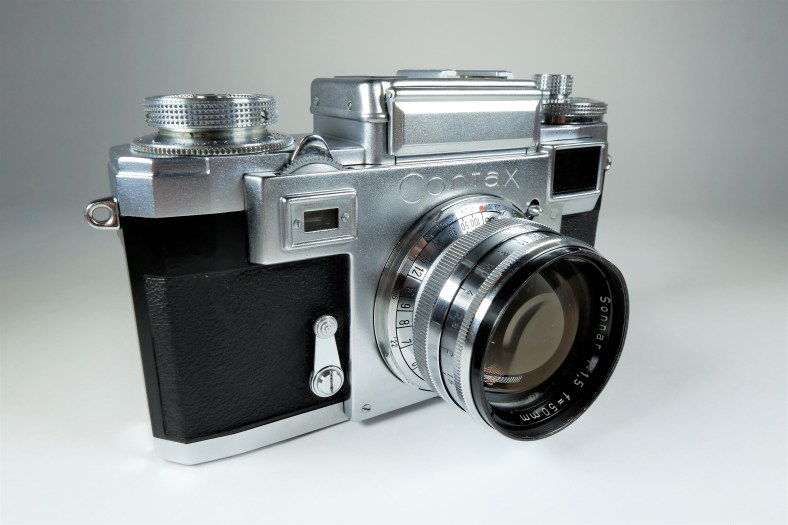
My Zeiss Ikon Contax IIIa is a 35mm rangefinder camera that was first introduced in March 1951. What differentiates the IIIa from the IIa is the addition of an exposure meter.

Here’s my Contax.

DSCF8157

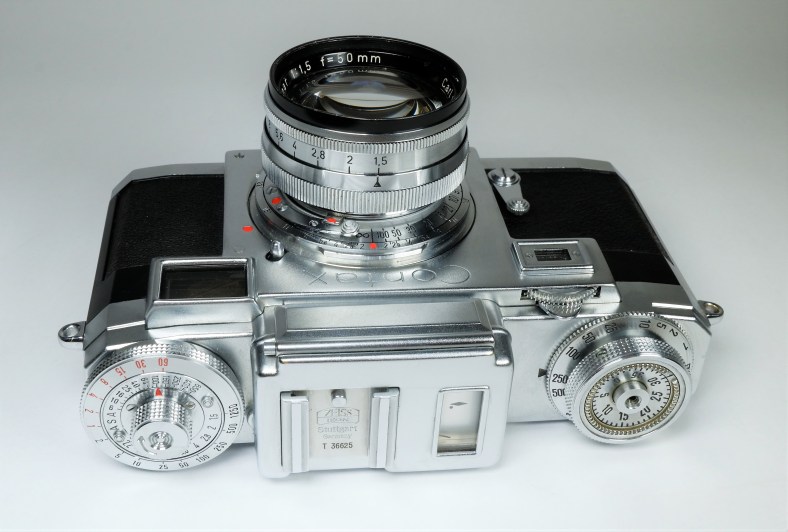
By the serial number of the body, this camera appears like it was made in the early part of 1951. It features the black dial and non-synced flash connection typical of the first models. This one works perfectly and the only cosmetic issue is a slight dent on the lens filter ring. Just above the Contax name is the selenium cells for the exposure meter shown with the flap open.

DSCF8153

The camera features interchangeable lenses in a simple but sturdy bayonet mount. Exposure meter flap in the closed position.

DSCF8158

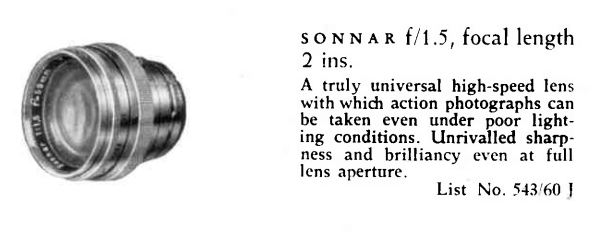
The lens is a Carl Zeiss Sonnar f/1.5 50mm.

DSCF8145

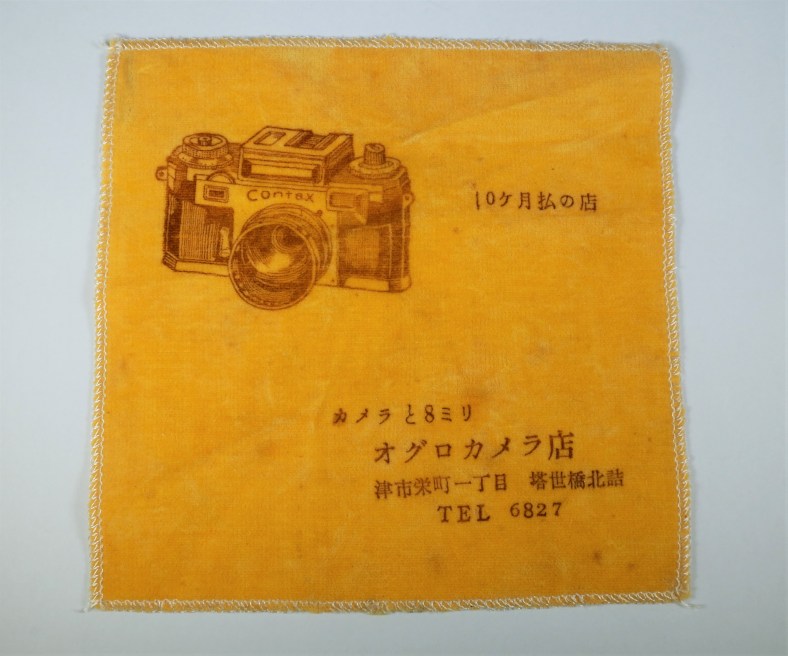
A camera shop provided cleaning cloth featuring the Contax IIIa.

contax iia clip 1

contax lenses

contax sn

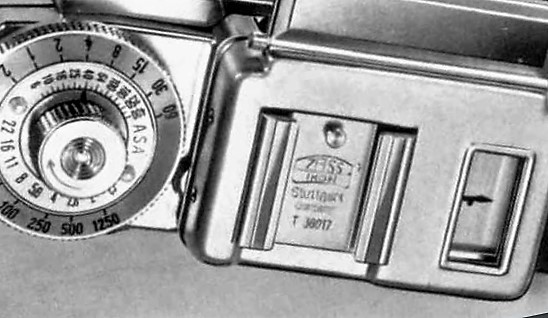
It may be a bit hard to tell from this scan but here’s a view of the camera from the instruction manual. The camera’s serial number is T 36017 and mine is T 36625. Pretty close so I’m thinking that mine is an early production model.

Thanks for stopping by! I’ll have much more about this camera soon. – Chris

http://www.ccstudio2380.com

Contax Heaven – ‘Yashica, A New Horizon’

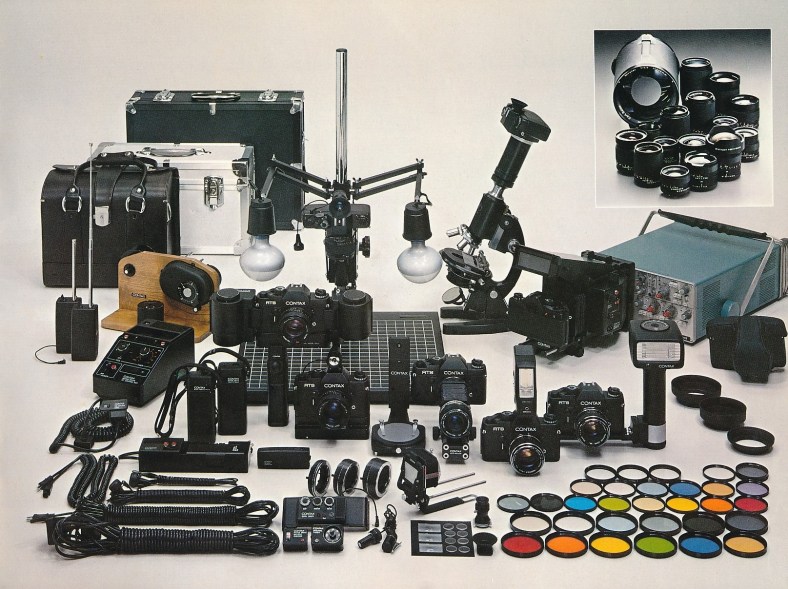
The title refers to a not widely circulated Yashica marketing brochure that was sent to virtually all US camera dealers in early 1975. In it, Yashica informed dealers that they would directly distribute their products (including the Contax line) to them and that they had a direct representative in Yashica USA. Definitely a bold move by Yashica during a desperate time in their history (and struggle to stay solvent).

Here’s some eye candy from that brochure –

IMG_20190627_0007 (1)

IMG_20190627_0006 (1)

How about finding this under the Christmas tree then or now?

IMG_20190627_0005

IMG_20190627_0004

Really the first introduction of the partnership between Yashica and Contax.

IMG_20190518_0001

The marketing brochure (cover) from 1975.

IMG_20190518_0005 (1)

The original letter (not a copy) that was sent to each camera dealer in the US. Each was signed by the President (or more likely an underling).

I personally haven’t collected anything with the Contax branding but that hasn’t meant that I wouldn’t want to – just no more room for another branch in the collection.

Thanks for stopping by! – Chris

Please respect that all content, including photos and text, are the property of this blog and its owner, Yashica Pentamatic Fanatic, Yashica Sailor Boy, Yashica Chris.

Copyright © 2015-2019 Yashica Pentamatic Fanatic, Chris Whelan
All rights reserved.

Zeiss Ikon Ikoblitz – folding fan flash

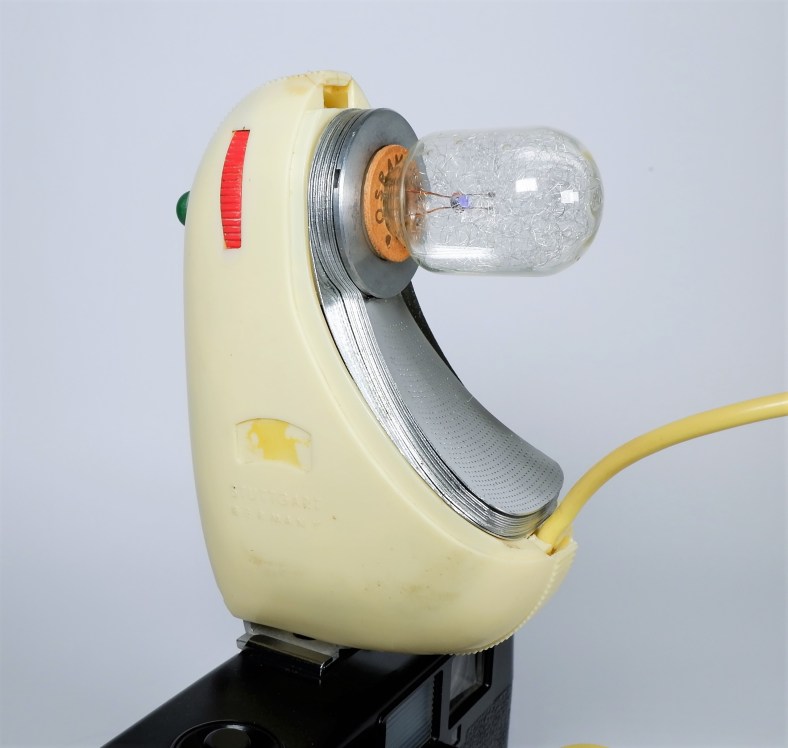
I’m not quite sure of the when of this flash (guessing mid-1950s) or the model number but I do know that it was made by Zeiss Ikon in Germany. It’s falling apart – the plastic is very brittle, the original 22 1/2 volt battery looks like a science experiment and it obviously doesn’t work. On the plus side, the vinyl case is still in good (not great) condition, the metal fan reflector looks good and works and the flash bulb and connecting wire look fantastic.

DSCF9666

DSCF9672

DSCF9673

DSCF9674

DSCF9676

Anyway, another example of mid-century design. I imagine when it was new it was pretty cool and would slip into a pocket or camera bag with ease.

Thanks for stopping by! – Chris

Please respect that all content, including photos and text, are the property of this blog and its owner, Yashica Pentamatic Fanatic, Yashica Sailor Boy, Yashica Chris.

Copyright © 2015-2019 Yashica Pentamatic Fanatic, Chris Whelan
All rights reserved.

Vintage Bewi Automat “A” Exposure Meter

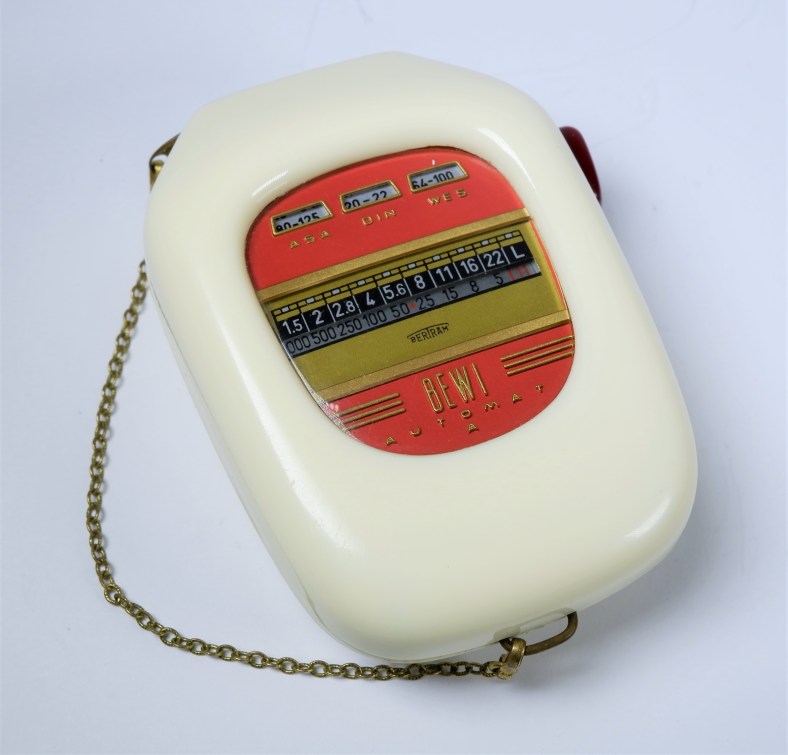
Straight from the desk of a mid-century designer, this super cool (and fully working) selenium cell exposure meter is a joy to use and play with.

DSCF9661

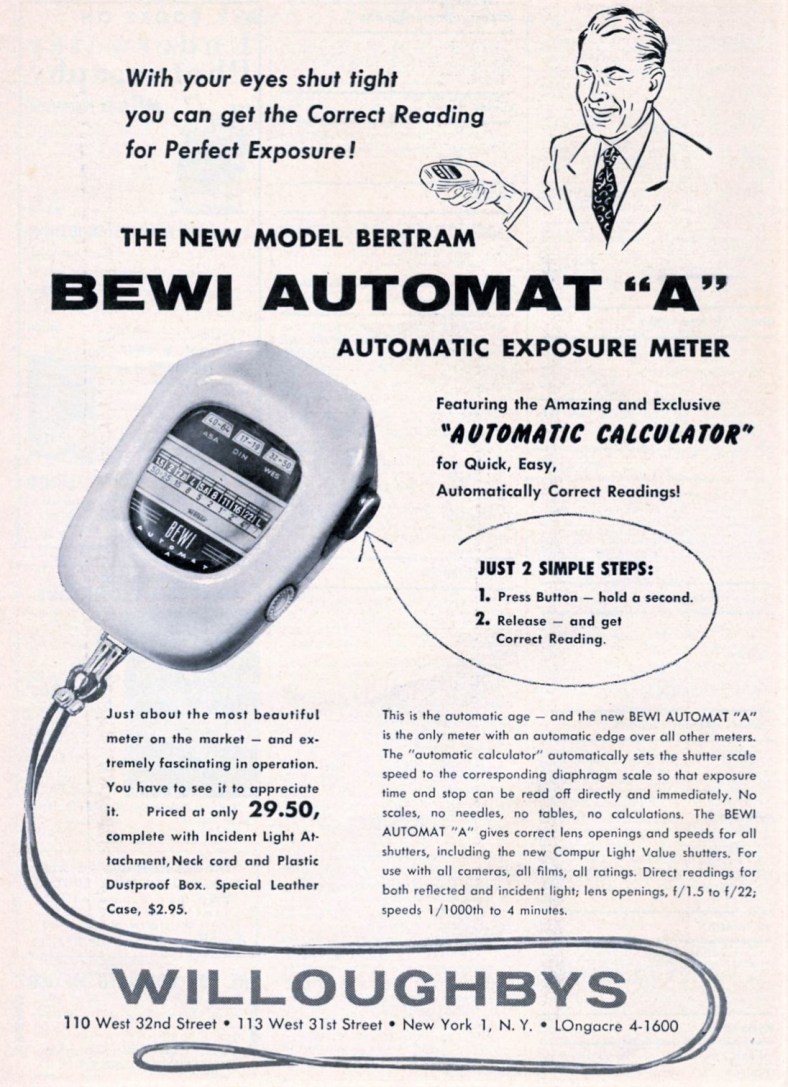
The first thing I noticed about it is that unlike typical meters from this period (the 1950s) there’s no visible meter needle or pointer. Everything that moves does so inside. I know, I took it apart to see what was going on and there was the needle being “busy” reacting to light. Maybe this ad will do a better job at describing just what makes this meter so special.

5035958868_5796574f21_o

DSCF9653

Semi-transparent cover over the selenium cells allows for incident light readings.

DSCF9654

Selenium cells exposed for full reflected light readings.

DSCF9656

In its case, it’s about the size of a deck of cards but it fits nicely in the palm of your hand. I have it available in my shop as it’s time to pass it along to the next collector. You can see additional pictures of it and a complete description at http://www.ccstudio2380.com

Thanks for stopping by! – Chris

Please respect that all content, including photos and text, are the property of this blog and its owner, Yashica Pentamatic Fanatic, Yashica Sailor Boy, Yashica Chris.

Copyright © 2015-2019 Yashica Pentamatic Fanatic, Chris Whelan
All rights reserved.

New reflex mirror in my Rolleicord Ia Type 3 from 1938

After 80 years of use, the original mirror had lost most of its reflectivity and the view available in the viewing hood was greatly diminished.

I ordered a replacement mirror from hugostudio.com and I couldn’t be happier with the service and the quality of the product.

20181108_133058 logo

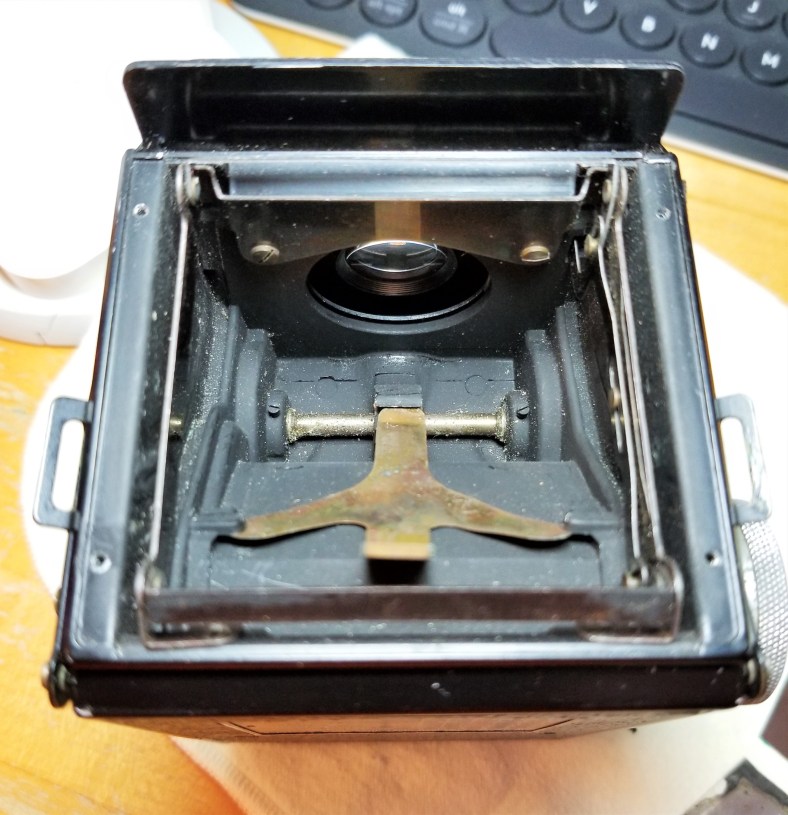
With the viewing hood and focusing screen removed the view internally shows an abundance of the dirt and grime from 80 years of use. It’s pretty nasty in there!

There are only 4 screws to remove to be able to access the mirror chamber. The mirror essentially slides out from the 4 tabs that hold it in.

20181122_132759 logo

Old and new mirrors side-by-side.

20181122_132816

The mirror chamber with the original mirror removed. A quick dusting and it was ready for the new mirror installation.

collage mirror

Before and after. What a difference the new mirror makes.

I highly recommend that you change out the original reflex mirror in your TLR if it shows signs of significant deterioration – the view in the focusing hood will be made much brighter and that will lead to more accurate focusing on your part. Most mirrors can be had for around $10 and there are a few sellers on eBay to choose from. The key is the accuracy of the cut as there’s little room for error. If in doubt trace the outline of the mirror that you are replacing and send that (or just the measurements) to the seller.

DSCF8321 logo

Thanks for stopping by and good luck with your project! – Chris

Please respect that all content, including photos and text, are the property of this blog and its owner, Yashica Pentamatic Fanatic, Yashica Sailor Boy, Yashica Chris.

Copyright © 2015-2018 Yashica Pentamatic Fanatic, Chris Whelan
All rights reserved.

Rolleicord Ia Type 3 – 1938

This is my first and likely last Rollei – it’s not a camera that I’ve been after for my collection. I tend to collect and appreciate cameras that came from Japan with a favorite Kodak and Polaroid thrown in for fun.

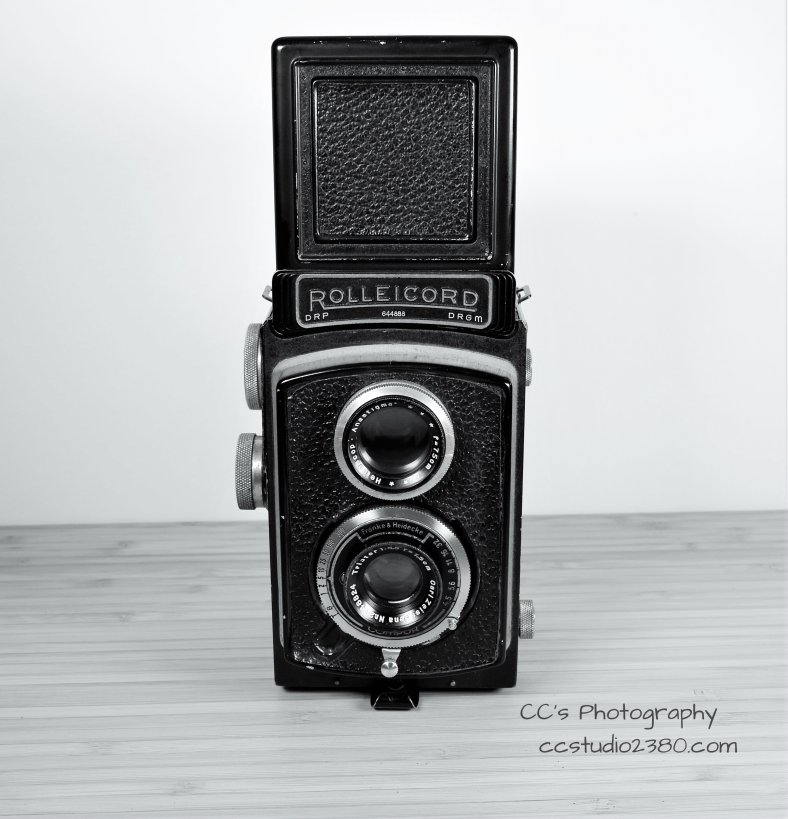
It’s a twin-lens reflex (TLR) medium-format 120 film camera made in Germany. It’s also known as the Rolleicord Ia version 3.

Surprisingly I haven’t found much about this camera other than what’s been repeated over and over on the web. It was made between early 1938 maybe even late 1937 to late 1947 with about 12,150 produced with little indication that there were much in the way of changes made to the design during that period. I believe that I’m spoiled by sites such as Paul Sokk’s that provide a plethora of well-researched info about Yashica and the wonderful cameras that they produced and at this moment, I haven’t found an equivalent site for the Rolleicord.
DSCF8328 logo

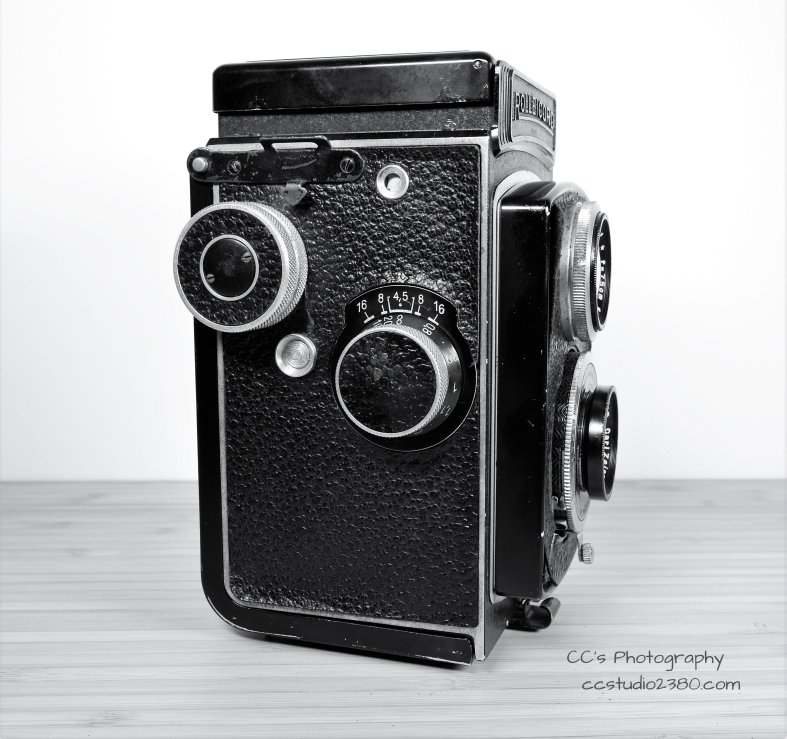
My new to me Rolleicord – likely a domestic model not intended for export.

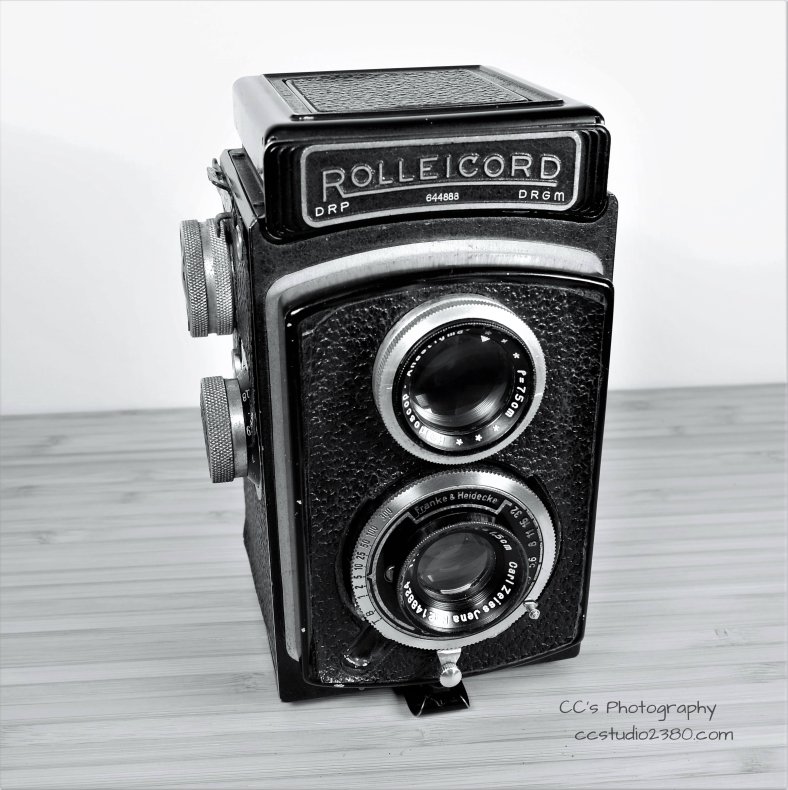
It’s a wonderfully simple camera with a straightforward placement of the operating controls. This particular camera hasn’t been used in years so at the moment everything is a bit stiff from sitting around. On the plus side, the shutter does fire and the speeds sound correct… always a good thing. The taking lens (the bottom lens) looks to be free of significant issues – no mold, fungus or cleaning marks.
DSCF8321 logo

The original leatherette covering is complete and with the exception of a few areas remains well attached. The metalwork is free of corrosion which is amazing since the camera was made over 80-years-ago. There are a few spots of missing paint from use but no large-scale loss or failure of the factory applied paint.
DSCF8326 logo

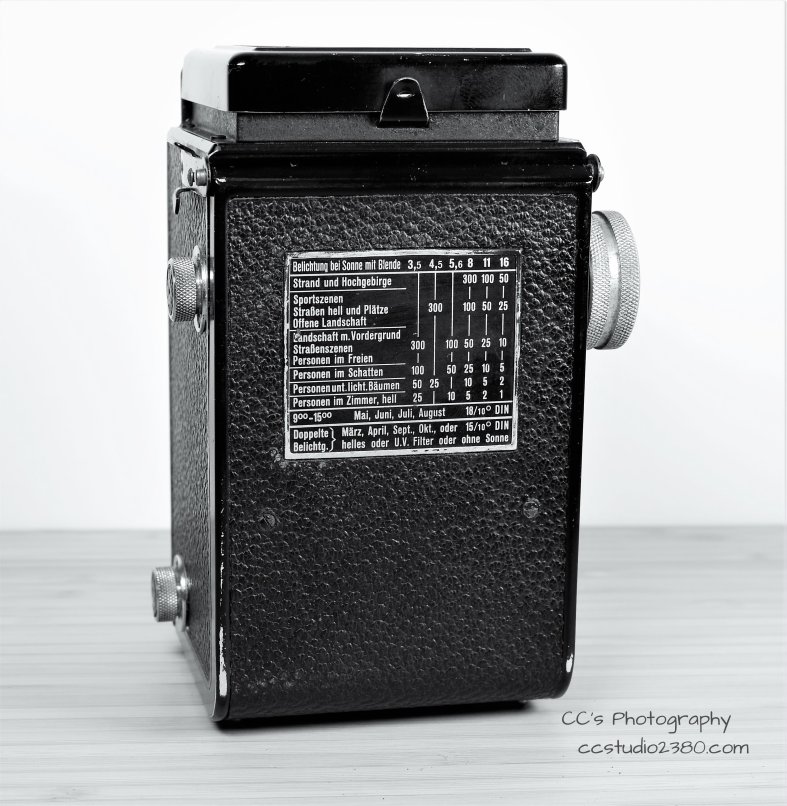
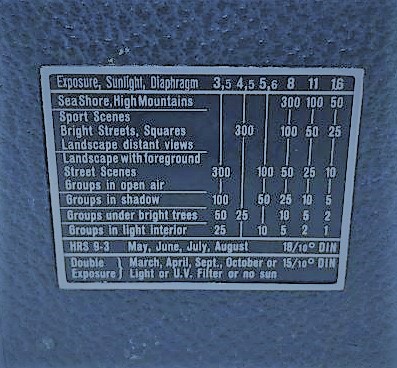
The exposure guide is in German. I’m guessing that an English version was produced for export prior to the start of WWII (see below).
rollei 2

Exposure guide in English around the timeframe of my camera (1938-1940). (detail from a larger web image)

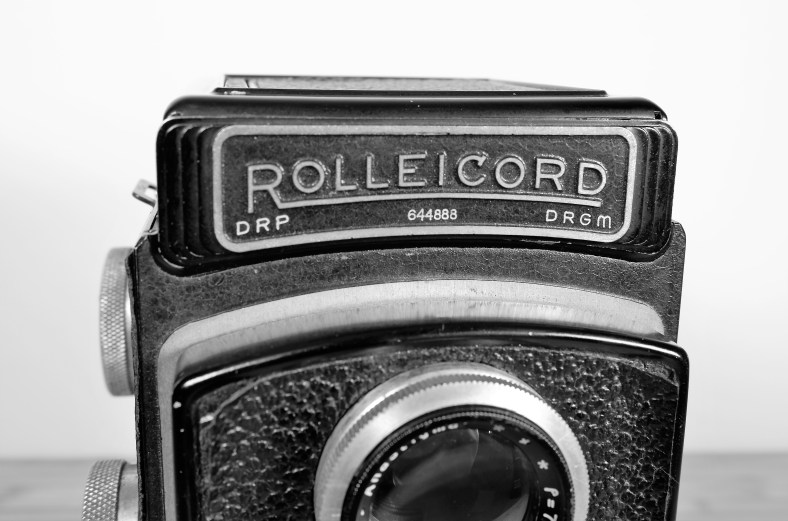
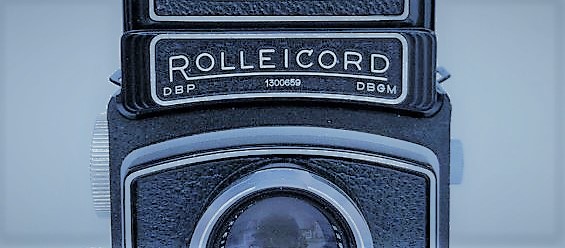
The winds of war were blowing across Europe in 1938. While not fully engaged in the World War yet, I’m sure many manufacturing companies in Germany were seeing an uptick in production for the military which meant less production for civilian uses. I’m guessing that production of Rolleicords might have taken a big hit in the ensuing war years. I imagine the only way to tell a war era Rolleicord Ia from a post-war model is by the change from “DRP and DRGM” on the nameplate to “DBP and DBGM” which occurred after the war (see images below).
DSCF8323

“Pre-war” and war era Rolleicord nameplate with “DRP and DRGM”. The Ia type 3 differs from the original Rolleicords as it’s the first with a cast nameplate and recessed logo.
rollei 3

The change to the post-war nameplate. (detail from a larger web image)

It’s a lightweight camera – this one weighs just 748 grams without film or a take-up spool installed. It’s reported on various sites that the weight of this model is 730 grams. Maybe mine has a few extra grams of dirt inside as I’ve yet to remove the viewing hood and tackle the inside below the focusing screen. By contrast, the first Yashima (later Yashica) twin lens reflex made in 1953 weighs 857 grams empty.
DSCF8324 logo

On the cameras right side, the focus knob distance scale and depth-of-field scales share the look of the Rolleicord Ia version 2 which was made in the previous year – the distance scale and DOF scales are in black with white engravings. Most Ia type 3 models have a chrome scale with black engravings. Mine may have received the older knob and scale only to use up parts from the previous version.
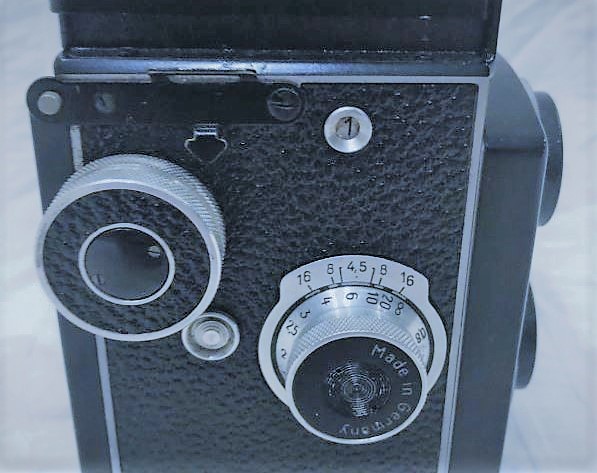
rollei

“Typical” Rolleicord Ia Type 3 focus knob and scales. This may also be an export model with the “Made in Germany” details on the knob. (detail from a larger web image)

My next step is the removal of the viewing hood for that good internal cleaning. I’m not sure if I’ll run a roll of film through it but I know I should. How often do you get to shoot with an 80-year-old camera?
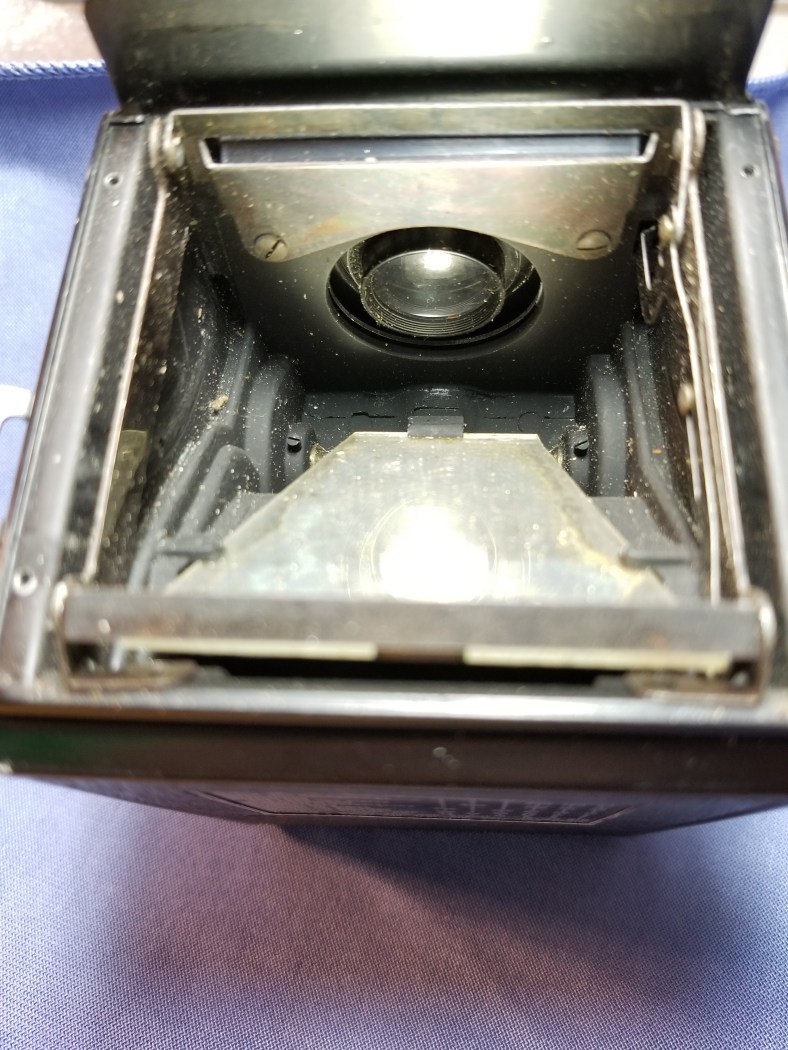
20181108_133115

Eighty years of dirt, dust, debris, and degradation to the original factory installed reflex mirror.

Thanks for stopping by! – Chris

Please respect that all content, including photos and text, are the property of this blog and its owner, Yashica Pentamatic Fanatic, Yashica Sailor Boy, Yashica Chris.

Copyright © 2015-2018 Yashica Pentamatic Fanatic, Chris Whelan
All rights reserved.
Spies Like Us – Q would approve

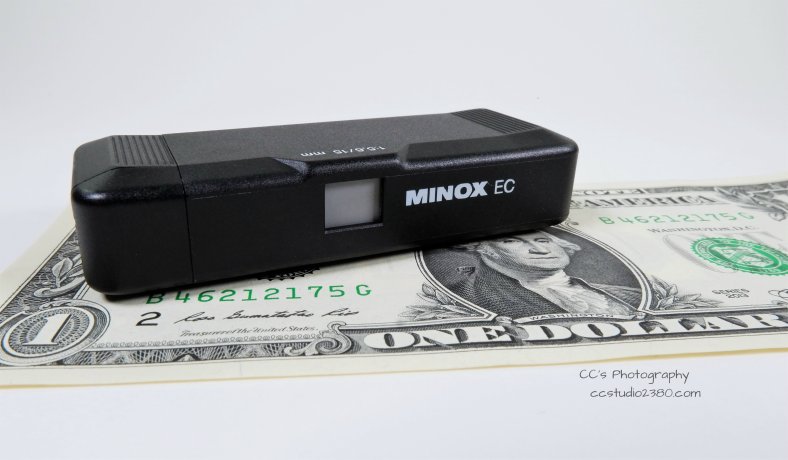
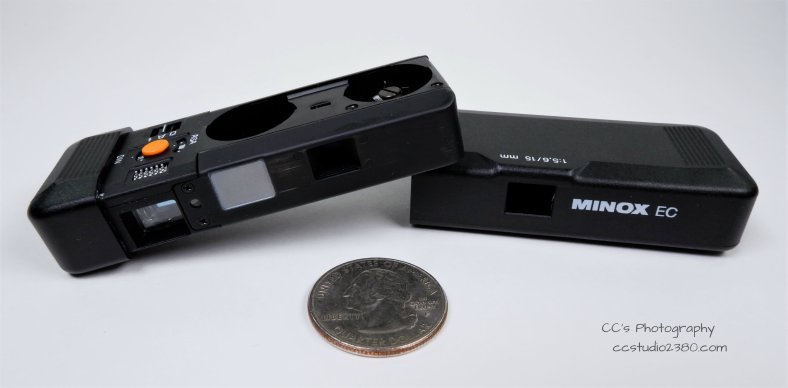
The Minox EC – at the time in the early 1980s it was the smallest subminiature camera made.

minox spy

The ultimate subminiature. The Minox EC from 1981

minox logo

Fully opened – the film cartridge loads from the top. We’re talking small here.

DSCF7570

Complete “Spy” kit – includes an exposed film cartridge – who knows what secrets lie within.

For more about this really cool “spy” camera stop by here.

To purchase this camera take a stroll to our online store at http://www.ccstudio2380.com

Thanks

Chris