The original Asahi Pentax 35mm SLR (1957-1958), equipped with a Takumar 58mm f/2 lens and an Asahi 46mm UV filter.
It’s a fully functional gem.
The camera was in Australia, and the lens was in Japan; now, they are together in the U.S.
I’m happy to add them to my collection.
It’s credited as being the first modern 35mm SLR camera. It doesn’t look much different from later SLRs from other manufacturers. It was preceded by the Asahiflex pictured below.The Asahiflex IIa was the first ‘modern’ 35mm SLR from 1955. It featured a pop-up viewing hood instead of an eye-level pentaprism like the later Asahi Pentax original from 1957.Asahi Pentax H2 – 1959.Asahi Pentax SL – 1968.Asahi Pentax Spotmatic SP – 1966.
Comments are always welcomed, as I’ve learned quite a bit from reader feedback. As always, thanks for stopping by, and while you’re at it, feel free to visit my camera shop at http://www.ccstudio2380.com (CC Design Studios hosted by Etsy). – Chris Whelan
Asahi Optical Company, Asahiflex IIa with a Takumar f3.5 50mm lens. Japan’s first 35mm SLR film camera. Notice the film-like look of this image using a vintage lens.The Asahiflex IIa (first image above) was photographed with a 1959 Auto-Takumar f/3.5 35mm lens mounted via an adapter on my Fujifilm X-T2.On the left, Nicca 3-S 35mm rangefinder camera (1954) and on the right, the Asahiflex IIa (1955). Note the similarity between the two. Both used interchangeable lenses, but the Asahiflex allowed for direct through-the-lens viewing via the pop-up viewing hood.The Asahiflex uses 37mm screw-in lenses, and the Nicca uses 39mm screw-in lenses, just like a Leica camera from the same period.Asahiflex IIa advertisement.Expensive for the mid-1950s but not overly so.
Comments are always welcomed, as I’ve learned quite a bit from reader feedback. As always, thanks for stopping by, and while you’re at it, feel free to visit my camera shop at http://www.ccstudio2380.com (CC Design Studios hosted by Etsy). – Chris Whelan
Classic Canon AE-1 35mm SLR film camera.Shown with a sharp Canon New FD 50mm f/1.8 lens.My set will include everything pictured (minus the display stand).This is the last AE-1 in my extensive Canon camera collection.
This beautiful set is now available in my Etsy camera shop at http://www.ccstudio2380.com. It’s been professionally serviced and returned to factory specifications, including a new battery. Just add the film!
Comments are always welcomed, as I’ve learned quite a bit from reader feedback. As always, thanks for stopping by, and while you’re at it, feel free to visit my camera shop at http://www.ccstudio2380.com (CC Design Studios hosted by Etsy). – Chris Whelan
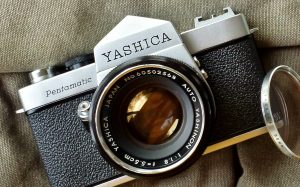
Yashica’s first 35mm camera was made from April 1958 to December 1960. New evidence indicates that the Yashica 35 had a longer run than previously reported. The first units rolled off the line in April 1958, and the last in December 1960. This camera may be one of the last made – its serial number shows it to be a December 1960 model, which was the 1,150th of that month. The lens is a Tomioka-made f/1.9, 4.5cm, with a Copal MKV-SV shutter. The build quality and sharpness of the lens are exceptional.
Comments are always welcomed, as I’ve learned quite a bit from reader feedback. As always, thanks for stopping by, and while you’re at it, feel free to visit my camera shop at http://www.ccstudio2380.com (CC Design Studios hosted by Etsy). – Chris Whelan
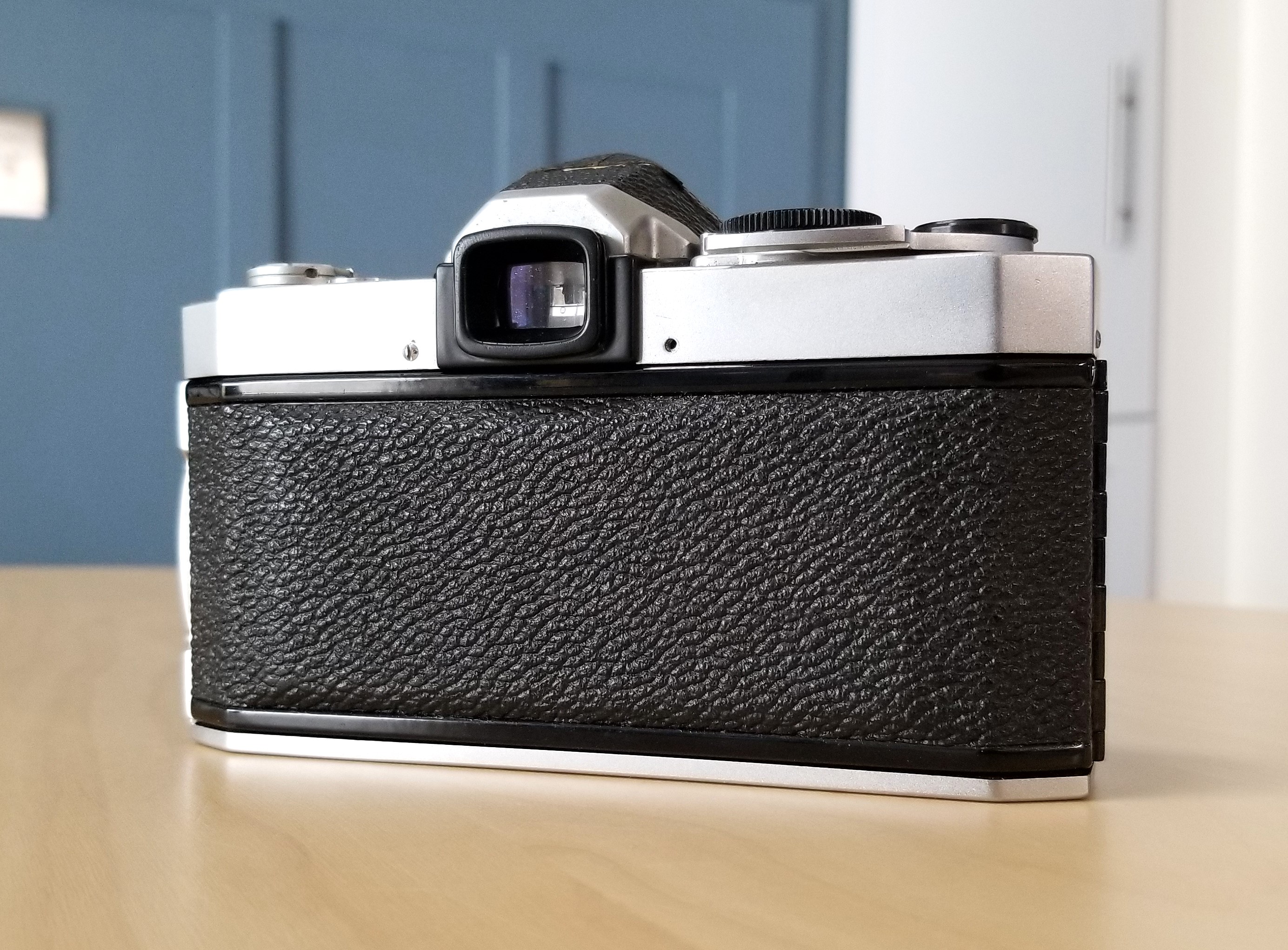
I know Petri has made several different camera models over the years, some of which I absolutely love and others, like this one, that I dislike. Is it a classic, or has it not aged well? It was released in 1969, so at that time, early SLRs weren’t especially stunners compared to the more refined models of the later 1960s. That said, I think the Asahi Pentax H2 from 1959 is one of the best-designed cameras from that era. The Nikon F is a stunning camera, but I dislike removing the base plate to load and unload film.
I admit, it would look better with a lens. Without a lens, it looks like a plumbing fixture.A previous owner added the leatherette on the pentaprism, hiding the serial number. Does this add to or subtract from the camera’s appearance?Pretty clean design from behind.The tripod mount screw is moved forward under the lens mount; otherwise, it’s a simple base plate.
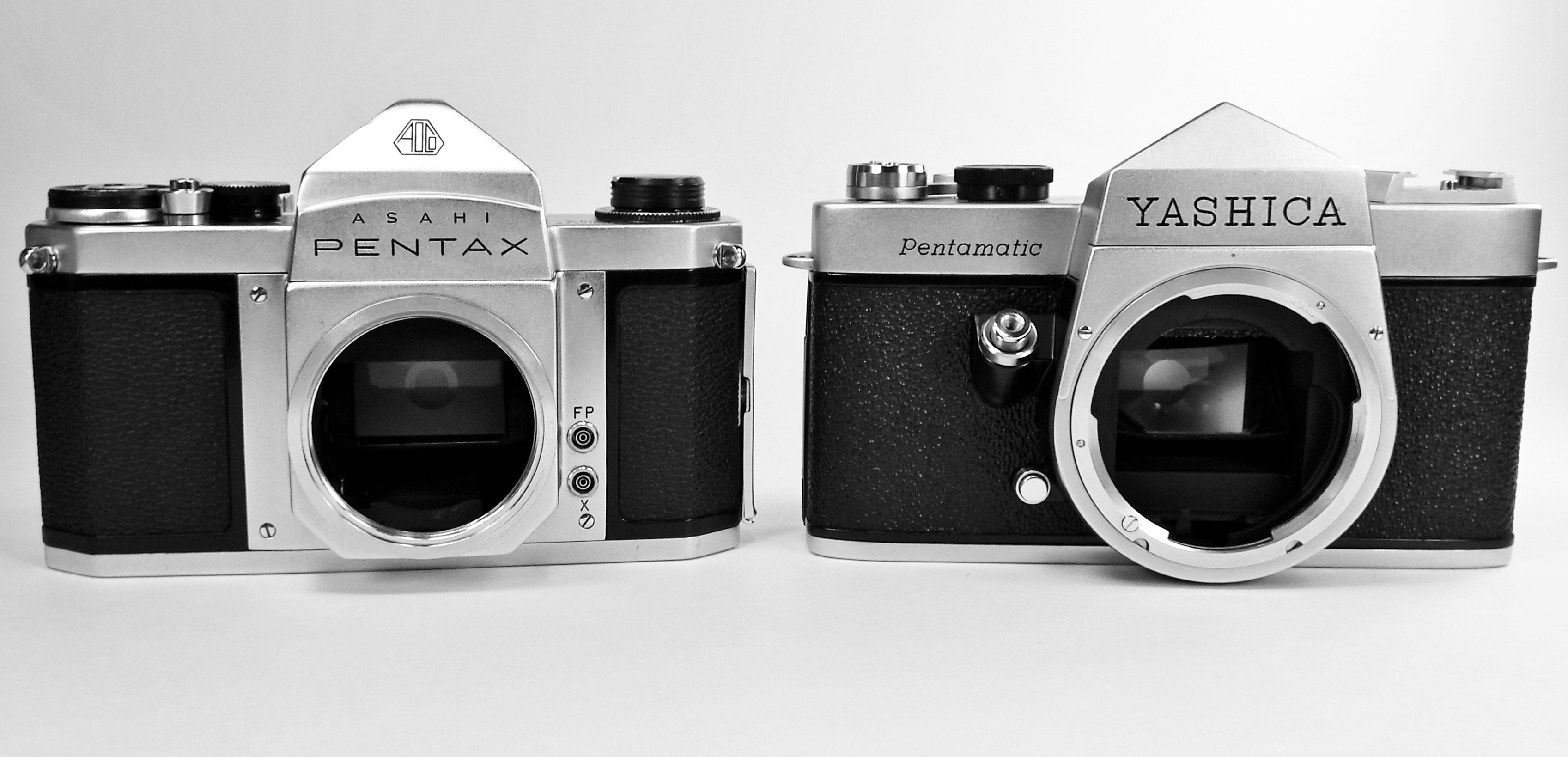
Here are my Asahi Pentax H2 from 1959 and my Yashica Pentamatic ’35’ from 1960 as a comparison.
Comments are always welcomed, as I’ve learned quite a bit from reader feedback. As always, thanks for stopping by, and while you’re at it, feel free to visit my camera shop at http://www.ccstudio2380.com (CC Design Studios hosted by Etsy). – Chris Whelan
Yashica’s first rangefinder camera is on the left, and Yashica’s first SLR is on the right.
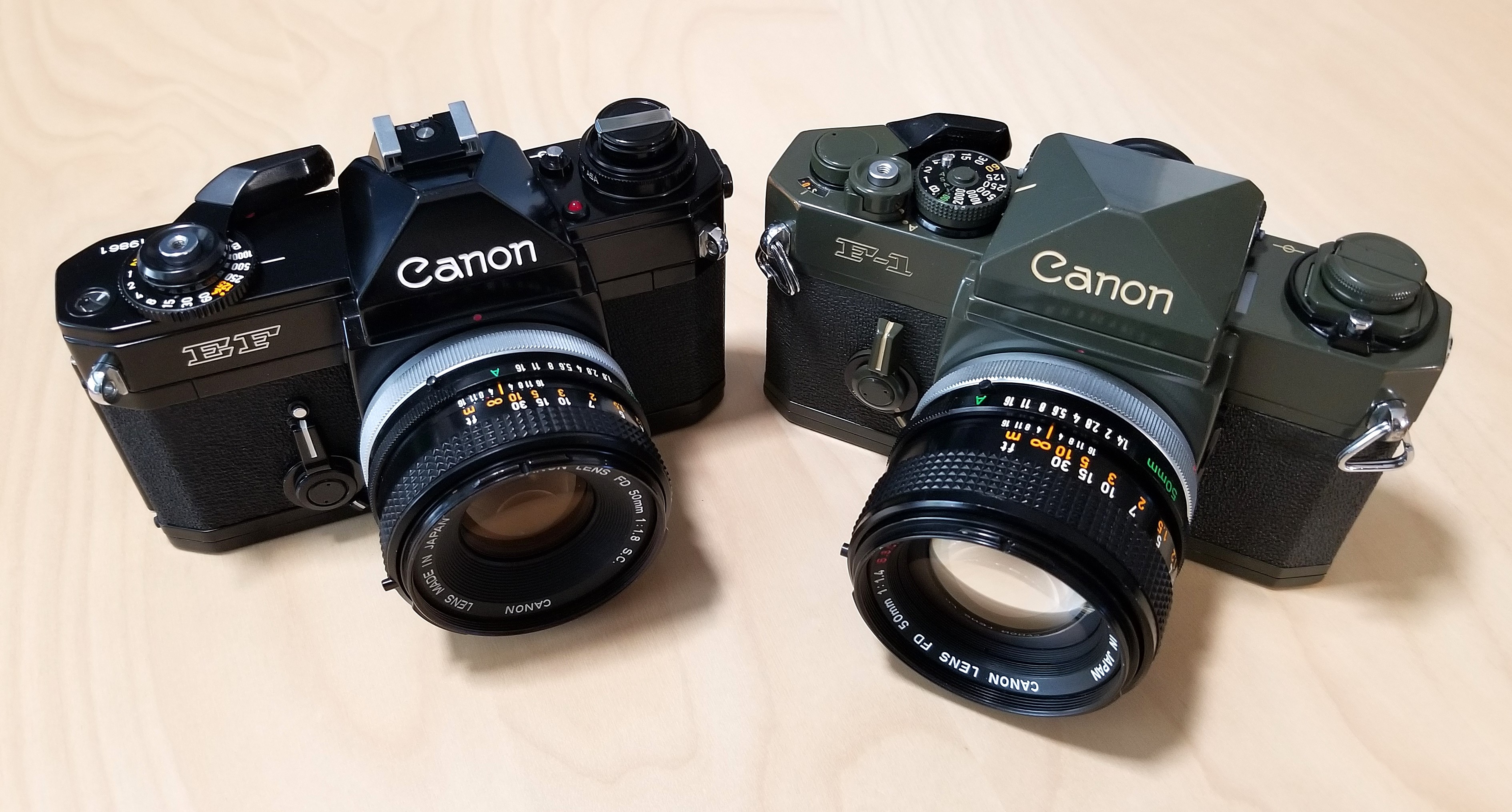
Canon EF and Canon OD F-1.
The Canon EF is a close cousin to the F-1. The EF was released in 1973, and the original F-1 in 1971. This OD F-1 (olive drab) is the only Canon F-1 in a color other than black.
Comments are always welcomed, as I’ve learned quite a bit from reader feedback. As always, thanks for stopping by, and while you’re at it, feel free to visit my camera shop at http://www.ccstudio2380.com (CC Design Studios hosted by Etsy). – Chris Whelan
Comments are always welcomed, as I’ve learned quite a bit from reader feedback. As always, thanks for stopping by, and while you’re at it, feel free to visit my camera shop at http://www.ccstudio2380.com (CC Design Studios hosted by Etsy). – Chris Whelan
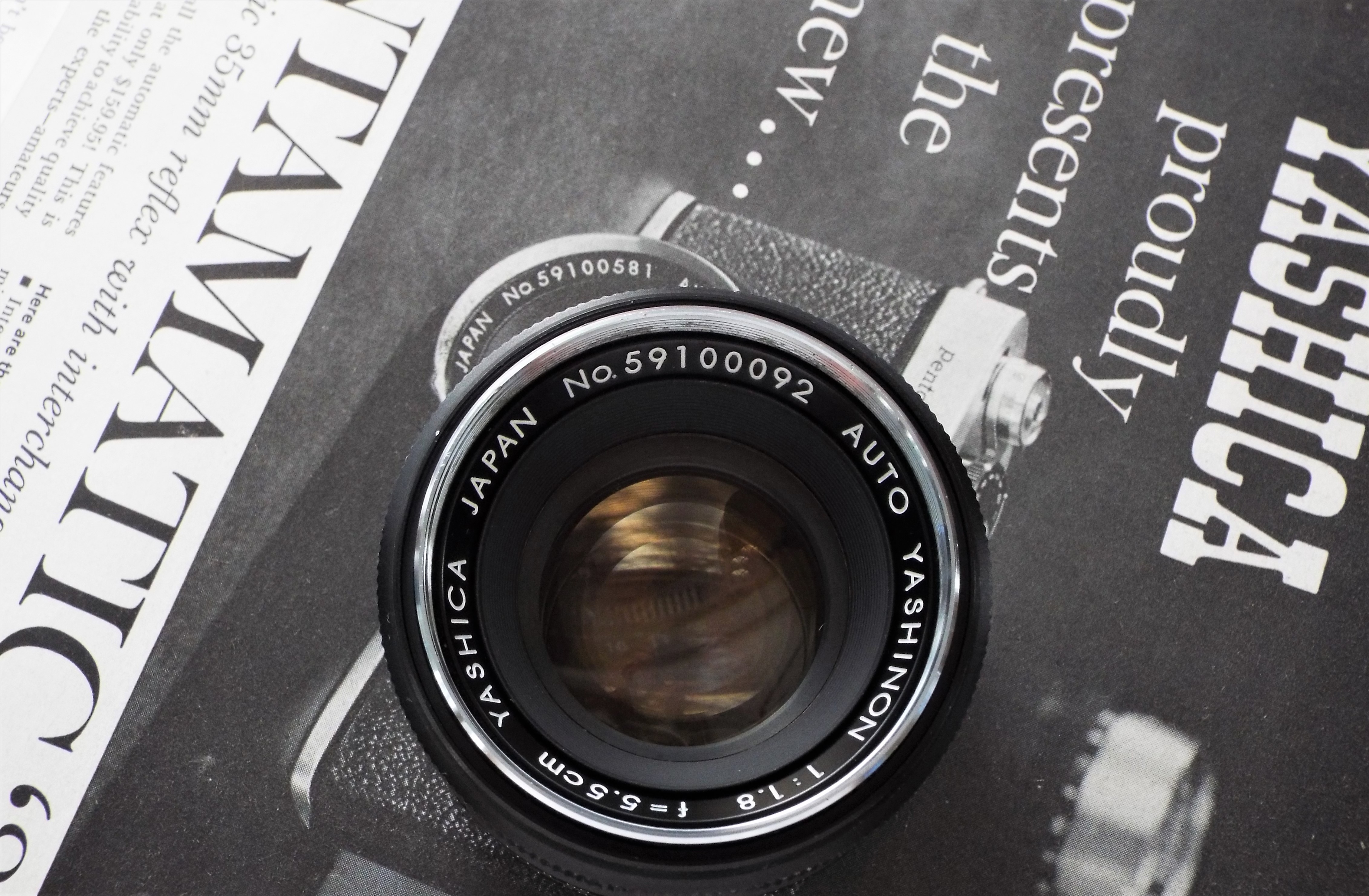
We recently acquired this lens for our Yashica Pentamatic collection. Why is it important? It’s a great find because it’s the first time we’ve encountered a lens with a lower serial number than one pictured in an advertisement (in this case, the first-ever ad for the Pentamatic, June 1960). We know it is total nerd stuff, but that’s what makes collecting fun.
The lens was made for Yashica by Tomioka Optical, which at the time made about 90% of all their lenses (TLR, SLR, RF, and Cine).
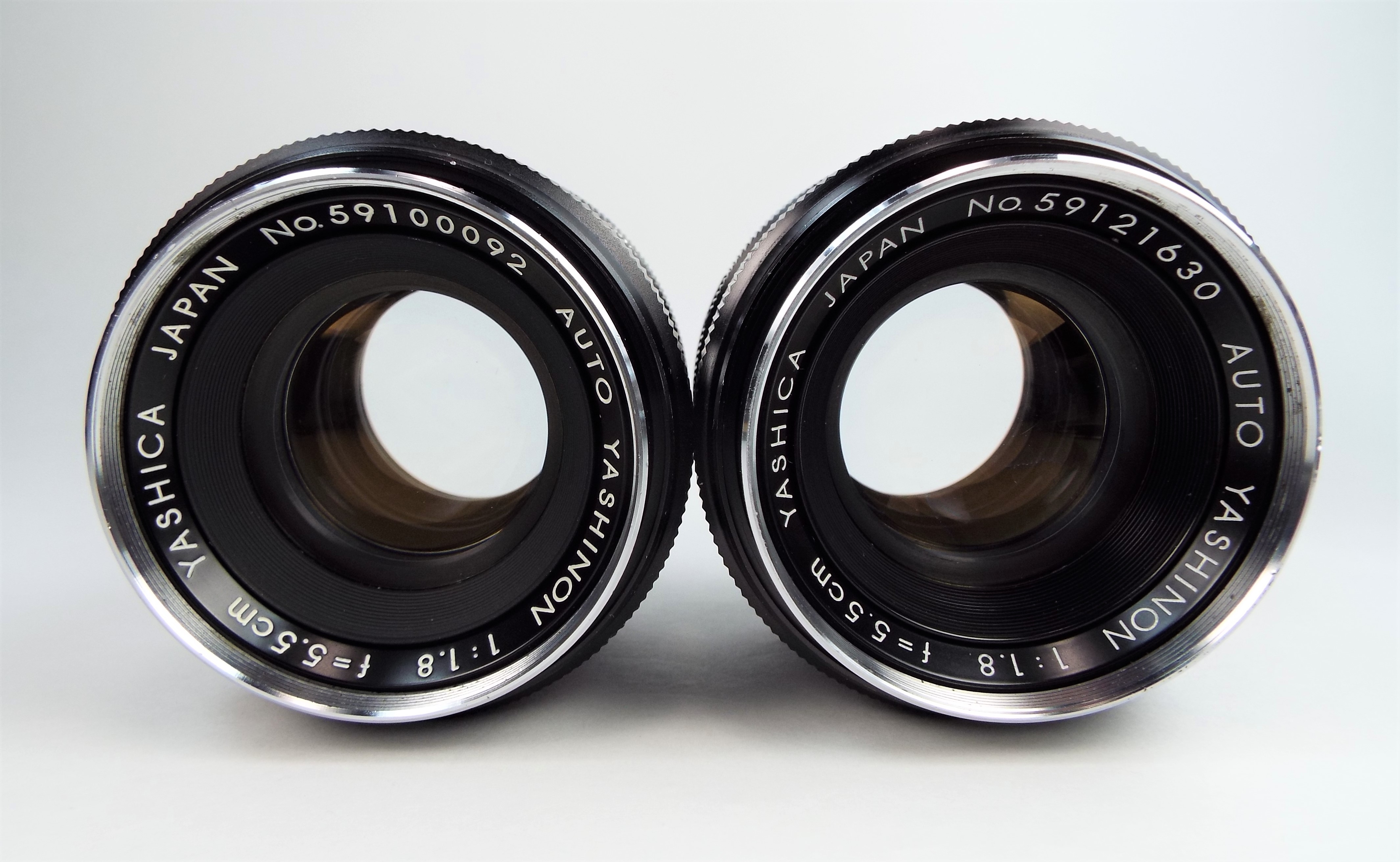
The lens serial number decodes 59 = 1959, 10 = OCT, and 0092, the 92nd lens made since production started.
In the second image, the other lens was made in December and was the 1,630th made. Tomioka was busy producing these lenses long before Yashica released the Pentamatic in March 1960. The first Pentamatic bodies were made in January.
The third image shows an early Yashica Tominon Super Yashinon-R f/2.8 3.5cm wide-angle lens SN 350246. The date code was dropped in favor of a simpler code: 35 = 35 mm, and 0246 is the sequence number since the start of production.
The ad shows a lens with a higher production number than the lens we own. 92 indicates it was made in the first batch of 100 lenses.The October lens is on the left and the December lens is on the right. No November lenses were made.From an early batch of wide-angle lenses from Tomioka Optical. This one is number 246.A fast lens from Tomioka. The f/1.2 55mm lens which was made much later in the M42 screw mount.
Comments are always welcomed, as I’ve learned quite a bit from reader feedback. As always, thanks for stopping by, and while you’re at it, feel free to visit my camera shop at http://www.ccstudio2380.com (CC Design Studios hosted by Etsy). – Chris Whelan
Comments are always welcomed, as I’ve learned quite a bit from reader feedback. As always, thanks for stopping by, and while you’re at it, feel free to visit my camera shop at http://www.ccstudio2380.com (CC Design Studios hosted by Etsy). – Chris Whelan
Here is a new flash in its original box, Canon Speedlite 244T, that I received from a recent purchase on eBay. The seller has since refunded me, but this serves as a reminder to never leave batteries, especially AA batteries, in your cameras and other accessories. This “new” flash had these Philips batteries installed at some point, but the owner forgot about them. What a shame that an otherwise neat collectible is now ruined.
I’ve seen worse corrosion before, but this is right up there with the worst.AA batteries in a flash unit can corrode in as little as a few months! These, however, have been left for decades.
Thanks for stopping by, and after reading this, please check your cameras. – Chris
Comments are always welcomed, as I’ve learned quite a bit from reader feedback. As always, thanks for stopping by, and while you’re at it, feel free to visit my camera shop at http://www.ccstudio2380.com (CC Design Studios hosted by Etsy). – Chris Whelan







 Chasing Classic Cameras with Chris