Asahi Pentax SL Set Super-Takumar f/1.8 55mm Lens Asahi Pentax Metal Hood Asahi Pentax Filter and Accessory Clip Asahi Pentax SL Operating Manual It’s been professionally serviced and looks and operates like new.
My beautiful set is from about 1969-1972. The instruction book is dated September 1969.
Comments are always welcomed, as I’ve learned quite a bit from reader feedback. As always, thanks for stopping by, and while you’re at it, feel free to visit my camera shop at http://www.ccstudio2380.com (CC Design Studios hosted by Etsy). – Chris Whelan
The instruction book is hard to find, but I was lucky to find one from a collector in Canada. This one was published in September 1969.My gorgeous Asahi Pentax SL in the piano-black finish. Shown here with its Super-Takumar f/1.8 55mm lens.1960s low tech at its finest.All the bits.
Comments are always welcomed, as I’ve learned quite a bit from reader feedback. As always, thanks for stopping by, and while you’re at it, feel free to visit my camera shop at http://www.ccstudio2380.com (CC Design Studios hosted by Etsy). – Chris Whelan
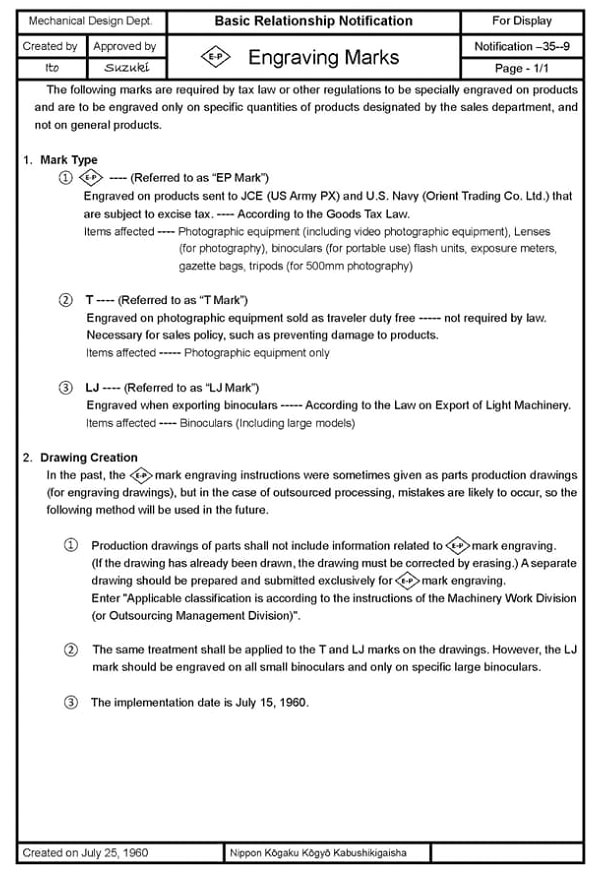
This document was discovered on a recent Facebook camera group. I can’t recall who the original poster was, but it’s much appreciated. This is a document translation, as the original would have been in Japanese (obviously).
So far, this document is the only official evidence I’ve found about the <E.P> mark on cameras and other photo gear and its implementation.
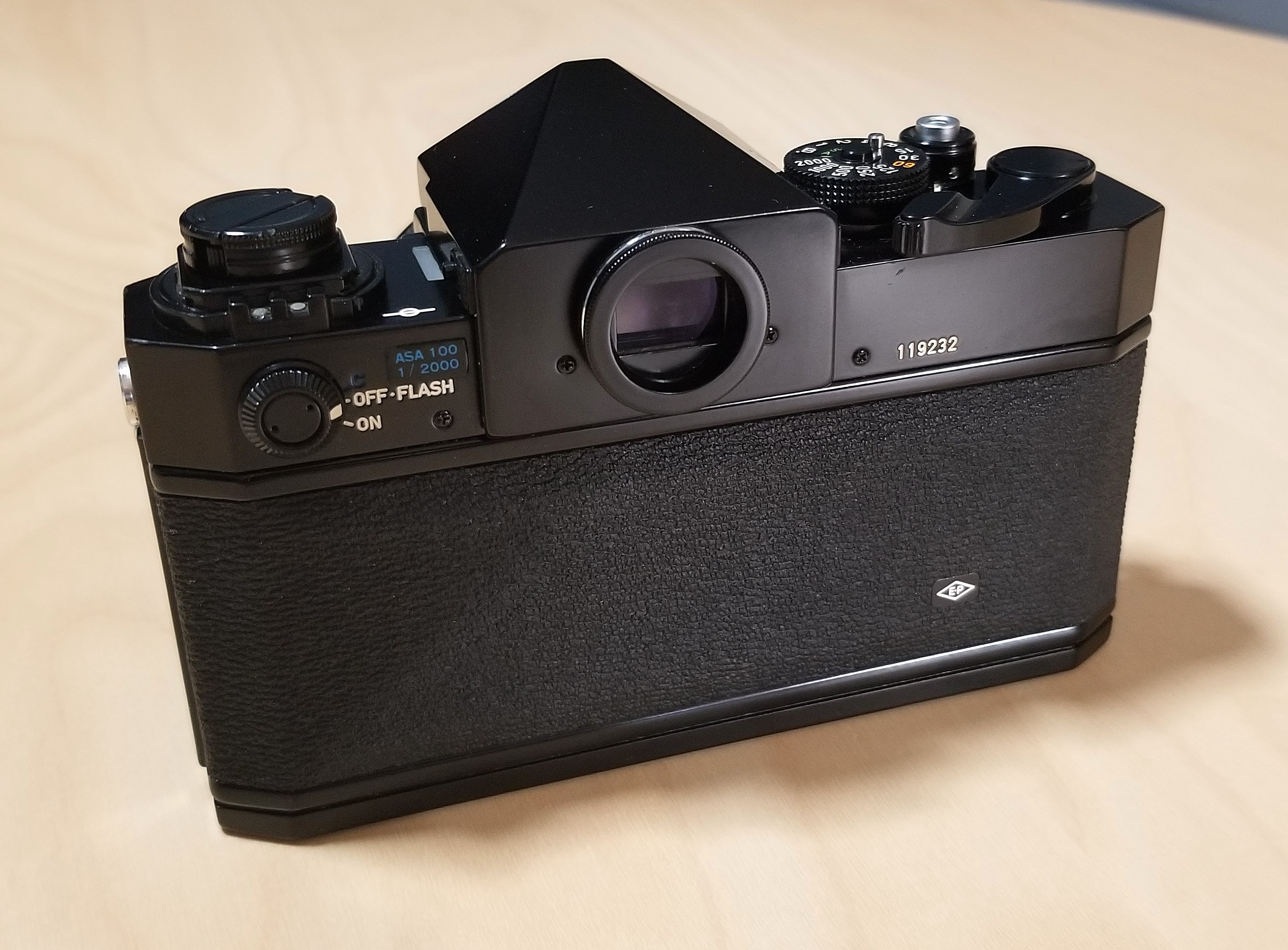
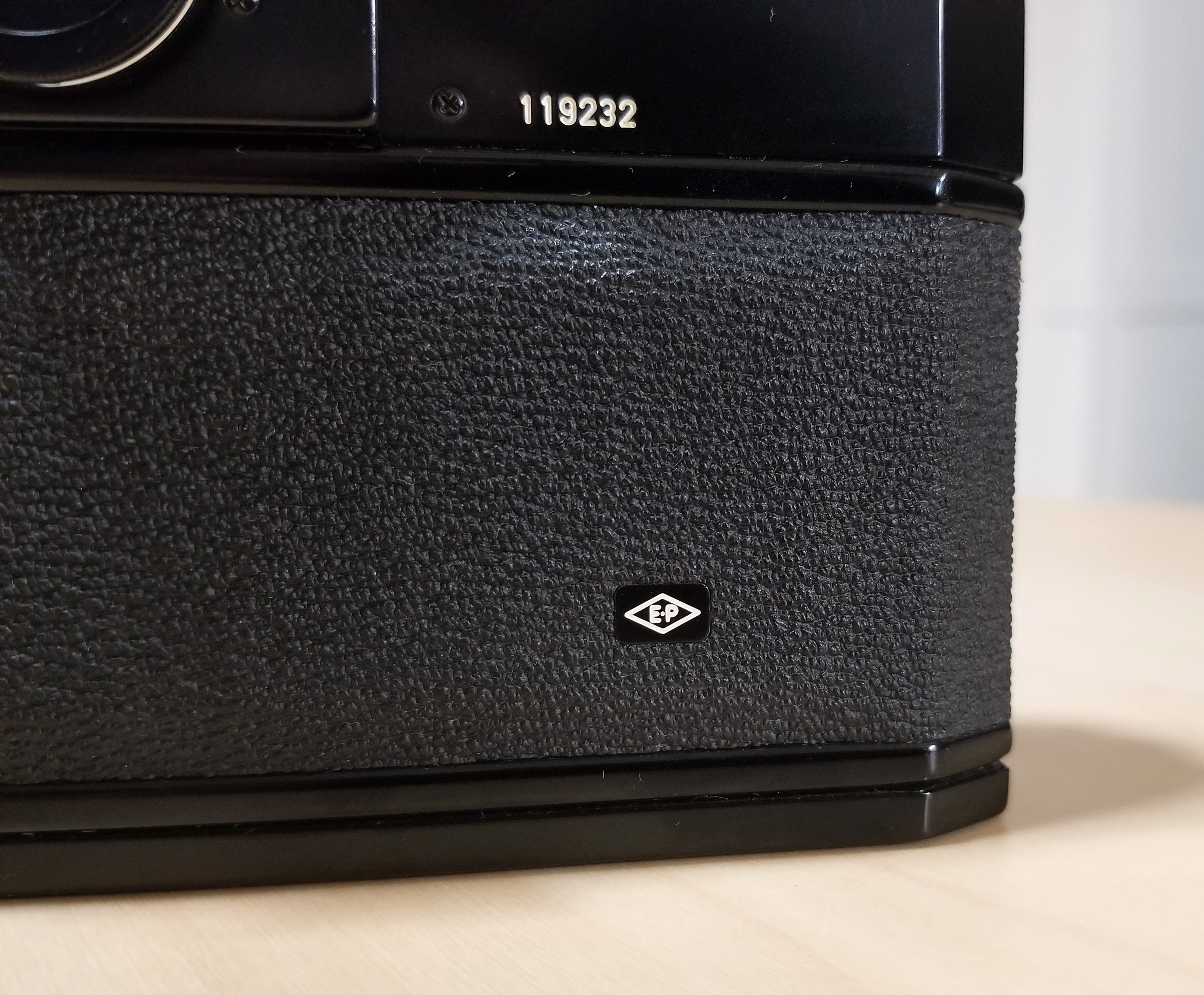
According to the “Goods Tax Law,” the <E.P> Mark was created. This Canon in my collection is the earliest <E.P> mark I found on a Canon F-1.
This F-1 was made in August 1971 and is among the first 20,000 made.A closer view of the <E.P> Mark.
Comments are always welcomed, as I’ve learned quite a bit from reader feedback. As always, thanks for stopping by, and while you’re at it, feel free to visit my camera shop at http://www.ccstudio2380.com (CC Design Studios hosted by Etsy). – Chris Whelan
Comments are always welcomed, as I’ve learned quite a bit from reader feedback. As always, thanks for stopping by, and while you’re at it, feel free to visit my camera shop at http://www.ccstudio2380.com (CC Design Studios hosted by Etsy). – Chris Whelan
The Yashica Mat-124 is an exceptional camera that does everything you’d expect from a well-designed, light-catching machine. The first units rolled off the assembly line in the summer of 1967, and the last just three years later in 1970. It was the last TLR Yashica made just before releasing its replacement, the Mat-124G. The 124G had lots of plastic parts and, for the first time, came in primarily all-black. The 124G had a long run that ended in 1986. Here is my Mat-124.
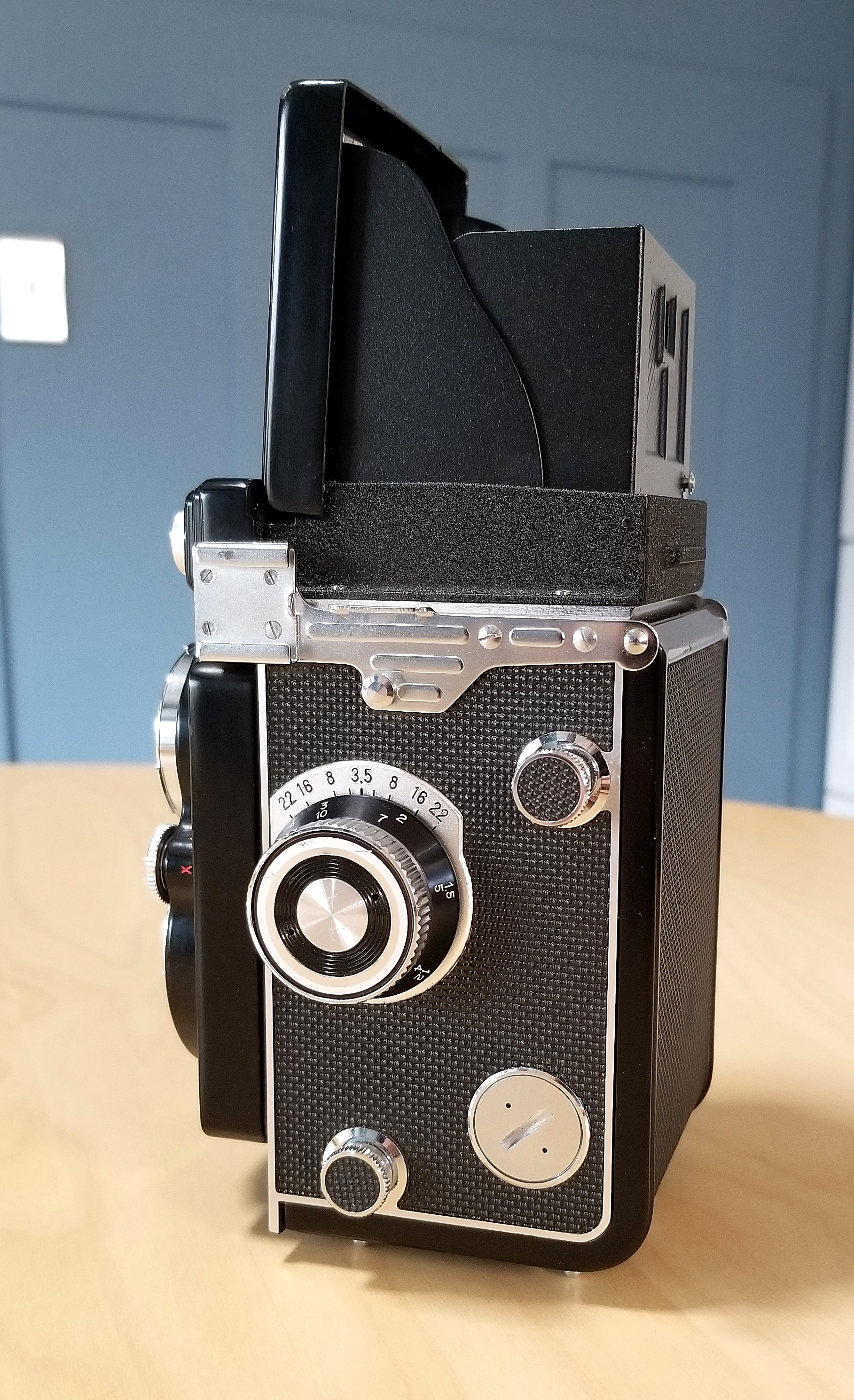
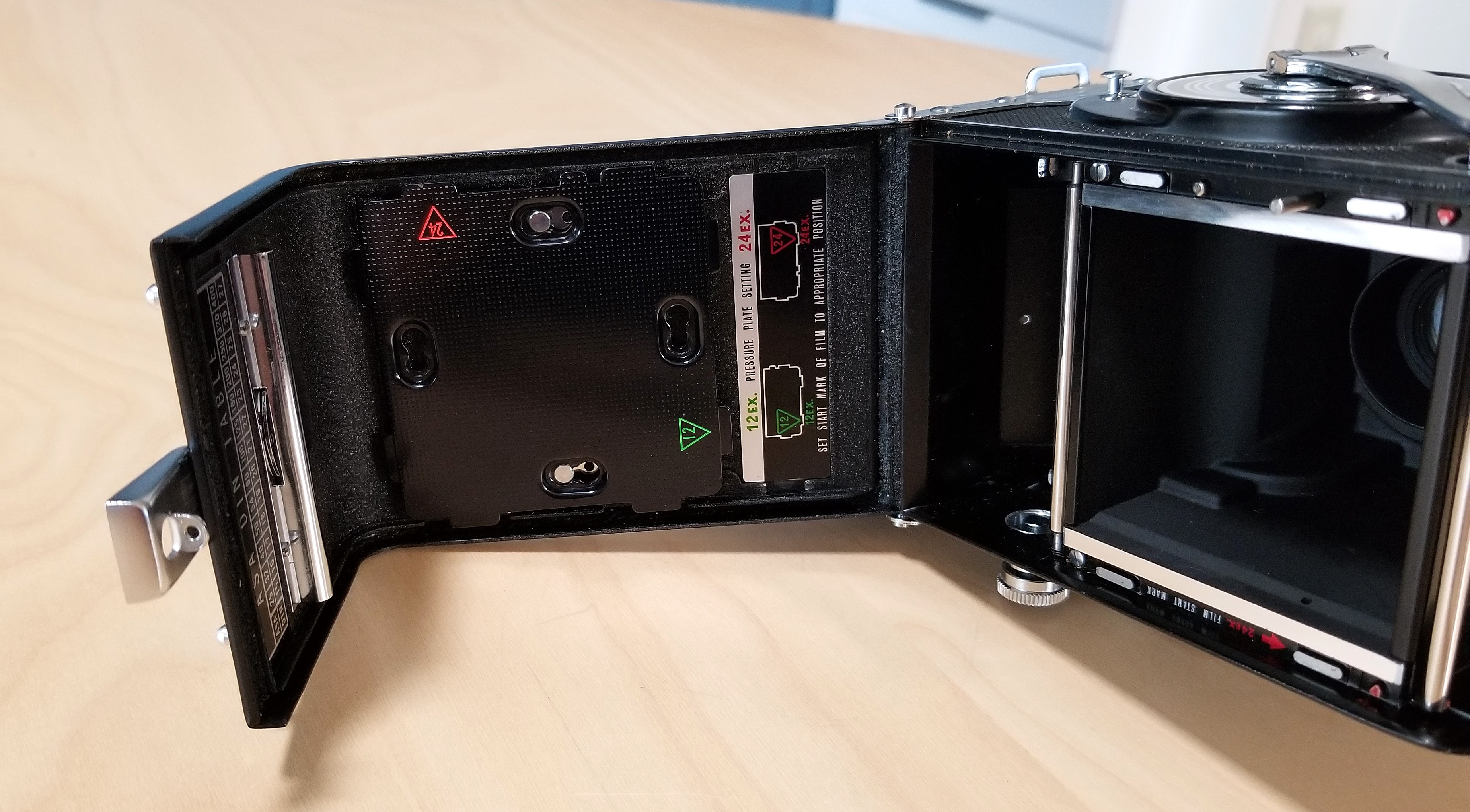
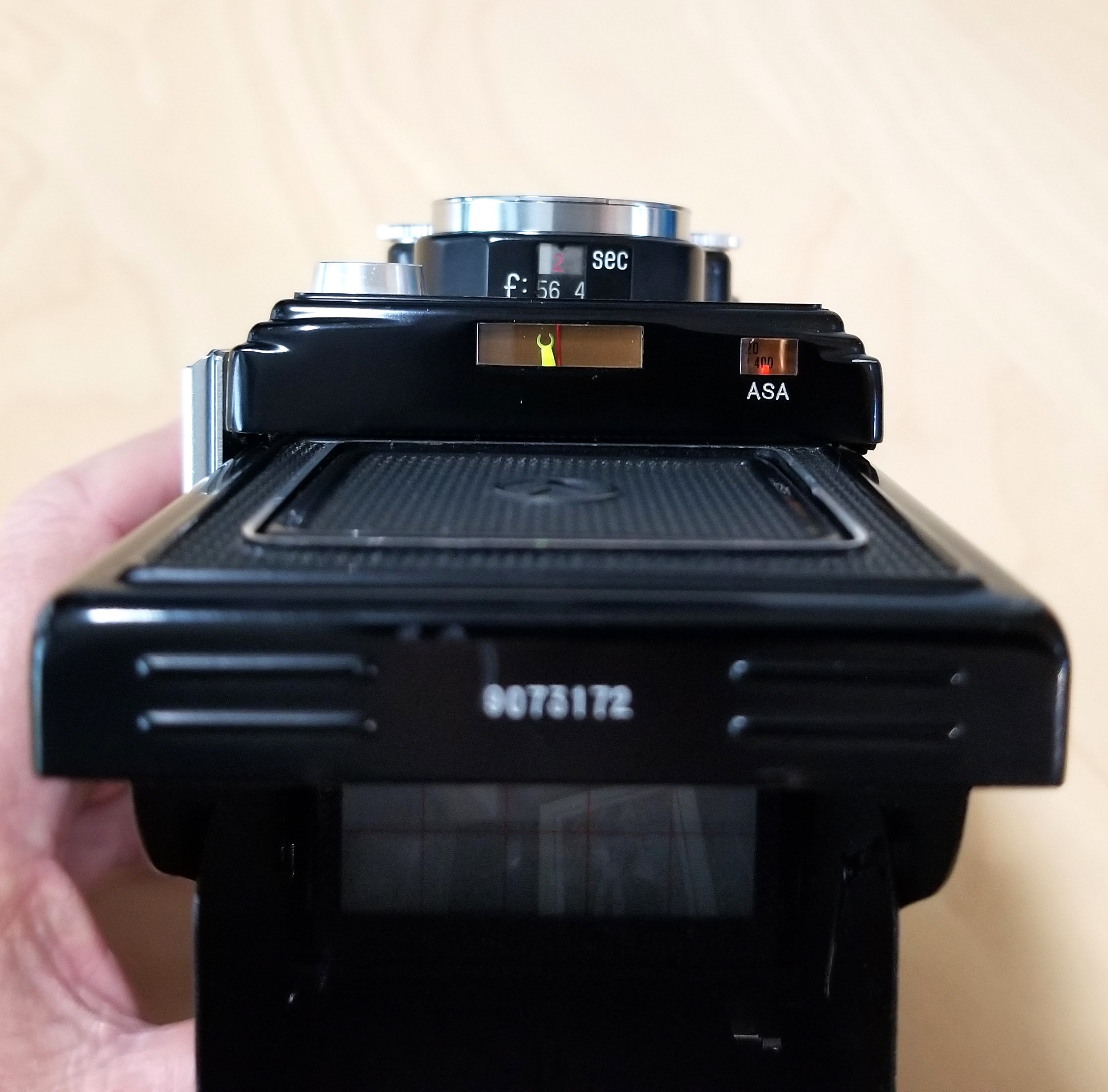
The built-in CdS light meter is activated by opening the viewing hood. The camera uses a 1.35v PX625 mercury replacement battery like the popular Wein Cell.It features dual Yashinon lenses. The taking lens (bottom) is 80mm f/3.5, while the viewing lens (upper) is 80mm f/2.8. The fast f/2.8 viewing lens makes for a bright image in the viewing hood, which makes it easier to compose and focus an image.The crank on the camera’s right side advances the film and cocks the shutter.The focus knob is on the left side, as is the battery compartment and cold shoe.On the bottom, a large knob is how you gain entry into the film chamber.The Mat-124 uses either 12-exposure 120 films or 24-exposure 220 films. The back of the taking lens can be seen on the far right in this image.Looking down at the match needle light meter.This gem of a camera is available for purchase in my Etsy camera shop at http://www.ccstudio2380.com.
Comments are always welcomed, as I’ve learned quite a bit from reader feedback. As always, thanks for stopping by, and while you’re at it, feel free to visit my camera shop at http://www.ccstudio2380.com (CC Design Studios hosted by Etsy). – Chris Whelan
The original Canon Canonet 35mm rangefinder camera with a Canon 45mm f/1.9 lens. Based on its serial number, this one is likely from 1962 or 1963. It is the Version 3 with ASA to 400. The selenium cell meter has been working for all these years. The shutter sounds accurate on auto, but the aperture blades need service.
Canonet V3.The selenium cell meter surrounds the Canon 45mm f/1.9 lens.Simple lines on a simple camera.The film advance is on the baseplate.
The Canonet line was hyper-successful for Canon, selling millions throughout its production.
Comments are always welcomed, as I’ve learned quite a bit from reader feedback. As always, thanks for stopping by, and while you’re at it, feel free to visit my camera shop at http://www.ccstudio2380.com (CC Design Studios hosted by Etsy). – Chris Whelan
Here are just a few items in my Etsy camera shop from my collection of cameras and photo gear. Visit http://www.ccstudio2380.com to see these items in detail.
Canon and Contax.Asahi Pentax, Canon, Yashica, and Nikon.
Comments are always welcomed, as I’ve learned quite a bit from reader feedback. As always, thanks for stopping by, and while you’re at it, feel free to visit my camera shop at http://www.ccstudio2380.com (CC Design Studios hosted by Etsy). – Chris Whelan
In this post, I asked what ‘B.C.B.’ meant regarding how the flash was powered. It’s widely accepted that ‘B.C.’ is battery capacitor. The last part is speculated to mean battery. I say this because the flash can also be used with just batteries (usually D cells) and doesn’t need a capacitor battery combination. What do you think?
Comments are always welcomed, as I’ve learned quite a bit from reader feedback. As always, thanks for stopping by, and while you’re at it, feel free to visit my camera shop at http://www.ccstudio2380.com (CC Design Studios hosted by Etsy). – Chris Whelan
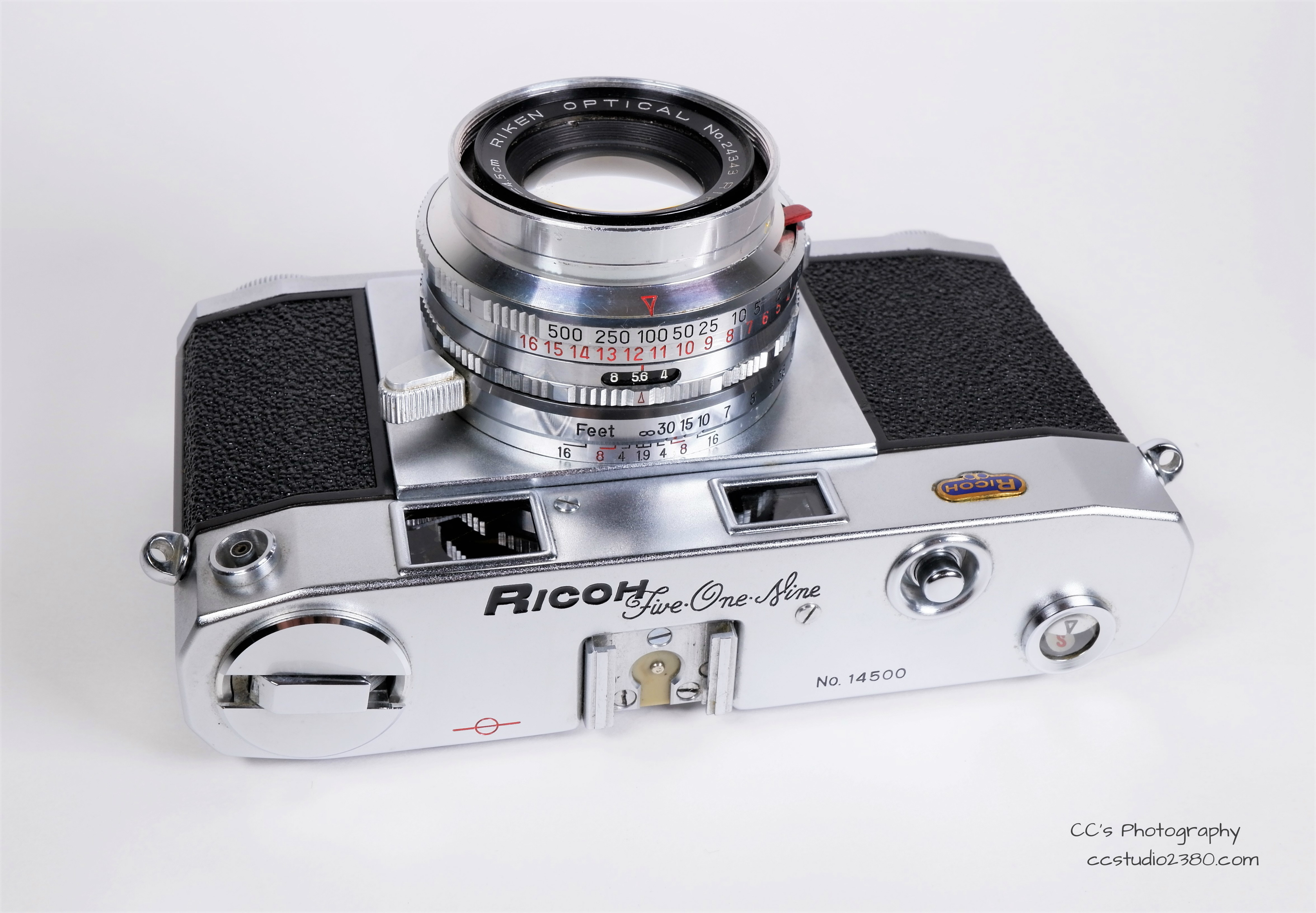
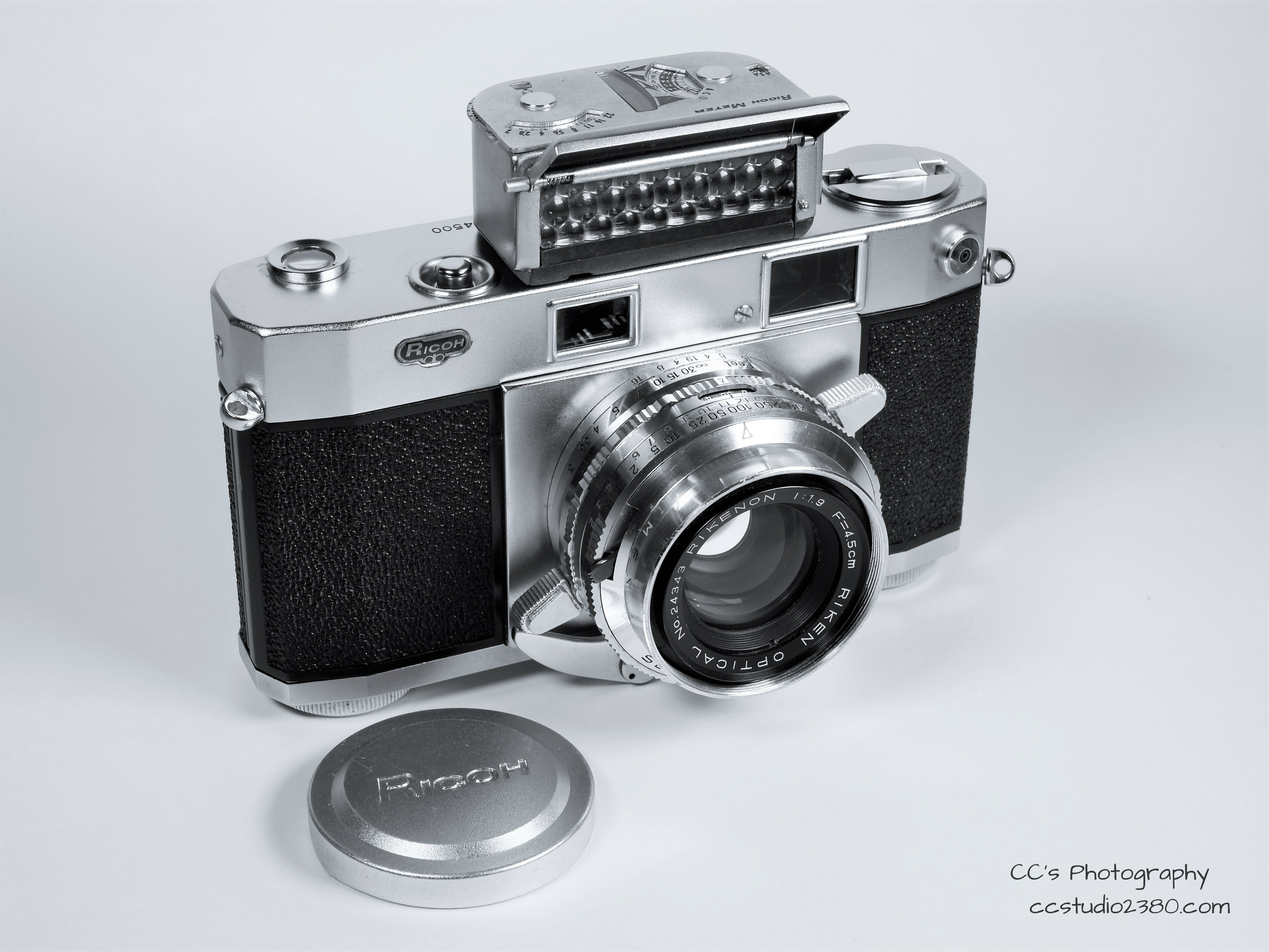
The Ricoh 519 is a 35mm rangefinder camera made by Riken Optical Industries, Ltd. of Tokyo in 1958. The 35mm rangefinder field was extremely crowded in 1958, with Yashica entering the market with its first rangefinder at about the same time. Almost every major and relatively unknown Japanese camera maker had at least an entry in the marketplace. In general, the designs of cameras during this period could range from downright ugly to beautiful – I would place this Ricoh in the beautiful category. I love its lines and thoughtful engineering details. The build quality is exceptional – everything fits nicely, and the finishes are extraordinary. Who wouldn’t love the extra attention to detail with the “519” written in script?
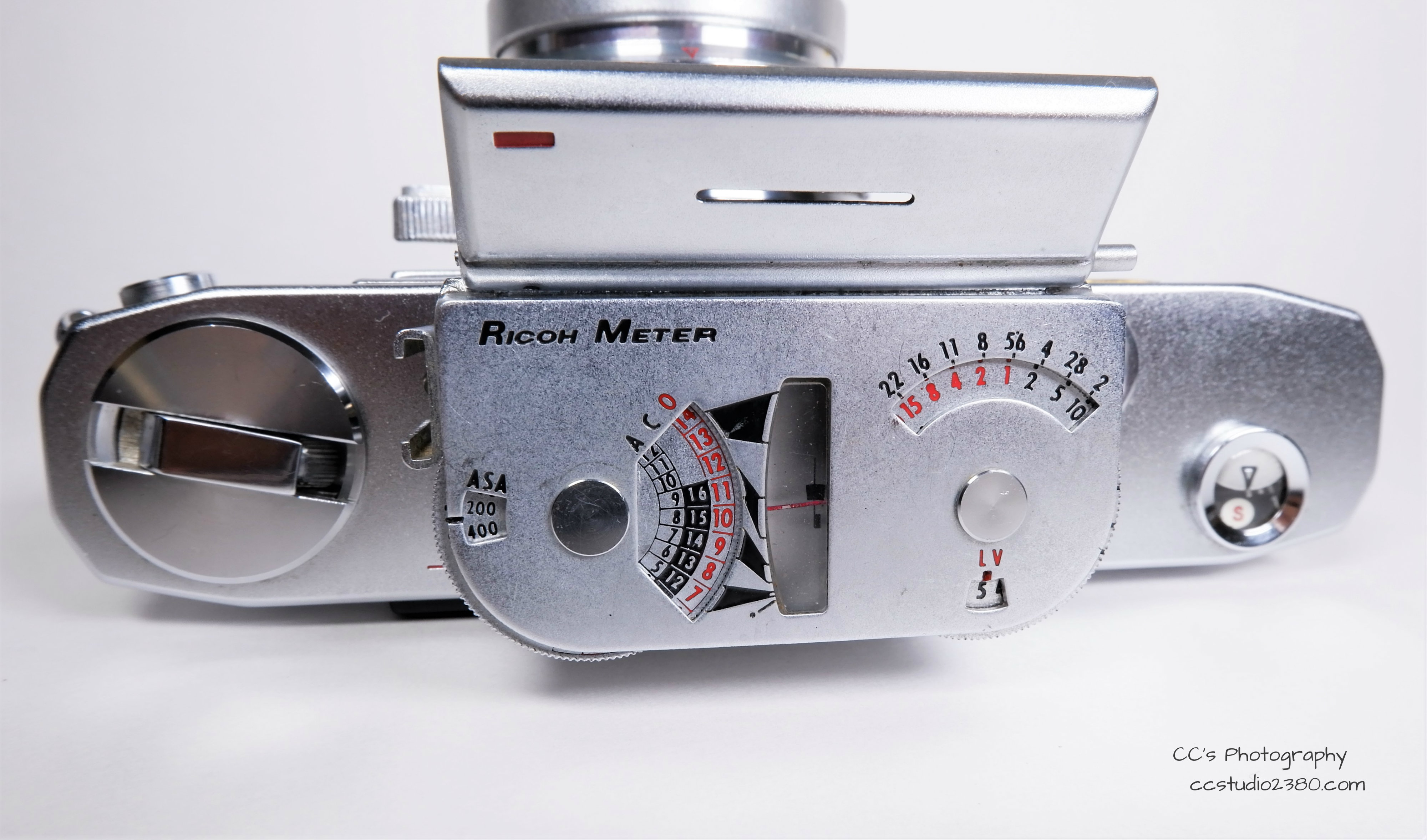
A mid-century gem.Shown here with its light meter attached.The meter is still active after all of these years.
It may not have had the build quality of a Leica, but it sure had style! Thanks for stopping by, Chris
Comments are always welcomed, as I’ve learned quite a bit from reader feedback. As always, thanks for stopping by, and while you’re at it, feel free to visit my camera shop at http://www.ccstudio2380.com (CC Design Studios hosted by Etsy). – Chris Whelan
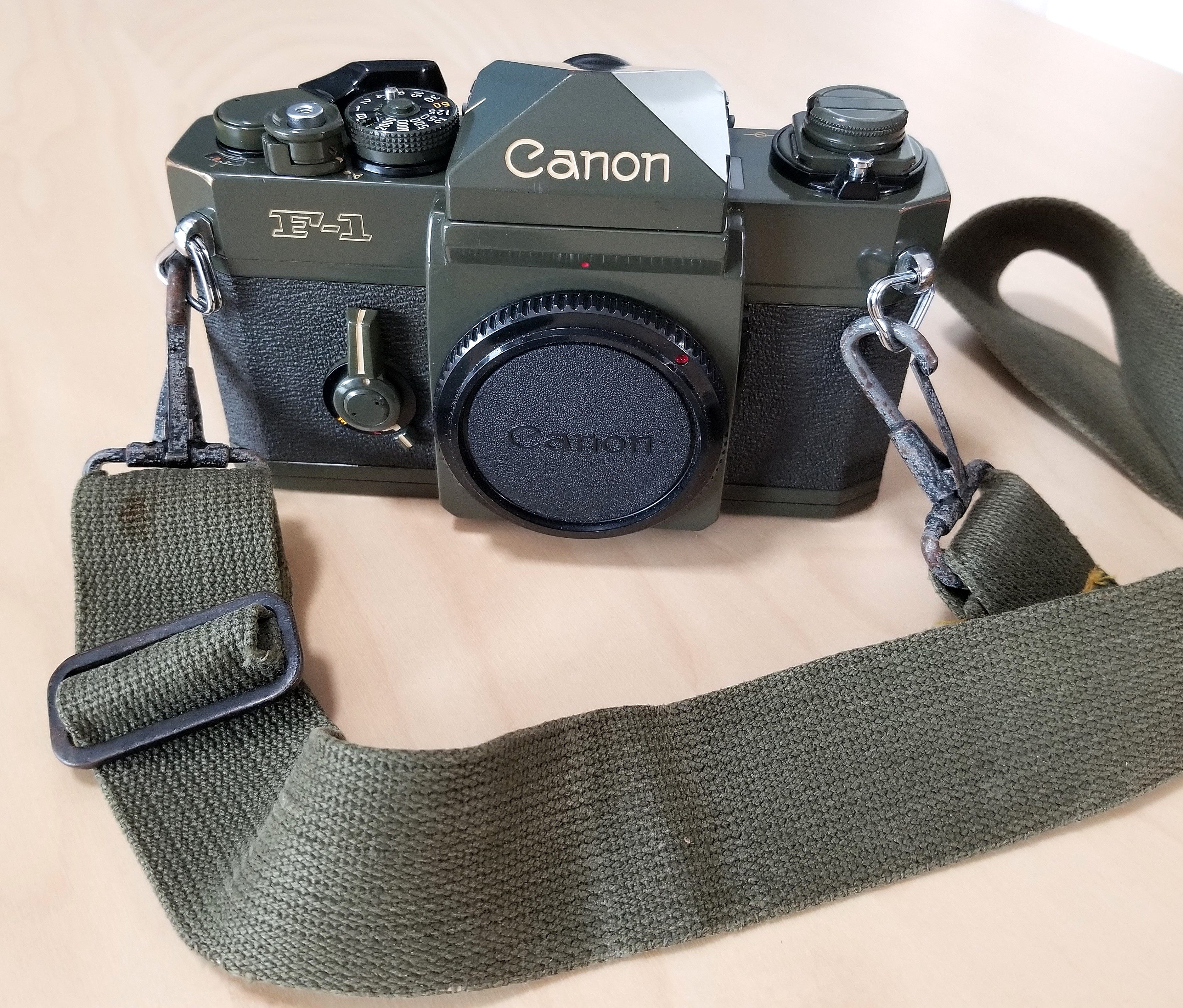
“The Canon OD F-1 (released in March 1978) is a color-variation model of the F-1(later model) released in 1976. OD stands for Olive-drab, the camera’s body color, which was reminiscent of the U.S. army and a color popular with young people. Its specifications are the same as the F-1 (later model).” The preceding is a direct quote from Canon’s website.
My Canon OD F-1 with my homemade strap.
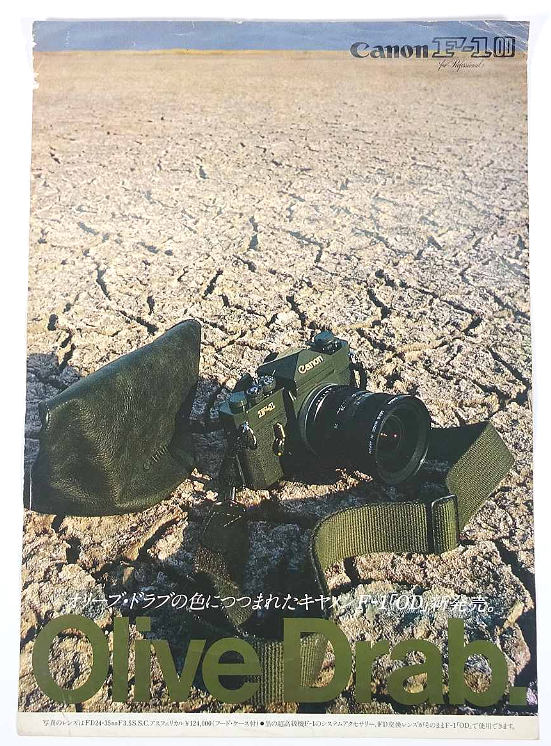
I say mysterious only because Cano was tight-lipped about it when it was released in early 1978. No official documentation exists other than that it was made, but no explanation of why it was made and in such limited quantities (estimated between two to three thousand). It’s not a military camera; it wasn’t made for the US Army or the Japanese forces, and other than being olive drab, it bears no markings that differ from a regular black Canon F-1 of the same period. Here is the only known supporting documentation.
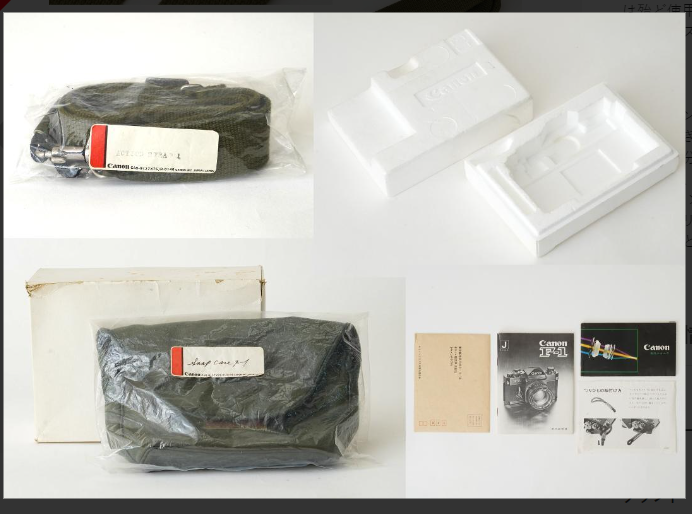
The cover page of a flyer that wasn’t published until early 1980 and only released in Japan.The back page of the flyer. I’m not sure this flyer was published by Canon. When the camera was released, it didn’t include a lens, only the body. The camera depicted has a zoom lens, which wasn’t original to the set.The set was issued by Canon in early 1978.
Complete sets such as this command appropriate attention and value among collectors.
The set included a special olive drab case.
My fully decked-out OD F-1.
I’ve attached a power winder and what would have been the correct era lens for the body.
I’ll have more about the camera in future posts. Thanks for stopping by, Chris
Comments are always welcomed, as I’ve learned quite a bit from reader feedback. As always, thanks for stopping by, and while you’re at it, feel free to visit my camera shop at http://www.ccstudio2380.com (CC Design Studios hosted by Etsy). – Chris Whelan










 Chasing Classic Cameras with Chris