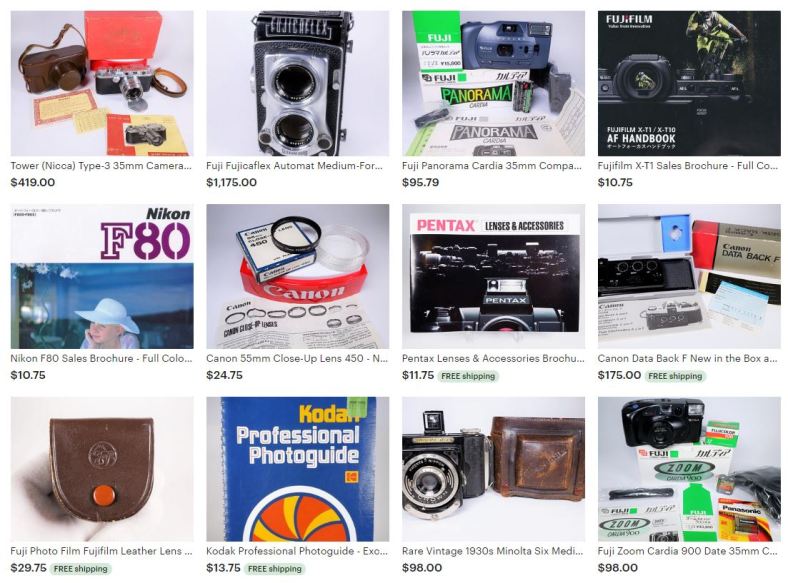
New In the Shop – neat stuff!

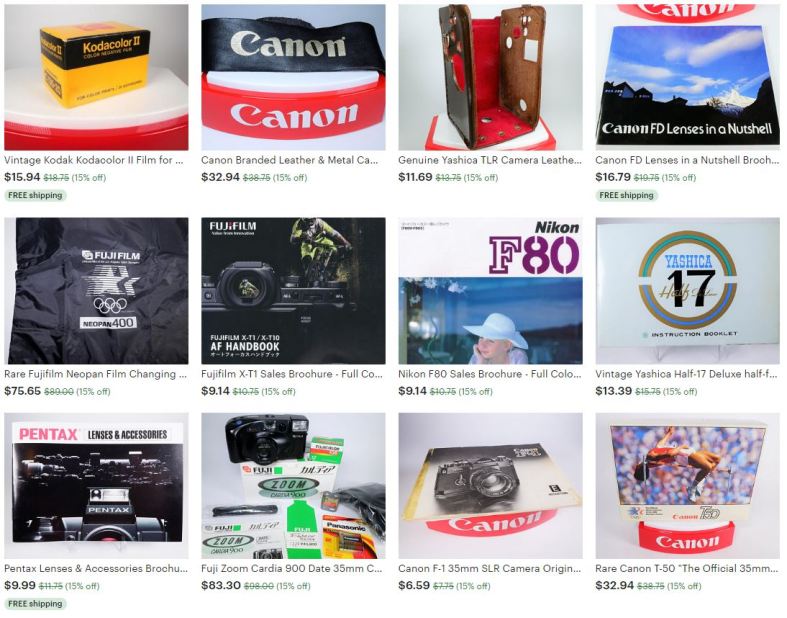
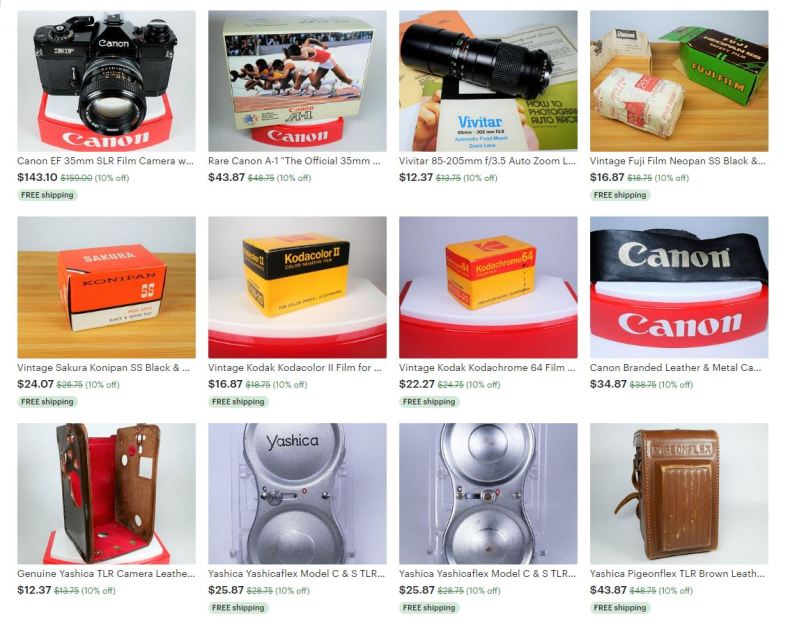
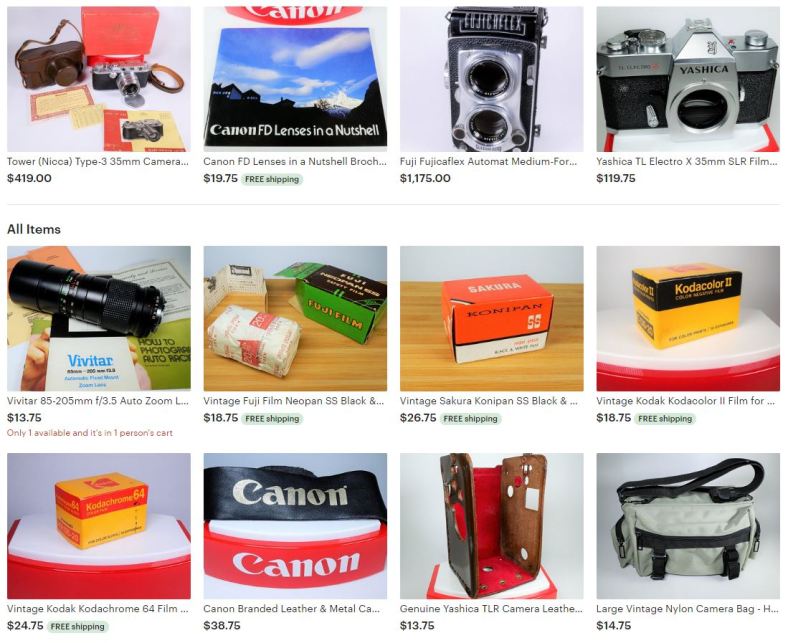
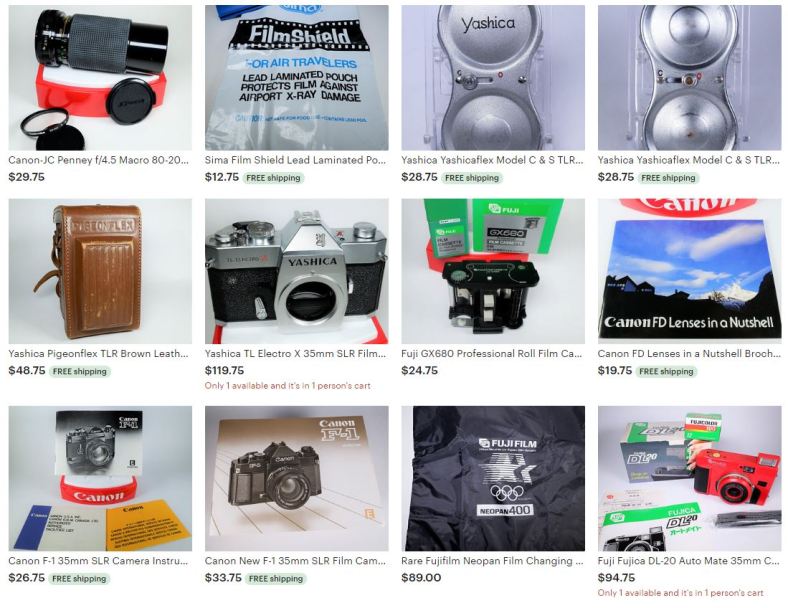
Hi all! Here’s some new and interesting items in our Etsy Shop at http://www.ccstudio2380.com

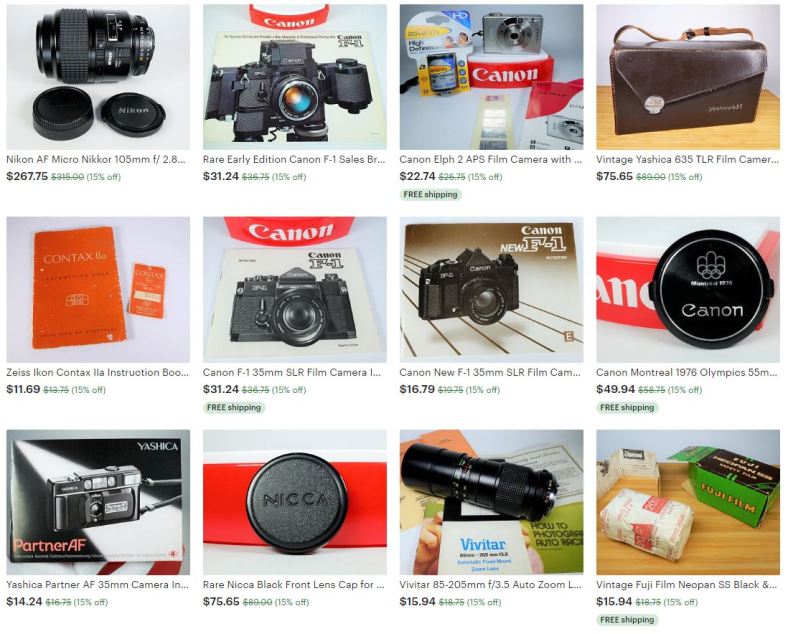
Take advantage of my Memorial Day sale with 15% off.

snip 5-25

snip 5-25 1

Lots more can be found in our shop at http://www.ccstudio.2380.com

Thanks – Chris

Please respect that all content, including photos and text, are the property of this blog and its owner, Yashica Pentamatic Fanatic, Yashica Sailor Boy, Yashica Chris.

Copyright © 2015-2020 Yashica Pentamatic Fanatic, Chris Whelan
All rights reserved.

In the Shop – New this Week!

It’s Monday and it’s time to post some new items in my camera shop at http://www.ccstudio2380.com

snip 3-20

Everything is on sale for the remainder of March and the first week of April – take 15% off my already value-priced items.

Lots of other great items in the shop too – pop on over to http://www.ccstudio2380.com and see if there’s something you like.

Thanks, Chris

In the Shop – New this Week!

Hi all! I hope everyone is doing well and staying safe and happy. It’s best to keep your spirits up during these uncertain times. Here are some new items in the shop at http://www.ccstudio2380.com

snip 3.17

snip 3.17.20

There are lots of neat stuff in the shop so pop on over to http://www.ccstudio2380.com and check them out. Also, if there’s something you’ve been looking for please ask – we may have it and it’s just not listed yet.

Thanks a bunch! – Chris & Carol

Please respect that all content, including photos and text, are the property of this blog and its owner, Yashica Pentamatic Fanatic, Yashica Sailor Boy, Yashica Chris.

Copyright © 2015-2020 Yashica Pentamatic Fanatic, Chris Whelan
All rights reserved.

In the Shop – New This Week!

Hi all! Here’s a look at what’s new in my camera shop this week – you’ll find my shop at http://www.ccstudio2380.com

snip march 1

snip march 2

snip march 3

You’ll find much more rare, unique, and hard to find camera and photogear at http://www.ccstudio2380.com

I ship almost worldwide and my shop is hosted by Etsy for safe and secure shopping. Thanks for stopping by! – Chris

Please respect that all content, including photos and text, are the property of this blog and its owner, Yashica Pentamatic Fanatic, Yashica Sailor Boy, Yashica Chris.

Copyright © 2015-2020 Yashica Pentamatic Fanatic, Chris Whelan
All rights reserved.

Nicca Pentamatic!?

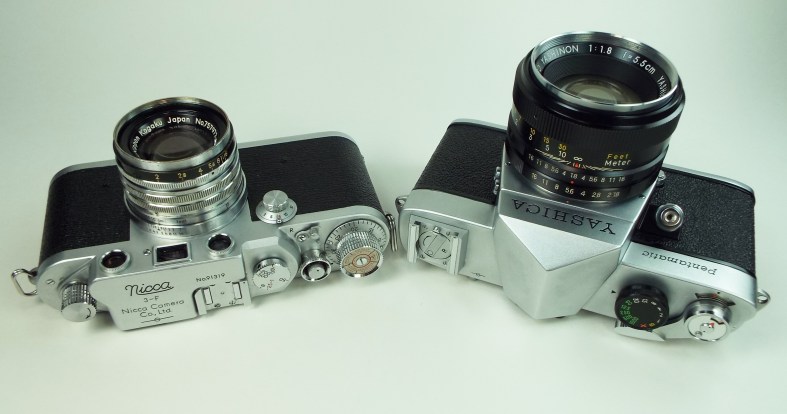
Stay with us and we’ll try to make our case. Recently discovered information has filled-in some of the missing links in the development of our favorite obsession camera. The mysterious and seldom seen Pentamatic ’35’… Yashica’s first SLR.
dscf2740

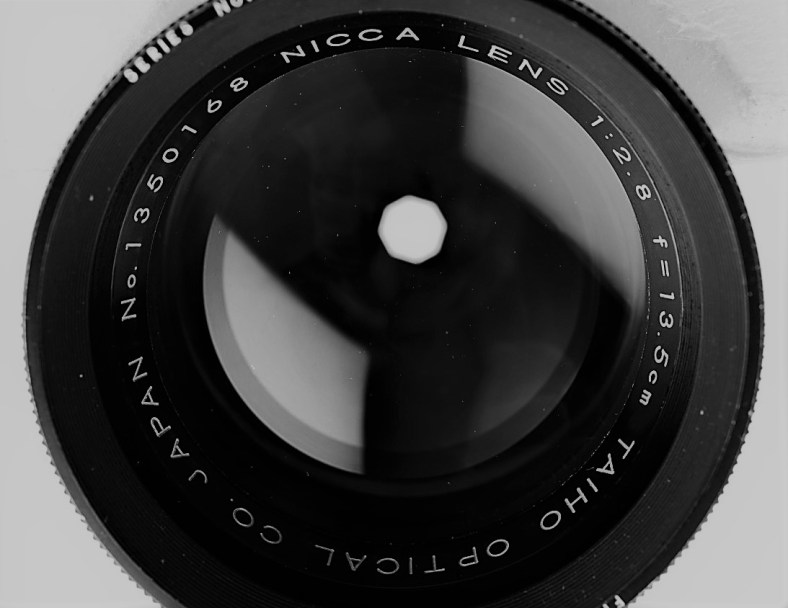
A few interesting bits of info have come to our attention recently. We were alerted to an auction by our friend Paul Sokk (http://www.yashicatlr.com) that listed a 13.5 cm f/ 2.8 lens made by Taiho Optical Company –  Nicca Lens. Having never heard of the company, Taiho Optical, and knowing about Nicca’s history, we couldn’t figure out where and how there could be a Nicca connection.

taiho_optical_co_nicca_135mm_f28_04

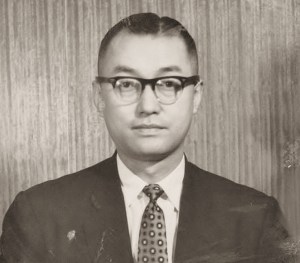
Let’s backtrack a bit with a quick history lesson. Yashima-Yashica was a very successful maker of high quality, low-cost twin-lens reflex cameras but hadn’t moved into the 35 mm market as of early 1957. It appears that the president and founder of Yashima-Yashica, Mr. Yoshimasa Ushiyama could see that although Yashica was successful building TLRs, the market for them would slowly diminish as new, smaller and easier to use 35 mm cameras would grab the marketplace. He wanted in but how?

Yashica had no experience with 35 mm cameras, especially rangefinder cameras with cloth focal-plane shutters. There were dozens of Leica copy cameras in Japan (and the world for that matter) but possible patents protected specific manufacturer’s shutter designs. If he could buy into an established company then he could use their shutter design and incorporate it with early Yashima-Yashica designs. In May of 1958, an opportunity presented itself. Nicca Camera Company was apparently experiencing financial difficulties and may have been on the brink of bankruptcy. Nicca cameras were well known and well respected – they made high quality 35 mm rangefinder cameras with focal-plane shutters. They used Nikkor lenses with the L39 screw mount. Mr. Ushiyama was in a rush to purchase Nicca before they went belly up. Advisers cautioned to wait until Nicca went bankrupt arguing that they would be able to acquire it for a better price. Mr. Ushiyama knew that that outcome of a bankruptcy could take longer than he was willing to wait and there would certainly be more suitors to compete with. So the deal went through… sort of. As best as we can glean from our research, a “religionist” “admonished” Mr. Ushiyama for rushing into the deal and cautioned that Yashica itself would suffer a “decline” if all of the transfer were made immediately.
record-image_939x-h3sn-v1

OK, OK! We give!!! We share your feelings dear reader –  what’s the connection between Nicca and the Pentamatic? Taking the advice of the religionist, Mr. Ushiyama created a new company. Nicca would become Taiho Optical Company. Say what? Nicca wasn’t absorbed into Yashica in May of 1958, instead, they became another company that could continue to operate with Yashica but without becoming Yashica. Simple. Confused? Mr. Ushiyama listened to his adviser so nothing bad happened. It appears that the former Nicca employees were now free to develop new processes and designs with the financial and technical support of the much larger Yashica. What did Yashica get for its money? Plenty it would seem. Access to years of 35 mm rangefinder manufacturing experience and access to a proven focal-plane shutter. Important steps in building a 35 mm single-lens reflex camera. We don’t know (yet) which one of the two companies came up with the design of what would become the Pentamatic. Was it mostly a Yashica design that had been kicking around for a while lacking a focal-plane shutter, or was it mostly a Nicca design that lacked the financial means to bring it to market? We feel that it was more than likely a 60 – 40 split with Nicca as the 60%. Just a hunch, no facts at the moment.
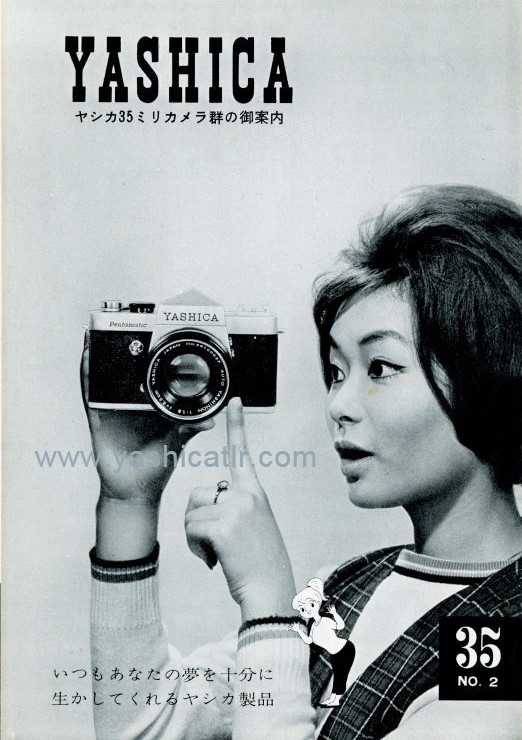
Yas Cover P1 bro (1)

Earliest known sales brochure for the Pentamatic ’35’. The best guess is that it was printed in the Spring of 1960.
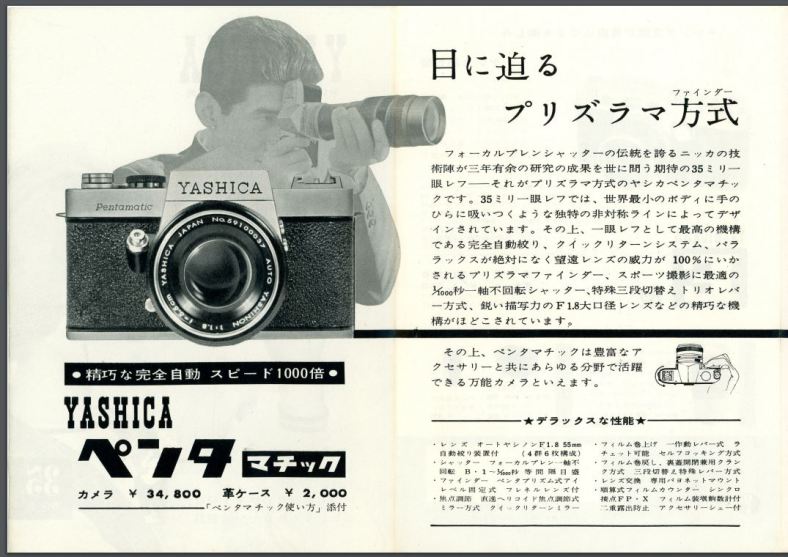
Yas inside P1 bro

A machine translation of this page from inside of the brochure states clearly that Nicca and Yashica developed the Pentamatic.
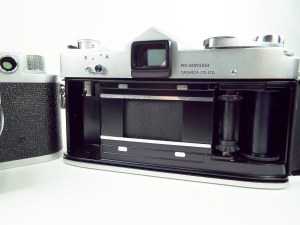
dscf2743

But what did the Taiho Optical Company make? Yashica didn’t make their own lenses, Tomioka Optical of Tokyo did. Was the former Nicca, now that it had become Taiho Optical, going to suddenly start making lenses? At the start of this blog, we mentioned that we were alerted to the existence of a 13.5 cm lens for sale with the Taiho Optical Company-Nicca Japan markings. Other than that, nothing.

So when did Mr. Ushiyama merge the two companies? He apparently listed to his adviser and waited eight long years before merging the two. From 1960 (when the Pentamatic was released) until 1968, when he not only made Yashica whole, but he also acquired long time lens supplier Tomioka Optical.

Now we know how the Pentamatic came to be and why it could be called the Nicca Pentamatic.

dscf2748

Thanks for sticking with us. – Chris

Please respect that all content, including photos and text, are the property of this blog and its owner, Yashica Pentamatic Fanatic, Yashica Sailor Boy, Yashica Chris.

Copyright © 2015-2019 Yashica Pentamatic Fanatic, Chris Whelan
All rights reserved.
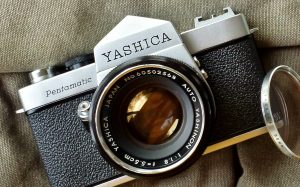
The Yashica YE & YF – a definitive history

My good friend Paul Sokk would argue that nothing about the history of Yashica could ever be “definitive”. Yashica no longer exists and its previous owners (Kyocera) could care less about the history of the company that it killed off back in the late 1980s. But that’s where Paul really shines – he’s always researching and searching for that extra crumb of information that leads to the next crumb that eventually leads you to the cake.

The cake, in this case, is the latest addition to his amazing website. Paul deftly guides us through the complicated maze that was Yashica and details its relationship with the Nicca Camera Company and the wonderful Leica copies that were produced during the 1950s. Many of the conclusions that Paul describes are found nowhere else on the web and to his credit, no detail is too small or unimportant to look at.

DSCF8692 logo

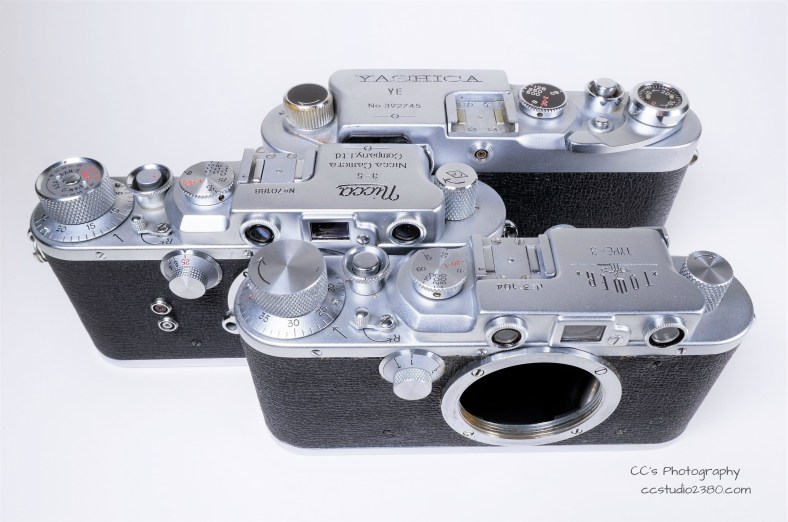
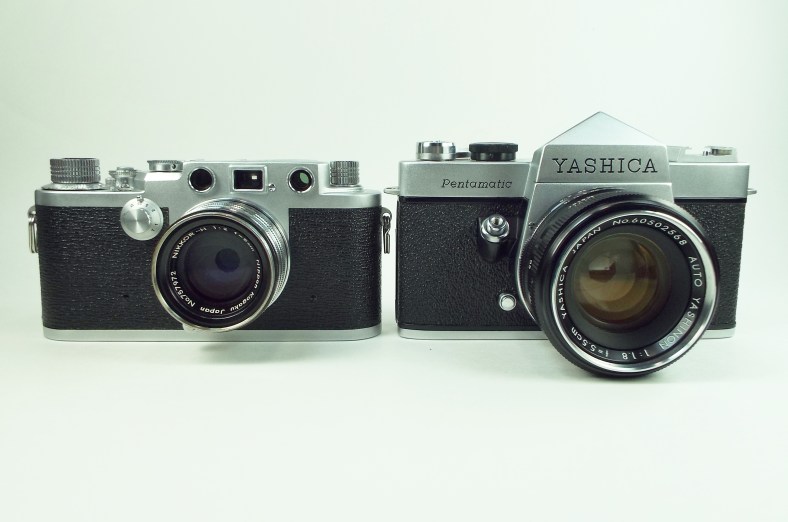
The family – Yashica YE, Nicca 3-F, Tower Type-3 (top to bottom)

44635928965_0624baa341_o

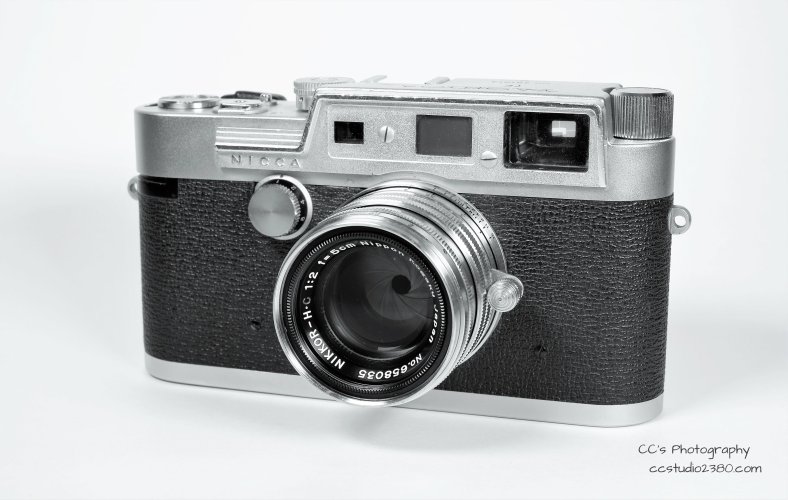
The Yashica-Nicca YF (the lens is not the standard lens for this body)

Please stroll on over to Paul’s site (be sure to bookmark it) for everything you ever wanted to know about the early days of the Yashica-Nicca collaboration. Paul quickly puts to rest many bits of intentional and unintentional misinformation that’s been floating around the web about this subject.

Paul’s site can be reached here.

Thanks for stopping by! – Chris

Be sure to visit the “gift shop” before you leave today for some great deals on some vintage cameras and equipment – http://www.ccstudio2380.com

Please respect that all content, including photos and text, are the property of this blog and its owner, Yashica Pentamatic Fanatic, Yashica Sailor Boy, Yashica Chris.

Copyright © 2015-2019 Yashica Pentamatic Fanatic, Chris Whelan
All rights reserved.


E.P Marked Photo Gear. Is it really worth more?

Photo gear made in Japan will sometimes carry a strange marking  <E.P>

20170603_191236

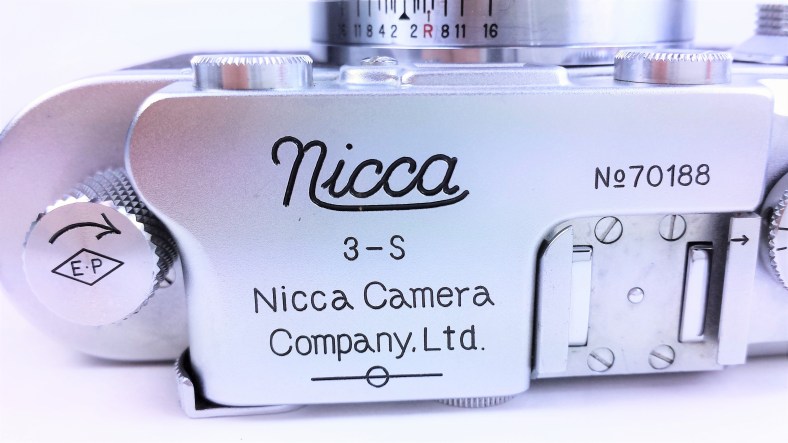
In the above example, the <E.P> mark is engraved on the rewind knob of this Nicca camera. This camera is from the 1955 to 1957 period.

s-l1600 (23)

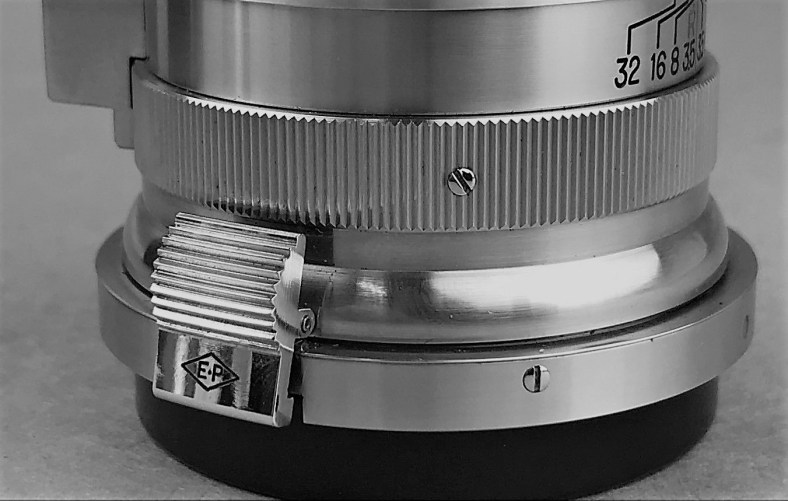
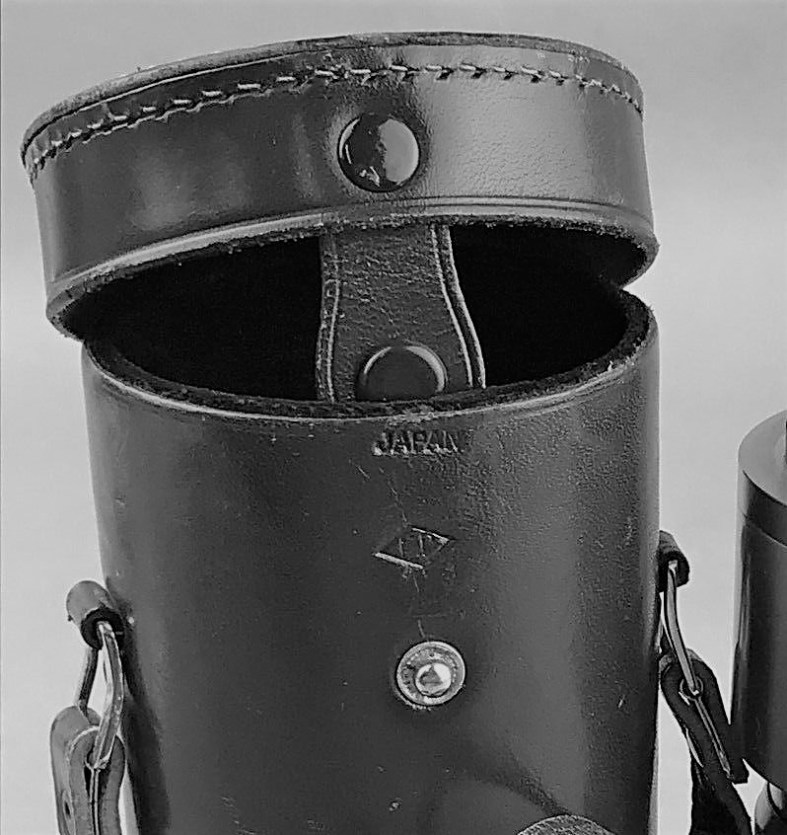
In the example above, this Nikkor 13.5cm lens has the <E.P> mark engraved on a small lever near the base of the lens. On the lens case below, the <E.P> mark is stamped into the leather just below the JAPAN stamp. The case belongs with the lens pictured above.

s-l1600 (22)

First time we’ve seen the mark on a lens case. To us that implies that the case was mated with that lens from the factory (or wherever the mark was applied).

So what’s up with the <E.P> mark anyway?

As we understand it, the Japanese government needed a way to identify which pieces of photo gear were sold through military facilities and duty free shops in Japan. We feel that the mark means “Exempt Product” – cameras or electronic gear purchased without paying taxes to the government of Japan and purchased by authorized personnel (military members and their families, tourists and by diplomatic members and their families). We’ve seen alternate meanings as “Post Exchange” (military base stores) but U.S. Navy stores are called “Navy Exchange – NEX” and U.S. Army/Air Force stores are “BX/PX or Base Exchange/Post Exchange”. It’s hard to make “NEX or BX” into “EP”.  Other explanations of <E.P> include: Export Permitted (or Export Permit), Exchange Program and Export Production.

The “Black Market”.

The majority of the photo gear we have in our collection that bears the <E.P> mark, was in fact purchased through military facilities and not at duty free shops. Another cause for concern after the War, and we know this first hand from having lived in Japan in the late 1970s, was the so called black market that may have existed (it did) in Japan. The difference between what a service member could buy a camera for at the Navy Exchange (reduced cost and no taxes) and what that same item sold for at a Japanese camera store was just too great not to tempt some selling on the black market. The military stores kept tabs on the amount of tobacco and liquor that a family could purchase and big ticket items (cameras and stereo equipment) included a statement on the receipt that the service member would check and then sign that the item was for their personal use. A direct reminder that you were not to resell the item to unauthorized individuals. Our guess would be that if a Japanese citizen had a camera in their possession with the <E.P> mark it would be easy to question where it was purchased. However, the <E.P> marks were normally on parts of the camera that could be removed and replaced with non marked parts. No system is perfect so if there’s a will they’ll be a way.

DSCF3795

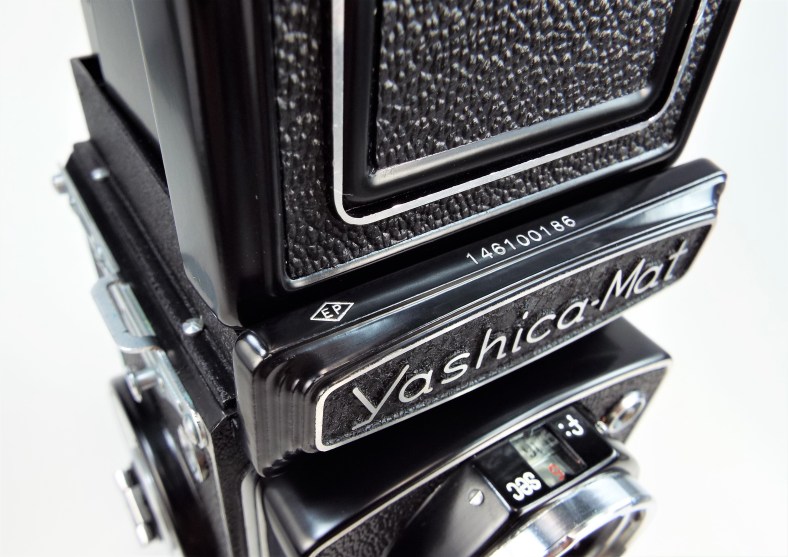
The <EP> mark on a Yashica-Mat from 1960.

So, does the mark make my photo gear more valuable? Yes. Collectible? Yes. Desirable? Yes. But to whom?

Like anything that’s collected, if someone wants it just because of the mark (in this case), then the <E.P> mark makes your item more desirable. In the real world, the gear is no different except for the mark. But – and it’s a big but – there are fewer of them out there. In the case of the nice Yashica-Mat pictured above, let’s say that Yashica sold 1,000 of them in 1960 throughout Japan. Maybe 5% were marked <E.P> (and that may be way high). So if you want to collect a mint condition Yashica-Mat made in 1960, there may be, let’s say only 10 available worldwide at any one time, and if one of those has the mark, well that adds a nice bonus of rarity to the mix. Another way to look at the mark is that the gear was less likely purchased by a professional photographer and therefore may have been better taken care of by its owner. Lots of exceptions to that line of thinking but it does have some merits.

So there you have it. Something of an explanation. If you have photo gear from the 1950s, 1960s and sometimes from as late as the early 1970s and you have the mark, well now you know a bit more about it. If you’d like us to appraise it for you we will be more than happy to. Just contact us here on the blog and we can get something going for you.

Studio Camera: Fujifilm FinePix S9900W

Chris

(Nicca) Tower Type-3 35 mm Rangefinder Camera… 1953

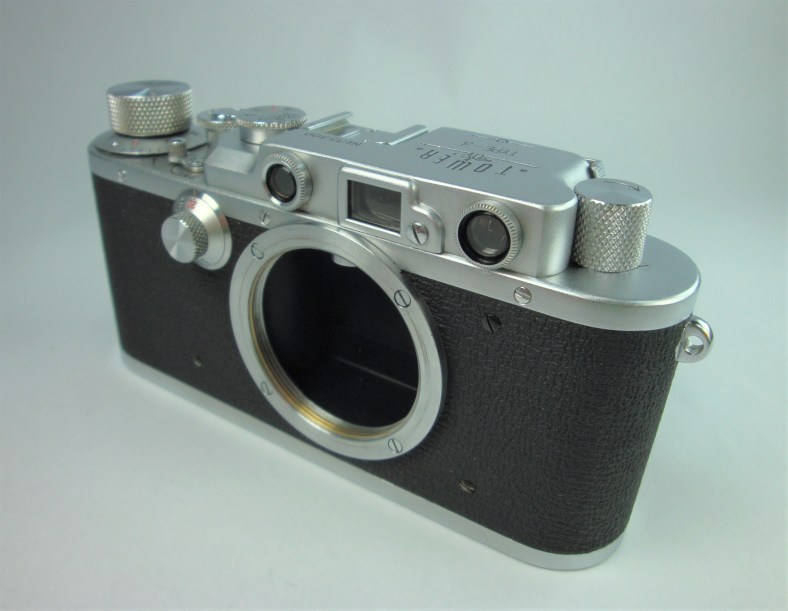
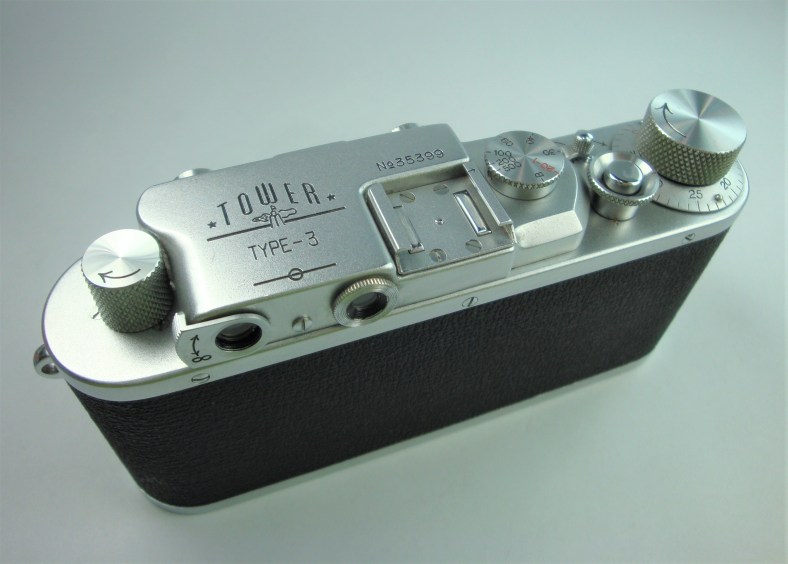
Nice little Tower Type-3 (or Type III) 35 mm rangefinder film camera from the early 1950s – made by Nicca Camera for the Sears, Roebuck and Company catalog. The build quality of the Tower branded cameras are no different from the quality of the Nicca camera as best as we can tell. It appears that Sears didn’t ask Nicca to lessen the quality like one might imagine – Sears was known for good value but not necessarily the best quality in our opinion.

By the way, these images were taken with our Sony Cyber-shot  (model DSC-W170) from 2008. It’s a basic point and shoot but sports a Carl Zeiss Vario-Tessar lens and 10.1 megapixels. It adds a nice “softness” to our studio shots especially of vintage gear and it’s fun (and simple) to use.

dsc08154

The Tower Type-3 (made by Nicca) is one of the best of the Japanese made Leica copies.

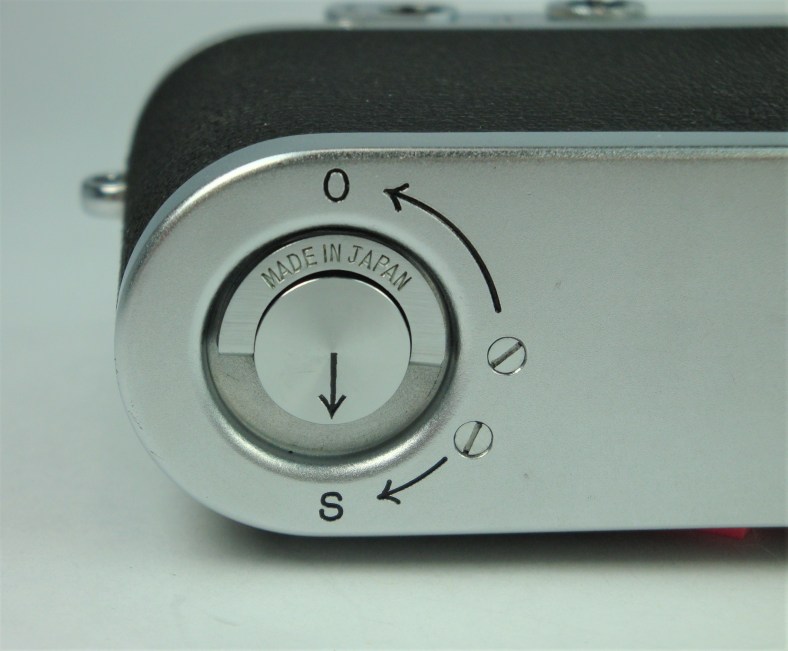
This camera appears to have been made in around 1953 – the serial number places it as a mid production model and the fact that the open-shut latch simply has ‘Made in Japan’ vice ‘Made in Occupied Japan’ engraved on it. The occupation of Japan ended with the adoption of the Peace Treaty signed in April 1952.

dsc08156

Open shut latch.

This camera works perfectly – the shutter appears to be spot on and the rangefinder-viewfinder is clear and accurate. We hope to be able to run a roll of film through it soon.

dsc08157

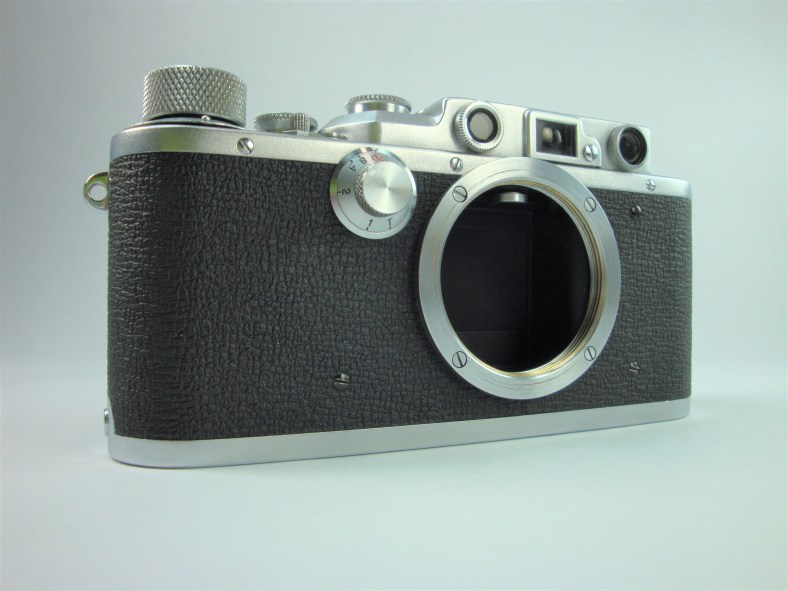
Super clean and free of significant signs of past use. A gem!

dsc08150

Designed to take the L39 screw-in lenses made by any number of lens manufacturers of the period.

dsc08151

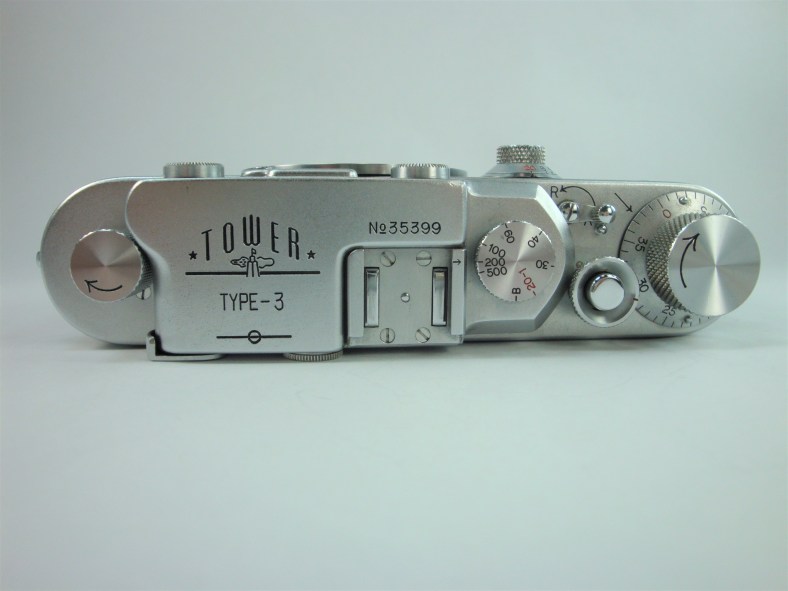
Actually it’s an interesting logo – quite detailed and almost a retro look to it even for the early 1950s. 

As we’ve stated before, if you’re looking for a nice camera to experience the joy of using a vintage 35 mm rangefinder, then the Nicca and Tower cameras fit the bill nicely. Excellent fit and finish and they’re built like a tanks. You should be able to find well preserved models on various online auction sites for reasonable prices. If you see signs of corrosion or missing leatherette… run! Avoid these and buy the best you can afford. You’ll be happy you did.

Chris

Nicca Pentamatic!?

We know… doesn’t make sense, does it? Doesn’t even sound right… “Nicca Pentamatic”.

Stay with us and we’ll try to make our case. Recently discovered information has filled-in some of the missing links in the development of our favorite obsession camera. The mysterious and seldom seen Pentamatic ’35’… Yashica’s first SLR.

dscf2740

Nicca 3-F 35 mm rangefinder (left) and Yashica Pentamatic 35 mm single-lens reflex SLR (right).

A few interesting bits of info have come to our attention recently. We were alerted to an auction by our friend Paul Sokk (http://www.yashicatlr.com) that listed a 13.5 cm f/ 2.8 lens made by Taiho Optical Company –  Nicca Lens. Having never heard of the company, Taiho Optical, and knowing about Nicca’s history, we couldn’t figure out where and how there could be a Nicca connection.

taiho_optical_co_nicca_135mm_f28_04


Let’s backtrack a bit with a quick history lesson. Yashima-Yashica was a very successful maker of high quality, low-cost twin-lens reflex cameras but hadn’t moved into the 35 mm market as of early 1957. It appears that the president and founder of Yashima-Yashica, Mr. Yoshimasa Ushiyama could see that although Yashica was successful building TLRs, the market for them would slowly diminish as new, smaller and easier to use 35 mm cameras would grab the marketplace. He wanted in but how? Yashica had no experience in 35 mm cameras, especially rangefinder cameras with cloth focal-plane shutters. There were dozens of Leica copy cameras in Japan (and the world for that matter) but possible patents protected specific manufacturer’s shutter designs. If he could buy into an established company then he could use their shutter design and incorporate it with early Yashima-Yashica designs. In May of 1958, an opportunity presented itself. Nicca Camera Company was apparently experiencing financial difficulties and may have been on the brink of bankruptcy. Nicca cameras were well known and well respected – they made high quality 35 mm rangefinder cameras with focal-plane shutters. They used Nikkor lenses with the L39 screw mount. Mr. Ushiyama was in a rush to purchase Nicca before they went belly up. Advisers cautioned to wait until Nicca went bankrupt arguing that they would be able to acquire it for a better price. Mr. Ushiyama knew that that outcome of a bankruptcy could take longer than he was willing to wait and there would certainly be more suitors to compete with. So the deal went through… sort of. As best as we can glean from our research, a “religionist” “admonished” Mr. Ushiyama for rushing into the deal and cautioned that Yashica itself would suffer a “decline” if all of the transfer were made immediately.

record-image_939x-h3sn-v1

Yashima-Yashica founder Mr. Yoshimasa Ushiyama.

OK, OK! We give!!! We share your feelings dear reader –  what’s the connection between Nicca and the Pentamatic? Taking the advice of the religionist, Mr. Ushiyama created a new company. Nicca would become Taiho Optical Company. Say what? Nicca wasn’t absorbed into Yashica in May of 1958, instead, they became another company that could continue to operate with Yashica but without becoming Yashica. Simple. Confused? Mr. Ushiyama listened to his adviser so nothing bad happened. It appears that the former Nicca employees were now free to develop new processes and designs with the financial and technical support of the much larger Yashica. What did Yashica get for its money? Plenty it would seem. Access to years of 35 mm rangefinder manufacturing experience and access to a proven focal-plane shutter. Important steps in building a 35 mm single-lens reflex camera. We don’t know (yet) which one of the two companies came up with the design of what would become the Pentamatic. Was it mostly a Yashica design that had been kicking around for a while lacking a focal-plane shutter, or was it mostly a Nicca design that lacked the financial means to bring it to market? We feel that it was more than likely a 60 – 40 split with Nicca as the 60%. Just a hunch, no facts at the moment.

dscf2743

Pentamatic’s focal-plane shutter. Thanks to Nicca.

But what did the Taiho Optical Company make? Yashica didn’t make their own lenses, Tomioka Optical of Tokyo did. Was the former Nicca, now that it had become Taiho Optical, going to suddenly start making lenses? At the start of this blog, we mentioned that we were alerted to the existence of a 13.5 cm lens for sale with the Taiho Optical Company-Nicca Japan markings. Other than that, nothing.

So when did Mr. Ushiyama merge the two companies? He apparently listed to his adviser and waited eight long years before merging the two. From 1960 (when the Pentamatic was released) until 1968, when he not only made Yashica whole, but he also acquired long time lens supplier Tomioka Optical.

Now we know how the Pentamatic came to be and why it could be called the Nicca Pentamatic.

dscf2748

Thanks for sticking with us. Comments? Likes?

Chris and Carol