Early Yashica Sales Brochure & the Debut of Miss Yashica – all 3!

We’re always trying to determine exactly when Yashica did something – whether it’s exactly when Yashica released a camera or when Yashica printed a sales brochure – we always want to know when.

Sales brochures can be a great source of information for uncovering some of the “whens” associated with Yashica – unfortunately Yashica’s marketing folks weren’t big fans of dating their pamphlets, booklets or brochures (almost never).

Another way to date a brochure is to look at the cameras featured in them. Below is a good example. The cameras featured (front bottom to back right) are: Yashica Minister f/2.8, Nicca-Yashica YF, Yashica YK and the Yashica 35. The “newest” of the four cameras pictured here is the Minister. It was released in February-March 1960. The camera pictured (still on the Minister) was made in January 1960 (going by its serial number). The other cameras were released from late 1958 to middle 1959.

So the earliest date that this brochure could be is the January to March 1960 time frame.

16519399715_3df7950b02_o

Early sales brochure from Japan. Take note of ‘Yashica Girl‘ on the bottom right of the brochure. 
My translation of the title – ‘Yashica 35mm Camera Group Guide’. The bottom left translation – ‘Yashica Products That Always Make Full Use of Your Dreams’. The “newest” model featured (bottom front) is the Yashica Minister (Feb-Mar 1960)

So was this the first appearance of Miss Yashica? She does appear on what may be a few earlier brochures but we’re going to say she made her first public appearance in January 1960 (new year, new decade and Yashica had a ton of new products to introduce). Plus she looks like a girl of the 1960s!

DSCF6490

Not one but three Miss Yashica’s! The one on the far right appears frequently in sales brochures during 1960 and early 1961 while the two on the left are variants that we’ve never seen before (clearly different). The ladies pictured here appear on the side of a vinyl shopping bag – Of the camera… ‘Camera Matsue Ota Weight Shop Izunokuni’? Not completely sure about the translation here.

19606s

Could be the very first flyer/ad released in Japan for the original Yashica Pentamatic.

It would appear that in this flyer/ad Miss Yashica was paired with the Pentamatic shortly after the release of the Pentamatic in Japan (early 1960). We don’t have the flip side of this flyer/ad so we don’t know if it was a one page presentation or two pages or part of a brochure. Since it has the address of Yashica’s headquarters in Tokyo on the bottom, one could assume that it’s the back page.

Thanks for stopping by! If you can provide a better translation or have more information please let us know!

Remember, Carol and I are always interested in buying interesting items for research and for our collection. If you have something to sell, please contact us at chriscarol@ccstudio2380.com

Please stop by our online store at https://www.ccstudio2380.com

Chris & Carol ^.^

Please respect that all content, including photos and text are property of this blog and its owner, Yashica Pentamatic Fanatic, Yashica Sailor Boy, Yashica Chris.

Copyright © 2015-2017 Yashica Pentamatic Fanatic, Chris Whelan
All rights reserved.

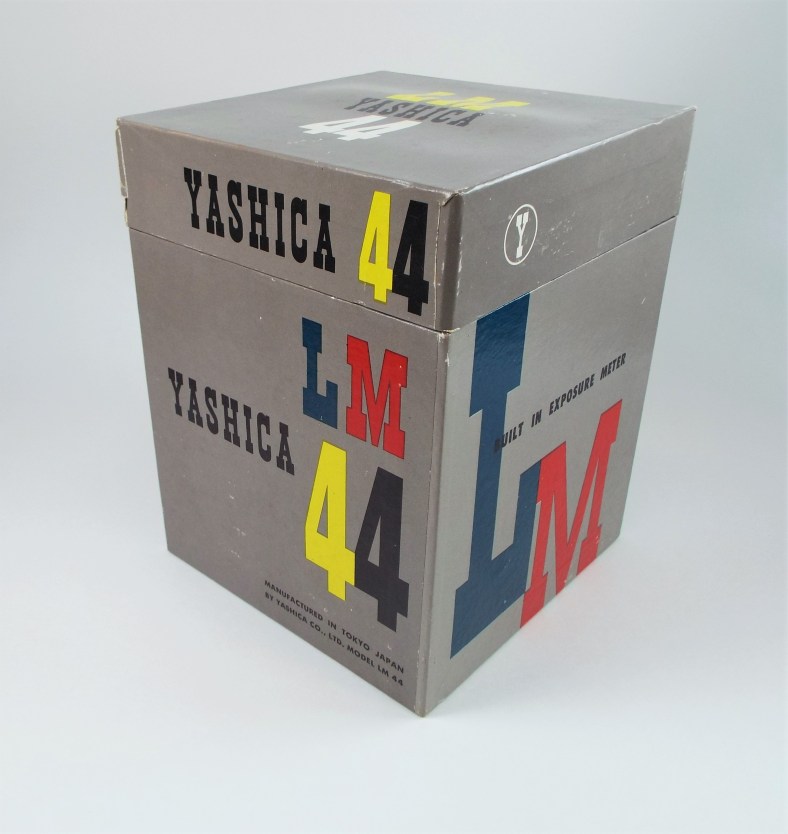
Yashica 44 LM – 1960

Yashica’s “pint sized” twin-lens reflex 127 film camera from 1960. Instead of producing typical 6x6cm negatives from a full sized TLR on 120 film, the Yashica 44 LM produces negatives and slides in the 4x4cm format from 127 film. A smaller negative means a slightly smaller camera. This model comes with a built-in selenium photo cell light meter (also known as an exposure meter). It reads reflected light from the subject – no batteries needed! After 57 years, this camera’s meter works just fine and is accurate too!

DSCF6458

Anyone who follows our blog on a regular basis knows that we’re a pushover when it comes to a pretty Yashica and if it’s in its original box – well so much the better. Fujifilm FinePix S9900W.

DSCF6457

The boxes normally don’t hold up this well after nearly 6 decades – this one has been stored properly and looks pretty close to new. The colors are bright and the box is solid. The studio camera for this shot was my Fujifilm FinePix S9900W.

20171115_222753

The star of the blog! The Yashica 44 LM from 1960. Mint new and in unused condition. Everything works just fine. The light meter is spot on and the shutter is accurate, The lenses are clean, clear and sharp. This shot was with our new Samsung Galaxy S8+ camera.

This camera is finished in dark gray on the metalwork and that contrasts nicely with the dove gray leatherette of the body.

Thanks for stopping by!

Be sure to check out our online store at https://www.ccstudio2380.com for some great Christmas gifts and stocking stuffers!

Some of our fine art images can also be found at https://society6.com/ccstudio2380

Our gallery can also be found at https://500px.com/yashicachris

Please respect that all content, including photos and text are property of this blog and its owner, Yashica Pentamatic Fanatic, Yashica Sailor Boy, Yashica Chris.

Copyright © 2015-2017 Yashica Pentamatic Fanatic, Chris Whelan
All rights reserved.

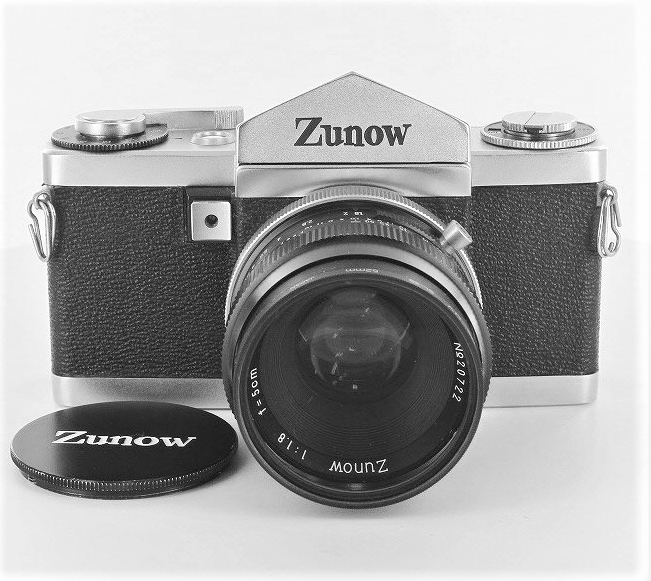
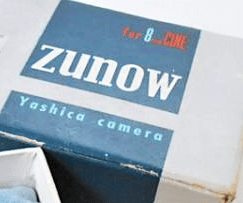
Zunow SLR – 1958

One of the rarest early Japanese 35mm SLR cameras ever made. The Zunow SLR (below).

zunow beauty

Zunow SLR 1958.

This gorgeous Zunow sold for a cool ¥ 1,880,000 (about $16,700 USD)!

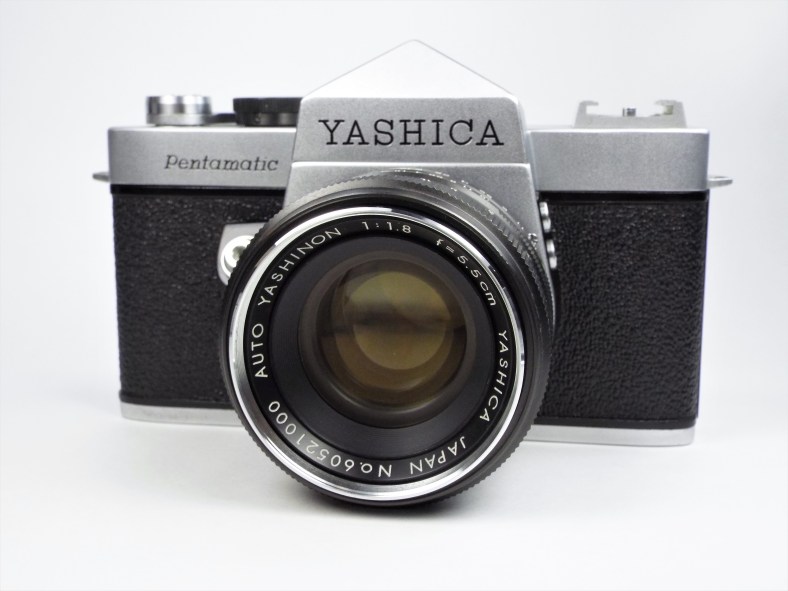
The Yashica Pentamatic (below) just sold for $16,598 less!

DSCF6236

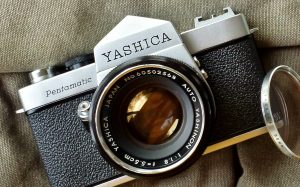
Yashica Pentamatic 35mm SLR. Yashica’s first ever. A cousin to the Zunow? We think so.

We believe designers and engineers from Zunow and Nicca played a big part in bringing the Pentamatic to market by early 1960.

Thanks for your visit! To find out more about Yashica and the Zunow connection stay a bit and check out our blog here on the ‘Yashica Pentamatic Fanatic’!

Chris and Carol ^.^

Please respect that all content, including photos and text are property of this blog and its owner, Yashica Pentamatic Fanatic, Yashica Sailor Boy, Yashica Chris.

Copyright © 2015-2017 Yashica Pentamatic Fanatic, Chris Whelan
All rights reserved.

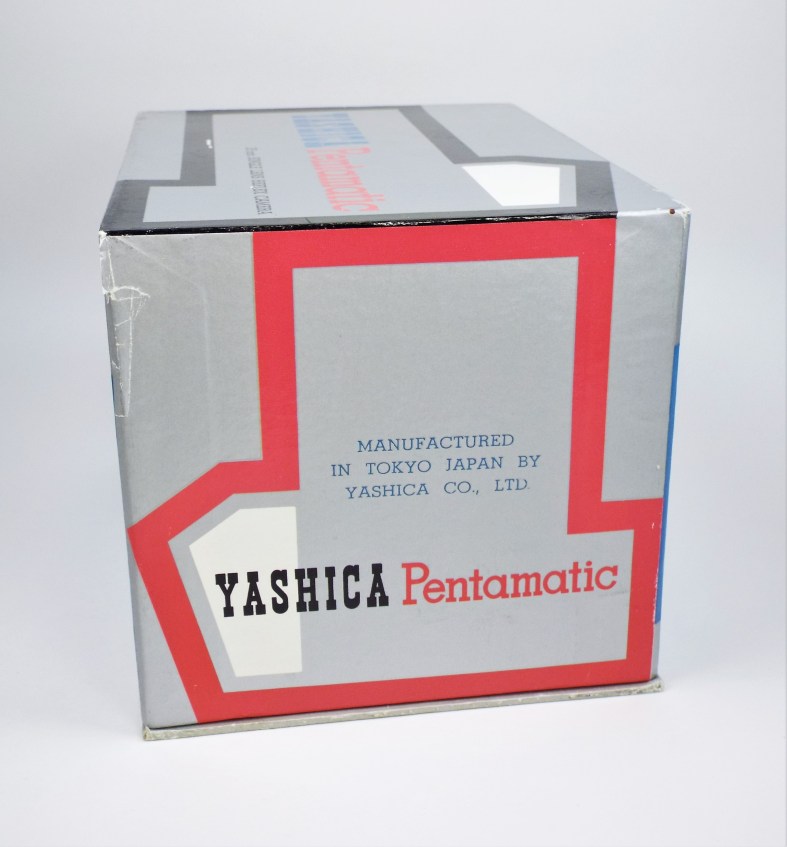
Yashica Pentamatic Presentation Box – 1960

These are not often seen (or collected) as most boxes of this type would have been tossed after purchasing the camera. I know we were guilty of that back in the 1970s when we tossed our Canon F-1 and AE-1 boxes (insert crying sounds).

Here’s a very nice Pentamatic camera presentation box for Yashica’s very first 35mm SLR camera from 1960. A rather distinctive style from Yashica – it certainly plays up the pentaprism aspect of the camera.

DSCF6360

DSCF6362

DSCF6364

DSCF6365

Thanks for stopping by! Remember, Carol and I are always on the hunt for interesting classic camera sets – if you have something to sell we are buyers! Contact us at chriscarol@ccstudio2380.com

Come visit us at our online store, CC’s Studio Twenty-3 Eighty at https://www.ccstudio2380.com

Many thanks… C&C ^.^

Please respect that all content, including photos and text are property of this blog and its owner, Yashica Pentamatic Fanatic, Yashica Sailor Boy, Yashica Chris.

Copyright © 2015-2017 Yashica Pentamatic Fanatic, Chris Whelan
All rights reserved.


New Yashica Pentamatic Set – all the goodies too!

We’re always on the lookout for interesting Pentamatic sets. This was purchased from the original owner who purchased it in March of 1961 in Philadelphia. It’s the first Pentamatic set that had the “dealer price card” included.

It’s a beautiful camera in nearly mint condition – hardly any signs of use and of course it works perfectly. This particular camera was made in August 1960 and the lens is from around the same time.

DSCF6354

The interesting negative holder from Kodak (upper right) is from the first roll of film that the original owner shot (high contrast B&W copy film). I’m not sure of the exact period the Kodachrome film is from but I do know that I’ve shot more than my share of Kodachrome in my life.

The dealer price card was designed to slip into the cold shoe of the camera (by folding the little tab on it and inserting it in the shoe).

Carol and I are always looking for nice examples of all models of the Pentamatic (Pentamatic, Pentamatic II and Pentamatic S) so if you have a nice one to sell please feel free to contact us through our blog or at chriscarol@ccstudio2380.com

Be sure to stop by our online store at https://www.ccstudio2380.com

Thanks! Chris and Carol ^.^

Please respect that all content, including photos and text are property of this blog and its owner, Yashica Pentamatic Fanatic, Yashica Sailor Boy, Yashica Chris.

Copyright © 2015-2017 Yashica Pentamatic Fanatic, Chris Whelan
All rights reserved.

Was this beautiful lens, which was made exclusively for the Pentamatic II designed by Zunow Optical?

Simple Answer – Yes

DSCF6330

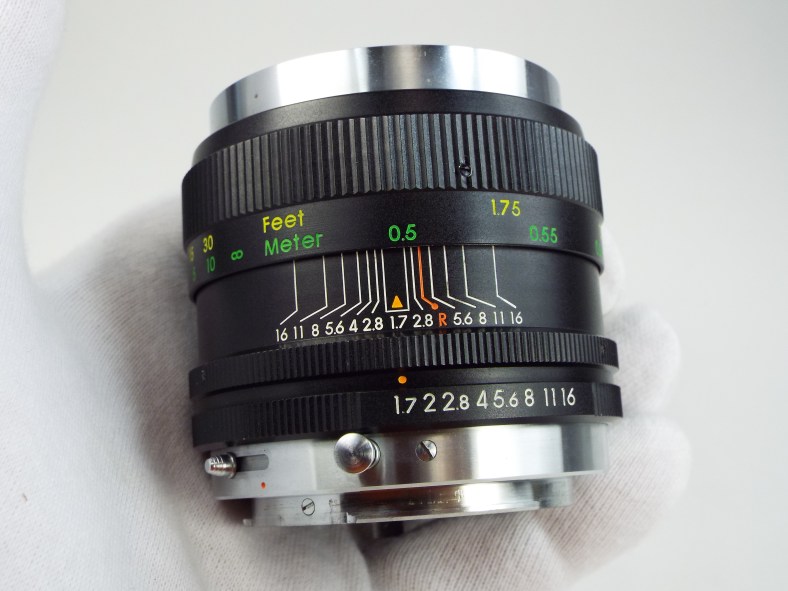
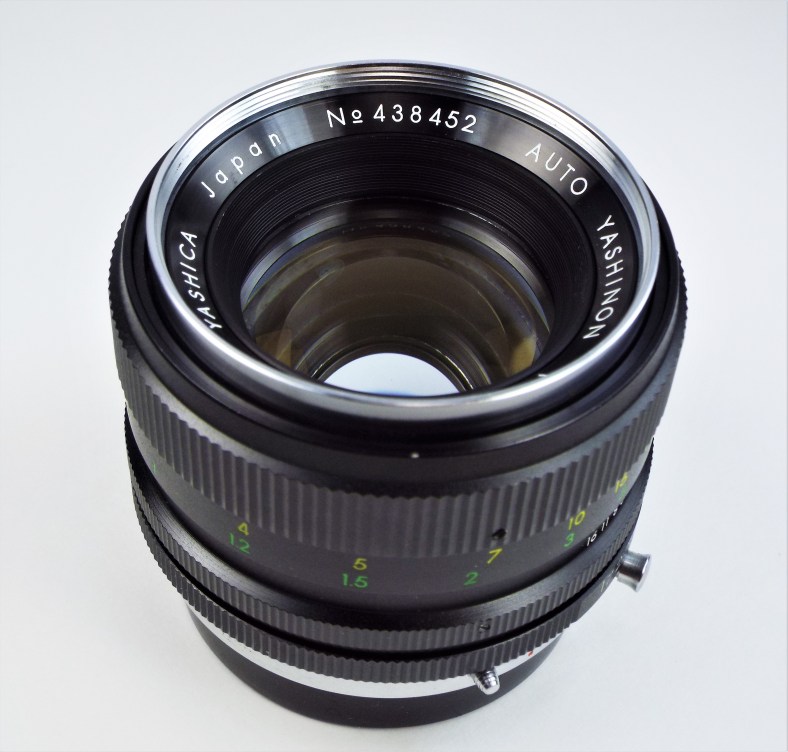
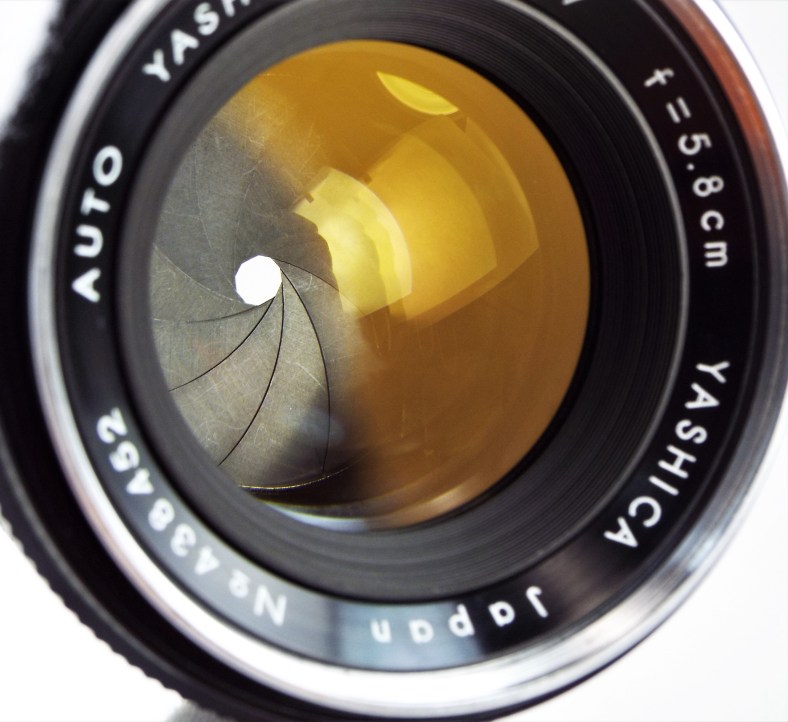
Yashica Auto Yashinon f/ 1.7 5.8cm lens designed exclusively for Yashica’s Pentamatic II. It appears for the first time in August 1960 and disappears from use by Yashica in January 1961. There’s no documentation about the lens and no hard evidence that Zunow made the lens. Hard evidence would be sales brochures or advertisements that specifically link Yashica and Zunow. Co-branding on the lens ring would have been nice but never happened. Unfortunately our claim that it was made by Zunow is, at this point in time, circumstantial and coincidental. Much more digging around needs to be done on our part.

The lens features the unique Pentamatic bayonet mount that couldn’t be used on any other SLR of the time without an adapter. That in and of itself could have been a major reason for the quick demise of the Pentamatic series of cameras.

DSCF6323

Two “clues” that link this lens to Zunow – the serial number style with its unique “No xxxxxx” vice the more typical serial number style that Tomioka used “No. xxxxxxxx” at the time (as did most lens makers). Another clue, the style of the lowercase “a” in Japan. Most Zunow lenses used a fat “a” vice the keyboard style lowercase “a”. We know, these are hardly the type of clues needed to link the two but they’re good ones for now.

zunow font

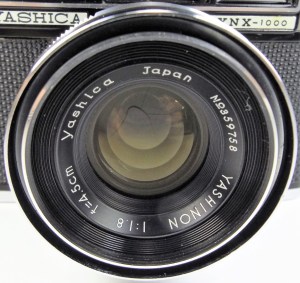
Close-up of a Zunow made f/ 1.8 4.5cm lens for the Yashica Lynx-1000 (1960). Note the fat “a” and distinctive serial number style.

Could the f/ 1.7 5.8cm lens have been made by Tomioka Optical? Of course, Tomioka was the almost exclusive lens supplier to Yashica since the beginnings of Yashica in 1953. We feel that Tomioka had their hands full making nearly 1,500 lenses per month for Yashica’s first Pentamatic model (which was still very much in production at the time), and then taking on this lens at about 1,000 lenses per month for the Pentamatic II may have been a bit much for Tomioka.

This lens is so radically different in design and function of other Tomioka made SLR lenses of the time (Tomioka only started making lenses for an SLR in September 1959 with no known examples found before that).

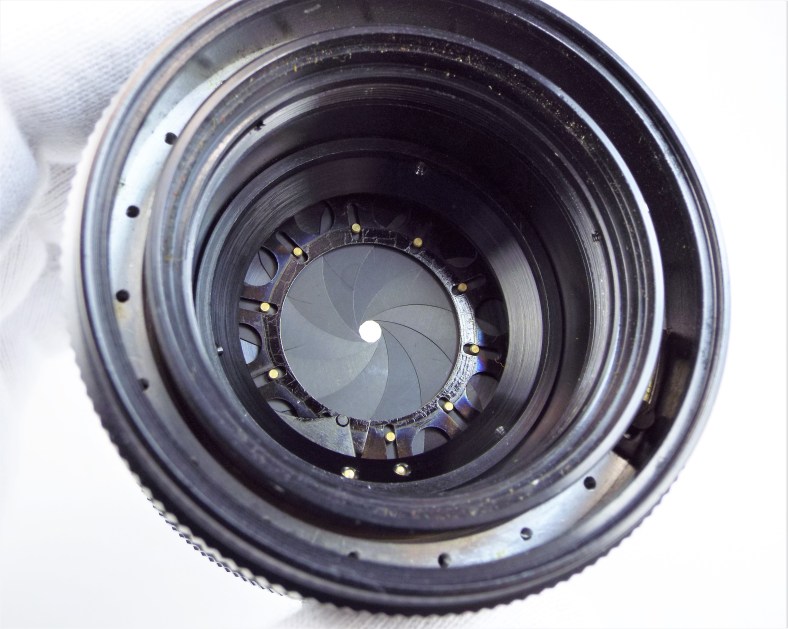
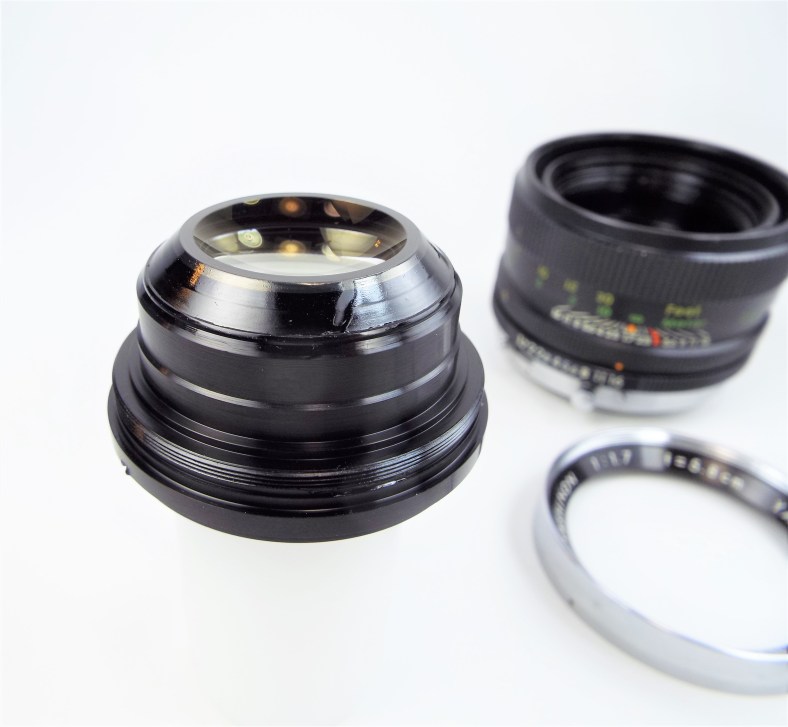
Here’s a peek inside of this lens –

DSCF6345

It features quality construction throughout and what we feel is another Zunow cue, 10 aperture blades. The Tomioka f/ 1.8 5.5cm lens for the original Pentamatic has only 6 blades. We’ve yet to take one apart (soon).

DSCF6328

Pictured above is the f/ 1.7 5.8 Pentamatic II lens with its 10 aperture blades. Below, the front lens group removed from the lens barrel.

DSCF6349

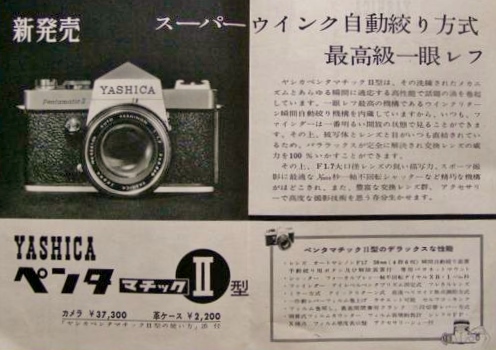
Original sales brochure (below) dated February 1961 featuring the Pentamatic II and its very unique lens.

600x450-2015111900010

Is All of This Enough to Prove a Connection to Zunow?

No of course not. Our claim is a merely a starting point for further discussions and discoveries. We hope to disassemble the Tomioka f/ 1.8 5.5cm lens that was made for the first Pentamatic and compare it to this f/ 1.7 5.8cm lens for the Pentamatic II. By the way, the Pentamatic II was only available for sale in the domestic markets in Japan. There’s no evidence that it was ever exported. We do know that Zunow Optical and Yashica did have a working relationship by the mid 1950s with Zunow supplying high quality D mount cine lenses for Yashica’s 8mm movie cameras (see below).

yashica zunow cine lens (2)

Thanks for your visit! Comments are always welcome and your input is important to us. This post is designed to stimulate discussion as to the validity of our assertions. Heck, we may have missed significant clues along the way that would either prove or disprove our claim.

By the way. A special shout out to my good friend and fellow Yashicaphile, Paul Sokk! Our frequent correspondence on this subject first planted the seed that this lens could have been made by Zunow. Paul rightly reminded me that the bankruptcy of Zunow in January 1961 coincided with Yashica stopping production of the Pentamatic II. Yashica is thought to have acquired Zunow after that and one would assume all of Zunow’s assets and debts.

Chris

Be sure to stop by our online store CC’s Studio Twenty-3 Eighty at https://www.ccstudio2380.com for some neat items of photographic interest! Thanks, C&C

“Is that a Zunow on your Lynx?” Connections: Yashica and Zunow – do you have one?

The web is a wonderful place as we all know – But like anything in life, it can also be crawling with nonsense and ripe with inaccuracies. Digging through mounds of data requires tons of luck to weed out what’s important and what’s not.

Every now and then something really neat happens!

While surfing through some photography blogs from Japan, I stumbled upon a seemingly casual and offhand comment about the Yashica Lynx. I read that there are some bloggers (from Japan) who have speculated that Yashica’s super popular Lynx 35 (released around May 1960) may have had two lens suppliers during its first half-year or so of production and that there may be a way to tell if your Lynx has a lens supplied by Zunow Optical or a lens made by Tomioka Optical. These Japanese bloggers (roughly 4 or 5) plus one eBay seller from Japan, claim to have read something somewhere online that a Lynx with a body serial number that begins with “NO. xxxxxx” has one type of lens and that cameras whose body serial number begins with a Lxxxxxxx” have a different lens. They’re not talking about the lens serial numbers, just the body numbers. Naturally I was intrigued by this so I wrote my Japanese eBay colleague and asked if he could provide some hard evidence to support his claim and to give me some insight as to why they would think that. What I got were links to what appears to be multiple bloggers copying one another – No references and no additional links. Still I pressed on. I scanned hundreds of images of Zunow and Tomioka lenses and poured over the details of dozens of Yashica Lynx cameras for sale on various auction sites. I even looked at every picture of the Lynx that are posted on Flickr. My conclusion? There’s something to this!
DSCF6264

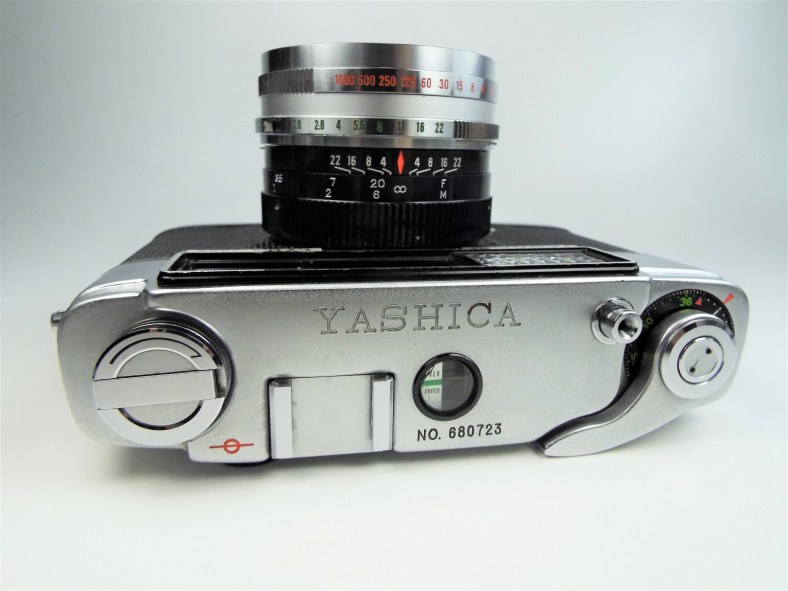
This Yashica Lynx was made in August of 1960 and it was the 723rd off the assembly line. This is our Lynx-1000 with the Zunow lens.

Why is any of this important? If it’s true that some of the Yashica Lynx cameras were delivered with a Zunow made f/1.8 4.5cm lens vice the more common Tomioka made f/1.8 4.5cm lens then that would make the Zunow-Yashica Lynx more valuable to collectors. Why? Rarity could be one factor. The biggest reason is because Zunow lenses (across the board) enjoy a cult-like following from collectors and those in the know. It doesn’t make sense because although Zunow made some groundbreaking lenses (f/1.1 fast!) and some very expensive lenses (LTM) they also made simple and inexpensive lenses for 8mm movie cameras and 35mm fixed lens rangefinder and viewfinder cameras too.

DSCF6265

Zunow lens on our Lynx-1000. Many unique features – Fully grooved focus ring without a focus lever. Simple “F / M” for feet and meters. Scale begins with 20 feet vice a typical 30 feet.

Could a Yashica Lynx with a Zunow lens outperform its Tomioka equipped cousin? Should it be worth more?

I can’t answer the first question as I’m not a techie when it comes to lens performance and the final image that a lens produces is subject to an individual’s taste and preferences. The second part I can offer something of an answer. It should be worth more as it appears that Zunow equipped Lynx cameras are few and far between compared to the much more common Tomioka versions.

 Making the Case For Zunow

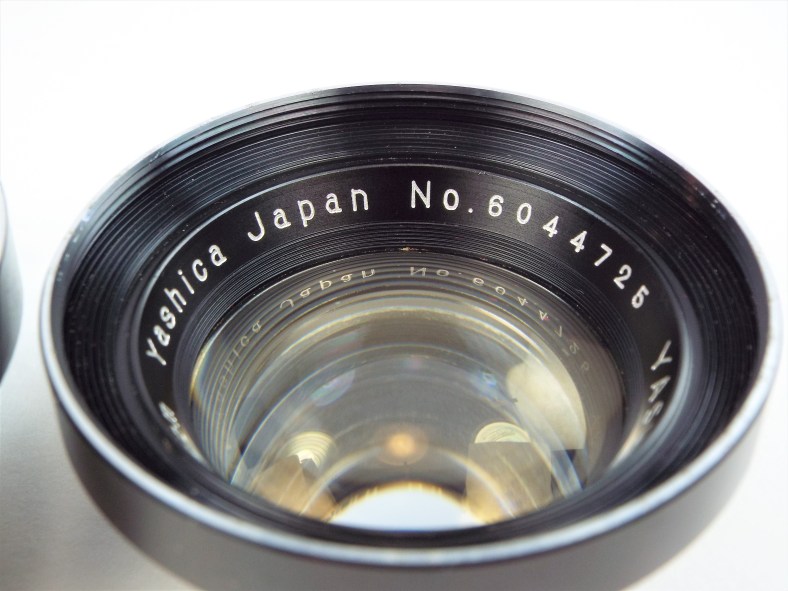
So how can you tell if you have a Zunow lens on your Lynx? Number one and the single most important thing is your Lynx must have a body serial number that begins with “NO. 6xxxx or x” AND have a lens serial number that begins with “No3xxxxx”. You must have both. The biggest clue to it being a Zunow made lens is the lens serial number. Zunow throughout its short history almost always used the “No” to begin its numbers. It didn’t matter who the lens was made for or if it was a Zunow branded lens – The “No” is the clue. If your lens has this type of serial number then you have a Zunow.

DSCF6273

A Zunow lens on the left and a Tomioka lens on the right. Note the simple differences in the two serial numbers.

DSCF6274

Close-up of the Zunow lens. The serial number will always begin with “No” and then 6 or 7 digits beginning with “3”. Also note the style of the “a”.
DSCF6275

Close-up of the Tomioka lens showing a typical Tomioka (and Yashica) style serial number. Note the style of the “a’.

Examples of other Zunow Lenses

Here’s an example of a Zunow lens (below) for the Miranda T. – Same Zunow style serial number.

zunow26 miranda t

This is a 1956 Miranda T. Notice the fancy “f” in “f=5cm”. That was typical for Zunow in the first half of the 1950s. Sharp eyed readers will notice a small wrinkle in my theory. Look at the way “Japan” is written on this Zunow Miranda T lens and then compare it to the way “Japan” is written on the Tomioka Lynx lens above. Pretty darn close… But, both “a’s” in “Japan” are slightly different. Whew!

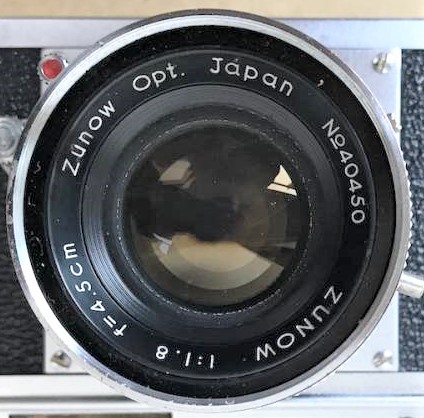
Here’s another example (below) of a Zunow lens on a Neoca-SV from around 1959 or so.
entrelanuit-img1200x900-15057119537pansp7862

This is essentially the same lens as the Lynx lens. Note the style of the “a”.

How to Tell Internally Between Zunow and Tomioka

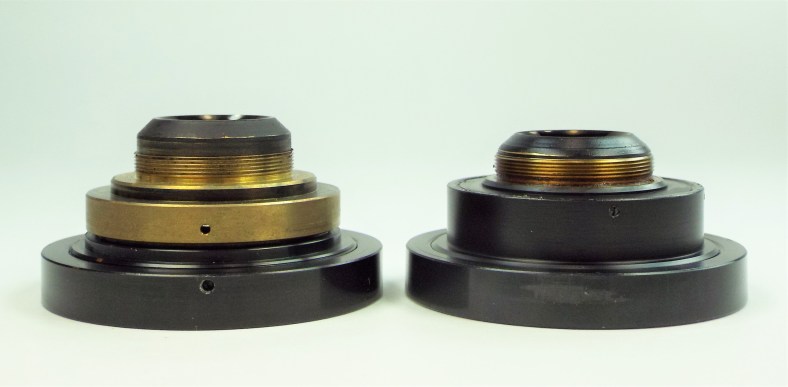
The lens of the left in the image below is the Zunow – on the right is the Tomioka. It’s fairly obvious that there’s significant differences between the two lens designs and some very similar design cues too. We admit that up to this point, these are the only two Lynx lenses that we’ve taken the front lens group out of the lens barrel. ***We don’t intend to keep purchasing additional Lynx cameras with the two different style lens rings to see if they’re all like this. We would encourage our readers to do so with their Lynx and to be so kind as to share their results with us.

DSCF6276

The Zunow lens (left below) is about 3mm taller than the Tomioka lens on the right.
DSCF6279

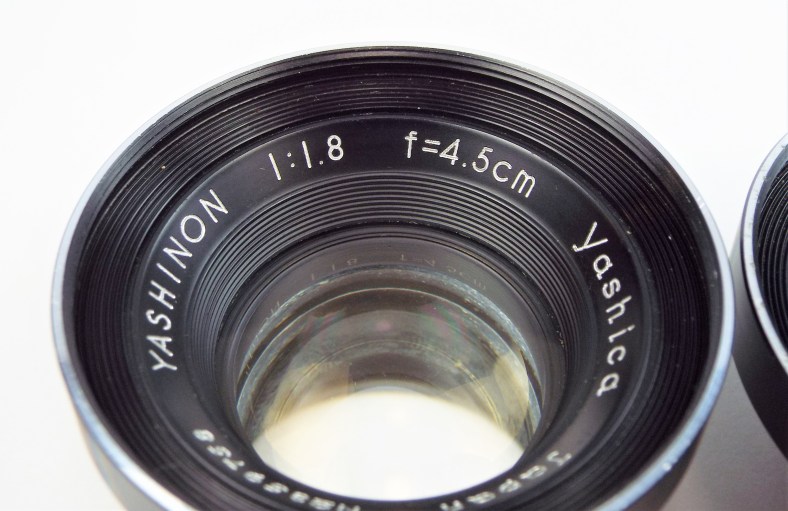
A close-up of the Zunow pictured below reveals a very distinct lens design. For lack of better terms, it is taller and more angular.

DSCF6281

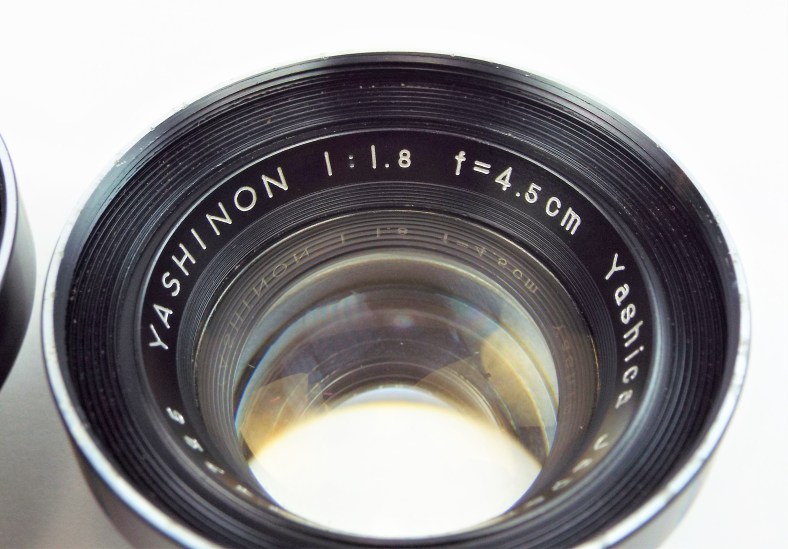
Tomioka lens close-up (below). For lack of better terms it’s obvious that the lens is shorter and more rounded.

DSCF6282

A close-up of the Zunow front lens ring (below) shows a consistent height to the numbers. A typical Zunow feature and common to others as well.
DSCF6284

A close-up of the Tomioka lens (below) shows a definite “high-low” style in the numbers. Small “8” and “5”. That same style is seen on some of Tomioka’s other lenses and it maintains this same style on this lens long after Zunow closed in early 1961.
DSCF6285

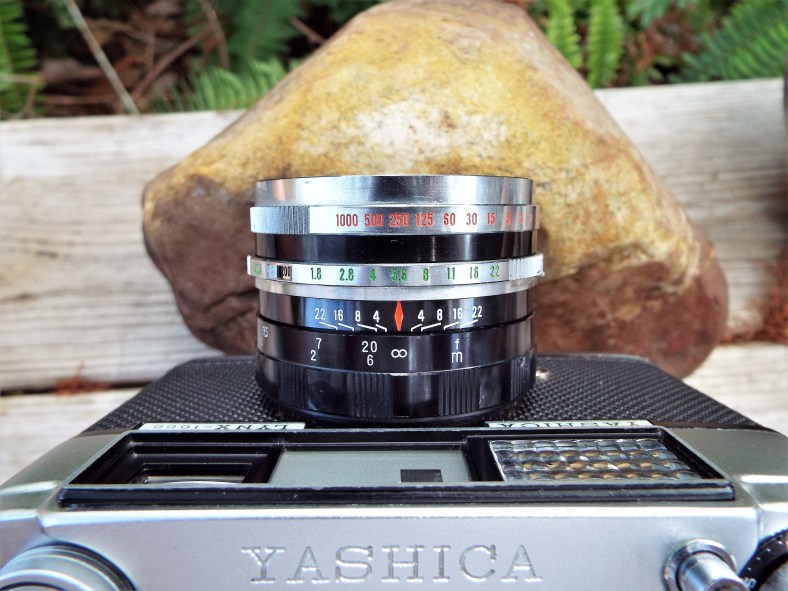
Here’s our other Yashica Lynx (below). This one was made in July 1962 and it was the 1,184th made that month. Yashica reset the serial number sequence at the start of each month during this period. Many thanks to my friend Paul Sokk for that decode! 

DSCF6315

DSCF6309

L = Lynx and “2071184” decodes to: 2 = 1962, 07 = July, 1184 = 1,184th made that month.
DSCF6312

So in Summary

The easiest way to know if your Yashica Lynx-1000 has a lens made by Zunow is to check the lens serial number found on the front lens ring. If the serial number looks like this one below then you have a lens made by Zunow Optical for Yashica.

DSCF6274

If the serial number looks like the lens ring below, then your lens was made by Tomioka Optical for Yashica. Tomioka was at this time Yashica’s number one supplier of lenses going back to Yashica’s earliest days.

DSCF6275

This is a bold statement on our part and a pretty exciting discovery too. We never want to mislead anyone and certainly we wouldn’t post this if we weren’t sure of our conclusions.

If you find that our post doesn’t hold water, let us know and share your input and support for your theory. We’re always looking to discover something new and exciting.

Many thanks!

Chris and Carol


Yashica Lynx – the ‘Wildcat’ in Yashica’s den!

We haven’t paid much attention to rangefinder cameras here on the “Fanatic” – it’s not that we don’t find them interesting – quite the opposite, many rangefinder cameras associated with Yashica are groundbreaking and historically significant and are worthy of further research.

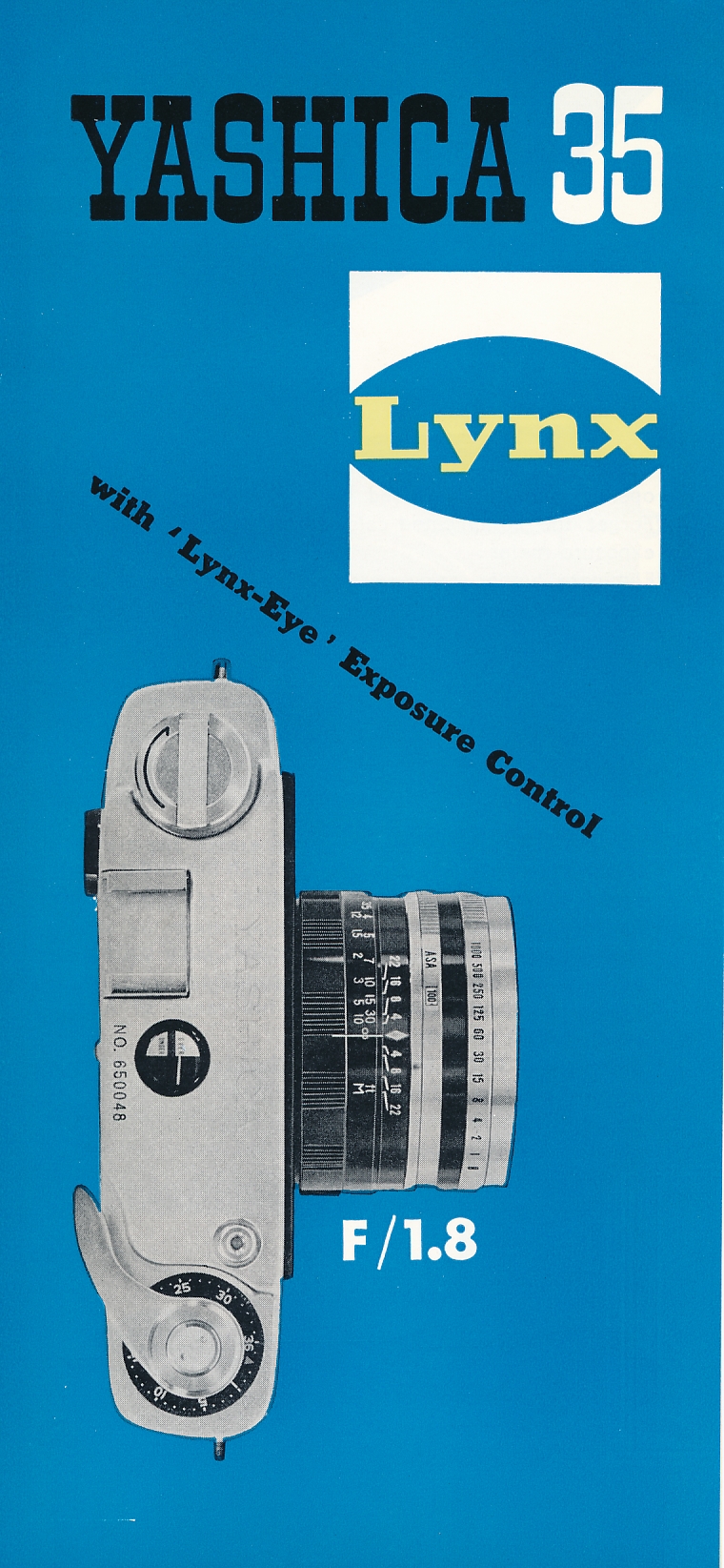
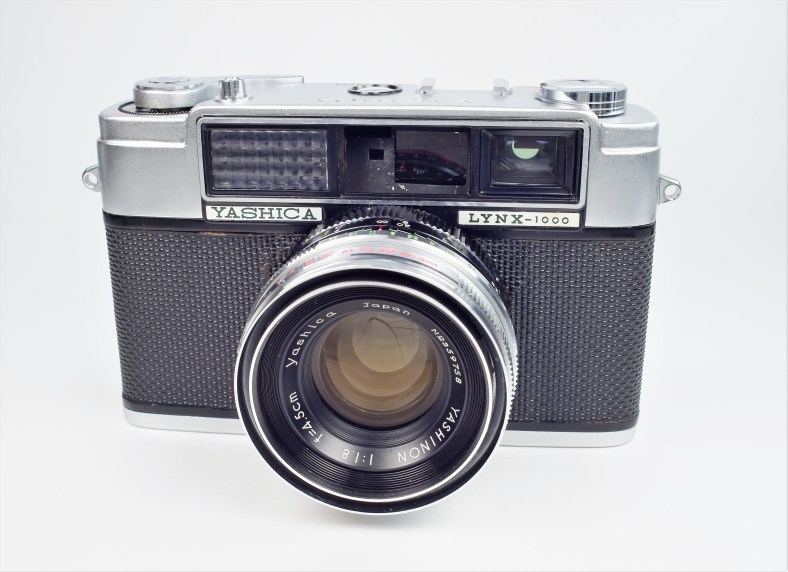
The Yashica Lynx – aka the Lynx-1000. It was the first in a long line of successful fixed-lens rangefinder cameras from Yashica in the early 1960s. The first Lynx was made in May 1960 based on the serial number of the camera in an early sales brochure (in English below).

IMG_20170930_0001

We find early sales brochures extremely helpful when attempting to place a date of production of a camera. In this case, the serial number NO. 650048 would indicate that the Lynx was first produced in May 1960 (6 = 1960, 5 = May, 0048 = number 48th made).

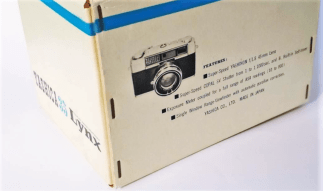
This early box (below) confirms that Yashica referred to the camera as just the Lynx vice Lynx-1000 when it was first released. The success of the Lynx paved the way for the subsequent versions of the camera.

Yashica Lynx Box

Yashica Lynx Box 1


We decided to get a Lynx mainly because of the reputation of its fast Yashinon f/1.8 4.5cm lens. The Lynx we received (below) has a working shutter and super clean glass. The camera’s exposure meter does not work which is typical for these nearly 60-year-old cameras.

DSCF0267

An overall clean example but missing an important piece – the rangefinder window is obviously missing with some damage visible to the internal pieces of the finder (top center above the lens).

DSCF0268

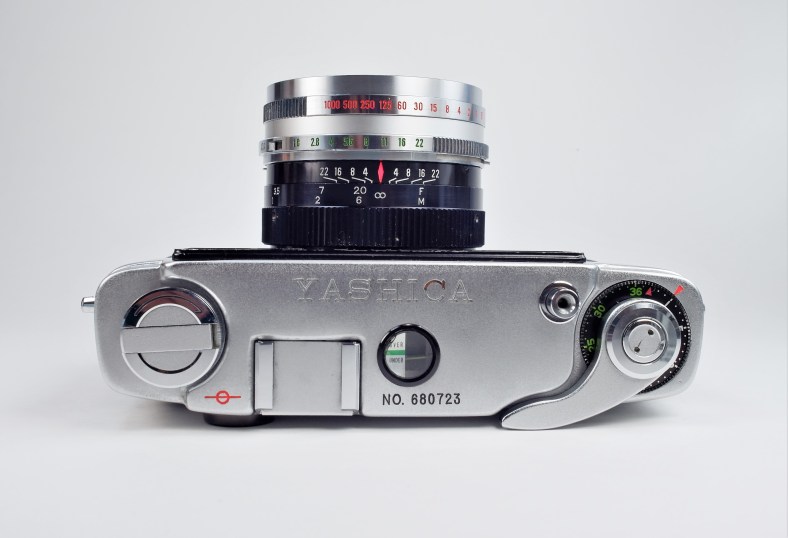
Our camera was produced in August 1960 and was the 723rd made.

DSCF6268

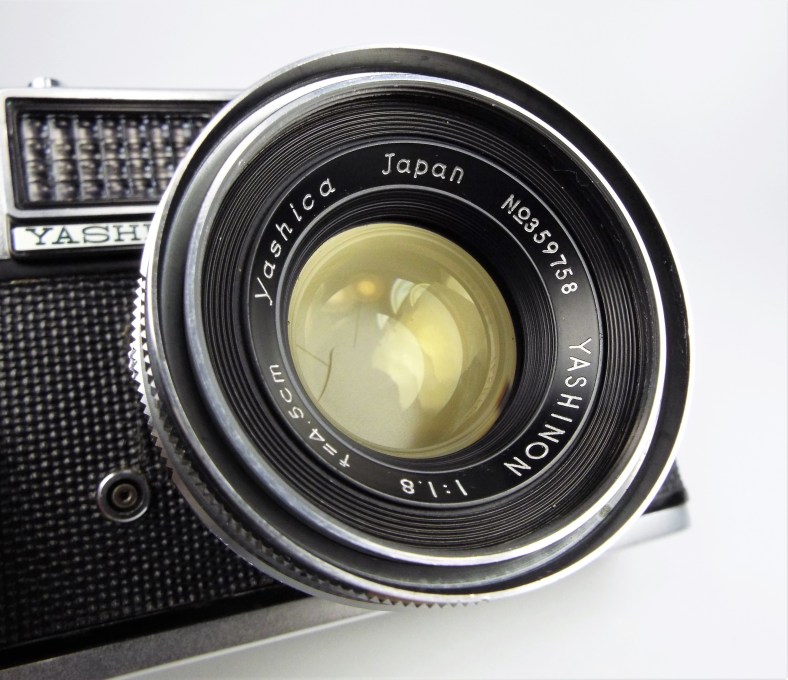
This lens (our camera) features a unique serial number (only 6 digits long) and is in a font that’s not consistent with earlier versions or versions that came later. We feel that this type of lens was made by Zunow Optical vice Tomioka Optical.

The lens on the Yashica Lynx has earned high praise and its reputation amongst photographers is top-notch. For the time period having a fast f/1.8 aperture combined with a leaf shutter (Copal-SV) with a top speed of 1/1000 second was a nice feature in a low-cost rangefinder.

***There is some chatter on more than a few Japanese blogs that some of the earliest lenses for the Lynx were made by the Zunow Optical Company. The majority of the lenses were made by Yashica’s normal lens maker, Tomioka Optical of Tokyo. No verifiable references or links are given in these Japanese blogs as to the source(s) of this claim – it would appear that at this time it may be a case of one blogger makes the claim and others simply followed suite. We’re not disputing these claims, in fact, we’re intrigued by them and have set out to either prove or disprove them. Zunow has an interesting place in the Japanese camera industry of the 1950s. In early 1958, Zunow made one of Japan’s first modern 35mm SLR cameras with a semi-automatic lens and instant return mirror. Interestingly the Zunow 35 and the Yashica Pentamatic 35 (Yashica’s first 35mm SLR –  1959) share a related look and design style that goes beyond coincidence. More on this in another post.

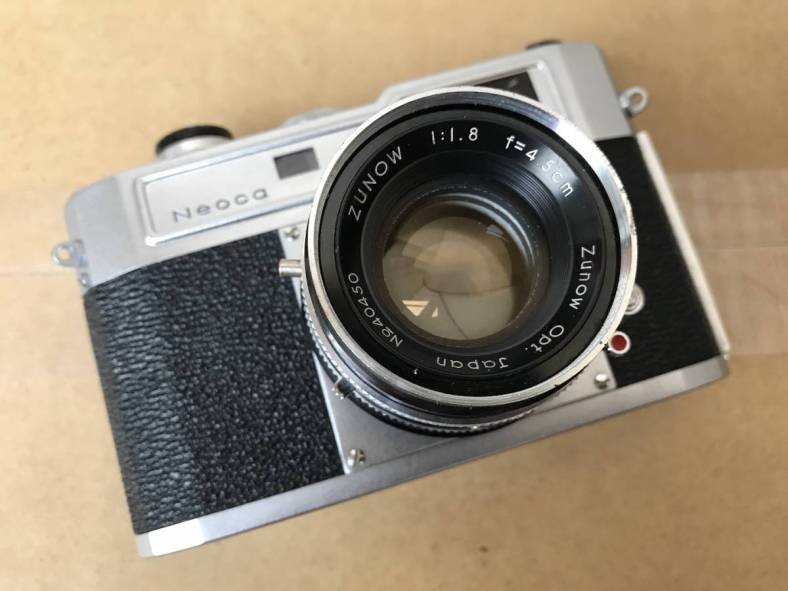
Back to Zunow Optical and the possible connection to the Lynx. Below is an example of a very similar looking f/1.8 4.5cm lens from Zunow made in about 1959 and was fixed to the Neoca-SV.

entrelanuit-img1200x900-15057119536ljzb37862

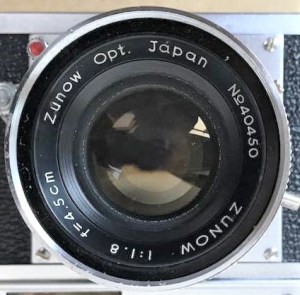
Zunow f/1.8 4.5cm lens on the Neoca-SV. Compare the lens ring font with the font on the Yashinon lens pictured earlier in this post. To us, these were made by the same manufacturer.

One of the biggest clues for us that some of the Japanese bloggers claim that Zunow and Tomioka made the lenses for the Lynx are the similarities of the serial number fonts. The lens with the serial number No 40450 (Zunow pictured above) is in the same style as the serial number on our Yashinon lens (No359708). We have another Lynx headed our way with what we feel is a Tomioka version of the lens. We’ll take both lenses apart to see if there are differences in the design.

Thanks for stopping by! If you have additional information about anything we’ve blogged about please feel free to contact us. We’re never too old to learn something new!

Chris and Carol ^.^
entrelanuit-img1200x900-15057119537pansp7862

Zunow lens on the Neoca-SV

DSCF6263

Zunow? lens of the Yashica Lynx.


Yashica Pentamatic I & II – 1960

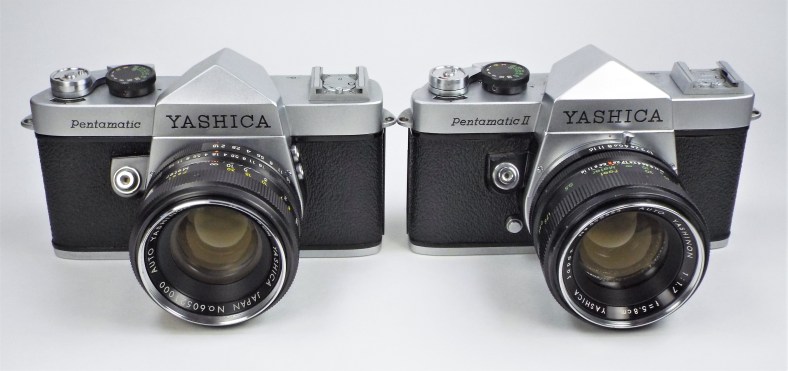
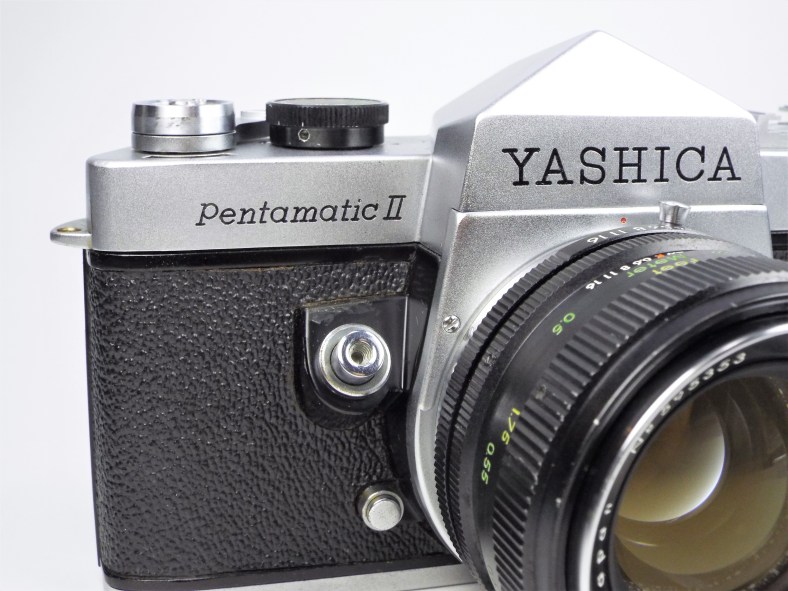
The original Pentamatic ’35’ and the Pentamatic II. The original Pentamatic made its debut in March 1960 and was first available for sale in  April 1960 (production started in December 1959). The Pentamatic II was rushed into production in August 1960 and was only for sale in Japan. The only change between the two cameras… was the lens!

DSCF6259

The P1 (left) came with the Auto Yashinon f/1.8 5.5cm lens. The P2 (right) came with the Auto Yashinon f/1.7 5.8cm lens. The goal of Yashica was to improve on the semi-automatic operation of the lens over the standard lens on the P1.

DSCF6256

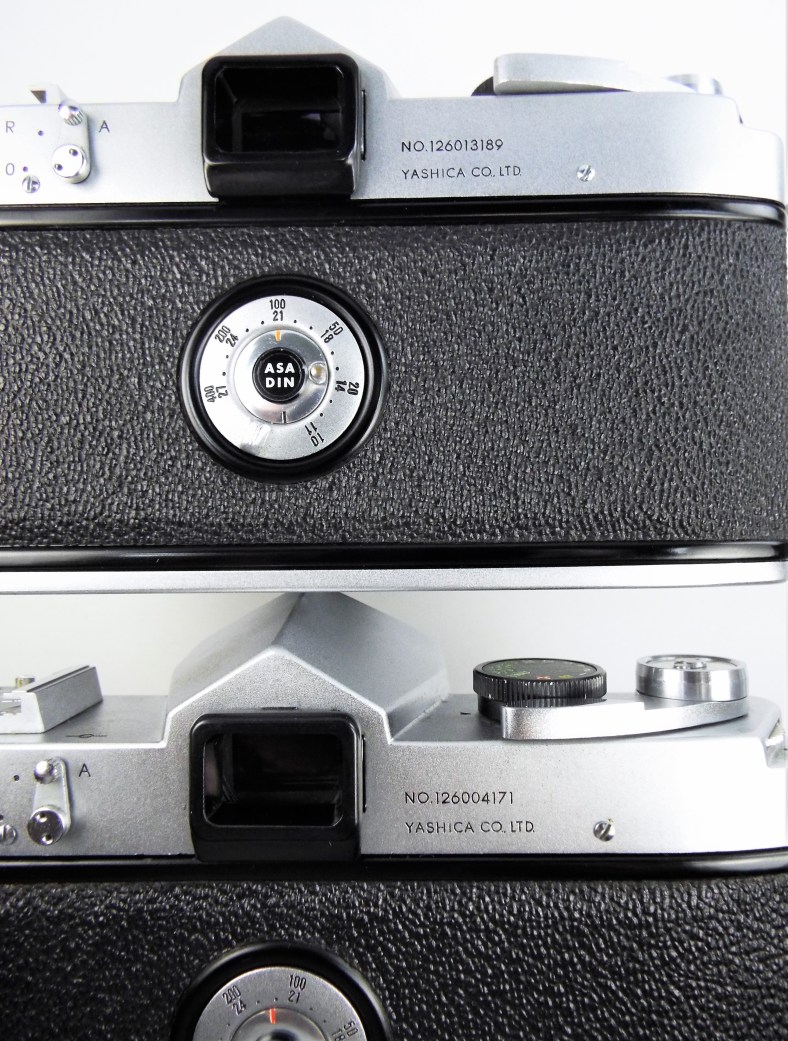
Serial numbers. The SN on the top camera is on the original Pentamatic camera body. The number, NO. 126013189 contains a date code and production sequence number. This camera was made in December 1960 and was the 13,189th camera made. The bottom camera’s serial number (Pentamatic II), NO. 126004171 decodes to: December 1960 and it was the 4,171st made since August 1960 (the start of production on the P2). 

So both of the cameras were in production at the same time in the same factory. We’re highly confident in our analysis of the serial numbers. We have enough examples in our database and enough experience in decoding Yashica serial numbers to say that we are 100% correct.

DSCF6248

The whole process of releasing the Pentamatic II was rushed – the top plates were only slightly modified to accommodate squeezing in the “II”. The engraving was moved about 1 mm to the left so as to have room to engrave the “II”. On the back of the camera it only took a change in the serial number engraving to reflect the P2.

The Pentamatic II didn’t get any upgrades to the body… no self-timer and no hot shoe. The lens is a totally different lens and we’ll cover those differences in our next post.

Thanks for your visit!

Studio Camera: Fujifilm FinePix S9900W

Chris