Hallmarks on early Japanese leather camera cases

1953
After 6 decades of use, this leather case for the Yashima Flex TLR camera stands strong. It is relatively rare to see a Yashima-branded item outside of Japan; this represents the first time Yashima used its name on a case.
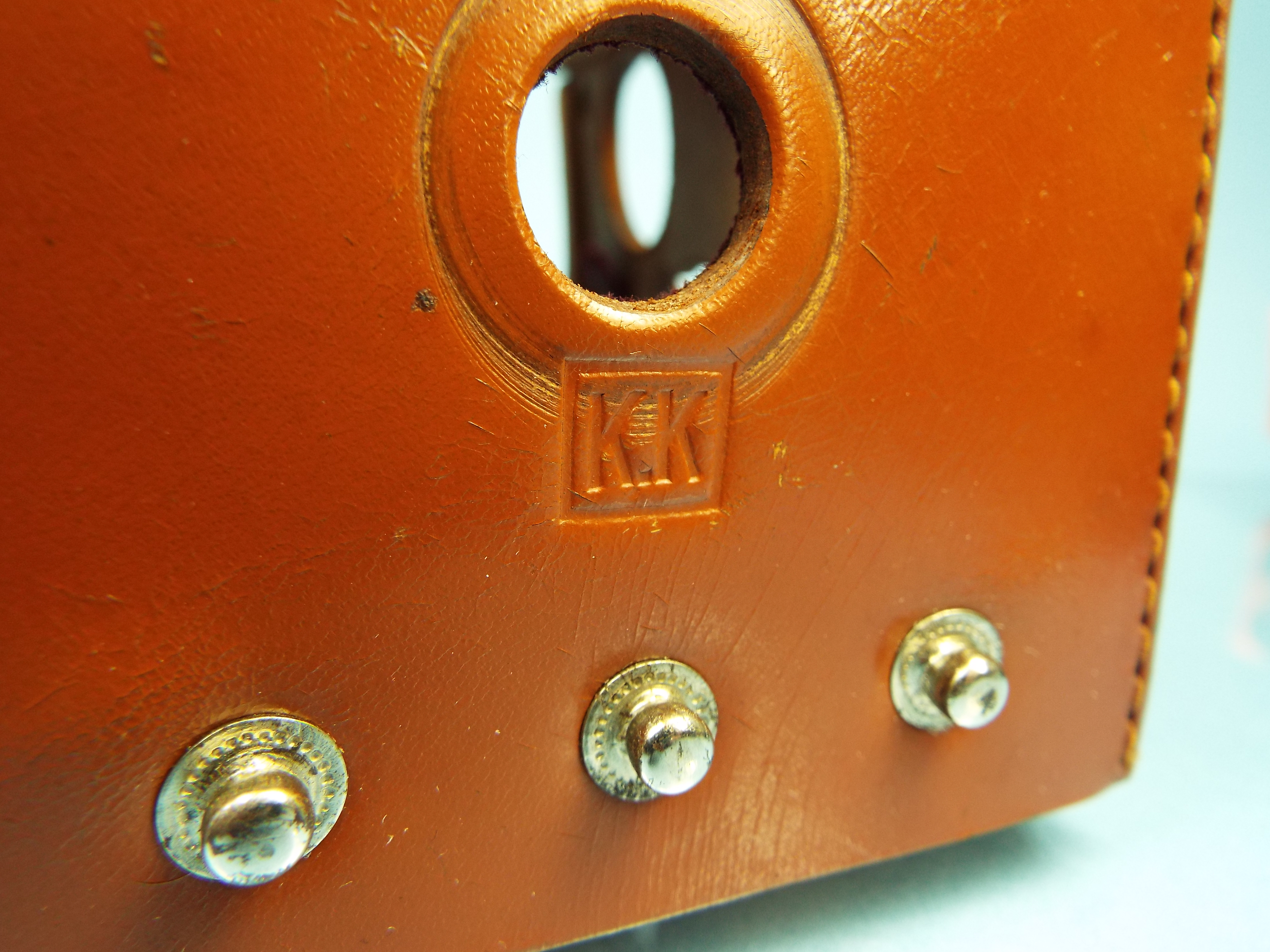
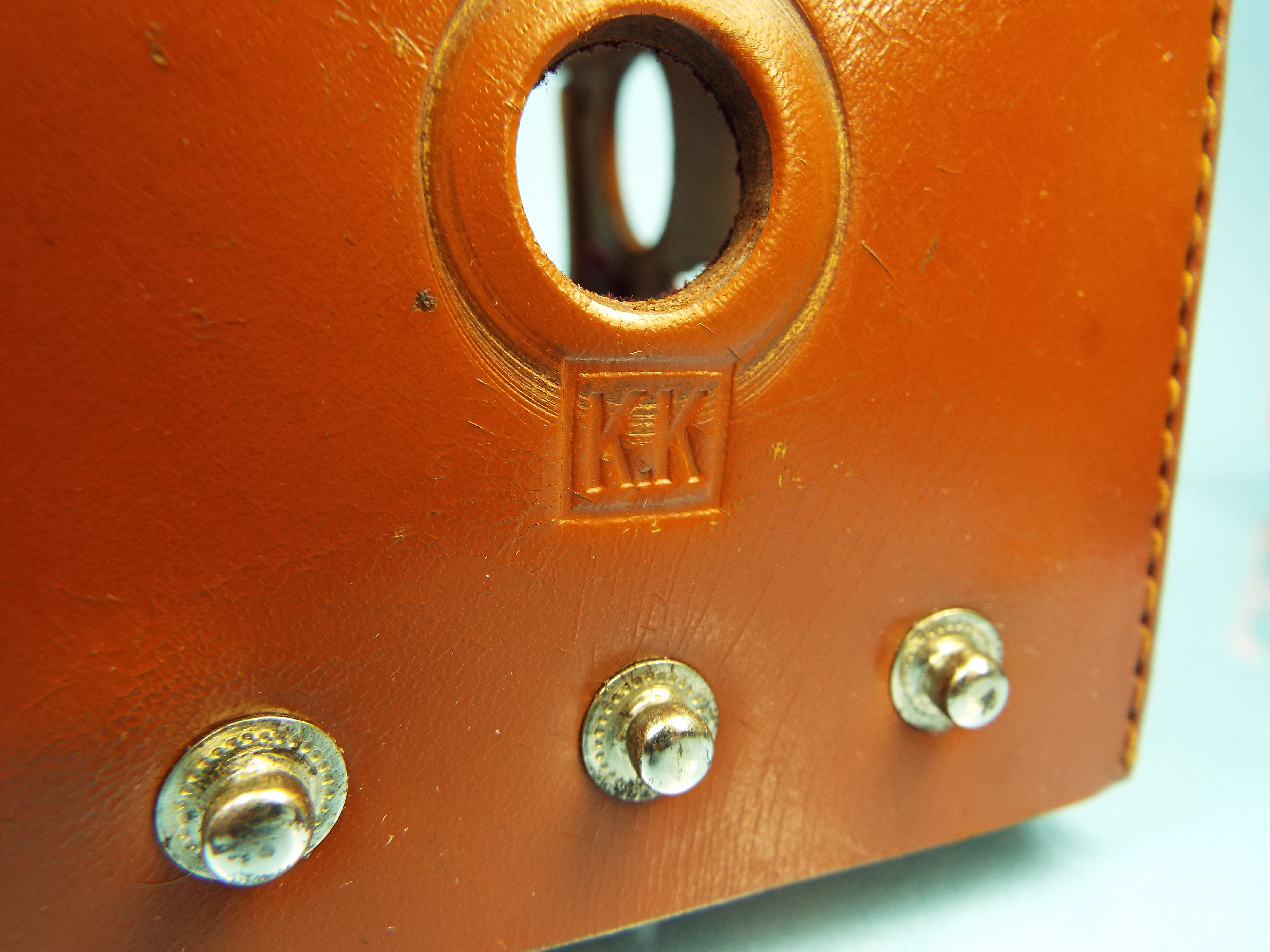
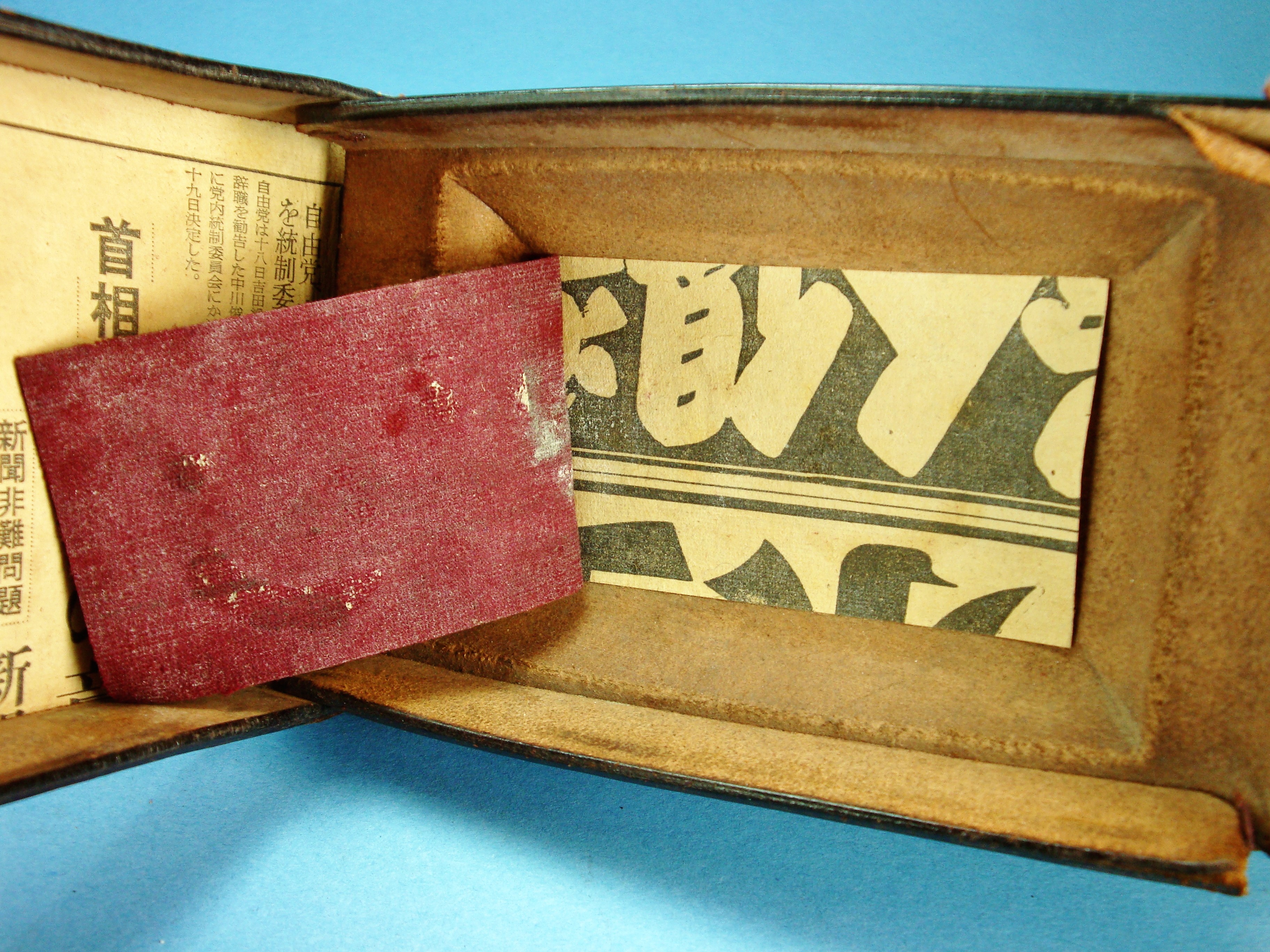
I don’t believe Yashima-Yashica made their own leather cases. As a start-up company back in the early 1950s, Yashima and other camera manufacturers likely contracted outside companies to make their leather cases and branded goods so that they could focus on their core activities. Many of these early cases have distinct markings on the bottom, indicating the hallmark of the company that produced it.

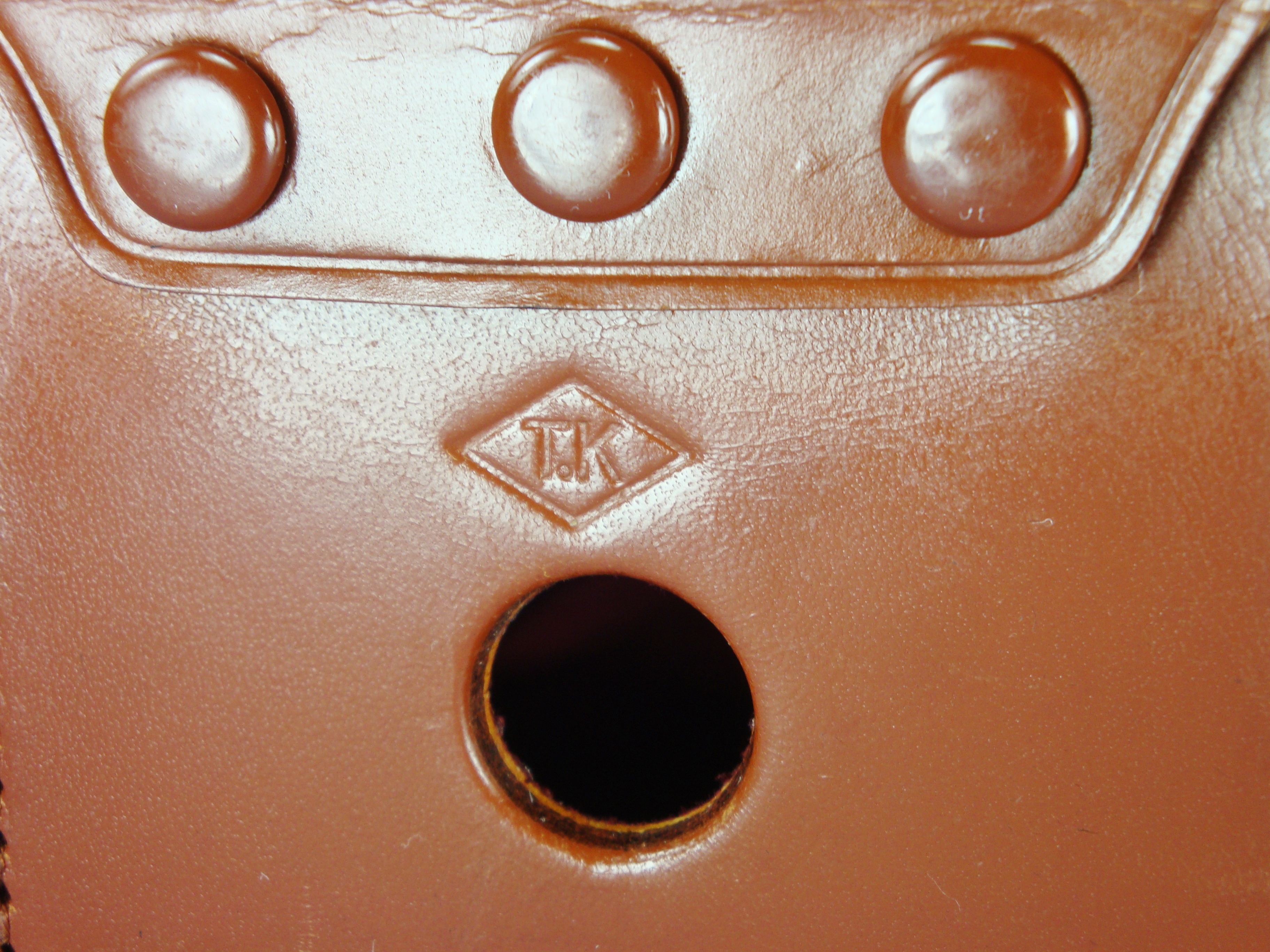
From 1953, a beautiful example of a Yashima leather case.
An early example of a hallmark on the bottom of the case.
Another hallmark.

I have a few additional examples in my collection – time to dig them out and photograph them. Have you seen a Japanese leather case with what appears to be a hallmark? Please, share if you do. Thanks for stopping by, Chris

Follow me on Instagram at @ccphotographyai

Comments are always welcomed as I’ve learned quite a bit from reader feedback. As always, thanks for stopping by, and while you’re at it, feel free to visit my camera shop at http://www.ccstudio2380.com (CC Design Studios hosted by Etsy). – Chris Whelan

Please respect that all content, including photos and text, is this blog’s property and its owner, Yashica Pentamatic Fanatic, Yashica Sailor Boy, Yashica Chris, Chasing Classic Cameras with Chris.

Copyright © 2015-2024 Chasing Classic Cameras with Chris (Yashica Pentamatic Fanatic), Chris Whelan
All rights reserved.

Yashima YashicaMat – 1957

Yashicamat, Yashica-Mat, YashicaMat – they’re all the same camera, and as was typical for Yashima (later Yashica) they had a difficult time staying consistent when it came to the way they named their cameras. At this point in time, Yashima had only been around since 1953 so I’ll cut them some slack. By 1958, Yashima became Yashica as the company adopted the name of its cameras.

So here is a super early sales brochure (Spring 1957) for the new YashicaMat 120 roll film twin-lens reflex (TLR) camera, the YashicaMat.

High-res scans are posted below from my own brochure.

Front cover.

What I find interesting is that the camera that’s depicted is the very first version of the model with a 75mm Lumaxar f3.5 taking lens (bottom lens) that were only available for a very short time before being replaced by the lens described in the brochure – 80mm Lumaxar f3.5 lens. There’s no written history to definitively know why the change was made so quickly or why they switched at all. It’s possible Tomioka Optical had difficulty providing enough 75mm lenses to meet the production demands of Yashima.

Inside centerspread. Look closely and you can just barely see 75mm on the bottom portion of the lens retaining ring (bottom lens). Both lenses say Lumaxar with the viewing lens (top lens) the clearest of the two.

Back cover scan below.

Back cover. Yashima’s camera line-up as of early 1957 (newest models).

If you look closely at this back cover you can see Yashima’s full corporate name – Yashima Optical Industries, Company, Limited, and their headquarters were located in Shibuya in Tokyo. The factory was in Suwa, Nagano Prefecture, and later Shimosuwa.

Thanks for stopping by and if you chase down a nice Yashica-Mat that you like be sure to check out my good friend Paul Sokk’s excellent TLR site at http://www.yashicatlr.com to learn more about the camera that you’re about to purchase. – Chris

Comments are always welcomed as I’ve learned quite a bit from reader feedback. As always, thanks for stopping by, and while you’re at it, feel free to visit my camera shop at http://www.ccstudio2380.com (CC Design Studios hosted by Etsy). – Chris Whelan

Please respect that all content, including photos and text, is this blog’s property and its owner, Yashica Pentamatic Fanatic, Yashica Sailor Boy, Yashica Chris, Chasing Classic Cameras with Chris.

Copyright © 2015-2022 Chasing Classic Cameras with Chris (Yashica Pentamatic Fanatic), Chris Whelan
All rights reserved.

Buy Me A Coffee

Yashica’s first 35mm camera – 1958

63 years of dirt. Here’s the before image of my recently acquired Yashica 35 by Yashima. It was made in April 1958 which makes it one of the earliest known examples of this historic camera. Sharp eyed viewers will also notice that the lens says Yasinon vice the name that was eventually used, Yashinon.

Nice and clean now. This one was assembled in April 1958 at Yashima’s Shimosuwa factory on the shores of Lake Suwa, Nagano Prefecture, Japan.

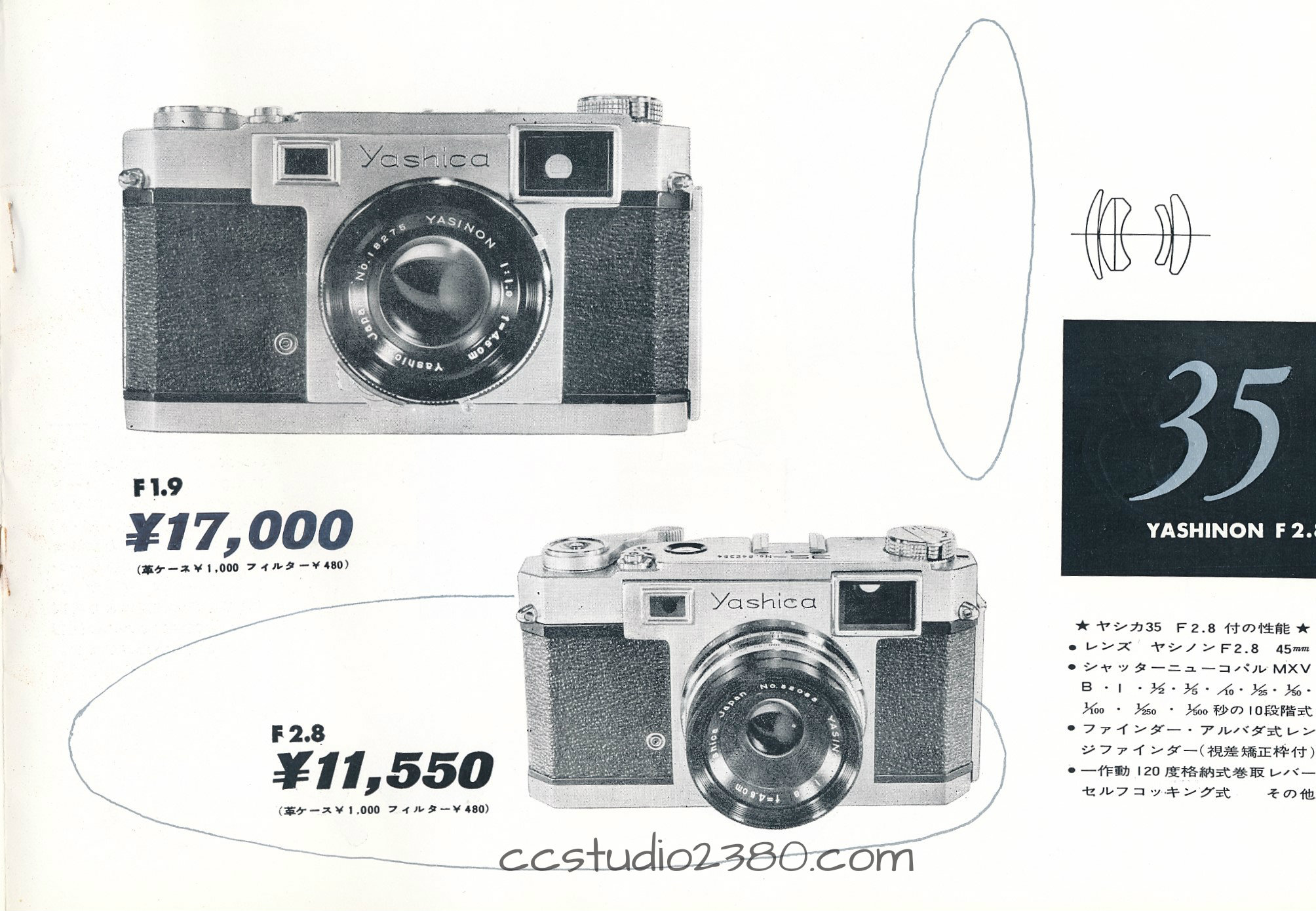
This one features the Yasinon (vice Yashinon) f/1.9 lens. It’s one of the earliest known examples still in the wild.
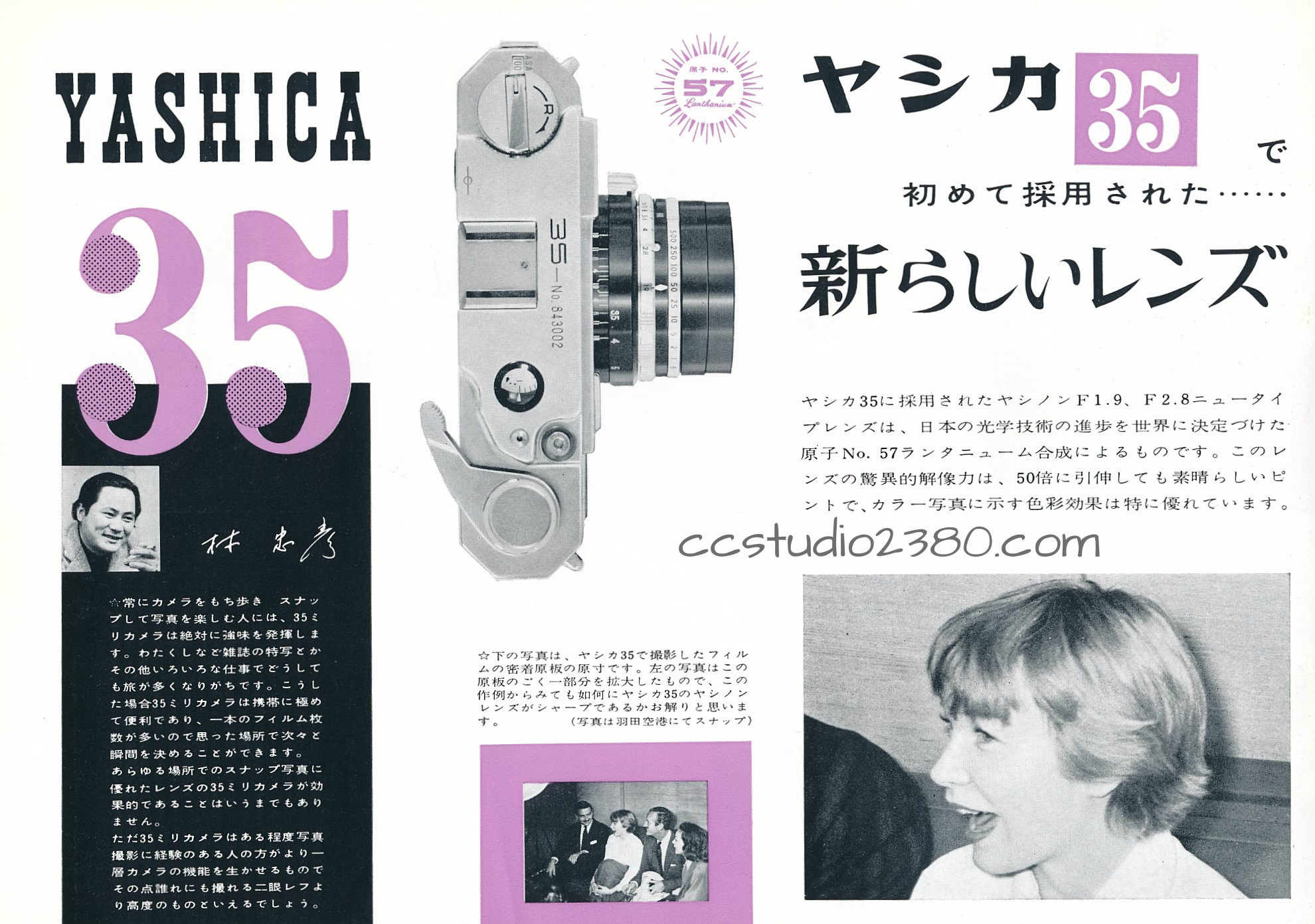
Earliest known advertisement.

Comments are always welcomed as I’ve learned quite a bit from reader feedback. As always, thanks for stopping by and while you’re at it, feel free to visit my camera shop at http://www.ccstudio2380.com (CC Design Studios hosted by Etsy). – Chris Whelan

Please respect that all content, including photos and text, are the property of this blog and its owner, Yashica Pentamatic Fanatic, Yashica Sailor Boy, Yashica Chris, Chasing Classic Cameras with Chris.

Copyright © 2015-2021 Chasing Classic Cameras with Chris (Yashica Pentamatic Fanatic), Chris Whelan
All rights reserved.

Buy Me A Coffee

SUNday Spotlight! – Pigeonflex

Hello all! Happy Sunday and thanks for stopping by.

Before Yashica was Yashica they were Yashima and Yashima’s first camera was the oddly named Pigeonflex.

pigeonflex with dirt

Proudly displaying 67 years of dirt, dust, soot, and grime. I’ve since cleaned it up (which was super fun) and as you see it here it was fully working! Credit goes to those talented craftspeople in Suwa, Nagano Prefecture, Japan those many decades ago.

I purchased this from a Japanese seller from Hokkaido, Higashi-ku, Sapporo, Japan a few years back.

pigeonflex full dirt

Yashima’s Pigeonflex Twin-lens Reflex (TLR)

A short two years later, this was the first camera from Yashima to carry the Yashica name – confused yet?

yashicaflex s 1955

Yashica Flex S from 1955

Have a beautiful day and be sure to stop by my camera shop hosted by Etsy at http://www.ccstudio2380.com – Chris

Please respect that all content, including photos and text, are the property of this blog and its owner, Yashica Pentamatic Fanatic, Yashica Sailor Boy, Yashica Chris.

Copyright © 2015-2020 Yashica Pentamatic Fanatic, Chris Whelan
All rights reserved.

Vintage View

Happy Saturday!

Digging through some archived pics I came across this one.

14940004703_3a4161c383_o (1)

Thanks for stopping by! – Chris

Please respect that all content, including photos and text, are the property of this blog and its owner, Yashica Pentamatic Fanatic, Yashica Sailor Boy, Yashica Chris.

Copyright © 2015-2019 Yashica Pentamatic Fanatic, Chris Whelan
All rights reserved.

Yashica Flex AS-II by Yashima Optical

One of the original group of 6 cameras that Yashica (Yashima Optical Industries Company, Ltd.) made in the early to mid 1950s. This AS-II was introduced in 1954 and featured a built-in (well, attached) light meter. They’re solid cameras these early Yashica TLRs, and in our opinion, had some underrated features as well as great lenses. The light meter was made by Sekonic by the way.

20150105_155611

Yashica Flex AS-II with built-in light meter (just visible on the camera’s left side). The light meter’s cells were located under the nameplate and were exposed by lifting up the nameplate flap.

20150105_155832

The AS-II featured Yashimar lenses that were made by Tomioka Optical for Yashica. A Copal shutter with a blazing fast 1/200 top speed!

If you’re in the market for a vintage Yashica TLR then the AS-II should be on your list. Be advised that most will not have a working light meter – if you get one with one it’s a bonus. They are a bit hard to find – 63 year old cameras don’t often look this good or work perfectly. We were lucky as we were able to purchase this one from a collector in the US for a reasonable price.

Taken on the US Post Office steps in downtown Fernandina Beach, Florida. The post office dates to 1911.

Camera: Samsung Galaxy S4

Chris

Yashica Moves to a New Factory 1972

We’ll be the first to admit – not an exciting title or topic for a blog. It may even be a stretch for a blog named the ‘Yashica Pentamatic Fanatic’. But we feel compelled to share information about the Yashica Company, however slight and trivial, with our dear readers.

Yashica’s first factory was along the shores of beautiful Lake Suwa in the small town of Suwa. The next location (from Yashica brochures) was in Shimosuwa-machi, Suwa-gun, Nagano Prefecture. This was the industrial campus of Yashica and it grew over the years to occupy almost every square meter of the property.

Yashica's Shimosuwa Factory

Opened in 1956 along the shores of Lake Suwa in Nagano.

IMG_20151218_0008 (2)

A different view of the same campus. Yashica was running out of room by the mid-1960s.

IMG_20170404_0004

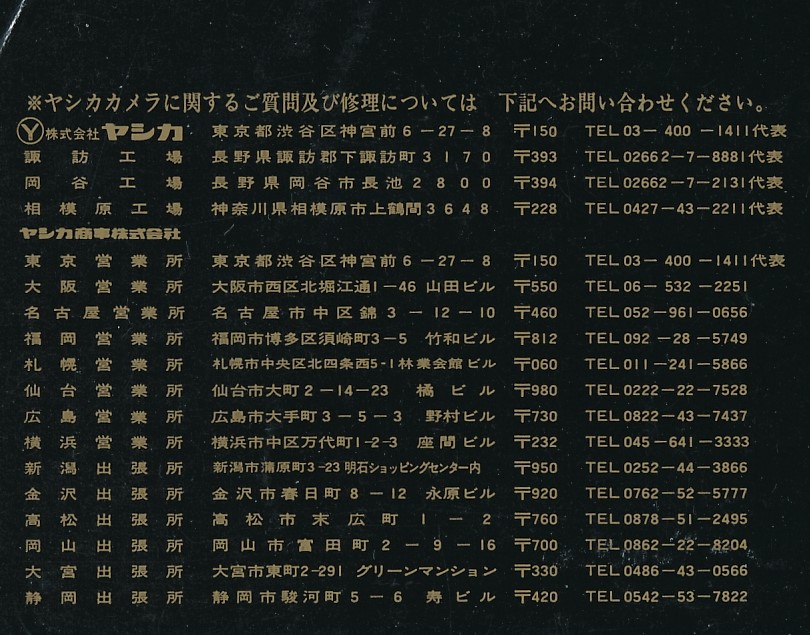
Back cover of the Yashica TL Electro-X ITS instruction booklet. The booklet was printed in Japan in June 1972.

At the time of the printing of the above book, Yashica was operating 3 factories. The top line that begins with the Yashica ‘Y’ on the far left is the address of the main headquarters of Yashica which was in Shibuya-ku, Tokyo. The next line is the location of the Suwa plant – Shimosuwa. The third line is the new plant in Okaya which was still in Nagano Prefecture. The 4th line was an unknown (to us until recently) factory in Sagamihara-shi, Kanagawa Prefecture (southwest of Tokyo and just west of Yokohama). As you can see, Yashica operated at least 14 other sales offices and service centers across Japan in mid-1972.

IMG_20170404_0005

Back cover of the Yashinon Lenses & Accessories booklet printed in Japan in January 1973.

Between June 1972 (the first book above) and January 1973 (the second book above), Yashica closed its campus and factory in Shimosuwa. The only factories listed are the new Okaya factory and the Sagamihara factory. That was a big move for Yashica and as we understand it, they had purchased the old silk mill in Okaya as far back as 1959. As of this book, Yashica did not close any of its other sales offices listed from the previous book.

DSCF9431

The factory was officially dedicated in December 1972. According to Yashica documents, the factory didn’t achieve full production until late 1974 or early 1975.

IMG_20190517_0001 (1)

The Yashica Okaya factory complex in the summer of 1974.

Why is any of this important? It isn’t unless you’re a Yashica Fanatic like us. Oh, it did have a strong ripple effect on the company though. Japan was in a bit of an economic slowdown in the early 1970s and it came to a head in late 1974 for Yashica. Mismanagement and embezzlement (and the costly move) caused Yashica to lay off workers – unheard of in Japan at the time. They closed the Sagamihara factory which put 900 Yashica employees out of work. That had an effect on the factory at Okaya and Yashica was soon in deep financial trouble. Their cameras were still top notch but the first warning shots about their future were fired.

IMG_20190517_0003 (1)

It is my understanding that Mr. Shiro Kaneko was installed as the new president of Yashica by the Nissho-Iwai Company (Yashica’s distributor) and by the Taiyo Kobe Bank which by 1974 had put its full financial resources behind Yashica’s new marketing efforts.

Thanks for your visit! Hope you got a little something out of it. – Chris


Yashima-Yashica Leather

A misleading title? We’re not sure. It’s doubtful that in Yashima’s early days of camera manufacturing, that they made their own leather case goods. They had plenty on their plate already – lens production (mostly testing), machining parts, pouring cast aluminum bodies, stamping out metal pieces and of course, putting it all together in a box and shipping it off to various Trading Companies and camera dealers around Japan and the world. Oh did we mention, inventing new camera designs too.

We believe that Yashima-Yashica had their leather case goods made by at least 4 different suppliers – each with their own maker’s marks stamped on the bottom of the case.

dscf3573

14946607129_6c99cdd8f3_o

16194486489_f9eb368a5a_o

Could the trademark be ‘Tomioka Kogaku’? In the early days of Yashima/Yashica, did they use leather cases made by outside companies? More than likely since they would not have had the facilities or skills to produce quality leather products in large quantities IMO.

26525674923_ebcb6d771f_o

This image is of the bottom of our Yashicaflex Rookie’s leather camera case. Some of the 1950s era Yashima-Yashica cases have similar marks. With an occasional exception, most 1960s era cases do not carry these marks.

The mystery… we believe that these are ‘maker’s marks’ or trademarks of the company that manufactured the case for Yashima-Yashica. The marks are similar to marks found on Japanese tin toys from the same period. Our theory is that Yashica did not have the facilities or skills to make leather cases on their own in the early days of production and that outside leather crafters added their individual trademarks to the cases.

Other marks that we’ve seen… T.K , NT , GSS and another K.K but in a diamond shaped box.

If you know of the origins of these type of marks on Japanese leather goods please add your comments. We would love to know for sure.

Thanks… C&C ^.^


1955 Camera Case Mystery

During a recent restoration of our 1955 Yashicaflex A-II twin-lens reflex camera, we discovered that the leather case held an interesting surprise!

15070722327_0d4b9e785b_o

The thread below is taken from our Flickr page (Yashica Sailor Boy).

Chris “As part of a restoration of my c1955 Yashima (Yashica) twin lens camera’s leather case, I discovered that the red felt material inside the case used backing made from Japanese newspapers! Leave it to the Japanese during the mid 1950’s to make good use of something that would normally have had one use and then thrown away here in the West. What really surprised me was how easy the felt pulled away from the newsprint without destroying the paper. I hope to get the writing translated… maybe some interesting clues as to where the case was made and when.”

Chris “The leather case was made for a Yashica Flex model A-II from 1955. The camera was purchased from a seller from Hiroshima, Japan. The camera was made in Tokyo and I am not sure if Yashima (Yashica) made their own leather cases or if they were made by a supplier. Maybe the newspaper will yield some clues as to where.”

Chris “I now know that it is a picture of Prime Minister Yoshida. This was a special edition newspaper made for (?) the Japanese National Railways (JNR). It appears that the paper is dated 17 February 1949. ‘Special Treated Approval Number 154 Issue’.”

Ken “The caption at the top actually records the newspaper’s national railways special handling permit #154, and does not identify the actual date of the issue in question. The article has to do with a controversy the prime minister created when he criticized a newspaper for allegedly spreading rumors about a political scandal concerning the shipbuilding industry. The scandal erupted in January 1954 and became one of the main causes of the fall of Yoshida’s government. It is not clear which newspaper this article comes from, but from the anti-government tone of the writing it is possibly the Asahi.”

Chris “Thank you so very much KenjiB_48. It helps to know this as it makes more sense for the Japanese company that made the leather case would have used a current (1955) newspaper for a camera made in 1955.”

15070781568_4fc3b2577b_o

The inside front of the leather case held a similar surprise. It would appear that in the mid 1950s, some Japanese manufacturers found ways of recycling almost everything produced. Used newspapers, I would think, could be had for free. Why not use them for backing the felt to the leather. Pretty smart!

Thanks for your visit!

Chris ^.^