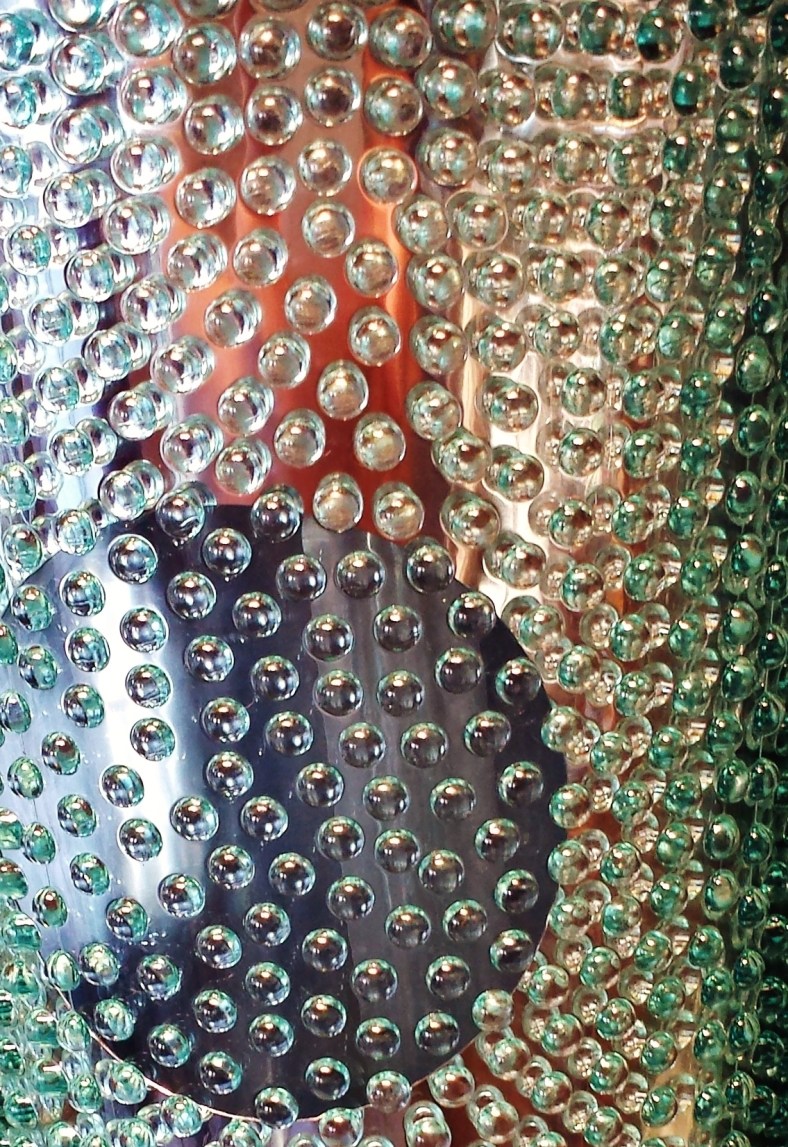
Plastic bubbles.
Samsung Galaxy S4
Chris
Plastic bubbles.
Samsung Galaxy S4
Chris
I’m partial to two-tone Toyotas… here’s the new 2018 Toyota C-HD sport hatchback. Love the white over blue!

Sharp little pocket rocket!
Samsung Galaxy S4
Chris
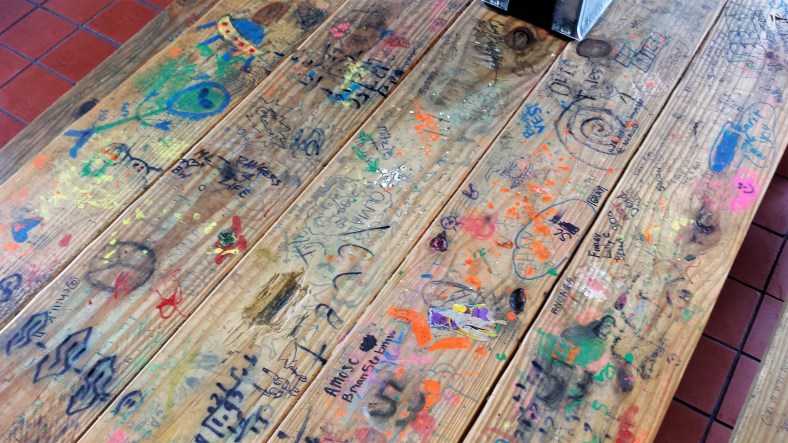
Former high school picnic tables now part of a local pizza joint! Cool!
Samsung Galaxy S4
Chris
*Or how to run out of space for it all real quick!
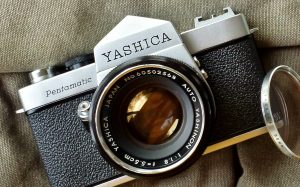
As much as Carol and I would love to go on collecting camera sets, the cameras will eventually win out! Even when we narrow our collecting to let’s say only twin-lens reflex cameras made in the mid 1950s, and only made by Yashima-Yashica, we’d still run out of space and money. There were just too many made (obviously) to be able to collect all the different models and all the different variations. Yashima-Yashica was, by far, the most prolific TLR maker – ever! I believe they finally stopped by 1986 which was long after TLRs fell from favor!
So we’ve reached the point they sing about in that Disney movie – “Let it Go”!
Collecting Yashima-Yashica cameras is a very satisfying endeavor. We’ve been at it for decades, we know. There’s enough of them around so the choices are plenty – but since Yashicas were built well but built for the masses, they weren’t collected when they were new. Most that are available are well used. They’re still very functional, but well used nonetheless. So if you’re trying to collect complete sets just as they came from the factory, and you want them to work and be in mint (or near mint) condition, good luck! It’s not like collecting Leicas, Nikons, Canons or Rolleis where when you google “nikon mint box” you end up with hundreds to pick from from all across the web. Google “mint yashica box” and you’ll see maybe a dozen of Yashica’s last TLR – the Mat 124G. A great camera but it’s common. The early stuff from Yashima-Yashica, well that’s a whole different ballgame, and that ballgame is fun!
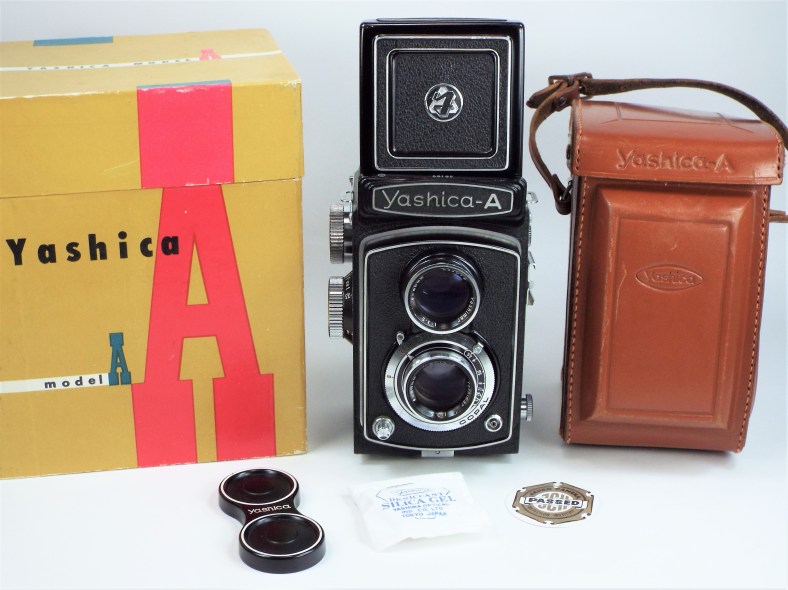
This one is from 1957, made by Yashima Optical – the Yashica-A
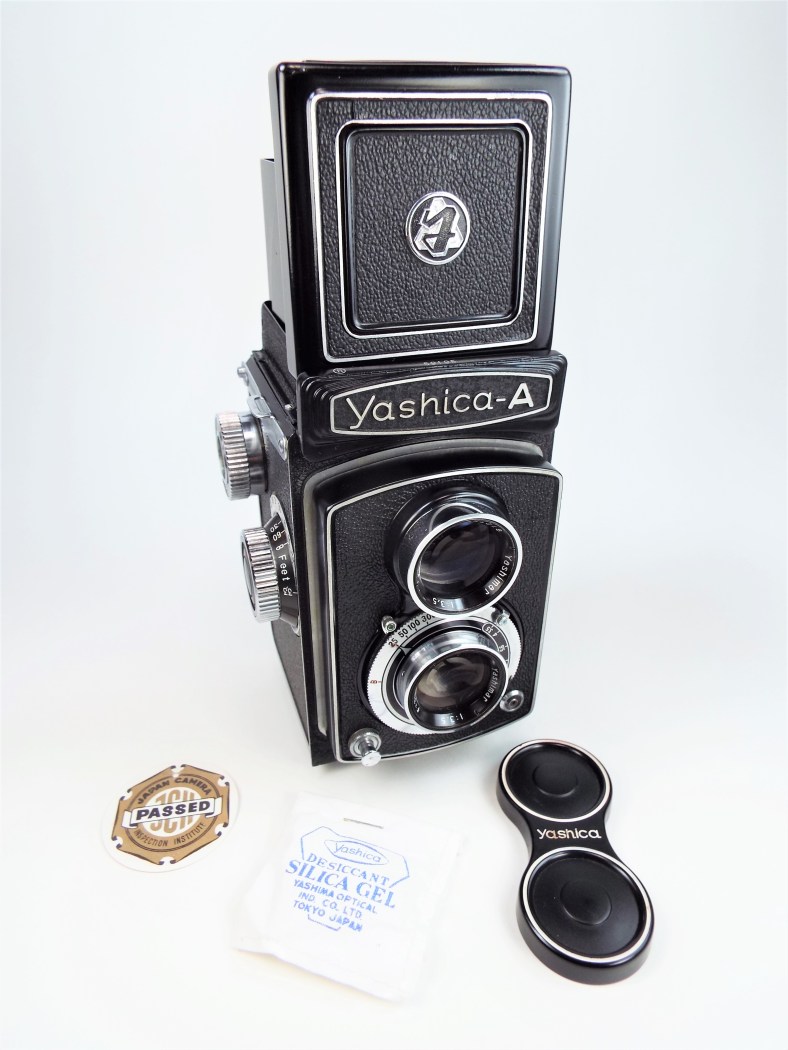
Solidly built and well maintained.
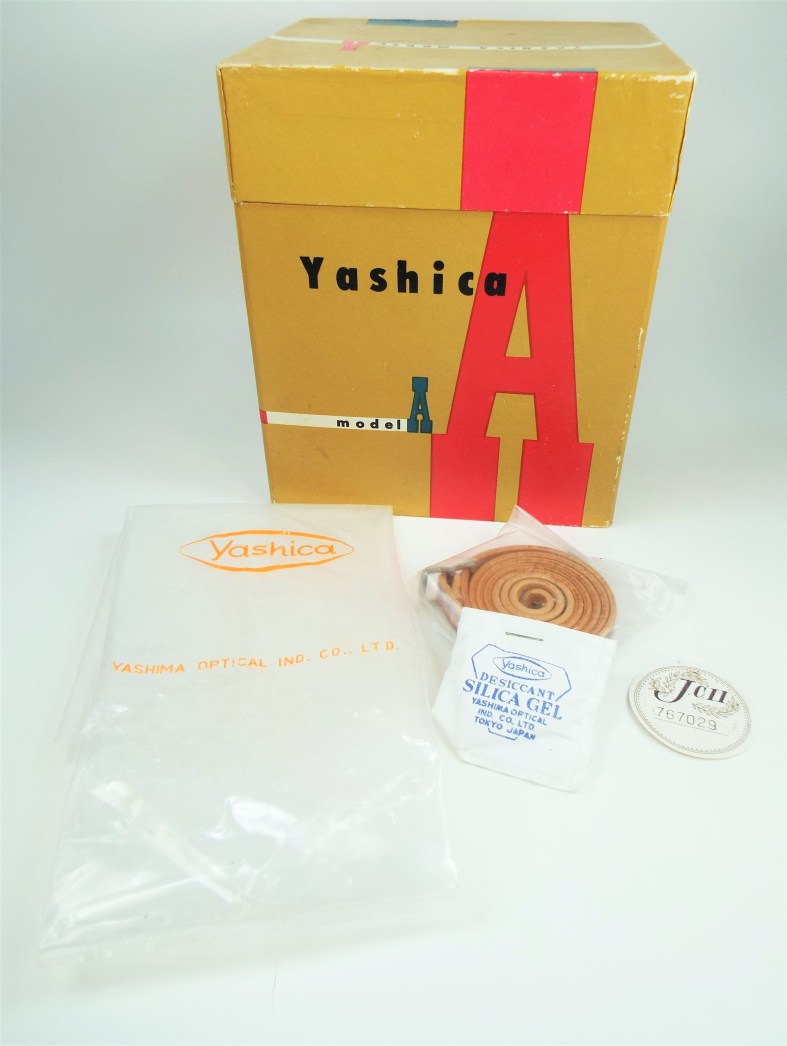
All the factory goodies.
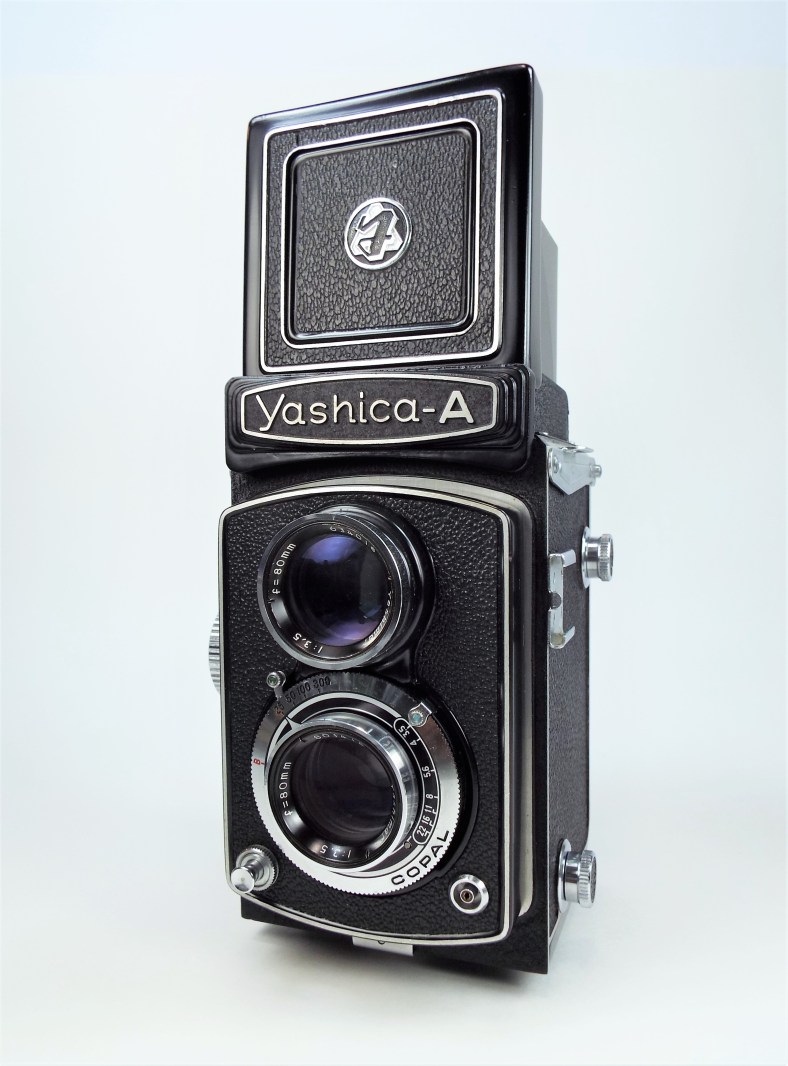
“Fall out of bed” easy to operate – shoot 6x6cm negatives or color slide film soon after loading it. Great optics, accurate shutter and bright viewing screen.
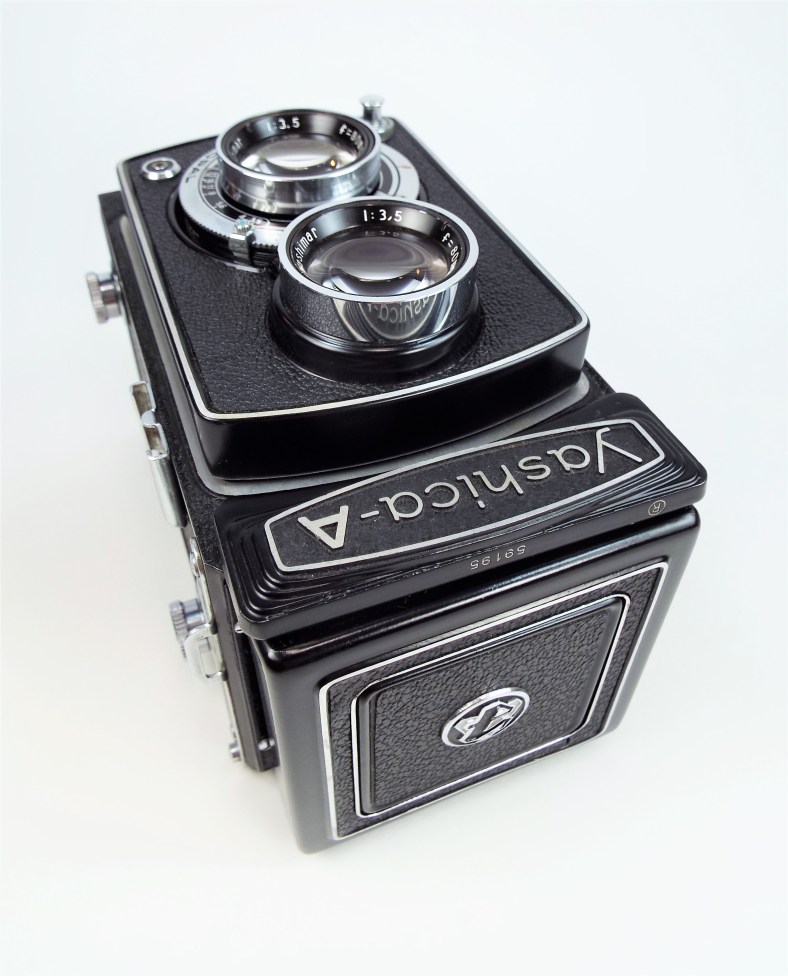
Yashimar f/ 3.5, 80mm lenses made by Tomioka Optical.
The Yashica-A is a great medium format camera. Simple to use and produces super sharp, large images that you’ll be amazed came from your hands. Why is the A the best? This one is 6 decades old and works perfectly. Why? Virtually nothing on it to break or jam. Simple winding knob, no self-timer and black yarn light seals that never fail. No built-in light meter (use a phone app) or use a vintage hand held meter or guess at the exposure or learn the “Sunny-16” rule. You almost have to try to make a bad image with a camera like this. Worried about the reversed image in the viewing hood? You’ll get over it quickly and you’ll soon love composing and shooting in the square format (6 x 6).
This model A (remember, “Let it Go”) is available for purchase. If you have an interest, contact us at chriscarol@ccstudio2380.com or visit us at http://www.ccstudio2380.com
If there’s something that you’re looking for maybe we have it or can find one for you. You never know!
Thanks for stopping by!
Studio Camera: Fujifilm FinePix S9900W
Chris

A local eatery installed some wicked cool lighting!

Townies Pizza!
Samsung Galaxy S4
Chris
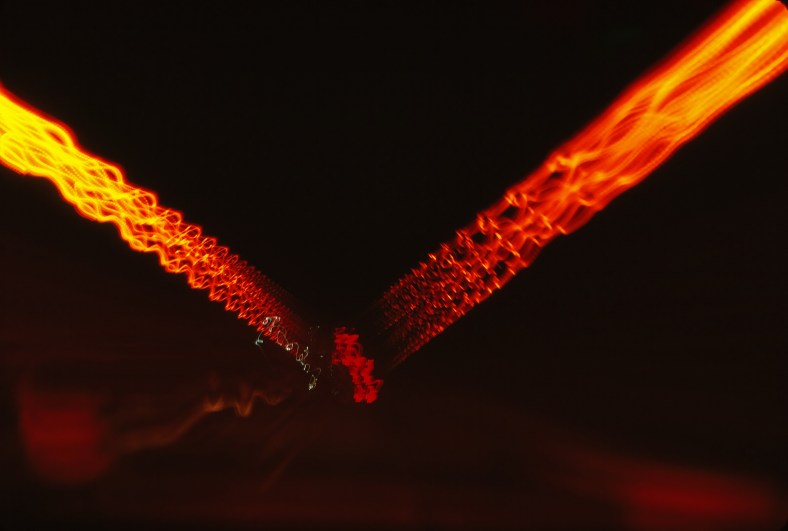
Canon F-1
Kodachrome
Yokohama 1979
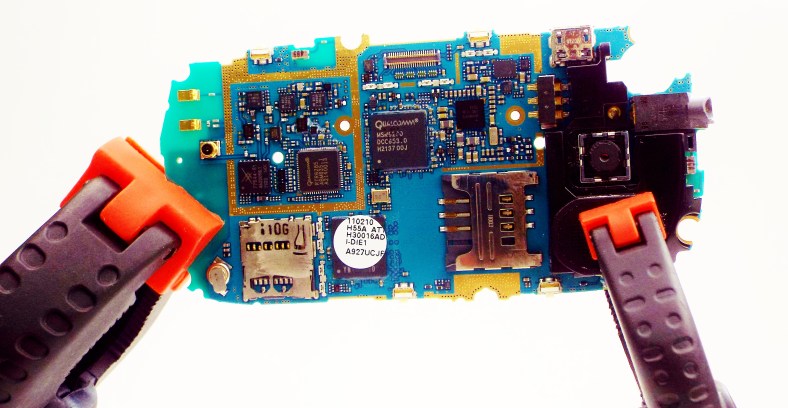
Happy Wednesday Morning! Today’s image has almost nothing to do with a Wednesday, or the morning – it’s just a fun shot taken on a Wednesday!
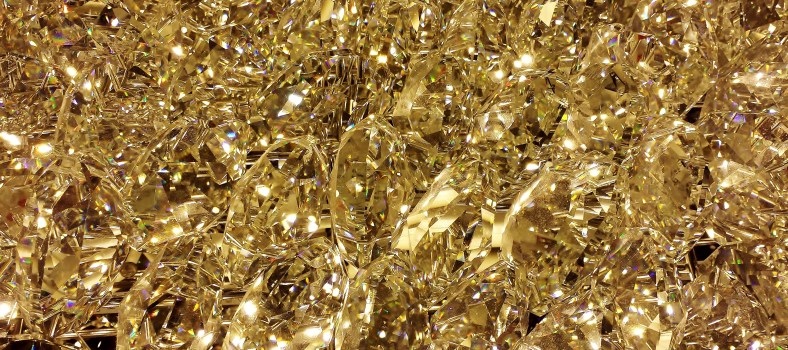
Crystals at The Ritz-Carlton, Amelia Island.
Enjoy your day (and evening)!
Studio Camera: Samsung Galaxy S4
Chris

Always interesting camera and equipment reviews with excellent photography to boot!
When I saw this camera, I thought…REALLY??? A Yashica half frame? I hate half-frames, but I love Yashicas. Should I buy it? It isn’t cheap for a junk bin chance, but it is clean and a Yashica…OK, I will do it.
According to this reviewer it was produced in 1964. As you can see it has a selenium cell light meter and a f1.7 lens. It has zone focusing with an image scale inside the viewfinder that has the regular mountain, people, person symbols. On the right side of the view finder is a needle scale that tells you the speed. So you can choose the aperture and check what speed will be selected by the camera. Or everything can be automatic. When you press the shutter button half way, the needle moves…and this one did, which let me know the selenium cell was working 🙂 A good sign. Here…
View original post 118 more words

 Chasing Classic Cameras with Chris