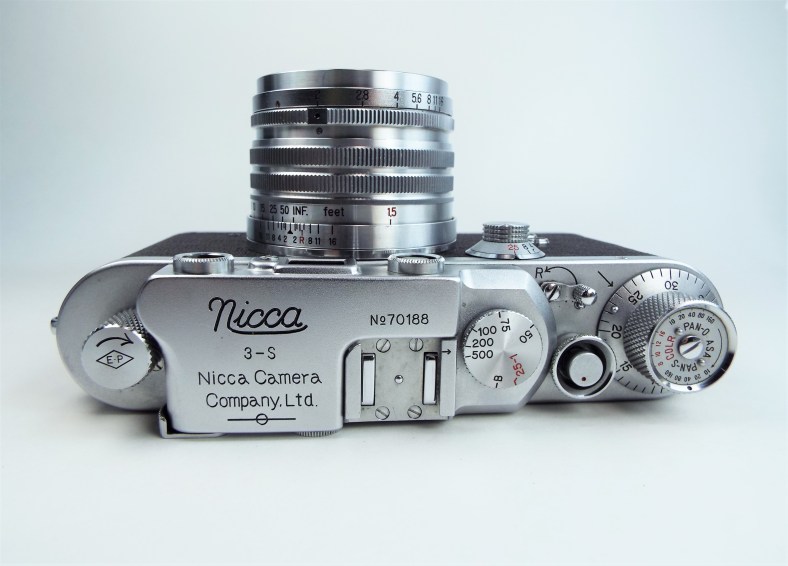
Nicca 3-S with Nicca BC-III Flash Unit

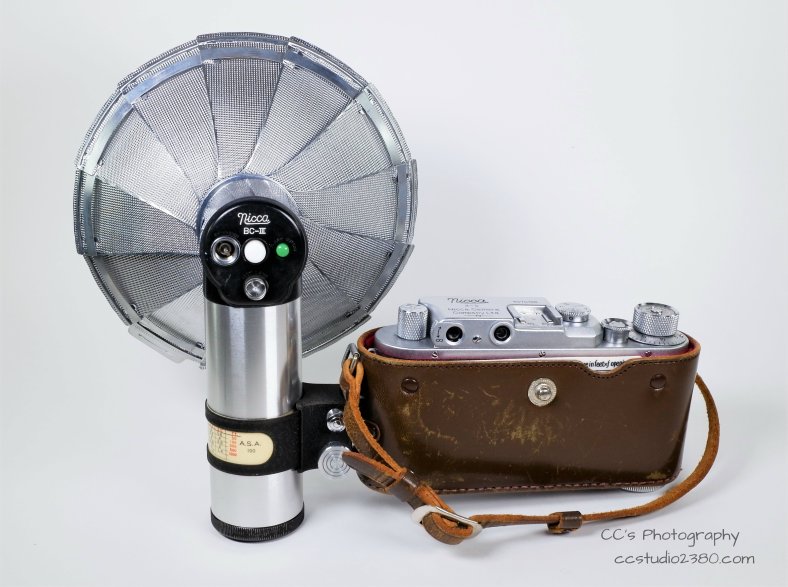
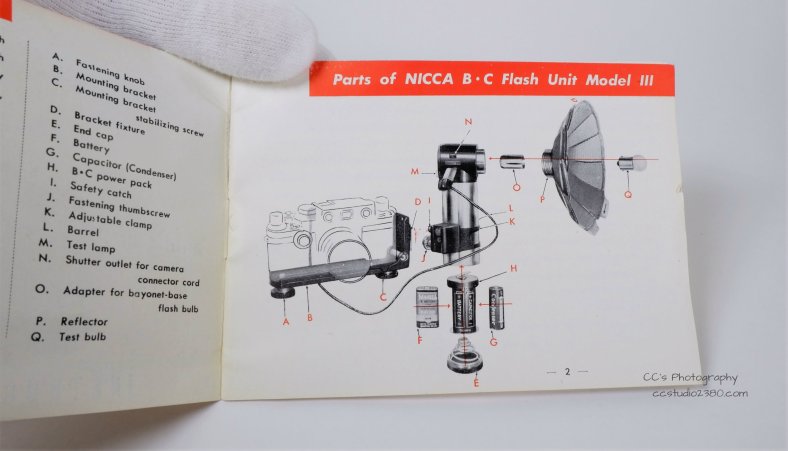
Nice mid-1950s technology – an outstanding 35mm rangefinder camera paired with a cutting edge Nicca flash.

nicca s3 flash

nicca s3 flash back

Here the flash handle is attached to the leather camera case via the left side metal bracket on the case. It does put a bit of a strain on the case so probably not the best way to tote it around.

DSCF7909 logo

DSCF7910 logo

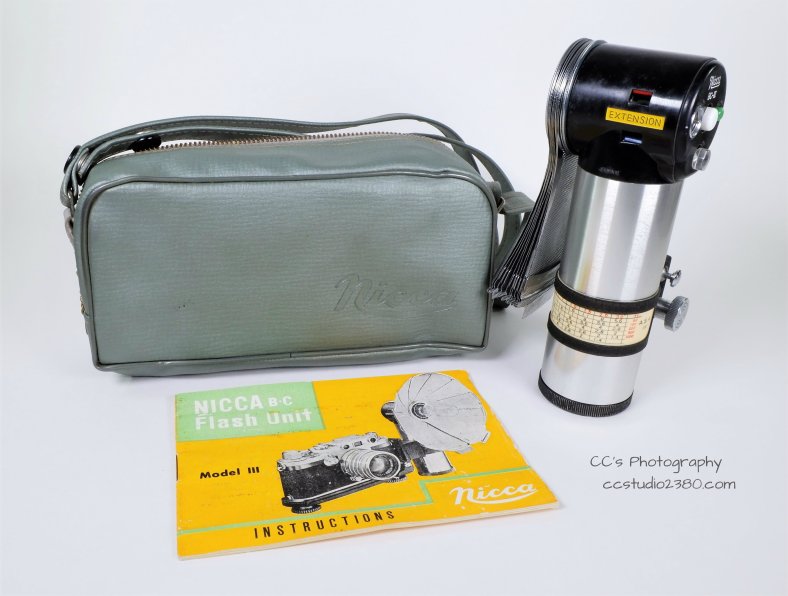
Nice textured vinyl bag for the set.

DSCF7917 logo

The case has held up nicely over the years. I’m missing the connector cord and of course the 22.5v Type 015 battery (they are still available). The cord will be difficult to find but that’s half the fun!

If you happen to have the connector cord please let me know – I’m a buyer!

Thanks for stopping by!

Chris

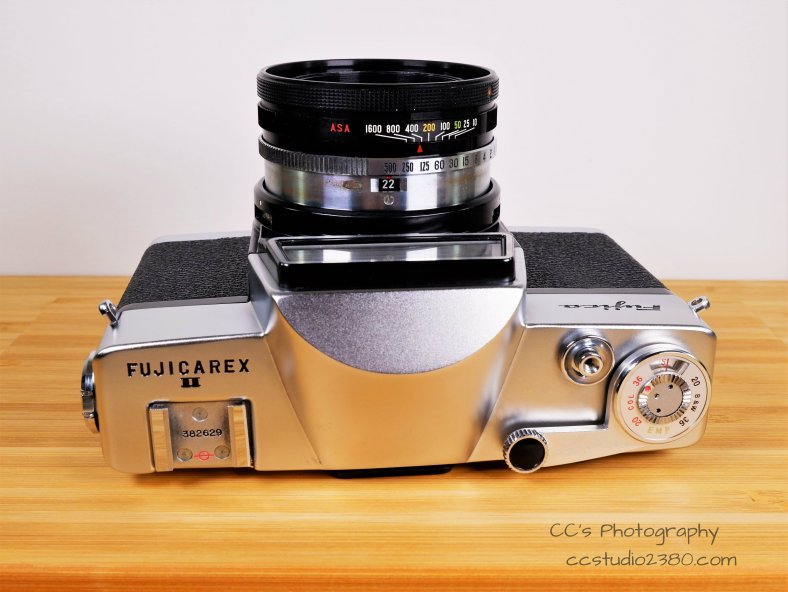
Fujicarex II by Fuji Photo Film Co., Ltd.

Unique – Odd – Quirky – Ugly – Gorgeous – Cool – Modern – Sexy – Sophisticated – Clunky – a failure?

Fuji Photo Film Co., Ltd. – Tokyo 

Fuji’s first 35mm SLR

Originally released as the Fujicarex in 1962 and sold only in Japan (it listed for ¥25,000). An updated model was released in the United States in July 1964 (in Chicago) as the Fujicarex SLR 35 and for other overseas markets as the Fujicarex II. It listed for around $150 USD without a case. It came with a Fujinon-S f/1.9 5cm lens with an additional f/4 35mm wide angle lens and a f/2.8 80mm portrait lens available.

Billed (advertised) as the “World’s easiest-to-use SLR 35mm camera” – Electric Eye with Cluster Control!

What do you think of its design?
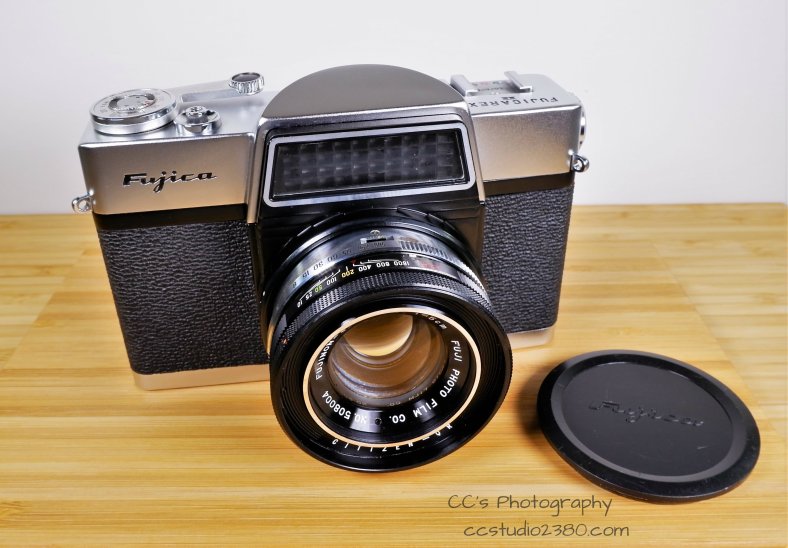
DSCF7818 logo

DSCF7823 logo 1

DSCF7826 logo 2

DSCF7830 logo 3

According to a very reliable Japanese source, the Fujicarex II was available in Japan as a replacement to the original model and that the model II was destined for other overseas markets beyond the U.S. (like Europe). This would lead one to believe that the Fujicarex SLR 35 was only available in America. I haven’t been able to verify that as I’ve never seen the “plain” Fujicarex logo.

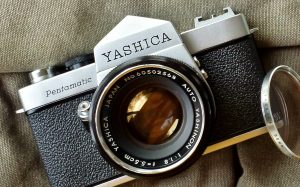
So was it a failure? Well, it got Fuji Photo moving in the right direction but I think overall it was just overdesigned and a bit hard to use. A bit like the Yashica Pentamatics – neat cameras that didn’t catch on. From what I understand it was only sold for about three years or so. The next 35mm SLR from Fuji didn’t appear until 1971.

No matter what, this unique camera is seldom seen in today’s collector marketplaces. It would make a wonderful addition to any vintage Japanese SLR collection since it was Fuji’s first SLR. Thanks for stopping by!

Chris
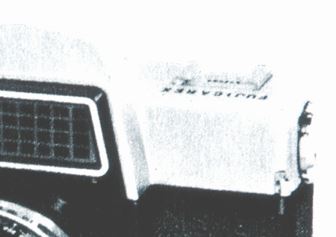
fujicarex plain

I’m thinking that this is the original Fujicarex logo (close to the cold shoe).

fujicarex us.

This should be the U.S. Fujicarex SLR 35 as there isn’t the “II” under the “Fujicarex”.


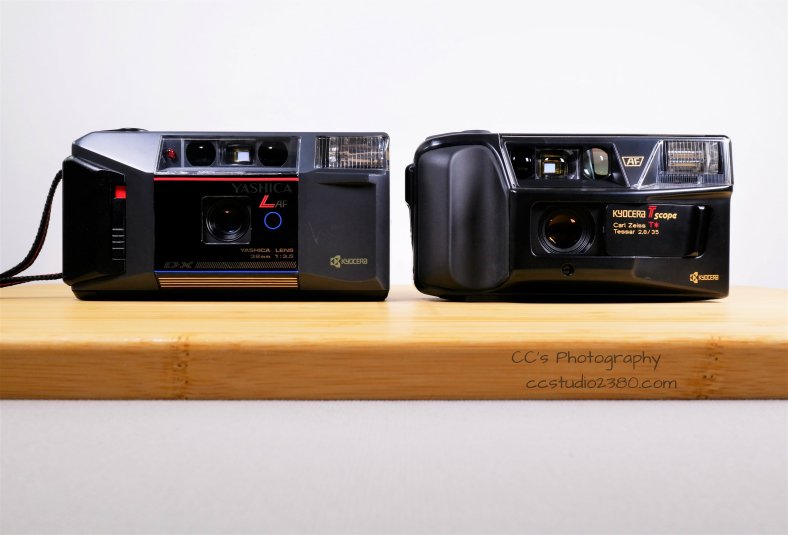
Yashica L AF vs. Kyocera T Scope

Round 1 – The Introduction

The Yashica-Kyocera L AF from 1986 and the Kyocera T Scope (Japanese name, T3 elsewhere). The L AF was assembled in Hong Kong with parts made in Japan and the T Scope was made in Japan.

Key feature – waterproof (more like weatherproof) – not a dive camera.

kyocera t scope

DSCF7805 logo

N.A. Scope = “New Angle Scope”

The scope is just like a waist-level finder – pretty cool actually.

DSCF7813 logo

ky and laf logo

Cousins

I’ll be doing a side by side field test of these two cameras shortly. Is the T3 really worth the extra money over the Yashica? The T Scope features a Carl Zeiss T* Series Tessar f/2.8 35mm lens against the Yashica (Tomioka?) f/3.5 32mm lens. I have a hunch that the Yashica’s lens was also made by Zeiss at the Tomioka factory in Tokyo. We’ll see if the vaunted T* coating makes a noticeable difference.

DSCF7808 logo

Not often seen outside of Japan – the Kyocera T Scope box. Not one mention of Yashica!

Thanks for stopping by!

Chris

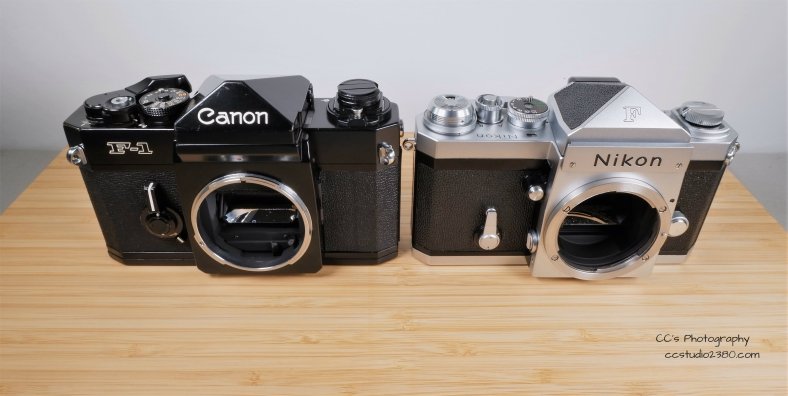
Canon F-1 vs. Nikon F

Two 1970s heavyweights battle it out (well sort of).

canon f1 vs nikon f

The Canon is from 1978 and the Nikon is from 1972. To me, the clear winner is the F-1. It’s a more robust camera body and the Canon FD lenses are as good as if not better than the Nikkors. Besides, you have to remove the entire baseplate and back (they are one unit) to be able to load film – not the easiest of things to do while bouncing around in a small boat or a safari vehicle. Just sayin’.

f1 v f

Which camp are you? Canon or Nikon? Or Olympus or Minolta?

Thanks for stopping by!

Chris


Yashica’s L AF – good things come from plastic rectangles

A true plastic fantastic from Kyocera-Yashica. Released around 1986, this little gem is a modern classic. It gives much better-known (and much more expensive) point & shoots a run for the money.

yashica l af logo 1212

Poor man’s T* Series with Zeiss lenses (I’m pretty sure these lenses are Zeiss without the coating).

yashica laf 2121

Not much control over this camera – it was designed to take pictures without much fuss – and do it well.

yaslaf 33

It says Yashica lens but I’m sure it’s a Zeiss – why wouldn’t it? By the way, the 32mm f/3.5 lens is as fast as the other T* Series lenses – with the exception of the Kyocera T Scope (Japanese market T3) which is f/2.8

Good condition Yashica L AF’s are not common on online auction sites but nice ones still go for less than $40 or so. This nearly mint one went for $20!

Sharp contrasty lens – quick but not super quick AF but excellent auto exposure – perfect pics nearly every shot!

78690020

78690013

Images were taken on Fujicolor Superia color negative film. No post-production on any of these outside pics.

kyocera t scope

Headed our way from Japan!

Thanks for stopping by!

Chris

Yashica MF-2 Super… 1986

We love this little Yashica but we haven’t found the time to run a roll of film through it yet! Soon!

Chris and Carol's avatarChasing Classic Cameras with Chris

We don’t often collect modern Yashica cameras – especially during Yashica’s last days after Kyocera (Kill-a-Yashica) took over.

This one was sent to us by a Flickr friend and as you can see, it’s new in the original box. The MF-2 Super is a DX camera which sensed the DX code on the 35mm film canister and set the appropriate ASA / ISO / DIN.

25965272473_a80d24519c_o Yashica MF-2 Super 35mm film camera set from 1986.

26295606350_65700d54b4_o

We haven’t found the time to load a roll of film and check out this little beauty… soon we hope. We like the black, red and gold details on the body and lens and the auto everything (almost) features. As a comparison, we also have the Fujica DL-20 as pictured below in the sales brochure.

%e2%97%8f%e3%83%81%e3%83%a9%e3%82%b7 DL-20 in black and red.

The DL-20 is a mid-1990s camera from Fujica. We have the red body model and it…

View original post 42 more words

Minolta Uniomat III

Another look at this seldom seen camera set from the early 1960s.

Chris and Carol's avatarChasing Classic Cameras with Chris

35mm rangefinder camera from Minolta. This one is from about 1963. Neat little camera – a bit small for my hands so it’s hard to reach the lens to focus comfortably. The rangefinder focuses well but doesn’t snap out at you although the view is bright. No film test for this one. The shutter fires and the speeds appear to be on time – the rear lens element is “ate up” (Southern term) with fungus and when I got rid of the fungus I was left with an etched lens. Maybe some polishing might bring it back. The light meter appears to be accurate too.

It’s a pretty little thing. I like the gray leatherette body and it certainly looks nice under my studio lights. We like to collect complete sets when we can and this one has its original box, leather case (black), silica-gel pack and the owners manual…

View original post 163 more words