How many of you remember Green Stamps? How about Plaid Stamps?

Cute ad from around 1966 or so. My mom saved Plaid Stamps (in New York) when she shopped at the A&P – we were always getting cool stuff with them!
Thanks for stopping by!
Chris
How many of you remember Green Stamps? How about Plaid Stamps?
Cute ad from around 1966 or so. My mom saved Plaid Stamps (in New York) when she shopped at the A&P – we were always getting cool stuff with them!
Thanks for stopping by!
Chris
My wish may be closer to reality! I’m “in the hunt” for one of these exceptional cameras now.

Vintage camera wish list item 101.
The Fuji Photo Film Co., Ltd., Fujicaflex
Designed to incorporate the best features that were available in the medium format twin-lens reflex camera market, the Fujicaflex debuted in 1954 – at a very premium price, we might add. While surfing today, we stumbled upon this wonderful site from Fujifilm Europe. You can check it out here
It’s nice to see a large corporation like Fujifilm blog about some of the really cool cameras that helped make their company great. In another blog, they go on to talk about the amazing Fujipet from 1957.

For more about this wonderful camera, take a trip here too to see Mr. Yoshinobu Koyasu’s camera collection… it is not to be missed!
It’s certainly interesting to read (Fujifilm Europe’s blog) – the older posts that pay tribute to the cameras of their roots are so interesting.
Enjoy!
Chris
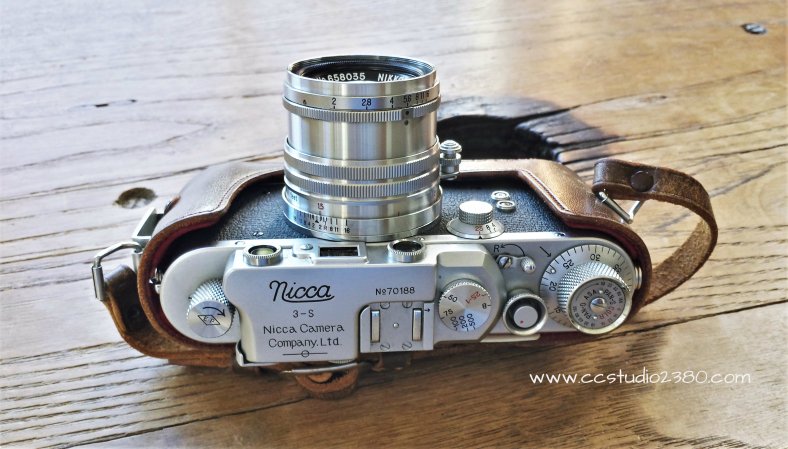
Just a few random pics from a test roll taken with my Nicca 3-S and some fresh Fujicolor.


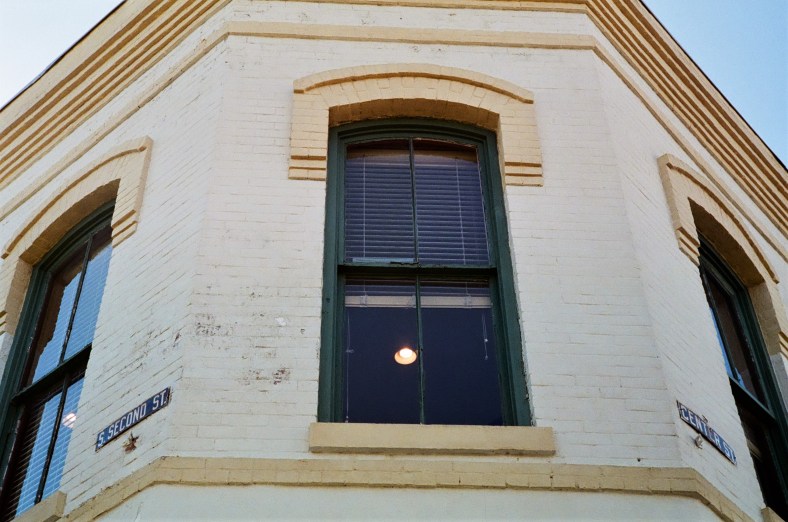


Various scenes from a walkabout in the historic district of Fernandina Beach, Amelia Island, Florida.
Thanks for stopping by! Be sure to take a peek at some of our newest arrivals in our online shop at http://www.ccstudio2380.com
Chris

Front entrance to the Fernandina Beach Municipal Airport terminal building – almost in perfect balance and symmetry.
Thanks for stopping by!
Chris

Dramatic nighttime lighting highlights the unique design of the Fernandina Beach (Florida) Municipal Airport Terminal building. The design pays homage to the U.S. Navy F4U Corsair fighter plane that flew training missions from this airfield during WWII.

The “Corsair” as seen from the plane’s starboard side (note the small green light at the end of the wing). The canopy (skylight) is highlighted with a series of LED lights.

The terminal as seen from the runway side of the airfield.
A well-executed design that looks stunning at night. I’m sure this will be somewhat of an attraction here in Northeast Florida as the building will feature all types of memorabilia from the airfield’s connection to the Corsair and the training of Naval aviators during World War II.
Thanks for stopping by!
Chris

Cumulus humilis – fair weather cumulus clouds and the Fernandina Beach Municipal Airport beacon tower.

Hope your day is filled with “happy clouds”!
Chris

It’s sure to be a tourist attraction and I believe the designers should get a tip of the hat for taking such a bold idea and executing it to perfection. Here the workers are installing the last of the glass panels that form the skylight-canopy.

Everywhere you look you see quality touches and the attention to detail is unmatched anywhere in the City of Fernandina Beach.
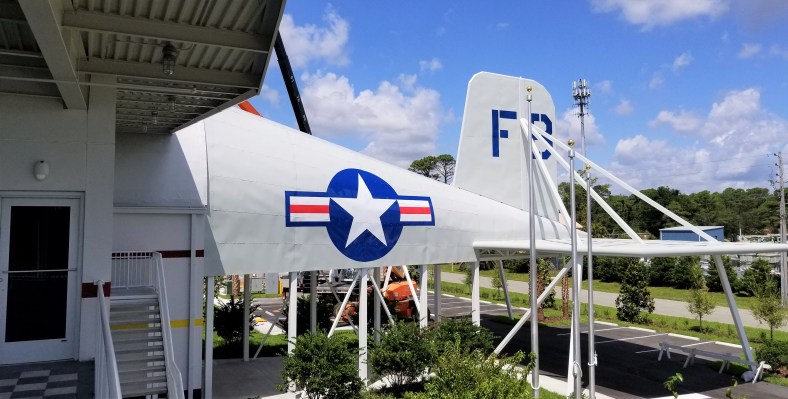
From the second-floor observation deck looking towards the tail section.


The runway side of the terminal is the airplane’s cowling – notice the Pratt & Whitney Eagle logo.
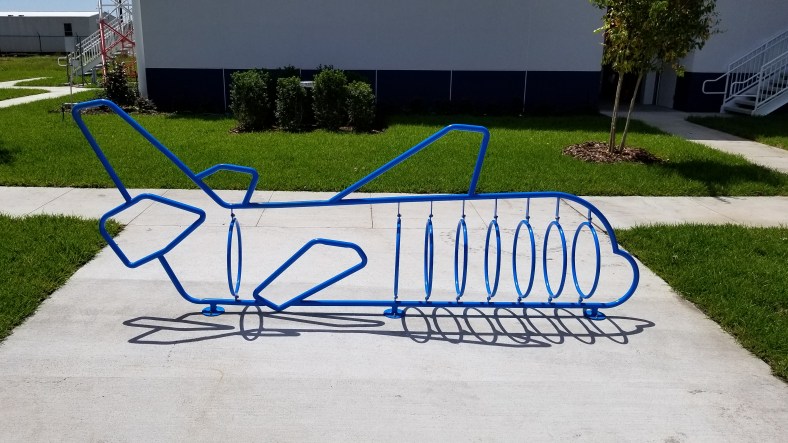
What a cool bicycle rack!
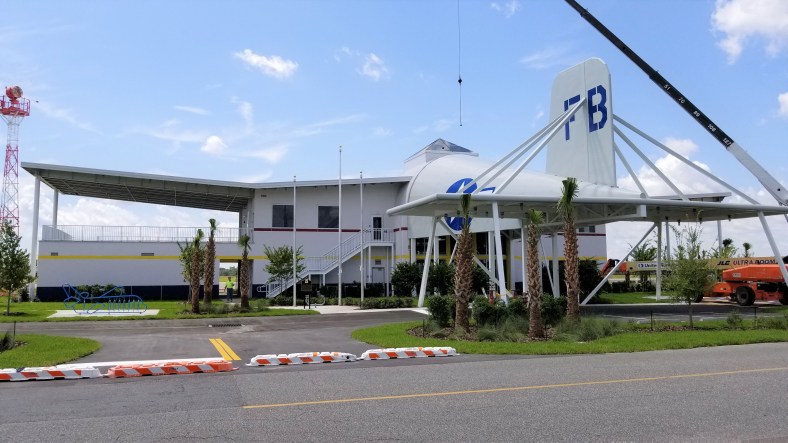
The Corsair has landed!

Early stages of construction from January of this year.
What a lovely air terminal to welcome visitors and residents alike to beautiful Amelia Island. If you’re ever passing through extreme Northeast Florida, by all means, take the time to stop in and check out our terminal. They’ll be historical displays featured inside the three-story lobby specifically tailored to recognize our military heritage and the brave aviators that flew the Navy Corsairs during the War.
Thanks for stopping by!
Chris
Some additional history about Yashica – it’s worth a look if you missed it the first time.
Chris
We’ll be the first to admit – not an exciting title or topic for a blog. It may even be a stretch for a blog named the ‘Yashica Pentamatic Fanatic’. But we feel compelled to share information about the Yashica Company, however slight and trivial, with our dear readers.
Yashica’s first factory was along the shores of beautiful Lake Suwa. As best as we can tell, the original location (from Yashica brochures) was Shimosuwa-machi, Suwa-gun, Nagano Prefecture. This was the industrial campus of Yashica and it grew over the years to occupy almost every square meter of the property.
 Opened in 1956 along the shores of Lake Suwa in Nagano.
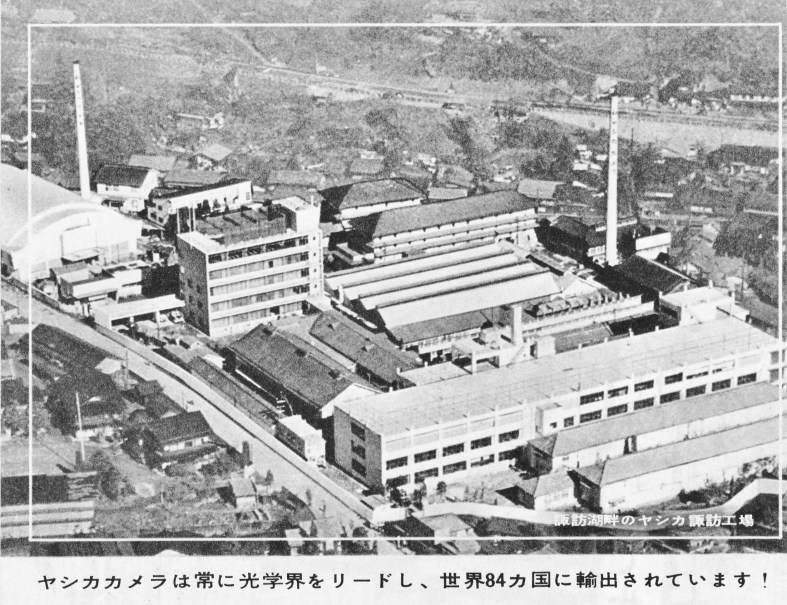 Different view of the same campus. Yashica was running out of room by the mid 1960s.
By the early 1970s, Yashica converted the Katakana silk mill in the neighboring town of Okaya into its newest factory. We don’t have all…
View original post 369 more words
With the help of my good friend Paul Sokk from Australia (www.yashicatlr.com), we’ve nailed down the location of Yashica’s second factory which was opened in 1956. I say second because Yashica’s (then Yashima) first factory was located across Lake Suwa in the town of Suwa – possibly established as early as the late 1940s. Yashica likely operated its first camera factory in Suwa – an early 1954 advertisement in English claims that the head office was located at 244, 4-Ku Ohwa, Suwa City, Nagano Prefecture, Telephone: Suwa 1350-4 (see scan below). My thinking is that is a less than an accurate translation of the Japanese to English. I’ve had more luck in finding the general area on today’s maps by using 2-4-4 Owa, Suwa which brings me very close to the present day Seiko-Epson headquarters.
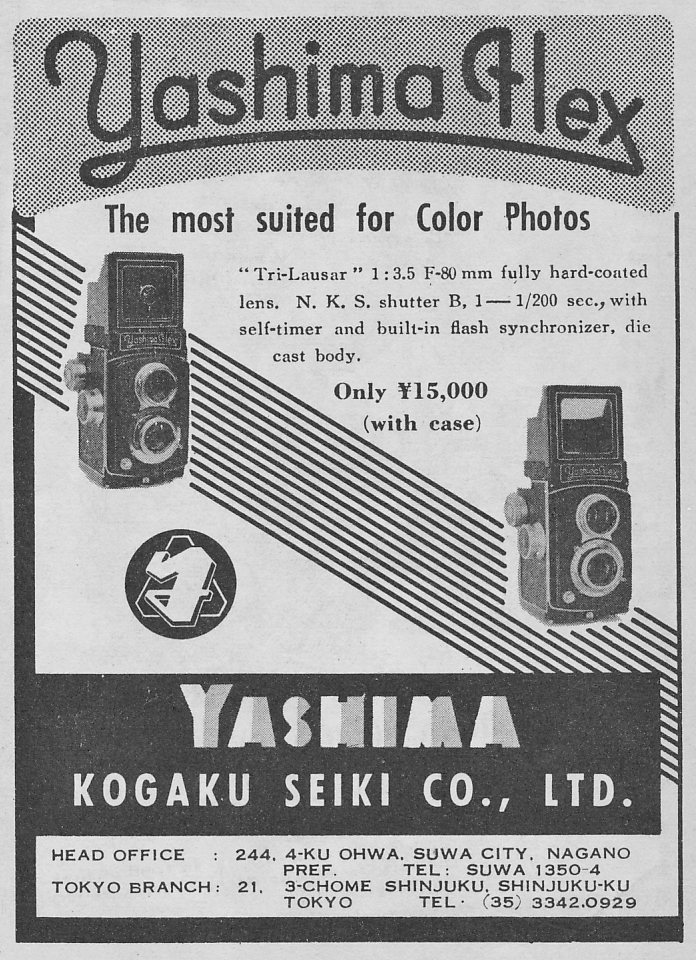
Likely 1954 advertisement in an English language newspaper circulated in Japan. As best as I can tell it may be the first ad for the Yashima Flex in English.
My fear all along during this search was that since Yashica was bought out by Kyocera in 1983 that the fate of the factory in Shimosuwa would be lost in time since Kyocera’s current factory in Okaya is not related to the Shimosuwa factory.
With Paul’s sharp eyes, attention to detail, and sheer determination he was able to find Yashica’s old factory in present-day Shimosuwa.
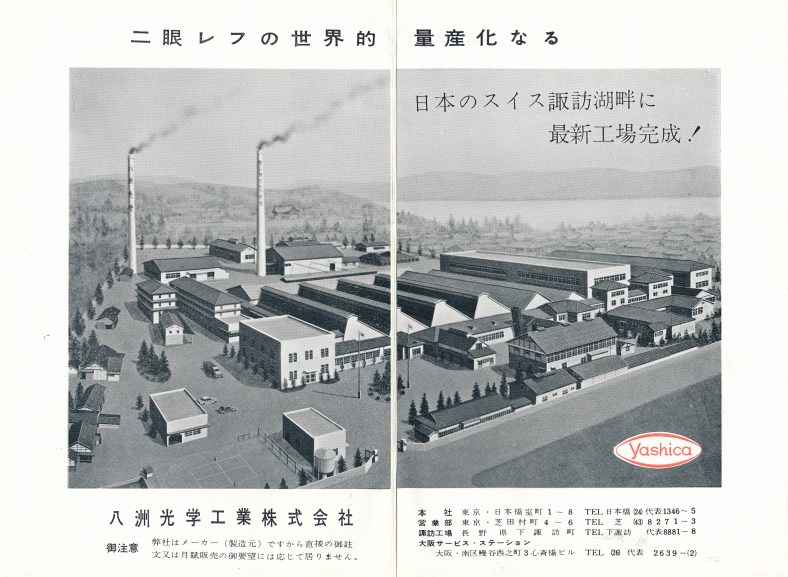
Yashica’s “new” factory in Shimosuwa as it looked in late 1956 (at least to the artist). Lake Suwa and the distant shoreline can be seen in the distance. Of note, this artists rendering is in no way even close to scale – many of the buildings are in the wrong location and the smokestacks seem to be placed for artistic “balance” vice accurate representation. Of course, this drawing may be more conceptional and not reflective of reality.
The image above is an artist’s rendering of the Shimosuwa factory complex before the addition of the massive gym structure (see below) and before the central administration building was built.
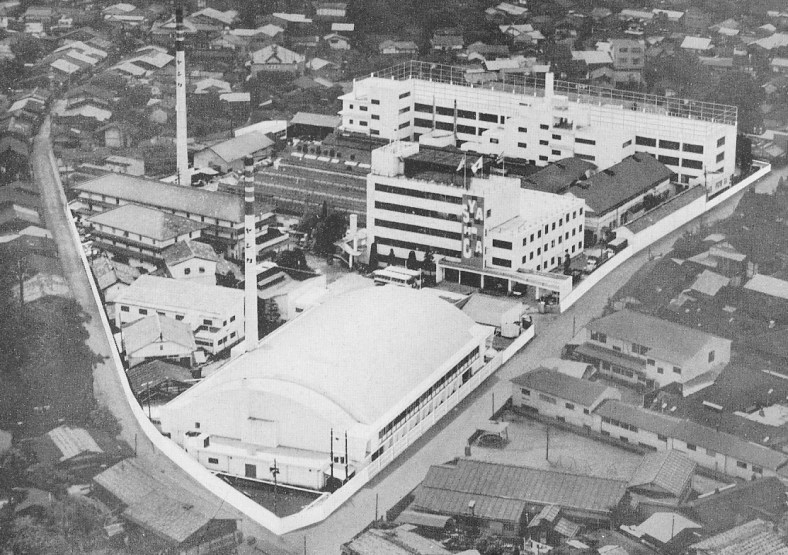
Looking south across Yashica’s factory campus as it appeared in the mid-1960s. The large building on the bottom center in this picture is Yashica’s gym and auditorium. The administration building is shown about centered in this scan.
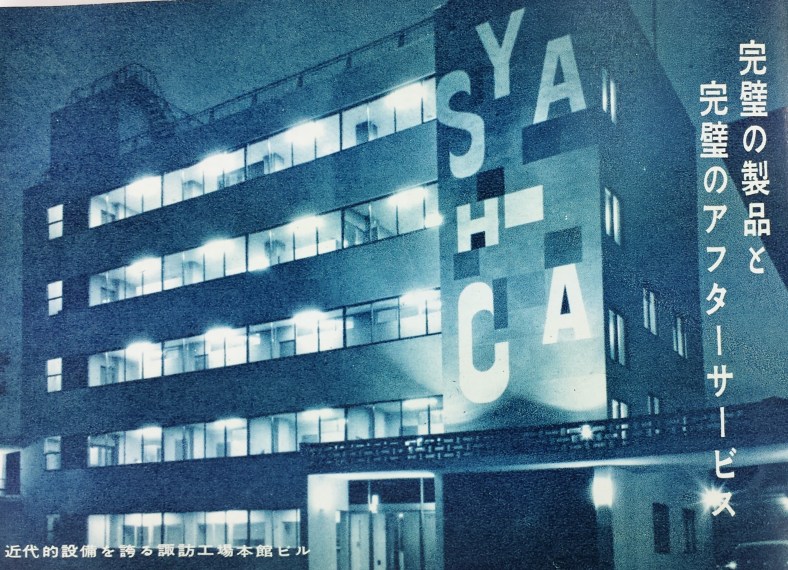
The famous and easily identifiable Yashica factory administration building at night.
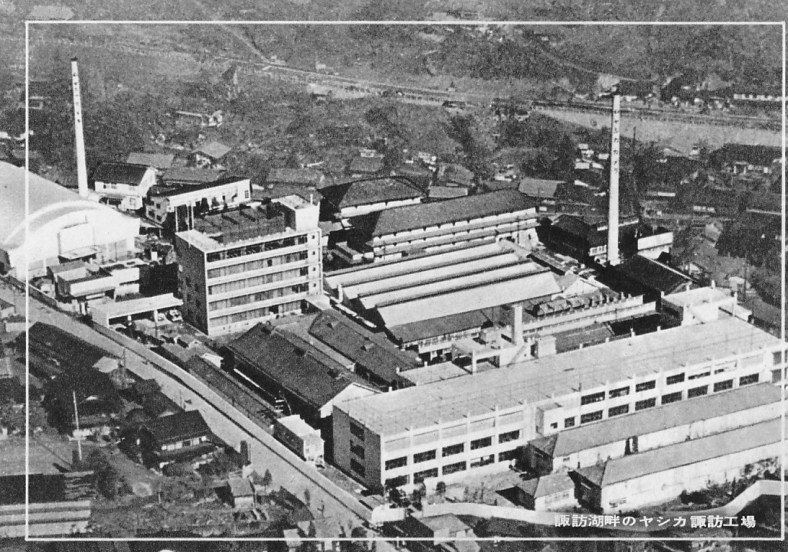
Aerial view of the Yashica factory campus from around 1959 or so. The gym building is on the extreme upper left in this picture. The factory administration building with the large verticle “Yashica” on it can be seen from behind (from the south looking north).
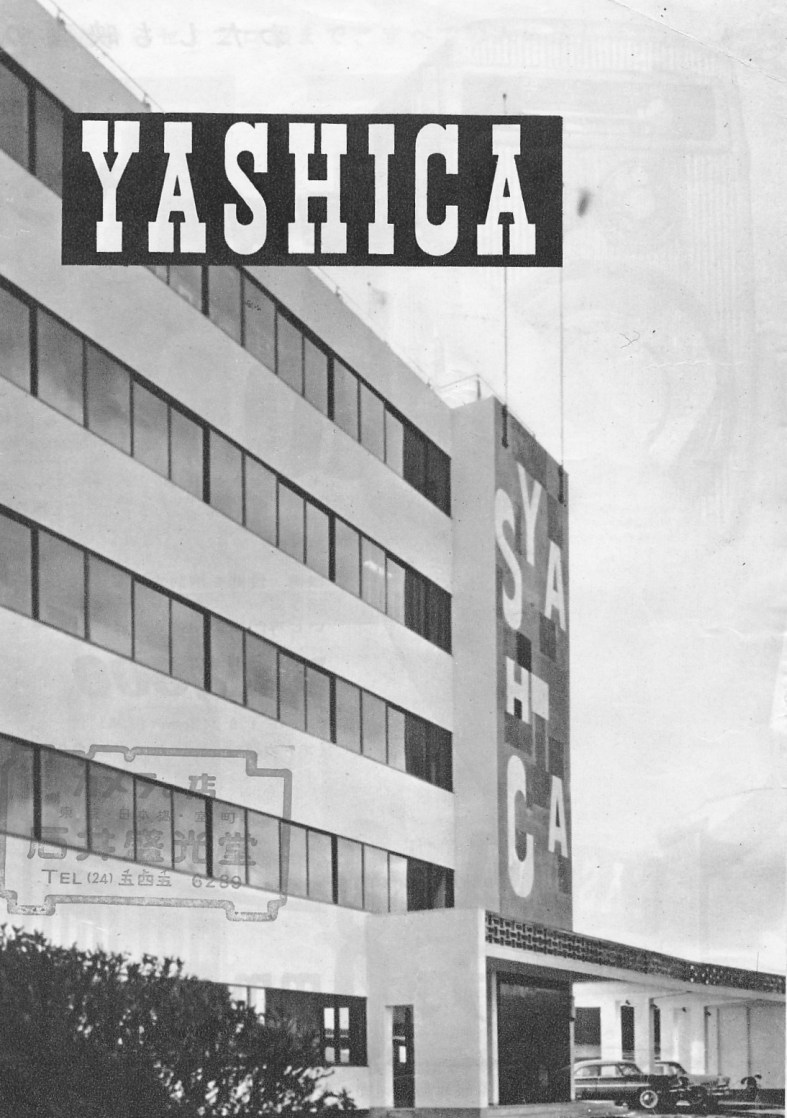
This image is from a 1958 Yashica sales brochure. The distinctive Yashica factory administration building as it looked when new. At this point in time, it still had the covered parking area just to the building’s right – two modern full-sized “service” vehicles are parked underneath.
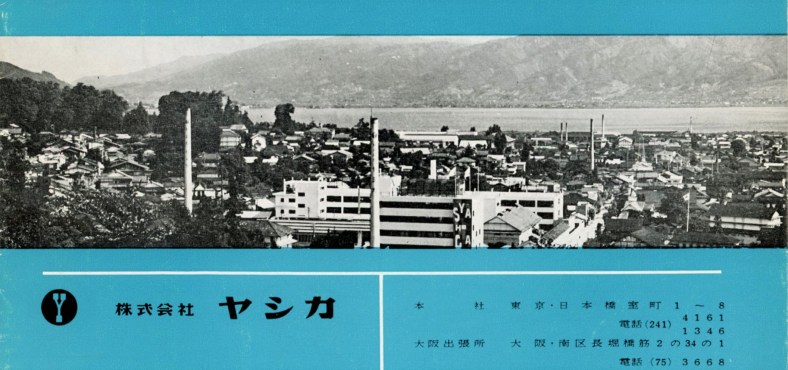
A view of the Yashica factory campus from around 1960. I would guess that the view is taken from the hillside that overlooks the grounds. Very similar view of the artist’s rendering from 1956. (Document scan courtesy of Paul Sokk)
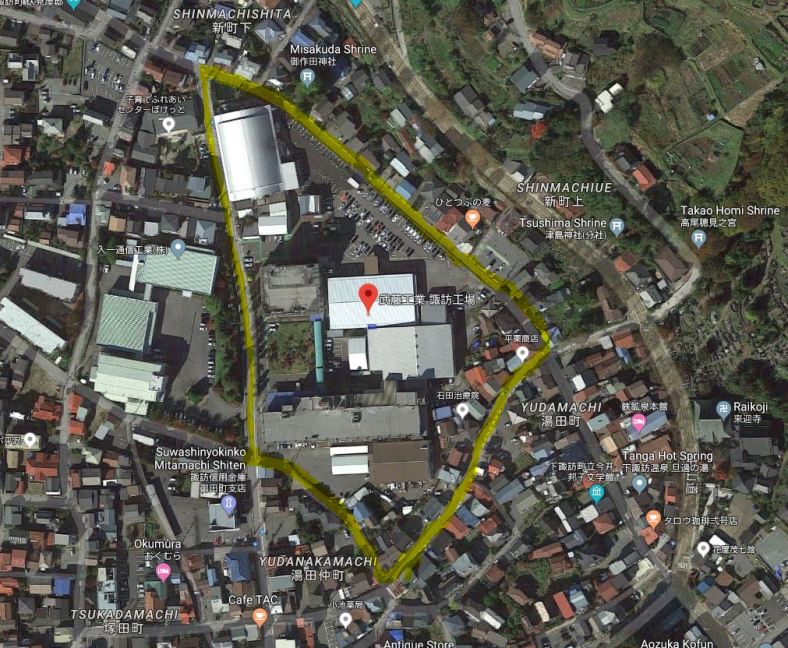
Current view of the original site of Yashica’s first factory in Shimosuwa, Nagano Prefecture. The present use of this site is by Mutoh Industries, Ltd. – a maker of large-scale inkjet printers for commercial use and sold around the world.
In the above capture, Yashica’s gym building (large silver roof structure in the upper left portion of the highlighted area) can still be seen. Most of the original buildings appear to have saved.
It’s been a long but enjoyable process searching for this site. For a Yashicaphile such as myself, I would love to be able to visit the site and tour the facilities. I would like to meet with previous employees of Yashica and speak with them about their experiences while working for Yashica. Maybe someone knows the exact location of Yashica’s first factory in Suwa. That would be neat. I’ve reached out to the Mutoh company and have inquired if they would be interested in acquiring any of my collected scans of the factory from its earliest days.
Thanks for stopping by!
Chris

Argus C3 Match-Matic 35mm film camera from the 1800s – just kidding, 1960s. It has such a distinctive style it’s sure to get some looks when you’re out and about with it. Made in Michigan.

The flash unit is actually very well designed and has a few neat tricks hidden inside. Affectionally was known as “the Brick”.

From 1958 the Wollensak Eye-Matic Model 46 (C-46) 8mm movie camera. Featuring a three lens turret with a normal, wide-angle, and telephoto lens. Direct from Chicago to the world.

Classic Kodak Tourist 620 roll film medium format camera from the late 1940s. Proudly made by the good folks of Rochester, New York. You can still buy 620 film in both black and white and color.

The Tourist takes eight exposures from 620 film each a big 2 1/4 by 3 1/4 inches (6 x 9 cm).

Made in Boston in 1936. The Keystone Model K-8. This fully functioning 8mm movie camera is a real classic – it features a Wollensak f3.5 Cine Velostigmat lens with a rare Bell & Howell yellow filter.

Talk about old school movie making. This camera is 82 years old and runs perfectly.

Beautiful “Hippie” style woven cloth camera strap from 1971. Far out man!

From 1972 – a classic from Polaroid. The Model 420 features a 2 element, 114mm f/8.8 lens and Polaroid Focused Flash (a GE flashcube in a louvered box). This Polaroid uses Fujifilm FP-100C film (2 1/4 by 3 1/4 inch) which is still available (although no longer made) so supplies will eventually run out.

Not made in the U.S.A. but sold by Montgomery Ward in 1955. Made by what was to become the Beauty Camera Company of Tokyo.

The Ward 35 was the same camera as the popular Beauty 35 sold in Japan. A simple 35mm viewfinder camera with a fast f/2.8 45mm lens.
So there you have it – all new in our online store this week. You can find them at https://www.ccstudio2380.com
It’s a great way to get into film photography or add to your collection of vintage cameras at very affordable prices.
Thanks for stopping by and be sure to visit our shop!
Chris
 Chasing Classic Cameras with Chris