Ready on the Flight Deck – USS Midway

On board the USS Midway (CV-41) in the East China Sea 1979. Preparing for early morning flight operations (FLT OPS). Planes to wash, jets to fuel, pilots to brief and missiles to load. 24/7 sometimes.

19620306703_5f100c62ca_o

H-3 Sea King helicopter and F-4 Phantom fighter at sunrise.

21480166173_db60a6a989_o

Missiles waiting to be loaded.

22111438131_3227718910_o

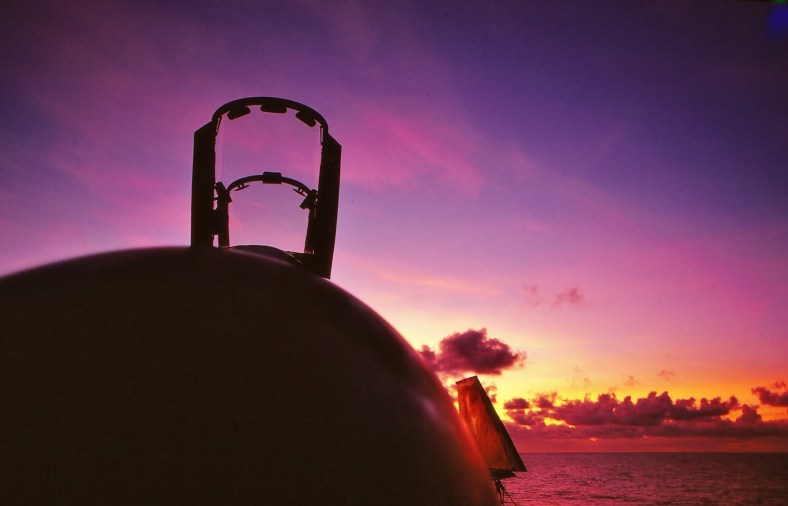
F-4 canopy opened and ready for the day.

IMG_20161217_0013

A-7 Corsair spotted just forward of the island near elevator 1. F-4 in distant background left. A-6 just to the right of the A-7.

The USS Midway (CV-41)

Commissioned 1945… the hull was built from the plans of the next generation battleship.

Decommissioned 1992… no other carrier served longer.

Was the largest ship in the world from 1945 to 1955. Fantastic museum in San Diego now. One of the best Naval museums anywhere!

Camera: Canon F-1

Magical Day with our Mets!

Wednesday, March 22nd was our 43rd wedding anniversary! So we celebrated by going to see our New York Mets at their Spring Training facilities at Port St. Lucie, Florida.

DSCF3844

Beautiful ball field inside and out!

DSCF3848

Previously known as Tradition Field.

DSCF3845

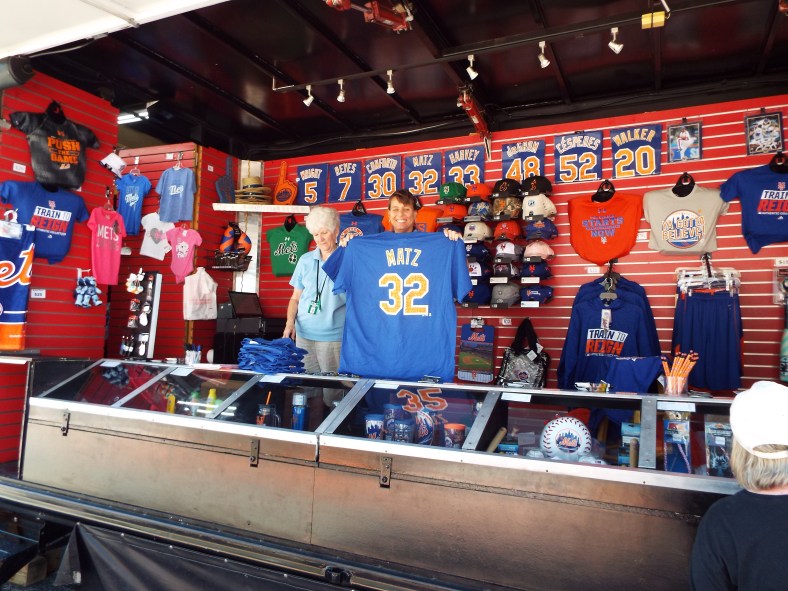
ESmiling Mets vendor selling Matz jerseys.

DSCF3864

Starting lineups for both teams.

DSCF3857

As well maintained as any Major League field. Bright blue Florida sky on a warm Spring day.

DSCF3860

Still early – crowd filling in nicely.

DSCF3895

Jose Reyes 3 our All-Star third baseman playing third in place of David Wright 5.

DSCF3891

Jay Bruce 19 just before he homered to deep right field.

DSCF3922

Zack Wheeler 45 pitching in relief of Steven Matz 32.

DSCF3910

Curtis Granderson 3 loads up just before his home run swing.

DSCF3916

Pitching change. Jeurys Familia 27 takes his warm up pitches as his team mates catch up on the afternoon’s activities (L-R Duda 21, Reyes 7 and Walker 20)

DSCF3906

Yo-Yo Yoenis Cespedes 52.

DSCF3919

Familia 27 delivers a pitch.

DSCF3872

SNY TV Mets broadcasters (L-R Keith Hernandez, Somebody and Ron Darling).

DSCF3941

Other than the final score… 15-9, it was a blast to see the players again in one of the nicest places to see a game. We got to spend the day together and that was the best part!

Thanks for your visit! And Let’s Go Mets!


Yashica Pentamatic Refreshed –

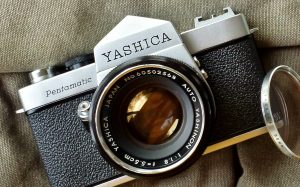
20160326_164016_richtonehdrThe beautiful, simple and clean lines of Yashica’s first SLR.

If you’re new to the Yashica Pentamatic then you’re in luck as this is the best place to be for the most accurate information about the mysterious Pentamatic. First envisioned when Yashica acquired the Nicca Camera Company in the summer of 1958. Yashica needed the technology and manufacturing know-how that Nicca had – focal plane shutters and the ability to build small complicated 35mm SLRs.

The timeline as best as we can tell looks like this – Yashica “invents” the Pentamatic in the summer of 1959. Yashica files for the trademark ‘Pentamatic’ in Japan September 18, 1959. The first Pentamatic bayonet mount lenses are made by Tomioka Optical for Yashica in October 1959. The first Pentamatic bodies roll off Yashica’s line by December 1959.

Yashica files for a patent/trademark in the US on February 12, 1960. The Pentamatic ’35’ is revealed at the ’36th Master Photo Dealers & Finishers Association Trade Show’ (St. Louis) in late March 1960. The lens shown on that Pentamatic is an Auto Yashinon 5.5cm f1.8 lens (SN 59100035). By April-May 1960, the first pictures appear in photography magazines in the US from the St. Louis show. The first Yashica Pentamatic ’35’ advertisements appear in both ‘Popular Photography’ and ‘Modern Photography’ magazines in their June 1960 issues. Ads within those publications have dealers in New York selling Pentamatics for $159.95.

JN Pentamatic SN 16000375Decoding serial numbers… Yashica has never been upfront with the dating of their cameras, lenses or printed materials. Instruction booklets and sales brochures are only occasionally dated and those were mostly in the 1950s and then again in the 1970s. Camera bodies and lenses (and accessories) remained a mystery until now. We believe we’ve finally decoded the serial numbers of Yashica’s first 35mm SLR, the Pentamatic. Look closely at this camera’s serial number… 16000375… knowing a little bit about when this camera was “invented” helped us decode the number. The trademark “Pentamatic” was filed by Yashica in September 1959 in Japan. The first lenses were built in October 1959 with the first bodies produced by December 1959. This camera (above) dates… 1 = January / 60 = 1960 / 00375 = 375th unit made since December 1959. The latest camera in our database has a serial number of 16115756. This decodes to… January 1961 and was the 15,756th unit produced since December of 1959.

16233739912_d43f6fb30f_oThis Pentamatic body (above) decodes to… 3 = March / 60 = 1960 / 01500 = 1,500th made up to that point.

Bold bright colors...

Clean simple lines. Show the customers that this camera was a SLR! Not your dad’s TLR.

30602743445_1099c73935_o

Inspiration and the technical know-how came from the Nicca Camera Company. Pictured on the left is an early Nicca 3-F.

25991482796_f4202464c2_o

By May 1960, number 3,354 had been made.

31843606654_3798679907_o

Earliest lens serial number (in our collection) decodes to – October 1959, the 92nd made. The ad behind it is a much higher serial number and appeared in a June 1960 ‘Popular Photography’ magazine ad.

The original Pentamatic ’35’ is a fun and challenging camera to collect. Knowing a little something about the serial numbers may add to your enjoyment of the chase. There was a short lived Pentamatic II (well less than 10K made) and another short run of the Pentamatic S which was the last model before Yashica ditched the Pentamatic bayonet mount in favor of the universal M42 mount.

Happy hunting! Questions? We’ve got answers.

Chris & Carol


Cocoa Beach Firefighters – 1972

Cocoa Beach, Florida firefighters, May 1972

As part of my college ‘Photographic Documentation’ classes at Hydrospace Technical Institute (a mouthful), I decided to join the Cocoa Beach Fire Department as a volunteer firefighter trainee in the Spring of 1972. The highly trained professionals at the station agreed to train me and allowed me to document their activities for my class. Since Cocoa Beach is so close to the Kennedy Space Center at Cape Canaveral, the firefighters at Cocoa Beach had access to better personal gear (Lexan helmets and other high tech safety equipment) than other departments that were not expected to respond to a rocket related mishap. I hope to post a series of images over the next few weeks as more will be discovered in my archives. I’m sorry to say that I do not have the names of the brave firefighters I have pictured. I will be sharing my images with the current personnel of the Cocoa Beach Fire Department via their Chief.

IMG_20170316_0022

IMG_20170316_0028

IMG_20170316_0027

IMG_20170316_0016

IMG_20170316_0017

IMG_20170316_0025

IMG_20170316_0019

My favorite truck. 1970 Chevrolet 4×4 Suburban Rescue Unit. Way cool!

21933932479_540973dd3f_o

Me and my favorite truck!

Camera:  Yashica TL Electro-X

Lens:  Auto Yashinon 50mm f1.7

Film:  Kodak Plus X Pan

Processing:  Self processing

Scanner:  Canon CanoScan 9000F Mark II

From a collection of recently ‘found’ negatives from 1972.

Many thanks to the personnel of the Cocoa Beach Fire Department for their expert training and friendly advice. They took the more than a few of us college kids in and it was a great experience for all. When I went on to join the U.S. Navy in 1975, I put my background in firefighting to good use aboard the three aircraft carriers that I served aboard.


Reflections – 1972

Self portrait at 18

Cocoa Beach, Florida March 1972

IMG_20170316_0010_NEW

Camera:  Yashica TL Electro-X

Lens:  Auto Yashinon 50mm f1.7 lens

Film:  Kodak Plus X Pan

Processing:  Self processed

Scanner:  Canon CanoScan 9000F Mark II

Part of a collection of negatives that I shot while at college in South Florida. These have never been printed and have only just recently been ‘found’ again. Wow, 45 years ago!

Fujifilm Neopan Acros 100 & Fujica GW690

IMG_20170316_0002_NEW

Testing our Fujica GW690 medium format camera and Fujifilm Neopan Acros 100 film. Captures the details, grays, shadows and textures nicely on this 130 year old brick wall on Centre Street.

Processing:  The Darkroom

Scanner:  Canon CanoScan 9000F Mark II

Film:  Fujifilm Neopan Acros 100

Camera:  Fuji Photo Film Fujica GW690 ca.1978

Earliest Pentamatic Lenses Found… Yeah!

Nerd heaven! After years of speculation and almost constant searching, we’ve been able to confirm that Tomioka Optical began making lenses for Yashica’s new Pentamatic 35mm SLR camera in the latter part of 1959. The two lenses pictured below confirm (via serial numbers) of an October 1959 start of production. Yashica had filed for a trademark of the name ‘Pentamatic’ in September 1959 (in Japan). Since their new camera used an exclusive mount for its lenses, Yashica designers had to have shared their design with Tomioka as early as the summer (August ?) of 1959.

Using the rule of twos, these lenses are the earliest in our collection.

DSCF3824

By serial number the left lens was built in October 1959 and it was the 92nd lens made. The right lens was built in December 1959 and by then Tomioka had built 1,630 lenses for Yashica.

No.  59 = 1959   10 = October  0092 = 92nd made

DSCF3826

No.  59 = 1959  12 = December  1630 = 1,630th made  

DSCF3827

dscf3477

Here’s our lens matched up to an advertisement in ‘Popular Photography’ magazine from the June 1960 issue. The lens in the ad is No. 59100581 which decodes to – October 1959, lens number 581 in the sequential production run. So in October, Tomioka had made nearly 600 lenses and by December they were up to 1,630 made. Certainly possible that they were averaging nearly 600 lenses per month in late 1959.

It’s a good find for us as the early serial numbers were just a guess on our part as to how they decoded. Having two lenses made before 1960 helped firm up our speculation. Lenses made in 1960 drop the month code in favor of a model number or code. A typical 1960 lens would have a serial number of:  No. 605xxxxx which would be 60 = 1960  5 = model code  xxxxx = production sequence number.

008

Serial number No. 60515001 decodes to 60 = 1960  5 = model code  15001 = 15,001 made since production began in October 1959.

If you’re a collector of Pentamatics or are just interested in Yashica cameras in general, this is important info. We know, total nerd stuff!

Thanks for your visit.

Chris