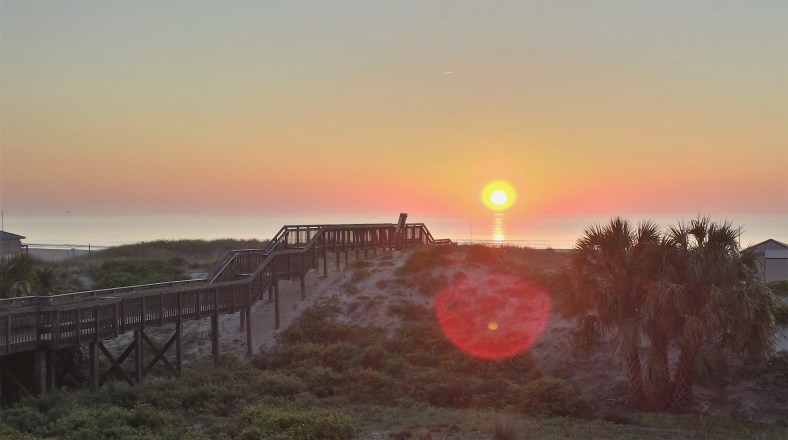
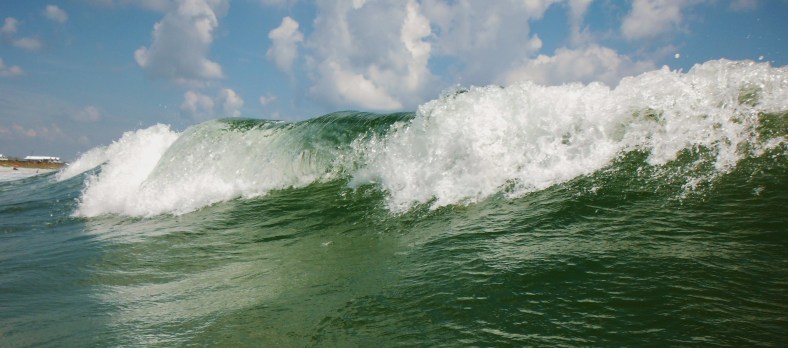
Atlantic waves headed for our Amelia Island shores. Mid day sun turns the clear water into foaming brilliance. Fujifilm XP100.
Wishing for the return of summer on this winter day. ^.^

Atlantic waves headed for our Amelia Island shores. Mid day sun turns the clear water into foaming brilliance. Fujifilm XP100.
Wishing for the return of summer on this winter day. ^.^
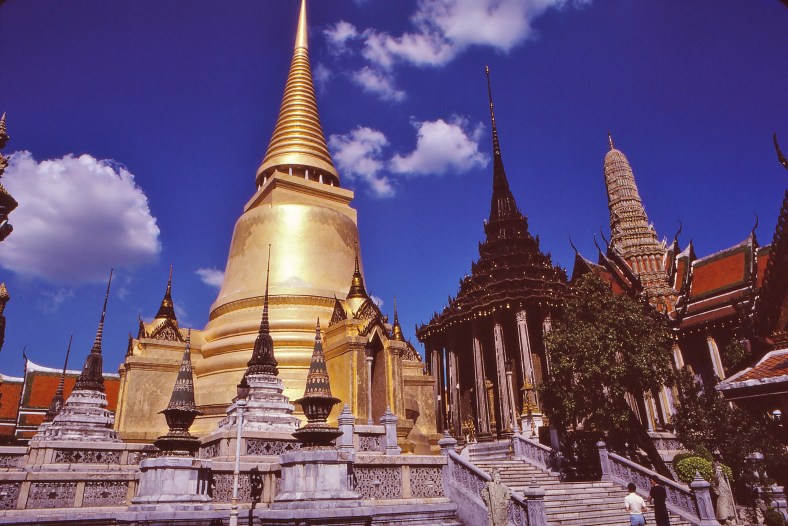
Give me lots of nearly cloudless blue sky, my Canon FD 24mm wide angle lens and some fresh Kodak Kodachrome 25 and I’m a happy guy!
This is just a few images from my port visit to Pattaya Beach, Thailand in December of 1978. I managed a couple of off days to make the crazy (back then) trip to Bangkok.
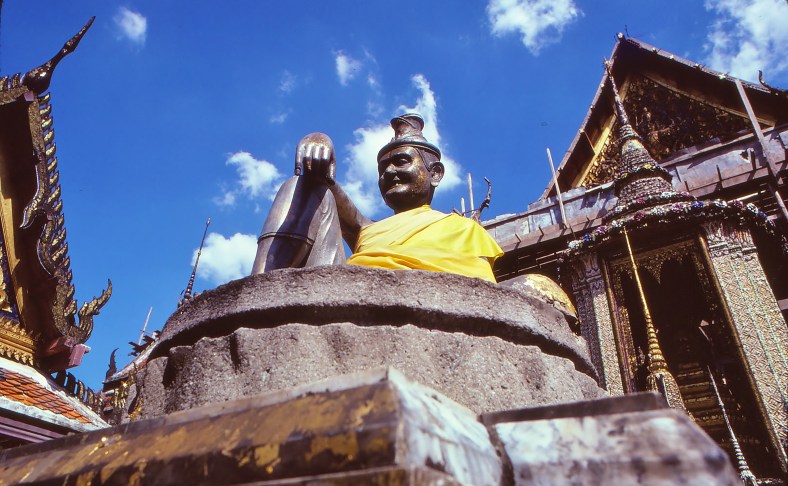
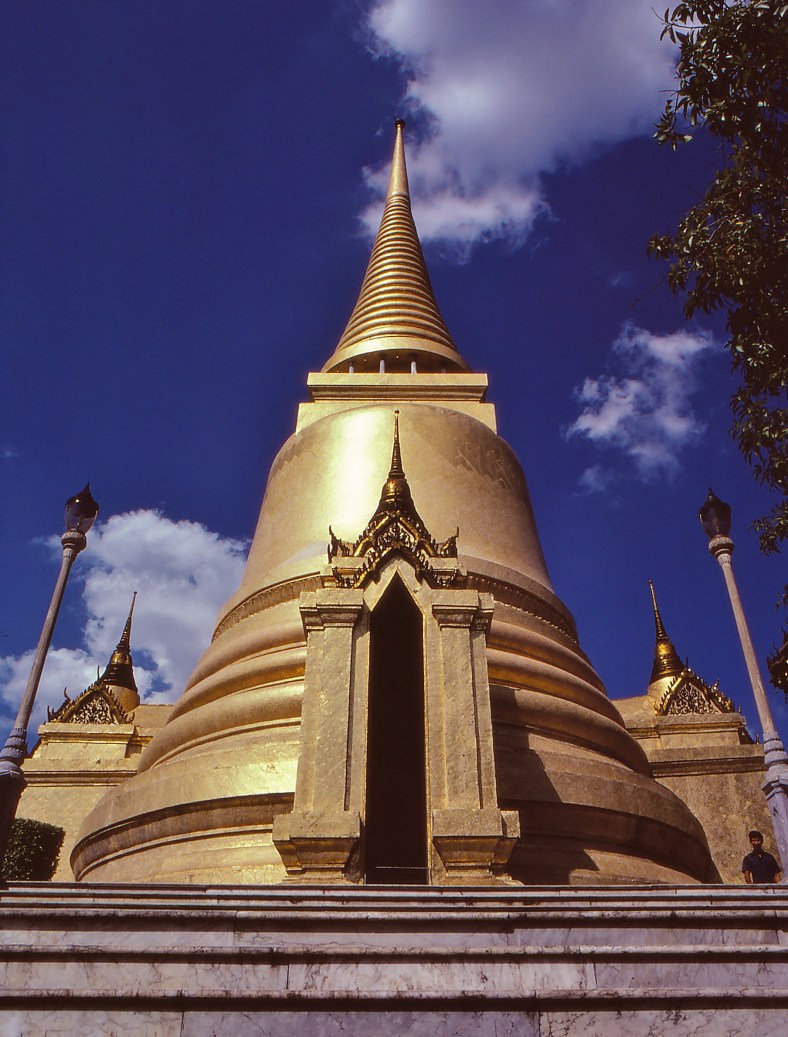
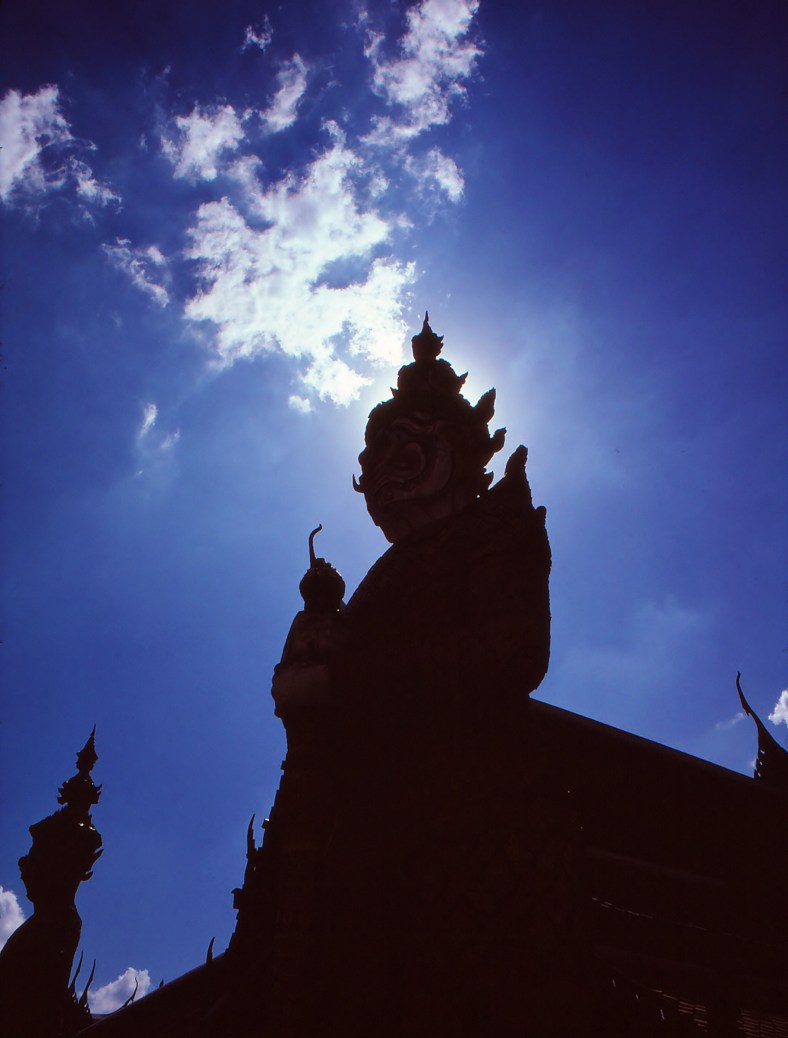
My “follow me everywhere” Canon F-1 (1978 version) loaded with Kodachrome 25 and my FD 24mm f/ 2.8 lens captured these images at Wat Phra Kaew in central Bangkok.

This guy always makes me smile.

Young monks taking a break.

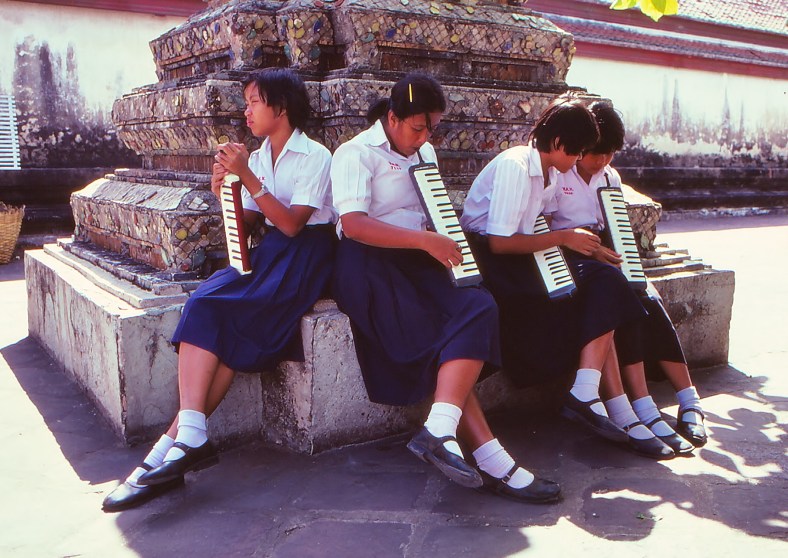
Very shy ladies practicing their music.

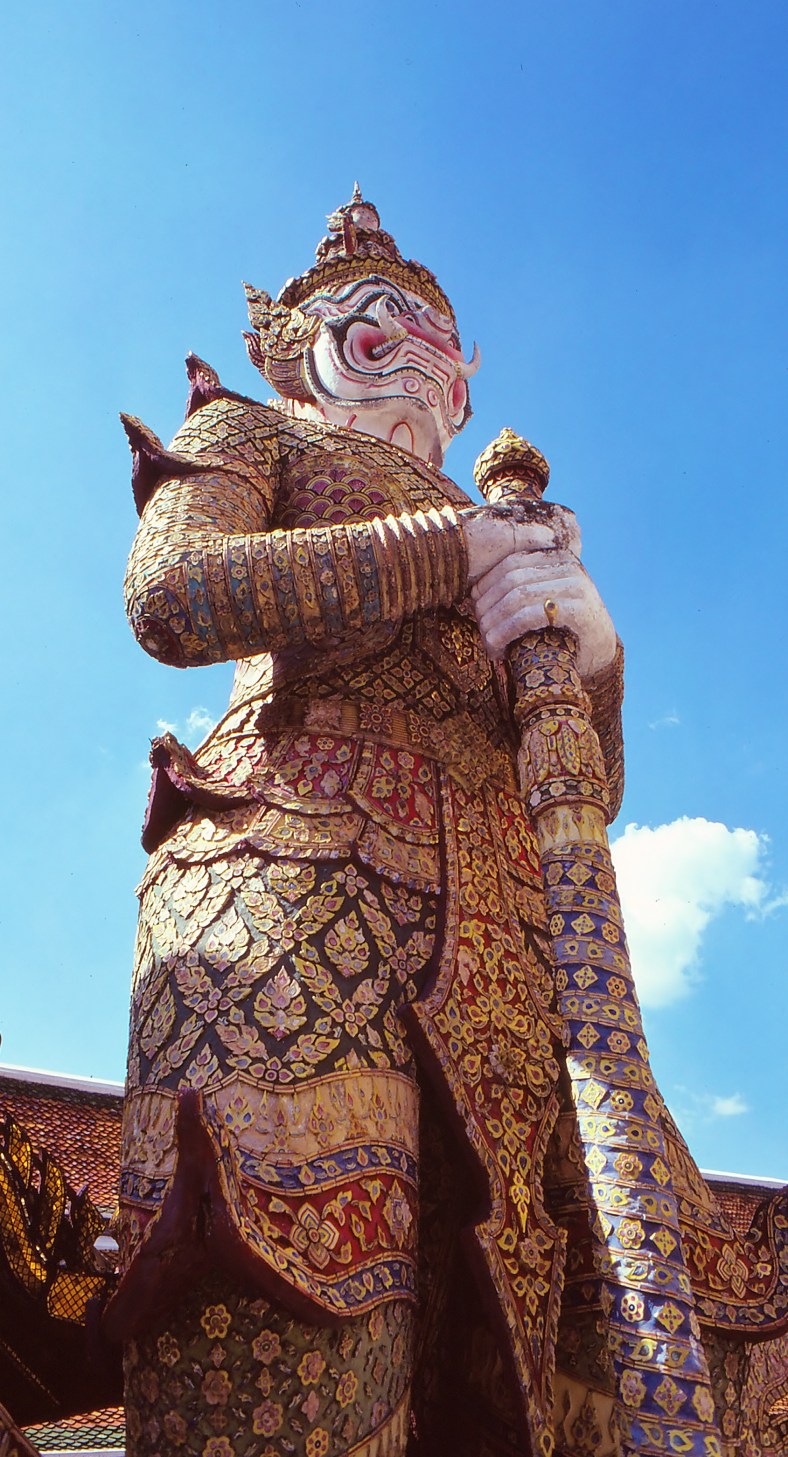
Nothing like turning your 24mm lens for a tall vertical shot. The Kodachrome and Canon lens captured every detail.

Almost 40 year old Kodachrome. Still as brilliant as ever!

The F-1 metered this shot perfectly.

Gotta have at least one silhouette in the mix.
An amazing country to visit. The colors of everything just popped! Mid December sun angles were never a problem. Bright blue skies helped with capturing the details as I was able to stick with ASA 25 even when hand holding my FD 80-200mm lens.
Thanks for your visit!
Chris

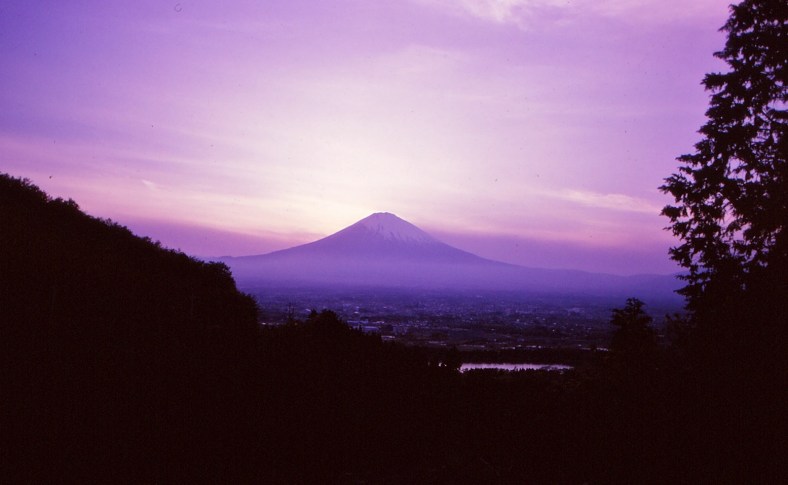
Mount Fuji from Yokohama.
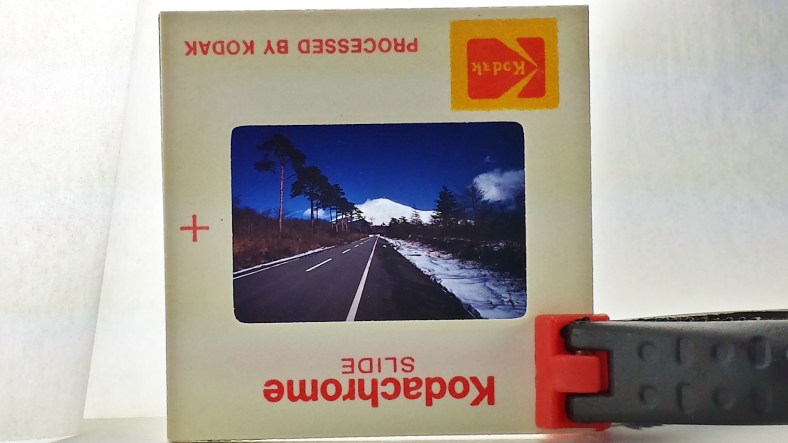
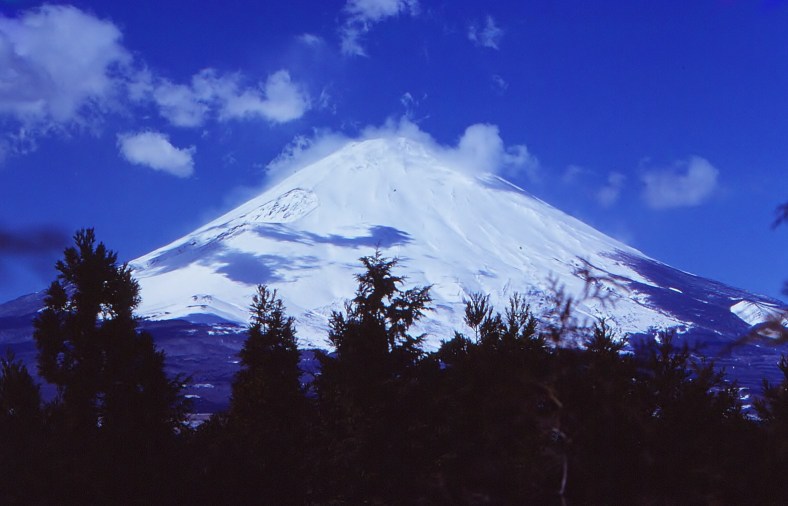
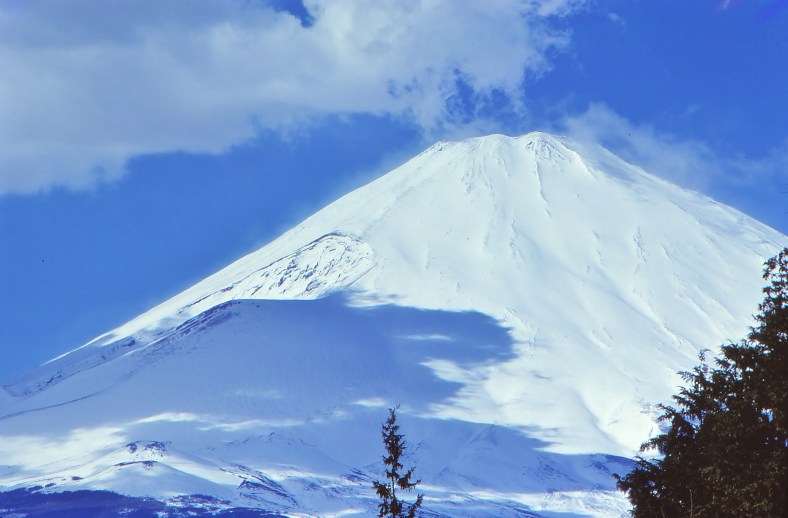
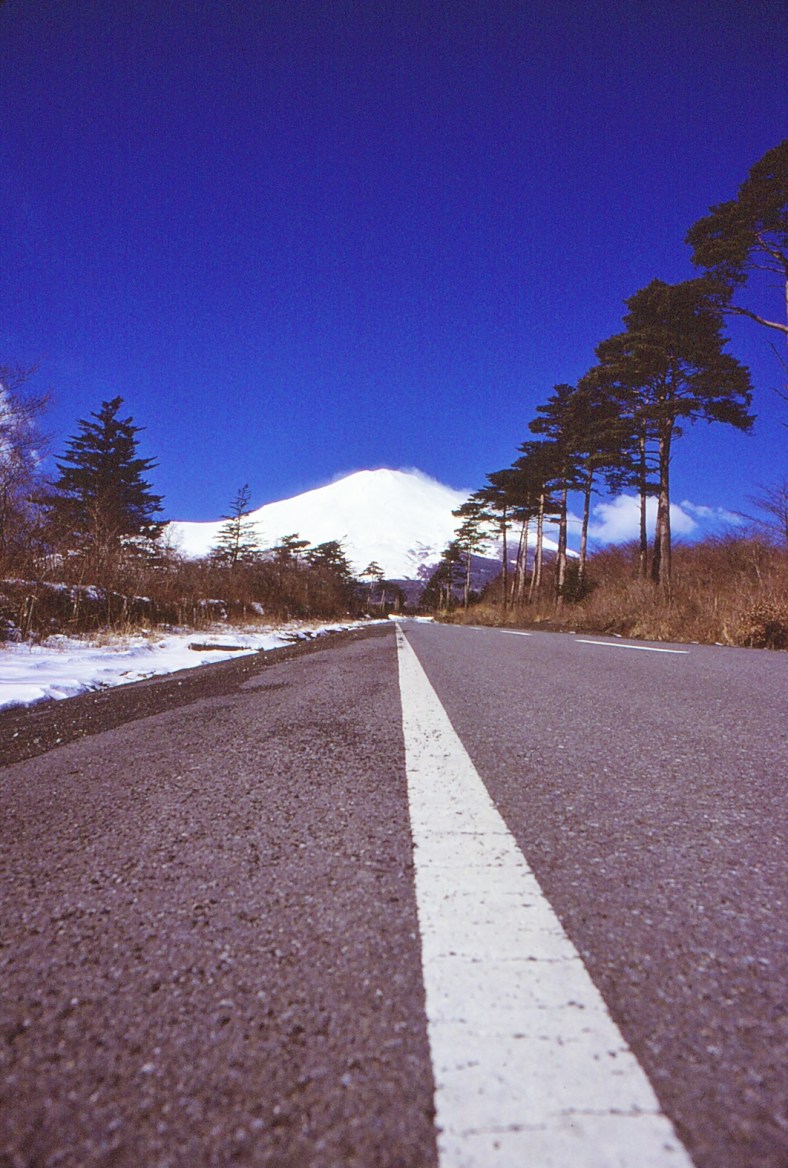
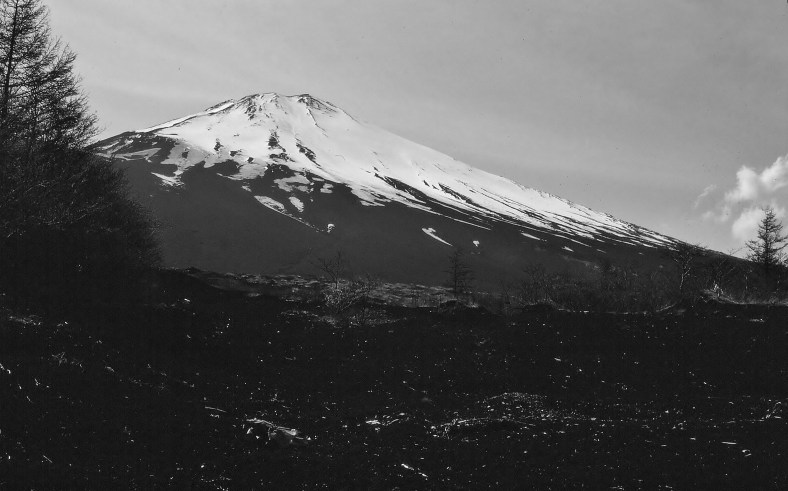
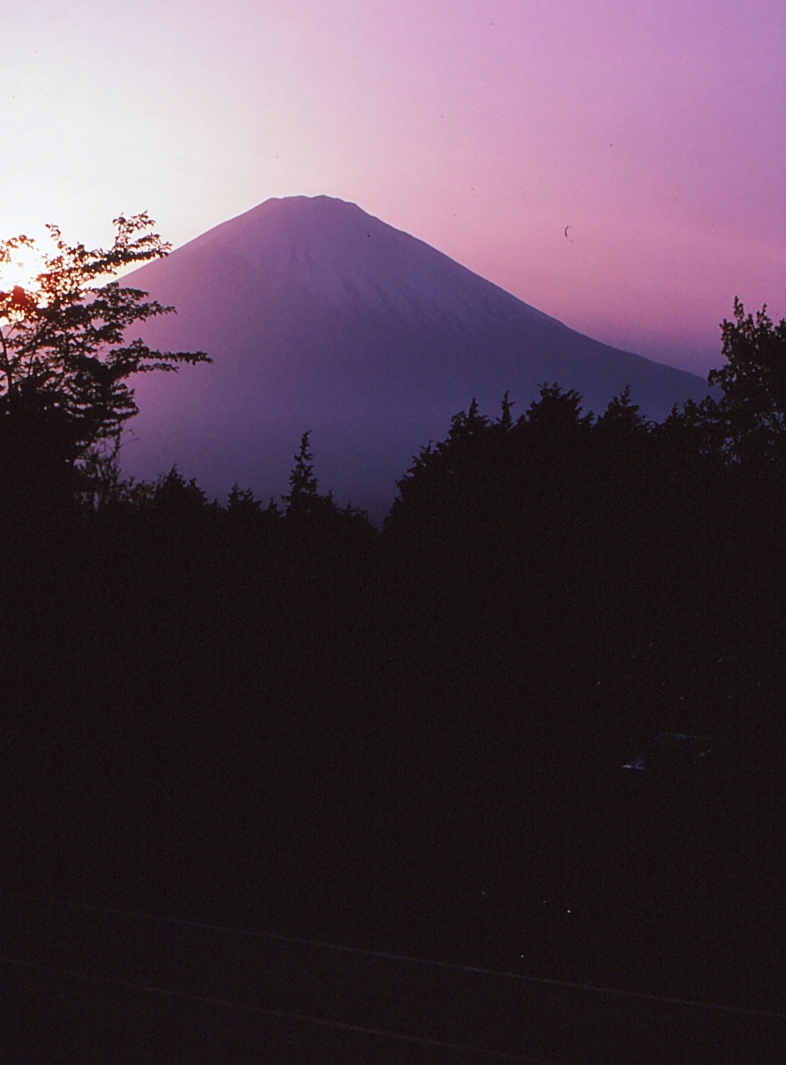
That simple four letter word needs no other introduction. Known the world over for its beautiful conical shape. We were lucky to live in the Naka Ward in Kanagawa Prefecture and would often have this view to our west on a clear evening. Carol and I never grew tired of looking for it whenever we traveled somewhere new – hoping to see it from a new vantage point. These images are but a few of the hundreds of images of Fuji. They are in no set order and all were taken from 1977 to late 1979. Primarily shot with a Canon F-1 (1978 version) and a Canon AE-1.

Our go to film while living in Yokohama. Kodachrome holds up well over the years when properly stored.

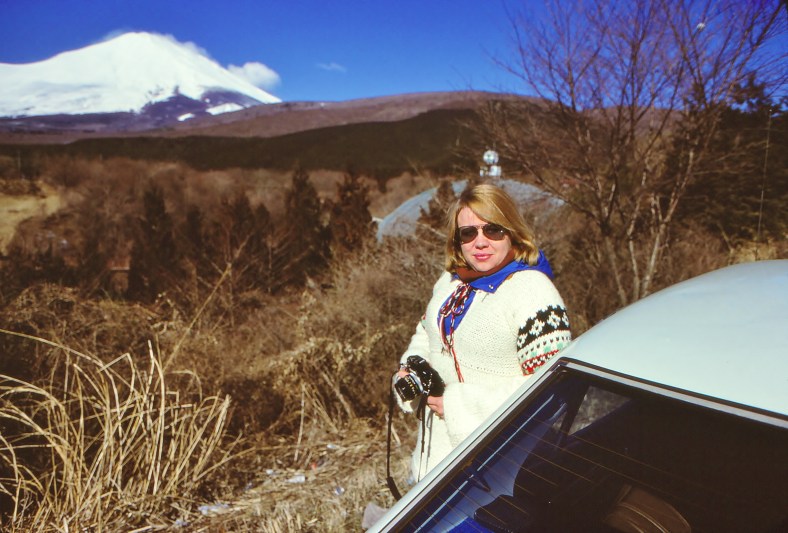
Freezing cold and crystal clear winter day near the base of Fuji.

Carol enjoying the view and freezing to death while doing so.

Canon F-1 with FD 80-200mm zoom lens at 200mm.

Road trip to Fuji-san.

A reminder that Fuji is an active volcano.

Fuji sunset as seen from the hill behind our home in Yokohama.
We never had the chance to climb Fuji while we were there. The constant deployments of my Navy ship kept me on an unpredictable schedule and made it impossible to find the time during the climbing months. Maybe we will have a chance – we are always hopeful.
Many thanks for your visit.
Chris and Carol
These images were mostly taken in and around Yokohama and Tokyo with my Canon F-1 (1978 version). I used Kodak Kodachrome 25 and on occasion some Kodak Ektachrome 64 (I believe). They are in no particular order and will jump around quite a bit in both year taken and location. Enjoy!
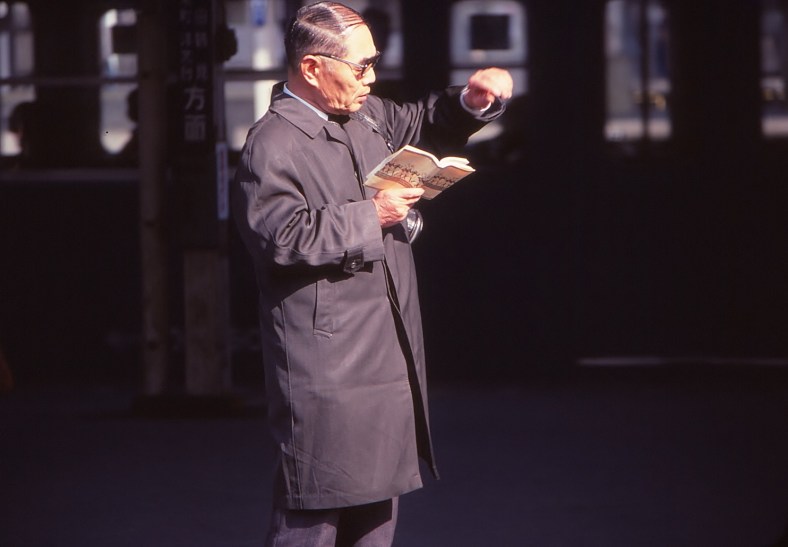
Early morning commuter at the Yokohama train station.
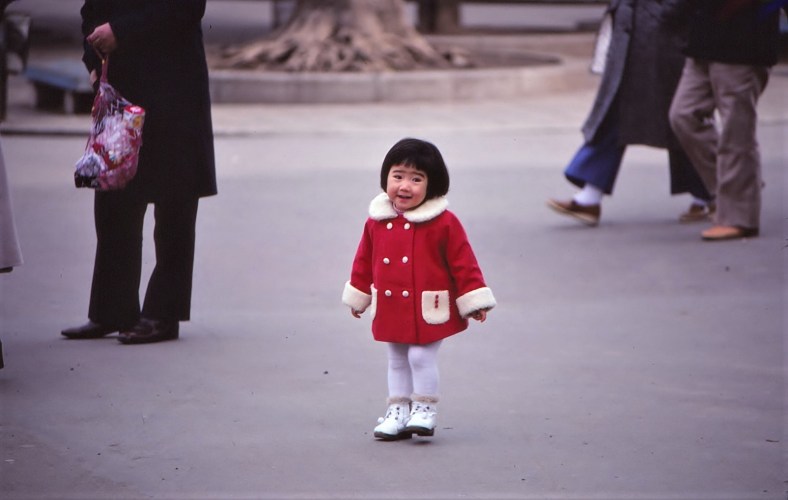
Cute little spot of color at Ueno Zoo Tokyo.
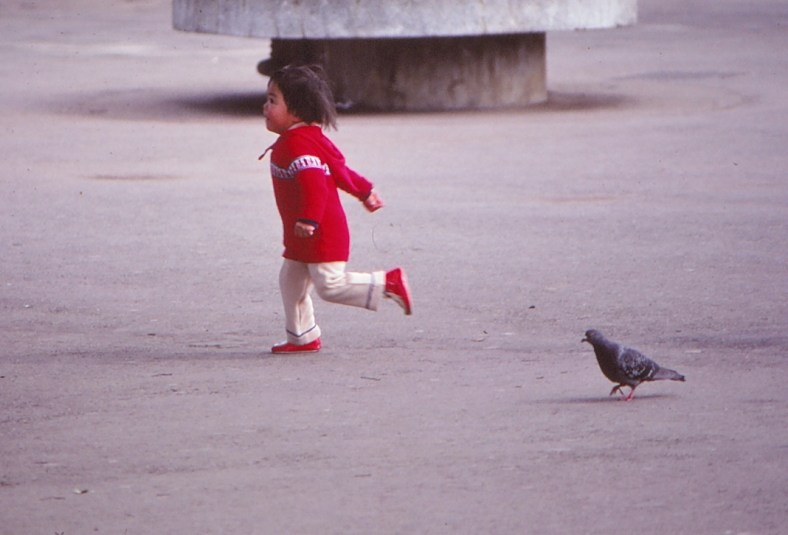
Pigeon racing – Ueno Zoo Tokyo.
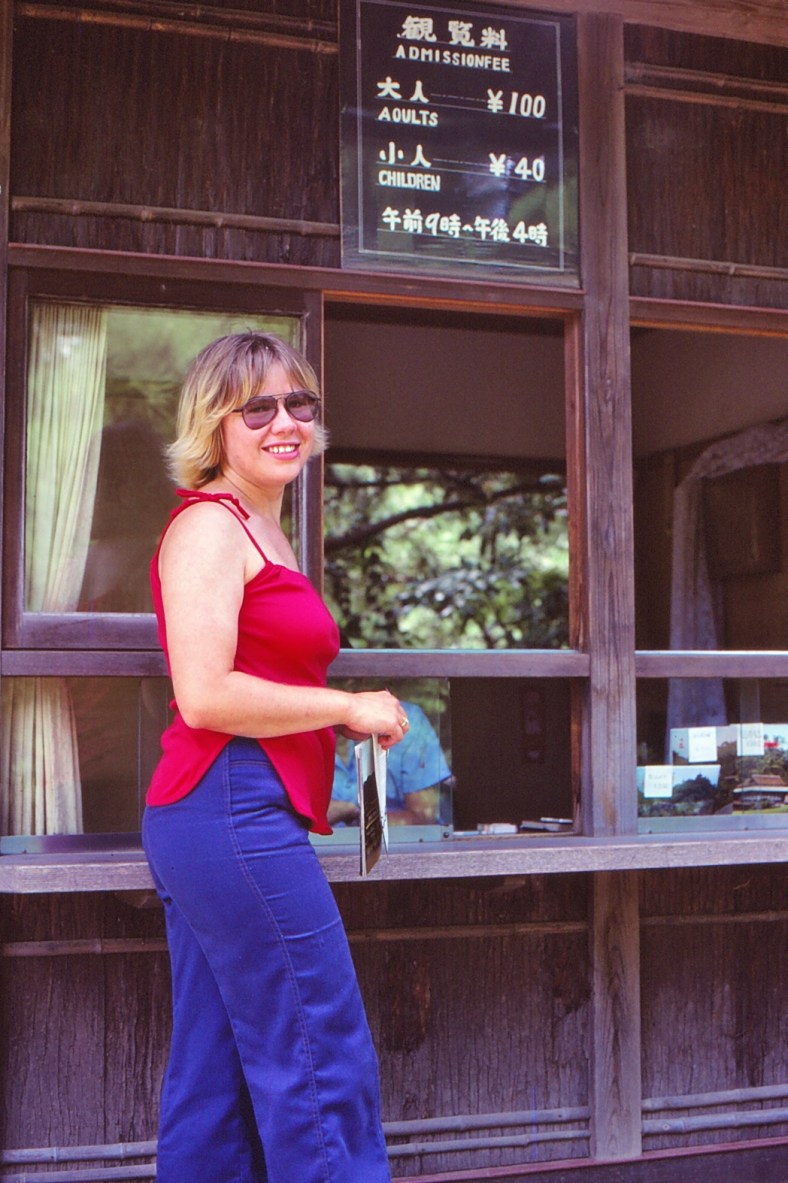
In keeping with red clothing as the central theme, my lovely wife Carol at Sankei-en (Gardens) in Naka-ku Yokohama. The admission was about .45 cents US for an adult which made visiting Sankei-en a regular past time for us.
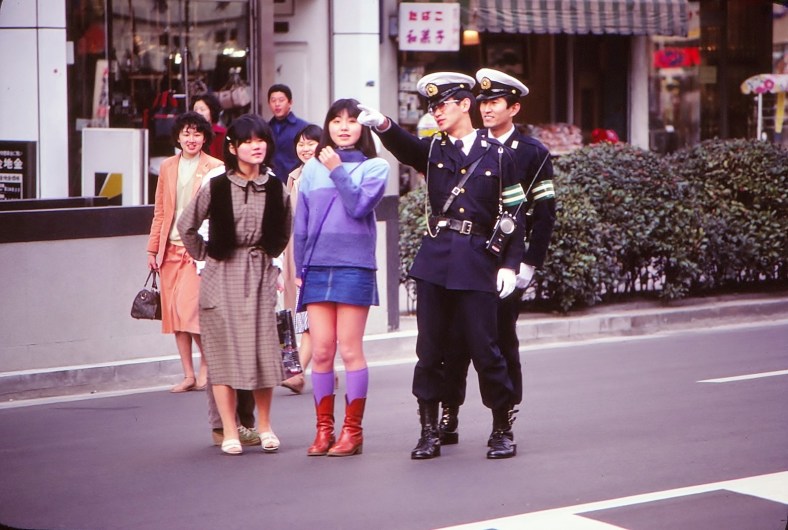
Motomachi shopping street Yokohama, Kanagawa Prefecture. A favorite spot for shopping. As always, the local police assisting lost citizens.
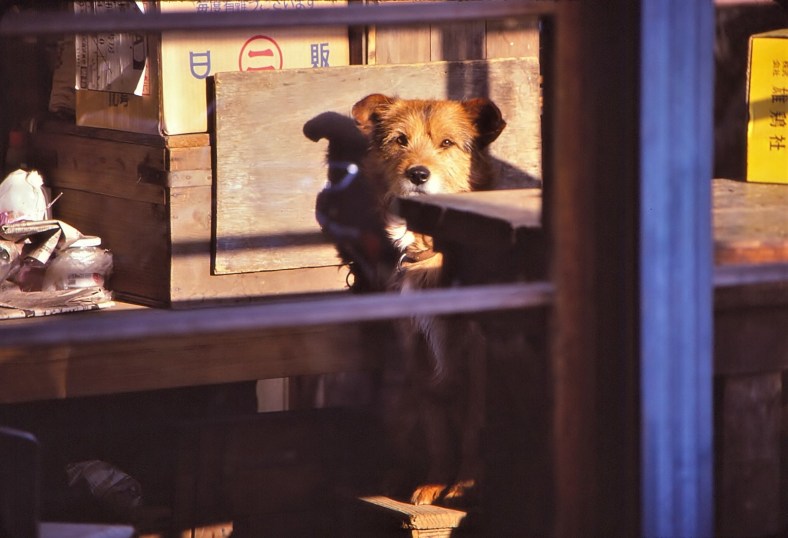
“You watchin’ me… I’m watchin’ YOU”! Watchful shop dog in Honmoku, Naka-ku.
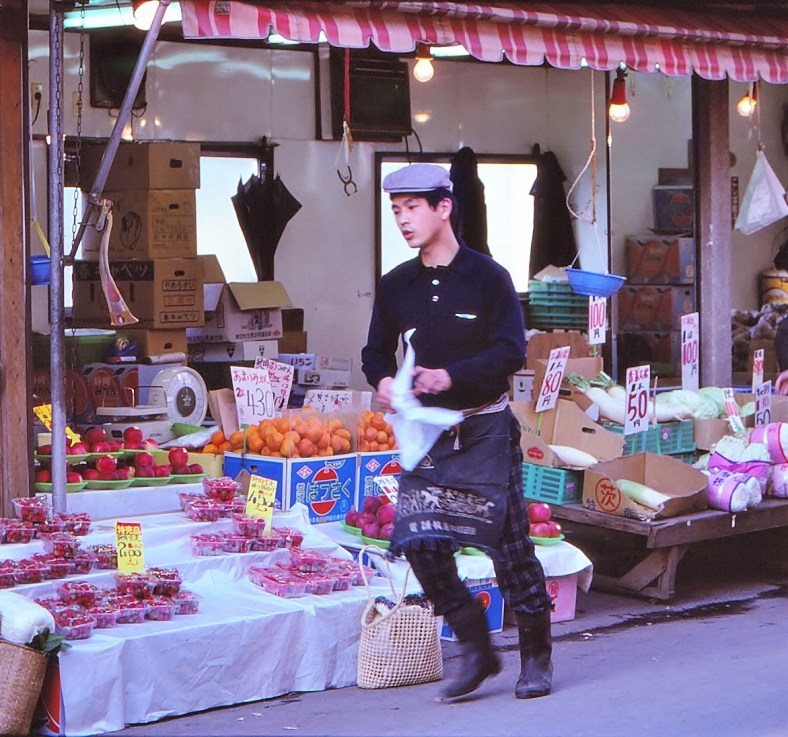
Fast service at a local shopping “street”. A very small back street in Sugita just down the street from the then JNR station. Yokohama, Isogo Ward (Isogo-ku).
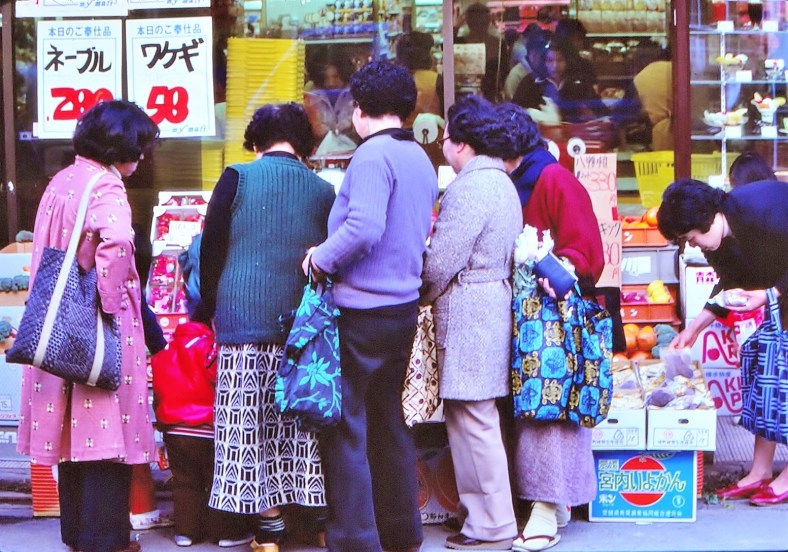
Daily shopping along the street in Sugita.
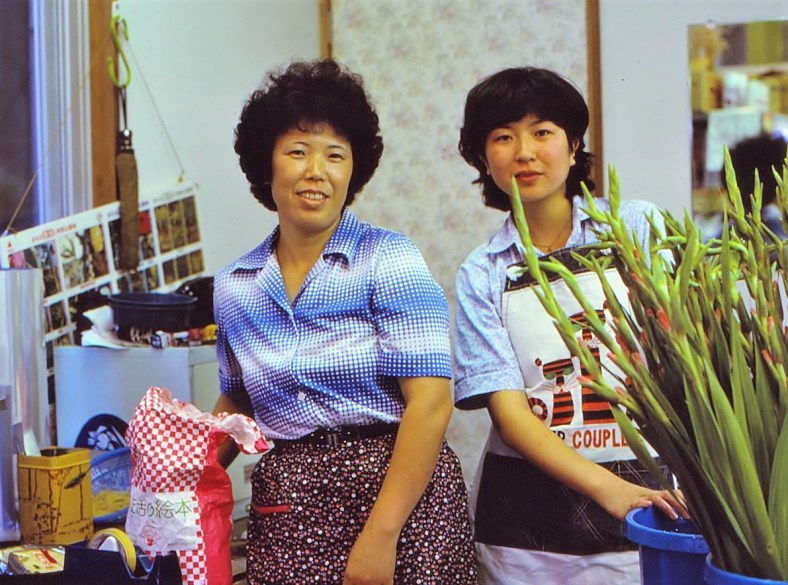
Lovely flower shop ladies in Honmoku (where we lived in Yokohama).
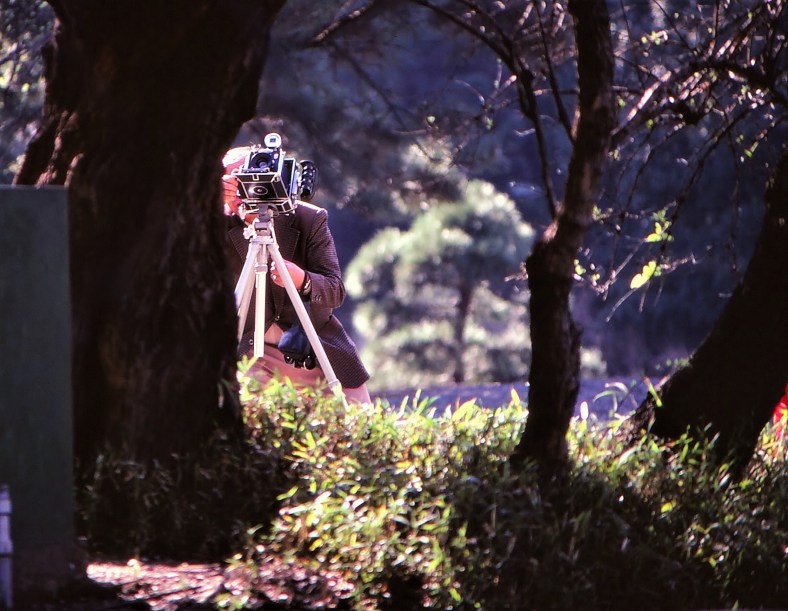
At Sankei-en in Honmoku. Fussing with his gear to capture the perfect sakura picture.
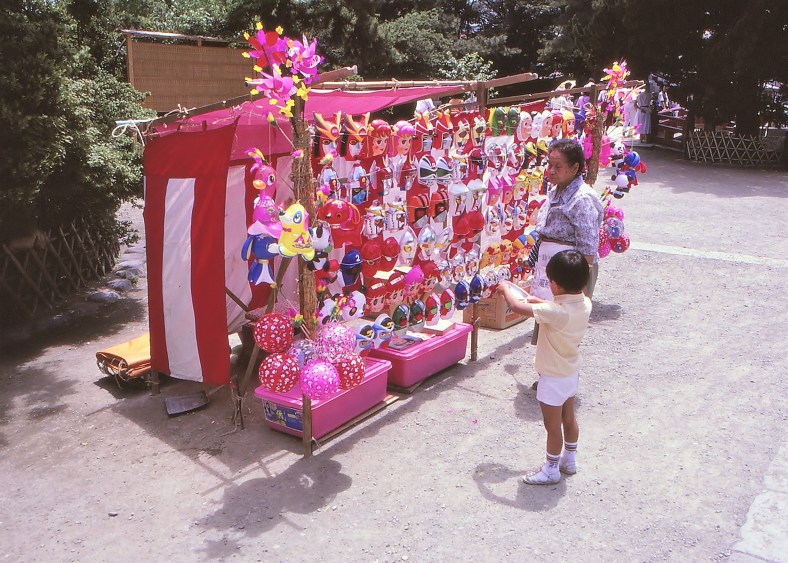
Young customer meets experienced toy vendor. I believe at Ueno Zoo Tokyo.
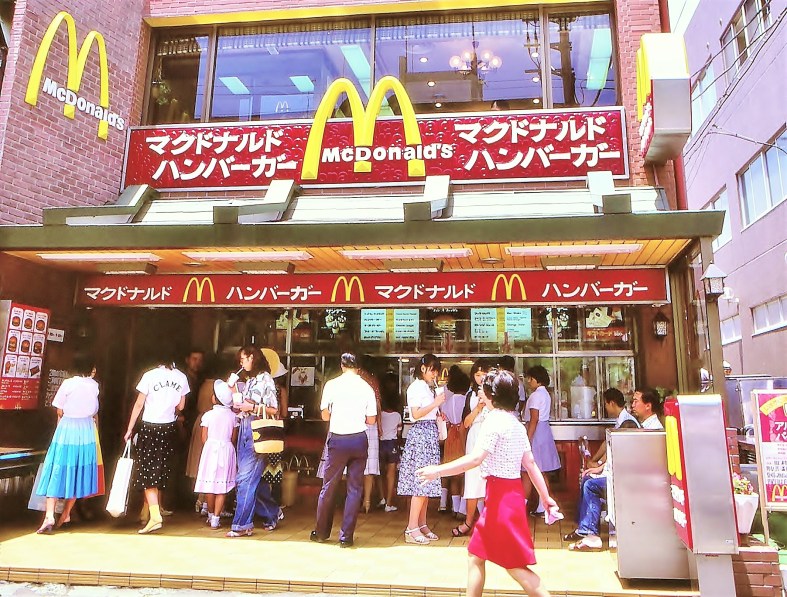
Yep, Mickey D’s in Yokohama.
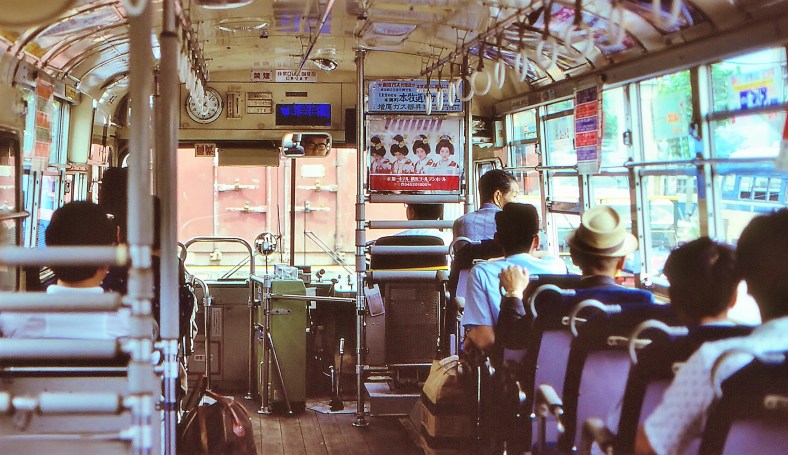
Number 8 bus in Yokohama. The driver keeps his eye on me.
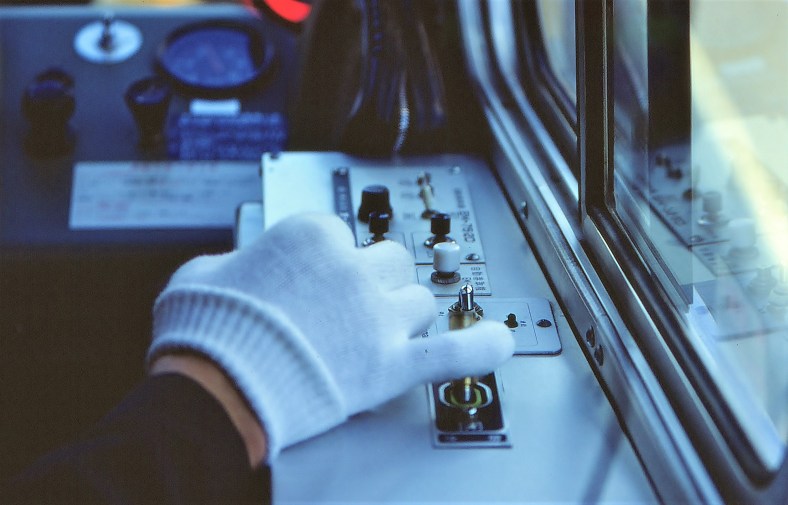
Iconic view in Japan. A professional bus driver and his clean white gloves.
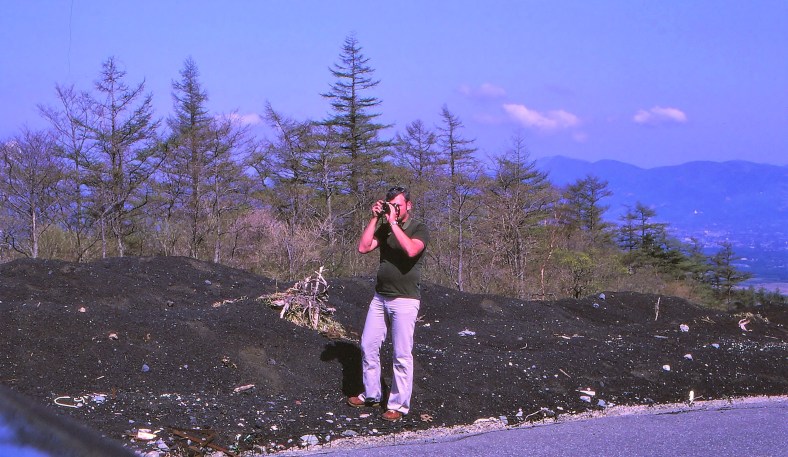
On the road to Mt. Fuji. Taken by Carol with her Canon AE-1.
As always we thank you for your visit. We enjoy sharing some of our images from when we lived in Japan in the late 1970s.
Chris and Carol… and BTW, Merry Christmas!!! ^.^
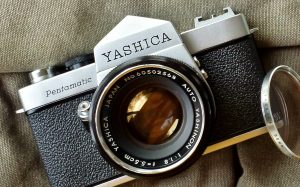
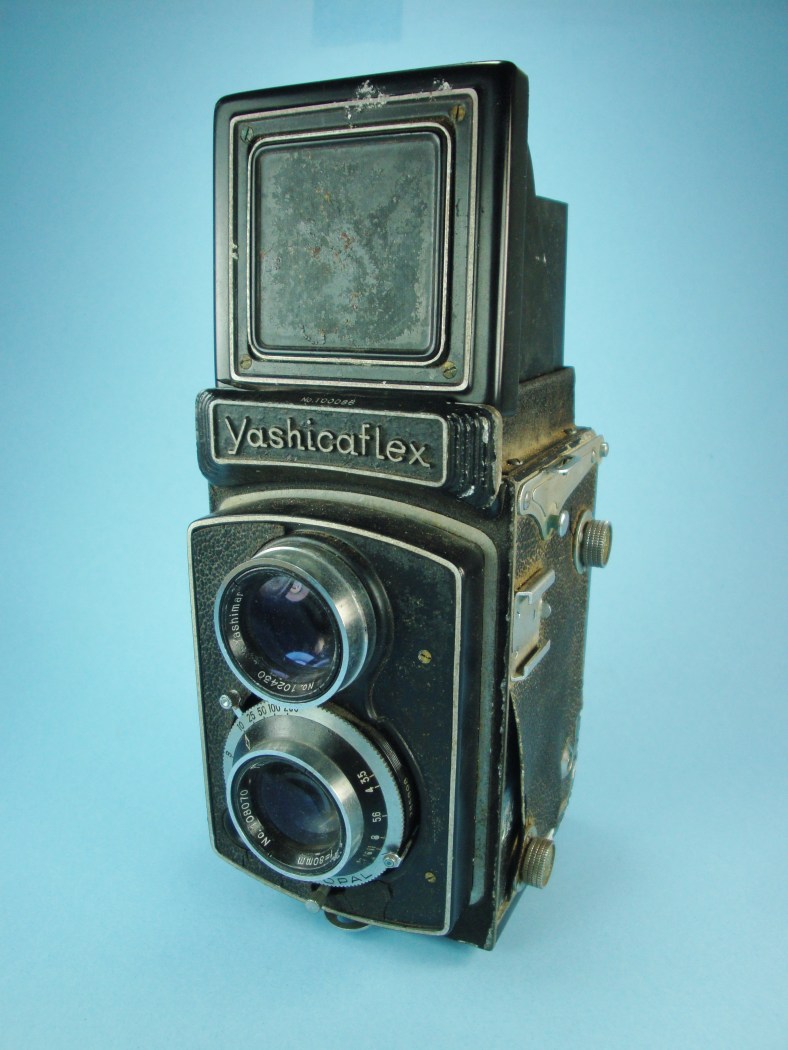
Another of our favorites in the Yashica family. This limited edition J-3 is rather rare to find in nearly new condition these days. We haven’t found evidence from Yashica of the when and why …
Source: Yashica ヤシカ J-3 in Pro-Black
It’s the holiday season for most of us – opportunities to spend some time with our families and give thanks for all that we enjoy in our lives. This will be an especially thankful Christmas for me and my family as we were spared almost certain disaster.
In the rush to get a million things done in only a short time, I was a bit miffed that I couldn’t find a vintage leather camera case for one of my Yashica cameras. I searched everywhere twice and then searched again in the usual hiding spots. Whenever something photographic goes missing, my studio (actually an unused guest bedroom but it sounds better saying “studio”) is the likely hiding place. I checked the open shelving unit that holds the boxes and bins of camera stuff (again) when I caught sight of something wedged behind it between the bottom shelf and the wall. Ah ha I thought, found it! It’s no easy task to move this beast of shelving so I would need to lighten the load if I ever hoped to slide it away from the wall. That’s when I saw it – a small discolored spot on the electrical outlet cover. Thinking that something dirty had stained it, I wedged myself behind the shelves for a better look. As I watched, the small spot became bigger and then the spot turned into something else –

The first clue something was wrong. I saw the small discoloration on the cover – but it quickly became more!
I raced to the garage and ripped open the service panel box and found breaker number 10 – the bedrooms – and switched it off. Then I raced back inside to access the damage. There were no flames and only a small bit of smoke but the spot on the cover and outlet had grown larger. I put the back of my hand near the cover, it was warm but not hot. Convinced that it was no longer burning I dashed out again to find a screwdriver. I removed the cover and was completely shocked to see –

In only a few seconds this is what happened to the outlet box and receptacle.

By this stage of the meltdown the heat had scorched the wood stud that the box was nailed to and blackened the paper facing on the insulation. Seconds before flames I’m sure.
Seeing these images again as I write this has reawakened the panic that swept over me that day. The thoughts of “what if” I hadn’t been home or “what if” I hadn’t gone searching for that case at that very moment or the dozens of other “what ifs” that I can’t think of at this moment.
Sure we thought we were protected. Our home was built in late 1989 and is a modern home in good condition. We are the only owners of the house so that means we’ve lived here for over 25 years now. Our electrical service panel is rated at 200 amps and the wiring is code approved copper 12 gauge with ground. The bedroom is never used so nothing more than a lamp is plugged in at any time.
So what happened? Why didn’t the circuit breaker trip? Why did the short occur? How could this happen to me when I’m one of the most safety oriented guys I know?
The answer, it doesn’t matter how careful a person you are, it’s the unseen electrical dangers that almost destroyed our house. As I dissected what had happened here’s what I’ve learned…

This is the non melted side of the receptacle. Notice the two rusted screws – they were the early warning signs of trouble. The outlet box and receptacle are mounted on an outside wall behind a brick exterior. Although there’s a vapor barrier (I hope) behind the brick and wood sheathing it’s still an unheated space – moisture in the air condensed on the terminals and caused rust. The rust loosened (slightly) the connections and created resistance which led to heat which led to the short and meltdown.
Now please understand that I am not an electrician and the points I make here are my unprofessional views of what happened. What I hope you can take away from this is that you need to do regular check-ups of your electrical service and if you see or feel something is wrong, call an electrician to check. You and your families health depend on it (the electrical system) in your house to be safe. Look into installing AFCIs in your home (in the United States). I understand that they are required in new home construction and in some restorations of existing homes and something like it is required overseas (Europe). If I had these AFCIs in my panel box then the power would have been shut off instantly an arc was detected and there would have been no meltdown. Have a blessed Holiday Season!
Please share This story with your friends and discuss it with your family. ^.^ Chris

Nothing says Florence like the Cathedral of Florence. Canon F-1 with FD 24mm f/2.8 lens on Kodak Kodachrome 25.
In presenting a short series of images of Florence (one of the most beautiful of all cities in Italy), it’s a tough call on which images to include. In Pisa, it has to be the most famous bell tower in the world. I imagine for Rome I would choose the Coliseum – Colosseum or the Vatican. Since there’s so much beauty, history, art and architecture at every turn in Florence it’s nearly impossible to choose the one to use first. My visit to the Tuscony Region was in late October 1986 – the weather was perfect and the visibility was awesome!
My camera was the Canon F-1 (1978 version) with three lenses to use: FD 24mm f/2.8, FD 80-200mm f/4 zoom and the normal FD 55mm f/1.4. Since sunlight would be in abundance, Kodak’s Kodachrome 25 fit perfectly with the days shooting plan (no interiors in the plans).

Vista view to the north… FD 24mm while hanging the camera over the side of the railing (wobbly pieces of metal) loosely attached to 600 year old stone.

The Duomo with its instantly identifiable tiled dome. FD 80-200mm at about 150mm

FD 200mm braced on the railing.

Back to earth… Canon FD 24mm wide angle lens at f/22

More FD 24mm… my go to lens in the tight quarters of a city. It’s not easy to get all three in the same image.

The Canon’s light meter (spot) handled this tricky exposure well. Yep, FD 24mm lens.
Of course what would a visit to any city be without the required “People and Pigeon” shot.

Happy people and happy pigeons.
This of course is only a very small sample of what’s available in and around Florence and the Tuscany Region. I had only one short afternoon to visit so I was lucky to see as much as I did. The old “someday” I hope to travel back and do it right.
Thanks for your visit!
Chris
Pisa… a gorgeous city filled with unbelievable wonders. Photographic eye candy to be sure. In 1986, shooting with a Canon F-1 and Canon lenses on Kodachrome 25 was as close to “perfect” in 35mm photography as one could hope to achieve (sorry Nikon guys and gals). In appreciation of the all the imperfections and limits of film photography (just like vinyl records), analog photography still moves me. Sure I love digital – some images with digital were impossible with film (or nearly so), but film has a softness of color and detail that I love.
These images were taken in mid October 1986. They’ve received only minor post production after scanning – mostly small crops to remove the edges of the 35mm slide mounts and some occasional color balancing and brightness tweaks. Film used was Kodak’s Kodachrome 25 (perfect for bright lighting and known for its fine grain).
My Canon F-1 (1978 version) and three FD lenses were all that I had in my bag: 24mm f/2.8 wide angle, 80-200mm f/4 zoom and the 55mm f/1.4. The weather was perfect – bright sunshine, low humidity with mild temperatures. Visibility was amazing as a recent cold front had passed through the area and cleared the air of haze and pollutants.

24mm taken on the south side of the tower.

80-200mm zoom. Until you see the tower in person you have no sense of the dramatic lean. Just amazing that it’s stood since 1327 like this.

The tower as a sundial. 80-200mm zoom

In silhouette. 80-200mm zoom hand held.

Holding the tower upright. 200mm

Enjoying the view to the north.

Pisa cathedral. 24mm

Gelato and soda. 80-200mm zoom at 150mm

Art in the streets. 55mm
An amazing city worthy of your visit.
Chris
The lighthouse at Montauk Point, Long Island, New York is one of my favorite spots to visit ever since I was a child growing up on Long Island. As a kid, the main attractions for me were – the ocean, the countless rocks in that ocean (big and small), the hills (Long Islanders are hill challenged) and finally the lighthouse itself. As I got older, the main attraction was the lighthouse with the other ‘likes’ fading into the background. When I earned my New York driver’s licence, Montauk was my first long drive from my home by myself. When I became a certified SCUBA diver, the waters near the lighthouse looked tempting for a dive but the great whites known to frequent the cold waters off Eastern Long Island kept me ashore – so I headed to Florida instead.
While going through some of my many mountains of slides from my collection, I came across these images of the lighthouse. The first set of photographs are from August 1972 and were shot with my Yashica TL Electro-X mostly using the normal Yashinon 50mm lens. The second set of images are from 2002 when I traveled to New York with my family for their first visit to Montauk. The 1972 images show how completely the original Kodak Ektachrome slides have degraded over the years.

August 1972. Yashica TL Electro-X with f/ 1.7 50mm Yashinon lens with 2x teleconverter on Ektachrome 64.

August 1972. The lighthouse in need of a serious restoration. I believe it was still under the control of the U.S. Coast Guard at that time. It’s obvious that 40+ year old Kodak Ektachrome didn’t hold up well – even when stored properly. Most of the vivid original colors have faded and the slide lacks depth.

July 2002. The lighthouse and grounds were looking much better after the restoration. Canon F-1 with FD24mm f/ 2.8 lens on Kodachrome. My son is the little one climbing up the hill (as I had done hundreds of times before).

July 2002. Canon F-1 with FD24mm f/ 2.8 lens on Kodachrome.

T.J. on the rocks… just like me in the 1950s.

The automated light of 2002. Wonderful view from up top too.

Captivating views from up top.

Gotta love the rocks!
If you ever get a chance to travel to Long Island, then the Montauk Point Lighthouse must be on your “to visit list”. It’s very photogenic and lends itself well to the digital age. There are images that a good camera phone today can capture that were a serious challenge to film photographers just 15 years ago. Happy shooting!
Chris
My wife and I lived in Yokohama, Naka-ku (Honmoku) from the Summer of 1977 to early Spring of 1980. We totally enjoyed our time in this wonderful country and are hopeful we will be able to return again. We had our favorite spots – Sankei-en and Kamakura being two of our most favorite. As with any well known attraction, the Great Buddha at Kamakura has been photographed from every angle imaginable. I’ve always enjoyed exploring angles that may not have been tried before.

July 1979. Canon F-1 with FD 24mm lens on Kodachrome 25.

Kodachrome 25. Bright sun. Canon F-1 with FD 24mm lens. It’s what film photography was (is) all about.

More traditional view of the Great Buddha. Steaming hot July day on the Kanto Plain. Yashica TL Electro-X on Kodachrome 64.

Gotta have a tourist shot! We love the antennas on top of Mt. Fuji!
So many things will have changed in Japan since we were last there but they’ll be plenty that will stay the same… forever. Kamakura is one of them.
Thanks for the visit!