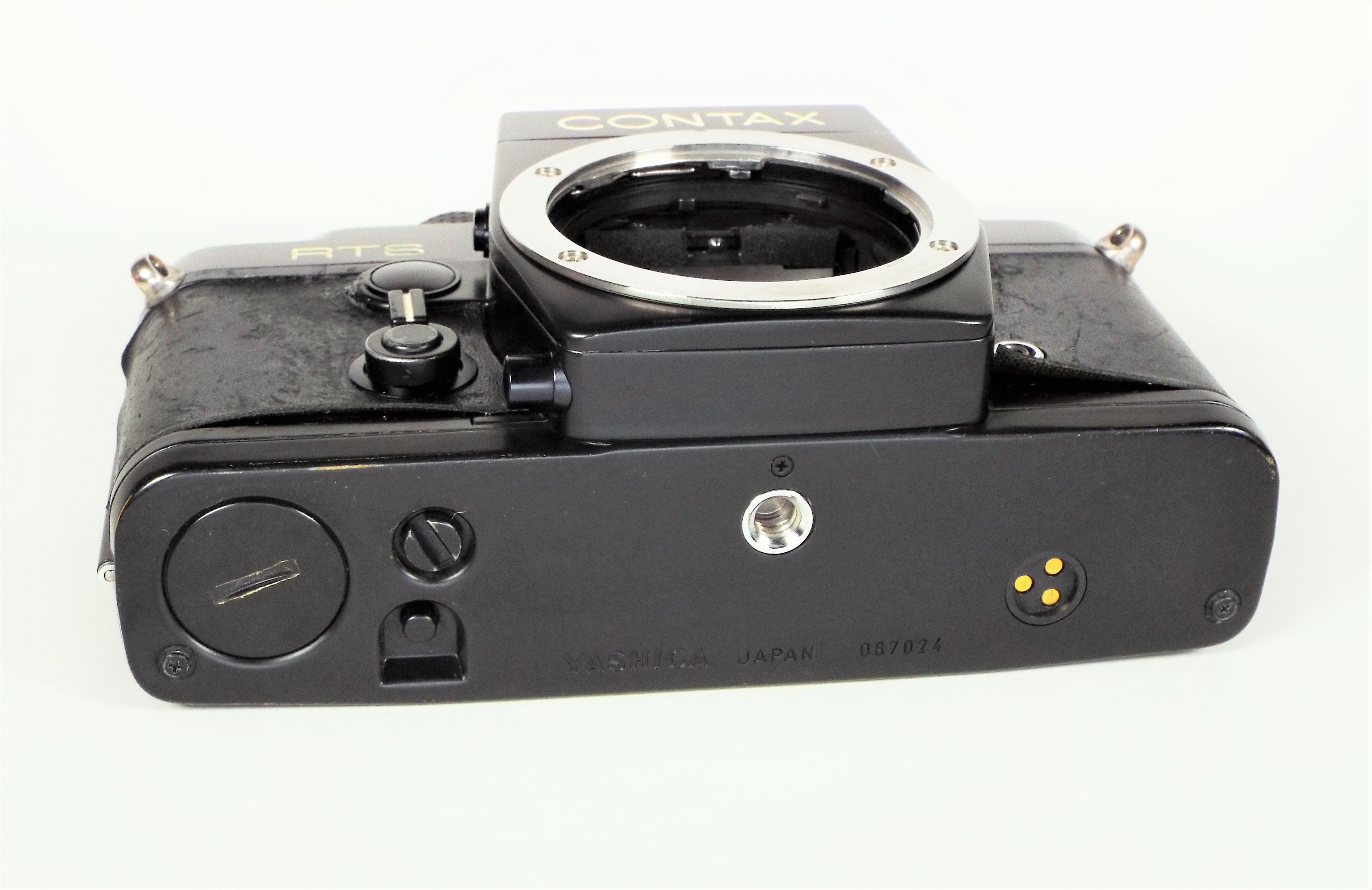
My recently acquired RTS stripped of its faulty skins. It’s a blank canvas and I like the look for now. The mirror is locked in the up position (the little lever to the right of the lens mount).
This scan (below) is from a Yashica marketing brochure from early 1975. There’s been so much misinformation about the origins of the RTS that I thought it would be best to go to the source to get the facts straight.
Lots of flowing marketing speak in there but it delivers with no uncertainties who did what and why. The when isn’t mentioned but many of the pictures inside this brochure are from mid 1974 based on the cameras, lenses, and accessories pictured (not just the RTS stuff). It’s generally believed that the initial talks between Yashica and Zeiss started as early as 1971. I might mention that this was an extremely challenging time financially and structurally for Yashica with some accounting and management issues reported in the global press which led to a bit of a scandal of epic proportions for Yashica’s founder(s).
Some of these accessories weren’t fully developed at the time this brochure was published and I’m far from being an expert on which lens was or was not available. I’ve never looked closely at the Carl Zeiss lens line developed for and with Yashica.
Contax RTS Real Time System.
Comments are always welcomed as I’ve learned quite a bit from reader feedback. As always, thanks for stopping by and while you’re at it, feel free to visit my camera shop at http://www.ccstudio2380.com (CC Design Studios hosted by Etsy). – Chris Whelan
Please respect that all content, including photos and text, are the property of this blog and its owner, Yashica Pentamatic Fanatic, Yashica Sailor Boy, Yashica Chris, Chasing Classic Cameras with Chris.
It isn’t a great way to start off a post about one of your cameras, but it’s appropriate. Especially a camera that I’ve been chasing for a long time and had an interest in since the late 1970s. My first 35mm SLR was a Yashica TL Electro X (purchased new in 1972) with an Auto Yashinon 50mm f1.7 M42 lens (screw mount). I loved that camera but wasn’t a fan of having to screw-in the lenses whenever I wanted to change focal lengths. I saw other photographers quickly attach and detach their lenses quickly (Canon, Nikon) and wanted a new camera that could do the same. But Yashica in 1977 wasn’t sexy enough sitting alongside the other SLRs for sale in the Navy Exchange store in Yokosuka, Japan. The Canon, Nikon, and Minolta reps were better prepared than the Yashica guy to present their products to cash flush Sailors looking to spend their hard earned dollars on new cameras, stereos, and watches. I vaguely remember looking at the then still new Yashica-Contax RTS in the Exchange catalog but wasn’t captured by its specs or looks. The Yashica FR and FR I versions didn’t capture my attention either. By this time I only wanted to get my hands of the Canon F-1 and Canon FD lenses not to mention all of the goodies you could add on to the F-1 (motor drives, a winder, finders, data backs…). So when I got to the store I didn’t even pick up the RTS.
Fast forward to the present and that RTS I didn’t think of much way back then I just purchased 44 years later. I want to see if the Contax RTS is a worthy camera that I missed out on or did I make the right choice. I still own that F-1 I purchased in 1978 and it’s held up beautifully over the years and followed me around the world.
Almost all present day RTS bodies share a common trait – peeling leatherette (or whatever that stuff was). A quick look at the online selling sites will show that it’s a rare camera that has complete original coverings and if it does look good and well attached then there’s a good likelihood it’s been replaced by aftermarket skins (I have some ordered).
My new to me RTS peeling skins and all. Most importantly, it works. Being an all electronic camera if something goes wrong it’s a paperweight. It uses the still easy to find A544 6V alkaline battery to power everything.Not only does the leatherette peel away from the metal body but it dries out and shrinks a bit too which makes it nearly impossible to simply dab some glue behind the upturned edges.It was super easy to peel away the covering on the film door – my guess is that it’s been reattached at some point before with contact adhesive. I cleaned any residual adhesive from the camera with isopropyl alcohol (70%) and some Q-tips and a rag.
Stay with me on this series of posts as I bring this ugly duckling back to life (appearance wise) and put it through some actual film tests. But first, I need to find a lens for it that won’t break the bank. The Carl Zeiss lenses designed to compliment this model are way over my paygrade so I’ll turn to the less expensive and maybe equally competent Yashica ML lenses in the C/Y mount. I have a sharp ML 50mm f1.7 on the way. BTW, RTS stands for Real Time System.
What the covering is supposed to look like.
Comments are always welcomed as I’ve learned quite a bit from reader feedback. As always, thanks for stopping by and while you’re at it, feel free to visit my camera shop at http://www.ccstudio2380.com (CC Design Studios hosted by Etsy). – Chris Whelan
Please respect that all content, including photos and text, are the property of this blog and its owner, Yashica Pentamatic Fanatic, Yashica Sailor Boy, Yashica Chris, Chasing Classic Cameras with Chris.
From the Yashica book The Creative System of Photography. Some of the lenses pictured here are nearly impossible to find today in mint or near mint condition. I do know some intrepid Yashica collectors that have come very close to owning all of this.
To chase down all of this is a pretty monumental task so I’d give it a Chase Factor of a solid 10 (CF-10). Good luck chasers!
Comments are always welcomed as I’ve learned quite a bit from reader feedback. As always, thanks for stopping by and while you’re at it, feel free to visit my camera shop at http://www.ccstudio2380.com (CC Design Studios hosted by Etsy). – Chris Whelan
Please respect that all content, including photos and text, are the property of this blog and its owner, Yashica Pentamatic Fanatic, Yashica Sailor Boy, Yashica Chris, Chasing Classic Cameras with Chris.
This image was scanned from a Yashica TL ELECTRO-X book from 1972 titled The Creative System of Photography.
Taken with a Yashica TL Electro-X and Yashinon-DX 21mm f/3.3 lens at f/5.6 at 1/60 second. Image by acclaimed professional photographer Takeji Iwamiya. Titled “Solarization”.
A scan from the Yashica Yashinon Lenses & Accessories booklet dated December 1973.
As you can see in the above scan, as late as late 1973 Yashica was still marketing their 21mm lens alongside the newer and certainly more modern 20mm ultra-wide lens. The 21mm is a retrofocus lens meaning that the mirror on a 35mm SLR would have to be in the up position as the rear element of the lens was just millimeters away from the film plane. A separate matching viewfinder would need to be mounted on the accessory shoe in order to frame your image. Fortunately an ultra-wide lens usually has such a wide view that parallax error would only be a factor at extreme close-up imaging.
Do to the relative scarcity of the 21mm lens, prices are much higher than one would expect to pay for a ultra-wide lens of a more modern design. If you find the lens in excellent physical and optical condition with its matching viewfinder and original lens case, expect to see asking prices generally north of $500 USD. If you’re lucky, you may get a good one with no issues at around half that price. I give this lens set a Chase Factor of 8 (CF-8) for the reasons stated above. I certainly don’t need it in my collection but it would be a nice to have.
Rear view of the Yashica 21mm DX lens with its matching 21mm viewfinder.
Comments are always welcomed as I’ve learned quite a bit from reader feedback. As always, thanks for stopping by and while you’re at it, feel free to visit my camera shop at http://www.ccstudio2380.com (CC Design Studios hosted by Etsy). – Chris Whelan
Please respect that all content, including photos and text, are the property of this blog and its owner, Yashica Pentamatic Fanatic, Yashica Sailor Boy, Yashica Chris, Chasing Classic Cameras with Chris.
Yashica’s (Kyocera by this point) last TLR model. This one was part of the last run of the model before production shut down in 1986. Yashica (originally named Yashima) started off in 1953 with the obscure Pigeonflex TLR followed by the Yashima Flex and then continued to build TLRs way longer than the market could bear (or need). The good news is that the 124G can be found today in great quantities and cameras as “young” as 35 years-old. It’s a very affordable way to get into medium format photography and in the case of this model, be able to use both 120 and 220 roll film giving you either 12 or 24 exposures.
After about 33 years of making TLRs, this was Yashica’s best.A beauty – here’s what a modern TLR looked like back in 1985.The design of the last box that held the 124G (1985-1986).This gorgeous camera was the first to carry the company name – Yashica Flex made in 1954.
For contrast, compare the Yashima Flex to the Yashica Mat 124G. Their excellent build quality remained throughout the decades. If you’re chasing one of these for your collection you’re in luck because Yashica made a bunch of 124Gs and there’s a bunch still out there. Expect to pay a premium for mint examples but be careful, they’re still older cameras and a host of bad things can happen to them from lack of use and improper storage. Ask lots of questions of the seller if you’re buying online and look for sellers with excellent reputations for selling quality classic and vintage cameras. BTW, not too many of the original Yashima Flex cameras will look like my example pictured above. I was so very lucky to buy mine from the original owner in Japan who obviously kept it in pristine condition both physically and mechanically.
Comments are always welcomed as I’ve learned quite a bit from reader feedback. As always, thanks for stopping by and while you’re at it, feel free to visit my camera shop at http://www.ccstudio2380.com (CC Design Studios hosted by Etsy). – Chris Whelan
Please respect that all content, including photos and text, are the property of this blog and its owner, Yashica Pentamatic Fanatic, Yashica Sailor Boy, Yashica Chris, Chasing Classic Cameras with Chris.
A beautiful monster. That’s how I described this camera to a friend. A beautiful heavy monster is what it felt like in your hands and no way was I going to use the neck strap. It’s also a camera that I wish I still owned because I really didn’t get to shoot with it as much as I’d liked to.
The true beauty of this camera was the 6×7 cm negatives or color slides that it produced. It was advertised as an SLR albeit a giant SLR with through the lens metering, easy and quick focusing, interchangeable lenses, backs, viewfinders, and more but I couldn’t get over its bulkiness and weight. So it was passed on to another collector and to this day I wish I still owned it.
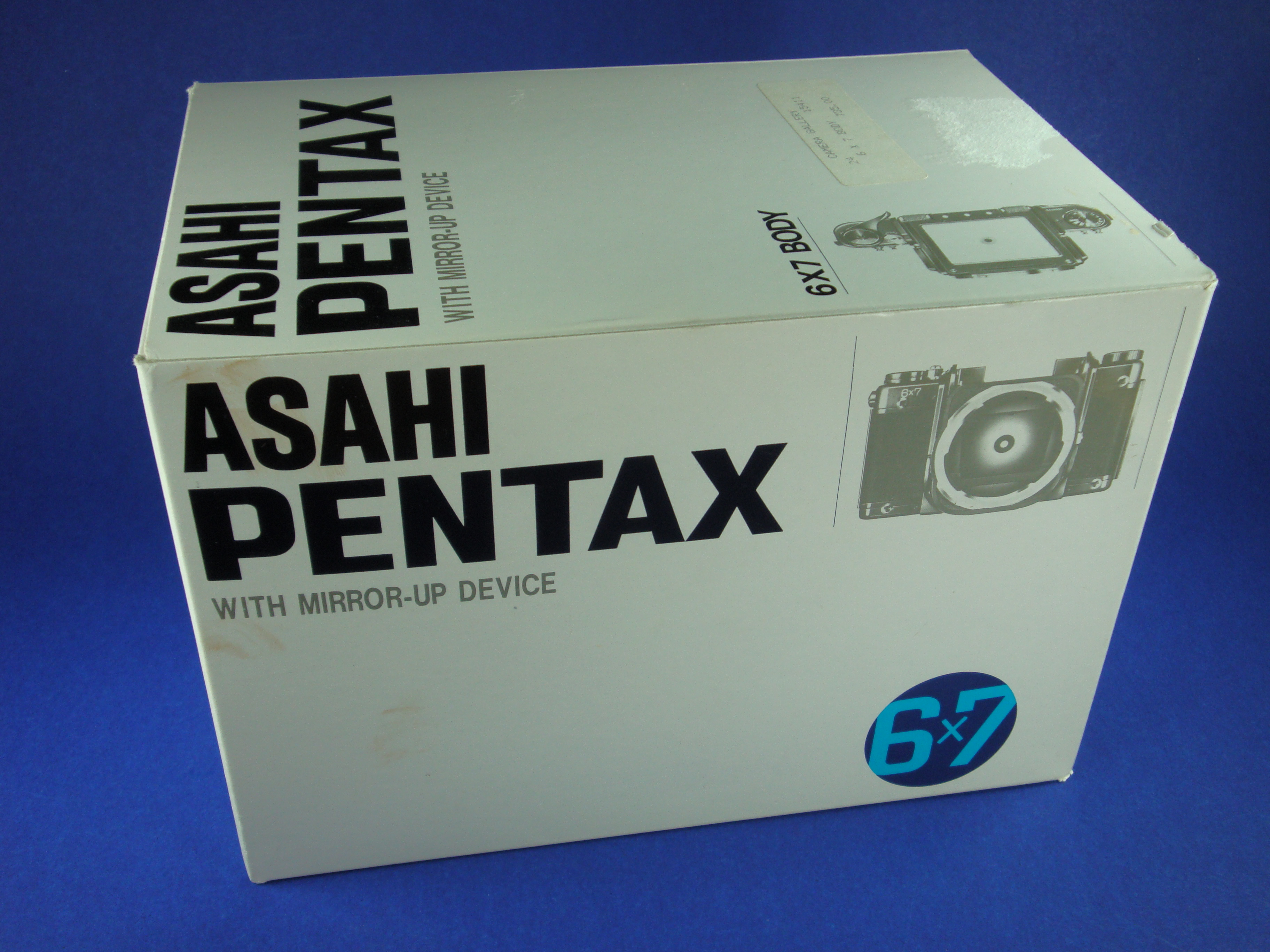
Chase Factor. CF7 considering that there’s a bunch of them out there online but it’s a hard camera to find that checks all of the necessary boxes – condition, appearance, functionality, and price. In my case I was lucky to find mine still in it’s original box and in nearly mint condition (and fully working) but I was afraid to take it in the field or on a photoshoot because the collector in me was worried it would get scratched or damaged and eventually hurt its resale or collector value. It’s hard to have a collector grade camera also be your shooter.
believe me, that large wooden handle was worth its weight in gold. It provided a solid grip on the beast.
Comments are always welcomed as I’ve learned quite a bit from reader feedback. As always, thanks for stopping by and while you’re at it, feel free to visit my camera shop at http://www.ccstudio2380.com (CC Design Studios hosted by Etsy). – Chris Whelan
Please respect that all content, including photos and text, are the property of this blog and its owner, Yashica Pentamatic Fanatic, Yashica Sailor Boy, Yashica Chris, Chasing Classic Cameras with Chris.
A fun part of chasing collectible cameras is finding unexpected gems amongst the more common stuff. Here’s a few examples.
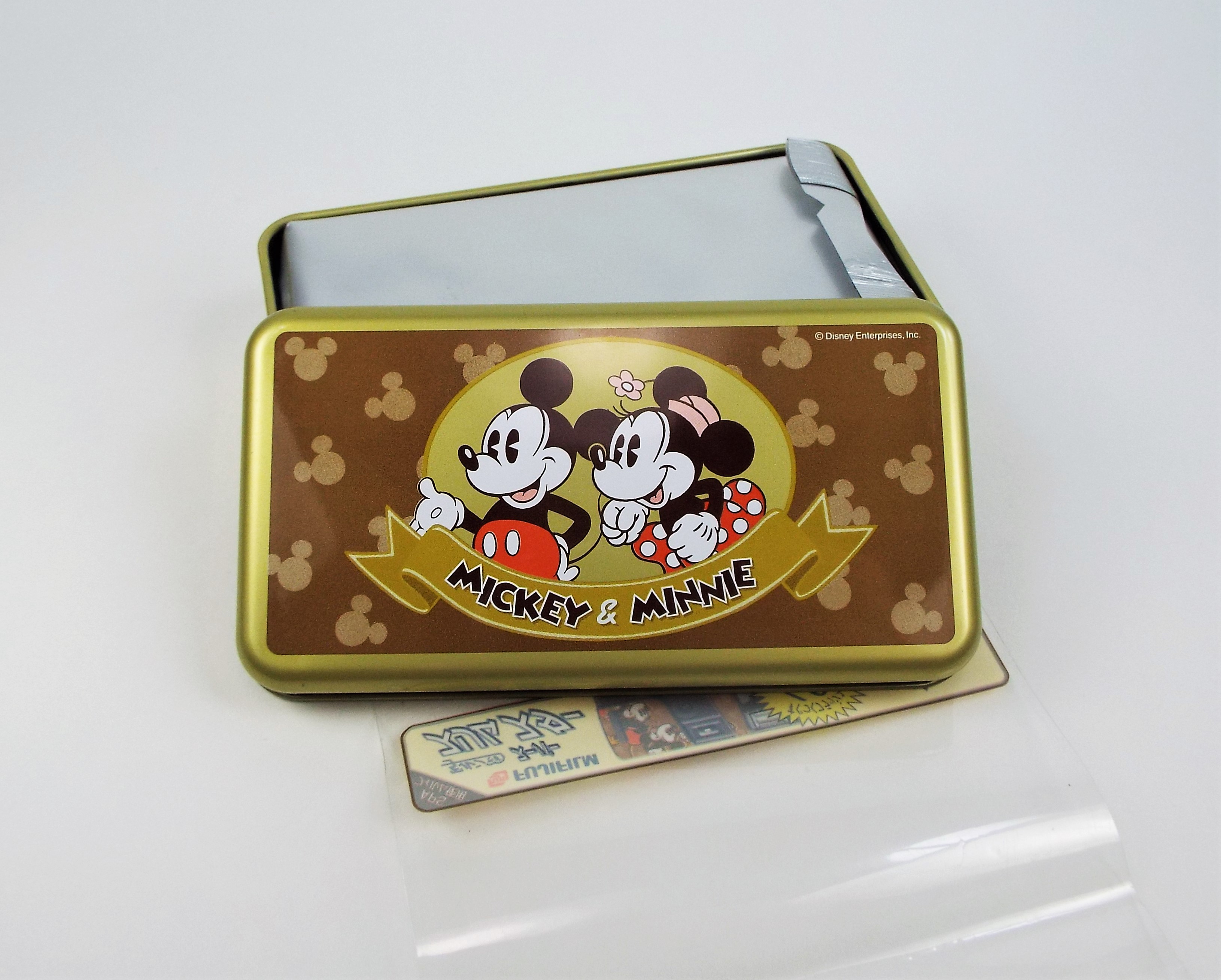
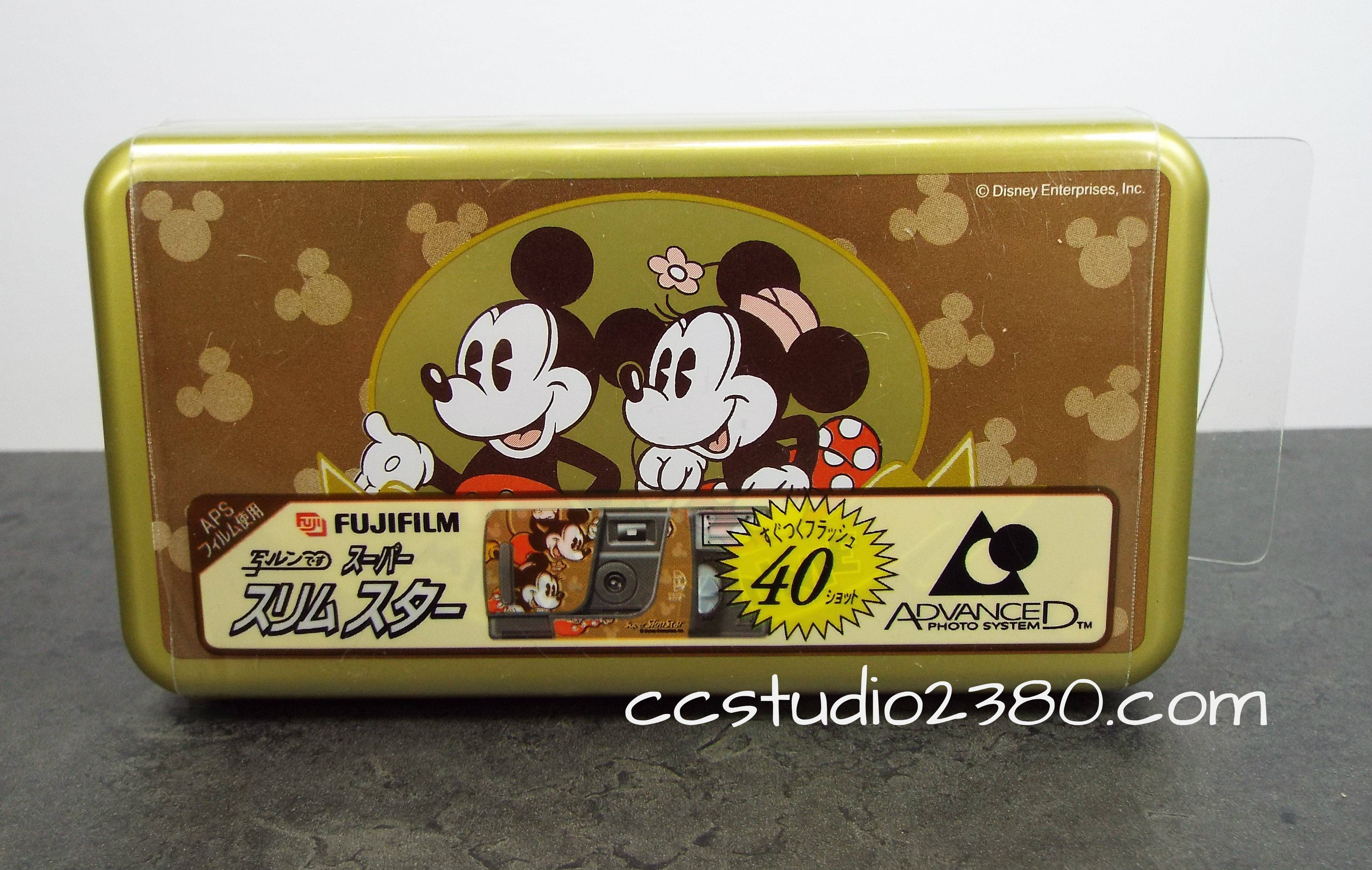
I love finding new and unused film cameras no matter how sophisticated. Here’s a new Fuji DL-7 complete with the original batteries and film. It’s like Christmas any time of year.I found this beautiful Nikkormat FT3 while appraising a collection here locally in my town. It hadn’t been used in decades and was put away having been hardly used.Disney cameras. No matter what, if I see an unused Mickey & Minnie camera or any Disney branded camera I’m interested. This one was sold originally at Tokyo Disneyland for a limited time.Cute packaging gets me every time!I’m not normally interested in later model Minoltas but this one was pretty nice and the seller had a bunch of other cool cameras too.
Thanks for stopping by and have a great day!
Please respect that all content, including photos and text, are the property of this blog and its owner, Yashica Pentamatic Fanatic, Yashica Sailor Boy, Yashica Chris, Chasing Classic Cameras with Chris.
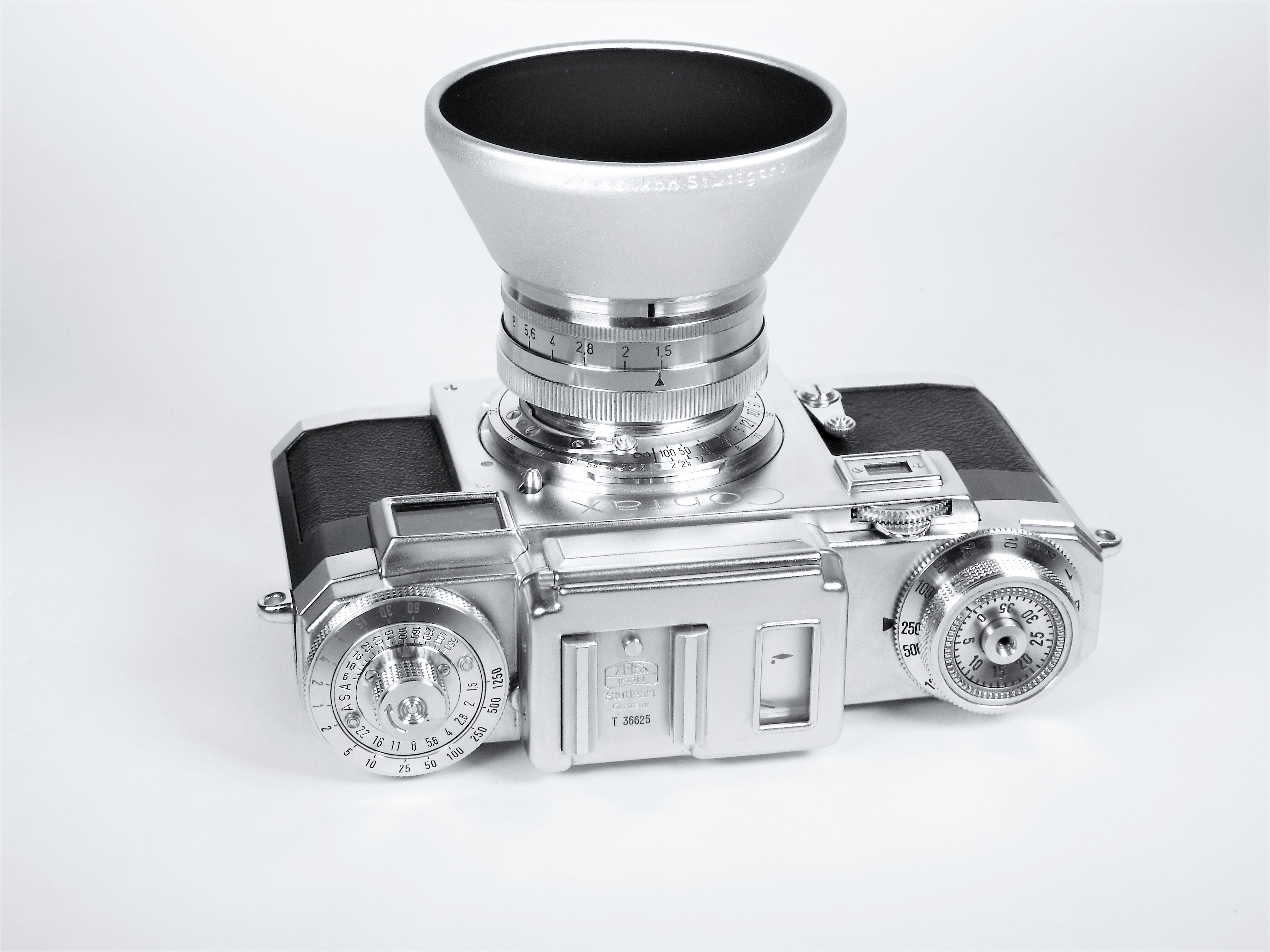
Carl Zeiss Sonnar f/ 1.5 50mm lens shown here with a Zeiss Ikon slip-on lens hood (shade).
This lovely camera is from 1951 and features a built-in exposure meter.
Shown with the meter flap open for business. This image was taken with my Nikon D800 in my studio as a test shot – no post processing.
I haven’t had a chance to run a roll of film through this beauty yet. All levers, knobs, buttons, and dials are working as is the meter. My list of film test cameras is quite extensive so the likelihood that this one will see film anytime soon is slim, very slim.
A quick search on eBay shows a nice selection of these available in all sorts of condition and states of operation. A recent set with body, lens, and box went for $450 (similar to mine) in working condition. I would think around $350 to $400 is reasonable for a clean example and having the box is always nice and in this case worth the $50. I’d give the Contax IIIa a chase factor of 6 – they’re out there so finding one isn’t a problem but finding a 70-year-old camera in full functioning condition is the hard part. Expect some issues that may need to be addressed and of course without service (CLA) little guarantee of continued function. It does make an awesome display camera amongst my other 35mm rangefinders so it’s got that going for it.
Comments are always welcomed as I’ve learned quite a bit from reader feedback. As always, thanks for stopping by and while you’re at it, feel free to visit my camera shop at http://www.ccstudio2380.com (CC Design Studios hosted by Etsy). – Chris Whelan
Please respect that all content, including photos and text, are the property of this blog and its owner, Yashica Pentamatic Fanatic, Yashica Sailor Boy, Yashica Chris, Chasing Classic Cameras with Chris.
The rather hard to chase down Yashica FFT – the last of its kind. I give this bugger a high chase factor of CF 9 not because it’s a sophisticated 35mm SLR with tons of features, it earns a CF 9 because Yashica just didn’t make a bunch of these things and when they were for sale I believe most of them stayed in Japan.
The serial number on this one is 41001738 (1974, October, and number 1,738 for that month up to that point).HTF instruction booklet for a HTF camera.
No auto exposure or auto focus, no built-in power winder, and little to no style.
So what’s this gem’s claim to fame? It was the last m42 screw mount lens body in the Yashica family. Big deal. Something’s got to be last and this guy was it.
Yashica m42 lens mount bodies began in the Spring of 1961 and ended (maybe with this one) in the Autumn of 1974. Along the way such classics as the TL Electro X was made which was one of the first SLR’s with an IC “brain”.
I’ll test and review this camera soon (I know, you’ve heard that before!). BTW, I have no earthly idea what ‘FFT’ stands for if anything. Any ideas?
Uncluttered and unremarkable top plate. Simple.
Comments are always welcomed as I’ve learned quite a bit from reader feedback. As always, thanks for stopping by and while you’re at it, feel free to visit my camera shop at http://www.ccstudio2380.com (CC Design Studios hosted by Etsy). – Chris Whelan
Please respect that all content, including photos and text, are the property of this blog and its owner, Yashica Pentamatic Fanatic, Yashica Sailor Boy, Yashica Chris, Chasing Classic Cameras with Chris.
I’ve always had a soft spot for sharp looking Polaroids and this one fit the bill perfectly.
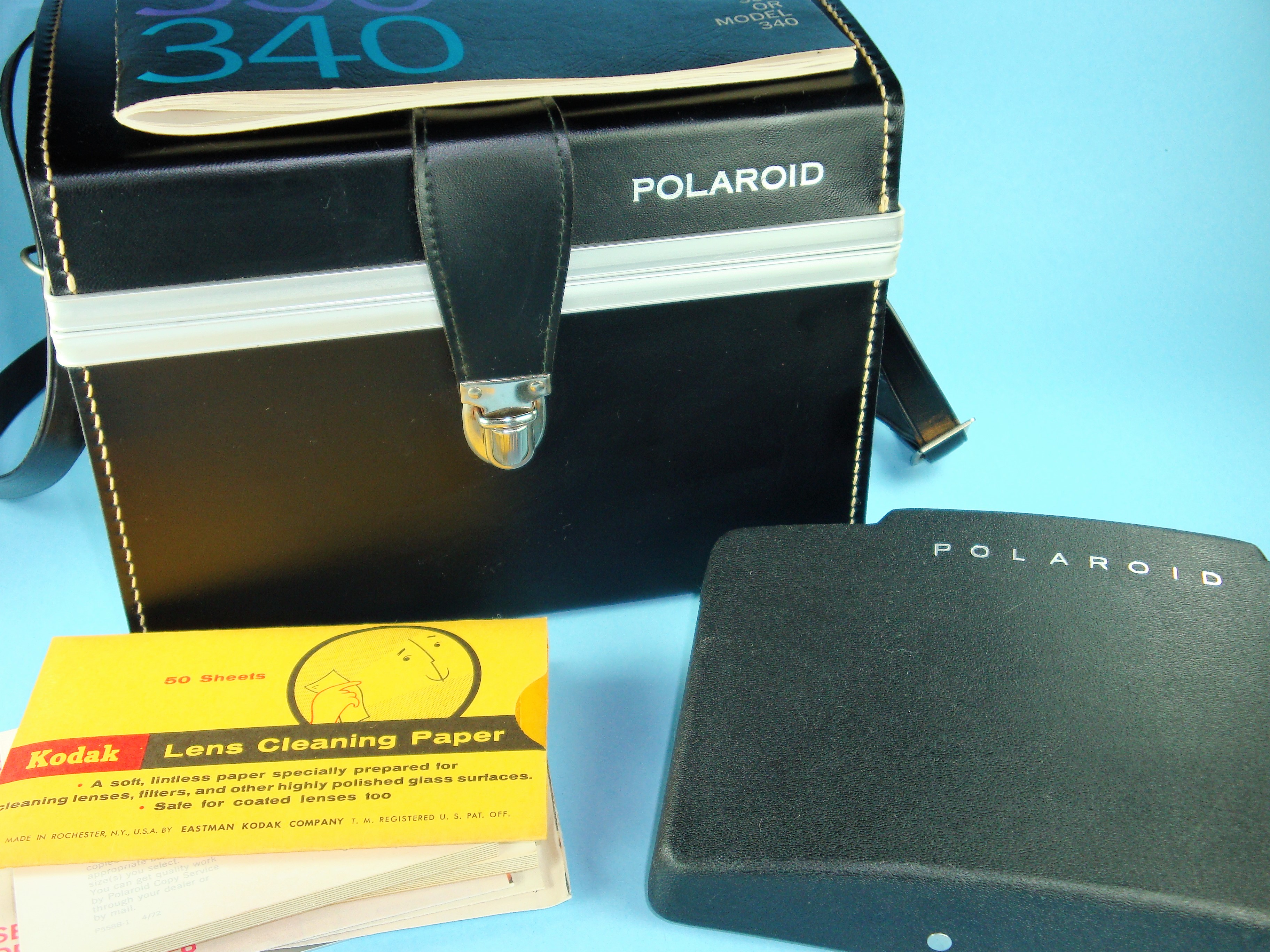
Polaroid Land Model 350. The Zeiss Ikon designed rangefinder was a nice feature.The release price was around $150 which in 1971 (the year I graduated from high school) was a ton of money.
A 3 element glass lens (114mm f8.8) produced crisp images (as crisp as Polaroid film could go).
Beautiful case in better than expected condition given its age.
This one was in our collection back in 2011 and has since moved on to another collector. If you can find a clean one for your collection I strongly suggest this model or the next one up, the 450. Chase factor 5 (easy to find but tough in mint condition).
Comments are always welcomed as I’ve learned quite a bit from reader feedback. As always, thanks for stopping by and while you’re at it, feel free to visit my camera shop at http://www.ccstudio2380.com (CC Design Studios hosted by Etsy). – Chris Whelan
Please respect that all content, including photos and text, are the property of this blog and its owner, Yashica Pentamatic Fanatic, Yashica Sailor Boy, Yashica Chris, Chasing Classic Cameras with Chris.











 Chasing Classic Cameras with Chris