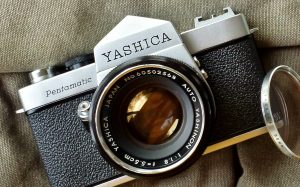
Standard Lens for the Pentamatic II

The only difference we can tell between the original Yashica Pentamatic ’35’ and the Pentamatic II (which came out in August 1960), is the standard lens that came with the camera body.

The original Pentamatic came with the Auto-Yashinon, f/1.8, 5.5cm semi (fully?) automatic 6 element lens. Of course it has the unique Pentamatic bayonet mount and not the M42 screw mount. The Pentamatic II came with the Auto-Yashinon, f/1.7, 5.8cm lens (pictured below). The f/1.8 lens was made for Yashica by Tomioka Optical of Tokyo. New evidence uncovered by us (Oct 2017) indicates that the f/1.7 lens was made by Zunow Optical. It’s a beautiful lens and weighs a ton and is rather rare today at under 6,000 lenses made. It has 10 aperture blades.
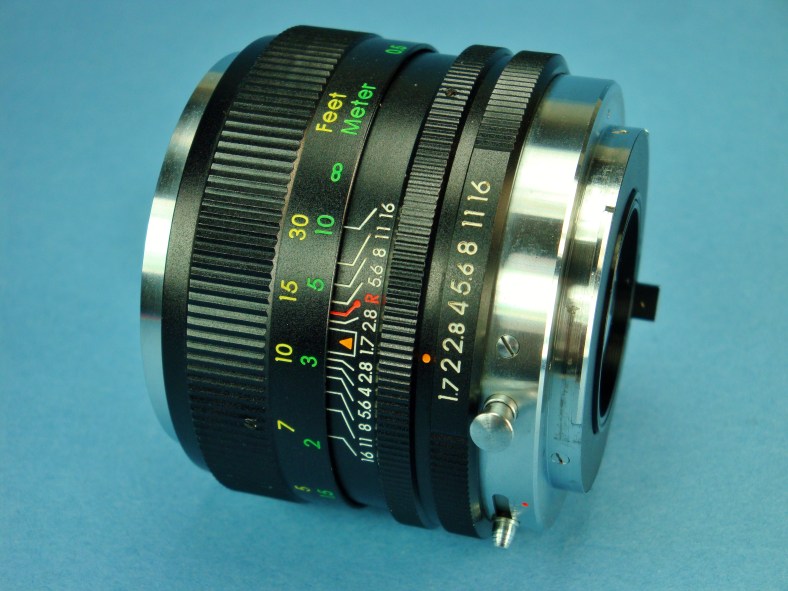
DSC07467

Update July 2017 – The Pentamatic II was only for sale in the Japanese home market and for only a short time (Aug 1960 to Jan 1961). Less than 6,000 cameras were made and of course about the same amount of these lenses. No English language sales brochures have been found that mention or feature the Pentamatic II. No advertisements either in English language newspapers or magazines.
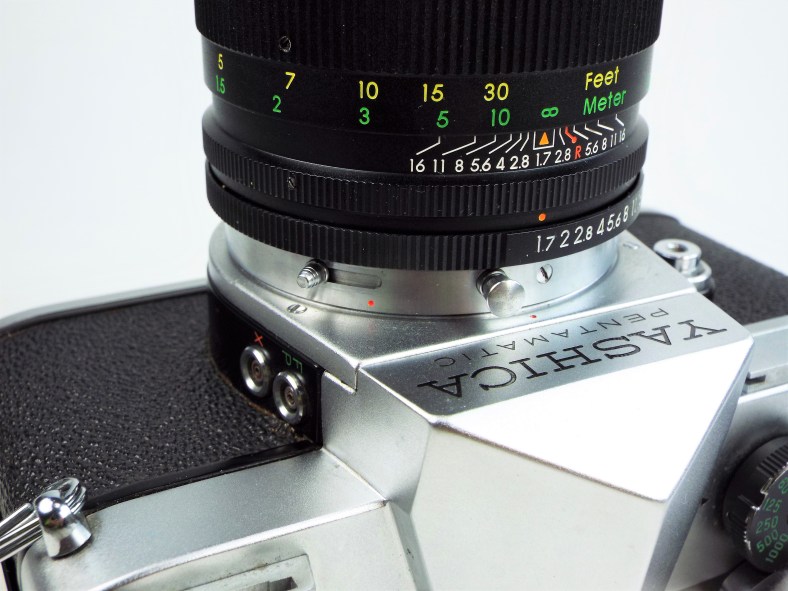
DSCF5862

The Auto Yashinon f/ 1.7, 5.8cm lens mounted on a later model Pentamatic S.

If you find a sales brochure or advertisement in English that features the Yashica Pentamatic II, please bring it to our attention. Thanks!

Chris & Carol
Yashica Pentamatic Timeline… update 3 (Oct 2017)

Our best timeline for the development of the Yashica Pentamatic 35mm single-lens reflex (SLR) film camera… Pentamatic ’35’

Please note that this is a “dynamic timeline” and it will be updated as we discover new dates and developments…

  • Summer 1959… Yashica develops / invents its first 35mm SLR
  • September 1959… Yashica files to trademark the name ‘Pentamatic’ in Japan
  • October 1959… Tomioka starts production of a new lens for the Pentamatic. f/1.8 5.5cm
  • December 1959… First Pentamatics assembled at the Suwa factory
  • February 1960… Yashica files to trademark the name ‘Pentamatic’ in the U.S.
  • March 1960… Production reaches 1,500 units
  • March 1960… First showing of the Pentamatic occurs at a trade show in St. Louis… first images of the camera are provided by Yashica
  • April 1960… First published look at the Pentamatic in the May 1960 issue of Modern Photography magazine
  • May 1960… First full page advertisements for the Pentamatic ’35’ appear in the June 1960 issues of Modern Photography, Popular Photography and U.S. Camera magazines and the Pentamatic is available at Yashica dealers by early May
  • June 1960… Production reaches 5,000 units
  • June 1960… First review of the camera appears in the July issue of Modern Photography magazine
  • August 1960… Production reaches 9,300 units
  • August 1960… The Pentamatic II goes into production. Sold only in Japan
  • August 1960… Zunow produces a new lens for the Pentamatic II. f/1.7 5.8cm
  • Winter 1960-1961… The Pentamatic I and II are are both sold in Japan
  • December 1960… Camera dealers in New York advertise new Pentamatics at under $110 (USD)
  • January 1961… Production reaches 15,700 units
  • January 1961… The Pentamatic S goes into production
  • January 1961… The Pentamatic II ends production at under 6,000 units
  • February 1962… February issue of Modern Photography has only two advertisements for the Pentamatic and NO mention of the Pentamatic II or Pentamatic S
  • Late 1961… The Pentamatic models are replaced by the Penta J
  • End of Production… About 30,000 Pentamatic cameras (all models) are made over 3 years
  • August 1963… ‘Pentamatic’ receives trademark registration in the U.S.
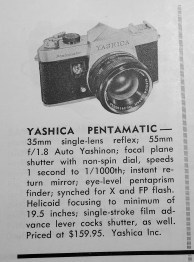
  • Pentamatic Advertisement

    By January 1961, some pretty strong discounts on the original Pentamatic I. No Pentamatic S advertised.

    First Look?

    First look at the new camera in the May 1960 issue of Modern Photography.

Why the Pentamatic?

The Yashica Pentamatic has always fascinated me from the moment I first caught a glimpse of it while doing research on the Yashima / Yashica Company. It was (and still is) a strange-looking camera… so 1960s and it was Yashica’s very first 35mm single-lens reflex (SLR) camera. I love its sleek lines and simple design… and it was just a little bit “quirky”. My first 35mm SLR was the very popular and stylish Yashica TL Electro-X (in satin chrome finish) which I purchased in early 1972. That camera was big and heavy just like the Pentamatic… lots of brass and glass as they say. The exposure system was a through the lens (TTL) affair that used two red arrows to guide you in adjusting the shutter speed and aperture to obtain a properly exposed image. It was fairly accurate and easy to use but under some low light conditions the meter would be off as much as 1/2 to 1 full “f stops” especially when shooting with color slide film for transparencies. I used that Yashica through my first year of living in Yokohama before purchasing a Canon F-1 in 1978. Why the departure from Yashica? Simple, when comparing the new Contax RTS to the F-1, in my opinion, there was no contest. I also liked the system that Canon offered and the wide array of professional accessories and lenses.

So back to the Pentamatic. When I started to concentrate my research on the Pentamatic, I found nothing but confusing and contradicting information on the internet (as is typical of anything). No clear images of the camera, no images of its boxes or the accessories available. The release date was especially bothersome as it was all over the map and even now many sites still give the wrong introduction date in the U.S. The specifications of the cameras are often wrong or incomplete and when I did find solid proof of something, it made the existing entries even more out of line with reality. The Pentamatic series of SLRs (the original model I, model II and the model S) never sold in vast quantities (the original Pentamatic model I was produced at around 1,500 units per month at its peak of production) as best as I can tell, so finding a complete set was rare and finding sales brochures was even more daunting.

My quest was simple (I thought)… purchase a few Pentamatics and find a few instruction booklets and I would be all set. Wrong! Yashica normally does not date their cameras, lenses and publications (instruction booklets, warranty cards, accessory pamphlets and sales brochures) so I knew that I had my work cut out for me. On the other side of the coin, my Canon collection has dates everywhere! I can honestly say that I’ve never found something from Canon that was not dated in some way. Why didn’t Yashica do the same? I did discover eventually that from about 1956 or so onward Yashica (then Yashima) did date many of their photography booklets and featured pictures of their factories in Nagano Prefecture and of their headquarters in Shibuya-ku, Tokyo. Many of these early booklets even had pictures of the president and founder (Mr. Yoshimasa Ushiyama) of Yashima… not often seen in other camera manufacturer’s publications. The practice of dating publications slowly vanished around late 1958 and by 1960 was basically gone. It wasn’t until the late 1960s and early 1970s that Yashica would occasionally slip in a date on a publication (but never on the camera or lens).

In summary… I don’t have all the answers to my Pentamatic questions and I am constantly updating information as I receive it both here on my blog and on my Flickr page (Yashica Sailor Boy). My goal is to be as accurate as I can, fill in the blanks and share whatever I have with others. I encourage comments and would gladly receive any and all bits of info that you may want to share with me. Thank you for visiting my page!

Chris

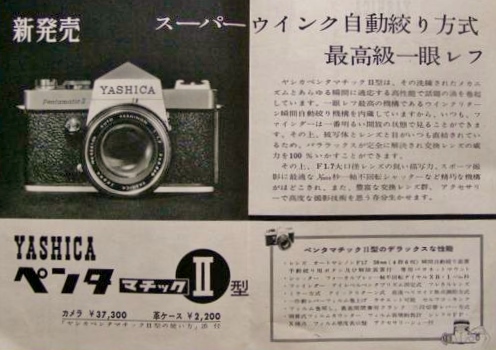
600x450-2015111900010

Nice Pentamatic model II page from a Yashica sales brochure from February 1961. Not a bad price in Japan at that time… about $110 (USD) with case. When introduced in mid 1960, the original model I was listed at about $159 (USD) here in the U.S.

Restoring a Yashima Yashicaflex A-II from 1955

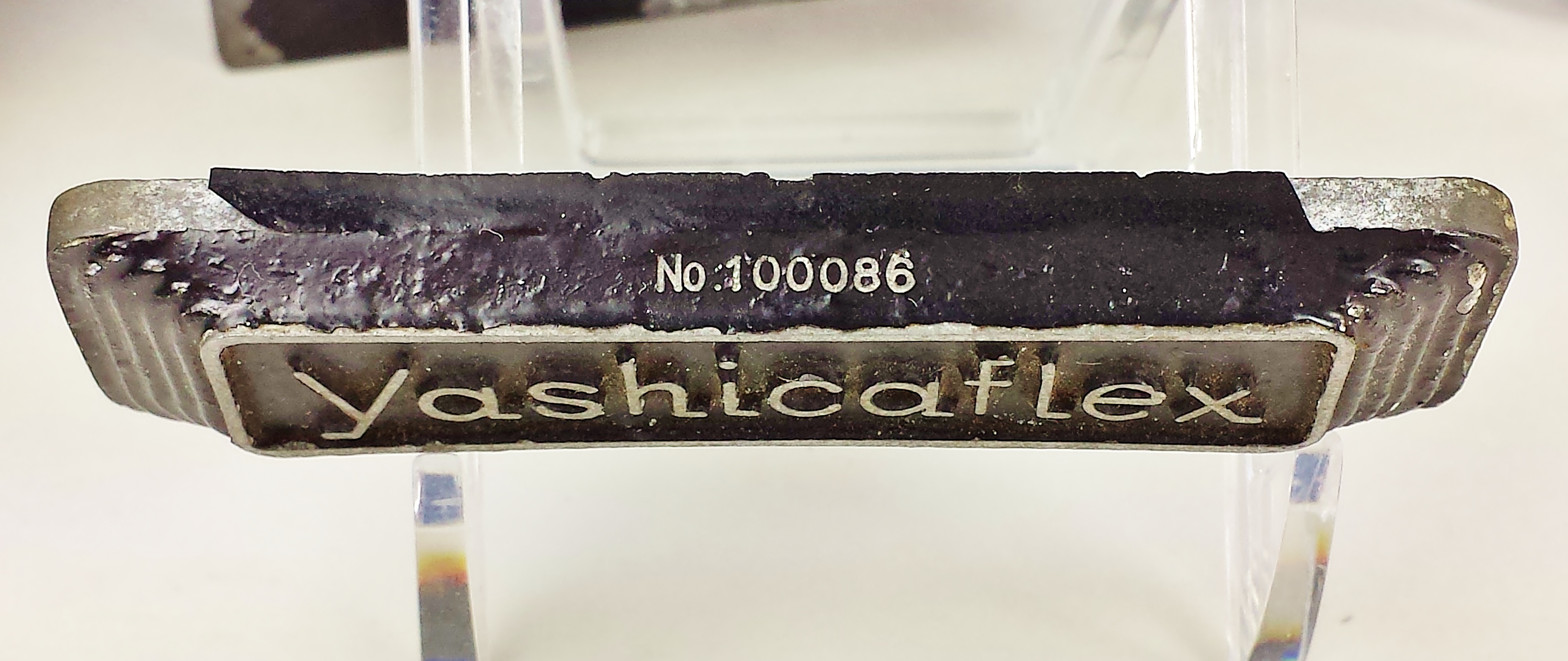
After some light sanding and cleaning with lacquer thinner a cast on serial number was under the painted on one.

After some light sanding and cleaning with lacquer thinner, an etched or cast-in serial number was under the painted one

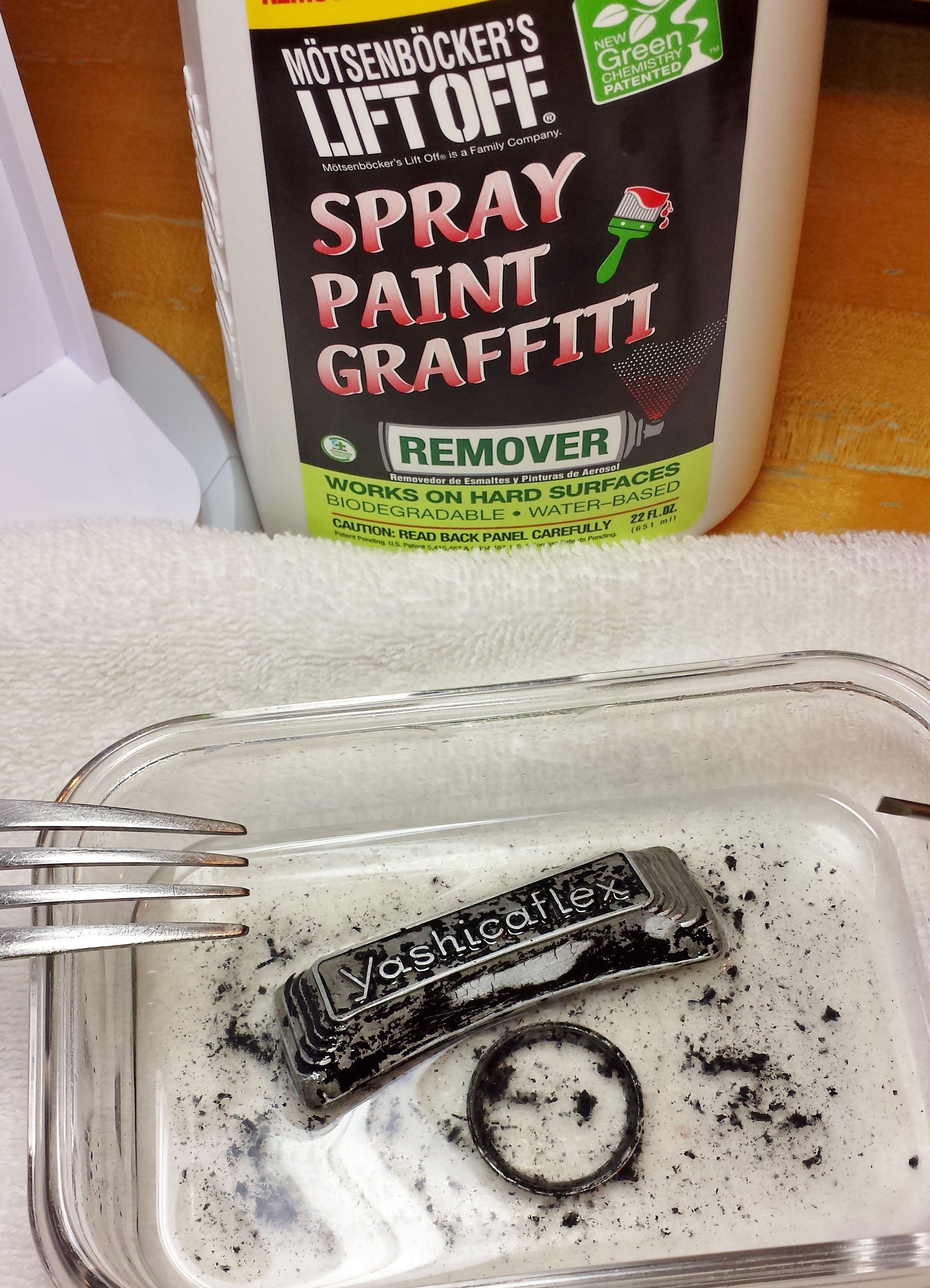
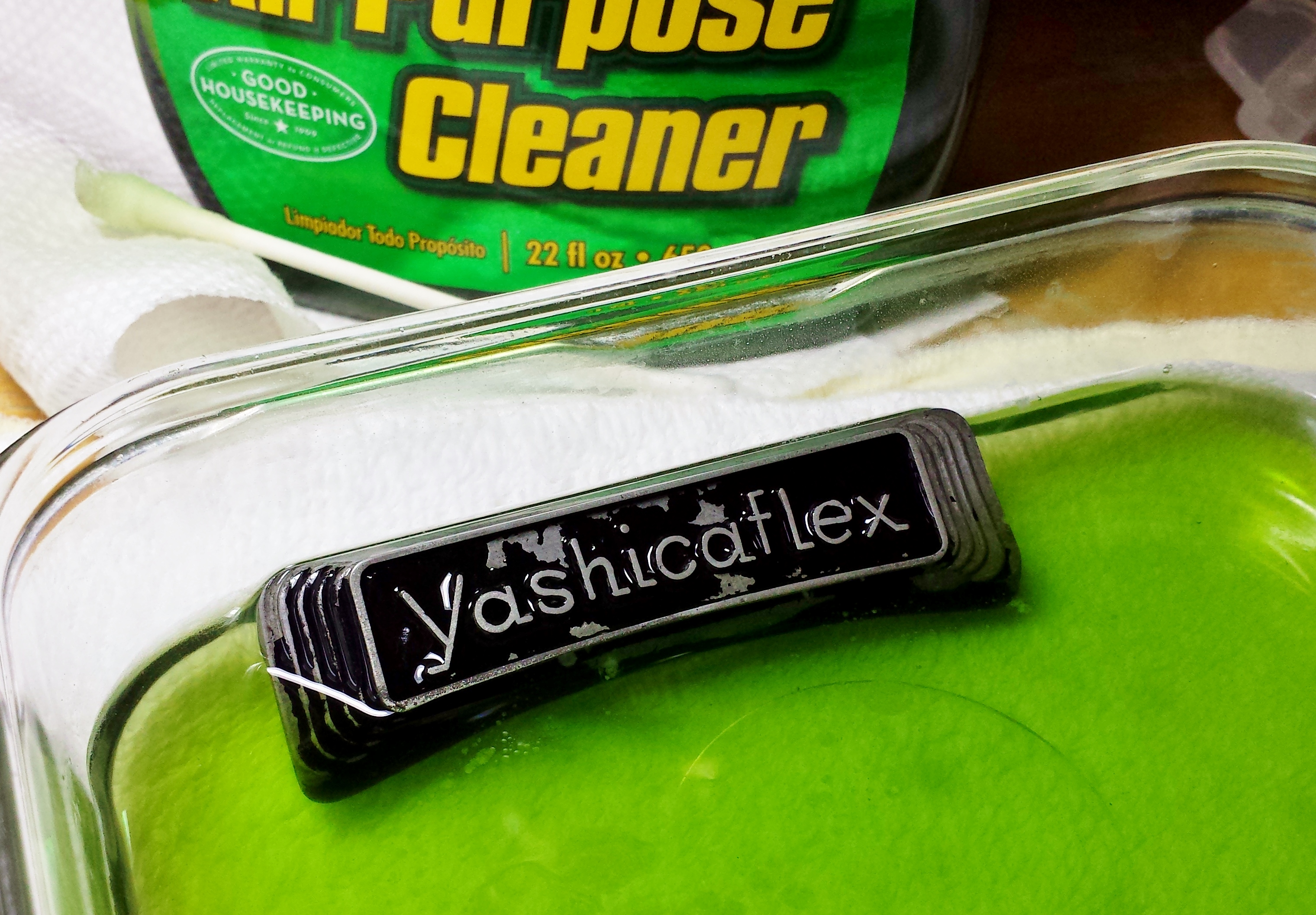
Finally found something that removes the 60 year old enamel from the nameplate.

Finally found something that removes the 60 year old enamel from the nameplate

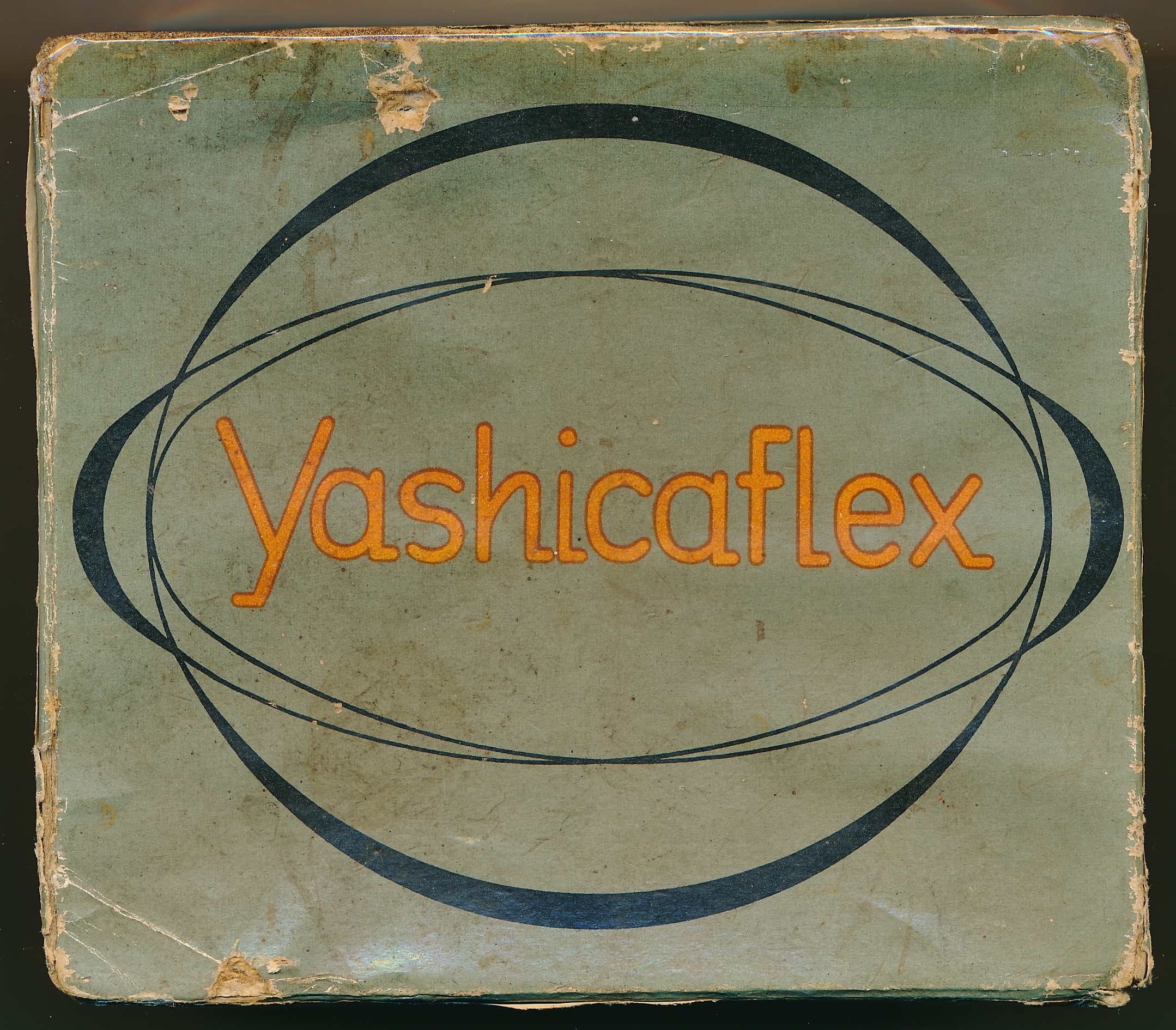
Yashicaflex A-II Box

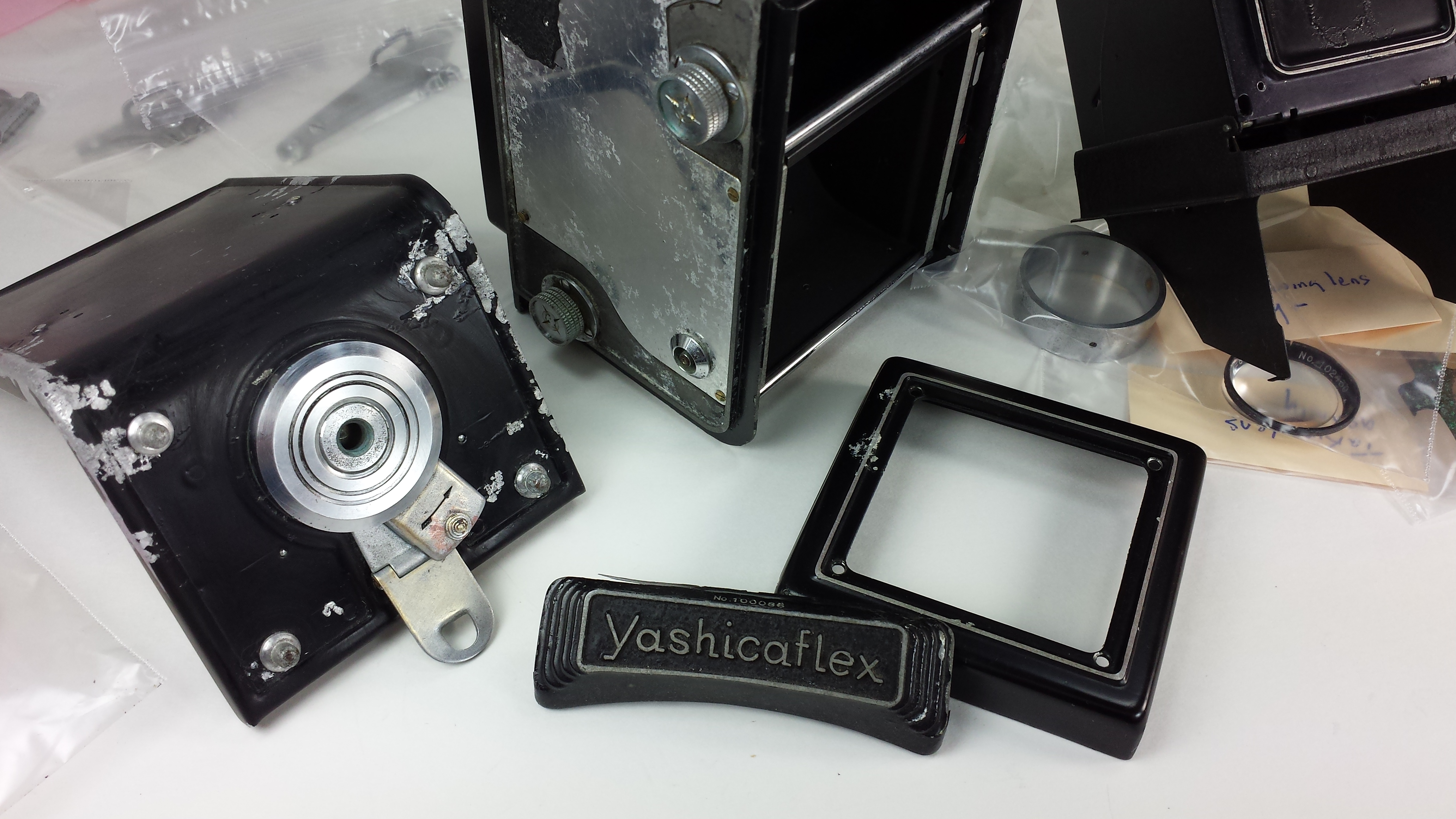
Six decades of dirt and moisture = corrosion… Big Time!

Over the next few months (turns out 14 months) I hope to be able to document my attempt to “restore” my 1955 Yashima Yashicaflex A-II. I have years of experience in cleaning and adjusting TLRs and SLRs, but I’ve never attempted a complete restoration on this scale. So why the Yashicaflex? Well it’s relatively common (especially in Japan), not necessarily a historic camera in terms of Yashima’s history, and it was in really bad physical condition overall. So why not? It was purchased from a seller located in Hiroshima, Japan, and if you know anything about Japan, Hiroshima is in the very hot and humid southern part of Honshu. When it arrived, I had to pry the camera away from the leather case as the two had become welded to one another. It must have been trapped in that case for years. The leather case with the felt liner did a good job of holding the moisture against the aluminum body of the camera hence the super bad pitting and overall corrosion. The leatherette covering on the camera was so brittle it just fell away in some areas but has stayed super stuck in others. I’ve had little success so far in removing it. So sit back and enjoy my “interpretive restoration” of this vintage Yashica. The good news… even with all the corrosion the lenses appear to be fungus and mold free! The lenses were made by Tomioka Optical for Yashima and somehow managed to avoid the ravages of moisture. The shutter works well, the aperture blades are clean and snappy and the focus is sharp. The reflex mirror was original and it looks terrible. I ordered a new one custom cut to fit. This camera will be a “user” so I will appreciate a clear view and sharp focus.

July 2014... my first look at what I would be up against!

July 2014… my first look at what I would be up against!

My first look at this disaster! Pretty nasty!

My first look at this disaster! Pretty nasty!

Yep... lots of dirt!

Yep… lots of dirt!

Nasty... nasty... nasty!

Nasty… nasty… nasty!

Slow progress being made. Some of the paint removers did nothing to the 60 year old paint!

'Simple Green' did nothing! A total of nearly 6 hours of soaking and a stiff scrubbing... not even a hint of paint removed.

‘Simple Green’ did nothing! A total of nearly 6 hours of soaking and a stiff scrubbing… not even a hint of paint removed.

More parts to clean.

More parts to clean. Keeping track of all the removed screws and what-nots will be critical.

The major assemblies removed from the body. Lower right (blue thingy) is the new custom cut mirror

The major assemblies removed from the body. Lower right (blue thingy) is the new custom cut mirror

Close-up view of the camera back showing the radical pitting of the aluminum body.

Serial number painted on and the original factory black enamel peeling off.

Serial number painted on and the original factory black enamel peeling off.

First Look!

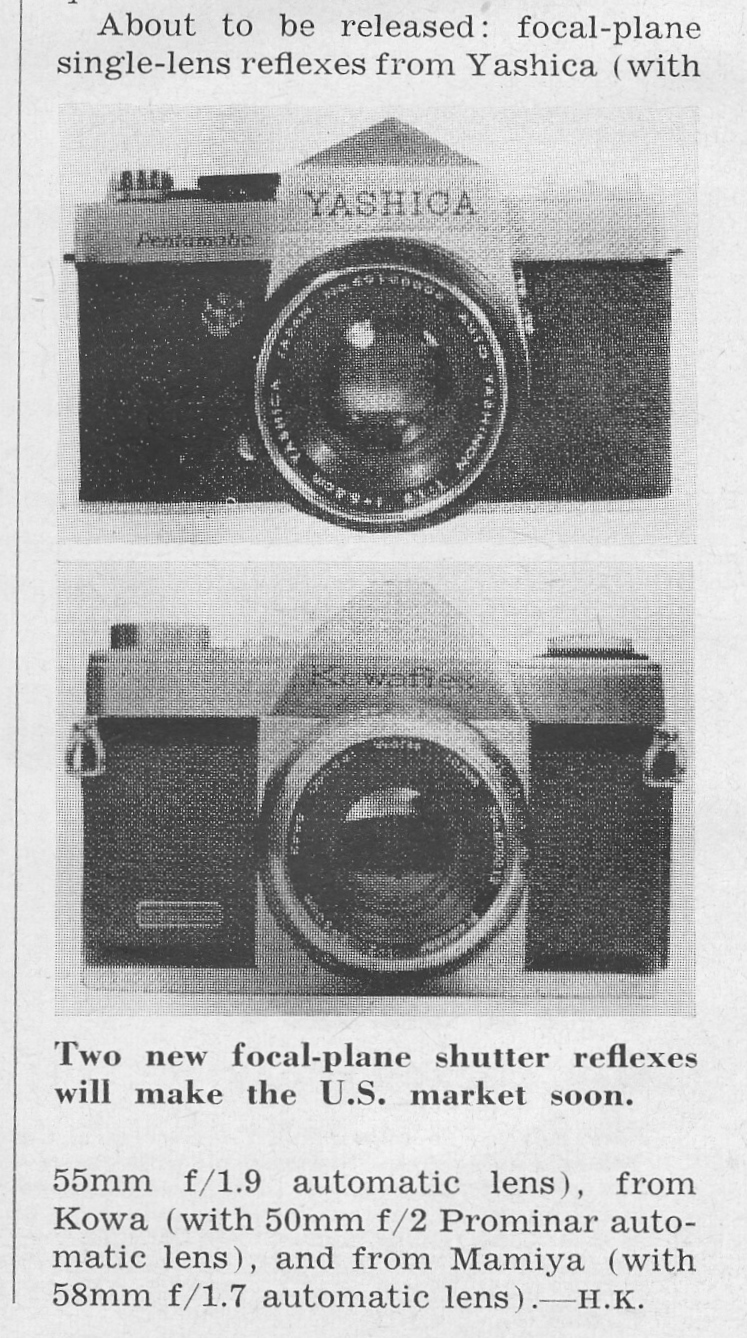
The exciting first look (in print) of the Pentamatic…

First official appearance of the Pentamatic occurs in the May 1960 issue of Modern Photography magazine. In the June 1960 issues of Modern Photography, U. S. Camera and Popular Photography, the first full-page ads appeared for the Pentamatic ’35’ reflex camera. The actual release date in the United States has almost always been considered by many to be March of 1960.

As of yet, I haven’t found evidence in print to support the March date. I do know that the Pentamatic was shown at the 36th annual ‘Master Photo DeaIers & Finishers Association’ trade show (MPDFA) held in St. Louis from March 21-25, 1960. I don’t know if the Pentamatic was released in Japan at an earlier date. From the progression of the serial numbers, by March 1960, about 1,500 cameras had been produced since production began in December 1959 at the Yashica Suwa factory. I doubt that there were enough cameras by March to support any widespread release in Japan or in Asia at that time. By June 1960, about 6,000 cameras had been built. There may have been enough to ship to the world markets starting in April and May. At their peak of production (summer 1960), it looks like Yashica was rolling out about 1,200 to 1,400 cameras each month.

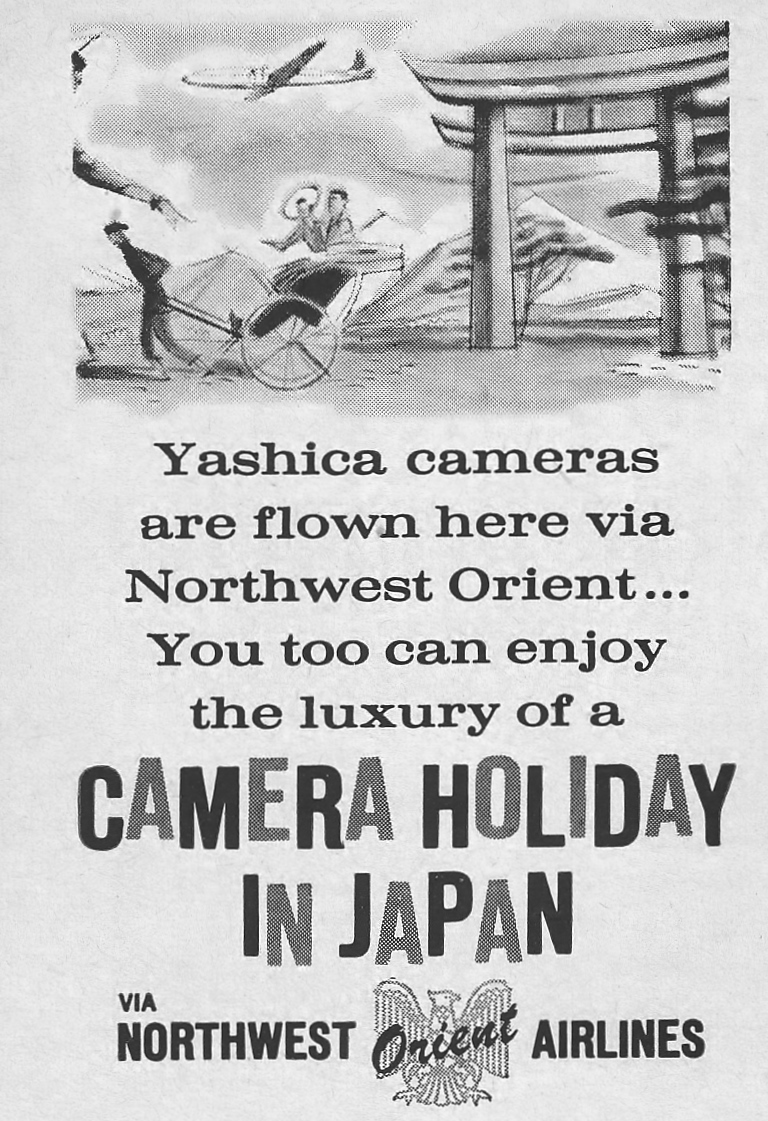
Have a

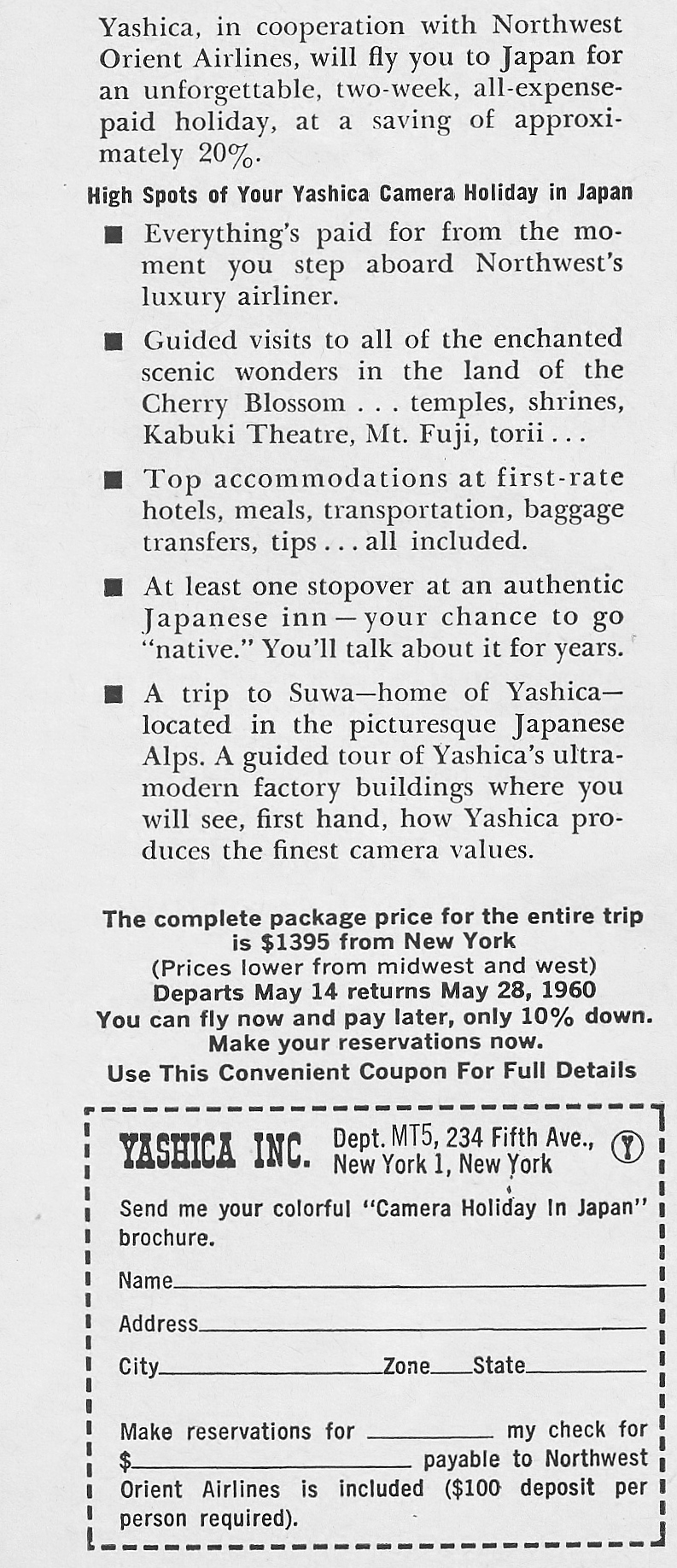
Have a “Camera Holiday” in Japan. May 1960 magazine ad.

Part two of the

Part two of the “Camera Holiday” in Japan promotion. Very nice mention of Yashica’s factory in Suwa and the wonders of Japan!


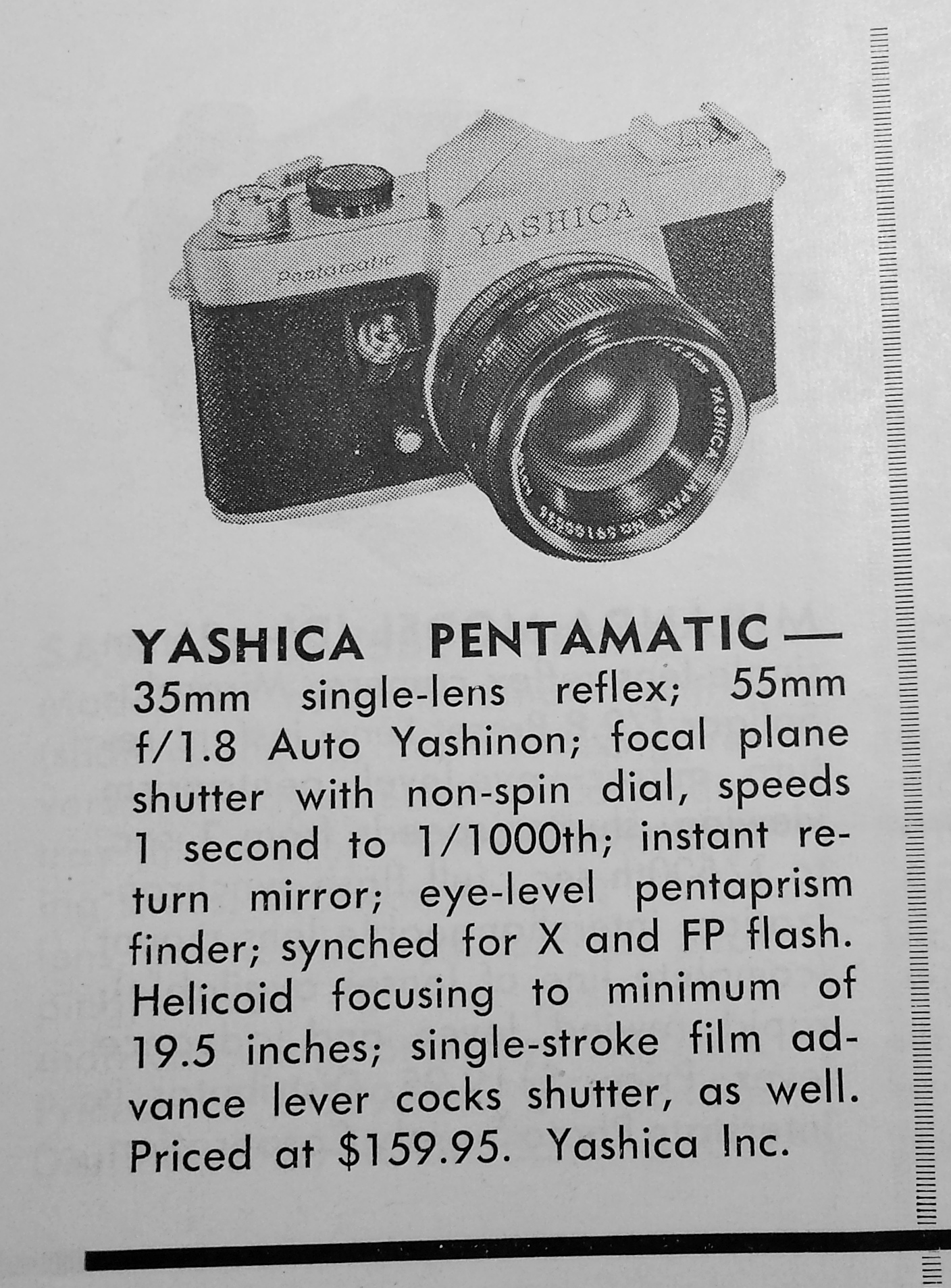
Yashica provided this first ever look at their new Pentamatic SLR at the March 1960 MPDFA trade show in St. Louis.

Yashica provided this first ever look at their new Pentamatic SLR at the March 1960 MPDFA trade show in St. Louis.

First published look at the new Pentamatic from Yashica. May 1960

First published look at the new Pentamatic from Yashica. May 1960

The Fasinating World of Yashica Photography

A short history of one of the most dynamic and innovative camera manufacturers in Japan during the decades of the 1950s and 1960s.

An amazing start-up before there were start-ups! In less than a decade, the Yashica Company of Tokyo, Japan, became a major player in the field of high quality, low-priced photographic equipment and cameras in the international marketplace. Competing against literally hundreds of other newcomers and established camera manufacturers, Yashica rose to market dominance by 1960.

25262272564_d4dcebb6c5_o

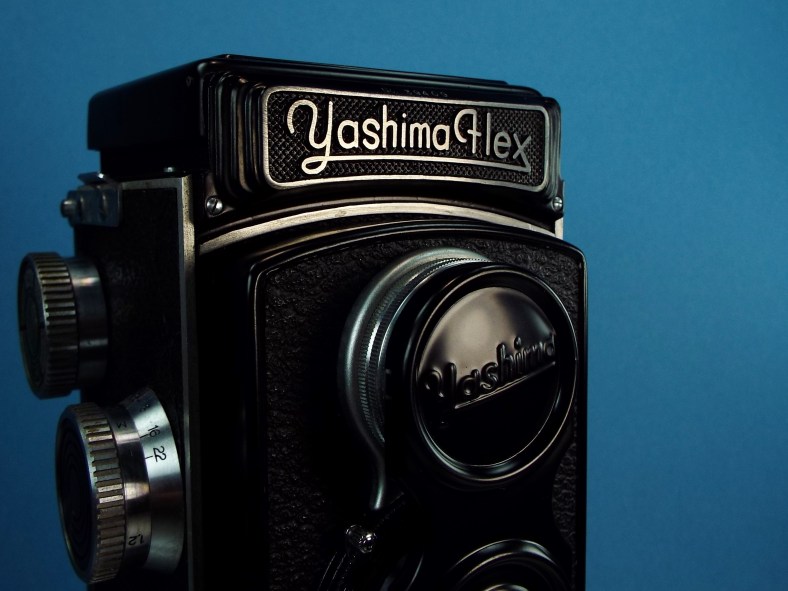
Back when Yashica was Yashima. Yashica’s second TLR in a long line of twin-lens reflex cameras.