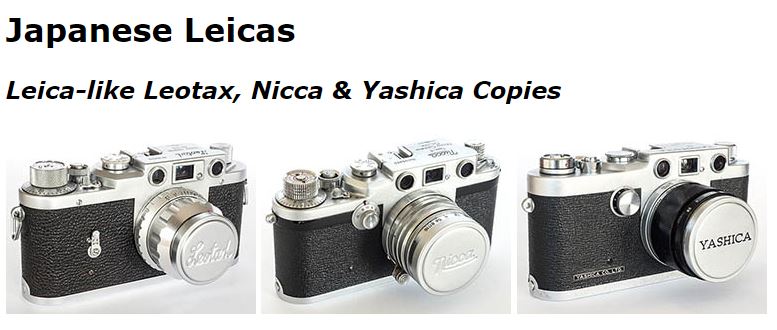
My good friend Paul Sokk in Australia has one of the best camera sites you’ll ever come across. Paul covers in great detail cameras from Yashica, Nicca, and Leotax to name just a few. Here’s the link to a rather new section that Paul added just recently. http://www.yashicatlr.com/LeicaCopies.html
If you decide to give his site a read be sure to let him know what you liked specifically and please share anything of interest as Paul is always seeking out new information and ideas to share with his readers.
Comments are always welcomed as I’ve learned quite a bit from reader feedback. As always, thanks for stopping by and while you’re at it, feel free to visit my camera shop at http://www.ccstudio2380.com (CC Design Studios hosted by Etsy). – Chris Whelan
Please respect that all content, including photos and text, are the property of this blog and its owner, Yashica Pentamatic Fanatic, Yashica Sailor Boy, Yashica Chris, Chasing Classic Cameras with Chris.
I’ve decided that I’m unlikely to acquire the Canon Model 7s which was an upgrade to the original Canon 7 (1961-1964). I have ‘lots’ of 35mm rangefinders in my classic camera collection now and adding another would only confirm my diagnosis of ‘GAS’. So, I’d like to pass along this rather hard to find instruction booklet for the 7s.
The Canon 7s was produced between 1965-1968.
My instruction book is in great condition with no missing pages, no writing, and the staples are tight and rust free. There’s some marks on the covers (see pics) and some minor wrinkles here and there but the book overall is solid and would make a nice addition in a collection.
My booklet pictured here was printed in April 1966.The inside front cover to the 7s instructions. The biggest change from the first Model 7 was the addition of a CdS exposure meter replacing the original selenium cell meter on the 7.
Comments are always welcomed as I’ve learned quite a bit from reader feedback. As always, thanks for stopping by and while you’re at it, feel free to visit my camera shop at http://www.ccstudio2380.com (CC Design Studios hosted by Etsy). – Chris Whelan
Please respect that all content, including photos and text, are the property of this blog and its owner, Yashica Pentamatic Fanatic, Yashica Sailor Boy, Yashica Chris, Chasing Classic Cameras with Chris.
I was rather surprised to find such a late date booklet for the original Canon 7 35mm rangefinder camera (August 1968) since the camera went out of production in 1964. The Canon Model 7s was in full production during this period (it followed the Model 7 with only slight improvements).
A scan of the front cover and inside back cover from the booklet. Canon didn’t feature their 50mm f/0.95 lens in this edition.A scan of the back cover – take note of the 08/68 date code (bottom center). Again the f/1.4 lens is featured.
I haven’t had the opportunity to use my Model 7 yet as I’ve been super busy with a refresh of my kitchen (paint, new floors, and new cabinets) but I hope to soon. Here in Florida COVID-19 the Delta variant is running rampant so the thought of a walkabout with the camera is on hold for now. I’m vaccinated but apparently not many of my fellow Floridians and tourists are (https://covid.cdc.gov/covid-data-tracker/#county-view). What a shame as the local hospitals are nearly full with sick unvaccinated people.
Thanks for stopping by and be safe.
Comments are always welcomed as I’ve learned quite a bit from reader feedback. As always, thanks for stopping by and while you’re at it, feel free to visit my camera shop at http://www.ccstudio2380.com (CC Design Studios hosted by Etsy). – Chris Whelan
Please respect that all content, including photos and text, are the property of this blog and its owner, Yashica Pentamatic Fanatic, Yashica Sailor Boy, Yashica Chris, Chasing Classic Cameras with Chris.
Chasing boxes — sounds pretty lame and it is in the big picture of collecting classic and vintage cameras but a camera box from the early 1960s can be either a rat or a gem after all these years. They’re just colorful cardboard with some stickers here and there after all and cardboard doesn’t do well if stored improperly. Moisture, bugs, sunlight, heat, pollution and crushing are just a few of the nasty things that can degrade 40, 50, and 60 year-old cardboard.
So, knowing all of the things that are stacked against finding a collectible camera box I’m happy to say that this one is a pleasant surprise. It’s far from perfect but it’s still very nice (no not so funny smells either).
My best guess is that this box was made in late 1962 based on the serial number of the camera that’s written on the bottom of the box.Originally the area that’s blacked out said 50mm f1.4 lens but a previous owner carelessly modified the box when the body was separated from the lens when sold.Here’s the camera that came with the box (a nice bonus). The box is nice because the camera is in near mint condition and is fully functional. The Canon Model 7 accepts LTM screw-in lenses from Canon, Nikon, Fuji, Leica, and a bunch of others. The bayonet part around the opening was designed to accept Canon’s ‘dream lens’ the 50mm f/0.95 which you can discover more about it at https://global.canon/en/c-museum/product/s43.html
So there you have it… another aspect to collecting classic film cameras, collecting the boxes that went with them. Most people dispose of the camera box right after they took their new camera out of the box (I’m guilty) and some left the original box at the camera shop when they took their camera home (not guilty).
A scan from a Canon Product Catalog from March 1967 (the Canon 7S had already been released). Note the ‘dream lens’ is affixed in this catalog’s image.
Comments are always welcomed as I’ve learned quite a bit from reader feedback. As always, thanks for stopping by and while you’re at it, feel free to visit my camera shop at http://www.ccstudio2380.com (CC Design Studios hosted by Etsy). – Chris Whelan
Please respect that all content, including photos and text, are the property of this blog and its owner, Yashica Pentamatic Fanatic, Yashica Sailor Boy, Yashica Chris, Chasing Classic Cameras with Chris.
Being a fan of most of Canon’s cameras and lenses it was only a matter of time before I started chasing after the Model 7. Although this model was released while the world was catching the SLR craze, it stood out as one of the best rangefinders Canon had produced up to that point. It also served notice to Nikon and Leica that Canon was a serious competitor capable of building outstanding cameras and lenses. Here’s my Canon 7.
Lots to like about this Canon.Super bright and accurate view-rangefinder (Leica M challenger).Dual range selenium cell light meter that’s still very much active and hopefully still accurate.
I haven’t decided on a lens for it yet but I’m looking for a nice 50mm f1.4 lens that would have a serial number in the range of this body. From what I can tell, this camera left the factory with a lens in the range of 114000 to 116000. The chase is on!
I’ll post additional updates on this camera as I get the original box and case “in the studio” for some glamour shots. I’m also chasing after the appropriate instruction booklet for it in either English or Japanese (or both), a brochure, and of course, the proper lens. For now, my trusty Nikkor fits nicely.
A Nikkor lens on a Canon!
Comments are always welcomed as I’ve learned quite a bit from reader feedback. As always, thanks for stopping by and while you’re at it, feel free to visit my camera shop at http://www.ccstudio2380.com (CC Design Studios hosted by Etsy). – Chris Whelan
Please respect that all content, including photos and text, are the property of this blog and its owner, Yashica Pentamatic Fanatic, Yashica Sailor Boy, Yashica Chris, Chasing Classic Cameras with Chris.
It’s always good to review the reasons behind checking your classic cameras and photo gear for batteries. It doesn’t take long for an unused battery to start leaking which will eventually ruin your stuff.
I purchased a large collection of vintage photogear this week and of course, they’ll always be some victims of battery leakage mixed in. We’ve all been victimized by this process – we leave a battery (mostly alkaline) in a seldom-used camera, remote or toy only to discover that it doesn’t work when we go to use it. Even fresh batteries installed in a device can leak and corrode the battery compartment in as little as weeks! That’s right, I said weeks.
Caution!
This battery compartment was so bad that I had to dig out the AA batteries with a screwdriver!
The corrosive acid from the battery destroyed the battery compartment cover and latch.
The same camera with the corrosion removed and the compartment door repaired. The camera is fully operational again. It’s still a bit ugly but at least it works.
Electronic flash units are notorious for finding battery corrosion…
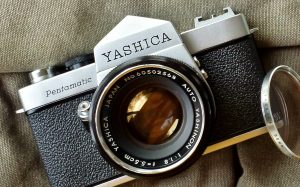
My good friend Paul Sokk from Australia has complied a wonderful site dedicated primarily to the history (in great detail) of the Yashica TLR and its place in the overall history of this great Japanese company. Paul’s research has many branches and this is one of his latest.
Comparison of Yashica and Minolta SLRs
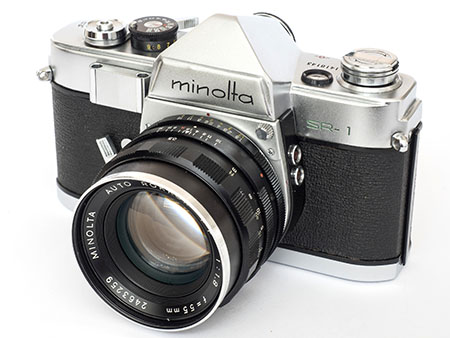
Yashica Pentamatic SMinolta SR-1
(1961 Pentamatic S and 1962 Minolta SR-1, same body as 1958 SR-2 but with 1/500 top speed and by now, exposure meter mount like the Yashica plus fully automatic aperture.)
Why Minolta models? Similar specs, some parallels in market positions but an SLR success story at the time. Minoltas were made by Chiyoda Kōgaku (adopting its camera’s name in 1962) which was a much older photographic company than Yashica with it’s origins dating back to 1928. Yashica was Japan’s largest TLR maker, since 1958 looking to expand further into 35 mm. Chiyoda Kōgaku was probably Japan’s second largest TLR maker, a little more upmarket than Yashica but significantly lower volumes. On the the other hand, it was involved with other formats and had been making 35 mm rangefinder cameras since 1947. Neither were top tier makers at Nikon/Canon level but both had aspirations in that direction.
In 1958, Chiyoda Kōgaku released its first SLR, the Minolta SR-2. It offered no firsts but was noteworthy because it brought together all the advances in basic SLR camera design so far, except for the fully automatic aperture introduced by Zunow in the same year. In several ways, it was a more modern camera than the well-received Pentaxes from the period. Apart from including automatic film counter reset and a self-timer, the specifications were very similar to Yashica’s Pentamatic released in 1960 including a proprietary bayonet lens mount and the need to wind on the film to open the aperture again after it had automatically stopped down. In the late 1950s, even accomplishing the first half automatically was a major step so Minolta can perhaps be forgiven for initially calling their camera “automatic” but by 1960-61, it was marketing hyperbole for both makers.
Although well regarded and advanced for the time, it was expensive and competitors were challenging so Chiyoda Kōgaku followed up in 1959 with a budget version, the SR-1, which replaced the standard f/1.8 lens with an f/2 version (reverting to f/1.8 in 1962 as in the example above) and dropped the 1/1000 top speed to 1/500. Whilst the other specs and appearance remained the same, the lens line-up, particularly the auto lenses, was steadily increasing. The price of the SR-1 was much closer to the coming Pentamatic and whilst the sales of the flagship model were not earth shattering, the SR-1 sold truck loads. In 1961, the slightly updated SR-2 replacement, the SR-3, and the budget SR-1 both adopted fully automatic aperture diaphragms.
The table below compares features and price. In some respects the features are not all that different at first release. However, the Minolta SLR models had two years head start to establish themselves, as did other worthy competitors. In comparing the final 1961 cameras, the Minolta SR-3 with f/1.8 lens was the same price as the Pentamatic S. Both now had a self-timer and a mount for an external shutter coupled exposure meter (as did the SR-1 and Minolta even offered to upgrade earlier versions of the SR-1). The Minolta still had the advantage of the auto counter reset and later in the same year came the fully automatic diaphragm. It had 4 auto aperture accessory lenses and 7 preset lenses available, the Yashica just 5 preset lenses (the actual number of lenses is slightly rubbery depending on when they became available). The Yashica simply did not seem to offer enough at its price point to be a compelling newcomer.
Feature
Minolta SR-2
Minolta SR-1
Minolta SR-3
Yashica Pentamatic
Yashica Pentamatic II
Yashica Pentamatic S
Release
1958
1959
1960
1960
1960
1961
Aperture
Semi- auto
Semi, auto in 1961
Semi, auto in 1961
Semi auto
Auto
Semi auto
Shutter
1/1000
1/500
1/1000
1/1000
1/1000
1/1000
Lens
f/1.8
f/2, f/1.8 from 1962
f/1.8 f/1.4
f/1.8
f/1.7
f/1.8
Reset
Auto
Auto
Auto
Manual
Manual
Manual
Self-timer
Yes
Yes
Yes
No
No
Yes
Meter Mount
No
From 1962
Yes
No
No
Yes
No. of Accessory Lenses at Release
3 preset
4 auto, 2 preset
4 auto, 7 preset
2 preset
5 preset
5 preset
Price USA
$249.50
$169.50
$199.50 $229.50
$159.95
n/a
$199.95*
* guess, advertised at “under $200 plus case”
Paul’s entire site features this kind of detail with little known facts about some familiar and not so familiar cameras. Please give Paul a shout out by visiting his site athttp://www.yashicatlr.com
Thanks for stopping by and have a beautiful day!
Comments are always welcomed as I’ve learned quite a bit from reader feedback. As always, thanks for stopping by and while you’re at it, feel free to visit my camera shop at http://www.ccstudio2380.com (CC Design Studios hosted by Etsy). – Chris Whelan
Nicca 3-S distributed by Hinomaruya, Tokyo (1951-1958) Nicca branded lens hood for the Nikkor 50 mm f/2 lens may have been made by them. Hinomaruya also distributed the Melton camera and Nikkor lenses.
A classic 35mm rangefinder camera from Nicca. The lens is a Nippon Kogaku Japan W-Nikkor 2.8cm f/3.5 lens with matching 2.8 optical viewfinder.
Random pics from my Flickr site that were recently favored.
Comments are always welcomed as I’ve learned quite a bit from reader feedback. As always, thanks for stopping by and while you’re at it, feel free to visit my camera shop at http://www.ccstudio2380.com (CC Design Studios hosted by Etsy). – Chris Whelan
Please respect that all content, including photos and text, are the property of this blog and its owner, Yashica Pentamatic Fanatic, Yashica Sailor Boy, Yashica Chris, Chasing Classic Cameras with Chris.
Monster glass from Tomioka. The lens has a super low serial number that puts it within the first few months of production. The camera is the Yashica TL Electro X – ITS made in April 1973.
This image first posted on my Flickr site in November 2019 and so far has been a very popular image amassing over 70 favorites. Image was taken with my Samsung Galaxy S8+ using natural light.
Comments are always welcomed as I’ve learned quite a bit from reader feedback. As always, thanks for stopping by and while you’re at it, feel free to visit my camera shop at http://www.ccstudio2380.com (CC Design Studios hosted by Etsy). – Chris Whelan
Please respect that all content, including photos and text, are the property of this blog and its owner, Yashica Pentamatic Fanatic, Yashica Sailor Boy, Yashica Chris, Chasing Classic Cameras with Chris.
The finishing touch. A custom real leather half-case from TP Original. I purchased mine through Martin Duke Shop on Etsy. The quality of the materials and craftmanship is outstanding. The color is volcano.
Nice sized leather case adds a good layer of protection.From TP Original, custom made leather half-case. It comes with two tripod mount retainer screws too.
I like shooting with a half-case installed on the camera. It gives me just the right amount of additional grip and provides a nice protective layer to prevent damage. The bottom is perfectly flat and the little bump out helps to balance the body better with a normal or wide angle lens attached.
Comments are always welcomed as I’ve learned quite a bit from reader feedback. As always, thanks for stopping by and while you’re at it, feel free to visit my camera shop at http://www.ccstudio2380.com (CC Design Studios hosted by Etsy). – Chris Whelan
Please respect that all content, including photos and text, are the property of this blog and its owner, Yashica Pentamatic Fanatic, Yashica Sailor Boy, Yashica Chris, Chasing Classic Cameras with Chris.



 Caution!
 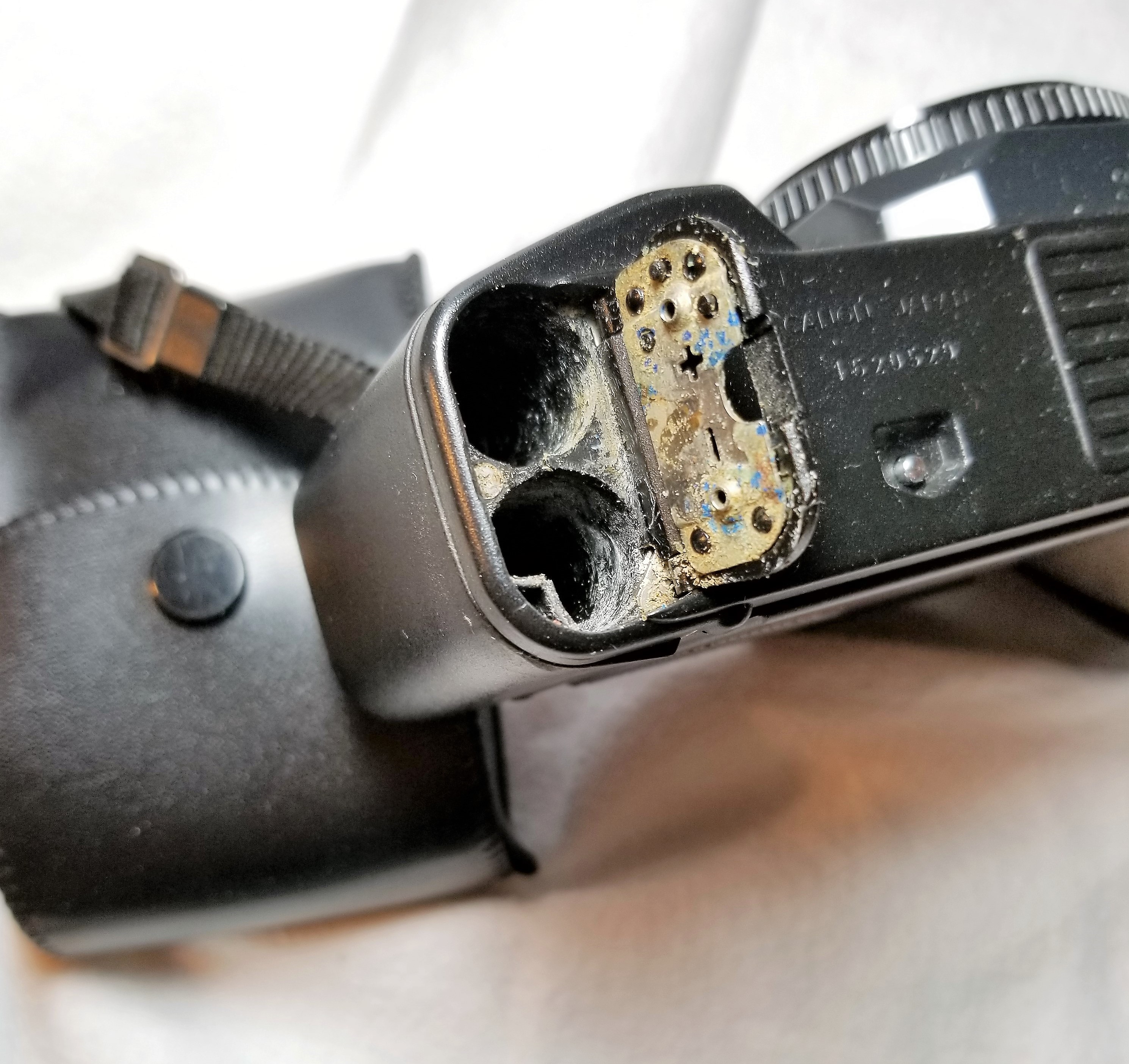 This battery compartment was so bad that I had to dig out the AA batteries with a screwdriver!
 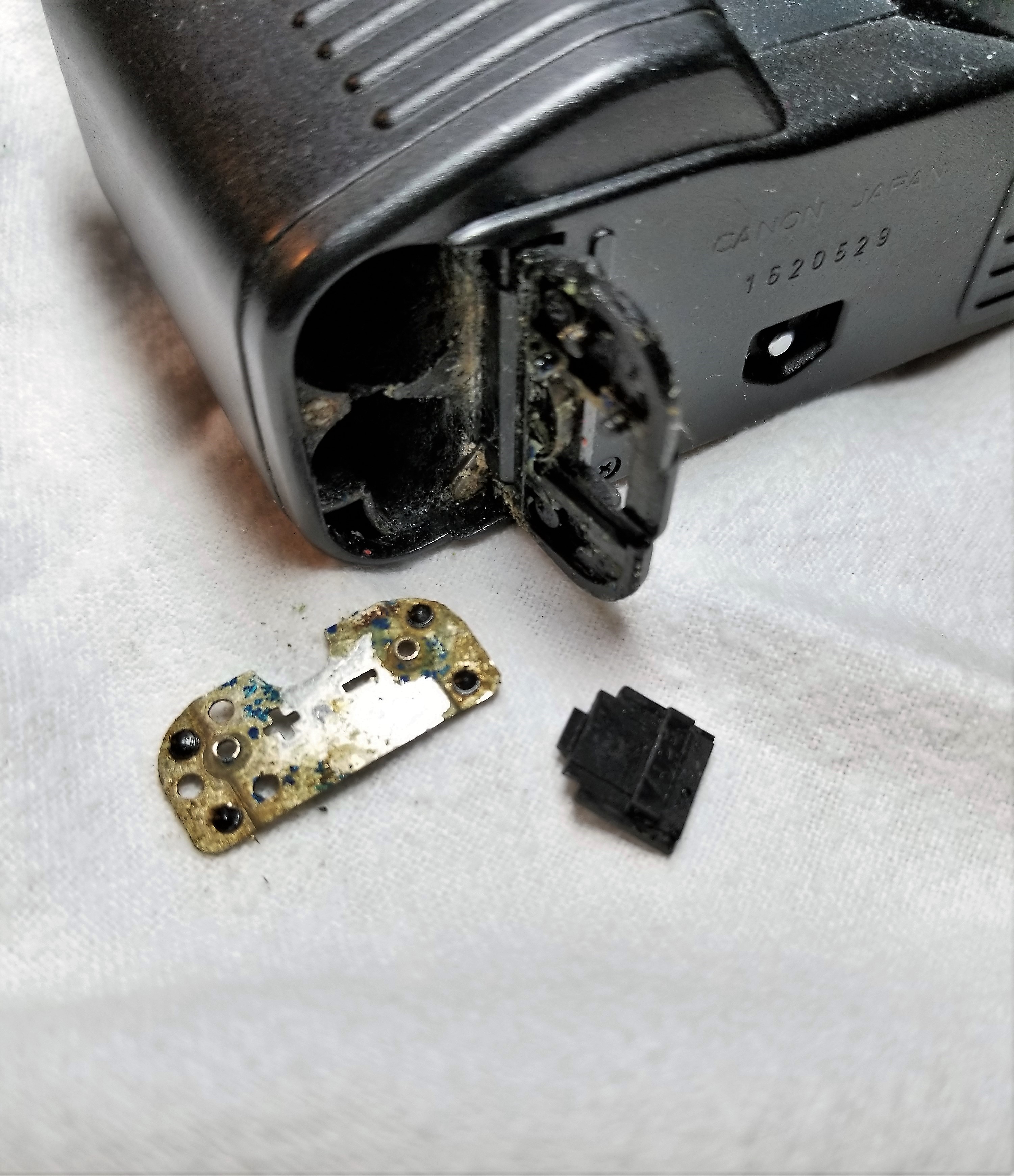 The corrosive acid from the battery destroyed the battery compartment cover and latch.
 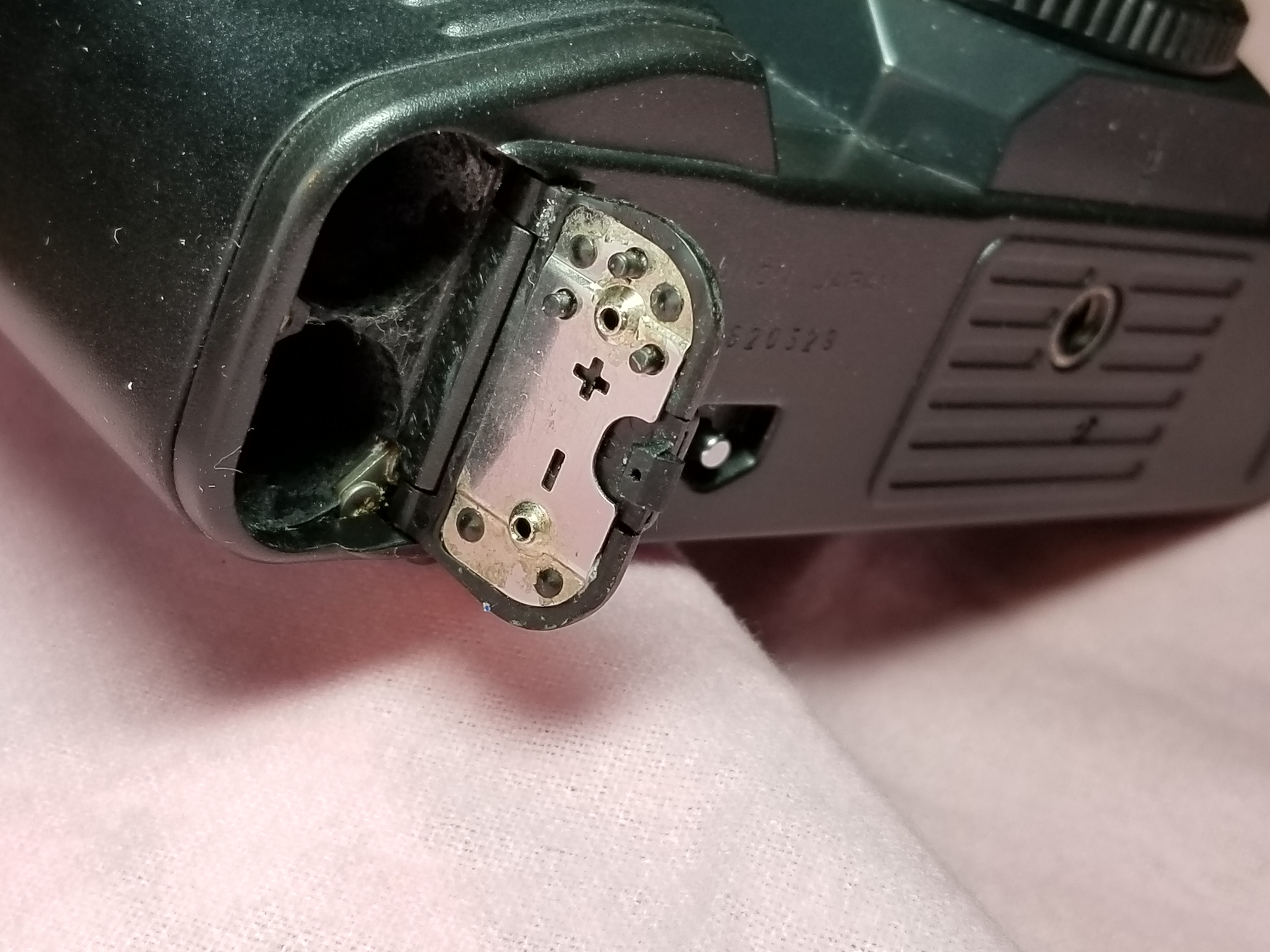 The same camera with the corrosion removed and the compartment door repaired. The camera is fully operational again. It’s still a bit ugly but at least it works.
 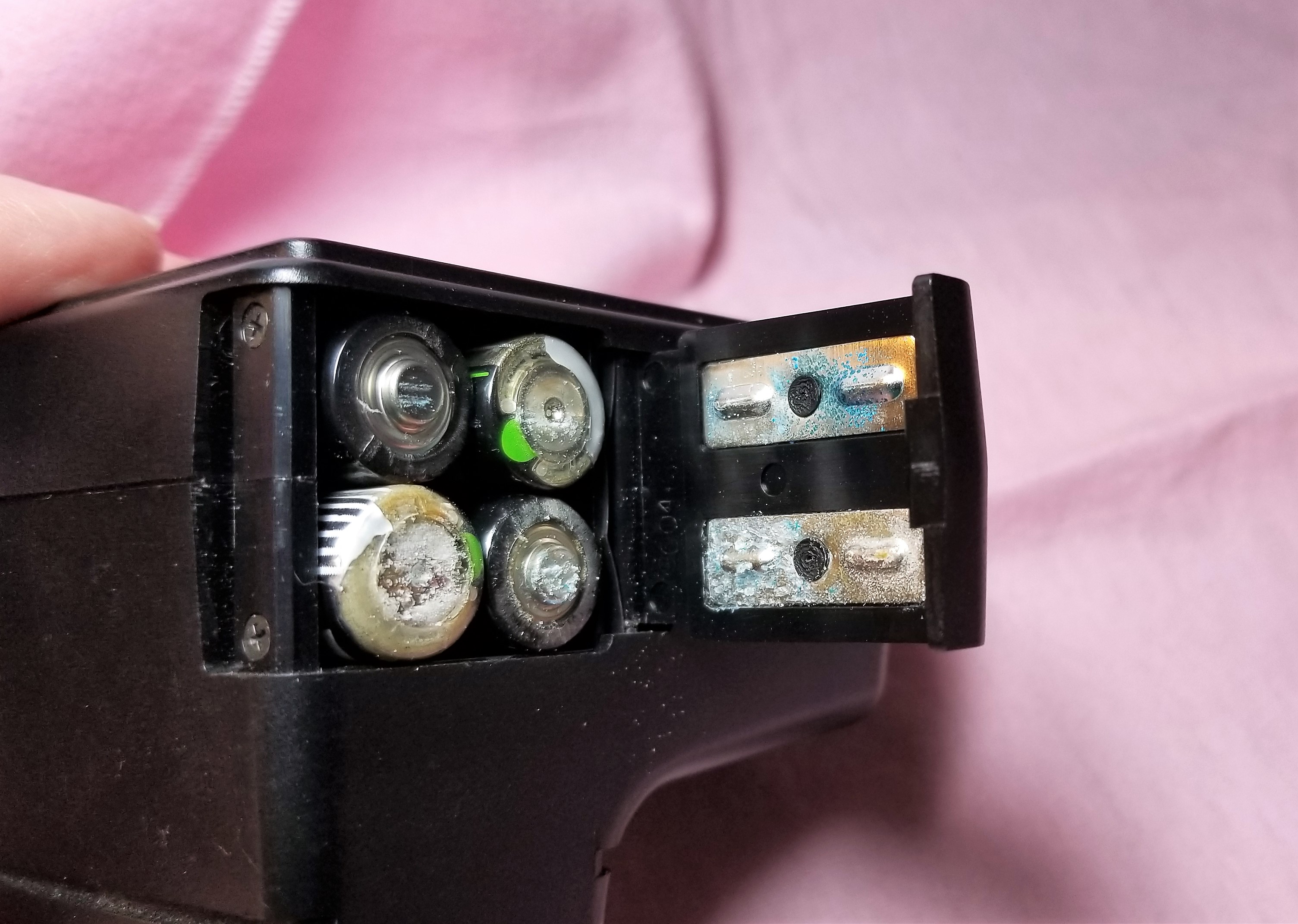 Electronic flash units are notorious for finding battery corrosion…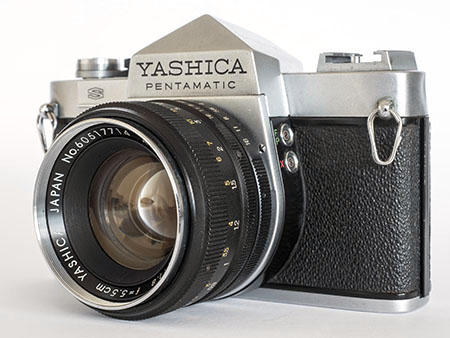


 Chasing Classic Cameras with Chris