
Centre Street, Fernandina Beach, Amelia Island – Florida
Fujifilm X-A10 with Canon FD 24mm f2.8
At the c1911 post office.
Chris
Centre Street, Fernandina Beach, Amelia Island – Florida
Fujifilm X-A10 with Canon FD 24mm f2.8
At the c1911 post office.
Chris

Pirate Bill – Centre Street, Fernandina Beach, Amelia Island – Florida
Fujifilm X-A10 with Canon FD 24mm f2.8
Chris
Small town America at its best.

Fujifilm X-A10 with Canon FD 24mm f2.8
Thanks for stopping by!
Chris
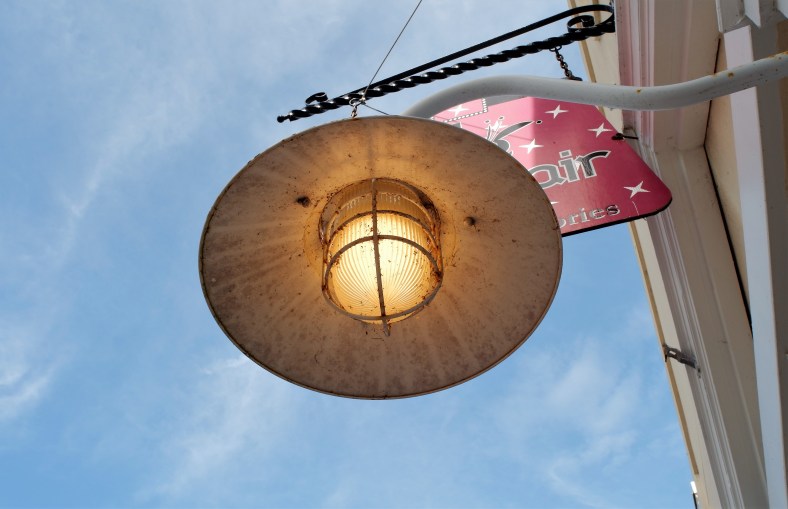
Centre Street, Fernandina Beach, Amelia Island – Florida
Fujifilm X-A10 with Canon FD 24mm f2.8
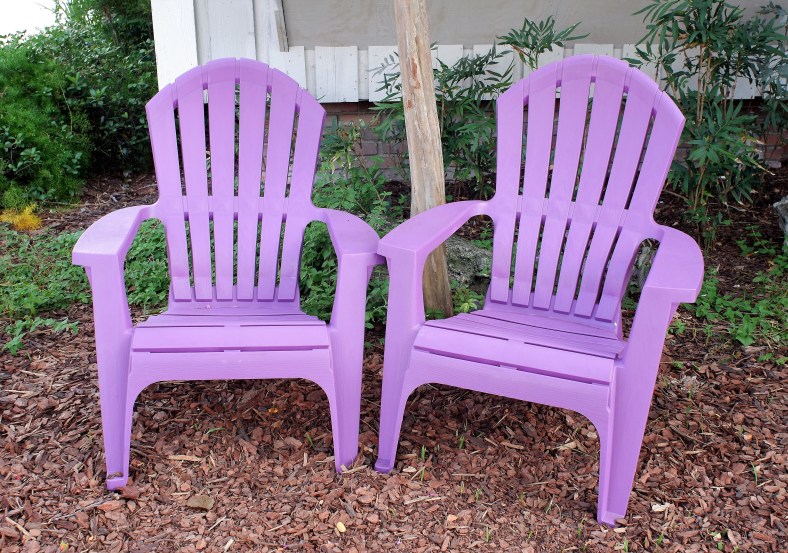
Centre Street, Fernandina Beach, Amelia Island – Florida
Fujifilm X-A10 with Canon FD 24mm f2.8
We recently found a slightly used Fujifilm X-A10 mirrorless camera with the APS-C sensor (without lens) on eBay for a very good price. Our goal was to use it, with an adapter, with some of our vintage Canon FD lenses in the studio.
We couldn’t be happier with the results – the adapter (FotodioX PRO) is solidly built and fits both the Canon lenses and the Fuji body nicely.

Our favorite lens in the studio at the moment is our Canon FD 24mm f2.8 SSC lens that we purchased in Japan in 1978. It is our “go-to” lens for film photography and it stands to reason that it would work out in the studio as well. With the APS-C sensor on the Fujifilm X-A10, the 24mm focal length is a 36mm equivalent so we get the nice wide view close-up we love.

f16

f2.8
In the two images above, the difference in the depth-of-field between f16 and f2.8 is dramatic – in the lower image the DOF is about 2 inches! The front of the lens is in sharp focus while the camera body is out of focus. Focussing is critical.

f5.6

The Yashica is the rather rare (outside of Japan) model A-III in gray on gray from 1959.
If you can find the X-A10 (body only) it makes the perfect poor man’s mirrorless set-up. 16.3 MP and the APS-C sensor is well suited for general photography and works extremely well in the studio.
Thanks for your visit and Happy SUNday y’all.
Chris

I have been exchanging emails with the owner of a great website about Yashicas. As I live in Japan I sometimes see hard to find models and have sent him a few. He wanted to do something in return, so I suggested he send me a camera in return. He did, and this is the […]
via Yashica FR II — Camera Go Camera
A must visit blog with great camera reviews and excellent photography! Check out her wonderful posts! Chris ^.^

Canon A-1 from 1980
The Fujifilm X-A10 with the FotodioX Pro adapter mated with our Canon FD 24mm f2.8 wide angle lens. Makes a nice 36mm on the APS-C sensor.

Yashica A-III from 1959
The Fujifilm X-A10 mirrorless camera body is performing well under studio conditions. The Canon FD 24mm (36mm) handled these two classics very well. Just the right amount of view and fantastic depth-of-field.

Seen here with the Canon FD 50mm f3.5 macro lens.
We highly recommend this set-up if you’re wanting to experience the Fujifilm X-series cameras and their APS-C sensors and Fujicolor film simulation modes.
Chris & Carol
Yashica’s first 35mm single-lens reflex camera with the Praktica-thread (M42) mount lenses was the Yashica Penta J… at least here in the United States and in Japan. Elsewhere (most of the world) the camera was known as either the Yashica Reflex 35 or Reflex J (Australia and possibly the U.K.). As best we can tell, they were all the same cameras with different top plates to accommodate the different names (logos).
Part of the demise (lack of sales success) of the well-built Pentamatic series of cameras that preceded the Penta J, was that Yashica decided to go with a Pentamatic exclusive bayonet mount lens system. Sturdy and well designed to be sure, but being unique limited the available lenses that could be swapped between cameras. The Praktica design M42 screw thread mounting system was in widespread use at the time and Yashica’s bayonet design just went against the flow.
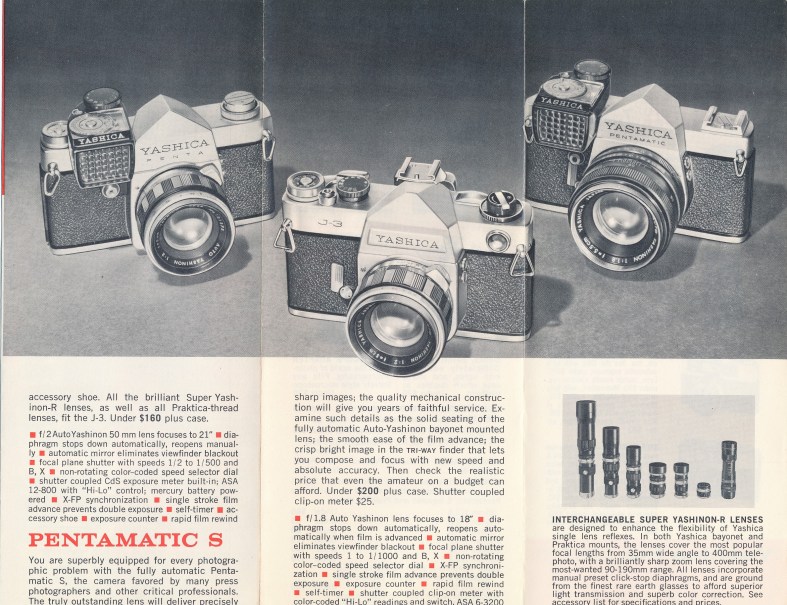

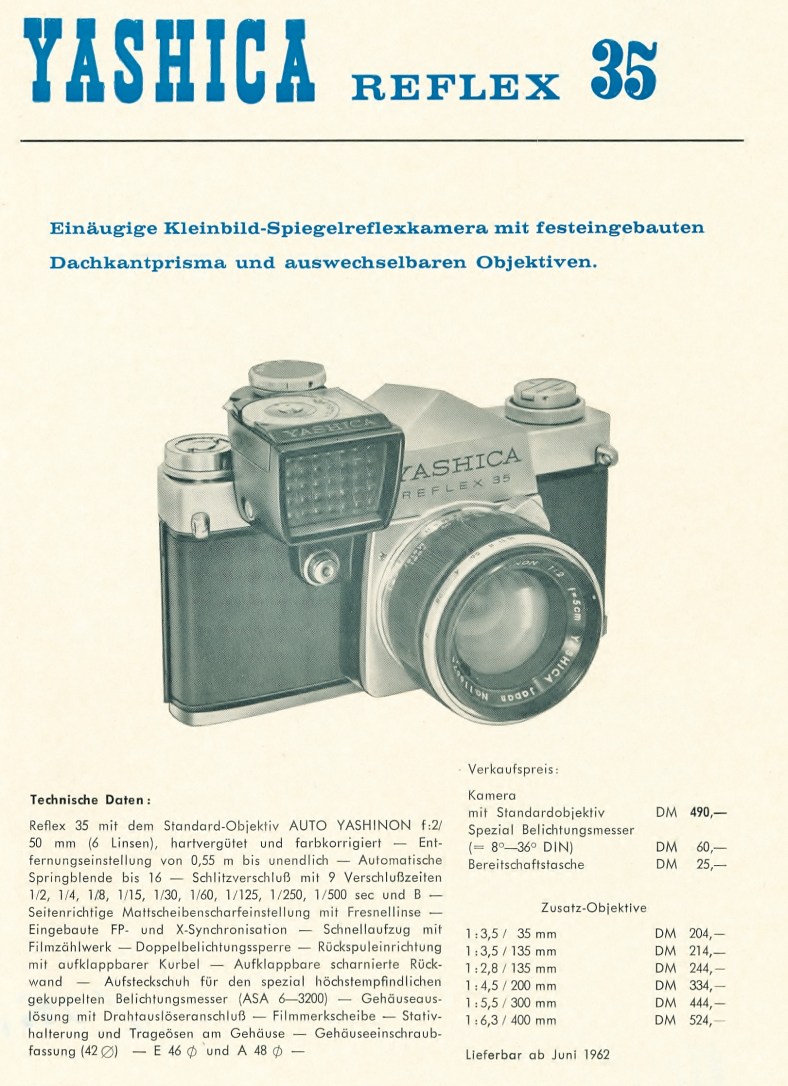
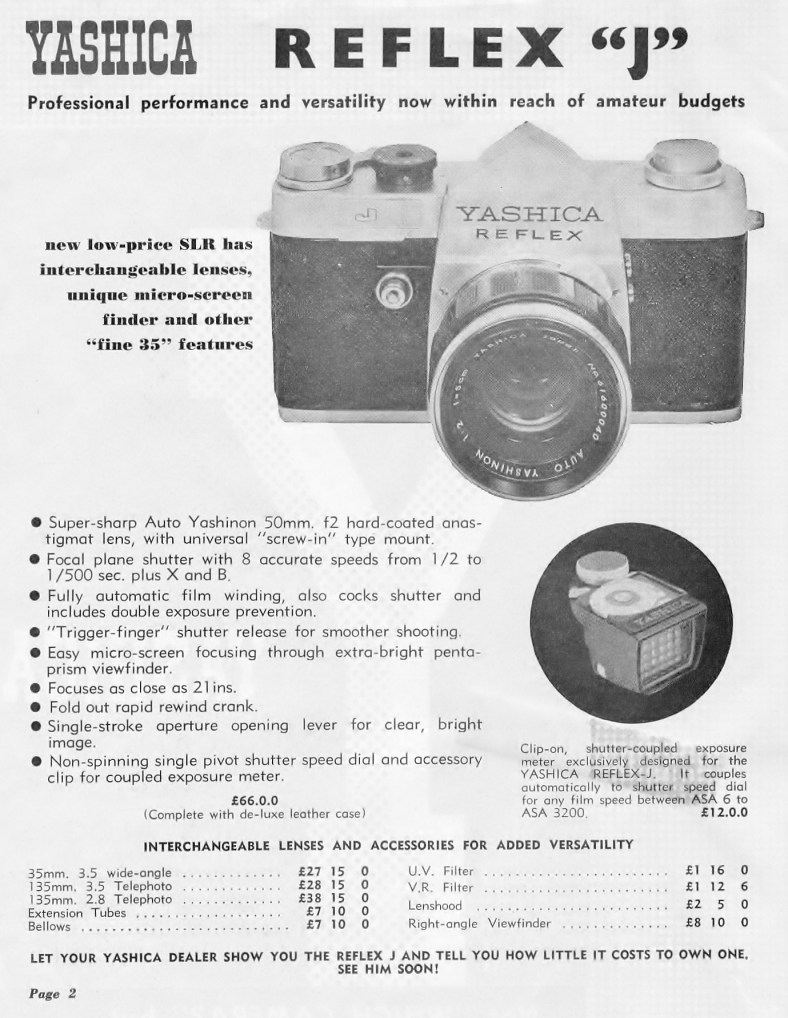
Now fast forward to 1965 ish… Yashica introduces the new J-5 AND the J-P! In between those years Yashica had introduced the J-3 and J-4. Why would Yashica go back in time and bring out another 35mm SLR in 1965 that was the cousin to the 1961 Penta J? Notice we say cousins… not brothers. They shared the same platform with one another but as you can see in the image below the top plates were of a different design.
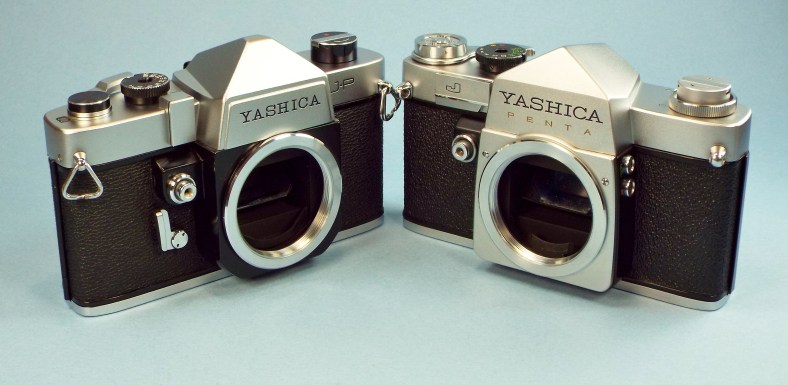


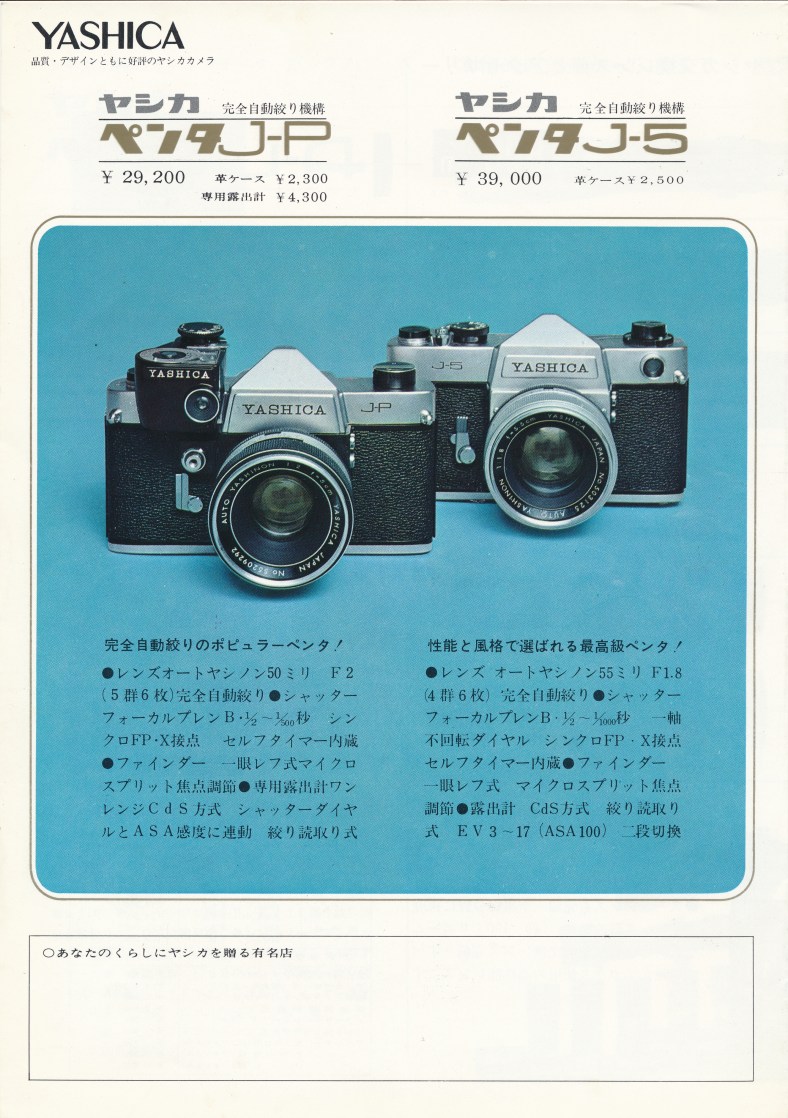

Stay tuned… more to come on these Yashica classics.
Many thanks, Chris and Carol
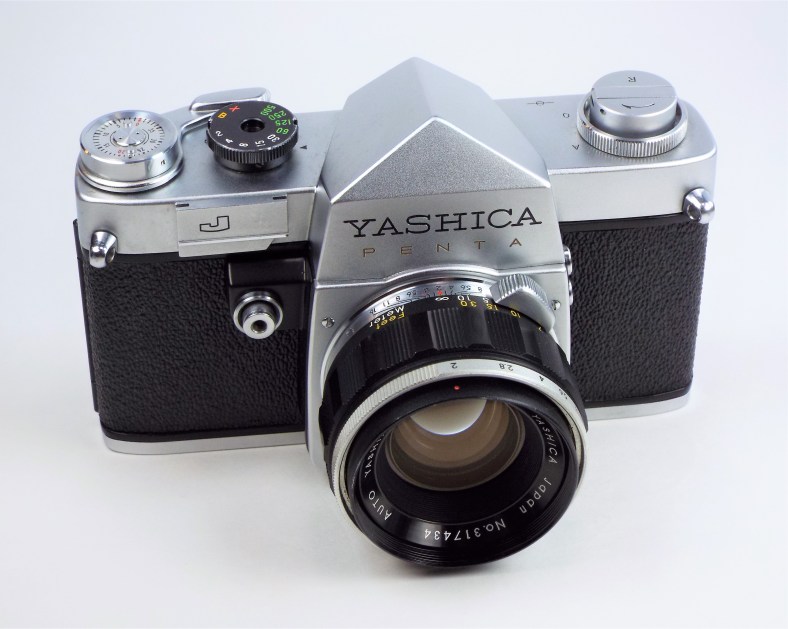
Clean design and simple controls. A stunning camera.
Released in 1962, the Penta J (Reflex 35 J in other markets) was Yashica’s first 35mm SLR designed to accept the popular M42 screw mount lenses vice Yashica’s exclusive Pentamatic bayonet mount that preceded it. The Penta J shared more body parts and took its design cues from the Pentamatic S (1961-62). Interestingly the Penta J lost the self-timer lever that the Pentamatic S fought so hard to get.

The Penta J was designed to accept a clip-on exposure meter that coupled to the shutter speed dial. No TTL metering – that was a long way off!

The ASA/DIN dial was not coupled to anything. It was a reminder to the photographer as to what the speed was of the film that was loaded in the camera.

The standard lens for the Penta J was the semi-automatic Yashinon 5cm f2 lens.
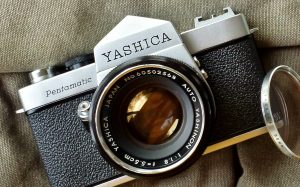
The Yashica Pentamatic S (below)… the Penta J’s cousin.

The Pentamatic S pictured with the standard lens for the Pentamatic II.

So there you have it. The Yashica Penta J and the Pentamatic S. Cousins in the Yashica family.
Comments? Please feel free to share what you know and what we may have missed. Thanks
Studio Camera: Fujifilm FinePix S9900W
Chris

