Cocoa Beach Firefighters – 1972

Cocoa Beach, Florida firefighters, May 1972

As part of my college ‘Photographic Documentation’ classes at Hydrospace Technical Institute (a mouthful), I decided to join the Cocoa Beach Fire Department as a volunteer firefighter trainee in the Spring of 1972. The highly trained professionals at the station agreed to train me and allowed me to document their activities for my class. Since Cocoa Beach is so close to the Kennedy Space Center at Cape Canaveral, the firefighters at Cocoa Beach had access to better personal gear (Lexan helmets and other high tech safety equipment) than other departments that were not expected to respond to a rocket related mishap. I hope to post a series of images over the next few weeks as more will be discovered in my archives. I’m sorry to say that I do not have the names of the brave firefighters I have pictured. I will be sharing my images with the current personnel of the Cocoa Beach Fire Department via their Chief.

IMG_20170316_0022

IMG_20170316_0028

IMG_20170316_0027

IMG_20170316_0016

IMG_20170316_0017

IMG_20170316_0025

IMG_20170316_0019

My favorite truck. 1970 Chevrolet 4×4 Suburban Rescue Unit. Way cool!

21933932479_540973dd3f_o

Me and my favorite truck!

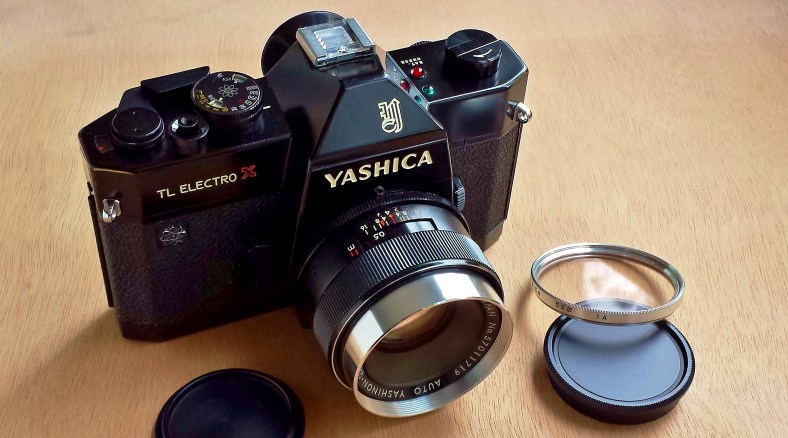
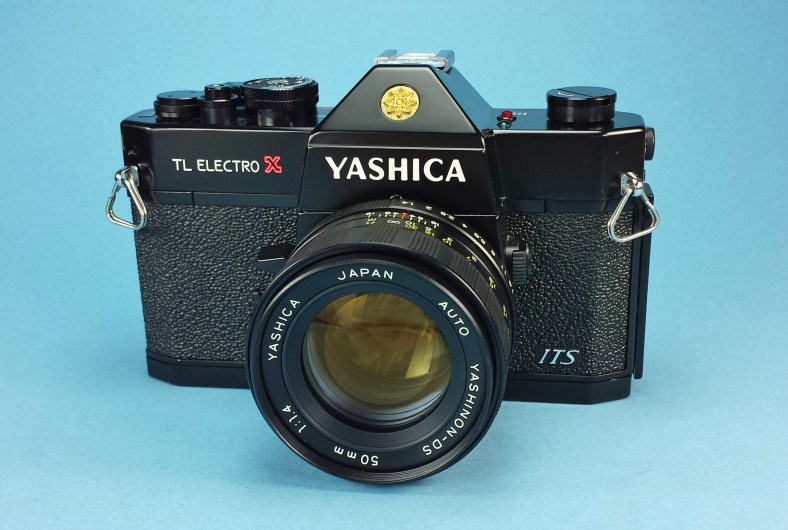
Camera:  Yashica TL Electro-X

Lens:  Auto Yashinon 50mm f1.7

Film:  Kodak Plus X Pan

Processing:  Self processing

Scanner:  Canon CanoScan 9000F Mark II

From a collection of recently ‘found’ negatives from 1972.

Many thanks to the personnel of the Cocoa Beach Fire Department for their expert training and friendly advice. They took the more than a few of us college kids in and it was a great experience for all. When I went on to join the U.S. Navy in 1975, I put my background in firefighting to good use aboard the three aircraft carriers that I served aboard.

 

Reflections – 1972

Self portrait at 18

Cocoa Beach, Florida March 1972

IMG_20170316_0010_NEW

Camera:  Yashica TL Electro-X

Lens:  Auto Yashinon 50mm f1.7 lens

Film:  Kodak Plus X Pan

Processing:  Self processed

Scanner:  Canon CanoScan 9000F Mark II

Part of a collection of negatives that I shot while at college in South Florida. These have never been printed and have only just recently been ‘found’ again. Wow, 45 years ago!

Fujifilm Neopan Acros 100 & Fujica GW690

IMG_20170316_0002_NEW

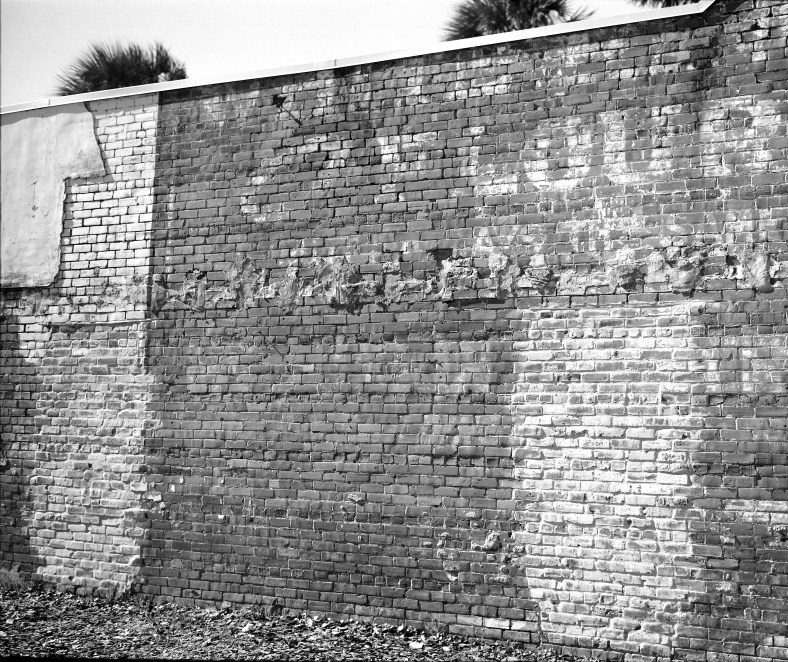
Testing our Fujica GW690 medium format camera and Fujifilm Neopan Acros 100 film. Captures the details, grays, shadows and textures nicely on this 130 year old brick wall on Centre Street.

Processing:  The Darkroom

Scanner:  Canon CanoScan 9000F Mark II

Film:  Fujifilm Neopan Acros 100

Camera:  Fuji Photo Film Fujica GW690 ca.1978

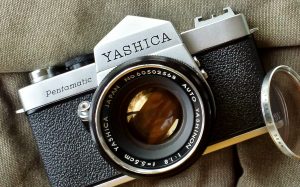
Earliest Pentamatic Lenses Found… Yeah!

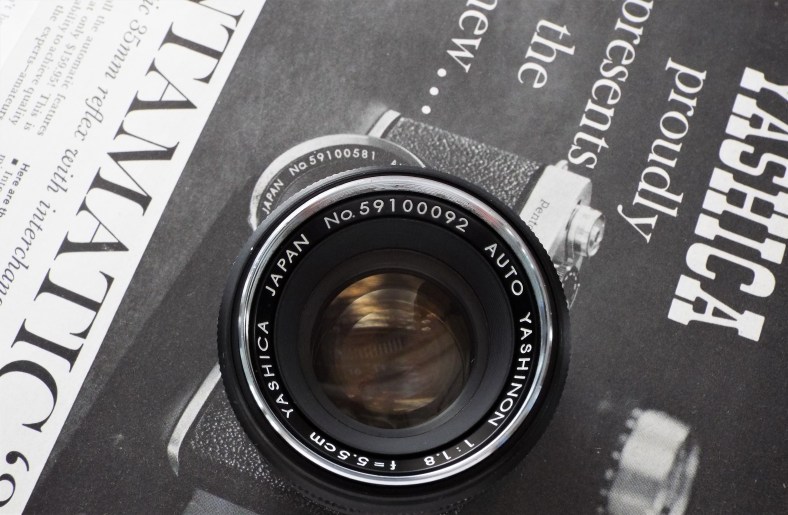
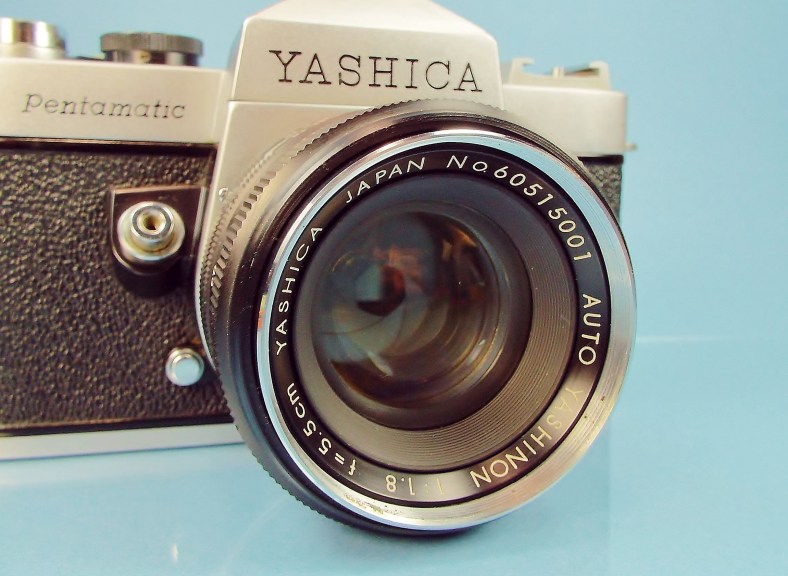
Nerd heaven! After years of speculation and almost constant searching, we’ve been able to confirm that Tomioka Optical began making lenses for Yashica’s new Pentamatic 35mm SLR camera in the latter part of 1959. The two lenses pictured below confirm (via serial numbers) of an October 1959 start of production. Yashica had filed for a trademark of the name ‘Pentamatic’ in September 1959 (in Japan). Since their new camera used an exclusive mount for its lenses, Yashica designers had to have shared their design with Tomioka as early as the summer (August ?) of 1959.

Using the rule of twos, these lenses are the earliest in our collection.

DSCF3824

By serial number the left lens was built in October 1959 and it was the 92nd lens made. The right lens was built in December 1959 and by then Tomioka had built 1,630 lenses for Yashica.

No.  59 = 1959   10 = October  0092 = 92nd made

DSCF3826

No.  59 = 1959  12 = December  1630 = 1,630th made  

DSCF3827

dscf3477

Here’s our lens matched up to an advertisement in ‘Popular Photography’ magazine from the June 1960 issue. The lens in the ad is No. 59100581 which decodes to – October 1959, lens number 581 in the sequential production run. So in October, Tomioka had made nearly 600 lenses and by December they were up to 1,630 made. Certainly possible that they were averaging nearly 600 lenses per month in late 1959.

It’s a good find for us as the early serial numbers were just a guess on our part as to how they decoded. Having two lenses made before 1960 helped firm up our speculation. Lenses made in 1960 drop the month code in favor of a model number or code. A typical 1960 lens would have a serial number of:  No. 605xxxxx which would be 60 = 1960  5 = model code  xxxxx = production sequence number.

008

Serial number No. 60515001 decodes to 60 = 1960  5 = model code  15001 = 15,001 made since production began in October 1959.

If you’re a collector of Pentamatics or are just interested in Yashica cameras in general, this is important info. We know, total nerd stuff!

Thanks for your visit.

Chris

My Dad Paul

On the 103rd anniversary of his birth – March 7, 1914

27716418205_3aaf000a5e_o

On the streets of Bay Ridge, Brooklyn ca. 1921. My dad’s dad drove a milk wagon delivering milk in the neighborhoods of Brooklyn. My dad grew up around horses and continued that trend while assigned to a CCC camp at Ft. Dix, New Jersey just before WWII.

27780099275_8a21cb9daa_o

U.S. Army ca. 1943. Military Policeman assigned to the Brooklyn Navy Yard.

15295172593_336f30dd83_o

His favorite camera. Purchased new in 1953.

Remembering a great man on the day of his birth. Forever missed.

Chris

Yashica-Mat 120 Film Camera Set – 1960

dscf3786

Pretty close to the way it looked when it was unboxed back in 1960. This one was part of a short production run of only a handful of cameras. It was for sale at US Military Exchanges (stores) in Japan as it is marked *EP* which meant an exempt purchase. No taxes paid but it could not be purchased or sold on the Japanese domestic market.

dscf3787

It was Yashica’s first crank film advance TLR and it also featured auto cocking of the shutter. First released in April 1957.

dscf3798

dscf3799

dscf3800

dscf3801

dscf3805

dscf3806

dscf3812

The quality of the images taken with a Yashica-Mat are outstanding – Yashica used high-quality Yashinon f/ 3.5 80mm lenses made for them by Tomioka Optical of Tokyo.

They are a joy to use and it’s a great camera to get into medium format photography with. It produces large 6 x 6 cm negatives or slides.

Thanks for your visit! Please visit our camera shop for some interesting vintage photo gear at http://www.ccstudio2380.com

Chris and Carol  ^.^