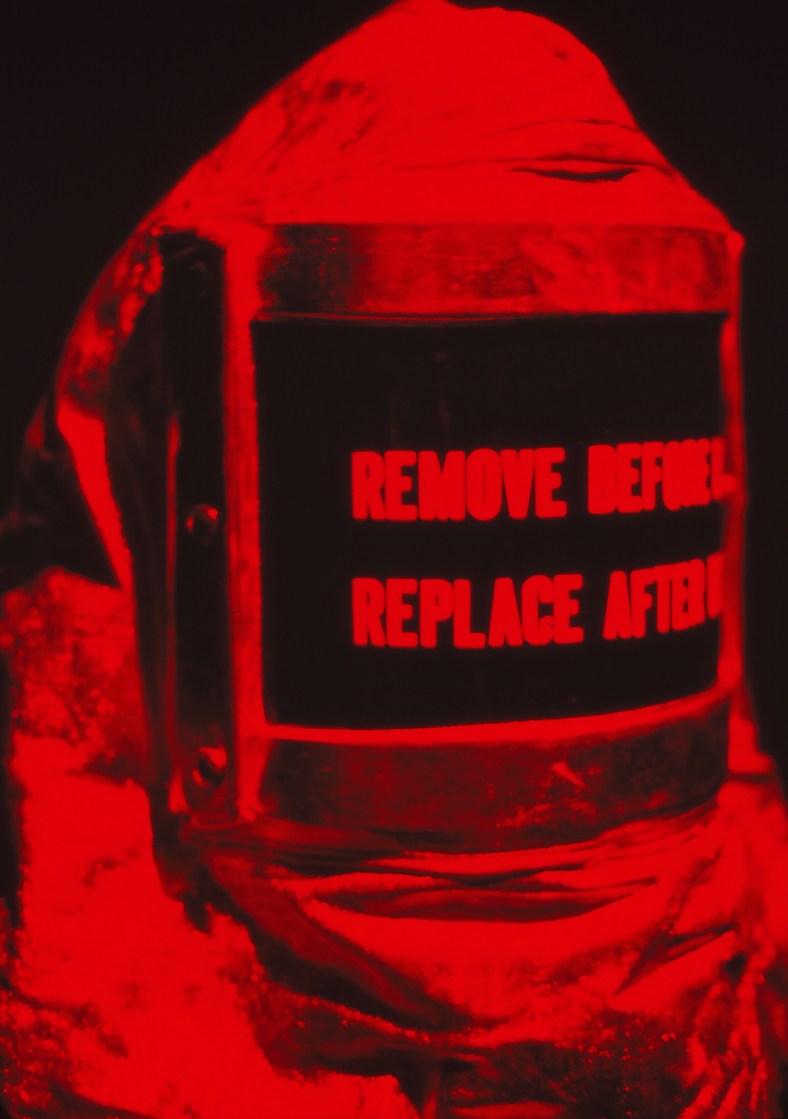
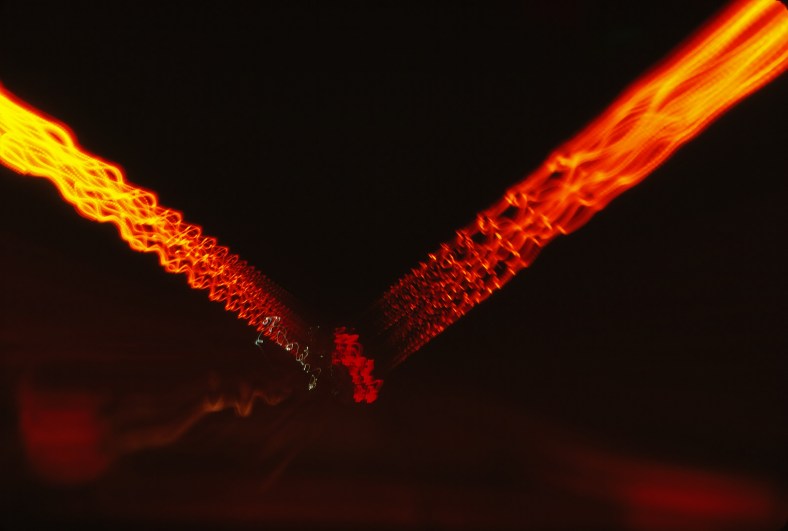
Rescue crewman’s fireproof helmet. USS Midway (CV-41), underway from Yokosuka, Japan in the South China Sea. 1978
No post production. As captured and composed.
Camera: Canon F-1 (1978 version) Kodak Kodachrome 25 Canon FD 80-200mm f4 @ 4 sec

Rescue crewman’s fireproof helmet. USS Midway (CV-41), underway from Yokosuka, Japan in the South China Sea. 1978
No post production. As captured and composed.
Camera: Canon F-1 (1978 version) Kodak Kodachrome 25 Canon FD 80-200mm f4 @ 4 sec
ヤシカ
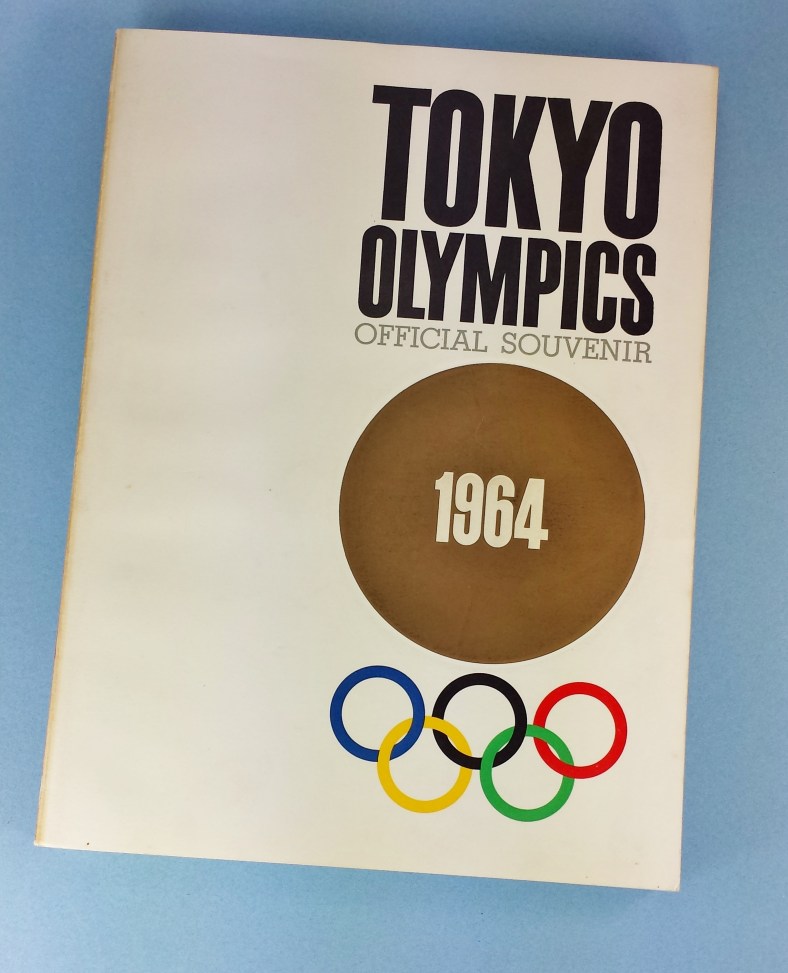
Japan and the summer Olympic Games held in Tokyo.
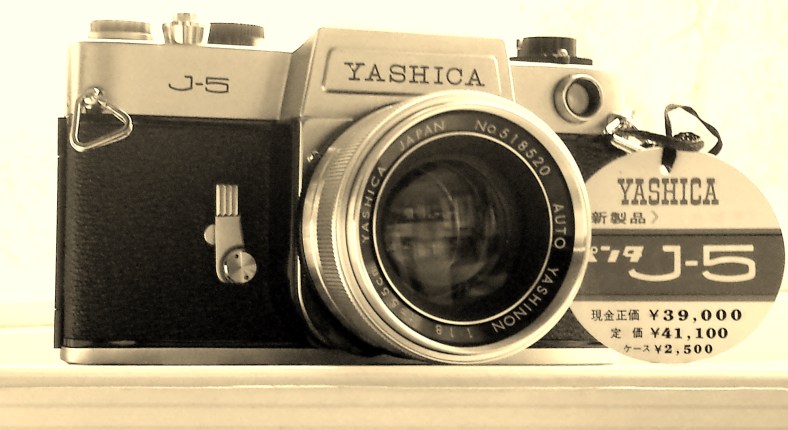
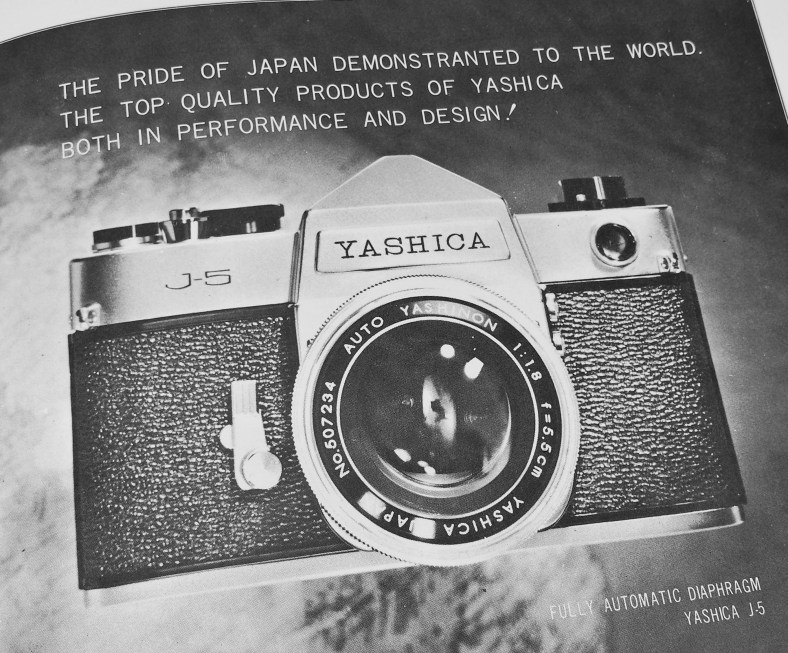
Yashica’s latest in their popular line of SLRs. As it would have appeared in 1964.
The world was coming to Japan for the Olympics and Japan was ready to show the world its best technology and design. The Tokaido Shinkansen made its inaugural run from Tokyo on October 1st and Japan and its technology never looked back.

Fantasy image of our 1964 Yashica J-5 as it would have looked in the camera dealer’s window.

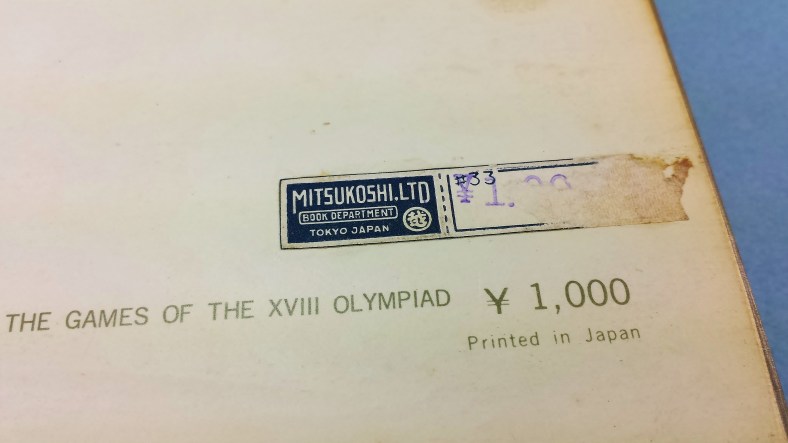
Wonderful souvenir of the Olympic Games.

Yashica proudly shows off its new J-5

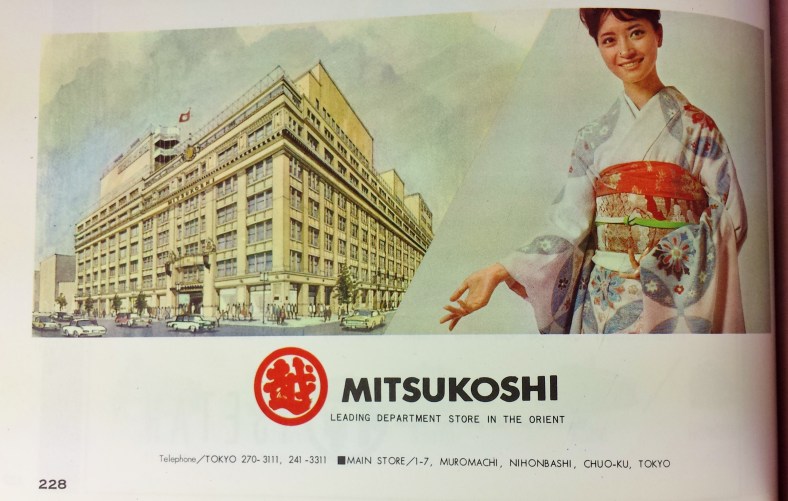
If you’ve been to Tokyo chances are you visited Mitsukoshi (there’s one at EPCOT at WDW, Orlando).

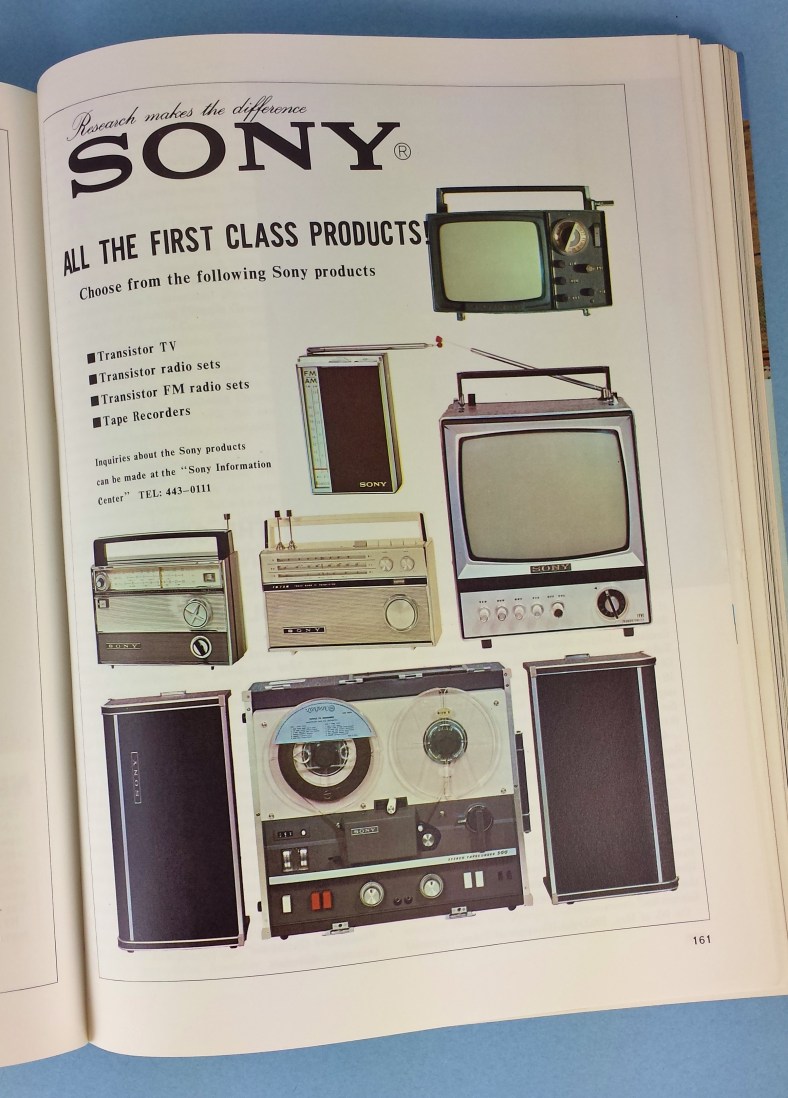
Who hasn’t owned or wanted a SONY!!!

A trip back in time. A time when Japan showed the world what it was capable of.
Thanks for your visit!
Chris
This camera cleaning cloth with an advertisement on it was with a Minolta camera we just acquired from a seller in Mie Prefecture, Japan.
A machine translation tells us that it is for a camera shop in Tokyo – Sakaecho – Tama 多摩ニュータウン.
Neat find from about 1963 or so… especially with the Contax camera depicted. It’s 15 x 15cm square. We love the 4 digit telephone number! Just before the 1964 Tokyo Olympics.

Thanks for your visit!
C&C
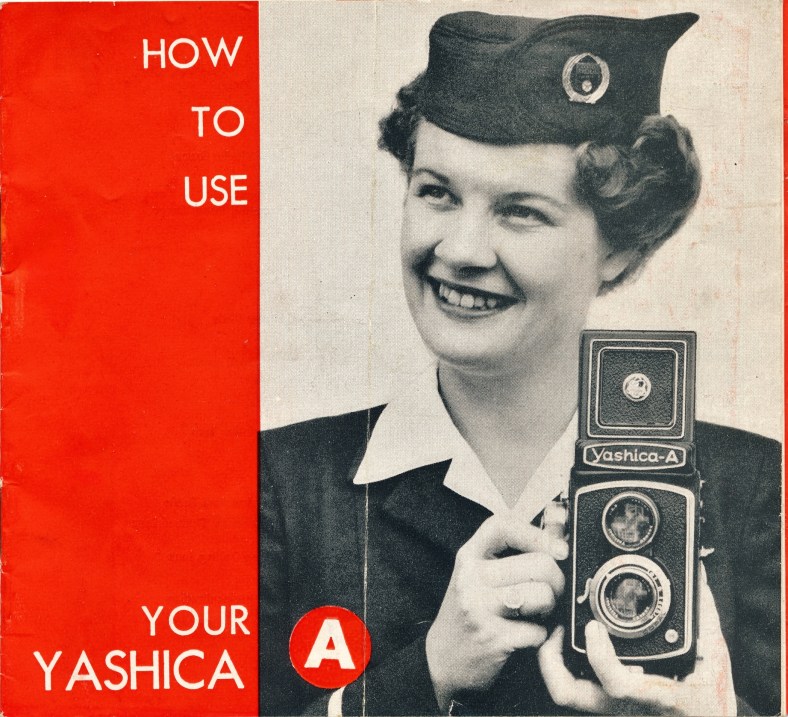
Help! She’s been driving us crazy for years trying to identify what type of uniform she’s wearing.

Is she a stewardess, cruise ship officer, tour bus guide, train hostess? The uniform is certainly not a military uniform (but could be). This instruction booklet is from the late 1950s. Her cap is keeping with the style of the airlines at the time but definitely not JAL. Take note, she has a gold stripe on her right sleeve which wasn’t consistent with airlines unless you were in the cockpit. There is a hint of what looks like a pin (wings ?) on the left side of her jacket and of course there’s the emblem (logo) on her cap.
We’ve tried to place her by her looks. She doesn’t appear to be Asian… we think she looks northern European or from the UK… just don’t know.
We’re open to any and all ideas… just for fun since this is the only time Yashica used an image with a model wearing a uniform on the cover of their booklets. It was replaced rather quickly with a plain cover on later booklets.
Many thanks! We’ll take any and all guesses too.
Chris and Carol
During a recent restoration of our 1955 Yashicaflex A-II twin-lens reflex camera, we discovered that the leather case held an interesting surprise!
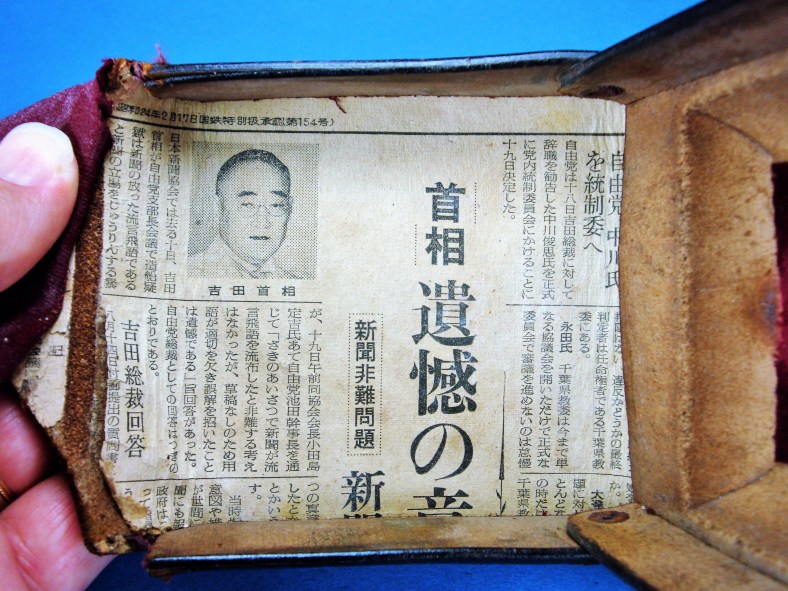
The thread below is taken from our Flickr page (Yashica Sailor Boy).
Chris “As part of a restoration of my c1955 Yashima (Yashica) twin lens camera’s leather case, I discovered that the red felt material inside the case used backing made from Japanese newspapers! Leave it to the Japanese during the mid 1950’s to make good use of something that would normally have had one use and then thrown away here in the West. What really surprised me was how easy the felt pulled away from the newsprint without destroying the paper. I hope to get the writing translated… maybe some interesting clues as to where the case was made and when.”
Chris “The leather case was made for a Yashica Flex model A-II from 1955. The camera was purchased from a seller from Hiroshima, Japan. The camera was made in Tokyo and I am not sure if Yashima (Yashica) made their own leather cases or if they were made by a supplier. Maybe the newspaper will yield some clues as to where.”
Chris “I now know that it is a picture of Prime Minister Yoshida. This was a special edition newspaper made for (?) the Japanese National Railways (JNR). It appears that the paper is dated 17 February 1949. ‘Special Treated Approval Number 154 Issue’.”
Ken “The caption at the top actually records the newspaper’s national railways special handling permit #154, and does not identify the actual date of the issue in question. The article has to do with a controversy the prime minister created when he criticized a newspaper for allegedly spreading rumors about a political scandal concerning the shipbuilding industry. The scandal erupted in January 1954 and became one of the main causes of the fall of Yoshida’s government. It is not clear which newspaper this article comes from, but from the anti-government tone of the writing it is possibly the Asahi.”
Chris “Thank you so very much KenjiB_48. It helps to know this as it makes more sense for the Japanese company that made the leather case would have used a current (1955) newspaper for a camera made in 1955.”

The inside front of the leather case held a similar surprise. It would appear that in the mid 1950s, some Japanese manufacturers found ways of recycling almost everything produced. Used newspapers, I would think, could be had for free. Why not use them for backing the felt to the leather. Pretty smart!
Thanks for your visit!
Chris ^.^
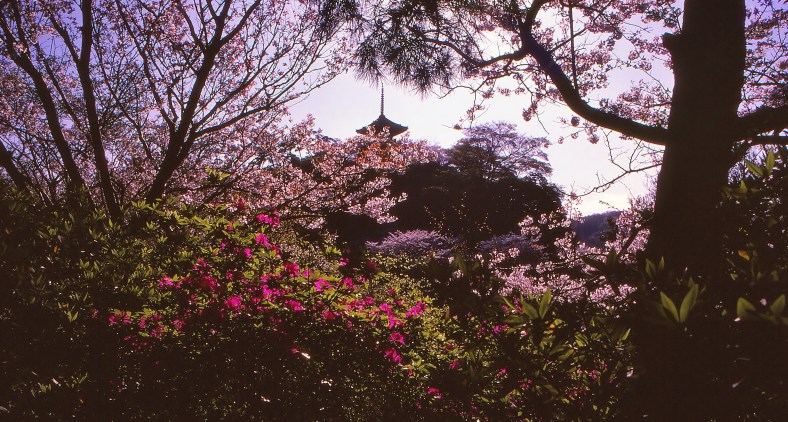
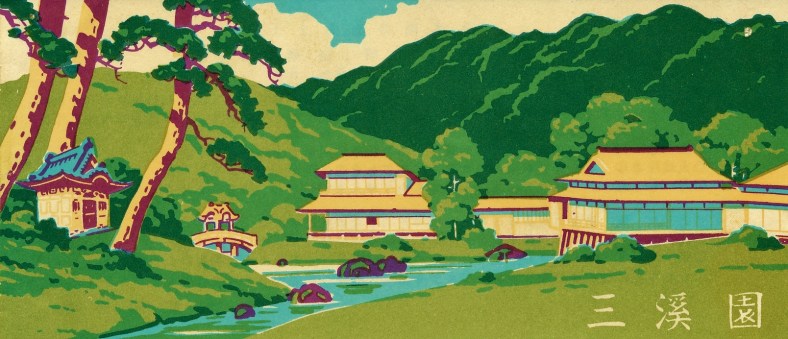
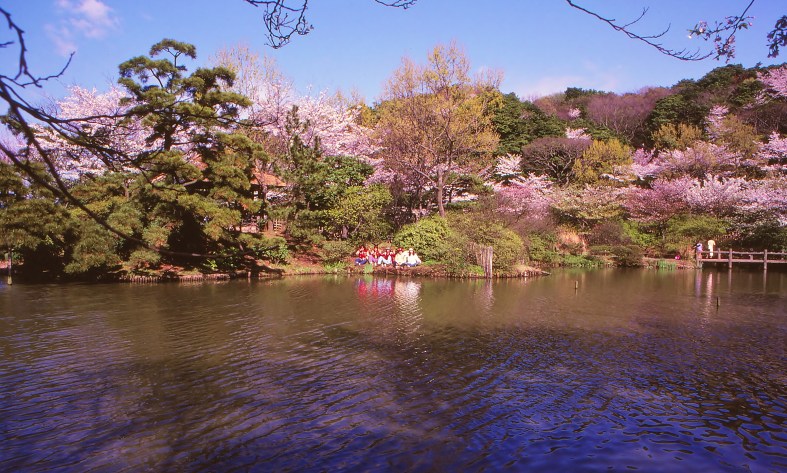
Escape the hustle of the big city – Sankei-en is Yokohama’s beautiful gem.

Soon the sakura and azalea will bloom. Photographers will come. School children and couples. Families love Sankei-en.

It was a pleasant ride to Sankei-en from our house so we went often.

Admission – 100 yen. All smiles.

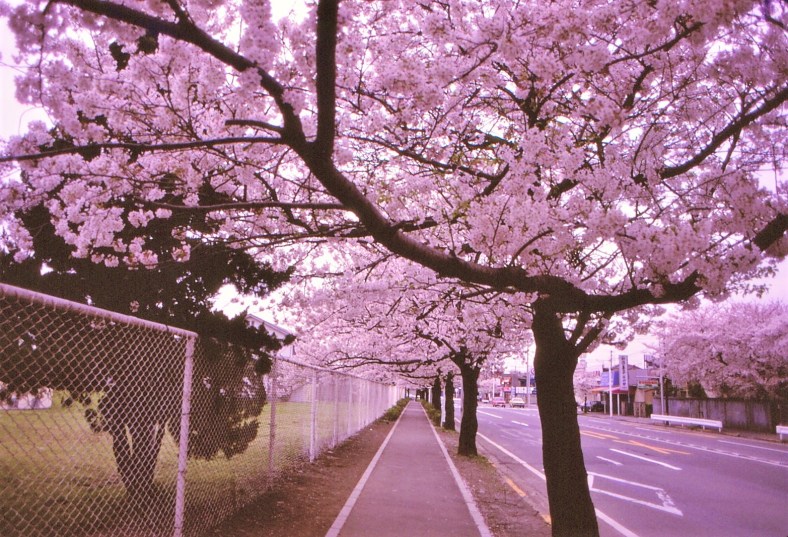
Sakura from long ago. Avenue D in Naka-ku, Honmoku. 1979


Spring returns to Sankei-en soon. The blossoms will be everywhere. Come to this spot and enjoy!
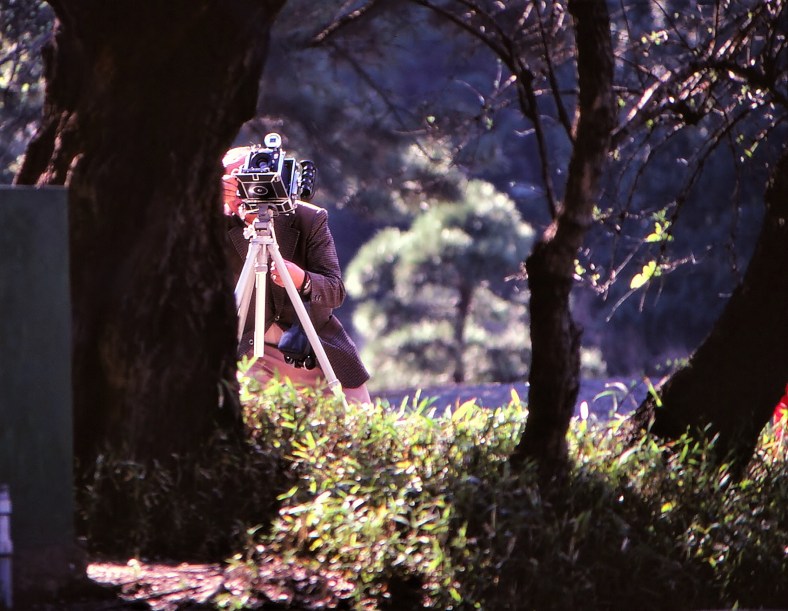
Images from 1978 and 1979. Canon F-1 and Canon AE-1. Kodak Kodachrome film.
Thank you for your visit.
Chris & Carol ^.^

Oil refinery as seen from the hill behind our house in Naka-ku, Honmoku, Yokohama. Canon F-1 (1978 version) with Canon FD 80-200mm f/4 zoom lens on Kodak Ektachrome at about 5 seconds at f/16. As best as we can tell, the refinery is still there today.
Chris and Carol ^.^
Carol and I lived in Yokohama from 1977 to early 1980. We have such wonderful memories of our time living there – memories that still make us smile today. Specifically, we lived in US Navy Housing Area 2 (283-D) which was in Honmoku, Naka-ku. Back then it was an industrial area with a refinery (see pic below) close by and of course the port with its thousands of automobiles and small trucks waiting to ship out to the States.

Oil refinery as seen from a hill near our house.
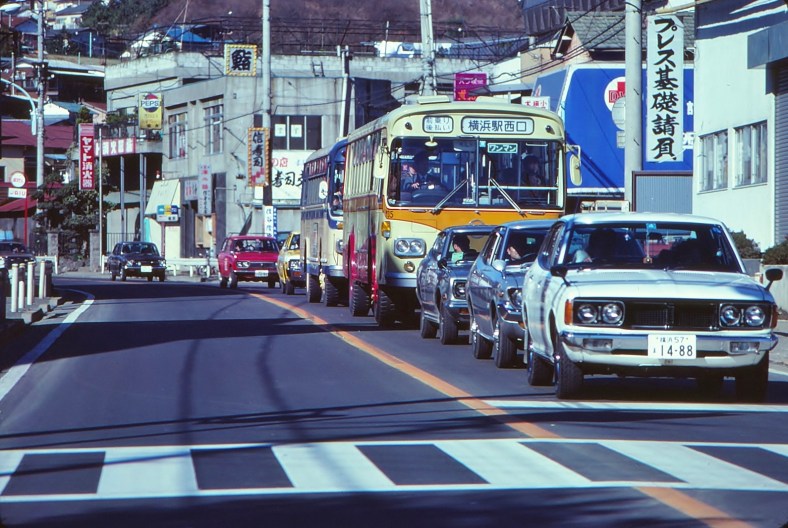
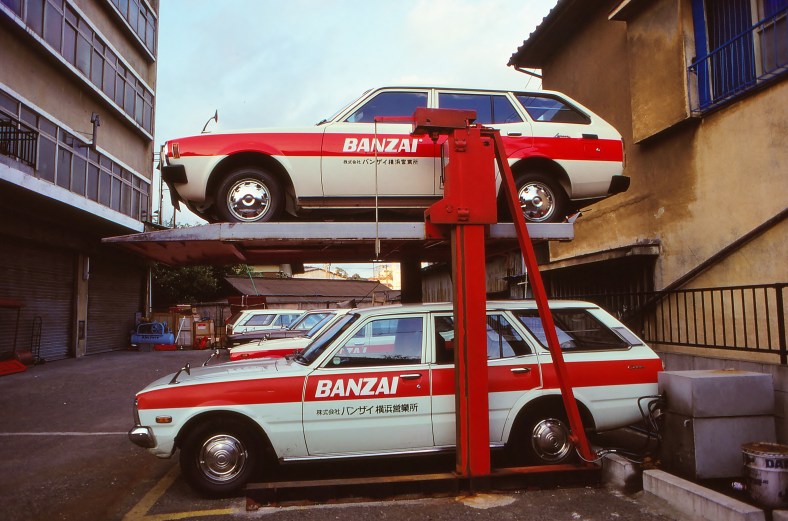
Here, in no particular order, are some street scenes in and around ‘Yoko’. We can tell from our Google Earth visits, that the area has changed dramatically since the Navy left in 1982. There’s an elementary school where our house once stood and the houses we see now are big by what we considered big for Japanese houses back in the late 1970s. All of these images were shot using my Canon F-1 or Carol’s AE-1. We used Kodak Kodachrome and Ektachrome slide film as shooting with color negative film was beyond my Sailor’s pay.
Enjoy this trip back in time and please forgive us if our memory of the exact location is wrong. ^.^


Avenue D, 16, headed straight to Sakuragicho and right to Kamiakin and Yamashita.

A gas station along Avenue D, located just across the road from our base housing. We would tell people who were coming to visit us to be on the lookout for the ‘humpin’ turtle’ sign as it was near the turn into the housing area.

A little too close to the local Keihin Kyuko train in Sugita.

We know… a pay phone with a dial!


Driving through one of the many tunnels along Avenue D (16) from Yokosuka to Yokohama.

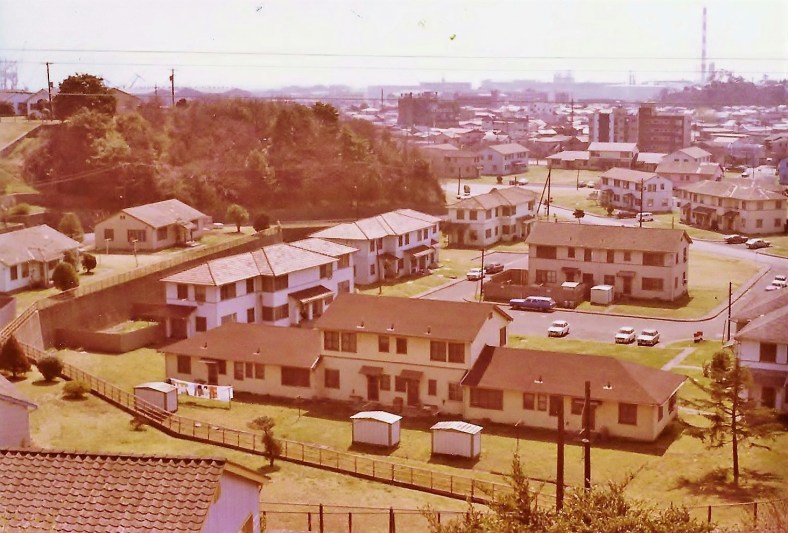
Area 2, US Navy base housing, Yokohama. Our house is the middle of the three two-story houses on the left. The bay, port and the refinery can be seen through the haze in the distance. Honmoku Elementary School 横浜市立本牧小学校 is located here now.
Thanks for your visit – time travel can be such fun! We have a video on Sony Betamax tape that we will have transferred to digital (soon). Lots of neat shots around town with rides on the bus and trains and a walk through a local shopping street. Stay tuned!
Chris and Carol ^.^
Memories of our time in Japan – 1977 to 1980. We lived in Yokohama, Naka-ku. Lovely place. Wonderful people. Every day an adventure. As I read current blogs from Japan, it strikes me that so many signs are now in English. Back in the day (as they say) that wasn’t the case. These two signs were within walking distance of major U.S. Navy installations. No English. No problem. I’m sorry to say that we never learned to read kanji or katakana but we at least learned what the kanji characters looked like for where we wanted to be.

Yokosuka train station, Keihin Kyuko Line schedule heading north to Yokohama.
I always tried for the “green” trains at 15, 35 and 55 after the hour. These were the fastest to Yoko!

Waiting for Bus 8 to Yokohama train station. We knew to look for the kanji character that looked like an old style camera on a tripod as that was Yokohama. Hey it worked!

Bus driver giving me the look.

This was the only sign that I can remember that had English on it near our house in Yokohama. BTW, it was a hot, hazy and humid summer day on the Kanto Plain that day.
Anyway, no complaints here, but as you can see not much in the way of English (none actually). That was Japan in the late 1970s. We had a blast!
Thanks for your visit!
Chris and Carol ^.^

Senja-fuda… “I was here”…

Calm…
Canon F-1 (1978 version) on Kodachrome 64. Kanagawa Prefecture, Yokohama, Japan.