Canon T50 and T70

Overlooked 35mm SLRs from the early 1980s. They feature built-in power winders and have auto exposure too. Both cameras accept all of Canon’s FD lenses which are still available in bunches!

DSC03066

DSC03132

If you find these for sale in like-new condition and working then definitely snatch one up. They make great basic film cameras to develop your film photography skills.

These two were part of my ever-changing Canon collection over the years. I believe I sold these in 2011.

I’m always on the hunt for quality Canon, Yashica and Nikon cameras. Please feel free to contact me if you’re interested in selling yours. We are very active buyers of almost all types of photo gear. Contact us at ccphotographyai@gmail.com

Thanks – C&C

More Canon stuff!

DSC01888

Back when I had a much larger collection of Canon Olympic stuff.

DSC01891

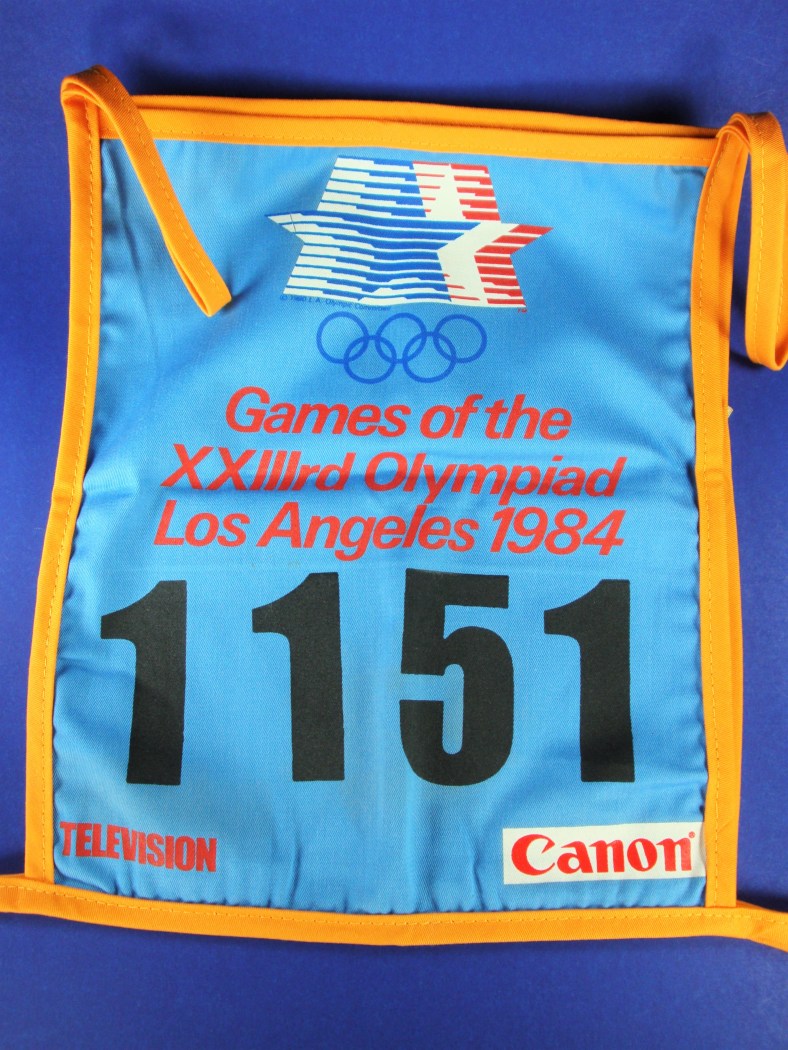
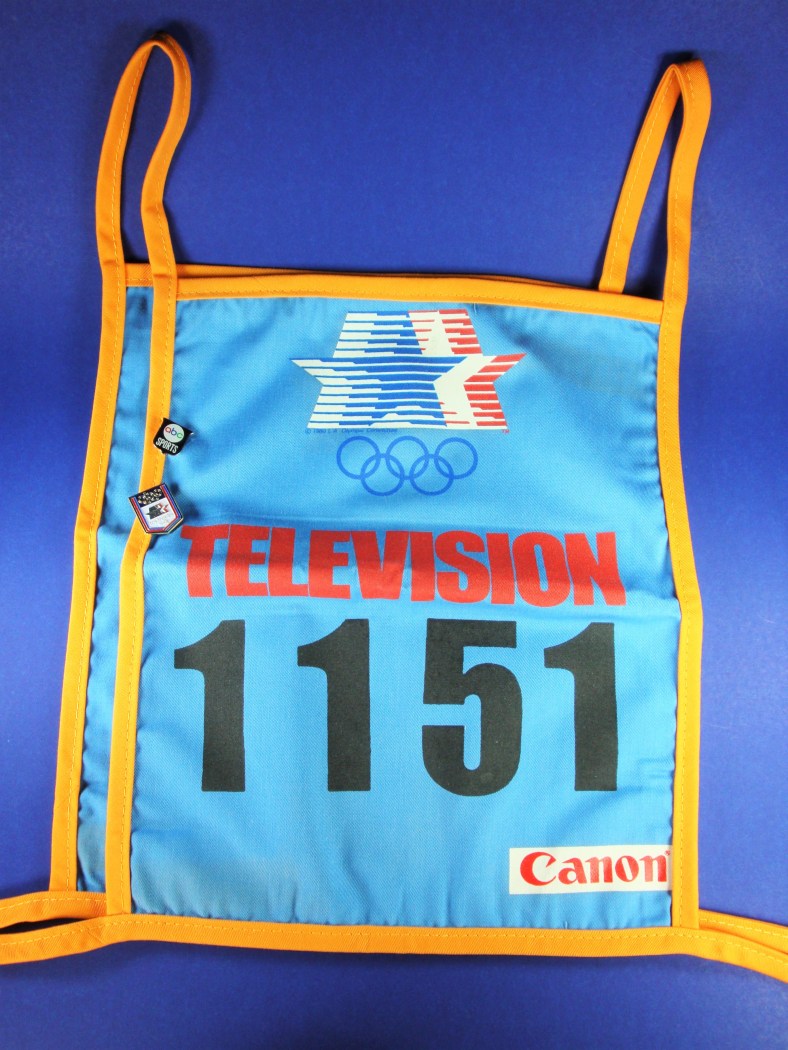
I had acquired this photographer’s vest for the 1984 Summer Olympics held in Los Angeles. This vest was unused and still in its original sealed plastic bag.

DSC01894

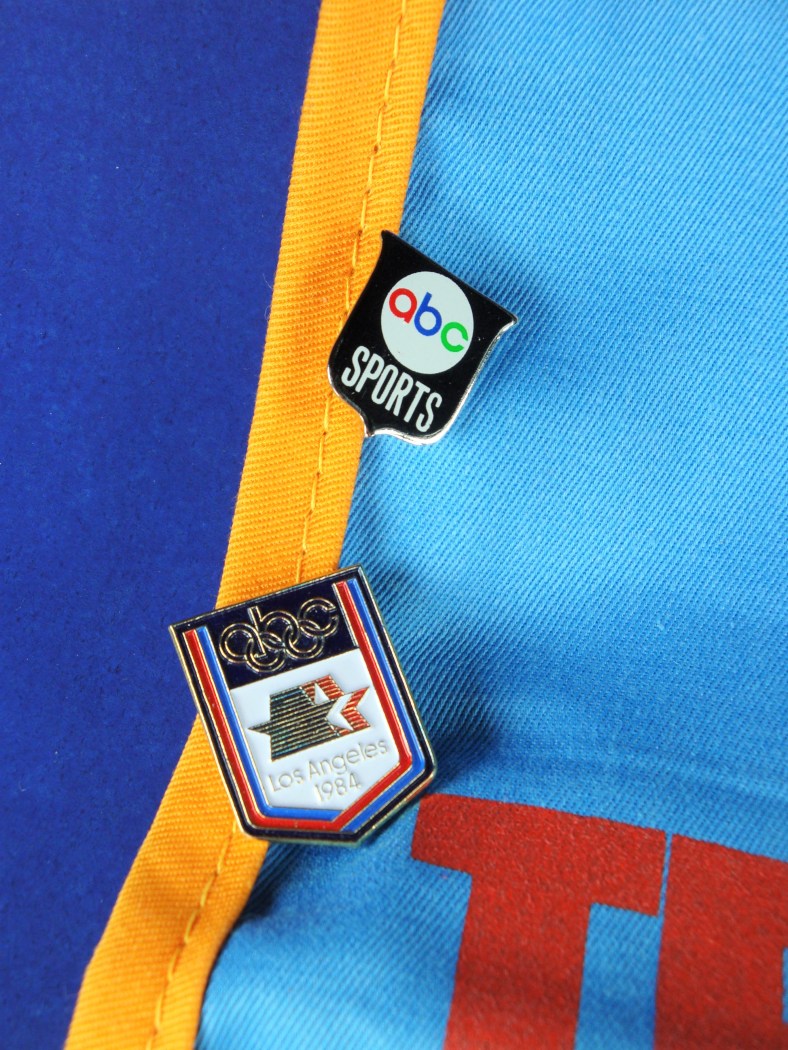
I also acquired these cool pins to go with the vest.

DSC01314 (2)

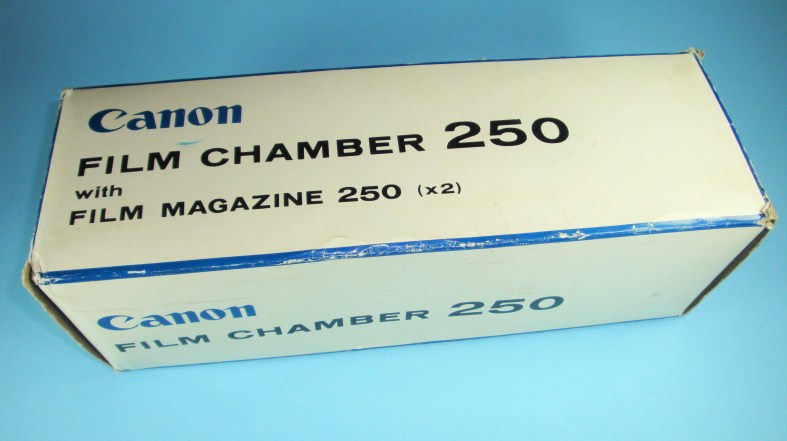
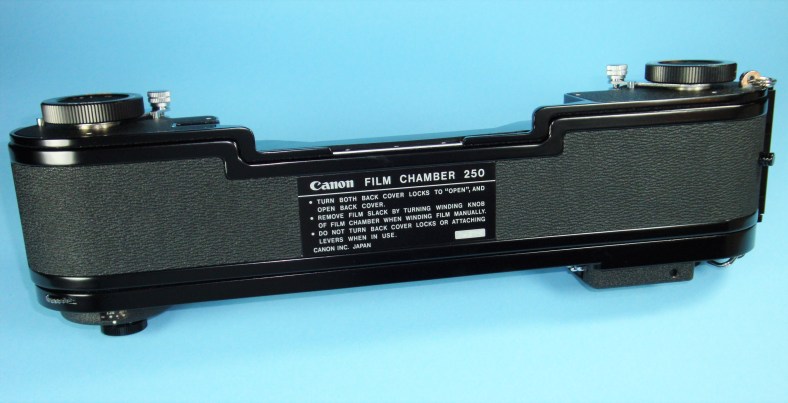
Another one of those dream accessories that I finally got my hands on but let’s face it, very few people ever used these things outside of professional photographers.

DSC01323

This one was still new in its original box as delivered from the factory.

DSC01324

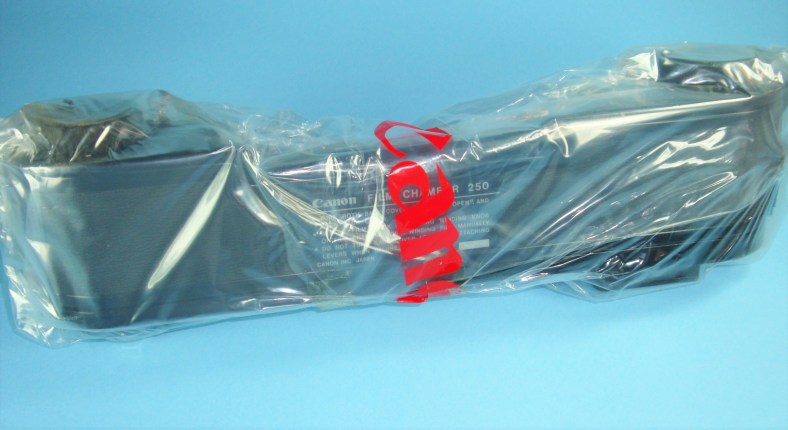
A thing of beauty and quite a bit of design went into this monster.

DSC02279

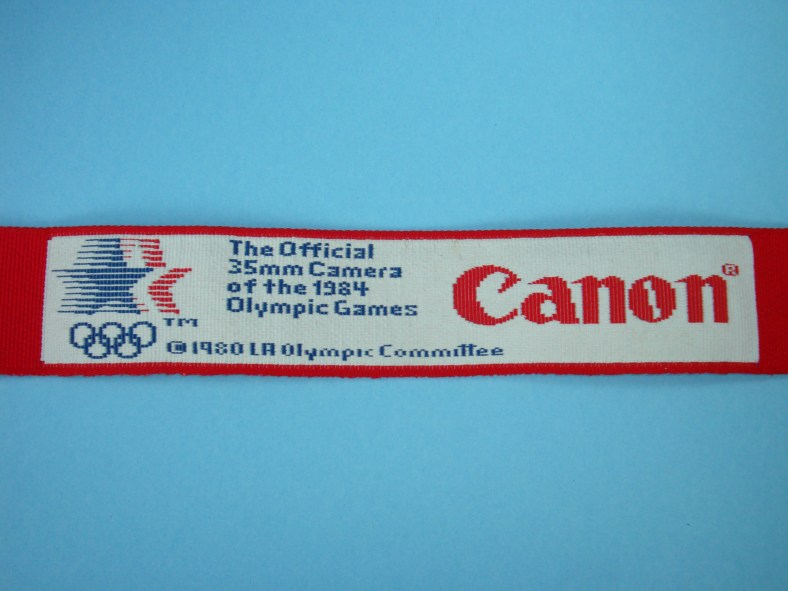
There’s a ton of Canon Olympic collectibles out there from simple lens caps to camera straps and bags. There are three Canon 35mm SLRs with Canon Olympic logos – 1976 Montreal, 1980 Lake Placid and 1984 Los Angeles.

Thanks for stopping by! – Chris

Please respect that all content, including photos and text, are the property of this blog and its owner, Yashica Pentamatic Fanatic, Yashica Sailor Boy, Yashica Chris.

Copyright © 2015-2019 Yashica Pentamatic Fanatic, Chris Whelan
All rights reserved.

Happy SUNday! – Photography by the pound!

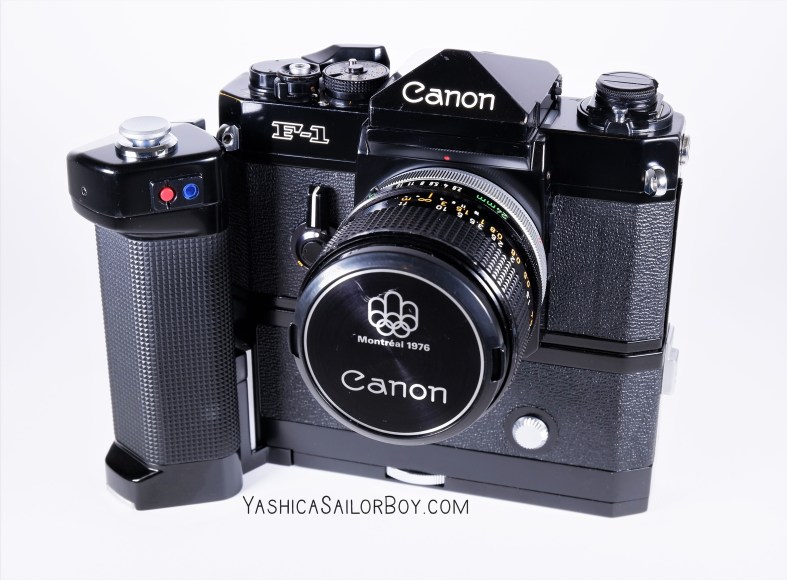
Canon F1 with Montreal

My vintage 1978 Canon F-1. I’ve owned it since new and it’s pretty much traveled the world with me. From Japan to Australia, Hong Kong, South Korea, The Philippines, Thailand, Africa, Europe, Pakistan, Puerto Rico, The Bahamas, the US and most places in between.

4 pounds 6.2 ounces without film and batteries. That’s 1,991 grams of neck cramping weight!

Have a great day and thank goodness for my “tiny” digital cameras! – Chris

Please respect that all content, including photos and text, are the property of this blog and its owner, Yashica Pentamatic Fanatic, Yashica Sailor Boy, Yashica Chris.

Copyright © 2015-2019 Yashica Pentamatic Fanatic, Chris Whelan
All rights reserved.


Yashica 35 – Yashima’s first 35mm camera!

Yashima Optical Industries Company, Limited (Yashima) released their first 35mm rangefinder camera in April 1958. The camera was in development for at least a year (no proof of that but it seems reasonable to assume that an established TLR camera maker didn’t just pull this camera out of thin air). It could have been developed totally in-house as there is only speculation that Yashima received outside assistance in its development.

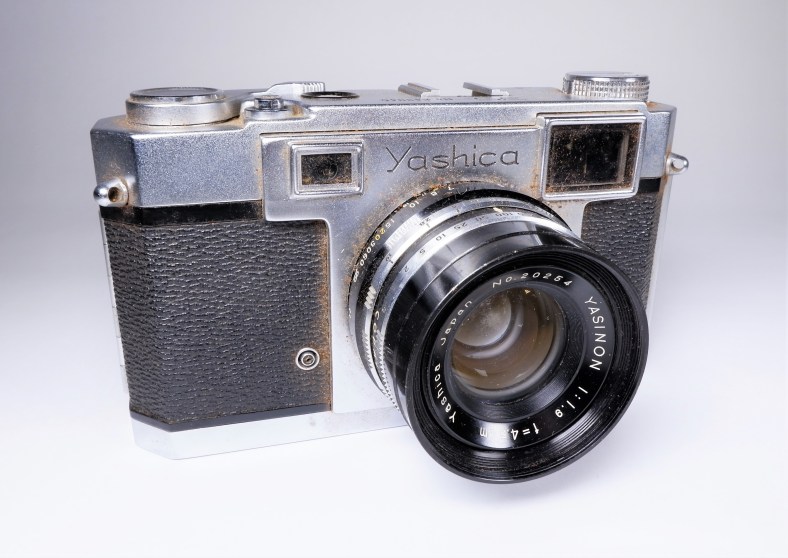
Here’s my earliest example of this historic camera. Note that the lens is marked “Yasinon” vice “Yashinon”. Yashima released at least two months of cameras (April and May 1958) with those markings before changing to what we now know as Yashinon.
DSCF6642

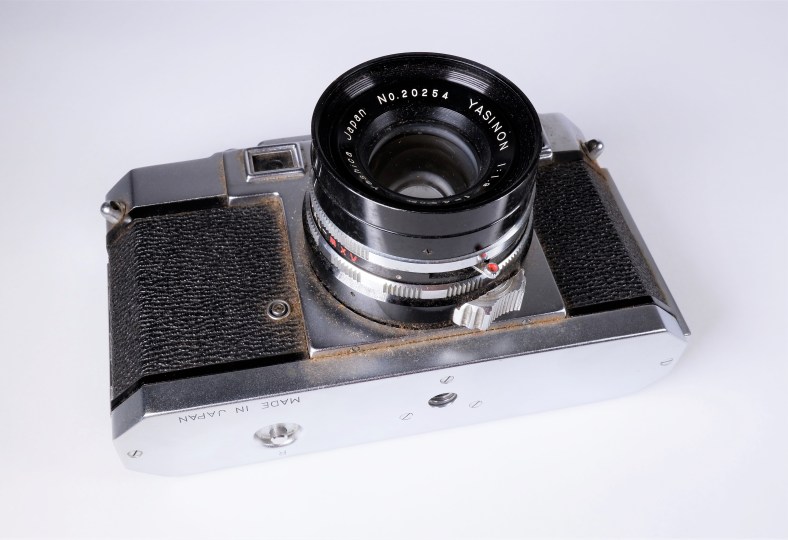
My recently acquired Yashica 35 with 60 or more years of dirt! Straight from an online seller in Japan. Note the unfamiliar “Yasinon” lens. These super early examples are rather hard to find since there were only two months of production.
DSCF6646

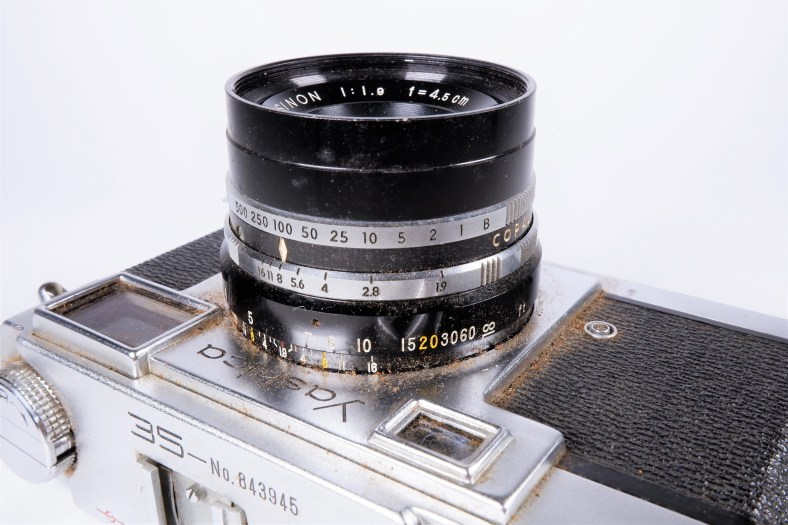
The good news is that it appears the camera lived most of its life in its leather case so there’s no damage to the surfaces of the body and lens. The bad news about living in a leather case is that it tends to support the growth of mold and fungus on the glass elements of the lens and in the rangefinder.
DSCF6651

The dirt is mostly made up of dust and fibers from the felt lining of the leather case and not soot and finger grime – which is a good thing. Sometimes this type of dirt actually keeps the surfaces protected from metal corrosion as long as it’s been stored in a dry environment.
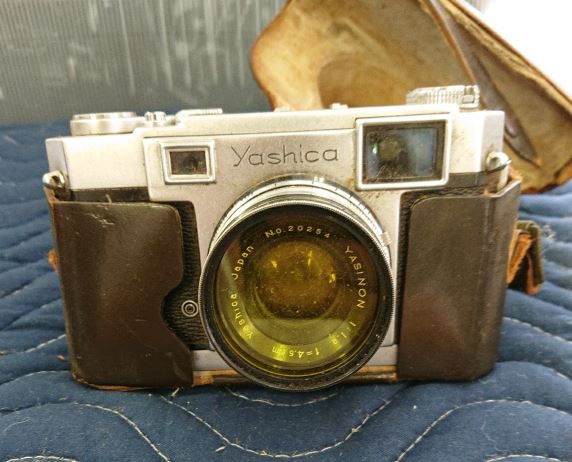
Yashica 35 Japan

What it looked like on the Japanese auction site.

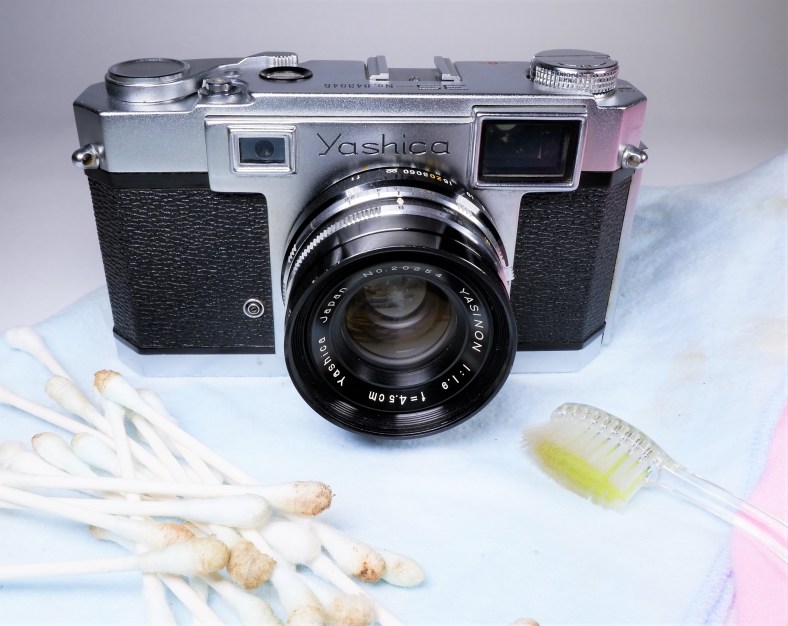
After some initial cleaning of the exterior (see below) with a bunch of Q-tips and some Windex, the camera is looking a whole lot better.
DSCF6654

I use Q-tips and a bit of Windex to gently clean the surfaces of the camera. The Windex leaves no residue and doesn’t harm the leatherette, metal or glass (I’ve safely used that for years). I use the super soft toothbrush to gently clean those hard to reach crevices and to polish the surfaces to a nice sheen.
DSCF6659

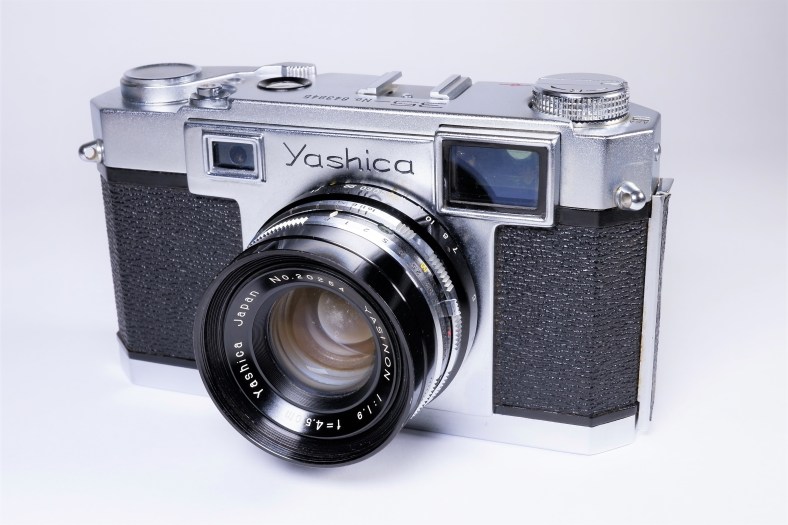
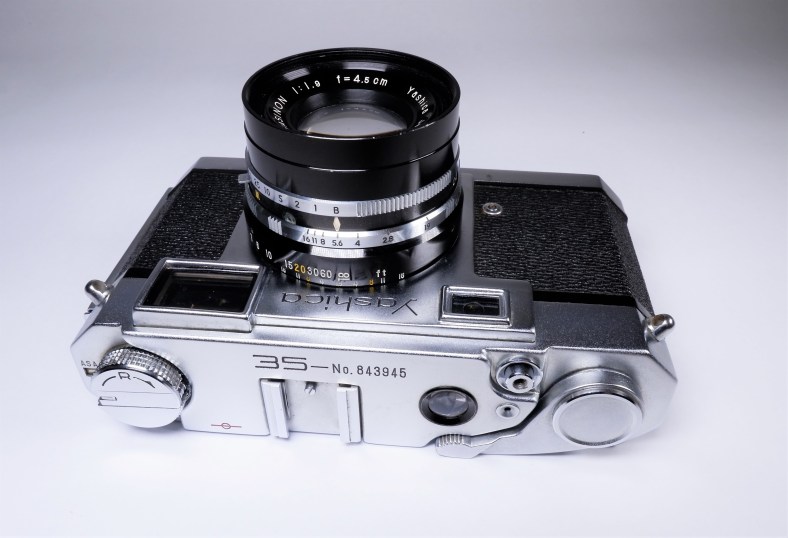
Looking sharp but not perfect. If I want a totally clean and usable camera I’ll have to remove the top plate and clean the rangefinder and viewfinder elements. The rangefinder is accurate and focus is easy to obtain but it’s just a little dim inside. If you look closely at the center of the lens you will see the patch of fungus. Unfortunately, that is not cleanable.
DSCF6655

The serial number, No. 843945, decodes to 8 = 1958, 4 = April, 3945 is the production sequence number 3,945 since production began in April.

This is one of the earliest examples of this fine camera having been built sometime in April 1958. Yashima used quality materials and production techniques as the fit and feel of the camera are of a much more expensive camera.
IMG_20180615_0005 logo

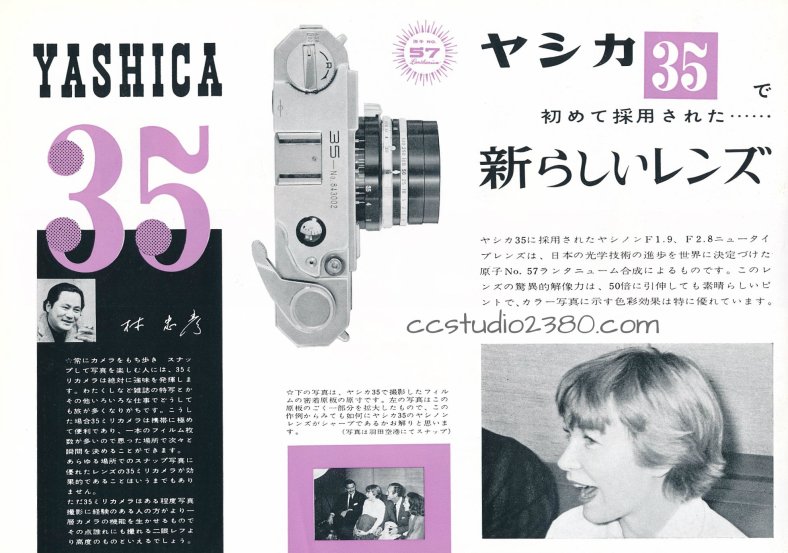
Earliest sales brochure for the Yashica 35. The serial number of the camera pictured is just a bit earlier than my new camera. Here it’s No. 843002 and mine is No. 843945.
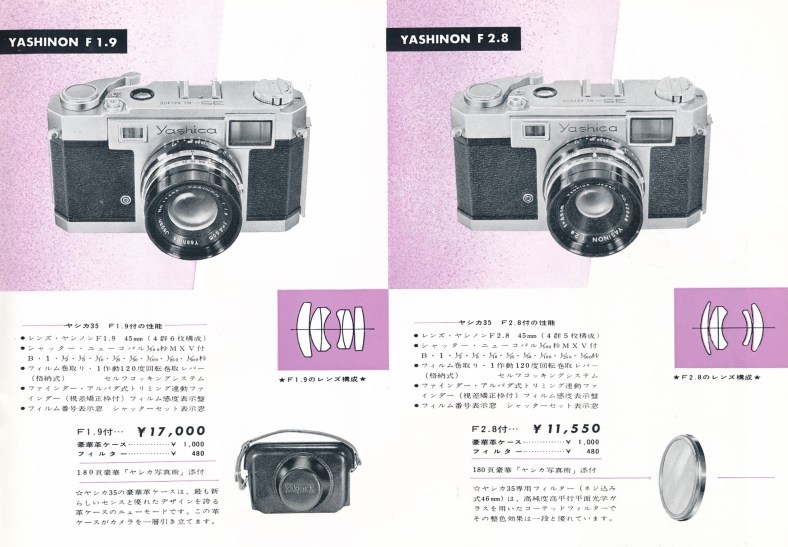
IMG_20180615_0006

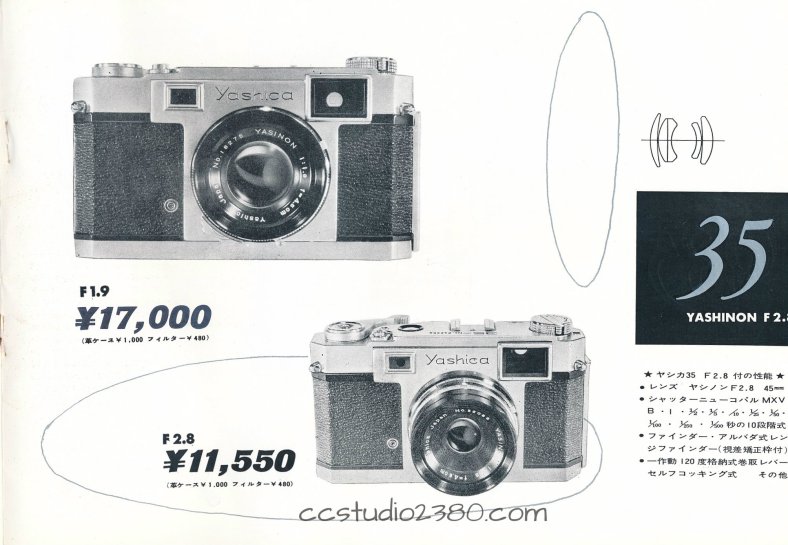
Same brochure as pictured above. The f1.9 lens model is on the left. The serial number on the lens is No. 18275. Mine is No. 20254.

If you look closely, the lens is described as a Yashinon F1.9 even though the lens says Yasinon. Yashima was in the process of changing over or was it them catching a mistake?
IMG_20180625_0001 logo

BTW, 17,000 JPY was about $47 USD in April 1958

By the way, it’s generally believed that these two lenses were made for Yashima by Tomioka Optical. Yashima did have a relationship with Zunow Optical by there’s no proof that these lenses are from Zunow.

Thanks for stopping by! – Chris

Please respect that all content, including photos and text, are the property of this blog and its owner, Yashica Pentamatic Fanatic, Yashica Sailor Boy, Yashica Chris.

Copyright © 2015-2019 Yashica Pentamatic Fanatic, Chris Whelan
All rights reserved.
Happy SUNday! – Dolls from Yokohama and more.

doll 3

doll 2

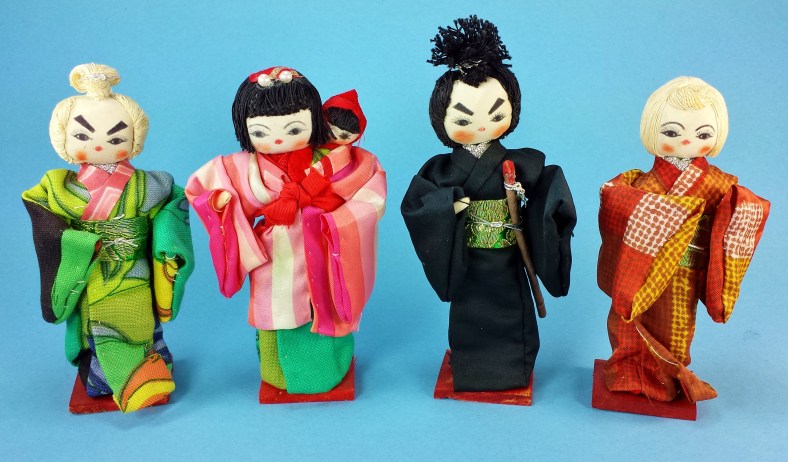
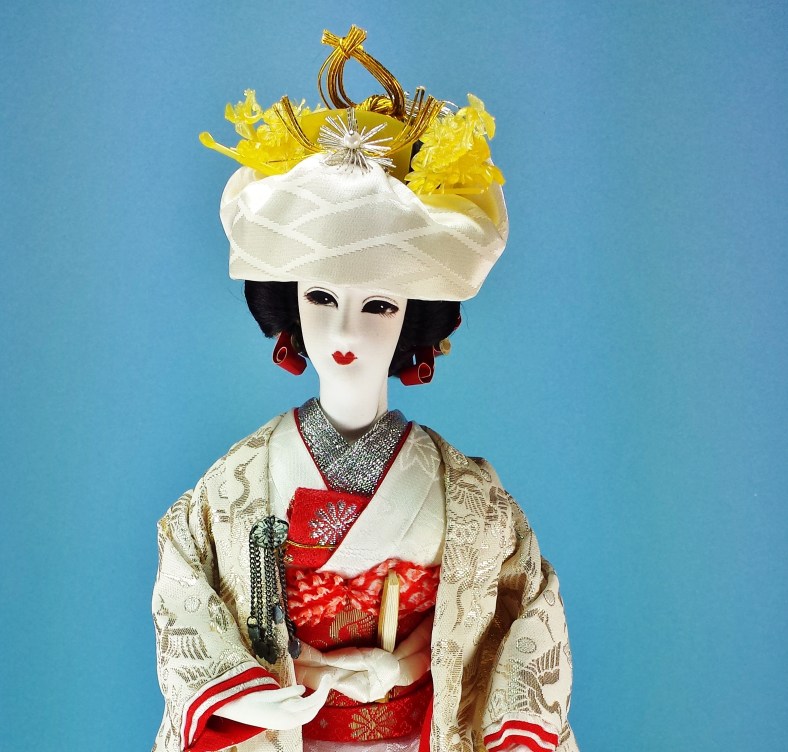
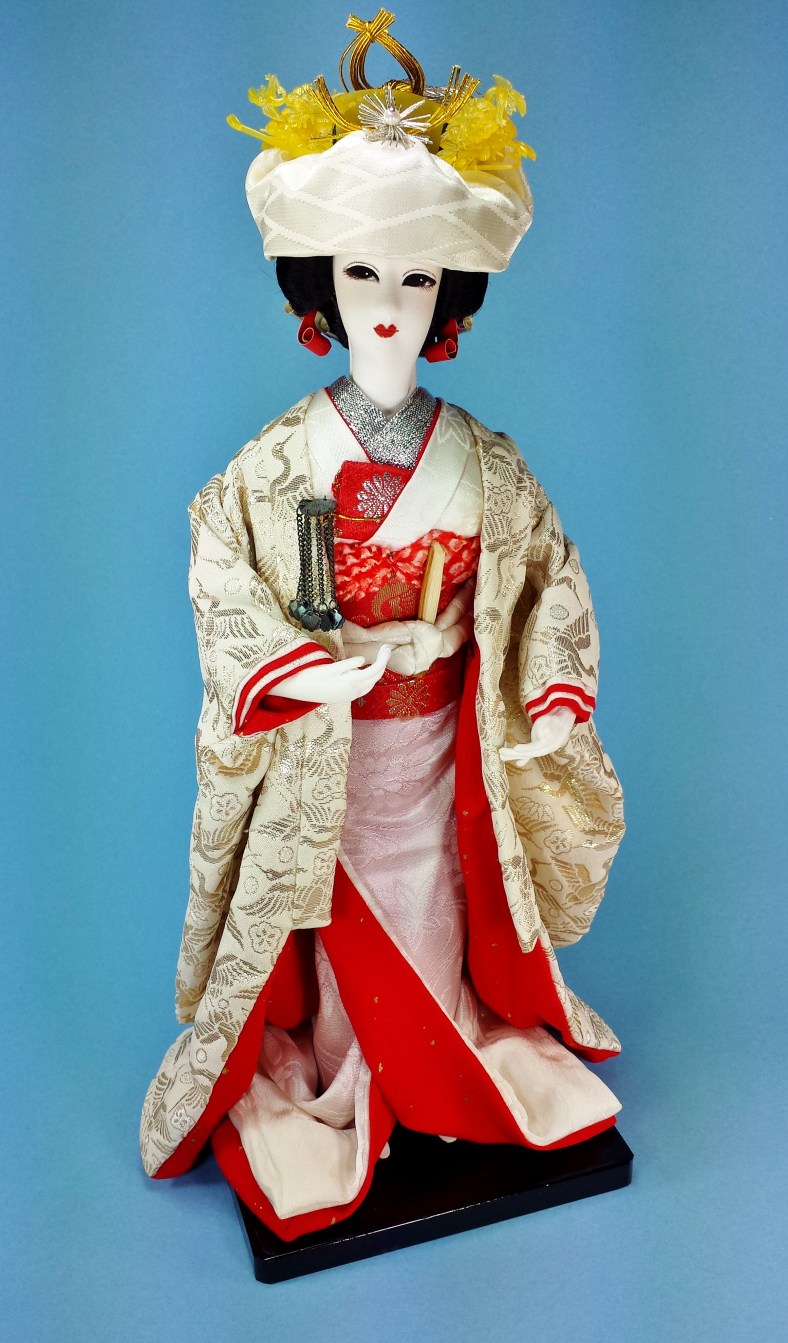
When Carol and I lived in Yokohama in the late 1970s, a wonderful local artist made these dolls for us. We’ve kept them in a glass display cabinet all of these years and they remind us of how much we enjoyed our time there. Such artistry! Dolls photographed with my Samsung Galaxy S4 camera.

IMG_20170420_0009 (2)

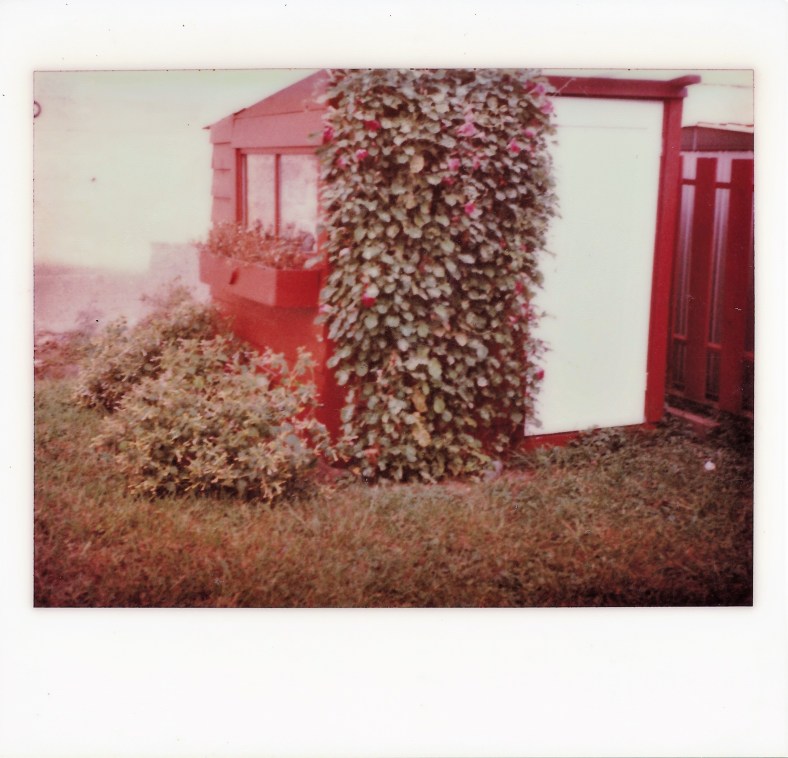
Morning glory on the garden shed – Yokohama 1978. The door was salvaged from the local Navy Lodge from their vast trove of bits and pieces in the maintenance office. This image is scanned from a picture I took with my Kodak EK4 instant camera on Kodak film. Kodaks brief foray into instant photography.

Unrelated to the dolls, here’s the garden shed that I built for Carol. The Housing Office on the Navy base that we lived on in the Naka ward in Yokohama had free wood that you could use for projects such as this and the fence you see to its right. The lumber was free and so was the paint – only one color was available so everything was painted the same color in the neighborhood!

IMG_20170420_0007

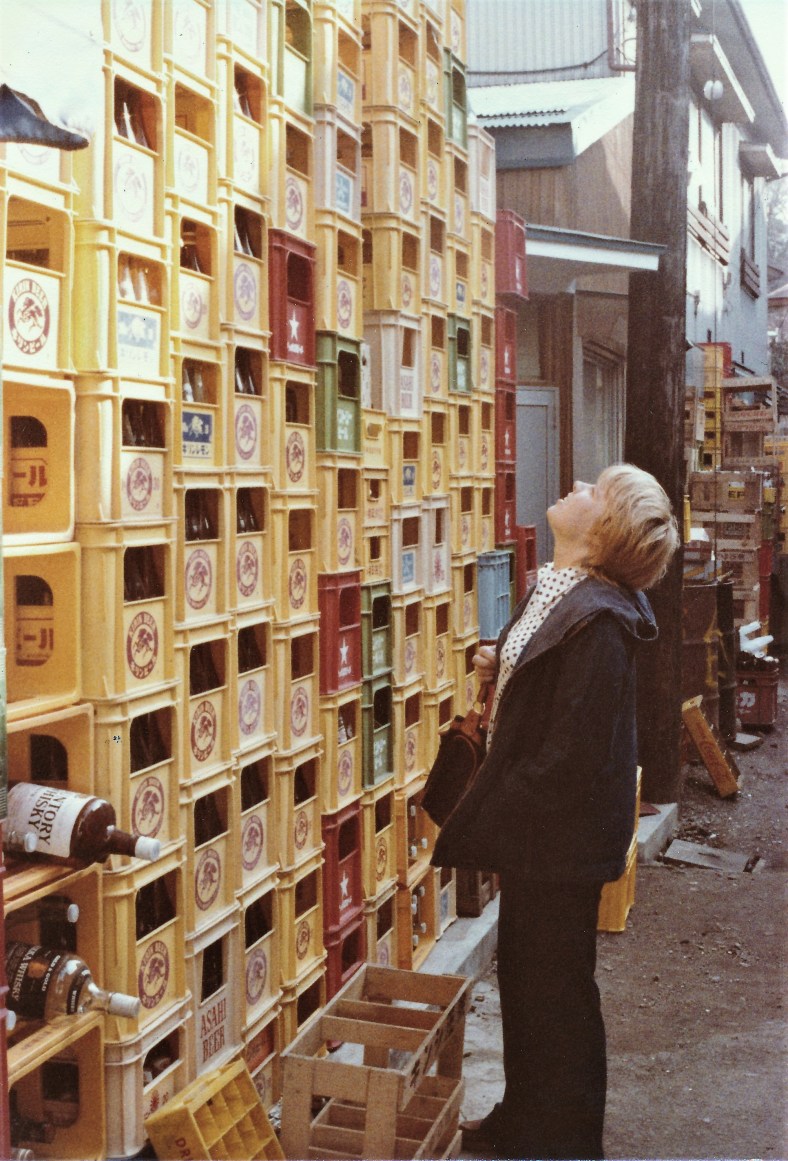
Stacked sky high!

While on a walkabout on the backstreets in our neighborhood we discovered this “wall” of crates just outside of a bar. The image was taken with my Canon F-1 on Kodachrome film – 1978.

Thanks for stopping by and have a beautiful day! – Chris

Please respect that all content, including photos and text, are the property of this blog and its owner, Yashica Pentamatic Fanatic, Yashica Sailor Boy, Yashica Chris.

Copyright © 2015-2019 Yashica Pentamatic Fanatic, Chris Whelan
All rights reserved.

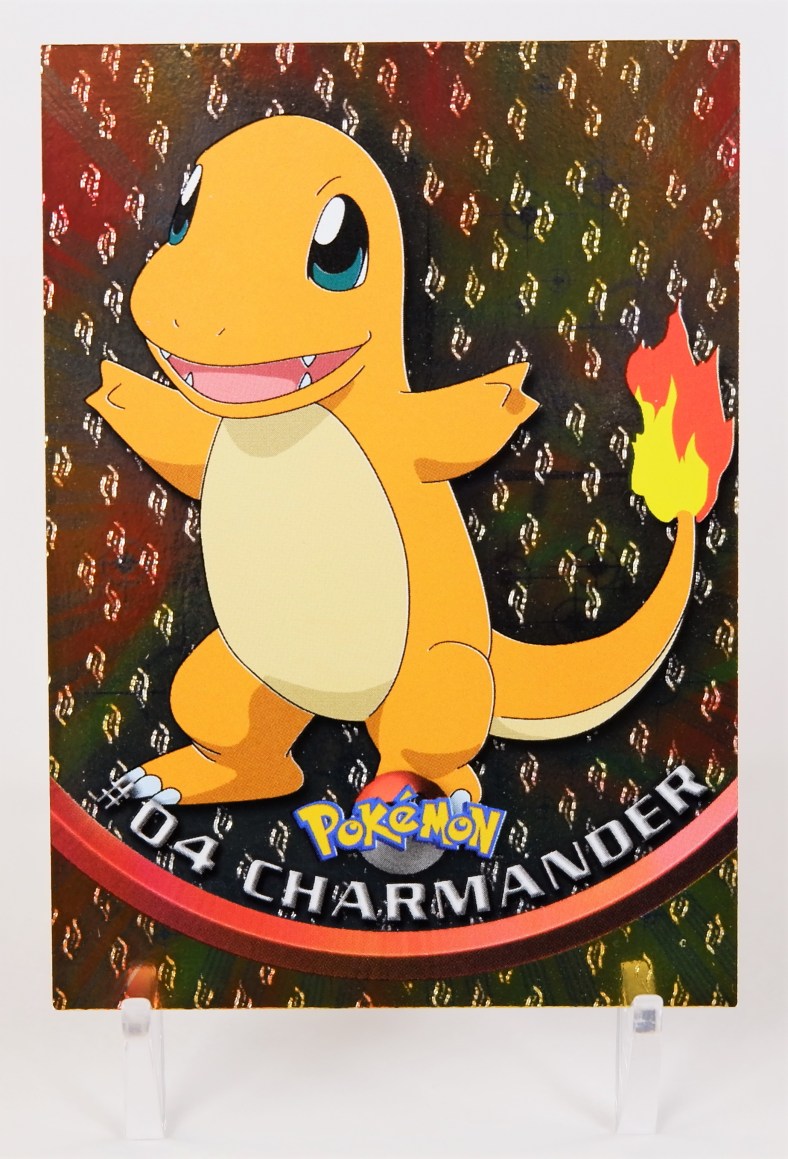
Happy SUNday! – Charmander Attacks!

DSCF6604

Ultra rare 1999 Topps Pokémon TV Animation Edition Series 1 Foil 3rd Printing collectible card with debossed teardrops and flames.

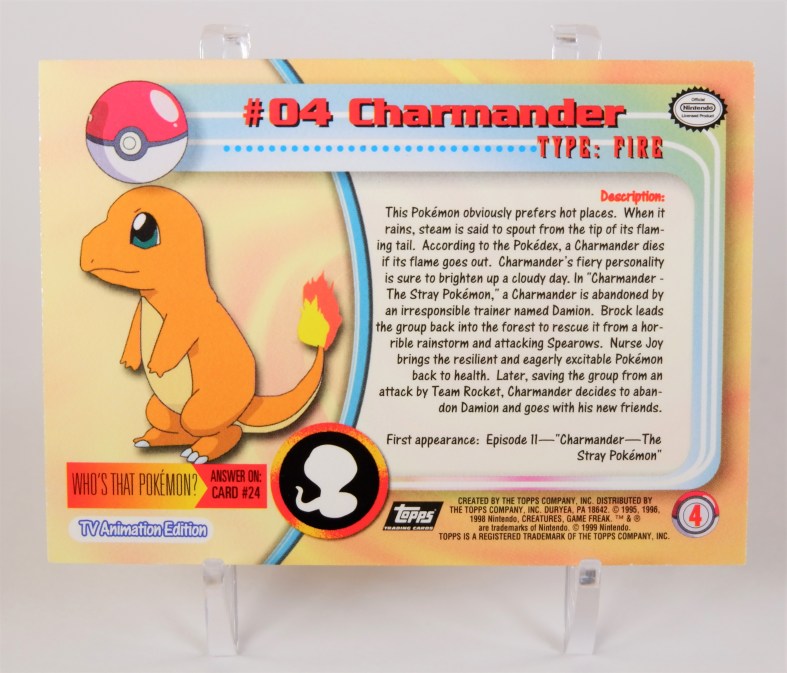
DSCF6605

Due to a printing error, the “Topps” logo (bottom center) should be green vice black. All of these special foil cards should be green to match the rest of the 3rd printing in Series 1. Confused? To a collector (my kids) this is cool stuff so that means its cool stuff to me too! Of all the characters that my kids were followers of I personally enjoyed the Pokémon the most.

Have a beautiful day! – Chris

Please respect that all content, including photos and text, are the property of this blog and its owner, Yashica Pentamatic Fanatic, Yashica Sailor Boy, Yashica Chris.

Copyright © 2015-2019 Yashica Pentamatic Fanatic, Chris Whelan
All rights reserved.

New camera in the house!

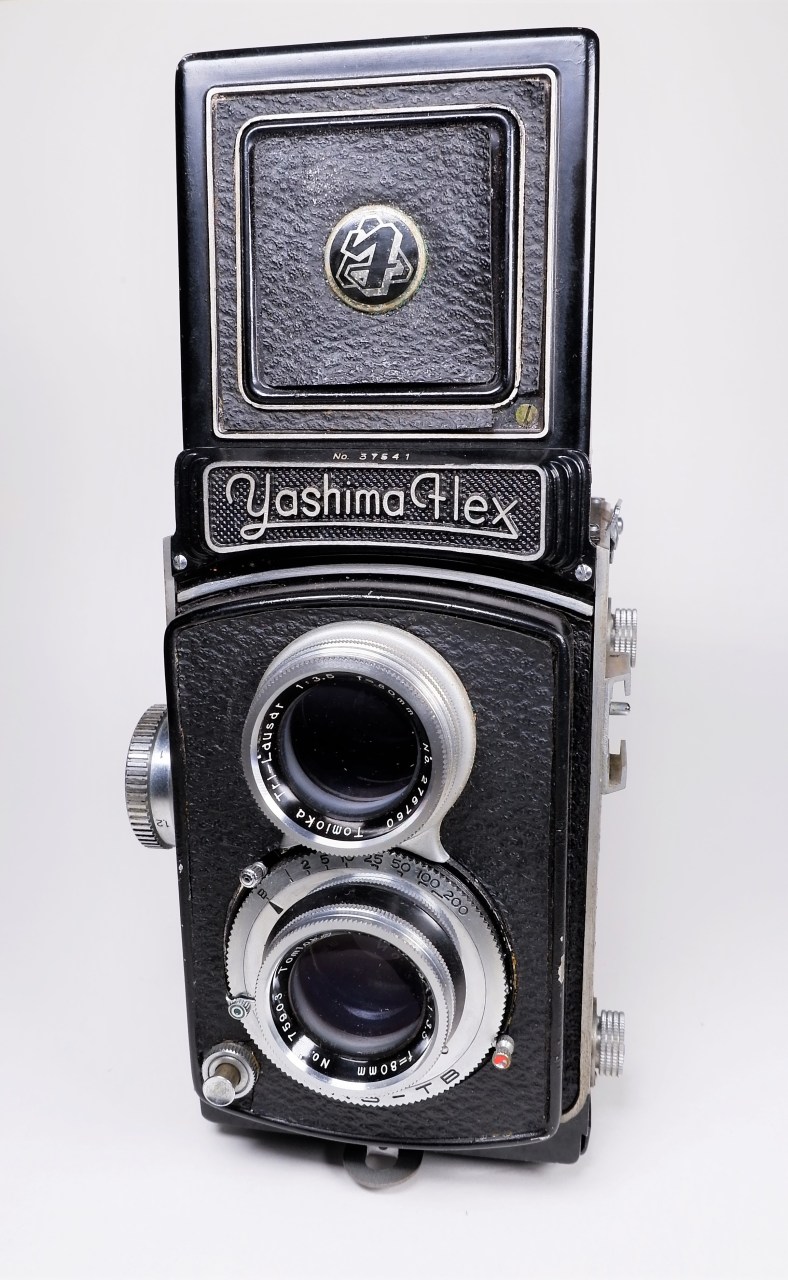
Yep – another new to me camera has arrived. A Yashima Flex twin-lens reflex (TLR) 120 roll film camera. It takes images that are square at 6×6 cm (2.25 x 2.25 inches). That’s a really big negative that lends itself to high-quality scans and awesome prints.

DSCF6595

From May 1954 (originally sold at Camera Onuki in Yokohama).

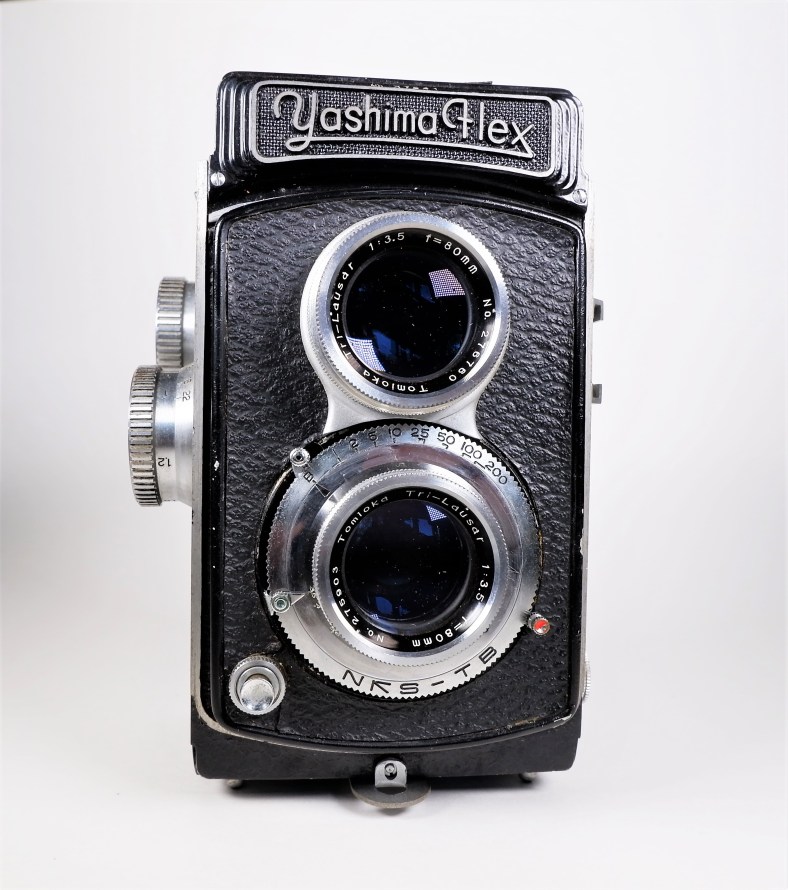
DSCF6600

Tomioka made lenses produce super sharp images.

I’ll do some gentle cleaning and restorative repairs internally. I’ll remove the focusing hood and do some cleaning of the reflex mirror and the rear elements of the glass lenses.

The shutter on this does fire at all speeds but they don’t sound accurate. Often with these older cameras, they start to improve with regular use. I would like to shoot a roll of film or two as it would be a blast to see the final images.

Thanks for stopping by and I’ll be providing updates as I go along. – Chris

Please respect that all content, including photos and text, are the property of this blog and its owner, Yashica Pentamatic Fanatic, Yashica Sailor Boy, Yashica Chris.

Copyright © 2015-2019 Yashica Pentamatic Fanatic, Chris Whelan
All rights reserved.
Restoring a vintage camera box – carefully.

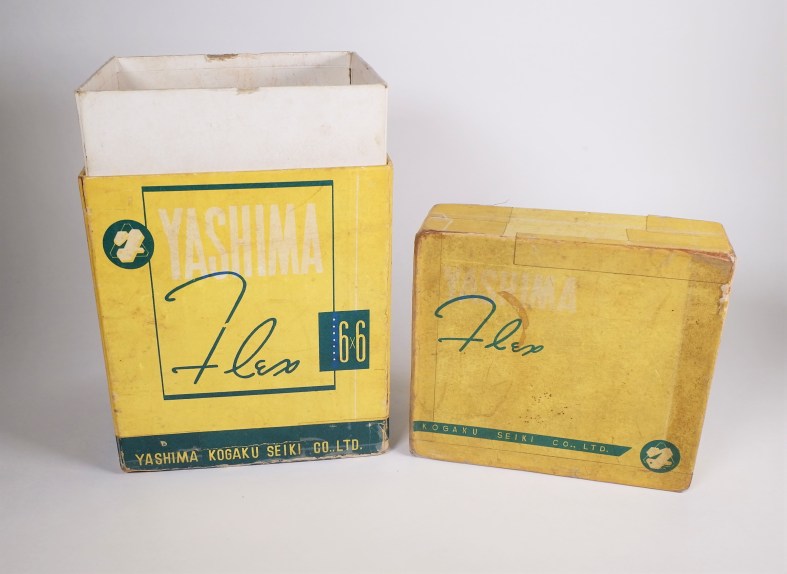
Collectors are a strange lot – for many it’s the thrill of the chase and the found item quickly fades into the background. For me, since I collect vintage cameras and photo gear, the items I purchase are often fifty or more years old and some like this box are as old as I am. In this case, this Yashima Flex box is sixty-five years old – vintage just like me.

When I collect items such as this, I enjoy not only the thrill of the chase but the history behind the item – where was it sold originally and if I can, when was it sold. In this case, Yokohama, Japan and 1954. I also enjoy restoring my cameras and associated bits as not only a way to preserve them but also to increase their value for when it’s time to pass them along to the next collector.

DSCF6585

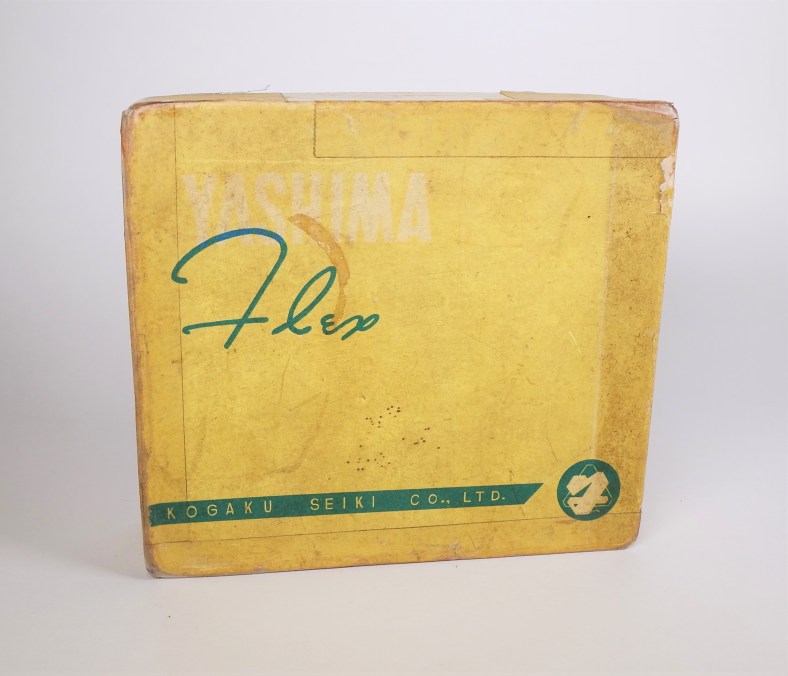
“Fresh” from Japan – my 65-year-old Yashima Flex TLR presentation box complete with six decades of dirt, soot, DNA and grime. Although someone taped the box together years ago (I’m not a fan of doing that) it at least kept the box in one piece.

Step one (for me) is to clean the surfaces of all that grime. Often with these paperboard boxes, mold will grow in the layers of dirt and the mold spores will eventually break down the paper. In many cases, the mold (and mildew) will permanently stain and discolor the paper (not good). This box does have permanent staining but at least it should stop spreading.

***Please Note: I’ve cleaned about a dozen or so boxes like this one over the years, mostly boxes from the 1950s and mostly boxes made for Yashima-Yashica cameras. Your box may differ in its construction and the paper may respond to cleaning in a less than desirable way. One of the first things you should do is test this cleaning method on an inconspicuous part of the box.

DSCF6591

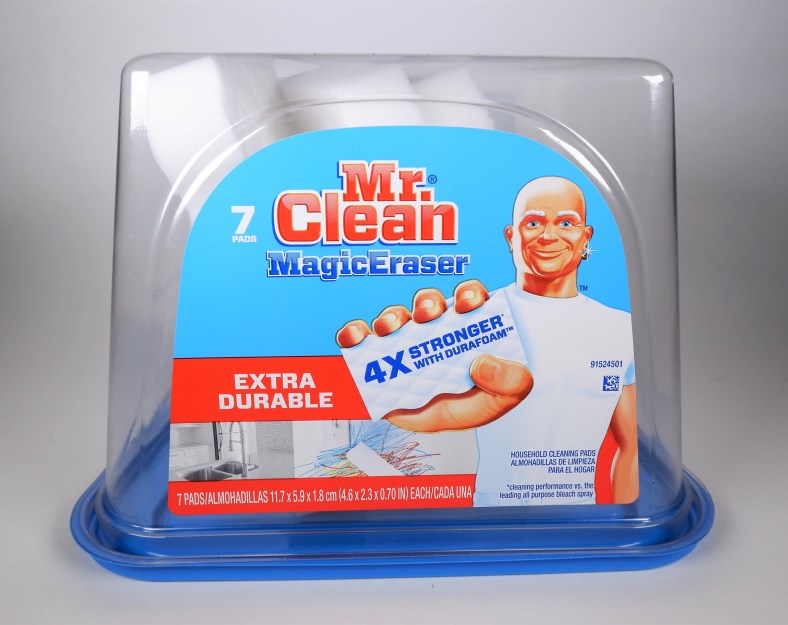
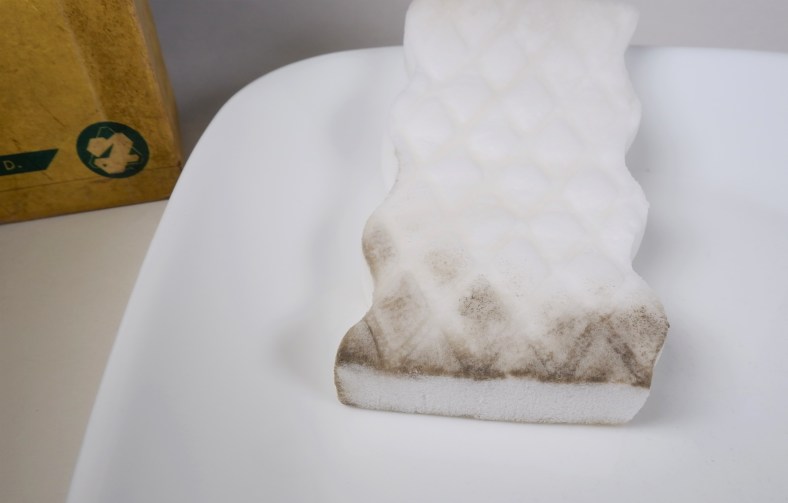
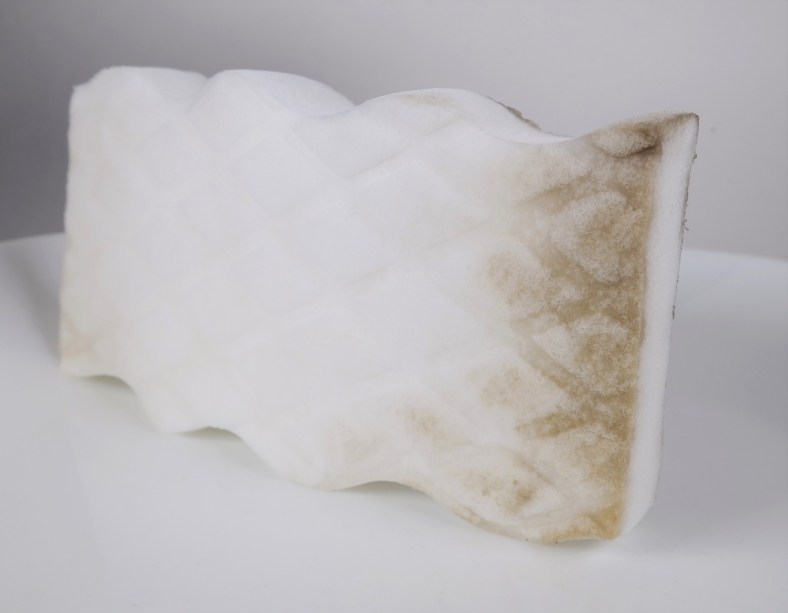
Mr. Clean is all you need (and a steady hand). The secret to cleaning the box with a Magic Eraser is to use a very lightly moistened pad (rinsed regularly) and to apply steady gentle pressure.  No scrubbing! It will take several passes with the pad to remove all of the grime. Do not let the paper get too wet and always give the surface a chance to dry before recleaning.

DSCF6586

Before cleaning. Pretty dirty – pretty nasty.

DSCF6587

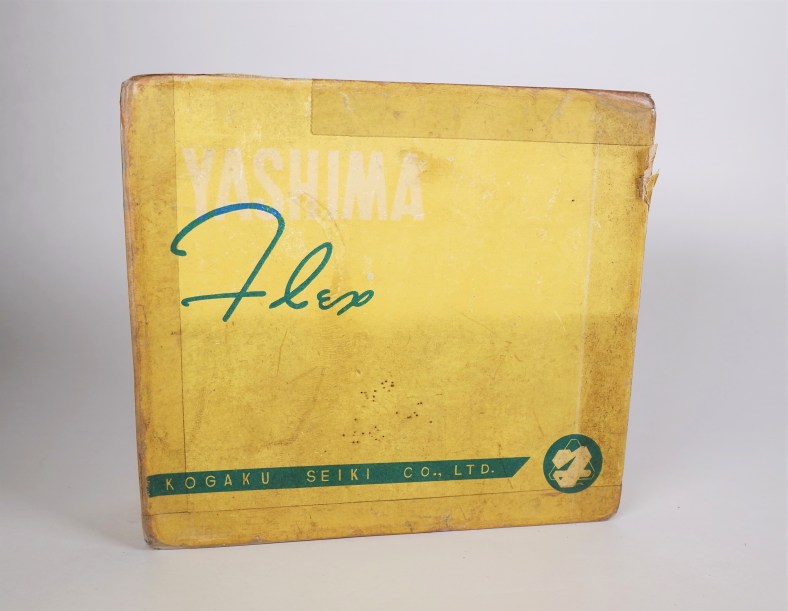
After only a few gentle passes with the Magic Eraser (top part), things are looking much better. It’s not going to clean everything off the paper on your first attempt and you’ll likely need to repeat the process. Slow and steady wins the race – you’re only trying to remove the soil and not damage the delicate paper.

DSCF6588

Sixty-five years of grime – removed.

DSCF6589

Steps two, three and more I’ll cover in another post. For now, I’ll need to finish cleaning the remainder of the box. My future plans call for stabilizing the structure of the box (a bead of clear glue along the inner seams) and a go at removing the exterior tape.

Thanks for stopping by! – Chris

Please respect that all content, including photos and text, are the property of this blog and its owner, Yashica Pentamatic Fanatic, Yashica Sailor Boy, Yashica Chris.

Copyright © 2015-2019 Yashica Pentamatic Fanatic, Chris Whelan
All rights reserved.